EP4445732A1 - Traitement préventif pour la conservation des rendements d'une culture cultivée soumise à au moins un stress thermique - Google Patents
Traitement préventif pour la conservation des rendements d'une culture cultivée soumise à au moins un stress thermique Download PDFInfo
- Publication number
- EP4445732A1 EP4445732A1 EP23305561.5A EP23305561A EP4445732A1 EP 4445732 A1 EP4445732 A1 EP 4445732A1 EP 23305561 A EP23305561 A EP 23305561A EP 4445732 A1 EP4445732 A1 EP 4445732A1
- Authority
- EP
- European Patent Office
- Prior art keywords
- crop
- thermal stress
- plant
- composition
- water
- Prior art date
- Legal status (The legal status is an assumption and is not a legal conclusion. Google has not performed a legal analysis and makes no representation as to the accuracy of the status listed.)
- Withdrawn
Links
Images

Classifications
-
- A—HUMAN NECESSITIES
- A01—AGRICULTURE; FORESTRY; ANIMAL HUSBANDRY; HUNTING; TRAPPING; FISHING
- A01P—BIOCIDAL, PEST REPELLANT, PEST ATTRACTANT OR PLANT GROWTH REGULATORY ACTIVITY OF CHEMICAL COMPOUNDS OR PREPARATIONS
- A01P21/00—Plant growth regulators
-
- A—HUMAN NECESSITIES
- A01—AGRICULTURE; FORESTRY; ANIMAL HUSBANDRY; HUNTING; TRAPPING; FISHING
- A01N—PRESERVATION OF BODIES OF HUMANS OR ANIMALS OR PLANTS OR PARTS THEREOF; BIOCIDES, e.g. AS DISINFECTANTS, AS PESTICIDES OR AS HERBICIDES; PEST REPELLANTS OR ATTRACTANTS; PLANT GROWTH REGULATORS
- A01N45/00—Biocides, pest repellants or attractants, or plant growth regulators, containing compounds having three or more carbocyclic rings condensed among themselves, at least one ring not being a six-membered ring
-
- A—HUMAN NECESSITIES
- A01—AGRICULTURE; FORESTRY; ANIMAL HUSBANDRY; HUNTING; TRAPPING; FISHING
- A01N—PRESERVATION OF BODIES OF HUMANS OR ANIMALS OR PLANTS OR PARTS THEREOF; BIOCIDES, e.g. AS DISINFECTANTS, AS PESTICIDES OR AS HERBICIDES; PEST REPELLANTS OR ATTRACTANTS; PLANT GROWTH REGULATORS
- A01N49/00—Biocides, pest repellants or attractants, or plant growth regulators, containing compounds containing the group, wherein m+n>=1, both X together may also mean —Y— or a direct carbon-to-carbon bond, and the carbon atoms marked with an asterisk are not part of any ring system other than that which may be formed by the atoms X, the carbon atoms in square brackets being part of any acyclic or cyclic structure, or the group, wherein A means a carbon atom or Y, n>=0, and not more than one of these carbon atoms being a member of the same ring system, e.g. juvenile insect hormones or mimics thereof
Definitions
- the invention relates to agriculture and, in particular, to the preservation of the yield of cultivated plants, notably field-grown plants, and to the management of water used by said plants in a context of prevention of adverse effects linked to exposure to abiotic stresses such as high-temperature and possibly drought stresses of said cultivated plants.
- the invention involves a phytosterol-based composition, its method of manufacture, a slurry comprising the said diluted composition, and its uses, particularly in a preventive treatment for preserving the yields of a cultivated crop targeting the onset of deleterious effects induced by exposure to high-temperature and possibly drought stress.
- Plants i.e., crop plants and especially ornamental plants, are subjected to various forms of stress.
- plants are constantly exposed to their environment and cannot escape abiotic stress factors (high temperature, drought, cold, frost, salinity, etc.).
- abiotic stress factors high temperature, drought, cold, frost, salinity, etc.
- biotic stress factors i.e., stresses resulting from the harmful action of a living or bioaggressive organism (viruses, fungi, bacteria, insects, pests, etc.) and more generally of a plant pathogen.
- a cultivated plant for example a field-grown plant, is subjected to various forms of abiotic stress, which, among other effects, can provoke a decrease in the production of dry matter by the plant compared to a plant cultivated under optimal conditions (controlled conditions with regard to water supply, daylight/nighttime period, absence of exposure to abiotic stress, etc.).
- curative treatments consist in applying to the plants a mixture of surfactants, such as sucrose stearate with ⁇ -sitosterol, following exposure to a biotic or abiotic stress.
- a mixture of surfactants such as sucrose stearate with ⁇ -sitosterol
- This is the case, for example, of document WO2019/030442 of the Applicant, which describes the application of a composition containing 80% sucrose stearate by weight and 20% ⁇ -sitosterol by weight, diluted to 3% in water.
- document WO2018/229710 describes a composition for stimulating plant growth, where applicable in the presence of a stress factor, this composition being in the form of a concentrated suspension comprising a mixture of phytosterols in an amount greater than 25% of the suspension by weight.
- the objective is to increase the concentration of phytosterols to allow application in smaller quantities.
- the amount of composition applied is 400 g/ha.
- the composition furthermore contains a wetting agent and/or a surfactant, present in respective amounts of between 1% and 5%.
- the suspension is obtained by grinding the different constituents until the particle size becomes smaller than 10 ⁇ m. This document shows that the composition exhibits better biostimulant effects compared to the chemically identical but unground composition.
- document WO2009/028626 describes a method for imparting stress tolerance to a plant, which consists in applying a plant stress tolerance imparting composition comprising a sugar derivative-type surfactant and water, to a plant placed under a stressful cultivation.
- this method looks efficient only on tomato to resolve thermal stress effects, and this method is not proposed as a preventive treatment prior to the onset of the stress, for example a few days or weeks before, which means that the effect was curative only.
- This document is also silent concerning any water management features to a cultivated plant.
- Emulsified or solubilized sterol composition for use as agricultural chemical is already known from document EP0289636 .
- this document remains silent on the various applications such composition may find in the field of agricultural chemical.
- it does not disclose the use of an emulsified or solubilized sterol composition in the specific context of a preventive treatment to facilitate water management to a plant, in particular towards high-temperature and possibly drought stress associated with air temperature above the air temperature of vulnerability of the crop.
- abiotic stress refers to a non-living stimulus on living vegetal organisms, for instance a climate hazard on a crop.
- thermal stress and “high-temperature stress” can be used indifferently and refer to an external phenomenon where the plant is facing extensive heat corresponding to an air temperature above the air temperature of vulnerability of the crop, whereas the supply of water is granted in an amount which is sufficient for the plant to grow normally if such high-temperature stress would not occur.
- plants having a photosynthesis in C3 have an air temperature stress around 28 °C (corn, wheat, sunflower, rapeseed, etc.), and plants having a photosynthesis in C4 have an air temperature stress around 35 °C (maize, sorgho, millet, etc.).
- the thermal stress does not correspond to low-temperature stress.
- drought stress refers to an external phenomenon where the plant is lacking supply of water in an amount which would be sufficient for the plant to grow normally if such drought stress would not occur. Such drought stress can occurs with or without conditions of thermal stress.
- the expression "at an early stage of the plant's growth” refers to the germination and vegetative phases, that is an interval between the beginning of germination and before the plant flowers. In particular, it refers to the stage during which the leaves of the plant cover the inter-row (row sowing crop cultivation). The skilled artisan knows that this early stage of the plant's growth is crop-dependent.
- water management consists of adapting a plant's water supply production and/or consumption towards specific abiotic stresses (thermal stress and possibly drought stress) without altering the production yield compared to a "control" plant.
- treated plant and “treated crop” may be used interchangeably and refer to a plant or crop which is preventively treated (i.e. treated at an early stage, before exposure to an abiotic or biotic stress) with the composition of the invention and which undergoes growth by being exposed to soil and climatic conditions and stresses, notably at least one abiotic stress, preferably a multi-abiotic stresses sequence, such as a thermal stress optionally preceded and/or followed by a drought stress which occurs with or without temperature conditions of thermal stress.
- control plant As used herein, the expressions "control plant”, “control crop” and “untreated control” may be used interchangeably and refer to a plant or crop which is untreated with the composition of the invention and which undergoes growth by being exposed to the same soil, climatic conditions and stresses, notably at least one abiotic stress, preferably a multi-abiotic stresses sequence, as the treated candidate plant.
- prevention treatment and “prophylactic treatment” may be used interchangeably and refer to a treatment of the plant prior to the onset of any stress, such as thermal stress and possibly drought stress.
- the expression “prior to the onset of abiotic stress” and “prior to the exposure to an abiotic stress” particularly with regard to drought stress, may be used interchangeably and refer to the period during which the useful soil water reserve is properly filled, i.e., the time elapsed from the moment when the useful soil water reserve is sufficiently or completely full (field capacity) to the moment when the wilting point is reached.
- the expression “prior to the onset of abiotic stress” and “prior to the exposure to an abiotic stress” particularly with regard to thermal stress, may be used interchangeably and refer to the period before the point of vulnerability to flower blast for each plant species and each developmental stage of these species. In other words, it refers to temperatures that are unfavourable to the growth and development of the plant, apart from all other crop conditions, such as water supply.
- plant sterol and “phytosterol” may be used indifferently and refer to any vegetally-occurring or chemically synthesized sterol.
- EUSWR moisture usable soil water reserve
- USWR usable soil water reserve
- EUSWR generally represents 40% to 80% of the USWR depending on the depth of the soil and the species of plants cultivated.
- the term "soil survival reserve” refers to the proportion of the USWR that a cultivated plant cannot extract. The plant is consequently in a state of drought stress because its transpiration (or evapotranspiration) is not reduced. Therefore, the cultivated plant limits its growth or even wilts.
- the term "wilting point" refers to the soil water status below which the plant can no longer draw the water necessary for its growth, i.e., the point below which the tension between the roots and the plant is high and the roots can no longer extract water from the soil. It is therefore the threshold below which the cultivated plant has entirely consumed the EUSWR and will wilt, albeit reversibly, but with an impact on the yield. This parameter is determined in particular through the measurement of soil humidity, for example by means of a neutron probe, a tensiometer or a time-domain reflectometry (TDR) moisture meter. The wilting point depends on the field capacity, on the amount of water available to the plant according to the various soil types and on the variety of plant cultivated.
- TDR time-domain reflectometry
- yield refers to the amount of product harvested, whether seeds or fruits, dry matter or green matter, over a given cultivation area.
- dry matter refers to the matter derived from organic matter that remains after removal of all the water it contains.
- crops and plants may be used indifferently and refer to all plants and plant populations such as desirable and undesirable wild plants, cultivars, and plant varieties (whether or not protectable by plant variety or plant breeder's rights).
- Cultivars and plant varieties can be plants obtained by conventional propagation and breeding methods which can be assisted or supplemented by one or more biotechnological methods such as by use of double haploids, protoplast fusion, random and directed mutagenesis, molecular or genetic markers or by bioengineering and genetic engineering methods.
- plant includes whole plants and parts thereof, including, but not limited to, shoot vegetative organs/structures (e.g., leaves, stems and tubers), roots, flowers and floral organs/structures (e.g., bracts, sepals, petals, stamens, carpels, anthers and ovules), seeds (including embryo, endosperm, and seed coat) and fruits (the mature ovary), plant tissues (e.g., vascular tissue, ground tissue, and the like) and cells (e.g., guard cells, egg cells, and the like), and progeny of same.
- shoot vegetative organs/structures e.g., leaves, stems and tubers
- seeds including embryo, endosperm, and seed coat
- fruits the mature ovary
- plant tissues e.g., vascular tissue, ground tissue
- optimum production and optimum yield may be used interchangeably and refer to the measured yield of the best cultivar, grown with optimal agronomy and without biotic and/or abiotic stresses, under natural resource and cropping system conditions representative of the target area.
- the expression "effective amount” is an amount sufficient to affect beneficial or desired results.
- the expressions "daily air temperature” and “air temperature” may be used interchangeably and refer to the maximum daily temperature recorded during a 24-hour period (i.e., one day and one night).
- slurry refers to the composition of the invention diluted in water or in a solution containing water and one or more active ingredients.
- the product which is applied on the plant in the fields is the slurry.
- active ingredient refers to a product that allows the plant to combat preferably abiotic and/or biotic stresses.
- bactericide refers to the ability of a substance to increase mortality or inhibit the growth rate of bacteria.
- insecticide and “insecticidal” refer to the ability of a substance to increase mortality or inhibit growth rate of insects.
- insects comprises all organisms in the class "Insecta”.
- nematicide and “nematicidal” refer to the ability of a substance to increase mortality or inhibit the growth rate of nematodes.
- nematode comprises eggs, larvae, juvenile and mature forms of said organism.
- acaricide and “acaricidal” refer to the ability of a substance to increase mortality or inhibit growth rate of ectoparasites belonging to the class Arachnida, sub-class Acari.
- biocontrol product is defined as agents or products that use natural mechanisms. They form a set of tools that can be used, alone or in combination with other plant protection methods, to combat crop enemies in integrated pest management. There are four main types of biocontrol agents:
- the expression "delivery of the phytosterols” refers to the transport of the phytosterols, which are hydrophobic, by means of an aqueous phase.
- foliar spraying refers to a pressurized projection of a slurry that forms a large number of microdroplets that cover the upper and/or lower surfaces of the treated leaf.
- the term "irrigation” refers to the anthropogenic addition of a supply of water to the soil solution that is taken up by the root system of the plant.
- anthropic and “anthropogenic” may be used interchangeably and refer to a human-decided action.
- the expression "insoluble in the aqueous phase” refers to a compound which presents the inability to form with water a homogenous, one-phase solution at the microscopic or the macroscopic level, at a given temperature and atmospheric pressure.
- solubility refers to a compound which leads to a homogenous solution without remaining insoluble particles when it is added to a liquid, at a given temperature and atmospheric pressure.
- Any percentage by weight of a molecule of the invention refers to the total weight of the said invention, which means relative to the sum of all ingredients giving a hundred. Weight percent can by symbolised as wt%.
- range format Various aspects of the invention can be presented in a range format.
- the description in range format is merely for convenience and conciseness and should not be construed as an inflexible limitation on the scope of the invention. Accordingly, the description of a range should be considered to have specifically disclosed all the possible subranges as well as individual numerical values within that range.
- description of a range such as from 1 to 6 should be considered to have specifically disclosed subranges such as from 1 to 3, from 1 to 4, from 1 to 5, from 2 to 4, from 2 to 6, from 3 to 6 etc., as well as individual numbers within that range, for example, 1, 2, 2.7, 3, 4, 5, 5.3, and 6. This applies regardless of the breadth of the range.
- the applicant has made the hypothesis that the prophylactically applied composition to the plant increases its water uptake during exposure to said thermal stress to decrease its internal temperature by evapotranspiration during exposure to said thermal stress.
- the preventive treatment of the invention offers various advantages, in particular:
- composition of the invention is particularly suitable to lead to a plant's water management, that is a plant's water supply production and/or consumption when:
- the preventive treatment of the invention is characterized in that the cultivated crop is exposed to a multiple stress climatic scenario, i.e., a thermal stress followed by a drought stress, said drought stress occurring with temperature conditions of a thermal stress.
- the preventive treatment of the invention is characterized in that the cultivated crop is exposed to a multiple stress climatic scenario, i.e., a thermal stress followed by a drought stress, said drought stress occurring without temperature conditions of a thermal stress.
- the preventive treatment of the invention is characterized in that the cultivated crop is exposed to a multiple stress climatic scenario, i.e., a drought stress, said drought stress occurring with temperature conditions of a thermal stress followed by a thermal stress.
- a multiple stress climatic scenario i.e., a drought stress
- the preventive treatment of the invention is characterized in that the cultivated crop is exposed to a multiple stress climatic scenario, i.e., a drought stress, said drought stress occurring without temperature conditions of a thermal stress followed by a thermal stress.
- a multiple stress climatic scenario i.e., a drought stress
- the plant when the plant is subjected to thermal stress, it increases its water uptake from the soil reserve since the EUSWR is easily reachable. Hence, the plant uses this water to decrease its internal temperature, notably by evapotranspiration.
- the prophylactic application of the composition of the invention leads to physiological modifications of the plant such as increasing root lengths and closing stomata to mitigate evapotranspiration.
- the preventive treatment of the invention offers to the treated crop various advantages, in particular it displays different water consumption regimes whether the said plant is exposed to thermal stress or drought stress.
- This is what the Applicant calls water management.
- This water management helps the plant reducing any negative impact of these abiotic stresses, i.e., thermal stress or thermal stress followed by drought stress occurring with or without a thermal stress condition (i.e., with or without, temperature conditions of a thermal stress) on its growing performances.
- the invention allows to the plant to stay within the photosynthesis optimum, that is to avoid instability of CO 2 assimilation and have water available to allow the production of organic matter by the plant.
- composition of the invention when applied to the crop as a preventive treatment, i.e., at an early stage and prior to the onset of an abiotic stress, enabled a reduction in the harmful effects of abiotic stress(es), for example thermal stress or drought stress, notably the loss of dry matter and the resulting decrease in per-hectare yields.
- abiotic stress(es) for example thermal stress or drought stress
- treating the plant with the composition of the invention allows securing yields, fresh weight, root length and other agricultural key parameters in case of the emergence of an abiotic stress such as thermal stress and possibly preceded or followed by drought stress, according to various biological mechanisms, such as if the treated plant was not affected to these particular stresses.
- the invention has the unexpected advantage that the plant adapts its physiology and its water management behaviour, with the aim of preserving yields, the production of dry weight and in particular of preserving the optimum production, in regard to several external parameters such as the climate (temperature), the nature of the soil, the usable water reserve and the natural or anthropic water supply.
- the water supply is provided by a controlled soil irrigation and/or by natural water (i.e., rainwater, underground water and/or surface water).
- natural water i.e., rainwater, underground water and/or surface water.
- the preventive treatment of the invention comprises a step of monitoring weather forecast for the related trigger points and then a step of applying the composition comprising at least one phytosterol and at least one surfactant at an early stage of the cultivated crop growth and prior to its thermal and/or drought stress exposure.
- the cultivated crop is a chlorophyllous plant, advantageously selected in the group consisting of a field crop of cereals, oilseeds and protein crops; grapes; plants with roots and tubers; horticultural plants; grass; vegetables; herbs and spices; tree crops; or industrial crops intended for the production of raw material for processing.
- the cultivated crop is selected in the group consisting of soybeans, corn, spring barley, winter barley, millet, sorghum, spring wheat, winter wheat, cotton, rapeseed and sunflower.
- the invention comprises the following features:
- temperatures should not be considered as absolute thresholds and the thermal stress which affects a plant is in fact a multifactor composition of hygrometry, rate of increase of temperature, soil composition and other factors which are known from the skilled artisan.
- a temperature threshold does not necessarily mean that exactly below the temperature threshold the plant is not under thermal stress and exactly above the temperature threshold the plant is under thermal stress.
- the surfactant present in the composition plays a particular role in the wetting properties of the composition and in the penetration of the composition through the cuticle, notably through a solubilization of the epicuticular waxes (the waxes situated on the outermost part of the surface of the cuticle) and of some or all of the waxes present on the inside of the cutin layer, thereby creating access pathways for active ingredients such as phytosterols to enter into the plant.
- composition contains at least one sterol, and notably at least one plant sterol, also known as phytosterol.
- said at least one phytosterol represents between 0.2% and 10% of the composition by weight, advantageously between 0.5% and 7%, and preferably between 1% and 5%.
- the phytosterols mixture of the invention contains free phytosterols and/or conjugated phytosterols and/or encapsulated sterols, with the conjugated phytosterols being advantageously selected from among the group comprising phytosterol esters, phytosterol glycosides, acylated phytosterol glycosides and mixtures thereof.
- free phytosterols in the context of the invention include ⁇ -sitosterol, campesterol, stigmasterol, cholesterol and brassicasterol, and mixtures thereof.
- phytosterol ester in the context of the invention is that of esterified ⁇ -sitosterol.
- phytosterol glycosides in the context of the invention include ⁇ -sitosterol- ⁇ -D-glucoside and glucosyl stigmasterol.
- acylated phytosterol glycosides in the context of the invention include 16:0 sitosteryl glucose, 18:1 sitosteryl glucose, 16:0 stigmasteryl glucose, and 18:1 stigmasteryl glucose.
- encapsulated sterol examples include but are not limited to sterols coated with any natural lecithin or starch, or sterols forming a guest/host system with molecular cages such as dextrins or other macrocycles.
- mixtures of phytosterols can also contains at least one precursor of the phytosterols' biosynthetic pathway or at least one of its derivatives.
- This can be, for example, a molecule selected from among the group comprising squalene, mevalonate and/or cycloartenol.
- the phytosterols mixture in the context of the invention contains ⁇ -sitosterol.
- the phytosterols mixture contains ⁇ -sitosterol, representing at least 30% of the phytosterols mixture by weight, preferably at least 35%, with the balance to 100% containing in particular, and where appropriate, campesterol, stigmasterol and brassicasterol.
- a phytosterols mixture of the invention can be an extract of phytosterols obtained from oleaginous seeds such as soybeans, sunflower seeds or canola seeds.
- oleaginous seeds such as soybeans, sunflower seeds or canola seeds.
- Phytosterols mixture of the invention can also be an extract of phytosterols obtained from pine's wood after conversion into wood pulp.
- the composition of the invention contains a phytosterols mixture which represents between 0.2% and 10% of the composition by weight, advantageously between 0.5% and 7%, and preferably between 1% and 5%.
- composition according to the invention which contains at least one plant sterol and at least one surfactant can be prepared according to any of the formulation which are typically used in chemistry.
- This formulation can be under the form of a homogenous or heterogenous aqueous solution, an emulsifiable concentrate, a concentrated suspension, an oil-in-water or a water-in-oil emulsion, an oil-in-water or a water-in-oil suspo-emulsion, an oil dispersion and/or any other formulation the skilled artisan may use to prepare a composition which contains at least one plant sterol and at least one surfactant to be used as a preventive treatment for water management of cultivated crops.
- the composition of the invention has the form of an aqueous solution comprising:
- composition of the invention has the form of an aqueous solution comprising:
- composition of the invention has the form of an aqueous solution comprising:
- aqueous solution is obtained according to the following process:
- this process can be performed in the reverse order, that is to say dispersing the at least one phytosterol and the at least one surfactant in water and then grinding the molecules according to the specifications as mentioned.
- the agricultural composition of the invention has a form of an oil-in-water emulsion (O/W) comprising:
- the mass ratio of the phytosterol/surfactant mixture in composition containing at least one phytosterol and at least one surfactant is practically between 0.01 and 5, advantageously between 0.1 and 2.5, preferably between 0.2 and 1.
- SF0, WATER SF1 or OIL SF1 is selected according from among the group comprising:
- sucrose stearate and “saccharose stearate” are used indifferently.
- sacrose palmitate and “saccharose palmitate” are used indifferently.
- saccharose stearate designates pure saccharose stearate or a mixture of saccharose esters of fatty acids containing mostly saccharose stearate.
- Example of pure saccharose stearate corresponds to CAS number [136152-91-5 ].
- Example of a mixture of saccharose ester of fatty acids containing mostly saccharose stearate corresponds for example to CAS number [25168-73-4 ] or [84066-95-5].
- saccharose palmitate designates pure saccharose palmitate or a mixture of saccharose esters of fatty acids containing mostly saccharose palmitate.
- Example of pure saccharose palmitate corresponds to CAS number [110539-62-3 ].
- Example of a mixture of saccharose ester of fatty acids containing mostly saccharose palmitate corresponds to CAS number [26446-38-8 ].
- surfactant SF0 or WATER SF1 or OIL SF1 is a mixture containing:
- SF0, WATER SF1 or OIL SF1 is sucrose stearate (preferably CAS number [25168-73-4 ] or [84066-95-5]).
- the agricultural composition of the invention has a form of an oil-in-water emulsion (O/W) where the aqueous phase contains a surfactant that is in particulate form, with this composition also being referred to below as a multiphase composition.
- O/W oil-in-water emulsion
- the invention also relates to a multiphase agricultural composition in the form of a suspo-emulsion, comprising lipophilic droplets containing a mixture of phytosterols, said lipophilic droplets being dispersed in an aqueous phase.
- lipophilic droplets are also named oil droplets.
- composition is deemed to be "multiphase" in that it comprises two distinct oil and water phases, but it cannot be described as a suspension or as an emulsion, given that the aqueous phase also contains a third phase made of solid particles. It could therefore be described as a suspo-emulsion.
- the multiphase composition is in the form of a suspo-emulsion, said suspo-emulsion, comprising lipophilic droplets containing the at least one phytosterol, said lipophilic droplets being dispersed in an aqueous phase, the composition further comprising only one surfactant (SF2) located at two different places, respectively at the interface between the lipophilic droplets and the aqueous phase, and suspended in the aqueous phase under the form of particles which are insoluble in the aqueous phase.
- SF2 surfactant
- SF2 is selected from the group comprising the fatty acid sugar esters.
- fatty acid sugar esters have a preferred oil solubility or water solubility depending on heating temperature and therefore may be used at the interface between the lipophilic droplets.
- the same fatty acid sugar esters are solid and insoluble in water at ambient temperature, hence they may be suspended in the aqueous phase.
- SF2 is saccharose stearate, saccharose palmitate and their polyesters, or mixtures thereof, preferably saccharose stearate.
- SF2 is sucrose stearate or, advantageously, a mixture containing saccharose stearate and sucrose palmitate; in particular is a mixture containing:
- the surfactant (SF2) located at the interface of the lipophilic droplets and of the aqueous phase represents between 0.2% and 10% of the composition by weight
- the surfactant (SF2) suspended in the aqueous phase under the form of particles insoluble in the aqueous phase represents between 0.01% and 5% of the composition by weight
- the surfactant (SF2) located at the interface of the lipophilic droplets and of the aqueous phase represents between 3% and 7% of the composition by weight
- the surfactant (SF2) suspended in the aqueous phase under the form of particles insoluble in the aqueous phase represents between 0.1% and 2.5% of the composition by weight and SF2 is advantageously sucrose stearate (preferably CAS number [25168-73-4 ] or [84066-95-5]).
- the multiphase composition is in the form of a suspo-emulsion, said suspo-emulsion, comprising lipophilic droplets containing the at least one phytosterol, said lipophilic droplets being dispersed in an aqueous phase, the composition further comprising:
- the first surfactant SF3 may present a preferential oil solubility (OIL SF3), a preferential water solubility (WATER SF3) or can also present both oil and water solubility, the solubilities between oil and water being here different or identical. This last feature allows the possibility that OIL SF3 and WATER SF3 are the same molecule.
- the surfactant SF3 located at the interface between the lipophilic droplets and the aqueous phase is selected from among the SFs that are soluble in the aqueous phase (WATER SF3) and the SFs that are soluble in the lipophilic droplets (OIL SF3).
- WATER SF3 and OIL SF3 differ from each other by the proportion of their hydrophobic and hydrophilic parts.
- the hydrophilic/lipophilic balance (HLB) of WATER SF3 is higher than the one of OIL SF3.
- the HLB of OIL SF3 is lower than the one of WATER SF3.
- the surfactant WATER SF3 is soluble in water heated at 80 °C at a concentration of at least 2 g/L.
- the surfactant OIL SF3 is soluble in the oil phase heated at 110 °C at a concentration of at least 2 g/L.
- the limit of solubility in water of the surfactant suspended in the aqueous phase (SF4) observed practically at 25 °C is less than 10 mg/L, preferably less than 5 mg/L, more preferably, less than 2 mg/L.
- the majority of the lipophilic droplets present in the multiphase composition before addition of SF2 or SF4 in the aqueous phase advantageously at least 90% of the lipophilic droplets (also named Dv90 emulsion) have a diameter comprised between 0.01 and 70 ⁇ m, preferably between 0.1 and 50 ⁇ m, most preferably between 0.1 and 20 ⁇ m, advantageously between 0.5 to 7 ⁇ m, preferably between 2 and 6 ⁇ m as determined by laser diffraction.
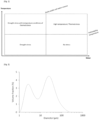
- At least 90% of the particles of the multiphase composition of the invention have a diameter comprised between 1 and 1000 ⁇ m, advantageously between 10 and 250 ⁇ m with a peak maximum preferably of between 10 ⁇ m and 100 ⁇ m as determined by laser diffraction.
- SF3 and SF4 are selected according to the desired solubility in lipophilic droplets or in water, from among the group comprising:
- the composition contains at least one OIL SF3 or WATER SF3 and at least one SF4, OIL SF3, WATER SF3 and SF4 being selected from among the group comprising the fatty acid sugar esters.
- fatty acid sugar esters may be used as both WATER SF3 and OIL SF3 since they are soluble in oil and in water at elevated temperatures, typically more than 80 °C, with different solubility constants. Indeed, sucrose esters can become soluble in water, but at high temperature only. It concerns for example sucrose stearate which is soluble in water at around 80 °C. Fatty acid sugar esters are also soluble in the oil droplets, but only to the condition that they undergo prior heating to their melting temperature, which can easily be determined by a person skilled in the art.
- esters are solids at ambient temperature. Being naturally lipophilic compounds, they are insoluble in the aqueous phase at a standard temperature of 20 °C and are therefore potent candidates for the role of SF4.
- the fatty acid sugar esters are saccharose stearate, saccharose palmitate and their polyesters, or mixtures thereof.
- the surfactant SF4 contains sucrose stearate or, advantageously, a mixture containing saccharose stearate and sucrose palmitate; in particular is a mixture containing:
- the surfactant SF4 is selected in the group consisting of sucrose stearate, preferably CAS number [25168-73-4 ] or [84066-95-5]; sucrose palmitate, preferably CAS [26446-38-8 ]; soy lecithin CAS [8002-43-5]; and mixtures thereof.
- the first surfactant in this case OIL SF3 or WATER SF3, or the second surfactant SF4 contain sucrose stearate or, advantageously, a mixture containing saccharose stearate and sucrose palmitate.
- the first surfactant (OIL SF3) and/or (WATER SF3) or the second surfactant (SF4) is a mixture containing:
- the first surfactant OIL SF3 and/or WATER SF3 or the second surfactant SF4 is sucrose stearate (preferably CAS number [25168-73-4 ] or [84066-95-5]).
- the first surfactant OIL SF3 or the second surfactant SF4 is sucrose palmitate, preferably CAS [26446-38-8 ].
- the first surfactant OIL SF3 is sucrose stearate (preferably CAS number [84066-95-5 ] or [25168-73-4]) and the second surfactant SF4 is sucrose palmitate, preferably CAS number [26446-38-8 ] or the first surfactant OIL SF3 is sucrose palmitate and the second surfactant SF4 is sucrose stearate.
- the first surfactant OIL SF3 is sucrose stearate (preferably CAS number [84066-95-5 ] or [25168-73-4]) or sucrose palmitate, preferably CAS number [26446-38-8] and the second surfactant SF4 is soy lecithin CAS [8002-43-5 ].
- the first surfactant (SF3) represents between 0.2% and 10% of the composition by weight
- the second surfactant (SF4) represents between 0.01% and 5% of the composition by weight.
- the composition contains at least one WATER SF3, at least one OIL SF3 and at least one SF4.
- WATER SF3 is selected from the group of polyoxyethylene sorbitan esters
- OIL SF3 is selected from the group of sorbitan esters
- SF4 is selected from the group of natural surfactants.
- WATER SF3 is polyethylene glycol sorbitan monooleate (Tween 80), OIL SF3 is sorbitan monolaurate (Span 20) and SF4 is soy lecithin ( CAS [8002-43-5 ]).
- WATER SF3 is selected from the group of polyoxyethylene sorbitan esters
- OIL SF3 is selected from the group of sorbitan esters
- SF4 is selected from the group comprising fatty acid sugar esters.
- WATER SF3 is Tween 20
- OIL SF3 is Span 85
- SF4 is sucrose stearate (preferably CAS number [25168-73-4 ] or [84066-95-5]).
- WATER SF3 is Tween 80
- OIL SF3 is Span 20
- SF4 is sucrose stearate (preferably CAS number [25168-73-4 ] or [84066-95-5]).
- composition of the invention contains:
- composition of the invention contains:
- composition of the invention contains:
- the weight ratio of the mixture of phytosterols to the surfactant (SF2) or to the first surfactant (SF3) and second surfactant (SF2 or SF4) is between 0.01 and 15, and advantageously between 0.1 and 5.
- the composition of the invention whether being formulated under the form of an aqueous solution, an emulsion or a suspo-emulsion or any kind of formulation known by the one skilled in the art, also contains at least one component selected from among the group including:
- composition of the invention advantageously comprises:
- the phytosterols composition formulated according to but not limitative to these embodiments and applied to a crop in an effective amount as a preventive treatment, i.e., at the early stage of the plant and prior to the onset of the stress, enabled a reduction in the harmful effects of abiotic stresses, notably the loss of dry matter and the resulting decrease in per-hectare yields.
- composition of the invention presents the advantages of improving water management, which benefits to plant growth and of reducing the number of days during which the cultivated plant is below the wilting point when thermal and then possibly drought stress occurs.
- the plant is thus more able to combat the deleterious effects of exposure to these abiotic stresses.
- the Applicant has also noted that in the case of high-temperature stress, the prophylactic application of the composition of the invention to a cultivated plant prior to the onset of this stress leads to a better use of EUSWR to inhibit the negative impact of said stress on the plant vital functions. As a result, dry matter production and/or yield are conserved such as if the plant was not subjected to high-temperature stress.
- the application of the composition of the invention to a cultivated plant prior to the onset of a thermal stress allows it overconsuming available soil water to fight against deleterious high temperatures, notably by reducing its internal temperature by evapotranspiration. Then, at the time of exposure to drought stress, the stomata close as there is no need to further perform evapotranspiration, therefore ensuring water management which allows to delay the moment when the wilting point will be reached and/or reduce the time spent below the wilting point, i.e., the time spent in the soil survival reserve (SSR) and, in fine, to ensure the growth of the plant and the preservation and/or improvement of the dry matter production and/or yield.
- SSR soil survival reserve
- the invention relates to a slurry resulting from the dilution of the composition as previously described.
- the viscosity of the slurry of the invention is less than or equal to 0.2 Pa ⁇ s (i.e., 200 cP), advantageously equal to or strictly higher than 10 -3 Pa.s (i.e., 1 cP), and less than or equal to 0.1 Pa ⁇ s (i.e., 100 cP).
- the viscosity is measured using an Anton Paar QC300 viscometer, and the measurement is made at ambient temperature with the DG26 measurement system.
- the pH of the slurry of the invention is between 5 and 8, preferably between 5 and 7, and is even more advantageously between 6 and 7.
- the mixture of phytosterols and the surfactant(s) of the invention are combined with at least one active ingredient.
- Plant growth regulator may be selected from the group consisting of:
- Fungicides and fungistatics may be selected among the group:
- Insecticidal compounds may be selected from the group consisting of:
- the traditional treatment of cultivated plants consists in applying active ingredients (a phytopharmaceutical product and/or a biocontrol product and/or a nutrient) to the cultivated plant in particular, where they provide an effect by the sole means of an interaction with the surface of the plant. Given the protective role played by the cuticle, they undergo little or no penetration into the plant by means of passive diffusion.
- active ingredients a phytopharmaceutical product and/or a biocontrol product and/or a nutrient
- the Applicant has noted that when the combination of phytosterols and of surfactants of the invention is further combined with at least one active ingredient, this facilitates the diffusion and passive penetration of the active ingredient into the plant cell by means of the cuticle and plant cell membrane passage mechanisms which were described previously.
- the composition or the slurry described in the invention therefore allows the presence of a higher concentration or quantity of active ingredient in the plant. On condition that the composition or slurry is applied preferably prior to the onset of the stress, a systemic action of the active ingredient in the plant is observed, leading in turn to an enhanced fight against biotic stresses.
- the composition or slurry makes it possible to decrease the doses of active ingredients used while guaranteeing the improved effectiveness of these active ingredients.
- the invention relates to the composition above disclosed, said composition containing at least one active ingredient as above mentioned.
- Another object of the invention is also an agricultural kit containing separately the composition of the invention (before dilution) and at least one active ingredient as described above.
- composition of the invention may be mixed by the farmer with an effective amount of the active ingredient and then diluted in order to obtain a slurry which is applied on the plant.
- Another option is to dilute the composition of the invention in order to obtain the slurry and only then, to add to the slurry the at least one active ingredient.
- the invention relates to a method of manufacture for the previously described multiphase composition that is composed of the following steps:
- the invention relates to a method of manufacture for the previously described multiphase composition that is composed of the following steps:
- a fluidifying agent, a solubilizing agent, and advantageously a wetting agent are added to the lipophilic phase and, where necessary, a chelating agent, a preservative, and/or an antioxidant are added to the aqueous phase.
- a wetting agent may be used in the water phase and antioxidant may be added in the oil phase and/or in the water phase.
- the fluidifying agent is polyethylene glycol, and advantageously polyethylene glycol with a molar mass of 200 or 400 g/mol.
- the wetting agent is a mixture of fatty acid methyl esters, preferably comprising methyl tetradecanoate, methyl octadecanoate and methyl hexadecanoate.
- the invention also relates to a composition obtainable by the above-mentioned processes.
- the invention relates to the use of the composition or slurry described previously in order to prevent the exposure of a cultivated plant to a thermal stress or a thermal stress preceded or followed by a drought stress.
- the plant is cultivated in fields or under controlled conditions, for example using hydroponics, in a pot or in a greenhouse; preferably, in the context of the invention, the plant is cultivated in a field.
- the compounds of the invention are not products that perform a specific type of activity, such as fungicides or biocides, makes it possible to consider an extensive spectrum of uses for a wide variety of crops, which can in particular improve the protection and therefore the profitability of minor crops for which the number of available phytopharmaceutical products is almost zero.
- composition was especially efficient for this specific effect on plants chosen from the group of soybean, corn, spring wheat, winter wheat, sunflower, spring barley, winter barley, millet, rapeseed, sorghum and cotton.
- composition or slurry of the invention is applied by spraying the leaves, by sprinkling, irrigation, drip irrigation or gravity irrigation of the cultivated plant, by incorporation into the soil, by addition to a hydroponic crop medium or by immersion, or any combination of these application methods.
- the composition is applied to the cultivated plant by foliar spraying at a dose of composition ranging from 0.1 L/ha (hectare) to 15 L/ha, preferably 1 L/ha to 5 L/ha.
- the required dose of the composition is diluted in water in order to obtain a slurry.
- the slurry is then applied on the plant at a volume of between 30 and 400 L/ha, advantageously between 50 and 200 L/ha.
- the composition contains 2.5% by weight of phytosterols and the required dose of composition ranges from 1 L/ha to 5 L/ha. This means that the dose of phytosterols which is applied on the plant is between 25 to 125 g/ha.
- the composition of the invention may not be applied directly on the plant and needs to be diluted to form a slurry. In the present embodiment, the slurry is applied on the plant, especially by foliar spraying at a volume of 50 to 200 L/ha.
- the slurry is preferably applied during a stage when the plant leaves cover the soil.
- the slurry of the invention is applied only once by foliar spraying and/or irrigation.
- the invention also relates to the use of the composition or slurry as described previously to improve the yield or dry matter production of a cultivated plant.
- the invention also relates to the use of the composition or slurry as described previously to promote deeper root development for a cultivated plant.
- the invention also relates to the use of the composition or slurry as described previously to control the opening or closing of the stomata of a cultivated plant.
- the invention also relates to the use of the composition or slurry as described previously to improve the vegetative development and/or the flowering of a cultivated plant.
- the invention also relates to the use of the composition or slurry as described previously to improve the water management of a crop when exposed to various abiotic stresses.
- compositions, the slurry, the method of manufacture of the composition of the invention, the treatment process for managing water, as well as the uses previously described present the advantages of corresponding exactly to societal demands relating to phytopharmaceutical products:
- composition according to the invention are manufactured comprising the following steps:
- particles of the dispersed surfactant (SF2) designated by 1 are much bigger than the lipophilic droplets designated by 2.
- composition according to the invention are manufactured comprising the following steps:
- Table 2 The description of the experimental setup is presented in Table 2.
- the composition of the invention used in this example is the one exemplified in Table 1, example 1.
- Table 2 Crop (variety) Grain corn (DKC 5065) Sowing density 100,000 grains/ha Setup Wide strips (0.105 ha) for the untreated (control) modality; and Wide strips (0.105 ha) for the modality treated with the slurry of formulation 1 as per example 1
- Table 3 Modality Treatment Application dose of the formulation 1 as per example 1 Application stage Control Untreated Control - - Treated Formulation 1 according to example 1 1 L/ha 12 leaves stage on day 0
- the slurry is obtained by diluting the composition 1 of example 1 in water and is applied only once, by foliar spraying, at a volume of 80 L/ha under the following conditions: temperature of 20 °C, relative humidity of 60% and wind ⁇ 10 km/h.
- a water balance carried out between sowing and harvesting of the crop shows the following elements.
- a high drought stress was observed (62 days below the wilting point in two different periods, one after treatment and the other at maturity, a total of 232 mm of rainfalls during the studied period).
- the presence of a repetition of high-temperature stress (24 days with maximum temperature > 30 °C) and the absence of rainfall (drought stress) resulted in a very high evapotranspiration demand (> 6 mm) over a long period which penalized yield elaboration.
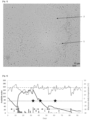
- Figure 4 summarizes the evolution of the available water (black scale) and air maximum temperature (gray scale) starting from the day of foliar spray of the composition of the invention according to example 1. On this figure are also highlighted the wilting point (black dotted line), the threshold temperature (dashed grey line) and the three successive runs of irrigation for the control (black stars), the treated modality having only the first run of irrigation on day 33.
- the main objective was to investigate the ability of the slurry of the formulation 1 of example 1 to manage water on maize grown on real field.
- the yield was estimated for a non-controlled modality and a modality treated with a slurry of the invention.
- Table 7 Modality Treatment Application dose of the formulation 1 as per example 1 Application stage Control Untreated Control (UC) - - Treated Formulation 1 according to example 1 1 L/ha 8-10 visible leaves, BBCH 17
- the slurry is obtained by diluting the formulation 1 of example 1 in water and is applied only once, by foliar spraying, at a volume of 1 L/ha under the following conditions: temperature of 29 °C, relative humidity of 65% and wind of 8 km/h.
- the probes are 0.6 m long tubes that are vertically buried into the soil. Inside the tube, sensors are positioned at 0.05, 0.15, 0.25, 0.35, 0.45 and 0.55 m levels. Each sensor surveys a 0.1 m soil layer/horizon (0.05 m above and 0.05 m below). Acquisitions are made simultaneously for all sensors at regular time intervals each 30 minutes.
- the water contents measured for each horizon are cumulated to obtain the total amount in the soil from 0 to 0.6 m depth.
- linear regression lines are fitted to the data observed over similar periods of time during which no inputs were made. The slopes thus obtained reflect the average amount of water consumed per day (mm/day).
- Standardized yield Raw yield ⁇ 100 ⁇ Humidity 100 ⁇ 15.5
- Figure 5 represents the evolution of the water soil reserve of maize (treated with a slurry resulting from the composition of example 1 or untreated), which is exposed first to thermal stress, then to several periods of hydric stress, those including sometimes temperatures higher than the temperature where corn may suffer from thermal stress.
- Figure 6 represents the evolution of the available water in the soil (solid black line) along with the determination of the wilting point (dashed black line).
- Table 8 represents the linear regression values for zones A to D for treated and non-treated plants, and full water consumption for same.
- phase A the plants are subjected to thermal stress because of the maximum temperature in the air (solid grey curve) being higher than the trigger temperature (dashed grey line).
- the treated maize (dashed black line) uses more water than control maize (solid black line).
- phase B to D the plants have already reached their wilting point, the plants are therefore subjected to hydric stress. In this case the consumption slope is reversed, and the treated maize uses less water than the control maize.
- a linear fit was performed through the curves, and the linear regression of the lines is mentioned in Table 8.
- phase A the plants which have been treated with the composition 1 of example 1 display a more pronounced slope, thus they accelerate the water consumption, given the fact that water is still available in the soil.
- the slopes for the plants which have been treated with the composition 1 of example 1 are lower than the slope of the control, non-treated plant, which means that they preserve the water consumption.
- the yields are 11.38 t/ha for the untreated control and 13.07 t/ha for the treated modality with the formulation 1 of example 1.
- the average yield increase due to the product was 1.69 t/ha, i.e., an increase of 14.8 %.
- the main objective was to investigate the ability of slurries prepared from two compositions of the invention (i.e., formulations 1 and 2 of example 1), to grant water management to winter wheat grown in greenhouse.
- formulations 1 and 2 of example 1 The following modalities were considered:
- Table 10 Crop (variety) Wheat, variety ULTIM Sowing density 10 seeds per grow pot Setup Greenhouse Type of soil Mixture of Bretenière soil and potting soil
- the slurry is obtained by diluting formulation 1 of example 1 or formulation 2 of example 1 in water at a volume of 1 L/ha and is applied only once, by foliar spraying. Stress is applied sequentially the following days after treatment, and re-watering is performed at the wilting point for each modality. A minimum of irrigation is ensured according to the phenotype of the plant. All modalities are subjected to the same pattern of thermal stress.
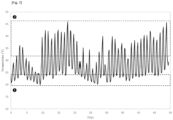
- Figure 7 shows the temperature pattern whose plants have been exposed, starting from the day of application of the product, when any, until harvest and determination of the yields.
- the water consumption regime of wheat is given in the Table 12.
- the irrigated modality gave the best performances in terms of fresh weight, followed by the two tested slurries prepared from composition of the invention.
- the stressed control gave lower performances. Dry weight.
- the irrigated modality gave the best performances in terms of fresh weight, followed by the slurry prepared from the example 1 of the invention, then the slurry prepared from the example 2 of the invention.
- the stressed control afforded the lower performances.
- the plants that have been treated according to the formulation 1 of example 1 or formulation 2 of example 1 of the invention are able to preserve yields compared with an irrigated plant.
- the main objective was to investigate the ability of slurries prepared from two compositions of the invention to grant water management to sunflower grown in greenhouse. These modalities were considered:
- Table 14 Crop (variety) Sunflower, variety FLAVIO Setup Greenhouse Type of soil Mixture of Bretenière soil and potting soil
- Table 15 Modality Treatment Application dose of the composition Application stage Control Untreated and Irrigated Control (UIC) - - Stressed Untreated and Stressed Control (USC) - - Treated Formulation 1 according to example 1 1 L/ha 3 weeks after seedling
- Treated Formulation 2 according to example 1 1 L/ha 3 weeks after seedling
- the slurry is obtained by diluting formulation 1 of example 1 or formulation 2 of example 1 in water at a volume of 1 L/ha and is applied only once, by foliar spraying. Stress is applied sequentially the following days after treatment, and re-watering is performed at the wilting point for each modality. A minimum of irrigation is ensured according to the phenotype of the plant. All modalities are subjected to the same pattern of thermal stress.
- the data collection method is identical is those described in section 4.1.3.
- the plants that have been treated according to the formulation 1 of example 1 or formulation 2 of example 1 of the invention are able to preserve yields compared with an irrigated plant.
Landscapes
- Life Sciences & Earth Sciences (AREA)
- Environmental Sciences (AREA)
- Zoology (AREA)
- Pest Control & Pesticides (AREA)
- Plant Pathology (AREA)
- Wood Science & Technology (AREA)
- Engineering & Computer Science (AREA)
- General Health & Medical Sciences (AREA)
- Dentistry (AREA)
- Health & Medical Sciences (AREA)
- Agronomy & Crop Science (AREA)
- Insects & Arthropods (AREA)
- Botany (AREA)
- Chemical & Material Sciences (AREA)
- Chemical Kinetics & Catalysis (AREA)
- General Chemical & Material Sciences (AREA)
- Agricultural Chemicals And Associated Chemicals (AREA)
Priority Applications (5)
| Application Number | Priority Date | Filing Date | Title |
|---|---|---|---|
| EP23305561.5A EP4445732A1 (fr) | 2023-04-13 | 2023-04-13 | Traitement préventif pour la conservation des rendements d'une culture cultivée soumise à au moins un stress thermique |
| PCT/EP2024/060043 WO2024213743A1 (fr) | 2023-04-13 | 2024-04-12 | Procédé de conservation ou d'amélioration du rendement d'une culture cultivée en champ exposée à au moins un stress abiotique |
| AU2024250719A AU2024250719A1 (en) | 2023-04-13 | 2024-04-12 | A method for preserving or enhancing yield of a field-cultivated crop exposed to at least one abiotic stress |
| ARP240100936A AR132423A1 (es) | 2023-04-13 | 2024-04-12 | Método para conservar o mejorar el rendimiento de un cultivo de campo expuesto al menos a un estrés abiótico |
| EP24716837.0A EP4694687A1 (fr) | 2023-04-13 | 2024-04-12 | Procédé de conservation ou d'amélioration du rendement d'une culture cultivée en champ exposée à au moins un stress abiotique |
Applications Claiming Priority (1)
| Application Number | Priority Date | Filing Date | Title |
|---|---|---|---|
| EP23305561.5A EP4445732A1 (fr) | 2023-04-13 | 2023-04-13 | Traitement préventif pour la conservation des rendements d'une culture cultivée soumise à au moins un stress thermique |
Publications (1)
| Publication Number | Publication Date |
|---|---|
| EP4445732A1 true EP4445732A1 (fr) | 2024-10-16 |
Family
ID=86329454
Family Applications (1)
| Application Number | Title | Priority Date | Filing Date |
|---|---|---|---|
| EP23305561.5A Withdrawn EP4445732A1 (fr) | 2023-04-13 | 2023-04-13 | Traitement préventif pour la conservation des rendements d'une culture cultivée soumise à au moins un stress thermique |
Country Status (1)
| Country | Link |
|---|---|
| EP (1) | EP4445732A1 (fr) |
Citations (9)
| Publication number | Priority date | Publication date | Assignee | Title |
|---|---|---|---|---|
| EP0289636A1 (fr) | 1986-02-13 | 1988-11-09 | Asahi Denka Kogyo Kabushiki Kaisha | Composition émulsifiée ou solubilisée de stérol |
| WO2009028626A1 (fr) | 2007-08-31 | 2009-03-05 | Kao Corporation | Procédé pour conférer une résistance au stress à une plante |
| WO2017153993A1 (fr) * | 2016-03-09 | 2017-09-14 | Technion Research And Development Foundation Ltd. | Formulations liposomales et leurs procédés d'utilisation en agriculture |
| WO2018229710A1 (fr) | 2017-06-15 | 2018-12-20 | Isagro S.P.A. | Concentrés de suspension de phytostérols et leur procédé de préparation |
| WO2019030442A1 (fr) | 2017-08-07 | 2019-02-14 | Elicit Plant | Composition a base de polyol(s) et de sterol(s) pour usage dans le domaine agricole |
| US20200163335A1 (en) * | 2017-08-07 | 2020-05-28 | Elicit Plant | Composition made from polyol(s) and sterol(s) for use in the agricultural field |
| CN113133466A (zh) * | 2020-01-19 | 2021-07-20 | 运城市嘉乐肥业有限公司 | 豆甾醇抗逆促长剂及其制备方法 |
| WO2021214406A1 (fr) * | 2020-04-20 | 2021-10-28 | Elicit Plant | Procede de traitement preventif d'une plante cultivee pour limiter la perte de matiere seche liee a un stress abiotique et/ou biotique |
| WO2023057640A1 (fr) * | 2021-10-08 | 2023-04-13 | Elicit Plant | Composition agricole à base de phytostérol et son utilisation |
-
2023
- 2023-04-13 EP EP23305561.5A patent/EP4445732A1/fr not_active Withdrawn
Patent Citations (10)
| Publication number | Priority date | Publication date | Assignee | Title |
|---|---|---|---|---|
| EP0289636A1 (fr) | 1986-02-13 | 1988-11-09 | Asahi Denka Kogyo Kabushiki Kaisha | Composition émulsifiée ou solubilisée de stérol |
| WO2009028626A1 (fr) | 2007-08-31 | 2009-03-05 | Kao Corporation | Procédé pour conférer une résistance au stress à une plante |
| WO2017153993A1 (fr) * | 2016-03-09 | 2017-09-14 | Technion Research And Development Foundation Ltd. | Formulations liposomales et leurs procédés d'utilisation en agriculture |
| WO2018229710A1 (fr) | 2017-06-15 | 2018-12-20 | Isagro S.P.A. | Concentrés de suspension de phytostérols et leur procédé de préparation |
| WO2019030442A1 (fr) | 2017-08-07 | 2019-02-14 | Elicit Plant | Composition a base de polyol(s) et de sterol(s) pour usage dans le domaine agricole |
| US20200163335A1 (en) * | 2017-08-07 | 2020-05-28 | Elicit Plant | Composition made from polyol(s) and sterol(s) for use in the agricultural field |
| US20200163338A1 (en) * | 2017-08-07 | 2020-05-28 | Elicit Plant | Composition made from polyol(s) and sterol(s) for use in the agricultural field |
| CN113133466A (zh) * | 2020-01-19 | 2021-07-20 | 运城市嘉乐肥业有限公司 | 豆甾醇抗逆促长剂及其制备方法 |
| WO2021214406A1 (fr) * | 2020-04-20 | 2021-10-28 | Elicit Plant | Procede de traitement preventif d'une plante cultivee pour limiter la perte de matiere seche liee a un stress abiotique et/ou biotique |
| WO2023057640A1 (fr) * | 2021-10-08 | 2023-04-13 | Elicit Plant | Composition agricole à base de phytostérol et son utilisation |
Non-Patent Citations (2)
| Title |
|---|
| CAS , no. 949109-75-5 |
| CAS, no. 110539-62-3 |
Similar Documents
| Publication | Publication Date | Title |
|---|---|---|
| EP4349170B1 (fr) | Composition agricole à base de phytostérol et son utilisation | |
| CA2644354C (fr) | Preparation de support de plantes, vehicule pour l'administration et la translocation de substances benefiques sur le plan phytologique et compositions les contenant | |
| EP3233761B1 (fr) | Alkynylpyrazoles comme inhibiteurs de nitrification | |
| EP3294690B1 (fr) | Utilisation des composés de thioéther propargyle en tant qu'inhibiteurs de nitrification | |
| AU2016214305A1 (en) | Pyrazole compounds as nitrification inhibitors | |
| WO2024074215A1 (fr) | Composition agricole à base de phytostérol et son utilisation | |
| EP4445732A1 (fr) | Traitement préventif pour la conservation des rendements d'une culture cultivée soumise à au moins un stress thermique | |
| EP4445733A1 (fr) | Procédé pour économiser l'eau utilisée dans l'irrigation d'une culture cultivée sur champ exposée à au moins un stress abiotique | |
| EP4694687A1 (fr) | Procédé de conservation ou d'amélioration du rendement d'une culture cultivée en champ exposée à au moins un stress abiotique | |
| WO2025061272A1 (fr) | Procédé de mise en correspondance de la teneur en phytostérol d'une composition agricole avec celle d'une espèce végétale cible pour améliorer la biostimulation | |
| WO2025061271A1 (fr) | Ajout exogène de mélanges de phytostérols spécifiques pour stimuler un espèce végétale cible | |
| BR112024006644B1 (pt) | Composição agrícola à base de fitosterol, kit agrícola, pasta, métodos de fabricação da referida composição e processo de tratamento preventivo de uma planta cultivada | |
| BR102023020586B1 (pt) | Composição agrícola multifásica, pasta, método de fabricação da composição e processo de tratamento preventivo | |
| BR102023020586A2 (pt) | Composição agrícola multifásica, pasta, método de fabricação da composição e processo de tratamento preventivo |
Legal Events
| Date | Code | Title | Description |
|---|---|---|---|
| PUAI | Public reference made under article 153(3) epc to a published international application that has entered the european phase |
Free format text: ORIGINAL CODE: 0009012 |
|
| STAA | Information on the status of an ep patent application or granted ep patent |
Free format text: STATUS: THE APPLICATION HAS BEEN PUBLISHED |
|
| AK | Designated contracting states |
Kind code of ref document: A1 Designated state(s): AL AT BE BG CH CY CZ DE DK EE ES FI FR GB GR HR HU IE IS IT LI LT LU LV MC ME MK MT NL NO PL PT RO RS SE SI SK SM TR |
|
| STAA | Information on the status of an ep patent application or granted ep patent |
Free format text: STATUS: THE APPLICATION IS DEEMED TO BE WITHDRAWN |
|
| 18D | Application deemed to be withdrawn |
Effective date: 20250417 |