EP4445929A1 - Dispositif d'administration de médicament connecté - Google Patents
Dispositif d'administration de médicament connecté Download PDFInfo
- Publication number
- EP4445929A1 EP4445929A1 EP23167934.1A EP23167934A EP4445929A1 EP 4445929 A1 EP4445929 A1 EP 4445929A1 EP 23167934 A EP23167934 A EP 23167934A EP 4445929 A1 EP4445929 A1 EP 4445929A1
- Authority
- EP
- European Patent Office
- Prior art keywords
- drug delivery
- plunger
- plunger rod
- delivery device
- proximal end
- Prior art date
- Legal status (The legal status is an assumption and is not a legal conclusion. Google has not performed a legal analysis and makes no representation as to the accuracy of the status listed.)
- Pending
Links
Images





Classifications
-
- A—HUMAN NECESSITIES
- A61—MEDICAL OR VETERINARY SCIENCE; HYGIENE
- A61M—DEVICES FOR INTRODUCING MEDIA INTO, OR ONTO, THE BODY; DEVICES FOR TRANSDUCING BODY MEDIA OR FOR TAKING MEDIA FROM THE BODY; DEVICES FOR PRODUCING OR ENDING SLEEP OR STUPOR
- A61M5/00—Devices for bringing media into the body in a subcutaneous, intra-vascular or intramuscular way; Accessories therefor, e.g. filling or cleaning devices, arm-rests
- A61M5/178—Syringes
- A61M5/31—Details
- A61M5/315—Pistons; Piston-rods; Guiding, blocking or restricting the movement of the rod or piston; Appliances on the rod for facilitating dosing ; Dosing mechanisms
- A61M5/31565—Administration mechanisms, i.e. constructional features, modes of administering a dose
- A61M5/31566—Means improving security or handling thereof
- A61M5/31568—Means keeping track of the total dose administered, e.g. since the cartridge was inserted
-
- A—HUMAN NECESSITIES
- A61—MEDICAL OR VETERINARY SCIENCE; HYGIENE
- A61M—DEVICES FOR INTRODUCING MEDIA INTO, OR ONTO, THE BODY; DEVICES FOR TRANSDUCING BODY MEDIA OR FOR TAKING MEDIA FROM THE BODY; DEVICES FOR PRODUCING OR ENDING SLEEP OR STUPOR
- A61M5/00—Devices for bringing media into the body in a subcutaneous, intra-vascular or intramuscular way; Accessories therefor, e.g. filling or cleaning devices, arm-rests
- A61M5/178—Syringes
- A61M5/31—Details
- A61M5/315—Pistons; Piston-rods; Guiding, blocking or restricting the movement of the rod or piston; Appliances on the rod for facilitating dosing ; Dosing mechanisms
- A61M5/31511—Piston or piston-rod constructions, e.g. connection of piston with piston-rod
- A61M5/31515—Connection of piston with piston rod
-
- A—HUMAN NECESSITIES
- A61—MEDICAL OR VETERINARY SCIENCE; HYGIENE
- A61M—DEVICES FOR INTRODUCING MEDIA INTO, OR ONTO, THE BODY; DEVICES FOR TRANSDUCING BODY MEDIA OR FOR TAKING MEDIA FROM THE BODY; DEVICES FOR PRODUCING OR ENDING SLEEP OR STUPOR
- A61M5/00—Devices for bringing media into the body in a subcutaneous, intra-vascular or intramuscular way; Accessories therefor, e.g. filling or cleaning devices, arm-rests
- A61M5/178—Syringes
- A61M5/20—Automatic syringes, e.g. with automatically actuated piston rod, with automatic needle injection, filling automatically
-
- A—HUMAN NECESSITIES
- A61—MEDICAL OR VETERINARY SCIENCE; HYGIENE
- A61M—DEVICES FOR INTRODUCING MEDIA INTO, OR ONTO, THE BODY; DEVICES FOR TRANSDUCING BODY MEDIA OR FOR TAKING MEDIA FROM THE BODY; DEVICES FOR PRODUCING OR ENDING SLEEP OR STUPOR
- A61M5/00—Devices for bringing media into the body in a subcutaneous, intra-vascular or intramuscular way; Accessories therefor, e.g. filling or cleaning devices, arm-rests
- A61M5/14—Infusion devices, e.g. infusing by gravity; Blood infusion; Accessories therefor
- A61M5/168—Means for controlling media flow to the body or for metering media to the body, e.g. drip meters, counters ; Monitoring media flow to the body
- A61M5/16831—Monitoring, detecting, signalling or eliminating infusion flow anomalies
-
- A—HUMAN NECESSITIES
- A61—MEDICAL OR VETERINARY SCIENCE; HYGIENE
- A61M—DEVICES FOR INTRODUCING MEDIA INTO, OR ONTO, THE BODY; DEVICES FOR TRANSDUCING BODY MEDIA OR FOR TAKING MEDIA FROM THE BODY; DEVICES FOR PRODUCING OR ENDING SLEEP OR STUPOR
- A61M5/00—Devices for bringing media into the body in a subcutaneous, intra-vascular or intramuscular way; Accessories therefor, e.g. filling or cleaning devices, arm-rests
- A61M5/178—Syringes
- A61M5/31—Details
- A61M5/315—Pistons; Piston-rods; Guiding, blocking or restricting the movement of the rod or piston; Appliances on the rod for facilitating dosing ; Dosing mechanisms
- A61M5/31511—Piston or piston-rod constructions, e.g. connection of piston with piston-rod
-
- A—HUMAN NECESSITIES
- A61—MEDICAL OR VETERINARY SCIENCE; HYGIENE
- A61M—DEVICES FOR INTRODUCING MEDIA INTO, OR ONTO, THE BODY; DEVICES FOR TRANSDUCING BODY MEDIA OR FOR TAKING MEDIA FROM THE BODY; DEVICES FOR PRODUCING OR ENDING SLEEP OR STUPOR
- A61M5/00—Devices for bringing media into the body in a subcutaneous, intra-vascular or intramuscular way; Accessories therefor, e.g. filling or cleaning devices, arm-rests
- A61M5/178—Syringes
- A61M5/31—Details
- A61M5/315—Pistons; Piston-rods; Guiding, blocking or restricting the movement of the rod or piston; Appliances on the rod for facilitating dosing ; Dosing mechanisms
- A61M5/31533—Dosing mechanisms, i.e. setting a dose
- A61M5/31545—Setting modes for dosing
- A61M5/31546—Electrically operated dose setting, e.g. input via touch screen or plus/minus buttons
-
- A—HUMAN NECESSITIES
- A61—MEDICAL OR VETERINARY SCIENCE; HYGIENE
- A61M—DEVICES FOR INTRODUCING MEDIA INTO, OR ONTO, THE BODY; DEVICES FOR TRANSDUCING BODY MEDIA OR FOR TAKING MEDIA FROM THE BODY; DEVICES FOR PRODUCING OR ENDING SLEEP OR STUPOR
- A61M5/00—Devices for bringing media into the body in a subcutaneous, intra-vascular or intramuscular way; Accessories therefor, e.g. filling or cleaning devices, arm-rests
- A61M5/178—Syringes
- A61M5/31—Details
- A61M5/315—Pistons; Piston-rods; Guiding, blocking or restricting the movement of the rod or piston; Appliances on the rod for facilitating dosing ; Dosing mechanisms
- A61M5/31565—Administration mechanisms, i.e. constructional features, modes of administering a dose
- A61M5/31566—Means improving security or handling thereof
- A61M5/3157—Means providing feedback signals when administration is completed
-
- A—HUMAN NECESSITIES
- A61—MEDICAL OR VETERINARY SCIENCE; HYGIENE
- A61M—DEVICES FOR INTRODUCING MEDIA INTO, OR ONTO, THE BODY; DEVICES FOR TRANSDUCING BODY MEDIA OR FOR TAKING MEDIA FROM THE BODY; DEVICES FOR PRODUCING OR ENDING SLEEP OR STUPOR
- A61M5/00—Devices for bringing media into the body in a subcutaneous, intra-vascular or intramuscular way; Accessories therefor, e.g. filling or cleaning devices, arm-rests
- A61M5/178—Syringes
- A61M5/31—Details
- A61M5/315—Pistons; Piston-rods; Guiding, blocking or restricting the movement of the rod or piston; Appliances on the rod for facilitating dosing ; Dosing mechanisms
- A61M5/31565—Administration mechanisms, i.e. constructional features, modes of administering a dose
- A61M5/31576—Constructional features or modes of drive mechanisms for piston rods
- A61M2005/31588—Constructional features or modes of drive mechanisms for piston rods electrically driven
-
- A—HUMAN NECESSITIES
- A61—MEDICAL OR VETERINARY SCIENCE; HYGIENE
- A61M—DEVICES FOR INTRODUCING MEDIA INTO, OR ONTO, THE BODY; DEVICES FOR TRANSDUCING BODY MEDIA OR FOR TAKING MEDIA FROM THE BODY; DEVICES FOR PRODUCING OR ENDING SLEEP OR STUPOR
- A61M2205/00—General characteristics of the apparatus
- A61M2205/33—Controlling, regulating or measuring
- A61M2205/3317—Electromagnetic, inductive or dielectric measuring means
-
- A—HUMAN NECESSITIES
- A61—MEDICAL OR VETERINARY SCIENCE; HYGIENE
- A61M—DEVICES FOR INTRODUCING MEDIA INTO, OR ONTO, THE BODY; DEVICES FOR TRANSDUCING BODY MEDIA OR FOR TAKING MEDIA FROM THE BODY; DEVICES FOR PRODUCING OR ENDING SLEEP OR STUPOR
- A61M2205/00—General characteristics of the apparatus
- A61M2205/33—Controlling, regulating or measuring
- A61M2205/3379—Masses, volumes, levels of fluids in reservoirs, flow rates
-
- A—HUMAN NECESSITIES
- A61—MEDICAL OR VETERINARY SCIENCE; HYGIENE
- A61M—DEVICES FOR INTRODUCING MEDIA INTO, OR ONTO, THE BODY; DEVICES FOR TRANSDUCING BODY MEDIA OR FOR TAKING MEDIA FROM THE BODY; DEVICES FOR PRODUCING OR ENDING SLEEP OR STUPOR
- A61M2205/00—General characteristics of the apparatus
- A61M2205/35—Communication
- A61M2205/3546—Range
- A61M2205/3553—Range remote, e.g. between patient's home and doctor's office
-
- A—HUMAN NECESSITIES
- A61—MEDICAL OR VETERINARY SCIENCE; HYGIENE
- A61M—DEVICES FOR INTRODUCING MEDIA INTO, OR ONTO, THE BODY; DEVICES FOR TRANSDUCING BODY MEDIA OR FOR TAKING MEDIA FROM THE BODY; DEVICES FOR PRODUCING OR ENDING SLEEP OR STUPOR
- A61M5/00—Devices for bringing media into the body in a subcutaneous, intra-vascular or intramuscular way; Accessories therefor, e.g. filling or cleaning devices, arm-rests
- A61M5/178—Syringes
- A61M5/31—Details
- A61M5/3129—Syringe barrels
- A61M5/3137—Specially designed finger grip means, e.g. for easy manipulation of the syringe rod
Definitions
- the present disclosure relates generally to drug delivery devices and components therefor, and in particular, to components allowing for detection and communication of the injection status of drug delivery devices.
- the present disclosure also relates generally to systems for detecting initiation and cessation of drug delivery with a drug delivery device, as well as the progress of drug delivery, communicating such drug delivery information to a mobile device associated with a user of the drug delivery device.
- Drug delivery devices have traditionally lacked features that would allow a healthcare provider to automatically record or capture an injection status of drug delivery device to confirm appropriate administration of medicaments. Ensuring timely, appropriate administration of some medicaments can be critical, particularly, for example, in the instance of the evaluation of new drugs in clinical trials, where accurate information is essential.
- While some devices provide the ability to communicate certain types of information, for example as described in International Patent Application Publication Nos. WO 2016/087512 , WO 2017/070391 , WO 2018/111969 , WO 2018/213837 , and WO 2021/094797 , and in U.S. Patent Application Publication Nos. 2019/0083708 , 2019/0321555 , and 2019/0344019 , a need exists in the art for a cost-effective device that accurately detects both initiation and cessation of drug delivery, as well as the current progress of drug delivery from the drug delivery device, and can communicate this drug delivery information to appropriate stakeholders, in a timely fashion.
- a plunger device for a drug delivery device includes a plunger rod having a proximal end and a distal end configured to be attached to a stopper, at least one tracking element operatively connected to an outer surface of the plunger rod, the at least one tracking element extending along a longitudinal axis of the plunger rod, at least one power supply operatively connected to the at least one tracking element, and at least one current sensing device operatively connected to the at least one power supply and configured to detect an electrical contact established between the at least one tracking element and a conductive element external to the plunger rod.
- the plunger rod is configured to be used with a manual syringe.
- the proximal end of the plunger rod includes a housing having a proximal end configured to be contacted by a user's thumb during drug delivery, a distal end attached to the proximal end of the plunger rod, and a sidewall therebetween defining an interior.
- the proximal end of the housing is displaceable relative to the distal end of the housing when a distally-directed force is applied by the user during drug delivery.
- the at least one tracking element includes two tracking elements positioned on the outer surface of the plunger rod opposite one another.
- the at least one tracking element is a conductive strip.
- the at least one power supply includes a battery.
- the plunger device further includes a force sensor configured to identify a pressure applied to the proximal end of the plunger rod.
- the at least one tracking element extends from the proximal end of the plunger rod to the distal end of the plunger rod.
- the plunger device further includes a communication interface for issuing a signal when the electrical contact has been established between the at least one tracing element and the conductive element external to the plunger rod.
- a drug delivery device in accordance with an aspect of the invention, includes a proximal end, a distal end, and a barrel therebetween defining an interior configured to receive a medicament.
- the device further includes a plunger device received at least partially within the interior.
- the plunger device includes a plunger rod having a proximal end and a distal end configured to be attached to a stopper, at least one tracking element operatively connected to an outer surface of the plunger rod, the at least one tracking element extending along a longitudinal axis of the plunger rod, at least one power supply operatively connected to the at least one tracking element, and at least one current sensing device operatively connected to the at least one power supply and configured to detect an electrical contact established between the at least one tracking element and a conductive element external to the plunger rod.
- the drug delivery device includes a backstop operatively connected to a finger flange provided on the proximal end of the drug delivery device, the backstop comprising the conductive element external to the plunger rod.
- the drug delivery device includes a ring operatively connected to the drug delivery device and configured to receive the plunger rod, the ring comprising the conductive element external to the plunger rod.
- a method of monitoring an injection procedure of a drug delivery device includes providing a drug delivery device.
- the drug delivery device includes a proximal end, a distal end, and a barrel therebetween defining an interior configured to receive a medicament.
- the device further includes a plunger device received at least partially within the interior.
- the plunger device includes a plunger rod having a proximal end and a distal end configured to be attached to a stopper, at least one tracking element operatively connected to an outer surface of the plunger rod, the at least one tracking element extending along a longitudinal axis of the plunger rod, at least one power supply operatively connected to the at least one tracking element, and at least one current sensing device operatively connected to the at least one power supply and configured to detect an electrical contact established between the at least one tracking element and a conductive element external to the plunger rod.
- the method further includes receiving, with the at least one current sensor device, a first signal indicating that the electrical contact between the at least one tracking element and the conductive element external to the plunger rod has been established.
- the method further includes transmitting, with at least one communication interface, the first signal to a remote device, and receiving, with the at least current sensing device, a second signal indicating a resistance of an electrical circuit established between the at least one tracking element and the conductive element external to the plunger rod.
- the method further includes transmitting, with the at least one communication interface, the second signal to the remote device.
- the at least one current sensing device is configured to receive signals of the resistance of the electrical circuit during the entire injection procedure.
- any numerical range recited herein is intended to include all values and sub-ranges subsumed therein.
- a range of "1 to 10" is intended to include all sub-ranges between (and including) the recited minimum value of 1 and the recited maximum value of 10, that is, having a minimum value equal to or greater than 1 and a maximum value of equal to or less than 10.
- the terms “communication” and “communicate” refer to the receipt or transfer of one or more signals, messages, commands, or other type of data.
- one unit e.g., any device, system, or component thereof
- to be in communication with another unit means that the one unit is able to directly or indirectly receive data from and/or transmit data to the other unit. This may refer to a direct or indirect connection that is wired and/or wireless in nature.
- two units may be in communication with each other even though the data transmitted may be modified, processed, relayed, and/or routed between the first and second unit.
- a first unit may be in communication with a second unit even though the first unit passively receives data and does not actively transmit data to the second unit.
- a first unit may be in communication with a second unit if an intermediary unit processes data from one unit and transmits processed data to the second unit.
- any known electronic communication protocols and/or algorithms can be used such as, for example, TCP/IP (including HTTP and other protocols), WLAN (including 902.11a/b/g/n and other radio frequency-based protocols and methods), analog transmissions, Global System for Mobile Communications (GSM), 3G/4G/LTE, BLLTETOOTH, NFC, RFID, ZigBee, EnOcean, TransferJet, Wireless USB, and the like known to those of skill in the art.
- a message may refer to a network packet (e.g., a data packet and/or the like) that includes data.
- computing device may refer to one or more electronic devices configured to process data.
- a computing device may, in some examples, include the necessary components to receive, process, and output data, such as a processor, a display, a memory, an input device, a network interface, and/or the like.
- a computing device may be a mobile device.
- a mobile device may include a cellular phone (e.g., a smartphone or standard cellular phone), a portable computer, a wearable device (e.g., watches, glasses, lenses, clothing, and/or the like), a personal digital assistant (PDA), and/or other like devices.
- a computing device may also be a desktop computer or other form of non-mobile computer.
- a plunger for a drug delivery device a drug delivery device including such a plunger, and systems and methods including use of such a plunger, for monitoring delivery of a medicament with the drug delivery device.
- the devices, systems, and methods described herein improve upon traditional devices and methods of determining administration of medicaments, by enabling timely and accurate monitoring of drug delivery by relevant stakeholders in a cost-effective manner, improving, for example, clinical trials for newly-developed medicaments.
- a drug delivery device 100 with a plunger device 200 shown is a drug delivery device 100 with a plunger device 200. While a manual syringe is exemplified in FIG. 1 , those of skill in the art will appreciate that the components of the plunger device 200 can be utilized in any type of drug delivery device, including autoinjectors, wearable injectors, pump devices, and the like.
- the drug delivery device 100 exemplified in FIGS. 1A and 1B includes a distal end 112, proximal end 114, and barrel 110 therebetween defining an interior configured to hold one or more medicaments.
- Drug delivery device 100 can be formed of any suitable material, including glass or plastics.
- Barrel 110 can be coated with any known coating(s), as appropriate to decrease friction between components and/or reduce interactions between the material of barrel 110 and any medicaments held within drug delivery device 100, including polydimethylsiloxane-based coatings that are optionally crosslinked.
- Coatings for decreasing friction between a stopper and sidewall and/or for reducing interactions between the sidewall and the medicament, for example siloxane-based coatings are known to those of skill in the art, and are described in, for example, U.S. Patent Application Publication Nos. 2014/0221934 and 2014/0110297 , the contents of which are incorporated herein by reference in their entirety.
- drug delivery device 100 includes a needle (not shown) at a distal end thereof.
- Suitable needles can be of any useful gauge, can be formed of any suitable material, and can be fixed to distal end 112 of drug delivery device 100, or can be removable.
- Drug delivery device 100 can include any number of suitable safety features, including a rigid needle shield (RNS) for protecting any needles that may be included, a cap 115, and/or a safety device 118, such as that shown in FIGS. 1A and 1B .
- RNSs are known in the art, and can include an inner, elastomeric portion that encases an injection needle, and an outer, rigid plastic portion. Suitable cap assemblies are described in, for example, International Patent Application Publication No.
- Suitable safety devices 118 can include those that prevent reuse of the syringe, those that shield any needles before and/or after delivery, and the like, as are known to those of skill in the art.
- safety devices are described in U.S. Patent No. 10,702,663 , and are available commercially from Becton Dickinson and Company under the tradename UltraSafe.
- safety device 118 can interact with plunger device 200 to indicate end of drug delivery.
- drug delivery device 100 can include at proximal end 114 thereof one or more finger flange(s) 116, for assisting a user in gripping drug delivery device 100.
- one or more finger flange(s) 116 can interact with plunger rod 200 to indicate end of drug delivery.
- plunger device 200 can include a plunger rod 202 extending between a distal end 204 and a proximal end 206.
- Distal end 204 of plunger rod 202 can be configured to interact, detachably or fixedly, with a stopper 205.
- Stopper 205 can be formed of any material, such as elastomeric materials, known to those in the art to be suitable, such as plastics, natural rubbers, synthetic rubbers, and the like.
- a useful stopper is formed of a natural or synthetic rubber.
- the rubber is butyl rubber (IIR), isoprene rubber (IR), butadiene rubber (BR), styrene-butadiene rubber (SBR), ethylene-propylene rubber (EPM), ethylene-propylene-diene rubber (EPDM), chlorosulphonated polyethylene (CSM), ethylene-vinyl acetate copolymer (EVA), styrene-isoprene rubber (SIR), thermoplastic elastomers, and/or natural rubbers.
- IIR isoprene rubber
- BR butadiene rubber
- SBR styrene-butadiene rubber
- EPM ethylene-propylene rubber
- EPDM ethylene-propylene-diene rubber
- CSM chlorosulphonated polyethylene
- EVA ethylene-vinyl acetate copolymer
- SIR styrene-isoprene rubber
- thermoplastic elastomers thermoplastic elastomers
- the stopper can be formed of an elastomeric copolymer, including, without limitation, thermoplastic elastomers, thermoplastic vulcanizates, styrene copolymers such as styrene-butadiene (SBR or SBS) copolymers, styrene-isoprene (SIS) block polymers, or styrene-isoprene/butadiene (SIBS).
- SBR or SBS styrene-butadiene
- SIS styrene-isoprene
- SIBS styrene-isoprene/butadiene
- Stopper 205 can optionally be coated with any known coating(s), as appropriate, including polydimethylsiloxane-based coatings that are optionally crosslinked. Coatings for decreasing friction between a stopper and sidewall and/or for reducing interactions between the material of the stopper and the medicament, for example siloxane-based coatings, are known to those of skill in the art, and are described in, for example, U.S. Patent Application Publication Nos. 2014/0221934 and 2014/0110297 , the contents of which are incorporated herein by reference in their entirety.
- Plunger device 200 can include at proximal end 206 thereof a connection module 250, having a housing 252 having a proximal end 254 and a distal end 256 defining an interior.
- Connection module housing 252 can be formed of any suitable material, including plastics.
- proximal end 254 of housing 252 includes a displaceable thumb pad 258, such that when a user applies a distally-directed force thereto during a drug delivery procedure, thumb pad 258 and/or proximal end 254 of housing 252 is displaced distally.
- proximal end 254 of housing 252 can interact with a switch within housing 252 to indicate initiation of drug delivery.
- plunger device 200 can include a case 251, to protect connection module 250 and, for example, prevent a force from acting on thumb pad 258 and/or proximal end 254 of housing 252 and inadvertently displacing proximal end 254 of housing 252.
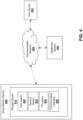
- FIG. 4 is a diagram of an example environment in which devices, systems, and/or methods, described herein, may be implemented.
- the environment can include drug delivery device 800, user device 802, healthcare system 804, and/or communication network 806.
- Drug delivery device 800, user device 802, and healthcare system 804 may interconnect (e.g., establish a connection to communicate) via wired connections, wireless connections, or a combination of wired and wireless connections.
- Drug delivery device 800 which can be a syringe, autoinjector, wearable injector, and/or pump as described herein, can include, as described above, plunger rod 810 including first switch 820, second switch 830, processor 840, and communication interface 850. As described above, drug delivery device 800 can be configured to communicate with a user device 802, such as a computing device as described herein.
- Communication network 806 may include one or more wired and/or wireless networks.
- communication network 806 may include a BLLTETOOTH connection (e.g., between drug delivery device 800 and user device 802), a cellular network (e.g., a long-term evolution (LTE) network, a third generation (3G) network, a fourth generation (4G) network, a fifth generation (5G) network, a code division multiple access (CDMA) network, etc.), a public land mobile network (PLMN), a local area network (LAN), a wide area network (WAN), a metropolitan area network (MAN), a telephone network (e.g., the public switched telephone network (PSTN) and/or the like), a private network, an ad hoc network, an intranet, the Internet, a fiber optic-based network, a cloud computing network, and/or the like, and/or a combination of some or all of these or other types of networks.
- LTE long-term evolution
- 3G third generation
- 4G fourth generation
- User device 802 can be a computing device as described herein, in some non-limiting embodiments or aspects, a smartphone. User device 802 can be programmed or configured to communicate, for example through communication network 806, with a healthcare system 804, for example through a mobile application executable on user device 802.
- Healthcare system 804 may include a server, a group of servers, and/or other like devices. More than one healthcare system 804 can be provided, for example, a system associated with a device manufacturer, a system associated with a pharmaceutical manufacturer, a system associated with a healthcare provider, a system associated with clinical research, a system associated with a government agency, and/or a system associated with a study sponsor, for example a sponsor of a clinical trial.
- a computing device 900 may correspond to component within a connection module of a drug delivery device as described herein, a user device as described herein, and/or a healthcare system as described herein.
- a computing device 900 may include bus 902, processor 904, memory 906, storage component 908, input component 910, output component 912, and/or communication interface 914.
- Bus 902 may include a component that permits communication among the components of computing device 900.
- processor 904 may be implemented in hardware, software, or a combination of hardware and software.
- processor 904 may include a processor (e.g., a central processing unit (CPU), a graphics processing unit (GPU), an accelerated processing unit (APU), and/or the like), a microprocessor, a digital signal processor (DSP), and/or any processing component (e.g., a field-programmable gate array (FPGA), an application-specific integrated circuit (ASIC), and/or the like) that can be programmed to perform a function.
- Memory 906 may include random access memory (RAM), read-only memory (ROM), and/or another type of dynamic or static storage memory (e.g., flash memory, magnetic memory, optical memory, and/or the like) that stores information and/or instructions for use by processor 904.
- RAM random access memory
- ROM read-only memory
- static storage memory e.g., flash memory, magnetic memory, optical
- Storage component 908 may store information and/or software related to the operation and use of computing device 900.
- storage component 908 may include a hard disk (e.g., a magnetic disk, an optical disk, a magneto-optic disk, a solid state disk, and/or the like), a compact disc (CD), a digital versatile disc (DVD), a floppy disk, a cartridge, a magnetic tape, and/or another type of computer-readable medium, along with a corresponding drive.
- Input component 910 may include a component that permits computing device 900 to receive information, such as via user input (e.g., a touch screen display, a keyboard, a keypad, a mouse, a button, a switch, a microphone, and/or the like). Additionally or alternatively, input component 910 may include a sensor for sensing information (e.g., a global positioning system (GPS) component, an accelerometer, a gyroscope, an actuator, and/or the like). Output component 912 may include a component that provides output information from a computing device (e.g., a display, a speaker, one or more light-emitting diodes (LEDs), and/or the like).
- a computing device e.g., a display, a speaker, one or more light-emitting diodes (LEDs), and/or the like.
- LEDs light-emitting diodes
- Communication interface 914 may include a transceiver-like component (e.g., a transceiver, a separate receiver, and transmitter, etc.) that enables device to communicate with other devices, such as via a wired connection, a wireless connection, or a combination of wired and wireless connections.
- Communication interface 914 may permit computing device 900 to transmit and/or receive information from another device.
- communication interface 914 may include an Ethernet interface, an optical interface, a coaxial interface, an infrared interface, a radio frequency (RF) interface, a universal serial bus (USB) interface, a Wi-Fi ® interface, a cellular network interface, BLLTETOOTH interface, and/or the like.
- RF radio frequency
- USB universal serial bus
- communication interface 914 does not operate through near field communication.
- Suitable communication protocols and methods for securing communications between communication interface 914 and a communication interface of another device can include encryption, e.g., using a secure socket layer (SSL) (e.g., by using public/private key pairs as are known in the art). Additional security protocols are disclosed in, for example, U.S. Patent Nos. 9,445,264 and 9,463,325 , the contents of which are hereby incorporated by reference in their entirety.
- a communication interface 914 is provided on the plunger rod.
- communication interface 914 is configured to transmit data, but is not configured to receive data transmitted by a computing device, for example a user's smartphone.
- a computing device may perform one or more processes described herein. A computing device may perform these processes based on processor 904 executing software instructions stored by a computer-readable medium, such as memory 906 and/or storage component 908, and/or being instructed by a separate computing device.
- a computer-readable medium e.g., a non-transitory computer-readable medium
- a non-transitory memory device includes memory space located inside of a single physical storage device or memory space spread across multiple physical storage devices.
- Software instructions may be read into memory 906 and/or storage component 908 from another computer-readable medium or from another device via communication interface 914.
- software instructions stored in memory 906 and/or storage component 908 may cause processor 904 to perform one or more processes described herein.
- hardwired circuitry may be used in place of or in combination with software instructions to perform one or more processes described herein.
- drug delivery device 800 includes a plunger device 810 as described above, including a first switch 820 and second switch 830 in communication with processor 840.
- Processor 840 is in communication with communication interface 850.
- the plunger device 810, through communication interface 850, may thus be in communication with a user's computing device 802, such as a smartphone, having its own associated communication interface and processor, as well as memory, storage component, bus, input component, and/or output component.
- plunger device 810 is in one-way communication with a user's computing device 802, e.g., the plunger device 810 can only transmit data to the user device 802, and cannot receive data from the user device 802.
- a processor associated with user device 802 can be programmed or configured, for example based on a mobile application stored in memory and/or storage component, to place communication interface associated with user device 802 in a sleep mode, until communication interface 850 transmits data from plunger device 810.
- first switch 820 upon a user depressing the thumb pad at proximal end of plunger device 810, first switch 820 is activated. As first switch 820 is in communication with processor 840, processor 840 receives a first signal from first switch 820, generates first time data, and transmits, with communication interface 850, first time data, optionally with one or more identifiers (e.g., a device identifier and/or an identifier associated with the communication interface 850), to user device 802. In non-limiting embodiments or aspects, additional data, such as data relating to power level of the battery, a counter value, and/or other data relating to the functioning of drug delivery device 800.
- additional data such as data relating to power level of the battery, a counter value, and/or other data relating to the functioning of drug delivery device 800.
- first time data and/or one or more identifiers are encrypted before being transmitted to user device 802.
- processor accepts the data transmitted by communication interface 850 of drug delivery device 800 only if certain conditions are met.
- the one or more conditions can include that any message received from drug delivery device 800 includes one or more of an identifier associated with the communication interface 850, an identifier associated with the drug delivery device 800, and/or a first identifier (associated, for example, with first signal), associated with activation of the first switch 820.
- the message received from drug delivery device upon activation of first switch 820 is accepted by user device 802 if, following a check, the message is the first transmitted message including the first identifier, indicating that the message has not previously been transmitted by drug delivery device 800.
- the message is accepted by user device 802 if, following a check, the combination of the first identifier and an identifier associated with the drug delivery device 800 and/or communication interface 850 has not previously been transmitted to user device 802.
- drug delivery device 800 continuously transmits data during a drug delivery process.
- user device 802 can be programmed or configured to not accept subsequent message(s) that include the first identifier.
- user device 802 terminates any connection with plunger device 810, and connection is not reestablished until a second identifier is included in a transmitted message, as described below.
- user device 802 can, with a processor (e.g, processor 904), generate a first timestamp from the first time data, and may transmit the first timestamp (optionally with one or more identifiers associated with drug delivery device 800 as described herein) to healthcare system 804.
- a processor e.g, processor 904
- the second switch 830 is activated.
- processor 840 receives a signal from second switch 830 generates second time data, and transmits, with communication interface 850, second time data, optionally with one or more identifiers (e.g., a device identifier and/or an identifier associated with the communication interface 850), to user device 802.
- second time data and/or one or more identifiers are encrypted before being transmitted to user device 802.
- processor accepts the data transmitted by drug delivery device 800 only if certain conditions are met.
- the one or more conditions can include that any message received from drug delivery device 800 includes one or more of an identifier associated with the communication interface 850, an identifier associated with the drug delivery device 800, and/or a second identifier associated with activation of second switch 830.
- the message received from drug delivery device upon activation of second switch 830 is accepted by user device 802 (and, in non-limiting embodiments, communication is reestablished between drug delivery device 800 and user device 802) because such message is the first transmitted message including the second identifier, indicating that the message has not previously been transmitted by drug delivery device 800.
- user device 802 can, with a processor (e.g, processor 904), generate a second timestamp from the second time data, and may transmit the second timestamp (optionally with one or more identifiers associated with drug delivery device 800 as described herein) to healthcare system 804.
- a processor e.g, processor 904
- first time data and second time data generated by drug delivery device 800 may include only absolute time information, from which user device 802 may generate final timestamp data (e.g., a time at which the drug delivery process began and ended) and/or duration data (e.g., a duration of the drug delivery process).
- user device 802 transmits final timestamp and/or duration data to healthcare system 804 (optionally with one or more identifiers associated with drug delivery device 810 as described herein).
- healthcare system can verify the timestamp data and/or duration data, for example by comparing the timestamp data and/or duration data to predetermined ranges/values for each.
- data falling outside of the predetermined ranges can be marked for follow up, or a message can be sent to user device 802 noting the issue.
- healthcare system 804 may be in communication with one or more additional healthcare systems 804.
- one healthcare system may be maintained by the device manufacturer, and may be in communication with a healthcare system maintained by a study sponsor, pharmaceutical manufacturer, or the like.
- timestamp (first timestamp, second timestamp, and/or final timestamp) and/or duration data, together with one or more identifiers (e.g., a device identifier and/or an identifier associated with the communication interface 850), may be transmitted from device manufacturer system to study sponsor or pharmaceutical manufacturer system, where one or more databases may store data associating the one or more identifiers (e.g., a device identifier and/or an identifier associated with the communication interface 850) with a patient identifier, allowing for association of timestamp and/or duration data with the patient.
- identifiers e.g., a device identifier and/or an identifier associated with the communication interface 850
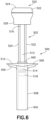
- a drug delivery device 500 with a plunger device 502 is shown and described.
- This drug delivery device 500 may be similar to the drug delivery device 100 described above. While a manual syringe is exemplified in FIGS. 6-8 , those of skill in the art will appreciate that the components of the plunger device 502 can be utilized in any type of drug delivery device, including autoinjectors, wearable injectors, pump devices, and the like.
- the drug delivery device 500 exemplified in FIGS. 6-8 includes a distal end 504, proximal end 506, and barrel 508 therebetween defining an interior configured to hold one or more medicaments.
- Drug delivery device 500 can be formed of any suitable material, including glass or plastics.
- Barrel 508 can be coated with any known coating(s), as appropriate to decrease friction between components and/or reduce interactions between the material of barrel 508 and any medicaments held within drug delivery device 500, including polydimethylsiloxane-based coatings that are optionally crosslinked.
- Coatings for decreasing friction between a stopper and sidewall and/or for reducing interactions between the sidewall and the medicament, for example siloxane-based coatings are known to those of skill in the art, and are described in, for example, U.S. Patent Application Publication Nos. 2014/0221934 and 2014/0110297 , the contents of which are incorporated herein by reference in their entirety.
- drug delivery device 500 includes a needle (not shown) at a distal end thereof.
- Suitable needles can be of any useful gauge, can be formed of any suitable material, and can be fixed to distal end 504 of drug delivery device 500, or can be removable.
- Drug delivery device 500 can include any number of suitable safety features, including a rigid needle shield (RNS) for protecting any needles that may be included, a cap, and/or a safety device, such as those shown in FIGS. 1A and 1B .
- RNSs are known in the art, and can include an inner, elastomeric portion that encases an injection needle, and an outer, rigid plastic portion. Suitable cap assemblies are described in, for example, International Patent Application Publication No.
- Suitable safety devices can include those that prevent reuse of the syringe, those that shield any needles before and/or after delivery, and the like, as are known to those of skill in the art.
- safety devices are described in U.S. Patent No. 10,702,663 , and are available commercially from Becton Dickinson and Company under the tradename UltraSafe TM .
- the safety device can interact with plunger device 502 to indicate end of drug delivery.
- drug delivery device 500 can include at proximal end 506 thereof one or more finger flange(s) 510, for assisting a user in gripping drug delivery device 500.
- one or more finger flange(s) 510 can interact with plunger device 502 to indicate end of drug delivery.
- plunger device 502 can include a plunger rod 512 extending between a distal end 514 and a proximal end 516.
- Distal end 514 of plunger rod 512 can be configured to interact, detachably or fixedly, with a stopper 518.
- Stopper 518 can be formed of any material, such as elastomeric materials, known to those in the art to be suitable, such as plastics, natural rubbers, synthetic rubbers, and the like.
- a useful stopper is formed of a natural or synthetic rubber.
- the rubber is butyl rubber (IIR), isoprene rubber (IR), butadiene rubber (BR), styrene-butadiene rubber (SBR), ethylene-propylene rubber (EPM), ethylene-propylene-diene rubber (EPDM), chlorosulphonated polyethylene (CSM), ethylene-vinyl acetate copolymer (EVA), styrene-isoprene rubber (SIR), thermoplastic elastomers, and/or natural rubbers.
- IIR isoprene rubber
- BR butadiene rubber
- SBR styrene-butadiene rubber
- EPM ethylene-propylene rubber
- EPDM ethylene-propylene-diene rubber
- CSM chlorosulphonated polyethylene
- EVA ethylene-vinyl acetate copolymer
- SIR styrene-isoprene rubber
- thermoplastic elastomers thermoplastic elastomers
- the stopper can be formed of an elastomeric copolymer, including, without limitation, thermoplastic elastomers, thermoplastic vulcanizates, styrene copolymers such as styrene-butadiene (SBR or SBS) copolymers, styrene-isoprene (SIS) block polymers, or styrene-isoprene/butadiene (SIBS).
- SBR or SBS styrene-butadiene
- SIS styrene-isoprene
- SIBS styrene-isoprene/butadiene
- Stopper 518 can optionally be coated with any known coating(s), as appropriate, including polydimethylsiloxane-based coatings that are optionally crosslinked. Coatings for decreasing friction between a stopper and sidewall and/or for reducing interactions between the material of the stopper and the medicament, for example siloxane-based coatings, are known to those of skill in the art, and are described in, for example, U.S. Patent Application Publication Nos. 2014/0221934 and 2014/0110297 , the contents of which are incorporated herein by reference in their entirety.
- Plunger device 502 can include at proximal end 516 thereof a connection module 520, having a housing 522 having a proximal end 524 and a distal end 526 defining an interior.
- Connection module housing 522 can be formed of any suitable material, including plastics.
- Connection module 520 can include a microcontroller 528 including one or more processors (as will be described in greater detail below).
- the microcontroller 528 can be circuit board(s) including printed circuit boards, flexible substrates for printed electronics, and the like as are known in the art.
- connection module 520 includes an energy source, such as a battery 530.
- battery 530 can be disposable or rechargeable, depending on whether plunger device 502 is a single-use device, or is reusable.
- housing 522 can be configured to prevent separation of any portions of housing 522, to prevent a user from accessing interior of housing 522.
- housing 522 may be openable to allow for a user to remove one or more components (e.g., battery 530 and/or microcontroller 528) for appropriate disposal.
- housing 522 can be configured to be openable to allow for maintenance and/or replacement of battery 530. In non-limiting embodiments, housing 522 is openable only with use of a particular tool. In non-limiting embodiments or aspects in which plunger device 502 is a reusable device, battery 530 may be a rechargeable battery, and housing 522 may include one or more ports to allow for the battery 530 to be recharged.
- the plunger rod 512 may include at least one tracking element 532, 534 positioned thereon.
- the plunger rod 512 may include two tracking elements 532, 534.
- the tracking elements 532, 534 may be conductive strips that are adhesively or integrally formed on the plunger rod 512. By using these tracking elements 532, 534, the plunger rod 512 is used to track and transmit the start of injection with the plunger device 502, the progression of injection with the plunger device 502, and the completion of the injection with the plunger device 502.
- the tracking elements 532, 534 may be positioned parallel to one another or, in an alternative embodiment, substantially parallel to one another. Longitudinal axes of the tracking elements 532, 534 extend along a longitudinal axis of the plunger rod 512. In one example, proximal ends of the tracking elements 532, 534 may be operatively connected to the battery 530, which may be a constant voltage power supply battery. The distal ends of the tracking elements 532, 534 are not connected to one another or the battery 530.
- the housing 522 of the connection module 520 may also include a Bluetooth low energy (BLE) module 536, a current sensing device 538, and a force sensor 540.
- BLE Bluetooth low energy
- the force sensor 540 may be configured to sense the initiation or start of injection when a user presses on the connection module 520.
- a backstop 550 may be provided on the finger flange 510 of the drug delivery device 500.
- the backstop 550 may be operatively connected to the finger flange 510 and/or the barrel 508 of the drug delivery device 500 via an adhesive, by welding, by integral molding, or any other connection method.
- the backstop 550 may define an opening 552 that receives the barrel 508 of the drug delivery device 500.
- an inner surface of the opening 552 may include a conductive strip 554 that extends around at least a portion of the circumference of the opening 552.
- the conductive strip 554 may be understood to be “external” to the plunger rod 512.
- the conductive strip 554 extends around the entire circumference of the opening 552.
- the conductive strip 554 may include two separate strips that are included on separate portions of the circumference of the opening 552. It is to be understood that the conductive strip 554, whether a single strip or multiple strips, should at least cover a portion of the circumference of the opening 552 such that the conductive strip 554 makes contact with the tracking elements 532, 534 on the plunger rod 512.
- the conductive strip 554 may be positioned on the upper lip of the opening 552.
- the conductive strip 554 may be positioned on the lower lip of the opening 552.
- a conductive strip may be positioned on the upper lip and a separate conductive strip may be positioned on the lower lip of the opening 552.
- the tracking elements 532, 534 on the plunger rod 512 come into electrical contact with the conductive strip 554 on the backstop 550.
- the electrical contact between the tracking elements 532, 534 on the plunger rod 512 and the conductive strip 554 closes an electrical circuit established with the battery 530 and an electrical current can flow through the tracking elements 532, 534.
- the moderate conductivity of the tracking elements 532, 534 and the conductive strip 554 ensures that the power supply (i.e., battery 530) is not short-circuited.
- the electrical circuit established between the tracking elements 532, 534 and the conductive strip 554 may be identified by the current sensing device 538 that is in communication with the battery 530, which may send a signal to the BLE module 536 to identify the position of the plunger rod 512 within the drug delivery device 500.
- the electrical resistance of the load experienced by the battery 530 decreases and the electrical current flowing through the electrical circuit increases. This increase in current may be sensed by the current sensing device 538 and correlated to the position of the plunger rod 512 relative to the backstop 550 and, therefore, can be used to monitor the injection progression of the plunger rod 512.
- the electrical resistance is minimal and the electrical current is maximal. This maximum electrical current serves to indicate the injection completion.
- the BLE module 536 enables transmission of this monitoring to a distant or remote device (within BLE range), such as a smartphone or remote computer.
- a smartphone application may be used to display injection data (including injection start, injection progression, and injection completion), as well as keep a record of previous injections, plus any other feature that is desirable for a use monitoring situation.
- the current sensing device 538 may be configured to receive signals regarding the resistance of the electrical circuit established between the tracking elements 532, 534 and the conductive strip 554. The current sensing device 538 may receive these signals during the entire injection procedure of the drug delivery device 500. It is also contemplated that capacitive sensing could also be used in place of the resistive/current sensing identified above.
- a ring 560 may be placed around the plunger rod 512, in which an inner circumference of the ring 560 may be covered with a conductive strip that can replace the backstop 550.
- This ring 560 may be kept in contact with the upper surface of the finger flange 510 to maintain the position of the ring 560 relative to the drug delivery device 500.
- the ring 560 may define an inner cavity or opening that permits the plunger rod 512 to pass therethrough. Similar to the conductive strip 554 on the backstop 550, the conductive strip on the ring 560 may establish an electrical contact with the tracking elements 532, 534 of the plunger rod 512 to complete the electrical circuit to monitor the injection procedure.
Landscapes
- Health & Medical Sciences (AREA)
- Vascular Medicine (AREA)
- Engineering & Computer Science (AREA)
- Anesthesiology (AREA)
- Biomedical Technology (AREA)
- Heart & Thoracic Surgery (AREA)
- Hematology (AREA)
- Life Sciences & Earth Sciences (AREA)
- Animal Behavior & Ethology (AREA)
- General Health & Medical Sciences (AREA)
- Public Health (AREA)
- Veterinary Medicine (AREA)
- Infusion, Injection, And Reservoir Apparatuses (AREA)
Priority Applications (3)
| Application Number | Priority Date | Filing Date | Title |
|---|---|---|---|
| EP23167934.1A EP4445929A1 (fr) | 2023-04-14 | 2023-04-14 | Dispositif d'administration de médicament connecté |
| US18/590,423 US20240342383A1 (en) | 2023-04-14 | 2024-02-28 | Connected Drug Delivery Device |
| CN202410449299.2A CN118787813A (zh) | 2023-04-14 | 2024-04-15 | 用于药物输送装置的柱塞装置、药物输送装置和监测药物输送装置的注射过程的方法 |
Applications Claiming Priority (1)
| Application Number | Priority Date | Filing Date | Title |
|---|---|---|---|
| EP23167934.1A EP4445929A1 (fr) | 2023-04-14 | 2023-04-14 | Dispositif d'administration de médicament connecté |
Publications (1)
| Publication Number | Publication Date |
|---|---|
| EP4445929A1 true EP4445929A1 (fr) | 2024-10-16 |
Family
ID=86052392
Family Applications (1)
| Application Number | Title | Priority Date | Filing Date |
|---|---|---|---|
| EP23167934.1A Pending EP4445929A1 (fr) | 2023-04-14 | 2023-04-14 | Dispositif d'administration de médicament connecté |
Country Status (3)
| Country | Link |
|---|---|
| US (1) | US20240342383A1 (fr) |
| EP (1) | EP4445929A1 (fr) |
| CN (1) | CN118787813A (fr) |
Families Citing this family (1)
| Publication number | Priority date | Publication date | Assignee | Title |
|---|---|---|---|---|
| USD1104261S1 (en) * | 2022-04-13 | 2025-12-02 | Hans Rudolph, Inc. | Handle for cylinders |
Citations (16)
| Publication number | Priority date | Publication date | Assignee | Title |
|---|---|---|---|---|
| US5704922A (en) * | 1996-01-25 | 1998-01-06 | Raya Systems, Inc. | Syringe having electrical contact points for metering doses |
| US5720733A (en) * | 1994-07-22 | 1998-02-24 | Raya Systems, Inc. | Apparatus for determining and recording injection doses in syringes using electrical capacitance measurements |
| US20140110297A1 (en) | 2007-06-25 | 2014-04-24 | The Regents Of The University Of Colorado | "Medical Articles Coated With Organopolysiloxane Containing a Protein Solution" |
| US20140221934A1 (en) | 2011-09-27 | 2014-08-07 | Becton Dickinson France | Use of plasma treated silicone oil as a coating in a medical injection device |
| WO2016087512A1 (fr) | 2014-12-03 | 2016-06-09 | Novo Nordisk A/S | Dispositif d'administration de médicament à sécurité assurée par l'air contenu dans une cartouche |
| US20160193408A1 (en) * | 2015-01-02 | 2016-07-07 | Katherine Schweikert | Use activated emergency alert for a medical device |
| US9445264B2 (en) | 2014-05-22 | 2016-09-13 | Pacesetter, Inc. | System and method for establishing a secured connection between an implantable medical device and an external device |
| US9463325B1 (en) | 2015-06-11 | 2016-10-11 | Pacesetter, Inc. | Systems and methods for maintaining a bi-directional communication between an implantable medical device and an external device |
| WO2017070391A2 (fr) | 2015-10-20 | 2017-04-27 | Truinject Medical Corp. | Système d'injection |
| WO2018111969A1 (fr) | 2016-12-14 | 2018-06-21 | Medimmune, Llc | Capteur multi-composants intégré dans une tige de piston pour capturer et transmettre des informations d'injection |
| WO2018213837A1 (fr) | 2017-05-19 | 2018-11-22 | Credence Medsystems, Inc. | Système de collecte d'informations d'injection |
| US20190083708A1 (en) | 2016-03-11 | 2019-03-21 | Carebay Europe Ltd. | Electrical Information Device for Communicating Information Related to a Medicament Delivery |
| US20190321555A1 (en) | 2016-12-28 | 2019-10-24 | Genentech, Inc. | Injection monitoring device |
| US10702663B2 (en) | 2008-02-11 | 2020-07-07 | Safety Syringes, Inc. | Reconstitution means for safety device |
| WO2020173998A1 (fr) | 2019-02-26 | 2020-09-03 | Becton Dickinson France | Extracteur de protège-aiguille rigide pour auto-injecteur |
| WO2021094797A1 (fr) | 2019-10-17 | 2021-05-20 | Biocorp Production S.A. | Ensemble de signalisation de point d'extrémité d'injection pour seringues pré-remplies |
-
2023
- 2023-04-14 EP EP23167934.1A patent/EP4445929A1/fr active Pending
-
2024
- 2024-02-28 US US18/590,423 patent/US20240342383A1/en active Pending
- 2024-04-15 CN CN202410449299.2A patent/CN118787813A/zh active Pending
Patent Citations (17)
| Publication number | Priority date | Publication date | Assignee | Title |
|---|---|---|---|---|
| US5720733A (en) * | 1994-07-22 | 1998-02-24 | Raya Systems, Inc. | Apparatus for determining and recording injection doses in syringes using electrical capacitance measurements |
| US5704922A (en) * | 1996-01-25 | 1998-01-06 | Raya Systems, Inc. | Syringe having electrical contact points for metering doses |
| US20140110297A1 (en) | 2007-06-25 | 2014-04-24 | The Regents Of The University Of Colorado | "Medical Articles Coated With Organopolysiloxane Containing a Protein Solution" |
| US10702663B2 (en) | 2008-02-11 | 2020-07-07 | Safety Syringes, Inc. | Reconstitution means for safety device |
| US20140221934A1 (en) | 2011-09-27 | 2014-08-07 | Becton Dickinson France | Use of plasma treated silicone oil as a coating in a medical injection device |
| US9445264B2 (en) | 2014-05-22 | 2016-09-13 | Pacesetter, Inc. | System and method for establishing a secured connection between an implantable medical device and an external device |
| WO2016087512A1 (fr) | 2014-12-03 | 2016-06-09 | Novo Nordisk A/S | Dispositif d'administration de médicament à sécurité assurée par l'air contenu dans une cartouche |
| US20160193408A1 (en) * | 2015-01-02 | 2016-07-07 | Katherine Schweikert | Use activated emergency alert for a medical device |
| US9463325B1 (en) | 2015-06-11 | 2016-10-11 | Pacesetter, Inc. | Systems and methods for maintaining a bi-directional communication between an implantable medical device and an external device |
| WO2017070391A2 (fr) | 2015-10-20 | 2017-04-27 | Truinject Medical Corp. | Système d'injection |
| US20190083708A1 (en) | 2016-03-11 | 2019-03-21 | Carebay Europe Ltd. | Electrical Information Device for Communicating Information Related to a Medicament Delivery |
| US20190344019A1 (en) | 2016-12-14 | 2019-11-14 | Medimmune, Llc | Embedded multiple-part sensor within a plunger rod to capture and transit injection information |
| WO2018111969A1 (fr) | 2016-12-14 | 2018-06-21 | Medimmune, Llc | Capteur multi-composants intégré dans une tige de piston pour capturer et transmettre des informations d'injection |
| US20190321555A1 (en) | 2016-12-28 | 2019-10-24 | Genentech, Inc. | Injection monitoring device |
| WO2018213837A1 (fr) | 2017-05-19 | 2018-11-22 | Credence Medsystems, Inc. | Système de collecte d'informations d'injection |
| WO2020173998A1 (fr) | 2019-02-26 | 2020-09-03 | Becton Dickinson France | Extracteur de protège-aiguille rigide pour auto-injecteur |
| WO2021094797A1 (fr) | 2019-10-17 | 2021-05-20 | Biocorp Production S.A. | Ensemble de signalisation de point d'extrémité d'injection pour seringues pré-remplies |
Also Published As
| Publication number | Publication date |
|---|---|
| US20240342383A1 (en) | 2024-10-17 |
| CN118787813A (zh) | 2024-10-18 |
Similar Documents
| Publication | Publication Date | Title |
|---|---|---|
| JP7440481B2 (ja) | 注射デバイスアセンブリ内のステータス感知システム | |
| RU2714485C1 (ru) | Способ беспроводной передачи данных между сенсорной системой и приемником и система для беспроводной передачи данных | |
| AU2023216896B2 (en) | Status Sensing Systems For Connected Injection Device | |
| US20240358935A1 (en) | Connected Drug Delivery Device | |
| US20240342383A1 (en) | Connected Drug Delivery Device | |
| US10391244B2 (en) | Use activated emergency alert for a medical device | |
| CN119173290A (zh) | 用于自动注射装置的可重复使用的数字模块 | |
| EP4285959B1 (fr) | Solution de détection sans batterie pour dispositifs d'administration de médicaments | |
| US20230390501A1 (en) | Drug Delivery Device with End-Of-Dose Detection | |
| EA039706B1 (ru) | Устройство для инъекций | |
| EP4583943A2 (fr) | Dispositif d'administration de médicaments avec capteur de contact avec la peau | |
| EP4117750A1 (fr) | Emballage de dispositif médical avec un support d'appariement nfc |
Legal Events
| Date | Code | Title | Description |
|---|---|---|---|
| PUAI | Public reference made under article 153(3) epc to a published international application that has entered the european phase |
Free format text: ORIGINAL CODE: 0009012 |
|
| STAA | Information on the status of an ep patent application or granted ep patent |
Free format text: STATUS: THE APPLICATION HAS BEEN PUBLISHED |
|
| AK | Designated contracting states |
Kind code of ref document: A1 Designated state(s): AL AT BE BG CH CY CZ DE DK EE ES FI FR GB GR HR HU IE IS IT LI LT LU LV MC ME MK MT NL NO PL PT RO RS SE SI SK SM TR |
|
| STAA | Information on the status of an ep patent application or granted ep patent |
Free format text: STATUS: REQUEST FOR EXAMINATION WAS MADE |
|
| 17P | Request for examination filed |
Effective date: 20250416 |
|
| STAA | Information on the status of an ep patent application or granted ep patent |
Free format text: STATUS: EXAMINATION IS IN PROGRESS |
|
| 17Q | First examination report despatched |
Effective date: 20251205 |