EP4447362A1 - Verfahren und vorrichtung zur überwachung von verfügbarkeitsanzeigeinformationen, vorrichtung und speichermedium - Google Patents
Verfahren und vorrichtung zur überwachung von verfügbarkeitsanzeigeinformationen, vorrichtung und speichermedium Download PDFInfo
- Publication number
- EP4447362A1 EP4447362A1 EP21966777.1A EP21966777A EP4447362A1 EP 4447362 A1 EP4447362 A1 EP 4447362A1 EP 21966777 A EP21966777 A EP 21966777A EP 4447362 A1 EP4447362 A1 EP 4447362A1
- Authority
- EP
- European Patent Office
- Prior art keywords
- trs
- indication information
- availability indication
- manner
- information
- Prior art date
- Legal status (The legal status is an assumption and is not a legal conclusion. Google has not performed a legal analysis and makes no representation as to the accuracy of the status listed.)
- Pending
Links
Images


Classifications
-
- H—ELECTRICITY
- H04—ELECTRIC COMMUNICATION TECHNIQUE
- H04W—WIRELESS COMMUNICATION NETWORKS
- H04W68/00—User notification, e.g. alerting and paging, for incoming communication, change of service or the like
- H04W68/02—Arrangements for increasing efficiency of notification or paging channel
-
- H—ELECTRICITY
- H04—ELECTRIC COMMUNICATION TECHNIQUE
- H04L—TRANSMISSION OF DIGITAL INFORMATION, e.g. TELEGRAPHIC COMMUNICATION
- H04L5/00—Arrangements affording multiple use of the transmission path
- H04L5/003—Arrangements for allocating sub-channels of the transmission path
- H04L5/0048—Allocation of pilot signals, i.e. of signals known to the receiver
-
- H—ELECTRICITY
- H04—ELECTRIC COMMUNICATION TECHNIQUE
- H04L—TRANSMISSION OF DIGITAL INFORMATION, e.g. TELEGRAPHIC COMMUNICATION
- H04L5/00—Arrangements affording multiple use of the transmission path
- H04L5/003—Arrangements for allocating sub-channels of the transmission path
- H04L5/0048—Allocation of pilot signals, i.e. of signals known to the receiver
- H04L5/0051—Allocation of pilot signals, i.e. of signals known to the receiver of dedicated pilots, i.e. pilots destined for a single user or terminal
-
- H—ELECTRICITY
- H04—ELECTRIC COMMUNICATION TECHNIQUE
- H04L—TRANSMISSION OF DIGITAL INFORMATION, e.g. TELEGRAPHIC COMMUNICATION
- H04L5/00—Arrangements affording multiple use of the transmission path
- H04L5/003—Arrangements for allocating sub-channels of the transmission path
- H04L5/0053—Allocation of signalling, i.e. of overhead other than pilot signals
-
- H—ELECTRICITY
- H04—ELECTRIC COMMUNICATION TECHNIQUE
- H04W—WIRELESS COMMUNICATION NETWORKS
- H04W24/00—Supervisory, monitoring or testing arrangements
- H04W24/08—Testing, supervising or monitoring using real traffic
-
- H—ELECTRICITY
- H04—ELECTRIC COMMUNICATION TECHNIQUE
- H04W—WIRELESS COMMUNICATION NETWORKS
- H04W52/00—Power management, e.g. Transmission Power Control [TPC] or power classes
- H04W52/02—Power saving arrangements
- H04W52/0209—Power saving arrangements in terminal devices
- H04W52/0212—Power saving arrangements in terminal devices managed by the network, e.g. network or access point is leader and terminal is follower
- H04W52/0216—Power saving arrangements in terminal devices managed by the network, e.g. network or access point is leader and terminal is follower using a pre-established activity schedule, e.g. traffic indication frame
-
- H—ELECTRICITY
- H04—ELECTRIC COMMUNICATION TECHNIQUE
- H04W—WIRELESS COMMUNICATION NETWORKS
- H04W72/00—Local resource management
- H04W72/20—Control channels or signalling for resource management
- H04W72/23—Control channels or signalling for resource management in the downlink direction of a wireless link, i.e. towards a terminal
- H04W72/231—Control channels or signalling for resource management in the downlink direction of a wireless link, i.e. towards a terminal the control data signalling from the layers above the physical layer, e.g. RRC or MAC-CE signalling
-
- H—ELECTRICITY
- H04—ELECTRIC COMMUNICATION TECHNIQUE
- H04W—WIRELESS COMMUNICATION NETWORKS
- H04W76/00—Connection management
- H04W76/20—Manipulation of established connections
- H04W76/28—Discontinuous transmission [DTX]; Discontinuous reception [DRX]
-
- Y—GENERAL TAGGING OF NEW TECHNOLOGICAL DEVELOPMENTS; GENERAL TAGGING OF CROSS-SECTIONAL TECHNOLOGIES SPANNING OVER SEVERAL SECTIONS OF THE IPC; TECHNICAL SUBJECTS COVERED BY FORMER USPC CROSS-REFERENCE ART COLLECTIONS [XRACs] AND DIGESTS
- Y02—TECHNOLOGIES OR APPLICATIONS FOR MITIGATION OR ADAPTATION AGAINST CLIMATE CHANGE
- Y02D—CLIMATE CHANGE MITIGATION TECHNOLOGIES IN INFORMATION AND COMMUNICATION TECHNOLOGIES [ICT], I.E. INFORMATION AND COMMUNICATION TECHNOLOGIES AIMING AT THE REDUCTION OF THEIR OWN ENERGY USE
- Y02D30/00—Reducing energy consumption in communication networks
- Y02D30/70—Reducing energy consumption in communication networks in wireless communication networks
Definitions
- the present disclosure relates to, but is not limited to, the field of wireless communication technology, and particularly to a method and an apparatus for monitoring TRS availability indication information, a communication device and a storage medium.
- a Tracking Reference Signal can be used to assist the terminal in time-frequency domain tracking and/or synchronization when the terminal is in the Radio Resource Control (RRC) non-connected state.
- RRC Radio Resource Control
- the moment of transmitting the TRS can be configured to be closer to the moment of Paging Occasion (PO), so that the terminal can be woken up later, which will be more power efficient.
- PO Paging Occasion
- the TRS is used by the terminal in the non-connected state for time-frequency domain tracking and/or synchronization, and the transmission of information related to the TRS is a matter of consideration.
- Embodiments of the present disclosure provides a method and an apparatus for monitoring TRS availability indication information, a communication device, and a storage medium.
- a method for monitoring TRS availability indication information is provided.
- the method is performed by a terminal, and includes:
- the terminal monitors the TRS availability indication information in the first manner or the second manner, and the method further includes:
- the method further includes:
- the valid duration includes:
- the valid duration is an integer multiple of a default paging cycle.
- the terminal monitors the TRS availability indication information in a first manner and a second manner;
- the method further includes:
- the method further includes:
- the method further includes:
- the method further includes:
- a method for monitoring TRS availability indication information is provided.
- the method is performed by a base station, and includes:
- an apparatus for monitoring TRS availability indication information includes:
- an apparatus for monitoring TRS availability indication information includes:
- a computer storage medium stores a computer-executable program which, when executed by a processor, enable the method of any embodiment of the present disclosure to be implemented.
- a terminal is configured to monitor Paging Early Indication (PEI) Downlink Control Information (DCI); and Tracking Reference Signal (TRS) availability indication information is monitored in a predetermined manner, wherein the predetermined manner includes at least one of the following: a first manner of monitoring the TRS availability indication information in the PEI DCI; a second manner of monitoring the TRS availability indication information in paging DCI.
- PEI Paging Early Indication
- DCI Downlink Control Information
- TRS Tracking Reference Signal
- the terminal can monitor the TRS availability indication information in the first manner and/or the second manner, so that after monitoring the TRS availability indication information, the terminal can determine whether or not the network is transmitting the TRS, and compared to the case where it is not possible to be informed whether or not the network is transmitting the TRS, the terminal can receive the TRS in time based on the TRS availability indication information, and utilize the TRS to perform time-frequency domain tracking and synchronization operations in the RRC non-connected state, etc., enhancing the reliability of the wireless communication.
- the TRS availability indication information can be monitored in different manners, making monitoring more flexible.
- first, second, third, etc. may use the terms first, second, third, etc. to describe various information, the information should not be limited to these terms. These terms are only used to distinguish information of the same type from one another. For example, without departing from the scope of the embodiments of the present disclosure, first information may also be called second information, and similarly, second information may also be called first information. Depending on the context, the word “if” as used herein may be interpreted as “at” or "when” or "in response to a determination.”
- the terms “greater than” or “less than” are used herein to characterize size relationships. For those skilled in the field, it is understood that the term “greater than” also covers the meaning of “greater than or equal to”, and the term “less than” also covers the meaning of "less than or equal to”.
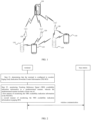
- the wireless communication system is a communication system based on mobile communication technology, and may include a plurality of user devices 110 and a plurality of base stations 120.
- the user devices 110 may be devices that provide voice and/or data connectivity to the user.
- the user devices 110 may communicate with one or more core networks via a Radio Access Network (RAN), and the user devices 110 may be Internet of Things (IoT) user devices, such as sensor devices, mobile telephones, and computers with IoT user devices, and for example, may be stationary, portable, pocket-size, hand-held, computer-built, or vehicle-mounted device, for example, a Station (STA), subscriber unit, subscriber station, mobile station, mobile, remote station, access point, remote terminal, access terminal, user terminal, user agent, user device, or user equipment.
- the user device 110 may also be an UAV device.
- the user device 110 may be an in-vehicle device, which for example, may be a traveling computer with wireless communication capabilities, or a wireless user device that is connected to an external traveling computer.
- the user device 110 may be a roadside device, e.g., may be a street light, a signal light, or other roadside device, etc., with wireless communication capabilities.
- the base station 120 may be a network side device in a wireless communication system.
- the wireless communication system may be the 4th generation mobile communication (4G) system, also known as a Long Term Evolution (LTE) system; or, the wireless communication system may also be a 5G system, also known as a New Radio system or 5G NR system. Alternatively, the wireless communication system may be a further next-generation system of the 5G system.
- the access network in the 5G system can be referred to as NG-RAN (New Generation-Radio Access Network).
- the base station 120 may be an evolved base station (eNB) employed in the 4G system.
- the base station 120 may be a base station (gNB) using a centralized-distributed architecture in a 5G system.
- the base station 120 when adopting a centralized-distributed architecture, typically includes a central unit (CU) and at least two distributed units (DUs).
- the central unit is provided with protocol stacks for Packet Data Convergence Protocol (PDCP) layer, Radio Link Control (RLC) layer, and Media Access Control (MAC) layer;
- PDCP Packet Data Convergence Protocol
- RLC Radio Link Control
- MAC Media Access Control
- the specific implementation of the base station 120 is not limited in embodiments of the present disclosure.
- a wireless connection can be established between the base station 120 and the user device 110 through a wireless air port.
- the wireless air port is a wireless air port based on the 4th generation mobile communication (4G) standard; or, the wireless air port is a wireless air port based on 5th generation mobile communication (5G) standard, for example, the wireless air port is a new air port; or, the wireless air port may be a wireless air port based on a further next-generation mobile communication standard based on 5G.
- an E2E (End to End) connection can be established between the user devices 110.
- Examples include V2V (vehicle to vehicle) communication, V2I (vehicle to infrastructure) communication, and V2P (vehicle to pedestrian) communication and other scenarios in vehicle to everything (V2X).
- the user device described above may be considered a terminal device in the following embodiments.
- the wireless communication system described above may also include a network management device 130.
- the network management device 130 may be a core network device in the wireless communication system.
- the network management device 130 may be a Mobility Management Entity (MME) in an Evolved Packet Core (EPC) network.
- MME Mobility Management Entity
- EPC Evolved Packet Core
- the network management device may be other core network devices, such as a Serving GateWay (SGW), a Public Data Network GateWay (PGW), a Policy and Charging Rules Function unit (PCRF), or a Home Subscriber Server (HSS).
- SGW Serving GateWay
- PGW Public Data Network GateWay
- PCRF Policy and Charging Rules Function unit
- HSS Home Subscriber Server
- embodiments of the present disclosure enumerate a plurality of implementations to clearly illustrate the technical solutions of embodiments of the present disclosure.
- the plurality of implementations provided in embodiments of the present disclosure can be performed alone, or combined with the methods of other embodiments in embodiments of the present disclosure, or performed alone or combined with some methods in other related technologies, which is not limited in embodiments of the present disclosure.
- the main behavior of the terminal is to periodically monitor paging messages, and to enter the RRC connected state to communicate with the network normally after receiving the paging messages.
- the paging message is carried in the Physical Downlink Shared channel (PDSCH), and needs to be scheduled by the paging Down Control Information (DCI) which is scrambled by the temporary flag of the wireless network.
- DCI paging Down Control Information
- PO the radio frame in which the PO is located is called a Paging Frame (PF).
- the terminal needs to wake up for synchronization in each paging cycle and blindly check whether there is any paging DCI belonging to the terminal in the corresponding PO.
- the base station can send a Paging Early Indication (PEI) for the terminal.
- PEI Paging Early Indication
- the terminal receives the PEI corresponding to this terminal, and the PEI instructs the UE to wake up, the terminal needs to wake up before the next PO to monitor the paging message.
- the PEI instructs the terminal not to wake up, or the terminal does not receive the corresponding PEI
- the terminal does not need to wake up in the next paging cycle, i.e., the terminal does not need to monitor the next PO.
- the PEI is carried in the form of a DCI.
- the DCI may be DCI format 2-7.
- the PEI DCI may be provided with a TRS availability indication field for indicating whether or not there is TRS pilot information.
- the TRS can be used by the terminal in the RRC idle state and the RRC inactive state to perform time-frequency domain tracking and synchronization.
- the TRS availability indication field may be transmitted in the paging DCI in addition to the PEI.
- the TRS availability indication field is a bitmap containing N bits, each bit being corresponding to one TRS resource set group. When the TRS availability indication field indicates that a certain TRS resource set group is available, the start time for the indication to take effect is the start time of the first frame of the current default paging cycle where the terminal is located when receiving the TRS availability indication.
- FIG. 2 is a flowchart illustrating a method for monitoring TRS availability indication information according to an embodiment of the present disclosure, the method is performed by a terminal, and includes:
- the terminal involved in the present disclosure may be, but is not limited to, a cell phone, a wearable device, a vehicle terminal, a road side unit (RSU), a smart home terminal, an industrial sensing device and/or a medical device.
- the terminal may be a terminal in an RRC non-connected state.
- the RRC non-connected state includes an RRC idle state and an RRC inactive state.
- the base station involved in the present disclosure may be an access device for the terminal to access the network.
- the base station may be a base station of various types, such as a base station of the 3rd generation mobile communication (3G), a base station of the 4th generation mobile communication (4G), a base station of the 5th generation mobile communication (5G), or other evolved base stations.
- 3G 3rd generation mobile communication
- 4G 4th generation mobile communication
- 5G 5th generation mobile communication
- the terminal is configured to monitor PEI DCI; TRS availability indication information is monitored in the PEI DCI; a TRS is received based on the monitored TRS availability indication information; and time-frequency domain synchronization and tracking is performed based on the TRS.
- the TRS availability indication information may include time-frequency domain resource information associated with the transmitted TRS.
- the terminal is configured to monitor the PEI DCI; the TRS availability indication information is monitored in the paging DCI; the TRS is received based on the monitored TRS availability indication information; and time-frequency domain synchronization and tracking is performed based on the TRS.
- the terminal is configured to monitor PEI DCI; TRS availability indication information is monitored in the PEI DCI and in the paging DCI; TRS is received based on the monitored TRS availability indication information; and time-frequency domain synchronization and tracking is performed based on the TRS.
- the TRS availability indication information is monitored in the first manner. It is noted that when the terminal is configured to monitor the TRS availability indication information in the first manner, the network transmits the TRS availability indication information in the PEI DCI.
- the TRS availability indication information is monitored in the second manner. It is noted that when the terminal is configured to monitor the TRS availability indication information in the second manner, the network transmits the TRS availability indication information in the paging DCI.
- the TRS availability indication information is monitored in the first manner and the second manner.
- monitoring in the first manner and the second manner may be both monitoring in the PEI DCI and monitoring in the paging DCI. It is noted that when the terminal is configured to monitor the TRS availability indication information in the first manner and the second manner, the network transmits the TRS availability indication information in both the PEI DCI and the paging DCI.
- the manner of monitoring the TRS availability indication information may be determined based on received configuration information, or the manner of monitoring the TRS availability indication information may be determined based on a predetermined protocol, or the manner of monitoring the TRS availability indication information may be determined based on a parameter of configuration of the user, which is not limited herein.
- the TRS availability indication field can be set in the PEI DCI.
- the TRS availability indication field can be set in the paging DCI.
- the TRS availability indication field may be set in both the PEI DCI and the paging DCI.
- the TRS availability indication field may be transmitted in the paging DCI in addition to the PEI DCI.
- the TRS availability indication field is a bitmap containing N bits, and each bit corresponds to one TRS resource set group.
- the start time for this indication to take effect is the start time of the first frame of the current default paging cycle where the terminal is located when receiving this TRS availability indication. For example, when a bit in the bitmap takes the value of "1", it indicates that the corresponding TRS resource set group is available; or, when a bit takes the value of "0", it indicates that the corresponding TRS resource set group is not available.
- the terminal is configured to monitor the paging early indication PEI; the TRS availability indication information is monitored in the predetermined manner, wherein the predetermined manner includes at least one of the following: the first manner of monitoring the TRS availability indication information in the PEI; and the second manner of monitoring the TRS availability indication information in the paging DCI.
- the terminal may monitor the TRS availability indication information in the first manner and/or the second manner, so that after monitoring the TRS availability indication information, the terminal can determine whether or not the network is transmitting the TRS, and compared to the case where it is not possible to be informed whether or not the network is transmitting the TRS, the terminal can receive the TRS in time based on the TRS availability indication information, and utilize the TRS to perform time-frequency domain tracking and synchronization operations in the RRC non-connected state, etc., enhancing the reliability of the wireless communication.
- the TRS availability indication information can be monitored in different manners, making monitoring more flexible.
- the terminal can monitor the TRS availability indication information in a first manner or a second manner, and the method includes:
- the first manner may be monitoring the TRS availability indication information in PEI DCI.
- the terminal is configured to monitor the PEI DCI; it is determined that the terminal is configured to monitor the TRS availability indication information; and the TRS availability indication information is monitored in the PEI DCI.
- the terminal is configured to monitor the PEI DCI; it is determined that the terminal is configured to monitor the TRS availability indication information; and the TRS availability indication information is monitored in the PEI DCI and the TRS availability indication information is not monitored in the paging DCI.
- the terminal by monitoring the TRS availability indication information in the PEI DCI, the terminal only needs to monitor the DCI once, i.e., it only needs to monitor the PEI DCI, as compared to monitoring the TRS availability indication information in the paging DCI.
- the terminal does not need to monitor the PEI DCI first and then monitor the paging DCI after being woken up by the indication. In this way, power can be saved and the endurance of the terminal can be improved.
- the manner of monitoring the TRS availability indication information can be determined based on the priority of monitoring the TRS availability indication information in the first manner and the priority of monitoring the TRS availability indication information in the second manner.
- the second manner may be to monitor the TRS availability indication information in the paging DCI.
- the terminal is configured to monitor the TRS availability indication information in the first manner or in the second manner, and a priority of monitoring the TRS availability indication information in the first manner is greater than a priority of monitoring the TRS availability indication information in the second manner. After determining that the terminal is configured to monitor the TRS availability indication information, priority may be given to monitoring the TRS availability indication information in the first manner.
- the terminal is configured to monitor the TRS availability indication information in the first manner or in the second manner, and the priority of monitoring the TRS availability indication information in the first manner is less than the priority of monitoring the TRS availability indication information in the second manner. After determining that the terminal is configured to monitor the TRS availability indication information, priority may be given to monitoring the TRS availability indication information in the second manner.
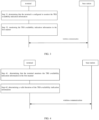
- the method is performed by a terminal, and the terminal can monitor the TRS availability indication information through a first manner or a second manner; the method includes:
- the first manner may be monitoring the TRS availability indication information in PEI DCI.
- the valid duration includes:
- the valid duration is the duration determined according to the predetermined protocol.
- the duration configured by the base station may be configured in units of the default paging cycle.
- the duration configured by the base station may be a duration of 8 or 16 default paging cycles.
- the duration determined according to the predetermined protocol may be a duration of 3 default paging cycles.
- the starting time for the TRS availability indication information to take effect may be the starting moment of the first frame of the current default paging cycle in which the terminal receives the TRS availability indication information.
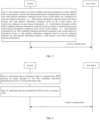
- the method is performed by a terminal, and includes followings.
- Step 51 the terminal monitors the TRS availability indication information in a first manner and a second manner.
- valid duration information configured based on the first manner and valid duration information configured based on the second manner are configured as separate duration information; or, valid duration information configured based on the first manner and valid duration information configured based on the second manner are collectively configured as same duration information; or, valid duration information of the TRS availability indication information monitored in the first manner is determined based on valid duration information configured based on the second manner; or, valid duration information of the TRS availability indication information monitored in the second manner is determined based on valid duration information configured based on the first manner; wherein the valid duration information indicates a valid duration of the TRS availability indication information.
- the valid duration information can be network-configured or determined based on a predetermined protocol, which is not limited here. It is noted that the valid duration information may be configured by the network via high-level signaling.
- the first manner may be to monitor the TRS availability indication information in the PEI DCI.
- the second manner may be to monitor the TRS availability indication information in the paging DCI.
- the terminal is configured to monitor the PEI DCI; the TRS availability indication information is monitored in the PEI DCI and the paging DCI; the TRS is received based on the monitored TRS availability indication information; time-frequency domain synchronization and tracking and the like is performed based on the TRS.
- the TRS availability indication information is monitored in the first manner and the second manner.
- monitoring in the first manner and the second manner may be monitoring in both the PEI DCI and the paging DCI. It is noted that when the terminal is configured to monitor the TRS availability indication information in the first manner and the second manner, the network transmits the TRS availability indication information in both the PEI DCI and the paging DCI.
- the valid duration information configured based on the first manner is the configured first duration information; the valid duration information configured based on said second manner is the configured second duration information.
- the valid duration of the TRS availability indication information is extended based on the duration indicated by the second duration information.
- the valid duration of the TRS availability indication information is extended based on the duration indicated by the first duration information.
- only one duration information is configured, and the duration indicated by the duration information applies to both the TRS availability indication information transmitted in the PEI DCI and the TRS availability indication information transmitted in the paging DCI.
- the valid duration of the TRS availability indication information monitored in the PEI DCI may be determined based on this duration information, and the valid duration of the TRS availability indication information monitored in the paging DCI may be determined based on that duration information.
- the valid duration of the TRS availability indication information transmitted in the PEI DCI is determined based on the valid duration indicated by the duration information. For example, if the PEI DCI and the PO corresponding thereto are in different DRX cycles, the valid duration of the TRS availability indication information monitored in the PEI DCI may be the valid duration indicated by the duration information plus the duration of one default paging cycle, otherwise, the valid duration of the TRS availability indication information monitored in the PEI DCI is the valid duration indicated by the duration information.
- the valid duration of the TRS availability indication information transmitted in the paging DCI is determined based on the valid duration indicated by the duration information.
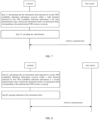
- FIG. 6 which is a method for monitoring TRS availability indication information according to an embodiment of the present disclosure, the method is performed by a terminal, and includes:
- the TRS availability indication information may be monitored in the PEI DCI, or the TRS availability indication information may be monitored in the paging DCI, or the TRS availability indication information may be monitored in both the PEI DCI and the paging DCI, which is not limited herein.
- the TRS availability indication field can be set in the PEI DCI and/or the paging DCI.
- the TRS availability indication field is a bitmap containing N bits, each bit corresponds to one TRS resource set group, and multiple bits correspond to multiple TRS resource set groups.
- the TRS availability indication field indicates that a certain TRS resource set group is available, the starting time when the corresponding TRS availability indication information becomes effective is the starting time of the first frame of the current default paging cycle when the terminal receives the TRS availability indication information.
- the corresponding TRS resource set group when a bit in the TRS availability indication field takes a first value (e.g., "1"), the corresponding TRS resource set group is available; or, when a bit takes a second value (e.g., "0"), the corresponding TRS resource set group is not available.
- available means that the TRS resource set group can take effect.
- the TRS availability indication information received by the terminal indicates that the bit corresponding to a TRS resource set group is equal to "1”
- the TRS resource set group is in effect.
- the TRS availability indication information taking effect may include the TRS resource set group taking effect.
- the effective duration of the TRS resource set group being effective includes: the duration configured by the base station; or, the duration determined according to the predetermined protocol.
- the valid duration is the duration determined according to the predetermined protocol.
- the TRS availability indication information received by the terminal indicates that the bit corresponding to a certain TRS resource set group is not equal to "1", the TRS resource set group is not effective.
- FIG. 7 which is a method for monitoring TRS availability indication information according to an embodiment of the present disclosure, the method is performed by a terminal, and includes:
- the TRS availability indication information may be monitored in the PEI DCI, or the TRS availability indication information may be monitored in the paging DCI, or the TRS availability indication information may be monitored in the PEI DCI and the paging DCI.
- the first TRS availability indication information is received at a first moment and the information field corresponding to the first TRS availability indication information indicates the first predetermined value
- the second TRS availability indication information is received at a second moment.
- the valid duration of the predetermined TRS resource set group is extended.
- the valid duration is extended to a moment corresponding to a sum of the second moment and the valid duration indicated by the second TRS availability indication information.
- the first TRS availability indication information is determined to be in effect when that information field corresponding to the first TRS availability indication information indicates the first predetermined value.
- this information field corresponding to the first TRS availability indication information indicates "1"
- the first TRS availability indication information taking effect may be the TRS resource set group indicated by the corresponding information field taking effect.
- the second TRS availability indication information in case the second moment is within the valid duration indicated by the first TRS availability indication information, and when the information field corresponding to the second TRS availability indication information indicates the first predetermined value, it is determined that the second TRS availability indication information is valid. For example, in case the second moment is within the valid duration indicated by the first TRS availability indication information, and when this information field corresponding to the second TRS availability indication information indicates "1", it is determined that the second TRS availability indication information is valid.
- FIG. 8 which is a method for monitoring TRS availability indication information according to an embodiment of the present disclosure, the method is performed by the terminal, and the method includes:
- the TRS availability indication information may be monitored in the PEI DCI, or the TRS availability indication information may be monitored in the paging DCI, or the TRS availability indication information may be monitored in the PEI DCI and the paging DCI.
- the first TRS availability indication information is received at a first moment and the information field indicated by the first TRS availability indication information is the first predetermined value, and the second TRS availability indication information is received at a second moment. In case the second moment is within a valid duration indicated by the first TRS availability indication information, and this information field corresponding to the second TRS availability indication information indicates a second predetermined value, the indication of this information field is ignored.
- the first TRS availability indication information taking effect may be the TRS resource set group indicated by the corresponding information field taking effect.
- the second TRS availability indication information in case the second moment is within the valid duration indicated by the first TRS availability indication information, and when the information field corresponding to the second TRS availability indication information indicates the second predetermined value, it is determined that the second TRS availability indication information is not valid. For example, in the case where the second moment is outside the valid duration indicated by the first TRS availability indication information, and when the information field corresponding to the second TRS availability indication information indicates "0", it is determined that the second TRS availability indication information is invalid.
- the second TRS availability indication information being invalid may be that the TRS resource set group indicated by the corresponding information field being invalid. It is noted that the first predetermined value is different from the second predetermined value.
- FIG. 9 which is a method for monitoring TRS availability indication information according to an embodiment of the present disclosure, the method is performed by a terminal, and the method includes:
- the TRS availability indication information may be monitored in the PEI DCI, or the TRS availability indication information may be monitored in the paging DCI, or the TRS availability indication information may be monitored in the PEI DCI and the paging DCI.
- the first TRS availability indication information is received at a first moment and the information field corresponding to the first TRS availability indication information indicates the first predetermined value
- the second TRS availability indication information is received at a second moment. In case the second moment is outside the range of valid duration indicated by the first TRS availability indication information and this information field corresponding to the second TRS availability indication information indicates a second predetermined value, it is determined that the predetermined TRS resource set group indicated by this information field is invalid.
- the first TRS availability indication information when the information field corresponding to the first TRS availability indication information indicates the first predetermined value, it is determined that the first TRS availability indication information is valid. For example, when this information field corresponding to the first TRS availability indication information indicates "1", it is determined that the first TRS availability indication information is effective.
- the first TRS availability indication information being valid may be the TRS resource set group indicated by the corresponding information field being valid.
- the second TRS availability indication information is not valid. For example, if the second moment is outside the range of the valid duration indicated by the first TRS availability indication information, and when the information field corresponding to the second TRS availability indication information indicates "0", it is determined that the second TRS availability indication information is invalid.
- the second TRS availability indication information being invalid may be that the TRS resource set group indicated by the corresponding information field is invalid. It is noted that the first predetermined value is different from the second predetermined value.
- FIG. 10 which is a method for monitoring TRS availability indication information according to an embodiment of the present disclosure, the method is performed by a terminal, and the method includes:
- the terminal involved in the present disclosure may be, but is not limited to, a cell phone, a wearable device, a vehicle terminal, a Road Side Unit (RSU), a smart home terminal, an industrial sensing device and/or a medical device, etc.
- the terminal may be a terminal in an RRC non-connected state.
- the RRC non-connected state includes an RRC idle state and an RRC inactive state.
- the base station involved in the present disclosure may be an access device for the terminal to access the network.
- the base station may be various types of base stations, such as, a base station for a third generation mobile communication (3G) network, a base station for a fourth generation mobile communication (4G) network, a base station for a fifth generation mobile communication (5G) network, or other evolved base stations.
- 3G third generation mobile communication
- 4G fourth generation mobile communication
- 5G fifth generation mobile communication
- the terminal determines that the terminal is configured to monitor the PEI DCI; the terminal monitors TRS availability indication information in the PEI DCI; the terminal receives the TRS sent by the base station based on the monitored TRS availability indication information; the terminal carries out time-frequency domain synchronization and tracking and the like based on the TRS.
- the TRS availability indication information may include time-frequency domain resource information associated with the transmitted TRS.
- the terminal determines that the terminal is configured to monitor the PEI DCI; the terminal monitors the TRS availability indication information in the paging DCI; the terminal receives the TRS sent by the base station based on the monitored TRS availability indication information; and the terminal carries out the time-frequency domain synchronization and tracking and the like based on the TRS.
- the terminal determines that the terminal is configured to monitor the PEI DCI; the terminal monitors the TRS availability indication information in the PEI DCI and in the paging DCI; the terminal receives the TRS sent by the base station based on the monitored TRS availability indication information; the terminal performs time-frequency domain synchronization and tracking and the like based on the TRS.
- the terminal when the terminal is configured to monitor the TRS availability indication information in the first manner, the terminal monitors the TRS availability indication information in the first manner. It is noted that when the terminal is configured to monitor the TRS availability indication information in the first manner, the network transmits the TRS availability indication information in the PEI DCI.
- the terminal when the terminal is configured to monitor the TRS availability indication information in the second manner, the terminal monitors the TRS availability indication information in the second manner. It is noted that when the terminal is configured to monitor the TRS availability indication information in the second manner, the network transmits the TRS availability indication information in the paging DCI.
- the terminal when the terminal is configured to monitor the TRS availability indication information in the first manner and the second manner, the terminal monitors the TRS availability indication information in the first manner and the second manner.
- monitoring in the first manner and the second manner may be both monitoring in the PEI DCI and monitoring in the paging DCI. It is noted that when the terminal is configured to monitor the TRS availability indication information in the first manner and the second manner, the network transmits the TRS availability indication information in both the PEI DCI and the paging DCI.
- the terminal may determine the manner of monitoring the TRS availability indication information based on received configuration information, or the terminal may determine the manner of monitoring the TRS availability indication information based on a predetermined protocol, or the terminal may determine the manner of monitoring the TRS availability indication information based on a parameter of the configuration of the user, which is not limited herein.
- the base station may set a TRS availability indication field in the PEI DCI.
- the base station may set the TRS availability indication field in the paging DCI.
- the base station may set the TRS availability indication field in both the PEI DCI and the paging DCI.
- the TRS availability indication field can be transmitted in the paging DCI in addition to the PEI DCI.
- the TRS availability indication field is a bitmap containing N bits, and each bit corresponds to one TRS resource set group. If the TRS availability indication field indicates that a certain TRS resource set group is available, the start time of this indication taking effect is the start of the first frame of the current default paging cycle in which the terminal receives this TRS availability indication. For example, when a certain bit in the bitmap is set to "1", it indicates that the corresponding TRS resource set group is available; or when a bit is set to "0", it indicates that the corresponding TRS resource set group is not available.
- this embodiment provides an apparatus for monitoring TRS availability indication information.
- the apparatus includes:
- this embodiments provides an apparatus for monitoring TRS availability indication information.
- the apparatus includes:
- An embodiment of the present disclosure provides a communication device, including:
- the processor may include various types of storage media that are non-transitory computer storage media capable of continuing to memorize information stored thereon after the communication device is powered down.
- the processor may be connected to the memory through a bus or the like for reading an executable program stored on the memory.
- An embodiment of the present disclosure provides a computer storage medium, storing computer-executable program which, when executed by a processor, enable the method of any embodiment of the present disclosure to be implemented.
- an embodiment of the present disclosure provides an structure of a terminal.
- this embodiment provides a terminal 800, which specifically may be a cell phone, a computer, a digital broadcasting terminal, a message transceiver device, a gaming console, a tablet device, a medical device, a fitness device, a personal digital assistant, etc.
- the terminal 800 may include one or more of the following components: a processing component 802, a memory 804, a power supply component 806, a multimedia component 808, an audio component 810, an inputs/outputs interface (I/O) 812, a sensor component 814, and a communication component 816.
- the processing component 802 generally controls the overall operation of the terminal 800, such as operations associated with displays, telephone calls, data communications, camera operations, and recording operations.
- the processing component 802 can include one or more processors 820 to execute instructions to accomplish all or some of the steps of the method described above.
- the processing component 802 may include one or more modules to facilitate interaction between the processing component 802 and other components.
- the processing component 802 can include a multimedia module to facilitate interaction between the multimedia component 808 and the processing component 802.
- the memory 804 is configured to store various types of data to support operation at the device 800. Examples of such data include instructions for any application or method operated on the terminal 800, contact data, phone book data, messages, pictures, videos, etc.
- the memory 804 can be implemented by any type of volatile or non-volatile storage device or a combination thereof, such as static random access memory (SRAM), electrically erasable programmable read-only memory (EEPROM), erasable programmable read-only memory (EPROM), programmable read-only memory (PROM), read-only memory (ROM), magnetic memory, flash memory, a disk or CD-ROM.
- SRAM static random access memory
- EEPROM electrically erasable programmable read-only memory
- EPROM erasable programmable read-only memory
- PROM programmable read-only memory
- ROM read-only memory
- magnetic memory flash memory
- flash memory a disk or CD-ROM.
- the power supply assembly 806 provides power to the various components of the terminal 800.
- the power supply component 806 can include a power management system, one or more power supplies, and other components associated with generating, managing, and distributing power for the terminal 800.
- the multimedia component 808 includes a screen providing an output interface between the terminal 800 and a user.
- the screen can include a liquid crystal display (LCD) and a touch panel (TP).
- the screen can be implemented as a touch screen to receive input signals from the user.
- the touch panel includes one or more touch sensors to sense touches, swipes, and gestures on the touch panel.
- the touch sensors can sense a boundary of a touch or swipe action, and detect a duration and pressure associated with the touch or swipe operation.
- the multimedia component 808 includes a front-facing camera and/or a rear-facing camera.
- the front camera and/or the rear camera may receive external multimedia data when the device 800 is in an operating mode, such as a shooting mode or a video mode.
- Each front camera and rear camera can be a fixed optical lens system or have a focal length and optical zoom capability.
- the audio component 810 is configured to output and/or input audio signals.
- the audio component 810 includes a microphone (MIC) that is configured to receive external audio signals when the terminal 800 is in an operational mode, such as a call mode, a recording mode, and a voice recognition mode.
- the received audio signals can be further stored in the memory 804 or sent in the communication component 816.
- the audio component 810 further includes a speaker for outputting audio signals.
- the I/ O interface 812 provides an interface between the processing component 802 and a peripheral interface module, said peripheral interface module can be a keypad, click wheel, buttons, etc. These buttons can include, but are not limited to: a home button, a volume button, a start button, and a lock button.
- the sensor assembly 814 includes one or more sensors for providing various aspects of status assessment for the terminal 800.
- the sensor assembly 814 may detect an open/closed state of the device 800, the relative positioning of components, such as the components being the display and keypad of the terminal 800, the sensor assembly 814 may also detect a change in the position of the terminal 800 or one of the components of the terminal 800, the presence or absence of user contact with the terminal 800, the orientation of the terminal 800 or acceleration/deceleration of the terminal 800, and the terminal 800's temperature change.
- the sensor assembly 814 can include a proximity sensor configured to detect the presence of a nearby object in the absence of any physical contact.
- the sensor assembly 814 can also include an optical sensor, such as a CMOS or CCD image sensor, for use in imaging applications.
- the sensor assembly 814 can also include an acceleration sensor, a gyroscope sensor, a magnetic sensor, a pressure sensor, or a temperature sensor.
- the communication component 816 is configured to facilitate communication between the terminal 800 and other devices by wired or wireless means.
- the terminal 800 can access a wireless network based on a communication standard, such as Wi-Fi, 2G or 3G, or a combination thereof.
- the communication component 816 receives broadcast signals or broadcast-related information from an external broadcast management system in a broadcast channel.
- the communication component 816 further includes a near field communication (NFC) module to facilitate short-range communication.
- NFC near field communication
- the NFC module can be implemented based on Radio Frequency Identification (RFID) technology, Infrared Data Association (IrDA) technology, Ultra Wide Band (UWB) technology, Bluetooth (BT) technology, and other technologies.
- RFID Radio Frequency Identification
- IrDA Infrared Data Association
- UWB Ultra Wide Band
- Bluetooth Bluetooth
- the terminal 800 can be implemented by one or more application-specific integrated circuits (ASICs), digital signal processors (DSPs), digital signal processing devices (DSPDs), programmable logic devices (PLDs), field-programmable gate arrays (FPGAs), controllers, microcontrollers, microprocessors, or other electronic components for performing the methods described above.
- ASICs application-specific integrated circuits
- DSPs digital signal processors
- DSPDs digital signal processing devices
- PLDs programmable logic devices
- FPGAs field-programmable gate arrays
- controllers microcontrollers, microprocessors, or other electronic components for performing the methods described above.
- non-transitory computer-readable storage medium including instructions, such as a memory 804 including instructions, the instructions being executable by a processor 820 of the terminal 800 for accomplishing the above-described method.
- the non-transitory computer-readable storage medium can be ROM, random access memory (RAM), CD-ROM, magnetic tape, floppy disks, and optical data storage devices, etc.
- an embodiment of the present disclosure shows a structure of a base station.
- the base station 900 can be provided as a network side device.
- the base station 900 includes a processing component 922, which further includes one or more processors, and a memory resource represented by a memory 932 for storing instructions that can be executed by the processing component 922, such as an application program.
- the application program stored in memory 932 can include one or more modules each corresponding to a set of instructions.
- the processing component 922 is configured to execute the instructions to perform any of the methods applied to said base station as described in the foregoing method.
- the base station 900 may also include a power component 926 configured to perform power management of the base station 900, a wired or wireless network interface 950 configured to connect the base station 900 to a network, and an input/output (I/O) interface 958.
- the base station 900 can operate an operating system based on the operating system stored in the memory 932, such as Windows Server TM, Mac OS XTM, UnixTM, LinuxTM, FreeBSDTM, or the like.
Landscapes
- Engineering & Computer Science (AREA)
- Signal Processing (AREA)
- Computer Networks & Wireless Communication (AREA)
- Mobile Radio Communication Systems (AREA)
Applications Claiming Priority (1)
| Application Number | Priority Date | Filing Date | Title |
|---|---|---|---|
| PCT/CN2021/136883 WO2023102855A1 (zh) | 2021-12-09 | 2021-12-09 | 监听可获得性指示信息的方法、装置、设备及存储介质 |
Publications (2)
| Publication Number | Publication Date |
|---|---|
| EP4447362A1 true EP4447362A1 (de) | 2024-10-16 |
| EP4447362A4 EP4447362A4 (de) | 2024-12-18 |
Family
ID=86729385
Family Applications (1)
| Application Number | Title | Priority Date | Filing Date |
|---|---|---|---|
| EP21966777.1A Pending EP4447362A4 (de) | 2021-12-09 | 2021-12-09 | Verfahren und vorrichtung zur überwachung von verfügbarkeitsanzeigeinformationen, vorrichtung und speichermedium |
Country Status (4)
| Country | Link |
|---|---|
| US (1) | US20250048333A1 (de) |
| EP (1) | EP4447362A4 (de) |
| CN (2) | CN121814276A (de) |
| WO (1) | WO2023102855A1 (de) |
Families Citing this family (1)
| Publication number | Priority date | Publication date | Assignee | Title |
|---|---|---|---|---|
| CN111385826B (zh) * | 2020-01-09 | 2023-09-05 | 展讯通信(上海)有限公司 | 参考信号确定方法、装置、电子设备及存储介质 |
Family Cites Families (4)
| Publication number | Priority date | Publication date | Assignee | Title |
|---|---|---|---|---|
| US11778552B2 (en) * | 2020-04-09 | 2023-10-03 | Qualcomm Incorporated | Tracking reference signal (TRS) for idle mode user equipment (UE) |
| EP4187981A4 (de) * | 2020-07-24 | 2024-05-08 | Beijing Xiaomi Mobile Software Co., Ltd. | Aufwecksignalverarbeitungsverfahren und -vorrichtung, kommunikationsvorrichtung und speichermedium |
| WO2022257012A1 (zh) * | 2021-06-08 | 2022-12-15 | 北京小米移动软件有限公司 | 省电方法、装置、设备及可读存储介质 |
| US12395292B2 (en) * | 2021-08-03 | 2025-08-19 | Sharp Kabushiki Kaisha | Method for monitoring tracking reference signal and related device |
-
2021
- 2021-12-09 CN CN202511939024.8A patent/CN121814276A/zh active Pending
- 2021-12-09 CN CN202180004488.3A patent/CN116584061B/zh active Active
- 2021-12-09 WO PCT/CN2021/136883 patent/WO2023102855A1/zh not_active Ceased
- 2021-12-09 US US18/716,473 patent/US20250048333A1/en active Pending
- 2021-12-09 EP EP21966777.1A patent/EP4447362A4/de active Pending
Also Published As
| Publication number | Publication date |
|---|---|
| CN121814276A (zh) | 2026-04-07 |
| US20250048333A1 (en) | 2025-02-06 |
| WO2023102855A1 (zh) | 2023-06-15 |
| CN116584061B (zh) | 2026-01-20 |
| EP4447362A4 (de) | 2024-12-18 |
| CN116584061A (zh) | 2023-08-11 |
Similar Documents
| Publication | Publication Date | Title |
|---|---|---|
| US20240137909A1 (en) | Information transmission method and apparatus, and communication device and storage medium | |
| US20250008485A1 (en) | Method and apparatus for paging monitoring, communication device and storage medium | |
| CN114009111B (zh) | Cfr的确定方法、装置、通信设备及存储介质 | |
| US20240389153A1 (en) | Method for reporting terminal capability information, and communication device | |
| CN114080852B (zh) | 能力信息的上报方法、装置、通信设备及存储介质 | |
| CN111096063B (zh) | 非连续接收drx的处理方法、装置及计算机存储介质 | |
| US20220417903A1 (en) | Paging method and apparatus, communication device and storage medium | |
| EP4447362A1 (de) | Verfahren und vorrichtung zur überwachung von verfügbarkeitsanzeigeinformationen, vorrichtung und speichermedium | |
| US20240224265A1 (en) | Method, apparatus, ue, network device, and storage medium for determining time domain resource for uplink transmission | |
| US20250275011A1 (en) | Wireless communication method and apparatus, communication device and storage medium | |
| EP4510732A1 (de) | Ressourcenkonfigurationsverfahren und -vorrichtung sowie kommunikationsvorrichtung und speichermedium | |
| CN114503693B (zh) | 终端的功率配置方法、装置、通信设备及存储介质 | |
| EP4465738A1 (de) | Verfahren und vorrichtung zur hörunterbrechung sowie kommunikationsvorrichtung und speichermedium | |
| CN116889042B (zh) | 分组寻呼的方法、装置、通信设备及存储介质 | |
| US20240365284A1 (en) | Paging method and apparatus, communication device, and storage medium | |
| EP4304119A1 (de) | Verfahren und vorrichtung zur verarbeitung von referenzsignalen, kommunikationsvorrichtung und speichermedium | |
| US20240121054A1 (en) | Signal configuration method and apparatus, communication device and storage medium | |
| CN116569620A (zh) | 寻呼过滤规则确定方法及装置、通信设备及存储介质 | |
| EP4531467A1 (de) | Überwachungsverfahren und -vorrichtung, kommunikationsvorrichtung und speichermedium | |
| US12495360B2 (en) | Packet scheduling method and apparatus, user equipment, and storage medium | |
| CN117242834B (zh) | 无线传输的方法、装置、通信设备及存储介质 | |
| US20250261190A1 (en) | System information transmission method and apparatus, communication device, and storage medium | |
| US20240357699A1 (en) | Information processing method and apparatus, communication device, and storage medium | |
| EP4683362A1 (de) | Informationsanzeigeverfahren, vorrichtung, kommunikationsvorrichtung und speichermedium | |
| EP4645976A1 (de) | Funkrufverfahren und -vorrichtung, kommunikationsvorrichtung und speichermedium |
Legal Events
| Date | Code | Title | Description |
|---|---|---|---|
| STAA | Information on the status of an ep patent application or granted ep patent |
Free format text: STATUS: THE INTERNATIONAL PUBLICATION HAS BEEN MADE |
|
| PUAI | Public reference made under article 153(3) epc to a published international application that has entered the european phase |
Free format text: ORIGINAL CODE: 0009012 |
|
| STAA | Information on the status of an ep patent application or granted ep patent |
Free format text: STATUS: REQUEST FOR EXAMINATION WAS MADE |
|
| 17P | Request for examination filed |
Effective date: 20240702 |
|
| AK | Designated contracting states |
Kind code of ref document: A1 Designated state(s): AL AT BE BG CH CY CZ DE DK EE ES FI FR GB GR HR HU IE IS IT LI LT LU LV MC MK MT NL NO PL PT RO RS SE SI SK SM TR |
|
| A4 | Supplementary search report drawn up and despatched |
Effective date: 20241118 |
|
| RIC1 | Information provided on ipc code assigned before grant |
Ipc: H04W 76/28 20180101ALI20241112BHEP Ipc: H04W 68/02 20090101ALI20241112BHEP Ipc: H04W 52/02 20090101ALI20241112BHEP Ipc: H04L 5/00 20060101AFI20241112BHEP |
|
| DAV | Request for validation of the european patent (deleted) | ||
| DAX | Request for extension of the european patent (deleted) | ||
| STAA | Information on the status of an ep patent application or granted ep patent |
Free format text: STATUS: EXAMINATION IS IN PROGRESS |
|
| 17Q | First examination report despatched |
Effective date: 20250616 |
|
| GRAP | Despatch of communication of intention to grant a patent |
Free format text: ORIGINAL CODE: EPIDOSNIGR1 |
|
| STAA | Information on the status of an ep patent application or granted ep patent |
Free format text: STATUS: GRANT OF PATENT IS INTENDED |
|
| INTG | Intention to grant announced |
Effective date: 20260225 |