EP4450512A1 - Procédé de production d'oligonucléotide - Google Patents
Procédé de production d'oligonucléotide Download PDFInfo
- Publication number
- EP4450512A1 EP4450512A1 EP22907560.1A EP22907560A EP4450512A1 EP 4450512 A1 EP4450512 A1 EP 4450512A1 EP 22907560 A EP22907560 A EP 22907560A EP 4450512 A1 EP4450512 A1 EP 4450512A1
- Authority
- EP
- European Patent Office
- Prior art keywords
- group
- optionally substituted
- oligonucleotide
- solid phase
- hydrogen atom
- Prior art date
- Legal status (The legal status is an assumption and is not a legal conclusion. Google has not performed a legal analysis and makes no representation as to the accuracy of the status listed.)
- Pending
Links
Images





Classifications
-
- C—CHEMISTRY; METALLURGY
- C07—ORGANIC CHEMISTRY
- C07H—SUGARS; DERIVATIVES THEREOF; NUCLEOSIDES; NUCLEOTIDES; NUCLEIC ACIDS
- C07H21/00—Compounds containing two or more mononucleotide units having separate phosphate or polyphosphate groups linked by saccharide radicals of nucleoside groups, e.g. nucleic acids
- C07H21/04—Compounds containing two or more mononucleotide units having separate phosphate or polyphosphate groups linked by saccharide radicals of nucleoside groups, e.g. nucleic acids with deoxyribosyl as saccharide radical
-
- C—CHEMISTRY; METALLURGY
- C07—ORGANIC CHEMISTRY
- C07H—SUGARS; DERIVATIVES THEREOF; NUCLEOSIDES; NUCLEOTIDES; NUCLEIC ACIDS
- C07H1/00—Processes for the preparation of sugar derivatives
-
- C—CHEMISTRY; METALLURGY
- C07—ORGANIC CHEMISTRY
- C07H—SUGARS; DERIVATIVES THEREOF; NUCLEOSIDES; NUCLEOTIDES; NUCLEIC ACIDS
- C07H19/00—Compounds containing a hetero ring sharing one ring hetero atom with a saccharide radical; Nucleosides; Mononucleotides; Anhydro-derivatives thereof
- C07H19/02—Compounds containing a hetero ring sharing one ring hetero atom with a saccharide radical; Nucleosides; Mononucleotides; Anhydro-derivatives thereof sharing nitrogen
- C07H19/04—Heterocyclic radicals containing only nitrogen atoms as ring hetero atom
- C07H19/06—Pyrimidine radicals
- C07H19/067—Pyrimidine radicals with ribosyl as the saccharide radical
-
- C—CHEMISTRY; METALLURGY
- C07—ORGANIC CHEMISTRY
- C07H—SUGARS; DERIVATIVES THEREOF; NUCLEOSIDES; NUCLEOTIDES; NUCLEIC ACIDS
- C07H19/00—Compounds containing a hetero ring sharing one ring hetero atom with a saccharide radical; Nucleosides; Mononucleotides; Anhydro-derivatives thereof
- C07H19/02—Compounds containing a hetero ring sharing one ring hetero atom with a saccharide radical; Nucleosides; Mononucleotides; Anhydro-derivatives thereof sharing nitrogen
- C07H19/04—Heterocyclic radicals containing only nitrogen atoms as ring hetero atom
- C07H19/06—Pyrimidine radicals
- C07H19/073—Pyrimidine radicals with 2-deoxyribosyl as the saccharide radical
-
- C—CHEMISTRY; METALLURGY
- C07—ORGANIC CHEMISTRY
- C07H—SUGARS; DERIVATIVES THEREOF; NUCLEOSIDES; NUCLEOTIDES; NUCLEIC ACIDS
- C07H21/00—Compounds containing two or more mononucleotide units having separate phosphate or polyphosphate groups linked by saccharide radicals of nucleoside groups, e.g. nucleic acids
-
- C—CHEMISTRY; METALLURGY
- C12—BIOCHEMISTRY; BEER; SPIRITS; WINE; VINEGAR; MICROBIOLOGY; ENZYMOLOGY; MUTATION OR GENETIC ENGINEERING
- C12P—FERMENTATION OR ENZYME-USING PROCESSES TO SYNTHESISE A DESIRED CHEMICAL COMPOUND OR COMPOSITION OR TO SEPARATE OPTICAL ISOMERS FROM A RACEMIC MIXTURE
- C12P19/00—Preparation of compounds containing saccharide radicals
- C12P19/26—Preparation of nitrogen-containing carbohydrates
- C12P19/28—N-glycosides
- C12P19/30—Nucleotides
- C12P19/34—Polynucleotides, e.g. nucleic acids, oligoribonucleotides
-
- Y—GENERAL TAGGING OF NEW TECHNOLOGICAL DEVELOPMENTS; GENERAL TAGGING OF CROSS-SECTIONAL TECHNOLOGIES SPANNING OVER SEVERAL SECTIONS OF THE IPC; TECHNICAL SUBJECTS COVERED BY FORMER USPC CROSS-REFERENCE ART COLLECTIONS [XRACs] AND DIGESTS
- Y02—TECHNOLOGIES OR APPLICATIONS FOR MITIGATION OR ADAPTATION AGAINST CLIMATE CHANGE
- Y02P—CLIMATE CHANGE MITIGATION TECHNOLOGIES IN THE PRODUCTION OR PROCESSING OF GOODS
- Y02P20/00—Technologies relating to chemical industry
- Y02P20/50—Improvements relating to the production of bulk chemicals
- Y02P20/55—Design of synthesis routes, e.g. reducing the use of auxiliary or protecting groups
Definitions
- the present invention relates to a solid phase synthesis method of an oligonucleotide that enables cleavage of a synthesized oligonucleotide even under mild conditions by using a nucleoside phosphoramidite with a specific structure, and the like.
- Solid phase synthesis methods using the phosphoramidite method have been widely used for chemical synthesis of oligonucleotides (nucleic acids) such as DNA and RNA.
- oligonucleotides nucleic acids
- DNA and RNA nucleic acids
- the 3'-terminal nucleoside of the oligonucleotide (nucleic acid) sequence to be synthesized needs to be carried on a solid phase support.
- a solid phase support carrying a universal linker capable of coupling with any nucleoside e.g., Patent Literature 1, Patent Literature 2
- the nucleoside at the 3'-terminal of oligonucleotide can be freely introduced as the first nucleoside in the step of elongating the oligonucleotide onto the universal linker, regardless of the sequence of the oligonucleotide to be synthesized, and an oligonucleotides with any sequence can be effectively synthesized regardless of the nucleoside at the 3'-terminal. Therefore, such universal linkers are widely used in solid phase synthesis.
- an universal linker is carried in advance on a solid phase support via a cleavable linker (spacer) such as succinyl group and the like, and any nucleoside at the 3'-terminus is coupled to the universal linker, after which an oligonucleotide elongation reaction generally including the following steps:
- an oligonucleotide (nucleic acid) having the desired sequence is synthesized.
- the cleavable linker is hydrolyzed with aqueous ammonia, methylamine solution, and the like, and the synthesized oligonucleotide (nucleic acid) is cleaved from the solid phase support and the universal linker.
- nucleoside phosphoramidites (nucleic acid monomers) widely used in the above-mentioned conventional solid phase phosphoramidite methods are a group of nucleoside phosphoramidites represented by a compound shown by the following formula (A): wherein B is an optionally modified nucleobase.
- A nucleoside phosphoramidites represented by a compound shown by the following formula (A): wherein B is an optionally modified nucleobase.
- B is an optionally modified nucleobase.
- the feature here is that the hydroxyl group on the phosphorus atom is protected by a "cyanoethyl group".
- the present inventors have conducted intensive studies in an attempt to solve the aforementioned problems and found that the above-mentioned problems can be solved by converting the "cyanoethyl group" used as a hydroxy-protecting group on the phosphorus atom for the widely-used nucleoside phosphoramidite to an alkoxy group and the like, and created a solid phase oligonucleotide (nucleic acid) synthesis method that enables cleavage of synthesized nucleic acid even under mild conditions.
- one embodiment of the present invention is, in a solid phase synthesis of an oligonucleotide by using a universal linker, a solid phase synthesis method of an oligonucleotide, including coupling, as a nucleoside phosphoramidite for introducing a 3'-terminal nucleoside, a nucleotide derivative represented by the following formula (I):
- a solid phase synthesis method of an oligonucleotide that enables cleavage of a synthesized oligonucleotide (nucleic acid) even under mild conditions, a novel nucleoside phosphoramidite useful for practicing the solid phase synthesis method of an oligonucleotide of the present invention, and a universal linker with a simple structure useful for practicing the solid phase synthesis method of an oligonucleotide of the present invention are disclosed.
- the "oligonucleotide having the desired sequence" obtained in step (2) corresponds to "the oligonucleotide having, at the 3'-terminus of an oligonucleotide sequence thereof, a nucleotide derivative represented by the formula (II): wherein each symbol is as defined above, which oligonucleotide is carried on a solid phase support via a universal linker" in the above-mentioned [1], the above-mentioned [2] can also be said to be: [2-1] the solid phase synthesis method of an oligonucleotide of the above-mentioned [1], in which an oligonucleotide having, at the 3'-terminus of an oligonucleotide sequence thereof, a nucleotide derivative represented by the formula (II):
- oligonucleotide (nucleic acid) of interest in the present invention means a chain compound in which nucleosides are linked by phosphodiester bonds, and includes DNA, RNA, and the like.
- the oligonucleotide (nucleic acid) may be either single-stranded or double-stranded, but is preferably single-stranded because it can be efficiently synthesized using an oligonucleotide (nucleic acid) synthesizer.
- oligonucleotide includes not only oligonucleotides containing purine bases such as adenine (A) and guanine (G) and pyrimidine bases such as thymine (T), cytosine (C), and uracil (U), but also modified oligonucleotides (nucleic acids) containing other modified heterocyclic bases.
- nucleosides linked by phosphorothioate bonds are also included in the "modified oligonucleotide (nucleic acid)".
- the present invention is characterized in that the desired oligonucleotide is synthesized by carrying a nucleotide derivative represented by the formula (I):
- halogen atom examples include fluorine, chlorine, bromine, and iodine.
- alkyl group refers to a linear or branched chain saturated hydrocarbon group, where one having 1 to 6 carbon atoms is preferred.
- C 1-6 alkyl group include methyl, ethyl, propyl, isopropyl, butyl, isobutyl, sec-butyl, tert-butyl, pentyl, isopentyl, neopentyl, 1-ethylpropyl, hexyl, isohexyl, 1,1-dimethylbutyl, 2,2-dimethylbutyl, 3,3-dimethylbutyl, and 2-ethylbutyl.
- alkenyl group refers to a linear or branched chain hydrocarbon group having one or more double bonds in a molecule, where one having 2 to 6 carbon atoms is preferred.
- C 2-6 alkenyl group include ethenyl, 1-propenyl, 2-propenyl, 2-methyl-1-propenyl, 1-butenyl, 2-butenyl, 3-butenyl, 3-methyl-2-butenyl, 1-pentenyl, 2-pentenyl, 3-pentenyl, 4-pentenyl, 4-methyl-3-pentenyl, 1-hexenyl, 3-hexenyl, and 5-hexenyl.
- alkynyl group refers to a linear or branched chain hydrocarbon group having one or more triple bonds in a molecule, where one having 2 to 6 carbon atoms is preferred.
- C 2-6 alkynyl group examples include ethynyl, 1-propynyl, 2-propynyl(propargyl), 1-butynyl, 2-butynyl, 3-butynyl, 1-pentynyl, 2-pentynyl, 3-pentynyl, 4-pentynyl, 1-hexynyl, 2-hexynyl, 3-hexynyl, 4-hexynyl, 5-hexynyl, and 4-methyl-2-pentynyl.
- alkoxy group refers to a group having a structure in which a hydrogen atom of the hydroxy group is substituted by the aforementioned “alkyl group” where one having 1 to 6 carbon atoms is preferred.
- C 1-6 alkoxy group include methoxy group, ethoxy group, n-propoxy group, isopropoxy group, n-butoxy group, isobutoxy group, sec-butoxy group, tert-butoxy group, n-pentyloxy group, isopentyloxy group, sec-pentyloxy group, tert-pentyloxy group, hexyloxy group, and the like.
- alkylthio group refers to a group having a structure in which a hydrogen atom of the thiol group is substituted by the aforementioned “alkyl group” where one having 1 to 6 carbon atoms is preferred.
- C 1-6 alkylthio group examples include methylthio, ethylthio, propylthio, isopropylthio, butylthio, isobutylthio, sec-butylthio, tert-butylthio, pentylthio, isopentylthio, neopentylthio, 1-ethylpropylthio, hexylthio, isohexylthio, 1,1-dimethylbutylthio, 2,2-dimethylbutylthio, 3,3-dimethylbutylthio, and 2-ethylbutylthio.
- aryl group refers to an aromatic hydrocarbon ring group where one having 6 to 14 carbon atoms is preferred.
- C 6-14 aromatic hydrocarbon ring group include phenyl, naphthyl, and the like.
- cyclic group refers to "hydrocarbon ring group” and “heterocyclic group”.
- hydrocarbon ring group examples include aromatic hydrocarbon ring group (preferably, C 6-14 aromatic hydrocarbon ring group having 6 to 14 carbon atoms), cycloalkyl (preferably, C 3-10 cycloalkyl having 3 to 10 carbon atoms), and cycloalkenyl (preferably, C 3-10 cycloalkenyl having 3 to 10 carbon atoms).
- examples of the "C 6-14 aromatic hydrocarbon ring group” include phenyl and naphthyl.
- examples of the "C 3-10 cycloalkyl” include cyclopropyl, cyclobutyl, cyclopentyl, cyclohexyl, cycloheptyl, and cyclooctyl.
- examples of the "C 3-10 cycloalkenyl” include cyclopropenyl, cyclobutenyl, cyclopentenyl, cyclohexenyl, cycloheptenyl, and cyclooctenyl.
- heterocyclic group examples include (i) an aromatic heterocyclic group, (ii) a non-aromatic heterocyclic group, and (iii) a 7- to 10-membered crosslinked heterocyclic group, each containing, as a ring-constituting atom besides carbon atom, 1 to 4 hetero atoms selected from a nitrogen atom, a sulfur atom, and an oxygen atom.
- examples of the "aromatic heterocyclic group” include a 5- to 14-membered (preferably, 5- to 10-membered) aromatic heterocyclic group containing, as a ring-constituting atom besides carbon atom, 1 to 4 hetero atoms selected from a nitrogen atom, a sulfur atom and an oxygen atom.
- aromatic heterocyclic group examples include 5- or 6-membered monocyclic aromatic heterocyclic groups such as thienyl, furyl, pyrrolyl, imidazolyl, pyrazolyl, thiazolyl, isothiazolyl, oxazolyl, isoxazolyl, pyridyl, pyrazinyl, pyrimidinyl, pyridazinyl, 1,2,4-oxadiazolyl, 1,3,4-oxadiazolyl, 1,2,4-thiadiazolyl, 1,3,4-thiadiazolyl, triazolyl, tetrazolyl, triazinyl, and the like; and 8- to 14-membered fused polycyclic (preferably, bi or tricyclic) aromatic heterocyclic groups such as benzothiophenyl, benzofuranyl, benzimidazolyl, benzoxazolyl, benzisoxazolyl, benzothiazolyl,
- non-aromatic heterocyclic group examples include a 3- to 14-membered (preferably, 4- to 10-membered) non-aromatic heterocyclic group containing, as a ring-constituting atom besides carbon atom, 1 to 4 hetero atoms selected from a nitrogen atom, a sulfur atom and an oxygen atom.
- non-aromatic heterocyclic group examples include 3- to 8-membered monocyclic non-aromatic heterocyclic groups such as aziridinyl, oxiranyl, thiiranyl, azetidinyl, oxetanyl, thietanyl, tetrahydrothienyl, tetrahydrofuranyl, pyrrolinyl, pyrrolidinyl, imidazolinyl, imidazolidinyl, oxazolinyl, oxazolidinyl, pyrazolinyl, pyrazolidinyl, thiazolinyl, thiazolidinyl, tetrahydroisothiazolyl, tetrahydrooxazolyl, tetrahydroisoxazolyl, piperidinyl, piperazinyl, tetrahydropyridinyl, dihydropyridinyl,
- preferred examples of the "7- to 10-membered crosslinked heterocyclic group” include quinuclidinyl and 7-azabicyclo[2.2.1]heptanyl.
- heterocycle when Z 1 and Z 2 are bonded to each other to form, together with a nitrogen atom bonded thereto, an optionally substituted heterocycle include a nitrogen-containing aromatic heterocycle and a nitrogen-containing non-aromatic heterocycle, each containing, as a ring-constituting atom, 1 to 4 nitrogen atoms besides carbon atom, and further, 1 to 4 hetero atoms selected from a sulfur atom and an oxygen atom.
- nitrogen-containing aromatic heterocycle examples include 5- or 6-membered monocyclic nitrogen-containing aromatic heterocycles such as imidazole, pyrazole, pyridine, pyrazine, pyrimidine, pyridazine, 1,2,4-oxadiazole, 1,3,4-oxadiazole, 1,2,4-thiadiazole, 1,3,4-thiadiazole, triazole, tetrazole, triazine, and the like; and 8- to 14-membered fused polycyclic (preferably, bi or tricyclic) nitrogen-containing aromatic heterocycles such as benzoimidazole, benzoxazole, benzisoxazole, benzothiazole, benzisothiazole, benzotriazole, imidazopyridine, thienopyridine, furopyridine, pyrrolopyridine, pyrazolopyridine, oxazolopyridine, thiazolopyridine, imidazopyridine,
- nitrogen-containing non-aromatic heterocycle examples include 3- to 8-membered (more preferably, 5- or 6-membered) monocyclic nitrogen-containing non-aromatic heterocycles such as aziridine, pyrroline, pyrrolidine, imidazoline, imidazolidine, oxazoline, oxazolidine, pyrazoline, pyrazolidine, thiazoline, thiazolidine, tetrahydroisothiazole, tetrahydroxazole, tetrahydroisoxazole, piperidine, piperazine, tetrahydropyridine, dihydropyridine, tetrahydropyrimidine, tetrahydropyridazine, morpholine, thiomorpholine, and the like; and 9- to 14-membered fused polycyclic (preferably, bi or tricyclic) nitrogen-containing non-aromatic heterocycles such as dihydrobenzimi
- the "hydroxy-protecting group" for Y is not particularly limited, and those generally used for protecting the 5'-hydroxy group in the solid phase synthesis of oligonucleotides (nucleic acids) can be used.
- trityl-based protecting groups, silyl-based protecting groups, and acyl-based protecting groups can be mentioned.
- trityl-based protecting group examples include trityl groups optionally substituted by any substituents (e.g., substituents selected from C 1-6 alkoxy group, C 1-6 alkyl group, halogen atom, and the like (two or more substituents may be joined to form a ring)).
- substituents e.g., substituents selected from C 1-6 alkoxy group, C 1-6 alkyl group, halogen atom, and the like (two or more substituents may be joined to form a ring).
- trityl group a mono-methoxytrityl group (e.g., 4-methoxytrityl group (MMTr)), a dimethoxytrityl group (e.g., 4,4'-dimethoxytrityl group (DMTr)), a 9-phenylxanthen-9-yl group (pixyl group), and the like, preferably, a 4,4'-dimethoxytrityl group (DMTr), can be mentioned.
- MMTr 4-methoxytrityl group
- DMTr dimethoxytrityl group
- DMTr dimethoxytrityl group
- pixyl group a 9-phenylxanthen-9-yl group
- DMTr a 4,4'-dimethoxytrityl group
- silyl groups tri-substituted by any substituents e.g., substituents selected from C 1-6 alkoxy group, C 1-6 alkyl group, phenyl group, and the like.
- substituents selected from C 1-6 alkoxy group, C 1-6 alkyl group, phenyl group, and the like.
- a trimethylsilyl group, a triethylsilyl group, an isopropyldimethylsilyl group, a tert-butyldimethylsilyl group, a dimethylmethoxysilyl group, a methyldimethoxysilyl group, a tert-butyldiphenylsilyl group, and the like, preferably, a trimethylsilyl group, can be mentioned.
- acyl-based protecting group examples include an acetyl group, a t-butoxycarbonyl group, a benzoyl group, a levulinoyl group, and the like.
- a trityl-based protecting group is preferred and a 4,4'-dimethoxytrityl group (DMTr) is more preferred, because deprotection is easily performed using an acid in the case of hydroxy-protecting groups that are removed by acids.
- DMTr 4,4'-dimethoxytrityl group
- substituted means an embodiment with substitution with 1 to 3 substituents at substitutable positions. In the case of 2 or 3 substitutions, each substituent may be the same or different.
- each group of the nucleotide derivative (I) such as “an optionally substituted alkoxy group”, “an optionally substituted cyclic group-oxy group”, “an optionally substituted alkyl group”, “an optionally substituted alkenyl group”, “an optionally substituted alkynyl group”, “an optionally substituted aryl group”, and the like, can have include
- the total carbon number of the constituent moieties other than -CONH- (or -NHCO-) is preferably 1 to 10.
- the "optionally modified nucleobase” is not particularly limited as long as it is used for the synthesis of oligonucleotides (nucleic acids).
- cytosyl group, uracil group, thyminyl group, adenyl group, guanyl group, and modified nucleobases of these such as 8-bromoadenyl group, 8-bromoguanyl group, 5-bromocytosyl group, 5-iodocytosyl group, 5-bromouracil group, 5-iodouracil group, 5-fluorouracil group, 5-methylcytosyl group, 8-oxoguanyl group, hypoxanthinyl group, and the like can be mentioned.
- nucleobase for example, an amino group of the adenyl group, guanyl group and cytosyl group or modified nucleobase may be protected.
- the amino-protecting group is not particularly limited as long as it is used as a nucleic acid-protecting group, and specifically, for example, benzoyl, 4-methoxybenzoyl, acetyl, propionyl, butyryl, isobutyryl, phenylacetyl, phenoxyacetyl, 4-tert-butylphenoxyacetyl, 4-isopropylphenoxyacetyl and the like are optionally used for protection.
- Y is as defined above, and is preferably
- Z 1 and Z 2 are each independently as defined above, and preferably
- R 1 is as defined above, and is preferably
- R 2 is as defined above, and is preferably
- R 3 is as defined above, and is preferably
- R 2 and R 3 are bonded to each other to form a group represented by the following formula (shown in the order of - R 2 -R 3 -) :
- Base is an optionally modified nucleobase.
- nucleotide derivative (I) of the present invention when X is an optionally substituted (C 4 -C 5 )alkoxy group, the nucleotide derivative (I) is a novel compound.
- the nucleotide derivative (I) in the present invention can be produced by appropriately applying the specific methods described in Examples/Production Examples below or methods known in the pertinent technique field.
- the nucleotide derivative (I) is commercially available, commercially available products may also be used.
- Base is an optionally modified nucleobase.
- nucleotide derivative residue (II) As preferred nucleotide derivative residue (II), reference is made to those mentioned above for nucleotide derivative (I).
- the above-mentioned nucleotide derivative (I) is carried on a solid phase support via a universal linker, more specifically, the nucleotide derivative (I) is linked onto a solid phase support via a covalent bond in an embodiment shown by (solid phase support (SM))-(spacer (L))-(universal linker (UL))-(nucleotide derivative (I)) (hereinafter to be also denoted as "solid phase support linked-nucleotide derivative (I) ”) .
- solid phase support (SM))-(spacer (L))-(universal linker (UL))-(nucleotide derivative (I)) hereinafter to be also denoted as "solid phase support linked-nucleotide derivative (I) ") .
- solid phase support linked-nucleotide derivative (I) solid phase support linked-nucleotide derivative
- solid phase support (to be also denoted as “SM”) is not particularly limited as long as it is a carrier for solid phase synthesis from which excess reagents can be easily removed by washing.
- examples include a glass-based porous support, a porous polymer support such as polystyrene-based porous support, acrylamide-based porous support, and the like, and the like, and a polystyrene-based porous support and a glass-based porous support are preferred.
- the "glass-based porous support” refers to a porous support containing glass as a constituent component.
- porous glass particles CPG
- CPG porous glass particles
- LCAA-CPG solid phase support CPG solid phase support having a long chain amino alkyl spacer
- polystyrene-based porous support is a porous support made of a resin mainly composed of a structural unit of styrene or a derivative thereof, and in particular, a polystyrene-based porous support having amino group and/or hydroxy group is preferred.
- polystyrene-based porous support examples include a porous support composed of styrene-hydroxystyrene-divinylbenzene-based copolymer particles ( JP-A-2005-097545 , JP-A-2005-325272 and JP-A-2006-342245 ), a porous support composed of a styrene-(meth)acrylonitrile-hydroxystyrene-divinylbenzene-based copolymer ( JP-A-2008-074979 ), and the like.
- the "acrylamide-based porous support” is a porous support made of a resin mainly composed of a structural unit of acrylamide or a derivative thereof, and in particular, an acrylamide-based porous support having amino group and/or hydroxy group is preferred and an acrylamide-based porous support having a hydroxy group is preferred.
- the acrylamide-based porous support examples include a porous support composed of an aromatic mono-vinyl compound-divinyl compound-(meth)acrylamide derivative-based copolymer and the like.
- the support is an acrylamide-based solid phase support and the content of the structural unit derived from (meth)acryl amide derivative monomer is too low, the effect of preventing a decrease in the amount of nucleic acid synthesized and a decrease in the synthesis purity cannot be obtained, whereas when the content is too high, the formation of porous resin beads becomes difficult.
- the content is preferably 0.3 to 4 mmol/g, more preferably 0.4 to 3.5 mmol/g, further preferably 0.6 to 3 mmol/g.
- the above-mentioned solid phase support may be any solid phase support having a functional group capable of forming a covalent bond with a spacer (cleavable linker).
- a solid phase support having an amino group and/or a hydroxy group is preferred.
- the bond between the solid phase support (SM) and the spacer (L) is, for example, an amide bond or an ester bond.
- the content of the functional group in the solid phase support is not particularly limited, when the content of the functional group is too low, the yield of the oligonucleotide (nucleic acid) decreases, whereas when the content of the functional group is too high, the purity of the obtained oligonucleotide (nucleic acid) decreases.
- Those of ordinary skill in the art can appropriately select preferred contents.
- the "spacer” (to be also denoted as "L”) refers to a molecule that connects the universal linker and the solid phase support via a covalent bond.
- the spacer be cleavable, and more preferably, can be hydrolyzed by an alkaline solution such as aqueous ammonia or a methylamine solution.
- alkaline solution such as aqueous ammonia or a methylamine solution.
- Known spacers used in the pertinent technique field for solid phase synthesis of oligonucleotides can also be used in practicing the present invention.
- spacer is as defined above, and is preferably a divalent group represented by the formula (III):
- either the left or right bonding site may be bonded to the nucleotide derivative (I) of the present invention.
- the "inactive” in the “inactive divalent group” refers to the absence of a functional group that inhibits solid phase synthesis reactions, such as a hydroxy group, an amino group, a carboxy group, a sulfanyl group, a sulfo group, and the like.
- La as the "inactive divalent group” is more preferably an inactive divalent group whose main chain is composed of atoms selected from a carbon atom, an oxygen atom, a sulfur atom, and a nitrogen atom (e.g., 1 to 200 atoms, preferably, 1 to 150 atoms, more preferably, 1 to 100 atoms, further preferably, 1 to 50 atoms, further more preferably, 1 to 10 atoms, and particularly preferably, 1 to 5 atoms).
- 1 to 200 atoms preferably, 1 to 150 atoms, more preferably, 1 to 100 atoms, further preferably, 1 to 50 atoms, further more preferably, 1 to 10 atoms, and particularly preferably, 1 to 5 atoms.
- La is preferably -CH 2 OC 6 H 4 OCH 2 -, -CH 2 CH 2 -, or -CH 2 CH 2 CH 2 -, more preferably -CH 2 OC 6 H 4 OCH 2 - or -CH 2 CH 2 -.
- the length of the spacer is not particularly limited. It can be appropriately set according to the chain length of the desired oligonucleotide (nucleic acid) sequence.
- the "universal linker” (to be also denoted as "UL”) is a linker that is linked to a solid phase support via a covalent bond or a spacer, and is used as a starting point for synthesizing the desired oligonucleotide on the solid phase support.
- the desired oligonucleotide can be obtained, regardless of the type of nucleoside at the 3'-terminus of the desired oligonucleotide, by starting the synthesis by reacting the nucleoside phosphoramidite to be the 3'-terminal in the same step as in a general automated nucleic acid synthesis, synthesizing the desired oligonucleotide, and cleaving same from the solid support by a method similar to the general method.
- the universal linker used in the present invention is not particularly limited, and may be the universal linker disclosed or cited in JP-A-2011-088843 , the universal linker disclosed in JP-A-2016-204316 , or the like. Alternatively, it may be a commercially available universal support in which a universal linker is linked to a solid phase support. More specifically, for example, UnyLinker (trade name) universal support for oligonucleotide synthesis (Chem Genes), Universal Syn Base (trade name) and Universal Q Syn Base (trade name) (Biosearch Technologies), and Universal Support I, II, and III (Glen Research), and the like are used.
- the aforementioned "solid phase support linked-nucleotide derivative (I)" can be produced by those of ordinary skill in the art by appropriately applying the specific methods described in Examples/Production Examples below or methods known in the pertinent technique field.
- a group represented by HO-L- is reacted with the corresponding acid anhydride to introduce a spacer into a universal linker (UL), and then a reaction with a solid phase support is performed in a solvent in the presence of a condensing agent and a base to obtain a "(solid phase support (SM))-(spacer (L))-(universal linker (UL)) conjugate".
- SM solid phase support
- L spacer
- UL universal linker
- the conjugate is then loaded into a reaction column of an oligonucleotide automatic synthesizer and the nucleotide derivative (I) of the present invention, which serves as the starting point for the subsequent nucleotide elongation reaction, is bonded as the first (3'-terminal) nucleotide to the universal linker (UL) by appropriately applying the specific methods described in Examples/Production Examples below or methods known in the pertinent technique field, whereby the "solid phase support linked-nucleotide derivative (I)" can be produced.
- Step (2) is a step of sequentially condensing nucleic acid monomers according to the desired oligonucleotide sequence, by using the nucleotide derivative (I) of the "solid phase support linked-nucleotide derivative (I)" obtained in step (1) as a starting point, to elongate the nucleotide.
- nucleotide derivative (I) specifically takes the form of "nucleotide derivative residue (II)".
- nucleic acid monomer here is a nucleoside phosphoramidite appropriately selected according to the oligonucleotide sequence and can be produced by appropriately applying the specific methods described in Examples/Production Examples below or methods known in the pertinent technique field.
- nucleic acid monomer is commercially available, commercially available products may also be used.
- a group of nucleoside phosphoramidites represented by a compound of the following formula (A): wherein B is an optionally modified nucleobase can be mentioned.
- nucleic acid monomer one or two or more "nucleotide derivatives (I)" of the present invention may also be used.
- step A a step of deprotecting 5' hydroxy group of nucleotide (including nucleotide derivative (I) at the 3'-terminus)
- step B a step of condensing with nucleic acid monomer (phosphoramidite)
- step C a step of oxidizing/sulfurizing nucleotide linked moiety, are successively repeated once or twice or more according to the desired nucleic acid sequence, whereby an oligonucleotide having the desired sequence can be obtained.
- the respective steps A to C can be performed by those of ordinary skill in the art by appropriately applying the specific methods described in Examples/Production Examples below or methods known in the pertinent technique field.
- Step (3) is a step of subjecting the obtained oligonucleotide having the desired sequence to a reaction for cleaving from the solid phase support.
- the reaction for cleaving in this step can be performed by those of ordinary skill in the art by appropriately applying the specific methods described in Examples/Production Examples below or methods known in the pertinent technique field. For example, it is performed by treating the solid phase support on which the oligonucleotide has been bonded with ammonia, amines and/or base and recovering the oligonucleotide with the desired sequence.
- ammonia examples include concentrated aqueous ammonia.
- examples of amines include alkylamine (methylamine, ethylamine, isopropylamine, ethylenediamine, diethylamine, triethylamine, etc.).
- Examples of base include metal carbonates such as potassium carbonate and the like. One or more kinds of ammonia, amines, and/or base can be used in combination.
- ammonia, amines, and/or base in a mixture with a solvent.
- the solvent include water, alcohols (e.g., methanol, ethanol, etc.) and the like. Two or more kinds of these solvents may be used in a mixture in an appropriate ratio.
- step (3) is performed by pouring a solution of ammonia, amines, and/or base into a column containing a solid phase support to which an oligonucleotide has been bonded, thereby bringing the solution into contact with the solid phase support to which the oligonucleotide is bonded.
- the reaction temperature thereof is appropriately selected according to the reaction conditions and is not particularly limited.
- the reaction is generally performed in the range of from room temperature to under warming.
- the reaction time is appropriately selected according to the reaction conditions and is not particularly limited, but the reaction is generally performed within the range of 1 minute to 10 hours.
- reaction for cleaving in step (3) of the present invention is preferably performed by contacting the solid phase support, on which the oligonucleotide has been carried via a universal linker, with
- the nucleotide derivative (I) is used as the 3'-terminal nucleotide in oligonucleotide synthesis. Because of this, the present invention is characterized in that the desired oligonucleotide can be efficiently cleaved not only under general cleavage conditions, but also under cleavage conditions with extremely mild basic conditions. This point is specifically described in the Examples below.
- the desired oligonucleotide can be efficiently cleaved even under extremely mild cleavage conditions.
- the present inventors have also found that a simple 1,2-diol derivative having a 1,2-diol structure can be used as a universal linker when the nucleotide derivative (I) of the present invention is used.
- each group may be substituted.
- heterocycle examples include an aromatic heterocycle and a non-aromatic heterocycle, each containing, as a ring-constituting atom besides carbon atom, 1 to 4 hetero atoms selected from a nitrogen atom, a sulfur atom, and an oxygen atom.
- aromatic heterocycle examples include a 5- to 14-membered (preferably, 5- to 10-membered, more preferably, 5-or 6-membered) aromatic heterocycle containing, as a ring-constituting atom besides carbon atom, 1 to 4 hetero atoms selected from a nitrogen atom, a sulfur atom and an oxygen atom.
- aromatic heterocycle examples include 5- or 6-membered monocyclic aromatic heterocycles such as thiophene, furan, pyrrole, imidazole, pyrazole, thiazole, isothiazole, oxazole, isoxazole, pyridine, pyrazine, pyrimidine, pyridazine, 1,2,4-oxadiazole, 1,3,4-oxadiazole, 1,2,4-thiadiazole, 1,3,4-thiadiazole, triazole, tetrazole, triazine, and the like.
- non-aromatic heterocycle examples include a 3- to 14-membered (preferably, 4- to 10-membered, more preferably, 5- or 6-membered) non-aromatic heterocycle containing, as a ring-constituting atom besides carbon atom, 1 to 4 hetero atoms selected from a nitrogen atom, a sulfur atom and an oxygen atom.
- non-aromatic heterocycle examples include 3- to 8-membered (more preferably, 5- or 6-membered) monocyclic non-aromatic heterocycles such as aziridine, oxirane, thiirane, azetidine, oxetane, thietane, tetrahydrothiophene, tetrahydrofuran, pyrroline, pyrrolidine, imidazoline, imidazolidine, oxazoline, oxazolidine, pyrazoline, pyrazolidine, thiazoline, thiazolidine, tetrahydroisothiazole, tetrahydroxazole, tetrahydroisoxazole, piperidine, piperazine, tetrahydropyridine, dihydropyridine, dihydrothiopyran, tetrahydropyrimidine, tetrahydropyridazine, dihydropyran,
- hydroxy-protecting group examples include the “hydroxy-protecting group” described above for nucleotide derivative (I).
- each group above and the substituent with which each group is optionally substituted include those described for the nucleotide derivative (I).
- Another preferred embodiment of the present invention is as follows.
- DMTr is a 4,4'-dimethoxytrityl group
- Me is a methyl group
- Et is an ethyl group
- iPr is an isopropyl group
- DIPEA is diisopropyl ethylamine
- ETT is ethylthiotetrazole.
- phosphoramidites represented by the above-mentioned formulas 3a to 3f, and 3h are also denoted as nucleotide derivatives 3a to 3f, and 3h
- phosphoramidite represented by the formula 3g is also denoted as compound 3g.
- Compound 3g is a known phosphoramidite and used as a control for the nucleotide derivative (I) of the present invention.
- DMTr is a 4,4'-dimethoxytrityl group
- CPG is a porous glass particle (controlled pore glass)
- HBTU is 2-(1H-benzotriazol-1-yl)-1,1,3,3-tetramethyluronium hexafluorophosphate.
- DMTr assay method a method for indirectly quantifying the supported amount by treating solid phase support with a deblocking solution (3 w/v% dichloromethane solution of trichloroacetic acid) and performing absorbance measurement (504 nm) of the amount of deprotected DMTr (dimethoxytrityl) group.
- Oligonucleotide was synthesized using a GeneDesign nS-8II Oligonucleotides Synthesizer (manufactured by GeneDesign, Inc.) and according to the general phosphoramidite method. The synthesis scale was set to 0.2 pmol, and the synthesis was performed under trityl OFF conditions.
- Commercially available phosphoramidite of T (same as compound 3g), commercially available phosphoramidite of Ac C, commercially available phosphoramidite of Pac A, and commercially available phosphoramidite of iPrPac G were prepared as 0.1 M solutions in anhydrous acetonitrile and used.
- the activator 5-ethylthio-1H-tetrazole (0.25 M anhydrous acetonitrile solution) was used, and the condensation time was 10 minutes for nucleotide derivatives 3a-3f, 3h, and compound 3g (all in the case of condensation with universal linker), and 25 seconds for commercially available phosphoramidite of T, commercially available phosphoramidite of Ac C, commercially available phosphoramidite of Pac A, and commercially available phosphoramidite of iPrPac G (all in the case of condensation with nucleotide other than universal linker).
- CE is a 2-cyanoethyl group
- T is a thyminyl group
- U is a uracil group
- C Ac is a N-acetylcytosyl group
- a Pac is a N-phenoxyacetyladenyl group
- G iPrPac is a N-(4-isopropylphenoxyacetyl)guanyl group (here, thyminyl group, uracil group, cytosyl group, adenyl group, and guanyl group respectively show thymine monovalent group, uracil monovalent group, cytosine monovalent group, adenine monovalent group, and guanine monovalent group).
- each nucleobase means a deoxyribonucleotide bonded to deoxy-D-ribose.
- U is described as a nucleic acid monomer constituting an oligonucleotide sequence
- the nucleobase means a ribonucleotide bonded to D-ribose.
- Example C1 Synthesis of CPG3a-h, CPG3b OMe , CPG3b LNA , and CPG3e-mix
- T-10 mer oligonucleotides (CPG3a-h) into which the aforementioned nucleotide derivatives 3a-3f, 3h, 3b OMe , 3b LNA , compound 3g were introduced at the 3'-terminus, T-9 mer-U OMe oligonucleotide (CPG3b OMe ), T-9 mer-T LNA oligonucleotide (CPG3b LNA ), and (11 mer constituted of plural kinds of nucleic acid monomers)-T oligonucleotide (CPG3e-mix) were synthesized.
- CPG3a-h Universal Support manufactured by Glen Research
- CPG3a-h T-10 mer oligonucleotides into which the aforementioned nucleotide derivatives 3a-3f, 3h, 3b OMe , 3b LNA , compound 3g were introduced at the 3'-terminus
- Example C2 Synthesis of CPG1a and g/CPG2a and g
- DMTr, CE, and T are each as defined above.
- Example D1 Cleavage from CPG3a-h, CPG3b OMe , CPG3b LNA , and CPG3e-mix
- CE, T, Me, Et, U, C Ac , A Pac , and G iPrPac are each as defined above,
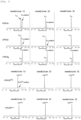
- Oligonucleotides were cleaved from CPG3a-h, CPG3b OMe , and CPG3b LNA under the following conditions 1) to 3).
- oligonucleotide was cleaved from CPG3e-mix under the above-mentioned conditions 1) and 3).
- T 10 oligonucleotide
- T 10 -adduct by-produced oligonucleotide
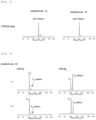
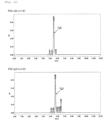
- CPG3e and CPG3g were subjected to cleavage by 4) treatment with 28% aqueous ammonia at 80°C or 5) AMA solution at 55°C, and monitored over time by HPLC (HPLC gradient; SOLUTION B: 8-18% (30 min)).
- Tables summarizing the production ratio of the oligonucleotide (T 10 ) of interest and the by-produced oligonucleotide (T 10 -adduct) (T 10 :T 10 -adduct) which are released under conditions 4) and conditions 5) are shown in Table 5 and Table 6.
- Table 5 Time CPG3 e CPG3 g 1 h 91:9 26:74 3 h 97:3 60:40
- Table 6 Time CPG3e CPG3g 4 h 99:1 59:41
- phosphoramidites (compound 3g) having a cyanoethoxy group as a protecting group for the phosphoric acid moiety have been widely used.
- the use of the nucleotide derivatives (I) of the present invention (corresponding to nucleotide derivatives 3a-3f, 3h), having a more stable substituent such as an alkoxy group as a protecting group for the phosphoric acid moiety, as a phosphoramidite strikingly increased the production of T10 oligonucleotides, and it was confirmed that the oligonucleotides can be released from the solid phase support under mild base conditions. This superior effect was also confirmed when OMe or LNA having modified sugar moieties was used.
- Example D2 Cleavage from CPG1a and CPG1g/CPG2a and CPG2g
- CE, T, T 10 , and T 10 -adduct are each as defined above.
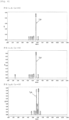
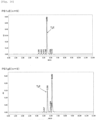
- HPLC charts showing the cleavage results of oligonucleotides from CPG1a and CPG1g/CPG2a and CPG2g are shown in Fig. 5 .
- T 10 The production ratio of the oligonucleotide (SEQ ID NO: 1) of interest and the by-produced oligonucleotide (T 10 -adduct) which are released upon cleavage of each CPG is shown in Table 8 as values calculated from peak area ratio on HPLC chart.
- oligonucleotides can be cleaved sufficiently rapidly even when an ethyleneglycol resin (CPG1) with a "1,2-diol structure" which is the same as a universal support with a simpler structure than the universal support is used as a solid phase support.
- CPG1 ethyleneglycol resin
- one of the features of the production method of oligonucleotides of the present invention is that a 1,2-diol derivative having a simple structure can be used as a universal linker.
- DMTr is a 4,4'-dimethoxytrityl group
- Me is a methyl group
- iPr is an isopropyl group
- tBu is a t-butyl group
- Ac is an acetyl group.
- nucleotide derivative 12c (3.37 g, 65%).
- nucleotide derivative 12e (5.69 g, 53%).
- nucleotide derivative 14g was synthesized.
- nucleotide derivative 14c (3.57 g, 60%).
- nucleotide derivative 16g was synthesized.
- nucleotide derivative 16c (3.23 g, 54%).
- nucleotide derivative 20c (3.53 g, 59%).
- nucleotide derivative 25c (2.27 g, 70%).
- Oligonucleotide was synthesized using Oligpilot 100 (Cytiva) and according to the general phosphoramidite method.
- Oligpilot 100 Cytiva
- the following Primer Support 5G Unylinker 350(PS1) was used and the synthesis scale was set to 50 pmol, and the synthesis was performed under trityl OFF conditions.
- DMTr is a 4,4'-dimethoxytrityl group
- Ph is a phenyl group
- Me is a methyl group
- iPr is an isopropyl group
- Ac is an acetyl group
- CE is a 2-cyanoethyl group.
- 5-benzylthio-1H-tetrazole was used as the activator and the condensation time was 3 min for coupling of natural thymidine amidite and 12 min for coupling of 2'-modified nucleoside amidite.
- PS1 Primary Support 5G Unylinker 350 manufactured by Cytiva
- PS1cA PS1eA
- PS1gA PS1gA
- PS1 Primary Support 5G Unylinker 350 manufactured by Cytiva
- PS1cB T-1 mer-(2'-OCE)U oligonucleotides
- PS1gB PS1gB
- PS1 Primary Support 5G Unylinker 350 manufactured by Cytiva
- PS1gB PS1gB
- PS1 Primary Support 5G Unylinker 350 manufactured by Cytiva
- PS1cC T-1 mer-(2'-O-allyl)U oligonucleotides
- PS1gC PS1gC
- PS1 Primary Support 5G Unylinker 350 manufactured by Cytiva
- PS1gC PS1gC
- PS1 Primary Support 5G Unylinker 350 manufactured by Cytiva
- PS1cD T-1 mer-(2'-O-propargyl)U oligonucleotides
- PS1gD PS1gD
- PS1 Primary Support 5G Unylinker 350 manufactured by Cytiva
- PS1gD PS1gD
- PS1 Primary Support 5G Unylinker 350 manufactured by Cytiva
- PS1cE T-1 mer-(2'-O-(3-acetamide)propyl)U oligonucleotides
- PS1gE PS1gE
- PS1 Primary Support 5G Unylinker 350 manufactured by Cytiva
- PS1gE PS1gE
- Ph is a phenyl group
- Me is a methyl group
- iPr is an isopropyl group
- Ac is an acetyl group
- CE is a 2-cyanoethyl group.
- T is a thyminyl group and U is a uracil group (wherein thyminyl group and uracil group respectively indicate thymine monovalent group and uracil monovalent group).
- the nucleobase When T is described as a nucleic acid monomer constituting an oligonucleotide sequence, the nucleobase means a deoxyribonucleotide bonded to deoxy-D-ribose.
- the nucleobase When U is described as a nucleic acid monomer constituting an oligonucleotide sequence, the nucleobase means a ribonucleotide bonded to D-ribose.
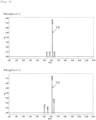
- TnA oligonucleotide
- phosphoramidites compound: MOE-T amidite commercially available product, nucleotide derivative 12g having a cyanoethoxy group as a protecting group for the phosphoric acid moiety have been widely used.
- nucleotide derivatives (I) of the present invention corresponding to nucleotide derivatives 12c, 12e
- a more stable substituent such as an alkoxy group as a protecting group for the phosphoric acid moiety
- a phosphoramidite strikingly increased the production of TnA oligonucleotides
- a superior effect was also confirmed that the oligonucleotides can be released from the solid phase support under mild base conditions even when MOE having modified 2' moiety of sugar moiety was used.
- phosphoramidites (compound: corresponding to nucleotide derivatives 14g, 16g, 20g, 25g) having a cyanoethoxy group as a protecting group for the phosphoric acid moiety have been widely used.
- nucleotide derivatives (I) of the present invention corresponding to nucleotide derivatives 14c, 16c, 20c, 25c
- a more stable substituent such as an alkoxy group as a protecting group for the phosphoric acid moiety
- a phosphoramidite strikingly increased the production of TnB - E oligonucleotides
- a superior effect was also confirmed that the oligonucleotides can be released from the solid phase support under mild base conditions even when nucleotides having 2' moiety of sugar moiety modified with various functional groups were used.
- the present invention relates to a solid phase synthesis method of an oligonucleotide that enables cleavage of a synthesized oligonucleotide even under mild conditions by using a nucleoside phosphoramidite with a specific structure, and the like, and is useful in the technique fields requiring oligonucleotide synthesis (e.g., in the field of research and development of nucleic acid drugs).
Landscapes
- Chemical & Material Sciences (AREA)
- Organic Chemistry (AREA)
- Life Sciences & Earth Sciences (AREA)
- Health & Medical Sciences (AREA)
- Molecular Biology (AREA)
- Biochemistry (AREA)
- Engineering & Computer Science (AREA)
- General Health & Medical Sciences (AREA)
- Genetics & Genomics (AREA)
- Biotechnology (AREA)
- Wood Science & Technology (AREA)
- Zoology (AREA)
- Chemical Kinetics & Catalysis (AREA)
- General Chemical & Material Sciences (AREA)
- Microbiology (AREA)
- Bioinformatics & Cheminformatics (AREA)
- General Engineering & Computer Science (AREA)
- Saccharide Compounds (AREA)
Applications Claiming Priority (2)
| Application Number | Priority Date | Filing Date | Title |
|---|---|---|---|
| JP2021205491 | 2021-12-17 | ||
| PCT/JP2022/046549 WO2023113038A1 (fr) | 2021-12-17 | 2022-12-16 | Procédé de production d'oligonucléotide |
Publications (2)
| Publication Number | Publication Date |
|---|---|
| EP4450512A1 true EP4450512A1 (fr) | 2024-10-23 |
| EP4450512A4 EP4450512A4 (fr) | 2025-12-24 |
Family
ID=86774477
Family Applications (1)
| Application Number | Title | Priority Date | Filing Date |
|---|---|---|---|
| EP22907560.1A Pending EP4450512A4 (fr) | 2021-12-17 | 2022-12-16 | Procédé de production d'oligonucléotide |
Country Status (4)
| Country | Link |
|---|---|
| US (1) | US20250154191A1 (fr) |
| EP (1) | EP4450512A4 (fr) |
| JP (1) | JPWO2023113038A1 (fr) |
| WO (1) | WO2023113038A1 (fr) |
Families Citing this family (1)
| Publication number | Priority date | Publication date | Assignee | Title |
|---|---|---|---|---|
| CN119241620B (zh) * | 2024-12-03 | 2025-04-08 | 羿美诚健(上海)生物医药有限公司 | 一种双链siRNA及其制备方法,药物组合物和用途 |
Family Cites Families (13)
| Publication number | Priority date | Publication date | Assignee | Title |
|---|---|---|---|---|
| JPH04112894A (ja) * | 1990-08-31 | 1992-04-14 | Daikin Ind Ltd | ホスフィン化合物及びこれを用いるオリゴヌクレオチドの合成方法 |
| US6770754B2 (en) * | 2000-11-29 | 2004-08-03 | Glen Research Coporation | Universal supports for oligonucleotide synthesis |
| US20040152905A1 (en) | 2003-01-31 | 2004-08-05 | Guzaev Andrei P. | Universal building blocks and support media for synthesis of oligonucleotides and their analogs |
| US7202264B2 (en) | 2003-01-31 | 2007-04-10 | Isis Pharmaceuticals, Inc. | Supports for oligomer synthesis |
| JP4602011B2 (ja) | 2003-08-29 | 2010-12-22 | 日東電工株式会社 | 多孔質樹脂ビーズおよびその製造方法 |
| JP4799831B2 (ja) | 2004-05-14 | 2011-10-26 | 日東電工株式会社 | 多孔質樹脂の製造方法 |
| JP2006342245A (ja) | 2005-06-08 | 2006-12-21 | Nitto Denko Corp | 多孔質樹脂ビーズ |
| JP4970881B2 (ja) | 2006-09-21 | 2012-07-11 | 日東電工株式会社 | 固相合成用担体 |
| JP5360763B2 (ja) | 2009-10-21 | 2013-12-04 | 日東電工株式会社 | 核酸固相合成用リンカー及び担体 |
| JP2017522046A (ja) * | 2014-06-06 | 2017-08-10 | ソルスティス バイオロジクス,リミティッド | 生物可逆的および生物不可逆的基を有するポリヌクレオチド構築物 |
| JP2016204316A (ja) | 2015-04-24 | 2016-12-08 | 日東電工株式会社 | 核酸固相合成用リンカー及び担体 |
| CN112424213A (zh) * | 2018-05-02 | 2021-02-26 | 株式会社纳蒂亚斯 | 寡核苷酸合成用片段及其制造方法、以及使用其的寡核苷酸的合成方法 |
| EP4006135A4 (fr) * | 2019-07-31 | 2022-10-26 | Japan Science and Technology Agency | Amorce, dispositif de production d'adn double brin l'utilisant, et procédé de production d'adn double brin |
-
2022
- 2022-12-16 US US18/719,965 patent/US20250154191A1/en active Pending
- 2022-12-16 JP JP2023567860A patent/JPWO2023113038A1/ja active Pending
- 2022-12-16 EP EP22907560.1A patent/EP4450512A4/fr active Pending
- 2022-12-16 WO PCT/JP2022/046549 patent/WO2023113038A1/fr not_active Ceased
Also Published As
| Publication number | Publication date |
|---|---|
| EP4450512A4 (fr) | 2025-12-24 |
| US20250154191A1 (en) | 2025-05-15 |
| WO2023113038A1 (fr) | 2023-06-22 |
| JPWO2023113038A1 (fr) | 2023-06-22 |
Similar Documents
| Publication | Publication Date | Title |
|---|---|---|
| JP2705913B2 (ja) | インビトロにおけるオリゴヌクレオチド合成法 | |
| US8138330B2 (en) | Process for the synthesis of oligonucleotides | |
| US7741472B2 (en) | Polynucleotide containing a phosphate mimetic | |
| US7084125B2 (en) | Xylo-LNA analogues | |
| WO2005014609A2 (fr) | Procede de production d'un analogue de nucleotide hautement stereoregulier dont l'atome de phosphore est modifie | |
| JP5194256B2 (ja) | 2’水酸基修飾リボヌクレオシド誘導体 | |
| EP3418289B1 (fr) | Nucléoside artificiel, nucléotide artificiel et oligonucléotide artificiel | |
| KR20180116312A (ko) | 핵산 서열 내로의 혼입을 위한 5-(n-보호된-트립타미노카복시아미드)-2'-데옥시유리딘 포스포아미데이트의 합성을 위한 화합물 및 방법 | |
| EP0611075B1 (fr) | Oligodésoxyribonucléotides modifiés, leur préparation et leur utilisation thérapeutique | |
| EP4450512A1 (fr) | Procédé de production d'oligonucléotide | |
| US9376460B2 (en) | Method of polyphosphate synthesis | |
| US7049432B2 (en) | Oligonucleotides having alkylphosphonate linkages and methods for their preparation | |
| JP2023090512A (ja) | ヌクレオシドホスホロアミダイト | |
| US20250215040A1 (en) | Method and compound | |
| EP4488281A1 (fr) | Nucléoside modifié en position 5' et nucléotide l'utilisant | |
| US7569685B2 (en) | Artificial RNAóS modified at the 2ó-hydroxyl group | |
| US20210163422A1 (en) | Reagents based on a tertiary amine backbone to introduce chemical functionality in nucleic acids and sequence-controlled polymers | |
| KR20240131337A (ko) | 폴리뉴클레오티드 제조 방법 | |
| JP2006077013A (ja) | Rna合成に有用な水酸基の新規保護基を有する化合物 | |
| HK1000191B (en) | Modified oligodeoxyribonucleotides, their preparation and their therapeutic use |
Legal Events
| Date | Code | Title | Description |
|---|---|---|---|
| STAA | Information on the status of an ep patent application or granted ep patent |
Free format text: STATUS: THE INTERNATIONAL PUBLICATION HAS BEEN MADE |
|
| PUAI | Public reference made under article 153(3) epc to a published international application that has entered the european phase |
Free format text: ORIGINAL CODE: 0009012 |
|
| STAA | Information on the status of an ep patent application or granted ep patent |
Free format text: STATUS: REQUEST FOR EXAMINATION WAS MADE |
|
| 17P | Request for examination filed |
Effective date: 20240701 |
|
| AK | Designated contracting states |
Kind code of ref document: A1 Designated state(s): AL AT BE BG CH CY CZ DE DK EE ES FI FR GB GR HR HU IE IS IT LI LT LU LV MC ME MK MT NL NO PL PT RO RS SE SI SK SM TR |
|
| DAV | Request for validation of the european patent (deleted) | ||
| DAX | Request for extension of the european patent (deleted) | ||
| REG | Reference to a national code |
Ref country code: DE Ref legal event code: R079 Free format text: PREVIOUS MAIN CLASS: C07H0021040000 Ipc: C07H0001000000 |
|
| RIC1 | Information provided on ipc code assigned before grant |
Ipc: C07H 1/00 20060101AFI20250826BHEP Ipc: C07H 21/04 20060101ALI20250826BHEP Ipc: C07H 19/067 20060101ALI20250826BHEP Ipc: C07H 19/073 20060101ALI20250826BHEP |
|
| A4 | Supplementary search report drawn up and despatched |
Effective date: 20251124 |
|
| RIC1 | Information provided on ipc code assigned before grant |
Ipc: C07H 1/00 20060101AFI20251118BHEP Ipc: C07H 21/04 20060101ALI20251118BHEP Ipc: C07H 19/067 20060101ALI20251118BHEP Ipc: C07H 19/073 20060101ALI20251118BHEP |