EP4454636A1 - Préparation d'administration continue pouvant être libérée de manière stable et procédé de préparation associé - Google Patents
Préparation d'administration continue pouvant être libérée de manière stable et procédé de préparation associé Download PDFInfo
- Publication number
- EP4454636A1 EP4454636A1 EP22909831.4A EP22909831A EP4454636A1 EP 4454636 A1 EP4454636 A1 EP 4454636A1 EP 22909831 A EP22909831 A EP 22909831A EP 4454636 A1 EP4454636 A1 EP 4454636A1
- Authority
- EP
- European Patent Office
- Prior art keywords
- preparation
- delivery preparation
- biodegradable polymer
- active pharmaceutical
- pharmaceutical ingredient
- Prior art date
- Legal status (The legal status is an assumption and is not a legal conclusion. Google has not performed a legal analysis and makes no representation as to the accuracy of the status listed.)
- Pending
Links
Images



Classifications
-
- A—HUMAN NECESSITIES
- A61—MEDICAL OR VETERINARY SCIENCE; HYGIENE
- A61K—PREPARATIONS FOR MEDICAL, DENTAL OR TOILETRY PURPOSES
- A61K9/00—Medicinal preparations characterised by special physical form
- A61K9/06—Ointments; Bases therefor; Other semi-solid forms, e.g. creams, sticks, gels
-
- A—HUMAN NECESSITIES
- A61—MEDICAL OR VETERINARY SCIENCE; HYGIENE
- A61K—PREPARATIONS FOR MEDICAL, DENTAL OR TOILETRY PURPOSES
- A61K31/00—Medicinal preparations containing organic active ingredients
- A61K31/33—Heterocyclic compounds
- A61K31/38—Heterocyclic compounds having sulfur as a ring hetero atom
- A61K31/381—Heterocyclic compounds having sulfur as a ring hetero atom having five-membered rings
-
- A—HUMAN NECESSITIES
- A61—MEDICAL OR VETERINARY SCIENCE; HYGIENE
- A61K—PREPARATIONS FOR MEDICAL, DENTAL OR TOILETRY PURPOSES
- A61K31/00—Medicinal preparations containing organic active ingredients
- A61K31/33—Heterocyclic compounds
- A61K31/395—Heterocyclic compounds having nitrogen as a ring hetero atom, e.g. guanethidine or rifamycins
- A61K31/41—Heterocyclic compounds having nitrogen as a ring hetero atom, e.g. guanethidine or rifamycins having five-membered rings with two or more ring hetero atoms, at least one of which being nitrogen, e.g. tetrazole
- A61K31/425—Thiazoles
- A61K31/426—1,3-Thiazoles
-
- A—HUMAN NECESSITIES
- A61—MEDICAL OR VETERINARY SCIENCE; HYGIENE
- A61K—PREPARATIONS FOR MEDICAL, DENTAL OR TOILETRY PURPOSES
- A61K31/00—Medicinal preparations containing organic active ingredients
- A61K31/33—Heterocyclic compounds
- A61K31/395—Heterocyclic compounds having nitrogen as a ring hetero atom, e.g. guanethidine or rifamycins
- A61K31/495—Heterocyclic compounds having nitrogen as a ring hetero atom, e.g. guanethidine or rifamycins having six-membered rings with two or more nitrogen atoms as the only ring heteroatoms, e.g. piperazine or tetrazines
- A61K31/4985—Pyrazines or piperazines ortho- or peri-condensed with heterocyclic ring systems
-
- A—HUMAN NECESSITIES
- A61—MEDICAL OR VETERINARY SCIENCE; HYGIENE
- A61K—PREPARATIONS FOR MEDICAL, DENTAL OR TOILETRY PURPOSES
- A61K47/00—Medicinal preparations characterised by the non-active ingredients used, e.g. carriers or inert additives; Targeting or modifying agents chemically bound to the active ingredient
- A61K47/06—Organic compounds, e.g. natural or synthetic hydrocarbons, polyolefins, mineral oil, petrolatum or ozokerite
- A61K47/08—Organic compounds, e.g. natural or synthetic hydrocarbons, polyolefins, mineral oil, petrolatum or ozokerite containing oxygen, e.g. ethers, acetals, ketones, quinones, aldehydes, peroxides
- A61K47/14—Esters of carboxylic acids, e.g. fatty acid monoglycerides, medium-chain triglycerides, parabens or PEG fatty acid esters
-
- A—HUMAN NECESSITIES
- A61—MEDICAL OR VETERINARY SCIENCE; HYGIENE
- A61K—PREPARATIONS FOR MEDICAL, DENTAL OR TOILETRY PURPOSES
- A61K47/00—Medicinal preparations characterised by the non-active ingredients used, e.g. carriers or inert additives; Targeting or modifying agents chemically bound to the active ingredient
- A61K47/06—Organic compounds, e.g. natural or synthetic hydrocarbons, polyolefins, mineral oil, petrolatum or ozokerite
- A61K47/20—Organic compounds, e.g. natural or synthetic hydrocarbons, polyolefins, mineral oil, petrolatum or ozokerite containing sulfur, e.g. dimethyl sulfoxide [DMSO], docusate, sodium lauryl sulfate or aminosulfonic acids
-
- A—HUMAN NECESSITIES
- A61—MEDICAL OR VETERINARY SCIENCE; HYGIENE
- A61K—PREPARATIONS FOR MEDICAL, DENTAL OR TOILETRY PURPOSES
- A61K47/00—Medicinal preparations characterised by the non-active ingredients used, e.g. carriers or inert additives; Targeting or modifying agents chemically bound to the active ingredient
- A61K47/06—Organic compounds, e.g. natural or synthetic hydrocarbons, polyolefins, mineral oil, petrolatum or ozokerite
- A61K47/22—Heterocyclic compounds, e.g. ascorbic acid, tocopherol or pyrrolidones
-
- A—HUMAN NECESSITIES
- A61—MEDICAL OR VETERINARY SCIENCE; HYGIENE
- A61K—PREPARATIONS FOR MEDICAL, DENTAL OR TOILETRY PURPOSES
- A61K47/00—Medicinal preparations characterised by the non-active ingredients used, e.g. carriers or inert additives; Targeting or modifying agents chemically bound to the active ingredient
- A61K47/30—Macromolecular organic or inorganic compounds, e.g. inorganic polyphosphates
- A61K47/34—Macromolecular compounds obtained otherwise than by reactions only involving carbon-to-carbon unsaturated bonds, e.g. polyesters, polyamino acids, polysiloxanes, polyphosphazines, copolymers of polyalkylene glycol or poloxamers
-
- A—HUMAN NECESSITIES
- A61—MEDICAL OR VETERINARY SCIENCE; HYGIENE
- A61K—PREPARATIONS FOR MEDICAL, DENTAL OR TOILETRY PURPOSES
- A61K9/00—Medicinal preparations characterised by special physical form
- A61K9/0012—Galenical forms characterised by the site of application
- A61K9/0019—Injectable compositions; Intramuscular, intravenous, arterial, subcutaneous administration; Compositions to be administered through the skin in an invasive manner
- A61K9/0024—Solid, semi-solid or solidifying implants, which are implanted or injected in body tissue
-
- A—HUMAN NECESSITIES
- A61—MEDICAL OR VETERINARY SCIENCE; HYGIENE
- A61K—PREPARATIONS FOR MEDICAL, DENTAL OR TOILETRY PURPOSES
- A61K9/00—Medicinal preparations characterised by special physical form
- A61K9/08—Solutions
Definitions
- the present disclosure belongs to the technical field of pharmaceutical formulations, and specifically relates to a continuous delivery preparation capable of being stably released, and a preparation method for the delivery preparation.
- ISFI In situ forming implant
- a novel drug delivery system composed of a solution or semi-solid mixture of biodegradable polymer, which is capable of being solidified/gelated at the injection site to form a depot.
- ISFIs are primarily classified by different mechanisms of formation such as in situ precipitation, organic gelation, or polymer crosslinking.
- Atrigel ® system based on solvent diffusion-induced in situ precipitation, is currently market-oriented and the most applied technology with several commercial products having been put on the market, and is widely used in the fields such as treatment of periodontitis (Atridox ® ), advanced pancreatic cancer (Eligard ® ), opioid use disorder (Sublocade ® ), and schizophrenia (Perseris ® ).
- the solvent diffuses to cause phase separation and penetrates into the surrounding tissue fluid, while the polymer precipitates at the injection site to form a semi-solid or solid drug depot, thereby achieving an effect of long-acting release.
- the Atrigel ® in situ gels boast the advantages of simple preparation process, facile injection method, easy mass production, etc., as compared to conventional solid implants and microspheres.
- the Atrigel ® in situ gel preparation tends to exhibit a large burst release.
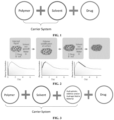
- the in vivo release process of a drug in the in situ gel can be divided into three main stages: a burst release stage, a diffusion stage, and a polymer degradation stage (as shown in FIG. 2 ).
- the burst release stage mainly means that when the preparation is injected, the organic solvent is brought into contact with tissue fluid to cause phase separation, thereby resulting in a rapid release of the drug. Numerous studies have shown that the ratio of drug release at this stage may be between 8% and 95%.
- the drug for treatment usually has a narrow safety window, thus the fluctuation range of the plasma concentration needs to be strictly controlled.
- the burst release of the drug often leads to a rapid increase of drug exposure in vivo, which in turn causes serious toxic and side effects.
- the present disclosure provides a continuous delivery preparation capable of being stably released, and addresses the problem about a larger initial burst release of conventional in situ gel (Atrigel technology).
- the present disclosure provides a continuous delivery preparation capable of being stably released.
- the above preparation achieves significant results in retarding the burst release of drug in vivo and in vitro and maintaining the in vivo plasma concentration in a safe and effective range over more than one week.
- the preparation method for the above preparation is simple and suitable for large-scale production.
- the finished delivery preparation is convenient in use.
- PLGA 7525 DLG 2A
- “7525” means that the molar ratio of lactide to glycolide is 75:25
- “DLG” means lactide/glycolide copolymer, and if represented as “DL”, it means polylactide
- “2” acts as a sign for intrinsic viscosity, where 1 means that the intrinsic viscosity is 0.05 to 0.15 dL/g, 1.5 means that the intrinsic viscosity is 0.10 to 0.20 dL/g, 2 means that the intrinsic viscosity is 0.15 to 0.25 dL/g, 2.5 means that the intrinsic viscosity is 0.20 to 0.30 dL/g, 3 means that the intrinsic viscosity is 0.25 to 0.35 dL/g, 3.5 means that the intrinsic viscosity is 0.30 to 0.40 dL/g, 4 means that the intrinsic viscosity is 0.35 to 0.45 dL/g, 4.5 means that
- the present disclosure provides a gel carrier, comprising a biodegradable polymer, an organic solvent, a hydrophobic additive, and optionally a hydrophilic gel matrix.
- gel carrier refers to a substance or a composition of multiple substances used for encapsulating, delivering, and/or releasing a bio-activator or an active pharmaceutical ingredient, for example, including a biodegradable polymer and an organic solvent.
- the gel carrier of the present disclosure comprises a biodegradable polymer, an organic solvent, a hydrophobic additive, and optionally a hydrophilic gel matrix. In some more specific embodiments, the gel carrier of the present disclosure comprises a biodegradable polymer, an organic solvent, and a hydrophobic additive. In other more specific embodiments, the gel carrier of the present disclosure comprises a biodegradable polymer, an organic solvent, a hydrophobic additive, and a hydrophilic gel matrix.
- biodegradable polymer may be used interchangeably and refer to polymers that may break down by chemical or physical methods when interacting with a physiological environment, for example, the polymers are eroded, decomposed, or dissolved at the implantation site in a subject over a period of time, e.g. within several days, several weeks, or several months.
- Biodegradable polymers serve a temporary function in a subject, e.g. delivering bio-activators such as drugs.
- Biodegradable polymers may be degraded into fragments and metabolized or excreted by the host.
- the specific type of the biodegradable polymer is not particularly limited in the present disclosure and may be determined by a person skilled in the art as actually required.
- the biodegradable polymer may be a polyester that refers to a polymer in which all or substantially all of the repeating units are linked together by ester groups.
- the polyester may be formed by subjecting a monomer having carboxyl group and a monomer having hydroxyl group to reaction in order to form ester group.
- the polyester may be formed by the ring opening polymerization of a cyclic ester monomer.
- the polyester may be formed by a monomer such as glycolide, lactide, ⁇ -caprolactone, or p-dioxanone.
- the biodegradable polymer of the present disclosure is polylactide.
- the biodegradable polymer may be an absorbable polyester copolymer, terpolymer, tetrapolymer, or a mixture thereof.
- Suitable absorbable polyester copolymers include, but are not limited to, lactide/glycolide copolymer, ⁇ -caprolactone/glycolide copolymer, lactide/trimethylene carbonate copolymer, lactide/glycolide/caprolactone terpolymer, lactide/glycolide/trimethylene carbonate terpolymer, lactide/caprolactone/trimethylene carbonate terpolymer, glycolide/caprolactone/trimethylene carbonate terpolymer, and lactide/glycolide/caprolactone/trimethylene carbonate tetrapolymer.
- the biodegradable polymer of the present disclosure is lactide/glycolide copolymer (poly (lactic-co-glycolic acid)).
- the molar ratio of lactide to glycolide in the lactide/glycolide copolymer used in the present disclosure is 50:50 to 95:5.
- the molar ratio may specifically be 50:50, 75:25, 85:15 or 95:5, etc.
- the molecular weight of the biodegradable polymer is not particularly limited in the present disclosure, and may be determined by a person skilled in the art as actually required.
- the biodegradable polymer of the present disclosure has a molecular weight of 5000 to 70000 Da, preferably 10000 to 50000 Da.
- the molecular weight may specifically be 5000 Da, 10000 Da, 15000 Da, 20000 Da, 25000 Da, 30000 Da, 35000 Da, 40000 Da, 45000 Da, 50000 Da, 55000 Da, 60000 Da, 65000 Da, 70000 Da or any numerical value within the range, etc.
- the content of the biodegradable polymer may vary in a certain range according to specific needs.
- the content of the biodegradable polymer of the present disclosure is 20% to 50% by mass percentage of the total mass of the gel carrier.
- the content of the biodegradable polymer may specifically be 20%, 23%, 25%, 27%, 30%, 31%, 32%, 33%, 34%, 35%, 36%, 37%, 38%, 39%, 40%, 41%, 42%, 43%, 44%, 45%, 46%, 47%, 48%, 49% or 50%, etc.
- the content of the biodegradable polymer of the present disclosure is 30% to 50% by mass percentage of the total mass of the gel carrier.
- the biodegradable polymer may also be a polyetherester, which refers to a polymer in which all or substantially all of the repeating units are linked together by ester groups or ether groups, and in which both ether groups and ester groups are present as linking groups in the polymer.
- the biodegradable polymer may be a polyether/polyester polymer, which is a polyetherester having a block copolymer structure that includes one or more repeating unit blocks linked together by ether groups and one or more repeating unit blocks linked together by ester groups.
- organic solvent refers to a biocompatible organic solvent that may diffuse in an organism and be metabolized or absorbed by the organism, for example, N-methyl pyrrolidone, ethyl acetate, medium-chain triglyceride, glyceryl triacetate, glyceryl tricaprylate, benzyl benzoate, benzyl alcohol, dimethyl sulfoxide, ethyl benzoate, ethanol, glyceraldehyde, and glycerol formal in the art.
- the organic solvent of the present disclosure is N-methyl pyrrolidone and/or dimethyl sulfoxide. In some specific embodiments, the organic solvent of the present disclosure is N-methyl pyrrolidone. In other specific embodiments, the organic solvent of the present disclosure is dimethyl sulfoxide. In some specific embodiments, organic solvent of the present disclosure is N-methyl pyrrolidone and dimethyl sulfoxide.
- the content of the organic solvent may vary in a certain range according to specific needs.
- the mass ratio of the organic solvent to the hydrophobic additive in the present disclosure is 1:1 to 9:1.
- the mass ratio may specifically be 1:1, 2:1, 3:1, 4:1, 5:1, 6:1, 7:1, 7:3, 8:1 or 9:1 etc.
- the content of the organic solvent of the present disclosure is 20% to 60% by mass of the total mass of the gel carrier.
- the content of the organic solvent may specifically be 20%, 25%, 30%, 35%, 39%, 40%, 41%, 42%, 43%, 44%, 45%, 46%, 47%, 48%, 49%, 50%, 51%, 52%, 53%, 54%, 55%, 56%, 57%, 58%, 59% or 60%, etc.
- hydrophobic additive may be a pharmaceutically acceptable additive having hydrophobicity and does not include hydrophobic active substances or active ingredients, for example, fatty alcohols such as stearyl alcohol, fatty acids such as sorbic acid, fatty acid esters such as medium-chain triglyceride, and siloxane compounds such as dimethyl siloxane in the art.
- fatty alcohols such as stearyl alcohol
- fatty acids such as sorbic acid
- fatty acid esters such as medium-chain triglyceride
- siloxane compounds such as dimethyl siloxane in the art.
- the hydrophobic additive of the present disclosure is one or more selected from the group consisting of ethyl acetate, medium-chain triglyceride, glyceryl triacetate, glyceryl tricaprylate, benzyl benzoate, and benzyl alcohol. In some specific embodiments, the hydrophobic additive of the present disclosure is one or more selected from the group consisting of glyceryl triacetate, glyceryl tricaprylate, and benzyl benzoate.
- the content of the hydrophobic additive may vary in a certain range according to specific needs.
- the content of the hydrophobic additive of the present disclosure is 1% to 50% by mass percentage of the total mass of the gel carrier.
- the content of the hydrophobic additive may specifically be 1%, 5%, 6%, 7%, 8%, 9%, 10%, 11%, 12%, 13%, 14%, 15%, 16%, 17%, 18%, 19%, 20%, 21%, 22%, 23%, 24%, 25%, 30%, 35%, 40%, 45% or 50%, etc.
- the content of the hydrophobic additive of the present disclosure is 5% to 30% by mass percentage of the total mass of the gel carrier.
- hydrophilic gel matrix is an excipient used as a carrier material. It is used mainly to regulate the drug release rate and exert a sustained-release or controlled-release effect, so that the rate and amount of drug release in the preparation meet appropriate requirements to ensure that the drug is delivered to the diseased site at a certain rate and maintained at a certain concentration in the body to achieve the desired effect and reduce toxic and side effects.
- the gel carrier of the present disclosure comprises a hydrophilic gel matrix. In other specific embodiments, the gel carrier of the present disclosure is devoid of a hydrophilic gel matrix.
- the hydrophilic gel matrix may be a hydrophilic polymer, e.g., natural gums, such as alginate, agar, xanthan gum, and tragacanth; cellulose derivatives, such as methyl cellulose (MC), sodium carboxymethyl cellulose (CMC-Na), hydroxypropyl methyl cellulose (HPMC), and hydroxyethyl cellulose (HEC); non-cellulosic polysaccharides, such as chitin, chitosan, and carbomer; macromolecular polymers, such as povidone (PVP), ethylene polymers, acrylic resin, and polyvinyl alcohol (PVA).
- natural gums such as alginate, agar, xanthan gum, and tragacanth
- cellulose derivatives such as methyl cellulose (MC), sodium carboxymethyl cellulose (CMC-Na), hydroxypropyl methyl cellulose (HPMC), and hydroxyethyl cellulose (HEC)
- the hydrophilic gel matrix of the present disclosure is one or more selected from the group consisting of poloxamer, carbomer, polyvinylpyrrolidone, hydroxypropyl methyl cellulose, and sodium carboxymethyl cellulose. In some more specific embodiments, the hydrophilic gel matrix of the present disclosure is one or more selected from the group consisting of poloxamer 188, carbomer, and polyvinylpyrrolidone.
- the content of the hydrophilic gel matrix may vary in a certain range according to specific needs.
- the content of the hydrophilic gel matrix of the present disclosure is 0.5% to 15% by mass percentage of the total mass of the gel carrier.
- the content of the hydrophilic gel matrix may specifically be 0.5%, 1%, 2%, 3%, 4%, 5%, 7%, 10%, 12% or 15%, etc.
- the content of the hydrophilic gel matrix of the present disclosure is 1% to 5% by mass percentage of the total mass of the gel carrier.
- the present disclosure provides a delivery preparation, comprising an active pharmaceutical ingredient and the gel carrier provided in the ⁇ First Aspect> described above of the present disclosure.
- delivery preparation is a pharmaceutical composition, comprising an active pharmaceutical ingredient (API) and a gel carrier (in some cases, it comprises only an active pharmaceutical ingredient and a gel carrier), which may release the active pharmaceutical ingredient in a particular release behavior (e.g., stably, slowly, and continuously) after being administered to a subject.
- API active pharmaceutical ingredient
- gel carrier in some cases, it comprises only an active pharmaceutical ingredient and a gel carrier
- the delivery preparation of the present disclosure comprises an active pharmaceutical ingredient and a gel carrier, wherein the gel carrier comprises a biodegradable polymer, an organic solvent, a hydrophobic additive, and optionally a hydrophilic gel matrix.
- the delivery preparation of the present disclosure comprises an active pharmaceutical ingredient, a biodegradable polymer, an organic solvent, and a hydrophobic additive.
- the delivery preparation of the present disclosure comprises an active pharmaceutical ingredient, a biodegradable polymer, an organic solvent, a hydrophobic additive, and a hydrophilic gel matrix.
- active pharmaceutical ingredient refers to any one or a mixture of the substances in the delivery preparation, and such substances have pharmacological or other direct effects on the diagnosis, treatment, symptom relief or management of disease or the prevention of disease or can affect the function or structure of an organism.
- the active pharmaceutical ingredient of the present disclosure may be a drug for the treatment of schizophrenia or a hormone drug.
- the active pharmaceutical ingredient of the present disclosure includes, but is not limited to, risperidone, paliperidone, bupivacaine, ropivacaine, leuprorelin, triptorelin, ktreotide, rotigotine, pramipexole, lumateperone or a pharmaceutically acceptable salt thereof.
- the active pharmaceutical ingredient of the present disclosure is rotigotine, pramipexole, lumateperone or a pharmaceutically acceptable salt thereof, etc.
- the content of the active pharmaceutical ingredient may vary in a certain range according to specific needs.
- the content of the active pharmaceutical ingredient is always calculated in its free base form.
- the content of the active pharmaceutical ingredient is always calculated in the form of its acid addition salt.
- the content of the active pharmaceutical ingredient (e.g., calculated in its free base form) in the delivery preparation of the present disclosure is 0.5% to 30% by mass percentage.
- the content of the active pharmaceutical ingredient may specifically be 0.5%, 1%, 2%, 3%, 3.1%, 3.2%, 3.3%, 3.4%, 3.5%, 3.6%, 3.7%, 3.8%, 3.9%, 4%, 4.1%, 4.2%, 4.3%, 4.4%, 4.5%, 5%, 5.1%, 5.2%, 5.3%, 5.4%, 5.5%, 6%, 6.1%, 6.2%, 6.3%, 6.4%, 6.5%, 6.6%, 6.7%, 6.8%, 6.9%, 7%, 7.1%, 7.2%, 7.3%, 7.4%, 7.5%, 8%, 8.5%, 9%, 9.1%, 9.2%, 9.3%, 9.4%, 9.5%, 10%, 11%, 12%, 13%, 14%, 15%, 16%, 17%, 18%, 19%, 20%, 21%, 22%, 23%, 24%, 25%, 26%, 27%, 28%, 29% or 30%, etc.
- the content of the active pharmaceutical ingredient e.g., calculated in its free base form in the delivery preparation of the present disclosure
- the present disclosure provides a preparation method for the gel carrier provided in the ⁇ First Aspect> described above of the present disclosure.
- the preparation method for the gel carrier of the present disclosure may comprise the following steps: weighing prescribed doses of a biodegradable polymer, an organic solvent, a hydrophobic additive, and optionally a hydrophilic gel matrix, and mixing to homogeneity to obtain the gel carrier.
- the present disclosure provides a preparation method for the delivery preparation provided in the ⁇ Second Aspect> described above of the present disclosure.
- the preparation method for the delivery preparation of the present disclosure may comprise the following steps: weighing prescribed doses of a biodegradable polymer, an organic solvent, a hydrophobic additive, and optionally a hydrophilic gel matrix, and mixing to homogeneity, and then adding an active pharmaceutical ingredient (e.g., a prescribed dose of the active pharmaceutical ingredient), and mixing to homogeneity to obtain the delivery preparation.
- an active pharmaceutical ingredient e.g., a prescribed dose of the active pharmaceutical ingredient
- the preparation method for the delivery preparation of the present disclosure may comprise the following steps: weighing prescribed doses of a biodegradable polymer, an organic solvent, a hydrophobic additive, and optionally a hydrophilic gel matrix, and mixing to homogeneity, and adding an active pharmaceutical ingredient (e.g., a prescribed dose of the active pharmaceutical ingredient) just before administration, and mixing to homogeneity to obtain the delivery preparation.
- an active pharmaceutical ingredient e.g., a prescribed dose of the active pharmaceutical ingredient
- the active pharmaceutical ingredient is added just before administration, which contributes to a guarantee of the stability of the delivery preparation.
- the preparation method for the delivery preparation of the present disclosure may comprise the following steps: weighing prescribed doses of a biodegradable polymer, an organic solvent, a hydrophobic additive, and optionally a hydrophilic gel matrix, and mixing to homogeneity, and immediately adding an active pharmaceutical ingredient (e.g., a prescribed dose of the active pharmaceutical ingredient), and mixing to homogeneity to obtain the delivery preparation.
- an active pharmaceutical ingredient e.g., a prescribed dose of the active pharmaceutical ingredient
- the resulting delivery preparation containing the active pharmaceutical ingredient can be stored stably, while improving the convenience in use of the delivery preparation.
- the preparation method for the delivery preparation of the present disclosure may comprise the following steps: weighing prescribed doses of a biodegradable polymer, an active pharmaceutical ingredient, an organic solvent, a hydrophobic additive, and optionally a hydrophilic gel matrix, and mixing to homogeneity to obtain the delivery preparation.
- a biodegradable polymer an active pharmaceutical ingredient
- an organic solvent a hydrophobic additive
- optionally a hydrophilic gel matrix a hydrophilic gel matrix
- composition of the delivery preparation of the present disclosure is as shown in FIG. 3 .
- FIG. 3 To express the technical solution of the present disclosure more clearly, it will be further described below with reference to specific examples, which cannot be used to limit the scope of the present disclosure but serve only as part of examples of the present disclosure. Unless otherwise stated, all of the instruments, reagents, materials, experimental animals, etc. used for or involved in the present disclosure are commercially available through conventional means.
- PLGA 7525 DLG 2A
- 0.210 g of PLGA 5050 DLG 4.5A
- 0.120 g of rotigotine was added to the solution prepared above and mixed to homogeneity to obtain the product.
- PLGA 7525 DLG 2A
- 0.210 g of PLGA 5050 DLG 4.5A
- 0.120 g of rotigotine was added to the solution prepared above and mixed to homogeneity to obtain the product.
- PLGA 5050 DLG 4.5A
- NMP 0.106 g
- benzyl benzoate 0.106 g
- rotigotine was added to the solution prepared above and mixed to homogeneity to obtain the product.
- PLGA 5050 DLG 4.5A
- poloxamer 188 0.088 g of poloxamer 188 were precisely weighed, and 0.954 g of NMP and 0.106 g of benzyl benzoate were added, and dissolved while stirring to obtain a clear and transparent gel solution.
- 0.120 g of rotigotine was added to the solution prepared above and mixed to homogeneity to obtain the product.
- PLGA 5050 DLG 4.5A
- benzyl benzoate 0.555 g of NMP and 0.240 g of benzyl benzoate were added, and dissolved while stirring to obtain a clear and transparent solution.
- 0.090 g of rotigotine was added to the solution prepared above and mixed to homogeneity to obtain the product.
- PLGA 7525 DLG 5.5E
- 0.555 g of NMP and 0.240 g of benzyl benzoate were added, and dissolved while stirring to obtain a clear and transparent solution.
- 0.090 g of rotigotine was added to the solution prepared above and mixed to homogeneity to obtain the product.
- PLGA 5050 DLG 4.5A
- NMP 0.293 g of benzyl benzoate
- 0.055 g of rotigotine was added to the solution prepared above and mixed to homogeneity to obtain the product.
- PLGA 7525 DLG 5.5E
- NMP 0.293 g of benzyl benzoate
- 0.055 g of rotigotine was added to the solution prepared above and mixed to homogeneity to obtain the product.
- PLGA 7525 DLG 2A
- 0.578 g of NMP and 0.248 g of benzyl benzoate were added, and dissolved while stirring to obtain a clear and transparent solution.
- 0.055 g of rotigotine was added to the solution prepared above and mixed to homogeneity to obtain the product.
- PLGA 5050 DLG 4.5A
- NMP 0.053 g of glyceryl triacetate
- 0.220 g of lumateperone was added to the solution prepared above and mixed to homogeneity to obtain the product.
- 0.213 g of PLGA (5050 DLG 4.5A) and 0.491 g of PLGA (7525 DLG 2A) were precisely weighed, and 0.965 g of NMP and 0.104 g of glyceryl triacetate were added and stirred until they were dissolved to obtain a clear and transparent solution.
- 0.438 g of lumateperone was added to the solution prepared above and mixed to homogeneity to obtain the product.
- 0.210 g of PLGA (5050 DLG 4.5A) and 0.490 g of PLGA (7525 DLG 2A) were precisely weighed, and 0.954 g of NMP and 0.106 g of glyceryl triacetate were added and stirred until they were dissolved to obtain a clear and transparent solution.
- 0.142 g of lumateperone was added to the solution prepared above and mixed to homogeneity to obtain the product.
- 0.675g PLGA 8515 DLG 2A was precisely weighed, and 0.578 g of NMP and 0.248 g of benzyl benzoate were added, and dissolved while stirring to obtain a clear and transparent solution.
- 0.055 g of rotigotine was added to the solution prepared above and mixed to homogeneity to obtain the product.
- 0.675g PLGA 7525 DLG 2A was precisely weighed, 0.578 g of NMP and 0.248 g of benzyl benzoate were added, and dissolved while stirring to obtain a clear and transparent solution, and then 0.055 g of rotigotine was added and mixed to homogeneity to obtain the product.
- composition of formulations of the above Examples were listed in Table 1 below.
- Example 10 Viscosity (CP) Example 10 40 5050 DLG 2E 25 1851 Example 11 30 5050 DLG 4.5A 25 6349 Example 12 30 7525 DLG 5.5E 25 7756 Example 13 35 5050 DLG 4.5A 25 17865 Example 14 35 7525 DLG 5.5E 25 19409 Example 15 45 7525 DLG 2A 25 1988 Example 29 45 7525 DLG 2A 25 1156
- a 1-mL syringe connected with a 21G needle (outer diameter: 0.8 mm) was utilized to aspirate 0.1 mL of samples, and precisely weighed.
- the samples were slowly injected into a release medium (0.01M phosphate buffer solution, containing 0.02% NaN 3 and 0.2% SDS, adjusting the pH to 7.40).
- the volume of the release medium was adjusted according to the sink condition.
- the syringe was precisely weighed again.
- the injected amount of the samples was calculated by the decrement method.
- the sample vials were placed in a constant temperature oscillating water bath at 37 ⁇ 0.5°C and oscillated at 50 rpm. Triplicates were prepared for each sample. 2 mL of supernatant was collected at the predetermined points in time, while supplementing 2 mL of the release media at the same temperature.
- the above test solution was collected and tested by HPLC.
- the cumulative amount of release was calculated according to the external standard method.
- a 1-mL syringe connected with a 21G needle (outer diameter: 0.8 mm) was utilized to aspirate 0.1 mL of samples, and precisely weighed.
- the samples were slowly injected into a release medium (0.01M phosphate buffer solution, containing 0.02% NaN 3 and 0.2% SDS, adjusting the pH to 7.40).
- the volume of the release medium was adjusted according to the sink condition.
- the syringe was precisely weighed again.
- the injected amount of the samples was calculated by the decrement method.
- the sample vials were placed in a constant temperature oscillating water bath at 37 ⁇ 0.5°C and oscillated at 50 rpm. Triplicates were prepared for each sample. 2 mL of supernatant was collected at the predetermined points in time, while supplementing 2 mL of the release media at the same temperature.
- the above test solution was collected and tested by HPLC.
- the cumulative amount of release was calculated according to the external standard method.
- a 1-mL syringe connected with a 21G needle (outer diameter: 0.8 mm) was utilized to aspirate 0.04 mL of samples, and precisely weighed.
- the samples were slowly injected into a release medium (0.01M phosphate buffer solution, containing 0.02% NaN 3 and 0.2% SDS, adjusting the pH to 7.40).
- the volume of the release medium was adjusted according to the sink condition.
- the syringe was precisely weighed again.
- the injected amount of the samples was calculated by the decrement method.
- the sample vials were placed in a constant temperature oscillating water bath at 37 ⁇ 0.5°C and oscillated at 50 rpm. Triplicates were prepared for each sample.
- the 1 h/24 h burst releases of the preparations in Examples 2 to 5 were significantly reduced after the addition of a certain proportion of a hydrophobic additive such as benzyl benzoate, glyceryl triacetate or glyceryl tricaprylate, as compared to Example 1.
- a hydrophobic additive such as benzyl benzoate, glyceryl triacetate or glyceryl tricaprylate
- the 1 h burst releases in Examples 7 to 9 were remarkably reduced after the addition of a small amount of a hydrophilic gel matrix, as compared to Example 6.
- different types of PLGAs were screened to study their influences on the release characteristics of the preparations. The 24 h burst release of the preparation in the 5050 DLG 4.5A group was smaller.
- the release period was related mainly to the molecular weight of the polymer, namely, the release period was significantly prolonged with the increase in the molecular weight.
- the release periods of the preparations in the 5050 DLG 4.5A group and the 7525 DLG 5.5E group were significantly longer than that in the 5050 2E group, with the 7525 DLG 5.5E group having the longest release period.
- the PLGA concentration was increased while reducing the drug loading capacity as compared to Examples 10 to 12, so as to further screen the optimal formulation combinations with different PLGAs, and the results showed that the 1 h/24 h in vitro burst releases of the preparations were increased as compared to Examples 10 to 12.
- the hydrophobic additive could significantly reduce the burst release, but different types of PLGAs exerted different influences on the burst release, and both the molecular weight of the polymer and the ratio of lactide to glycolide would affect the burst release effect.
- Examples 19 to 24 the 1 h/24 h burst releases of the drugs in Examples 20, 22, and 24 were significantly reduced after the addition of certain proportions of the hydrophobic additive and hydrophilic gel matrix as compared to the corresponding Examples 19, 21, and 23, and the release periods were prolonged and the in vivo plasma concentration could be maintained in a safe and effective range for more than one week.
- the 1 h/24 h burst releases in Examples 26 to 28 were reduced after the addition of a certain proportion of the hydrophobic additive as compared to Example 25.
- the dosage was 10 mg/kg (calculated as rotigotine).
- the preparations of some of the above Examples were injected subcutaneously. Blood was sampled from the tail vein at predetermined points in time. After the plasma samples were treated by Solid-Phase Extraction (SPE), the rotigotine concentration was determined by the LC-MS/MS method.
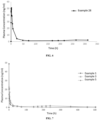
- the curves of plasma concentration vs. time (within 504 h) for the samples of Examples 5 and 10 to 12 in rats were shown in FIG. 4 .
- the curves of plasma concentration vs. time (within 504 h) for the samples of Examples 1, 3, and 5 were shown in FIG. 7 .
- Example 15 Example 16
- Example 29 Example 30 0 0.00 0.00 0.00 0.00 0.25 3.63 3.95 3.85 5.05 9.76 3.57 0.5 4.96 5.13 6.41 7.98 17.8 5.57 1 5.19 6.55 6.80 8.48 16.8 6.10 2 4.23 6.08 6.21 5.87 7.74 4.59 3 3.74 5.54 5.67 5.20 8.45 5.03 4 3.34 5.51 6.37 5.29 4.86 4.48 6 3.64 4.65 7.11 4.76 5.73 3.91 8 3.21 4.09 5.84 4.09 5.33 3.31 24 1.64 2.53 3.53 2.21 1.84 1.96 48 1.35 1.43 1.83 1.19 0.70 1.11 72 0.88 0.97 1.07 0.89 0.76 0.69 96 0.73 0.88 0.83 0.84 0.53 0.60 120 0.61
- the dosage was 10.5 mg/kg (calculated as lumateperone).
- the preparations of some of the above Examples were injected subcutaneously. Blood was sampled from the tail vein at predetermined points in time. After the plasma samples were treated by Solid-Phase Extraction (SPE), the lumateperone concentration was determined by the LC-MS/MS method. The curve of plasma concentration vs. time (within 312 h) for the sample of Example 28 in rat was shown in FIG. 6 .
- In situ gels (active ingredients: rotigotine, pramipexole, lumateperone, etc.) prepared by the conventional Atrigel technology exhibited larger burst releases in vitro and were not suitable for drugs with narrow safety or therapeutic windows, but they exhibited a significant effect of slowing down the burst releases in vivo and in vitro after the addition of some hydrophobic additives (such as benzyl benzoate, glyceryl triacetate, glyceryl tricaprylate, and medium-chain glyceryl triacetate, etc.) and optionally hydrophilic gel matrices (such as poloxamer, sodium carboxymethylcellulose, carbomer, hydroxypropyl methyl cellulose, and polyvinylpyrrolidone, etc.), and the in vivo plasma concentration could be maintained in a safe and effect range for more than one week.
- Example 15 Example 15 Example 31 Example 31 Example 32 Example 32 Storage Time 0 Day 3 Months 0 Day 3 Months 0 Day 3 Months 0 Day 3 Months Impurity B Desthienylethyl rotigotine 0.09% 0.08% 0.09% 0.10% 0.08% 0.08% Impurity C Despropyl rotigotine Not Detected Not Detected 0.17% Not Detected 0.18% Impurity D Ethyl-rotigotine Not Detected Not Detected Not Detected Not Detected Not Detected Not Detected Not Detected Impurity E Rotigotine N-Oxide Not Detected Not Detected Not Detected Not Detected 0.12% Not Detected 0.11% Impurity F Acetyl-rotigotine Not Detected Not Detected Not Detected Not Detected Not Detected Impurity K 7,8-Dihydronaphthol Not Detected Not Detected Not Detected 0.12% Not Detected 0.11% Im
Landscapes
- Health & Medical Sciences (AREA)
- Chemical & Material Sciences (AREA)
- Life Sciences & Earth Sciences (AREA)
- Public Health (AREA)
- Veterinary Medicine (AREA)
- Medicinal Chemistry (AREA)
- Pharmacology & Pharmacy (AREA)
- Epidemiology (AREA)
- Animal Behavior & Ethology (AREA)
- General Health & Medical Sciences (AREA)
- Engineering & Computer Science (AREA)
- Chemical Kinetics & Catalysis (AREA)
- General Chemical & Material Sciences (AREA)
- Oil, Petroleum & Natural Gas (AREA)
- Proteomics, Peptides & Aminoacids (AREA)
- Inorganic Chemistry (AREA)
- Biomedical Technology (AREA)
- Neurosurgery (AREA)
- Dermatology (AREA)
- Medicinal Preparation (AREA)
- Pharmaceuticals Containing Other Organic And Inorganic Compounds (AREA)
- Medicines That Contain Protein Lipid Enzymes And Other Medicines (AREA)
Applications Claiming Priority (2)
| Application Number | Priority Date | Filing Date | Title |
|---|---|---|---|
| CN202111598937 | 2021-12-24 | ||
| PCT/CN2022/138871 WO2023116517A1 (fr) | 2021-12-24 | 2022-12-14 | Préparation d'administration continue pouvant être libérée de manière stable et procédé de préparation associé |
Publications (2)
| Publication Number | Publication Date |
|---|---|
| EP4454636A1 true EP4454636A1 (fr) | 2024-10-30 |
| EP4454636A4 EP4454636A4 (fr) | 2026-01-07 |
Family
ID=86901290
Family Applications (1)
| Application Number | Title | Priority Date | Filing Date |
|---|---|---|---|
| EP22909831.4A Pending EP4454636A4 (fr) | 2021-12-24 | 2022-12-14 | Préparation d'administration continue pouvant être libérée de manière stable et procédé de préparation associé |
Country Status (5)
| Country | Link |
|---|---|
| US (1) | US20240415765A1 (fr) |
| EP (1) | EP4454636A4 (fr) |
| JP (1) | JP2024546571A (fr) |
| CN (1) | CN118201599A (fr) |
| WO (1) | WO2023116517A1 (fr) |
Families Citing this family (2)
| Publication number | Priority date | Publication date | Assignee | Title |
|---|---|---|---|---|
| CN117137864A (zh) * | 2023-11-01 | 2023-12-01 | 山东则正医药技术有限公司 | 一种卡利拉嗪原位凝胶制剂及其制备方法和应用 |
| CN118384159B (zh) * | 2024-03-28 | 2025-02-07 | 杭州剂泰医药科技有限责任公司 | 一种长效免疫调节剂组合物及其制备方法和应用 |
Family Cites Families (11)
| Publication number | Priority date | Publication date | Assignee | Title |
|---|---|---|---|---|
| ATE203157T1 (de) * | 1996-12-20 | 2001-08-15 | Alza Corp | Injizierbare depotgelzubereitung und herstellungsverfahren |
| WO2002000137A1 (fr) * | 2000-06-28 | 2002-01-03 | Shukla Atul J | Vehicules biodegradables et systemes d'administration de substances biologiquement actives |
| BRPI0308360B8 (pt) * | 2002-03-12 | 2021-05-25 | Ethypharm Sa | composição termossensível sob forma liquida compreendendo substância organogelificante, utilização de uma composição e processo de preparação de uma composição |
| JP2006503004A (ja) * | 2002-07-31 | 2006-01-26 | アルザ・コーポレーション | 射出可能なデポ組成物及びその使用 |
| US20050106214A1 (en) * | 2003-11-14 | 2005-05-19 | Guohua Chen | Excipients in drug delivery vehicles |
| MX2008009125A (es) * | 2006-01-18 | 2008-10-23 | Qps Llc | Composiciones farmaceuticas con estabilidad mejorada. |
| CL2008003305A1 (es) * | 2007-11-06 | 2009-06-05 | M/S Panacea Biotec Ltd | Composicion inyectable que comprende un agente activo seleccionado de un grupo definido; al menos un polimero bioerosionable, al menos un solvente no toxico y opcionalmente uno o mas excipientes; proceso de preparacion; uso para tratar enfermedades mentales o cancer. |
| CN101829047A (zh) * | 2010-05-24 | 2010-09-15 | 中国人民解放军军事医学科学院放射与辐射医学研究所 | 长效可注射利培酮原位凝胶 |
| WO2016054197A1 (fr) * | 2014-09-30 | 2016-04-07 | University Of Tennessee Research Foundation | Forme de gélification in situ pour l'administration de médicaments à action prolongée |
| MX391306B (es) * | 2017-01-31 | 2025-03-21 | Veru Inc | COMPOSICIONES PARA LA LIBERACIÓN PROLONGADA DE ANTAGONISTAS DE LA HORMONA LIBERADORA DE GONADOTROPINA (GnRH) |
| US12214105B2 (en) * | 2019-03-05 | 2025-02-04 | Future University In Egypt | Long lasting biodegradable polymer based in-situ forming implant for treatment of bone injuries |
-
2022
- 2022-12-14 CN CN202280071537.XA patent/CN118201599A/zh active Pending
- 2022-12-14 US US18/704,109 patent/US20240415765A1/en active Pending
- 2022-12-14 EP EP22909831.4A patent/EP4454636A4/fr active Pending
- 2022-12-14 JP JP2024525786A patent/JP2024546571A/ja active Pending
- 2022-12-14 WO PCT/CN2022/138871 patent/WO2023116517A1/fr not_active Ceased
Also Published As
| Publication number | Publication date |
|---|---|
| EP4454636A4 (fr) | 2026-01-07 |
| JP2024546571A (ja) | 2024-12-26 |
| US20240415765A1 (en) | 2024-12-19 |
| WO2023116517A1 (fr) | 2023-06-29 |
| CN118201599A (zh) | 2024-06-14 |
Similar Documents
| Publication | Publication Date | Title |
|---|---|---|
| KR101539313B1 (ko) | 리스페리돈의 서방성 미소구체 조성물 | |
| EP2642993B1 (fr) | Compositions de rotigotine ou sels pharmaceutiquement acceptables de rotigotine | |
| EP4454636A1 (fr) | Préparation d'administration continue pouvant être libérée de manière stable et procédé de préparation associé | |
| JP2021536485A (ja) | 注射可能な徐放性の抗生物質製剤 | |
| EP3866765B1 (fr) | Compositions injectables de microparticules de naltrexone à action prolongée | |
| WO2017107906A1 (fr) | Préparation de microsphères d'exénatide, et procédé de préparation de ces dernières | |
| US20100172950A1 (en) | Pharmaceutical compositions comprising dextran with a molecular weight of 1.0-100 kda and processes for their preparation | |
| JP2009506101A (ja) | アナストロゾールを含む延長放出製剤 | |
| CN101244259B (zh) | 一种注射用胸腺肽α1缓释微球制剂及其制备方法 | |
| CN113730339A (zh) | 一种黄体酮缓释组合物及其应用 | |
| US20250205150A1 (en) | Long-acting sustained-release preparation containing pramipexole and preparation method therefor | |
| EA052517B1 (ru) | Препарат для непрерывной доставки, способный стабильно высвобождаться, и способ его получения | |
| WO2023222080A1 (fr) | Composition pharmaceutique | |
| KR102706488B1 (ko) | 도네페질과 파모산을 함유하는 서방성 미립구 | |
| CN113730340A (zh) | 一种注射用脂肪酸缓释组合物及其制备方法和应用 | |
| EP4527372A1 (fr) | Procédé de préparation d'un implant à libération prolongée à action longue | |
| EP4382095A1 (fr) | Microsphères à libération prolongée comprenant du donépézil | |
| EP4649941A1 (fr) | Procédé de préparation d'un gel stérile in situ sur la base d'une technique d'élimination de solvant et produit associé | |
| TW202440148A (zh) | GnRH拮抗劑可注射組合物及其製備方法和用途 | |
| JP2025519995A (ja) | 長時間作用型徐放性プラミペキソール製剤及びその調製方法 | |
| EP4387593A1 (fr) | Compositions de dépôt de polymère destinées à l'administration à libération prolongée d'inhibiteurs de vmat2 | |
| CN120643518A (zh) | 平稳释药的长效戈舍瑞林注射式原位成型植入剂及其制备方法和应用 | |
| CN116077427A (zh) | 一种释放可控的曲安奈德植入物及其用于防治关节炎用途 | |
| CN121774878A (zh) | 一种用于联合用药的液体药物缓释组合物及其制备方法和应用 | |
| HK1185560B (en) | Risperidone sustained release microsphere composition |
Legal Events
| Date | Code | Title | Description |
|---|---|---|---|
| STAA | Information on the status of an ep patent application or granted ep patent |
Free format text: STATUS: THE INTERNATIONAL PUBLICATION HAS BEEN MADE |
|
| PUAI | Public reference made under article 153(3) epc to a published international application that has entered the european phase |
Free format text: ORIGINAL CODE: 0009012 |
|
| STAA | Information on the status of an ep patent application or granted ep patent |
Free format text: STATUS: REQUEST FOR EXAMINATION WAS MADE |
|
| 17P | Request for examination filed |
Effective date: 20240329 |
|
| AK | Designated contracting states |
Kind code of ref document: A1 Designated state(s): AL AT BE BG CH CY CZ DE DK EE ES FI FR GB GR HR HU IE IS IT LI LT LU LV MC ME MK MT NL NO PL PT RO RS SE SI SK SM TR |
|
| P01 | Opt-out of the competence of the unified patent court (upc) registered |
Free format text: CASE NUMBER: APP_61236/2024 Effective date: 20241114 |
|
| DAV | Request for validation of the european patent (deleted) | ||
| DAX | Request for extension of the european patent (deleted) | ||
| A4 | Supplementary search report drawn up and despatched |
Effective date: 20251205 |
|
| RIC1 | Information provided on ipc code assigned before grant |
Ipc: A61K 9/00 20060101AFI20251201BHEP Ipc: A61K 47/34 20170101ALI20251201BHEP Ipc: A61K 9/08 20060101ALI20251201BHEP |