EP4454863A1 - Système et procédé mis en uvre par ordinateur pour la détection automatisée de défauts dans des scellements d'emballages composites - Google Patents
Système et procédé mis en uvre par ordinateur pour la détection automatisée de défauts dans des scellements d'emballages composites Download PDFInfo
- Publication number
- EP4454863A1 EP4454863A1 EP24162885.8A EP24162885A EP4454863A1 EP 4454863 A1 EP4454863 A1 EP 4454863A1 EP 24162885 A EP24162885 A EP 24162885A EP 4454863 A1 EP4454863 A1 EP 4454863A1
- Authority
- EP
- European Patent Office
- Prior art keywords
- sealing
- sealing band
- band
- images
- learning model
- Prior art date
- Legal status (The legal status is an assumption and is not a legal conclusion. Google has not performed a legal analysis and makes no representation as to the accuracy of the status listed.)
- Pending
Links
Images



Classifications
-
- B—PERFORMING OPERATIONS; TRANSPORTING
- B29—WORKING OF PLASTICS; WORKING OF SUBSTANCES IN A PLASTIC STATE IN GENERAL
- B29C—SHAPING OR JOINING OF PLASTICS; SHAPING OF MATERIAL IN A PLASTIC STATE, NOT OTHERWISE PROVIDED FOR; AFTER-TREATMENT OF THE SHAPED PRODUCTS, e.g. REPAIRING
- B29C65/00—Joining or sealing of preformed parts, e.g. welding of plastics materials; Apparatus therefor
- B29C65/02—Joining or sealing of preformed parts, e.g. welding of plastics materials; Apparatus therefor by heating, with or without pressure
-
- B—PERFORMING OPERATIONS; TRANSPORTING
- B29—WORKING OF PLASTICS; WORKING OF SUBSTANCES IN A PLASTIC STATE IN GENERAL
- B29C—SHAPING OR JOINING OF PLASTICS; SHAPING OF MATERIAL IN A PLASTIC STATE, NOT OTHERWISE PROVIDED FOR; AFTER-TREATMENT OF THE SHAPED PRODUCTS, e.g. REPAIRING
- B29C65/00—Joining or sealing of preformed parts, e.g. welding of plastics materials; Apparatus therefor
- B29C65/82—Testing the joint
- B29C65/8253—Testing the joint by the use of waves or particle radiation, e.g. visual examination, scanning electron microscopy, or X-rays
-
- B—PERFORMING OPERATIONS; TRANSPORTING
- B29—WORKING OF PLASTICS; WORKING OF SUBSTANCES IN A PLASTIC STATE IN GENERAL
- B29C—SHAPING OR JOINING OF PLASTICS; SHAPING OF MATERIAL IN A PLASTIC STATE, NOT OTHERWISE PROVIDED FOR; AFTER-TREATMENT OF THE SHAPED PRODUCTS, e.g. REPAIRING
- B29C66/00—General aspects of processes or apparatus for joining preformed parts
- B29C66/01—General aspects dealing with the joint area or with the area to be joined
- B29C66/05—Particular design of joint configurations
- B29C66/10—Particular design of joint configurations particular design of the joint cross-sections
- B29C66/11—Joint cross-sections comprising a single joint-segment, i.e. one of the parts to be joined comprising a single joint-segment in the joint cross-section
- B29C66/112—Single lapped joints
- B29C66/1122—Single lap to lap joints, i.e. overlap joints
-
- B—PERFORMING OPERATIONS; TRANSPORTING
- B29—WORKING OF PLASTICS; WORKING OF SUBSTANCES IN A PLASTIC STATE IN GENERAL
- B29C—SHAPING OR JOINING OF PLASTICS; SHAPING OF MATERIAL IN A PLASTIC STATE, NOT OTHERWISE PROVIDED FOR; AFTER-TREATMENT OF THE SHAPED PRODUCTS, e.g. REPAIRING
- B29C66/00—General aspects of processes or apparatus for joining preformed parts
- B29C66/40—General aspects of joining substantially flat articles, e.g. plates, sheets or web-like materials; Making flat seams in tubular or hollow articles; Joining single elements to substantially flat surfaces
- B29C66/41—Joining substantially flat articles ; Making flat seams in tubular or hollow articles
- B29C66/43—Joining a relatively small portion of the surface of said articles
- B29C66/431—Joining the articles to themselves
- B29C66/4312—Joining the articles to themselves for making flat seams in tubular or hollow articles, e.g. transversal seams
-
- B—PERFORMING OPERATIONS; TRANSPORTING
- B29—WORKING OF PLASTICS; WORKING OF SUBSTANCES IN A PLASTIC STATE IN GENERAL
- B29C—SHAPING OR JOINING OF PLASTICS; SHAPING OF MATERIAL IN A PLASTIC STATE, NOT OTHERWISE PROVIDED FOR; AFTER-TREATMENT OF THE SHAPED PRODUCTS, e.g. REPAIRING
- B29C66/00—General aspects of processes or apparatus for joining preformed parts
- B29C66/70—General aspects of processes or apparatus for joining preformed parts characterised by the composition, physical properties or the structure of the material of the parts to be joined; Joining with non-plastics material
- B29C66/73—General aspects of processes or apparatus for joining preformed parts characterised by the composition, physical properties or the structure of the material of the parts to be joined; Joining with non-plastics material characterised by the intensive physical properties of the material of the parts to be joined, by the optical properties of the material of the parts to be joined, by the extensive physical properties of the parts to be joined, by the state of the material of the parts to be joined or by the material of the parts to be joined being a thermoplastic or a thermoset
- B29C66/739—General aspects of processes or apparatus for joining preformed parts characterised by the composition, physical properties or the structure of the material of the parts to be joined; Joining with non-plastics material characterised by the intensive physical properties of the material of the parts to be joined, by the optical properties of the material of the parts to be joined, by the extensive physical properties of the parts to be joined, by the state of the material of the parts to be joined or by the material of the parts to be joined being a thermoplastic or a thermoset characterised by the material of the parts to be joined being a thermoplastic or a thermoset
- B29C66/7392—General aspects of processes or apparatus for joining preformed parts characterised by the composition, physical properties or the structure of the material of the parts to be joined; Joining with non-plastics material characterised by the intensive physical properties of the material of the parts to be joined, by the optical properties of the material of the parts to be joined, by the extensive physical properties of the parts to be joined, by the state of the material of the parts to be joined or by the material of the parts to be joined being a thermoplastic or a thermoset characterised by the material of the parts to be joined being a thermoplastic or a thermoset characterised by the material of at least one of the parts being a thermoplastic
- B29C66/73921—General aspects of processes or apparatus for joining preformed parts characterised by the composition, physical properties or the structure of the material of the parts to be joined; Joining with non-plastics material characterised by the intensive physical properties of the material of the parts to be joined, by the optical properties of the material of the parts to be joined, by the extensive physical properties of the parts to be joined, by the state of the material of the parts to be joined or by the material of the parts to be joined being a thermoplastic or a thermoset characterised by the material of the parts to be joined being a thermoplastic or a thermoset characterised by the material of at least one of the parts being a thermoplastic characterised by the materials of both parts being thermoplastics
-
- B—PERFORMING OPERATIONS; TRANSPORTING
- B29—WORKING OF PLASTICS; WORKING OF SUBSTANCES IN A PLASTIC STATE IN GENERAL
- B29C—SHAPING OR JOINING OF PLASTICS; SHAPING OF MATERIAL IN A PLASTIC STATE, NOT OTHERWISE PROVIDED FOR; AFTER-TREATMENT OF THE SHAPED PRODUCTS, e.g. REPAIRING
- B29C66/00—General aspects of processes or apparatus for joining preformed parts
- B29C66/80—General aspects of machine operations or constructions and parts thereof
- B29C66/84—Specific machine types or machines suitable for specific applications
- B29C66/849—Packaging machines
-
- G—PHYSICS
- G01—MEASURING; TESTING
- G01M—TESTING STATIC OR DYNAMIC BALANCE OF MACHINES OR STRUCTURES; TESTING OF STRUCTURES OR APPARATUS, NOT OTHERWISE PROVIDED FOR
- G01M3/00—Investigating fluid-tightness of structures
- G01M3/38—Investigating fluid-tightness of structures by using light
-
- G—PHYSICS
- G01—MEASURING; TESTING
- G01N—INVESTIGATING OR ANALYSING MATERIALS BY DETERMINING THEIR CHEMICAL OR PHYSICAL PROPERTIES
- G01N21/00—Investigating or analysing materials by the use of optical means, i.e. using sub-millimetre waves, infrared, visible or ultraviolet light
- G01N21/84—Systems specially adapted for particular applications
- G01N21/88—Investigating the presence of flaws or contamination
- G01N21/8851—Scan or image signal processing specially adapted therefor, e.g. for scan signal adjustment, for detecting different kinds of defects, for compensating for structures, markings, edges
-
- B—PERFORMING OPERATIONS; TRANSPORTING
- B29—WORKING OF PLASTICS; WORKING OF SUBSTANCES IN A PLASTIC STATE IN GENERAL
- B29C—SHAPING OR JOINING OF PLASTICS; SHAPING OF MATERIAL IN A PLASTIC STATE, NOT OTHERWISE PROVIDED FOR; AFTER-TREATMENT OF THE SHAPED PRODUCTS, e.g. REPAIRING
- B29C65/00—Joining or sealing of preformed parts, e.g. welding of plastics materials; Apparatus therefor
- B29C65/02—Joining or sealing of preformed parts, e.g. welding of plastics materials; Apparatus therefor by heating, with or without pressure
- B29C65/08—Joining or sealing of preformed parts, e.g. welding of plastics materials; Apparatus therefor by heating, with or without pressure using ultrasonic vibrations
-
- B—PERFORMING OPERATIONS; TRANSPORTING
- B29—WORKING OF PLASTICS; WORKING OF SUBSTANCES IN A PLASTIC STATE IN GENERAL
- B29C—SHAPING OR JOINING OF PLASTICS; SHAPING OF MATERIAL IN A PLASTIC STATE, NOT OTHERWISE PROVIDED FOR; AFTER-TREATMENT OF THE SHAPED PRODUCTS, e.g. REPAIRING
- B29C65/00—Joining or sealing of preformed parts, e.g. welding of plastics materials; Apparatus therefor
- B29C65/02—Joining or sealing of preformed parts, e.g. welding of plastics materials; Apparatus therefor by heating, with or without pressure
- B29C65/10—Joining or sealing of preformed parts, e.g. welding of plastics materials; Apparatus therefor by heating, with or without pressure using hot gases (e.g. combustion gases) or flames coming in contact with at least one of the parts to be joined
-
- B—PERFORMING OPERATIONS; TRANSPORTING
- B29—WORKING OF PLASTICS; WORKING OF SUBSTANCES IN A PLASTIC STATE IN GENERAL
- B29C—SHAPING OR JOINING OF PLASTICS; SHAPING OF MATERIAL IN A PLASTIC STATE, NOT OTHERWISE PROVIDED FOR; AFTER-TREATMENT OF THE SHAPED PRODUCTS, e.g. REPAIRING
- B29C65/00—Joining or sealing of preformed parts, e.g. welding of plastics materials; Apparatus therefor
- B29C65/02—Joining or sealing of preformed parts, e.g. welding of plastics materials; Apparatus therefor by heating, with or without pressure
- B29C65/34—Joining or sealing of preformed parts, e.g. welding of plastics materials; Apparatus therefor by heating, with or without pressure using heated elements which remain in the joint, e.g. "verlorenes Schweisselement"
- B29C65/36—Joining or sealing of preformed parts, e.g. welding of plastics materials; Apparatus therefor by heating, with or without pressure using heated elements which remain in the joint, e.g. "verlorenes Schweisselement" heated by induction
- B29C65/3604—Joining or sealing of preformed parts, e.g. welding of plastics materials; Apparatus therefor by heating, with or without pressure using heated elements which remain in the joint, e.g. "verlorenes Schweisselement" heated by induction characterised by the type of elements heated by induction which remain in the joint
- B29C65/3656—Joining or sealing of preformed parts, e.g. welding of plastics materials; Apparatus therefor by heating, with or without pressure using heated elements which remain in the joint, e.g. "verlorenes Schweisselement" heated by induction characterised by the type of elements heated by induction which remain in the joint being a layer of a multilayer part to be joined, e.g. for joining plastic-metal laminates
-
- B—PERFORMING OPERATIONS; TRANSPORTING
- B29—WORKING OF PLASTICS; WORKING OF SUBSTANCES IN A PLASTIC STATE IN GENERAL
- B29C—SHAPING OR JOINING OF PLASTICS; SHAPING OF MATERIAL IN A PLASTIC STATE, NOT OTHERWISE PROVIDED FOR; AFTER-TREATMENT OF THE SHAPED PRODUCTS, e.g. REPAIRING
- B29C65/00—Joining or sealing of preformed parts, e.g. welding of plastics materials; Apparatus therefor
- B29C65/02—Joining or sealing of preformed parts, e.g. welding of plastics materials; Apparatus therefor by heating, with or without pressure
- B29C65/34—Joining or sealing of preformed parts, e.g. welding of plastics materials; Apparatus therefor by heating, with or without pressure using heated elements which remain in the joint, e.g. "verlorenes Schweisselement"
- B29C65/36—Joining or sealing of preformed parts, e.g. welding of plastics materials; Apparatus therefor by heating, with or without pressure using heated elements which remain in the joint, e.g. "verlorenes Schweisselement" heated by induction
- B29C65/3672—Joining or sealing of preformed parts, e.g. welding of plastics materials; Apparatus therefor by heating, with or without pressure using heated elements which remain in the joint, e.g. "verlorenes Schweisselement" heated by induction characterised by the composition of the elements heated by induction which remain in the joint
- B29C65/3676—Joining or sealing of preformed parts, e.g. welding of plastics materials; Apparatus therefor by heating, with or without pressure using heated elements which remain in the joint, e.g. "verlorenes Schweisselement" heated by induction characterised by the composition of the elements heated by induction which remain in the joint being metallic
- B29C65/368—Joining or sealing of preformed parts, e.g. welding of plastics materials; Apparatus therefor by heating, with or without pressure using heated elements which remain in the joint, e.g. "verlorenes Schweisselement" heated by induction characterised by the composition of the elements heated by induction which remain in the joint being metallic with a polymer coating
-
- B—PERFORMING OPERATIONS; TRANSPORTING
- B29—WORKING OF PLASTICS; WORKING OF SUBSTANCES IN A PLASTIC STATE IN GENERAL
- B29C—SHAPING OR JOINING OF PLASTICS; SHAPING OF MATERIAL IN A PLASTIC STATE, NOT OTHERWISE PROVIDED FOR; AFTER-TREATMENT OF THE SHAPED PRODUCTS, e.g. REPAIRING
- B29C65/00—Joining or sealing of preformed parts, e.g. welding of plastics materials; Apparatus therefor
- B29C65/82—Testing the joint
- B29C65/8207—Testing the joint by mechanical methods
- B29C65/8223—Peel tests
-
- B—PERFORMING OPERATIONS; TRANSPORTING
- B29—WORKING OF PLASTICS; WORKING OF SUBSTANCES IN A PLASTIC STATE IN GENERAL
- B29C—SHAPING OR JOINING OF PLASTICS; SHAPING OF MATERIAL IN A PLASTIC STATE, NOT OTHERWISE PROVIDED FOR; AFTER-TREATMENT OF THE SHAPED PRODUCTS, e.g. REPAIRING
- B29C66/00—General aspects of processes or apparatus for joining preformed parts
- B29C66/70—General aspects of processes or apparatus for joining preformed parts characterised by the composition, physical properties or the structure of the material of the parts to be joined; Joining with non-plastics material
- B29C66/71—General aspects of processes or apparatus for joining preformed parts characterised by the composition, physical properties or the structure of the material of the parts to be joined; Joining with non-plastics material characterised by the composition of the plastics material of the parts to be joined
-
- B—PERFORMING OPERATIONS; TRANSPORTING
- B29—WORKING OF PLASTICS; WORKING OF SUBSTANCES IN A PLASTIC STATE IN GENERAL
- B29C—SHAPING OR JOINING OF PLASTICS; SHAPING OF MATERIAL IN A PLASTIC STATE, NOT OTHERWISE PROVIDED FOR; AFTER-TREATMENT OF THE SHAPED PRODUCTS, e.g. REPAIRING
- B29C66/00—General aspects of processes or apparatus for joining preformed parts
- B29C66/70—General aspects of processes or apparatus for joining preformed parts characterised by the composition, physical properties or the structure of the material of the parts to be joined; Joining with non-plastics material
- B29C66/72—General aspects of processes or apparatus for joining preformed parts characterised by the composition, physical properties or the structure of the material of the parts to be joined; Joining with non-plastics material characterised by the structure of the material of the parts to be joined
- B29C66/723—General aspects of processes or apparatus for joining preformed parts characterised by the composition, physical properties or the structure of the material of the parts to be joined; Joining with non-plastics material characterised by the structure of the material of the parts to be joined being multi-layered
- B29C66/7232—General aspects of processes or apparatus for joining preformed parts characterised by the composition, physical properties or the structure of the material of the parts to be joined; Joining with non-plastics material characterised by the structure of the material of the parts to be joined being multi-layered comprising a non-plastics layer
- B29C66/72321—General aspects of processes or apparatus for joining preformed parts characterised by the composition, physical properties or the structure of the material of the parts to be joined; Joining with non-plastics material characterised by the structure of the material of the parts to be joined being multi-layered comprising a non-plastics layer consisting of metals or their alloys
-
- B—PERFORMING OPERATIONS; TRANSPORTING
- B29—WORKING OF PLASTICS; WORKING OF SUBSTANCES IN A PLASTIC STATE IN GENERAL
- B29C—SHAPING OR JOINING OF PLASTICS; SHAPING OF MATERIAL IN A PLASTIC STATE, NOT OTHERWISE PROVIDED FOR; AFTER-TREATMENT OF THE SHAPED PRODUCTS, e.g. REPAIRING
- B29C66/00—General aspects of processes or apparatus for joining preformed parts
- B29C66/70—General aspects of processes or apparatus for joining preformed parts characterised by the composition, physical properties or the structure of the material of the parts to be joined; Joining with non-plastics material
- B29C66/72—General aspects of processes or apparatus for joining preformed parts characterised by the composition, physical properties or the structure of the material of the parts to be joined; Joining with non-plastics material characterised by the structure of the material of the parts to be joined
- B29C66/723—General aspects of processes or apparatus for joining preformed parts characterised by the composition, physical properties or the structure of the material of the parts to be joined; Joining with non-plastics material characterised by the structure of the material of the parts to be joined being multi-layered
- B29C66/7232—General aspects of processes or apparatus for joining preformed parts characterised by the composition, physical properties or the structure of the material of the parts to be joined; Joining with non-plastics material characterised by the structure of the material of the parts to be joined being multi-layered comprising a non-plastics layer
- B29C66/72327—General aspects of processes or apparatus for joining preformed parts characterised by the composition, physical properties or the structure of the material of the parts to be joined; Joining with non-plastics material characterised by the structure of the material of the parts to be joined being multi-layered comprising a non-plastics layer consisting of natural products or their composites, not provided for in B29C66/72321 - B29C66/72324
- B29C66/72328—Paper
-
- B—PERFORMING OPERATIONS; TRANSPORTING
- B29—WORKING OF PLASTICS; WORKING OF SUBSTANCES IN A PLASTIC STATE IN GENERAL
- B29C—SHAPING OR JOINING OF PLASTICS; SHAPING OF MATERIAL IN A PLASTIC STATE, NOT OTHERWISE PROVIDED FOR; AFTER-TREATMENT OF THE SHAPED PRODUCTS, e.g. REPAIRING
- B29C66/00—General aspects of processes or apparatus for joining preformed parts
- B29C66/70—General aspects of processes or apparatus for joining preformed parts characterised by the composition, physical properties or the structure of the material of the parts to be joined; Joining with non-plastics material
- B29C66/72—General aspects of processes or apparatus for joining preformed parts characterised by the composition, physical properties or the structure of the material of the parts to be joined; Joining with non-plastics material characterised by the structure of the material of the parts to be joined
- B29C66/723—General aspects of processes or apparatus for joining preformed parts characterised by the composition, physical properties or the structure of the material of the parts to be joined; Joining with non-plastics material characterised by the structure of the material of the parts to be joined being multi-layered
- B29C66/7234—General aspects of processes or apparatus for joining preformed parts characterised by the composition, physical properties or the structure of the material of the parts to be joined; Joining with non-plastics material characterised by the structure of the material of the parts to be joined being multi-layered comprising a barrier layer
-
- B—PERFORMING OPERATIONS; TRANSPORTING
- B29—WORKING OF PLASTICS; WORKING OF SUBSTANCES IN A PLASTIC STATE IN GENERAL
- B29C—SHAPING OR JOINING OF PLASTICS; SHAPING OF MATERIAL IN A PLASTIC STATE, NOT OTHERWISE PROVIDED FOR; AFTER-TREATMENT OF THE SHAPED PRODUCTS, e.g. REPAIRING
- B29C66/00—General aspects of processes or apparatus for joining preformed parts
- B29C66/70—General aspects of processes or apparatus for joining preformed parts characterised by the composition, physical properties or the structure of the material of the parts to be joined; Joining with non-plastics material
- B29C66/72—General aspects of processes or apparatus for joining preformed parts characterised by the composition, physical properties or the structure of the material of the parts to be joined; Joining with non-plastics material characterised by the structure of the material of the parts to be joined
- B29C66/723—General aspects of processes or apparatus for joining preformed parts characterised by the composition, physical properties or the structure of the material of the parts to be joined; Joining with non-plastics material characterised by the structure of the material of the parts to be joined being multi-layered
- B29C66/7234—General aspects of processes or apparatus for joining preformed parts characterised by the composition, physical properties or the structure of the material of the parts to be joined; Joining with non-plastics material characterised by the structure of the material of the parts to be joined being multi-layered comprising a barrier layer
- B29C66/72341—General aspects of processes or apparatus for joining preformed parts characterised by the composition, physical properties or the structure of the material of the parts to be joined; Joining with non-plastics material characterised by the structure of the material of the parts to be joined being multi-layered comprising a barrier layer for gases
-
- B—PERFORMING OPERATIONS; TRANSPORTING
- B29—WORKING OF PLASTICS; WORKING OF SUBSTANCES IN A PLASTIC STATE IN GENERAL
- B29K—INDEXING SCHEME ASSOCIATED WITH SUBCLASSES B29B, B29C OR B29D, RELATING TO MOULDING MATERIALS OR TO MATERIALS FOR MOULDS, REINFORCEMENTS, FILLERS OR PREFORMED PARTS, e.g. INSERTS
- B29K2705/00—Use of metals, their alloys or their compounds, for preformed parts, e.g. for inserts
- B29K2705/02—Aluminium
-
- B—PERFORMING OPERATIONS; TRANSPORTING
- B29—WORKING OF PLASTICS; WORKING OF SUBSTANCES IN A PLASTIC STATE IN GENERAL
- B29L—INDEXING SCHEME ASSOCIATED WITH SUBCLASS B29C, RELATING TO PARTICULAR ARTICLES
- B29L2031/00—Other particular articles
- B29L2031/712—Containers; Packaging elements or accessories, Packages
Definitions
- the present invention relates to a computer-implemented system and method for automated defect detection in sealings of composite packages, in particular filled with a pourable product, such as a pourable food product.
- liquid or pourable food products such as fruit juice, UHT (ultra-high-temperature treated) milk, wine, tomato sauce, etc.
- UHT ultra-high-temperature treated milk
- wine wine
- tomato sauce etc.
- sealed composite packages made of a sterilized multilayer packaging material.
- a typical example is the parallelepiped-shaped package for pourable food products known as Tetra Brik Aseptic (registered trademark), which is made by sealing and folding a laminated strip packaging material.
- the packaging material has a multilayer structure comprising a carton and/or paper base layer, covered on both sides with layers of heat-seal plastic material, e.g., polyethylene.
- the packaging material also comprises a layer of oxygen-barrier material, e.g., an aluminum foil, which is superimposed on a layer of heat-seal plastic material, and is in turn covered with another layer of heat-seal plastic material forming the inner face of the package eventually contacting the food product.
- Packages of this sort are normally produced on fully automatic packaging machines, some of which advance a web of packaging material through a sterilization unit of the packaging machine for sterilizing the web of packaging material. Then, the sterilized web of packaging material is maintained and advanced within an isolation chamber and is folded and sealed longitudinally to form a tube, which is further advanced.
- the tube is filled with a pourable product and is transversally sealed and cut along equally spaced transversal cross sections within a package forming apparatus of the packaging machine during advancement of the tube.
- the package forming apparatus comprises a plurality of forming and sealing assemblies, each one, in use, shaping and transversally sealing and cutting the tube so as to obtain the single packages.
- Each forming and sealing assembly comprises a respective sealing unit for transversally sealing the tube for obtaining a respective transversal seal portion by locally compressing the tube and heating the respective portions of the layers of heat-seal plastic material.
- the heating may occur, for example, by sealing units generating ultrasonic vibrations.
- Each forming and sealing assembly also comprises a cutting device for cutting through the transversal seal portion, thereby separating a sealed composite package from the tube, and forming a first transversal sealing band and a second transversal sealing band. While the respective first sealing band belongs to the just formed sealed composite package, the second sealing band belongs to the sealed composite package that will be formed directly afterwards.
- the quality of the sealings plays a relevant role in the overall quality of the packages, due to the fact that any damages in the packaging material or errors in the sealing can result in a breach of the protective environment. Therefore, it is important to monitor the quality of the sealings during the packaging process performed in the packaging machines.
- sample composite packages are taken from the plurality of formed composite packages and analyzed, at defined time intervals.
- one or more samples having a respective transversal sealing band are prepared from each of the sampled composite packages.
- a technical operator uses a stretch plier or other suitable instrument designed to tear apart the respective sealing band to expose the sealing pattern. Then, the technical operator observes the exposed sealing and looks for any defects, such as the presence of channels (i.e., leaks), burn marks, or plastic lumps.
- the testing results depend on, and are heavily influenced by, the experience of the technical operators performing the tests. Moreover, the same tests are time consuming and have to be performed on a limited number of samples.
- Figure 1 shows schematically an automated defect detection system, denoted as a whole with 1, for determining the quality of a sealing, in particular of a sealing band 2, for example a transversal sealing band, of a composite package (here not shown) filled with a pourable product, in particular a pourable food product, such as (pasteurized) milk, fruit juice, wine, tomato sauce, salt, sugar or the like.
- a sealing band 2 for example a transversal sealing band
- a pourable product in particular a pourable food product, such as (pasteurized) milk, fruit juice, wine, tomato sauce, salt, sugar or the like.
- the composite package may be formed from a multilayer packaging material.
- the multilayer packaging material may comprise at least one layer of fibrous material, such as e.g., a paper or cardboard, and at least two layers of heat-seal plastic material, e.g., polyethylene, interposing the layer of fibrous material in between one another.
- heat-seal plastic material e.g., polyethylene
- the packaging material may also comprise a layer of gas- and light-barrier material, e.g., aluminum foil or ethylene vinyl alcohol (EVOH) film, in particular being arranged between one of the layers of the heat-seal plastic material and the layer of fibrous material.
- a layer of gas- and light-barrier material e.g., aluminum foil or ethylene vinyl alcohol (EVOH) film
- EVOH ethylene vinyl alcohol
- the packaging material may also comprise a further layer of heat-seal plastic material interposed between the layer of gas- and light-barrier material and the layer of fibrous material.
- the sealed composite package may comprise at least one longitudinal sealing band and one, in particular two, transversal sealing bands.
- the sealed composite package may be obtained from a single blank, which is formed into a sleeve having the longitudinal sealing band. Subsequently, the sleeve is formed into the sealed composite package, requiring the formation of at least one, in particular two, transversal sealing bands.
- the multilayer packaging material may be provided in the form of a web.
- the web may comprise a plurality of repeated patterns, each pattern defining a respective blank for the formation of one respective sealed composite package.
- the web is formed into a tube, longitudinally sealed, filled with the pourable product, and transversally sealed and cut along equally spaced cross-sections thereby forming respective sealing bands.
- the sealed composite package comprises a longitudinal sealing band and a pair of respective transversal sealing bands, in particular arranged at opposite sides of the sealed composite package.
- one transversal sealing band may define a transversal top sealing band and the other transversal sealing band may define a transversal bottom sealing band.
- each sealing band 2 (in particular, transversal sealing band) may be formed from a first band portion 3, a second band portion 4 and a layer of heat seal material 5 interposed between the first band portion 3 and the second band portion 4.
- Each sealing band 2 may result from an overlap of two portions of the multilayer packaging material and the respective sealing of the two overlapping portions.
- Each first band portion 3 and each second band portion 4 may comprise a respective layer of fibrous material.
- the layer of heat-seal material 5 may result from the sealing of the two overlapping portions to one another and the fusion of the respective layers of heat-seal plastic material.
- the layer of heat-seal material 5 may be formed from at least a first portion of heat-seal material 6 and a second portion of heat-seal material 7.
- the automated defect detection system 1 comprises a vision system 10, having an imaging device 11, e.g. a camera, configured to capture images of the sealing band 2 (for example being arranged above the sealing band 2, at a certain distance therefrom); and an analysis unit 12, operatively coupled to the vision system 10 and configured to analyze one or more images acquired by the imaging device 11 to determine the quality (and assess possible defects) of the sealing band 2.
- the analysis unit 12 may be configured to receive and to at least temporarily store these images.
- the analysis unit 12 may be implemented by any digital processing unit, such as a microprocessor, a microcontroller, a PLC - Programmable Logic Controller or any suitable processing and computing unit, configured to execute a computer program comprised of a number of software instructions.
- a digital processing unit such as a microprocessor, a microcontroller, a PLC - Programmable Logic Controller or any suitable processing and computing unit, configured to execute a computer program comprised of a number of software instructions.
- the imaging device 11 of the vision system 10 may be configured to capture a series of images representative of the time-evolution of a delamination of the sealing band 2 during a tearing test, in particular of a temporal change of the shape of the layer of heat-seal material 5.
- the tearing test may be performed by an automated testing apparatus (that will be described in more details in the following), having a first clamping device and a second clamping device configured to clamp the first band portion 3 and, respectively, the second band portion 4 and an actuation device configured to cause a relative movement between the first and second clamping devices so as to determine delamination of the sealing band 2.
- an automated testing apparatus that will be described in more details in the following, having a first clamping device and a second clamping device configured to clamp the first band portion 3 and, respectively, the second band portion 4 and an actuation device configured to cause a relative movement between the first and second clamping devices so as to determine delamination of the sealing band 2.
- delamination is here to be intended as the controlled separation of portions of the sealing band 2 from one another, in the specific case, the delamination occurring between first band portion 3 and second band portion 4.
- the analysis unit 12 may be configured to analyze one or more images taken during the delamination of the sealing band 2 so as to determine the quality of the same sealing band 2, in particular to detect the presence of defects that may affect the quality of the sealing, e.g., impair sterility of the composite package, such as channels, burn marks, plastic lumps.
- the analysis unit 12 may be configured to analyze the images by means of artificial intelligence algorithms.
- the same analysis unit 12 may be coupled to a control unit 100 of a packaging machine (here not shown), configured to produce the sealed composite packages, in order to adjust the production, in particular the formation of the sealings, based on the results of the performed analysis.
- a packaging machine here not shown
- the automated defect detection system 1 may further comprise an illumination device 14, configured to illuminate the sealing band 2 to be inspected (with a polarized or not polarized light).
- FIG. 1 only one illumination device 14 is illustrated; however, preferably, a pair of illumination devices 14 may be provided, on opposite sides of the imaging device 11; such a configuration may allow a better quality of the images acquired by the imaging device.
- the automated defect detection system 1 may further comprise a polarization filter 15, which may be interposed between the imaging device 11 of the vision system 10 and the sealing band 2 (placed at a distance H from the same sealing band 2).
- the light is directed on the polarization filter 15 with an incidence angle ⁇ being less than 90 degrees, preferably less than 60 degrees or 45 degrees and reflected on the imaging device 11.
- the light may go through the sample to be inspected (with the corresponding sealing band) and then received by the imaging device 11.
- the polarization filter 15 may be integrated in the optics of the imaging device 11 (in this case, no further polarization filter is required, external to the same imaging device 11).
- Polarsens an integrated sensor technology, known as Polarsens, can be advantageously implemented in the imaging device 11, in order to enhance the image quality and thereby improving sealing inspection and characterization by the analysis unit 12.
- Polarsens is a CMOS image sensor technology that provides several different angle polarizers formed on a chip (in particular under an on-chip lens layer) during the semiconductor manufacturing process, allowing highly accurate pixel alignments.
- a single camera device provided with the polarized CMOS sensor is able to acquire with a single shot four different polarized images, thus allowing to increase the information acquired about a sample.
- the four images can be then combined using suitable software recombination algorithms; combining the four images leads to further digital data content, that may facilitate the analysis and improve the results.
- the Applicant has shown that the use of this technology for quality control applications, in particular applied to sealing inspection, both for tearing tests and also for plastic bag analysis, allows to improve the results of the analysis.
- the different gloss of the material highlights areas with different sealing characteristics, in particular zones that have a sealed inner layer; on the contrary, zones having a not-uniform gloss/reflection may be indicative of a sealing defect.
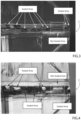
- Figure 3 shows an image collected with a camera provided with integrated Polarsens technology and processed with a Glare Reduction algorithm, regarding a sealing band 2 having a defect, in particular a not-sealed area (the image is in this case taken at the end of a tearing test, with the sealing band 2 having been subjected to a delamination process).
- Figure 4 shows an image of the same sealing band 2, this time processed with a Degree of Linear Polarization algorithm; also in this case, it is possible to identify the defect (not-sealed area), which is highlighted through an evidently different reflection pattern.
- Polarsens technology combined with the use of suitable image processing algorithms (that may be implemented in the analysis unit 12) can therefore improve the characterization of the sealings (both in case of tearing tests and plastic bag inspections), empowering the efficiency of the machine learning algorithm for automated defect detection and classification.
- the analysis unit 12 comprises an input module 20, which is configured to receive image data associated with the images acquired by means of the vision system 10 of the same automated defect detection system 1.
- input module 20 may also be configured to receive sensor data from a number of sensors 21, which may in this case also be part of the automated defect detection system 1.
- Sensors 21 may be configured to provide any sensor data related and relevant to inspection of the sealing band 2, in particular related to the sealing testing procedure and/or the operation of the packaging machine in the formation of the sealing band 2.
- sensor data acquired by the sensors 21 may be related to one or more of: the forming and sealing devices; the level, pressure and/or flow of product; the parameters and settings of the machine.
- sensor data may be related to tearing forces exerted by the automated testing apparatus and sensors may include force sensors (such as force cells and/or an encoder connected to the actuation device of the testing apparatus).
- Sensor data may in this case include force profiles, such as time-dependent force curves and/or position-dependent force curves, in particular the position being indicative of a relative distance between first clamping device and second clamping device, relating to the forces acting on sealing band 2 during its delamination and/or the forces exerted by actuation device on the sealing band 2 while the same actuation device moves, in use, the first and second clamping devices apart from one another.
- force profiles such as time-dependent force curves and/or position-dependent force curves, in particular the position being indicative of a relative distance between first clamping device and second clamping device, relating to the forces acting on sealing band 2 during its delamination and/or the forces exerted by actuation device on the sealing band 2 while the same actuation device moves, in use, the first and second clamping devices apart from one another.
- the above sensor data may include stress/strain displacement profiles of the materials of the sealing band 2. Moreover, the difference in the forces exerted by the first and second clamping devices of the automated testing apparatus may also be included in the same sensor data.
- the above sensor data may be provided in an automated manner to the analysis unit 12 by the same automated testing apparatus.
- the sensors may also be associated with the packaging machine and the sensor data may include processing data regarding the operation of the same packaging machine, for example of the sealing devices performing sealings of the composite packages.
- the input module 20 may be configured to associate timings of detection of the images by the vision system 10 with the sensor data, e.g., with the force profiles (thereby determining a correlation, in particular a time correlation, between the image data and the sensor data).
- the analysis unit 12 further comprises a pre-processing module 22, which is coupled to the input module 20 and is configured to perform pre-processing of the data (image data and, in the preferred embodiment, sensor data) received from the same input module 20.
- the pre-processing module 22 may perform one or more pre-processing steps on the image data, such as, but not limited to, filtering (to discard superfluous data), reshaping, normalization, re-coloring and/or cropping of the same image data (the image being broken down into significant regions).
- Pre-processing of the sensor data may include operations such as normalization, amplification and filtering.
- pre-processing of the image data may include performing suitable recombination algorithms on the images acquired by the imaging device 11 (in this case being provided with an integrated polarization filter).
- the analysis unit 12 further comprises an artificial intelligence (AI) module 24, which is coupled to the pre-processing module 22 and is configured to receive the pre-processed input data.
- AI artificial intelligence
- the artificial intelligence module 24 is configured to analyze the pre-processed input data by means of a machine-learning model, e.g., based on neural networks, in order to determine, in an automated manner, the quality of the sealing band 2, in particular so as to detect the presence of defects, such as channels (i.e., leaking sealings), burn marks, plastic lumps, and others.
- a machine-learning model e.g., based on neural networks
- the artificial intelligence module 24 is configured to process, jointly or in association, both image data and sensor data, in order to assess the quality of the sealing band 2, with a multi-modal approach (i.e., based on data of different nature).
- the sensor data may comprise data in addition to the image data, i.e. in addition to the images of the sealing bands.
- the machine learning model may be a neural network.
- the machine learning model may be a deep learning model.
- the deep learning model should be understood to be a model based on deep learning. Deep learning should be understood to be machine learning in which hypotheses take the form of complex algebraic circuits with tunable connection strengths.
- the word "deep” refers to the fact that the circuits are typically organized into many layers, which means that computation paths from inputs to outputs have several layers.
- the machine learning model may be implemented as a neural network such as a convolutional neural network (CNN), performing deep learning analysis for object detection for labelled defects.
- the machine learning model may be trained to output a quality measurement based on the input data.
- the machine learning model may be trained using supervised leaning. In other words, the machine learning model may be trained based on training input data, e.g. image data associated with a quality measurement or sensor data as well as image data associated with a quality measurement.
- the quality measurement may be indicative of a presence or absence of one or more defects within the input data (in particular, the image data); optionally the quality measurement may be indicative of a type of defect.
- the quality measurement may be a range of continuous values such as a range between 0 and 1; alternatively, the quality measurement may be a discrete set of values.
- the value of the quality measurement may be indicative of a severity of the detected deficiency or defect.
- the quality measurement may be a binary value, such as either "OK” or "not-OK".
- the quality measurement may further comprise information indicative of what type of deficiency or defect the sealing band 2 has (if any).
- the information indicative of a type of deficiency may for instance be that the sealing is formed incorrectly, or that the packaging material is damaged, both of which may lead to an unsterile package.
- the quality measurement may further indicate a confidence score of the output result from the machine learning model, i.e. how confident the machine learning model is that a detected deficiency or defect actually is a deficiency or defect.
- the artificial intelligence module 24 is configured to interpret and aggregate the input data (even of a different nature, as in the case of image and sensor data), generating an output result related to quality control, according to certain parameters of confidence, location and type of defect (defect class).
- Each defect may be characterized through the last layers of the neural network with a bounding box with corresponding spatial information (defect location), a score and classified as a specific defect among the various cases present in the field.
- the best threshold to maximize the accuracy of the algorithm is sought on the score that indicates the confidence in the prediction of the defect.
- the supervised neural network is trained with a training dataset with exemplary data generated directly on the packaging machine, annotated and labeled with the help of expert operators, in particular in terms of variations, defects, warnings, objects of interest, suspicious areas.
- the supervised neural network is developed to process both image data, in the vision domain, and sensor (or process) data, such as for example stress/strain displacement curves, with a multi-domain architecture that is able to combine the results of two AI architectures operating on different data domains.
- the training data set may comprise both the image data and sensor data, both data being independently labelled based on the possible defects or anomalies.
- the automated defect detection system 1 may further comprise a deviation monitoring module 26, coupled to the artificial intelligence module 24 and configured to monitor potential deviations of the output results from the same artificial intelligence module 24.
- the deviation monitoring module 26 is configured to evaluate a deviation of a performance of the machine learning model over time and to determine a requirement of re-training of the machine learning model in case the deviation exceeds a given threshold.
- the deviation monitoring module 26 may be configured to evaluate (with suitable performance metrics, i.e., measures of how well the machine learning model performs on the input data) an actual performance of the machine learning model as compared to a previous performance (in a previous time interval, e.g. one hour before a current time).
- suitable performance metrics i.e., measures of how well the machine learning model performs on the input data
- the deviation monitoring module 26 may determine a shift in the confidence or accuracy of the output results (e.g. a deviation in the output score from a range of 98%-99% to a significantly different range of 90%-91%) .
- the deviation monitoring module 26 may be configured to evaluate deviations in performance with respect to the output results associated with the training data set (e.g., the deviations being associated with a quality measurement that drastically increases or decreases over time).
- the deviation monitoring module 26 may be configured to determine possible deviations in the nature and characteristics of the input data, e.g. as compared to a previous batch of input data (received in a previous time interval with respect to the current batch of input data) and/or as compared to the training data set.
- a shift in the distribution of certain features (e.g. colours) of the image data can be evaluated by the deviation monitoring module 26.
- Possible reasons for significant deviations may be for example a change in the materials used in the production of the sealed composite packages or a change in the possible defects or deficiencies occurring in the inspected sealing bands 2 (with new types of deficiencies, which the machine learning model had not seen during training).
- the deviation monitoring module 26 determines the presence of significant deviations in either one (or both) of the output results and input data (i.e., the deviations exceeding a certain threshold), a requirement of re-training of the machine learning model may be determined.
- the machine learning model may then undergo a re-training using different training data, until the same machine learning model reaches a certain performance level (e.g. a certain level of accuracy, such as higher than 95%) and can again be employed for testing the quality of the sealings resulting from the production process.
- a certain performance level e.g. a certain level of accuracy, such as higher than 958%
- the automated defect detection system 1 may further comprise an output module 28, which is configured to output the results of the analysis performed by the artificial intelligence module 24, in order to provide a feedback on the quality of the sealings.
- the output module 28 may be configured to cooperate with a human-machine interface in order to display the results of the assessment performed by the artificial intelligence module 24 to a human operator.
- Figure 6 shows a possible output provided from the output module 28, in particular represented by an image of the inspected sealing band 2, with highlighted zones where defects have been detected by the machine learning model, with a corresponding level of accuracy.
- the same output module 28 may be operatively coupled to the control unit 100 of the packaging machine (or directly to a sealing device of the same packaging machine) and configured to provide feedback data for a direct control on the operation of the same packaging machine and/or sealing device, in particular as a function of the determined quality of the inspected sealing bands 2.
- values of parameters and/or settings to be used in the sealing procedure performed by the sealing device may be suggested to the operator or directly fed to the control unit 100 of the packaging machine, by the output module 28, as a function of the assessed quality of the sealings.
- the above parameters or settings may include a heating temperature or the value of an electrical current used in the formation of the sealing band 2 by the sealing device of the packaging machine.
- the same output module 28 may be further configured to generate alarms or warnings, or even to directly or indirectly cause the stop of the packaging machine (in case of severe deficiencies), based on the assessed quality of the sealings.
- an automated testing apparatus denoted with 30, operable for assessing the quality of the sealing bands 2, is now described in more details.
- the automated defect detection system 1 may form an integral part of this automated testing apparatus 30.
- the same automated defect detection system 1 may be external and communicatively connected to the automated testing apparatus 30.
- the automated testing apparatus 30 comprises:
- actuation device 35 is configured to modify the relative position of first clamping device 32 and second clamping device 33 in a direction D transversal, in particular (substantially) perpendicular, to sealing band 2.
- actuation device 35 is configured to exert a force on the sealing band 2 transversally, in particular perpendicularly, to the sealing band 2.
- the actuation device 35 is thereby configured to cause the delamination so as to tear first band portion 3 and second band portion 4 apart from one another. In particular, this allows to obtain insights into the layer of heat-seal material 5, so as to allow inspection of the quality of the sealing.
- Actuation device 35 allows to repeat measurements on various samples under controlled and defined conditions; in particular, actuation device 35 may be configured to apply a defined force profile (force per time) and/or movement profile (velocity per time) onto various sealing bands 2. Such defined force profiles and/or movement profiles can be repeatedly applied.
- actuation device 35 may comprise
- Actuation device 35 may also comprise one or more tracks 40, in particular having a rectilinear shape, configured to guide movement of first carriage 37 and second carriage 38.
- first carriage 37 and second carriage 38 comprise respective sliding elements 41 moveably coupling respectively first carriage 37 and second carriage 38 onto one or more corresponding tracks 40.
- the imaging device 11 of the vision system 10 of the automated defect detection system 1 is coupled to a housing 36 of the testing apparatus 30, so as to capture images of the sealing band 2 during the delamination, preferably a series of images representative of the time-evolution of the delamination of sealing band 2, in particular of a temporal change of the shape of the layer of heat-seal material 5.
- Figures 8A, 8B and 8C schematically show exemplary shapes of the sample, with the corresponding sealing band 2, at different times of the delamination process.
- the housing 36 of the testing apparatus 30 also carries the illumination device 14, e.g., a LED bar illuminator, configured to illuminate the sealing band 2. As shown in Figure 7 , preferably, a pair of illumination devices 14 are provided, on opposite sides of the imaging device 11.
- the illumination device 14 e.g., a LED bar illuminator
- the analysis unit 12 of the automated defect detection system 1 is in this embodiment also arranged within the housing 36. In a manner not shown, the analysis unit 12 may be operatively coupled to a control unit of the automated testing apparatus 30, which controls general operation thereof.
- the automated testing apparatus 30 also comprises a detection device configured to determine at least one force acting on the sealing band 2 during its delamination and/or a relative position between the first clamping device 32 and the second clamping device 33; the analysis unit 12 may be further configured to receive, as input data, the at least one force and/or position and the artificial intelligence module 24 may be configured to process with the machine-learning model both image data and the at least one force and/or position.
- a force detection device may be configured to sense the tearing forces exerted on the sealing band 2 during its delamination and/or the forces exerted by actuation device 35 while moving the first clamping device 32 and second clamping device 33 apart from one another.
- the force detection device may comprise one or more force cells and/or an encoder connected to the actuator 39.
- the detection device is therefore part of the sensors 21, which, as previously discussed, are part of the automated defect detection system 1.
- the force detection device can determine a force curve as the one shown in Figure 9 .
- Points I, II and III of the force curves indicate moments at which vision system 10 takes images of the sealing band 2, which at the specific times of the imaging may have respective exemplary shapes as shown in Figures 8A, 8B and 8C .
- the automated defect detection system 1 (and testing apparatus 30) may be part of a packaging plant, the packaging plant being configured to form sealed composite packages filled with the pourable product.
- the automated defect detection system 1 (and testing apparatus 30) may be configured to determine the quality of one or more sealing bands 2 of sampled composite packages, removed from the overall production, in particular at predetermined time intervals and/or at specific events.
- the packaging plant may comprise:
- the packaging apparatus produces a plurality of composite packages advancing along an advancement path and the sampling unit is arranged downstream of the packaging apparatus along the advancement path.
- Automated testing apparatus 30 may be used for determining the quality of one or more sealing bands 2 of the one or more sealed composite packages sampled by the sampling unit.
- one or more samples are prepared from the one or more sampled composite packages.
- the packaging apparatus may be configured to produce the sealed composite packages from the multilayer packaging material, in particular being provided in the form of a web.
- the packaging plant in particular the packaging apparatus, may comprise a control unit (the above referenced control unit 100), configured to control operation of the packaging apparatus.
- the packaging apparatus may comprise a transversal sealing device for generating transversal sealing bands of the sealed composite packages.
- the control unit is operatively connected to the transversal sealing device and configured to control operation of the transversal sealing device, in particular in dependence of the quality determined by means of the automated defect detection system 1 of the one or more sealing bands 2 of the one or more sampled sealed composite packages.
- the packaging apparatus may comprise:
- the package forming apparatus may comprise the transversal sealing device.
- the packaging apparatus may also comprise a sterilizing unit configured to sterilize the, in use, advancing web at a sterilization station, in particular the sterilization station being arranged upstream of the forming station along the web advancement path.
- the tube forming and sealing device may be arranged such that the tube may present a vertical orientation.
- the tube forming and sealing device may be configured to gradually fold the web into the tube, in particular by overlapping the longitudinal edges of the web with one another. Thereby, in use, a longitudinal seam portion of the tube is formed. In particular, sections of the longitudinal seam portions define the longitudinal sealing bands of respective sealed composite packages.
- the tube forming and sealing device may comprise at least two forming ring assemblies, in particular arranged within the isolation chamber, being configured to gradually fold in cooperation with one another the web into the tube, in particular by overlapping the longitudinal edges of the web with one another.
- the tube forming and sealing device may comprise a sealing head, in particular arranged within the isolation chamber, and configured to longitudinally seal the tube, in particular along the longitudinal seam portion.
- the tube forming and sealing device may also comprise a pressuring assembly configured to exert a mechanical force on the longitudinal seam portion.
- the package forming apparatus may comprise:
- each forming and sealing assembly may comprise:
- the transversal sealing device may comprise the sealing units of the forming and sealing assemblies.
- the control unit 100 may be configured to control operation (e.g., power, force etc.) of the sealing units in dependence of the determined quality of the transversal sealing bands 2.
- each forming and sealing assembly may comprise a cutting device for transversally cutting the tube.
- each sealing apparatus may be configured to form a main sealing band, and in particular the respective cutting device may be configured to transversally cut through the main sealing band.
- each main sealing band forms - once cut - the respective transversal sealing band 2 of a leading composite package and the respective transversal sealing band 2 of a successive (trailing) composite package, in particular the latter still being part of the tube.
- each forming shell may comprise at least a first half-shell and a second half-shell configured to at least partially define in cooperation the shape of the respective composite package.
- the first half-shell and the second half-shell may be configured to contact the tube from opposite sides thereof.
- each sealing unit may comprise a respective first portion (e.g., a sonotrode), in particular associated to the first half-shell, and a respective second portion (e.g., an anvil), in particular associated to the second half-shell.
- Each first portion and the respective second portion may be configured to cooperate together, in particular to transversally compress and to transversally seal the tube.
- control unit 100 may be configured to control operation of each first portion, e.g., of the sonotrode, in dependence of the determined quality of the sealing bands 2.
- the packaging plant produces sealed composite packages filled with the pourable product, in particular the pourable food product.
- the automated defect detection system 1 allows to evaluate the quality of sealings of composite packages, in particular transversal sealing bands, with a high accuracy and repeatability of the results, in particular independently of the experience of the operators and/or of different testing conditions.
- the present solution can be applied for sealing inspections, independently of the type of sealings (longitudinal or transversal), of the method of obtaining the same sealings (e.g., via hot air, induction heating, ultrasound heating) and independently of the testing conditions (e.g., both in case of tearing tests and in case of plastic bag analysis).
- the automated defect detection system 1 may also include a reading (or scanning) apparatus configured to read (or scan) an identification code (or identification mark) which is present on the sample and corresponding sealing band 2.
- the identification code may be a QR code, or a bar code, or a number, or any other type of code.
- the reading apparatus may be implemented by the above discussed vision system 10 (in this case, a camera of the vision system 10 also reads the identification code) or may include a dedicated camera.
- the analysis unit 12 may be configured to associate the images of the sealing band 2 captured by the vision system 10 to this identification code. This allows to correlate information associated to the sample (e.g., regarding the production process of the sample) with the images captured by the vision system 10, to improve traceability of the samples and the quality analysis.
Landscapes
- Engineering & Computer Science (AREA)
- Mechanical Engineering (AREA)
- General Physics & Mathematics (AREA)
- Physics & Mathematics (AREA)
- Health & Medical Sciences (AREA)
- Biochemistry (AREA)
- Chemical & Material Sciences (AREA)
- Analytical Chemistry (AREA)
- Life Sciences & Earth Sciences (AREA)
- General Health & Medical Sciences (AREA)
- Signal Processing (AREA)
- Immunology (AREA)
- Pathology (AREA)
- Computer Vision & Pattern Recognition (AREA)
- Toxicology (AREA)
- Investigating Materials By The Use Of Optical Means Adapted For Particular Applications (AREA)
Applications Claiming Priority (1)
| Application Number | Priority Date | Filing Date | Title |
|---|---|---|---|
| IT102023000005556A IT202300005556A1 (it) | 2023-03-23 | 2023-03-23 | Sistema e metodo ad elaboratore per il rilevamento automatizzato di difetti in sigillature di pacchetti compositi |
Publications (1)
| Publication Number | Publication Date |
|---|---|
| EP4454863A1 true EP4454863A1 (fr) | 2024-10-30 |
Family
ID=86604266
Family Applications (1)
| Application Number | Title | Priority Date | Filing Date |
|---|---|---|---|
| EP24162885.8A Pending EP4454863A1 (fr) | 2023-03-23 | 2024-03-12 | Système et procédé mis en uvre par ordinateur pour la détection automatisée de défauts dans des scellements d'emballages composites |
Country Status (5)
| Country | Link |
|---|---|
| EP (1) | EP4454863A1 (fr) |
| JP (1) | JP2026508701A (fr) |
| CN (1) | CN120981338A (fr) |
| IT (1) | IT202300005556A1 (fr) |
| WO (1) | WO2024194080A1 (fr) |
Citations (3)
| Publication number | Priority date | Publication date | Assignee | Title |
|---|---|---|---|---|
| AU2020271090A1 (en) * | 2019-04-11 | 2021-09-02 | Cryovac, LLC. | System for in-line inspection of seal integrity |
| WO2022063373A1 (fr) * | 2020-09-23 | 2022-03-31 | Qubiqa A/S | Évaluation optique de soudures de film de conditionnement |
| IT202100018176A1 (it) * | 2021-07-09 | 2023-01-09 | Koerber Tissue S P A | Un sistema di confezionamento di prodotti in carta tissue tramite fogli di incarto |
-
2023
- 2023-03-23 IT IT102023000005556A patent/IT202300005556A1/it unknown
-
2024
- 2024-03-12 EP EP24162885.8A patent/EP4454863A1/fr active Pending
- 2024-03-12 WO PCT/EP2024/056503 patent/WO2024194080A1/fr not_active Ceased
- 2024-03-12 CN CN202480021317.5A patent/CN120981338A/zh active Pending
- 2024-03-12 JP JP2025555557A patent/JP2026508701A/ja active Pending
Patent Citations (3)
| Publication number | Priority date | Publication date | Assignee | Title |
|---|---|---|---|---|
| AU2020271090A1 (en) * | 2019-04-11 | 2021-09-02 | Cryovac, LLC. | System for in-line inspection of seal integrity |
| WO2022063373A1 (fr) * | 2020-09-23 | 2022-03-31 | Qubiqa A/S | Évaluation optique de soudures de film de conditionnement |
| IT202100018176A1 (it) * | 2021-07-09 | 2023-01-09 | Koerber Tissue S P A | Un sistema di confezionamento di prodotti in carta tissue tramite fogli di incarto |
Non-Patent Citations (1)
| Title |
|---|
| KERR D ET AL: "Quality inspection of food packaging seals using machine vision with texture analysis", vol. 218, no. 11, 1 November 2004 (2004-11-01), GB, pages 1591 - 1599, XP055869894, ISSN: 0954-4054, Retrieved from the Internet <URL:http://journals.sagepub.com/doi/pdf/10.1243/0954405042418527> DOI: 10.1243/0954405042418527 * |
Also Published As
| Publication number | Publication date |
|---|---|
| CN120981338A (zh) | 2025-11-18 |
| IT202300005556A1 (it) | 2024-09-23 |
| WO2024194080A1 (fr) | 2024-09-26 |
| JP2026508701A (ja) | 2026-03-11 |
Similar Documents
| Publication | Publication Date | Title |
|---|---|---|
| US6732496B1 (en) | Method of monitoring transverse sealing in a packaging unit for continuously forming sealed packages containing pourable food products | |
| US10839501B2 (en) | System for checking package body with image | |
| EP3757554B1 (fr) | Procédé permettant de surveiller et de commander éventuellement l'opercule longitudinal d'un matériau d'emballage dans une machine de conditionnement et de remplissage | |
| US9212967B2 (en) | Method for monitoring the quality of industrial processes and system therefrom | |
| US20080022632A1 (en) | Method and apparatus for manufacturing objects provided with a sealed seam | |
| KR102230886B1 (ko) | 이미지인식 기반의 프로젝션용접 결함 검출시스템 | |
| US20120267534A1 (en) | Method and apparatus for inspecting sealing defect of container | |
| JP6172784B1 (ja) | 包装体の画像検査システム | |
| CN110132983A (zh) | 一种注塑产品在线分级检测装置及方法 | |
| JP7732969B2 (ja) | 液状食品用の包装機の状態監視 | |
| EP1988024A1 (fr) | Machine d'emballage dotée de détection de substances étrangères | |
| CN104169067B (zh) | 检测含金属箔包装封装瑕疵的装置及方法 | |
| WO2022063373A1 (fr) | Évaluation optique de soudures de film de conditionnement | |
| EP4454863A1 (fr) | Système et procédé mis en uvre par ordinateur pour la détection automatisée de défauts dans des scellements d'emballages composites | |
| JP7354491B2 (ja) | パッケージング溶着部を形成するためのプロセス | |
| Al-Habaibeh et al. | A novel approach for quality control system using sensor fusion of infrared and visual image processing for laser sealing of food containers | |
| WO2023144093A1 (fr) | Appareil d'essai de qualité d'étanchéité pour détermination de la qualité d'une bande d'étanchéité, installation d'emballage comportant un appareil d'essai de qualité d'étanchéité, procédé de détermination de la qualité d'une bande d'étanchéité et procédé de production d'emballages composites | |
| CN106762340A (zh) | 一种水轮机接力器智能检漏系统及其方法 | |
| WO2004036200A1 (fr) | Procede et appareil d'inspection qualite | |
| JP6720482B2 (ja) | 包装袋用シール装置、包装袋のシール検査方法及び包装製品の製造方法 | |
| JP2007071568A (ja) | ゲーブルトップ製品のシール不良検査装置 | |
| JP2026502853A (ja) | 機械学習を用いたロール供給式包装機で製造されるパッケージの品質管理用のコンピュータ実装方法 | |
| JP2025522042A (ja) | 包装機における包装ウェブのシールストリップのシール品質評価システム | |
| WO2022171856A1 (fr) | Procédé d'évaluation de la qualité de scellement transversal d'un emballage alimentaire | |
| JP2025503850A5 (fr) |
Legal Events
| Date | Code | Title | Description |
|---|---|---|---|
| PUAI | Public reference made under article 153(3) epc to a published international application that has entered the european phase |
Free format text: ORIGINAL CODE: 0009012 |
|
| STAA | Information on the status of an ep patent application or granted ep patent |
Free format text: STATUS: THE APPLICATION HAS BEEN PUBLISHED |
|
| AK | Designated contracting states |
Kind code of ref document: A1 Designated state(s): AL AT BE BG CH CY CZ DE DK EE ES FI FR GB GR HR HU IE IS IT LI LT LU LV MC ME MK MT NL NO PL PT RO RS SE SI SK SM TR |
|
| STAA | Information on the status of an ep patent application or granted ep patent |
Free format text: STATUS: REQUEST FOR EXAMINATION WAS MADE |
|
| 17P | Request for examination filed |
Effective date: 20250430 |
|
| RIC1 | Information provided on ipc code assigned before grant |
Ipc: B29C 65/02 20060101AFI20260225BHEP Ipc: B29C 65/82 20060101ALI20260225BHEP Ipc: B29C 65/00 20060101ALI20260225BHEP Ipc: G01M 3/38 20060101ALI20260225BHEP Ipc: G01N 21/88 20060101ALI20260225BHEP Ipc: B29L 31/00 20060101ALN20260225BHEP Ipc: G01N 21/01 20060101ALN20260225BHEP Ipc: B29C 65/36 20060101ALN20260225BHEP Ipc: B29C 65/10 20060101ALN20260225BHEP Ipc: B29C 65/08 20060101ALN20260225BHEP Ipc: B29K 705/02 20060101ALN20260225BHEP |
|
| RIC1 | Information provided on ipc code assigned before grant |
Ipc: B29C 65/02 20060101AFI20260306BHEP Ipc: B29C 65/82 20060101ALI20260306BHEP Ipc: G01M 3/38 20060101ALI20260306BHEP Ipc: G01N 21/88 20060101ALI20260306BHEP Ipc: B29L 31/00 20060101ALN20260306BHEP Ipc: G01N 21/01 20060101ALN20260306BHEP Ipc: B29C 65/36 20060101ALN20260306BHEP Ipc: B29C 65/10 20060101ALN20260306BHEP Ipc: B29C 65/08 20060101ALN20260306BHEP Ipc: B29K 705/02 20060101ALN20260306BHEP |