EP4455157A1 - Polynucleotide pour l'expression transgénique spécifique de lymphocytes t - Google Patents
Polynucleotide pour l'expression transgénique spécifique de lymphocytes t Download PDFInfo
- Publication number
- EP4455157A1 EP4455157A1 EP23382393.9A EP23382393A EP4455157A1 EP 4455157 A1 EP4455157 A1 EP 4455157A1 EP 23382393 A EP23382393 A EP 23382393A EP 4455157 A1 EP4455157 A1 EP 4455157A1
- Authority
- EP
- European Patent Office
- Prior art keywords
- cells
- cell
- polynucleotide
- car
- expression
- Prior art date
- Legal status (The legal status is an assumption and is not a legal conclusion. Google has not performed a legal analysis and makes no representation as to the accuracy of the status listed.)
- Withdrawn
Links
Images




Classifications
-
- C—CHEMISTRY; METALLURGY
- C07—ORGANIC CHEMISTRY
- C07K—PEPTIDES
- C07K14/00—Peptides having more than 20 amino acids; Gastrins; Somatostatins; Melanotropins; Derivatives thereof
- C07K14/435—Peptides having more than 20 amino acids; Gastrins; Somatostatins; Melanotropins; Derivatives thereof from animals; from humans
- C07K14/46—Peptides having more than 20 amino acids; Gastrins; Somatostatins; Melanotropins; Derivatives thereof from animals; from humans from vertebrates
- C07K14/47—Peptides having more than 20 amino acids; Gastrins; Somatostatins; Melanotropins; Derivatives thereof from animals; from humans from vertebrates from mammals
-
- C—CHEMISTRY; METALLURGY
- C07—ORGANIC CHEMISTRY
- C07K—PEPTIDES
- C07K14/00—Peptides having more than 20 amino acids; Gastrins; Somatostatins; Melanotropins; Derivatives thereof
- C07K14/435—Peptides having more than 20 amino acids; Gastrins; Somatostatins; Melanotropins; Derivatives thereof from animals; from humans
- C07K14/705—Receptors; Cell surface antigens; Cell surface determinants
- C07K14/70503—Immunoglobulin superfamily
- C07K14/7051—T-cell receptor (TcR)-CD3 complex
-
- C—CHEMISTRY; METALLURGY
- C12—BIOCHEMISTRY; BEER; SPIRITS; WINE; VINEGAR; MICROBIOLOGY; ENZYMOLOGY; MUTATION OR GENETIC ENGINEERING
- C12N—MICROORGANISMS OR ENZYMES; COMPOSITIONS THEREOF; PROPAGATING, PRESERVING, OR MAINTAINING MICROORGANISMS; MUTATION OR GENETIC ENGINEERING; CULTURE MEDIA
- C12N15/00—Mutation or genetic engineering; DNA or RNA concerning genetic engineering, vectors, e.g. plasmids, or their isolation, preparation or purification; Use of hosts therefor
- C12N15/09—Recombinant DNA-technology
- C12N15/63—Introduction of foreign genetic material using vectors; Vectors; Use of hosts therefor; Regulation of expression
- C12N15/79—Vectors or expression systems specially adapted for eukaryotic hosts
- C12N15/85—Vectors or expression systems specially adapted for eukaryotic hosts for animal cells
- C12N15/86—Viral vectors
-
- C—CHEMISTRY; METALLURGY
- C12—BIOCHEMISTRY; BEER; SPIRITS; WINE; VINEGAR; MICROBIOLOGY; ENZYMOLOGY; MUTATION OR GENETIC ENGINEERING
- C12N—MICROORGANISMS OR ENZYMES; COMPOSITIONS THEREOF; PROPAGATING, PRESERVING, OR MAINTAINING MICROORGANISMS; MUTATION OR GENETIC ENGINEERING; CULTURE MEDIA
- C12N2740/00—Reverse transcribing RNA viruses
- C12N2740/00011—Details
- C12N2740/10011—Retroviridae
- C12N2740/16011—Human Immunodeficiency Virus, HIV
- C12N2740/16041—Use of virus, viral particle or viral elements as a vector
- C12N2740/16043—Use of virus, viral particle or viral elements as a vector viral genome or elements thereof as genetic vector
-
- C—CHEMISTRY; METALLURGY
- C12—BIOCHEMISTRY; BEER; SPIRITS; WINE; VINEGAR; MICROBIOLOGY; ENZYMOLOGY; MUTATION OR GENETIC ENGINEERING
- C12N—MICROORGANISMS OR ENZYMES; COMPOSITIONS THEREOF; PROPAGATING, PRESERVING, OR MAINTAINING MICROORGANISMS; MUTATION OR GENETIC ENGINEERING; CULTURE MEDIA
- C12N2830/00—Vector systems having a special element relevant for transcription
- C12N2830/008—Vector systems having a special element relevant for transcription cell type or tissue specific enhancer/promoter combination
-
- C—CHEMISTRY; METALLURGY
- C12—BIOCHEMISTRY; BEER; SPIRITS; WINE; VINEGAR; MICROBIOLOGY; ENZYMOLOGY; MUTATION OR GENETIC ENGINEERING
- C12N—MICROORGANISMS OR ENZYMES; COMPOSITIONS THEREOF; PROPAGATING, PRESERVING, OR MAINTAINING MICROORGANISMS; MUTATION OR GENETIC ENGINEERING; CULTURE MEDIA
- C12N2830/00—Vector systems having a special element relevant for transcription
- C12N2830/15—Vector systems having a special element relevant for transcription chimeric enhancer/promoter combination
Definitions
- the present invention refers to the medical field. Particularly, the present invention refers to a polynucleotide for T cell specific transgene expression, as well as to a method to generate CAR-T cells by using said polynucleotide.
- T lymphocytes constitute the basis of multiple cellular therapies due to their easy isolation and manipulation and their functional and migration properties, which make them excellent candidates for immunotherapy. With the new advanced technologies, genetic engineering of T lymphocytes can be easily addressed opening an endless of possibilities of therapeutic applications. Genetically engineered T cell immunotherapies have provided impressive efficacy treating B cell malignancies, endowing T cells with a chimeric antigen receptor to specifically recognize the antigen. These approaches can be applied to multiple diseases, from other cancers to infectious and autoimmune problems.
- CAR-T cells Chimeric antigen receptor (CAR) T cells
- CAR-T cell therapy represents a major advancement in personalized cancer treatment.
- patient's own T cells are genetically engineered to express a synthetic receptor that binds a tumor antigen.
- CAR T cells are then expanded for clinical use and infused back into the patient's body to attack and destroy chemotherapy-resistant cancer.
- the CAR is transduced into T cells via viral vectors, such as lentiviruses (LVs).
- LVs lentiviruses
- Lentiviral particles are packaged in producer cell lines such as HEK293T cells.
- lentiviral vectors such as those derived from HIV-1 have, already been approved by the FDA/EMA.
- ATMPs advanced therapy medicinal products
- tisagenlecleucel Kymriah, Novartis
- axicabtageneciloleucel Yescarta, Kite-Gilead
- brexucabtagene autoleucel Tecartus, Kite-Gilead
- lisocabtagenemaraleucel Breyanzi, Bristol Myers Squibb
- idecabtagene vicleucel Abecma, Bristol Myers Squibb
- ciltacabtagene autoleucel Carvykti, Janssen
- This tonic signalling can affect safety (pro-inflammatory cytokines secretion in non-target tissues) and efficacy (premature exhaustion due to continuous proliferation) of CAR-T cells. Furthermore, high-density and constitutive CAR presence on the T cell surface can also lead to overstimulation upon antigen recognition, which also affects safety (excess of pro-inflammatory cytokine secretion) and efficacy (early exhaustion, apoptosis and loss of naive/stem cell memory T cells phenotype) of the CAR-T cells.
- the present invention refers to a polynucleotide sequence for T cell specific transgene expression, as well as to a method to generate CAR-T cells by using said polynucleotide.
- the inventors of the present invention identified the necessity to generate CAR-T cells that express the CAR in a more physiological manner than that provided by strong promoters. They hypothesized that restricting transgene expression to T cells, using a T-cell specific promoter, could solve some of the safety concerns associated to CAR-T cell therapies.
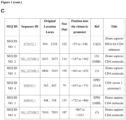
- the inventors generated a synthetic polynucleotide comprising or consisting of SEQ ID NO: 7 that is based on regulatory regions of the human CD4 locus ( Figure 1 ).
- SEQ ID NO: 7 comprises or consists of the sequences: SEQ ID NO: 1, SEQ ID NO: 2, SEQ ID NO: 3, SEQ ID NO: 4, SEQ ID NO: 5 and SEQ ID NO: 6.
- SEQ ID NO: 8 comprises or consists of SEQ ID NO:7 and accessory sequences containing restriction sites.
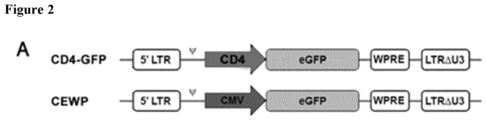
- the inventors cloned it into the CEWP lentiviral plasmid, upstream of an eGFP domain ( Figure 2A ).
- the LV produced using this lentiviral plasmid will be referred to as the CD4-GFP LV.
- the inventors used the CD4-GFP LV to transduce multiple cell lines and primary T cells. High eGFP expression was only detected in cells that naturally express CD4, indicating that the synthetic promoter was specific to CD4+ cells ( Figure 2B , 2C).
- percentage of eGFP+ cells was comparable in transduced primary CD4+ and CD8+ T cells, even the intensity of expression was significantly higher in CD4+ T cells ( Figure 2D ).
- the inventors compared the expression of the exogenous CD4-GFP with the expression of the endogenous CD4 in transduced primary T cells.
- T cells were activated with ⁇ CD3/ ⁇ CD28.
- CD4-GFP expression - regulated under the control of the synthetic promoter - mimicked the pattern of endogenous CD4 expression ( Figure 3C ).
- the expression of GFP did not completely mimic the expression pattern of CD3, GFP expression did not increase after antigenic stimulation of T cells, which usually occurs with strong viral or eukaryotic promoters ( Figure 3B , 4).
- the first embodiment of the present invention refers to a polynucleotide comprising SEQ ID NO: 7 or having an identity of sequence with SEQ ID NO: 7 of at least 95%.
- the polynucleotide comprises a promoter sequence consisting of SEQ ID NO: 7 or having an identity of sequence with SEQ ID NO: 7 of at least 95%.
- the polynucleotide comprises a promoter sequence consisting of SEQ ID NO: 7.
- polynucleotide consists of SEQ ID NO: 7.
- the polynucleotide of the invention comprises or consists of SEQ ID NO: 7 and accessory sequences containing restriction sites, for instance SEQ ID NO: 8.
- the second embodiment of the invention refers to a genetic construct comprising any of the polynucleotides described above.
- the genetic construct comprises the any of the polynucleotides described above as promoter operatively linked to a nucleotide sequence encoding a protein to drive its expression.
- the protein is a chimeric antigen receptor (CAR).
- CAR chimeric antigen receptor
- the third embodiment of the invention refers to a lentiviral vector comprising any of the polynucleotides, or the genetic constructs described above.
- the fourth embodiment of the invention refers to a T cell or T cell-derived cell comprising any of the polynucleotides, or genetic constructs described above, or any genetic material introduced using the lentiviral vector described above.
- the fifth embodiment of the invention refers to a any of the polynucleotides, genetic constructs, lentiviral vector, T cell or T cell-derived cell described above for use in therapy, for instance in cancer therapy.
- a preferred embodiment involves the polynucleotides, genetic construct, lentiviral vectors, T cell or T cell-derived cell for use in cancer therapy.
- Another preferred embodiment involves the polynucleotides, genetic construct, lentiviral vectors, T cell or T cell-derived cell for use in human cancer therapy.
- the sixth embodiment of the invention refers to the use of any of the polynucleotides described above as a promoter to drive gene expression in T cells or T cell-derived cells.
- the polynucleotide drives the expression of a nucleotide sequence encoding a CAR.
- the seventh embodiment of the invention refers to the use of any of the genetic constructs or lentiviral vector described above to express a nucleotide sequence encoding a CAR in T cells or T cell-derived cells.
- the eighth embodiment of the invention refers to a method for generating cells that express a transgene in a manner that mimics the expression of the human CD4 gene, which comprises transducing cells with a genetic construct comprising any of the polynucleotides described above as promoter operatively linked to a nucleotide sequence encoding a protein, or with any of the genetic constructs or the lentiviral vector described above.
- the method comprises transducing T-cells or T-cell derived cells with any of the genetic constructs or lentiviral vector described above.
- a preferred embodiment involves a method for generating CAR T-cells which comprises transducing T-cells with a genetic construct comprising any of the polynucleotides described above as promoter operatively linked to a nucleotide sequence encoding a CAR, or with any of the genetic constructs or the lentiviral vector described above.
- the cells of the above-mentioned embodiments are human cells.
- the present invention also refers to a method for treating patients, for instance patients suffering from cancer, which comprises the administration of CAR T-cells generated using any of the methods described above.
- the synthetic polynucleotide described above can be used to restrict the expression of the CAR transgene exclusively to T cells. This can improve the efficacy of CAR-T cell therapies by:
- the membrane of the retroviral vectors is derived from the packaging cells and contain different proteins derived from those producing cells.
- the level of incorporation is highly variable and depends on the type of retroviral vector, the protein and its concentration. In this direction, it has been described that CAR-expressing retroviral particles present the CAR on its surface, thereby facilitating its binding to the cognate antigen.
- malignant B cells are transduced at higher levels with LVs displaying anti-CD19 CARs compared to LVs displaying non-binding control constructs. This is referred to as transduction targeting.
- the polynucleotide can be used to achieve T-cell specific expression during pluripotent stem cell differentiation to investigate T cell development in vitro or in vivo.
- the invention can be also of interest for production of retroviral vectors expressing highly toxic proteins, by blocking production its production on the packaging cells. This would improve the quality of particle production since the particles will be free of toxic proteins.
- Example 1.1 Polynucleotide design and synthesis
- SEQ NO: 7 is composed of SEQ ID NO: 1, SEQ ID NO: 2, SEQ ID NO: 3, SEQ ID NO: 4, SEQ ID NO: 5 and SEQ ID NO: 6.
- SEQ ID NO: 8 consists of SEQ ID NO:7 and accessory sequences containing digestive restriction sites.
- the polynucleotide was synthetized by GenScript (Genescript USA Inc. NY, USA) in a pUC57 vector, flanked by EcoRI/ClaI/SphI and BamHI/AscI/EcoRI resctriction sites.
- the synthetic polynucleotide was cloned into CEWP LV vector by using Clal and BamHI with and standard techniques of molecular biology to generate what will be referred to as the CD4-GFP lentiviral plasmid.
- the CEWP lentiviral plasmid contains an eGFP domain, meaning that the resultant CD4-GFP lentiviral plasmid contains eGFP domain under the regulation of the synthetic CD4 promoter.
- HEK-293T (ATCC ® CRL-11268) were cultured in DMEM (Biowest) supplemented with 10% FBS (Biowest) and maintained at 10% CO 2 and 37°C.
- Namalwa (ATCC ® CRL-1432), Jurkat (ATCC ® TIB-152), BxPC3 (ATCC ® CRL-1687) cells were cultured in RPMI and MiaPaCa2 (ATCC ® CRL-1420) in DMEM supplemented with 10% FBS and 1% P/S (Biowest) and maintained at 5% CO2 37°C.
- T cells were isolated from the peripheral blood mononuclear cell (PBMC) section after Ficoll gradient (Lymphosep, Biowest) from peripheral blood and negative selected with the MACSexpresss Pan T cell isolation (Miltenyi Biotec). Isolated T cells were cultured in TexMACS medium (Miltenyi Biotec) supplemented with 20 Ul/ml of IL-2 (Miltenyi) and 1% of P/S and maintained at 37°C in a 5% CO 2 incubator. T cells were activated with TransAct (1:100, Miltenyi Biotec) during 48h before lentiviral transduction following manufacturer's recommendations.
- PBMC peripheral blood mononuclear cell
- HEK293T 0.7-0.8 ⁇ 10 6 HEK293T (90% of confluency) were transfected with the lentiviral plasmid of interest, pCMV_R8.91 and pMD2.G in proportion 3:2:1 using LipoD293 (SigmaGen Lab). DNA and LipoD were mixed in DMEM without serum and incubated for 10 min at room temperature before being added drop-by-drop to the cells. Media was exchanged 5h post-transfection and supernatants were harvested at 48h and 72h after transfection and filtered through a 0.45 ⁇ m filter (Nalgene, Rochester, NY) and concentrated 30x using Amicon Ultra15 (100 KD, Milipore) filters and centrifugation at 1800g 4°C. LVs were aliquoted and stored at -80°C.
- the LVs produced upon transfection with the CD4-GFP and the CEWP lentiviral plasmids will be referred to as the CD4-GFP LV and the CEWP LV, respectively.
- Example 1.6 Analysis of expression kinetics in primary T cells
- T cells transduced with eGFP-LVs 10 5 T cells were stimulated with TransAct (Miltenyi Biotec) after 10 days of the initial activation for transduction.
- TransAct Mctenyi Biotec
- Fold change of eGFP expression was indicated as the ratio of percentage of positive populationrelated to percentage of positive population at 0h.
- Example 2.1 Construction of T-specific chimeric promoters based on different regulatory regions of the CD4 locus.
- T-cell specific promoter To construct a T-cell specific promoter, the inventors used different regions of the CD4 locus defined as important for regulation by different databases, genomic browsers or described as such in the literature. The regions used are described in Figure 1 .
- LVs expressing eGFP under the regulation of the synthetic CD4 promoter and CEWP-LVs (as control of eGFP expression) were constructed ( Figure 2A ). LVs were generated and used to transduce 293T and BxPC-3 cells as non-CD4-expressing cells, Namalwa (slightly positive for CD4) and Jurkat cells (an immortalized T cell line) and primary human T cells as CD4+++ cells ( Figure 2B , 2C). These results show that eGFP is only expressed in Jurkat,primary T cells and Namalwa, with almost undetectable levels of expression in 293T and BxPC-3.
- eGFP In primary T cells, the expression of eGFP was similar in CD4 and CD8 subsets in terms of percentage ( Figure 2D , left), but with an increased intensity in CD4+ population ( Figure 2D , right), suggesting that the promoter could be used to ensure CAR expression in CAR-T cells. Very low levels of eGFP expression were detected in 293T cells (5.75%), suggesting that the use of this promoter could prevent transgene expression in packaging cells during lentiviral generation. For instance, it could be used to prevent CAR expression on the surface of packaging cells.
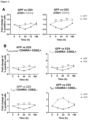
- the inventors transduced human T cells with CD4-LVs and analysed the kinetics of transgene expression at different times after T cell activation with ⁇ CD3/ ⁇ CD28, as shown in Figure 3A . They compared the effects of T cell activation on the percentage of CD3+ cells and eGFP+ cells at different timepoints after stimulation ( Figure 3B ). As previously reported, CD3 expression in T cells decreased soon after stimulation, and basal levels were recovered after 3-7 days. However, such downregulation was not detected in GFP expression, which was driven by the CD4 polynucleotide.
- the inventors also determined transgene expression in CD4+ CD3+ and CD8+ CD3+ T cells subsets at different stages of T cells differentiation ( Figure 4 ).
- CD4+ cells GFP expression slightly mimicked CD3 expression in CD4+ cells, while it showed a slight increment in CD8+ cells ( Figure 4A ).
- the highest consistency between the GFP and the CD3 expression profiles was detected in naive/stem memory T cells and central memory T cells, while an increment in GFP compared to CD3 expression was observed in effector T cells.
- this analysis evidences the importance of evaluating T cell phenotypes, in order to select less differentiated T cell populations for the generation of CAR-T cells.
Landscapes
- Health & Medical Sciences (AREA)
- Life Sciences & Earth Sciences (AREA)
- Chemical & Material Sciences (AREA)
- Genetics & Genomics (AREA)
- Organic Chemistry (AREA)
- Zoology (AREA)
- Immunology (AREA)
- Engineering & Computer Science (AREA)
- Biophysics (AREA)
- General Health & Medical Sciences (AREA)
- Biochemistry (AREA)
- Molecular Biology (AREA)
- Biomedical Technology (AREA)
- Toxicology (AREA)
- Wood Science & Technology (AREA)
- Bioinformatics & Cheminformatics (AREA)
- Proteomics, Peptides & Aminoacids (AREA)
- General Engineering & Computer Science (AREA)
- Biotechnology (AREA)
- Medicinal Chemistry (AREA)
- Gastroenterology & Hepatology (AREA)
- Plant Pathology (AREA)
- Cell Biology (AREA)
- Virology (AREA)
- Physics & Mathematics (AREA)
- Microbiology (AREA)
- Micro-Organisms Or Cultivation Processes Thereof (AREA)
Priority Applications (3)
| Application Number | Priority Date | Filing Date | Title |
|---|---|---|---|
| EP23382393.9A EP4455157A1 (fr) | 2023-04-27 | 2023-04-27 | Polynucleotide pour l'expression transgénique spécifique de lymphocytes t |
| PCT/EP2024/061307 WO2024223701A1 (fr) | 2023-04-27 | 2024-04-24 | Polynucléotide pour l'expression d'un transgène spécifique des lymphocytes t |
| EP24720265.8A EP4702040A1 (fr) | 2023-04-27 | 2024-04-24 | Polynucléotide pour l'expression d'un transgène spécifique des lymphocytes t |
Applications Claiming Priority (1)
| Application Number | Priority Date | Filing Date | Title |
|---|---|---|---|
| EP23382393.9A EP4455157A1 (fr) | 2023-04-27 | 2023-04-27 | Polynucleotide pour l'expression transgénique spécifique de lymphocytes t |
Publications (1)
| Publication Number | Publication Date |
|---|---|
| EP4455157A1 true EP4455157A1 (fr) | 2024-10-30 |
Family
ID=86328774
Family Applications (2)
| Application Number | Title | Priority Date | Filing Date |
|---|---|---|---|
| EP23382393.9A Withdrawn EP4455157A1 (fr) | 2023-04-27 | 2023-04-27 | Polynucleotide pour l'expression transgénique spécifique de lymphocytes t |
| EP24720265.8A Pending EP4702040A1 (fr) | 2023-04-27 | 2024-04-24 | Polynucléotide pour l'expression d'un transgène spécifique des lymphocytes t |
Family Applications After (1)
| Application Number | Title | Priority Date | Filing Date |
|---|---|---|---|
| EP24720265.8A Pending EP4702040A1 (fr) | 2023-04-27 | 2024-04-24 | Polynucléotide pour l'expression d'un transgène spécifique des lymphocytes t |
Country Status (2)
| Country | Link |
|---|---|
| EP (2) | EP4455157A1 (fr) |
| WO (1) | WO2024223701A1 (fr) |
Citations (2)
| Publication number | Priority date | Publication date | Assignee | Title |
|---|---|---|---|---|
| WO2019025800A1 (fr) * | 2017-08-02 | 2019-02-07 | Autolus Limited | Cellules exprimant un récepteur antigénique chimérique ou un tcr manipulé et comprenant une séquence de nucléotides exprimée de manière sélective |
| WO2020150534A2 (fr) * | 2019-01-16 | 2020-07-23 | Beam Therapeutics Inc. | Cellules immunitaires modifiées ayant une activité anti-néoplasique et une résistance à l'immunosuppression améliorées |
-
2023
- 2023-04-27 EP EP23382393.9A patent/EP4455157A1/fr not_active Withdrawn
-
2024
- 2024-04-24 WO PCT/EP2024/061307 patent/WO2024223701A1/fr not_active Ceased
- 2024-04-24 EP EP24720265.8A patent/EP4702040A1/fr active Pending
Patent Citations (2)
| Publication number | Priority date | Publication date | Assignee | Title |
|---|---|---|---|---|
| WO2019025800A1 (fr) * | 2017-08-02 | 2019-02-07 | Autolus Limited | Cellules exprimant un récepteur antigénique chimérique ou un tcr manipulé et comprenant une séquence de nucléotides exprimée de manière sélective |
| WO2020150534A2 (fr) * | 2019-01-16 | 2020-07-23 | Beam Therapeutics Inc. | Cellules immunitaires modifiées ayant une activité anti-néoplasique et une résistance à l'immunosuppression améliorées |
Non-Patent Citations (1)
| Title |
|---|
| DATABASE Geneseq [online] 3 September 2020 (2020-09-03), "Homo sapiens CD4 gene, SEQ 52.", retrieved from EBI accession no. GSN:BIA98305 Database accession no. BIA98305 * |
Also Published As
| Publication number | Publication date |
|---|---|
| WO2024223701A1 (fr) | 2024-10-31 |
| EP4702040A1 (fr) | 2026-03-04 |
Similar Documents
| Publication | Publication Date | Title |
|---|---|---|
| JP7379399B2 (ja) | 血液系腫瘍を標的としたキメラ抗体受容体(CARs)の構成およびその使用方法 | |
| US11931381B2 (en) | Immunocompetent cell and expression vector expressing regulatory factors of immune function | |
| EP3523326B1 (fr) | Domaines co-stimulateurs destinés à être utilisés dans des cellules génétiquement modifiées | |
| US20240139248A1 (en) | Immunocompetent cell that expresses a cell surface molecule specifically recognizing human mesothelin, il-7 and ccl19 | |
| JP2019523001A (ja) | 改変されたナチュラルキラー細胞を生成する方法および使用方法 | |
| CN109803983A (zh) | 靶向nkg2dl的特异性嵌合抗原受体t细胞,其制备方法和应用 | |
| CA2973483A1 (fr) | Elements regulateurs post-transcriptionnels d'hepatite modifiee | |
| EP4170020A1 (fr) | Cellules immunocompétentes exprimant un récepteur antigénique chimérique | |
| WO2022047419A1 (fr) | Nouvelles lignées cellulaires, procédés de production de cellules tueuses naturelles et utilisations associées | |
| WO2023213983A2 (fr) | Construction d'expression | |
| EP4455157A1 (fr) | Polynucleotide pour l'expression transgénique spécifique de lymphocytes t | |
| CN118255867A (zh) | 突变体亚基、突变体、宿主及其应用 | |
| WO2021209625A1 (fr) | Cellules tueuses naturelles à haute activité | |
| Jo | Innovative approaches to natural killer cell engineering: Overcoming challenges in CRISPR-Cas9 genome editing, transgene expression, and cryopreservation | |
| Simon | Optimization of engineered T cells for the use in melanoma immunotherapy | |
| US20260053856A1 (en) | Immunocompetent cell and expression vector expressing regulatory factors of immune function / a cell surface molecule specifically recognizing human mesothelin, il-7 and ccl19 | |
| EP4223779A1 (fr) | Récepteur antigénique chimérique ciblant l'egfr | |
| EP4215609A1 (fr) | Polynucléotide pour l'expression physiologique dans des lymphocytes t | |
| WO2025181283A1 (fr) | Cellule | |
| KR20240115674A (ko) | Fap을 표적으로 하는 car-t 세포 및 이의 용도 | |
| KR20230154851A (ko) | 확장 및 생체내 보존을 위한 조작된 nkt 세포 및 종양 세포 조절을 위한 사용 방법 | |
| WO2024182754A2 (fr) | Lymphocytes t de récepteur antigénique chimérique anti-pd-1 et leurs utilisations thérapeutiques | |
| WO2024227947A1 (fr) | Cellule | |
| HK40115129A (zh) | 具有共表达的shrna和逻辑门系统的免疫细胞 | |
| HK40035810B (en) | Co-stimulatory domains for use in genetically-modified cells |
Legal Events
| Date | Code | Title | Description |
|---|---|---|---|
| PUAI | Public reference made under article 153(3) epc to a published international application that has entered the european phase |
Free format text: ORIGINAL CODE: 0009012 |
|
| STAA | Information on the status of an ep patent application or granted ep patent |
Free format text: STATUS: THE APPLICATION HAS BEEN PUBLISHED |
|
| AK | Designated contracting states |
Kind code of ref document: A1 Designated state(s): AL AT BE BG CH CY CZ DE DK EE ES FI FR GB GR HR HU IE IS IT LI LT LU LV MC ME MK MT NL NO PL PT RO RS SE SI SK SM TR |
|
| STAA | Information on the status of an ep patent application or granted ep patent |
Free format text: STATUS: THE APPLICATION IS DEEMED TO BE WITHDRAWN |
|
| 18D | Application deemed to be withdrawn |
Effective date: 20250501 |