EP4455228A1 - Lits de semences - Google Patents
Lits de semences Download PDFInfo
- Publication number
- EP4455228A1 EP4455228A1 EP24172158.8A EP24172158A EP4455228A1 EP 4455228 A1 EP4455228 A1 EP 4455228A1 EP 24172158 A EP24172158 A EP 24172158A EP 4455228 A1 EP4455228 A1 EP 4455228A1
- Authority
- EP
- European Patent Office
- Prior art keywords
- coating layer
- paper
- weight
- parts
- biodegradable
- Prior art date
- Legal status (The legal status is an assumption and is not a legal conclusion. Google has not performed a legal analysis and makes no representation as to the accuracy of the status listed.)
- Pending
Links
Images



Classifications
-
- C—CHEMISTRY; METALLURGY
- C09—DYES; PAINTS; POLISHES; NATURAL RESINS; ADHESIVES; COMPOSITIONS NOT OTHERWISE PROVIDED FOR; APPLICATIONS OF MATERIALS NOT OTHERWISE PROVIDED FOR
- C09D—COATING COMPOSITIONS, e.g. PAINTS, VARNISHES OR LACQUERS; FILLING PASTES; CHEMICAL PAINT OR INK REMOVERS; INKS; CORRECTING FLUIDS; WOODSTAINS; PASTES OR SOLIDS FOR COLOURING OR PRINTING; USE OF MATERIALS THEREFOR
- C09D5/00—Coating compositions, e.g. paints, varnishes or lacquers, characterised by their physical nature or the effects produced; Filling pastes
-
- A—HUMAN NECESSITIES
- A01—AGRICULTURE; FORESTRY; ANIMAL HUSBANDRY; HUNTING; TRAPPING; FISHING
- A01G—HORTICULTURE; CULTIVATION OF VEGETABLES, FLOWERS, RICE, FRUIT, VINES, HOPS OR SEAWEED; FORESTRY; WATERING
- A01G9/00—Cultivation in receptacles, forcing-frames or greenhouses; Edging for beds, lawn or the like
- A01G9/02—Receptacles, e.g. flower-pots or boxes; Glasses for cultivating flowers
- A01G9/029—Receptacles for seedlings
- A01G9/0291—Planting receptacles specially adapted for remaining in the soil after planting
-
- A—HUMAN NECESSITIES
- A01—AGRICULTURE; FORESTRY; ANIMAL HUSBANDRY; HUNTING; TRAPPING; FISHING
- A01G—HORTICULTURE; CULTIVATION OF VEGETABLES, FLOWERS, RICE, FRUIT, VINES, HOPS OR SEAWEED; FORESTRY; WATERING
- A01G9/00—Cultivation in receptacles, forcing-frames or greenhouses; Edging for beds, lawn or the like
- A01G9/02—Receptacles, e.g. flower-pots or boxes; Glasses for cultivating flowers
- A01G9/021—Pots formed in one piece; Materials used therefor
-
- A—HUMAN NECESSITIES
- A01—AGRICULTURE; FORESTRY; ANIMAL HUSBANDRY; HUNTING; TRAPPING; FISHING
- A01G—HORTICULTURE; CULTIVATION OF VEGETABLES, FLOWERS, RICE, FRUIT, VINES, HOPS OR SEAWEED; FORESTRY; WATERING
- A01G9/00—Cultivation in receptacles, forcing-frames or greenhouses; Edging for beds, lawn or the like
- A01G9/02—Receptacles, e.g. flower-pots or boxes; Glasses for cultivating flowers
- A01G9/027—Pots connected in horizontal rows
-
- A—HUMAN NECESSITIES
- A01—AGRICULTURE; FORESTRY; ANIMAL HUSBANDRY; HUNTING; TRAPPING; FISHING
- A01G—HORTICULTURE; CULTIVATION OF VEGETABLES, FLOWERS, RICE, FRUIT, VINES, HOPS OR SEAWEED; FORESTRY; WATERING
- A01G9/00—Cultivation in receptacles, forcing-frames or greenhouses; Edging for beds, lawn or the like
- A01G9/02—Receptacles, e.g. flower-pots or boxes; Glasses for cultivating flowers
- A01G9/029—Receptacles for seedlings
- A01G9/0295—Units comprising two or more connected receptacles
-
- C—CHEMISTRY; METALLURGY
- C05—FERTILISERS; MANUFACTURE THEREOF
- C05F—ORGANIC FERTILISERS NOT COVERED BY SUBCLASSES C05B, C05C, e.g. FERTILISERS FROM WASTE OR REFUSE
- C05F11/00—Other organic fertilisers
- C05F11/08—Organic fertilisers containing added bacterial cultures, mycelia or the like
-
- C—CHEMISTRY; METALLURGY
- C05—FERTILISERS; MANUFACTURE THEREOF
- C05G—MIXTURES OF FERTILISERS COVERED INDIVIDUALLY BY DIFFERENT SUBCLASSES OF CLASS C05; MIXTURES OF ONE OR MORE FERTILISERS WITH MATERIALS NOT HAVING A SPECIFIC FERTILISING ACTIVITY, e.g. PESTICIDES, SOIL-CONDITIONERS, WETTING AGENTS; FERTILISERS CHARACTERISED BY THEIR FORM
- C05G5/00—Fertilisers characterised by their form
- C05G5/30—Layered or coated, e.g. dust-preventing coatings
- C05G5/37—Layered or coated, e.g. dust-preventing coatings layered or coated with a polymer
Definitions
- the disclosure relates to a naturally biodegradable functional seedling paper pot and seedbed, and more specifically, to a naturally biodegradable functional seedling paper pot and seedbed, which is capable of supplying nutrients necessary for the growth of crops by the biodegradation process of compositions that biodegrade completely after 3 to 4 months, helping with the crop growth and preventing malnutrition in soil without separate fertilization works, eliminating the risk of damaging the seedling roots because there is no need for any separating work after seedling, reducing labor, and solving soil pollution problems.
- a seedling pot contains the soil member for growth and provides a growth environment in which the plant seeds or seedlings can be planted and grow into seedlings or complete growth.
- the pot is made of plastic, formed in a pot shape, and has a drain hole formed for drainage on a bottom surface.
- this pot is recyclable, but since it takes a considerable period of time for the plant to grow completely, if left without proper maintenance, the pot may act as a major cause of soil pollution and environmental pollution, which poses a significant problem.
- the seedling pot can be made of eco-friendly paper that is biodegradable, but there is a problem in that it is difficult to maintain the shape of the pot and that the function of the pot is lost due to repeated moisture supply.
- the seedling pot made of paper is quickly disintegrated into fiber by sufficient moisture and decomposed very rapidly by microorganisms, so there is a problem that it cannot maintain the growing soil contained therein for more than a certain period of time.
- a seedling pot that can provide sufficiently satisfying functions as those of the plastic seedling pot, such as maintaining shapes and providing a growth environment during the breeding period, and that biodegrades naturally after the end of incubation, thus supplying nutrients necessary for the growth of crops as the biodegradation continues, helping crops grow without separate fertilization work, and preventing malnutrition in the soil.
- an object of the present disclosure is to provide a naturally biodegradable functional seedling paper pot and seedbed, which is capable of supplying nutrients necessary for the growth of crops by the biodegradation process of compositions that biodegrade completely after 3 to 4 months, and helping with the crop growth and preventing malnutrition in soil without separate fertilization works.
- Another object of the present disclosure is to provide a naturally biodegradable functional seedling paper pot and seedbed, which is capable of eliminating the risk of damaging seedling roots because there is no need for any separating work after planting, reducing labor, and solving the problem of soil contamination.
- the naturally biodegradable functional seedling paper pot and seedbed may include a paper member with an open top, a side portion, and a bottom portion, a first coating layer coated with an acrylic emulsion resin on inner and outer surfaces of the paper member, a second coating layer coated with a biodegradable coating composition on the first coating layer of the inner surface of the paper member, and a plurality of holes H formed in the bottom portion of the paper member, in which the biodegradable coating composition of the second coating layer may include water, black mica, activated carbon, detoxified sulfur, minerals, liquid microorganisms, and starch.
- the paper member may be in a cup shape with the open top, the side portion, and the bottom portion.
- the paper member may include a plurality of paper members in a cup shape with the open top, the side potion, and the bottom potion, and which may be arranged vertically and horizontally at a certain distance in a checkerboard pattern to receive seedlings therein.
- the acrylic emulsion resin of the first coating layer may include an acrylic monomer, a room-temperature self-crosslinking monomer, a reactive emulsifier, and water.
- the biodegradable coating composition of the second coating layer may include 2 to 10 parts by weight of black mica, 1 to 3 parts by weight of activated carbon, 0.5 to 2 parts by weight of detoxified sulfur, 1 to 3 parts by weight of minerals, 1 to 3 parts by weight of liquid microorganisms, and 5 to 10 parts by weight of starch, based on 100 parts by weight of water.
- the disclosure relates to a naturally biodegradable functional seedling paper pot and seedbed, which is capable of supplying nutrients necessary for the growth of crops by the biodegradation process of compositions that biodegrade completely after 3 to 4 months, helping with the crop growth and preventing malnutrition in soil without separate fertilization works, eliminating the risk of damaging the seedling roots because there is no need for any separating work after seedling, reducing labor, and solving the soil pollution problems.
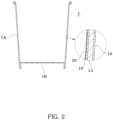
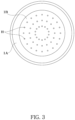
- a naturally biodegradable functional seedling paper pot and seedbed 1 may include: a paper member in a cup shape with an open top, a side portion 1A, and a bottom portion 1B; a first coating layer 10 coated with an acrylic emulsion resin on inner and outer surfaces of the paper member; a second coating layer 20 coated with a biodegradable coating composition on the first coating layer 10 of the inner surface of the paper member; and a plurality of holes H formed in the bottom portion 1B of the paper member.
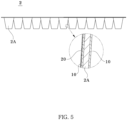
- a naturally biodegradable functional seedling paper pot and seedbed 2 may include: a plurality of paper members in a cup shape with an open top, a side potion 2A, and a bottom potion 2B, which are arranged vertically and horizontally at a certain distance in a checkerboard pattern to receive seedlings therein; a first coating layer 10 coated with an acrylic emulsion resin on inner and outer surfaces of the paper member; a second coating layer 20 coated with a biodegradable coating composition on the first coating layer 10 of the inner surface of the paper member; and a plurality of holes H formed in the bottom portion 2B of the paper member.
- the naturally biodegradable functional seedling paper pot and seedbed 1 and 2 is capable of providing sufficiently satisfying functions as those of the plastic seedling pot, such as maintaining shapes and providing a growth environment during the breeding period, and additionally, supplying nutrients necessary for the growth of crops by the biodegradation process of compositions that biodegrade completely after 3 to 4 months, helping with the crop growth and preventing malnutrition in soil without separate fertilization works, eliminating the risk of damaging the seedling roots because there is no need for any separating work after seedling, reducing labor, and solving the soil pollution problems.
- the paper member of the naturally biodegradable functional seedling paper pot and seedbed 1 and 2 may include pulp components or plant fibers, enabling natural biodegradation after breeding.
- the paper member of the naturally biodegradable functional seedling paper pot and seedbed 1 and 2 may include any one or two or more of graft paper, filter paper, hanji or Korean paper, cardboard, vellum paper, mineral wood and cotton.
- unbleached graft pulp may be used for the paper member.
- the weight of the paper member used in an example of the present disclosure is in the range of 150 to 400 g/m 2 .
- the weight of the paper member is less than 150 g/m 2 , the strength of the base material is insufficient so that it is difficult to maintain the shape of the seeding pot and handle the same, and if the weight exceeds 400 g/m 2 , the strength is too high, making it difficult to mold the pots and thus resulting in a problem of poor molding efficiency.
- a plurality of holes H formed in the bottom potion 2B of the paper member facilitates water drainage and rooting of the planted crops.
- the acrylic emulsion resin of the first coating layer 10 includes an acrylic monomer, a room-temperature self-crosslinking monomer, a reactive emulsifier, and water.
- acrylic monomer contains 5 to 30 parts by weight of room-temperature self-crosslinking monomer, 1 to 10 parts by weight of reactive emulsifier, and 50 to 200 parts by weight of water.
- the shape of the paper member can be maintained despite the supply of moisture for the seeds to properly take rooting and grow.
- the acrylic emulsion resin may be an aqueous solution with a concentration of 30 to 50% by weight, and the acrylic emulsion resin with the above concentration is water-soluble, thus increasing degree of dissociation and minimizing contamination, adsorption, etc. during recycling, and exhibiting excellent adhesion, moldability, water resistance, oil resistance, and durability.
- the concentration of the acrylic resin is lower than 30% by weight, adhesion and water resistance may decrease, resulting in a decrease in moldability and durability, and if it exceeds 50% by weight, the adhesion is too strong, resulting in a problem of blocking phenomenon in which the resin is sticky.
- the number of coatings and the amount of coatings may easily be changed according to the crops to be planted.
- the weight ratio of the paper member and the first coating layer 10 is preferably within the range of 1 : 0.05 to 0.3 in order to allow the entire natural biodegradation to occur after 3 to 4 months after the end of incubation based on the growth of general crops.
- the first coating layer 10 is formed at a ratio below the range mentioned above, it is not desirable because the first coating layer 10 is too thin to maintain its shape or increase adhesion, and if formed at a ratio above this range, the coating layer will be formed more than necessary, which is uneconomical.
- the acrylic monomer is environmentally friendly and exhibits excellent viscosity, water resistance, and durability by using a monomer excluding environmental pollutants, and includes at least one selected from methyl methacrylate (MMA), butyl acrylate-butyl ester (BAM), 2-ethyl hexyl acrylate, 2-EHAM, 2-ethyl hexyl methacrylate, 2-hydroxyethyl methacrylate, styrene monomer (SM), ethyl acrylate monomer (EAM), acrylonitrile (AN), methyl acrylate (MA), methacrylamide (MAA), acryloyl chloride (AC), acrylamide, and itaconic acid.
- MMA methyl methacrylate
- BAM butyl acrylate-butyl ester
- 2-EHAM 2-ethyl hexyl methacrylate
- 2-hydroxyethyl methacrylate 2-hydroxyethyl methacrylate
- SM styrene
- the room-temperature self-crosslinking monomer has a self-crosslinking property at room temperature after water evaporation so that it is copolymerized by reacting with the acrylic monomer, and includes at least one selected from glycidyl methacrylate (GMA) and diacetone acrylamide (DAAM).
- GMA glycidyl methacrylate
- DAAM diacetone acrylamide
- the content of the room-temperature self-crosslinking monomer is below the range mentioned above, copolymerization with the acrylic monomer is not sufficiently accomplished, and it is difficult to obtain a resin having suitable properties such as viscosity, water resistance, durability, and so on, and if the content of the room-temperature self-crosslinking monomer is above this range, the resin has rigid property, making it difficult to control the viscosity, and as a result, the properties such as water resistance and durability also deteriorate.
- the reactive emulsifier is essential for emulsion polymerization and stable dispersion of the monomers, and plays a role in improving initial particle generation, size control of the generated particles, stability of the particles, etc. during the polymerization reaction of the acrylic monomer and the room-temperature self-crosslinking monomer, thereby improving durability.
- anionic emulsifiers and nonionic emulsifiers may be used as reactive emulsifiers.
- the anionic emulsifier includes at least one selected from an alkali metal salt or ammonium salt of alkyl phenols or higher alcohols sulfuric acid; an alkali metal salt or ammonium salt of alkyl or aryl sulfonate; and an alkali metal sulfate salt or ammonium salt of polyoxyethylene alkyl phenol ether, polyoxyethylene alkyl ether or polyoxyethylene aryl ether.
- the nonionic emulsifier includes one or more selected from polyoxyethylene alkyl phenyl ether, polyoxyethylene alkyl ether, and polyoxyethylene aryl ether.
- the content of the reactive emulsifier is below the range mentioned above, stable dispersion is not achieved during the emulsion polymerization process, and the initial particle generation, size control of the generated particles, and stability of the particles are reduced, making it difficult to improve water resistance and durability, and if the content of the reactive emulsifier is above this range, it may deteriorate the properties of the monomers, resulting in a decrease in properties such as water resistance and durability.
- biodegradable coating composition of the second coating layer 20 includes water, black mica, activated carbon, toxic sulfur, minerals, liquid microorganisms, and starch.
- the biodegradable coating composition of the second coating layer 20 includes 2 to 10 parts by weight of black mica, 1 to 3 parts by weight of activated carbon, 0.5 to 2 parts by weight of detoxified sulfur, 1 to 3 parts by weight of minerals, 1 to 3 parts by weight of liquid microorganisms, and 5 to 10 parts by weight of starch, based on 100 parts by weight of water.
- the active ingredients of the biodegradable coating composition can supply the nutrients necessary for the growth of crops by biodegradation during the planting period and help the crops to grow without separate fertilization work, thereby preventing nutrient deficiency in the soil.
- the time the biodegradable coating composition of the first coating layer 20 maintains its shape is increased or decreased according to the number of coatings, amount of coatings, and so on, the number of coatings and the amount of coatings may easily be changed according to the crops to be planted.
- the weight ratio of the paper member and the second coating layer 20 is preferably within the range of 2 : 0.05 to 0.2 in order to allow the entire natural biodegradation to occur after 3 to 4 months after the end of incubation based on the growth of general crops.
- the second coating layer 20 is formed at a ratio below this range, the second coating layer 20 will be too thin to maintain its shape or increase adhesion, or provide sufficient active ingredients of the biodegradable coating composition, and if the content of the second coating layer 20 is above this range, the coating layer will be thicker than necessary and the biodegradation rate will be slowed down, which is not desirable.
- the water is added to allow the compositions of the biodegradable coating composition to be diluted in and evenly mixed with the water, and it is preferable to use water at 80 to 90 °C.
- compositions may not easily diluted in water and may not be evenly mixed, and if water above 90 °C is used, the active components of the compositions are destroyed, which is undesirable.
- the viscosity may be too high, making it difficult for the coating to proceed smoothly, and if water is in excess of 100 parts by weight, the viscosity is too watery and the adhesion strength decreases.
- the black mica is a mineral that has the effect of purifying water and soil and facilitating oxygen supply through ion exchange to activate crop growth, adsorbing harmful gases to prevent soil pollution, improving acid soil to reduce persistent damage, and also reducing crop aging due to its inherent mineral content, and is preferably powdered to a particle size distribution of 300 to 700 mesh.
- the particles size distribution of the black mica is less than the size mentioned above, the minerals contained in the black mica may not be sufficiently diluted in water, and if the size distribution is greater than the size mentioned above, the particle size will be larger than necessary, which is not only uneconomical but also reduces the work efficiency.
- the content of the black mica is below the range mentioned above, it is difficult to sufficiently provide the effects of the black mica such as purification, crop growth activation, and the effects of the mineral components contained therein, and above this range, it is undesirable because it may adsorb and kill even the fungi that are beneficial to crops or soil.
- the activated carbon is formed by burning the leaves and stems of naturally occurring plants and cultivated plants, the bark of plants, the roots and fruits of plants, etc. through a combustion process by high heat treatment to make carbon material, processing the carbon material into a powder having a particle size distribution of 1,000 to 1,500 mesh using a fine mill, and then treating the powder again with high heat.
- the activated carbon radiates far-infrared rays with a wavelength of 10 to 100 micrometers, improves the permeability of the soil to allow air to flow through, multiplies microorganisms that help plants grow and promotes crop growth, is porous and sterilizes harmful bacteria in the ground, and performs various antibacterial, purification, and deodorization functions.
- the content of the activated carbon is below the range mentioned above, it is difficult to sufficiently provide the effects such as sun protection, antibacterial effect, and purification and deodorization effects, and above this range, the excess content of the activated carbon causes a problem of reduced adhesion strength.
- the detoxified sulfur helps to take rooting, enhances immunity to improve growth, prevents various fungi, bacteria, diseases with the antibiotic effect of sulfur, is effective against downy mildew, powdery mildew, and mold bacteria, and prevents the reproduction of harmful microorganisms to thus prevent the spread of various infectious diseases.
- the content of the detoxified sulfur is below the range mentioned above, it is difficult to sufficiently provide the effects such as rooting, immunity enhancement, antibiotic effect, and effect of preventing spread of infectious diseases, and above this range, it is undesirable because the excess content may adsorb and kill even the fungi that are beneficial to crops or soil, and there also occurs a problem of reduced adhesion strength.
- the minerals restore soil, ionize soil, change microorganisms into a favorable environment, decompose harmful substances such as residual pesticides, heavy metals, salts, etc., and promote oxygen activity to enhance oxygen reduction reactions in vivo.
- the minerals also have a bactericidal effect on anaerobic bacteria or pathogens that are weak to acid, maintain water permeability and water retention, and promote plant root elongation to promote the development of hair roots to produce vital and high-quality agricultural products, thereby enhancing the taste, aroma, sugar, and immunity of crops.
- the liquid microorganism may include dozens of types of microorganisms other than lactic acid bacteria, actinomycetes, photosynthetic bacteria, and yeast bacteria.
- the effective microbiota with lactobacilli as the main body may be one or a combination of two or more of Lactobacillus plantarum, B. amyloliquefaciens, and Lactobacillus casei
- the aerobic microbiota with actinomycetes as the main body may be one or a combination of two or more of Lactobacillus plantarum, B. amyloliquefaciens, and Hypomonas pollamopa
- the anaerobic microbiota with photosynthetic bacteria as the main body may be one or a combination of two or more of Lactobacillus plantarum, B. belezensis, and P. granoli.
- the liquid microorganisms When decomposing organic substance, the liquid microorganisms absorb nitrogen into the body, decompose proteins (organic matter) into low molecular weight amino acids, through which mineralized ammonia is oxidized into nitrous acid and nitric acid, and then denitrifying bacteria after denitrifying reaction is released into the atmosphere as molecular nitrogen (N).
- N molecular nitrogen
- salt concentration can be lowered through the decomposition process of the liquid microorganisms in the soil, and the soil environment can be improved in the long term, thereby helping the root development and growth of crops.
- the content of the liquid microorganisms is below the range mentioned above, the decomposition effect of the liquid microorganisms is insignificant, making it difficult to sufficiently help the soil environment and the root development and growth of crops, and above this range, the excess content causes a problem of reduced adhesion strength.
- the starch is a component that accelerates biodegradability and is not strictly limited to any type or form.
- the starch may be a non-modified starch, a physically or chemically modified starch, or a combination thereof.
- starch may include, according to the type of grain from which starch is derived, corn starch, glutinous corn starch, potato starch, sweet potato starch, wheat starch, tapioca starch, rice starch, etc., and one or more of these may be selected and used.
- examples of the modified starch include acid-treated starch, oxidized starch, esterified starch, oxidized esterified starch, etherified starch, oxidized etherified starch, crosslinked starch, etc., and specific examples may include acetylated distarch adipate, acetylate distarch phosphate, octenyl succinic acid starch, distarch phosphate, monostarch phosphate, phosphated distarch phosphate, acetic acid starch, hydroxypropyl distarch phosphate, and hydroxypropyl starch, and one or more of these may be selected and used.
- the content of the starch is below the range mentioned above, the biodegradable acceleration effect may be insufficient, and above this range, physical properties such as tensile strength, elongation at break, weather resistance, and the like may be degraded, which is not preferable.
- a composite trace element may be further included.
- the composite trace element may be one or a combination of two or more of ZnSO 4 , 7H 2 O, FeSO 4 ,7H 2 O, CuSC 4 , 5H 2 O, MnSO 4 , 4H 2 O, Na 2 , MO 4 , and 2H 2 O.
- the composite trace elements act as components of enzymes in plants and are essential for the normal growth of plants, and including 1 to 2 parts by weight of the composite trace elements with respect to 100 parts by weight of water helps plants grow.
- the method of coating may include any one method selected from the group consisting of a roll coater, a blade coater, a rod coater, an air knife coater, a short dwell coater, a bill blade coater, and a gate roll coater.
Landscapes
- Life Sciences & Earth Sciences (AREA)
- Chemical & Material Sciences (AREA)
- Environmental Sciences (AREA)
- Organic Chemistry (AREA)
- Biochemistry (AREA)
- Pest Control & Pesticides (AREA)
- Engineering & Computer Science (AREA)
- Materials Engineering (AREA)
- Wood Science & Technology (AREA)
- Cultivation Receptacles Or Flower-Pots, Or Pots For Seedlings (AREA)
Applications Claiming Priority (1)
| Application Number | Priority Date | Filing Date | Title |
|---|---|---|---|
| KR1020230054489A KR102596683B1 (ko) | 2023-04-26 | 2023-04-26 | 자연생분해 기능성 육묘용 포트 |
Publications (1)
| Publication Number | Publication Date |
|---|---|
| EP4455228A1 true EP4455228A1 (fr) | 2024-10-30 |
Family
ID=88747499
Family Applications (1)
| Application Number | Title | Priority Date | Filing Date |
|---|---|---|---|
| EP24172158.8A Pending EP4455228A1 (fr) | 2023-04-26 | 2024-04-24 | Lits de semences |
Country Status (3)
| Country | Link |
|---|---|
| US (1) | US20240357975A1 (fr) |
| EP (1) | EP4455228A1 (fr) |
| KR (1) | KR102596683B1 (fr) |
Cited By (1)
| Publication number | Priority date | Publication date | Assignee | Title |
|---|---|---|---|---|
| US12546063B2 (en) * | 2020-08-25 | 2026-02-10 | Nippon Beet Sugar Manufacturing Co., Ltd. | Method for controlling decomposition of corrosion-resistant paper |
Families Citing this family (1)
| Publication number | Priority date | Publication date | Assignee | Title |
|---|---|---|---|---|
| CN117837406B (zh) * | 2024-01-19 | 2024-10-11 | 南京林业大学 | 具有竹材仿生结构的竹浆模塑育苗穴盘及其制备方法 |
Citations (4)
| Publication number | Priority date | Publication date | Assignee | Title |
|---|---|---|---|---|
| JP2006342452A (ja) * | 2005-06-08 | 2006-12-21 | Oji Paper Co Ltd | 育苗移植鉢用原紙 |
| CN105613100A (zh) * | 2014-11-07 | 2016-06-01 | 中国农业机械化科学研究院 | 可降解生物基育苗钵、其制法、降解期调节方法及其应用 |
| CN105766457A (zh) * | 2016-03-07 | 2016-07-20 | 宁夏共享化工有限公司 | 一种可降解营养育苗盆 |
| JP2022124422A (ja) * | 2021-02-15 | 2022-08-25 | 五洋紙工株式会社 | 育苗ポットならびにそれを用いた植物苗類製品および植物苗類の移植方法 |
Family Cites Families (15)
| Publication number | Priority date | Publication date | Assignee | Title |
|---|---|---|---|---|
| JP2561208B2 (ja) * | 1992-10-05 | 1996-12-04 | 長瀬産業株式会社 | 育苗用ポットトレー |
| KR100818405B1 (ko) | 2000-09-28 | 2008-04-01 | 닛폰세이시가부시키가이샤 | 육묘포트 |
| JP2006197895A (ja) * | 2005-01-24 | 2006-08-03 | Chiba Prefecture | 育苗ポット |
| US7685770B2 (en) * | 2006-12-27 | 2010-03-30 | Ivy Acres, Inc. | Biodegradable planters |
| US7681359B2 (en) * | 2006-12-27 | 2010-03-23 | Ivy Acres, Inc. | Biodegradable planters |
| KR100813403B1 (ko) | 2007-01-10 | 2008-03-12 | 박윤우 | 생분해성 육묘용 포트 |
| US20090292042A1 (en) * | 2008-05-21 | 2009-11-26 | Patterson Greg S | Biodegradable material and plant container |
| US9307702B1 (en) * | 2009-10-09 | 2016-04-12 | Mark Lauer | Planting pots with wire mesh and biodegradable material |
| KR20170111226A (ko) * | 2016-03-24 | 2017-10-12 | 서미란 | 재활용 펄프원지를 이용한 방수성 화분의 제조방법 |
| US20190256431A1 (en) * | 2016-06-09 | 2019-08-22 | Avalon Alliance Inc. | Bio-available mineral fertilizer and derivative applications, including product processes |
| KR101713522B1 (ko) * | 2016-09-09 | 2017-03-07 | 박승찬 | 유기물 코팅 생분해 한지 멀칭 필름 |
| KR20200030868A (ko) * | 2018-09-13 | 2020-03-23 | 김재일 | 친환경 화분 포트 제조방법 |
| KR20200109713A (ko) * | 2019-03-14 | 2020-09-23 | 서준석 | 온도 조절형 육묘 포트 |
| KR20210017141A (ko) * | 2019-08-07 | 2021-02-17 | 김기호 | 천연 식물과 광물에서 추출하는 농업용 미네랄 제조방법 |
| KR102505083B1 (ko) * | 2022-07-28 | 2023-03-03 | 농업회사법인 주식회사 엘바이오텍 | 잔디 예지물 발효 분해를 통한 산업화 재활용 조성물 및 잔류 농약 분해용 조성물 및 이를 포함하는 완효성 기능성 농업비료 |
-
2023
- 2023-04-26 KR KR1020230054489A patent/KR102596683B1/ko active Active
-
2024
- 2024-04-24 US US18/644,455 patent/US20240357975A1/en active Pending
- 2024-04-24 EP EP24172158.8A patent/EP4455228A1/fr active Pending
Patent Citations (4)
| Publication number | Priority date | Publication date | Assignee | Title |
|---|---|---|---|---|
| JP2006342452A (ja) * | 2005-06-08 | 2006-12-21 | Oji Paper Co Ltd | 育苗移植鉢用原紙 |
| CN105613100A (zh) * | 2014-11-07 | 2016-06-01 | 中国农业机械化科学研究院 | 可降解生物基育苗钵、其制法、降解期调节方法及其应用 |
| CN105766457A (zh) * | 2016-03-07 | 2016-07-20 | 宁夏共享化工有限公司 | 一种可降解营养育苗盆 |
| JP2022124422A (ja) * | 2021-02-15 | 2022-08-25 | 五洋紙工株式会社 | 育苗ポットならびにそれを用いた植物苗類製品および植物苗類の移植方法 |
Cited By (1)
| Publication number | Priority date | Publication date | Assignee | Title |
|---|---|---|---|---|
| US12546063B2 (en) * | 2020-08-25 | 2026-02-10 | Nippon Beet Sugar Manufacturing Co., Ltd. | Method for controlling decomposition of corrosion-resistant paper |
Also Published As
| Publication number | Publication date |
|---|---|
| KR102596683B1 (ko) | 2023-11-02 |
| US20240357975A1 (en) | 2024-10-31 |
Similar Documents
| Publication | Publication Date | Title |
|---|---|---|
| EP4455228A1 (fr) | Lits de semences | |
| Kalhapure et al. | Hydrogels: a boon for increasing agricultural productivity in water-stressed environment | |
| KR20120099873A (ko) | 친환경 맞춤형 작물 근권분해 효소 복합체 | |
| KR102066698B1 (ko) | 친환경 녹생토 조성물 및 이를 이용한 시공방법 | |
| Warren et al. | Bio-osmopriming tomato (Lycopersicon esculentum Mill.) seeds for improved seedling establishment. | |
| AU715303B2 (en) | Fertilisers comprising nutrient and phosphate solubilising fungus | |
| US20190077721A1 (en) | Method of manufacturing organic fertilizers by using organic raw material, antagonistic microorganism, fermentative microorganism, and synthetic microorganism, and organic fertilizers manufactured by said manufacturing method | |
| CN105294251A (zh) | 壳聚糖功能化纳米硒复合物菌酶体系及其制备方法和应用 | |
| KR101734491B1 (ko) | 사상균 또는 방선균 활성 촉진용 조성물 및 이를 이용한 악취 제거 또는 저감 방법 | |
| Sree et al. | Biowaste valorization by conversion to nanokeratin-urea composite fertilizers for sustainable and controllable nutrient release | |
| CN120753282A (zh) | 一种农用生态益生菌复合菌剂及加工方法 | |
| CN110883084B (zh) | 一种利用菌渣与苜蓿原位修复土壤酞酸酯污染的方法 | |
| CN103891447A (zh) | 一种适用于循环农业的施作工艺 | |
| KR102011560B1 (ko) | 묘목 재배용 화학비료의 제조방법 | |
| JP2004256579A (ja) | セルロース素材 | |
| CN1629254A (zh) | 一种老参地土壤调理剂 | |
| Karaca et al. | The effect of coating bacteria-inoculated seed with chitosan and sodium alginate biopolymers on some growth parameters of bean plant | |
| KR102430672B1 (ko) | 토착 미생물을 활용한 비료 제조방법 | |
| KR102318436B1 (ko) | 멀칭지용 생분해 기능성 코팅조성물 및 그에 의해 코팅된 멀칭지 | |
| JP7784109B2 (ja) | 有機肥料の製造方法 | |
| KR102805535B1 (ko) | 수도작용 친환경 생분해펄프 멀칭지와 그 제조방법 | |
| JPH022303A (ja) | 農業用シートの製造方法 | |
| CN1173900C (zh) | 生态有机肥料的制备方法 | |
| KR102168721B1 (ko) | 친환경 발효 원료를 이용한 미생물 혼합 배양 방법 | |
| JP4978913B2 (ja) | 廃棄された梅用調味液の処理液及びその製造方法 |
Legal Events
| Date | Code | Title | Description |
|---|---|---|---|
| PUAI | Public reference made under article 153(3) epc to a published international application that has entered the european phase |
Free format text: ORIGINAL CODE: 0009012 |
|
| STAA | Information on the status of an ep patent application or granted ep patent |
Free format text: STATUS: THE APPLICATION HAS BEEN PUBLISHED |
|
| AK | Designated contracting states |
Kind code of ref document: A1 Designated state(s): AL AT BE BG CH CY CZ DE DK EE ES FI FR GB GR HR HU IE IS IT LI LT LU LV MC ME MK MT NL NO PL PT RO RS SE SI SK SM TR |
|
| STAA | Information on the status of an ep patent application or granted ep patent |
Free format text: STATUS: REQUEST FOR EXAMINATION WAS MADE |
|
| 17P | Request for examination filed |
Effective date: 20250430 |