EP4455307A1 - Ex-situ-sequenzierung eines in-situ erzeugten rca-produkts - Google Patents
Ex-situ-sequenzierung eines in-situ erzeugten rca-produkts Download PDFInfo
- Publication number
- EP4455307A1 EP4455307A1 EP23170228.3A EP23170228A EP4455307A1 EP 4455307 A1 EP4455307 A1 EP 4455307A1 EP 23170228 A EP23170228 A EP 23170228A EP 4455307 A1 EP4455307 A1 EP 4455307A1
- Authority
- EP
- European Patent Office
- Prior art keywords
- obtaining
- rolonies
- oligonucleotides
- sequence
- oligonucleotide
- Prior art date
- Legal status (The legal status is an assumption and is not a legal conclusion. Google has not performed a legal analysis and makes no representation as to the accuracy of the status listed.)
- Pending
Links
- 238000012163 sequencing technique Methods 0.000 title description 19
- 238000011065 in-situ storage Methods 0.000 title description 9
- 238000011066 ex-situ storage Methods 0.000 title description 4
- 108091034117 Oligonucleotide Proteins 0.000 claims abstract description 51
- 238000000034 method Methods 0.000 claims abstract description 34
- JLCPHMBAVCMARE-UHFFFAOYSA-N [3-[[3-[[3-[[3-[[3-[[3-[[3-[[3-[[3-[[3-[[3-[[5-(2-amino-6-oxo-1H-purin-9-yl)-3-[[3-[[3-[[3-[[3-[[3-[[5-(2-amino-6-oxo-1H-purin-9-yl)-3-[[5-(2-amino-6-oxo-1H-purin-9-yl)-3-hydroxyoxolan-2-yl]methoxy-hydroxyphosphoryl]oxyoxolan-2-yl]methoxy-hydroxyphosphoryl]oxy-5-(5-methyl-2,4-dioxopyrimidin-1-yl)oxolan-2-yl]methoxy-hydroxyphosphoryl]oxy-5-(6-aminopurin-9-yl)oxolan-2-yl]methoxy-hydroxyphosphoryl]oxy-5-(6-aminopurin-9-yl)oxolan-2-yl]methoxy-hydroxyphosphoryl]oxy-5-(6-aminopurin-9-yl)oxolan-2-yl]methoxy-hydroxyphosphoryl]oxy-5-(6-aminopurin-9-yl)oxolan-2-yl]methoxy-hydroxyphosphoryl]oxyoxolan-2-yl]methoxy-hydroxyphosphoryl]oxy-5-(5-methyl-2,4-dioxopyrimidin-1-yl)oxolan-2-yl]methoxy-hydroxyphosphoryl]oxy-5-(4-amino-2-oxopyrimidin-1-yl)oxolan-2-yl]methoxy-hydroxyphosphoryl]oxy-5-(5-methyl-2,4-dioxopyrimidin-1-yl)oxolan-2-yl]methoxy-hydroxyphosphoryl]oxy-5-(5-methyl-2,4-dioxopyrimidin-1-yl)oxolan-2-yl]methoxy-hydroxyphosphoryl]oxy-5-(6-aminopurin-9-yl)oxolan-2-yl]methoxy-hydroxyphosphoryl]oxy-5-(6-aminopurin-9-yl)oxolan-2-yl]methoxy-hydroxyphosphoryl]oxy-5-(4-amino-2-oxopyrimidin-1-yl)oxolan-2-yl]methoxy-hydroxyphosphoryl]oxy-5-(4-amino-2-oxopyrimidin-1-yl)oxolan-2-yl]methoxy-hydroxyphosphoryl]oxy-5-(4-amino-2-oxopyrimidin-1-yl)oxolan-2-yl]methoxy-hydroxyphosphoryl]oxy-5-(6-aminopurin-9-yl)oxolan-2-yl]methoxy-hydroxyphosphoryl]oxy-5-(4-amino-2-oxopyrimidin-1-yl)oxolan-2-yl]methyl [5-(6-aminopurin-9-yl)-2-(hydroxymethyl)oxolan-3-yl] hydrogen phosphate Polymers Cc1cn(C2CC(OP(O)(=O)OCC3OC(CC3OP(O)(=O)OCC3OC(CC3O)n3cnc4c3nc(N)[nH]c4=O)n3cnc4c3nc(N)[nH]c4=O)C(COP(O)(=O)OC3CC(OC3COP(O)(=O)OC3CC(OC3COP(O)(=O)OC3CC(OC3COP(O)(=O)OC3CC(OC3COP(O)(=O)OC3CC(OC3COP(O)(=O)OC3CC(OC3COP(O)(=O)OC3CC(OC3COP(O)(=O)OC3CC(OC3COP(O)(=O)OC3CC(OC3COP(O)(=O)OC3CC(OC3COP(O)(=O)OC3CC(OC3COP(O)(=O)OC3CC(OC3COP(O)(=O)OC3CC(OC3COP(O)(=O)OC3CC(OC3COP(O)(=O)OC3CC(OC3COP(O)(=O)OC3CC(OC3COP(O)(=O)OC3CC(OC3CO)n3cnc4c(N)ncnc34)n3ccc(N)nc3=O)n3cnc4c(N)ncnc34)n3ccc(N)nc3=O)n3ccc(N)nc3=O)n3ccc(N)nc3=O)n3cnc4c(N)ncnc34)n3cnc4c(N)ncnc34)n3cc(C)c(=O)[nH]c3=O)n3cc(C)c(=O)[nH]c3=O)n3ccc(N)nc3=O)n3cc(C)c(=O)[nH]c3=O)n3cnc4c3nc(N)[nH]c4=O)n3cnc4c(N)ncnc34)n3cnc4c(N)ncnc34)n3cnc4c(N)ncnc34)n3cnc4c(N)ncnc34)O2)c(=O)[nH]c1=O JLCPHMBAVCMARE-UHFFFAOYSA-N 0.000 claims abstract description 25
- 108091028026 C-DNA Proteins 0.000 claims abstract description 15
- 230000003321 amplification Effects 0.000 claims abstract description 13
- 238000003199 nucleic acid amplification method Methods 0.000 claims abstract description 13
- 230000000295 complement effect Effects 0.000 claims abstract description 12
- 150000007523 nucleic acids Chemical class 0.000 claims abstract description 8
- 238000005096 rolling process Methods 0.000 claims abstract description 8
- 108020004707 nucleic acids Proteins 0.000 claims abstract description 7
- 102000039446 nucleic acids Human genes 0.000 claims abstract description 7
- 108091028732 Concatemer Proteins 0.000 claims abstract description 6
- 238000006243 chemical reaction Methods 0.000 claims abstract description 5
- 229920000642 polymer Polymers 0.000 claims abstract description 3
- 108020004414 DNA Proteins 0.000 claims description 16
- 239000002773 nucleotide Substances 0.000 claims description 15
- 125000003729 nucleotide group Chemical group 0.000 claims description 15
- 230000014509 gene expression Effects 0.000 claims description 4
- 238000009396 hybridization Methods 0.000 claims description 4
- 238000003384 imaging method Methods 0.000 claims description 3
- 238000013467 fragmentation Methods 0.000 claims description 2
- 238000006062 fragmentation reaction Methods 0.000 claims description 2
- 230000005855 radiation Effects 0.000 claims description 2
- 108091008146 restriction endonucleases Proteins 0.000 claims description 2
- 239000000047 product Substances 0.000 description 20
- 239000000523 sample Substances 0.000 description 19
- 108020004999 messenger RNA Proteins 0.000 description 13
- 108091032973 (ribonucleotides)n+m Proteins 0.000 description 9
- 238000007481 next generation sequencing Methods 0.000 description 7
- 108090000623 proteins and genes Proteins 0.000 description 7
- 238000001514 detection method Methods 0.000 description 5
- 230000035772 mutation Effects 0.000 description 5
- 238000012408 PCR amplification Methods 0.000 description 4
- 239000011324 bead Substances 0.000 description 4
- 238000000605 extraction Methods 0.000 description 3
- 230000002441 reversible effect Effects 0.000 description 3
- 108091093088 Amplicon Proteins 0.000 description 2
- 238000013459 approach Methods 0.000 description 2
- 238000003556 assay Methods 0.000 description 2
- 238000013461 design Methods 0.000 description 2
- 239000002096 quantum dot Substances 0.000 description 2
- 239000000758 substrate Substances 0.000 description 2
- 101150033839 4 gene Proteins 0.000 description 1
- 108010008758 Chlorella virus DNA ligase Proteins 0.000 description 1
- 108010067770 Endopeptidase K Proteins 0.000 description 1
- 108090000364 Ligases Proteins 0.000 description 1
- 102000003960 Ligases Human genes 0.000 description 1
- 108091028043 Nucleic acid sequence Proteins 0.000 description 1
- 238000003559 RNA-seq method Methods 0.000 description 1
- 230000004075 alteration Effects 0.000 description 1
- 238000004458 analytical method Methods 0.000 description 1
- 239000002299 complementary DNA Substances 0.000 description 1
- 230000002596 correlated effect Effects 0.000 description 1
- 230000000875 corresponding effect Effects 0.000 description 1
- 238000011161 development Methods 0.000 description 1
- 230000029087 digestion Effects 0.000 description 1
- 201000010099 disease Diseases 0.000 description 1
- 208000037265 diseases, disorders, signs and symptoms Diseases 0.000 description 1
- 238000010494 dissociation reaction Methods 0.000 description 1
- 230000005593 dissociations Effects 0.000 description 1
- 238000005516 engineering process Methods 0.000 description 1
- 238000012268 genome sequencing Methods 0.000 description 1
- 238000010438 heat treatment Methods 0.000 description 1
- 230000004807 localization Effects 0.000 description 1
- 239000012139 lysis buffer Substances 0.000 description 1
- 238000000386 microscopy Methods 0.000 description 1
- 230000000379 polymerizing effect Effects 0.000 description 1
- 238000000746 purification Methods 0.000 description 1
- 238000003908 quality control method Methods 0.000 description 1
- 238000011002 quantification Methods 0.000 description 1
- 238000012552 review Methods 0.000 description 1
- 239000007790 solid phase Substances 0.000 description 1
- 239000006228 supernatant Substances 0.000 description 1
- 230000008685 targeting Effects 0.000 description 1
- 238000005406 washing Methods 0.000 description 1
Images


Classifications
-
- C—CHEMISTRY; METALLURGY
- C12—BIOCHEMISTRY; BEER; SPIRITS; WINE; VINEGAR; MICROBIOLOGY; ENZYMOLOGY; MUTATION OR GENETIC ENGINEERING
- C12Q—MEASURING OR TESTING PROCESSES INVOLVING ENZYMES, NUCLEIC ACIDS OR MICROORGANISMS; COMPOSITIONS OR TEST PAPERS THEREFOR; PROCESSES OF PREPARING SUCH COMPOSITIONS; CONDITION-RESPONSIVE CONTROL IN MICROBIOLOGICAL OR ENZYMOLOGICAL PROCESSES
- C12Q1/00—Measuring or testing processes involving enzymes, nucleic acids or microorganisms; Compositions therefor; Processes of preparing such compositions
- C12Q1/68—Measuring or testing processes involving enzymes, nucleic acids or microorganisms; Compositions therefor; Processes of preparing such compositions involving nucleic acids
- C12Q1/6869—Methods for sequencing
Definitions
- the present invention is directed to retrieving, extracting, and sequencing of a Rolling Circle Amplified (RCA) product generated on a tissue section from circular or padlock probes which hybridized to targeted regions of in-situ expressed mRNA and ligated with or without reverse transcribed targeted region of interest which may include a nucleotide change/variant or any other sequence of interest.
- RCA Rolling Circle Amplified
- Padlock oligonucleotides have proven to be very successful in polymerizing short portion of nucleic acids to which it has been hybridized to. Most padlock approaches begin by reverse transcribing the target into cDNA.
- Padlock methods are for example disclosed in " Highly multiplexed subcellular RNA sequencing in situ” by Lee et al., Science. 2014 March 21; 343(6177): 1360-1363. doi:10.1126/science.1250212 or " Efficient In Situ Detection of mRNAs using the Chlorella virus DNA ligase for Padlock Probe Ligation" by Nils Schneider and Matthias Meier; February 5, 2020 -Cold Spring Harbor Laboratory Press .
- WO2017143155A2 discloses multiplex alteration of cells using a pooled nucleic acid library and analysis thereof and WO2018045181A1 discloses Methods of generating libraries of nucleic acid sequences for detection via fluorescent in situ sequencing.
- IGS in situ genome sequencing
- Microscopy imaging that allow for multiple mRNAs to be resolved at a single cell level provides valuable information regarding transcript amount and localization, which is a crucial factor for understanding tissue heterogeneity, the molecular development and treatment of diseases. Further, being able to identify potential mutations from mRNA for which the spatial information is know is also extremely valuable.
- a method to obtain spatial information and sequencing for RNA or c-DNA is disclosed in EP 3936623 .
- an oligonucleotide is hybridized to RNA or c-DNA to form a circular template, wherein the oligonucleotide (and later the circular template) comprises at least one region having a known sequence which is recognized by detection probes having the appropriate complementary sequence.
- detection probe special information of RNA or c-DNA on tissue can be obtained.
- the circular template can be fragmented and re-circularized to obtain second circular templates for further amplification.
- this method is intended to obtain spatial information, the first and second circularization/amplification steps are performed on tissue.
- the present invention is directed to a method for retrieving the Rolling Circle amplified (RCA) product generated on a tissue which carries the desired target nucleotide (genomic DNA or mRNA) and optionally a barcode or a unique molecular identifier which may serve as a spatial identifier.
- RCA Rolling Circle amplified
- a circle or a padlock molecule which is used to detect and hybridize to a desired target nucleotide (genomic DNA or mRNA) of interest.
- the desired sequence information is captured by a circle or a padlock molecule used to detect and hybridize to a desired target nucleotide (genomic DNA or mRNA) of interest on tissue.
- These circle or padlock molecule carries the desired target nucleotide (genomic DNA or mRNA) or the barcode or a unique molecular identifier serving as a spatial identifier.
- These circles or padlocks are RCA amplified directly on a tissue.
- the RCA product is then physically retrieved and extracted from the tissue, fragmented and the regions of interest are amplified by PCR of followed by a second round of circularization and RCA amplification.
- the RCA product is then sequenced using the NGS sequencing platform
- NGS sequencing the targeted region of interest on genomic DNA or mRNA, mutation or nucleotide variant can be analyzed.
- a spatial identifier are also assigned to the location of the sequence of interest on the tissue
- Object of the invention is a method for obtaining the sequence information of a target sequence from a tissue comprising at least one RNA or c-DNA strand comprising the steps
- the method of the invention is especially useful for quality control of sequencing methods. Accordingly, further objects of the invention are method for using the sequence information of the target sequence obtained to quantify a gene expression profile or a method for using the sequence information of the target sequence obtained to confirm the efficacy of a hybridization oligonucleotide and the target sequence selection.
- the method of the invention is in part performed directly on tissue and in part after removal of the molecules containing the target sequence from the tissue.
- the "on tissue” steps comprise .
- Ex-situ sequencing of the RCA performed directly on tissue consists of a six step process.
- the region of interest can be either a Barcode/UMI or a nucleotide change/variant in the target sequence.
- FIG 1 two types of padlocks which hybridizes to an mRNA (dotted line) are depicted with a specific region of interest may be used.
- the region of interest can contain either a nucleotide position in the region which hybridizes to the mRNA with base mutation or variant, or a barcode of UMI in the padlock backbone region.
- the circle generated followed by ligation can serve as a substrate to generate RCA rolonies directly on tissue (Step 1 in Figure 1 ).
- the 5' and the 3' ends of the first oligonucleotides are hybridized adjacent to complementary parts of the at least one RNA or c-DNA strand thereby obtaining the first single strand circular templates by direct ligation of the 5' and the 3' ends of the first oligonucleotides with each other.
- the 5' and the 3' ends of the first oligonucleotides are hybridized to complementary parts of the at least one RNA or c-DNA strand with a gap of 2 to 100 nucleotides between the 5' and the 3' ends of the first oligonucleotides and obtaining the first single strand circular templates by filling the gap with nucleotides complementary to the RNA or c-DNA strand.
- the first oligonucleotide comprises a fragmentation sequence allowing the primary rolonies to be fragmented by a restriction enzyme or chemically.
- Step 1 and 2 in Figure 2 Extraction of DNA from RCA performed method to retrieve RCA product from a tissue section is described (Step 1 and 2 in Figure 2 ).
- tissue digestion is performed on the tissue section containing the RCA product by heating the sample in the presence of lysis buffer and Proteinase K.
- the sample may be removed from the heat source and incubated with solid phase reversible immobilization (SPRI) beads and by using a magnet, the beads containing the nucleic acid can be easily washed.
- SPRI solid phase reversible immobilization
- the eluant solution is added to the SPRI beads and after washing three times, a magnet is used to remove the SPRI bead and the supernatant is transferred to a tube.
- This tube contains the extracted RCA DNA eluant.
- the extracted nucleic acid may be quantified using Nanodrop or Qubit.
- Targeted PCR amplification is performed on the retrieved RCA product which contains the padlock junction region of interest with a nucleotide change/variant is described.
- the RCA DNA are extracted and quantified, the RCA DNA is used as a template for a PCR reaction using primer set (first PCR and second PCR primer) specific for the region flanking the region of interest (Step 3 in Figure 2 ).
- the sequence of the first PCR primer can be ACACGACGCTCTTCCGATCT AAGGATACTCCGACGCGGCCGCA and the second PCR primer can be GACGTGTGCTCTTCCGATCT ACCCTTTACAAACACA .
- the bold face type sequence hybridizes to the region flanking the region of interest is shown in Step 3 of Figure 2 .
- P1 and P2 adapter portions are unique sequences which may be used for circularization in later step.
- the PCR is performed for 25 cycles.
- PCR product is purified using QiaQuick PCR product purification column, the DNA was quantified using Qubit assay.
- the resulting PCR product with P1 and P2 adapters are circularized using a splint oligonucleotide which brings the two ends together (Step 4 in Figure 2 ).
- the first PCR primer is ligated to the second PCR primer by providing splint DNA.
- the circle is RCA amplified (Step 5 in Figure 2 ) and Rolonies are formed.
- NGS sequencing can be performed with sequencing primer which binds to either P1 or P2 adaptor region (Step 5 in Figure 2 ).
- NGS sequencing can determine either a mutation/nucleotide variant exist is the target region of interest, and by sequencing the padlock ID region, the location of the rolonies on the substrate can later on be correlated with the original position of the tissue. That means that the location of the gene on the tissue can be determined as well as the presence of a mutation or not via sequencing. In addition the gene expression profile can also be shown by the quantification of the sequencing read counts obtained.
- the spatial location of the first rolonies on the tissue is determined by imaging emission radiation of the at least one fluorescently labelled oligonucleotide bound to the first rolonies.
- the first rolonies may be obtained by decorating (binding) the first rolonies with at least one fluorescently labelled oligonucleotide.
- the first oligonucleotide comprises a identification region comprised of a UMI sequence and or a barcode sequence to which the at least one fluorescently labelled oligonucleotide binds.
- PCR reactions were performed using primers where one portion is complementary to the regions flanking the region of interest and the other portion contains generic sequences (P1 & P2).
- P1 & P2 generic sequences
- the resulting linear product with P1 and P2 adapters are circularized using a splint oligonucleotide which brings the two ends together.
- the circle is RCA amplified and secondary rolonies are formed.
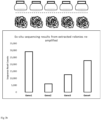
- the region of interest of RCA product are finally sequenced using an NGS Sequencer compatible with rolonies. Each sequence generated can be aligned and mapped to the four targeted gene transcripts.
Landscapes
- Life Sciences & Earth Sciences (AREA)
- Chemical & Material Sciences (AREA)
- Proteomics, Peptides & Aminoacids (AREA)
- Organic Chemistry (AREA)
- Zoology (AREA)
- Wood Science & Technology (AREA)
- Health & Medical Sciences (AREA)
- Engineering & Computer Science (AREA)
- Microbiology (AREA)
- Immunology (AREA)
- Biotechnology (AREA)
- Molecular Biology (AREA)
- Biophysics (AREA)
- Analytical Chemistry (AREA)
- Physics & Mathematics (AREA)
- Biochemistry (AREA)
- Bioinformatics & Cheminformatics (AREA)
- General Engineering & Computer Science (AREA)
- General Health & Medical Sciences (AREA)
- Genetics & Genomics (AREA)
- Measuring Or Testing Involving Enzymes Or Micro-Organisms (AREA)
Applications Claiming Priority (1)
| Application Number | Priority Date | Filing Date | Title |
|---|---|---|---|
| EP22221704 | 2022-04-28 |
Publications (1)
| Publication Number | Publication Date |
|---|---|
| EP4455307A1 true EP4455307A1 (de) | 2024-10-30 |
Family
ID=86271923
Family Applications (1)
| Application Number | Title | Priority Date | Filing Date |
|---|---|---|---|
| EP23170228.3A Pending EP4455307A1 (de) | 2022-04-28 | 2023-04-27 | Ex-situ-sequenzierung eines in-situ erzeugten rca-produkts |
Country Status (1)
| Country | Link |
|---|---|
| EP (1) | EP4455307A1 (de) |
Citations (4)
| Publication number | Priority date | Publication date | Assignee | Title |
|---|---|---|---|---|
| WO2014030066A2 (en) * | 2012-08-22 | 2014-02-27 | Bernitz Mats Nilsson | Methods for identifying nucleic acid sequences |
| WO2017143155A2 (en) | 2016-02-18 | 2017-08-24 | President And Fellows Of Harvard College | Multiplex alteration of cells using a pooled nucleic acid library and analysis thereof |
| WO2018045181A1 (en) | 2016-08-31 | 2018-03-08 | President And Fellows Of Harvard College | Methods of generating libraries of nucleic acid sequences for detection via fluorescent in situ sequencing |
| US20210403992A1 (en) * | 2020-06-29 | 2021-12-30 | Miltenyi Biotec B.V. & Co. KG | METHOD COMBINING SINGLE CELL GENE EXPRESSION MAPPING AND TARGETED RNA OR c-DNA SEQUENCING USING PADLOCK OLIGONUCLEOTIDES COMPRISING A BARCODE REGION |
-
2023
- 2023-04-27 EP EP23170228.3A patent/EP4455307A1/de active Pending
Patent Citations (5)
| Publication number | Priority date | Publication date | Assignee | Title |
|---|---|---|---|---|
| WO2014030066A2 (en) * | 2012-08-22 | 2014-02-27 | Bernitz Mats Nilsson | Methods for identifying nucleic acid sequences |
| WO2017143155A2 (en) | 2016-02-18 | 2017-08-24 | President And Fellows Of Harvard College | Multiplex alteration of cells using a pooled nucleic acid library and analysis thereof |
| WO2018045181A1 (en) | 2016-08-31 | 2018-03-08 | President And Fellows Of Harvard College | Methods of generating libraries of nucleic acid sequences for detection via fluorescent in situ sequencing |
| US20210403992A1 (en) * | 2020-06-29 | 2021-12-30 | Miltenyi Biotec B.V. & Co. KG | METHOD COMBINING SINGLE CELL GENE EXPRESSION MAPPING AND TARGETED RNA OR c-DNA SEQUENCING USING PADLOCK OLIGONUCLEOTIDES COMPRISING A BARCODE REGION |
| EP3936623A1 (de) | 2020-06-29 | 2022-01-12 | Miltenyi Biotec B.V. & Co. KG | Verfahren zur kombination von einzelzellengenexpressionskartierung und gezielter rna- oder c-dna-sequenzierung unter verwendung von padlock-oligonukleotiden mit einer barcode-region |
Non-Patent Citations (5)
| Title |
|---|
| A. C. PAYNE ET AL., SCIENCE, 2020 |
| KISHI JOCELYN Y. ET AL: "Light-Seq: light-directed in situ barcoding of biomolecules in fixed cells and tissues for spatially indexed sequencing", NATURE METHODS, vol. 19, no. 11, 10 October 2022 (2022-10-10), New York, pages 1393 - 1402, XP093077841, ISSN: 1548-7091, DOI: 10.1038/s41592-022-01604-1 * |
| LEE ET AL., SCIENCE, vol. 343, no. 6177, 21 March 2014 (2014-03-21), pages 1360 - 1363 |
| NILS SCHNEIDERMATTHIAS MEIER: "Efficient In Situ Detection of mRNAs using the Chlorella virus DNA ligase for Padlock Probe Ligation", 5 February 2020, COLD SPRING HARBOR LABORATORY PRESS |
| SUJATHA KRISHNAKUMAR ET AL.: "A comprehensive assay for targeted multiplex amplification of human DNA", PNAS SENT FOR REVIEW, 19 February 2008 (2008-02-19) |
Similar Documents
| Publication | Publication Date | Title |
|---|---|---|
| US8329394B2 (en) | Methods and substances for isolation and detection of small polynucleotides | |
| US9238834B2 (en) | Efficient shotgun sequencing methods | |
| CN108707652B (zh) | 核酸探针和检测基因组片段的方法 | |
| HUP0302803A2 (hu) | Nukleinsavak izotermikus amplifikációja szilárd hordozón | |
| EP2531610B1 (de) | Verfahren zur Komplexitätsminderung | |
| AU2016268089A1 (en) | Methods for next generation genome walking and related compositions and kits | |
| US20070141604A1 (en) | Method of target enrichment | |
| CN101142325A (zh) | 制备用于分析的多核苷酸的方法 | |
| EP3356552B1 (de) | Hochmolekulare dna-probenverfolgungsetiketten zur sequenzierung der nächsten generation | |
| JP2004524044A (ja) | 制限部位タグ付きマイクロアレイを用いたハイスループットゲノム解析方法 | |
| US11021702B2 (en) | Method of producing a normalised nucleic acid library using solid state capture material | |
| MXPA03000575A (es) | Metodos para analisis e identificacion de genes transcritos e impresion dactilar. | |
| EP1639126A2 (de) | Regulome-arrays | |
| US20230348961A1 (en) | Ex-situ sequencing of rca product generated in-situ | |
| US20060063181A1 (en) | Method for identification and quantification of short or small RNA molecules | |
| CN114207229A (zh) | 靶基因组区域的灵活且高通量的测序 | |
| JP2006508677A (ja) | 遺伝子発現のオリゴヌクレオチド誘導分析 | |
| JP2022544779A (ja) | ポリヌクレオチド分子の集団を生成するための方法 | |
| HK40049321A (en) | An improved diagnostic and/or sequencing method and kit | |
| HK1258148B (en) | Nucleic acid probe and method of detecting genomic fragments | |
| So | Universal Sequence Tag Array (U-STAR) platform: strategies towards the development of a universal platform for the absolute quantification of gene expression on a global scale | |
| WO2005038026A1 (ja) | 変異のタイピング方法 |
Legal Events
| Date | Code | Title | Description |
|---|---|---|---|
| PUAI | Public reference made under article 153(3) epc to a published international application that has entered the european phase |
Free format text: ORIGINAL CODE: 0009012 |
|
| STAA | Information on the status of an ep patent application or granted ep patent |
Free format text: STATUS: THE APPLICATION HAS BEEN PUBLISHED |
|
| AK | Designated contracting states |
Kind code of ref document: A1 Designated state(s): AL AT BE BG CH CY CZ DE DK EE ES FI FR GB GR HR HU IE IS IT LI LT LU LV MC ME MK MT NL NO PL PT RO RS SE SI SK SM TR |
|
| STAA | Information on the status of an ep patent application or granted ep patent |
Free format text: STATUS: REQUEST FOR EXAMINATION WAS MADE |
|
| 17P | Request for examination filed |
Effective date: 20250402 |