EP4455366A1 - Dispositif de compression - Google Patents
Dispositif de compression Download PDFInfo
- Publication number
- EP4455366A1 EP4455366A1 EP22910761.0A EP22910761A EP4455366A1 EP 4455366 A1 EP4455366 A1 EP 4455366A1 EP 22910761 A EP22910761 A EP 22910761A EP 4455366 A1 EP4455366 A1 EP 4455366A1
- Authority
- EP
- European Patent Office
- Prior art keywords
- heating medium
- channel
- anode
- cathode
- hydrogen
- Prior art date
- Legal status (The legal status is an assumption and is not a legal conclusion. Google has not performed a legal analysis and makes no representation as to the accuracy of the status listed.)
- Withdrawn
Links
Images


Classifications
-
- C—CHEMISTRY; METALLURGY
- C25—ELECTROLYTIC OR ELECTROPHORETIC PROCESSES; APPARATUS THEREFOR
- C25B—ELECTROLYTIC OR ELECTROPHORETIC PROCESSES FOR THE PRODUCTION OF COMPOUNDS OR NON-METALS; APPARATUS THEREFOR
- C25B1/00—Electrolytic production of inorganic compounds or non-metals
- C25B1/01—Products
- C25B1/02—Hydrogen or oxygen
-
- C—CHEMISTRY; METALLURGY
- C25—ELECTROLYTIC OR ELECTROPHORETIC PROCESSES; APPARATUS THEREFOR
- C25B—ELECTROLYTIC OR ELECTROPHORETIC PROCESSES FOR THE PRODUCTION OF COMPOUNDS OR NON-METALS; APPARATUS THEREFOR
- C25B1/00—Electrolytic production of inorganic compounds or non-metals
- C25B1/01—Products
- C25B1/02—Hydrogen or oxygen
- C25B1/04—Hydrogen or oxygen by electrolysis of water
-
- C—CHEMISTRY; METALLURGY
- C25—ELECTROLYTIC OR ELECTROPHORETIC PROCESSES; APPARATUS THEREFOR
- C25B—ELECTROLYTIC OR ELECTROPHORETIC PROCESSES FOR THE PRODUCTION OF COMPOUNDS OR NON-METALS; APPARATUS THEREFOR
- C25B9/00—Cells or assemblies of cells; Constructional parts of cells; Assemblies of constructional parts, e.g. electrode-diaphragm assemblies; Process-related cell features
-
- C—CHEMISTRY; METALLURGY
- C25—ELECTROLYTIC OR ELECTROPHORETIC PROCESSES; APPARATUS THEREFOR
- C25B—ELECTROLYTIC OR ELECTROPHORETIC PROCESSES FOR THE PRODUCTION OF COMPOUNDS OR NON-METALS; APPARATUS THEREFOR
- C25B9/00—Cells or assemblies of cells; Constructional parts of cells; Assemblies of constructional parts, e.g. electrode-diaphragm assemblies; Process-related cell features
- C25B9/05—Pressure cells
-
- C—CHEMISTRY; METALLURGY
- C25—ELECTROLYTIC OR ELECTROPHORETIC PROCESSES; APPARATUS THEREFOR
- C25B—ELECTROLYTIC OR ELECTROPHORETIC PROCESSES FOR THE PRODUCTION OF COMPOUNDS OR NON-METALS; APPARATUS THEREFOR
- C25B9/00—Cells or assemblies of cells; Constructional parts of cells; Assemblies of constructional parts, e.g. electrode-diaphragm assemblies; Process-related cell features
- C25B9/17—Cells comprising dimensionally-stable non-movable electrodes; Assemblies of constructional parts thereof
- C25B9/19—Cells comprising dimensionally-stable non-movable electrodes; Assemblies of constructional parts thereof with diaphragms
- C25B9/23—Cells comprising dimensionally-stable non-movable electrodes; Assemblies of constructional parts thereof with diaphragms comprising ion-exchange membranes in or on which electrode material is embedded
-
- C—CHEMISTRY; METALLURGY
- C25—ELECTROLYTIC OR ELECTROPHORETIC PROCESSES; APPARATUS THEREFOR
- C25B—ELECTROLYTIC OR ELECTROPHORETIC PROCESSES FOR THE PRODUCTION OF COMPOUNDS OR NON-METALS; APPARATUS THEREFOR
- C25B9/00—Cells or assemblies of cells; Constructional parts of cells; Assemblies of constructional parts, e.g. electrode-diaphragm assemblies; Process-related cell features
- C25B9/60—Constructional parts of cells
- C25B9/67—Heating or cooling means
-
- C—CHEMISTRY; METALLURGY
- C25—ELECTROLYTIC OR ELECTROPHORETIC PROCESSES; APPARATUS THEREFOR
- C25B—ELECTROLYTIC OR ELECTROPHORETIC PROCESSES FOR THE PRODUCTION OF COMPOUNDS OR NON-METALS; APPARATUS THEREFOR
- C25B9/00—Cells or assemblies of cells; Constructional parts of cells; Assemblies of constructional parts, e.g. electrode-diaphragm assemblies; Process-related cell features
- C25B9/70—Assemblies comprising two or more cells
- C25B9/73—Assemblies comprising two or more cells of the filter-press type
- C25B9/77—Assemblies comprising two or more cells of the filter-press type having diaphragms
-
- F—MECHANICAL ENGINEERING; LIGHTING; HEATING; WEAPONS; BLASTING
- F04—POSITIVE - DISPLACEMENT MACHINES FOR LIQUIDS; PUMPS FOR LIQUIDS OR ELASTIC FLUIDS
- F04F—PUMPING OF FLUID BY DIRECT CONTACT OF ANOTHER FLUID OR BY USING INERTIA OF FLUID TO BE PUMPED; SIPHONS
- F04F9/00—Diffusion pumps
- F04F9/02—Diffusion pumps of multi-stage type
-
- H—ELECTRICITY
- H01—ELECTRIC ELEMENTS
- H01M—PROCESSES OR MEANS, e.g. BATTERIES, FOR THE DIRECT CONVERSION OF CHEMICAL ENERGY INTO ELECTRICAL ENERGY
- H01M8/00—Fuel cells; Manufacture thereof
- H01M8/04—Auxiliary arrangements, e.g. for control of pressure or for circulation of fluids
-
- H—ELECTRICITY
- H01—ELECTRIC ELEMENTS
- H01M—PROCESSES OR MEANS, e.g. BATTERIES, FOR THE DIRECT CONVERSION OF CHEMICAL ENERGY INTO ELECTRICAL ENERGY
- H01M8/00—Fuel cells; Manufacture thereof
- H01M8/04—Auxiliary arrangements, e.g. for control of pressure or for circulation of fluids
- H01M8/04007—Auxiliary arrangements, e.g. for control of pressure or for circulation of fluids related to heat exchange
- H01M8/04029—Heat exchange using liquids
-
- H—ELECTRICITY
- H01—ELECTRIC ELEMENTS
- H01M—PROCESSES OR MEANS, e.g. BATTERIES, FOR THE DIRECT CONVERSION OF CHEMICAL ENERGY INTO ELECTRICAL ENERGY
- H01M8/00—Fuel cells; Manufacture thereof
- H01M8/24—Grouping of fuel cells, e.g. stacking of fuel cells
- H01M8/2465—Details of groupings of fuel cells
- H01M8/2483—Details of groupings of fuel cells characterised by internal manifolds
-
- Y—GENERAL TAGGING OF NEW TECHNOLOGICAL DEVELOPMENTS; GENERAL TAGGING OF CROSS-SECTIONAL TECHNOLOGIES SPANNING OVER SEVERAL SECTIONS OF THE IPC; TECHNICAL SUBJECTS COVERED BY FORMER USPC CROSS-REFERENCE ART COLLECTIONS [XRACs] AND DIGESTS
- Y02—TECHNOLOGIES OR APPLICATIONS FOR MITIGATION OR ADAPTATION AGAINST CLIMATE CHANGE
- Y02E—REDUCTION OF GREENHOUSE GAS [GHG] EMISSIONS, RELATED TO ENERGY GENERATION, TRANSMISSION OR DISTRIBUTION
- Y02E60/00—Enabling technologies; Technologies with a potential or indirect contribution to GHG emissions mitigation
- Y02E60/30—Hydrogen technology
- Y02E60/50—Fuel cells
Definitions
- the present invention relates to a compressor.
- Hydrogen has attracted attention as a clean alternative energy source to fossil fuel from an environmental viewpoint, such as global warming, and an energy viewpoint, such as depletion of petroleum resources.
- Hydrogen is a promising clean energy because hydrogen basically releases only water when combusted and does not release carbon dioxide, which is a cause of global warming, and releases little nitrogen oxide or the like.
- fuel cells which are devices that efficiently use hydrogen as a fuel, have been developed and put into widespread use for automotive power sources and private power generation for household use.
- hydrogen used as a fuel for fuel cell vehicles is commonly stored in an in-vehicle hydrogen tank with being highly compressed to several tens of MPa.
- the high-pressure hydrogen is commonly produced by compression of low-pressure (normal-pressure) hydrogen with a mechanical compressor.
- PTL 1 proposes an electrochemical hydrogen pump that purifies and pressurizes hydrogen included in a hydrogen-containing gas by application of a predetermined voltage between an anode and a cathode that have an electrolyte membrane therebetween.
- a multilayer structure including a cathode, an electrolyte membrane, and an anode is referred to as a membrane electrode assembly (hereafter referred to as MEA).
- An object of the present disclosure is to provide a compressor that allows less unbalanced distribution of the heating medium flowing in the compressor than a conventional compressor, for example.
- a compressor includes a stack in which multiple electrochemical cells each including an anode, a cathode, and an electrolyte membrane sandwiched therebetween are stacked; an end plate located at an end in a stacking direction of the stack; and a voltage applicator that applies a voltage between the anode and the cathode, wherein, the compressor causes, by using the voltage applicator to apply the voltage , hydrogen in a hydrogen-containing gas fed to the anode to move to the cathode and produces compressed hydrogen, the end plate has a first channel through which a heating medium flows, the stack has a second channel extending through the stack and connected to the first channel, the first channel has a smaller cross-sectional area than the second channel, the first channel includes an annular channel and a transverse passage extending across the annular channel, and a heating medium external channel that is disposed outside the stack and through which the heating medium flows is connected to the transverse passage.
- the compressor according to an aspect of the present disclosure has the effect of allowing less unbalanced distribution of the heating medium flowing in the compressor than a conventional compressor.
- an electrochemical compressor including a stack in which electrochemical cells each including an anode, a cathode, and an electrolyte membrane sandwiched therebetween are stacked, a heating medium is fed to separators disposed between the electrochemical cells to regulate the temperature of the electrochemical cells.
- the compressor has manifolds that are channels extending through the above-described stack and through which the heating medium to be fed to the separators or the heating medium to be discharged from the separator flows.
- the above-described multilayer structure (stack) is sandwiched between two end plates with an insulating plate or the like therebetween, and the end plates are fastened with fasteners (e.g., bolts and nuts).
- fasteners e.g., bolts and nuts
- the above-described multilayer structure has the heating medium channel not only in the above-described separator but also in the end plates. In this case, it is necessary to reduce unbalanced distribution of the heating medium between the heating medium channel in the end plate and the manifold, but PTL 1 does not sufficiently discuss this point.
- the inventors of the present disclosure conducted extensive studies and found a channel configuration that allows appropriate distribution of the heating medium in the end plate to reduce the unbalanced distribution of the heating medium between the heating medium channel in the end plate and the manifold, and thus conceived of an aspect of the disclosure described below.
- the compressor according to a first aspect of the present disclosure includes a stack in which multiple electrochemical cells each including an anode, a cathode, and an electrolyte membrane sandwiched therebetween are stacked, an end plate located at an end in a stacking direction of the stack, and a voltage applicator that applies a voltage between the anode and the cathode, wherein, the compressor causes, by using the voltage applicator to apply the voltage , hydrogen in a hydrogen-containing gas fed to the anode to move to the cathode and produces compressed hydrogen, the end plate has a first channel through which a heating medium flows, the stack has a second channel extending through the stack and connected to the first channel, the first channel has a smaller cross-sectional area than the second channel, the first channel includes an annular channel and a transverse passage extending across the annular channel, and a heating medium external channel that is disposed outside the stack and through which the heating medium flows is connected to the transverse passage.
- the compressor according to this aspect having such a configuration allows less unbalanced distribution of the heating medium flowing in the compressor than a conventional compressor. Specifically, the compressor according to this aspect allows less unbalanced distribution of the heating medium between the first channel in the end plate and the second channel in the stack than a conventional compressor.
- the heating medium needs to flow through the second channel in an amount enough to be distributed to each of the electrochemical cells in a predetermined amount.
- the second channel it is more advantageous for the second channel to have a larger cross-sectional area in order to reduce pressure drop during passage of the heating medium through the second channel.
- the heating medium external channel is connected to the transverse passage of the first channel, so that the heating medium can readily flow to the annular channel of the first channel through the transverse passage.
- the compressor according to this aspect allows appropriate flow of the heating medium with less unbalanced distribution of the heating medium between the first channel in the end plate and the second channel in the stack than a conventional compressor.
- the heating medium external channel may be connected to a portion of the transverse passage that is away from a connection portion between the transverse passage and the second channel.
- the heating medium external passage is connected to the connection portion between the transverse passage and the second channel, the heating medium will be more likely to flow into the second channel without passing through the first channel in the end plate.
- the transverse passage and the heating medium external channel are connected to each other.
- the heating medium can flow through the first channel in the end plate more easily than in a configuration in which the transverse passage and the heating medium external channel are connected to each other at the former connection portion.
- the heating medium external channel may be connected to a portion of the transverse passage that is closer to the connection portion between the transverse passage and the second channel than a midpoint of the transverse passage.
- the pressure drop during passage of the heating medium through the first channel may increase.
- connection portion between the transverse passage and the heating medium external channel is closer to the connection portion between the transverse passage and the second channel than the midpoint of the transverse passage is. This causes less pressure drop during passage of the heating medium through the first channel than a configuration in which the connection portion between the transverse passage and the heating medium external channel is farther from the connection portion.
- a portion of the transverse passage that is farther from the connection portion between the transverse passage and the second channel than a connection portion between the transverse passage and the heating medium external channel is may have a larger cross-sectional area than a portion of the transverse passage that is closer to the connection portion between the transverse passage and the second channel than the connection portion between the transverse passage and the heating medium external channel.
- a portion of the transverse passage that is farther from the connection portion between the transverse passage and the second channel than the connection portion between the transverse passage and the heating medium external channel has a larger cross-sectional area than a portion of the transverse passage that is closer to the connection portion between the transverse passage and the second channel than the connection portion between the transverse passage and the heating medium external channel.
- FIG. 1A illustrates an example of an electrochemical hydrogen pump according to this embodiment.
- Fig. 1B is a magnified view of the portion B in Fig. 1A .
- an electrochemical hydrogen pump 100 includes a stack in which multiple electrochemical cells 10 each including an anode AN, a cathode CA, and an electrolyte membrane 21 sandwiched therebetween are stacked.
- Fig. 1A three electrochemical cells 10 are stacked, but the number of electrochemical cells 10 is not limited to three.
- the number of electrochemical cells 10 may be set appropriately in accordance with the operating conditions, such as the amount of hydrogen to be compressed by the electrochemical hydrogen pump 100.
- the electrochemical cell 10 includes an electrolyte membrane 21, an anode AN, a cathode CA, a cathode separator 27, an anode separator 26, and an insulator 28.
- the electrolyte membrane 21, an anode catalyst layer 24, a cathode catalyst layer 23, an anode power feeder 25, a cathode power feeder 22, the anode separator 26, and the cathode separator 27 are stacked.
- the anode AN is disposed on one of main surfaces of the electrolyte membrane 21.
- the anode AN is an electrode including the anode catalyst layer 24 and the anode power feeder 25.
- An O-ring 45 is disposed on the anode separator 26 to surround the anode catalyst layer 24 of the anode AN in plan view. This properly seals the anode AN with the O-ring 45.
- the cathode CA is disposed on the other of the main surfaces of the electrolyte membrane 21.
- the cathode CA is an electrode including the cathode catalyst layer 23 and the cathode power feeder 22.
- An O-ring 45 is disposed on the cathode separator 27 to surround the cathode catalyst layer 23 of the cathode CA in plan view. This properly seals the cathode CA with the O-ring 45.
- the electrolyte membrane 21 is sandwiched between the anode AN and the cathode CA with being in contact with both the anode catalyst layer 24 and the cathode catalyst layer 23.
- the electrolyte membrane 21 is a proton-conducting polymer membrane.
- the electrolyte membrane 21 may have any configuration that can conduct protons.
- electrolyte membrane 21 examples include, but are not limited to, a fluorine-based polymer electrolyte membrane and a hydrocarbon polymer electrolyte membrane. Specific examples of the electrolyte membrane 21 include Nafion (registered trademark, available from DuPont) and Aciplex (registered trademark, available from Asahi Kasei Corp.).
- the anode catalyst layer 24 is in contact with one of the main surfaces of the electrolyte membrane 21.
- a catalyst metal included in the anode catalyst layer 24 include, but are not limited to, platinum.
- the cathode catalyst layer 23 is in contact with the other of the main surfaces of the electrolyte membrane 21.
- Examples of a catalyst metal included in the cathode catalyst layer 23 include, but are not limited to, platinum.
- Examples of a catalyst carrier of the cathode catalyst layer 23 and the anode catalyst layer 24 include, but are not limited to, carbon particles, such as carbon black particles and graphite particles, and electrically conductive oxide particles.
- the cathode catalyst layer 23 and the anode catalyst layer 24 highly-dispersed microparticles of the catalyst metal are supported on the catalyst carrier. Furthermore, a proton-conducting ionomer component is commonly added to the cathode catalyst layer 23 and the anode catalyst layer 24 to enlarge the electrode reaction field.
- the cathode power feeder 22 is disposed on the cathode catalyst layer 23.
- the cathode power feeder 22 is composed of a porous material and has electrical conductivity and gas diffusibility. Furthermore, the cathode power feeder 22 preferably has a certain degree of elasticity to properly change in position or shape in accordance with a change in position or shape of the components, which may occur during the operation of the electrochemical hydrogen pump 100 due to the pressure difference between the cathode CA and the anode AN.
- the electrochemical hydrogen pump 100 has a component composed of carbon fibers as the cathode power feeder 22.
- the component may be a porous carbon fiber sheet, such as a carbon paper sheet, a carbon cloth, or a carbon felt sheet.
- a carbon fiber sheet is not necessarily used as a base material of the cathode power feeder 22.
- Other examples of the base material of the cathode power feeder 22 include a sintered body of metal fibers produced using titanium, a titanium alloy, or stainless steel as a material, and a sintered body of metal particles produced using any of the above materials.
- the anode power feeder 25 is disposed on the anode catalyst layer 24.
- the anode power feeder 25 is composed of a porous material and has electrical conductivity and gas diffusibility. Furthermore, the anode power feeder 25 preferably has a stiffness high enough to reduce changes in position and shape of the components, which may occur during the operation of the electrochemical hydrogen pump 100 due to the pressure difference between the cathode CA and the anode AN.
- the base material of the anode power feeder 25 include a sintered fiber, a sintered powder, an expanded metal, a metal mesh, and a perforated metal produced using titanium, a titanium alloy, stainless steel, carbon, or the like as a material.
- the anode separator 26 is a component disposed on the anode AN.
- the cathode separator 27 is a component disposed on the cathode CA.
- the anode separator 26 has a recess at the middle, and the recess accommodates the anode power feeder 25.
- the cathode separator 27 has a recess at the middle, and the recess accommodates the cathode power feeder 22.
- the anode separator 26 and the cathode separator 27 described above may be composed of a metal sheet formed of titanium, stainless steel, or the like.
- metal sheet formed of stainless steel
- metal sheet formed of, among various kinds of stainless steels, SUS316L and SUH660 have excellent properties such as high acid resistance and high hydrogen embrittlement resistance.
- the main surface of the cathode separator 27 that is in contact with the cathode power feeder 22 is flat without a cathode gas channel.
- the contact area between the cathode power feeder 22 and the cathode separator 27 is larger than that in a case in which the main surface of the cathode separator 27 has a cathode gas channel. This can reduce the contact resistance between the cathode power feeder 22 and the cathode separator 27 in the electrochemical hydrogen pump 100.
- the main surface of the anode separator 26 that is in contact with the anode power feeder 25 has a serpentine anode gas channel 35 that includes, for example, multiple U-shaped turned portions and multiple straight portions in plan view.
- the straight portions of the anode gas channel 35 extend in a direction perpendicular to the plane of the sheet of Fig. 1A .
- the above-described anode gas channel 35 is an example and should not be limited to this example.
- the anode gas channel may consist of multiple straight channels.
- an insulator 28 having an annular and planar shape is interposed between the cathode separator 27 and the anode separator 26 to surround the electrolyte membrane 21.
- Examples of the base material of the insulator 28 include, but are not limited to, a fluorine rubber.
- the cathode separators 27 and the power feed plate 12 each have a heating medium branch channel 60.
- the heating medium branch channel 60 in the form of a serpentine channel groove is in the main surface of each of the cathode separators 27 and the power feed plate 12 that is adjacent to the anode separator 26 but should not be limited to this.
- the heating medium branch channel 60 may be in the main surface of the anode separator 26. This enables the temperature of the electrochemical cell 10 to be properly controlled through adjustment of the temperature, flow rate, or the like of the heating medium flowing through the heating medium branch channel 60 during the operation of the electrochemical hydrogen pump 100.
- Examples of the heating medium that flows through the heating medium branch channel 60 include, but are not limited to, liquid water and antifreeze. However, liquid water is easier to handle as a heating medium.
- the cathode separator 27 and the anode separator 26 adjacent to each other may be a bipolar plate integrally including them.
- the bipolar plate serves as both the anode separator 26 of one of adjacent electrochemical cells 10 and the cathode separator 27 of the other of adjacent electrochemical cells 10. This can reduce the number of components of the electrochemical hydrogen pump 100. For example, the number of separators can be reduced, and the sealing member between the separators can be eliminated.
- the integration between the anode separator 26 and the cathode separator 27 eliminates the gap at the joint therebetween, resulting in reduction in the contact resistance between them.
- the cathode separator 27 and the anode separator 26 having the above-described MEA therebetween form the electrochemical cell 10.
- the electrochemical hydrogen pump 100 includes two power feed plates 11 and 12 disposed at the ends of the stack of the electrochemical cells 10 in the stacking direction, two insulating plates 13 and 14 disposed on outer surfaces of the power feed plates 11 and 12, and two end plates 15 and 16 disposed on outer surfaces of the insulating plates 13 and 14.
- the electrochemical hydrogen pump 100 also includes fasteners 17 that fasten the stack, the power feed plates 11 and 12, the insulating plates 13 and 14, and the end plates 15 and 16 together in the above stacking direction.
- the end plate 15 is a cathode end plate disposed, with the power feed plate 11 and the insulating plate 13 therebetween, on one of the cathode separators 27 that is located at one end in the stacking direction, in which the components of the electrochemical cell 10 are stacked.
- the end plate 16 is an anode end plate disposed, with the power feed plate 12 and the insulating plate 14 therebetween, on one of the anode separators 26 that is located at the other end in the stacking direction, in which the components of the electrochemical cells 10 are stacked.
- the end plate 15 has a cathode gas discharge channel 40 through which the high-pressure hydrogen compressed at the cathode CA flows, an anode gas feed channel 41 through which a hydrogen-containing gas fed from an external source to the anode AN flows, a heating medium feed passage 67 located outside the stack and through which a heating medium flows, and a heating medium channel 65 through which a heating medium flows.
- the heating medium feed passage 67 is a channel for feeding a heating medium from an external source to the heating medium channel 65 and a tubular heating medium inlet manifold 66. The details of such a channel configuration on the heating medium inlet side will be explained later.
- the heating medium feed passage 67 consists of a pipe connected to the heating medium inlet of the end plate 15 and a communication hole in the end plate 15, and the heating medium channel 65 consists of a channel groove in the main surface of the end plate 15 adjacent to the insulating plate 13, but the configurations of them should not be limited to this.
- the heating medium feed passage 67 corresponds to an example of a "heating medium external channel” of the present disclosure.
- the heating medium channel 65 corresponds to an example of a "first channel” of the present disclosure.
- the heating medium inlet manifold 66 corresponds to an example of a "second channel” of the present disclosure.
- the end plate 16 has an anode gas discharge channel 42 through which a hydrogen-containing gas to be discharged from the anode AN flows, a heating medium channel 64 through which a heating medium flows, a heating medium discharge passage 69 located outside the stack and through which the heating medium flows, and a cathode gas discharge channel (not illustrated) through which high-pressure hydrogen compressed at the cathode CA flows.
- the heating medium discharge passage 69 is a channel for discharging a heating medium to the outside through the heating medium channel 64 and a tubular heating medium outlet manifold (not illustrated).
- the heating medium discharge passage 69 consists of a pipe connected to the heating medium outlet of the end plate 16 and a communication hole in the end plate 16, and the heating medium channel 64 consists of a channel groove in the main surface of the end plate 16 adjacent to the insulating plate 14, but the configurations of them should not be limited to this.
- the heating medium discharge passage 69 corresponds to an example of the "heating medium external channel” of the present disclosure.
- the heating medium channel 64 corresponds to an example of the "first channel” of the present disclosure.
- the heating medium outlet manifold corresponds to an example of the "second channel” of the present disclosure.
- Examples of the heating medium that flows through the heating medium channels 64 and 65 include, but are not limited to, liquid water and antifreeze. However, liquid water is easier to handle as a heating medium.
- the above-described configurations of the gas channels in the end plates 15 and 16 are examples and should not be limited to this example.
- only one of the end plates 15 and 16 may have the cathode gas discharge channel through which the high-pressure hydrogen compressed at the cathode CA flows.
- the end plate 15 may have the anode gas discharge channel through which the high-pressure hydrogen discharged from the anode AN flows
- the end plate 16 may have the anode gas feed channel through which hydrogen-containing gas to be fed to the anode AN from an external source flows.
- both the end plates 15 and 16 may have no anode gas discharge channel.
- the fasteners 17 may have any configuration that can fasten the stack of the electrochemical cells 10, the power feed plates 11 and 12, the insulating plates 13 and 14, and the end plates 15 and 16 together in the above-described stacking direction.
- Examples of the fasteners 17 include a bolt and a nut with a belleville washer.
- electrochemical hydrogen pump 100 in the electrochemical hydrogen pump 100 according to this embodiment, multiple electrochemical cells 10 stacked on top of one another are properly held by the fastening pressure of the fasteners 17 in the above-described stacking direction. This allows the sealing members to properly exhibit the sealing properties between the components of the electrochemical cells 10 and reduces the contact resistance between the components.
- bolts of the fasteners 17 penetrate the power feed plates 11 and 12, the insulating plates 13 and 14, and the end plates 15 and 16, and thus the electrochemical cells 10 that are stacked on top of one another are properly held by the fastening pressure of the fasteners 17 in the above-described stacking direction.
- An anode gas inlet pathway 32 is connected to the anode gas feed channel 41 in the end plate 15 illustrated in Fig. 1A .
- the anode gas inlet pathway 32 may, for example, consist of a pipe through which a hydrogen-containing gas to be fed to the anode AN flows.
- the anode gas inlet pathway 32 is in communication with a tubular anode gas inlet manifold 30 with the anode gas feed channel 41 therebetween.
- the anode gas inlet manifold 30 consists of a series of through holes in the components of the electrochemical cells 10.
- each of the electrochemical cells 10 has a first communication passage 32A, which allows communication between the anode gas inlet manifold 30 and the anode gas channel 35, in a main surface of the anode separator 26 of the electrochemical cell 10 that is away from the anode AN.
- the first communication passage 32A may consist of a channel groove and a communication hole in the anode separator 26.
- the first communication passage 32A extends from one of the ends of the serpentine anode gas channel 35 to the anode gas inlet manifold 30.
- the anode gas inlet manifold 30 is in communication with one of the ends of each of the anode gas channels 35 of the electrochemical cells 10 with the corresponding first communication passages 32A therebetween.
- a hydrogen-containing gas fed to the anode gas inlet manifold 30 through the anode gas inlet pathway 32 is distributed to each of the electrochemical cells 10 through the respective first communication passages 32A of the electrochemical cells 10. While the distributed hydrogen-containing gas passes through the anode gas channel 35, the hydrogen-containing gas is fed from the anode power feeder 25 to the anode catalyst layer 24.
- An anode gas outlet pathway 33 is connected to the anode gas discharge channel 42 in the end plate 16 illustrated in Fig. 1A .
- the anode gas outlet pathway 33 may, for example, consist of a pipe through which a hydrogen-containing gas to be discharged from the anode AN flows.
- the anode gas outlet pathway 33 is in communication with a tubular anode gas outlet manifold 31 with the anode gas discharge channel 42 therebetween.
- the anode gas outlet manifold 31 consists of a series of through holes in the components of the electrochemical cells 10.
- each of the electrochemical cells 10 has a second communication passage 32B, which allows communication between the anode gas outlet manifold 31 and the anode gas channel 35, in a main surface of the anode separator 26 that is away from the anode AN of the electrochemical cell 10.
- the second communication passage 32B may consist of a channel groove and a communication hole in the anode separator 26.
- the second communication passage 32B extends from the other one of the ends of the serpentine anode gas channel 35 to the anode gas outlet manifold 31.
- the anode gas outlet manifold 31 is in communication with the other one of the ends of each of the anode gas channels 35 of the electrochemical cells 10 with the corresponding second communication passages 32B therebetween.
- the hydrogen-containing gas that has passed through the respective anode gas channels 35 of the electrochemical cells 10 is fed through the respective second communication passages 32B to the anode gas outlet manifold 31 where the flows of the hydrogen-containing gas join together to become a single flow. Then, the flow of hydrogen-containing gas is directed to the anode gas outlet pathway 33.
- a cathode gas outlet pathway (not illustrated) is connected to the cathode gas discharge channel 40 in the end plate 15 illustrated in Fig. 1A .
- the cathode gas outlet pathway may, for example, consist of a pipe through which high-pressure hydrogen (H 2 ) discharged from the cathode CA flows.
- the cathode gas outlet pathway is in communication with a tubular cathode gas outlet manifold (not illustrated) with the cathode gas discharge channel 40 therebetween.
- the cathode gas outlet manifold consists of a series of through holes in the components of the electrochemical cells 10.
- the cathode separator 27 has a communication pathway (not illustrated) that allows communication between the recess of the cathode separator 27 and the cathode gas outlet manifold.
- the high-pressure hydrogen compressed at the cathode CA passes, in this order, through the communication pathway, the cathode gas outlet manifold, and the cathode gas discharge channel 40 to be discharged to the cathode gas outlet pathway.
- the end plates 15 and 16 described above may be composed of a metal sheet formed of titanium, stainless steel, or the like.
- metal sheets formed of, among various kinds of stainless steels, SUS316L and SUH660 have excellent properties such as high acid resistance and high hydrogen embrittlement resistance.
- the electrochemical hydrogen pump 100 includes a pump 61, a heater 62, and a heating medium circulation pathway 63.
- the heating medium circulation pathway 63 is a channel in which the heating medium passes through the heating medium channel 65, the heating medium branch channel 60, and the heating medium channel 64 such that the heating medium circulates.
- the end plate 16 is configured such that an end of the heating medium circulation pathway 63 is connected to a heating medium outlet of the end plate 16.
- the end plate 15 is configured such that the other end of the heating medium circulation pathway 63 is connected to a heating medium inlet of the end plate 15.
- the heating medium circulation pathway 63 may, for example, consist of a pipe through which the heating medium flows.
- the heating medium circulation pathway 63 includes the heating medium feed passage 67 and the heating medium discharge passage 69.
- a portion of the pipe constituting the heating medium circulation pathway 63 that is located upstream of the pump 61 corresponds to the heating medium discharge passage 69, and a portion of the pipe constituting the heating medium circulation pathway 63 that is located downstream corresponds to the heating medium feed passage 67.
- the pump 61 is a device that is disposed on the heating medium circulation pathway 63 and circulates the heating medium flowing through the heating medium circulation pathway 63.
- the pump 61 may be of any type that can circulate the heating medium. Examples of the pump 61 include, but are not limited to, a positive displacement piston pump and a rotary pump.
- the heater 62 is a device that heats the heating medium.
- the heater 62 may have any configuration that can heat the heating medium. Examples of the heater 62 include, but are not limited to, an electric heater disposed on the heating medium circulation pathway 63.
- the heating medium circulation pathway 63 may be provided with a temperature sensor (not illustrated), such as a thermocouple. This enables the heat applied to the heating medium by the heater 62 to be controlled, with reference to the temperature sensed by the temperature sensor, such that the heating medium circulating through the heating medium circulation pathway 63 has an intended temperature.
- the heating medium channel 65 in the end plate 15 and the heating medium branch channel 60 are in communication with each other through the heating medium inlet manifold 66 (see Figs. 2A and 3A ).
- the heating medium inlet manifold 66 consists of a series of through holes in the components of the electrochemical cells 10.
- the stack has the heating medium inlet manifold 66 that penetrates the stack and that is connected to the heating medium channel 65.
- groove-shaped communication passages that branch from the heating medium inlet manifold 66 are in communication with respective one of ends of the serpentine heating medium branch channels 60 in the cathode separators 27 and the power feed plate 12 at the end.
- the heating medium channel 64 in the end plate 16 is in communication with the heating medium branch channel 60 with the heating medium outlet manifold therebetween.
- the heating medium outlet manifold consists of a series of through holes in the components of the electrochemical cells 10.
- the stack has the heating medium outlet manifold that penetrates the stack and that is connected to the heating medium channel 64.
- groove-shaped communication passages that branch from the heating medium outlet manifold are in communication with the respective other one of ends of the serpentine heating medium branch channels 60 in the cathode separators 27 and the power feed plate 12 at the end.
- the heating medium sent from the heating medium circulation pathway 63 is directed to the heating medium channel 65 and the heating medium inlet manifold 66 through the heating medium feed passage 67. Furthermore, the heating medium flowing through the heating medium inlet manifold 66 is distributed to the heating medium branch channels 60 of the cathode separators 27 and the power feed plate 12. The flows of the heating medium are then joined in the heating medium outlet manifold. The joined flows of heating medium are directed to the heating medium channel 64 and the heating medium discharge passage 69 and then discharged to the heating medium circulation pathway 63.
- the heating medium heated by the heater 62 passes through the heating medium channel 65, the heating medium branch channel 60, and the heating medium channel 64, resulting in circulation of the heating medium through the heating medium circulation pathway 63.
- the above-described channel configuration for the heating medium is an example and should not be limited to this example.
- the end plate 15 may have the heating medium inlet, and the end plate 16 may have the heating medium outlet.
- a pathway of the heating medium circulating through the heating medium channels 64 and 65 and a pathway of the heating medium circulating through the heating medium branch channel 60 may be separate systems.
- the channel configuration can be simplified when a single pathway is used as a pathway of the heating medium circulating through the heating medium channels 64 and 65 and heating medium branch channel 60.
- the electrochemical hydrogen pump 100 includes an electric power applicator 50.
- the electric power applicator 50 is a device that applies electric power between the anode AN and the cathode CA. Specifically, a high potential of the electric power applicator 50 is applied to the anode AN, and a low potential of the electric power applicator 50 is applied to the cathode CA.
- the electric power applicator 50 may have any configuration that can apply electric power between the anode AN and the cathode CA.
- the electric power applicator 50 may be a device that controls the electric power applied between the anode AN and the cathode CA.
- the electric power applicator 50 is equipped with a DC-to-DC converter when connected to a direct-current power source, such as a battery, a solar cell, or a fuel cell, and is equipped with an AC-to-DC converter when connected to an alternating-current power source, such as a commercial power source.
- a direct-current power source such as a battery, a solar cell, or a fuel cell
- an AC-to-DC converter when connected to an alternating-current power source, such as a commercial power source.
- the electric power applicator 50 may be, for example, a power type power source in which the voltage applied between the anode AN and the cathode CA and the current flowing between the anode AN and the cathode CA are controlled such that the electric power is fed to the electrochemical cells 10 at a predetermined value.
- a low-potential terminal of the electric power applicator 50 is connected to the power feed plate 11, and a high-potential terminal of the electric power applicator 50 is connected to the power feed plate 12.
- the power feed plate 11 is in electrical contact with the cathode separator 27 located at one end in the above-described stacking direction
- the power feed plate 12 is in electrical contact with the anode separator 26 located at the other end in the above-described stacking direction.
- the electrochemical hydrogen pump 100 is a device that applies electric power by using the electric power applicator 50 to move hydrogen included in the hydrogen-containing gas fed to the anode AN to the cathode CA through the electrolyte membrane 21 and produces compressed hydrogen at the cathode CA.
- a hydrogen feed system that includes the above-described electrochemical hydrogen pump 100 can be constructed.
- the hydrogen feed system can be provided with devices required for hydrogen feed operation as needed.
- the hydrogen feed system may include a dew point regulator (e.g., a humidifier) that controls the dew point of a mixed gas of the high-humidity hydrogen-containing gas discharged from the anode AN and the low-humidity hydrogen-containing gas fed from an external hydrogen feed source.
- a dew point regulator e.g., a humidifier
- the external hydrogen feed source include a water electrolyzer, a reformer, and a hydrogen tank.
- the hydrogen feed system may also include, for example, a temperature measuring device that measures the temperature of the electrochemical hydrogen pump 100, a hydrogen storage that temporarily stores the hydrogen discharged from the cathode CA of the electrochemical hydrogen pump 100, and a pressure measuring device that measures the pressure of the hydrogen gas stored in the hydrogen storage.
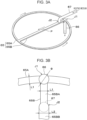
- Fig. 2A is a perspective view illustrating an example of a heating medium channel of the electrochemical hydrogen pump of this embodiment.
- Fig. 2B is a plan view illustrating an example of a connection portion of the heating medium channel in Fig. 2A .
- FIG. 2A the end plate 15 in Fig. 1A is viewed obliquely from the outside. However, in Fig. 2A , for simplification of the figure, the end plate 15 and the fasteners 17 are not illustrated, and only the heating medium channel 65, the heating medium inlet manifold 66, and the heating medium feed passage 67 are illustrated.
- Fig. 2B is a plan view illustrating a connection portion J1 connecting the heating medium channel 65 and the heating medium inlet manifold 66 viewed from below.
- the heating medium channel 65 includes an annular channel 65A and a transverse passage 65B extending across the annular channel 65A.
- the annular channel 65A is an annular groove in the main surface of the end plate 15 and extends along the outer edge of the disc-shaped end plate 15.
- the annular groove has a width L1 as indicated in Fig. 2B .
- the transverse passage 65B is a straight groove in the main surface of the end plate 15 and extends from the connection portion J1 to divide the inner area of the annular channel 65A into equal halves.
- the length of the straight groove is substantially equal to the circle diameter of the annular channel 65A in plan view.
- the straight groove has a width L1 as indicated in Fig. 2B .
- the cross-sectional area of the heating medium channel 65 is smaller than the cross-sectional area of the heating medium inlet manifold 66.
- the cross-sectional area SA of the annular channel 65A is expressed as "width L1 ⁇ groove depth", and the cross-sectional area S of the heating medium inlet manifold 66 is expressed as " ⁇ ( ⁇ /2) 2 ".
- the cross-sectional area SA is smaller than the cross-sectional area S.
- the cross-sectional area SB of the transverse passage 65B is expressed as "width L1 ⁇ groove depth", and the cross-sectional area S of the heating medium inlet manifold 66 is expressed as " ⁇ ( ⁇ /2) 2 ".
- the cross-sectional area SB is smaller than the cross-sectional area S.
- the cross-sectional shape of the heating medium channel 65 is rectangular, but the shape should not be limited to this example.
- the corners of the rectangle may be rounded (e.g., about R0.1 mm to about R0.3 mm).
- the cross-sectional shape may be oval or circular.
- the heating medium feed passage 67 is connected to the transverse passage 65B. Specifically, the heating medium feed passage 67 is connected to the transverse passage 65B at the connection portion J2, which is away from the connection portion J1. In other words, the connection portion J1 and the connection portion J2 are separated by a predetermined distance in the direction in which the transverse passage 65B extends. In the example illustrated in Fig. 2A , the heating medium feed passage 67 is connected to a portion of the transverse passage 65B that is closer to the connection portion J1 than the midpoint P of the transverse passage 65B.
- heating medium channel 65 is an example and should not be limited to this example.
- the heating medium channel 65 consists of a channel groove in the main surface of the end plate 15, but the heating medium channel 65 may consist of a hole inside the end plate 15.
- two metal sheets each having a recess corresponding to the hole may be integrally joined to form the hole.
- the heating medium channel 64, the heating medium discharge passage 69, and the heating medium outlet manifold can be configured when the components in Fig. 2A are turned by 180° and the gas flow direction is reversed. Thus, the details of this configuration will not be described because the details are readily understood from the above description of the heating medium channel 65, the heating medium feed passage 67, and the heating medium inlet manifold 66.
- an arithmetic circuit of a controller may read a control program from a memory circuit of the controller to perform the operation described below.
- the operation described below is not necessarily performed by a controller.
- the operator may perform a part of the operation.
- a controller is used to control the operation.
- a low-pressure hydrogen-containing gas flowing through the anode gas inlet pathway 32 is fed to the anode AN of the electrochemical hydrogen pump 100 through the anode gas feed channel 41, the anode gas inlet manifold 30, and the first communication passage 32A, and electric power is fed by the electric power applicator 50 to the electrochemical hydrogen pump 100.
- the hydrogen-containing gas that has passed through the anode AN is discharged to the anode gas outlet pathway 33 through the second communication passage 32B, the anode gas outlet manifold 31, and the anode gas discharge channel 42.
- the controller controls the heater 62 to heat the heating medium and also controls the pump 61.
- the heating medium having a temperature controlled to a suitable temperature by the heater 62 passes through the heating medium channel 65, the heating medium branch channel 60, and the heating medium channel 64 when the pump 61 is activated, resulting in circulation of the heating medium through the heating medium circulation pathway 63.
- the hydrogen (H 2 ) produced at the cathode CA can be compressed by an increase in the pressure drop in the cathode gas outlet pathway caused using a flow rate regulator, which is not illustrated.
- the flow rate regulator include a back pressure valve and a control valve disposed in the cathode gas outlet pathway.
- the electrochemical hydrogen pump 100 hydrogen included in a hydrogen-containing gas fed to the anode AN is moved to the cathode CA when electric power is applied by the electric power applicator 50, and the compressed high-pressure hydrogen is produced at the cathode CA.
- the hydrogen compression operation of the electrochemical hydrogen pump 100 is performed in this way, and the hydrogen compressed at the cathode CA passes through the communication pathway, the cathode gas outlet manifold, and the cathode gas discharge channel 40 and then is fed to, for example, a hydrogen demander through the cathode gas outlet pathway.
- the hydrogen demander include a pipe for a hydrogen infrastructure, a hydrogen storage, and a fuel cell.
- the hydrogen compressed at the cathode CA may be temporarily stored in a hydrogen storage, which is an example of the hydrogen demander.
- the hydrogen stored in the hydrogen storage may be timely fed to a fuel cell, which is an example of the hydrogen demander.
- the electrochemical hydrogen pump 100 of this embodiment allows less unbalanced distribution of the heating medium flowing in the compressor than a conventional device. Specifically, the electrochemical hydrogen pump 100 of this embodiment allows less unbalanced distribution of the heating medium between the heating medium feed passage 67 in the end plate 15 and the heating medium inlet manifold 66 than a conventional device.
- the heating medium needs to flow through the heating medium inlet manifold 66 in an amount enough to be distributed to each of the electrochemical cells 10 in a predetermined amount.
- the heating medium inlet manifold 66 it is more advantageous for the heating medium inlet manifold 66 to have a larger cross-sectional area in order to reduce pressure drop that occurs during passage of the heating medium through the heating medium inlet manifold 66.
- the heating medium feed passage 67 is connected to the transverse passage 65B of the heating medium channel 65, so that the heating medium that has passed through the heating medium feed passage 67 can readily flow to the annular channel 65A of the heating medium channel 65 through the transverse passage 65B as indicated by arrows in Fig. 2A .
- the electrochemical hydrogen pump 100 of this embodiment allows appropriate flow of the heating medium with less unbalanced distribution of the heating medium between the heating medium feed passage 67 in the end plate 15 and the heating medium inlet manifold 66 than a conventional device.
- the heating medium may appropriately flow such that the heat of the heating medium controlled at an appropriate temperature by the heater 62 keeps the entire end plate 15 warm.
- a temperature control of the heating medium is an example and should not be limited to this example.
- the temperature control of the heating medium may be performed by a cooler which cools the entire end plate 15 to an appropriate temperature, instead of the heater 62.
- connection portion J1 If the heating medium feed passage 67 is connected to the connection portion J1, the heating medium that has passed through the heating medium feed passage 67 will readily flow into the heating medium inlet manifold 66 without passing through the heating medium channel 65 in the end plate 15.
- the transverse passage 65B and the heating medium feed passage 67 are connected to each other at the connection portion J2 that is away from the connection portion J1.
- the heating medium that has passed through the heating medium feed passage 67 can flow through the heating medium channel 65 in the end plate 15 more easily than a configuration in which the transverse passage 65B and the heating medium feed passage 67 are connected to each other at the connection portion J1.
- the heating medium feed passage 67 is connected to a portion of the transverse passage 65B that is farther from the connection portion J1 than the midpoint P of the transverse passage 65B is, the pressure drop during passage of the heating medium through the heating medium channel 65 may increase.
- connection portion between the transverse passage 65B and the heating medium feed passage 67 is closer to the connection portion J1 than the midpoint P of the transverse passage 65B is. This causes less pressure drop during passage of the heating medium through the heating medium channel 65 than a configuration in which the connection portion between the transverse passage 65B and the heating medium feed passage 67 is farther from the connection portion J1.
- the electrochemical hydrogen pump 100 in Example has the same configuration as the electrochemical hydrogen pump 100 in the embodiment, except for the configuration of the heating medium channel 65 described below.
- Fig. 3A is a perspective view illustrating an example of the heating medium channel of the electrochemical hydrogen pump in Example of the embodiment.
- Fig. 3B is a plan view illustrating an example of the connection portion of the heating medium channel in Fig. 3A .
- Fig. 3A illustrates the end plate 15 in Fig. 1A viewed obliquely from the outside. However, in Fig. 3A , for simplification of the figure, the components such as the end plate 15 and the fasteners 17 are not illustrated, and only the heating medium channel 65, the heating medium inlet manifold 66, and the heating medium feed passage 67 are illustrated.
- Fig. 3B is a plan view illustrating a connection portion J1 connecting the heating medium channel 65 and the heating medium inlet manifold 66 viewed from below.
- a portion 65BB of the transverse passage 65B that is farther from the connection portion J1 between the transverse passage 65B and the heating medium inlet manifold 66 than the connection portion J2 between the transverse passage 65B and the heating medium feed passage 67 has a larger cross-sectional area than a portion 65BA of the transverse passage 65B that is closer to the connection portion J1 than the connection portion J2.
- the cross-sectional area SBB of the former is expressed as "width L2 ⁇ groove depth" and the cross-sectional area SBA of the latter is expressed as "width L1 ⁇ groove depth". Since the width L2 is larger than the width L1, the cross-sectional area SBB is larger than the cross-sectional area SBA.
- the portion 65BB of the transverse passage 65B which is farther from the connection portion J1 than the connection portion J2, has a larger cross-sectional area than the portion 65BA of the transverse passage 65B, which is closer to the connection portion J1 than the connection portion J2.
- This configuration can reduce the increase in pressure drop during passage of the heating medium through the heating medium channel 65 and allow the heating medium to pass through the heating medium channel 65 more easily than a configuration in which the cross-sectional areas are reversed between them.
- the electrochemical hydrogen pump 100 of Example has the same configuration as the electrochemical hydrogen pump 100 of the embodiment, except for the above-described features.
- One aspect of the present disclosure is applicable to a compressor that allows less unbalanced distribution of the heating medium flowing in the compressor than a conventional compressor.
Landscapes
- Chemical & Material Sciences (AREA)
- Engineering & Computer Science (AREA)
- Chemical Kinetics & Catalysis (AREA)
- Electrochemistry (AREA)
- Materials Engineering (AREA)
- Metallurgy (AREA)
- Organic Chemistry (AREA)
- Manufacturing & Machinery (AREA)
- Life Sciences & Earth Sciences (AREA)
- Sustainable Development (AREA)
- Sustainable Energy (AREA)
- General Chemical & Material Sciences (AREA)
- Mechanical Engineering (AREA)
- General Engineering & Computer Science (AREA)
- Inorganic Chemistry (AREA)
- Electrolytic Production Of Non-Metals, Compounds, Apparatuses Therefor (AREA)
- Fuel Cell (AREA)
Applications Claiming Priority (2)
| Application Number | Priority Date | Filing Date | Title |
|---|---|---|---|
| JP2021208953 | 2021-12-23 | ||
| PCT/JP2022/043660 WO2023120043A1 (fr) | 2021-12-23 | 2022-11-28 | Dispositif de compression |
Publications (2)
| Publication Number | Publication Date |
|---|---|
| EP4455366A1 true EP4455366A1 (fr) | 2024-10-30 |
| EP4455366A4 EP4455366A4 (fr) | 2025-04-02 |
Family
ID=86902280
Family Applications (1)
| Application Number | Title | Priority Date | Filing Date |
|---|---|---|---|
| EP22910761.0A Withdrawn EP4455366A4 (fr) | 2021-12-23 | 2022-11-28 | Dispositif de compression |
Country Status (5)
| Country | Link |
|---|---|
| US (1) | US20240318668A1 (fr) |
| EP (1) | EP4455366A4 (fr) |
| JP (1) | JP7345104B1 (fr) |
| CN (1) | CN118434913A (fr) |
| WO (1) | WO2023120043A1 (fr) |
Family Cites Families (4)
| Publication number | Priority date | Publication date | Assignee | Title |
|---|---|---|---|---|
| US9017436B2 (en) * | 2008-08-26 | 2015-04-28 | Dcns | Fuel processing systems with thermally integrated componentry |
| US10011912B2 (en) * | 2013-08-05 | 2018-07-03 | University Of Yamanashi | Hydrogen refining pressure-boosting device |
| FR3104833B1 (fr) * | 2019-12-12 | 2021-12-03 | Commissariat Energie Atomique | Plaque de serrage intégrant un organe chauffant et dispositif électrochimique le comportant |
| WO2021215088A1 (fr) * | 2020-04-20 | 2021-10-28 | パナソニックIpマネジメント株式会社 | Dispositif de compression |
-
2022
- 2022-11-28 JP JP2023511802A patent/JP7345104B1/ja active Active
- 2022-11-28 CN CN202280083479.2A patent/CN118434913A/zh active Pending
- 2022-11-28 EP EP22910761.0A patent/EP4455366A4/fr not_active Withdrawn
- 2022-11-28 WO PCT/JP2022/043660 patent/WO2023120043A1/fr not_active Ceased
-
2024
- 2024-06-04 US US18/733,041 patent/US20240318668A1/en not_active Abandoned
Also Published As
| Publication number | Publication date |
|---|---|
| US20240318668A1 (en) | 2024-09-26 |
| JPWO2023120043A1 (fr) | 2023-06-29 |
| CN118434913A (zh) | 2024-08-02 |
| JP7345104B1 (ja) | 2023-09-15 |
| EP4455366A4 (fr) | 2025-04-02 |
| WO2023120043A1 (fr) | 2023-06-29 |
Similar Documents
| Publication | Publication Date | Title |
|---|---|---|
| US12203178B2 (en) | Electrochemical hydrogen pump | |
| US10989184B2 (en) | Electrochemical hydrogen pump | |
| CN111082091B (zh) | 电化学式氢泵 | |
| US11932953B2 (en) | Compression apparatus | |
| US12046781B2 (en) | Compression apparatus | |
| US20240060190A1 (en) | Electrochemical cell for hydrogen pump and compression apparatus | |
| US20210323817A1 (en) | Hydrogen system and method of operating hydrogen system | |
| EP4219392A1 (fr) | Séparateur anodique pour pompe à hydrogène électrochimique, et pompe à hydrogène électrochimique | |
| EP4089206A1 (fr) | Appareil de compression | |
| US20240301570A1 (en) | Compression device | |
| EP4455366A1 (fr) | Dispositif de compression | |
| US12331416B2 (en) | Compression apparatus for hydrogen-containing gas utilizing an anode separator arrangement | |
| US12095132B2 (en) | Compression apparatus |
Legal Events
| Date | Code | Title | Description |
|---|---|---|---|
| STAA | Information on the status of an ep patent application or granted ep patent |
Free format text: STATUS: THE INTERNATIONAL PUBLICATION HAS BEEN MADE |
|
| PUAI | Public reference made under article 153(3) epc to a published international application that has entered the european phase |
Free format text: ORIGINAL CODE: 0009012 |
|
| STAA | Information on the status of an ep patent application or granted ep patent |
Free format text: STATUS: REQUEST FOR EXAMINATION WAS MADE |
|
| 17P | Request for examination filed |
Effective date: 20240613 |
|
| AK | Designated contracting states |
Kind code of ref document: A1 Designated state(s): AL AT BE BG CH CY CZ DE DK EE ES FI FR GB GR HR HU IE IS IT LI LT LU LV MC ME MK MT NL NO PL PT RO RS SE SI SK SM TR |
|
| A4 | Supplementary search report drawn up and despatched |
Effective date: 20250304 |
|
| DAV | Request for validation of the european patent (deleted) | ||
| DAX | Request for extension of the european patent (deleted) | ||
| RIC1 | Information provided on ipc code assigned before grant |
Ipc: H01M 8/04 20160101ALI20250226BHEP Ipc: H01M 8/2483 20160101ALI20250226BHEP Ipc: H01M 8/04029 20160101ALI20250226BHEP Ipc: C25B 9/77 20210101ALI20250226BHEP Ipc: C25B 9/67 20210101ALI20250226BHEP Ipc: C25B 9/23 20210101ALI20250226BHEP Ipc: C25B 9/05 20210101ALI20250226BHEP Ipc: C25B 9/00 20210101ALI20250226BHEP Ipc: C25B 1/04 20210101ALI20250226BHEP Ipc: C25B 1/02 20060101AFI20250226BHEP |
|
| STAA | Information on the status of an ep patent application or granted ep patent |
Free format text: STATUS: THE APPLICATION HAS BEEN WITHDRAWN |
|
| 18W | Application withdrawn |
Effective date: 20260108 |