EP4459949A1 - Procédé et appareil de traitement de message - Google Patents
Procédé et appareil de traitement de message Download PDFInfo
- Publication number
- EP4459949A1 EP4459949A1 EP22915146.9A EP22915146A EP4459949A1 EP 4459949 A1 EP4459949 A1 EP 4459949A1 EP 22915146 A EP22915146 A EP 22915146A EP 4459949 A1 EP4459949 A1 EP 4459949A1
- Authority
- EP
- European Patent Office
- Prior art keywords
- message
- identification information
- user
- instant messaging
- electronic device
- Prior art date
- Legal status (The legal status is an assumption and is not a legal conclusion. Google has not performed a legal analysis and makes no representation as to the accuracy of the status listed.)
- Pending
Links
Images





Classifications
-
- H—ELECTRICITY
- H04—ELECTRIC COMMUNICATION TECHNIQUE
- H04L—TRANSMISSION OF DIGITAL INFORMATION, e.g. TELEGRAPHIC COMMUNICATION
- H04L51/00—User-to-user messaging in packet-switching networks, transmitted according to store-and-forward or real-time protocols, e.g. e-mail
- H04L51/04—Real-time or near real-time messaging, e.g. instant messaging [IM]
-
- H—ELECTRICITY
- H04—ELECTRIC COMMUNICATION TECHNIQUE
- H04L—TRANSMISSION OF DIGITAL INFORMATION, e.g. TELEGRAPHIC COMMUNICATION
- H04L12/00—Data switching networks
- H04L12/02—Details
- H04L12/16—Arrangements for providing special services to substations
- H04L12/18—Arrangements for providing special services to substations for broadcast or conference, e.g. multicast
- H04L12/1813—Arrangements for providing special services to substations for broadcast or conference, e.g. multicast for computer conferences, e.g. chat rooms
-
- H—ELECTRICITY
- H04—ELECTRIC COMMUNICATION TECHNIQUE
- H04L—TRANSMISSION OF DIGITAL INFORMATION, e.g. TELEGRAPHIC COMMUNICATION
- H04L12/00—Data switching networks
- H04L12/02—Details
- H04L12/16—Arrangements for providing special services to substations
- H04L12/18—Arrangements for providing special services to substations for broadcast or conference, e.g. multicast
- H04L12/1813—Arrangements for providing special services to substations for broadcast or conference, e.g. multicast for computer conferences, e.g. chat rooms
- H04L12/1831—Tracking arrangements for later retrieval, e.g. recording contents, participants activities or behavior, network status
-
- H—ELECTRICITY
- H04—ELECTRIC COMMUNICATION TECHNIQUE
- H04L—TRANSMISSION OF DIGITAL INFORMATION, e.g. TELEGRAPHIC COMMUNICATION
- H04L51/00—User-to-user messaging in packet-switching networks, transmitted according to store-and-forward or real-time protocols, e.g. e-mail
- H04L51/21—Monitoring or handling of messages
- H04L51/216—Handling conversation history, e.g. grouping of messages in sessions or threads
-
- H—ELECTRICITY
- H04—ELECTRIC COMMUNICATION TECHNIQUE
- H04L—TRANSMISSION OF DIGITAL INFORMATION, e.g. TELEGRAPHIC COMMUNICATION
- H04L51/00—User-to-user messaging in packet-switching networks, transmitted according to store-and-forward or real-time protocols, e.g. e-mail
- H04L51/04—Real-time or near real-time messaging, e.g. instant messaging [IM]
- H04L51/046—Interoperability with other network applications or services
-
- H—ELECTRICITY
- H04—ELECTRIC COMMUNICATION TECHNIQUE
- H04L—TRANSMISSION OF DIGITAL INFORMATION, e.g. TELEGRAPHIC COMMUNICATION
- H04L51/00—User-to-user messaging in packet-switching networks, transmitted according to store-and-forward or real-time protocols, e.g. e-mail
- H04L51/21—Monitoring or handling of messages
- H04L51/212—Monitoring or handling of messages using filtering or selective blocking
-
- H—ELECTRICITY
- H04—ELECTRIC COMMUNICATION TECHNIQUE
- H04L—TRANSMISSION OF DIGITAL INFORMATION, e.g. TELEGRAPHIC COMMUNICATION
- H04L51/00—User-to-user messaging in packet-switching networks, transmitted according to store-and-forward or real-time protocols, e.g. e-mail
- H04L51/52—User-to-user messaging in packet-switching networks, transmitted according to store-and-forward or real-time protocols, e.g. e-mail for supporting social networking services
Definitions
- This application pertains to the field of message processing technologies, and specifically to a message processing method and apparatus.
- IM Instant Messaging, instant messaging
- the members in the groups may be prone to missing messages, affecting a processing rate of the messages in the groups.
- An objective of embodiments of this application is to provide a message processing method and apparatus, to resolve a problem of low processing rate of messages in a group.
- an embodiment of this application provides a message processing method applied to an electronic device.
- the method includes:
- an embodiment of this application provides a message processing method applied to a cloud.
- the method includes:
- an embodiment of this application provides a message processing apparatus applied to an electronic device.
- the apparatus includes:
- an embodiment of this application provides a message processing apparatus applied to a cloud.
- the apparatus includes:
- an embodiment of this application provides an electronic device.
- the electronic device includes a processor, a memory, and a program or an instruction that is stored in the memory and that can run on the processor.
- steps of the message processing method according to the first aspect are implemented, or steps of the message processing method according to the second aspect are implemented.
- an embodiment of this application provides a readable storage medium.
- the readable storage medium stores a program or an instruction, and when the program or the instruction is executed by a processor, steps of the message processing method according to the first aspect are implemented, or steps of the message processing method according to the second aspect are implemented.
- an embodiment of this application provides a chip.
- the chip includes a processor and a communication interface, the communication interface is coupled to the processor, and the processor is configured to run a program or an instruction to implement steps of the message processing method according to the first aspect, or steps of the message processing method according to the second aspect.
- an embodiment of this application provides a computer program product.
- the program product is stored in a storage medium, and the program product is executed by at least one processor to implement steps of the message processing method according to the first aspect, or steps of the message processing method according to the second aspect.
- the electronic device receives the first message and the related information of the first message, where the related information includes the identification information of the sender of the first message and the group identification information of the target instant messaging group, to prompt the first message in a case that the first message matches the historical message in the target instant messaging group. It can be learned that the electronic device can determine, based on a received message and related information of the received message, whether the message is a duplicate message (that is, a message that matches the historical message in the target instant messaging group), and prompt the message in a case of determining that the message is the duplicate message, so that more members in the group can process the message, thereby effectively improving a processing rate of the message in the group.
- the electronic device determine, based on a received message and related information of the received message, whether the message is a duplicate message (that is, a message that matches the historical message in the target instant messaging group), and prompt the message in a case of determining that the message is the duplicate message, so that more members in the group can process the message, thereby effectively improving a
- the cloud obtains the first message, and determines the identification information that is of the first user in the target instant messaging group and that satisfies the preset condition in a case that the first message matches the historical message in the target instant messaging group, to send the first message to the electronic device corresponding to the first user based on the identification information of the first user. It can be learned that in this technical solution, the cloud can determine whether an obtained message is a duplicate message, and send the message to an electronic device corresponding to a user that is in a group and that satisfies the preset condition in a case of determining that the message is the duplicate message, so that more members in the group can process the message, thereby effectively improving a processing rate of the message in the group.
- first”, “second”, and the like in the specification and claims of this application are used to distinguish between similar objects instead of describing a specific order or sequence. It should be understood that data used in such a way are interchangeable in proper circumstances, so that the embodiments of this application can be implemented in an order other than the order illustrated or described herein.
- Objects classified by "first”, “second”, and the like are usually of a same type, and the number of objects is not limited. For example, there may be one or more first objects.
- "and/or" represents at least one of connected objects, and a character “/" generally represents an "or” relationship between associated objects.
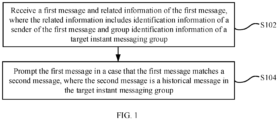
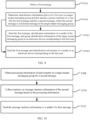
- FIG. 1 is a first schematic flowchart of a message processing method according to an embodiment of this application. The method is applied to an electronic device. As shown in FIG. 1 , the message processing method may include the following steps.
- S102 Receive a first message and related information of the first message, where the related information includes identification information of a sender of the first message and group identification information of a target instant messaging group.
- the identification information of the sender may be account information of the sender, for example, a user ID (identity document, identity document) of the sender.
- the group identification information of the target instant messaging group may be group account information of the instant messaging group, for example, a group ID of the instant messaging group.
- the sender of the first message may be a member in the target instant messaging group.
- S104 Prompt the first message in a case that the first message matches a second message, where the second message is a historical message in the target instant messaging group.
- the electronic device may determine, based on information such as message content of the first message and a repeated sending identifier carried in the first message, that the first message matches the historical message in the target instant messaging group.
- the repeated sending identifier may be an identifier that is predefined and that indicates that a corresponding message is a repeatedly sent message.
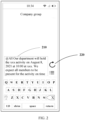
- a user A needs to notify each member in a company group to meet at a specific time period.
- the user A mentions (@) all members in the company group in IM type software, and edits the following message in a message input box 210:
- Our department will hold the xxx activity on August 8, 2021 at 10:00 at xxx. We expect all members to be present for the activity on time.
- the user A may click an icon 220 for repeated message sending on the right side of the message input box 210.
- the message input box 210 displays a latest sent message, where the message may carry a repeated sending identifier.
- the electronic device can receive the message and the repeated sending identifier of the message, and determine that the message is a repeatedly sent message, that is, determine that the message matches a historical message in the company group.
- prompting the first message may be specifically performed by displaying the first message in an instant messaging interface corresponding to the target instant messaging group.
- prompting the first message may be further performed by: separately displaying the first message in an instant messaging interface between each member in the target instant messaging group and the sender of the first message; or displaying the first message in a pop-up window.
- prompting the first message may be further performed by: separately displaying the first message in an instant messaging interface between each member in the target instant messaging group and the sender of the first message; or displaying the first message in a pop-up window.
- the foregoing pop-up window pops up and is displayed on a screen of the electronic device.
- the first message may not be prompted in a case that the first message matches the second message and the second message has been processed, thereby avoiding disturbing a user who has processed the second message.
- the electronic device receives the first message and the related information of the first message, where the related information includes the identification information of the sender of the first message and the group identification information of the target instant messaging group, to prompt the first message in a case that the first message matches the historical message in the target instant messaging group. It can be learned that the electronic device can determine, based on a received message and related information of the received message, whether the message is a duplicate message (that is, a message that matches the historical message in the target instant messaging group), and prompt the message in a case of determining that the message is the duplicate message, so that more members in the group can process the message, thereby effectively improving a processing rate of the message in the group.
- the electronic device determine, based on a received message and related information of the received message, whether the message is a duplicate message (that is, a message that matches the historical message in the target instant messaging group), and prompt the message in a case of determining that the message is the duplicate message, so that more members in the group can process the message, thereby effectively improving a
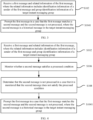
- S104 may be specifically performed as S1041: Prompt the first message in a case that the first message matches the second message and the second message is not processed.
- the electronic device prompts the first message in a case that the first message matches the second message (that is, the historical message in the target instant messaging group) and the second message is not processed, so that more members in the group can process the message, thereby effectively improving a processing rate of the message in the group.
- the second message that is, the historical message in the target instant messaging group
- the following S106 to S108 may be used to determine whether the second message is processed.
- S106 Monitor whether the second message satisfies a processed condition.
- the processed condition includes at least one of the following: the second message is clicked, a processing status corresponding to the second message is processed, and display duration of the second message reaches preset duration.
- a clicked status of the second message may be recorded and stored by the electronic device.
- the sender may set a read message condition corresponding to the message. Therefore, after the cloud sends the message to an electronic device corresponding to each member, the electronic device corresponding to each member determines a processing status and display duration of the message based on the read message condition carried in the message.
- the read message condition may be read duration (that is, the preset duration). Still refer to the example shown in FIG. 2 .
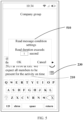
- the user A may click a setting icon 230 on the right side of the message input box 210.
- a current display interface is shown in FIG. 5 .
- a pop-up window 510 is a setting window for the read message condition. The user may set, on the pop-up window 510, seconds that the read duration exceeds, for example, 1 second.
- the electronic device corresponding to each member may determine, based on display duration of the message and with reference to the read message condition, that the user does not process the message in a case that the display duration is equal to 0; determine that the user has viewed the message in a case that the display duration is greater than 0 and is less than the read duration (that is, the preset duration) in the read message condition; or determine that the user has processed the message in a case that the display duration is greater than or equal to the read duration in the read message condition.
- S 108 Determine that the second message is not processed in a case that the second message is monitored to not satisfy the processed condition.
- whether the second message satisfies the processed condition is monitored to determine whether the second message is processed, so that a determined processing status of the second message is more accurate, thereby facilitating accurate determining by the electronic device whether to prompt the first message.
- S110 to S 112 may be used to determine whether the second message is processed.
- S 110 Obtain identification information that is of a first user and that is delivered by a cloud.
- the first user is a user in the target instant messaging group who does not process the second message.
- the identification information of the first user may be account information of the first user, for example, a user ID of the first user.
- the cloud may obtain processing information of each member in the target instant messaging group for the second message, to determine a first user in the target instant messaging group who does not process the second message. Specific content of the processing information will be explained in detail in subsequent embodiments. Details are not described herein.
- S 112 Determine that the second message is not processed by a user corresponding to an electronic device in a case that identification information of the user corresponding to the electronic device matches the identification information of the first user.
- the second message has been processed by the user corresponding to the electronic device in a case that the identification information of the user corresponding to the electronic device does not match the identification information of the first user.
- the identification information that is of the first user and that is delivered by the cloud is obtained, so that it is determined, based on a matching status between the identification information of the user corresponding to the electronic device and the identification information of the first user, whether the second message is processed by the user corresponding to the electronic device. Therefore, a determined processing status of the second message is more accurate, thereby facilitating accurate determining by the electronic device whether to prompt the first message.
- FIG. 7 is a fifth schematic flowchart of a message processing method according to an embodiment of this application. The method is applied to a cloud. As shown in FIG. 7 , the message processing method may include the following steps.
- the first message is a message sent by a member in a target instant messaging group.
- the cloud may obtain the first message.
- S704 Determine identification information that is of a first user in the target instant messaging group and that satisfies a preset condition in a case that the first message matches a second message, where the second message is a historical message in the target instant messaging group.
- the cloud may determine, based on information such as message content of the first message and a repeated sending identifier carried in the first message, that the first message matches the historical message in the target instant messaging group.
- the repeated sending identifier may be an identifier that is predefined and that indicates that a corresponding message is a repeatedly sent message. For detailed examples, refer to the related descriptions in S 104. Details are not described herein.
- the identification information of the first user may be account information of the first user, for example, a user ID of the first user.
- S706 Send the first message to an electronic device corresponding to the first user based on the identification information of the first user.
- the cloud obtains the first message, and determines the identification information that is of the first user in the target instant messaging group and that satisfies the preset condition in a case that the first message matches the historical message in the target instant messaging group, to send the first message to the electronic device corresponding to the first user based on the identification information of the first user. It can be learned that in this technical solution, the cloud can determine whether an obtained message is a duplicate message, and send the message to an electronic device corresponding to a user that is in a group and that satisfies the preset condition in a case of determining that the message is the duplicate message, so that more members in the group can process the message, thereby effectively improving a processing rate of the message in the group.
- the preset condition may include not processing the second message.
- S704 may be specifically performed as S7041: Determine, based on processing information of each member in the target instant messaging group for the second message, identification information of a first user in the target instant messaging group who does not process the second message.
- the cloud may obtain the processing information of each member in the target instant messaging group for the second message. Specific content of the processing information will be explained in detail in subsequent embodiments. Details are not described herein.
- the method in FIG. 8 may be applied to a plurality of scenarios, such as a scenario in which a group message is repeatedly sent and that an electronic device of a user who has processed the message repeatedly displays the message is avoided, and a scenario in which red packets are sent for a plurality of times and that a user who has grabbed a red packet repeatedly grabs another red packet is avoided.
- the method in FIG. 8 is applied to the scenario in which the red packets are sent for the plurality of times and that the user who has grabbed the red packet repeatedly grabs the another red packet is avoided.
- a user A wants to send a 10-yuan red packet to each member in a company group, and the group has a total of 100 members.
- an IM type software has a limit for a red packet, and a maximum amount of the red packet is 200 yuan.
- the user A may set a grab condition of a red packet in a case of sending the red packet for a second time to the plurality of times.
- the grab condition may be a condition such as a recipient of the red packet is not the same as a recipient of a previous red packet.
- the cloud After the red packet that carries the grab condition is sent, the cloud receives the red packet and the grab condition of the red packet, so that a first user in the target instant messaging group who does not grab the red packet can be determined based on the grab condition, and the red packet is sent to an electronic device corresponding to the first user based on identification information of the first user.
- the cloud determines, based on the processing information of each member in the target instant messaging group for the second message, the identification information of the first user in the target instant messaging group who does not process the second message, so that the first message can be sent to the electronic device corresponding to the first user based on the identification information of the first user. Therefore, a user whose currently does not process a to-be-sent duplicate message (that is, the first message) is determined in the cloud, so that the first message is sent to the electronic device corresponding to the user in a targeted manner, and more members in the group can process the message, thereby effectively improving a processing rate of the message in the group.
- the sending the first message to an electronic device corresponding to the first user based on the identification information of the first user may be specifically performed as the following S7061 or S7062:
- S7061 Send the first message, identification information of a sender of the first message, and group identification information of the target instant messaging group to the electronic device corresponding to the first user.
- the electronic device corresponding to the first user may determine, based on the received first message, the identification information of the sender of the first message, and the group identification information of the target instant messaging group, to display the first message in the instant messaging interface corresponding to the target instant messaging group.
- S7062 Send the first message and identification information of a sender to the electronic device corresponding to the first user.
- the electronic device corresponding to the first user may determine, based on the received first message and the identification information of the sender, to display the first message in an instant messaging interface between the first user and the sender. In this case, even if the first user mutes the target instant messaging group, it can be ensured that the user receives the first message, thereby improving reachability of the first message.
- the following S708 to S712 may be used to collect statistics on message statistics information of the second message based on the processing information of each member in the target instant messaging group for the second message, and send the message statistics information to the sender.
- S708 Obtain the processing information of each member in the target instant messaging group for the second message.
- the processing information may include the following: the group identification information of the target instant messaging group, and whether each member successfully receives the second message, identification information of a member who successfully receives the second message, identification information of a member who does not successfully receive the second message, whether each member has processed the second message, identification information of a member who has processed the second message, identification information of a member who does not process the second message, and the like.
- the cloud sends the second message to the electronic device of each member, if the electronic device of each member feeds back that a message is successfully delivered, it may be determined that the electronic device successfully receives the second message; or if the electronic device of each member feeds back that a message fails to be delivered, it may be determined that the electronic device does not successfully receive the second message.
- S710 Collect statistics on the message statistics information of the second message based on the processing information.
- the message statistics information may include the following: a quantity of third users who successfully receive the second message, a proportion of the third users to the members, a quantity of fourth users who do not successfully receive the second message, a proportion of the fourth users to the members, a quantity of first users who do not process the second message, a proportion of the first users to the members, a quantity of second users who have processed the second message, a proportion of the second users to the members, and the like.
- S712 Send the message statistics information to the sender of the first message.
- the message statistics information is displayed in a form of a pop-up window in an electronic device of the sender.
- the message statistics information includes the following: a quantity of group members in the instant messaging group is 88, a quantity of users who have received the second message is 80, a quantity of users who do not receive the second message is 8, a quantity of users who have processed the second message is 50, and a quantity of users who do not process the second message is 38, a current interface of the IM type software in the electronic device of the sender may be shown in FIG. 11 , where the message statistics information is displayed in a pop-up window 1110.
- the electronic device of the sender may automatically determine, based on the message statistics information and with reference to a preset repeated sending condition, whether to repeatedly send the message.
- the preset repeated sending condition may include the following: in a case that preset duration is reached after the second message is sent, the quantity of the first users who do not process the second message is greater than a first preset threshold, the quantity of the second users who have processed the second message is less than a second preset threshold, the proportion of the first users to the members is greater than a third preset threshold, the proportion of the second users to the members is less than a fourth preset threshold, the quantity of the third users who successfully receive the second message is less than a fifth preset threshold, the proportion of the third users to the members is less than a sixth preset threshold, the quantity of the fourth users who do not successfully receive the second message is greater than a seventh preset threshold, the proportion of the fourth users to the members is greater than an eighth preset threshold, and the like that is recorded in the message statistics information.
- a statistics occasion and a statistics frequency of the message statistics information, and a sending occasion and a sending frequency of sending the message statistics information to the sender may be preset in the cloud.
- the statistics occasion of the message statistics information may be immediately collected after the second message is sent to the electronic device of each member, the statistics frequency may be collected in real time, the sending occasion may be after the preset duration after the second message is sent, and the sending frequency may be a preset frequency. If the second message carries a read message condition, the sending occasion may be set to after read duration in the read message condition, and the sending frequency may be set to once every read duration. This greatly reduces message statistics information of low reference value, so that the message statistics information sent to the sender can more accurately reflect an actual processing status of the second message by a user.
- a communication status between the cloud and the electronic device of the sender, and between the cloud and the electronic device corresponding to each member in the target instant messaging group may be shown in FIG. 12 .
- the electronic device corresponding to each member reports the processing information of the second message to the cloud, and the cloud delivers the message statistics information to the electronic device of the sender.
- the cloud collects statistics on the message statistics information of the second message, and then sends the message statistics information to the sender, so that monitoring of processing information of a sent message is implemented. Therefore, the sender can determine, based on the message statistics information, whether to repeatedly send the message, so that more members in the group process the message, to provide a basis for improving a processing rate of the message in the group.
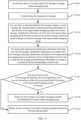
- FIG. 13 is a ninth schematic flowchart of a message processing method according to an embodiment of this application.
- the cloud may determine identification information of a first user in a target instant messaging group who does not process a second message (that is, a historical message in the target instant messaging group), and send the first message to an electronic device corresponding to the first user based on the identification information of the first user, so that the electronic device corresponding to the first user prompts the first message.
- the message processing method may include the following steps.
- S1301 An electronic device of a sender sends the first message in the target instant messaging group.
- processing information of each member in the target instant messaging group for the second message may be further obtained.
- Message statistics information of the second message is collected based on the processing information, and the message statistics information is sent to the sender of the first message.
- the second message is a historical message in the target instant messaging group.
- the processing information may include the group identification information of the target instant messaging group, and at least one of the following: whether each member successfully receives the second message, identification information of a member who successfully receives the second message, identification information of a member who does not successfully receive the second message, whether each member has processed the second message, identification information of a member who has processed the second message, and identification information of a member who does not process the second message.
- the message statistics information may include at least one of the following: a quantity of third users who successfully receive the second message, a proportion of the third users to the members, a quantity of fourth users who do not successfully receive the second message, a proportion of the fourth users to the members, a quantity of first users who do not process the second message, a proportion of the first users to the members, a quantity of second users who have processed the second message, and a proportion of the second users to the members.
- the cloud determines, based on the processing information of each member in the target instant messaging group for the second message, the identification information of the first user in the target instant messaging group who does not process the second message.
- the second message is the historical message in the target instant messaging group.
- S 1304 The cloud sends, based on the identification information of the first user, the first message, identification information of the sender of the first message, and group identification information of the target instant messaging group to the electronic device corresponding to the first user; or sends the first message and identification information of the sender to the electronic device corresponding to the first user.
- S1305 When receiving the first message, the electronic device corresponding to the first user determines whether the group identification information of the target instant messaging group is received; and if the group identification information of the target instant messaging group is received, S1306 is performed; or if the group identification information of the target instant messaging group is not received, S1307 is performed.
- S1306 Display the first message in an instant messaging interface corresponding to the target instant messaging group.
- S1307 Display the first message in an instant messaging interface between the first user and the sender.
- a user who does not currently process a to-be-sent duplicate message (that is, the first message) is determined in the cloud, so that the first message is sent to an electronic device corresponding to the user in a targeted manner.
- This can avoid sending the first message to a user who has processed the second message, so that more members in the group can process the message, thereby effectively improving a processing rate of the message in the group.
- FIG. 14 is a tenth schematic flowchart of a message processing method according to an embodiment of this application.
- an electronic device corresponding to each member in a target instant messaging group can determine, based on a received message and related information of the received message, whether the message is a duplicate message (that is, a message that matches a historical message in the target instant messaging group), and prompt the message in a case of determining that the message is the duplicate message.
- the message processing method may include the following steps.
- S1401 An electronic device of a sender sends a first message in the target instant messaging group.
- a cloud obtains the foregoing first message, and sends the first message and related information of the first message to the electronic device corresponding to each member in the target instant messaging group, where the related information includes identification information of the sender of the first message and group identification information of the target instant messaging group.
- S1403 The electronic device corresponding to each member in the target instant messaging group receives the first message and the related information of the first message.
- S1404 The electronic device corresponding to each member in the target instant messaging group prompts the first message in a case that the first message matches a second message and the second message is not processed, where the second message is the historical message in the target instant messaging group.
- the first message before the first message is prompted in a case that the first message matches the second message and the second message is not processed, it may be monitored whether the second message satisfies a processed condition; and if the second message does not satisfy the processed condition, it is determined that the second message is not processed.
- the processed condition may include at least one of the following: the second message is clicked, a processing status corresponding to the second message is processed, and display duration of the second message reaches preset duration.
- identification information that is of a first user and that is delivered by the cloud may be obtained, so that it is determined that the second message is not processed by the user corresponding to the electronic device in a case that identification information of a user corresponding to an electronic device matches the identification information of the first user.
- the first user is a user in the target instant messaging group who does not process the second message.
- prompting the first message may be specifically performed by: displaying the first message in an instant messaging interface corresponding to the target instant messaging group; separately displaying the first message in an instant messaging interface between each member in the target instant messaging group and the sender of the first message; or displaying the first message in a pop-up window.
- the electronic device prompts the first message in a case that the first message matches the second message (that is, the historical message in the target instant messaging group) and the second message is not processed, so that it is avoided that the first message is prompted to a user who has processed the second message, and more members in the group can process the message, thereby effectively improving a processing rate of the message in the group.
- the second message that is, the historical message in the target instant messaging group
- the message processing method provided in this embodiment of this application may be executed by a message processing apparatus.
- a message processing apparatus performs the message processing method.
- FIG. 15 is a first schematic diagram of a structure of a message processing apparatus according to an embodiment of this application.
- the apparatus is applied to an electronic device. Refer to FIG. 15 .
- the message processing apparatus may include:
- the prompting module 1520 includes: a prompting unit, configured to prompt the first message in a case that the first message matches the second message and the second message is not processed.
- the message processing apparatus further includes:
- the message processing apparatus further includes:
- the prompting module 1520 includes: a display unit, configured to display the first message in an instant messaging interface corresponding to the target instant messaging group.
- the electronic device receives the first message and the related information of the first message, where the related information includes the identification information of the sender of the first message and the group identification information of the target instant messaging group, to prompt the first message in a case that the first message matches the historical message in the target instant messaging group. It can be learned that the electronic device can determine, based on a received message and related information of the received message, whether the message is a duplicate message (that is, a message that matches the historical message in the target instant messaging group), and prompt the message in a case of determining that the message is the duplicate message, so that more members in the group can process the message, thereby effectively improving a processing rate of the message in the group.
- the electronic device determine, based on a received message and related information of the received message, whether the message is a duplicate message (that is, a message that matches the historical message in the target instant messaging group), and prompt the message in a case of determining that the message is the duplicate message, so that more members in the group can process the message, thereby effectively improving a
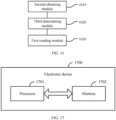
- FIG. 16 is a second schematic diagram of a structure of a message processing apparatus according to an embodiment of this application.
- the apparatus is applied to a cloud.
- the message processing apparatus may include:
- the preset condition includes not processing the second message.
- the third determining module 1620 includes: a determining unit, configured to determine, based on processing information of each member in the target instant messaging group for the second message, identification information of a first user in the target instant messaging group who does not process the second message.
- the first sending module 1630 includes:
- the message processing apparatus further includes:
- the cloud obtains the first message, and determines the identification information that is of the first user in the target instant messaging group and that satisfies the preset condition in a case that the first message matches the historical message in the target instant messaging group, to send the first message to the electronic device corresponding to the first user based on the identification information of the first user. It can be learned that in this technical solution, the cloud can determine whether an obtained message is a duplicate message, and send the message to an electronic device corresponding to a user that is in a group and that satisfies the preset condition in a case of determining that the message is the duplicate message, so that more members in the group can process the message, thereby effectively improving a processing rate of the message in the group.
- the message processing apparatus in this embodiment of this application may be an electronic device, or may be a component such as a circuit or a chip in the electronic device.
- the electronic device may be a terminal, or another device other than the terminal.
- the electronic device may be a mobile phone, a tablet computer, a notebook computer, a palmtop computer, an in-vehicle electronic device, a mobile Internet device (Mobile Internet Device, MID), an augmented reality (augmented reality, AR)/virtual reality (virtual reality, VR) device, a robot, a wearable device, an ultra-mobile personal computer (ultra-mobile personal computer, UMPC), a netbook, a personal digital assistant (personal digital assistant, PDA), or the like.
- the electronic device may alternatively be a server, a network attached storage (Network Attached Storage, NAS), a personal computer (personal computer, PC), a television (television, TV), a teller machine, a self-service machine, or the like. This is not specifically limited in embodiments of this application.
- NAS Network Attached Storage
- PC personal computer
- TV television
- teller machine a self-service machine
- the message processing apparatus in the embodiments of this application may be an apparatus with an operating system.
- the operating system may be an Android (Android) operating system, an iOS operating system, or another possible operating system. This is not specifically limited in embodiments of this application.
- the message processing apparatus provided in this embodiment of this application can implement processes implemented in the embodiments of the message processing method in FIG. 1 to FIG. 14 . To avoid repetition, details are not described herein again.
- an embodiment of this application further provides an electronic device 1700, including a processor 1701 and a memory 1702.
- the memory 1702 stores a program or an instruction that can run on the processor 1701.
- steps of the foregoing embodiments of the message processing method applied to the electronic device are implemented and a same technical effect can be achieved. To avoid repetition, details are not described herein again.
- the electronic device in this embodiment of this application includes the foregoing terminal, the cloud, and another device other than the terminal and the cloud.
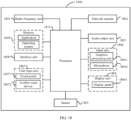
- FIG. 18 is a schematic diagram of a hardware structure of an electronic device according to an embodiment of this application.
- An electronic device 1800 includes but is not limited to components such as a radio frequency unit 1801, a network module 1802, an audio output unit 1803, an input unit 1804, a sensor 1805, a display unit 1806, a user input unit 1807, an interface unit 1808, a memory 1809, and a processor 1810.
- the electronic device 1800 may further include a power supply (such as a battery) that supplies power to each component.
- the power supply may be logically connected to the processor 1810 by using a power supply management system, to implement functions such as charging and discharging management, and power consumption management by using the power supply management system.
- the structure of the electronic device shown in FIG. 18 does not constitute a limitation on the electronic device.
- the electronic device may include components more or fewer than those shown in the diagram, a combination of some components, or different component arrangements. Details are not described herein.
- the processor 1810 is configured to: receive a first message and related information of the first message, where the related information includes identification information of a sender of the first message and group identification information of a target instant messaging group; and prompt the first message in a case that the first message matches a second message, where the second message is a historical message in the target instant messaging group.
- the processor 1810 is further configured to prompt the first message in a case that the first message matches the second message and the second message is not processed.
- the processor 1810 is further configured to: before the first message is prompted in a case that the first message matches the second message and the second message is not processed, monitor whether the second message satisfies a processed condition, where the processed condition includes at least one of the following: the second message is clicked, a processing status corresponding to the second message is processed, and display duration of the second message reaches preset duration; and if the second message does not satisfy the processed condition, it is determined that the second message is not processed.
- the processor 1810 is further configured to: before the first message is prompted in a case that the first message matches the second message and the second message is not processed, obtain identification information that is of a first user and that is delivered by a cloud, where the first user is a user in the target instant messaging group who does not process the second message; and determine that the second message is not processed by a user corresponding to the electronic device in a case that identification information of the user corresponding to the electronic device matches the identification information of the first user.
- the processor 1810 is further configured to display the first message in an instant messaging interface corresponding to the target instant messaging group.
- the electronic device receives the first message and the related information of the first message, where the related information includes the identification information of the sender of the first message and the group identification information of the target instant messaging group, to prompt the first message in a case that the first message matches the historical message in the target instant messaging group. It can be learned that the electronic device can determine, based on a received message and related information of the received message, whether the message is a duplicate message (that is, a message that matches the historical message in the target instant messaging group), and prompt the message in a case of determining that the message is the duplicate message, so that more members in the group can process the message, thereby effectively improving a processing rate of the message in the group.
- the electronic device determine, based on a received message and related information of the received message, whether the message is a duplicate message (that is, a message that matches the historical message in the target instant messaging group), and prompt the message in a case of determining that the message is the duplicate message, so that more members in the group can process the message, thereby effectively improving a
- the processor 1810 is configured to: obtain a first message; determine identification information that is of a first user in a target instant messaging group and that satisfies a preset condition in a case that the first message matches a second message, where the second message is a historical message in the target instant messaging group; and send the first message to an electronic device corresponding to the first user based on the identification information of the first user.
- the preset condition includes not processing the second message.
- the processor 1810 is further configured to determine, based on processing information of each member in the target instant messaging group for the second message, identification information of a first user in the target instant messaging group who does not process the second message.
- the processor 1810 is further configured to: send the first message, identification information of the sender of the first message, and group identification information of the target instant messaging group to the electronic device corresponding to the first user; or send the first message and identification information of the sender to the electronic device corresponding to the first user.
- the processor 1810 is further configured to: obtain processing information of each member in the target instant messaging group for the second message, where the processing information includes group identification information of the target instant messaging group, and at least one of the following: whether each member successfully receives the second message, identification information of a member who successfully receives the second message, identification information of a member who does not successfully receive the second message, whether each member has processed the second message, identification information of a member who has processed the second message, and identification information of a member who does not process the second message; collect statistics on message statistics information of the second message based on the processing information, where the message statistics information includes at least one of the following: a quantity of third users who successfully receive the second message, a proportion of the third users to the members, a quantity of fourth users who do not successfully receive the second message, a proportion of the fourth users to the members, a quantity of first users who do not process the second message, a proportion of the first users to the members, a quantity of second users who have processed the second message, and a proportion of the second users to
- the cloud obtains the first message, and determines the identification information that is of the first user in the target instant messaging group and that satisfies the preset condition in a case that the first message matches the historical message in the target instant messaging group, to send the first message to the electronic device corresponding to the first user based on the identification information of the first user. It can be learned that in this technical solution, the cloud can determine whether an obtained message is a duplicate message, and send the message to an electronic device corresponding to a user that is in a group and that satisfies the preset condition in a case of determining that the message is the duplicate message, so that more members in the group can process the message, thereby effectively improving a processing rate of the message in the group.
- the input unit 1804 may include a graphics processing unit (Graphics Processing Unit, GPU) 18041 and a microphone 18042.
- the graphics processing unit 18041 processes image data of a static picture or a video obtained by an image capture apparatus (for example, a camera) in a video capture mode or an image capture mode.
- the display unit 1806 may include a display panel 18061.
- the display panel 18061 may be configured in a form such as a liquid crystal display or an organic light-emitting diode.
- the user input unit 1807 includes at least one of a touch panel 18071 and another input device 18072.
- the touch panel 18071 is also referred to as a touchscreen.
- the touch panel 18071 may include two parts: a touch detection apparatus and a touch controller.
- the another input device 18072 may include but is not limited to a physical keyboard, a functional button (such as a volume control button or a power on/off button), a trackball, a mouse, and a joystick. Details are not described herein.
- the memory 1809 may be configured to store a software program and various data.
- the memory 1809 may mainly include a first storage area for storing a program or an instruction and a second storage area for storing data.
- the first storage area may store an operating system, and an application or an instruction required by at least one function (for example, a sound playing function or an image playing function).
- the memory 1809 may be a volatile memory or a nonvolatile memory, or the memory 1809 may include a volatile memory and a nonvolatile memory.
- the nonvolatile memory may be a read-only memory (Read-Only Memory, ROM), a programmable read-only memory (Programmable ROM, PROM), an erasable programmable read-only memory (Erasable PROM, EPROM), an electrically erasable programmable read-only memory (Electrically EPROM, EEPROM), or a flash memory.
- ROM Read-Only Memory
- PROM programmable read-only memory
- Erasable PROM Erasable PROM
- EPROM electrically erasable programmable read-only memory
- EEPROM electrically erasable programmable read-only memory
- the volatile memory may be a random access memory (Random Access Memory, RAM), a static random access memory (Static RAM, SRAM), a dynamic random access memory (Dynamic RAM, DRAM), a synchronous dynamic random access memory (Synchronous DRAM, SDRAM), a double data rate synchronous dynamic random access memory (Double Data Rate SDRAM, DDRSDRAM), an enhanced synchronous dynamic random access memory (Enhanced SDRAM, ESDRAM), a synch link dynamic random access memory (Synch Link DRAM, SLDRAM), and a direct rambus random access memory (Direct Rambus RAM, DRRAM).
- RAM Random Access Memory
- SRAM static random access memory
- DRAM dynamic random access memory
- DRAM synchronous dynamic random access memory
- SDRAM double data rate synchronous dynamic random access memory
- Enhanced SDRAM, ESDRAM enhanced synchronous dynamic random access memory
- Synch Link DRAM Synch link dynamic random access memory
- SLDRAM direct rambus random access memory
- Direct Rambus RAM Direct Rambus RAM,
- the processor 1810 may include one or more processing units.
- an application processor and a modem processor are integrated into the processor 1810.
- the application processor mainly processes an operating system, a user interface, an application, or the like.
- the modem processor mainly processes a wireless communication signal, for example, a baseband processor. It may be understood that, the modem processor may alternatively not be integrated into the processor 1810.
- An embodiment of this application further provides a readable storage medium.
- the readable storage medium stores a program or an instruction, and when the program or the instruction is executed by a processor, processes of the foregoing embodiments of the message processing method applied to an electronic device are implemented, and a same technical effect can be achieved. To avoid repetition, details are not described herein again.
- An embodiment of this application further provides a readable storage medium.
- the readable storage medium stores a program or an instruction, and when the program or the instruction is executed by a processor, processes of the foregoing embodiments of the message processing method applied to a cloud are implemented, and a same technical effect can be achieved. To avoid repetition, details are not described herein again.
- the processor is a processor in the electronic device in the foregoing embodiment.
- the readable storage medium includes a computer-readable storage medium, such as a computer read-only memory ROM, a random access memory RAM, a magnetic disk, or an optical disc.
- An embodiment of this application further provides a chip.
- the chip includes a processor and a communication interface, the communication interface is coupled to the processor, and the processor is configured to run a program or an instruction to implement processes of the foregoing embodiments of the message processing method applied to an electronic device, and a same technical effect can be achieved. To avoid repetition, details are not described herein again.
- An embodiment of this application further provides a chip.
- the chip includes a processor and a communication interface, the communication interface is coupled to the processor, and the processor is configured to run a program or an instruction to implement processes of the foregoing embodiments of the message processing method applied to a cloud, and a same technical effect can be achieved. To avoid repetition, details are not described herein again.
- the chip mentioned in this embodiment of this application may also be referred to as a system-level chip, a system chip, a chip system, or an on-chip system chip.
- An embodiment of this application further provides a computer program product.
- the software product is stored in a storage medium, and the software product is executed by at least one processor to implement processes of the foregoing embodiments of the message processing method applied to an electronic device, and a same technical effect can be achieved. To avoid repetition, details are not described herein again.
- An embodiment of this application further provides a computer program product.
- the software product is stored in a storage medium, and the software product is executed by at least one processor to implement processes of the foregoing embodiments of the message processing method applied to a cloud, and a same technical effect can be achieved. To avoid repetition, details are not described herein again.
- the method in the foregoing embodiment may be implemented by software in addition to a necessary universal hardware platform or by hardware only. In most circumstances, the former is a preferred implementation. Based on such an understanding, the technical solutions of this application essentially or the part contributing to the prior art may be implemented in a form of a computer software product.
- the computer software product is stored in a storage medium (such as a ROM/RAM, a hard disk, or an optical disc), and includes several instructions for instructing a terminal (which may be mobile phone, a computer, a server, a network device, or the like) to perform the methods described in the embodiments of this application.
Landscapes
- Engineering & Computer Science (AREA)
- Computer Networks & Wireless Communication (AREA)
- Signal Processing (AREA)
- General Engineering & Computer Science (AREA)
- Multimedia (AREA)
- Information Transfer Between Computers (AREA)
Applications Claiming Priority (2)
| Application Number | Priority Date | Filing Date | Title |
|---|---|---|---|
| CN202111673906.6A CN114095467B (zh) | 2021-12-31 | 2021-12-31 | 消息处理方法及装置 |
| PCT/CN2022/143765 WO2023125897A1 (fr) | 2021-12-31 | 2022-12-30 | Procédé et appareil de traitement de message |
Publications (2)
| Publication Number | Publication Date |
|---|---|
| EP4459949A1 true EP4459949A1 (fr) | 2024-11-06 |
| EP4459949A4 EP4459949A4 (fr) | 2025-04-09 |
Family
ID=80308370
Family Applications (1)
| Application Number | Title | Priority Date | Filing Date |
|---|---|---|---|
| EP22915146.9A Pending EP4459949A4 (fr) | 2021-12-31 | 2022-12-30 | Procédé et appareil de traitement de message |
Country Status (4)
| Country | Link |
|---|---|
| US (1) | US20240348565A1 (fr) |
| EP (1) | EP4459949A4 (fr) |
| CN (1) | CN114095467B (fr) |
| WO (1) | WO2023125897A1 (fr) |
Families Citing this family (3)
| Publication number | Priority date | Publication date | Assignee | Title |
|---|---|---|---|---|
| CN114095467B (zh) * | 2021-12-31 | 2023-11-28 | 维沃移动通信有限公司 | 消息处理方法及装置 |
| CN116800704A (zh) * | 2022-03-17 | 2023-09-22 | 腾讯科技(深圳)有限公司 | 基于群聊的即时通讯方法、装置、设备及可读存储介质 |
| CN118175131B (zh) * | 2024-05-15 | 2024-08-30 | 北京中关村软件园发展有限责任公司 | 基于深度学习的云平台管理方法及相关设备 |
Family Cites Families (17)
| Publication number | Priority date | Publication date | Assignee | Title |
|---|---|---|---|---|
| US9560001B1 (en) * | 2012-04-02 | 2017-01-31 | Google Inc. | Managing notifications across services |
| US20150142897A1 (en) * | 2013-11-18 | 2015-05-21 | Dropbox, Inc. | Managing text messages |
| CN105376137B (zh) * | 2014-08-27 | 2019-02-19 | 阿里巴巴集团控股有限公司 | 一种即时通信方法和装置 |
| US10003559B2 (en) * | 2015-11-12 | 2018-06-19 | International Business Machines Corporation | Aggregating redundant messages in a group chat |
| CN106100969A (zh) * | 2016-05-30 | 2016-11-09 | 北京三快在线科技有限公司 | 一种未读会话的提醒方法、装置和终端设备 |
| CN108632129B (zh) * | 2017-03-15 | 2021-07-02 | 阿里巴巴集团控股有限公司 | 一种消息提示方法、一种消息展示方法和相关装置 |
| CN110149265B (zh) * | 2018-03-14 | 2021-10-26 | 腾讯科技(深圳)有限公司 | 消息展现方法、装置和计算机设备 |
| CN109039862A (zh) * | 2018-07-27 | 2018-12-18 | 努比亚技术有限公司 | 消息提醒方法、终端及计算机可读存储介质 |
| TW202103505A (zh) * | 2019-07-08 | 2021-01-16 | 開曼群島商釘釘控股(開曼)有限公司 | 通訊方法及裝置 |
| CN112836503B (zh) * | 2019-11-07 | 2023-02-17 | 腾讯科技(深圳)有限公司 | 群组处理方法、装置及计算机设备 |
| CN111385189A (zh) * | 2020-03-03 | 2020-07-07 | 北京北信源软件股份有限公司 | 一种未读即时通信消息的提示方法及装置 |
| CN111432067B (zh) * | 2020-03-03 | 2022-09-27 | 上海掌门科技有限公司 | 未读消息数处理方法、装置、设备及介质 |
| US11411900B2 (en) * | 2020-03-30 | 2022-08-09 | Snap Inc. | Off-platform messaging system |
| CN112910754A (zh) * | 2020-05-07 | 2021-06-04 | 腾讯科技(深圳)有限公司 | 基于群组会话的消息处理方法、装置、设备及存储介质 |
| CN112398725B (zh) * | 2020-11-05 | 2022-05-31 | 中国联合网络通信集团有限公司 | 群消息提示方法、系统、计算机设备及存储介质 |
| CN113839789B (zh) * | 2021-09-10 | 2024-05-14 | 维沃移动通信有限公司 | 信息发送方法及装置 |
| CN114095467B (zh) * | 2021-12-31 | 2023-11-28 | 维沃移动通信有限公司 | 消息处理方法及装置 |
-
2021
- 2021-12-31 CN CN202111673906.6A patent/CN114095467B/zh active Active
-
2022
- 2022-12-30 EP EP22915146.9A patent/EP4459949A4/fr active Pending
- 2022-12-30 WO PCT/CN2022/143765 patent/WO2023125897A1/fr not_active Ceased
-
2024
- 2024-06-27 US US18/756,981 patent/US20240348565A1/en active Pending
Also Published As
| Publication number | Publication date |
|---|---|
| CN114095467B (zh) | 2023-11-28 |
| US20240348565A1 (en) | 2024-10-17 |
| CN114095467A (zh) | 2022-02-25 |
| WO2023125897A1 (fr) | 2023-07-06 |
| EP4459949A4 (fr) | 2025-04-09 |
Similar Documents
| Publication | Publication Date | Title |
|---|---|---|
| EP4459949A1 (fr) | Procédé et appareil de traitement de message | |
| US11044219B2 (en) | Message forwarding method and electronic device | |
| CN111641677B (zh) | 消息提醒方法、消息提醒装置及电子设备 | |
| CN110768805B (zh) | 一种群消息的显示方法及电子设备 | |
| CN106059894B (zh) | 一种消息处理方法和装置 | |
| CN110321036A (zh) | 一种通信方法、终端及计算机可读存储介质 | |
| CN113794628B (zh) | 一种信息处理的方法及相关设备 | |
| CN113285866B (zh) | 信息发送方法、装置和电子设备 | |
| CN114500432A (zh) | 会话消息收发方法及装置、电子设备、可读存储介质 | |
| CN110287162A (zh) | 内容分享方法和装置、电子设备及存储介质 | |
| CN108494665A (zh) | 一种群消息显示方法及移动终端 | |
| CN114422461A (zh) | 消息引用方法及其装置 | |
| CN113364668A (zh) | 消息提醒方法、装置及电子设备 | |
| WO2018094911A1 (fr) | Procédé de partage de fichiers et dispositif terminal multimédias | |
| WO2023193717A1 (fr) | Procédé et appareil de gestion de session de dialogue en ligne de groupe, dispositif électronique et support de stockage lisible | |
| CN113163221A (zh) | 一种互动处理方法、装置、电子设备及存储介质 | |
| CN115407879A (zh) | 一种信息显示方法、装置、设备及存储介质 | |
| CN111625690A (zh) | 一种对象推荐方法、装置、设备及介质 | |
| CN112688860B (zh) | 消息处理方法、装置、存储介质及电子设备 | |
| CN112181165A (zh) | 输入方法、装置及电子设备 | |
| CN108616443A (zh) | 联系人信息展示方法及装置 | |
| CN114666175A (zh) | 消息处理方法、装置、电子设备及存储介质 | |
| US20240298258A1 (en) | Network Connection Method, Electronic Device and Non-Transitory Readable Storage Medium | |
| CN111314206B (zh) | 一种信息处理方法及电子设备 | |
| US20240283762A1 (en) | Method for Sending Chat Information and Electronic Device |
Legal Events
| Date | Code | Title | Description |
|---|---|---|---|
| STAA | Information on the status of an ep patent application or granted ep patent |
Free format text: STATUS: THE INTERNATIONAL PUBLICATION HAS BEEN MADE |
|
| PUAI | Public reference made under article 153(3) epc to a published international application that has entered the european phase |
Free format text: ORIGINAL CODE: 0009012 |
|
| STAA | Information on the status of an ep patent application or granted ep patent |
Free format text: STATUS: REQUEST FOR EXAMINATION WAS MADE |
|
| 17P | Request for examination filed |
Effective date: 20240626 |
|
| AK | Designated contracting states |
Kind code of ref document: A1 Designated state(s): AL AT BE BG CH CY CZ DE DK EE ES FI FR GB GR HR HU IE IS IT LI LT LU LV MC ME MK MT NL NO PL PT RO RS SE SI SK SM TR |
|
| A4 | Supplementary search report drawn up and despatched |
Effective date: 20250311 |
|
| DAV | Request for validation of the european patent (deleted) | ||
| DAX | Request for extension of the european patent (deleted) | ||
| RIC1 | Information provided on ipc code assigned before grant |
Ipc: H04L 51/52 20220101ALN20250305BHEP Ipc: H04L 51/046 20220101ALN20250305BHEP Ipc: H04L 51/212 20220101ALN20250305BHEP Ipc: H04L 51/216 20220101ALI20250305BHEP Ipc: H04L 51/04 20220101AFI20250305BHEP |