EP4460049A1 - Verfahren zur ressourcenbestimmung und -überwachung von mbs, vorrichtung, kommunikationsvorrichtung und speichermedium - Google Patents
Verfahren zur ressourcenbestimmung und -überwachung von mbs, vorrichtung, kommunikationsvorrichtung und speichermedium Download PDFInfo
- Publication number
- EP4460049A1 EP4460049A1 EP21969303.3A EP21969303A EP4460049A1 EP 4460049 A1 EP4460049 A1 EP 4460049A1 EP 21969303 A EP21969303 A EP 21969303A EP 4460049 A1 EP4460049 A1 EP 4460049A1
- Authority
- EP
- European Patent Office
- Prior art keywords
- terminal
- type
- cfr
- mbs
- bwp
- Prior art date
- Legal status (The legal status is an assumption and is not a legal conclusion. Google has not performed a legal analysis and makes no representation as to the accuracy of the status listed.)
- Pending
Links
Images





Classifications
-
- H—ELECTRICITY
- H04—ELECTRIC COMMUNICATION TECHNIQUE
- H04W—WIRELESS COMMUNICATION NETWORKS
- H04W4/00—Services specially adapted for wireless communication networks; Facilities therefor
- H04W4/06—Selective distribution of broadcast services, e.g. multimedia broadcast multicast service [MBMS]; Services to user groups; One-way selective calling services
-
- H—ELECTRICITY
- H04—ELECTRIC COMMUNICATION TECHNIQUE
- H04W—WIRELESS COMMUNICATION NETWORKS
- H04W72/00—Local resource management
- H04W72/30—Resource management for broadcast services
-
- H—ELECTRICITY
- H04—ELECTRIC COMMUNICATION TECHNIQUE
- H04L—TRANSMISSION OF DIGITAL INFORMATION, e.g. TELEGRAPHIC COMMUNICATION
- H04L12/00—Data switching networks
- H04L12/02—Details
- H04L12/16—Arrangements for providing special services to substations
- H04L12/18—Arrangements for providing special services to substations for broadcast or conference, e.g. multicast
- H04L12/189—Arrangements for providing special services to substations for broadcast or conference, e.g. multicast in combination with wireless systems
-
- H—ELECTRICITY
- H04—ELECTRIC COMMUNICATION TECHNIQUE
- H04W—WIRELESS COMMUNICATION NETWORKS
- H04W24/00—Supervisory, monitoring or testing arrangements
- H04W24/08—Testing, supervising or monitoring using real traffic
-
- H—ELECTRICITY
- H04—ELECTRIC COMMUNICATION TECHNIQUE
- H04W—WIRELESS COMMUNICATION NETWORKS
- H04W4/00—Services specially adapted for wireless communication networks; Facilities therefor
- H04W4/70—Services for machine-to-machine communication [M2M] or machine type communication [MTC]
-
- H—ELECTRICITY
- H04—ELECTRIC COMMUNICATION TECHNIQUE
- H04W—WIRELESS COMMUNICATION NETWORKS
- H04W72/00—Local resource management
- H04W72/04—Wireless resource allocation
- H04W72/044—Wireless resource allocation based on the type of the allocated resource
- H04W72/0446—Resources in time domain, e.g. slots or frames
-
- H—ELECTRICITY
- H04—ELECTRIC COMMUNICATION TECHNIQUE
- H04W—WIRELESS COMMUNICATION NETWORKS
- H04W72/00—Local resource management
- H04W72/04—Wireless resource allocation
- H04W72/044—Wireless resource allocation based on the type of the allocated resource
- H04W72/0453—Resources in frequency domain, e.g. a carrier in FDMA
-
- H—ELECTRICITY
- H04—ELECTRIC COMMUNICATION TECHNIQUE
- H04W—WIRELESS COMMUNICATION NETWORKS
- H04W72/00—Local resource management
- H04W72/04—Wireless resource allocation
- H04W72/044—Wireless resource allocation based on the type of the allocated resource
- H04W72/0457—Variable allocation of band or rate
-
- H—ELECTRICITY
- H04—ELECTRIC COMMUNICATION TECHNIQUE
- H04W—WIRELESS COMMUNICATION NETWORKS
- H04W76/00—Connection management
- H04W76/40—Connection management for selective distribution or broadcast
-
- H—ELECTRICITY
- H04—ELECTRIC COMMUNICATION TECHNIQUE
- H04W—WIRELESS COMMUNICATION NETWORKS
- H04W72/00—Local resource management
- H04W72/50—Allocation or scheduling criteria for wireless resources
- H04W72/51—Allocation or scheduling criteria for wireless resources based on terminal or device properties
Definitions
- the present disclosure relates to the technical field of wireless communication but is not limited to the technical field of wireless communication, and in particular, relates to a resource determining method and apparatus, a method and apparatus for monitoring an MBS, a communication device, and a storage medium.
- RedCap terminals have the characteristics of low cost, low complexity, certain degree of coverage enhancement and power saving.
- NR New Radio
- the configuration and transmission of the Physical Downlink Control Channel (PDCCH) and/or Physical Downlink Shared Channel (PDSCH) related to the Multicast and Broadcast Service (MBS) are both performed on the Common Frequency Resource (CFR).
- PDCCH Physical Downlink Control Channel
- PDSCH Physical Downlink Shared Channel
- MBS Multicast and Broadcast Service
- Embodiments of the present disclosure disclose a resource determining method and apparatus, a method and apparatus for monitoring an MBS, a communication device and a storage medium.
- a resource determining method where the method is performed by a network device, and the method includes:
- determining the predetermined resource according to the predetermined information includes:
- determining the predetermined resource includes:
- determining the configuration operation for the CFR used by the terminal of the first type according to the time-frequency domain position relationship between the initial DL BWP and the CFR used by the terminal of the second type includes:
- a method for monitoring an MBS service where the method is performed by a terminal of a first type, and the method includes:
- performing the processing operation for the MBS according to the configuration result of the predetermined resource includes:
- performing the processing operation for the MBS according to the configuration result of the predetermined resource includes:
- monitoring the MBS includes: in response to that the terminal of the first type monitors predetermined information on the initial DL BWP and an opportunity for monitoring the MBS is reached, switching to monitor the MBS on the CFR.
- the method further includes: in response to an end of monitoring the MBS on the CFR, switching to monitor the predetermined information on the initial DL BWP.
- the method further includes:
- determining the monitoring operation according to the priority levels of monitoring the predetermined information and monitoring the MBS includes:
- the method further includes: determining the priority level of monitoring the MBS according to a type of the MBS.
- a resource determining apparatus including:
- an apparatus for monitoring an MBS service where the apparatus includes:
- a communication device including:
- a computer storage medium stores an executable program of a computer, and when the executable program is executed by a processor, the method described in any embodiment of the present disclosure is implemented.
- the predetermined resource is determined according to the predetermined information; where the predetermined information indicates: providing the multicast and broadcast service (MBS) to the terminal of the first type or not providing the MBS service to the terminal of the first type; the predetermined resource includes at least one of the following: the common frequency resource (CFR), or the initial downlink bandwidth part (DL BWP) used by the terminal of the first type.
- the predetermined resource can be adapted to the situation of whether the network device provides the MBS to the terminal of the first type.
- the present disclosure can configure the common frequency resource (CFR) and/or the initial DL BWP used by the terminal of the first type for the terminal of the first type, so as to realize resource sharing to improve network resource utilization, and/or reduce the power consumption brought by frequent resource switching and improve the battery life of the terminal.
- CFR common frequency resource
- the initial DL BWP used by the terminal of the first type for the terminal of the first type
- first, second, third, etc. may use the terms first, second, third, etc. to describe various information, the information should not be limited to these terms. These terms are only used to distinguish information of the same type from one another. For example, without departing from the scope of the embodiments of the present disclosure, first information may also be called second information, and similarly, second information may also be called first information. Depending on the context, the word “if” as used herein may be interpreted as "when” or “while” or "in response to a determination.”
- the term “greater than” or “less than” is used herein when characterizing a size relationship. However, those skilled in the art can understand that the term “greater than” also covers the meaning of “greater than or equal to”, and “less than” also covers the meaning of "less than or equal to”.
- the wireless communication system is a communication system based on mobile communication technology, and the wireless communication system may include: several user equipments 110 and several base stations 120.
- the user equipment 110 may be a device that provides voice and/or data connectivity to the user.
- the user equipment 110 may communicate with one or more core networks via a Radio Access Network (RAN), and the user equipment 110 may be an Internet of Things user equipment, such as a sensor device, a mobile phone, and a computer with an Internet of Things user equipment, for example, may be a fixed, portable, pocket, hand-held, computer built-in, or vehicle-mounted apparatus.
- RAN Radio Access Network
- the user equipment 110 may be a Station (STA), a subscriber unit, a subscriber station, a mobile station, a mobile, a remote station, an access point, a remote user equipment (remote terminal), an access user equipment (access terminal), a user apparatus (user terminal), a user agent, a user device, or a user equipment.
- the user equipment 110 may also be a device of an unmanned aerial vehicle.
- the user equipment 110 may also be a vehicle-mounted device, for example, may be a trip computer with a wireless communication function, or a wireless user device connected externally to the trip computer.
- the user equipment 110 may also be a roadside device, for example, may be a street lamp, a signal lamp, or other roadside devices with a wireless communication function.
- the base station 120 may be a network side device in a wireless communication system.
- the wireless communication system may be a fourth generation mobile communication technology (the 4th generation mobile communication, 4G) system, also known as a Long Term Evolution (LTE) system; or, the wireless communication system may also be a 5G system, also known as a new air interface system or 5G NR system. Alternatively, the wireless communication system may also be a next-generation system of the 5G system.
- the access network in the 5G system may be called New Generation-Radio Access Network (NG-RAN).
- NG-RAN New Generation-Radio Access Network
- the base station 120 may be an evolved base station (eNB) adopted in the 4G system.
- the base station 120 may also be a base station (gNB) adopting a centralized and distributed architecture in the 5G system.
- the base station 120 adopts the centralized and distributed architecture it generally includes a central unit (CU) and at least two distributed units (DUs).
- the central unit is provided with a protocol stack of a Packet Data Convergence Protocol (PDCP) layer, a radio link layer control protocol (Radio Link Control, RLC) layer, a Media Access Control (MAC) layer; and a protocol stack of a Physical (PHY) layer is set in the distributed unit, and the embodiments of the present disclosure do not limit the specific implementation of the base station 120.
- PDCP Packet Data Convergence Protocol
- RLC radio link layer control protocol
- MAC Media Access Control
- PHY Physical
- a wireless connection may be established between the base station 120 and the user equipment 110 through a wireless air interface.
- the wireless air interface is a wireless air interface based on the fourth-generation mobile communication network technology (4G) standard; or, the wireless air interface is a wireless air interface based on the fifth-generation mobile communication network technology (5G) standard, for example, the wireless air interface is a new air interface; or, the wireless air interface may also be a wireless air interface based on a next-generation mobile communication network technical standard based on 5G.
- an End to End (E2E) connection may also be established between the user equipments 110, such as vehicle to vehicle (V2V) communication, vehicle to Infrastructure (V2I) communication and vehicle to pedestrian (V2P) communication in vehicle to everything (V2X) communication, or other scenarios.
- V2V vehicle to vehicle
- V2I vehicle to Infrastructure
- V2P vehicle to pedestrian
- V2X vehicle to everything
- the above user equipment may be regarded as the terminal device in the following embodiments.
- the foregoing wireless communication system may further include a network management device 130.
- the network management device 130 may be a core network device in the wireless communication system.
- the network management device 130 may be a Mobility Management Entity (MME) in an Evolved Packet Core (EPC).
- MME Mobility Management Entity
- EPC Evolved Packet Core
- the network management device may also be other core network devices, such as a Serving GateWay (SGW), a Public Data Network Gateway (PGW), a Policy and Charging Rules Function (PCRF) or a Home Subscriber Server (HSS), etc.
- SGW Serving GateWay
- PGW Public Data Network Gateway
- PCRF Policy and Charging Rules Function
- HSS Home Subscriber Server
- the embodiments of the present disclosure list a plurality of implementations to clearly illustrate the technical solutions of the embodiments of the present disclosure.
- the plurality of embodiments provided by the embodiments of the present disclosure can be executed independently, or can be executed after combining with the methods of other embodiments in the embodiments of the present disclosure, or can also be executed together with some methods in other related art, or can also be executed together with some methods in other related art after combination; which is not limited in the embodiments of the present disclosure.
- NR is designed for terminals with high-speed and low-delay characteristics, the design may not meet the requirements of RedCap terminals. Therefore, the NR system needs to be modified to meet the requirements of RedCap terminals.
- the frequency range RF bandwidth of RedCap may be limited, for example, the RF bandwidth may be limited to 5MHz or 10MHz, or the size of the buffer of RedCap may be limited, thereby limiting the size of each received transmission block, etc.
- the power saving characteristic it can simplify the communication process, reduce the number of times RedCap users detect the downlink control channel, etc.
- MBS is a multicast and broadcast service in the NR system.
- CFR is defined to facilitate transmission of PDCCH and/or PDSCH related to MBS.
- the configuration and transmission of PDCCH and/or PDSCH related to MBS are both based on CFR.
- the terminal uses the frequency resource corresponding to the resource set CORESET#0 as the CFR.
- CORESET#0 is used as the basis of CFR configuration is that the terminal resides on the BWP corresponding to this CORESET#0 when it is in the RRC disconnected state.
- the RRC disconnected state includes an RRC idle state and an RRC inactive state.
- an initial UL BWP and/or DL BWP may be defined for the RedCap terminal.
- RedCap may reside on this initial DL BWP. That is, the terminal may receive a paging message on this BWP.
- the initial DL BWP detected by the RedCap terminal may not contain the CFR of the MBS, for example, Case 3 to Case 6 in Table 1.
- Table 1 Schematic diagram of resource corresponding relationship Initial DL BWP configured for RedCap terminal in RRC disconnected state Initial DL BWP configured for non-RedCap terminal CFR configured for MBS of non-RedCap terminal Case1 Frequency domain position corresponding to CORESET#0 Frequency domain position corresponding to CORESET#0 Frequency domain position corresponding to CORESET#0 Case2 Resource configured by SIB1 Frequency domain position corresponding to CORESET#0 Case3 Resource configured by SIB1 Resource configured by SIB1 Case4
- initial DL BWP (position other than frequency domain position corresponding to CORESET#0) Frequency domain position corresponding to CORESET#0 Frequency domain position corresponding to CORESET#0 Frequency domain position corresponding to CORESET#0 Case5 Resource configured by SIB1 Frequency domain position corresponding to CORESET#0 Case6 Resource configured by SIB1 Resource configured by SIB1
- a resource determining method is provided in this embodiment, where the method is executed by a network device, and the method includes the following steps.
- a predetermined resource is determined according to predetermined information; where the predetermined information indicates: providing a multicast and broadcast service (MBS) to a terminal of a first type or not providing the MBS service to the terminal of the first type; the predetermined resource includes at least one of the following: a common frequency resource (CFR), or an initial downlink bandwidth part (DL BWP) used by the terminal of the first type.
- MBS multicast and broadcast service
- CFR common frequency resource
- DL BWP initial downlink bandwidth part
- the terminals involved in the present disclosure may be, but not limited to, mobile phones, wearable devices, vehicle-mounted terminals, Road Side Units (RSUs), smart home terminals, industrial sensing devices, and/or medical devices.
- the terminal of the first type may be a RedCap terminal (RedCap UE), for example, an electric meter and a water meter.
- the second type of terminal in the present disclosure may be a non-RedCap terminal (Non-RedCap UE).
- the non-RedCap terminal here may be other terminals except the RedCap terminal.
- the capabilities of the terminal of the first type and the second type of terminal are different. Here, the different capabilities may be different supported bandwidths, delays, and powers.
- the terminal of the first type is a terminal with reduced capability of the second type of terminal.
- the terminal may be a terminal in an RRC disconnected state.
- the RRC disconnected state includes an RRC idle state and an RRC inactive state.
- the terminal being in the RRC disconnected state may be that the terminal is in the RRC idle state or the RRC inactive state.
- the network device involved in the present disclosure may be an access device for a terminal to access a network.
- the network device may be various types of base stations, for example, a base station of a third-generation mobile communication (3G) network, a base station of a fourth-generation mobile communication (4G) network, a base station of a fifth-generation mobile communication (5G) network or other evolved base stations.
- 3G third-generation mobile communication
- 4G fourth-generation mobile communication
- 5G fifth-generation mobile communication
- the network device in the present disclosure is not limited to the base station in the access network, and may also be a communication node in the core network, which is not limited here.
- the determination and/or configuration operations in the present disclosure may also be performed by the network device in the core network.
- the network device acquires predetermined information, where the predetermined information may be determined according to subscription information of the terminal of the first type; in response to the predetermined information indicating to provide MBS to the terminal of the first type, the predetermined resource is determined, where the predetermined resource includes the CFR and the initial DL BWP used by the terminal of the first type.
- the CFR is included in the initial DL BWP and/or the initial DL BWP and CFR are within the bandwidth supported by the terminal of the first type. It should be noted that, in the present disclosure, determining the predetermined resource may include: configuring the predetermined resource, or determining the predetermined resource may be configuring the predetermined resource.
- the CFR may be used by the terminal of the first type to configure and transmit the PDCCH and/or PDSCH related to the MBS on the CFR.
- the initial DL BWP may be used by the terminal of the first type to monitor the paging message on the initial DL BWP.
- the bandwidth may refer to a bandwidth range, which is not limited here.
- the CFR may or may not be within the bandwidth range supported by the terminal. If the CFR is not included in the initial DL BWP and the initial DL BWP is within the bandwidth range supported by the terminal, the CFR may or may not be within the bandwidth range supported by the terminal.
- the initial DL BWP and CFR being within the bandwidth supported by the terminal may be that the frequency ranges of the initial DL BWP and CFR are not greater than the bandwidth range supported by the terminal; that is, the frequency range of the initial DL BWP is not greater than the bandwidth range supported by the terminal, and the frequency range of CFR is not greater than the bandwidth range supported by the terminal.
- the frequency range corresponding to CFR is a to b
- the frequency range corresponding to the initial DL BWP is c to d , where a ⁇ b ⁇ c ⁇ d , the bandwidth supported by the terminal is X; if the difference between b and a is less than X, then CFR is within the bandwidth supported by the terminal, if the difference between b and a is greater than X, then CFR is not within the bandwidth supported by the terminal; if the difference between d and c is less than X, then the initial DL BWP is within the bandwidth supported by the terminal, if the difference between d and c is greater than X, the initial DL BWP is not within the bandwidth supported by the terminal; if the difference between d and a is less than X, both CFR and the initial DL BWP are within the terminal bandwidth supported by the terminal.
- the terminal here may be the terminal of the first type, for example, the terminal of the first type is a RedCap terminal.
- the network device may configure the position of the time-frequency domain resource of CFR to be within the position of the time-frequency domain resource of the initial DL BWP, where the time-frequency domain resource includes a time domain and/or frequency domain resource.
- the position corresponding to the time-frequency domain resource of CFR is a first resource block
- the position corresponding to the time-frequency domain resource of the initial DL BWP is a second resource block, where the second resource block covers the first resource block.
- the second resource block covers the first resource block in the time domain and/or the frequency domain, which is not limited in the present disclosure.
- the second resource block may completely cover the first resource block.
- the first resource block may be a sub-resource block of the second resource block, where the second resource block may include a plurality of sub-resource blocks.
- the network device may configure the sum of the bandwidth ranges of the CFR and the initial DL BWP to be within the bandwidth range supported by the terminal of the first type.
- the terminal of the first type may be a RedCap terminal.
- the frequency range of the CFR corresponds to the first bandwidth
- the frequency range of the initial DL BWP corresponds to the second bandwidth, where both the first bandwidth and the second bandwidth are less than or equal to the bandwidth supported by the terminal of the first type.
- the first bandwidth may be smaller than the second bandwidth.
- the terminal of the first type may be a RedCap terminal; the initial DL BWP may be sent to the terminal of the first type through a Master Information Block (MIB).
- MIB Master Information Block
- the bandwidth corresponding to the frequency range of the initial DL BWP sent through the MIB can only be smaller than the bandwidth supported by the terminal, but the bandwidth corresponding to the frequency range of the initial DL BWP sent through the System Information Block (SIB) may be larger than the bandwidth supported by the terminal or may be smaller than or equal to the bandwidth supported by the terminal.
- SIB System Information Block
- the network device determines whether to configure or not to configure the predetermined resource according to the predetermined information; where the predetermined information indicates: to provide the MBS to the terminal of the first type or not provide the MBS to the terminal of the first type.
- the initial DL BWP in response to providing the MBS to the terminal of the first type, it is configured that the initial DL BWP includes CFR and/or configured that the initial DL BWP and CFR are within the bandwidth supported by the terminal of the first type.
- the network device in response to determining not to provide MBS to the terminal of the first type, does not configure CFR, or the initial DL BWP configured by the network device does not contain CFR, or the sum of frequency domain resource ranges of the initial DL BWP and CFR configured by the network device is greater than the bandwidth range supported by the terminal of the first type.
- the initial DL BWP and CFR have been configured before performing step 21, where the configured CFR is the CFR configured for the non-RedCap terminal.
- the CFR used by the terminal of the first type in response to that the position of the time-frequency domain of the configured CFR is not included in the position of the time-frequency domain of the initial DL BWP, the CFR used by the terminal of the first type is configured; or, in response to that the position of the time-frequency domain of the configured CFR is included in the position of the time-frequency domain of the initial DL BWP, the CFR used by the terminal of the first type is no longer configured.
- the position of the time-frequency domain of the configured CFR is included in the position of the time-frequency domain of the initial DL BWP.
- the CFR configured for the non-RedCap terminal is SIB 1-configured, and the configured initial DL BWP is CORESET#0, the position of the time-frequency domain of the configured CFR is not included in the position of the time-frequency domain of the initial DL BWP.
- a predetermined resource is configured; and configuration information indicating the predetermined resource is sent to the terminal of the first type, where the configuration information is used to indicate the terminal of the first type to execute a processing operation for the MBS based on the configuration information.
- the terminal of the first type in response to the initial DL BWP including CFR, the terminal of the first type may be instructed to monitor MBS; or, in response to the initial DL BWP not including CFR, the terminal of the first type may be indicated not to monitor MBS; or, in response to the sum of the frequency domain resource ranges of the initial DL BWP and the CFR being less than or equal to the bandwidth range supported by the terminal of the first type, the terminal of the first type may be instructed to monitor the MBS; or, in response to the sum of the frequency domain resource ranges of the initial DL BWP and the CFR being greater than the bandwidth range supported by the terminal of the first type, the terminal of the first type may be indicated to not monitor the MBS.
- the terminal of the first type may be a terminal in a
- the predetermined resource is determined according to the predetermined information; where the predetermined information indicates to: provide the multicast and broadcast service (MBS) to the terminal of the first type or not provide the MBS service to the terminal of the first type; the predetermined resource includes at least one of the following: the common frequency resource (CFR) and/or the initial downlink bandwidth part (DL BWP) used by the terminal of the first type.
- the predetermined resource can be adapted to the situation of whether the network device provides MBS to the terminal of the first type.
- the present disclosure can configure the common frequency resource (CFR) and/or the initial downlink bandwidth part (DL BWP) used by the terminal of the first type for the terminal of the first type, so as to realize resource sharing to improve network resource utilization, and/or reduce power consumption caused by frequent resource switching, and improve battery life of the terminal.
- CFR common frequency resource
- DL BWP initial downlink bandwidth part
- a resource determining method is provided in this embodiment, where the method is executed by a network device, and the method includes the following steps.
- step 31 in response to providing the MBS to the terminal of the first type, it is determined that the CFR is included in the initial DL BWP.
- the terminal of the first type is a Red Cap terminal.
- the initial DL BWP is the initial DL BWP used by the terminal of the first type.
- determining that the CFR is included in the initial DL BWP may include configuring the CFR to be included in the initial DL BWP.
- the network device does not configure CFR, or the configured initial DL BWP may not include CFR.
- the predetermined resource in response to providing MBS to the terminal of the first type, is configured, where the predetermined resource includes at least one of the following: CFR or initial DL BWP used by the terminal of the first type; CFR is included in the initial DL BWP; configuration information indicating the predetermined resource is sent to the terminal of the first type.
- the configuration information may instruct the terminal of the first type to perform a processing operation for the MBS based on the configuration information.
- the terminal of the first type in response to the initial DL BWP including the CFR, the terminal of the first type is instructed to monitor the MBS; or in response to the initial DL BWP not including the CFR, the terminal of the first type is instructed not to monitor the MBS.
- a resource determining method is provided in this embodiment, where the method is executed by a network device, and the method includes the following steps.
- step 41 in response to providing MBS to the terminal of the first type, it is determined that the sum of the frequency domain resource ranges of the initial DL BWP and CFR is less than or equal to the bandwidth range supported by the terminal of the first type.
- the terminal of the first type is a Red Cap terminal.
- the initial DL BWP is the initial DL BWP used by the terminal of the first type.
- the sum of the frequency domain resource ranges of the initial DL BWP and CFR is less than or equal to the bandwidth range supported by the terminal of the first type (that is to say, the sum of the frequency domain resource ranges of DL BWP and CFR is within the bandwidth supported by the terminal of the first type)
- the network device does not configure CFR, or the sum of the frequency domain resource ranges of the configured initial DL BWP and CFR is greater than the bandwidth range supported by the terminal of the first type (that is, the sum of the frequency domain resource ranges of the configured initial DL BWP and CFR is not within the bandwidth supported by the terminal of the first type).
- a predetermined resource in response to determining that MBS is provided to the terminal of the first type, a predetermined resource is configured, where the predetermined resource includes at least one of the following: CFR or an initial DL BWP used by the terminal of the first type; the initial DL BWP and CFR are within the bandwidth supported by the terminal of the first type; configuration information indicating the predetermined resource is sent to the terminal of the first type.
- the configuration information may instruct the terminal of the first type to perform a processing operation for the MBS based on the configuration information.
- the terminal of the first type in response to the sum of the frequency domain resource ranges of the initial DL BWP and CFR being within the terminal bandwidth range supported by the terminal, the terminal of the first type is instructed to monitor MBS; or, in response to the sum of the frequency domain resource ranges of the initial DL BWP and CFR being not within the terminal bandwidth range supported by the terminal, the terminal of the first type is instructed not to monitor the MBS.
- an embodiment of the present disclosure provides a resource determining method, where the method is executed by a network device, and the method includes the following steps.
- step 51 according to a time-frequency domain position relationship between the initial DL BWP and the CFR used by the terminal of the second type, a configuration operation for the CFR used by the terminal of the first type is determined.
- the time-frequency domain position includes a time domain and/or frequency domain position; a capability of the terminal of the second type is different from a capability of the terminal of the first type; the CFR used by the terminal of the first type is included in the initial DL BWP or the CFR used by the terminal of the first type and the initial DL BWP are within the terminal bandwidth supported by the terminal.
- the terminal of the first type is a RedCap terminal
- the second type of terminal is a non-RedCap terminal.
- the CFR used by the second type of terminal may be a resource applied to the MBS configured for the non-RedCap terminal.
- the initial DL BWP may be a resource configured for the RedCap terminal.
- the network device configures the initial DL BWP for the RedCap terminal and the CFR used by the terminal of the second type.
- the configuration operation for the CFR used by the terminal of the first type is determined.
- the configuration operation includes configuring a CFR used by the terminal of the first type or not configuring a CFR used by the terminal of the first type.
- the network device configures the CFR used by the terminal of the first type; or, if the time-frequency domain position of the CFR used by the second type of terminal is included in the time-frequency domain position of the initial DL BWP, the network device no longer configures the CFR used by the terminal of the first type.
- an embodiment of the present disclosure provides a resource determining method, where the method is executed by a network device, and the method includes the following steps.
- step 61 in response to the CFR used by the second type of terminal being not included in the initial DL BWP, the CFR used by the terminal of the first type is configured.
- the terminal of the first type is a RedCap terminal
- the second type of terminal is a non-RedCap terminal.
- the initial DL BWP may be the initial DL BWP resource configured for the RedCap terminal.
- the CFR used by the terminal of the first type is included in the initial DL BWP, or the CFR used by the terminal of the first type and the initial DL BWP are within the terminal bandwidth supported by the terminal.
- the position corresponding to the time-frequency domain resource of the CFR used by the second type of terminal is the first resource block
- the position corresponding to the time-frequency domain resource of the initial DL BWP is the second resource block. If the second resource block does not cover the first resource block, the time-frequency domain position of the CFR used by the second type of terminal is not included in the time-frequency domain position of the initial DL BWP.
- the second resource block does not cover the first resource block in the time domain and/or the frequency domain, which is not limited in the present disclosure.
- the fact that the time-frequency domain position of the CFR used by the second type of terminal is not included in the time-frequency domain position of the initial DL BWP may mean that the second resource block does not completely cover the first resource block.
- the CFR used by the terminal of the first type in response to the time-frequency domain position of the CFR used by the second type of terminal is not contained within the time-frequency domain position of the initial DL BWP, the CFR used by the terminal of the first type is configured.
- the configuration information is sent to the terminal of the first type, where the configuration information includes the CFR used by the terminal of the first type; the configuration information is used to instruct the terminal of the first type to perform a processing operation for the MBS based on the configuration information.
- the terminal of the first type in response to the initial DL BWP including CFR, is instructed to monitor MBS; or, in response to the initial DL BWP not including CFR, the terminal of the first type is instructed not to monitor MBS; or, in response to the sum of frequency domain resource ranges of the initial DL BWP and CFR being within the terminal bandwidth range supported by the terminal, the terminal of the first type is instructed to monitor MBS; or, in response to the sum of the frequency domain resource ranges of the initial DL BWP and CFR not being within the terminal bandwidth range supported by the terminal, the terminal of the first type is instructed to not monitor MBS.
- an embodiment of the present disclosure provides a resource determining method, where the method is executed by a network device, and the method includes the following steps.
- step 71 in response to a CFR used by the second type of terminal being included in the initial DL BWP, a CFR used by the terminal of the first type is not configured.
- the terminal of the first type is a RedCap terminal
- the second type of terminal is a non-RedCap terminal.
- the initial DL BWP may be a resource configured for the RedCap terminal.
- the CFR used by the terminal of the first type is included in the initial DL BWP, or the CFR used by the terminal of the first type and the initial DL BWP are within the terminal bandwidth supported by the terminal.
- the position corresponding to the time-frequency domain resource of the CFR used by the second type of terminal is the first resource block
- the position corresponding to the time-frequency domain resource of the initial DL BWP is the second resource block.
- the time-frequency domain position of the CFR used by the second type of terminal is included in the time-frequency domain position of the initial DL BWP.
- the second resource block covers the first resource block in the time domain and/or the frequency domain, which is not limited in the present disclosure.
- the time-frequency domain position of the CFR used by the second type of terminal being included in the time-frequency domain position of the initial DL BWP may mean that the second resource block completely covers the first resource block.
- an embodiment of the present disclosure provides a method for monitoring an MBS, where the method is performed by a terminal of a first type, and the method includes the following steps.
- step 81 according to a configuration result of a predetermined resource, a monitoring processing operation for MBS is performed.
- the predetermined resource includes at least one of the following: CFR or the initial DL BWP used by the terminal of the first type; the processing operation includes: monitoring MBS or not monitoring MBS.
- the terminals involved in the present disclosure may be, but not limited to, mobile phones, wearable devices, vehicle-mounted terminals, Road Side Units (RSUs), smart home terminals, industrial sensing devices, and/or medical devices.
- the terminal of the first type may be a RedCap terminal, for example, an electric meter, a water meter, and the like.
- the second type of terminal in the present disclosure may be a non-RedCap terminal.
- the non-RedCap terminal here may be a terminal other than the RedCap terminal.
- the capabilities of the terminal of the first type and the second type of terminal are different. The different capabilities here may be different supported bandwidth, delay, and power. It should be noted that the terminal of the first type is a terminal with reduced capability of the second type of terminal.
- the terminal may be a terminal in an RRC disconnected state.
- the RRC disconnected state includes an RRC idle state and an RRC inactive state.
- the terminal being in the RRC disconnected state may be that the terminal is in the RRC idle state or the RRC inactive state.
- the network device involved in the present disclosure may be an access device for a terminal to access a network.
- the network device may be various types of base stations, for example, a base station of a third-generation mobile communication (3G) network, a base station of a fourth-generation mobile communication (4G) network, a base station of a fifth-generation mobile communication (5G) network or other evolved base stations.
- 3G third-generation mobile communication
- 4G fourth-generation mobile communication
- 5G fifth-generation mobile communication
- the network device in the present disclosure is not limited to the base station in the access network, and may also be a communication node in the core network, which is not limited here.
- the configuration operation in the present disclosure may also be performed by the network device in the core network.
- the terminal of the first type receives configuration information sent by the network device, where the configuration information indicates a predetermined resource.
- the configuration information is determined by the network device according to the predetermined information; where the predetermined information may be determined according to subscription information of the terminal of the first type; where the predetermined resource includes CFR and an initial DL BWP used by the terminal of the first type, CFR is included in the initial DL BWP and/or the initial DL BWP and CFR are within the bandwidth supported by the terminal of the first type. It should be noted that, in the present disclosure, determining the predetermined resource may include: configuring the predetermined resource, or determining the predetermined resource may be configuring the predetermined resource.
- the configuration and transmission of the PDCCH and/or PDSCH related to the MBS are performed based on the CFR.
- the terminal of the first type can monitor the paging message on the initial DL BWP.
- the CFR may or may not be within the bandwidth supported by the terminal.
- the CFR may or may not be within the bandwidth supported by the terminal.
- the initial DL BWP and CFR within the bandwidth supported by the terminal may be that the frequency ranges of the initial DL BWP and CFR are not greater than the bandwidth supported by the terminal; that is, the frequency range of the initial DL BWP is not greater than the bandwidth supported by the terminal, and the frequency range of CFR is not greater than the bandwidth supported by the terminal.
- the frequency range corresponding to CFR is a to b
- the frequency range corresponding to the initial DL BWP is c to d, where a ⁇ b ⁇ c ⁇ d , the bandwidth supported by the terminal is X; if the difference between b and a is less than X, then the CFR is within the bandwidth supported by the terminal, if the difference between b and a is greater than X, then the CFR is not within the bandwidth supported by the terminal; if the difference between d and c is less than X, then the initial DL BWP is within the bandwidth supported by the terminal, if the difference between d and c is greater than X, the initial DL BWP is not within the bandwidth supported by the terminal; if the difference between d and a is less than X, both CFR and initial DL BWP are within the terminal bandwidth supported by the terminal.
- the terminal here may be the terminal of the first type, for example, the terminal of the first type is a RedCap terminal.
- the position of the time-frequency domain resource of the CFR is within the position of the time-frequency domain resource of the initial DL BWP, where the time-frequency domain resource includes a time domain and/or frequency domain resource.
- the position corresponding to the time-frequency domain resource of the CFR is the first resource block
- the position corresponding to the time-frequency domain resource of the initial DL BWP is the second resource block, where the second resource block covers the first resource block.
- the second resource block covers the first resource block in the time domain and/or the frequency domain, which is not limited in the present disclosure.
- the second resource block may completely cover the first resource block.
- the first resource block may be a sub-resource block of the second resource block, where the second resource block may include a plurality of sub-resource blocks.
- the sum of the bandwidth ranges of the CFR and the initial DL BWP is within the bandwidth range supported by the terminal of the first type.
- the terminal of the first type may be a RedCap terminal.
- the network device configures that the sum of the bandwidth ranges of CFR and the initial DL BWP is within the bandwidth range supported by the terminal of the first type.
- the frequency range of the CFR corresponds to the first bandwidth
- the frequency range of the initial DL BWP corresponds to the second bandwidth, where both the first bandwidth and the second bandwidth are less than or equal to the bandwidth supported by the terminal of the first type.
- the first bandwidth may be smaller than the second bandwidth.
- the terminal of the first type may be a RedCap terminal; the initial DL BWP may be sent to the terminal of the first type through a Master Information Block (MIB).
- MIB Master Information Block
- the bandwidth corresponding to the frequency range of the initial DL BWP sent through the MIB can only be smaller than the bandwidth supported by the terminal, but the bandwidth corresponding to the frequency range of the initial DL BWP sent through the System Information Block (SIB) may be larger than the bandwidth supported by the terminal or may be smaller than or equal to the bandwidth supported by the terminal.
- SIB System Information Block
- the terminal of the first type may determine whether to perform the monitoring processing operation for the MBS according to the received CFR and initial DL BWP. That is, in response to determining the predetermined resource configuration of the network device according to the received CFR and initial DL BWP, it is determined whether to receive the MBS provided by the network device.
- the terminal of the first type determines that the network device provides the MBS to the terminal of the first type.
- the network device in response to the determination of the terminal of the first type: the network device does not provide MBS to the terminal of the first type, the network device does not configure CFR, or the initial DL BWP configured by the network device may not contain CFR, or, the network device configures the sum of the bandwidth ranges of the initial DL BWP and CFR to be not within the bandwidth range supported by the terminal of the first type, and the terminal of the first type determines that the network device does not provide the MBS to the terminal of the first type.
- the terminal of the first type may determine not to perform the monitoring processing operation for MBS; that is, the terminal of the first type may determine that the network device does not provide the terminal of the first type with the MBS service.
- the initial DL BWP and CFR have been configured before performing step 21, where the configured CFR is the CFR configured for the non-RedCap terminal.
- the terminal of the first type in response to the position of the time-frequency domain of the configured CFR not being included in the position of the time-frequency domain of the initial DL BWP, the terminal of the first type may receive the CFR configured by the network device and used by the terminal of the first type; or, in response to the position of the time-frequency domain of the configured CFR being included in the position of the time-frequency domain of the initial DL BWP, the terminal of the first type cannot receive the CFR configured by the network device and used by the terminal of the first type.
- the configured CFR for the non-RedCap terminal is CORESET#0, and the configured initial DL BWP is also CORESET#0, the position of the time-frequency domain of the configured CFR is included in the position of the time-frequency domain of the initial DL BWP.
- the configured CFR for the non-RedCap terminal is SIB 1-configured, and the configured initial DL BWP is CORESET#0, the position of the time-frequency domain of the configured CFR is not included in the position of the time-frequency domain of the initial DL BWP.
- the configuration result may be determined according to configuration information.
- the network device configures a predetermined resource; and sends configuration information indicating the predetermined resource to the terminal of the first type.
- the terminal of the first type may perform a processing operation for the MBS based on the configuration information.
- the terminal of the first type monitors MBS; or, in response to the initial DL BWP not including CFR, the terminal of the first type does not monitor MBS; or, in response to the initial DL BWP and CFR being within the bandwidth supported by the terminal, the terminal of the first type monitors the MBS; or, in response to the initial DL BWP and CFR being not within the bandwidth supported by the terminal, the terminal of the first type does not monitor the MBS.
- the terminal of the first type may be a terminal in a Radio Resource Control (RRC) disconnected state.
- RRC Radio Resource Control
- an embodiment of the present disclosure provides a method for monitoring MBS, where the method is performed by a terminal of a first type, and the method includes the following steps.
- step 91 in response to the initial DL BWP including the CFR, the MBS is monitored; or,
- the initial DL BWP is the initial DL BWP used by the terminal of the first type.
- the terminal of the first type receives configuration information sent by the network device, where the configuration information indicates a predetermined resource.
- the predetermined resource may include a CFR, and in response to determining that the CFR is configured, the terminal of the first type monitors the MBS; where the CFR is included in the initial DL BWP or the CRF and the initial DL BWP are within the bandwidth supported by the terminal.
- the CFR is the CFR configured for the terminal of the first type.
- the terminal of the first type may be a RedCap terminal.
- the terminal of the first type may receive configuration information sent by the network device, where the configuration information indicates a predetermined resource.
- the predetermined resource may include CFR and/or initial DL BWP, and the terminal of the first type compares the initial DL BWP and CFR.
- the terminal of the first type in response to the initial DL BWP containing the predetermined resource, the terminal of the first type monitors the MBS; or in response to the initial DL BWP not containing the predetermined resource, the terminal of the first type does not monitor the MBS.
- the terminal of the first type may receive configuration information sent by the network device, where the configuration information indicates a predetermined resource.
- the predetermined resource includes CFR and/or initial DL BWP, and the terminal of the first type compares the bandwidth corresponding to the initial DL BWP, the bandwidth corresponding to CFR, and the bandwidth supported by the terminal of the first type.
- the terminal of the first type in response to the bandwidths of the initial DL BWP and CFR being within the bandwidth supported by the terminal of the first type, the terminal of the first type monitors MBS; or, in response to the bandwidths of the initial DL BWP and CFR being not within the bandwidth supported by the terminal of the first type, the terminal of the first type does not monitor the MBS.
- an embodiment of the present disclosure provides a method for monitoring MBS, where the method is performed by a terminal of a first type, and the method includes the following steps.
- step 101 in response to determining that the CFR used by the terminal of the first type is configured, the MBS is monitored based on the CFR used by the terminal of the first type; where the CFR used by the terminal of the first type is included in the initial DL BWP, or the CFR used by the terminal of the first type and the initial DL BWP are within the bandwidth supported by the terminal of the first type.
- the terminal of the first type is a RedCap terminal in an RRC disconnected state.
- the terminal of the first type determines that the CFR used by the terminal of the first type is configured, that is, the time-frequency domain position of the CFR used by the terminal of the second type is not included in the time-frequency domain position of the initial DL BWP.
- the position corresponding to the time-frequency domain resource of the CFR used by the second type of terminal is the first resource block
- the position corresponding to the time-frequency domain resource of the initial DL BWP is the second resource block. If the second resource block does not cover the first resource block, the time-frequency domain position of the CFR used by the second type of terminal is not included in the time-frequency domain position of the initial DL BWP.
- the second resource block does not cover the first resource block in the time domain and/or the frequency domain, which is not limited in the present disclosure.
- the fact that the time-frequency domain position of the CFR used by the second type of terminal is not included in the time-frequency domain position of the initial DL BWP may mean that the second resource block does not completely cover the first resource block.
- the network device in response to the time-frequency domain position of the CFR used by the second type of terminal being not contained in the time-frequency domain position of the initial DL BWP, configures the CFR used by the terminal of the first type.
- the terminal of the first type receives the configuration information sent by the network device, and the configuration information includes the CFR used by the terminal of the first type; after receiving the configuration information, the terminal of the first type can execute the processing operation for MBS based on the configuration information.
- the terminal of the first type monitors MBS; or, in response to the initial DL BWP not including CFR, the terminal of the first type does not monitor MBS; or, in response to the initial DL BWP and CFR being within the bandwidth supported by the terminal of the first type, the terminal of the first type monitors MBS; or, in response to the initial DL BWP and CFR not being within the bandwidth supported by the terminal of the first type, the terminal of the first type does not monitor MBS.
- an embodiment of the present disclosure provides a method for monitoring MBS, where the method is executed by a terminal of a first type, and the method includes the following steps.
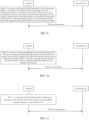
- step 111 in response to that the terminal of the first type monitors predetermined information on the initial DL BWP and an opportunity for monitoring MBS is reached, it is switched to monitor MBS on CFR.
- the terminal of the first type is a RedCap terminal in an RRC disconnected state.
- the terminal of the first type may receive configuration information sent by the network device, where the configuration information indicates a predetermined resource.
- the predetermined resource includes CFR and/or initial DL BWP, and the terminal compares the initial DL BWP and CFR.
- the terminal of the first type may still monitor the MBS.
- step 111 is executed, as shown in FIG. 12 , the method also includes:
- step 121 in response to the end of monitoring the MBS on the CFR, switching to monitor the predetermined information on the initial DL BWP.
- an embodiment of the present disclosure provides a method for monitoring an MBS, where the method is performed by a terminal of a first type, and the method includes the following steps.
- a monitoring operation in response to a conflict between an opportunity for monitoring predetermined information and an opportunity for monitoring the MBS, a monitoring operation is determined according to priority levels of monitoring the predetermined information and monitoring the MBS; where the monitoring operation includes: monitoring the predetermined information or monitoring the MBS.
- the terminal of the first type is a RedCap terminal in an RRC disconnected state.
- the terminal of the first type may receive configuration information sent by the network device, where the configuration information indicates a predetermined resource.
- the predetermined resource includes CFR and/or initial DL BWP, and the terminal of the first type compares initial DL BWP and CFR.
- the terminal of the first type may still monitor the MBS.
- the monitoring operation in response to the opportunity for monitoring the predetermined information and the opportunity for monitoring the MBS being the same, is determined according to the priority levels of monitoring the predetermined information and monitoring the MBS; where the monitoring operation includes: monitoring the predetermined information or monitoring the MBS.
- the priority level of monitoring the predetermined information and the priority level of monitoring the MBS are preset. In an embodiment, in response to that the opportunity for monitoring the predetermined information and the opportunity for monitoring the MBS conflict and the priority level of monitoring the predetermined information is higher than the priority level of monitoring the MBS, the predetermined information is monitored. It should be noted that "higher than” in the present disclosure has the meaning of "higher than or equal to” in a specific scenario.
- the priority level of monitoring the predetermined information and the priority level of monitoring the MBS are preset. In an embodiment, in response to that the opportunity for monitoring the predetermined information and the opportunity for monitoring the MBS conflict and the priority level of monitoring the predetermined information is lower than the priority level of monitoring the MBS, the MBS is monitored. It should be noted that "lower than” in the present disclosure has the meaning of "lower than or equal to” in a specific scenario.
- the predetermined information may be information carried in a paging message or a random access message.
- step 131 the method also includes: step 141, determining the priority level of monitoring the MBS according to a type of the MBS.
- the priority level in step 131 may be determined through step 141 for example.
- the priority level of monitoring the MBS in response to an importance parameter of the MBS being greater than a parameter threshold, it is determined that the priority level of monitoring the MBS is greater than a level threshold; or, in response to the importance parameter of the MBS being less than the parameter threshold, it is determined that the priority level of monitoring the MBS is less than the level threshold.
- the priority level of monitoring the MBS is greater than the level threshold.
- the priority level of monitoring MBS is higher than that of monitoring the predetermined information.
- the predetermined information may be information carried in a paging message or a random access message.
- a resource determining apparatus is provided in an embodiment of the present disclosure, where the apparatus includes:
- determining module 151 may be configured to execute any one of the foregoing steps 21 to 71, which will not be repeated here.
- an embodiment of the present disclosure provides an apparatus for monitoring an MBS service, where the apparatus includes:
- processing module 161 may be configured to execute any one of the foregoing steps 81 to 141, which will not be repeated here.
- An embodiment of the present disclosure provides a communication device, which includes:
- the processor may include various types of storage media, which are non-transitory computer storage media, and can continue to memorize and store information thereon after the communication device is powered off.
- the processor may be connected to the memory through a bus or the like, and is used to read the executable program stored in the memory.
- An embodiment of the present disclosure further provides a computer storage medium, where the computer storage medium stores an executable program of a computer, and when the executable program is executed by the processor, the method of any embodiment of the present disclosure is implemented.
- an embodiment of the present disclosure provides a structure of the terminal.
- this embodiment provides the terminal 800, which specifically may be a mobile phone, a computer, a digital broadcast terminal, a messaging device, a gaming console, a tablet, a medical device, exercise equipment, a personal digital assistant, and the like.
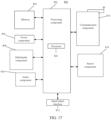
- the terminal 800 may include one or more of the following components: a processing component 802, a memory 804, a power component 806, a multimedia component 808, an audio component 810, an input/output (I/O) interface 812, a sensor component 814, and a communication component 816.
- the processing component 802 typically controls overall operations of the terminal 800, such as the operations associated with display, telephone calls, data communications, camera operations, and recording operations.
- the processing component 802 may include one or more processors 820 to execute instructions to perform all or part of the steps in the above described methods.
- the processing component 802 may include one or more modules which facilitate the interaction between the processing component 802 and other components.
- the processing component 802 may include a multimedia module to facilitate the interaction between the multimedia component 808 and the processing component 802.
- the memory 804 is configured to store various types of data to support the operation of the device 800. Examples of such data include instructions for any applications or methods operated on the terminal 800, contact data, phonebook data, messages, pictures, video, etc.
- the memory 804 may be implemented using any type of volatile or non-volatile memory devices, or a combination thereof, such as a static random access memory (SRAM), an electrically erasable programmable read-only memory (EEPROM), an erasable programmable read-only memory (EPROM), a programmable read-only memory (PROM), a read-only memory (ROM), a magnetic memory, a flash memory, a magnetic or optical disk.
- SRAM static random access memory
- EEPROM electrically erasable programmable read-only memory
- EPROM erasable programmable read-only memory
- PROM programmable read-only memory
- ROM read-only memory
- magnetic memory a magnetic memory
- flash memory a flash memory
- magnetic or optical disk a magnetic or optical
- the power component 806 provides power to various components of the terminal 800.
- the power component 806 may include a power management system, one or more power sources, and any other components associated with the generation, management, and distribution of power in the terminal 800.
- the multimedia component 808 includes a screen providing an output interface between the terminal 800 and the user.
- the screen may include a liquid crystal display (LCD) and a touch panel (TP). If the screen includes the touch panel, the screen may be implemented as a touch screen to receive input signals from the user.
- the touch panel includes one or more touch sensors to sense touches, swipes, and gestures on the touch panel. The touch sensors may not only sense a boundary of a touch or swipe action, but also sense a period of time and a pressure associated with the touch or swipe action.
- the multimedia component 808 includes a front camera and/or a rear camera. The front camera and the rear camera may receive an external multimedia datum while the terminal 800 is in an operation mode, such as a photographing mode or a video mode. Each of the front camera and the rear camera may be a fixed optical lens system or have focus and optical zoom capability.
- the audio component 810 is configured to output and/or input audio signals.
- the audio component 810 includes a microphone ("MIC") configured to receive an external audio signal when the terminal 800 is in an operation mode, such as a call mode, a recording mode, and a voice recognition mode.
- the received audio signal may be further stored in the memory 804 or transmitted via the communication component 816.
- the audio component 810 further includes a speaker to output audio signals.
- the I/O interface 812 provides an interface between the processing component 802 and peripheral interface modules, such as a keyboard, a click wheel, buttons, and the like.
- the buttons may include, but are not limited to, a home button, a volume button, a starting button, and a locking button.
- the sensor component 814 includes one or more sensors to provide status assessments of various aspects of the terminal 800. For instance, the sensor component 814 may detect an open/closed status of the terminal 800, relative positioning of components, e.g., the display and the keypad, of the terminal 800, a change in position of the terminal 800 or a component of the terminal 800, a presence or absence of user contact with the terminal 800, an orientation or an acceleration/deceleration of the terminal 800, and a change in temperature of the terminal 800.
- the sensor component 814 may include a proximity sensor configured to detect the presence of nearby objects without any physical contact.
- the sensor component 814 may also include a light sensor, such as a CMOS or CCD image sensor, for use in imaging applications.
- the sensor component 814 may also include an accelerometer sensor, a gyroscope sensor, a magnetic sensor, a pressure sensor, or a temperature sensor.
- the communication component 816 is configured to facilitate communication, wired or wirelessly, between the terminal 800 and other devices.
- the terminal 800 can access a wireless network based on a communication standard, such as WiFi, 2G, or 3G, or a combination thereof.
- the communication component 816 receives a broadcast signal or broadcast associated information from an external broadcast management system via a broadcast channel.
- the communication component 816 further includes a near field communication (NFC) module to facilitate short-range communications.
- the NFC module may be implemented based on a radio frequency identification (RFID) technology, an infrared data association (IrDA) technology, an ultra-wideband (UWB) technology, a Bluetooth (BT) technology, and other technologies.
- RFID radio frequency identification
- IrDA infrared data association
- UWB ultra-wideband
- BT Bluetooth
- the terminal 800 may be implemented with one or more application specific integrated circuits (ASICs), digital signal processors (DSPs), digital signal processing devices (DSPDs), programmable logic devices (PLDs), field programmable gate arrays (FPGAs), controllers, micro-controllers, microprocessors, or other electronic components, for performing the above described methods.
- ASICs application specific integrated circuits
- DSPs digital signal processors
- DSPDs digital signal processing devices
- PLDs programmable logic devices
- FPGAs field programmable gate arrays
- controllers micro-controllers, microprocessors, or other electronic components, for performing the above described methods.
- non-transitory computer-readable storage medium including instructions, such as included in the memory 804, executable by the processor 820 in the terminal 800, for performing the above-described methods.
- the non-transitory computer-readable storage medium may be a ROM, a RAM, a CD-ROM, a magnetic tape, a floppy disc, an optical data storage device, and the like.
- an embodiment of the present disclosure shows a structure of a base station.
- the base station 900 may be provided as a network side device.
- the base station 900 includes a processing component 922, which further includes one or more processors, and a memory resource represented by a memory 932 for storing instructions executable by the processing component 922, such as application programs.
- the application program stored in the memory 932 may include one or more modules each corresponding to a set of instructions.
- the processing component 922 is configured to execute instructions, so as to perform any of the aforementioned methods applied to the base station.
- the base station 900 may also include a power component 926 configured to perform power management of the base station 900, a wired or wireless network interface 950 configured to connect the base station 900 to a network, and an input-output (I/O) interface 958.
- the base station 900 can operate based on an operating system stored in the memory 932, such as Windows Server TM , Mac OS X TM , Unix TM , Linux TM , FreeBSD TM or the like.
- the methods of the embodiments of the present disclosure may include at least one of the following.
- the network determines the configuration of CFR and/or RedCap initial DL BWP according to whether to provide the MBS service for the RedCap terminal. If the network determines to provide RedCap with the related MBS service, it needs to support that RedCap Initial DL BWP can include CFR or the UE bandwidth of the terminal can monitor Initial DL BWP or CFR at the same time. Otherwise, the network does not take the restriction into account when configuring.
- the terminal determines whether it needs to monitor the MBS service by comparing the configuration of the CFR and the configuration of the initial DL BWP. If the monitored Initial DL BWP cannot cover the CFR or the UE bandwidth of the terminal cannot monitor the Initial DL BWP or CFR at the same time, then the terminal does not monitor the MBS at this time.
- the network side determines whether the initial DL BWP contains the first CFR or the UE bandwidth of the terminal can monitor the Initial DL BWP or CFR at the same time by comparing the positions of the RedCap initial DL BWP and the first CFR. If the condition cannot be met, the network can configure a second CRF for RedCap at this time.
- the second CFR needs to be included in the RedCap initial DL BWP or it is ensured that the second CRF and RedCap initial DL BWP are within the UE bandwidth of redCap.
- the terminal side it is determined whether there is a second CFR for RedCap.
- the MBS service is received on the second CFR.
- the RedCap terminal receives the MBS and monitors messages (such as paging, RACH) in the idle/inactive through BWP switching. Specifically, the terminal needs to switch to the CFR resource at the opportunity of needing to receive the MBS. After completing the receiving, the terminal switches back to the initial DL BWP to receive information.
- messages such as paging, RACH
- a conflict occurs between the terminal receives MBS and receives information in idle/inactive state such as paging, RACH, etc.:
Landscapes
- Engineering & Computer Science (AREA)
- Computer Networks & Wireless Communication (AREA)
- Signal Processing (AREA)
- Multimedia (AREA)
- Mobile Radio Communication Systems (AREA)
- Data Exchanges In Wide-Area Networks (AREA)
Applications Claiming Priority (1)
| Application Number | Priority Date | Filing Date | Title |
|---|---|---|---|
| PCT/CN2021/141814 WO2023122918A1 (zh) | 2021-12-27 | 2021-12-27 | 资源确定和监听mbs的方法、装置、通信设备及存储介质 |
Publications (2)
| Publication Number | Publication Date |
|---|---|
| EP4460049A1 true EP4460049A1 (de) | 2024-11-06 |
| EP4460049A4 EP4460049A4 (de) | 2025-03-12 |
Family
ID=86996853
Family Applications (1)
| Application Number | Title | Priority Date | Filing Date |
|---|---|---|---|
| EP21969303.3A Pending EP4460049A4 (de) | 2021-12-27 | 2021-12-27 | Verfahren zur ressourcenbestimmung und -überwachung von mbs, vorrichtung, kommunikationsvorrichtung und speichermedium |
Country Status (4)
| Country | Link |
|---|---|
| US (1) | US20250063579A1 (de) |
| EP (1) | EP4460049A4 (de) |
| CN (1) | CN116671136A (de) |
| WO (1) | WO2023122918A1 (de) |
Cited By (1)
| Publication number | Priority date | Publication date | Assignee | Title |
|---|---|---|---|---|
| US20240098759A1 (en) * | 2022-09-19 | 2024-03-21 | Qualcomm Incorporated | Common time resources for multicasting |
Families Citing this family (2)
| Publication number | Priority date | Publication date | Assignee | Title |
|---|---|---|---|---|
| US20240098760A1 (en) * | 2022-09-20 | 2024-03-21 | Qualcomm Incorporated | Multicast scheduling in a full duplex network |
| CN117280823A (zh) * | 2023-08-03 | 2023-12-22 | 上海玄戒技术有限公司 | 通信方法、装置、设备及存储介质 |
Family Cites Families (11)
| Publication number | Priority date | Publication date | Assignee | Title |
|---|---|---|---|---|
| EP2312897B1 (de) * | 2008-08-06 | 2018-10-10 | Sharp Kabushiki Kaisha | Mobilstationsvorrichtung, basisstationsvorrichtung und kommunikationsverfahren |
| US11115911B2 (en) * | 2018-09-14 | 2021-09-07 | Qualcomm Incorporated | Reuse of control channel resource associated with initial access |
| WO2021012130A1 (zh) * | 2019-07-19 | 2021-01-28 | 北京小米移动软件有限公司 | 监听处理、策略下发方法及装置、通信设备及存储 |
| MX2022008390A (es) * | 2020-01-10 | 2022-08-08 | Fg innovation co ltd | Metodo y equipo de usuario para recepcion de datos de servicio de multidifusion/difusion. |
| WO2021159466A1 (en) * | 2020-02-14 | 2021-08-19 | Mediatek Singapore Pte. Ltd. | Methods and apparatus of group scheduling for nr multicast service |
| EP4118786B1 (de) * | 2020-03-27 | 2026-03-04 | Sharp Kabushiki Kaisha | Benutzergerät und verfahren für multicast-/broadcast-dienst |
| US11438735B2 (en) * | 2020-06-05 | 2022-09-06 | Qualcomm Incorporated | Positioning with disjoint bandwidth segments |
| CN112889334B (zh) * | 2021-01-18 | 2024-03-05 | 北京小米移动软件有限公司 | 一种带宽部分确定方法、带宽部分确定装置及存储介质 |
| EP4391676A4 (de) * | 2021-08-16 | 2024-10-23 | Beijing Xiaomi Mobile Software Co., Ltd. | Verfahren und vorrichtung zur ausrichtung von downlink-steuerungsinformationen |
| CN113841457B (zh) * | 2021-08-16 | 2024-12-24 | 北京小米移动软件有限公司 | 一种传输下行控制信息dci的方法及其装置 |
| WO2023050350A1 (zh) * | 2021-09-30 | 2023-04-06 | 北京小米移动软件有限公司 | Cfr的确定方法、装置、通信设备及存储介质 |
-
2021
- 2021-12-27 WO PCT/CN2021/141814 patent/WO2023122918A1/zh not_active Ceased
- 2021-12-27 US US18/723,602 patent/US20250063579A1/en active Pending
- 2021-12-27 CN CN202180004750.4A patent/CN116671136A/zh active Pending
- 2021-12-27 EP EP21969303.3A patent/EP4460049A4/de active Pending
Cited By (1)
| Publication number | Priority date | Publication date | Assignee | Title |
|---|---|---|---|---|
| US20240098759A1 (en) * | 2022-09-19 | 2024-03-21 | Qualcomm Incorporated | Common time resources for multicasting |
Also Published As
| Publication number | Publication date |
|---|---|
| EP4460049A4 (de) | 2025-03-12 |
| US20250063579A1 (en) | 2025-02-20 |
| CN116671136A (zh) | 2023-08-29 |
| WO2023122918A1 (zh) | 2023-07-06 |
Similar Documents
| Publication | Publication Date | Title |
|---|---|---|
| US12574183B2 (en) | Method for indicating or determining transmission configuration indication states, and device, and computer storage medium | |
| US20250008485A1 (en) | Method and apparatus for paging monitoring, communication device and storage medium | |
| US12114307B2 (en) | Method and apparatus for information processing | |
| US12309629B2 (en) | Information processing methods, user equipment, and base station | |
| EP4149183A1 (de) | Verfahren und vorrichtung zum senden einer funkrufnachricht, kommunikationsvorrichtung und speichermedium | |
| CN114009111B (zh) | Cfr的确定方法、装置、通信设备及存储介质 | |
| EP4665043A1 (de) | Verfahren und vorrichtung zur bestimmung einer direktzugriffsressource sowie kommunikationsvorrichtung und speichermedium | |
| US20240389153A1 (en) | Method for reporting terminal capability information, and communication device | |
| EP4460049A1 (de) | Verfahren zur ressourcenbestimmung und -überwachung von mbs, vorrichtung, kommunikationsvorrichtung und speichermedium | |
| CN111543118A (zh) | Rrc状态改变的方法、装置、通信设备及存储介质 | |
| CN112106425A (zh) | 资源处理方法及装置、通信设备及存储介质 | |
| CN111149388B (zh) | 通信处理方法、装置及计算机存储介质 | |
| CN115699923B (zh) | 终端能力信息的上报方法、装置、通信设备及存储介质 | |
| CN114631353B (zh) | 通信方法及装置、用户设备及存储介质 | |
| US20240365334A1 (en) | Method and apparatus for skipping monitoring, communication device and storage medium | |
| CN115039433A (zh) | 测量间隙调度方法及装置、通信设备及存储介质 | |
| CN114667764B (zh) | 带宽部分切换方法及装置、通信设备及存储介质 | |
| US20250274916A1 (en) | Resource configuration method and apparatus, and communication device and storage medium | |
| CN115943659B (zh) | 测量放松的方法、装置、通信设备及存储介质 | |
| EP4362573A1 (de) | Paketfunkrufverfahren und -vorrichtung, kommunikationsvorrichtung und speichermedium | |
| US20250227663A1 (en) | Method for determining paging restriction rule, communication device, and storage medium | |
| EP4447495A1 (de) | Informationsverarbeitungsverfahren und -vorrichtung, kommunikationsvorrichtung und speichermedium | |
| US20250261190A1 (en) | System information transmission method and apparatus, communication device, and storage medium | |
| EP4539568A1 (de) | Überwachungsverfahren und -vorrichtung, kommunikationsvorrichtung und speichermedium | |
| EP4598092A1 (de) | Verfahren und vorrichtung zur messlückenkonfiguration sowie kommunikationsvorrichtung und speichermedium |
Legal Events
| Date | Code | Title | Description |
|---|---|---|---|
| STAA | Information on the status of an ep patent application or granted ep patent |
Free format text: STATUS: THE INTERNATIONAL PUBLICATION HAS BEEN MADE |
|
| PUAI | Public reference made under article 153(3) epc to a published international application that has entered the european phase |
Free format text: ORIGINAL CODE: 0009012 |
|
| STAA | Information on the status of an ep patent application or granted ep patent |
Free format text: STATUS: REQUEST FOR EXAMINATION WAS MADE |
|
| 17P | Request for examination filed |
Effective date: 20240708 |
|
| AK | Designated contracting states |
Kind code of ref document: A1 Designated state(s): AL AT BE BG CH CY CZ DE DK EE ES FI FR GB GR HR HU IE IS IT LI LT LU LV MC MK MT NL NO PL PT RO RS SE SI SK SM TR |
|
| A4 | Supplementary search report drawn up and despatched |
Effective date: 20250210 |
|
| RIC1 | Information provided on ipc code assigned before grant |
Ipc: H04W 72/51 20230101ALN20250204BHEP Ipc: H04W 72/0453 20230101ALN20250204BHEP Ipc: H04W 72/30 20230101ALN20250204BHEP Ipc: H04L 12/18 20060101ALI20250204BHEP Ipc: H04W 4/70 20180101ALI20250204BHEP Ipc: H04W 76/40 20180101ALI20250204BHEP Ipc: H04W 4/06 20090101AFI20250204BHEP |
|
| DAV | Request for validation of the european patent (deleted) | ||
| DAX | Request for extension of the european patent (deleted) |