EP4460061A1 - Benutzergerät (benutzergerät) und kommunikationssteuerungsverfahren, das mit dem benutzergerät ausgeführt wird - Google Patents
Benutzergerät (benutzergerät) und kommunikationssteuerungsverfahren, das mit dem benutzergerät ausgeführt wird Download PDFInfo
- Publication number
- EP4460061A1 EP4460061A1 EP22915967.8A EP22915967A EP4460061A1 EP 4460061 A1 EP4460061 A1 EP 4460061A1 EP 22915967 A EP22915967 A EP 22915967A EP 4460061 A1 EP4460061 A1 EP 4460061A1
- Authority
- EP
- European Patent Office
- Prior art keywords
- nssai
- rejected
- snpn
- mapped
- case
- Prior art date
- Legal status (The legal status is an assumption and is not a legal conclusion. Google has not performed a legal analysis and makes no representation as to the accuracy of the status listed.)
- Pending
Links
Images


Classifications
-
- H—ELECTRICITY
- H04—ELECTRIC COMMUNICATION TECHNIQUE
- H04W—WIRELESS COMMUNICATION NETWORKS
- H04W12/00—Security arrangements; Authentication; Protecting privacy or anonymity
- H04W12/08—Access security
-
- H—ELECTRICITY
- H04—ELECTRIC COMMUNICATION TECHNIQUE
- H04W—WIRELESS COMMUNICATION NETWORKS
- H04W60/00—Affiliation to network, e.g. registration; Terminating affiliation with the network, e.g. de-registration
- H04W60/06—De-registration or detaching
-
- H—ELECTRICITY
- H04—ELECTRIC COMMUNICATION TECHNIQUE
- H04W—WIRELESS COMMUNICATION NETWORKS
- H04W48/00—Access restriction; Network selection; Access point selection
- H04W48/02—Access restriction performed under specific conditions
-
- H—ELECTRICITY
- H04—ELECTRIC COMMUNICATION TECHNIQUE
- H04W—WIRELESS COMMUNICATION NETWORKS
- H04W48/00—Access restriction; Network selection; Access point selection
- H04W48/16—Discovering, processing access restriction or access information
-
- H—ELECTRICITY
- H04—ELECTRIC COMMUNICATION TECHNIQUE
- H04W—WIRELESS COMMUNICATION NETWORKS
- H04W60/00—Affiliation to network, e.g. registration; Terminating affiliation with the network, e.g. de-registration
-
- H—ELECTRICITY
- H04—ELECTRIC COMMUNICATION TECHNIQUE
- H04W—WIRELESS COMMUNICATION NETWORKS
- H04W60/00—Affiliation to network, e.g. registration; Terminating affiliation with the network, e.g. de-registration
- H04W60/04—Affiliation to network, e.g. registration; Terminating affiliation with the network, e.g. de-registration using triggered events
-
- H—ELECTRICITY
- H04—ELECTRIC COMMUNICATION TECHNIQUE
- H04W—WIRELESS COMMUNICATION NETWORKS
- H04W8/00—Network data management
- H04W8/02—Processing of mobility data, e.g. registration information at HLR [Home Location Register] or VLR [Visitor Location Register]; Transfer of mobility data, e.g. between HLR, VLR or external networks
Definitions
- the present invention relates to a User Equipment (UE) and the like.
- UE User Equipment
- SAE System Architecture Evolution
- next-generation communication technologies and system architectures for 5th Generation (5G) mobile communication systems which are next generation mobile communication systems, and in particular, has standardized a 5G System (5GS) as a system for realizing a 5G mobile communication system (see NPL 1).
- 5G System 5G System
- NPL 1 3GPP TS 24.501 V17.4.1 (2021-09); 3rd Generation Partnership Project; Technical Specification Group Core Network and Terminals; Non-Access-Stratum (NAS) protocol for 5G System (5GS); Stage 3 (Release 17)
- NAS Non-Access-Stratum
- 5G Core Network 5GCN which is a new core network has been studied for the purpose of providing various services.
- a network slice that corresponds to a logical network providing specific network functions and specific network characteristics has been defined for a specific service type or a specific group.
- the network slice may be a logical network provided for terminals with a low latency function, or may be a logical network provided for sensor terminals used in the Internet of Things (IoT).
- IoT Internet of Things
- the 3GPP has studied Enhancement of Network Slicing (eNS) to study further functions associated with network slices.
- eNS Enhancement of Network Slicing
- the 3GPP has studied, as a study about phase 2 of eNS, addition of a function for managing the number of pieces of UE or the number of sessions for connection that is allowed for each slice (Network Slice Admission Control (NSAC).
- NSAC Network Slice Admission Control
- enhanced NPN enhanced NPN
- addition of an onboarding service function of an NPN has been studied.
- the 3GPP has studied functions of NSSAA and NSAC being supported in a Stand-alone Non-Public Network (SNPN) which is one of the NPNs.
- SNPN Stand-alone Non-Public Network
- the present disclosure has been made in light of the above circumstances, and aims to provide a method of implementing functions for the NS and/or the SNPN in the 5GS.
- a User Equipment (UE) includes a controller and a storage unit, wherein in a case that the UE enters a 5GMM-DEREGISTERED state for a current SNPN because of a failure of registration due to a 5GMM cause other than a 5GMM cause indicating "No network slices available", the controller deletes rejected NSSAI for the failed or revoked NSSAA for the current SNPN from the storage unit.
- a User Equipment (UE) includes a controller and a storage unit, wherein in a case that the UE uses explicit signalling to deregister with the current SNPN or enter the 5GMM-DEREGISTERED state for the current SNPN, the controller deletes rejected NSSAI for the failed or revoked NSSAA for the current SNPN including one or multiple pieces of S-NSSAI from the storage unit, and the controller includes, in requested NSSAI, the S-NSSAI included in Allowed NSSAI or Configured NSSAI.
- the function of the network slice in the SNPN of the 5GS can be supported.
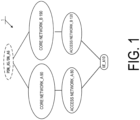
- FIG. 1 is a diagram illustrating an overview of a mobile communication system 1 used in each embodiment
- FIG. 2 is a diagram illustrating a detailed configuration of the mobile communication system 1.
- FIG. 1 illustrates the mobile communication system 1 including UE_A 10, an access network _A 80, a core network_A 90, a Packet Data Network (PDN)_A 5, an access network_B 120, a core network_B 190, and a Data Network (DN)_A 6.
- PDN Packet Data Network
- DN Data Network
- an access network_A a core network_A, a PDN, an access network_B, a core network_B, a DN, and the like.
- FIG. 2 illustrates apparatuses and functions such as the UE_A 10, an E-UTRAN 80, an MME 40, an SGW 35, a PGW-U 30, a PGW-C 32, a PCRF 60, an HSS 50, a 5G AN 120, an AMF 140, a UPF 130, an SMF 132, a PCF 160, a UDM 150, and an N3IWF 170, and interfaces for connecting these apparatuses and functions to each other.
- apparatuses and functions such as the UE_A 10, an E-UTRAN 80, an MME 40, an SGW 35, a PGW-U 30, a PGW-C 32, a PCRF 60, an HSS 50, a 5G AN 120, an AMF 140, a UPF 130, an SMF 132, a PCF 160, a UDM 150, and an N3IWF 170, and interfaces for connecting these apparatuses and functions to each other.
- the reference numerals of these apparatuses and functions may be omitted as in UE, an E-UTRAN, an MME, an SGW, a PGW-U, a PGW-C, a PCRF, an HSS, a 5G AN, an AMF, a UPF, an SMF, a PCF, a UDM, an N3IWF, and the like.
- an Evolved Packet System that is a 4G system includes an access network_A and a core network_A and may further include UE and/or a PDN.
- a 5G System that is a 5G system includes UE, an access network_B, and a core network B and may further include a DN.
- the UE is an apparatus that can be connected to a network service over 3GPP access (also referred to as a 3GPP access network or a 3GPP AN) and/or non-3GPP access (also referred to as a non-3GPP access network or a non-3GPP AN).
- the UE may be a terminal apparatus capable of performing radio communication, such as a mobile phone or a smartphone, and may be a terminal apparatus that can be connected to both the EPS and the 5GS.
- the UE may include a Universal Integrated Circuit Card (UICC) and an Embedded UICC (eUICC). Note that the UE may be referred to as user equipment or a terminal apparatus.
- UICC Universal Integrated Circuit Card
- eUICC Embedded UICC
- the access network_A corresponds to an Evolved Universal Terrestrial Radio Access Network (E-UTRAN) and/or a wireless LAN access network.
- E-UTRAN Evolved Universal Terrestrial Radio Access Network
- eNBs evolved Node-B
- the reference numeral of the eNB 45 may be omitted as in eNB.
- the eNBs are connected to each other via, for example, an X2 interface.
- one or multiple access points are deployed on the wireless LAN access network.
- the access network_B corresponds to a 5G access network (5G AN).
- the 5G AN includes an NG Radio Access Network (NG-RAN) and/or a non-3GPP access network.
- NG-RAN NG Radio Access Network
- gNBs NR Node-Bs
- the gNB is a node that provides a New Radio (NR) user plane and control plane to the UE, and is connected to a 5GCN via an NG interface (including an N2 interface or an N3 interface).
- the gNB is a base station apparatus newly designed for the 5GS and has functions different from those of the base station apparatus (eNB) used in the EPS that is a 4G system.
- the gNBs are connected to each other via, for example, an Xn interface.
- the non-3GPP access network may be an untrusted non-3GPP access network or may be a trusted non-3GPP access network.
- the untrusted non-3GPP access network may be a non-3GPP access network that does not manage security on the access network, for example, a public wireless LAN.
- the trusted non-3GPP access network may be an access network defined by the 3GPP and may include a trusted non-3GPP access point (TNAP) and a trusted non-3GPP Gateway function (TNGF).
- TNAP trusted non-3GPP access point
- TNGF trusted non-3GPP Gateway function
- the NG-RAN refers to a radio access network connected to the 5GCN, and may use NR and/or E-UTRA.
- the NG-RAN may be an E-UTRAN.
- the E-UTRAN and the NG-RAN may be referred to as 3GPP access.
- the wireless LAN access network and the non-3GPP AN may be referred to as non-3GPP access.
- nodes deployed on the access network_B may also be collectively referred to as NG-RAN nodes.
- the access network_A, and/or the access network_B, and/or an apparatus included in the access network_A, and/or an apparatus included in the access network_B may be referred to as an access network or an access network apparatus.
- the core network A corresponds to an Evolved Packet Core (EPC).
- EPC Evolved Packet Core
- MME Mobility Management Entity
- SGW Serving Gateway
- PGW Packet Data Network Gateway
- PCRF Policy and Charging Rules Function
- HSS Home Subscriber Server
- the core network_B corresponds to a 5G Core Network (5GCN).
- An Access and Mobility Management Function (AMF), a User Plane Function (UPF), a Session Management Function (SMF), a Policy Control Function (PCF), a Unified Data Management (UDM), and the like are deployed on the 5GCN.
- the 5GCN may be referred to as a 5GC.
- the core network_A, and/or the core network_B, an apparatus included in the core network_A, and/or an apparatus included in the core network_B may be referred to as a core network, a core network apparatus, or an intra-core network apparatus.
- the core network may refer to an IP mobile communication network operated by a mobile communication (Mobile Network Operator (MNO)) connecting the access network (the access network_A and/or the access network_B) and the PDN and/or the DN, a core network for a mobile communication operator that operates and manages the mobile communication system 1, or a core network for a virtual mobile communication operator and a virtual mobile communication service provider such as a Mobile Virtual Network Operator (MVNO) and a Mobile Virtual Network Enabler (MVNE).
- MNO Mobile Network Operator
- MVNO Mobile Virtual Network Operator
- MVNE Mobile Virtual Network Enabler
- the core network (the core network A and/or the core network_B) and the access network (access network_A and/or the access network_B) may differ for each mobile communication operator.
- FIG. 1 illustrates a case that the PDN and the DN are the same, the PDN and the DN may be different.
- the PDN may be a Data Network (DN) that provides communication services to the UE.
- the DN may be configured as a packet data service network or may be configured for each service.
- the PDN may include a connected communication terminal.
- “to be connected to the PDN” may mean “to be connected to a communication terminal and a server apparatus deployed in the PDN”.
- “to transmit and/or receive user data to and/or from the PDN” may mean “to transmit and/or receive user data to and/or from a communication terminal and a server apparatus deployed in the PDN”.
- the PDN may be referred to as a DN
- the DN may be referred to as a PDN.
- the access network_A, the core network_A, the PDN, the access network_B, the core network_B, and the DN, and/or one or multiple apparatuses included in these may be referred to as a network or a network apparatus.
- the expression that "the network and/or the network apparatus transmits and/or receives a message and/or performs a procedure" means that "at least some of the access network_A, the core network_A, the PDN, the access network_B, the core network_B, and the DN, and/or one or multiple apparatuses included in these transmit and/or receive a message and/or perform a procedure".
- the UE can be connected to the access network.
- the UE can be connected to the core network over the access network.
- the UE can be connected to the PDN or the DN over the access network and the core network.
- the UE can transmit and/or receive (communicate) user data to and/or from the PDN or the DN.
- IP Internet Protocol
- non-IP communication may be used.
- IP communication refers to data communication using an IP, and data is transmitted and/or received using IP packets.
- Each IP packet includes an IP header and a payload part.
- data transmitted and/or received by the apparatuses and functions included in the EPS and the apparatuses and functions included in the 5GS may be included.
- non-IP communication refers to data communication performed using no IP, in which data is transmitted and/or received in a form different from the structure of an IP packet.
- non-IP communication may be data communication implemented through transmission and/or reception of application data to which an IP header is not added, or user data transmitted and/or received by the UE may be transmitted and/or received with another header such as a MAC header and an Ethernet (trade name) frame header added.
- apparatuses which are not illustrated in FIG. 2 may be included in the access network_A, the core network_A, the access network_B, the core network_B, the PDN_A, and the DN_A.
- the core network_A and/or the core network B and/or the PDN_A and/or the DN_A may include an Authentication Server Function (AUSF) and an Authentication, authorization, and accounting (AAA) server (AAA-S).
- AUSF Authentication Server Function
- AAA-S Authentication, authorization, and accounting
- the AAA server may be deployed outside the core network.
- the AUSF is a core network apparatus provided with an authentication function for 3GPP access and non-3GPP access.
- the AUSF is a network function unit that receives an authentication request for 3GPP access and/or non-3GPP access from the UE and performs an authentication procedure.
- the AAA server is an apparatus that is connected directly to the AUSF or indirectly to the AUSF via another network apparatus and has authentication, authorization, and billing functions.
- the AAA server may be a network apparatus within the core network.
- the AAA server may not be included in the core network A and/or the core network B and may be included in a PLMN and/or an SNPN.
- the AAA server may be a core network apparatus or may be an apparatus outside the core network.
- the AAA server may be a server apparatus within a PLMN and/or an SNPN managed by a 3rd Party.
- an NW may stand for a core network, an access network, or both.
- each of the apparatuses and functions is illustrated one by one for simplicity in FIG. 2 , multiple similar apparatuses and functions may be included in the mobile communication system 1.
- multiple apparatuses and functions such as multiple pieces of UE_A 10, E-UTRANs 80, MMEs 40, SGWs 35, PGW-Us 30, PGW-Cs 32, PCRFs 60, HSSs 50, 5G ANs 120, AMFs 140, UPFs 130, SMFs 132, PCFs 160, and/or UDMs 150 may be included in the mobile communication system 1.
- each apparatus may be configured as physical hardware, may be configured as logical (virtual) hardware configured in general-purpose hardware, or may be configured as software.
- at least a part (including all) of the functions of each apparatus may be configured as physical hardware, logical hardware, or software.
- each storage unit in each apparatus and function to be described later includes, for example, a semiconductor memory, a Solid State Drive (SSD), a Hard Disk Drive (HDD), or the like.
- each storage unit can store not only information originally configured at the time of being shipped, but also various pieces of information transmitted and/or received to and/or from apparatuses and functions (for example, the UE, and/or the access network apparatus, and/or the core network apparatus, and/or the PDN, and/or the DN) other than the apparatus and functions of each storage unit.
- each storage unit can store identification information, control information, flags, parameters, and the like included in a control message transmitted and/or received in various communication procedures to be described later. In addition, each storage unit may store these pieces of information for each UE. In addition, in a case that each storage unit performs interworking between the 5GS and the EPS, each storage unit can store a control message and user data transmitted and/or received to and/or from the apparatuses and functions included in the 5GS and/or the EPS. In this case, not only data transmitted and/or received over the N26 interface but also data transmitted and/or received without using the N26 interface can be stored.
- the UE includes a controller_A 300, an antenna 310, a transmission and/or reception unit_A 320, and a storage unit_A 340.
- the controller_A 300, the transmission and/or reception unit_A 320, and the storage unit_A 340 are connected via a bus.
- the transmission and/or reception unit_A 320 is connected to the antenna 310.
- the controller_A 300 is a function unit that controls overall operations and functions of the UE.
- the controller_A 300 reads and performs various programs stored in the storage unit_A 340 as necessary, and thereby implements various types of processing in the UE.
- the transmission and/or reception unit_A 320 is a function unit that performs radio communication with a base station apparatus (the eNB or the gNB) within the access network via the antenna.
- a base station apparatus the eNB or the gNB
- the UE can transmit and/or receive user data and/or control information to and/or from the access network apparatus, and/or the core network apparatus, and/or the PDN, and/or the DN.
- the UE can communicate with the base station apparatus (eNB) within the E-UTRAN over an LTE-Uu interface.
- the UE can communicate with the base station apparatus (gNB) within the 5G AN with the use of the transmission and/or reception unit_A 320.
- the UE can transmit and/or receive a Non-Access-Stratum (NAS) message to and/or from the AMF over an N1 interface with the use of the transmission and/or reception unit_A 320.
- NAS Non-Access-Stratum
- the N1 interface is a logical interface, and thus communication between the UE and the AMF is actually performed over the 5G AN.
- the storage unit_A 340 is a function unit that stores programs, user data, control information, and the like necessary for each operation of the UE.
- the gNB includes a controller_B 500, an antenna 510, a network connection unit_B 520, a transmission and/or reception unit_B 530, and a storage unit_B 540.
- the controller_B 500, the network connection unit_B 520, the transmission and/or reception unit_B 530, and the storage unit_B 540 are connected via a bus.
- the transmission and/or reception unit_B 530 is connected to the antenna 510.
- the controller_B 500 is a function unit that controls overall operations and functions of the gNB.
- the controller_B 500 reads and performs various programs stored in the storage unit_B 540 as necessary, and thereby implements various types of processing in the gNB.
- the network connection unit_B 520 is a function unit for the gNB to communicate with the AMF and/or the UPF. In other words, with the use of the network connection unit_B 520, the gNB can transmit and/or receive user data and/or control information to and/or from the AMF and/or the UPF.
- the transmission and/or reception unit_B 530 is a function unit that performs radio communication with the UE via the antenna 510.
- the gNB can transmit and/or receive user data and/or control information to and/or from the UE.
- the gNB within the 5G AN can communicate with the AMF over the N2 interface and can communicate with the UPF over the N3 interface.
- the gNB can communicate with the UE with the use of the transmission and/or reception unit_B 530.
- the storage unit_B 540 is a function unit that stores programs, user data, control information, and the like necessary for each operation of the gNB.
- the AMF includes a controller_B 700, a network connection unit_B 720, and a storage unit_B 740.
- the controller_B 700, the network connection unit_B 720, and the storage unit_B 740 are connected via a bus.
- the AMF may be a node that handles a control plane.
- the controller_B 700 is a function unit that controls overall operations and functions of the AMF.
- the controller_B 700 reads and performs various programs stored in the storage unit_B 740 as necessary, and thereby implements various types of processing in the AMF.
- the network connection unit_B 720 is a function unit for the AMF to connect to the base station apparatus (gNB) within the 5G AN, and/or the SMF, and/or the PCF, and/or the UDM, and/or an SCEF.
- the AMF can transmit and/or receive user data and/or control information to and/or from the base station apparatus (gNB) in the 5G AN, and/or the SMF, and/or the PCF, and/or the UDM, and/or the SCEF.
- the AMF within the 5GCN can communicate with the gNB over the N2 interface, can communicate with the UDM over an N8 interface, can communicate with the SMF over an N11 interface, and can communicate with the PCF over an N15 interface.
- the AMF can transmit and/or receive a NAS message to and/or from the UE over the N1 interface with the use of the network connection unit_A 620.
- the N1 interface is a logical interface, and thus communication between the UE and the AMF is actually performed over the 5G AN.
- the AMF can communicate with the MME over the N26 interface with the use of the network connection unit_A 620.
- the storage unit_B 740 is a function unit that stores programs, user data, control information, and the like necessary for each operation of the AMF.
- the AMF has a function of exchanging a control message with the RAN using the N2 interface, a function of exchanging a NAS message with the UE using the N1 interface, a function of performing encryption and integrity protection of a NAS message, a Registration management (RM) function, a Connection management (CM) function, a Reachability management function, a Mobility management function for the UE or the like, a function of transferring a Session Management (SM) message between the UE and the SMF, an Access Authentication (Access Authorization) function, a security anchor function (Security Anchor Functionality (SEA)), a Security Context Management (SCM) function, a function of supporting the N2 interface for a Non-3GPP Interworking Function (N3IWF), a function of supporting transmission and/or reception of a NAS signal to an/or from the UE via the N3IWF, a function of authenticating the UE connected via the N3IWF, and the like.
- N3IWF Non-3
- an RM state for each piece of UE is managed.
- the RM state may be synchronized between the UE and the AMF.
- the RM state includes a deregistered state (RM-DEREGISTERED state) and a registered state (RM-REGISTERED state).
- RM-DEREGISTERED state because the UE is not registered with the network, the AMF is in a state of being unable to reach the UE, because a UE context in the AMF does not have location information and routing information that are valid for the UE.
- the UE can receive a service that requires registration with the network.
- the RM state may be referred to as a 5GMM state.
- the RM-DEREGISTERED state may be referred to as a 5GMM-DEREGISTERED state
- the RM-REGISTERED state may be referred to as a 5GMM-REGISTERED state.
- 5GMM-REGISTERED may be a state in which each apparatus establishes a 5GMM context, or may be a state in which each apparatus establishes a PDU session context.
- the UE_A 10 may start transmission and/or reception of user data and a control message, or may respond to paging.
- the UE_A 10 may perform a registration procedure other than a registration procedure for initial registration, and/or a service request procedure.
- 5GMM-DEREGISTERED may be a state in which each apparatus does not establish the 5GMM context, may be a state in which the location information of the UE_A 10 is not known to the network, or may be a state in which the network is unable to reach the UE_A 10. Note that, in a case that each apparatus is in 5GMM-DEREGISTERED, the UE_A 10 may initiate the registration procedure, or may perform the registration procedure to thereby establish the 5GMM context.
- CM state for each UE is managed.
- the CM state may be synchronized between the UE and the AMF.
- the CM state includes a non-connected state (CM-IDLE state) and a connected state (CM-CONNECTED state).
- CM-IDLE state the UE is in the RM-REGISTERED state, but does not have NAS signaling connection established with the AMF via the N1 interface.
- the CM-IDLE state the UE has neither connection of the N2 interface (N2 connection) nor connection of the N3 interface (N3 connection).
- the CM-CONNECTED state the UE has NAS signaling connection established with the AMF via the N1 interface.
- the CM-CONNECTED state the UE may have connection of the N2 interface (N2 connection) and/or connection of the N3 interface (N3 connection).
- the CM state in 3GPP access may include a non-connected state in 3GPP access (CM-IDLE state over 3GPP access) and a connected state in 3GPP access (CM-CONNECTED state over 3GPP access).
- the CM state in non-3GPP access may include a non-connected state in non-3GPP access (CM-IDLE state over non-3GPP access) and a connected state in non-3GPP access (CM-CONNECTED state over non-3GPP access).
- CM-IDLE state over 3GPP access a non-connected state in non-3GPP access
- CM-CONNECTED state over non-3GPP access CM-CONNECTED state over non-3GPP access
- the non-connected state may be referred to as an idle mode
- a connected state mode may be referred to as a connected mode.
- the CM state may be referred to as a 5GMM mode.
- the non-connected state may be referred to as a 5GMM non-connected mode (5GMM-IDLE mode)
- the connected state may be referred to as a 5GMM connected mode (5GMM-CONNECTED mode).
- the non-connected state in 3GPP access may be referred to as a 5GMM non-connected mode in 3GPP access (5GMM-IDLE mode over 3GPP access)
- the connected state in 3GPP access may be referred to as a 5GMM connected mode in 3GPP access (5GMM-CONNECTED mode over 3GPP access).
- non-connected state in non-3GPP access may be referred to as a 5GMM non-connected mode in non-3GPP access (5GMM-IDLE mode over non-3GPP access), and the connected state in non-3GPP access may be referred to as a 5GMM connected mode in non-3GPP access (5GMM-CONNECTED mode over non-3GPP access).
- 5GMM non-connected mode may be referred to as an idle mode
- 5GMM connected mode may be referred to as a connected mode.
- one or multiple AMFs may be deployed within the core network_B.
- the AMF may be an NF that manages one or multiple Network Slice Instances (NSIs).
- the AMF may be a common CP function (Common Control Plane Network Function (CPNF)(CCNF)) shared among multiple NSIs.
- CPNF Common Control Plane Network Function
- the N3IWF is an apparatus and/or a function deployed between non-3GPP access and the 5GCN.
- the SMF includes a controller_B 700, a network connection unit_B 720, and a storage unit_B 740.
- the controller B 700, the network connection unit_B 720, and the storage unit_B 740 are connected via a bus.
- the SMF may be a node that handles the control plane.
- the controller_B 700 is a function unit that controls overall operations and functions of the SMF.
- the controller_B 700 reads and performs various programs stored in the storage unit_B 740 as necessary, and thereby implements various types of processing in the SMF.
- the network connection unit_B 720 is a function unit for the SMF to connect to the AMF, and/or the UPF, and/or the PCF, and/or the UDM.
- the SMF can transmit and/or receive user data and/or control information to and/or from the AMF, and/or the UPF, and/or the PCF, and/or the UDM.
- the SMF in the 5GCN can communicate with the AMF over the N11 interface, can communicate with the UPF over the N4 interface, can communicate with the PCF over an N7 interface, and can communicate with the UDM over an N10 interface.
- the storage unit_B 740 is a function unit that stores programs, user data, control information, and the like necessary for each operation of the SMF.
- the SMF has a Session Management function for managing establishment, modification, and release of a PDU session, a function of IP address allocation to the UE and management thereof, a function of selection and control of the UPF, a function of configuring the UPF for routing traffic to an appropriate destination (transmission destination), a function of transmitting and/or receiving an SM part of a NAS message, a function of signalling arrival of downlink data (Downlink Data Notification), a function of providing SM information specific to an AN (for each AN) that is transmitted to the AN through the AMF over the N2 interface, a function of determining a Session and Service Continuity mode (SSC mode) for a session, a roaming function, and the like.
- SSC mode Session and Service Continuity mode
- the UPF includes a controller_B 700, a network connection unit_B 720, and a storage unit_B 740.
- the controller_B 700, the network connection unit_B 720, and the storage unit_B 740 are connected via a bus.
- the UPF may be a node that handles the control plane.
- the controller_B 700 is a function unit that controls overall operations and functions of the UPF.
- the controller_B 700 reads and performs various programs stored in the storage unit_B 740 as necessary, and thereby implements various types of processing in the UPF.
- the network connection unit_B 720 is a function unit for the UPF to connect to the base station apparatus (gNB) within the 5G AN, and/or the SMF, and/or the DN.
- the UPF can transmit and/or receive user data and/or control information to and/or from the base station apparatus (gNB) within the 5G AN, and/or the SMF, and/or the DN.
- the UPF within the 5GCN can communicate with the gNB over the N3 interface, can communicate with the SMF over the N4 interface, can communicate with the DN over an N6 interface, and can communicate with another UPF over an N9 interface.
- the storage unit_B 740 is a function unit that stores programs, user data, control information, and the like necessary for each operation of the UPF.
- the UPF has a function as an anchor point for intra-RAT mobility or inter-RAT mobility, a function as an external PDU session point to be interconnected with the DN (that is, a function of transferring user data as a gateway between the DN and the core network_B), a function of routing and transferring packets, an Uplink Classifier (UL CL) function of supporting routing of multiple traffic flows for one DN, a Branching point function of supporting a multi-homed PDU session, a Quality of Service (QoS) processing function for the user plane, a function of verifying uplink traffic, a function of triggering buffering of downlink packets and Downlink Data Notification, and the like.
- UL CL Uplink Classifier
- QoS Quality of Service
- the UPF may be a gateway for IP communication and/or non-IP communication.
- the UPF may have a function of transferring IP communication, or a function of conversion between non-IP communication and IP communication.
- multiple deployed gateways may be gateways for connecting the core network_B and a single DN. Note that the UPF may have connectivity with another NF, and may be connected to each apparatus via another NF.
- a user plane refers to user data that is transmitted and/or received between the UE and a network.
- the user plane may be transmitted and/or received using a PDN connection or a PDU session.
- the user plane may be transmitted and/or received using an LTE-Uu interface, and/or an S1-U interface, and/or an S5 interface, and/or an S8 interface, and/or an SGi interface.
- the user plane may be transmitted and/or received over the interface between the UE and the NG RAN, and/or the N3 interface, and/or the N9 interface, and/or the N6 interface.
- the user plane may be hereinafter referred to as a U-Plane.
- a control plane refers to a control message that is transmitted and/or received in order to perform communication control of the UE or the like.
- the control plane may be transmitted and/or received using Non-Access-Stratum (NAS) signalling connection between the UE and the MME.
- NAS Non-Access-Stratum
- the control plane may be transmitted and/or received using the LTE-Uu interface and an S 1-MME interface.
- the control plane may be transmitted and/or received using the interface between the UE and the NG RAN and the N2 interface.
- the control plane may be hereinafter referred to as a control plane, or may be hereinafter referred to as a C-Plane.
- the U-Plane (User Plane (UP)) may be a communication path for transmitting and/or receiving user data, and may include multiple bearers.
- the C-Plane (Control Plane (CP)) may be a communication path for transmitting and/or receiving a control message, and may include multiple bearers.
- a network refers to at least some of the access network_B, the core network_B, and the DN.
- One or multiple apparatuses included in at least a part of the access network_B, the core network_B, and the DN may be referred to as a network or a network apparatus.
- a network transmits and/or receives a message and/or performs processing may mean “an apparatus (a network apparatus and/or a control apparatus) in the network transmits and/or receives the message and/or performs the processing”.
- an apparatus in a network transmits and/or receives a message and/or performs processing may mean “the network transmits and/or receives the message and/or performs the processing”.
- a session management (SM) message (also referred to as a Non-Access-Stratum (NAS) SM message) may be a NAS message used in a procedure for SM, or may be a control message transmitted and/or received between the UE_A 10 and the SMF_A 230 via the AMF_A 240.
- SM Session Management
- NAS Non-Access-Stratum
- the SM message may include a PDU session establishment request message, a PDU session establishment accept message, a PDU session reject message (PDU session establishment reject message), a PDU session modification request message, a PDU session modification command message, a PDU session modification completion message (PDU session modification complete), a PDU session modification command reject message, a PDU session modification reject message, a PDU session release request message, a PDU session release reject message, a PDU session release command message, a PDU session release completion message, and the like.
- the procedure for SM or the SM procedure may include a PDU session establishment procedure, a PDU session modification procedure, and a PDU session release procedure (UE-requested PDU session release procedure).
- each procedure may be a procedure initiated by the UE, or may be a procedure initiated by the network (NW).
- a Mobility management (MM) message (also referred to as a NAS MM message) may be a NAS message used in a procedure for MM, or may be a control message transmitted and/or received between the UE_A 10 and the AMF_A 240.
- the MM message may include a Registration request message, a Registration accept message, a Registration reject message, a De-registration request message, a De-registration accept message, a configuration update command message, a configuration update completion message, a Service request message, a Service accept message, a Service reject message, a Notification message, a Notification response message, and the like.
- the procedure for MM or the MM procedure may include a Registration procedure, a De-registration procedure, a Generic UE configuration update procedure, an authentication and authorization procedure, a Service request procedure, a Paging procedure, and a Notification procedure.
- a 5G System (5GS) service may be a connection service provided using the core network_B 190.
- the 5GS service may be a service different from an EPS service, or may be a service similar to the EPS service.
- a non 5GS service may be a service other than the 5GS service and may include an EPS service and/or a non EPS service.
- a Packet Data Network (PDN) type indicates a type of PDN connection and includes IPv4, IPv6, IPv4v6, and non-IP.
- IPv4 indicates that transmission and/or reception of data is performed using IPv4.
- IPv6 indicates that transmission and/or reception of data is performed using IPv6.
- IPv4v6 indicates that transmission and/or reception of data is performed using IPv4 or IPv6.
- non-IP it indicates that communication is performed using a communication method other than the IP, not communication using the IP.
- a Protocol Data Unit/Packet Data Unit (PDU) session can be defined as a relationship between the DN that provides a PDU connectivity service and the UE
- the PDU session may be connectivity established between the UE and an external gateway.
- the UE establishes a PDU session via the access network B and the core network_B, and can thereby perform transmission and/or reception of user data to and/or from the DN by using the PDU session.
- the external gateway may be a UPF, an SCEF, or the like.
- the UE can perform transmission and/or reception of user data to and/or from an apparatus deployed in the DN, such as an application server, by using the PDU session.
- each apparatus may associate one or multiple pieces of identification information with a PDU session for management.
- these pieces of identification information may include one or multiple of a DNN, a QoS rule, a PDU session type, application identification information, NSI identification information, access network identification information, and an SSC mode, and may further include other pieces of information.
- pieces of identification information associated with the PDU sessions may have the same or different contents.
- the Data Network Name may be identification information for identifying the core network and/or an external network such as the DN.
- the DNN can also be used as information for selecting a gateway such as the PGW_A 30/UPF_A 235 connecting the core network_B190.
- the DNN may correspond to an Access Point Name (APN).
- API Access Point Name
- a Protocol Data Unit/Packet Data Unit (PDU) session type indicates a type of PDU session and includes IPv4, IPv6, Ethernet, and Unstructured.
- IPv4 indicates that transmission and/or reception of data is performed using IPv4.
- IPv6 indicates that transmission and/or reception of data is performed using IPv6.
- Ethernet indicates that transmission and/or reception of an Ethernet frame is performed. Alternatively, Ethernet may indicate that communication using the IP is not performed.
- Unstructured it indicates that data is transmitted and/or received to and/or from an application server in the DN or the like by using a Point-to-Point (P2P) tunneling technique.
- P2P Point-to-Point
- the P2P tunneling technique for example, a UDP/IP encapsulation technique may be used.
- the PDU session type may include the IP, in addition to the above.
- the IP can be specified in a case that the UE can use both of IPv4 and IPv6.
- the Public land mobile network is a communication network that provides mobile radio communication services.
- the PLMN is a network managed by an operator who is a (mobile) network operator, and the operator can be identified by a PLMN ID.
- the PLMN may mean the PLMN ID.
- a PLMN that matches a Mobile Network Code (MNC) and a Mobile Country Code (MCC) of an International Mobile Subscriber Identity (IMSI) of the UE may be a Home PLMN (HPLMN).
- the PLMN may mean a core network.
- the UE may hold, in a USIM, an Equivalent HPLMN list for identifying one or multiple Equivalent HPLMNs (EHPLMNs).
- EHPLMNs Equivalent HPLMNs
- a PLMN different from the HPLMN and/or the EHPLMN may be a Visited PLMN (VPLMN).
- VPLMN Visited PLMN
- the PLMN that the UE has successfully registered may be a Registered PLMN (RPLMN).
- RPLMN Registered PLMN
- Each apparatus may receive and/or hold and/or store, from the RPLMN, an Equivalent PLMN list for identifying one or multiple Equivalent PLMNs (EPLMNs) that can be used equivalently to the RPLMN in the PLMN selection performed by the UE.
- EPLMNs Equivalent PLMN list for identifying one or multiple Equivalent PLMNs
- the current PLMN may be a PLMN requested by the UE and/or a PLMN selected by the UE and/or the RPLMN and/or the PLMN allowed by the network and/or the PLMN to which the core network apparatus transmitting and/or receiving messages belongs to.
- the requested PLMN means a message transmission destination network in a case that the UE transmits a message.
- the requested PLMN may be a PLMN selected by the UE in a case that the UE transmits a message.
- the requested PLMN may be a current PLMN requested by the UE.
- the requested PLMN may be a registered PLMN in a case that the UE is in a registered state.
- NPN Non-public network
- SNPN Stand-alone non-public network
- PNI-NPN Public network integrated non-public network
- the SNPN and PNI-NPN may be deployed in the 5GS.
- NPN may mean an SNPN or a PNI-NPN or both.
- a Stand-alone non-public network is a network that is operated by an NPN operator and does not depend on the network functions provided by a PLMN.
- an SNPN is a network independent of a PLMN and can only be accessed by certain UEs.
- the SNPN is identified with a PLMN ID and a Network identifier (NID).
- NID Network identifier
- a PLMN ID for identifying an SNPN does not need to be unique.
- one or more PLMN IDs reserved to be used in a private network may be used for an NPN.
- a Stand-alone Non-Public Network is a network that is identified by an SNPN ID composed of a combination of a PLMN ID and a Network identifier (NID) and to which only specific UE is allowed to connect.
- the SNPN may mean a core network.
- the UE that is allowed to access the SNPN may be an SNPN-enabled UE.
- the UE may hold, in the USIM, an Equivalent SNPN list for identifying one or multiple Equivalent SNPNs (ESNPNs).
- ESNs Equivalent SNPNs
- An HSNPN and/or an SNPN different from an ESNPN may be a Visited SNPN (VSNPN).
- the SNPN with which the UE has been successfully registered may be a Registered SNPN (RSNPN).
- RSNPN Registered SNPN
- Each apparatus may receive and/or hold and/or store, from the RSNPN, the equivalent SNPN list for identifying one or multiple Equivalent SNPNs (ESNPNs) that can be used equivalently to the RSNPN in the PLMN selection or SNPN selection performed by the UE.
- ESNs Equivalent SNPNs
- a Public network integrated non-public network is an NPN deployed with support of a PLMN. In other words, it is a network that uses the functions of a PLMN to implement non-public specifications.
- Onboarding services in SNPN allows an MS (UE) to access the SNPN indicating onboarding using default UE credentials.
- a registration procedure for onboarding services in SNPN may be an Initial registration for onboarding services in SNPN. Additionally or alternatively, the registration procedure for an onboarding service in SNPN may be a registration procedure for registration update due to mobility in a case that a UE has been registered for the onboarding service in SNPN.
- the registration procedure for an onboarding service in SNPN may be referred to as SNPN onboarding registration.
- MM-based slice admission control may not be performed by the AMF or the NF in the core network for the S-NSSAI for the onboarding service in SNPN.
- a network slice is a logical network that provides specific network capability and network characteristics.
- the UE and/or the network can support the network slice (NW slice (NS)) in the 5GS.
- the network slice may be referred to simply as a slice.
- a network slice instance includes a set of an instance (entity) of a network function (NF) and necessary resources and forms a network slice to be mapped.
- the NF is a processing function for a network, and is adopted or defined by the 3GPP.
- the NSI is an entity of one or multiple NSs configured in the core network_B.
- the NSI may include a virtual Network Function (NF) generated using a Network Slice Template (NST).
- NST Network Slice Template
- the NST is associated with a resource request for provision of a requested communication service and capability, and is a logical expression of one or multiple NFs.
- the NSI may be a set of multiple NFs on the core network_B 190.
- the NSI may be a logical network configured for classifying user data to be delivered depending on a service or the like.
- one or multiple NFs may be configured.
- Each NF configured in the NS may or may not be an apparatus shared with another NS.
- the UE and/or the apparatus in the network can be allocated to one or multiple NSs, based on an NSSAI, and/or an S-NSSAI, and/or a UE usage type, and/or registration information such as one or multiple NSI IDs, and/or an APN.
- the UE usage type is a parameter value included in registration information of the UE, which is used for identifying the NSI.
- the UE usage type may be stored in the HSS.
- the AMF may select the SMF and the UPF based on the UE usage type.
- S-NSSAI Single Network Slice Selection Assistance Information
- the S-NSSAI may include only a Slice/Service type (SST), or may include both of an SST and a Slice Differentiator (SD).
- SST is information indicating an operation of the NS expected in terms of functions and services.
- SD may be information for interpolating an SST in a case that one NSI is selected out of multiple NSIs indicated by the SST.
- the S-NSSAI may be information unique to each PLMN or SNPN or may be standard information common to PLMNs or SNPNs.
- the S-NSSAI may also be transmitted and/or received between apparatuses using S-NSSAI IEs of the 5GS, in that case, the S-NSSAI may include S-NSSAI (SST and/or SD) associated with the current PLMN or SNPN and/or S-NSSAI (SST and/or SD) of an HPLMN (if any. For example, while the UE is roaming or in a case that the current PLMN or SNPN is a VPLMN or a VSNPN).
- a network may store one or multiple pieces of S-NSSAI in the registration information of the UE as default S-NSSAI. Note that, in a case that the S-NSSAI is default S-NSSAI and the UE does not transmit, to a network, valid S-NSSAI in a registration request message, the network may provide an NS related to the UE.
- an S-NSSAI IE transmitted and/or received between the UE and the NW may be referred to as an S-NSSAI Information element (IE).
- an S-NSSAI IE transmitted and/or received between the UE and the NW may include S-NSSAI including the SST and/or SD of the registered PLMN or SNPN and/or the SST and/or SD indicating S-NSSAI of the HPLMN or HSNPN to which the aforementioned S-NSSAI is mapped.
- One or multiple pieces of S-NSSAI stored in the UE and/or the NW may include the SST and/or the SD, or include the S-NSSAI including the SST and/or the SD and/or the SST and/or the SD indicating the S-NSSAI of the HPLMN to which the S-NSSAI is mapped.
- the Network Slice Selection Assistance Information is a set of pieces of the S-NSSAI.
- Each piece of the S-NSSAI included in the NSSAI is information for assisting the access network or the core network to select an NSI.
- the UE may store the NSSAI allowed by the network for each PLMN or SNPN.
- the NSSAI may be information used for selecting the AMF.
- the UE may apply, to the PLMN and EPLMN or the SNPN and ESNPN, each piece of NSSAI (allowed NSSAI and/or configured NSSAI and/or rejected NSSAI and/or pending NSSAI).
- the mapped S-NSSAI is the S-NSSAI of the HPLMN mapped to the S-NSSAI of the registered PLMN in a roaming scenario.
- the UE may store one or multiple pieces of mapped S-NSSAI mapped to the configured NSSAI and the S-NSSAI included in the allowed NSSAI of each access type. Furthermore, the UE may store one or multiple pieces of mapped S-NSSAI of the S-NSSAI included in the rejected NSSAI and/or the pending NSSAI.
- the mapped S-NSSAI may be S-NSSAI of the HSNPN mapped to the S-NSSAI of the registered SNPN.
- a Network Slice-Specific Authentication and Authorization (NSSAA) function is a function for implementing network slice-specific authentication and authorization.
- the network slice-specific authentication and authorization allows the UE to be authenticated and authorized outside the core network, such as in a 3rd Party.
- the PLMN or the SNPN and the network apparatus having the NSSAA function can perform an NSSAA procedure on certain S-NSSAI, based on registration information of the UE.
- the UE having the NSSAA function can manage, store, and transmit and/or receive the pending NSSAI and the third rejected NSSAI.
- NSSAA may be referred to as a network slice-specific authentication and authorization procedure or an authentication and authorization procedure.
- the S-NSSAI that requires NSSAA is S-NSSAI that requires NSSAA managed by the core network and/or the core network apparatus. Furthermore, during roaming, the S-NSSAI requiring the NSSAA may be S-NSSAI other than that of the HPLMN or HSNPN, which is managed by the core network and/or the core network apparatus, and in which the S-NSSAI of the HPLMN or HSNPN requiring the NSSAA is mapped S-NSSAI.
- the core network and/or the core network apparatus may store the S-NSSAI that requires NSSAA by associating the S-NSSAI with information indicating whether NSSAA is required. Furthermore, the core network and/or the core network apparatus may store the S-NSSAI requiring the NSSAA in association with information indicating whether NSSAA has completed or information indicating that NSSAA has completed and been allowed or succeeded. The core network and/or the core network apparatus may manage the S-NSSAI requiring NSSAA as information unrelated to the access network.
- configured NSSAI is NSSAI fed and stored in the UE.
- the UE may store the configured NSSAI for each PLMN or SNPN.
- the UE may store the configured NSSAI in association with the PLMN or SNPN.
- the configured NSSAI associated with the PLMN may be referred to as configured NSSAI with respect to the PLMN, configured NSSAI of the PLMN, configured NSSAI for the PLMN, or configured NSSAI associated with the PLMN.
- the configured NSSAI associated with the SNPN may be expressed as configured NSSAI with respect to the SNPN, configured NSSAI of the SNPN, configured NSSAI for the SNPN, or configured NSSAI associated with the SNPN.
- the UE may store configured NSSAI that is not associated with the PLMN and is valid for all PLMNs, and such configured NSSAI may be defined as "default configured NSSAI”.
- the UE may store configured NSSAI that is not associated with the SNPN and is valid for all SNPNs, and such configured NSSAI may be defined as "default configured NSSAI”.
- the UE may store configured NSSAI that is associated with neither the PLMN nor the SNPN and is valid for all PLMNs, and such configured NSSAI may be defined as "default configured NSSAI”.
- the configured NSSAI may be associated with multiple PLMNs or SNPNs, these multiple PLMNs may be EPLMNs, or multiple SNPNs may be ESNPNs.
- the configured NSSAI may be information configured by a network (or a PLMN or an SNPN).
- the S-NSSAI included in the configured NSSAI may be referred to as configured S-NSSAI.
- the configured S-NSSAI may be transmitted and/or received using S-NSSAI IEs, and in this case, the configured S-NSSAI may include S-NSSAI (SST and/or SD) and mapped S-NSSAI (SST of mapped HPLMN or the SNPN and/or SD of mapped HPLMN or SNPN) (if any. For example, while the UE is roaming or in a case that the associated PLMN or SNPN is a VPLMN or VSNPN).
- the S-NSSAI (SST and/or SD) of the PLMN or the SNPN and the S-NSSAI (SST and/or SD) of the HPLMN or the SNPN may be treated independently.
- the configured S-NSSAI of the PLMN or the SNPN may be referred to as "configured S-NSSAI for the PLMN or the SNPN" or “configured S-NSSAI of the PLMN or the SNPN” or “configured S-NSSAI with respect to the PLMN or the SNPN".
- one or more pieces of S-NSSAI of the HPLMN or the HSNPN to which the configured S-NSSAI is mapped may be referred to as "one or more pieces of mapped S-NSSAI with respect to the configured NSSAI of the PLMN or the SNPN" or "one or more pieces of mapped S-NSSAI of the configured NSSAI of the PLMN or the SNPN".
- the UE may store "configured NSSAI of the current PLMN or SNPN" included in the S-NSSAI of the current PLMN or SNPN, and further during roaming, the UE may store "one or more pieces of mapped S-NSSAI with respect to the configured NSSAI of the current PLMN or SNPN".
- the one or more pieces of mapped S-NSSAI with respect to the configured NSSAI may be mapped S-NSSAI(s) for the configured NSSAI of the 3GPP.
- the configured NSSAI may be updated by the NW at an arbitrary timing, and the updated configured NSSAI may be transmitted from the NW to the UE based on the update.
- requested NSSAI is NSSAI provided to the network from the UE during the registration procedure.
- the S-NSSAI included in the requested NSSAI transmitted by the UE may be S-NSSAI included in the allowed NSSAI or the configured NSSAI stored in the UE.
- the requested NSSAI may be information indicating a network slice requested by the UE.
- the S-NSSAI included in the requested NSSAI may be referred to as requested S-NSSAI.
- the requested NSSAI is included, and transmitted and/or received in a Non-Access-Stratum (NAS) message transmitted from the UE to the network, such as a registration request message or a PDU session establishment request message, or in a Radio Resource Control (RRC) message including the NAS message.
- NAS Non-Access-Stratum
- RRC Radio Resource Control
- the requested NSSAI may include S-NSSAI of a VPLMN and the S-NSSAI of a mapped HPLMN.
- the S-NSSAI included in the requested NSSAI may include S-NSSAI and mapped S-NSSAI.
- the requested NSSAI may be information including one or multiple pieces of S-NSSAI associated with a network slice requested by the UE.
- the network slice requested by the UE may be a network slice that the UE wants to use, or a network slice that the UE requests to be allowed to use by the network.
- the S-NSSAI included in the requested NSSAI may be S-NSSAI included in the configured NSSAI associated with the current PLMN, or may be S-NSSAI included in allowed NSSAI associated with the current PLMN.
- requested NSSAI may be S-NSSAI included in the configured NSSAI associated with one or multiple current PLMNs, S-NSSAI included in the allowed NSSAI associated with one or multiple current PLMNs, or a combination of the two configurations described above. More specifically, the allowed NSSAI associated with the current PLMN may be allowed NSSAI associated with the current PLMN and the current access type. Furthermore, the requested NSSAI may be requested NSSAI of the 5GS.
- the S-NSSAI included in the requested NSSAI may be S-NSSAI that is stored in the UE but not included in the rejected NSSAI associated with the current PLMN or SNPN, and/or S-NSSAI that is stored in the UE but not included in the pending NSSAI associated with the current PLMN or SNPN, or S-NSSAI that is stored in the UE but not included in the fourth rejected NSSAI associated with the current PLMN or SNPN.
- the S-NSSAI included in the requested NSSAI may be S-NSSAI for which the back-off timer associated with the S-NSSAI or the mapped S-NSSAI of the S-NSSAI is not running for the UE.
- the allowed NSSAI is information indicating one or multiple network slices allowed for the UE.
- the allowed NSSAI is information identifying a network slice to which the UE is allowed to connect by the network.
- the allowed NSSAI may be allowed NSSAI stored in the UE and/or the NW, or allowed NSSAI transmitted from the NW to the UE.
- the allowed NSSAI may refer to an allowed NSSAI IE of the 3GPP.
- the allowed NSSAI IE transmitted from the NW to the UE may include a list of pieces of the S-NSSAI of the current PLMN or SNPN that are valid for the current PLMN or SNPN during non-roaming.
- the allowed NSSAI IE transmitted from the NW to the UE may include a list of pieces of the S-NSSAI of the current PLMN or SNPN that are valid for the current PLMN or SNPN and also a list of pieces of mapped S-NSSAI that is the S-NSSAI of the HPLMN or HSNPN to which the S-NSSAI of the current PLMN or SNPN is further mapped.
- the list of pieces of S-NSSAI of the current PLMN or SNPN that are included in the allowed NSSAI IE and are valid for the current PLMN or SNPN may be referred to as Allowed NSSAI
- the list of pieces of mapped S-NSSAI that are S-NSSAI of the HPLMN or HSNPN to which the S-NSSAI of the current PLMN or SNPN is mapped may be referred to as a list of pieces of mapped S-NSSAI of the Allowed NSSAI.
- the list of pieces of mapped S-NSSAI of the Allowed NSSAI may be mapped S-NSSAI(s) for the allowed NSSAI for a PLMN of the 3GPP.
- the Allowed NSSAI may mean allowed NSSAI for a PLMN or an SNPN of the 3GPP.
- the UE and/or the NW may store and manage the allowed NSSAI for each access (the 3GPP access or the non-3GPP access), as information regarding the UE.
- the UE and/or the NW may further manage the allowed NSSAI in association with the registration area.
- the UE and/or the NW may store and manage the allowed NSSAI in association with the PLMN or the SNPN as information regarding UE.
- the allowed NSSAI may be associated with multiple PLMN, these multiple PLMNs may be EPLMNs, or multiple SNPNs may be ESNPNs.
- the allowed NSSAI associated with the PLMN or SNPN and the access type may be referred to as “allowed NSSAI with respect to the PLMN or SNPN and the access type” or “allowed NSSAI with respect to the access type of the PLMN or SNPN”.
- the S-NSSAI included in the allowed NSSAI may be referred to as an allowed S-NSSAI.
- the allowed S-NSSAI may be transmitted and/or received using the S-NSSAI IEs, and in that case, the allowed S-NSSAI (SST and/or SD) may include the S-NSSAI and the mapped S-NSSAI (SST of the mapped HPLMN or SNPN and/or SD of the mapped HPLMN or SNPN) (if any. For example, while the UE is roaming or in a case that the associated PLMN or SNPN is a VPLMN or VSNPN).
- the S-NSSAI (SST and/or SD) of the PLMN or the SNPN and the S-NSSAI) of the HPLMN or the SNPN (SST of the mapped HPLMN or SNPN and/or SD of the mapped HPLMN or SNPN may be treated independently.
- the Allowed S-NSSAI of the PLMN or the SNPN may be expressed as "allowed S-NSSAI for the PLMN or the SNPN" or "allowed S-NSSAI of the PLMN or the SNPN” or "allowed S-NSSAI with respect to the PLMN or the SNPN".
- one or more pieces of S-NSSAI of the HPLMN or the HSNPN to which the allowed S-NSSAI is mapped may be referred to as "one or more pieces of mapped S-NSSAI with respect to the allowed NSSAI of the PLMN or the SNPN" or "one or more pieces of mapped S-NSSAI of the allowed NSSAI of the PLMN or the SNPN".
- the rejected NSSAI is information indicating one or multiple network slices not allowed for the UE to use or request.
- the rejected NSSAI is information identifying a network slice to which the UE is not allowed to connect by the network.
- the rejected NSSAI transmitted from the NW to the UE may be included in a rejected NSSAI IE or an Extended rejected NSSAI IE.
- the rejected NSSAI transmitted and/or received by using the rejected NSSAI IE may be information including one or multiple combinations of S-NSSAI (SST and/or SD) and a reject cause value (rejected S-NSSAI).
- the rejected NSSAI transmitted and/or received using an Extended rejected NSSAI IE may be, during roaming, information including one or more combinations (Rejected S-NSSAI) of S-NSSAI (SST and/or SD) and mapped S-NSSAI (SST of the mapped HPLMN or SNPN and/or SD of the mapped HPLMN or SNPN) (if any.
- Rejected S-NSSAI of S-NSSAI
- SST mapped S-NSSAI
- the Extended rejected NSSAI IE may include a set of one or multiple pieces of Rejected S-NSSA and/or NSSAI (Partial extended rejected NSSAI list in the 5GS), and the set of Rejected S-NSSAI may include information indicating the type of the set.
- the information indicating the type of the set may be, for example, information indicating that the set includes one or more pieces of rejected S-NSSAI (SST and/or SD) with associated back-off timer values, or information indicating that the set does not include associated back-off timer values but includes one or more pieces of rejected S-NSSAI (SST and/or SD).
- the set of Rejected S-NSSAI may include the back-off timer value.
- the S-NSSAI included in the rejected NSSAI may be associated with the PLMN ID or the SNPN ID.
- the PLMN or the SNPN indicated by the PLMN ID or the SNPN ID with which the S-NSSAI included in the rejected NSSAI is associated may be the current PLMN or the current SNPN.
- the PLMN ID or the SNPN ID with which the S-NSSAI included in the rejected NSSAI is associated may be information indicating the HPLMN or the HSNPN regardless of the current PLMN or SNPN.
- the reject cause value is information indicating the reason that the network rejects the corresponding S-NSSAI or a combination (if any) of the corresponding S-NSSAI and the mapped S-NSSAI.
- the UE and/or network may store and manage each piece of S-NSSAI and/or mapped S-NSSAI (if any) as appropriate rejected NSSAI and/or mapped S-NSSAI of the rejected NSSAI based on the reject cause value with which each S-NSSA or a combination of the corresponding S-NSSAI and the mapped S-NSSAI is associated.
- the rejected NSSAI may be included in the NAS message transmitted from the network to the UE, such as a registration accept message, a configuration update command, or a registration reject message, or in an RRC message including a NAS message.
- the S-NSSAI included in the rejected NSSAI may be referred to as rejected S-NSSAI.
- the rejected NSSAI may be transmitted by using a Rejected NSSAI IE or may be transmitted by using an Extended rejected NSSAI IE while the UE is roaming.
- the Extended rejected NSSAI IE may include one or multiple pieces rejected S-NSSAI (IE) including the S-NSSAI of the current PLMN or SNPN (SST and/or SD), the mapped S-NSSAI (SST of the mapped HPLMN or SNPN and/or SD of the mapped HPLMN or SNPN) and the reject cause value, and it may be understood that the UE has been rejected to request the received S-NSSAI of the current PLMN or SNPN to the NW together with the received mapped S-NSSAI.
- IE rejected S-NSSAI
- the Rejected NSSAI IE may include the rejected S-NSSAI IE according to the S-NSSAI of the current PLMN or SNPN and the reject cause value, and it may be understood that the UE has been rejected to request the received S-NSSAI of the current PLMN or SNPN or S-NSSAI associated with the S-NSSAI of the HPLMN or HSNPN from the NW.
- the rejected NSSAI may be any one of the first to fourth rejected NSSAI, one or more pieces of mapped S-NSSAI with respect to the rejected NSSAI, one or more pieces of mapped S-NSSAI with respect to the second rejected NSSAI, and one or more pieces of mapped S-NSSAI with respect to the fourth rejected NSSAI, or may be a combination thereof.
- the S-NSSAI included in the rejected NSSAI may be referred to as rejected S-NSSAI.
- the rejected S-NSSAI may be transmitted and/or received between apparatuses by using S-NSSAI IEs, and an S-NSSAI IE indicating the rejected NSSAI may include S-NSSAI and mapped S-NSSAI.
- the UE and/or the NW may store and manage the rejected NSSAI in association with the PLMN or the SNPN as information regarding the UE.
- the rejected NSSAI may be further associated with the other one or multiple PLMNs or SNPNs, and the other one or multiple PLMNs may be EPLMNs, and the other one or multiple SNPNs may be ESNPNs.
- the rejected NSSAI associated with the PLMN or the SNPN may be referred to as rejected NSSAI with respect to the PLMN or the SNPN, rejected NSSAI of the PLMN or the SNPN, or rejected NSSAI for the PLMN or the SNPN.
- the UE and/or the NW may further store second rejected NSSAI and/or second rejected S-NSSAI in association with a registration area.
- the UE and/or the NW may store the second rejected NSSAI and/or the second rejected S-NSSAI in association with an access type and/or a registration area.
- the first rejected NSSAI is a set of one or more pieces of the S-NSSAI not available in the current PLMN or the current SNPN.
- the first rejected NSSAI may be rejected NSSAI for the current PLMN or SNPN in the 5GS, may be rejected S-NSSAI for the current PLMN or SNPN, may be S-NSSAI included in the rejected NSSAI for the current PLMN or SNPN, may be mapped S-NSSAI(s) for rejected S-NSSAI for the current PLMN or SNPN, or may be S-NSSAI included in mapped S-NSSAI(s) for rejected S-NSSAI for the current PLMN or SNPN.
- list (set) of pieces of mapped S-NSSAI of the first rejected NSSAI may be one or multiple pieces of mapped S-NSSAI with respect to the first rejected NSSAI or mapped S-NSSAI(s) for the rejected NSSAI for the current PLMN or SNPN of the 5GS.
- the first rejected NSSAI may be a rejected NSSAI stored by the UE or the NW or may be a rejected NSSAI transmitted from the NW to the UE.
- the first rejected NSSAI is rejected NSSAI transmitted from the NW to the UE, one or multiple pieces of S-NSSAI rejected because they are unavailable in the current PLMN or the current SNPN among pieces of the S-NSSAI included in the requested NSSAI transmitted from the UE to the NW are included.
- the first rejected NSSAI may be information including one or multiple combinations of the S-NSSAI and the reject cause value.
- the reject cause value at this time may be "S-NSSAI not available in the current PLMN or SNPN" or may be information indicating that the S-NSSAI associated with the reject cause value is not available in the current PLMN or SNPN.
- the S-NSSAI included in the first rejected NSSAI may be referred to as first rejected S-NSSAI.
- the first rejected NSSAI may be included, and transmitted and/or received in the rejected NSSAI IE or the Extended rejected NSSAI IE.
- the rejected NSSAI IE or the Extended rejected NSSAI IE may include at least one combination of the S-NSSAI of the current PLMN or SNPN and the reject cause value.
- the foregoing combination may further include mapped S-NSSAI that is S-NSSAI of the HPLMN.
- the first rejected NSSAI transmitted from the NW to the UE may include at least one combination of the S-NSSAI of the current PLMN or SNPN, the mapped S-NSSAI, and the reject cause value.
- the first rejected NSSAI may be applied to all of registered PLMNs or registered SNPNs.
- the UE and/or NW may handle the first rejected NSSAI and the S-NSSAI included in the first rejected NSSAI as information regardless of the access type.
- the first rejected NSSAI may be information valid for 3GPP access and non-3GPP access.
- the UE may delete the first rejected NSSAI from storage.
- the UE deletes the first rejected NSSAI in a case that the UE transitions to the deregistered state with the current PLMN via one access, in a case that the UE successfully registers with a new PLMN via one access, in a case that the UE fails to register with a new PLMN via one access and transitions to the deregistered state, or in a case that the UE is not registered (deregistered state) via the other access.
- the UE need not delete the first rejected NSSAI.
- the S-NSSAI included in the first rejected NSSAI or the first rejected NSSAI may be referred to as S-NSSAI of the current PLMN.
- the S-NSSAI included in the first rejected NSSAI or the first rejected NSSAI may be stored and/or managed and/or transmitted and/or received only in association with the current PLMN ID or SNPN ID.
- the S-NSSAI included in the first rejected NSSAI may be S-NSSAI of the HPLMN, or may be an S-NSSAI of the current PLMN.
- Second rejected NSSAI is a set of one or multiple pieces of the S-NSSAI that are not available in the current registration area.
- the second rejected NSSAI may be rejected NSSAI for the current registration area of the 5GS, mapped S-NSSAI(s) for rejected NSSAI for the current registration area, or S-NSSAI included in the mapped S-NSSAI(s) for rejected NSSAI for the current registration area.
- list (set) of pieces of mapped S-NSSAI of the second rejected NSSAI may be one or multiple pieces of mapped S-NSSAI with respect to the second rejected NSSAI, or mapped S-NSSAI(s) for the rejected NSSAI for the current registration area of the 5GS.
- the second rejected NSSAI may be a rejected NSSAI stored by the UE or the NW or may be a rejected NSSAI transmitted from the NW to the UE.
- the second rejected NSSAI may be information including one or multiple combinations of S-NSSAI and a cause value.
- the reject cause value at this time may be "S-NSSAI not available in the current registration area" or may be information indicating that the S-NSSAI associated with the cause value is not available in the current registration area.
- the S-NSSAI included in the second rejected NSSAI may be referred to as second rejected S-NSSAI.
- the second rejected NSSAI is rejected NSSAI transmitted from the NW to the UE
- one or multiple pieces of S-NSSAI rejected because they are unavailable in the current registration area among pieces of the S-NSSAI included in the requested NSSAI by the UE are included.
- the second rejected NSSAI may be included, and transmitted and/or received in the rejected NSSAI IE or the Extended rejected NSSAI IE.
- the rejected NSSAI IE or the Extended rejected NSSAI IE may include at least one combination of the S-NSSAI of the current PLMN or SNPN and the reject cause value.
- the foregoing combination may further include mapped S-NSSAI that is S-NSSAI of the HPLMN.
- the second rejected NSSAI transmitted from the NW to the UE may include at least one combination of the S-NSSAI of the current PLMN or SNPN, the mapped S-NSSAI, and the reject cause value.
- the second rejected NSSAI may be valid within the current registration area and may be applied to the current registration area.
- the UE and/or the NW may handle the second rejected NSSAI and the S-NSSAI included in the second rejected NSSAI as information for each access type.
- the second rejected NSSAI may be information valid for each of 3GPP access and non-3GPP access.
- the UE may delete the second rejected NSSAI associated with the access from the storage.
- the S-NSSAI included in the second rejected NSSAI or the second rejected NSSAI may be referred to as S-NSSAI of the current PLMN.
- the S-NSSAI included in the second rejected NSSAI or the second rejected NSSAI may be stored and/or managed and/or transmitted and/or received only in association with the current PLMN ID or SNPN ID.
- the S-NSSAI included in the second rejected NSSAI may be S-NSSAI of the HPLMN, or may be an S-NSSAI of the current PLMN.
- the third rejected NSSAI is S-NSSAI that requires NSSAA and is a set of one or multiple pieces of S-NSSAI for which the NSSAA for the S-NSSAI is failed or revoked.
- the third rejected NSSAI may be NSSAI stored in the UE and/or the NW or NSSAI transmitted and/or received between the NW and the UE.
- the third rejected NSSAI may be information including one or multiple combinations of S-NSSAI and a reject cause value.
- the reject cause value at this time may be "S-NSSAI not available due to the failed or revoked NSSAA" and may be information indicating that the NSSAA for the S-NSSAI associated with the reject cause value has been failed or revoked.
- the S-NSSAI included in the third rejected NSSAI may be referred to as third rejected S-NSSAI.
- the third rejected NSSAI is an NSSAI transmitted from the NW to the UE
- the third rejected NSSAI may be transmitted and/or received using the rejected NSSAI IE or the Extended rejected NSSAI IE.
- the third rejected NSSAI may be applied to a registered PLMN or a registered SNPN, may be applied to a registered PLMN and/or an EPLMN, or may be applied to a registered SNPN and/or an ESNPN, or may be applied to all PLMNs or SNPNs.
- the fact that the third rejected NSSAI is applied to all the PLMNs may mean that the third rejected NSSAI is not associated with the PLMNs or may mean that the third rejected NSSAI is associated with the HPLMN or the HSNPN.
- the UE and/or the NW may handle the third rejected NSSAI and the third rejected S-NSSAI as information regardless of the access type.
- the third rejected NSSAI may be valid information for 3GPP access and non-3GPP access.
- the third rejected NSSAI may be NSSAI different from the rejected NSSAI.
- the third rejected NSSAI may be the first rejected NSSAI.
- the third rejected NSSAI may be rejected NSSAI for the failed or revoked NSSAA of the 5GS, or may be rejected S-NSSAI for the failed or revoked NSSAA, or may be S-NSSAI included in the rejected NSSAI for the failed or revoked NSSAA.
- the third rejected NSSAI is a rejected NSSAI allowing the UE to identify the slice that is rejected due to failure or revocation of NSSAA from the core network. Specifically, the UE does not initiate the registration request procedure for the S-NSSAI included in the third rejected NSSAI while storing the third rejected NSSAI.
- the third rejected NSSAI may be identification information including one or multiple pieces of S-NSSAI received from the core network in association with the reject cause value indicating failure of NSSAA.
- the third rejected NSSAI is information regardless of the access type. Specifically, in a case that the UE stores the third rejected NSSAI, the UE may not attempt to transmit, either on 3GPP access or on non-3GPP access, a registration request message including the S-NSSAI included in the third rejected NSSAI. Alternatively, the UE can transmit the registration request message including the S-NSSAI included in the third rejected NSSAI, based on a UE policy.
- the UE may delete the third rejected NSSAI based on the UE policy and transition to a state in which the UE can transmit the registration request message including the S-NSSAI included in the third rejected NSSAI.
- the UE may delete the S-NSSAI from the third rejected NSSAI.
- the S-NSSAI included in the third rejected NSSAI during roaming may be referred to as S-NSSAI of the HPLMN.
- the third rejected NSSAI received by the UE from the VPLMN or the VSNPN may include the S-NSSAI of the HPLMN or the HSNPN.
- the UE and/or each apparatus may store a "third rejected NSSAI" in which the S-NSSAI of the HPLMN or the HSNPN is configured. That is, even during roaming, the "third rejected NSSAI" may be stored without being associated with mapped S-NSSAI.
- the fourth rejected NSSAI is information including one or multiple pieces of S-NSSAI for which the maximum number of UEs for each network slice has been reached.
- the fourth rejected NSSAI may be NSSAI stored by the UE or the NW, or may be NSSAI transmitted from the NW to the UE.
- the fourth rejected NSSAI may be a rejected NSSAI for the maximum number of UEs reached in the 5GS, may be rejected S-NSSAI for the maximum number of UEs reached, may be S-NSSAI included in the rejected NSSAI for the maximum number of UEs reached, may be mapped S-NSSAI(s) for the maximum number of UEs reached, or may be S-NSSAI included in the mapped S-NSSAI(s) for the maximum number of UEs reached.
- the list (set) of pieces of the mapped S-NSSAI of the fourth rejected NSSAI may be one or multiple pieces of mapped S-NSSAI with respect to the fourth rejected NSSAI, or may be mapped S-NSSAI(s) for the maximum number of UEs reached in the 5GS.
- the fourth rejected NSSAI may be information including one or multiple pieces of information including at least one of S-NSSAI (SST and/or SD), mapped S-NSSAI (SST and/or SD) (if any), a reject cause value, and a value of the back-off timer.
- the reject cause value at this time may be "S-NSSAI for which the maximum number of UEs for each network slice has been reached (S-NSSAI not available due to maximum number of UEs reached” and may be information indicating that the maximum number of UEs has been reached for the S-NSSAI associated with the reject cause value, the maximum number of UEs allowing the S-NSSAI to be notified or to be allowed as Allowed NSSAI.
- the reject cause value may be a reject cause value included in the rejected NSSAI.
- the value of the back-off timer may be information indicating a time period during which the UE is prohibited from transmitting an MM message using the one or more pieces of S-NSSAI associated with the value of the back-off timer and/or the S-NSSAI of the current PLMN or SNPN associated with one or more pieces of mapped S-NSSAI.
- the fourth rejected NSSAI may be applied to the registered PLMN or the EPLMN, may be applied to the registered SNPN or the ESNPN, or may be applied to the one or multiple pieces of PLMN or SNPN to which the TAI included in the TA list (the TAI list or a registration area) belongs.
- the UE and/or the NW may handle the fourth rejected NSSAI and the S-NSSAI included in the fourth rejected NSSAI as information for each access type.
- the fourth rejected NSSAI is an NSSAI transmitted from the NW to the UE
- the fourth rejected NSSAI may be transmitted and/or received using the rejected NSSAI IE or the Extended rejected NSSAI IE.
- the rejected NSSAI IE or the Extended rejected NSSAI IE may include information indicating that this IE includes a list of pieces of rejected S-NSSAI.
- the list of pieces of rejected S-NSSAI included in the rejected NSSAI IE may be one or more pieces of Rejected S-NSSAI in the 5GS.
- the Rejected S-NSSAI may be configured with the S-NSSAI (SST and/or SD) of the current PLMN or SNPN and the corresponding reject cause value.
- the list of pieces of rejected S-NSSAI included in the Extended rejected NSSAI IE may be the Partial extended rejected NSSAI list in the 5GS.
- the list of pieces of rejected S-NSSAI includes a first type list that does not include the backoff timer value and a second type list that includes the backoff timer value applied to the all S-NSSAI included in the list of pieces of rejected S-NSSAI.
- the Extended rejected NSSAI IE may be configured with one or more first type lists and/or one or more second lists.
- the first type list may be configured with information indicating that the list is the first type and one or more pieces of Rejected S-NSSAI in the one or more 5GS.
- the Rejected S-NSSAI may be configured with the S-NSSAI (SST and/or SD) of the current PLMN or SNPN and the corresponding reject cause value. Further, the Rejected S-NSSAI may be configured with the mapped S-NSSAI (SST and/or SD).
- the information indicating that the list is the first type may mean that the list includes one or more pieces of S-NSSAI not together with the corresponding back-off timer values. In other words, it may be meant that the list does not include the back-off timer values corresponding to one or more pieces of S-NSSAI included in the list.
- the second type list may be configured with information indicating that the list is the second type, back-off timer values, and one or more pieces of Rejected S-NSSAI in the 5GS.
- the Rejected S-NSSAI may be configured with the S-NSSAI (SST and/or SD) of the current PLMN or SNPN and the corresponding reject cause value. Further, the Rejected S-NSSAI may be configured with the mapped S-NSSAI (SST and/or SD).
- the information indicating that the list is the second type may be information meaning that the list includes one or more pieces of S-NSSAI and the corresponding backoff timer values, and that the backoff timer values are applied to all S-NSSAI.
- backoff timer values included in the second type list may be values applied to all S-NSSAI included in a list of the same second type.
- the pending NSSAI may be pending NSSAI of the 5GS.
- the pending NSSAI may be NSSAI stored in the UE and/or the NW or may be NSSAI transmitted and/or received between the NW and the UE.
- the pending NSSAI may be transmitted and/or received using a pending NSSAI IE configured with one or more S-NSSAI IEs, and the S-NSSAI IE may include the S-NSSAI (SST and/or SD) and the mapped S-NSSAI (SST of the mapped HPLMN or HSNPN and/or SD of the mapped HPLMN or HSNPN) (if any. for example, while the UE is roaming, or in a case that the associated PLMN or SNPN is a VPLMN or a VSNPN).
- the pending NSSAI may be applied to all registered PLMNs or registered SNPNs, may be applied to the registered PLMNs and the one or multiple EPLMNs of the registered PLMNs, or may be applied to the registered SNPNs and the one or multiple ESNPN of the registered SNPNs.
- the UE and/or the NW may handle the S-NSSAI included in the pending NSSAI as information regardless of the access type.
- the pending NSSAI may be information common to the 3GPP access and the non-3GPP access.
- the pending NSSAI is NSSAI including one or multiple pieces of S-NSSAI identifying slices for which the UE is pending the procedure. To be more specific, while storing the pending NSSAI, the UE does not initiate the registration request procedure for the S-NSSAI included in the pending NSSAI or the mapped S-NSSAI of the pending NSSAI.
- the UE does not use the S-NSSAI included in the pending NSSAI during the registration procedure until NSSAA for the S-NSSAI included in the pending NSSAI is completed.
- the pending NSSAI is information regardless of the access type. Specifically, in a case that the UE stores the pending NSSAI, the UE does not attempt to transmit, either on 3GPP access or on non-3GPP access, a registration request message including the S-NSSAI included in the pending NSSAI.
- the S-NSSAI included in the pending NSSAI stored in the UE may be the S-NSSAI of the HPLMN or HSNPN.
- the pending NSSAI IE received by the UE from the VPLMN or VSNPN may include the S-NSSAI of the HPLMN or SNPN.
- the pending NSSAI may be referred to as first pending NSSAI.
- the UE storing the first pending NSSAI does not store the mapped S-NSSAI for the first pending NSSAI
- the S-NSSAI configured in the first pending NSSAI stored in the UE is the S-NSSAI of the HPLMN or HSNPN, whether during roaming or non-roaming.
- the pending NSSAI IE including the pending NSSAI may include the mapped S-NSSAI of the current S-NSSAI, or may include only the mapped S-NSSAI.
- the S-NSSAI included in the pending NSSAI stored in the UE may be the S-NSSAI of the current PLMN (VPLMN) or SNPN (VSNPN).
- the pending NSSAI received by the UE from the VPLMN or VSNPN may include the S-NSSAI of the VPLMN or VSNPN.
- Such pending NSSAI may be referred to as second pending NSSAI.
- the S-NSSAI included in the second pending NSSAI may be the S-NSSAI of the current PLMN or SNPN, regardless of roaming or non-roaming being performed.
- reference to a pending NSSAI may refer to the first pending NSSAI, the second pending NSSAI, both the pending NSSAI, or any other pending NSSAI.
- a tracking area is a single or multiple ranges that can be expressed using location information of the UE_A 10 managed by the core network.
- the tracking area may include multiple cells.
- the tracking area may be a range in which a control message such as paging is broadcast, or may be a range in which the UE_A 10 can move without performing a handover procedure.
- the tracking area may be a routing area, may be a location area, or may be any area similar to these.
- the tracking area may be hereinafter a TA.
- the tracking area may be identified by a Tracking Area Identity (TAI) including a Tracking area code (TAC) and a PLMN.
- TAI Tracking Area Identity
- TAC Tracking area code
- the Registration area is a set of one or multiple TAs allocated to the UE by the AMF. Note that, while moving within one or multiple TAs included in a registration area, the UE_A 10 may be able to move without transmitting and/or receiving a signal for updating the tracking area.
- the registration area may be an information group indicating an area in which the UE_A 10 can move without performing a tracking area update procedure.
- the registration area may be identified with a TAI list including one or multiple TAIs.
- a TAI included in the TAI list may belong to one PLMN or multiple PLMNs.
- the PLMNs may be EPLMNs.
- a UE ID is information for identifying the UE.
- the UE ID may be a Subscription Concealed Identifier (SUCI), or a Subscription Permanent Identifier (SUPI), or a Globally Unique Temporary Identifier (GUTI), or an International Mobile Subscriber Identity (IMEI), or an IMEI Software Version (IMEISV), or a Temporary Mobile Subscriber Identity (TMSI), for example.
- SUCI Subscription Concealed Identifier
- SUPI Subscription Permanent Identifier
- GUI Globally Unique Temporary Identifier
- IMEI International Mobile Subscriber Identity
- IMEISV IMEI Software Version
- TMSI Temporary Mobile Subscriber Identity
- the UE ID may be other information configured by an application or within the network.
- the UE ID may be information for identifying the user.
- Management of the maximum number of UEs connected to a slice is to manage and/or control the maximum number of UEs that can be simultaneously registered with the network slice or S-NSSAI, or management and/or control of the maximum number of UEs that can simultaneously establish a PDU session using the network slice or S-NSSAI.
- the management of the maximum number of UEs connected to a slice may be network slice admission control (NSAC) in the 5GS. NSAC may be expressed as slice admission control.
- NSAC network slice admission control
- MM-based slice admission control The management and/or control of the maximum number of UEs that can be simultaneously registered with a network slice or an S-NSSAI may be referred to as MM-based slice admission control (Mobility management based slice admission control).
- the management and/or control of the maximum number of UEs that can establish a PDU session using a network slice or S-NSSAI simultaneously may be referred to as Session management (SM) based slice admission control.
- SM Session management
- the slice admission control may mean the Network Slice Admission Control (NSAC).
- NSAC Network Slice Admission Control
- the UE registered with the network slice or the S-NSSAI may refer to the S-NSSAI indicating the network slice included in allowed NSSAI for storage.
- An apparatus within a network can store for each piece of S-NSSAI, whether to require management of the maximum number of UEs connected to the slice and can further check, during the registration procedure, whether the number of registered UEs has reached a certain constant corresponding to the maximum number, the apparatus supporting a function of the management of the maximum number of UEs connected to a slice or a function of the management and/or control of the maximum number of UEs that can be simultaneously registered with a network slice or S-NSSAI.
- each apparatus supporting the function of the management of the maximum number of UEs connected to a slice or the function of the management and/or control of the maximum number of UEs that can be simultaneously registered with a network slice or S-NSSAI may be able to store the fourth rejected NSSAI.
- the maximum number of UEs connected to a slice may be referred to as a maximum number of UEs connected for each slice, or a maximum number of UEs that can be registered with the network slice or the S-NSSAI, or a maximum number of UEs, or a fixed value.
- the SNPNs may be classified into a Home SNPN (also referred to as an HSNPN) and a Visited SNPN (also referred to as a VSNPN). Note that, in a case that the UE does not roam between the SNPNs, the SNPNs may be handled as being the same as the Home SNPN.
- the Home SNPN may be an SNPN in which the UE can be registered as a home.
- the Home SNPN may be an SNPN that the UE selects first in SNPN selection.
- the Home SNPN may be an SNPN in which at least a part of information included in an SNPN identity (also referred to as an SNPN ID) matches at least a part of information included in an IMSI of the UE.
- the Home SNPN may be an SNPN in which the MCC and the MNC included in a PLMN Identity (also referred to as a PLMN ID) included in an SNPN identity (also referred to as an SNPN ID) match the MCC and the MNC included in the IMSI of the UE.
- the Visited SNPN may be an SNPN in which the UE can be registered as other than a home.
- the Visited SNPN may be an SNPN in which the UE is not registered as a home.
- the Visited SNPN may be an SNPN that the UE does not select first in SNPN selection.
- the Visited SNPN may be an SNPN in which at least a part of information included in the SNPN identity (also referred to as an SNPN ID) does not match at least a part of information included in the IMSI of the UE.
- the Visited SNPN may be an SNPN in which the MCC and the MNC included in the PLMN Identity (also referred to as a PLMN ID) included in the SNPN identity (also referred to as an SNPN ID) do not match the MCC and the MNC included in the IMSI of the UE.
- PLMN Identity also referred to as a PLMN ID
- SNPN ID the SNPN identity
- An equivalent HSNPN (also referred to as an equivalent Home SNPN or an EHSNPN) may be an SNPN considered to be equivalent to the current SNPN (here, the Home SNPN (also referred to as an HSNPN)) in SNPN selection, and/or cell selection, and/or cell reselection.
- the equivalent HSNPN may be one or more SNPNs included in an equivalent HSNPN list or may be one or more SNPNs not included in an equivalent VSNPN list.
- An equivalent VSNPN (also referred to as an equivalent Visited SNPN or an EVSNPN) may be an SNPN considered to be equivalent to the current SNPN (here, the Visited SNPN (also referred to as a VSNPN)) in SNPN selection, and/or cell selection, and/or cell reselection.
- the equivalent VSNPN may be one or more SNPNs included in the equivalent VSNPN list or may be one or more SNPNs not included in the equivalent HSNPN list.
- An equivalent SNPN (also referred to as an ESNPN) may be a concept including the equivalent HSNPN and/or the equivalent VSNPN.
- the ESNPN may indicate the equivalent HSNPN and/or the equivalent VSNPN.
- an SNPN code (also referred to as an SNPN identity or an SNPN ID) present in the EHSNPN list may be replaced by an HSNPN code obtained from the IMSI during or for SNPN selection.
- the EHSNPN list may be stored in the USIM.
- the EHSNPN list may include the HSNPN code obtained from the IMSI. In a case that the HSNPN code obtained from the IMSI is not present in the EHSNPN list, the HSNPN code may be handled as the Visited SNPN during or for SNPN selection.
- the equivalent VSNPN list (also referred to as an EVSNPN list) will be described.
- the SNPN code (also referred to as the SNPN identity or the SNPN ID) present in the EVSNPN list may be replaced by a VSNPN code obtained from the IMSI during or for SNPN selection.
- the EVSNPN list may be stored in the USIM.
- the EVSNPN list may include the HVNPN code obtained from the IMSI. In a case that the VSNPN code obtained from the IMSI is not present in the EVSNPN list, the VSNPN code may be handled as the Home SNPN during or for SNPN selection.
- An equivalent SNPN list (also referred to as an ESNPN list) may be a concept including the EHSNPN list and/or the EVSNPN list.
- the ESNPN list may indicate the EHSNPN list and/or the EVSNPN list.
- the UE may store the equivalent SNPN list transmitted from the network. For example, in a case that the UE receives the MM message (for example, the registration request message, the configuration update command, or the like) transmitted by the AMF, the UE may store the equivalent SNPN list included in the MM message.
- the MM message for example, the registration request message, the configuration update command, or the like
- the UE may treat the equivalent SNPN as being equivalent to each other with the current SNPN (Home SNPN or Visited SNPN) at the time of SNPN selection, cell selection, and/or cell reselection.
- the UE may preferentially select the equivalent SNPN (the equivalent Home SNPN) treated as equivalent to the Home SNPN.
- the UE may preferentially select the equivalent SNPN (the equivalent Home SNPN) treated as equivalent to the Home SNPN.
- the UE may update or delete the equivalent SNPN list every time the registration procedure ends.
- the UE may maintain the equivalent SNPN list in a case that power is turned off. This may be for subsequent use in SNPN selection in a case that the power is turned on.
- the UE may delete the equivalent SNPN list in a case that the USIM is removed from the UE or in a case that the UE registered for the emergency service enters 5GMM-DEREGISTERED.
- the AMF may include the equivalent SNPN list in the registration accept message in the registration procedure.
- the equivalent SNPN list may include one or more SNPN codes (also referred to as SNPN IDs) including a combination of a PLMN code (also referred to as a PLMN ID) and the NID.
- SNPN codes also referred to as SNPN IDs
- PLMN code also referred to as a PLMN ID
- NID NID
- the UE may delete the SNPN code (also referred to as the SNPN ID) present in a permanently forbidden SNPNs list or a temporarily forbidden SNPNs list from the equivalent SNPN list.
- the SNPN code also referred to as the SNPN ID
- the UE In the registration procedure initiated by the UE, in a case that the UE receives a registration reject message without integrity protection including a 5GMM cause value (5GSM cause value) indicating illegal UE, illegal ME, 5GS services not allowed, Tracking area not allowed, Roaming not allowed in this tracking area, No suitable cells in tracking area, N1 mode not allowed, Non-3GPP access to 5GCN not allowed (alternatively, it may be expressed that connection from non-3GPP access to 5GCN is not allowed, or the like), Temporarily not authorized for this SNPN, or Permanently not authorized for this SNPN, the running timer T3510 or timer T3517 may be stopped, and in a case that a timer T3247 is not running, the timer T3247 may be started to delete the equivalent SNPN list.
- 5GSM cause value 5GSM cause value
- the running timer T3510 or timer T3517 may be stopped, and in a case that a timer T3247 is not running, the timer T3247 may be started to delete the equivalent SNPN list.
- 5GSM cause value 5GSM cause value
- the UE receives a de-registration request message without integrity protection including a 5GMM cause value (5GSM cause value) indicating illegal UE, illegal ME, 5GS services not allowed, Tracking area not allowed, Roaming not allowed in this tracking area, No suitable cells in tracking area, N1 mode not allowed, Non-3GPP access to 5GCN not allowed (alternatively, it may be expressed that connection from non-3GPP access to 5GCN is not allowed, or the like), Temporarily not authorized for this SNPN, or Permanently not authorized for this SNPN, the equivalent SNPN list may be deleted.
- 5GSM cause value 5GSM cause value
- the UE may include and transmit information indicating whether the UE supports the equivalent SNPN or the equivalent SNPN list in the registration request message.
- the AMF may include and transmit information indicating whether the network supports the equivalent SNPN or the equivalent SNPN list in the registration accept message or the registration reject message. Specifically, based on the information indicating whether the UE supports the equivalent SNPN or the equivalent SNPN list included in the registration request message received from the UE, the AMF may determine whether to include the information indicating whether the network supports the equivalent SNPN or the equivalent SNPN list, and the equivalent SNPN list in the registration accept message or the registration reject message to be transmitted to the UE.
- the AMF may transmit, to the UE, the registration accept message including information indicating that the network supports the equivalent SNPN or the equivalent SNPN list, and including the equivalent SNPN list.
- the AMF may transmit, to the UE, the registration accept message including information indicating that the network does not support the equivalent SNPN or the equivalent SNPN list, and not including the equivalent SNPN list.
- the AMF may transmit, to the UE, the registration reject message including information indicating that the network supports the equivalent SNPN or the equivalent SNPN list, and including the equivalent SNPN list.
- the AMF may transmit, to the UE, the registration reject message including information indicating that the network does not support the equivalent SNPN or the equivalent SNPN list, and not including the equivalent SNPN list.
- the UE may recognize whether the network supports the equivalent SNPN or the equivalent SNPN list based on the information indicating whether the network supports the equivalent SNPN or the equivalent SNPN list included in the registration accept message or the registration reject message received from the AMF.
- the UE may recognize the equivalent SNPN to the current SNPN based on the equivalent SNPN list included in the registration accept message or the registration reject message received from the AMF.
- procedures used in each embodiment include a Registration procedure and a Network-initiated deregistration procedure. Is included. Each procedure will be described below.
- each of the HSS and the UDM, the PCF and the PCRF, the SMF and the PGW-C, and the UPF and the PGW-U is configured as a single apparatus (that is, the same physical hardware, or the same logical hardware, or the same software) as illustrated in FIG. 2 will be described as an example.
- the details described in the present embodiment can also be applied to a case that each of the combinations is configured as different apparatuses (that is, different pieces of physical hardware, or different pieces of logical hardware, or different pieces of software).
- data may be directly transmitted and/or received
- data may be transmitted and/or received via an N26 interface between the AMF and the MME, or data may be transmitted and/or received via the UE.
- the registration procedure is a procedure for registration with the access network_B, and/or the core network_B, and/or the DN initiated by the UE.
- the UE can perform the present procedure at any timing, for example, a power input time.
- the UE can initiate the present procedure at any timing as long as the UE is in the deregistered state (5GMM-DEREGISTERED state).
- each apparatus in particular, the UE and the AMF can transition to the registered state (5GMM-REGISTEDED state), based on completion of the registration procedure.
- each registered state may be managed by each apparatus for each access.
- each apparatus may independently manage the registration state (registered state or deregistered state) for 3GPP access and the registration state for non-3GPP access.
- the registration procedure may be a procedure for updating position registration information of the UE on the network, and/or periodically provide notification of the state of the UE from the UE to the network, and/or updating a specific parameter related to the UE on the network.
- the UE may initiate the registration procedure in a case that the UE has had mobility across tracking areas (TAs). In other words, the UE may initiate the registration procedure in a case that the UE has moved to a TA that is different from the TA indicated by a TA list (TAI list or registration area) held by the UE. In addition, the UE may initiate the present procedure in a case that a running back-off timer or another timer has expired. In addition, the UE may initiate the registration procedure in a case that a context of each apparatus needs to be updated due to disconnection and/or invalidation of a PDU session.
- TAs tracking areas
- the UE may initiate the registration procedure.
- the UE may periodically initiate the registration procedure.
- the UE may initiate the registration procedure based on completion of the UE configuration update procedure (Generic UE configuration update procedure), or based on completion of the registration procedure, or based on completion of the PDU session establishment procedure, or based on completion of the PDU session management procedure, or based on information received from the network in each procedure, or based on expiry or stop of the back-off timer.
- the UE is not limited to this configuration, and can perform the registration procedure at any timing.
- the above-described procedure for the UE to transition from a state of not being registered with the network to a state of being registered with the network may be considered to be an initial registration procedure or a registration procedure for initial registration, and the registration procedure performed for the UE being registered with the network may be considered to be a registration procedure for mobility and periodic registration update or a mobility and periodic registration procedure.
- the registration procedure for mobility and periodic registration update may be a procedure independent of the registration procedure for mobility registration update and the registration procedure for periodic registration update.
- a new AMF 141 in FIG. 6 indicates an AMF with which the UE_A 10 is registered through the present procedure
- an old AMF 142 means an AMF with which the UE has been registered with a procedure before the present procedure.
- an interface between the old AMF 142 and the new AMF 141 and a procedure between the old AMF 142 and the new AMF 141 do not occur, and the new AMF 141 may be the same apparatus as the old AMF 142.
- a description of the AMF may mean the new AMF 141, the old AMF 142, or both. Note that the new AMF 141 and the old AMF 142 may be AMFs 140.
- the UE_A 10 initiates the registration procedure by transmitting a Registration request message to the new AMF 141 (S600), (S602), and (S604). Specifically, the UE transmits an RRC message including the registration request message to the 5G AN 120 (or the gNB) (S600). Moreover, the registration request message is a NAS message transmitted and/or received over the N1 interface. In addition, the RRC message may be a control message transmitted and/or received between the UE and the 5G AN 120 (or the gNB). In addition, the NAS message is processed in the NAS layer, and the RRC message is processed in the RRC layer. Note that the NAS layer is a layer higher than the RRC layer.
- the UE_A 10 may include and transmit identification information indicating the type of the present procedure in the registration request message and/or the RRC message.
- the identification information indicating the type of the present procedure may be a 5GS registration type IE, and may be information indicating that the present procedure is a registration procedure for initial registration, mobility registration updating, periodic registration updating, emergency registration, or SNPN onboarding service (SNPN onboarding registration).
- the UE_A 10 may transmit a registration request message including a 5GS registration type IE indicating initial registration.
- the UE_A 10 may transmit a registration request message including a 5GS registration type IE indicating mobility registration updating.
- the UE_A 10 may transmit the registration request message including the 5GS registration type IE indicating periodic registration updating.
- the UE_A 10 may transmit a registration request message including a 5GS registration type IE indicating emergency registration.
- the UE_A 10 may transmit a registration request message including a 5GS registration type IE indicating SNPN onboarding registration.
- the UE_A 10 may include UE capability information in a registration request message to notify the network of the functions supported by the UE_A 10
- the UE capability information may be a 5GMM capability IE in the 5GS.
- the UE_A 10 may include and transmit the identification information and/or IEs in a control message that is different from the above messages, for example, a control message of a lower layer than the RRC layer (e.g., a MAC layer, an RLC layer, or a PDCP layer).
- a control message of a lower layer than the RRC layer e.g., a MAC layer, an RLC layer, or a PDCP layer.
- the UE_A 10 may indicate that the UE_A 10 supports each function, may indicate a request of the UE, or may indicate both, by transmitting these pieces of identification information.
- two or more pieces of identification information of these pieces of identification information may be configured as one or multiple pieces of identification information.
- information indicating support of each function and information indicating a request for use of each function may be transmitted and/or received as the same piece of identification information, or may be transmitted and/or received as different pieces of identification information.
- the UE_A 10 may transmit capability information indicating that the UE_A 10 supports the function for management of the maximum number of UEs connected to a slice, in a case of having the function of the management of the maximum number of UE connected to a slice or in a case of requesting at least one piece of S-NSSAI that requires management for the management of the maximum number of UE connected to a slice.
- the UE_A 10 may notify the network that the UE_A 10 includes a function of storing the fourth rejected NSSAI.
- the UE_A 10 may include and transmit capability information indicating that the UE_A 10 supports the NSSAA function in the registration request message.
- the UE may request the network to treat the UE as UE with the NSSAA function and to perform an authentication and authorization procedure based on the NSSAA function in the procedure related to the UE.
- the UE_A 10 may include a requested NSSAI IE in the registration request message and transmit the message to the requested PLMN or SNPN.
- the requested NSSAI IE may include a requested NSSAI configured with S-NSSAI (SST and/or SD) of the requested PLMN or SNPN and "one or more pieces of mapped S-NSSAI with respect to the requested NSSAI” configured with S-NSSAI (SST and/or SD) of an HPLMN or HSNPN.
- SST and/or SD S-NSSAI
- SST and/or SD S-NSSAI
- the UE may include the requested NSSAI in the registration request message and transmit the message, and while the UE is roaming, the UE may include and transmit the requested NSSAI and one or more pieces of mapped S-NSSAI with respect to the requested NSSAI in the registration request message.
- the UE may include the requested NSSAI in the registration request message except for the case that the present procedure is a registration procedure for onboarding services in SNPN.
- the UE may include the requested NSSAI in the registration request message and transmit the message to the requested PLMN or SNPN.
- the UE_A 10 may determine information included in the requested NSSAI based on one or multiple pieces of NSSAI stored in the UE.
- the one or multiple pieces of NSSAI stored in the UE may be, for example, allowed NSSAI associated with the requested PLMN or SNPN and the requested access type, and/or one or more pieces of mapped S-NSSAI with respect to the allowed NSSAI, and/or configured NSSAI associated with the requested PLMN or SNPN, and/or one or more pieces of mapped S-NSSAI with respect to the configured, and/or default configured NSSAI, and/or rejected NSSAI associated with the requested PLMN or SNPN, and/or one or more pieces of mapped S-NSSAI with respect to the rejected NSSAI.
- the one or multiple pieces of NSSAI stored in the UE stores may be pending NSSAI associated with the requested PLMN or SNPN, or one or more pieces of mapped S-NSSAI with respect to the pending NSSAI.
- the one or multiple pieces of NSSAI the UE stores may be allowed NSSAI associated with a PLMN or SNPN other than the PLMN or SNPN requested by the UE and the access type requested by the UE, and/or one or more pieces of mapped S-NSSAI with respect to the allowed NSSAI, and/or second rejected NSSAI associated with a PLMN or SNPN other than the requested PLMN or SNPN, and the current registration area, and/or one or more pieces of mapped S-NSSAI with respect to the second rejected NSSAI.
- the UE_A 10 may also store the mapped S-NSSAI of the S-NSSAI included in each piece of the NSSAI the UE stores.
- a set of the mapped S-NSSAI may be expressed as one or more pieces of mapped S-NSSAI with respect to each piece of NSSAI, or may be expressed as a list of mapped S-NSSAI for each piece of NSSAI.
- the UE may select one or multiple pieces of S-NSSAI from the stored allowed NSSAI and/or configured NSSAI, and include and transmit the one or multiple pieces of S-NSSAI in requested NSSAI.
- the UE_A 10 may include and transmit the allowed NSSAI or a part thereof, that is, one or multiple pieces of S-NSSAI included in the allowed NSSAI, in the requested NSSAI.
- the UE_A 10 may include and transmit the configured NSSAI or a part thereof, that is, one or multiple pieces of S-NSSAI included in the configured NSSAI, in the requested NSSAI.
- the UE_A 10 may select the mapped S-NSSAI included in the list of the mapped S-NSSAI of the configured NSSAI as mapped S-NSSAI (SST and/or SD) of the S-NSSAI included in the requested NSSAI IE, include and transmit the selected mapped S-NSSAI in the requested NSSAI IE.
- SST and/or SD mapped S-NSSAI
- the UE_A 10 may include and transmit an S-NSSAI IE including the S-NSSAI of the current PLMN or SNPN and the mapped S-NSSAI of the HPLMN or HSNPN in the one or more registration request messages in the requested NSSAI IE.
- the UE_A 10 may include the allowed NSSAI or one or multiple pieces of S-NSSAI included in the allowed NSSAI in the requested NSSAI, and then include and transmit the requested NSSAI in the requested NSSAI IE.
- the UE_A 10 may include, in the requested NSSAI, "the S-NSSAI included in the allowed NSSAI associated with the PLMN other than the requested PLMN or the SNPN other than the requested SNPN and the registration area" or "the S-NSSAI included in the allowed NSSAI associated with the PLMN other than the requested PLMN or the SNPN other than the requested SNPN and associated with the registration area" the UE stores.
- the requested NSSAI may include one or multiple pieces of the S-NSSAI.
- the UE_A 10 may perform control such that one or multiple pieces of the S-NSSAI included in the requested NSSAI do not overlap.
- the first to fourth rejected NSSAI may herein mean first to fourth rejected NSSAIs associated with a requested PLMN or EPLMN or a requested SNPN or ESNPN.
- the UE_A 10 may transmit the S-NSSAI included in the rejected NSSAI without including the S-NSSAI in a requested NSSAI IE.
- the UE_A 10 may transmit the S-NSSAI included in the first rejected NSSAI without including the S-NSSAI in the requested NSSAI. In other words, the UE_A 10 may perform control such that the one or multiple pieces of S-NSSAI included in the requested NSSAI are not the S-NSSAI included in the "first rejected NSSAI associated with the requested PLMN or SNPN" stored in the UE.
- the UE_A 10 may perform control such that the S-NSSAI of the current PLMN or SNPN to which the mapped S-NSSAI is mapped can be included in the requested NSSAI.
- the UE may include and transmit S-NSSAI included in the first rejected NSSAI associated with the mapped S-NSSAI in the registration request message, together with the mapped S-NSSAI.
- the UE_A 10 may transmit the S-NSSAI included in the second rejected NSSAI without including the S-NSSAI in the requested NSSAI.
- the UE_A 10 may perform control such that the one or multiple pieces of the S-NSSAI included in the requested NSSAI are not the S-NSSAI included in the "second rejected NSSAI associated with the requested PLMN or EPLMN or the requested SNPN or ESNPN and the current registration area" stored in the UE_A 10.
- the one or multiple different PLMNs or SNPNs may be EPLMNs of the requested PLMN or ESNPNs of the requested SNPN, and the UE_A 10 may perform control such that the one or multiple pieces of S-NSSAI included in the requested NSSAI are not the S-NSSAI included in each piece of the "second rejected NSSAI associated with one PLMN or SNPN of the one or multiple different PLMNs or SNPNs and the current registration area" stored in the UE_A 10.
- the UE_A 10 may not include the S-NSSAI included in each piece of the "second rejected NSSAI associated with one PLMN or SNPN of the different one or multiple PLMNs or SNPNs and the current registration area" in the requested NSSAI.
- the UE_A 10 may perform control such that the S-NSSAI of the current PLMN or SNPN to which the mapped S-NSSAI is mapped can be included in the requested NSSAI.
- the UE may include and transmit the S-NSSAI included in the second rejected NSSAI associated with the mapped S-NSSAI in the registration request message, together with the mapped S-NSSAI.
- the UE_A 10 may transmit the S-NSSAI included in the third rejected NSSAI without including the S-NSSAI in a requested NSSAI IE.
- the UE_A 10 may perform control such that the one or multiple pieces of S-NSSAI included in the requested NSSAI IE are not the S-NSSAI included in the "third rejected NSSAI associated with the requested PLMN or SNPN" stored in the UE_A 10.
- the UE_A 10 may transmit the S-NSSAI included in the third rejected NSSAI without including the S-NSSAI in the requested NSSAI IE.
- the UE_A 10 may perform control such that the one or multiple pieces of S-NSSAI included in the requested NSSAI IE are not the S-NSSAI included in each piece of the "third rejected NSSAI associated with the EPLMN of the requested PLMN or the ESNPN of the requested SNPN" stored in the UE_A 10.
- the UE_A 10 may perform control such that the S-NSSAI of the current PLMN or SNPN included in the registration request message is included in neither the first rejected NSSAI nor the second rejected NSSAI.
- the UE_A 10 may perform control such that the S-NSSAI of the current PLMN or SNPN included in the registration request message is included in neither the first rejected NSSAI nor the second rejected NSSAI.
- the UE_A 10 may perform control such that the S-NSSAI of the current PLMN or SNPN included in the registration request message is included in the first rejected NSSAI or the second rejected NSSAI stored in the UE_A 10.
- the UE_A 10 may perform control such that the S-NSSAI of the current PLMN or SNPN included in the registration request message is not included in the third rejected NSSAI.
- the UE_A 10 may perform control such that the S-NSSAI of the current PLMN and/or SNPN included in the registration request message is included in neither the first rejected NSSAI stored in the UE_A 10 nor the second rejected NSSAI stored in the UE_A 10 nor the third rejected NSSAI stored in the UE_A 10.
- the UE_A 10 may perform control such that the S-NSSAI of the current PLMN or SNPN to which the mapped S-NSSAI is mapped can be included in the registration request message.
- the S-NSSAI of the current PLMN or SNPN to which the mapped S-NSSAI is mapped may mean S-NSSAI of the current PLMN or SNPN that is mapped to the mapped S-NSSAI.
- Performing control such that the S-NSSAI of the current PLMN or SNPN mapped to the mapped S-NSSAI can be included in the registration request message means that the S-NSSAI of the current PLMN or SNPN mapped to the mapped S-NSSAI is stored and/or managed as available S-NSSAI.
- the UE_A 10 may perform control such that the S-NSSAI of the current PLMN or SNPN to which the mapped S-NSSAI is mapped can be included in the registration request message along with the mapped S-NSSAI.
- the UE_A 10 may perform control such that the mapped S-NSSAI included in the registration request message is mapped S-NSSAI that is included neither in the list of the mapped S-NSSAI of the first rejected NSSAI stored in the UE_A 10 nor in the list of the mapped S-NSSAI of the second rejected NSSAI stored in the UE_A 10.
- the S-NSSAI included in the configured NSSAI associated with the mapped S-NSSAI may be included in the registration request message together with the mapped S-NSSAI in the requested NSSAI.
- the S-NSSAI included in the third rejected NSSAI is controlled such that the S-NSSAI is not included in the requested NSSAI, and in the case that the UE is roaming, the S-NSSAI associated with the S-NSSAI included in the third rejected NSSAI as mapped S-NSSAI may not be included in the requested NSSAI.
- the S-NSSAI of the current PLMN or SNPN that is included in the requested NSSAI is included in the configured NSSAI with respect to the current PLMN or SNPN and is not included in the third rejected NSSAI.
- the S-NSSAI of the current PLMN or SNPN included in the requested NSSAI is not associated with the S-NSSAI included in the configured NSSAI with respect to the current PLMN or SNPN and included in the third rejected NSSAI.
- the UE may include, in the requested NSSAI, one or more pieces of S-NSSAI that are included in the configured NSSAI with respect to the current PLMN or SNPN and are not included in the third rejected NSSAI.
- the UE may include, in the requested NSSAI, S-NSSAI that is included in the configured NSSAI with respect to the current PLMN or SNPN and is not associated with the S-NSSAI included in the third rejected NSSAI.
- the UE may include and transmit the S-NSSAI included in the configured NSSAI with respect to the current PLMN or SNPN with which the S-NSSAI is associated as mapped S-NSSAI in the registration request message, together with the mapped S-NSSAI.
- the UE may configure the requested NSSAI IE with the NSSAI IE that includes the S-NSSAI IE including the mapped S-NSSAI and the S-NSSAI with which the mapped S-NSSAI is associated.
- the UE_A 10 may transmit the S-NSSAI or S-NSSAI related to the S-NSSAI without including the S-NSSAI in the requested NSSAI.
- the UE_A 10 may transmit the S-NSSAI without including the S-NSSAI in the requested NSSAI during counting of the back-off timer or until the back-off timer expires or stops.
- a case that a back-off timer associated with S-NSSAI included in the fourth rejected NSSAI is valid and/or the back-off timer is running may mean that the S-NSSAI is valid and/or the fourth rejected NSSAI is valid.
- that the fourth rejected NSSAI is valid may also mean that the list of mapped S-NSSAI of the fourth rejected NSSAI and the mapped S-NSSAI of the fourth rejected NSSAI are valid.
- the valid fourth rejected NSSAI and/or the list of the mapped S-NSSAI of the valid fourth rejected NSSAI may be fourth rejected NSSAI stored in the UE_A 10 and/or a list of the mapped S-NSSAI of the fourth rejected NSSAI stored in the UE_A 10.
- the UE_A 10 may transmit the S-NSSAI of the requested PLMN or SNPN to which the S-NSSAI is mapped without including the S-NSSAI in the requested NSSAI.
- the UE may transmit the S-NSSAI included in the fourth rejected NSSAI without including the S-NSSAI in the requested NSSAI.
- the UE may perform control such that one or multiple pieces of S-NSSAI included in the requested NSSAI are not the S-NSSAI included in "the fourth rejected NSSAI associated with the requested PLMN or SNPN" the UE stores.
- the requested PLMN or SNPN may have the same meaning as the registered PLMN or SNPN.
- the UE may transmit the S-NSSAI included in the fourth rejected NSSAI without including the S-NSSAI in the requested NSSAI.
- the UE may perform control such that the one or multiple pieces of S-NSSAI included in the requested NSSAI are not the S-NSSAI included in each piece of "the fourth rejected NSSAI associated with the ESNPN of the requested PLMN or SNPN".
- the UE_A 10 may perform control such that the one or multiple pieces of S-NSSAI included in the requested NSSAI do not include, as the mapped S-NSSAI, the mapped S-NSSAI(s) of the rejected NSSAI stored in the UE_A 10, and/or the mapped S-NSSAI(s) of the pending NSSAI, and/or the S-NSSAI of the HPLMN or HSNPN included in the fourth rejected NSSAI.
- the UE_A 10 may perform control such that the S-NSSAI of the current PLMN or SNPN to which the S-NSSAI included in the rejected NSSAI and/or the pending NSSAI and/or the fourth rejected NSSAI are mapped is not included in the requested NSSAI.
- the rejected NSSAI may be at least one of the first to fourth rejected NSSAI or may include the S-NSSAI of the HPLMN or HSNPN.
- the UE_A 10 may perform control such that the S-NSSAI of the current PLMN or SNPN included in the registration request message may be included in the fourth rejected NSSAI.
- the UE_A 10 may perform control such that the S-NSSAI of the current PLMN or SNPN included in the registration request message is not included in the fourth rejected NSSAI.
- the UE_A 10 stores the list of the mapped S-NSSAI of the fourth rejected NSSAI while the UE_A 10 is roaming, and further in a case that the UE_A 10 stores mapped S-NSSAI that is not included in the list of the mapped S-NSSAI of the fourth rejected NSSAI stored in the UE_A 10 but is included in the list of the mapped S-NSSAI of the Configured NSSAI
- the UE may perform control such that the S-NSSAI of the current PLMN or SNPN to which the mapped S-NSSAI is mapped can be included in the registration request message.
- the S-NSSAI of the current PLMN or SNPN to which the mapped S-NSSAI is mapped may mean S-NSSAI of the current PLMN or SNPN that is mapped to the mapped S-NSSAI.
- Performing control such that the S-NSSAI of the current PLMN or SNPN mapped to the mapped S-NSSAI can be included in the registration request message means that the S-NSSAI of the current PLMN or SNPN mapped to the mapped S-NSSAI is stored and/or managed as available S-NSSAI.
- the UE may perform control such that the S-NSSAI of the current PLMN or SNPN to which the mapped S-NSSAI is mapped can be included in the registration request message together with the mapped S-NSSAI.
- the UE may transmit the S-NSSAI included in the pending NSSAI without including the S-NSSAI in the requested NSSAI IE.
- the UE may perform control such that the one or multiple pieces of S-NSSAI included in the requested NSSAI IE are not the S-NSSAI included in the "pending NSSAI associated with the requested PLMN or SNPN" stored in the UE.
- the UE may transmit the S-NSSAI included in the pending NSSAI without including the S-NSSAI in the requested NSSAI IE.
- the UE may perform control such that the one or multiple pieces of S-NSSAI included in the requested NSSAI IE are not the S-NSSAI included in each piece of the "pending NSSAI associated with the EPLMN of the requested PLMN or the ESNPN of the requested SNPN.
- the UE_A 10 may perform control such that the S-NSSAI of the current PLMN or SNPN to which the mapped S-NSSAI is mapped can be included in the requested NSSAI.
- the UE_A 10 may perform control such that the S-NSSAI of the current PLMN or SNPN included in the registration request message or S-NSSAI of the HPLMN or HSNPN (mapped S-NSSAI) is the S-NSSAI not included in the pending NSSAI stored in the UE_A 10.
- the UE may include and transmit the pending NSSAI associated with the mapped S-NSSAI and the S-NSSAI included in the configured NSSAI in the registration request message, together with the mapped S-NSSAI.
- the following describes behaviors of the UE during roaming or non-roaming in a case that the UE does not store mapped S-NSSAI for pending NSSAI.
- the case that the UE does not store the mapped S-NSSAI with respect to the pending NSSAI may mean that the S-NSSAI included in the pending NSSAI stored by the UE is the S-NSSAI of the HPLMN or the HSNPN regardless of whether the UE is roaming or not roaming.
- the UE In the case that the UE is not roaming, it is controlled such that the S-NSSAI included in the pending NSSAI is not included in the requested NSSAI, and in the case that the UE is roaming, the S-NSSAI associated with the S-NSSAI included in the pending NSSAI as the mapped S-NSSAI may not be included in the requested NSSAI.
- the requested NSSAI may be included in the requested NSSAI IE.
- the S-NSSAI of the current PLMN or SNPN that is included in the requested NSSAI is included in the configured NSSAI with respect to the current PLMN or SNPN and is not included in the pending NSSAI.
- the S-NSSAI of the current PLMN or SNPN included in the requested NSSAI is not associated with the S-NSSAI included in the configured NSSAI with respect to the current PLMN or SNPN and included in the pending NSSAI.
- the UE may include, in the requested NSSAI, one or more pieces of S-NSSAI that are included in the configured NSSAI with respect to the current PLMN or SNPN and not included in the pending NSSAI.
- the UE may include, in the requested NSSAI, S-NSSAI that is included in the configured NSSAI with respect to the current PLMN or SNPN and is not associated with the S-NSSAI included in the pending NSSAI.
- the UE may include and transmit, in the registration request message, the S-NSSAI included in the configured NSSAI with respect to the current PLMN or SNPN with which the S-NSSAI is associated as the mapped S-NSSAI, together with the mapped S-NSSAI.
- the UE may configure the requested NSSAI IE with the NSSAI IE that includes the S-NSSAI IE including the mapped S-NSSAI and the S-NSSAI with which the mapped S-NSSAI is associated.
- the first to fourth rejected NSSAIs and the pending NSSAI may mean the first to fourth rejected NSSAIs and the pending NSSAI associated with the requested PLMN or EPLMN or requested SNPN or ESNPN.
- the UE_A 10 may perform control such that the S-NSSAI of the current PLMN or SNPN included in a registration request message is included in neither the first rejected NSSAI nor the second rejected NSSAI nor the pending NSSAI.
- the UE_A 10 may perform control such that the S-NSSAI of the current PLMN or SNPN in the registration request message may be included in the first rejected NSSAI or the second rejected NSSAI or the pending NSSAI.
- the UE_A 10 may perform control such that the S-NSSAI of the current PLMN or SNPN included in the registration request message is included neither in the first rejected NSSAI nor the second rejected NSSAI nor the third rejected NSSAI, nor the pending NSSAI.
- the UE_A 10 may perform control such that the S-NSSAI of the current PLMN or SNPN to which the mapped S-NSSAI is mapped can be included in the registration request
- the S-NSSAI of the current PLMN or SNPN with which the mapped S-NSSAI is associated may mean S-NSSAI of the current PLMN or SNPN that is mapped to the mapped S-NSSAI.
- Performing control such that the S-NSSAI of the current PLMN or SNPN mapped to the mapped S-NSSAI can be included in the registration request message means that the S-NSSAI of the current PLMN or SNPN mapped to the mapped S-NSSAI is stored and/or managed as available S-NSSAI.
- the UE_A 10 may perform control such that the S-NSSAI of the current PLMN or SNPN to which the mapped S-NSSAI is mapped can be included in the registration request
- the UE_A 10 may perform control such that the mapped S-NSSAI included in the registration request message is mapped S-NSSAI that is included neither in the list of the mapped S-NSSAI of the first rejected NSSAI stored in the UE_A 10 nor the list of the mapped S-NSSAI of the second rejected NSSAI stored in the UE_A 10 nor the pending NSSAI stored in the UE_A 10.
- the UE_A 10 may include identification information other than these pieces of identification information in the registration request message and/or the RRC message including the registration request message, and may include and transmit, for example, the UE ID and/or the PLMN ID and/or NID and/or AMF identification information.
- the AMF identification information may be information for identifying an AMF or a set of AMFs, and may be, for example, a 5G S-Temporary Mobile Subscription Identifier (5G-S-TMSI) or a Globally Unique AMF Identifier (GUAMI).
- the UE_A 10 may include and transmit an SM message (for example, a PDU session establishment request message) in the registration request message, or may transmit an SM message (for example, a PDU session establishment request message) together with the registration request message to thereby initiate a PDU session establishment procedure during the registration procedure.
- an SM message for example, a PDU session establishment request message
- a PDU session establishment request message for example, a PDU session establishment request message
- the UE_A 10 may select or determine whether to transmit these pieces of identification information to the network, based on the UE capability information and/or the UE policy and/or the UE state and/or the user registration information and/or a context stored in the UE and/or the like.
- the 5G AN 120 (or the gNB) receives an RRC message including the registration request message
- the 5G AN 120 selects an AMF to transfer the registration request message (S602).
- the 5G AN 120 (or the gNB) can select an AMF based on one or multiple pieces of identification information included in the registration request message and/or the RRC message including the registration request message.
- the 5G AN 120 may select an AMF based on the requested NSSAI.
- the 5G AN may select an AMF included in a network slice identified by the S-NSSAI included in the requested NSSAI or an AMF having connectivity to a network slice.
- the method of selecting an AMF is not limited to thereto and the 5G AN (or the gNB) may select an AMF based on other conditions.
- the 5G AN (or the gNB) extracts the registration request message from the received RRC message and transfers the registration request message to the selected new AMF (S604).
- the 5G AN (or the gNB) may transfer the identification information that is not included in the registration request message but included in the RRC message to the selected AMF (new AMF 141) together with the registration request message (S604).
- the new AMF 141 can perform first condition fulfillment determination.
- the first condition fulfillment determination is performed by the network (or the new AMF 141) to determine whether to accept the request from the UE. In a case that the first condition fulfillment determination is true, the new AMF 141 performs the procedure from S606 to S612. On the other hand, in a case that the first condition fulfillment determination is false, the new AMF 141 may skip the procedure from S606 to S608 and perform the procedure of S610.
- the new AMF 141 may perform the first condition fulfillment determination after requesting a UE context from the old AMF 142 and then receiving the UE context from the old AMF 142 (S606 and S608). In that case, the new AMF 141 may perform S610 and/or S612 in a case that the first condition fulfillment determination is true. On the other hand, in a case that the first condition fulfillment determination is false, the new AMF 141 may perform S610.
- control message transmitted and received in S610 may be a Registration accept message
- the control message transmitted and received in S610 may be a Registration reject message
- the first condition fulfillment determination may be performed based on reception of the registration request message, and/or each piece of identification information included in the registration request message, and/or subscriber information, and/or capability information of the network, and/or the operator policy, and/or a state of the network, and/or registration information of the user, and/or a context stored in the AMF, and/or the like.
- the first condition fulfillment determination may be true in a case that the network allows the request from the UE, and the first condition fulfillment determination may be false in a case that the network does not allow the request from the UE.
- the first condition fulfillment determination may be true, whereas in a case that the network and/or the apparatus does not support the function requested by the UE, the first condition fulfillment determination may be false.
- the transmitted and/or received identification information is allowed
- the first condition fulfillment determination may be true, whereas in a case that the transmitted and/or received identification information is not allowed, the first condition fulfillment determination may be false.
- the first condition fulfillment determination may be true.
- the first condition fulfillment determination may be false in a case that no S-NSSAI is allowed for the UE and that no allowed NSSAI is expected to be allocated to the UE in the future as well.
- the first condition fulfillment determination may be true in a case that the S-NSSAI included in the requested NSSAI received by the AMF from the UE is information for identifying a slice requiring management of the maximum number of UE connected to the slice and further in a case that the maximum number of UE has not been reached.
- the first condition fulfillment determination may be true in a case that no S-NSSAI is allowed for the UE as well and in a case that the allowed NSSAI is expected to be allocated to the UE in the future.
- the first condition fulfillment determination may be true or may be false in a case that no S-NSSAI is allowed for the UE and that the fourth rejected NSSAI is allocated to the UE.
- the new AMF 141 performs the procedure of S606 and S608 in a case that the AMF indicated by the AMF identification information included in the message received by the new AMF 141 from the UE is the old AMF 142, and does not perform the procedure of S606 and S608 in a case that the AMF indicated by the AMF identification information included in the message received by the new AMF 141 from the UE_A 10 is the new AMF 141.
- the procedure of S606 and S608 is performed in a case that a change occurs in the AMF (AMF change) due to the present procedure, and the procedure of S606 and S608 is skipped in a case that no change occurs in the AMF.
- a UE context transfer procedure will be described (S606 and S608).
- the new AMF 141 transmits a UE context request message to the old AMF 142 (S606).
- the old AMF 142 transmits the UE context to the new AMF 141 based on the received UE context request message.
- the new AMF 141 generates a UE context based on the received UE context.
- the UE context transmitted from the new AMF 141 to the old AMF 142 may include the UE ID and the allowed NSSAI.
- the UE context may include the configured NSSAI and/or rejected NSSAI, the NSSAI and/or pending NSSAI, and/or the fourth rejected NSSAI.
- information as to whether notification to the UE has been completed may be linked to the allowed NSSAI and/or the configured NSSAI and/or the rejected NSSAI and/or the pending NSSAI, and/or the fourth rejected NSSAI included in the UE context and the S-NSSAI included in each piece of NSSAI.
- the UE context may include information of the S-NSSAI that requires the NSSAA procedure, and/or information indicating authentication that the NSSAA procedure has completed for the UE is successful, and/or information indicating that the authentication has failed.
- the UE context may include the information of the S-NSSAI requiring management of the maximum number of UE connected to a slice, and/or information indicating that the maximum number of UE has been reached, and/or information indicating whether the maximum number of UE connected to a slice has been reached.
- the information regarding the characteristics of the S-NSSAI may be managed as one piece of information, and specifically, the network may associate, with each piece of S-NSSAI, information indicating whether the NSSAA is required, whether the NSSAA is successful, whether the maximum number of UE connected to a slice requires to be managed, and whether the maximum number of UE connected to a slice has been reached to be stored.
- the new AMF 141 may transmit the control message to the UE based on the determination of the first condition fulfillment determination and/or based on the UE context received from the old AMF 142 (S610).
- the control message may be a registration accept message, or may be a registration reject message.
- the new AMF 141 may include and transmit pending NSSAI in the control message.
- the new AMF 141 may include the configured NSSAI and/or the allowed NSSAI and/or the rejected NSSAI and/or the pending NSSAI in the control message and transmit the message to the UE_A 10.
- the message transmitted by the new AMF 141 to the UE may be based on information received from the UE.
- the S-NSSAI included in the rejected NSSAI transmitted by the new AMF 141 to the UE may be the S-NSSAI included in the requested NSSAI received from the UE.
- the new AMF 141 may include and transmit an empty value in the allowed NSSAI.
- the new AMF 141 may include and transmit an empty value in the allowed NSSAI.
- the new AMF 141 may include the Allowed NSSAI in the control message using the Allowed NSSAI IE.
- the Allowed NSSAI IE may include one or multiple pieces of S-NSSAI of the current PLMN or SNPN.
- the Allowed NSSAI IE may include one or multiple pieces of mapped S-NSSAI.
- the S-NSSAI of the PLMN or the SNPN included in the Allowed NSSAI IE may be referred to as the Allowed S-NSSAI of the current PLMN or SNPN.
- One or more pieces of Allowed S-NSSAI may also be referred to as the Allowed NSSAI of the current PLMN or SNPN.
- the mapped S-NSSAI included in the Allowed NSSAI IE may be referred to as the mapped S-NSSAI of the Allowed NSSAI of the PLMN or SNPN.
- the mapped S-NSSAI of the Allowed NSSAI of one or more current PLMNs or SNPNs may also be referred to one or more mapped S-NSSAI(s) of the Allowed NSSAI of the current PLMN or SNPN (mapped S-NSSAI(s) for the Allowed NSSAI).
- the new AMF 141 may include the rejected NSSAI in the control message by using rejected NSSAI IE or the Extended rejected NSSAI IE.
- the rejected NSSAI IE or the Extended rejected NSSAI IE may include one or multiple pieces of S-NSSAI of the current PLMN or SNPN.
- the new AMF 141 may include the value of the back-off timer in the control message and transmit the message.
- the new AMF 141 may include the value of the back-off timer in the Extended rejected NSSAI IE, further include and transmit the Extended rejected NSSAI IE in the control message.
- the Extended rejected NSSAI IE may include one or multiple pieces of mapped S-NSSAI.
- the S-NSSAI of the current PLMN or SNPN included in the Extended rejected NSSAI IE may be referred to as the rejected S-NSSAI of the current PLMN or SNPN, and one or more pieces of rejected S-NSSAI may be referred to as the rejected NSSAI of the current PLMN or SNPN.
- the new AMF 141 may include the pending NSSAI in the control message using the pending NSSAI IE.
- the pending NSSAI IE may include one or multiple pieces of S-NSSAI of the current PLMN or SNPN. Additionally or alternatively, during roaming, the pending NSSAI IE may include one or multiple pieces of mapped S-NSSAI.
- the UE_A 10 receives, from the network, the control message and/or one or multiple pieces of information included in the control message.
- the UE_A 10 may recognize the received information based on the reception of the control message and/or one or more pieces of the information included in the control message.
- the UE may perform storage and/or update of information about the NSSAI, and start and/or stop of the back-off timer, and details of storage and/or update method for the information about the NSSAI are described in the NSSAI update and/or storage procedure in section 3.3.
- the NSSAI update and/or storage procedure in section 3.3 may be performed during or after completion of the present procedure.
- the NSSAI update and/or storage procedure in section 3.3 may be performed based on completion of the present procedure in a case that the procedure is performed after completion of the present procedure.
- the AMF may select and determine identification information including the identification information in the control message and/or information for providing a notification of the identification information, based on each piece of received identification information, and/or subscriber information, and/or capability information of the network, and/or the operator policy, and/or a state of the network, and/or registration information of the user, and/or a context stored in the AMF, and/or the like.
- the AMF can either include and transmit an SM message (for example, a PDU session establishment accept message) in the registration accept message, or transmit an SM message (for example, a PDU session establishment accept message) together with the registration accept message.
- a transmission method may be performed in a case that an SM message (for example, a PDU session establishment request message) is included in the registration request message.
- the transmission method may be performed in a case that the SM message (for example, the PDU session establishment request message) is transmitted along with the registration request message.
- the AMF may indicate that the request from the UE has been accepted by transmitting a registration accept message, or may indicate that the request from the UE has been rejected by transmitting a registration reject message.
- the UE receives the control message via the 5G AN (gNB) (S608).
- the control message is a registration accept message
- the UE can recognize that the request from the UE on the registration request message has been accepted, and recognize the details of the various pieces of identification information included in the registration accept message.
- the control message is a registration reject message
- the UE can recognize that the request from the UE using the registration request message has been rejected and recognize the details of the various pieces of identification information included in the registration reject message.
- the UE may recognize that the request from the UE has been rejected.
- the UE can further transmit to the AMF a registration complete message as a response message to the registration accept message via the 5G AN (gNB) (S610).
- the UE may include and transmit the SM message such as the PDU session establishment completion message in the registration complete message, or may indicate that the procedure for SM has been completed by including the SM message.
- the registration complete message is a NAS message transmitted and/or received over the N1 interface, the registration complete message is transmitted and/or received between the UE and the 5G AN (gNB) by being included in an RRC message.
- the AMF receives the registration complete message via the 5G AN (gNB) (S612).
- each apparatus completes the present procedure based on transmission and/or reception of the registration accept message and/or the registration complete message.
- each apparatus may complete the registration procedure based on the transmission and/or the reception of the registration reject message.
- each apparatus may transition to or maintain a state in which the UE is registered with the network (an RM REGISTERED state or a 5GMM-REGISTERED state) based on the transmission and/or reception of the registration accept message and/or the registration complete message or may transition to or maintain a state in which the UE is not registered with the network (an RM DEREGISTERED state or a 5GMM-DEREGISTERED state) on the access in which the UE has received the registration reject message for the current PLMN or SNPN based on the transmission and/or reception of the registration reject message. Also, the transition of each apparatus to each state may be performed based on transmission and/or reception of the registration complete message, or completion of the registration procedure.
- each apparatus may perform processing based on information transmitted and/or received in the registration procedure, based on completion of the registration procedure. For example, in a case that information indicating that a part of the request from the UE has been rejected is transmitted and/or received, the reason for rejection of the request from the UE may be recognized. Furthermore, each apparatus may perform the present procedure again or may perform the registration procedure on the core network_A or another cell based on the reason for the rejection of the request from the UE.
- the UE may store the identification information received along with the registration accept message and/or the registration reject message or may recognize determination of the network based on the completion of the registration procedure.
- the UE may delete stored one or multiple pieces of NSSAI based on completion of the registration procedure.
- the UE_A 10 may delete the stored first rejected NSSAI and/or third rejected NSSAI and/or fourth rejected NSSAI in a case that the UE_A 10 has transitioned to the deregistered state on both types of the access (the 3GPP access and the non-3GPP access) for the current PLMN or SNPN based on completion of the present procedure.
- the UE_A 10 may delete the second rejected NSSAI associated with the current PLMN or SNPN, the current registration area, and/or the access type thereof in a case that the UE_A 10 has transitioned to the deregistered state with the current PLMN or SNPN on a certain access (the 3GPP access and the non-3GPP access) based on the completion of the present procedure, or in a case that the UE_A 10 has successfully performed the registration procedure in a new registration area, or in a case that the UE_A 10 has transitioned to the deregistered state or the registered state on a certain access as a result of performing the registration procedure in a new registration area.
- a certain access the 3GPP access and the non-3GPP access
- each apparatus may initiate the registration procedure again, based on expiration or stop of the back-off timer.
- each apparatus may initiate the registration procedure again based on the updating of the NSSAI to be stored.
- each apparatus may initiate the SM procedure by transmitting and/or receiving the SM message based on a transition to or maintaining of a state in which the UE is registered with the network (RM REGISTERED state or 5GMM-REGISTERED state).
- the network-initiated de-registration procedure is a procedure for deregistering UE from the access network_A, and/or the core network_A, the access network_B, and/or the core network_B, and/or the DN, and/or the PDN, the procedure being manually performed by the network.
- the present procedure may be a procedure for mobility management that is initiated and performed by the network with respect to the UE registered with the network.
- the AMF can perform the present procedure at any timing as long as the UE is registered with the network (RM-REGISTERED state or 5GMM-REGISTEDED state).
- the AMF may initiate the present procedure in response to update of the registration information of the UE. More specifically, the AMF may initiate the present procedure in a case that there is no allowed NSSAI in the registration information of the UE, based on completion of the NSSAA procedure. In other words, the AMF may initiate the present procedure in a case that there is no S-NSSAI allowed to the UE and there is no schedule to add S-NSSAI to the allowed NSSAI in any other procedure (for example, the NSSAA procedure) in the future.
- the AMF 140 may initiate the present procedure by transmitting a De-registration request message to the UE_A 10 (S900).
- the De-registration request message is a NAS message transmitted and/or received over the N1 interface
- the Deregistration reject message is included in the RRC message and transmitted and/or received between the UE and the 5G AN (gNB).
- the AMF 140 may include and transmit at least one piece of identification information of the NSSAI (which means the rejected NSSAI and the pending NSSAI, hereinbelow) in the Deregistration request message.
- the AMF may further include and transmit a cause value and/or information indicating the access type for deregistration in the Deregistration request message.
- the cause value may be a 5GMM cause.
- the cause value may be a value indicating that no network slice is available. In this case, it may be a 5GMM cause value #62 "No Network Slices available" in the 5GS.
- the AMF 140 may indicate that the network does not support each function, or request a transition to the de-registered state, or provide a notification of a change of the AMF 140, or subsequently indicate initiation of the registration procedure, or indicate information obtained by combing the above-described pieces of information. Furthermore, in a case that multiple pieces of identification information are transmitted and/or received, two or more pieces of identification information of these pieces of identification information may be configured as one or multiple pieces of identification information. Note that information indicating support of each function and information indicating a request for use of each function may be transmitted and/or received as the same piece of identification information, or may be transmitted and/or received as different pieces of identification information.
- the UE_A 10 may recognize and store the rejected S-NSSAI and the reason for the rejection and determine a behavior or the UE based on the reception of at least one piece of the NSSAI and/or reception of the cause value and/or reception of other identification information and/or on the state of the UE.
- the new AMF 141 may include and transmit, in the Deregistration request message, at least one of the allowed NSSAI and/or the rejected NSSAI IE and/or the Extended rejected NSSAI IE and/or the pending NSSAI IE.
- the UE_A 10 receives, from the network, the control message and/or one or multiple pieces of identification information. More specifically, the UE receives, from the new AMF 141, the control message and/or one or multiple pieces of identification information.
- the UE_A 10 may recognize the received information based on the control message and/or one or multiple pieces of identification information. Specifically, the UE may perform storage and/or update of information about the NSSAI, and start and/or stop of the back-off timer, and details thereof are described in the NSSAI update and/or storage procedure in section 3.3.
- the UE_A 10 may appropriately store each piece of the received NSSAI. Furthermore, the stored information about the NSSAI of the UE_A 10 may be updated based on the received NSSAI. Furthermore, the information about the NSSAI stored in the UE _A 10 may be deleted and/or updated based on the state of the UE_A 10. The specific behavior of the method for updating the storage of the NSSAI by the UE_A 10 and the condition for updating are described in the NSSAI update and/or storage procedure in section 3.3.
- NSSAI update and/or storage procedure in section 3.3 may be performed during the present procedure or after completion of the present procedure or may be performed based on completion of the present procedure after completion of the present procedure.
- the UE_A 10 receives the Deregistration request message via the 5G AN (gNB).
- the UE_A 10 receives the Deregistration request message to recognize the content of various types of identification information included in the Deregistration request message.
- the UE_A 10 may transmit a deregistration accept message (DEREGISTRATION ACCEPT message) to the AMF 140 via the 5G AN (or the gNB) (S902).
- the De-registration accept message is a NAS message transmitted and/or received over the N1 interface.
- the RRC message may be a control message transmitted and/or received between the UE and the 5G AN (or the gNB).
- Each apparatus may transition to a state in which the UE is not registered with the network (RM DEREGISTERED state or 5GMM-DEREGISTERED state) based on the transmission and/or reception of the registration accept message.
- the transition of each apparatus to each state may be performed based on completion of the present procedure.
- each apparatus may perform processing based on the information transmitted and/or received in the present procedure based on the completion of the de-registration procedure.
- the UE_A 10 may initiate the registration procedure based on the completion of the de-registration procedure for the SNPN or PLMN and the 3GPP access or non-3GPP access.
- the procedure for updating and/or storing each piece of NSSAI stored in the UE_A 10 will be described.
- the NSSAI update procedure by the UE may be performed during the other procedures described in section 3, or may be performed based on completion of each procedure.
- the aforementioned procedure may also be performed during other procedures or based on completion of other procedures.
- the other procedures may be, for example, a Deregistration procedure or a UE configuration update procedure.
- the UE_A 10 may store the received configured NSSAI as "configured NSSAI associated with the current PLMN or SNPN". That is, the UE_A 10 may replace the "configured NSSAI stored in the UE_A 10 and associated with the current PLMN or SNPN" with the "received configured NSSAI".
- the UE_A 10 may delete the mapped S-NSSAI of the S-NSSAI included in the "configured NSSAI stored in the UE_A 10 and associated with the current PLMN or SNPN". Furthermore, in a case that one or multiple pieces of mapped S-NSSAI are included in the "received configured NSSAI", the UE_A 10 may store the one or multiple pieces of mapped S-NSSAI.
- the UE_A 10 may delete the "rejected NSSAI stored in the UE_A 10 and associated with the current PLMN or SNPN".
- the UE_A 10 may delete at least one of "the first rejected NSSAI stored in the UE_A 10 and associated with the current PLMN or SNPN", "the second rejected NSSAI stored in the UE_A 10 and associated with the current PLMN or SNPN”, and "the third rejected NSSAI stored in the UE_A 10 and associated with the current PLMN".
- the UE_A 10 may delete "the fourth rejected NSSAI stored in the UE_A 10" and/or "the fourth rejected NSSAI stored in the UE_A 10 and associated with the current PLMN or SNPN" and/or one or multiple pieces of "fourth rejected NSSAI stored in the UE_A 10 and associated with the EPLMN of the current PLMN or the ESNPN of the current SNPN".
- the UE_A 10 may delete the "pending NSSAI stored in the UE_A 10" and/or the "pending NSSAI stored in the UE_A 10 and associated with the current PLMN or SNPN" and/or one or multiple pieces of "pending NSSAI stored in the UE_A 10 and associated with the EPLMN of the current PLMN or the ESNPN of the current SNPN” and/or "one or more pieces of mapped S-NSSAI with respect to the pending NSSAI stored in the UE_A 10 and associated with the current PLMN or SNPN” and/or one or multiple pieces of "one or more pieces of mapped S-NSSAI of the second pending NSSAI stored in the UE_A 10 and associated with the EPLMN of the current PLMN or the ESNPN of the current SNPN".
- the UE_A 10 may store the received allowed NSSAI as the "allowed NSSAI associated with current PLMN or SNPN and current access type". That is, the UE_A 10 may replace the "allowed NSSAI associated with the current PLMN or SNPN and the current access type" stored in the UE_A 10 with the "received allowed NSSAI".
- the UE_A 10 may replace the "allowed NSSAI associated with the EPLMN or ESNPN to which the TAI included in the TAI list belongs and the current access type" with the received allowed NSSAI.
- the UE_A 10 may store the allowed NSSAI in association with a registration area, or may store the S-NSSAI included in the allowed NSSAI in association with a registration area.
- the UE_A 10 may delete the mapped S-NSSAI of the S-NSSAI included in "allowed NSSAI deleted based on reception” or "old allowed NSSAI updated based on reception”. Furthermore, in a case that mapped S-NSSAI is included in the "received allowed NSSAI IE" at the UE_A 10, the UE_A 10 may store the one or multiple pieces of mapped S-NSSAI.
- the UE_A 10 may delete the S-NSSAI of the "rejected NSSAI stored in the UE_A 10 and associated with the current PLMN or SNPN".
- the UE_A 10 may delete the S-NSSAI included in the received Allowed NSSAI from the first rejected NSSAI and/or the second rejected NSSAI stored in the UE_A 10 under the following conditions.
- the condition for deleting the S-NSSAI from the first rejected NSSAI and/or the second rejected NSSAI stored in the UE_A 10 may be: a case that the UE_A 10 is not roaming; a case that the mapped S-NSSAI of the S-NSSAI is not stored in the UE_A 10 as a set of pieces of mapped S-NSSAI of the first rejected NSSAI and/or the second rejected NSSAI; a case that the mapped S-NSSAI of the S-NSSAI is stored in at least one piece of UE_A 10 in the set of pieces of mapped S-NSSAI of the first rejected NSSAI and/or the second rejected NSSAI stored in the UE_A 10 and further all pieces of the mapped S-NSSAI are included in the Allowed NSSAI received by the UE; a case that the mapped S-NSSAI of the S-NSSAI is not included in the Allowed NSSAI received by the UE_A 10; or a case that the
- the UE_A 10 may delete the S-NSSAI included in the received Allowed NSSAI from the first rejected NSSAI and/or the second rejected NSSAI stored in the UE_A 10.
- the condition for not deleting the S-NSSAI from the first rejected NSSAI and/or the second rejected NSSAI stored in the UE_A 10 may be a case that the UE_A 10 is roaming, and/or a case that the UE_A 10 stores the mapped S-NSSAI of the S-NSSAI in the list (set) of pieces of the mapped S-NSSAI of the first rejected NSSAI and/or the second rejected NSSAI and/or the mapped S-NSSAI is associated with multiple pieces of mapped S-NSSAI, and/or a case that none of the pieces of mapped S-NSSAI is included in the new Allowed NSSAI and/or pending NSSAI.
- condition for deleting the S-NSSAI included in the received Allowed NSSAI from the fourth rejected NSSAI and/or the pending NSSAI stored in the UE_A 10 may be the same as the condition for deleting the S-NSSAI included in the received Allowed NSSAI from the first rejected NSSAI and/or the second rejected NSSAI stored in the UE_A 10.
- the UE_A 10 deletes the S-NSSAI included in the new Allowed NSSAI from the stored first rejected NSSAI and/or the stored second rejected NSSAI except in a case that the UE_A 10 receives an Allowed NSSAI IE including the list of the mapped S-NSSAI of the new Allowed NSSAI, and a case that the UE_A 10 stores one or multiple pieces of mapped S-NSSAI not included in the list of pieces of mapped S-NSSAI of the new Allowed NSSAI, the one or multiple pieces of mapped S-NSSAI being included in the list of pieces of the mapped S-NSSAI of the first rejected NSSAI and/or the list of pieces of the mapped S-NSSAI of the second rejected NSSAI stored in the UE_A 10.
- the UE_A 10 deletes the S-NSSAI included in the new Allowed NSSAI from the stored first rejected NSSAI and/or the stored second rejected NSSAI except in a case that the UE_A 10 receives an Allowed NSSAI IE including the list of the mapped S-NSSAI of the new Allowed NSSAI, and a case that there are one or multiple pieces of mapped S-NSSAI not included in the list of pieces of mapped S-NSSAI of the new Allowed NSSAI, the one or multiple pieces of mapped S-NSSAI being included in the list of pieces of the mapped S-NSSAI of the first rejected NSSAI and/or the list of pieces of the mapped S-NSSAI of the second rejected NSSAI stored in the UE_A 10.
- the S-NSSAI to be deleted from the mapped S-NSSAI of the first rejected NSSAI and/or the second rejected NSSAI stored in the UE_A 10 is included in the received Allowed NSSAI, and further the S-NSSAI included in the list of pieces of the mapped S-NSSAI of the Allowed NSSAI mapped to the S-NSSAI includes all pieces of the S-NSSAI included in the list of pieces of the mapped S-NSSAI of the first rejected NSSAI and/or the S-NSSAI included in the list of pieces of the mapped S-NSSAI of the second rejected NSSAI mapped to the S-NSSAI.
- the UE_A 10 In a case that the UE_A 10 stores neither the mapped S-NSSAI of the first rejected NSSAI nor the mapped S-NSSAI of the second rejected NSSAI while the UE_A 10 is roaming or in a case that the UE_A 10 is roaming, and a case that the UE_A 10 receives the Allowed NSSAI IE including new Allowed NSSAI, the UE_A 10 deletes the S-NSSAI included in the new Allowed NSSAI from the stored first rejected NSSAI and/or second rejected NSSAI.
- the UE_A 10 may behave not to delete the S-NSSAI of the current PLMN or SNPN included in the new Allowed NSSAI from the first rejected NSSAI and/or the second rejected NSSAI in a case that the UE receives the Allowed NSSAI during roaming.
- the UE_A 10 may behave to delete the S-NSSAI of the current PLMN or SNPN included in the new Allowed NSSAI from the first rejected NSSAI and/or the second rejected NSSAI in a case that the UE receives the Allowed NSSAI during roaming.
- the UE_A 10 may delete the combination of the S-NSSAI and the mapped S-NSSAI included in the received Allowed NSSAI IE from the first rejected NSSAI and/or the second rejected NSSAI and a set of mapped S-NSSAI of the first rejected NSSAI and/or a set of mapped S-NSSAI of the second rejected NSSAI.
- the UE_A 10 may delete the S-NSSAI included in the received allowed NSSAI and/or the mapped S-NSSAI of the received allowed NSSAI from at least one of the "first rejected NSSAI stored in the UE_A 10 and associated with the current PLMN or SNPN", the "second rejected NSSAI stored in the UE_A 10 and associated with the current PLMN or SNPN", the "second rejected NSSAI stored in the UE_A 10 and associated with the current PLMN or SNPN, and the current registration area", and the "third rejected NSSAI stored in the UE_A 10 and associated with the current PLMN or SNPN", and may delete the S-NSSAI included in the received allowed NSSAI and/or the mapped S-NSSAI of the received allowed NSSAI from all pieces of the NSSAI.
- the UE_A 10 may delete the S-NSSAI included in the received allowed NSSAI from the "first pending NSSAI stored in the UE_A 10 and associated with the current PLMN or SNPN (during non-roaming)" or the "second pending NSSAI stored in the UE_A 10 and associated with the current PLMN or SNPN". Furthermore, in a case that the UE_A 10 receives the allowed NSSAI, the UE_A 10 may delete the mapped S-NSSAI included in the received allowed NSSAI IE from the "first pending NSSAI stored in the UE_A 10 (during roaming)".
- the UE_A 10 may delete the S-NSSAI included in the received allowed NSSAI from the "pending NSSAI stored in the UE_A 10 and associated with the EPLMN or ESNPN".
- the UE may stop the back-off timer in a case that the back-off timer that restricts use of certain S-NSSAI is running, that the S-NSSAI is included in new allowed NSSAI, or that the S-NSSAI is mapped S-NSSAI of the allowed NSSAI.
- the UE_A 10 may delete the mapped S-NSSAI of the S-NSSAI included in the received new allowed NSSAI from the "pending NSSAI stored in the UE_A 10".
- the allowed NSSAI may be associated with the PLMN ID or the SNPN ID indicating the current PLMN or the current SNPN, i.e., the RPLMN or the RSNPN.
- the UE_A 10 may delete the S-NSSAI included in the received allowed NSSAI from the "fourth rejected NSSAI stored in the UE_A 10 and associated with the current PLMN or SNPN".
- the UE_A 10 may store the S-NSSAI included in the received rejected NSSAI as appropriate rejected NSSAI based on a reject cause value with which the S-NSSAI is associated. In other words, the UE_A 10 may add the "S-NSSAI included in the received rejected NSSAI" to the rejected NSSAI stored in the UE_A 10.
- the UE_A 10 may add the S-NSSAI to first rejected NSSAI associated with the current PLMN or SNPN.
- the UE_A 10 may add the "received rejected S-NSSAI" to the "second rejected NSSAI associated with the current PLMN or SNPN and the current registration area".
- the UE_A 10 may add the "received rejected S-NSSAI" to the "third rejected NSSAI".
- the third rejected NSSAI may be associated with the current PLMN or SNPN.
- the current registration area is indicated by the received TAI list.
- the current registration area is indicated by the TAI list previously received and stored in the UE_A 10.
- the UE_A 10 may add and/or store the S-NSSAI to and/or in the "third rejected NSSAI". Note that, in a case that the UE stores the third rejected NSSAI associated with the current PLMN or SNPN, the received S-NSSAI may be added to and/or stored in the third rejected NSSAI associated with the current PLMN or SNPN.
- the UE_A 10 may delete the S-NSSAI included in the received rejected NSSAI from the "allowed NSSAI stored in the UE_A 10 and associated with the current PLMN or SNPN".
- the UE_A 10 may delete the S-NSSAI from the "allowed NSSAI stored in the UE_A 10 and associated with the current PLMN or SNPN".
- the UE_A 10 may delete the S-NSSAI included in the received rejected NSSAI from the "first pending NSSAI stored in the UE_A 10 and associated with the current PLMN or SNPN (during non-roaming)" and/or the "second pending NSSAI stored in the UE_A 10 and associated with the current PLMN or SNPN". Furthermore, in a case that the UE_A 10 receives the rejected NSSAI, the UE_A 10 may delete the mapped S-NSSAI or the S-NSSAI included in the received allowed NSSAI IE from the "first pending NSSAI stored in the UE_A 10".
- the UE_A 10 may delete the S-NSSAI included in the received allowed NSSAI from the "pending NSSAI stored in the UE_A 10 and associated with the EPLMN or ESNPN".
- the UE_A 10 may delete the S-NSSAI included in the received allowed NSSAI from the "fourth rejected NSSAI stored in the UE_A 10 and associated with the current PLMN or SNPN".
- the UE_A 10 may store the S-NSSAI based on the reject cause value associated with each piece of the S-NSSAI. Specifically, the UE_A 10 may store the S-NSSAI included in the received rejected NSSAI included in each piece of the rejected NSSAI stored in the UE_A 10 and/or a set of the mapped S-NSSAI of each piece of the rejected NSSAI.
- the UE_A 10 may include and store the S-NSSAI #1 in the first rejected NSSAI stored in the UE.
- the UE_A 10 may include and store the S-NSSAI #1 in the second rejected NSSAI stored in the UE.
- the UE_A 10 may include and store the S-NSSAI #1 in the third rejected NSSAI stored in the UE.
- the UE_A 10 may include and store the S-NSSAI #1 in the first rejected NSSAI stored in the UE, and include and store the mapped S-NSSAI1 #1 in a set of mapped S-NSSAI of the first rejected NSSAI.
- the UE_A 10 may include and store the combination of the S-NSSAI #1 and the mapped S-NSSAI1 #1 in the first rejected NSSAI stored in the UE.
- the UE_A 10 may include and store the S-NSSAI #1 in the second rejected NSSAI stored in the UE.
- the UE_A 10 may include and store the combination of the S-NSSAI #1 and the mapped S-NSSAI1 #1 in the first rejected NSSAI stored in the UE.
- the UE_A 10 may include and store the S-NSSAI #1 in the third rejected NSSAI stored in the UE.
- the UE_A 10 may include and store the combination of the S-NSSAI #1 and the mapped S-NSSAI1 #1 in the first rejected NSSAI stored in the UE.
- the UE_A 10 may delete, from the Allowed NSSAI stored in the UE_A 10, the S-NSSAI included in the first rejected NSSAI and/or the second rejected NSSAI included in the received rejected NSSAI under the following condition.
- the condition for deleting the S-NSSAI from the Allowed NSSAI stored in the UE_A 10 may be: the case that the UE_A 10 is not roaming; a case that the mapped S-NSSAI of the S-NSSAI is included a set of pieces of mapped S-NSSAI of the Allowed NSSAI but is not stored in the UE_A 10; a case that the mapped S-NSSAI of the S-NSSAI is stored in at least one piece of UE_A 10 in the set of pieces of mapped S-NSSAI of the Allowed NSSAI stored in the UE_A 10 and further all pieces of the mapped S-NSSAI are included in the first rejected NSSAI and/or the second rejected NSSAI received by the UE; a case that the mapped S-NSSAI of the S-NSSAI is not included in the first rejected NSSAI and/or the second rejected NSSAI received by the UE_A 10; or a case that the S-NSSAI is not associated
- the case that the mapped S-NSSAI of the S-NSSAI is not included in the first rejected NSSAI and/or the second rejected NSSAI received by the UE_A 10 may be a case that the UE_A 10 receives the first rejected NSSAI and/or the second rejected NSSAI included in the rejected NSSAI IE, or a case that the UE_A 10 receives the Extended rejected NSSAI IE not including the mapped S-NSSAI, including the rejected S-NSSAI IE, and including the first rejected NSSAI and/or the second rejected NSSAI.
- the UE_A 10 may delete, from the Allowed NSSAI stored in the UE_A 10, the S-NSSAI included in the first rejected NSSAI and/or the second rejected NSSAI included in the received rejected NSSAI.
- the condition for not deleting the S-NSSAI from the Allowed NSSAI stored in the UE_A 10 may be the case that the UE_A 10 is roaming, and/or a case that the UE_A 10 stores the mapped S-NSSAI for the S-NSSAI in the list (set) of pieces of mapped S-NSSAI of the Allowed NSSAI and/or the mapped S-NSSAI is associated with multiple pieces of mapped S-NSSAI, and/or a case that none of the pieces of mapped S-NSSAI is included in the first rejected NSSAI and/or the second rejected NSSAI included in the Extended rejected NSSAI IE received by the UE_A 10.
- condition for deleting the S-NSSAI included in the first rejected NSSAI and/or the second rejected NSSAI included in the received rejected NSSAI from the fourth rejected NSSAI stored in the UE_A 10 may be the same as the condition for deleting the S-NSSAI included in the first rejected NSSAI and/or the second rejected NSSAI included in the received rejected NSSAI from the Allowed NSSAI stored in the UE_A 10.
- the UE_A 10 may behave not to delete the S-NSSAI from the Allowed NSSAI.
- the UE_A 10 may behave not to delete the S-NSSAI of the current PLMN or SNPN that is included in the first rejected NSSAI and/or the second rejected NSSAI from the Allowed NSSAI.
- the UE_A 10 may delete the S-NSSAI of the current PLMN or SNPN that is included in the first rejected NSSAI and/or the second rejected NSSAI from the Allowed NSSAI.
- the UE_A 10 may delete the combination of the S-NSSAI included in the received Extended rejected NSSAIIE and the mapped S-NSSAI from the Allowed NSSAI and the set of the mapped S-NSSAI of the Allowed NSSAI.
- the UE_A 10 may delete the S-NSSAI included in the received rejected NSSAI from the Allowed NSSAI of the current PLMN or SNPN and/or the set of mapped S-NSSAI of the Allowed NSSAI of the current PLMN or SNPN.
- the UE_A 10 may delete the S-NSSAI included in the third rejected NSSAI from the set of mapped S-NSSAI of the stored Allowed NSSAI.
- the UE_A 10 may delete the S-NSSAI included in the stored Allowed NSSAI and the third rejected NSSAI.
- the UE_A 10 may delete the mapped S-NSSAI included in the first rejected NSSAI and/or the second rejected NSSAI included in the received Extended rejected NSSAI IE from the set of the mapped S-NSSAI of the stored Allowed NSSAI.
- the UE_A 10 may delete the S-NSSAI included in the first rejected NSSAI and/or the second rejected NSSAI included in the received rejected NSSAI from the pending NSSAI stored in the UE_A 10 under the following condition.
- the condition for deleting the S-NSSAI from the pending NSSAI stored in the UE_A 10 may be: the case that the UE_A 10 is not roaming; a case that the mapped S-NSSAI of the S-NSSAI is included in the set of pieces of mapped S-NSSAI of the Allowed NSSAI but is not stored in the UE_A 10; a case that the mapped S-NSSAI of the S-NSSAI is stored in at least one piece of UE_A 10 in the mapped S-NSSAI of the pending NSSAI stored in the UE_A 10 and further all pieces of the mapped S-NSSAI are included in the first rejected NSSAI and/or the second rejected NSSAI received by the UE; a case that the mapped S-NSSAI of the S-NSSAI is not included in the second rejected NSSAI and/or received by the UE_A 10; or a case that the S-NSSAI is not associated with multiple pieces of mapped S-NSSA
- the case that the mapped S-NSSAI of the S-NSSAI is not included in the first rejected NSSAI and/or the second rejected NSSAI received by the UE_A 10 may be a case that the UE_A 10 receives the first rejected NSSAI and/or the second rejected NSSAI included in the rejected NSSAI IE, or a case that the UE_A 10 receives the Extended rejected NSSAI IE not including the mapped S-NSSAI, including the rejected S-NSSAI IE, and including the first rejected NSSAI and/or the second rejected NSSAI.
- the UE_A 10 may not delete, from the Pending NSSAI stored in the UE_A 10, the S-NSSAI included in the first rejected NSSAI and/or the second rejected NSSAI included in the received rejected NSSAI.
- the condition for not deleting the S-NSSAI from the Pending NSSAI stored in the UE_A 10 may be the case that the UE_A 10 is roaming, and/or a case that the UE_A 10 stores the mapped S-NSSAI of the S-NSSAI in the list (set) of pieces of mapped S-NSSAI of the Pending NSSAI and/or the mapped S-NSSAI is associated with multiple pieces of mapped S-NSSAI, and/or a case that none of the pieces of mapped S-NSSAI is included in the first rejected NSSAI and/or the second rejected NSSAI included in the Extended rejected NSSAI IE received by the UE_A 10.
- the UE_A 10 may behave not to delete the above-described S-NSSAI from the Pending NSSAI.
- the UE_A 10 may behave not to delete the S-NSSAI of the current PLMN or SNPN that is included in the first rejected NSSAI and/or the second rejected NSSAI from the pending NSSAI.
- the UE_A 10 may delete the S-NSSAI of the current PLMN or SNPN that is included in the first rejected NSSAI and/or the second rejected NSSAI from the Pending NSSAI.
- the UE_A 10 may delete the combination of the S-NSSAI included in the received Extended rejected NSSAIIE and the mapped S-NSSAI from the Pending NSSAI and the set of the mapped S-NSSAI of the Allowed NSSAI.
- the UE_A 10 may delete the S-NSSAI included in the received rejected NSSAI from the Allowed NSSAI of the current PLMN or SNPN and/or the set of mapped S-NSSAI of the Allowed NSSAI of the current PLMN or SNPN.
- the UE_A 10 may delete the S-NSSAI included in the third rejected NSSAI from the set of mapped S-NSSAI of the stored Allowed NSSAI.
- the UE_A 10 may delete the S-NSSAI included in the stored pending NSSAI and the third rejected NSSAI.
- the UE_A 10 may delete the mapped S-NSSAI included in the first rejected NSSAI and/or the second rejected NSSAI included in the received Extended rejected NSSAI IE from the set of the mapped S-NSSAI of the stored pending NSSAI.
- the UE_A 10 may delete the S-NSSAI included in the received rejected NSSAI from the "fourth rejected NSSAI stored in the UE_A 10 and associated with the current PLMN or SNPN". Furthermore, in a case that the UE_A 10 receives the rejected NSSAI, the UE_A 10 may delete the S-NSSAI included in the received allowed NSSAI from the "fourth rejected NSSAI stored in the UE_A 10 and associated with the EPLMN or ESNPN".
- the UE may stop the back-off timer in a case that the S-NSSAI or mapped S-NSSAI of the S-NSSAI is included in the first to third rejected NSSAI.
- the UE_A 10 may replace the pending NSSAI stored in the UE_A 10 with new pending NSSAI.
- the UE_A 10 may replace the pending NSSAI stored in the UE_A 10 and associated with the current PLMN or SNPN with the new pending NSSAI.
- the UE_A 10 may operate as follows.
- the UE_A 10 may replace the stored pending NSSAI of the current PLMN or SNPN with the S-NSSAI(s) of one or multiple current PLMNs or SNPNs included in the received pending NSSAI IE and store the S-NSSAI(s).
- the UE_A 10 may replace one or multiple mapped S-NSSAI(s) of the stored pending NSSAI of the current PLMN or SNPN with one or multiple current mapped S-NSSAI(s) included in the received pending NSSAI IE and store the latter mapped S-NSSAI(s).
- the UE_A 10 may replace the pending NSSAI stored in the UE_A 10 with the new pending NSSAI.
- the UE_A 10 may delete the mapped S-NSSAI of the pending NSSAI, store the mapped S-NSSAI of the new pending NSSAI, or perform both processes.
- the mapped S-NSSAI of the pending NSSAI may be stored based on the mapped S-NSSAI of the old allowed NSSAI.
- the UE may stop the back-off timer in a case that the back-off timer that restricts use of certain S-NSSAI is running, a case that the S-NSSAI is included in new pending NSSAI, or a case that the S-NSSAI is mapped S-NSSAI of the pending NSSAI.
- the UE In a case that the UE deregisters with the current PLMN or SNPN using explicit signalling or enters the 5GMM-DEREGISTERED state for the current PLMN or SNPN, and further in a case that the UE is not registered with the current PLMN or SNPN over another access type, the UE deletes the pending NSSAI associated with the current PLMN or SNPN and/or one or multiple mapped S-NSSAI(s) of the pending NSSAI.
- the UE may further delete the pending NSSAI of the equivalent PLMN(s) of the current PLMN or the equivalent SNPN(s) of the current SNPN, and/or the mapped S-NSSAI(s) of the pending NSSAI.
- the UE may delete the pending NSSAI associated with the current PLMN or SNPN and/or one or multiple mapped S-NSSAI(s) of the pending NSSAI.
- the UE may further delete the pending NSSAI of the equivalent PLMN(s) of the current PLMN or the equivalent SNPN(s) of the current SNPN, and/or the mapped S-NSSAI(s) of the pending NSSAI.
- the UE may delete the pending NSSAI associated with the current PLMN or SNPN and/or one or multiple mapped S-NSSAI(s) of the pending NSSAI.
- the UE may further delete the pending NSSAI of the equivalent PLMN(s) of the current PLMN or the equivalent SNPN(s) of the current SNPN, and/or the mapped S-NSSAI(s) of the pending NSSAI. In other words, the following may be applied.
- the UE may delete the pending NSSAI associated with the current PLMN and/or one or multiple mapped S-NSSAI (s) of the pending NSSAI.
- the UE may further delete the pending NSSAI(s) of the equivalent PLMN(s) of the current PLMN and/or the mapped S-NSSAI(s) of the pending NSSAI(s).
- the UE may delete the pending NSSAI associated with the current SNPN and/or one or multiple mapped S-NSSAI(s) of the pending NSSAI.
- the UE may further delete the pending NSSAI(s) of the equivalent SNPN(s) of the current SNPN and/or the mapped S-NSSAI(s) of the pending NSSAI(s).
- the UE may delete the pending NSSAI associated with the current PLMN or SNPN and/or one or multiple mapped S-NSSAI(s) of the pending NSSAI.
- the UE may further delete the pending NSSAI of the equivalent PLMN(s) of the current PLMN or the equivalent SNPN(s) of the current SNPN, and/or the mapped S-NSSAI(s) of the pending NSSAI. In other words, the following may be applied.
- the UE may delete the pending NSSAI associated with the current PLMN and/or one or multiple mapped S-NSSAI (s) of the pending NSSAI.
- the UE may further delete the pending NSSAI of the equivalent PLMN(s) of the current PLMN and/or the mapped S-NSSAI(s) of the pending NSSAI.
- the UE may delete the pending NSSAI associated with the current SNPN and/or one or multiple mapped S-NSSAI(s) of the pending NSSAI.
- the UE may further delete the pending NSSAI of the equivalent SNPN(s) of the current SNPN and/or the mapped S-NSSAI(s) of the pending NSSAI.
- the UE may delete the pending NSSAI associated with the current PLMN or SNPN and/or one or multiple mapped S-NSSAI(s) of the pending NSSAI.
- the UE may further delete the pending NSSAI of the equivalent PLMN(s) of the current PLMN or the equivalent SNPN(s) of the current SNPN, and/or the mapped S-NSSAI(s) of the pending NSSAI.
- the UE may also delete together one or multiple mapped S-NSSAI(s) of the deleted pending NSSAI.
- the UE_A 10 may perform the following operations for each rejected S-NSSAI IE or each Partial extended rejected NSSAI list IE or each Extended rejected NSSAI IE based on reception of one or more rejected S-NSSAI IEs and/or Partial extended rejected NSSAI list IEs and/or Extended rejected NSSAI IEs indicating fourth rejected NSSAI and/or reception of a control message.
- the UE_A 10 may include the S-NSSAI of the current PLMN or SNPN indicated in the fourth rejected NSSAI in the appropriate fourth rejected NSSAI and store the fourth rejected NSSAI. Specifically, the UE may add the S-NSSAI indicated by the received fourth rejected NSSAI to the fourth rejected NSSAI based on a reject cause value associated with the S-NSSAI.
- the UE_A 10 may add the mapped S-NSSAI with respect to the received fourth rejected NSSAI to one or more pieces of mapped S-NSSAI with respect to the fourth rejected NSSAI.
- the S-NSSAI included in the fourth rejected NSSAI stored in the UE is included in the allowed NSSAI stored in the UE and associated with the PLMN or SNPN and access type requested by the UE in the present procedure and with other access types, the S-NSSAI may be deleted from the allowed NSSAI.
- the UE_A 10 may use the value of the back-off timer to start the counting of the back-off timer associated with the S-NSSAI or to start the back-off timer and manage the back-off timer based on the reception of the fourth rejected NSSAI and/or reception of the control message.
- the value of the back-off timer used as the back-off timer may be the received value of the back-off timer.
- the value of the back-off timer used for the back-off timer may be an implementation-specific value.
- the UE_A 10 may be in a state in which the UE is prohibited from transmitting an MM message and transmission of an SM message using one or more pieces of S-NSSAI associated with the back-off timer, or one or more pieces of mapped S-NSSAI associated with the back-off timer (S-NSSAI of the HPLMN or HSNPN), or one or more pieces of S-NSSAI associated with one or more pieces of mapped S-NSSAI associated with the back-off timer, or one or more pieces of S-NSSAI included in NSSAI associated with the back-off timer, or mapped S-NSSAI of the one or more pieces of S-NSSAI included in the NSSAI associated with the back-off timer.
- S-NSSAI of the HPLMN or HSNPN mapped S-NSSAI associated with the back-off timer
- the UE_A 10 may be in a state of being prohibited from including one or more pieces of S-NSSAI associated with the back-off timer in the requested NSSAI along with the associated mapped S-NSSAI.
- the limitation may be released and the UE_A 10 may transition to a state in which the UE_A 10 can transmit the MM message and the SM message using the S-NSSAI with which the back-off timer is associated, and/or the S-NSSAI related to the mapped S-NSSAI with which the back-off timer is associated, and/or the mapped S-NSSAI with which the back-off timer is associated.
- the UE_A 10 may transition to the state in which the UE_A 10 can transmit the MM message using, for requested NSSAI, the S-NSSAI with which the back-off timer is associated, and/or the S-NSSAI related to the mapped S-NSSAI with which the back-off timer is associated, and/or the mapped S-NSSAI with which the back-off timer is associated.
- the UE_A 10 may transition to a state in which the UE_A 10 can transmit the MM message using the NSSAI associated with the back-off timer.
- the UE_A 10 may transition to the state in which the UE_A 10 can transmit the MM message using, for the requested NSSAI, the NSSAI associated with the back-off timer.
- the UE_A 10 may delete, from the fourth rejected NSSAI, the S-NSSAI with which the back-off timer is associated, the mapped S-NSSAI with which the back-off timer is associated, or the S-NSSAI associated with the mapped S-NSSAI with which the back-off timer is associated.
- the UE_A 10 may delete, from the fourth rejected NSSAI associated with the current PLMN or SNPN, the S-NSSAI with which the back-off timer is associated, the mapped S-NSSAI with which the back-off timer is associated, or the S-NSSAI associated with the mapped S-NSSAI with which the back-off timer is associated.
- the UE_A 10 may delete, from the stored fourth rejected NSSAI, the S-NSSAI with which the back-off timer is associated, or the S-NSSAI associated with the mapped S-NSSAI with which the back-off timer is associated.
- the UE_A 10 may stop its back-off timer.
- the UE_A 10 may stop the back-off timer.
- the UE_A 10 with the running back-off timer may stop and/or delete the back-off timer regardless of update or deletion of the fourth rejected NSSAI. Specific examples of the conditions for deleting the fourth rejected NSSAI and/or stopping the back-off timer are described below.
- the UE_A 10 may delete the fourth rejected NSSAI and/or the S-NSSAI included in the fourth rejected NSSAI that is information regardless of the access type.
- the UE_A 10 may stop and delete the back-off timer for which the fourth rejected NSSAI and/or the S-NSSAI included in the fourth rejected NSSAI regardless of the access type are valid.
- the UE_A 10 may delete the S-NSSAI from the fourth rejected NSSAI regardless of the access type.
- the UE_A 10 may stop or delete the back-off timer for which the S-NSSAI included in the fourth rejected NSSAI is valid regardless of the access type.
- the UE_A 10 may delete the S-NSSAI from the fourth rejected NSSAI regardless of the access type.
- the UE_A 10 may stop or delete the back-off timer for which the S-NSSAI included in the fourth rejected NSSAI is valid regardless of the access type.
- the UE_A 10 may delete the S-NSSAI from the fourth rejected NSSAI regardless of the access type.
- the UE_A 10 may stop or delete the back-off timer for which the S-NSSAI included in the fourth rejected NSSAI is valid.
- the UE_A 10 may delete the fourth rejected NSSAI associated with the access type and/or the S-NSSAI included in the fourth rejected NSSAI.
- the UE_A 10 may stop or delete the back-off timer for which the fourth rejected NSSAI associated with the access type and/or the S-NSSAI included in the fourth rejected NSSAI are valid.
- the UE_A 10 may delete the S-NSSAI from the fourth rejected NSSAI.
- the fourth rejected NSSAI and/or the S-NSSAI included in the fourth rejected NSSAI may be associated with the current PLMN or SNPN and its access type.
- the UE_A 10 may stop or delete the back-off timer for which the S-NSSAI included in the fourth rejected NSSAI is valid. At this time, the fourth rejected NSSAI and/or the S-NSSAI included in the fourth rejected NSSAI may be associated with the current PLMN or SNPN and its access type.
- the UE_A 10 may delete the fourth rejected NSSAI. Additionally or alternatively, the UE_A 10 may stop or delete the back-off timer for which the fourth rejected NSSAI is valid.
- the UE_A 10 fails to register with the current PLMN or SNPN and enters the 5GMM-DEREGISTERED state due to a cause value other than the cause value indicating that no network slice is available, and further in a case that the UE is not registered with the current PLMN or SNPN on the other access type, the UE may delete the first or third rejected NSSAI associated with the current PLMN or SNPN and/or one or multiple mapped S-NSSAI(s) of the first or third rejected NSSAI.
- the cause value may be a 5GMM cause in the 5GS.
- the cause value indicating that no network slice is available may be a 5GMM cause value #62 "No Network Slices available", which is 62nd 5GMM cause in the 5GS.
- the UE In the case that the UE deregisters with the current PLMN or SNPN using explicit signalling or enters the 5GMM-DEREGISTERED state for the current PLMN or SNPN, and further in a case that the UE is not registered with the current PLMN or SNPN over another access type, the UE deletes the first or third rejected NSSAI associated with the current PLMN or SNPN and/or one or multiple mapped S-NSSAI(s) of the first or third rejected NSSAI.
- the UE may further delete the first or third rejected NSSAI of the equivalent PLMN(s) of the current PLMN or the equivalent SNPN(s) of the current SNPN and/or the mapped S-NSSAI(s) of the first or third rejected NSSAI.
- the UE may delete the first or third rejected NSSAI associated with the current PLMN or SNPN and/or one or multiple mapped S-NSSAI(s) of the first or third rejected NSSAI.
- the UE may further delete the first or third rejected NSSAI of the equivalent PLMN(s) of the current PLMN or the equivalent SNPN(s) of the current SNPN and/or the mapped S-NSSAI(s) of the first or third rejected NSSAI.
- the UE may delete the second rejected NSSAI stored in the UE and associated with the first access type and/or the current PLMN or SNPN. Further, during roaming, the UE may also delete one or multiple mapped S-NSSAI(s) of the deleted second rejected NSSAI associated with the current PLMN or SNPN and the first access type.
- the UE may delete the fourth rejected NSSAI stored in the UE and associated with the first access type and/or the current PLMN or SNPN. Further, during roaming, the UE may also delete one or multiple mapped S-NSSAI(s) of the deleted fourth rejected NSSAI associated with the current PLMN or SNPN and the first access type.
- the UE may also delete together one or multiple mapped S-NSSAI(s) of the deleted first to fourth rejected NSSAI.
- the UE stores and manages information on each piece of NSSAI. Furthermore, the UE may start and stop the back-off timer valid for a PLMN or SNPN based on the storage and update of each piece of NSSAI.
- Embodiments in the present invention may be a combination of one or more procedures described in Chapter 3.
- the UE may transition to the registered state based on the completion of the initial registration procedure described in section 3.1, and further perform the registration procedure for the mobility and periodic registration update described in section 3.1 one or more times.
- each procedure described in sections 3.2 to 3.3 may be performed.
- the UE_A 10 may perform the NSSAI update procedure described in section 3.3 based on the information received from the NW and/or the state of the UE, and may update and/or delete the stored information about NSSAI.
- the SM procedure in which the transmission and/or reception of the SM message is configured may be performed based on the completion of the registration procedure described in section 3.1.
- a first embodiment (the present embodiment below) will be described below.
- procedures will be described that include a procedure for updating information related to the NSSAI that is stored in the UE not having a function of storing one or multiple mapped S-NSSAI(s) of the pending NSSAI in a case that the UE receives the pending NSSAI IE including the new mapped S-NSSAI during non-roaming, and a procedure for updating information related to the NSSAI that is stored in the UE in a case that the UE receives the pending NSSAI IE not including the mapped S-NSSAI during roaming.
- a behavior of the UE after updating the information related to the NSSAI stored in the UE will be described.
- the UE stores the first pending NSSAI.
- a storage method of the first pending NSSAI may be, for example, information stored based on receiving the first pending NSSAI IE included in a first registration accept message in the initial registration procedure.
- the UE receives a second pending NSSAI IE from the NW.
- the second pending NSSAI IE may be included, and transmitted and/or received, for example, in a second registration accept message in the mobility and periodic registration procedure.
- the second pending NSSAI IE may include one or multiple pieces of S-NSSAI of the current PLMN.
- the second pending NSSAI IE may include the S-NSSAI of the HPLMN as one or multiple mapped S-NSSAI(s).
- the UE replaces the stored first pending NSSAI with one or multiple pieces of S-NSSAI included in the second pending NSSAI IE and stores the one or multiple pieces of S-NSSAI.
- the UE replaces the stored first pending NSSAI with one or multiple mapped S-NSSAI(s) included in the second pending NSSAI IE and stores the one or multiple mapped S-NSSAI(s).
- the UE may disregard the one or multiple S-NSSAI(S) of the current PLMN included in the second pending NSSAI IE.
- the UE not having the function of storing one or multiple mapped S-NSSAI(s) of the pending NSSAI can appropriately control the storage of the pending NSSAI received during non-roaming and during roaming.
- the UE can appropriately perform the MM and SM procedures such as the registration procedure and the PDU session establishment procedure, based on the stored information related to the updated NSSAI.
- the procedure being for updating the first or third rejected NSSAI stored in the UE in a case that the UE in the registered state with the SNPN transitions from the current SNPN to the deregistered state.
- the UE In the initial state, the UE is in the registered state with the current SNPN and may store the first or third rejected NSSAI associated with the current SNPN and/or one or multiple mapped S-NSSAI(s) of the first or third rejected NSSAI.
- the first or third rejected NSSAI and/or the one or multiple mapped S-NSSAI(s) of the first or third rejected NSSAI may be, for example, information stored based on receiving the rejected NSSAI IE or the Extended rejected NSSAI IE included in the registration accept message or registration reject message in the registration procedure or the configuration update command message in the generic UE configuration update procedure.
- the UE may delete the first or third rejected NSSAI associated with the current SNPN and/or one or multiple mapped S-NSSAI(s) of the first or third rejected NSSAI.
- the UE may further delete the first or third rejected NSSAI of the equivalent SNPN(s) of the current SNPN and/or the mapped S-NSSAI(s) of the first or third rejected NSSAI.
- the UE deletes the first or third rejected NSSAI associated with the current SNPN and/or one or multiple mapped S-NSSAI(s) of the first or third rejected NSSAI.
- the UE may further delete the first or third rejected NSSAI of the equivalent SNPN(s) of the current SNPN and/or the mapped S-NSSAI(s) of the first or third rejected NSSAI.
- the UE similarly deletes the first or third rejected NSSAI associated with the current SNPN and/or one or multiple mapped S-NSSAI(s) of the first or third rejected NSSAI.
- the UE may further delete the first or third rejected NSSAI of the equivalent SNPN(s) of the current SNPN and/or the mapped S-NSSAI(s) of the first or third rejected NSSAI.
- the above behavior may be controlled to be performed only in a case that the registration has not been performed for the other access type of the current SNPN. Note that this condition may be added in a case that connection to the SNPN via a non-3GPP access is supported. Specifically, for example, the following control may be performed.
- the UE may delete the first or third rejected NSSAI associated with the current SNPN and/or one or multiple mapped S-NSSAI(s) of the first or third rejected NSSAI.
- the UE In the case that the UE deregisters with the current SNPN using explicit signalling or enters the 5GMM-DEREGISTERED state for the current SNPN, further in the case that the UE is not registered with the current SNPN over another access type, the UE deletes the first or third rejected NSSAI associated with the current SNPN and/or one or multiple mapped S-NSSAI(s) of the first or third rejected NSSAI. In the case that the ESNPN of the current SNPN is present, the UE may further delete the first or third rejected NSSAI of the equivalent SNPN(s) of the current SNPN and/or the mapped S-NSSAI(s) of the first or third rejected NSSAI.
- the UE may delete the first or third rejected NSSAI associated with the current SNPN and/or one or multiple mapped S-NSSAI(s) of the first or third rejected NSSAI.
- the UE may further delete the first or third rejected NSSAI of the equivalent SNPN(s) of the current SNPN and/or the mapped S-NSSAI(s) of the first or third rejected NSSAI.
- the UE may also delete together one or multiple mapped S-NSSAI(s) of the deleted first or third rejected NSSAI.
- the UE in the registered state with the SNPN can appropriately control the information related to the stored NSSAI in accordance with the transition to the deregistered state.
- the UE can appropriately perform the MM and SM procedures such as the registration procedure and the PDU session establishment procedure based on the stored information related to the updated NSSAI.
- the registration procedure after the stored information related to NSSAI may be the registration procedure described in section 3.1.
- the procedure being for updating the pending NSSAI stored in the UE in the case that the UE in the registered state with the SNPN transitions from the current SNPN to the deregistered state.
- the UE In the initial state, the UE is in the registered state with the current SNPN and may store the second pending NSSAI associated with the current SNPN and/or one or multiple mapped S-NSSAI(s) of the second pending NSSAI.
- the second pending NSSAI and/or one or multiple mapped S-NSSAI(s) of the second pending NSSAI may be, for example, information stored based on receiving the pending NSSAI IE included in the registration accept message in the registration procedure.
- the UE In the case that the UE deregisters with the current SNPN using explicit signalling or enters the 5GMM-DEREGISTERED state for the current SNPN, and further in the case that the UE is not registered for the other access type of the current SNPN, the UE deletes the second pending NSSAI associated with the current SNPN and/or one or multiple mapped S-NSSAI(s) of the second pending NSSAI. In the case that the ESNPN of the current SNPN is present, the UE may further delete the second pending NSSAI of the equivalent SNPN(s) of the current SNPN and/or the mapped S-NSSAI(s) of the second pending NSSAI.
- the UE may delete the second pending NSSAI associated with the current SNPN and/or one or multiple mapped S-NSSAI(s) of the second pending NSSAI.
- the UE may further delete the second pending NSSAI of the equivalent SNPN(s) of the current SNPN and/or the mapped S-NSSAI(s) of the second pending NSSAI.
- the above behavior may be controlled to be performed only in the case that the registration has not been performed for the other access type of the current SNPN. Note that this condition may be added in a case that connection to the SNPN via a non-3GPP access is supported. Specifically, for example, the following control may be performed.
- the UE In the case that the UE deregisters with the current SNPN using explicit signalling or enters the 5GMM-DEREGISTERED state for the current SNPN, further in the case that the UE is not registered with the current SNPN over another access type, the UE deletes the second pending NSSAI associated with the current SNPN and/or one or multiple mapped S-NSSAI(s) of the second pending NSSAI. In the case that the ESNPN of the current SNPN is present, the UE may further delete the second pending NSSAI of the equivalent SNPN(s) of the current SNPN and/or the mapped S-NSSAI(s) of the second pending NSSAI.
- the UE may also delete together one or multiple mapped S-NSSAI(s) of the deleted second pending NSSAI.
- the UE in the registered state with the SNPN can appropriately control the information related to the stored NSSAI in accordance with the transition to the deregistered state.
- the UE can appropriately perform the MM and SM procedures such as the registration procedure and the PDU session establishment procedure based on the stored information related to the updated NSSAI.
- the registration procedure after the stored information related to NSSAI may be the registration procedure described in section 3.1.
- the procedure being for updating information related to the NSSAI stored in the UE in a case that the UE deregister from one access type.
- the UE In the initial state, the UE is in the registered state for the first access type and stores the current PLMN or SNPN and the fourth rejected NSSAI associated with the first access type and/or one or multiple mapped S-NSSAI (s) of the fourth rejected NSSAI.
- the fourth rejected NSSAI and/or the one or multiple mapped S-NSSAI(s) of the fourth rejected NSSAI may be, for example, information stored based on receiving the rejected NSSAI IE or the Extended rejected NSSAI IE included in the registration accept message or registration reject message in the registration procedure or the configuration update command message in the generic UE configuration update procedure.
- the first access type may be the 3GPP access type or the non-3GPP access type.
- the UE may delete the fourth rejected NSSAI stored in the UE and associated with the first access type and/or the current PLMN or SNPN. Further, during roaming, the UE may also delete one or multiple mapped S-NSSAI(s) of the deleted fourth rejected NSSAI associated with the current PLMN or SNPN and the first access type.
- the UE in the registered state on the 3GPP access or the non-3GPP access can appropriately control the information related to the stored NSSAI in accordance with the transition to the deregistered state on the access.
- the UE can appropriately perform the MM and SM procedures such as the registration procedure and the PDU session establishment procedure based on the stored information related to the updated NSSAI.
- the registration procedure after the stored information related to NSSAI may be the registration procedure described in section 3.1.
- a program running on an apparatus may serve as a program that controls a Central Processing Unit (CPU) and the like to cause a computer to function to realize the functions of the aforementioned embodiments according to the present invention.
- Programs or information handled by the programs are temporarily stored in a volatile memory such as a Random Access Memory (RAM), a non-volatile memory such as a flash memory, a Hard Disk Drive (HDD), or another storage apparatus system.
- RAM Random Access Memory
- HDD Hard Disk Drive
- a program for realizing the functions of the embodiments according to the present invention may be recorded on a computer-readable recording medium.
- the functions may be realized by causing a computer system to read the program recorded on the recording medium for execution.
- the "computer system” refers to a computer system built into the apparatuses, and the computer system includes an operating system and hardware components such as a peripheral device.
- the "computer-readable recording medium” may be a semiconductor recording medium, an optical recording medium, a magnetic recording medium, a medium dynamically retaining the program for a short time, or any other computer-readable recording medium.
- each functional block or various features of the apparatuses used in the aforementioned embodiments may be implemented or performed on an electric circuit, for example, an integrated circuit or multiple integrated circuits.
- An electric circuit designed to perform the functions described in the present specification may include a general-purpose processor, a digital signal processor (DSP), an application specific integrated circuit (ASIC), a field programmable gate array (FPGA), or other programmable logic devices, discrete gates or transistor logic, discrete hardware components, or a combination thereof.
- the general-purpose processor may be a microprocessor, or may be a processor of a known type, a controller, a micro-controller, or a state machine instead.
- the aforementioned electric circuit may include a digital circuit or may include an analog circuit.
- one or multiple aspects of the present invention can also use a new integrated circuit based on the technology.
- the invention of the present application is not limited to the above-described embodiments.
- apparatuses have been described as an example in the embodiments, the invention of the present application is not limited to these apparatuses, and is applicable to a terminal apparatus or a communication apparatus of a fixed-type or a non-stationary electronic apparatus installed indoors or outdoors, for example, an AV apparatus, a kitchen apparatus, a cleaning or washing machine, an air-conditioning apparatus, office equipment, a vending machine, and other household apparatuses.
Landscapes
- Engineering & Computer Science (AREA)
- Computer Networks & Wireless Communication (AREA)
- Signal Processing (AREA)
- Computer Security & Cryptography (AREA)
- Databases & Information Systems (AREA)
- Mobile Radio Communication Systems (AREA)
- Data Exchanges In Wide-Area Networks (AREA)
Applications Claiming Priority (2)
| Application Number | Priority Date | Filing Date | Title |
|---|---|---|---|
| JP2021212055A JP2025027162A (ja) | 2021-12-27 | 2021-12-27 | UE(User Equipment) |
| PCT/JP2022/047702 WO2023127744A1 (ja) | 2021-12-27 | 2022-12-23 | UE(User Equipment)及びUEにより実行される通信制御方法 |
Publications (2)
| Publication Number | Publication Date |
|---|---|
| EP4460061A1 true EP4460061A1 (de) | 2024-11-06 |
| EP4460061A4 EP4460061A4 (de) | 2025-06-11 |
Family
ID=86999108
Family Applications (1)
| Application Number | Title | Priority Date | Filing Date |
|---|---|---|---|
| EP22915967.8A Pending EP4460061A4 (de) | 2021-12-27 | 2022-12-23 | Benutzergerät (benutzergerät) und kommunikationssteuerungsverfahren, das mit dem benutzergerät ausgeführt wird |
Country Status (4)
| Country | Link |
|---|---|
| US (1) | US20250142511A1 (de) |
| EP (1) | EP4460061A4 (de) |
| JP (1) | JP2025027162A (de) |
| WO (1) | WO2023127744A1 (de) |
Families Citing this family (1)
| Publication number | Priority date | Publication date | Assignee | Title |
|---|---|---|---|---|
| CN121795008A (zh) * | 2023-09-06 | 2026-04-03 | 联发科技(新加坡)私人有限公司 | 用于处理本地化服务的等效独立非公共网络的方法和装置 |
Family Cites Families (2)
| Publication number | Priority date | Publication date | Assignee | Title |
|---|---|---|---|---|
| JP2020170896A (ja) * | 2019-04-01 | 2020-10-15 | シャープ株式会社 | ユーザ装置、制御装置、及び通信制御方法 |
| IN202041016700A (de) * | 2020-04-17 | 2021-10-22 |
-
2021
- 2021-12-27 JP JP2021212055A patent/JP2025027162A/ja active Pending
-
2022
- 2022-12-23 US US18/722,611 patent/US20250142511A1/en active Pending
- 2022-12-23 WO PCT/JP2022/047702 patent/WO2023127744A1/ja not_active Ceased
- 2022-12-23 EP EP22915967.8A patent/EP4460061A4/de active Pending
Also Published As
| Publication number | Publication date |
|---|---|
| WO2023127744A1 (ja) | 2023-07-06 |
| EP4460061A4 (de) | 2025-06-11 |
| US20250142511A1 (en) | 2025-05-01 |
| JP2025027162A (ja) | 2025-02-27 |
Similar Documents
| Publication | Publication Date | Title |
|---|---|---|
| EP4135371A1 (de) | Benutzergerät (ue) und kommunikationsverfahren für benutzergerät | |
| EP4175403B1 (de) | Benutzergerät (ue) und kommunikationssteuerungsverfahren für benutzergerät | |
| US12445949B2 (en) | Method and user equipment for enhancing network slicing | |
| EP4175402B1 (de) | Benutzergerät (ue) und kommunikationsverfahren zur verwaltung von nssai-speicherplatz auf einem benutzergerät | |
| US12452781B2 (en) | User Equipment (UE) | |
| US20240040528A1 (en) | User equipment (ue) and communication control method performed by ue | |
| US20230403628A1 (en) | User equipment (ue) and communication control method performed by ue | |
| EP4451718A1 (de) | Benutzergerät (ue) | |
| US20250088993A1 (en) | Core network apparatus, communication control method, and user equipment (ue) | |
| US20250056461A1 (en) | User equipment (ue) | |
| US20250088994A1 (en) | User equipment (ue) | |
| US20240121589A1 (en) | User equipment (ue) and communication control method | |
| EP4518386A1 (de) | Benutzergerät (ue) | |
| US20250142511A1 (en) | User equipment (ue) and communication control method performed by ue | |
| US20250097834A1 (en) | User equipment (ue) and communication control method performed by ue | |
| US20250097873A1 (en) | User equipment (ue) | |
| US12563623B2 (en) | User equipment (UE) | |
| EP4460062A1 (de) | Benutzergerät (benutzergerät) und von benutzergerät ausgeführtes kommunikationssteuerungsverfahren | |
| US20250063531A1 (en) | User equipment (ue) and communication control method performed by ue | |
| EP4518562A1 (de) | Benutzergerät (ue) | |
| EP4583599A1 (de) | Benutzergerät (ue) | |
| US20240373325A1 (en) | User equipment (ue) and communication control method performed by ue | |
| EP4322689A1 (de) | Benutzergerät (ue) und von benutzergerät ausgeführtes kommunikationssteuerungsverfahren | |
| US12432644B2 (en) | User equipment (UE) and communication control method performed by UE | |
| US12568432B2 (en) | User equipment (UE) and communication control method |
Legal Events
| Date | Code | Title | Description |
|---|---|---|---|
| STAA | Information on the status of an ep patent application or granted ep patent |
Free format text: STATUS: THE INTERNATIONAL PUBLICATION HAS BEEN MADE |
|
| PUAI | Public reference made under article 153(3) epc to a published international application that has entered the european phase |
Free format text: ORIGINAL CODE: 0009012 |
|
| STAA | Information on the status of an ep patent application or granted ep patent |
Free format text: STATUS: REQUEST FOR EXAMINATION WAS MADE |
|
| 17P | Request for examination filed |
Effective date: 20240613 |
|
| AK | Designated contracting states |
Kind code of ref document: A1 Designated state(s): AL AT BE BG CH CY CZ DE DK EE ES FI FR GB GR HR HU IE IS IT LI LT LU LV MC ME MK MT NL NO PL PT RO RS SE SI SK SM TR |
|
| DAV | Request for validation of the european patent (deleted) | ||
| DAX | Request for extension of the european patent (deleted) | ||
| A4 | Supplementary search report drawn up and despatched |
Effective date: 20250512 |
|
| RIC1 | Information provided on ipc code assigned before grant |
Ipc: H04W 60/00 20090101ALI20250506BHEP Ipc: H04W 60/04 20090101ALI20250506BHEP Ipc: H04W 60/06 20090101ALI20250506BHEP Ipc: H04W 48/02 20090101ALI20250506BHEP Ipc: H04W 8/02 20090101ALI20250506BHEP Ipc: H04W 12/08 20210101AFI20250506BHEP |