EP4460088A1 - Verfahren zur übertragung von informationen und kommunikationsvorrichtung - Google Patents
Verfahren zur übertragung von informationen und kommunikationsvorrichtung Download PDFInfo
- Publication number
- EP4460088A1 EP4460088A1 EP23746434.2A EP23746434A EP4460088A1 EP 4460088 A1 EP4460088 A1 EP 4460088A1 EP 23746434 A EP23746434 A EP 23746434A EP 4460088 A1 EP4460088 A1 EP 4460088A1
- Authority
- EP
- European Patent Office
- Prior art keywords
- address information
- network element
- information
- network device
- access network
- Prior art date
- Legal status (The legal status is an assumption and is not a legal conclusion. Google has not performed a legal analysis and makes no representation as to the accuracy of the status listed.)
- Pending
Links
Images




Classifications
-
- H—ELECTRICITY
- H04—ELECTRIC COMMUNICATION TECHNIQUE
- H04W—WIRELESS COMMUNICATION NETWORKS
- H04W36/00—Hand-off or reselection arrangements
- H04W36/08—Reselecting an access point
-
- H—ELECTRICITY
- H04—ELECTRIC COMMUNICATION TECHNIQUE
- H04W—WIRELESS COMMUNICATION NETWORKS
- H04W80/00—Wireless network protocols or protocol adaptations to wireless operation
- H04W80/04—Network layer protocols, e.g. mobile IP [Internet Protocol]
-
- H—ELECTRICITY
- H04—ELECTRIC COMMUNICATION TECHNIQUE
- H04W—WIRELESS COMMUNICATION NETWORKS
- H04W28/00—Network traffic management; Network resource management
- H04W28/02—Traffic management, e.g. flow control or congestion control
- H04W28/0247—Traffic management, e.g. flow control or congestion control based on conditions of the access network or the infrastructure network
-
- H—ELECTRICITY
- H04—ELECTRIC COMMUNICATION TECHNIQUE
- H04L—TRANSMISSION OF DIGITAL INFORMATION, e.g. TELEGRAPHIC COMMUNICATION
- H04L61/00—Network arrangements, protocols or services for addressing or naming
-
- H—ELECTRICITY
- H04—ELECTRIC COMMUNICATION TECHNIQUE
- H04L—TRANSMISSION OF DIGITAL INFORMATION, e.g. TELEGRAPHIC COMMUNICATION
- H04L61/00—Network arrangements, protocols or services for addressing or naming
- H04L61/09—Mapping addresses
- H04L61/25—Mapping addresses of the same type
- H04L61/2503—Translation of Internet protocol [IP] addresses
-
- H—ELECTRICITY
- H04—ELECTRIC COMMUNICATION TECHNIQUE
- H04L—TRANSMISSION OF DIGITAL INFORMATION, e.g. TELEGRAPHIC COMMUNICATION
- H04L67/00—Network arrangements or protocols for supporting network services or applications
- H04L67/01—Protocols
- H04L67/12—Protocols specially adapted for proprietary or special-purpose networking environments, e.g. medical networks, sensor networks, networks in vehicles or remote metering networks
- H04L67/125—Protocols specially adapted for proprietary or special-purpose networking environments, e.g. medical networks, sensor networks, networks in vehicles or remote metering networks involving control of end-device applications over a network
-
- H—ELECTRICITY
- H04—ELECTRIC COMMUNICATION TECHNIQUE
- H04L—TRANSMISSION OF DIGITAL INFORMATION, e.g. TELEGRAPHIC COMMUNICATION
- H04L67/00—Network arrangements or protocols for supporting network services or applications
- H04L67/14—Session management
- H04L67/141—Setup of application sessions
-
- H—ELECTRICITY
- H04—ELECTRIC COMMUNICATION TECHNIQUE
- H04W—WIRELESS COMMUNICATION NETWORKS
- H04W8/00—Network data management
- H04W8/26—Network addressing or numbering for mobility support
-
- H—ELECTRICITY
- H04—ELECTRIC COMMUNICATION TECHNIQUE
- H04L—TRANSMISSION OF DIGITAL INFORMATION, e.g. TELEGRAPHIC COMMUNICATION
- H04L67/00—Network arrangements or protocols for supporting network services or applications
- H04L67/50—Network services
- H04L67/51—Discovery or management thereof, e.g. service location protocol [SLP] or web services
-
- H—ELECTRICITY
- H04—ELECTRIC COMMUNICATION TECHNIQUE
- H04L—TRANSMISSION OF DIGITAL INFORMATION, e.g. TELEGRAPHIC COMMUNICATION
- H04L67/00—Network arrangements or protocols for supporting network services or applications
- H04L67/50—Network services
- H04L67/52—Network services specially adapted for the location of the user terminal
-
- H—ELECTRICITY
- H04—ELECTRIC COMMUNICATION TECHNIQUE
- H04W—WIRELESS COMMUNICATION NETWORKS
- H04W76/00—Connection management
- H04W76/10—Connection setup
- H04W76/11—Allocation or use of connection identifiers
-
- H—ELECTRICITY
- H04—ELECTRIC COMMUNICATION TECHNIQUE
- H04W—WIRELESS COMMUNICATION NETWORKS
- H04W76/00—Connection management
- H04W76/10—Connection setup
- H04W76/12—Setup of transport tunnels
Definitions
- This application relates to the field of communication technologies, and more specifically, to an information transmission method and a communication apparatus.
- a communication network With the update of mobile communication technologies, a communication network will be constructed in a flexible and efficient manner.
- a sensing capability brought by a millimeter-wave band owned by an access network device and/or a terminal device may be used to perform sensing and identification on an area, an object, a terminal device, or an event.
- an application server may obtain a sensing service requirement, to enable a device having a sensing capability to perform sensing based on the sensing service requirement.
- how to implement communication between the device having the sensing capability and the application server is still in an exploration phase. Therefore, an information transmission method and a communication apparatus are urgently needed, to improve transmission efficiency of sensing data.
- This application provides an information transmission method and a communication apparatus, to improve transmission efficiency of sensing data.
- an information transmission method may be performed by an access network device or a chip in the access network device.
- the method includes: The access network device receives first address information of an application server, where the access network device is configured to generate sensing data.
- the access network device obtains second address information of the access network device, where the first address information and the second address information are used for transmission of the sensing data.
- the first address information and the second address information are used to establish a connection used for transmission of the sensing data.
- the access network device and the application server may establish a connection based on the address information of the access network device and the address information of the application server, to implement communication. This can improve transmission efficiency of the sensing data.
- the second address information is internet protocol IP address information of the access network device, where the IP address information is used for transmission of the sensing data.
- the access network device and the application server communicate with each other based on the IP address information. This can improve the transmission efficiency of the sensing data.
- the second address information is proxy IP address information, where the proxy IP address information corresponds to IP address information of the access network device, and the IP address information is used for transmission of the sensing data.
- the second address information is proxy IP address information, where the proxy IP address information corresponds to identifier information of a tunnel between the access network device and a user plane function network element, and the tunnel is used for transmission of the sensing data.
- the tunnel is an N3 tunnel between the access network device and the user plane function network element.
- the transmission of the sensing data between the access network device and the application server may be performed by hiding the IP address information and network topology information of the access network device via the user plane function network element, so that the IP address information and the network topology information of the access network device are not exposed. This improves security of information transmission in a system.
- that the access network device obtains second address information includes: The access network device receives the second address information from a session management function network element.
- the second address information of the access network device is address information that is allocated by the session management function network element or the user plane function network element and that is used for transmission of the sensing data. This can improve the transmission efficiency of the sensing data.
- the method further includes: The access network device sends first information to the session management function network element, where the first information is used to request the second address information of the access network device. That the access network device receives the second address information from a session management function network element includes: The access network device receives, from the session management function network element, the second address information that is in response to the first information.
- the access network device may request the session management function network element to allocate the second address information used for transmission of the sensing data.
- the first information includes the identifier information of the tunnel, where the tunnel is used for transmission of the sensing data.
- the first information includes the first address information.
- the first information includes the first address information and the IP address information of the access network device, where the IP address information is used for transmission of the sensing data.
- the first information includes the first address information and the identifier information of the tunnel.
- the session management function network element or the user plane function network element may allocate, to the access network device based on various types of information, the second address information used for transmission of the sensing data.
- the first information further includes sensing indication information, where the sensing indication information indicates that the tunnel is used for transmission of the sensing data.
- the access network device may indicate the second address information that needs to be obtained and that is used for transmission of the sensing data.
- the second address information is allocated by the access network device.
- the method further includes: The access network device sends the second address information to the application server.
- the first address information and the second address information are further used for transmission of sensing requirement information, where the sensing requirement information indicates the access network device to generate the sensing data.
- the access network device or the application server may further establish, based on the first address information and the second address information, a connection used for transmission of the sensing requirement information.
- the access network device or the application server may further perform, based on the first address information and the second address information, transmission of the sensing requirement information. This improves information transmission efficiency in a sensing system.
- an information transmission method may be performed by an access network device or a chip in the access network device.
- the method includes: The access network device obtains identifier information of a tunnel between the access network device and a user plane function network element, where the tunnel is used for transmission of sensing data.
- the access network device sends the sensing data through the tunnel.
- the tunnel is an N3 tunnel between the access network device and the user plane function network element.
- a tunnel used for transmission of the sensing data may be established between the access network device and the user plane function network element, to enable the user plane function network element to forward, to a corresponding application server, the sensing data received through the tunnel.
- that the access network device obtains identifier information of a tunnel includes: The access network device receives the identifier information of the tunnel from a session management function network element.
- an information transmission method may be performed by a session management function network element or a chip in the session management function network element.
- the method includes: The session management function network element obtains second address information of an access network device, where the second address information is proxy internet protocol IP address information.
- the proxy IP address information corresponds to IP address information of the access network device, where the IP address information is used for transmission of sensing data.
- the proxy IP address information corresponds to identifier information of a tunnel between the access network device and the user plane function network element, where the tunnel is used for transmission of sensing data, and the access network device is configured to generate the sensing data.
- the session management function network element sends the second address information to a user plane function network element, where the second address information is used to forward the sensing data.
- the access network device and an application server may establish a connection based on the address information of the access network device and address information of the application server, to implement communication. This can improve transmission efficiency of the sensing data.
- the method further includes: The session management function network element sends the second address information to the access network device.
- the method further includes: The session management function network element receives first information, where the first information is used to request the second address information of the access network device. That the management function network element obtains second address information includes: The session management function network element obtains the second address information based on the first information.
- the method further includes: The session management function network element sends the second address information in response to the first information.
- the first information includes the identifier information of the tunnel, where the tunnel is used for transmission of the sensing data.
- the first information includes first address information of an application server.
- the first information includes first address information and the IP address information of the access network device, where the IP address information is used for transmission of the sensing data.
- the first information includes first address information and the identifier information of the tunnel, where the first address information is used for transmission of the sensing data.
- the first information further includes sensing indication information, where the sensing indication information indicates that the tunnel is used for transmission of the sensing data.
- the method further includes: The session management function network element sends the first address information to the user plane function network element.
- the method further includes: The session management function network element sends the IP address information, the first address information of the application server, and the proxy IP address information to the user plane function network element.
- the session management function network element sends the first address information and the proxy IP address information to the user plane function network element.
- the session management function network element sends the first address information, the proxy IP address information, and the identifier information of the tunnel to the user plane function network element.
- an information transmission method may be performed by a user plane function network element or a chip in the user plane function network element.
- the method includes: The user plane function network element obtains second address information of an access network device, where the second address information is proxy internet protocol IP address information.
- the proxy IP address information corresponds to IP address information of the access network device, where the IP address information is used for transmission of sensing data.
- the proxy IP address information corresponds to identifier information of a tunnel between the access network device and the user plane function network element, the tunnel is used for transmission of sensing data, and the access network device is configured to generate the sensing data.
- the user plane function network element forwards the sensing data based on the second address information.
- the tunnel is an N3 tunnel between the access network device and the user plane function network element.
- the access network device and an application server may establish a connection based on the address information of the access network device and address information of the application server, to implement communication. This can improve transmission efficiency of the sensing data.
- the user plane function network element obtains second address information includes: The user plane function network element receives the second address information from a session management function network element.
- the second address information is allocated by the user plane function network element.
- the method further includes: The user plane function network element receives first address information from the session management function network element.
- the method further includes: The user plane function network element receives the IP address information and the first address information of the application server from the session management function network element. Alternatively, the user plane function network element receives the first address information from the session management function network element. Alternatively, the user plane function network element receives the first address information and the identifier information of the tunnel from the session management function network element.
- an information transmission method may be executed by an application server or a chip in the application server.
- the method includes: The application server sends first address information of the application server.
- the application server receives second address information of an access network device, where the access network device is configured to generate sensing data, and the first address information and the second address information are used for transmission of the sensing data.
- the access network device and the application server may establish a connection based on the address information of the access network device and the address information of the application server, to implement communication. This can improve transmission efficiency of the sensing data.
- the second address information is internet protocol IP address information of the access network device.
- the second address information is proxy IP address information, where the proxy IP address information corresponds to IP address information of the access network device, and the IP address information of the access network device is used for transmission of the sensing data.
- the second address information is proxy IP address information, where the proxy IP address information corresponds to identifier information of a tunnel between the access network device and a user plane function network element, and the tunnel is used for transmission of the sensing data.
- the first address information and the second address information are further used for transmission of sensing requirement information, where the sensing requirement information indicates the access network device to generate the sensing data.
- sensing control information is sensing control signaling, and the sensing control signaling is used to control the access network device to generate the sensing data.
- the access network device may further receive third address information of the application server used for transmission of the sensing control signaling, and obtain fourth address information of the access network device used for transmission of the sensing control signaling, where the third address information and the fourth address information are used for transmission of the sensing control signaling.
- an information transmission method may be performed by an access management function network element or a chip in the access management function network element.
- the method includes: The access management function network element receives first address information of an application server.
- the access management function network element sends first information to a session management function network element, where the first information is used to request second address information of an access network device, the access network device is configured to generate sensing data, and the first address information and the second address information are used for transmission of the sensing data.
- An access management function sends the first address information to the access network device.
- the access network device and the application server may establish a connection based on the address information of the access network device and the address information of the application server, to implement communication. This can improve transmission efficiency of the sensing data.
- the method further includes: The access management function network element receives, from the session management function network element, the second address information that is in response to the first information.
- the access management function network element sends the second address information.
- the second address information is IP address information of the access network device.
- the second address information is proxy IP address information, where the proxy IP address information corresponds to IP address information of the access network device, and the IP address information is used for transmission of the sensing data.
- the second address information is proxy IP address information, where the proxy IP address information corresponds to identifier information of a tunnel between the access network device and the user plane function network element, and the tunnel is used for transmission of the sensing data.
- the tunnel is an N3 tunnel between the access network device and the user plane function network element.
- a communication apparatus includes an obtaining unit and a transceiver unit.
- the transceiver unit is configured to receive first address information of an application server, and an access network device is configured to generate sensing data.
- the obtaining unit is configured to obtain second address information of the access network device, where the first address information and the second address information are used for transmission of the sensing data.
- the access network device and the application server may establish a connection based on the address information of the access network device and the address information of the application server, to implement communication. This can improve transmission efficiency of the sensing data.
- the second address information is internet protocol IP address information of the access network device, where the IP address information is used for transmission of the sensing data.
- the second address information is proxy IP address information, where the proxy IP address information corresponds to IP address information of the access network device, and the IP address information is used for transmission of the sensing data.
- the second address information is proxy IP address information, where the proxy IP address information corresponds to identifier information of a tunnel between the access network device and a user plane function network element, and the tunnel is used for transmission of the sensing data.
- the tunnel is an N3 tunnel between the access network device and a user plane function network element.
- the obtaining unit is configured to obtain second address information includes: The obtaining unit is specifically configured to receive the second address information from the session management function network element.
- the transceiver unit is further configured to send first information to the session management function network element, where the first information is used to request the second address information of the access network device. That the transceiver unit is configured to receive the second address information from the session management function network element includes: The transceiver unit is specifically configured to receive, from the session management function network element, the second address information that is in response to the first information.
- the first information includes the identifier information of the tunnel, where the tunnel is used for transmission of the sensing data.
- the first information includes the first address information.
- the first information includes the first address information and the IP address information of the access network device, where the IP address information is used for transmission of the sensing data.
- the first information includes the first address information and the identifier information of the tunnel.
- the first information further includes sensing indication information, where the sensing indication information indicates that the tunnel is used for transmission of the sensing data.
- the second address information is allocated by the access network device.
- the transceiver unit is further configured to send the second address information to the application server.
- a communication apparatus includes an obtaining unit and a transceiver unit.
- the obtaining unit is configured to obtain identifier information of a tunnel between an access network device and a session management function network element, where the tunnel is used for transmission of sensing data.
- the transceiver unit is configured to send the sensing data through the tunnel.
- the tunnel is an N3 tunnel between the access network device and a user plane function network element.
- a tunnel used for transmission of the sensing data may be established between the access network device and the session management function network element, to enable the user plane function network element to forward, to a corresponding application server, the sensing data received through the tunnel.
- the obtaining unit is specifically configured to receive the identifier information of the tunnel from the session management function network element.
- a communication apparatus includes an obtaining unit and a transceiver unit.
- the obtaining unit is configured to obtain second address information of an access network device, where the second address information is proxy internet protocol IP address information.
- the proxy IP address information corresponds to IP address information of the access network device, where the IP address information is used for transmission of sensing data.
- the proxy IP address information corresponds to identifier information of a tunnel between the access network device and a user plane function network element, where the tunnel is used for transmission of sensing data, and the access network device is configured to generate the sensing data.
- the transceiver unit is configured to send the second address information to a user plane function network element, where the second address information is used to forward the sensing data.
- the tunnel is an N3 tunnel between the access network device and the user plane function network element.
- the access network device and an application server may establish a connection based on the address information of the access network device and address information of the application server, to implement communication. This can improve transmission efficiency of the sensing data.
- the transceiver unit is further configured to send the second address information to the access network device.
- the transceiver unit is further configured to receive first information, where the first information is used to request the second address information of the access network device.
- the obtaining unit is specifically configured to determine the second address information based on the first information.
- the transceiver unit is further configured to send the second address information in response to the first information.
- the first information includes the identifier information of the tunnel, where the tunnel is used for transmission of the sensing data.
- the first information includes first address information of the application server.
- the first information includes first address information and the IP address information of the access network device, where the IP address information is used for transmission of the sensing data.
- the first information includes first address information and the identifier information of the tunnel, where the first address information is used for transmission of the sensing data.
- the first information further includes sensing indication information, where the sensing indication information indicates that the tunnel is used for transmission of the sensing data.
- the transceiver unit is further configured to send the first address information of the application server to the user plane function network element.
- the transceiver unit is further configured to send the IP address information, the first address information of the application server, and the proxy IP address information to the user plane function network element.
- the transceiver unit is further configured to send the first address information and the proxy IP address information to the user plane function network element.
- the transceiver unit is further configured to send the first address information, the proxy IP address information, and the identifier information of the tunnel to the user plane function network element.
- a communication apparatus includes an obtaining unit and a transceiver unit.
- the obtaining unit is configured to obtain second address information of an access network device, where the second address information is proxy internet protocol IP address information.
- the proxy IP address information corresponds to IP address information of the access network device, where the IP address information is used for transmission of sensing data.
- the proxy IP address information corresponds to identifier information of a tunnel between the access network device and a user plane function network element, where the tunnel is used for transmission of sensing data, and the access network device is configured to generate the sensing data.
- the transceiver unit is configured to forward the sensing data based on the second address information.
- the access network device and an application server may establish a connection based on the address information of the access network device and address information of the application server, to implement communication. This can improve transmission efficiency of the sensing data.
- the obtaining unit is specifically configured to receive the second address information from the session management function network element.
- the second address information is allocated by a user plane function network element.
- the transceiver unit is further configured to receive the IP address information and first address information of the application server from the session management function network element. Alternatively, the transceiver unit is further configured to receive first address information from the session management function network element. Alternatively, the transceiver unit is further configured to receive first address information and the identifier information of the tunnel from the session management function network element.
- a communication apparatus includes an obtaining unit and a transceiver unit.
- the obtaining unit is configured to obtain first address information.
- the transceiver unit is configured to send the first address information of an application server.
- the transceiver unit is further configured to receive second address information of an access network device, where the access network device is configured to generate sensing data, and the first address information and the second address information are used for transmission of the sensing data.
- the access network device and the application server may establish a connection based on the address information of the access network device and the address information of the application server, to implement communication. This can improve transmission efficiency of the sensing data.
- the second address information is internet protocol IP address information of the access network device.
- the second address information is proxy IP address information, where the proxy IP address information corresponds to IP address information of the access network device, and the IP address information of the access network device is used for transmission of the sensing data.
- the second address information is proxy IP address information, where the proxy IP address information corresponds to identifier information of a tunnel between the access network device and a user plane function network element, and the tunnel is used for transmission of the sensing data.
- the first address information and the second address information are further used for transmission of sensing control signaling, where the sensing control signaling corresponds to the sensing data.
- a communication apparatus includes an obtaining unit and a transceiver unit.
- the transceiver unit is configured to receive first address information of an application server.
- the obtaining unit is configured to obtain first information.
- the transceiver unit is further configured to send the first information to a session management function network element, where the first information is used to request second address information of an access network device, the access network device is configured to generate sensing data, and the first address information and the second address information are used for transmission of the sensing data.
- the transceiver unit is further configured to send the first address information to the access network device.
- the access network device and the application server may establish a connection based on the address information of the access network device and the address information of the application server, to implement communication. This can improve transmission efficiency of the sensing data.
- the transceiver unit is further configured to receive, from the session management function network element, the second address information that is in response to the first information.
- the transceiver unit is further configured to send the second address information.
- the second address information is IP address information of the access network device.
- the second address information is proxy IP address information, where the proxy IP address information corresponds to IP address information of the access network device, and the IP address information is used for transmission of the sensing data.
- the second address information is proxy IP address information, where the proxy IP address information corresponds to identifier information of a tunnel between the access network device and the user plane function network element, and the tunnel is used for transmission of the sensing data.
- an information transmission apparatus may include a transceiver unit and an obtaining unit.
- the obtaining unit may be a transceiver unit, a processing unit, or an integration of a transceiver unit and a processing unit.
- the processing unit may be a processor, and the obtaining unit may be a transceiver or an integration of a transceiver and a processor.
- the apparatus may further include a storage unit, and the storage unit may be a memory.
- the storage unit is configured to store instructions, and the processing unit executes the instructions stored in the storage unit, to enable the access network device to perform any method in the first aspect or the second aspect.
- the processing unit may be a processor, and the obtaining unit may be an input/output interface, a pin, a circuit, or the like.
- the processing unit executes instructions stored in a storage unit, to enable the chip to perform a method in the first aspect or the second aspect.
- the storage unit is configured to store instructions.
- the storage unit may be a storage unit in the chip (for example, a register or a cache), or may be a storage unit located outside the chip in the access network device (for example, a read-only memory or a random access memory).
- the processing unit may be a processor, and the obtaining unit may be a transceiver or an integration of a transceiver and a processor.
- the apparatus may further include a storage unit, and the storage unit may be a memory.
- the storage unit is configured to store instructions, and the processing unit executes the instructions stored in the storage unit, to enable the session management function network element to perform any method in the third aspect.
- the processing unit may be a processor, and the obtaining unit may be an input/output interface, a pin, a circuit, or the like.
- the processing unit executes instructions stored in a storage unit, to enable the chip to perform a method in the third aspect.
- the storage unit is configured to store instructions.
- the storage unit may be a storage unit in the chip (for example, a register or a cache), or may be a storage unit located outside the chip in the session management function network element (for example, a read-only memory or a random access memory).
- the processing unit may be a processor, and the obtaining unit may be a transceiver or an integration of a transceiver and a processor.
- the apparatus may further include a storage unit, and the storage unit may be a memory.
- the storage unit is configured to store instructions, and the processing unit executes the instructions stored in the storage unit, to enable the user plane function network element to perform any method in the fourth aspect.
- the processing unit may be a processor, and the obtaining unit may be an input/output interface, a pin, a circuit, or the like.
- the processing unit executes instructions stored in a storage unit, to enable the chip to perform a method in the fourth aspect.
- the storage unit is configured to store instructions.
- the storage unit may be a storage unit in the chip (for example, a register or a cache), or may be a storage unit located outside the chip in the user plane function network element (for example, a read-only memory or a random access memory).
- the processing unit may be a processor, and the obtaining unit may be a transceiver or an integration of a transceiver and a processor.
- the apparatus may further include a storage unit, and the storage unit may be a memory.
- the storage unit is configured to store instructions, and the processing unit executes the instructions stored in the storage unit, to enable the application server to perform any method in the fifth aspect.
- the processing unit may be a processor, and the obtaining unit may be an input/output interface, a pin, a circuit, or the like.
- the processing unit executes instructions stored in a storage unit, to enable the chip to perform a method in the fifth aspect.
- the storage unit is configured to store instructions.
- the storage unit may be a storage unit in the chip (for example, a register or a cache), or may be a storage unit located outside the chip in the application server (for example, a read-only memory or a random access memory).
- the processing unit may be a processor, and the obtaining unit may be a transceiver or an integration of a transceiver and a processor.
- the apparatus may further include a storage unit, and the storage unit may be a memory.
- the storage unit is configured to store instructions, and the processing unit executes the instructions stored in the storage unit, to enable the access management function network element to perform any method in the sixth aspect.
- the processing unit may be a processor, and the obtaining unit may be an input/output interface, a pin, a circuit, or the like.
- the processing unit executes instructions stored in a storage unit, to enable the chip to perform a method in the sixth aspect.
- the storage unit is configured to store instructions.
- the storage unit may be a storage unit in the chip (for example, a register or a cache), or may be a storage unit located outside the chip in the access management function network element (for example, a read-only memory or a random access memory).
- a communication apparatus including a processor and an interface circuit.
- the interface circuit is configured to receive a signal from another communication apparatus other than the communication apparatus and transmit the signal to the processor, or send a signal from the processor to another communication apparatus other than the communication apparatus.
- the processor is configured to implement any method in the first aspect to the sixth aspect by using a logic circuit or executing code instructions.
- a computer-readable storage medium stores a computer program or instructions. When the computer program or the instructions are executed, any method in the first aspect to the sixth aspect is implemented.
- a computer program product including instructions is provided. When the instructions are run, any method in the first aspect to the sixth aspect is implemented.
- a computer program includes code or instructions. When the code or the instructions are run, the method in any one of the possible implementations of the first aspect to the sixth aspect is implemented.
- a chip system includes a processor, and may further include a memory, configured to implement at least one method described in the first aspect to the sixth aspect.
- the chip system may include a chip, or may include a chip and another discrete component.
- a communication system includes the apparatus according to any one of the seventh aspect to the twelfth aspect.
- a component may be, but is not limited to, a process that is run on a processor, a processor, a target, an executable file, an execution thread, a program, and/or a computer.
- a computing device and an application that runs on the computing device may be components.
- One or more components may reside within a process and/or an execution thread, and a component may be located on one computer and/or distributed between two or more computers.
- these components may be executed from the foregoing various computer-readable media that store various data structures.
- the components may communicate by using a local and/or remote process based on a signal having one or more data packets (for example, data from two components interacting with another component in a local system, a distributed system, and/or across a network such as the Internet interacting with another system by using the signal).
- a signal having one or more data packets (for example, data from two components interacting with another component in a local system, a distributed system, and/or across a network such as the Internet interacting with another system by using the signal).
- the method in embodiments of this application may be applied to a long term evolution (long term evolution, LTE) system, a long term evolution-advanced (long term evolution-advanced, LTE-A) system, an enhanced long term evolution-advanced (enhanced long term evolution-advanced, eLTE) system, a 5th generation (5th Generation, 5G) mobile communication system, and a new radio (New Radio, NR) system, and the method may also be extended to similar wireless communication systems, for example, wireless fidelity (wireless fidelity, Wi-Fi), worldwide interoperability for microwave access (worldwide interoperability for microwave access, WiMAX), and a cellular system related to a 3rd generation partnership project (3rd generation partnership project, 3gpp).
- LTE long term evolution
- LTE-A long term evolution-advanced
- eLTE enhanced long term evolution-advanced
- 5G 5th generation
- NR new radio
- the method may
- the 5G network may use a communication sensing capability as a new capability.
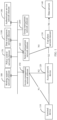
- a system architecture of the 5G network may be shown in FIG. 1 .
- FIG. 1 is a network architecture used in an embodiment of this application. Network elements that may be related in the network architecture are separately described.
- the access network device can manage a radio resource and provide an access service for the terminal device, to further complete forwarding of a control signal and terminal device data between the terminal device and a core network.
- the access network device may also be understood as a base station in a conventional network.
- the access network device may also detect and/or collect the sensing data.
- the access network device in this application may also be referred to as an integrated radar and communication base station.
- the access network device may not only implement communication service coverage on an on-ground user, but also detect flight targets such as an uncrewed aerial vehicle, a helicopter, and a bird, and on-ground vehicle traffic, a pedestrian, and the like.
- User plane network element 130 The user plane network element 130 is used for packet routing and forwarding, quality of service (quality of service, QoS) processing on user plane data, and the like.
- quality of service quality of service, QoS
- the user plane network element may be a user plane function (user plane function, UPF) network element.
- UPF user plane function
- the user plane network element may still be the UPF network element, or may have another name. This is not limited in this application.
- the UPF mainly provides service processing functions of a user plane, including routing a service, forwarding a packet, anchoring, mapping and executing quality of service (quality of service, QoS), identifying an uplink identifier and routing the identifier to a data network, buffering a downlink packet, triggering a notification of downlink data arrival, and connecting to an external data network.
- quality of service quality of service
- Data network 140 The data network 140 is a network used to provide data transmission.
- the data network may be a data network (data network, DN).
- the data network may still be the DN, or may have another name. This is not limited in this application.
- Access management network element 150 The access management network element 150 is mainly used for mobility management, access management, and the like, and may be configured to implement functions, for example, lawful interception and access authorization/authentication, other than session management in functions of a mobility management entity (mobility management entity, MME).
- mobility management entity mobility management entity
- the access management network element may be an access management function (access and mobility management function, AMF) network element.
- AMF access management function
- the access management network element may still be the AMF network element, or may have another name. This is not limited in this application.
- Session management network element 160 The session management network element 160 is mainly configured to manage a session, assign and manage an internet protocol (internet protocol, IP) address of the terminal device, select an endpoint that can manage a user plane function interface and a policy control and charging function interface, notify downlink data, and the like.
- IP internet protocol
- the session management network element may be a session management function (session management function, SMF) network element.
- SMF session management function
- the session management network element may still be the SMF network element, or may have another name. This is not limited in this application.
- Policy control network element 170 The policy control network element 170 is configured to guide a unified policy framework of network behavior, and provide policy rule information for a control plane function network element (for example, the AMF or SMF network element), and the like.
- a control plane function network element for example, the AMF or SMF network element
- the policy control network element may be a policy control function (policy control function, PCF) network element.
- policy control network element may still be the PCF network element, or may have another name. This is not limited in this application.
- binding support network element 180 The binding support network element 180 is configured to search for a PCF associated with a session.
- the binding support network element may be a binding support function (binding support function, BSF) network element.
- BSF binding support function
- the binding support network element may still be the BSF network element, or may have another name. This is not limited in this application.
- the authentication server 190 is configured to authenticate a service, generate a key to implement two-way authentication for the terminal device, and support a unified authentication framework.
- the authentication server may be an authentication server function (authentication server function, AUSF) network element.
- the authentication server function network element may still be the AUSF network element, or may have another name. This is not limited in this application.
- Data management network element 1100 The data management network element 1100 is configured to process a terminal device identifier, perform access authentication, registration, and mobility management, and the like.
- the data management network element may be a unified data management (unified data management, UDM) network element.
- UDM unified data management
- unified data management may still be the UDM network element, or may have another name. This is not limited in this application.
- Network capability exposure network element 1110 The network capability exposure network element 1110 is used for connection and interaction between another network element inside the core network and an application server outside the core network, and may provide network information to the application server, or may provide information about the application server to a core network element.
- the network capability exposure network element may be a network exposure function (network exposure function, NEF) network element.
- NEF network exposure function
- the network capability exposure network element may still be the NEF network element, or may have another name. This is not limited in this application.
- the application server connected to the network capability exposure network element may be an access stratum (access stratum, AS) or an application service function (application function, AF).
- the application server may propose a sensing requirement, to enable a device having a sensing capability to perform a sensing operation based on the sensing requirement.
- network element may also be referred to as an entity, a device, an apparatus, a module, or the like. This is not particularly limited in this application.
- the description of the "network element” is omitted in some descriptions.
- the AMF network element is briefly referred to as the AMF.
- the “AMF” should be understood as an AMF network element or an AMF entity. Same or similar cases are not described below.
- network function entities such as the AMF, the SMF, the PCF, a GMF, and the UDM are all referred to as network function (Network Function, NF) network elements.
- Network Function Network Function
- a set of network elements such as an AMF, an SMF, a PCF, a GMF, and a UDM may be all referred to as control plane function (Control Plane Function, CPF) network elements.
- CPF Control Plane Function
- an N2 interface is a reference point of the access network device and the AMF network element, and is used for sending of a non-access stratum (non-access stratum, NAS) message and the like.
- An N3 interface is a reference point between the access network device and the UPF network element, and is used for transmission of the user plane data and the like.
- An N4 interface is a reference point between the SMF network element and the UPF network element, and is used for transmission of information such as identifier information of a tunnel connected to the N3, data buffering indication information, and a downlink data notification message.
- each network element in the solution may be replaced with another network element having a corresponding function. This is not limited in this application.
- the application server may obtain a sensing service requirement, to enable the device having the sensing capability to perform sensing based on the sensing service requirement.
- a sensing service requirement to enable the device having the sensing capability to perform sensing based on the sensing service requirement.
- Embodiments of this application provide an information transmission method and an apparatus, to enable information transmission in the sensing system to be effective. The following first describes the information transmission method.
- a device that performs sensing or generates sensing data may be one terminal device or one access network device, may be a plurality of terminal devices or a plurality of access network devices, or may be one or more terminal devices and one or more access network devices.
- the following describes the information transmission method by using an example in which an access network device generates sensing data.
- internet protocol internet protocol
- IP address information for example, IP address information of the access network device or IP address information of the application server
- MAC address information may be replaced with a media access control (media access control, MAC) address, a local area network address, an Ethernet address, a physical address, or the like. Details are not described below.
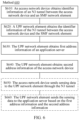
- FIG. 2 is a schematic flowchart of an information transmission method 200 according to an embodiment of this application.
- S210 An access network device receives first address information of an application server.
- the access network device is configured to generate sensing data, the access network device is configured to perform a sensing operation to generate sensing data, or the access network device is configured to obtain sensing data from another device.
- the application server may be an AS or an AF.
- the application server may provide a sensing service requirement, to enable the access network device to generate the sensing data based on the sensing service requirement.
- the first address information of the application server may refer to an IP address and/or a protocol address identifier of the application server, or may refer to a MAC address and/or a protocol address identifier of the application server.
- S220 The access network device obtains second address information of the access network device.
- That the first address information and the second address information are used for transmission of the sensing data may be:
- the access network device establishes, based on the first address information and the second address information, a communication connection that is between the access network device and the application server and that is used for transmission of the sensing data.
- the application server establishes, based on the first address information and the second address information, a communication connection that is between the access network device and the application server and that is used for transmission of the sensing data.
- a UPF network element establishes, based on the first address information and the second address information, a communication connection that is between the access network device and the application server and that is used for transmission of the sensing data.
- the second address information is IP address information of the access network device.
- the IP address information may be an address that is allocated by an SMF network element or the UPF network element to the access network device and that is used for transmission of the sensing data, or the IP address information may be address information that is obtained by the access network device from an IP address pool of the access network device and that is used for transmission of the sensing data. Then, a connection based on the IP address information of the access network device and the IP address of the server may be established between the access network device and the application server, where the connection is used for transmission of the sensing data.
- the access network device and the application server may establish a connection based on the address information of the access network device and the address information of the application server, to implement communication. This improves transmission efficiency of the sensing data.
- the second address information is a proxy IP address of the access network device, and the proxy IP address corresponds to IP address information.
- the IP address information of the access network device may refer to the IP address information in Case 1. That the proxy IP address corresponds to IP address information indicates that an SMF network element or the UPF network element may allocate a proxy IP address #1 to the access network device based on the IP address information of the access network device. Then, a first connection based on the IP address information and the proxy IP address #1 may be established between the access network device and the UPF network element, and a second connection based on the proxy IP address #1 and the IP address of the application server may be established between the UPF network element and the application server, where the first connection and the second connection are used for transmission of the sensing data.
- the access network device sends the sensing data to the UPF network element through the first connection.
- a source address of the first connection is the IP address information
- a destination address of the first connection is the proxy IP address #1.
- the UPF network element may set a source address of the second connection to the proxy IP address #1, set a destination address of the second connection to the IP address of the application server, and send the sensing data to the application server through the second connection.
- proxy IP address corresponds to an IP address indicates that an SMF network element or the UPF network element may allocate two proxy addresses to the access network device based on the IP address information of the access network device: a proxy IP address #1 and a proxy IP address #2.
- the IP proxy address #1 and the proxy IP address #2 both are used for transmission of the sensing data.
- the UPF network element needs to obtain the IP proxy address #1 and the proxy IP address #2 to forward the sensing data.
- the access network device may obtain only the proxy IP address #1, and the application server may obtain only the proxy IP address #2. In other words, in this case, the access network device and the application server may obtain different proxy IP addresses of the access network device.
- the second address information obtained by the access network device and second address information obtained by the application server may be different proxy address information of the access network device.
- the access network device sends the sensing data to the UPF network element through a first connection.
- a source address of the first connection is the IP address information
- a destination address of the first connection is the proxy IP address #2.
- the UPF network element may set a source address of a second connection to the proxy IP address #1, set a destination address of the second connection to the IP address of the application server, and send the sensing data to the application server through the second connection.
- the access network device sends the sensing data to the UPF network element through a first connection.
- a source address of the first connection is the IP address information
- a destination address of the first connection is the IP address of the server.
- the UPF network element may set a source address of a second connection to the proxy IP address #1, keep a destination address of the second connection as the IP address of the server, and send the sensing data to the application server through the second connection.
- the transmission of the sensing data between the access network device and the application server may be performed by hiding the IP address information and network topology information of the access network device via the UPF network element, so that the IP address information and the network topology information of the RAN are not exposed. This improves security of information transmission in a system.
- the second address information is a proxy IP address of the access network device, the proxy IP address corresponds to identifier information (or address information) of a tunnel (for example, an N3 tunnel or an N3 GTP-U tunnel) between the access network device and the UPF network element, and the tunnel is used for transmission of the sensing data.
- a tunnel for example, an N3 tunnel or an N3 GTP-U tunnel
- proxy IP address corresponds to identifier information of a tunnel indicates that an SMF network element or the UPF network element may allocate a proxy IP address #3 to the access network device based on the identifier information of the N3 tunnel. Then, the N3 tunnel used for transmission of the sensing data may be established between the access network device and the UPF network element, and a connection based on the proxy IP address #3 and the IP address of the application server may be established between the UPF network element and the application server, where the connection is used for transmission of the sensing data.
- the sensing data may not be encapsulated based on an IP address.
- the identifier information of the N3 tunnel may be allocated by the SMF network element or the UPF network element.
- the access network device sends the sensing data to the UPF network element through the N3 tunnel.
- the UPF network element performs, based on the identifier information of the N3 tunnel, IP encapsulation on a sensing data packet whose transmission is performed through the N3 tunnel, sets a source address to the proxy IP address #3, sets a destination address to the IP address of the server, and sends the sensing data to the application server through a connection established based on an IP address #3 and the IP address of the server.
- the transmission of the sensing data between the access network device and the application server may be performed by hiding IP address information and network topology information of the access network device via the UPF network element, so that the IP address information and the network topology information of the RAN are not exposed. This improves security of information transmission in a system.
- the access network device may autonomously allocate the second address information, or the SMF network element or the UPF network element may allocate the second address information to the access network device.
- the access network device may autonomously allocate the second address information, or the SMF network element or the UPF network element may allocate the second address information to the access network device.
- S230 The application server receives the second address information.
- the application server may receive the second address information sent by the access network device, receive the second address information sent by the SMF network element, or receive the second address information sent by an AMF network element.
- receive the second address information sent by the application server refer to the following descriptions in FIG. 5 .
- the access network device sends the sensing data based on the first address information and the second address information.
- the access network device may send the sensing data to the application server via the UPF network element and through the connection established based on the IP address information.
- the access network device sends the sensing data to the UPF, and the UPF network element sends the sensing data to the application server.
- the access network device sends the sensing data to the UPF network element through the first connection. After hiding the IP address information of the access network device, the UPF network element sends the sensing data to the application server.
- the access network device sends the sensing data to the UPF network element through the N3 tunnel. After hiding the address information of the access network device, the UPF network element sends the sensing data to the application server.
- the access network device receives sensing control signaling based on the first address information and the second address information.
- the sensing control signaling indicates the access network device to perform the sensing operation, the sensing control signaling is used to control the access network device to perform sensing, or the sensing control signaling is control signaling related to a sensing service.
- the first address information and the second address information are further used for transmission of the sensing control signaling
- the connection established based on the first address information and the second address information may be further used for transmission of the sensing control signaling
- the first address information and the second address information may be further used to establish a connection used for transmission of the sensing control signaling.
- the access network device and the application server may establish a connection based on the address information of the access network device and the address information of the application server, to implement communication. This can implement effective information transmission in a sensing system.
- the access network device may further receive third address information of the application server used for transmission of the sensing control signaling, and obtain fourth address information of the access network device used for transmission of the sensing control signaling.
- the third address information and the fourth address information are used for transmission of the sensing control signaling.
- the third address information and the first address information may be the same or different, and the fourth address information and the second address information may be the same or different.
- a manner of obtaining the third address information is similar to the manner of obtaining the first address information.
- a manner of obtaining the fourth address information is similar to the manner of obtaining the second address information.
- a manner of using the third address information and the fourth address information to establish the connection used for transmission of the sensing control signaling is similar to the manner of using the first address information and the second address information to establish the connection used for transmission of the sensing data. For brevity, details are not described herein again.
- step S210 in the method 200 steps S211, S2121a, S213, and S214 are performed.
- steps S211, S2121b to S2123b, S213, and S214 are performed.
- steps S211, S2121c to S2122c, S213, and S214 are performed.
- the application server sends the first address information to a NEF network element, and correspondingly, the NEF network element receives the first address information from the application server.
- the application server sends a sensing service request message to the NEF network element.
- the sensing service request message carries the first address information, and the sensing service request message may be used to request the access network device to perform the sensing service.
- the application server may further send at least one of the following information to the NEF network element: location information and sensing indication information.
- location information and the sensing indication information may also be carried in the sensing service request message.
- the location information may indicate a sensing area.
- the sensing area may be an area in which the access network device performs sensing and detection.
- the location information may be location coordinates of an area, or location coordinates of a to-be-sensed target (for example, a to-be-sensed area, object, location, event, or terminal device) corresponding to the sensing service.
- the sensing indication information may indicate the sensing service, or indicate that the sensing service request message is used to request the sensing service from a network.
- the NEF network element sends the first address information to the AMF network element, and correspondingly, the AMF network element receives the first address information from the NEF network element.
- the NEF network element sends the sensing service request message to the AMF network element.
- the NEF network element determines the AMF network element based on the location information.
- the AMF network element may manage at least one access network device, and learn of a sensing range of the at least one access network device.
- the NEF network element determines an appropriate AMF network element based on the location information, to enable the sensing range of the access network device managed by the AMF network element to cover the sensing area.
- S2121b The NEF network element sends the first address information to a PCF network element, and correspondingly, the PCF network element receives the first address information from the NEF network element.
- the NEF network element sends the sensing service request message to the PCF network element.
- the NEF network element determines the PCF network element based on the location information in the sensing service request message.
- the NEF network element determines an appropriate PCF network element based on the location information, to enable a service area of the PCF network element to cover the sensing area.
- the PCF network element sends the first address information to the SMF network element, and correspondingly, the SMF network element receives the first address information from the PCF network element.
- the PCF network element sends the sensing service request message to the SMF network element.
- the PCF network element determines the SMF network element based on the location information in the sensing service request message.
- the PCF network element determines an appropriate SMF network element based on the location information, to enable a service area of the SMF network element to cover the sensing area.
- the SMF network element sends the first address information to the AMF network element, and correspondingly, the AMF network element receives the first address information from the SMF network element.
- the SMF network element sends a sensing service notification message to the AMF network element, and the sensing service notification message carries the first address information.
- the SMF network element may further send at least one of the following information to the AMF network element: the location information and the sensing indication information.
- the location information and the sensing indication information may also be carried in the sensing service notification message.
- the SMF network element determines the AMF network element based on the location information in the sensing service notification message.
- the SMF network element determines an appropriate AMF network element based on the location information, to enable a service area of the AMF network element to cover the sensing area.
- the NEF network element sends the first address information to the SMF network element, and correspondingly, the SMF network element receives the first address information from the NEF network element.
- the NEF network element sends the sensing service request message to the SMF network element.
- the NEF network element determines the SMF network element based on the location information in the sensing service request message.
- the NEF network element determines an appropriate SMF network element based on the location information, to enable a service area of the SMF network element to cover the sensing area.
- the SMF network element sends the first address information to the AMF network element, and correspondingly, the AMF network element receives the first address information from the SMF network element.
- the SMF network element sends a sensing service notification message to the AMF network element.
- the SMF network element determines the AMF network element based on the location information in the sensing service notification message.
- the SMF network element determines an appropriate AMF network element based on the location information, to enable a service area of the AMF network element to cover the sensing area.
- the AMF network element determines the access network device.
- the AMF network element determines, based on the location information in the sensing service request message, the access network device that performs the sensing service, to enable a sensing capability range of the access network device to cover the sensing area.
- the AMF network element sends the first address information to the access network device, and correspondingly, the access network device receives the first address information from the AMF network element.
- the AMF network element sends an N2 configuration request message to the access network device, where the N2 configuration request message carries the first address information.
- the AMF network element sends the sensing indication information to the access network device, and the sensing indication information may also be carried in the N2 configuration request message.
- the sensing indication information may indicate the sensing service, or the sensing indication information indicates that the N2 configuration request message is used to perform the sensing service.
- the foregoing describes the manners of receiving the first address information by the access network device.
- step S220 in the method 200 steps S221A to S225A are performed.
- steps S221B to S224B are performed.
- steps S221C to S227C are performed.
- S221A The access network device allocates the second address information.
- the second address information may meet Case 1 described in step S220, in other words, the second address information is the IP address information of the access network device.
- the access network device may obtain, based on the IP address pool of the access network device, the second address information used for transmission of the sensing data.
- the access network device sends an N3 tunnel establishment request message to the SMF network element, and correspondingly, the SMF network element receives the N3 tunnel establishment request message from the access network device.
- the N3 tunnel establishment request message (which may also be referred to as a per node N3 tunnel establishment request message) is used to establish the N3 tunnel used for transmission of the sensing data.
- the N3 tunnel establishment request message may carry the sensing indication information.
- the sensing indication information indicates the sensing service, or the sensing indication information may indicate that the N3 tunnel requested to be established is used for transmission of the sensing data.
- the N3 tunnel establishment request message may further include access network device N3 tunnel identifier information, and the access network device N3 tunnel identifier information is used to establish the N3 tunnel used for transmission of the sensing data.
- the SMF network element sends an N4 configuration request message to the UPF network element, and correspondingly, the UPF network element receives the N4 configuration request message from the SMF network element.
- the N4 configuration request message is used to request to establish an N4 connection, and the N4 connection is used to manage and control the N3 tunnel.
- the N4 configuration request message may carry the access network device N3 tunnel identifier information and core network N3 tunnel identifier information.
- the UPF network element sends an N4 configuration response message to the SMF network element, and correspondingly, the SMF network element receives the N4 configuration response message from the UPF network element.
- the N4 configuration response message is used to respond to the N4 configuration request message.
- the SMF network element sends an N3 tunnel establishment response message to the access network device, and correspondingly, the access network device receives the N3 tunnel establishment response message from the SMF network element.
- the N3 tunnel establishment response message is used to respond to the N3 tunnel establishment request message.
- the N3 tunnel establishment request message may include the identifier information of the N3 tunnel, and the identifier information of the N3 tunnel may be a core network N3 tunnel identifier.
- Manner A may further include step S226A.
- step S225A may alternatively be replaced with the following:
- the SMF network element sends an N3 tunnel establishment response message to the AMF network element, and the AMF network element sends the N3 tunnel establishment response message to the access network device.
- the SMF network element may send the N3 tunnel establishment response message to the access network device via the AMF network element.
- the access network device sends the access network device N3 tunnel identifier information to the SMF network element, and correspondingly, the SMF network element receives the access network device N3 tunnel identifier information from the access network device.
- the access network device sends an N3 tunnel establishment response acknowledgement message to the SMF network element, where the N3 tunnel establishment response acknowledgement message carries the access network device N3 tunnel identifier information.
- step S226A may alternatively be replaced with the following:
- the access network device sends the N3 tunnel identifier information to the AMF network element, and correspondingly, the AMF network element receives the N3 tunnel identifier information from the access network device.
- the access network device may autonomously obtain the second address information, in other words, autonomously obtain the IP address information.
- the access network device sends first information #1 to the SMF network element, and correspondingly, the SMF network element receives the first information #1 from the access network device.
- the first information #1 is used to request the second address information.
- the first information #1 is an N3 tunnel establishment request message (which may also be referred to as a per node N3 tunnel establishment request message).
- the SMF network element or the UPF network element allocates the second address information to the access network device based on the N3 tunnel establishment request message.
- the N3 tunnel establishment request message (the first information #1) may include the sensing indication information.
- the sensing indication information indicates the sensing service, or the sensing indication information may indicate that the N3 tunnel requested to be established is used for transmission of the sensing data.
- the N3 tunnel establishment request message further includes access network N3 tunnel identifier information.
- the access network device N3 tunnel identifier information may be a full-tunnel endpoint identifier (full-tunnel endpoint identifier, F-TEID), and the full-tunnel endpoint identifier is used to establish the N3 tunnel used for transmission of the sensing data.
- F-TEID full-tunnel endpoint identifier
- the second address information is the proxy IP address #1, where the proxy IP address #1 corresponds to the IP address information of the access network device, if the IP address information of the access network device is allocated by an access device, the N3 tunnel establishment request message (the first information #1) may include the IP address information. If the destination address of the connection between the access network device and the UPF network element is the proxy IP address #1 or the proxy IP address #2 instead of the IP address information of the server (refer to the descriptions of Case 2 in step S220), the N3 tunnel establishment request message may include the first address information, and the first address information is used by the UPF network element to forward the sensing data.
- the N3 tunnel establishment request message further includes access network device N3 tunnel identifier information, and the access network device N3 tunnel identifier information is used to establish the N3 tunnel used for transmission of the sensing data.
- the N3 tunnel establishment request message further includes the sensing indication information.
- the sensing indication information indicates the sensing service, or the sensing indication information may indicate that the N3 tunnel requested to be established is used for transmission of the sensing data.
- the N3 tunnel establishment request message may include the first address information, and the first address information is used by the UPF network element to forward the sensing data. If access network device N3 tunnel identifier information is allocated by the access network device, the N3 tunnel establishment request message further includes the access network device N3 tunnel identifier information, and the access network device N3 tunnel identifier information is used to establish the N3 tunnel used for transmission of the sensing data.
- the N3 tunnel establishment request message further includes the sensing indication information.
- the sensing indication information indicates the sensing service, or the sensing indication information may indicate that the N3 tunnel requested to be established is used for transmission of the sensing data.
- the SMF network element sends an N4 configuration request message to the UPF network element, and correspondingly, the UPF network element receives the N4 configuration request message from the SMF network element.
- the N4 configuration request message is used to request to establish an N4 connection, and the N4 connection is used to manage and control the N3 tunnel.
- the N4 configuration request message may include the identifier information of the N3 tunnel.
- the second address information is the proxy IP address #1, where the proxy IP address #1 corresponds to the IP address information of the access network device
- the N4 configuration request message may include the identifier information of the N3 tunnel. If the IP address information of the access network device is allocated by the access device or the SMF network element, optionally, the N4 configuration request message may include the IP address information. If the proxy IP address #1 is allocated by the SMF network element, the N4 configuration request message includes the proxy IP address #1.
- the N4 configuration request message may include the first address information. If the destination address of the connection between the access network device and the UPF network element is the proxy IP address #2, and the proxy IP address #1 and the proxy IP address #2 both are allocated by the SMF network element, the N4 configuration request message includes the proxy IP address #1 and the proxy IP address #2.
- the N4 configuration request message may include the identifier information of the N3 tunnel.
- the N4 configuration request message may include the first address information. If the proxy IP address #3 is allocated by the SMF network element, the N4 configuration request message includes the proxy IP address #3.
- address information in the N4 configuration request message may be used to forward the sensing data.
- the UPF network element may determine the sensing data based on the address information, and hide the IP address information of the access network device.
- the UPF network element sends an N4 configuration response message to the SMF network element, and correspondingly, the SMF network element receives the N4 configuration response message from the UPF network element.
- the N4 configuration response message is used to respond to the N4 configuration request message.
- the second address information is the proxy IP address #1, where the proxy IP address #1 corresponds to the IP address information of the access network device, if the proxy IP address #1 is allocated by the UPF network element, the N4 configuration response message includes the proxy IP address #1.
- the second address information is the proxy IP address #3, where the proxy IP address #3 corresponds to the identifier information of the N3 tunnel, if the proxy IP address #3 is allocated by the UPF network element, the N4 configuration response message includes the proxy IP address #3.
- S224B The SMF network element sends the second address information to the access network device in response to the first information #1, and correspondingly, the access network device receives, from the SMF network element, the second address information that is in response to the first information #1.
- the SMF network element sends an N3 tunnel establishment response message to the access network device in response to the N3 tunnel establishment request message, where the N3 tunnel establishment response message carries the second address information.
- the SMF network element may alternatively send an N3 tunnel establishment response message to the access network device via the SMF network element.
- the N3 tunnel establishment response message further carries core network N3 tunnel identifier information.
- the access network device requests the second address information from the SMF network element.
- the SMF network element may allocate the second address information to the access network device and return the second address information to the access network device, or the SMF network element may return, to the access network device, the second address information allocated by the UPF network element.
- the AMF network element determines the SMF network element.
- the AMF network element selects an appropriate SMF network element based on the location information, to enable a service area of the SMF network element to cover the sensing area.
- the AMF network element sends first information #2 to the SMF network element, and correspondingly, the SMF network element receives the first information #2 from the AMF network element.
- the first information #2 is used to request the second address information.
- the first information #2 is a sensing service requirement message.
- the SMF network element or the UPF network element allocates the second address information to the access network device based on the sensing service requirement message.
- the sensing service requirement message may further carry identifier information of the access network device.
- the AMF network element may send the identifier information of the access network device to the SMF network element, so that the SMF network element can establish the N3 tunnel between an access device and the SMF network element.
- the sensing service requirement message may not carry identifier information of the access network device.
- the SMF network element or the UPF network element may allocate the second address information, and the AMF network element sends the second address information to the selected access network device (refer to the descriptions of the following step S225C).
- the sensing service requirement message (the first information #2) may include the sensing indication information.
- the sensing indication information indicates the sensing service, or the sensing indication information indicates that the established N3 tunnel is used for transmission of the sensing data.
- the sensing service requirement message further includes the first address information, and the first address information is used by the UPF network element to forward the sensing data.
- the SMF network element sends an N4 configuration request message to the UPF network element, and correspondingly, the UPF network element receives the N4 configuration request message from the SMF network element.
- the N4 configuration request message is used to request to establish an N4 connection, and the N4 connection is used to manage and control the N3 tunnel.
- N4 configuration request message Information that may be carried in the N4 configuration request message is similar to that described in step S222B. For brevity, details are not described herein again.
- the UPF network element sends an N4 configuration response message to the SMF network element, and correspondingly, the SMF network element receives the N4 configuration response message from the UPF network element.
- the N4 configuration response message is used to respond to the N4 configuration request message.
- N4 configuration response message Information that may be carried in the N4 configuration response message is similar to that described in step S223B. For brevity, details are not described herein again.
- S225C The SMF network element sends the second address information to the access network device in response to first information #1, and correspondingly, the access network device receives, from the SMF network element, the second address information that is in response to the first information #1.
- the SMF network element sends an N3 tunnel establishment request message to the access network device, where the N3 tunnel establishment request message carries the second address information.
- the N3 tunnel establishment request message may further carry core network N3 tunnel identifier information.
- the SMF network element sends the N3 tunnel establishment request message to the access network device via the AMF network element.
- step S225C may be replaced with the following:
- the SMF network element sends the second address information to the AMF network element, the AMF network element determines the access network device, and the AMF network element sends the second address information to the access network device.
- that the AMF network element determines the access network device may be an action described in step S213.
- the AMF network element may determine the access network device when the access network device receives the first address information, or may determine the access network device when the access network device obtains the second address information. This is not particularly limited in this application.
- the access network device sends access network device N3 tunnel identifier information to the SMF network element, and correspondingly, the SMF network element receives the access network device N3 tunnel identifier information from the access network device.
- the SMF network element sends the access network device N3 tunnel identifier information to the UPF network element, and correspondingly, the UPF network element receives the access network device N3 tunnel identifier information from the SMF network element.
- the SMF network element sends the access network device N3 tunnel identifier information to the UPF network element based on a configured N4 tunnel, to forward the sensing data.
- the AMF network element requests the second address information from the SMF network element.
- the SMF network element may allocate the second address information to the access network device and return the second address information to the access network device, or the SMF network element may return, to the access network device, the second address information allocated by the UPF network element.
- step S230 in the method 200 steps S231 ⁇ to S233 ⁇ are performed.
- steps S23 10 and S232 ⁇ are performed.
- the access network device sends the second address information to the AMF network element, and correspondingly, the AMF network element receives the second address information from the access network device.
- the access network device sends an N2 configuration response message to the AMF network element in response to the N2 configuration request message (refer to step S214), where the N2 configuration response message carries the second address information.
- the AMF network element sends the second address information to the NEF network element, and correspondingly, the NEF network element receives the second address information from the AMF network element.
- the AMF network element sends a sensing service response message to the NEF network element in response to the sensing service request message (refer to step S211), where the sensing service response message carries the second address information.
- the NEF network element sends the second address information to the application server, and correspondingly, the application server receives the second address information from the NEF network element.
- the NEF network element sends the sensing service response message to the application server.
- the application server receives the second address information from the access network device.
- the SMF network element sends the second address information to the NEF network element, and correspondingly, the NEF network element receives the second address information from the SMF network element.
- the SMF network element sends a sensing service response message to the NEF network element in response to the sensing service request message (refer to step S2122b or S2121c), where the sensing service response message carries the second address information.
- step S231 ⁇ may be replaced with the following:
- the SMF network element sends the second address information to the AMF network element, and correspondingly, the AMF network element sends the second address information to the NEF network element.
- the SMF network element may send the second address information to the NEF network element via the AMF network element.
- step S23 10 may be replaced with the following:
- the SMF network element sends the second address information to the PCF network element, and the PCF network element sends the second address information to the NEF network element.
- the SMF network element may send the second address information via the PCF network element.
- the NEF network element sends the second address information to the application server, and correspondingly, the application server receives the second address information from the NEF network element.
- the NEF network element sends the sensing service response message to the application server.
- the application server receives the second address information from the access network device.
- the access network device and the application server exchange the address information of the access network device and the application server.
- the application server, the access network device, or the UPF network element may establish, based on the address information of the access network device and the application server, the communication connection used for transmission of the sensing data and/or the sensing requirement information.
- the application server may receive the second address information of the access network device during the establishment of the connection.
- the access network device may receive the first address information of the application server during the establishment of the connection. That the address information is received during the establishment of the connection may indicate that the address information is not received through a control plane.
- the access network device may not need to obtain the first address information and/or the second address information when the UPF network element or the application server establishes, between the UPF network element and the application server, a connection used for transmission of the sensing data. This is described in the following.
- FIG. 6 is a schematic flowchart of an information transmission method 600 according to an embodiment of this application.
- S610 An access network device obtains identifier information of an N3 tunnel between the access network device and an SMF/UPF network element, where the N3 tunnel is used for transmission of sensing data.
- the access network device may receive an N2 configuration request message from an AMF network element, where the N2 configuration sensing request message may be used to trigger the access network device to establish the N3 tunnel used for transmission of the sensing data.
- the access network device may send an N3 tunnel establishment request message to the SMF network element, and the SMF network element sends an N3 tunnel establishment response message to the access network device in response to the N3 tunnel establishment request message.
- the N3 tunnel establishment request message may carry access network device N3 tunnel identifier information
- the N3 tunnel establishment response message may carry core network N3 tunnel identifier information.
- the core network N3 tunnel identifier information in the N3 tunnel establishment response message may be allocated by the SMF network element, or may be allocated by the UPF network element.
- the SMF network element may send an N4 configuration request message to the UPF network element, and the UPF network element includes the core network N3 tunnel identifier information in an N4 configuration response message that is in response to the N4 configuration request message.
- the access network device may send an N3 tunnel establishment response acknowledgement message to the SMF network element after receiving the N3 tunnel establishment response message, and access network device N3 tunnel identifier information is carried in the N3 tunnel establishment response acknowledgement message.
- an AMF network element may send a sensing service requirement message to the SMF network element, where the sensing service requirement message may trigger the SMF network element to establish the N3 tunnel used for transmission of the sensing data.
- the SMF network element may send an N3 tunnel establishment request message to the access network device, where the N3 tunnel establishment request message carries core network N3 tunnel identifier information.
- the core network N3 tunnel identifier information may be allocated by the SMF network element, or may be allocated by the UPF network element.
- the SMF network element may send an N4 configuration request message to the UPF network element, and the UPF network element includes the core network N3 tunnel identifier information in an N4 configuration response message that is in response to the N4 configuration request message.
- the access network device may send an N3 tunnel establishment response message to the SMF network element after receiving the N3 tunnel establishment request message, where the N3 tunnel establishment response message carries access network device N3 tunnel identifier information.
- the UPF network element obtains the identifier information of the N3 tunnel between the access network device and the UPF network element.
- the SMF network element may send the N4 configuration request message to the UPF network element, where the N4 configuration request message is used to request to establish an N4 connection, and the N4 connection is used to manage and control the N3 tunnel.
- the core network N3 tunnel identifier information may be allocated by the SMF network element, or may be allocated by the UPF network element. If the core network N3 tunnel identifier information is allocated by the SMF network element, the N4 configuration request message may carry the core network N3 tunnel identifier information.
- the UPF network element may allocate the core network N3 tunnel identifier information based on the N4 configuration request message, and send the N4 configuration response message to the SMF network element in response to the N4 configuration request message, where the N4 configuration response message carries the core network N3 tunnel identifier information.
- the N4 configuration request message sent by the SMF network element may further include the access network device N3 tunnel identifier information. If the N4 configuration request message does not include the access network device N3 tunnel identifier information, after obtaining the access network device N3 tunnel identifier information, the SMF network element may send the access network device N3 tunnel identifier information to the UPF network element.
- the UPF network element obtains first address information of an application server.
- the first address information is used to forward the sensing data.
- the SMF network element may obtain the first address information of the application server, and the SMF network element sends the N4 configuration request message to the UPF network element, where the N4 configuration request message carries the first address information.
- the SMF network element may receive the first address information from a PCF network element or a NEF network element. In this case, the access network device may not need to obtain the first address information.
- the SMF network element may alternatively receive the first address information from the access network device.
- the UPF network element obtains second address information of the access network device.
- the second address information is proxy IP address information, and the proxy IP address information corresponds to the N3 tunnel identifier information.
- the second address information may be allocated by the SMF network element, or may be allocated by the UPF network element. If the second address information is allocated by the SMF network element, the N4 configuration request message sent by the SMF network element to the UPF network element carries the second address information. If the second address information is allocated by the UPF network element, the UPF network element may allocate the second address information based on the N4 configuration request message sent by the SMF network element, and may send the N4 configuration response message in response to the N4 configuration request message, where the N4 configuration response message carries the second address information.
- the access network device sends the sensing data to the UPF network element through the N3 tunnel, and correspondingly, the UPF network element receives, from the access network device, the sensing data through the N3 tunnel.
- the N3 tunnel is used for transmission of the sensing data.
- the UPF network element receives the sensing data sent through the N3 tunnel, and learns, based on a correspondence between the N3 tunnel identifier information and the first address information of the application server, that the sensing data needs to be sent to the application server. Then, a communication connection based on the first address information and the second address information may be established between the UPF network element and the application server, in other words, the UPF network element and the application server may communicate with each other based on the first address information and the second address information.
- the UPF network element sends the sensing data to the application server based on the first address information and the second address information, and correspondingly, the application server receives the sensing data from the UPF network element.
- the UPF network element may send the sensing data to the application server through the communication connection that is between the UPF network element and the application server and that is based on the address information.
- the transmission of the sensing data between the access network device and the application server may be performed by hiding IP address information and network topology information of the access network device via the UPF network element, so that the IP address information and the network topology information of the RAN are not exposed. This improves security of information transmission in a system.
- FIG. 7 is a schematic flowchart of an information transmission method 700 according to an embodiment of this application.
- the method 700 may be an implementation of the method 200.
- S701 An application server sends first address information to a NEF network element, and correspondingly, the NEF network element receives the first address information from the application server.
- step S211 For this step, refer to the descriptions of step S211 in the method 200. Details are not described herein again.
- the NEF network element sends the first address information to an AMF network element, and correspondingly, the AMF network element receives the first address information from the NEF network element.
- step S212a For this step, refer to the descriptions of step S212a in the method 200. Details are not described herein again.
- the AMF network element determines an access network device.
- step S213 in the method 200. Details are not described herein again.
- the AMF network element sends the first address information to the access network device, and correspondingly, the access network device receives the first address information from the AMF network element.
- step S214 For this step, refer to the descriptions of step S214 in the method 200. Details are not described herein again.
- the access network device sends first information #1 to an SMF network element, and correspondingly, the SMF network element receives the first information #1 from the access network device.
- step S221B For this step, refer to the descriptions of step S221B in the method 200. Details are not described herein again.
- the SMF network element sends an N4 configuration request message to a UPF network element, and correspondingly, the UPF network element receives the N4 configuration request message from the SMF network element.
- step S222B For this step, refer to the descriptions of step S222B in the method 200. Details are not described herein again.
- the UPF network element sends an N4 configuration response message to the SMF network element, and correspondingly, the SMF network element receives the N4 configuration response message from the UPF network element.
- step S223B For this step, refer to the descriptions of step S223B in the method 200. Details are not described herein again.
- the SMF network element sends second address information to the access network device, and correspondingly, the access network device receives the second address information from the SMF network element.
- step S224B For this step, refer to the descriptions of step S224B in the method 200. Details are not described herein again.
- the access network device sends the second address information to the AMF network element, and correspondingly, the AMF network element receives the second address information from the access network device.
- step S231 ⁇ in the method 200. Details are not described herein again.
- the AMF network element sends the second address information to the NEF network element, and correspondingly, the NEF network element receives the second address information from the AMF network element.
- step S232 ⁇ in the method 200. Details are not described herein again.
- the NEF network element sends the second address information to the application server, and correspondingly, the application server receives the second address information from the NEF network element.
- step S233 ⁇ in the method 200. Details are not described herein again.
- the access network device sends sensing data to the UPF network element, and correspondingly, the UPF network element receives the sensing data from the access network device.
- step S240 For this step, refer to the descriptions of step S240 in the method 200. Details are not described herein again.
- the UPF network element sends the sensing data to the application server, and correspondingly, the application server receives the sensing data from the UPF network element.
- step S240 For this step, refer to the descriptions of step S240 in the method 200. Details are not described herein again.
- the access network device and the application server may implement communication based on the address information of the access network device and the address information of the application server. This improves transmission efficiency of the sensing data.
- FIG. 8 is a schematic flowchart of an information transmission method 800 according to an embodiment of this application.
- the method 800 may be an implementation of the method 200.
- S801 An application server sends first address information to a NEF network element, and correspondingly, the NEF network element receives the first address information from the application server.
- step S211 For this step, refer to the descriptions of step S211 in the method 200. Details are not described herein again.
- the NEF network element sends the first address information to an AMF network element, and correspondingly, the AMF network element receives the first address information from the NEF network element.
- step S212a For this step, refer to the descriptions of step S212a in the method 200. Details are not described herein again.
- the AMF network element determines an access network device.
- step S807 This step may alternatively be performed in step S807, and reference may be made to the descriptions of step S213 in the method 200. Details are not described herein again.
- the AMF network element sends first information #2 to an SMF network element, and correspondingly, the SMF network element receives the first information #2 from the AMF network element.
- step S222C For this step, refer to the descriptions of step S222C in the method 200. Details are not described herein again.
- S805 The SMF network element sends an N4 configuration request message to a UPF network element, and correspondingly, the UPF network element receives the N4 configuration request message from the SMF network element.
- step S223C For this step, refer to the descriptions of step S223C in the method 200. Details are not described herein again.
- the UPF network element sends an N4 configuration response message to the SMF network element, and correspondingly, the SMF network element receives the N4 configuration response message from the UPF network element.
- step S224C For this step, refer to the descriptions of step S224C in the method 200. Details are not described herein again.
- the SMF network element sends second address information to the access network device, and correspondingly, the access network device receives the second address information from the SMF network element.
- this step may be replaced with the following:
- the SMF network element sends the second address information to the AMF network element, the AMF network element determines the access network device, and the AMF network element sends the second address information to the access network device.
- the AMF network element sends the second address information to the access network device.
- the access network device sends the second address information to the AMF network element, and correspondingly, the AMF network element receives the second address information from the access network device.
- step S231 ⁇ in the method 200. Details are not described herein again.
- the AMF network element sends the second address information to the NEF network element, and correspondingly, the NEF network element receives the second address information from the AMF network element.
- step S232 ⁇ in the method 200. Details are not described herein again.
- S808 and S809 may be replaced with the following:
- the SMF network element sends the second address information to the NEF network element, and correspondingly, the NEF network element receives the second address information from the SMF network element.
- S808 and S809 may be replaced with the following:
- the SMF network element sends the second address information to the AMF network element, and correspondingly, the AMF network element sends the second address information to the NEF network element.
- S808 and S809 may be replaced with the following:
- the SMF network element sends the second address information to a PCF network element, and the PCF network element sends the second address information to the NEF network element.
- the NEF network element sends the second address information to the application server, and correspondingly, the application server receives the second address information from the NEF network element.
- step S233 ⁇ or S232 ⁇ in the method 200 refer to the descriptions of step S233 ⁇ or S232 ⁇ in the method 200. Details are not described herein again.
- the access network device sends sensing data to the UPF network element, and correspondingly, the UPF network element receives the sensing data from the access network device.
- step S240 For this step, refer to the descriptions of step S240 in the method 200. Details are not described herein again.
- the UPF network element sends the sensing data to the application server, and correspondingly, the application server receives the sensing data from the UPF network element.
- step S240 For this step, refer to the descriptions of step S240 in the method 200. Details are not described herein again.
- the access network device and the application server may establish a connection based on the address information of the access network device and the address information of the application server, to implement communication. This improves transmission efficiency of the sensing data.
- FIG. 9 is a schematic flowchart of an information transmission method 900 according to an embodiment of this application.
- the method 900 may be an implementation of the method 600.
- An application server sends first address information to a NEF network element, and correspondingly, the NEF network element receives the first address information from the application server.
- step S211 For this step, refer to the descriptions of step S211 in the method 200. Details are not described herein again.
- the NEF network element sends the first address information to an SMF network element, and correspondingly, the SMF network element receives the first address information from the NEF network element.
- step S211c For this step, refer to the descriptions of step S211c in the method 200. Details are not described herein again.
- the NEF sends the first address information to a PCF network element, and the PCF network element sends the first address information to an SMF network element.
- the NEF sends the first address information to a PCF network element
- the PCF network element sends the first address information to an SMF network element.
- the SMF network element sends the first address information to an AMF network element, and correspondingly, the AMF network element receives the first address information from the SMF network element.
- step S2123b or S2122c in the method 200 refer to the descriptions of step S2123b or S2122c in the method 200. Details are not described herein again.
- the AMF network element determines an access network device.
- step S213 in the method 200. Details are not described herein again.
- the AMF network element sends the first address information to the access network device, and correspondingly, the access network device receives the first address information from the AMF network element.
- step S214 For this step, refer to the descriptions of step S214 in the method 200. Details are not described herein again.
- the access network device sends first information to the SMF network element, and correspondingly, the SMF network element receives the first information from the access network device.
- step S221B For this step, refer to the descriptions of step S221B in the method 200. Details are not described herein again.
- the SMF network element sends an N4 configuration request message to a UPF network element, and correspondingly, the UPF network element receives the N4 configuration request message from the SMF network element.
- step S222B For this step, refer to the descriptions of step S222B in the method 200. Details are not described herein again.
- the UPF network element sends an N4 configuration response message to the SMF network element, and correspondingly, the SMF network element receives the N4 configuration response message from the UPF network element.
- step S223B For this step, refer to the descriptions of step S223B in the method 200. Details are not described herein again.
- the SMF network element sends second address information to the access network device, and correspondingly, the access network device receives the second address information from the SMF network element.
- step S224B For this step, refer to the descriptions of step S224B in the method 200. Details are not described herein again.
- the SMF network element sends the second address information to the NEF network element, and correspondingly, the NEF network element receives the second address information from the SMF network element.
- step S231 ⁇ in the method 200. Details are not described herein again.
- S910 may be replaced with the following:
- the access network device sends the second address information to the AMF network element, and the AMF network element sends the second address information to the NEF network element.
- the AMF network element sends the second address information to the NEF network element.
- the NEF network element sends the second address information to the application server, and correspondingly, the application server receives the second address information from the NEF network element.
- the access network device sends sensing data to the UPF network element, and correspondingly, the UPF network element receives the sensing data from the access network device.
- step S240 For this step, refer to the descriptions of step S240 in the method 200. Details are not described herein again.
- the UPF network element sends the sensing data to the application server, and correspondingly, the application server receives the sensing data from the UPF network element.
- step S240 For this step, refer to the descriptions of step S240 in the method 200. Details are not described herein again.
- the access network device and the application server may establish a connection based on the address information of the access network device and the address information of the application server, to implement communication. This improves transmission efficiency of the sensing data.
- FIG. 10 is a schematic flowchart of an information transmission method 1000 according to an embodiment of this application.
- the method 1000 may be an implementation of a method 200. Some steps of the method 200 may be referenced by the method 1000.
- An application server sends first address information to a NEF network element, and correspondingly, the NEF network element receives the first address information from the application server.
- step S211 For this step, refer to the descriptions of step S211 in the method 200. Details are not described herein again.
- the NEF network element sends the first address information to an SMF network element, and correspondingly, the SMF network element receives the first address information from the NEF network element.
- step S211c For this step, refer to the descriptions of step S211c in the method 200. Details are not described herein again.
- the NEF sends the first address information to a PCF network element, and the PCF network element sends the first address information to an SMF network element.
- the NEF sends the first address information to a PCF network element
- the PCF network element sends the first address information to an SMF network element.
- the SMF network element sends an N4 configuration request message to a UPF network element, and correspondingly, the UPF network element receives the N4 configuration request message from the SMF network element.
- the N4 configuration request message carries the first address information.
- the N4 configuration request message further carries the second address information, and the second address information corresponds to identifier information of an N3 tunnel.
- the N4 configuration request message further carries the core network N3 tunnel identifier information.
- the UPF network element sends an N4 configuration response message to the SMF network element, and correspondingly, the SMF network element receives the N4 configuration response message from the UPF network element.
- the N4 configuration response message further carries the second address information.
- the N4 configuration response message further carries the core network N3 tunnel identifier information.
- the SMF network element sends the core network N3 tunnel identifier information to an AMF network element, and correspondingly, the AMF network element receives the core network N3 tunnel identifier information from the SMF network element.
- the SMF network element may send an N3 tunnel establishment response message to the AMF network element, where the N3 tunnel establishment response message carries the core network N3 tunnel identifier information.
- the core network N3 tunnel identifier information may be allocated by the SMF network element, or may be allocated by the UPF network element.
- step S2123b or S2122c in the method 200 refer to the descriptions of step S2123b or S2122c in the method 200. Details are not described herein again.
- the AMF network element determines the access network device.
- step S213 or S225C in the method 200. Details are not described herein again.
- the AMF network element sends the core network N3 tunnel identifier information to the access network device, and correspondingly, the access network device receives the core network N3 tunnel identifier information from the AMF network element.
- the AMF network element may send the N3 tunnel establishment response message to the SMF network element.
- the access network device sends access network N3 tunnel identifier information to the SMF network element, and correspondingly, the SMF network element receives the access network N3 tunnel identifier information from the access network device.
- the access network device may send the N3 tunnel establishment response message to the SMF network element after receiving an N3 tunnel establishment request message, where the N3 tunnel establishment response message carries access network device N3 tunnel identifier information.
- the SMF network element sends the access network N3 tunnel identifier information to the UPF network element, and correspondingly, the UPF network element receives the access network N3 tunnel identifier information from the SMF network element.
- the SMF network element sends the second address information to the NEF network element, and correspondingly, the NEF network element receives the second address information from the SMF network element.
- step S231 ⁇ in the method 200. Details are not described herein again.
- the NEF network element sends the second address information to the application server, and correspondingly, the application server receives the second address information from the NEF network element.
- step S232 ⁇ in the method 200. Details are not described herein again.
- the access network device sends sensing data to the UPF network element, and correspondingly, the UPF network element receives the sensing data from the access network device.
- step S650 For this step, refer to the descriptions of step S650 in the method 600. Details are not described herein again.
- the UPF network element sends the sensing data to the application server, and correspondingly, the application server receives the sensing data from the UPF network element.
- step S660 For this step, refer to the descriptions of step S660 in the method 600. Details are not described herein again.
- the transmission of the sensing data between the access network device and the application server may be performed by hiding IP address information and network topology information of the access network device via the UPF network element, so that the IP address information and the network topology information of the access network device are not exposed. This improves security of information transmission in a system.
- the method 700 to the method 1000 are some implementations of the method 200 and the method 600, and there are other implementations of the method 200 and the method 600. For brevity, details are not described herein again.
- FIG. 11 and FIG. 12 each are a diagram of a structure of a possible communication apparatus according to an embodiment of this application. These communication apparatuses may be configured to implement functions of the access network device, the SMF network element, the UPF network element, the application server, and the AMF network element in the foregoing method embodiments, and therefore can also achieve beneficial effects of the foregoing method embodiments.
- the communication apparatus may be the access network device, the SMF network element, the UPF network element, the application server, or the AMF network element, or may be a module (for example, a chip) in the access network device, the SMF network element, the UPF network element, the application server, or the AMF network element.
- a communication apparatus 1100 includes an obtaining unit 1110 and a transceiver unit 1120.
- the communication apparatus 1100 is configured to implement functions of the access network device in the method embodiments shown in FIG. 2 to FIG. 10 .
- a communication apparatus 400 may include a module configured to implement any function or operation of the access network device in the method embodiments shown in FIG. 2 to FIG. 10 .
- the module may be completely or partially implemented by using software, hardware, firmware, or any combination thereof.
- the transceiver unit 1120 is configured to receive first address information of an application server, and the access network device is configured to generate sensing data.
- the obtaining unit 1110 is configured to obtain second address information of the access network device. The first address information and the second address information are used for transmission of the sensing data.
- the access network device and the application server may establish a connection based on the address information of the access network device and the address information of the application server, to implement communication. This can implement effective information transmission in a sensing system.
- the obtaining unit 1110 is configured to obtain second address information of an access network device, where the second address information is proxy internet protocol IP address information.
- the proxy IP address information corresponds to IP address information of the access network device, where the IP address information is used for transmission of sensing data.
- the proxy IP address information corresponds to identifier information of an N3 tunnel between the access network device and the UPF network element, where the N3 tunnel is used for transmission of sensing data, and the access network device is configured to generate the sensing data.
- the transceiver unit 1120 is configured to send the second address information to a user plane function UPF network element, where the second address information is used to forward the sensing data.
- the access network device and the application server may establish a connection based on the address information of the access network device and the address information of the application server, to implement communication. This can implement effective information transmission in a sensing system.
- the obtaining unit 1110 is configured to obtain second address information of an access network device, where the second address information is proxy internet protocol IP address information.
- the proxy IP address information corresponds to IP address information of the access network device, where the IP address information is used for transmission of sensing data.
- the proxy IP address information corresponds to identifier information of an N3 tunnel between the access network device and a UPF network element, where the N3 tunnel is used for transmission of sensing data, and the access network device is configured to generate the sensing data.
- the transceiver unit 1120 is configured to forward the sensing data based on the second address information.
- the access network device and the application server may establish a connection based on the address information of the access network device and the address information of the application server, to implement communication. This can implement effective information transmission in a sensing system.
- the obtaining unit 1110 is configured to obtain first address information.
- the transceiver unit 1120 is configured to send the first address information of the application server.
- the transceiver unit is further configured to receive second address information of an access network device, where the access network device is configured to generate sensing data. The first address information and the second address information are used for transmission of the sensing data.
- the access network device and the application server may establish a connection based on the address information of the access network device and the address information of the application server, to implement communication. This can implement effective information transmission in a sensing system.
- the transceiver unit 1120 is configured to receive first address information of an application server.
- the obtaining unit 1110 is configured to obtain first information.
- the transceiver unit 1120 is further configured to send the first information to an SMF network element, where the first information is used to request second address information of an access network device, the access network device is configured to generate sensing data, and the first address information and the second address information are used for transmission of the sensing data.
- the transceiver unit 1120 is further configured to send the first address information to the access network device.
- the access network device and the application server may establish a connection based on the address information of the access network device and the address information of the application server, to implement communication. This can implement effective information transmission in a sensing system.
- the obtaining unit 1110 is configured to obtain identifier information of an N3 tunnel between the access network device and a user plane function network element, where the N3 tunnel is used for transmission of sensing data.
- the transceiver unit 1120 is configured to send the sensing data through the N3 tunnel.
- the transmission of the sensing data between the access network device and an application server may be performed by hiding IP address information and network topology information of the access network device via the UPF network element, so that the IP address information and the network topology information of the RAN are not exposed. This improves security of information transmission in a sensing system.
- a communication apparatus 1200 includes a processor 1210 and an interface circuit 1220.
- the processor 1210 and the interface circuit 1220 are coupled to each other.
- the interface circuit 1220 may be a transceiver or an input/output interface.
- the communication apparatus 1200 may further include a memory 1130 for storing instructions executed by the processor 1210, input data needed by the processor 1210 to run the instructions, or data generated after the processor 1210 runs the instructions.
- the processor 1210 is configured to implement a function of the obtaining unit 1110
- the interface circuit 1220 is configured to implement a function of a transceiver unit 1120 or functions of the transceiver unit 1120 and the obtaining unit 1110.
- the chip in the access network device implements a function of the access network device in the foregoing method embodiments.
- the chip in the access network device receives information from another module (for example, a radio frequency module or an antenna) in the access network device, where the information is sent by another network element to the access network device.
- the chip in the access network device sends information to another module (for example, a radio frequency module or an antenna) in another network element, where the information is sent by the access network device to the another network element.
- the chip in the SMF network element implements a function of the SMF network element in the foregoing method embodiments.
- the chip in the SMF network element receives information from another module (for example, a radio frequency module or an antenna) in the SMF network element, where the information is sent by another network element to the SMF network element.
- the chip in the SMF network element sends information to another module (for example, a radio frequency module or an antenna) in another network element, where the information is sent by the SMF network element to the another network element.
- the chip in the UPF network element implements a function of the UPF network element in the foregoing method embodiments.
- the chip in the UPF network element receives information from another module (for example, a radio frequency module or an antenna) in the UPF network element, where the information is sent by another network element to the UPF network element.
- the chip in the UPF network element sends information to another module (for example, a radio frequency module or an antenna) in another network element, where the information is sent by the UPF network element to the another network element.
- the chip in the application server implements a function of the application server in the foregoing method embodiments.
- the chip in the application server receives information from another module (for example, a radio frequency module or an antenna) in the application server, where the information is sent by another network element to the application server.
- the chip in the application server sends information to another module (for example, a radio frequency module or an antenna) in another network element, where the information is sent by the application server to the another network element.
- the chip in the access management function network element implements a function of the access management function network element in the foregoing method embodiments.
- the chip in the access management function network element receives information from another module (for example, a radio frequency module or an antenna) in the access management function network element, where the information is sent by another network element to the access management function network element.
- the chip in the access management function network element sends information to another module (for example, a radio frequency module or an antenna) in another network element, where the information is sent by the access management function network element to the another network element.
- the processor in embodiments of this application may be a central processing unit (Central Processing Unit, CPU), or may be another general-purpose processor, a digital signal processor (Digital Signal Processor, DSP), an application-specific integrated circuit (Application-Specific Integrated Circuit, ASIC), a field programmable gate array (Field Programmable Gate Array, FPGA) or another programmable logic device, a transistor logic device, a hardware component, or any combination thereof.
- the general-purpose processor may be a microprocessor or any regular processor or the like.
- the memory in embodiments of this application may be a random access memory (Random Access Memory, RAM), a flash memory, a read-only memory (Read-Only Memory, ROM), a programmable read-only memory (Programmable ROM, PROM), an erasable programmable read-only memory (Erasable PROM, EPROM), an electrically erasable programmable read-only memory (Electrically EPROM, EEPROM), a register, a hard disk, a removable hard disk, a CD-ROM, or any other form of storage medium well known in the art.
- a storage medium is coupled to the processor, so that the processor can read information from the storage medium and write information into the storage medium.
- the storage medium may be a component of the processor.
- the processor and the storage medium may be disposed in an ASIC.
- the ASIC may be located in a network device or a terminal device.
- the processor and the storage medium may alternatively exist as discrete components in a network device or a terminal device.
- All or some of the foregoing embodiments may be implemented by using software, hardware, firmware, or any combination thereof.
- the computer program product includes one or more computer programs or instructions.
- the computer may be a general-purpose computer, a dedicated computer, a computer network, a network device, a terminal device, or another programmable apparatus.
- the computer programs or instructions may be stored in a computer-readable storage medium, or transmission of the computer programs or instructions may be performed through the computer-readable storage medium.
- the computer-readable storage medium may be any usable medium accessible by the computer, or a data storage device such as a server integrating one or more usable media.
- the usable medium may be a magnetic medium, for example, a floppy disk, a hard disk, or a magnetic tape; may be an optical medium, for example, a DVD; or may be a semiconductor medium, for example, a solid-state disk (solid state disk, SSD).
- both "when” and “if” mean that a network element performs corresponding processing in an objective situation, and are not intended to limit time.
- the terms do not mean that the network element is required to have a determining action during implementation, and do not mean that there is another limitation.
- B corresponding to A indicates that B is associated with A, and B may be determined based on A.
- determining B based on A does not mean that B is determined based only on A.
- B may alternatively be determined based on A and/or other information.
- an expression in this application similar to an expression that "an item includes one or more of the following: A, B, and C" usually means that the item may be any one of the following cases: A; B; C; A and B; A and C; B and C; A, B, and C; A and A; A, A, and A; A, A, and B; A, A, and C; A, B, and B; A, C, and C; B and B; B, B and B; B, B and C; C and C; C, C, and C; and another combination of A, B and C.
- three elements A, B, and C are used as an example to describe an optional case of the item.
Landscapes
- Engineering & Computer Science (AREA)
- Computer Networks & Wireless Communication (AREA)
- Signal Processing (AREA)
- Health & Medical Sciences (AREA)
- Computing Systems (AREA)
- General Health & Medical Sciences (AREA)
- Medical Informatics (AREA)
- Databases & Information Systems (AREA)
- Mobile Radio Communication Systems (AREA)
- Data Exchanges In Wide-Area Networks (AREA)
- Small-Scale Networks (AREA)
Applications Claiming Priority (2)
| Application Number | Priority Date | Filing Date | Title |
|---|---|---|---|
| CN202210114771.8A CN116582900A (zh) | 2022-01-30 | 2022-01-30 | 一种传输信息的方法和通信装置 |
| PCT/CN2023/073672 WO2023143557A1 (zh) | 2022-01-30 | 2023-01-29 | 一种传输信息的方法和通信装置 |
Publications (2)
| Publication Number | Publication Date |
|---|---|
| EP4460088A1 true EP4460088A1 (de) | 2024-11-06 |
| EP4460088A4 EP4460088A4 (de) | 2025-04-30 |
Family
ID=87470708
Family Applications (1)
| Application Number | Title | Priority Date | Filing Date |
|---|---|---|---|
| EP23746434.2A Pending EP4460088A4 (de) | 2022-01-30 | 2023-01-29 | Verfahren zur übertragung von informationen und kommunikationsvorrichtung |
Country Status (4)
| Country | Link |
|---|---|
| US (1) | US20240388953A1 (de) |
| EP (1) | EP4460088A4 (de) |
| CN (1) | CN116582900A (de) |
| WO (1) | WO2023143557A1 (de) |
Families Citing this family (4)
| Publication number | Priority date | Publication date | Assignee | Title |
|---|---|---|---|---|
| CN119729358A (zh) * | 2023-09-28 | 2025-03-28 | 华为技术有限公司 | 一种通信方法、装置及系统 |
| GB2636213A (en) * | 2023-12-07 | 2025-06-11 | Nokia Technologies Oy | Reporting of sensing measurement data from a RAN node |
| CN120166463A (zh) * | 2023-12-15 | 2025-06-17 | 华为技术有限公司 | 信息传输方法及装置 |
| CN120456350A (zh) * | 2024-02-08 | 2025-08-08 | 华为技术有限公司 | 通信方法和相关装置 |
Family Cites Families (7)
| Publication number | Priority date | Publication date | Assignee | Title |
|---|---|---|---|---|
| CN110120988B (zh) * | 2018-02-07 | 2021-03-30 | 华为技术有限公司 | 地址管理方法、设备及系统 |
| US11129215B2 (en) * | 2019-02-15 | 2021-09-21 | Ofinno, Llc | Location based selection of localized proxy application server |
| CN112887929B (zh) * | 2019-11-30 | 2022-12-13 | 华为技术有限公司 | 一种数据传输方法、装置以及系统 |
| CN111586114B (zh) * | 2020-04-24 | 2025-07-25 | 腾讯科技(深圳)有限公司 | 业务协同处理方法及相关设备 |
| CN113873462A (zh) * | 2021-11-02 | 2021-12-31 | 中国联合网络通信集团有限公司 | 通信感知业务通信方法、网元、系统、设备及介质 |
| CN118525574A (zh) * | 2021-12-17 | 2024-08-20 | 中兴通讯股份有限公司 | 用于无线通信的方法、设备和计算机程序产品 |
| WO2023108645A1 (en) * | 2021-12-17 | 2023-06-22 | Zte Corporation | Method, device and computer program product for wireless communication |
-
2022
- 2022-01-30 CN CN202210114771.8A patent/CN116582900A/zh active Pending
-
2023
- 2023-01-29 EP EP23746434.2A patent/EP4460088A4/de active Pending
- 2023-01-29 WO PCT/CN2023/073672 patent/WO2023143557A1/zh not_active Ceased
-
2024
- 2024-07-30 US US18/788,721 patent/US20240388953A1/en active Pending
Also Published As
| Publication number | Publication date |
|---|---|
| CN116582900A (zh) | 2023-08-11 |
| WO2023143557A1 (zh) | 2023-08-03 |
| US20240388953A1 (en) | 2024-11-21 |
| EP4460088A4 (de) | 2025-04-30 |
Similar Documents
| Publication | Publication Date | Title |
|---|---|---|
| EP4460088A1 (de) | Verfahren zur übertragung von informationen und kommunikationsvorrichtung | |
| US20240259765A1 (en) | Information transmission method, apparatus, and system | |
| AU2019383599B2 (en) | Method, apparatus, and system for obtaining capability information of terminal | |
| CN111917829B (zh) | 一种域名访问方法及设备 | |
| EP4462849A1 (de) | Verfahren und vorrichtung zur drahtlosen kommunikation | |
| CN112134643B (zh) | 用于传输业务报文的方法和装置 | |
| US20240340077A1 (en) | Satellite switching method, apparatus, storage medium, and chip system | |
| US20240205652A1 (en) | Sensory data transmission method, apparatus, and system | |
| WO2020029734A1 (zh) | 用户面完整性保护方法、装置及设备 | |
| US20260025644A1 (en) | Communication method and apparatus | |
| US20240354654A1 (en) | Artificial intelligence/machine learning training services in non-real time radio access network intelligent controller | |
| WO2025039833A1 (zh) | 一种通信方法及装置 | |
| CN119422399A (zh) | 通信方法及通信装置 | |
| US20240236902A1 (en) | Method and apparatus for providing ue policy in mobile wireless communication system | |
| US20260059583A1 (en) | Terminal power management method | |
| US20260089579A1 (en) | Evolved packet system fallback and voice over new radio call save techniques | |
| WO2026081778A1 (zh) | 感知方法及相关装置 | |
| CN121284625A (zh) | 感知方法、装置和系统 | |
| CN119697800A (zh) | 数据通道建立方法、装置以及存储介质 | |
| WO2023064144A1 (en) | Multiple parallel services by a single ric subscription over an e2 interface in o-ran | |
| WO2025035852A1 (zh) | 用于确定位置信息的方法和通信装置 | |
| WO2026004119A1 (ja) | サーバ装置、端末及び通信方法 | |
| WO2026021180A1 (zh) | 一种感知方法及装置 | |
| WO2026047908A1 (ja) | 端末 | |
| WO2026004117A1 (ja) | ネットワークノード、サーバ装置、及び通信方法 |
Legal Events
| Date | Code | Title | Description |
|---|---|---|---|
| STAA | Information on the status of an ep patent application or granted ep patent |
Free format text: STATUS: THE INTERNATIONAL PUBLICATION HAS BEEN MADE |
|
| PUAI | Public reference made under article 153(3) epc to a published international application that has entered the european phase |
Free format text: ORIGINAL CODE: 0009012 |
|
| STAA | Information on the status of an ep patent application or granted ep patent |
Free format text: STATUS: REQUEST FOR EXAMINATION WAS MADE |
|
| 17P | Request for examination filed |
Effective date: 20240801 |
|
| AK | Designated contracting states |
Kind code of ref document: A1 Designated state(s): AL AT BE BG CH CY CZ DE DK EE ES FI FR GB GR HR HU IE IS IT LI LT LU LV MC ME MK MT NL NO PL PT RO RS SE SI SK SM TR |
|
| REG | Reference to a national code |
Ref country code: DE Ref legal event code: R079 Free format text: PREVIOUS MAIN CLASS: H04W0036080000 Ipc: H04L0067141000 |
|
| A4 | Supplementary search report drawn up and despatched |
Effective date: 20250401 |
|
| RIC1 | Information provided on ipc code assigned before grant |
Ipc: H04W 76/12 20180101ALN20250326BHEP Ipc: H04W 76/11 20180101ALN20250326BHEP Ipc: H04L 67/51 20220101ALN20250326BHEP Ipc: H04L 67/52 20220101ALN20250326BHEP Ipc: H04L 61/2503 20220101ALI20250326BHEP Ipc: H04W 8/26 20090101ALI20250326BHEP Ipc: H04W 80/04 20090101ALI20250326BHEP Ipc: H04W 36/08 20090101ALI20250326BHEP Ipc: H04L 67/125 20220101ALI20250326BHEP Ipc: H04L 67/141 20220101AFI20250326BHEP |
|
| DAV | Request for validation of the european patent (deleted) | ||
| DAX | Request for extension of the european patent (deleted) |