EP4460091A2 - Procédé de transmission d'informations, station de base, terminal mobile et support de stockage lisible par ordinateur - Google Patents
Procédé de transmission d'informations, station de base, terminal mobile et support de stockage lisible par ordinateur Download PDFInfo
- Publication number
- EP4460091A2 EP4460091A2 EP24200571.8A EP24200571A EP4460091A2 EP 4460091 A2 EP4460091 A2 EP 4460091A2 EP 24200571 A EP24200571 A EP 24200571A EP 4460091 A2 EP4460091 A2 EP 4460091A2
- Authority
- EP
- European Patent Office
- Prior art keywords
- configuration information
- mobile terminal
- random access
- interactive message
- target frequency
- Prior art date
- Legal status (The legal status is an assumption and is not a legal conclusion. Google has not performed a legal analysis and makes no representation as to the accuracy of the status listed.)
- Pending
Links
Images


Classifications
-
- H—ELECTRICITY
- H04—ELECTRIC COMMUNICATION TECHNIQUE
- H04W—WIRELESS COMMUNICATION NETWORKS
- H04W76/00—Connection management
- H04W76/10—Connection setup
- H04W76/11—Allocation or use of connection identifiers
-
- H—ELECTRICITY
- H04—ELECTRIC COMMUNICATION TECHNIQUE
- H04W—WIRELESS COMMUNICATION NETWORKS
- H04W68/00—User notification, e.g. alerting and paging, for incoming communication, change of service or the like
- H04W68/005—Transmission of information for alerting of incoming communication
-
- H—ELECTRICITY
- H04—ELECTRIC COMMUNICATION TECHNIQUE
- H04W—WIRELESS COMMUNICATION NETWORKS
- H04W72/00—Local resource management
- H04W72/04—Wireless resource allocation
-
- H—ELECTRICITY
- H04—ELECTRIC COMMUNICATION TECHNIQUE
- H04W—WIRELESS COMMUNICATION NETWORKS
- H04W72/00—Local resource management
- H04W72/04—Wireless resource allocation
- H04W72/044—Wireless resource allocation based on the type of the allocated resource
- H04W72/0446—Resources in time domain, e.g. slots or frames
-
- H—ELECTRICITY
- H04—ELECTRIC COMMUNICATION TECHNIQUE
- H04W—WIRELESS COMMUNICATION NETWORKS
- H04W72/00—Local resource management
- H04W72/04—Wireless resource allocation
- H04W72/044—Wireless resource allocation based on the type of the allocated resource
- H04W72/0453—Resources in frequency domain, e.g. a carrier in FDMA
-
- H—ELECTRICITY
- H04—ELECTRIC COMMUNICATION TECHNIQUE
- H04W—WIRELESS COMMUNICATION NETWORKS
- H04W72/00—Local resource management
- H04W72/20—Control channels or signalling for resource management
- H04W72/23—Control channels or signalling for resource management in the downlink direction of a wireless link, i.e. towards a terminal
-
- H—ELECTRICITY
- H04—ELECTRIC COMMUNICATION TECHNIQUE
- H04W—WIRELESS COMMUNICATION NETWORKS
- H04W74/00—Wireless channel access
- H04W74/08—Non-scheduled access, e.g. ALOHA
-
- H—ELECTRICITY
- H04—ELECTRIC COMMUNICATION TECHNIQUE
- H04W—WIRELESS COMMUNICATION NETWORKS
- H04W74/00—Wireless channel access
- H04W74/08—Non-scheduled access, e.g. ALOHA
- H04W74/0833—Random access procedures, e.g. with 4-step access
-
- H—ELECTRICITY
- H04—ELECTRIC COMMUNICATION TECHNIQUE
- H04W—WIRELESS COMMUNICATION NETWORKS
- H04W74/00—Wireless channel access
- H04W74/08—Non-scheduled access, e.g. ALOHA
- H04W74/0866—Non-scheduled access, e.g. ALOHA using a dedicated channel for access
-
- H—ELECTRICITY
- H04—ELECTRIC COMMUNICATION TECHNIQUE
- H04W—WIRELESS COMMUNICATION NETWORKS
- H04W76/00—Connection management
- H04W76/20—Manipulation of established connections
- H04W76/27—Transitions between radio resource control [RRC] states
-
- H—ELECTRICITY
- H04—ELECTRIC COMMUNICATION TECHNIQUE
- H04W—WIRELESS COMMUNICATION NETWORKS
- H04W8/00—Network data management
- H04W8/22—Processing or transfer of terminal data, e.g. status or physical capabilities
- H04W8/24—Transfer of terminal data
Definitions
- the present disclosure relates to the field of communication technology, and more particularly, relates to an information transmission method, a base station, a mobile terminal, and a computer readable storage medium.
- a User Equipment performs an access through a Random Access Channel (RACH) resource configured at a fixed frequency.
- RACH Random Access Channel
- a Fifth Generation (5G) New Radio (NR) is deployed on a C carrier (around 3.5 GHz)
- downlink budget difference over 3.5 GHz is large (a downlink transmission loss is about 10 dB less than an uplink transmission loss), causing that an uplink coverage range is obviously smaller than a downlink coverage range, and the uplink coverage is limited, and an access success rate of a mobile terminal at a cell edge is greatly reduced.
- 5G Fifth Generation
- NR New Radio
- the present disclosure provides an information transmission method, a base station, a mobile terminal, and a computer readable storage medium.
- the present disclosure provides an information transmission method applied to a base station and includes transmitting, to a mobile terminal, configuration information of a target frequency used by the mobile terminal in a random access procedure, wherein the configuration information includes time slot information corresponding to the target frequency and/or identification information of the target frequency.
- the present disclosure also provides an information transmission method applied to a mobile terminal and includes acquiring configuration information of a target frequency used in a random access procedure, wherein the configuration information includes time slot information corresponding to the target frequency and/or identification information of the target frequency.
- the present disclosure also provides a base station.
- the base station includes a first transmission module, configured to transmit, to a mobile terminal, configuration information of a target frequency used by the mobile terminal in a random access procedure, wherein the configuration information includes time slot information corresponding to the target frequency and/or identification information of the target frequency.
- the present disclosure also provides a base station.
- the base station includes a first storage and a first processor, wherein the first storage stores a first computer program executable by the first processor, and when the first processor executes the first computer program, the first computer implements the steps in the information transmission method according to the first aspect.
- the present disclosure also provides a non-volatile computer readable storage medium.
- the non-volatile computer readable storage medium includes a first computer program stored thereon, wherein when the first computer program is executed by a processor, the processor implements the steps of the information transmission method according to the first aspect.
- the present disclosure also provides a mobile terminal.
- the mobile terminal includes a third acquisition module, configured to acquire configuration information of a target frequency used in a random access procedure, wherein the configuration information includes time slot information corresponding to the target frequency and/or identification information of the target frequency.
- the present disclosure also provides a mobile terminal.
- the mobile terminal includes a second storage and a second processor, wherein the second storage stores a second computer program executable by the second processor, and when the second processor executes the second computer program, the second processor implements the steps of the information transmission method according to the second aspect.
- the present disclosure also provides a non-volatile computer readable storage medium.
- the non-volatile computer readable storage medium includes a second computer program stored on the non-volatile computer readable storage medium, wherein when a processor executes the second computer program, the processor implements the steps of the information transmission method according to the second aspect.
- the information transmission method, the base station, the mobile terminal, and the computer readable storage medium provided by the present disclosure may solve a problem that in a case that multiple mobile terminals perform an access through a RACH resource configured at one fixed frequency, a congestion probability of random access is improved.
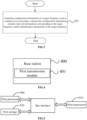
- the present disclosure provides an information transmission method.
- the information transmission method is applied to a base station and includes a step 101.
- Step 101 transmitting to a mobile terminal configuration information of a target frequency used by the mobile terminal in a random access procedure, wherein the configuration information includes time slot information corresponding to the target frequency and/or identification information of the target frequency.
- the target frequency includes a first service frequency of a non-New Radio (NR) communication system and/or a second service frequency of a NR communication system, wherein the NR communication system is a communication system in which the mobile terminal is located, the non-NR communication system is specifically a Long Term Evolution (LTE) communication system, and the first service frequency is specifically 1.8 GHz or 800 MHz, or 900 MHz, or 2.3 GHz, or 2.6 GHz, or 2.1 GHz.
- LTE Long Term Evolution
- the 1.8 GHz is taken as an example below, and other frequencies are similar in principle.
- the second service frequency is a frequency deployed for a 5G NR including 3.5 GHz or other frequencies.
- the 3.5 GHz is taken as an example, and the other frequencies are similar in principle.
- the target frequency may be a frequency used by a first interactive message msg. 1 (a preamble sequence), a second interactive message msg. 2, a third interactive message msg. 3, a fourth interactive message msg. 4 and a fifth interactive message msg. 5 in a random access procedure, or may be a frequency used in an entirety of a random access procedure.
- the frequencies of 800 MHz, 900 MHz also include any one of 800 MHz and 900 MHz used in a Code Division Multiple Access (CDMA) system, a Global System for Mobile Communications (GSM) system, a Time Division-Synchronous Code Division Multiple Access (TD-SCDMA) system.
- CDMA Code Division Multiple Access
- GSM Global System for Mobile Communications
- TD-SCDMA Time Division-Synchronous Code Division Multiple Access
- the time slot information includes a time slot or a part of time slots configured by a base station other than a predetermined time slot, wherein the predetermined time slot is a time slot for downlink reception by the mobile terminal using a downlink service frequency of the NR communication system.
- the predetermined time slot includes a time slot for downlink reception using a downlink service frequency in a connected state and a time slot for downlink reception using a downlink service frequency in an idle state.
- the time slot for downlink reception using a downlink service frequency in the connected state includes a time slot for receiving downlink control information, a time slot for receiving downlink data, a time slot for receiving a broadcast message, a time slot for receiving a paging message, and a time slot for receiving reference information;
- the time slot for downlink reception using a downlink service frequency in the idle state includes a time slot for receiving downlink control information, a time slot for receiving a paging message, and a time slot for receiving reference information.
- the NR system shares 1.8 GHz with the LTE system in uplink, and in a case that downlink reception is performed using 3.5 GHz, uplink transmission may not be performed using 1.8 GHz at the same time; only in a case that the downlink reception is not performed using 3.5 GHz, the mobile terminal (UE) may perform uplink transmission using 1.8 GHz.
- This scheme allows the UE to have only one transceiver for performing uplink and downlink transmission at separated time points. In this way, not only a cost of a duplexer may be saved, but also influence from crosstalk interference and second harmonics may be reduced.
- an uplink coverage is enhanced by sharing a low frequency with the LTE system, and an access success rate of a mobile terminal at a cell edge is improved.
- the information transmission method further includes acquiring, by pre-definition, configuration information of the target frequency used in the random access procedure.
- the step 101 specifically includes transmitting the configuration information of the target frequency to a mobile terminal through at least one of a dedicated Radio Resource Control (RRC) signaling, a RRC reconfiguration message, a RRC configuration message, a Random Access Channel (RACH) configuration signaling, a system message, and a broadcast message.
- RRC Radio Resource Control
- RRC reconfiguration message a RRC reconfiguration message
- RRC configuration message a Random Access Channel (RACH) configuration signaling
- RACH Random Access Channel
- the method further includes acquiring capability information reported by the mobile terminal, wherein the capability information includes a frequency supported by the mobile terminal; configuring the target frequency used by the mobile terminal in the random access procedure based on the capability information.
- the frequency supported by the mobile terminal includes a first service frequency
- it may be determined that the target frequency is a first service frequency and/or a second service frequency
- the frequency supported by the mobile terminal includes the second service frequency
- it may be determined that the target frequency is the second service frequency
- the information transmission method further includes a step 102.
- Step 102 performing a random access based on the configuration information.
- the configuration information is used for transmitting an interactive message in a random access procedure, wherein the interactive message includes at least one of the preamble sequence, the second interactive message, the third interactive message, the fourth interactive message, and the fifth interactive message.
- the information transmission method further includes a step 103.
- Step 103 receiving uplink transmission data transmitted by the mobile terminal based on the configuration information.
- the above step 102 includes sub-steps 1021-1022.
- Sub-step 1021 receiving the preamble sequence transmitted by the mobile terminal.
- Sub-step 1022 transmitting the second interactive message to the mobile terminal.
- the above-mentioned step 102 further includes a sub-step 1020.
- Sub-step 1020 transmitting correspondence relationship between a grouping identifier of preamble sequences and a configured frequency to the mobile terminal, so that the mobile terminal selects the preamble sequence based on the correspondence relationship and transmits the preamble sequence.
- the base station transmits the correspondence relationship between the grouping identifier of the preamble sequences and the configured frequency to the mobile terminal, so that the mobile terminal selects the preamble sequence based on the correspondence relationship, a frequency supported by the mobile terminal and frequency coverage information of a cell.
- an uplink frequency supported by the mobile terminal includes the first service frequency and the second service frequency, and a location where the mobile terminal is located is covered by only the first service frequency
- preamble sequences are grouped into two groups A and B, a frequency corresponding to the group A is the first service frequency, and a frequency corresponding to the group B is the second service frequency, then a preamble sequence in the group A is selected and transmitted to the base station.
- the step 1021 includes: based on the correspondence relationship between the grouping identifier of the preamble sequences and the configured frequency and the received preamble sequence transmitted by the mobile terminal, acquiring configuration information of a first target frequency used for a first subsequent interactive message and/or uplink data transmission, wherein the first subsequent interactive message includes at least one of the third interactive message, the fourth interactive message, and the fifth interactive message.
- the step 1022 includes transmitting the second interactive message in the random access procedure to the mobile terminal, the configuration information of the first target frequency is carried in the second interactive message or in a Random Access Radio Network Temporary Identifier (RA-RNTI) used by the second interactive message.
- RA-RNTI Random Access Radio Network Temporary Identifier
- the RA-RNTI herein is calculated by a predetermined RA-RNTI calculation formula.
- f_id is a frequency resource of the PRACH resource, that is, a frequency-domain number within the subframe.
- RA-RNTI 1 + t_id + 10 * f_id + 60 * SFN_id mod Wmax / 10 , where t_id is the time resource of the PRACH resource, that is, the number index of the first subframe.
- f_id is a frequency resource of the PRACH resource, that is, the frequency-domain number within the subframe
- SFN_id is a first radio frame number of the PRACH resource
- Wmax is a maximum Random Access Response (RAR) window length (the number of subframes), a value of which is 400 in the NB-IoT.
- RAR Random Access Response
- t_id is the time resource of the PRACH resource, that is, the number index of the first subframe
- f_id is the frequency resource of the PRACH resource, that is, the frequency-domain number within the subframe
- carrier_ID refers to a corresponding frequency number (an identifier) in the present disclosure
- parameters N, N1, N2 need to be determined based on the number of time-frequency resources and the number of available frequencies.
- the RA-RNTI calculation formula may also carry information of a Synchronization Signal block (a SS block) or a Beam ID. If a beam-related ID is added, then the above formula may also be added with an item corresponding to the beam_ID.
- a Synchronization Signal block a SS block
- Beam ID a Beam ID
- the step 102 further includes sub-steps 1023-1024.
- Sub-step 1023 receiving the third interactive message transmitted by the mobile terminal.
- Sub-step 1024 transmitting the fourth interactive message to the mobile terminal.
- the sub-step 1023 includes acquiring configuration information of a second target frequency carried in the third interactive message and used for a second subsequent interactive message and/or uplink data transmission, wherein the second subsequent interactive message includes at least one of the fourth interactive message and the fifth interactive message.
- the sub-step 1024 includes configuring, based on the configuration information of the second target frequency carried in the third interactive message, configuration information of a third target frequency used for subsequent uplink data transmission, and transmitting the configuration information of the third target frequency used for subsequent uplink data transmission to the mobile terminal through the fourth interactive message.
- the configuration information of the third target frequency may be the same as the configuration information of the second target frequency, or may be different from the configuration information of the second target frequency.
- the information transmission method of the present disclosure transmits to a mobile terminal configuration information of a target frequency used by the mobile terminal in a random access procedure, wherein the configuration information includes time slot information corresponding to the target frequency and/or identification information of the target frequency.
- the configuration information of the present disclosure carries the time slot information corresponding to the target frequency and/or the identification information of the target frequency, so that the mobile terminal may accomplish uplink access at different frequencies in a case that the mobile terminal performs a random access, thereby effectively reducing a probability of access failure or a congestion probability of random access.
- the present disclosure also provides an information transmission method.
- the information transmission method is applied to a mobile terminal and includes a step 301.
- Step 301 acquiring configuration information of a target frequency used in a random access procedure, wherein the configuration information includes time slot information corresponding to the target frequency and/or identification information of the target frequency.
- the configuration information of the target frequency used in the random access procedure is acquired to facilitate the mobile terminal to perform random access and/or uplink data transmission based on the configuration information.
- the configuration information of the target frequency used in the random access procedure is acquired through pre-definition.
- the step 301 includes acquiring the configuration information of the target frequency through receiving at least one of a dedicated Radio Resource Control (RRC) signaling, a RRC reconfiguration message, a RRC configuration message, a Random Access Channel (RACH) configuration signaling, a system message, and a broadcast message transmitted by a base station.
- RRC Radio Resource Control
- RRC reconfiguration message a RRC reconfiguration message
- RRC configuration message a Random Access Channel (RACH) configuration signaling
- RACH Random Access Channel
- the time slot information includes a time slot or a part of time slots configured by a base station other than a predetermined time slot, wherein the predetermined time slot is a time slot for downlink reception by the mobile terminal using a downlink service frequency of the NR communication system.
- the information transmission method further includes transmitting capability information of the mobile terminal to the base station, so that the base station may configure, based on the capability information, the target frequency used by the mobile terminal in the random access procedure, wherein the capability information includes a frequency supported by the mobile terminal.
- the target frequency includes a first service frequency of a non-New Radio (NR) communication system and/or a second service frequency of a NR communication system, wherein a communication system in which the mobile terminal is located is the NR communication system.
- NR non-New Radio
- the time slot information includes a time slot or a part of time slots configured by a base station other than a predetermined time slot, wherein the predetermined time slot is a time slot for downlink reception by the mobile terminal using a downlink service frequency of the NR communication system.
- the predetermined time slot includes a time slot for downlink reception using a downlink service frequency in a connected state and a time slot for downlink reception using a downlink service frequency in an idle state.
- the time slot for downlink reception using a downlink service frequency in the connected state includes a time slot for receiving downlink control information, a time slot for receiving downlink data, a time slot for receiving a broadcast message, a time slot for receiving a paging message, and a time slot for receiving reference information;
- the time slot for downlink reception using a downlink service frequency in the idle state includes a time slot for receiving downlink control information, a time slot for receiving a paging message, and a time slot for receiving reference information.
- the information transmission method further includes a step 302.
- Step 302 performing random access based on the acquired configuration information.
- the acquired configuration information is used for transmitting an interactive message in a random access procedure, wherein the interactive message includes at least one of a preamble sequence, a second interactive message, a third interactive message, a fourth interactive message, and a fifth interactive message.
- the information transmission method further includes a step 303.
- Step 303 transmitting uplink data based on the acquired configuration information.
- step 302 includes sub-steps 3021-3022.
- Sub-step 3021 transmitting the preamble sequence to the base station through the acquired configuration information.
- Sub-step 3022 receiving the second interactive message transmitted by the base station in the random access procedure.
- the step 302 further includes receiving correspondence relationship between a grouping identifier of preamble sequences and a configured frequency transmitted by the base station, and selecting, based on the correspondence relationship, the preamble sequence to be transmitted to the base station.
- the above step 302 includes: in a case that the second interactive message transmitted by the base station or a Random Access Radio Network Temporary Identifier (RA-RNTI) used in the second interactive message carries the configuration message of the first target frequency for a first subsequent interactive message and/or the uplink data transmission, transmitting the third interactive message based on the configuration information of the first target frequency; otherwise transmitting the third interactive message based on the acquired configuration information; wherein the first subsequent interactive message includes at least one of the third interactive message, the fourth interactive message, and the fifth interactive message.
- RA-RNTI Random Access Radio Network Temporary Identifier
- the third interactive message carries configuration information of a second target frequency used for a second subsequent interactive message and/or uplink data transmission; the second subsequent interactive message includes at least one of the fourth interactive message and the fifth interactive message.
- the step 302 includes receiving the fourth interactive message transmitted by the base station after transmitting the third interactive message.
- the step 303 includes: in a case that the fourth interactive message transmitted by the base station carries the configuration information of a third target configuration frequency used for uplink data transmission, transmitting uplink data based on the configuration information of the third target configuration frequency; in a case that the fourth interactive message transmitted by the base station does not carry the configuration information of the third target configuration frequency used for uplink data transmission, but the second interactive message transmitted by the base station or the Random Access Radio Network Temporary Identifier (RA-RNTI) used by the second interactive message carries the configuration information of the first target frequency used for uplink data transmission, transmitting uplink data based on the configuration information of the first target frequency; and in a case that the fourth interactive message transmitted by the base station does not carry the configuration information of the third target configuration frequency used for uplink data transmission and the second interactive message transmitted by the base station or the Random Access Radio Network Temporary Identifier (RA-RNTI) used in the second interactive message does not carry the configuration information of the first target frequency used for uplink data transmission, transmitting uplink data based on the configuration information
- a frequency different from that used in the random access may be configured for subsequent data transmission, and a crosstalk interference or an interference from a second harmonic to which the UE is subjected may also be effectively reduced.
- the first interactive message is a message 1 (msg. 1), and the frequency configured by the base station is transmitted to the mobile terminal through a system message (SI) or a dedicated RRC signaling, and the first interactive message is a preamble sequence (preamble).
- SI system message
- RRC dedicated RRC
- interactive messages of the present disclosure refer to interactive messages in the random access procedure.
- frequency information is distinguished through grouping preamble sequences, and a preamble sequence selected by the mobile terminal is transmitted to the base station.
- the base station may select, for the UE based on the group in which the preamble sequence transmitted by the UE is located and the correspondence relationship between a grouping identifier of a preamble sequence and a configured frequency, resources such as a frequency resource, a time-frequency domain resource, or a codeword resource used for at least one of the subsequent second interactive message msg. 2 and the third interactive message msg. 3, the fourth interactive message msg. 4, the fifth interactive message msg.5 and a data transmission message.
- the second interactive message is a message 2 (msg.2, RAR) in the random access procedure (RACH)
- the third interactive message is a message 3 (msg.3) in the random access procedure (RACH)
- the fourth interactive message is a message 4 (msg.4) in the random access procedure (RACH)
- the fifth interactive message is a message 5 (msg.5) in the random access procedure (RACH).
- selection information of the group in which the preamble is located needs to be carried in resource configuration of a Physical Random Access Channel (PRACH).
- PRACH Physical Random Access Channel
- the UE receives the msg. 2 at a preset frequency or a frequency configured by the base station.
- the msg. 2 message may carry the configuration information corresponding to a frequency used by at least one of the subsequent msg. 3, the msg. 4, the msg. 5 and the data transmission message.
- corresponding configuration information such as an ID of a frequency, may be carried by a RA-RNTI identifier.
- the UE transmits the msg. 3 at a preset or configured frequency.
- the configured frequency is specifically a frequency corresponding to the grouping of the msg. 1, or a frequency carried by the msg. 2, or a frequency broadcast through a system message, or a frequency transmitted through the dedicated RRC signaling.
- the msg. 3 may carry a frequency-point capability supported by the UE, or configuration information of frequencies required for subsequent transmission (transmission or reception) of the UE.
- the UE receives the msg. 4 at a preset or configured frequency.
- the configured frequency is specifically a frequency corresponding to the grouping of the msg. 1, a frequency carried by the msg. 2, a frequency carried by the msg. 2, a frequency broadcast through a system message, or a frequency transmitted by the dedicated RRC signaling.
- the msg. 4 may carry configuration information corresponding to a frequency used for subsequent uplink transmission configured by the UE.
- a frequency used for the interactive message may be dynamically changed, which is more flexible and convenient.
- the information transmission method of the present disclosure acquires configuration information of a target frequency used in a random access procedure, wherein the configuration information includes time slot information corresponding to the target frequency and/or identification information of the target frequency, and performs random access based on the configuration information.
- the mobile terminal of the present disclosure may accomplish uplink access at different frequencies in a case that the mobile terminal performs a random access, thereby effectively reducing a probability of access failure or a congestion probability of random access, and an implementation is more flexible.
- the present disclosure also provides a base station 400.
- the base station 400 includes a first transmission module 401.
- the first transmission module 401 is configured to transmit, to a mobile terminal, configuration information of a target frequency used by the mobile terminal in a random access procedure, wherein the configuration information includes time slot information corresponding to the target frequency and/or identification information of the target frequency.
- the target frequency includes a first service frequency of a non-New Radio (NR) communication system and/or a second service frequency of a NR communication system, wherein a communication system in which the mobile terminal is located is the NR communication system.
- NR non-New Radio
- the time slot information includes a time slot or a part of time slots configured by a base station other than a predetermined time slot, wherein the predetermined time slot is a time slot for downlink reception by the mobile terminal using a downlink service frequency of the NR communication system.
- the predetermined time slot includes a time slot for downlink reception using a downlink service frequency in a connected state and a time slot for downlink reception using a downlink service frequency in an idle state.
- the time slot for downlink reception using a downlink service frequency in the connected state includes a time slot for receiving downlink control information, a time slot for receiving downlink data, a time slot for receiving a broadcast message, a time slot for receiving a paging message, and a time slot for receiving reference information;
- the time slot for downlink reception using a downlink service frequency in the idle state includes a time slot for receiving downlink control information, a time slot for receiving a paging message, and a time slot for receiving reference information.
- the base station of the present disclosure further includes a first acquisition module, wherein the first acquisition module is configured to acquire, through pre-definition, configuration information of the target frequency used in the random access procedure.
- the first transmission module 401 is configured to transmit the configuration information of the target frequency to the mobile terminal through at least one of a dedicated Radio Resource Control (RRC) signaling, a RRC reconfiguration message, a RRC configuration message, a Random Access Channel (RACH) configuration signaling, a system message, and a broadcast message.
- RRC Radio Resource Control
- RRC reconfiguration message a RRC reconfiguration message
- RRC configuration message a Random Access Channel (RACH) configuration signaling
- RACH Random Access Channel
- the base station of the present disclosure further includes a second acquisition module and a configuration module.
- the second acquisition module is configured to acquire capability information reported by the mobile terminal, wherein the capability information includes a frequency supported by the mobile terminal.
- the configuration module is configured to configure, based on the capability information, the target frequency used by the mobile terminal in the random access procedure.
- the base station of the present disclosure further includes a first access module configured to perform a random access based on the configuration information.
- the first access module is configured to use the configuration information for transmitting an interactive message in a random access procedure, wherein the interactive message includes at least one of the preamble sequence, the second interactive message, the third interactive message, the fourth interactive message, and the fifth interactive message.
- the base station of the present disclosure further includes a first reception module, configured to receive, based on the configuration information, uplink transmission data transmitted by the mobile terminal.
- the first access module includes a first reception unit and a first transmission unit.
- the first reception unit is configured to receive a preamble sequence transmitted by the mobile terminal.
- the first transmission unit is configured to transmit the second interactive message to the mobile terminal.
- the base station of the present disclosure further includes a second transmission module configured to transmit correspondence relationship between a grouping identifier of preamble sequences and a configured frequency to the mobile terminal, so that the mobile terminal selects the preamble sequence based on the correspondence relationship and transmits the preamble sequence.
- the first reception unit is configured to: based on the correspondence relationship between the grouping identifier of the preamble sequences and the configured frequency and the received preamble sequence transmitted by the mobile terminal, acquire configuration information of a first target frequency used for a first subsequent interactive message and/or uplink data transmission, wherein the first subsequent interactive message includes at least one of the third interactive message, the fourth interactive message, and the fifth interactive message.
- the first transmission unit is configured to transmit the second interactive message in the random access procedure to the mobile terminal, the configuration information of the first target frequency is carried in the second interactive message or in a Random Access Radio Network Temporary Identifier (RA-RNTI) used by the second interactive message.
- RA-RNTI Random Access Radio Network Temporary Identifier
- the base station of the present disclosure further includes a first reception module and a third transmission module.
- the first reception module is configured to receive the third interactive message transmitted by the mobile terminal.
- the third transmission module is configured to transmit the fourth interactive message to the mobile terminal.
- the first reception module is configured to acquire configuration information of a second target frequency carried in the third interactive message and used for a second subsequent interactive message and/or uplink data transmission, wherein the second subsequent interactive message includes at least one of the fourth interactive message and the fifth interactive message.
- the third transmission module is configured to configure, based on the configuration information of the second target frequency carried in the third interactive message, configuration information of a third target frequency used for subsequent uplink data transmission, and transmit, to the mobile terminal through the fourth interactive message, the configuration information of the third target frequency used for subsequent uplink data transmission.
- the base station of the present disclosure transmits, to the mobile terminal, the configuration information of the target frequency used by the mobile terminal in a random access procedure, wherein the configuration information includes time slot information corresponding to the target frequency and/or identification information of the target frequency.
- the configuration information of the present disclosure carries the time slot information corresponding to the target frequency and/or the identification information of the target frequency, so that the mobile terminal may accomplish uplink access at different frequencies in a case that the mobile terminal performs a random access, thereby effectively reducing a probability of access failure or a congestion probability of random access.
- the present disclosure also provides a base station.
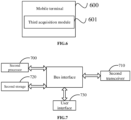
- the base station includes a first storage 520, a first processor 500, a first transceiver 510, a bus interface and a first computer program stored on the first storage 520 and executable by the first processor 500, wherein the first processor 500 is configured to read the program in the first storage 520 to perform following steps: transmitting, to a mobile terminal, configuration information of a target frequency used by the mobile terminal in a random access procedure, wherein the configuration information includes time slot information corresponding to the target frequency and/or identification information of the target frequency.
- a bus architecture may include any number of interconnected buses and bridges. Specifically, various circuits including one or more processors represented by the first processor 500 and a storage represented by the first storage 520 are linked together.
- the bus architecture may also link together a variety of other circuits, such as a peripheral device, a voltage regulator, a power management circuit, and so on, which are well known in the art and, therefore, will not be described further herein.
- the bus interface provides an interface.
- the first transceiver 510 may be a plurality of elements including a transmitter and a receiver, for providing a unit for communicating with various other devices over a transmission medium.
- the first processor 500 is responsible for managing the bus architecture and general processing, and the first storage 520 may store data used by the first processor 500 in performing operations.
- the target frequency includes a first service frequency of a non-New Radio (NR) communication system and/or a second service frequency of a NR communication system, wherein a communication system in which the mobile terminal is located is the NR communication system.
- NR non-New Radio
- the time slot information includes a time slot or a part of time slots configured by a base station other than a predetermined time slot, wherein the predetermined time slot is a time slot for downlink reception by the mobile terminal using a downlink service frequency of the NR communication system.
- the predetermined time slot includes a time slot for downlink reception using a downlink service frequency in a connected state and a time slot for downlink reception using a downlink service frequency in an idle state.
- the time slot for downlink reception using a downlink service frequency in the connected state includes a time slot for receiving downlink control information, a time slot for receiving downlink data, a time slot for receiving a broadcast message, a time slot for receiving a paging message, and a time slot for receiving reference information;
- the time slot for downlink reception using a downlink service frequency in the idle state includes a time slot for receiving downlink control information, a time slot for receiving a paging message, and a time slot for receiving reference information.
- the first processor 500 is further configured to read the program in the first storage 520 to perform a following step: acquiring, through pre-definition, configuration information of the target frequency used in the random access procedure.
- the first processor 500 is further configured to read the program in the first storage 520 to perform a following step: transmitting the configuration information of the target frequency to the mobile terminal through at least one of a dedicated Radio Resource Control (RRC) signaling, a RRC reconfiguration message, a RRC configuration message, a Random Access Channel (RACH) configuration signaling, a system message, and a broadcast message.
- RRC Radio Resource Control
- RRC reconfiguration message a RRC configuration message
- RRC configuration message e.g., a Random Access Channel (RACH) configuration signaling
- RACH Random Access Channel
- the first processor 500 is further configured to read the program in the first storage 520 to perform a following step: acquiring capability information reported by the mobile terminal, wherein the capability information includes a frequency supported by the mobile terminal; and configuring, based on the capability information, the target frequency used by the mobile terminal in the random access procedure.
- the first processor 500 is further configured to read the program in the first storage 520 to perform a following step: performing a random access based on the configuration information.
- the first processor 500 is further configured to read the program in the first storage 520 to perform a following step: using the configuration information for transmitting an interactive message in a random access procedure, wherein the interactive message includes at least one of the preamble sequence, the second interactive message, the third interactive message, the fourth interactive message, and the fifth interactive message.
- the first processor 500 is further configured to read the program in the first storage 520 to perform a following step: receiving, based on the configuration information, uplink transmission data transmitted by the mobile terminal.
- the first processor 500 is further configured to read the program in the first storage 520 to perform following steps: receiving the preamble sequence transmitted by the mobile terminal; and, transmitting the second interactive message to the mobile terminal.
- the first processor 500 is further configured to read the program in the first storage 520 to perform a following step: transmitting correspondence relationship between a grouping identifier of preamble sequences and a configured frequency to the mobile terminal, so that the mobile terminal selects the preamble sequence based on the correspondence relationship and transmits the preamble sequence.
- the first processor 500 is further configured to read the program in the first storage 520 to perform the following step: based on the correspondence relationship between the grouping identifier of the preamble sequences and the configured frequency and the received preamble sequence transmitted by the mobile terminal, acquiring configuration information of a first target frequency used for a first subsequent interactive message and/or uplink data transmission, wherein the first subsequent interactive message includes at least one of the third interactive message, the fourth interactive message, and the fifth interactive message.
- the first processor 500 is further configured to read the program in the first storage 520 to perform a following step: transmitting the second interactive message in the random access procedure to the mobile terminal, wherein the configuration information of the first target frequency is carried in the second interactive message or in a Random Access Radio Network Temporary Identifier (RA-RNTI) used by the second interactive message.
- RA-RNTI Random Access Radio Network Temporary Identifier
- the first processor 500 is further configured to read the program in the first storage 520 to perform a following step: receiving the third interactive message transmitted by the mobile terminal; and transmitting the fourth interactive message to the mobile terminal.
- the first processor 500 is further configured to read the program in the first storage 520 to perform a following step: acquiring configuration information of a second target frequency carried in the third interactive message and used for a second subsequent interactive message and/or uplink data transmission, wherein the second subsequent interactive message includes at least one of the fourth interactive message and the fifth interactive message.
- the first processor 500 is further configured to read the program in the first storage 520 to perform following steps: configuring, based on the configuration information of the second target frequency carried in the third interactive message, configuration information of a third target frequency used for subsequent uplink data transmission, and transmitting the configuration information of the third target frequency used for subsequent uplink data transmission to the mobile terminal through the fourth interactive message.
- a computer readable storage medium includes a first computer program stored thereon, wherein a processor implements following steps in a case that the program is executed by the processor: transmitting, to a mobile terminal, configuration information of a target frequency used by the mobile terminal in a random access procedure, wherein the configuration information includes time slot information corresponding to the target frequency and/or identification information of the target frequency.
- the processor may realize all implementations in the above method embodiment, and the detailed description thereof is omitted herein.
- the computer readable storage medium in the present disclosure may be a volatile computer readable storage medium or a non-volatile computer readable storage medium.
- the present disclosure also provides a mobile terminal 600.
- the mobile terminal 600 includes a third acquisition module 601, configured to acquire configuration information of a target frequency used in a random access procedure, wherein the configuration information includes time slot information corresponding to the target frequency and/or identification information of the target frequency.
- the target frequency includes a first service frequency of a non-New Radio (NR) communication system and/or a second service frequency of a NR communication system, wherein a communication system in which the mobile terminal is located is the NR communication system.
- NR non-New Radio
- the time slot information includes a time slot or a part of time slots configured by a base station other than a predetermined time slot, wherein the predetermined time slot is a time slot for downlink reception by the mobile terminal using a downlink service frequency of the NR communication system.
- the predetermined time slot includes a time slot for downlink reception using a downlink service frequency in a connected state and a time slot for downlink reception using a downlink service frequency in an idle state.
- the time slot for downlink reception using a downlink service frequency in the connected state includes a time slot for receiving downlink control information, a time slot for receiving downlink data, a time slot for receiving a broadcast message, a time slot for receiving a paging message, and a time slot for receiving reference information;
- the time slot for downlink reception using a downlink service frequency in the idle state includes a time slot for receiving downlink control information, a time slot for receiving a paging message, and a time slot for receiving reference information.
- the third acquisition module 601 is configured to acquire, through pre-definition, configuration information of the target frequency used in the random access procedure.
- the third acquisition module 601 is configured to acquire the configuration information of the target frequency through receiving at least one of a dedicated Radio Resource Control (RRC) signaling, a RRC reconfiguration message, a RRC configuration message, a Random Access Channel (RACH) configuration signaling, a system message, and a broadcast message transmitted by the base station transmitted by the base station.
- RRC Radio Resource Control
- RRC reconfiguration message a RRC configuration message
- RACH Random Access Channel
- the mobile terminal of the present disclosure further includes a fourth transmission module, configured to transmit capability information of the mobile terminal to the base station, so that the base station may configure, based on the capability information, the target frequency used by the mobile terminal in the random access procedure, wherein the capability information includes a frequency supported by the mobile terminal.
- the mobile terminal of the present disclosure further includes a second access module configured to perform a random access based on the acquired configuration information.
- the second access module is configured to use the acquired configuration information for transmitting an interactive message in a random access procedure, wherein the interactive message includes at least one of a preamble sequence, a second interactive message, a third interactive message, a fourth interactive message, and a fifth interactive message.
- the mobile terminal of the present disclosure further includes a transmission module configured to transmit uplink data based on the acquired configuration information.
- the second access module includes a second transmission unit and a second reception unit.
- the second transmission unit is configured to transmit the preamble sequence to the base station through the acquired configuration information.
- the second reception unit is configured to receive the second interactive message transmitted by the base station in the random access procedure.
- the mobile terminal of the present disclosure further includes a second reception module, configured to receive correspondence relationship between a grouping identifier of preamble sequences and a configured frequency transmitted by the base station, and select, based on the correspondence relationship, the preamble sequence to be transmitted to the base station.
- a second reception module configured to receive correspondence relationship between a grouping identifier of preamble sequences and a configured frequency transmitted by the base station, and select, based on the correspondence relationship, the preamble sequence to be transmitted to the base station.
- the second access module is configured to: in a case that the second interactive message transmitted by the base station or a Random Access Radio Network Temporary Identifier (RA-RNTI) used in the second interactive message carries the configuration message of the first target frequency for a first subsequent interactive message and/or the uplink data transmission, transmit the third interactive message based on the configuration information of the first target frequency; otherwise transmit the third interactive message based on the acquired configuration information; wherein the first subsequent interactive message includes at least one of the third interactive message, the fourth interactive message, and the fifth interactive message.
- RA-RNTI Random Access Radio Network Temporary Identifier
- the third interactive message carries configuration information of a second target frequency used for a second subsequent interactive message and/or uplink data transmission; the second subsequent interactive message includes at least one of the fourth interactive message and the fifth interactive message.
- the second access module includes a third reception unit configured to receive the fourth interactive message transmitted by the base station after transmitting the third interactive message.
- the transmission module includes a first transmission unit, a second transmission unit, and a third transmission unit.
- the first transmission unit is configured to: in a case that the fourth interactive message transmitted by the base station carries the configuration information of a third target configuration frequency used for uplink data transmission, transmit uplink data based on the configuration information of the third target configuration frequency.
- the second transmission unit is configured to: in a case that the fourth interactive message transmitted by the base station does not carry the configuration information of the third target configuration frequency used for uplink data transmission, but the second interactive message transmitted by the base station or the Random Access Radio Network Temporary Identifier (RA-RNTI) used by the second interactive message carries the configuration information of the first target frequency used for uplink data transmission, transmit uplink data based on the configuration information of the first target frequency.
- RA-RNTI Random Access Radio Network Temporary Identifier
- the third transmission unit is configured to, in a case that the fourth interactive message transmitted by the base station does not carry the configuration information of the third target configuration frequency used for uplink data transmission and the second interactive message transmitted by the base station or the Random Access Radio Network Temporary Identifier (RA-RNTI) used in the second interactive message does not carry the configuration information of the first target frequency used for uplink data transmission, transmit uplink data based on the acquired configuration information.
- RA-RNTI Random Access Radio Network Temporary Identifier
- the mobile terminal of the present disclosure acquires configuration information of a target frequency used in a random access procedure, wherein the configuration information includes time slot information corresponding to the target frequency and/or identification information of the target frequency, and performs random access based on the acquired configuration information.
- the mobile terminal may accomplish an uplink access at different frequencies in a case that the mobile terminal performs a random access, thereby effectively reducing a probability of access failure or a congestion probability of random access, and an implementation is more flexible.
- the mobile terminal is a terminal corresponding to the above method embodiment, and all implementations in the above method embodiment are applicable to the embodiments of the mobile terminal, and the same technical effect may be achieved.
- the present disclosure also provides a mobile terminal.
- the mobile terminal includes a second storage 720, a second processor 700, a second transceiver 710, a user interface 730, a bus interface and a second computer program stored on the second storage 720 and executable by the second processor 700, wherein the second processor 700 is configured to read the program in the second storage 720 to perform following steps: acquiring, configuration information of a target frequency used in a random access procedure, wherein the configuration information includes time slot information corresponding to the target frequency and/or identification information of the target frequency.
- a bus architecture may include any number of interconnected buses and bridges. Specifically, various circuits including one or more processors represented by the second processor 700 and a storage represented by the second storage 720 are linked together.
- the bus architecture may also link together a variety of other circuits, such as a peripheral device, a voltage regulator, a power management circuit, and so on, which are well known in the art and, therefore, will not be described further herein.
- the bus interface provides an interface.
- the second transceiver 710 may be a plurality of elements including a transmitter and a receiver, for providing a unit for communicating with various other devices over a transmission medium.
- the user interface 730 may also be an interface capable of externally connecting or internally connecting a required device which includes, but is not limited to, a keypad, a display, a speaker, a microphone, a joystick, and the like.
- the second processor 700 is responsible for managing the bus architecture and general processing, and the second storage 720 may store data used by the second processor 700 in performing operations.
- the target frequency includes a first service frequency of a non-New Radio (NR) communication system and/or a second service frequency of a NR communication system, wherein a communication system in which the mobile terminal is located is the NR communication system.
- NR non-New Radio
- the time slot information includes a time slot or a part of time slots configured by a base station other than a predetermined time slot, wherein the predetermined time slot is a time slot for downlink reception by the mobile terminal using a downlink service frequency of the NR communication system.
- the predetermined time slot includes a time slot for downlink reception using a downlink service frequency in a connected state and a time slot for downlink reception using a downlink service frequency in an idle state.
- the time slot for downlink reception using a downlink service frequency in the connected state includes a time slot for receiving downlink control information, a time slot for receiving downlink data, a time slot for receiving a broadcast message, a time slot for receiving a paging message, and a time slot for receiving reference information;
- the time slot for downlink reception using a downlink service frequency in the idle state includes a time slot for receiving downlink control information, a time slot for receiving a paging message, and a time slot for receiving reference information.
- the second processor 700 is further configured to read the program in the second storage 720 to perform a following step: acquiring, through pre-definition, configuration information of the target frequency used in the random access procedure.
- the second processor 700 is further configured to read the program in the second storage 720 to perform a following step: acquiring the configuration information of the target frequency through receiving at least one of a dedicated Radio Resource Control (RRC) signaling, a RRC reconfiguration message, a RRC configuration message, a Random Access Channel (RACH) configuration signaling, a system message, and a broadcast message transmitted by the base station.
- RRC Radio Resource Control
- RRC reconfiguration message a RRC configuration message
- RRC configuration message a Random Access Channel (RACH) configuration signaling
- RACH Random Access Channel
- the second processor 700 is further configured to read the program in the second storage 720 to perform a following step: transmitting capability information of the mobile terminal to the base station, so that the base station may configure, based on the capability information, the target frequency used by the mobile terminal in the random access procedure, wherein the capability information includes a frequency supported by the mobile terminal.
- the second processor 700 is further configured to read the program in the second storage 720 to perform a following step: performing random access based on the acquired configuration information.
- the second processor 700 is further configured to read the program in the second storage 720 to perform a following step: using the acquired configuration information for transmitting an interactive message in a random access procedure, wherein the interactive message includes at least one of a preamble sequence, a second interactive message, a third interactive message, a fourth interactive message, and a fifth interactive message.
- the second processor 700 is further configured to read the program in the second storage 720 to perform a following step: transmitting uplink data based on the acquired configuration information.
- the second processor 700 is further configured to read the program in the second storage 720 to perform following steps: transmitting the preamble sequence to the base station through the acquired configuration information; receiving the second interactive message transmitted by the base station in the random access procedure.
- the second processor 700 is further configured to read the program in the second storage 720 to perform following steps: receiving correspondence relationship between a grouping identifier of preamble sequences and a configured frequency transmitted by the base station, and selecting, based on the correspondence relationship, the preamble sequence to be transmitted to the base station.
- the second processor 700 is further configured to read the program in the second storage 720 to perform the following steps: in a case that the second interactive message transmitted by the base station or a Random Access Radio Network Temporary Identifier (RA-RNTI) used in the second interactive message carries the configuration message of the first target frequency for a first subsequent interactive message and/or the uplink data transmission, transmitting the third interactive message based on the configuration information of the first target frequency; otherwise transmitting the third interactive message based on the acquired configuration information; wherein the first subsequent interactive message includes at least one of the third interactive message, the fourth interactive message, and the fifth interactive message.
- RA-RNTI Random Access Radio Network Temporary Identifier
- the third interactive message carries configuration information of a second target frequency used for a second subsequent interactive message and/or uplink data transmission; the second subsequent interactive message includes at least one of the fourth interactive message and the fifth interactive message.
- the second processor 700 is further configured to read the program in the second storage 720 to perform a following step: receiving the fourth interactive message transmitted by the base station after transmitting the third interactive message.
- the second processor 700 is further configured to read the program in the second storage 720 to perform following steps: in a case that the fourth interactive message transmitted by the base station carries the configuration information of a third target configuration frequency used for uplink data transmission, transmitting uplink data based on the configuration information of the third target configuration frequency; in a case that the fourth interactive message transmitted by the base station does not carry the configuration information of the third target configuration frequency used for uplink data transmission, but the second interactive message transmitted by the base station or the Random Access Radio Network Temporary Identifier (RA-RNTI) used by the second interactive message carries the configuration information of the first target frequency used for uplink data transmission, transmitting uplink data based on the configuration information of the first target frequency; and in a case that the fourth interactive message transmitted by the base station does not carry the configuration information of the third target configuration frequency used for uplink data transmission and the second interactive message transmitted by the base station or the Random Access Radio Network Temporary Identifier (RA-RNTI) used in the second interactive message does not carry the configuration information of the first target frequency used for
- a computer readable storage medium includes a second computer program stored thereon, wherein a processor implement the following steps in a case that the second computer program is executed by the processor: acquiring configuration information of a target frequency used in a random access procedure, wherein the configuration information includes time slot information corresponding to the target frequency and/or identification information of the target frequency.
- the processor may implement all implementations in the above method embodiments which will not be described here.
- the computer readable storage medium may be a volatile computer readable storage medium or a non-volatile computer readable storage medium.
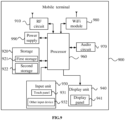
- FIG. 8 is another structural block diagram of the mobile terminal of the present disclosure.
- the mobile terminal 800 shown in FIG. 8 includes at least one processor 801, a storage 802, at least one network interface 804, and another user interface 803.
- Various components in the mobile terminal 800 are coupled together by a bus system 805.
- the bus system 805 is used to enable connection communication among these components.
- the bus system 805 includes, in addition to a data bus, a power bus, a control bus, and a status signal bus. However, for clarity of illustration, various buses are designated as the bus system 805 in FIG. 8 .
- the user interface 803 may include a display, a keyboard, or a pointing device (e.g., a mouse, a trackball, a touch pad, or a touch screen, etc.).
- a pointing device e.g., a mouse, a trackball, a touch pad, or a touch screen, etc.
- the storage 802 in the present disclosure may be a volatile storage or a non-volatile storage, or may include both volatile and non-volatile storages.
- the non-volatile storage may be a Read-Only Memory (ROM), a Programmable ROM (PROM), an Erasable PROM (EPROM), an Electrically EPROM (EEPROM), or a flash memory.
- the volatile storage may be a Random Access Memory (RAM) serving as an external cache.
- RAMs such as a Static RAM (SRAM), a Dynamic RAM (DRAM), a Synchronous DRAM (SDRAM), a Double Data Rate SDRAM (DDRSDRAM), an Enhanced SDRAM (ESDRAM), a Synchlink DRAM (SLDRAM) and a Direct Rambus RAM (DRRAM).
- SRAM Static RAM
- DRAM Dynamic RAM
- SDRAM Synchronous DRAM
- DDRSDRAM Double Data Rate SDRAM
- ESDRAM Enhanced SDRAM
- SLDRAM Synchlink DRAM
- DRRAM Direct Rambus RAM
- the storage 802 in the systems and methods described herein is intended to include, but is not limited to, these and any other suitable types of storages.
- the storage 802 stores following elements, executable modules or data structures, or a subset thereof, or an extended set thereof: an operating system 8021 and an application program 8022.
- the operating system 8021 includes various system programs, such as a framework layer, a core library layer, a driver layer and the like, for implementing various basic services and processing hardware-based tasks.
- the application program 8022 includes various application programs such as a Media Player, a Browser, and the like, and is used to implement various application services.
- a program for implementing the method of the present disclosure may be included in the application program 8022.
- the processor 801 by invoking a program or an instruction stored in the storage 802 which may specifically be a program or an instruction stored in the application program 8022, the processor 801 is configured to acquire configuration information of a target frequency used in a random access procedure, wherein the configuration information includes time slot information corresponding to the target frequency and/or identification information of the target frequency.
- the target frequency includes a first service frequency of a non-New Radio (NR) communication system and/or a second service frequency of a NR communication system, wherein a communication system in which the mobile terminal is located is the NR communication system.
- NR non-New Radio
- the time slot information includes a time slot or a part of time slots configured by a base station other than a predetermined time slot, wherein the predetermined time slot is a time slot for downlink reception by the mobile terminal using a downlink service frequency of the NR communication system.
- the predetermined time slot includes a time slot for downlink reception using a downlink service frequency in a connected state and a time slot for downlink reception using a downlink service frequency in an idle state.
- the time slot for downlink reception using a downlink service frequency in the connected state includes a time slot for receiving downlink control information, a time slot for receiving downlink data, a time slot for receiving a broadcast message, a time slot for receiving a paging message, and a time slot for receiving reference information;
- the time slot for downlink reception using a downlink service frequency in the idle state includes a time slot for receiving downlink control information, a time slot for receiving a paging message, and a time slot for receiving reference information.
- the processor 801 is further configured to read the program in the second storage 720 to perform a following step: acquiring, through pre-definition, configuration information of the target frequency used in the random access procedure.
- the processor 801 is further configured to read the program in the second storage 720 to perform a following step: acquiring the configuration information of the target frequency through receiving at least one of a dedicated Radio Resource Control (RRC) signaling, a RRC reconfiguration message, a RRC configuration message, a RACH configuration signaling, a system message, and a broadcast message transmitted by the base station.
- RRC Radio Resource Control
- the processor 801 is further configured to read the program in the second storage 720 to perform a following step: transmitting capability information of the mobile terminal to the base station, so that the base station may configure, based on the capability information, the target frequency used by the mobile terminal in the random access procedure, wherein the capability information includes a frequency supported by the mobile terminal.
- the processor 801 is further configured to read the program in the second storage 720 to perform a following step: performing random access based on the acquired configuration information.
- the processor 801 is further configured to read the program in the second storage 720 to perform a following step: using the acquired configuration information for transmitting an interactive message in a random access procedure, wherein the interactive message includes at least one of a preamble sequence, a second interactive message, a third interactive message, a fourth interactive message, and a fifth interactive message.
- the processor 801 is further configured to read the program in the second storage 720 to perform a following step: transmitting uplink data based on the acquired configuration information.
- the processor 801 is further configured to read the program in the second storage 720 to perform following steps: transmitting the preamble sequence to the base station through the acquired configuration information; receiving the second interactive message transmitted by the base station in the random access procedure.
- the processor 801 is further configured to read the program in the second storage 720 to perform following steps: receiving correspondence relationship between a grouping identifier of preamble sequences and a configured frequency transmitted by the base station, and selecting, based on the correspondence relationship, the preamble sequence to be transmitted to the base station.
- the processor 801 is further configured to read the program in the second storage 720 to perform the following steps: in a case that the second interactive message transmitted by the base station or a Random Access Radio Network Temporary Identifier (RA-RNTI) used in the second interactive message carries the configuration message of the first target frequency for a first subsequent interactive message and/or the uplink data transmission, transmitting the third interactive message based on the configuration information of the first target frequency; otherwise transmitting the third interactive message based on the acquired configuration information; wherein the first subsequent interactive message includes at least one of the third interactive message, the fourth interactive message, and the fifth interactive message.
- RA-RNTI Random Access Radio Network Temporary Identifier
- the third interactive message carries configuration information of a second target frequency used for a second subsequent interactive message and/or uplink data transmission; the second subsequent interactive message includes at least one of the fourth interactive message and the fifth interactive message.
- the processor 801 is further configured to read the program in the second storage 720 to perform a following step: receiving the fourth interactive message transmitted by the base station after transmitting the third interactive message.
- the processor 801 is further configured to read the program in the second storage 720 to perform following steps: in a case that the fourth interactive message transmitted by the base station carries the configuration information of a third target configuration frequency used for uplink data transmission, transmitting uplink data based on the configuration information of the third target configuration frequency; in a case that the fourth interactive message transmitted by the base station does not carry the configuration information of the third target configuration frequency used for uplink data transmission, but the second interactive message transmitted by the base station or the Random Access Radio Network Temporary Identifier (RA-RNTI) used by the second interactive message carries the configuration information of the first target frequency used for uplink data transmission, transmitting uplink data based on the configuration information of the first target frequency; and in a case that the fourth interactive message transmitted by the base station does not carry the configuration information of the third target configuration frequency used for uplink data transmission and the second interactive message transmitted by the base station or the Random Access Radio Network Temporary Identifier (RA-RNTI) used in the second interactive message does not carry the configuration information of the first target frequency used for
- the processor 801 is configured to acquire configuration information of a target frequency used in a random access procedure, wherein the configuration information includes time slot information corresponding to the target frequency and/or identification information of the target frequency, and perform random access based on the configuration information.
- the mobile terminal of the present disclosure may accomplish uplink access at different frequencies in a case that the mobile terminal performs a random access, thereby effectively reducing a probability of access failure or a congestion probability of random access, and an implementation is more flexible.
- the mobile terminal of the present disclosure may be, for example, a mobile phone, a tablet computer, a Personal Digital Assistant (PDA), or a vehicle-mounted computer or the like.
- PDA Personal Digital Assistant
- the mobile terminal 800 may implement various processes implemented by the terminal in the foregoing embodiments, and in order to avoid repetition, the detailed description thereof is omitted here.
- the methods disclosed in the present disclosure described above may be applied in, or implemented by, the processor 801.
- the processor 801 may be an integrated circuit chip with a signal processing capability. In implementation, the steps of the method described above may be accomplished by integrated logic circuitry in hardware in the processor 801 or by instructions in a form of software.
- the processor 801 may be a general-purpose processor, a Digital Signal Processor (DSP), an Application Specific Integrated Circuit (ASIC), a Field Programmable Gate Arrays (FPGAs) or other programmable logic devices, discrete gates or transistor logic devices, discrete hardware components.
- DSP Digital Signal Processor
- ASIC Application Specific Integrated Circuit
- FPGAs Field Programmable Gate Arrays
- the general purpose processor may be a microprocessor or the processor may be any conventional processor or the like.
- the steps of the method disclosed in connection with the present disclosure may be embodied directly through execution by a hardware decoding processor, or be accomplished by a combination of hardware and software modules in a decoding processor.
- the software module may be located in a storage medium mature in the art such as a random access memory, a flash storage, a read only storage, a programmable read only storage, or an electrically erasable programmable storage, a register, etc.
- the storage medium is located in the storage 802 and the processor 801 reads information in the storage 802 and performs the steps of the method described above in conjunction with hardware of the processor 801.
- the embodiments described herein may be implemented in hardware, software, firmware, middleware, microcode, or a combination thereof.
- the processing unit may be implemented in one or more Application Specific Integrated Circuits (ASICs), a Digital Signal Processing (DSP), a DSP Device (DSPD), a Programmable Logic Device (PLD), a Field-Programmable Gate Array (FPGA), a general purpose processor, a controller, a microcontroller, a microprocessor, other electronic units for performing functions described herein, or combinations thereof.
- ASICs Application Specific Integrated Circuits
- DSP Digital Signal Processing
- DSPD DSP Device
- PLD Programmable Logic Device
- FPGA Field-Programmable Gate Array
- general purpose processor a controller, a microcontroller, a microprocessor, other electronic units for performing functions described herein, or combinations thereof.
- modules e.g., processes, functions, etc.
- a software code may be stored in a storage and executed by a processor.
- the storage may be implemented in the processor or external to the processor.
- the present disclosure transmits, to a mobile terminal, configuration information of a target frequency used in a random access procedure, wherein the configuration information includes time slot information corresponding to the target frequency and/or identification information of the target frequency.
- the configuration information of the present disclosure carries the time slot information corresponding to the target frequency and/or the identification information of the target frequency, so that the mobile terminal may accomplish uplink access at different frequencies in a case that the mobile terminal performs a random access, thereby effectively reducing a probability of access failure or a congestion probability of random access.
- FIG. 9 is a structural block diagram of a mobile terminal of the present disclosure.
- the mobile terminal 900 shown in FIG. 9 includes a Radio Frequency (RF) circuit 910, a storage 920, an input unit 930, a display unit 940, a processor 960, an audio circuit 970, a WiFi (Wireless Fidelity) module 9100 and a power supply 990.
- RF Radio Frequency
- the input unit 930 may be configured to receive digital or character information inputted by a user and generate a signal input related to a user settings and a function control of the mobile terminal 900.
- the input unit 930 may include a touch panel 931.
- the touch panel 931 also referred to as a touch screen, may collect user touch operations on or near it (such as user operations on the touch panel 931 using any suitable object or accessory such as a finger, stylus, etc.), and drive a corresponding connected device according to a preset program.
- the touch panel 931 may include two parts, a touch detection device and a touch controller.
- the touch detection device detects a touch orientation of the user, detects a signal caused by the touch operation, and transmits the signal to the touch controller.
- the touch controller receives touch information from the touch detection device, converts it into contact coordinates, transmits the contact coordinates to the processor 960, and may receive and execute commands from the processor 960.
- the touch panel 931 may be implemented as various types such as a resistive type, a capacitive type, an infrared ray type, and a surface acoustic wave type.
- the input unit 930 may include other input devices 932 that may include, but are not limited to, one or more of a physical keyboard, a function key (such as volume control keys, switch keys, etc.), a trackball, a mouse, a joystick, or the like.
- a function key such as volume control keys, switch keys, etc.
- a trackball such as mouse, a joystick, or the like.
- the display unit 940 may be configured to display information inputted by a user or information provided to the user and various menu interfaces of the mobile terminal 900.
- the display unit 940 may include a display panel 941, optionally an LCD or an Organic Light-Emitting Diode (OLED) or the like may be used to configure the display panel 941.
- OLED Organic Light-Emitting Diode
- the touch panel 931 may cover the display panel 941 to form a touch display screen.
- the touch display screen detects a touch operation thereon or in the vicinity thereof, information of the touch operation is transmitted to the processor 960 to determine the type of a touch event.
- the processor 960 then provides a corresponding visual output on the touch display screen based on the type of the touch event.
- the touch display screen includes an application interface display area and a common control display area.
- An arrangement of the application interface display area and the common control display area is not limited, and may be an arrangement in which the two display areas may be distinguished such as an up-down arrangement, a left-right arrangement, and so on.
- the application interface display area may be used to display an interface of an application. Each interface may contain an icon of at least one application and/or interface elements such as widget desktop controls.
- the application interface display area may also be an empty interface that does not contain any content.
- the common control display area is used to display control elements with a high utilization rate, such as application icons including a setting button, an interface number, a scroll bar, a phone book icon and so on.
- the processor 960 is a control center of the mobile terminal 900 and connects various parts of an entirety of a handset using various interfaces and lines, and by running or executing software programs and/or modules stored in the first storage 921 and invoking data stored in the second storage 922, performs various functions of the mobile terminal 900 and processes data, thereby performing an overall monitoring of the mobile terminal 900.
- the processor 960 may include one or more processing units.
- the processor 960 is configured to acquire, configuration information of a target frequency used in a random access procedure, wherein the configuration information includes time slot information corresponding to the target frequency and/or identification information of the target frequency.
- the target frequency includes a first service frequency of a non-New Radio (NR) communication system and/or a second service frequency of a NR communication system, wherein a communication system in which the mobile terminal is located is the NR communication system.
- NR non-New Radio
- the time slot information includes a time slot or a part of time slots configured by a base station other than a predetermined time slot, wherein the predetermined time slot is a time slot for downlink reception by the mobile terminal using a downlink service frequency of the NR communication system.
- the predetermined time slot includes a time slot for downlink reception using a downlink service frequency in a connected state and a time slot for downlink reception using a downlink service frequency in an idle state.
- the time slot for downlink reception using a downlink service frequency in the connected state includes a time slot for receiving downlink control information, a time slot for receiving downlink data, a time slot for receiving a broadcast message, a time slot for receiving a paging message, and a time slot for receiving reference information;
- the time slot for downlink reception using a downlink service frequency in the idle state includes a time slot for receiving downlink control information, a time slot for receiving a paging message, and a time slot for receiving reference information.
- the processor 960 is further configured to acquire, through pre-definition, configuration information of the target frequency used in the random access procedure.
- the processor 960 is further configured to: acquire the configuration information of the target frequency through receiving at least one of a dedicated Radio Resource Control (RRC) signaling, a RRC reconfiguration message, a RRC configuration message, a RACH configuration signaling, a system message, and a broadcast message transmitted by a base station.
- RRC Radio Resource Control
- the processor 960 is further configured to: transmit capability information of the mobile terminal to the base station, so that the base station may configure, based on the capability information, the target frequency used by the mobile terminal in the random access procedure, wherein the capability information includes a frequency supported by the mobile terminal.
- the processor 960 is further configured to: perform random access based on the acquired configuration information.
- the processor 960 is further configured to: use the acquired configuration information for transmitting an interactive message in a random access procedure, wherein the interactive message includes at least one of a preamble sequence, a second interactive message, a third interactive message, a fourth interactive message, and a fifth interactive message.
- the processor 960 is further configured to: transmit uplink data based on the acquired configuration information.
- the processor 960 is further configured to: transmit the preamble sequence to the base station through the acquired configuration information; and receive the second interactive message transmitted by the base station in the random access procedure.
- the processor 960 is further configured to: receive correspondence relationship between a grouping identifier of preamble sequences and a configured frequency transmitted by the base station, and select, based on the correspondence relationship, the preamble sequence to be transmitted to the base station.
- the processor 960 is further configured to: in a case that the second interactive message transmitted by the base station or a Random Access Radio Network Temporary Identifier (RA-RNTI) used in the second interactive message carries the configuration message of the first target frequency for a first subsequent interactive message and/or the uplink data transmission, transmit the third interactive message based on the configuration information of the first target frequency; otherwise transmit the third interactive message based on the acquired configuration information; wherein the first subsequent interactive message includes at least one of the third interactive message, the fourth interactive message, and the fifth interactive message.
- RA-RNTI Random Access Radio Network Temporary Identifier
- the third interactive message carries configuration information of a second target frequency used for a second subsequent interactive message and/or uplink data transmission; the second subsequent interactive message includes at least one of the fourth interactive message and the fifth interactive message.
- the processor 960 is further configured to: receive the fourth interactive message transmitted by the base station after transmitting the third interactive message.
- the processor 960 is further configured to: in a case that the fourth interactive message transmitted by the base station carries the configuration information of a third target configuration frequency used for uplink data transmission, transmit uplink data based on the configuration information of the third target configuration frequency; in a case that the fourth interactive message transmitted by the base station does not carry the configuration information of the third target configuration frequency used for uplink data transmission, but the second interactive message transmitted by the base station or the Random Access Radio Network Temporary Identifier (RA-RNTI) used by the second interactive message carries the configuration information of the first target frequency used for uplink data transmission, transmit uplink data based on the configuration information of the first target frequency; and in a case that the fourth interactive message transmitted by the base station does not carry the configuration information of the third target configuration frequency used for uplink data transmission and the second interactive message transmitted by the base station or the Random Access Radio Network Temporary Identifier (RA-RNTI) used in
- the mobile terminal of the present disclosure may be, for example, a mobile phone, a tablet computer, a Personal Digital Assistant (PDA), or a vehicle-mounted computer or the like.
- PDA Personal Digital Assistant
- the mobile terminal 900 may implement various processes implemented by the terminal in the foregoing embodiments, and in order to avoid repetition, the detailed description thereof is omitted here.
- the processor 960 is configured to acquire configuration information of a target frequency used in a random access procedure, wherein the configuration information includes time slot information corresponding to the target frequency and/or identification information of the target frequency, and perform random access based on the configuration information.
- the mobile terminal of the present disclosure may accomplish uplink access at different frequencies in a case that the mobile terminal performs a random access, thereby effectively reducing a probability of access failure or a congestion probability of random access, and an implementation is more flexible.
- a coupling or a direct coupling or a communication connection between modules or elements being shown or discussed may be an indirect coupling or a communication connection through some interfaces, devices or units, and the coupling or a direct coupling or a communication connection may be in an electrical, a mechanical or other forms.
- elements described as separate elements may or may not be physically separated, and elements displayed as units may or may not be physical elements, i.e. may be located in one place or may be distributed over a plurality of network elements. Some or all of the units therein may be selected according to actual needs to achieve the purpose of the solution of the present disclosure.
- functional units in the embodiments of that present disclosure may be integrated in one processing unit, may be physically exist separately from each other, or two or more of the functional units may be integrated in one unit.
- the functions, if implemented in a form of software functional units and sold or used as separate products, may be stored in a computer readable storage medium.
- a computer readable storage medium includes a number of instructions used to cause a computer device (which may be a personal computer, a server, or a network device, etc.) to perform all or parts of the steps of the method described in various embodiments of the present disclosure.
- the aforementioned storage medium includes various medium capable of storing program codes, such as a USB disk, a removable hard disk, a ROM, a RAM, a magnetic disk, or a compact disc.
- the computer program may be stored in a computer readable storage medium.
- the program when being executed, may include flows of the methods described in the above embodiments.
- the storage medium may be a magnetic disk, an optical disk, a Read-Only Memory (ROM), or a Random Access Memory (RAM), etc.
Landscapes
- Engineering & Computer Science (AREA)
- Computer Networks & Wireless Communication (AREA)
- Signal Processing (AREA)
- Databases & Information Systems (AREA)
- Mobile Radio Communication Systems (AREA)
Applications Claiming Priority (3)
| Application Number | Priority Date | Filing Date | Title |
|---|---|---|---|
| CN201710439672.6A CN109041228B (zh) | 2017-06-12 | 2017-06-12 | 信息传输方法、基站、移动终端及计算机可读存储介质 |
| PCT/CN2018/090596 WO2018228313A1 (fr) | 2017-06-12 | 2018-06-11 | Procédé de transmission d'informations, station de base, terminal mobile et support de stockage lisible par ordinateur |
| EP18817003.9A EP3641400B1 (fr) | 2017-06-12 | 2018-06-11 | Procédé de transmission d'informations, station de base, terminal mobile et support de stockage lisible par ordinateur |
Related Parent Applications (2)
| Application Number | Title | Priority Date | Filing Date |
|---|---|---|---|
| EP18817003.9A Division EP3641400B1 (fr) | 2017-06-12 | 2018-06-11 | Procédé de transmission d'informations, station de base, terminal mobile et support de stockage lisible par ordinateur |
| EP18817003.9A Division-Into EP3641400B1 (fr) | 2017-06-12 | 2018-06-11 | Procédé de transmission d'informations, station de base, terminal mobile et support de stockage lisible par ordinateur |
Publications (2)
| Publication Number | Publication Date |
|---|---|
| EP4460091A2 true EP4460091A2 (fr) | 2024-11-06 |
| EP4460091A3 EP4460091A3 (fr) | 2025-02-26 |
Family
ID=64630135
Family Applications (2)
| Application Number | Title | Priority Date | Filing Date |
|---|---|---|---|
| EP24200571.8A Pending EP4460091A3 (fr) | 2017-06-12 | 2018-06-11 | Procédé de transmission d'informations, station de base, terminal mobile et support de stockage lisible par ordinateur |
| EP18817003.9A Active EP3641400B1 (fr) | 2017-06-12 | 2018-06-11 | Procédé de transmission d'informations, station de base, terminal mobile et support de stockage lisible par ordinateur |
Family Applications After (1)
| Application Number | Title | Priority Date | Filing Date |
|---|---|---|---|
| EP18817003.9A Active EP3641400B1 (fr) | 2017-06-12 | 2018-06-11 | Procédé de transmission d'informations, station de base, terminal mobile et support de stockage lisible par ordinateur |
Country Status (5)
| Country | Link |
|---|---|
| US (2) | US11582803B2 (fr) |
| EP (2) | EP4460091A3 (fr) |
| CN (1) | CN109041228B (fr) |
| ES (1) | ES2999677T3 (fr) |
| WO (1) | WO2018228313A1 (fr) |
Families Citing this family (5)
| Publication number | Priority date | Publication date | Assignee | Title |
|---|---|---|---|---|
| CN111373833B (zh) * | 2017-11-28 | 2023-10-03 | 株式会社Ntt都科摩 | 用户装置 |
| WO2020191771A1 (fr) * | 2019-03-28 | 2020-10-01 | Zte Corporation | Procédé et appareil pour effectuer une procédure améliorée d'accès aléatoire |
| CN112566222B (zh) * | 2019-09-10 | 2022-07-29 | 中国移动通信有限公司研究院 | 一种接入方法、终端及网络侧设备 |
| US20230106898A1 (en) * | 2020-03-09 | 2023-04-06 | Beijing Xiaomi Mobile Software Co., Ltd. | Communication method and apparatus, and storage medium |
| KR20250009541A (ko) * | 2022-07-04 | 2025-01-17 | 지티이 코포레이션 | 랜덤 액세스 응답 송신 및 수신 기법들 |
Family Cites Families (20)
| Publication number | Priority date | Publication date | Assignee | Title |
|---|---|---|---|---|
| CN102724766B (zh) * | 2006-01-17 | 2016-03-16 | 上海原动力通信科技有限公司 | 宽带时分双工移动通信系统的物理层随机接入方法 |
| TW200840381A (en) * | 2007-03-21 | 2008-10-01 | Innovative Sonic Ltd | Method and apparatus for handling random access procedure in a wireless communications system |
| ES2373869T3 (es) * | 2007-12-12 | 2012-02-09 | Telefonaktiebolaget L M Ericsson (Publ) | Configuración del acceso aleatorio extendido transmitido por una estación de base de una e-utran para el acceso aleatorio de un equipo de usuario a un canal de radio. |
| CN101772173B (zh) * | 2009-01-07 | 2012-09-05 | 鼎桥通信技术有限公司 | Td-scdma系统中分配rrc连接频点的方法 |
| KR101616605B1 (ko) * | 2009-04-23 | 2016-04-28 | 인터디지탈 패튼 홀딩스, 인크 | 멀티캐리어 무선 통신에서의 임의 접속을 위한 방법 및 장치 |
| CN101969697B (zh) * | 2009-07-28 | 2013-08-07 | 华为技术有限公司 | 用户设备上行随机接入基站的方法及系统、基站和用户设备 |
| JP5094896B2 (ja) * | 2010-02-26 | 2012-12-12 | シャープ株式会社 | 移動局装置、基地局装置、通信制御方法及び集積回路 |
| US8407411B2 (en) * | 2010-06-28 | 2013-03-26 | Wuxi Vimicro Corporation | Operation frequency adjusting system and method |
| CN102457929A (zh) * | 2010-10-15 | 2012-05-16 | 电信科学技术研究院 | 频点迁移触发及频点迁移方法、系统和设备 |
| CN103298121B (zh) * | 2012-03-02 | 2016-07-06 | 普天信息技术有限公司 | 一种终端频点映射与配置方法 |
| CN103491583B (zh) * | 2012-06-13 | 2017-06-23 | 电信科学技术研究院 | 一种基于认知无线电系统的频谱切换方法和设备 |
| CN103491547B (zh) * | 2012-06-13 | 2016-12-07 | 电信科学技术研究院 | 一种基于认知无线电系统的频谱切换方法和设备 |
| CN103491548B (zh) * | 2012-06-14 | 2017-06-20 | 电信科学技术研究院 | 一种基于认知无线电系统的频谱切换方法和设备 |
| KR101865013B1 (ko) * | 2012-09-21 | 2018-06-05 | 후지쯔 가부시끼가이샤 | 무선 통신 방법, 무선 통신 시스템, 무선 단말기 및 무선 기지국 |
| CN109327822B (zh) * | 2012-10-05 | 2022-10-25 | 交互数字专利控股公司 | 增强机器类型通信(mtc)设备覆盖的方法和装置 |
| US9794959B2 (en) * | 2013-01-17 | 2017-10-17 | Telefonaktiebolaget Lm Ericsson (Publ) | Dynamic random access resource size configuration and selection |
| US9642140B2 (en) * | 2013-06-18 | 2017-05-02 | Samsung Electronics Co., Ltd. | Methods of UL TDM for inter-enodeb carrier aggregation |
| US9723651B2 (en) * | 2014-11-10 | 2017-08-01 | Qualcomm Incorporated | Enhanced connection management for multiple access networks |
| MX376676B (es) * | 2015-09-25 | 2025-03-04 | Ericsson Telefon Ab L M | Métodos que proveen concesiones de enlace ascendente, incluyendo la configuración de dominio de tiempo y las terminales inalámbricas y redes de nodos relacionados. |
| CN110913495A (zh) | 2017-05-05 | 2020-03-24 | 华为技术有限公司 | 随机接入方法、网络设备和终端设备 |
-
2017
- 2017-06-12 CN CN201710439672.6A patent/CN109041228B/zh active Active
-
2018
- 2018-06-11 EP EP24200571.8A patent/EP4460091A3/fr active Pending
- 2018-06-11 US US16/622,025 patent/US11582803B2/en active Active
- 2018-06-11 WO PCT/CN2018/090596 patent/WO2018228313A1/fr not_active Ceased
- 2018-06-11 EP EP18817003.9A patent/EP3641400B1/fr active Active
- 2018-06-11 ES ES18817003T patent/ES2999677T3/es active Active
-
2023
- 2023-01-17 US US18/097,660 patent/US20230156810A1/en active Pending
Also Published As
| Publication number | Publication date |
|---|---|
| ES2999677T3 (en) | 2025-02-26 |
| WO2018228313A1 (fr) | 2018-12-20 |
| US20200163121A1 (en) | 2020-05-21 |
| EP3641400B1 (fr) | 2024-10-23 |
| EP3641400A1 (fr) | 2020-04-22 |
| US20230156810A1 (en) | 2023-05-18 |
| EP4460091A3 (fr) | 2025-02-26 |
| CN109041228B (zh) | 2021-03-12 |
| EP3641400A4 (fr) | 2020-05-20 |
| US11582803B2 (en) | 2023-02-14 |
| CN109041228A (zh) | 2018-12-18 |
Similar Documents
| Publication | Publication Date | Title |
|---|---|---|
| US20230156810A1 (en) | Information transmission method, base station, mobile terminal, and computer readable storage medium | |
| US12284640B2 (en) | Communication method, mobile terminal, base station, and computer readable storage medium | |
| EP3667994B1 (fr) | Procédé de commande d'activation de bwp, équipement utilisateur et station de base | |
| KR102891355B1 (ko) | Harq 피드백 방법, 단말 및 기지국 | |
| JP2024502625A (ja) | 伝送処理方法、端末、ネットワーク機器及びチップ | |
| CN117580169A (zh) | 数据传输处理方法、装置、终端及网络侧设备 | |
| EP4447336A1 (fr) | Procédé et appareil d'attribution de ressources srs, terminal et dispositif côté réseau | |
| US12375235B2 (en) | Method and device for triggering aperiodic SRS resource set | |
| CN105515745A (zh) | 一种射频链路控制的方法及装置 | |
| EP3664339B1 (fr) | Procédé de transmission de données, dispositif et procédé de détection de données | |
| US12477553B2 (en) | Control channel monitoring method and device, terminal, base station and storage medium | |
| US12557090B2 (en) | Uplink channel transmission method and apparatus, and base station, terminal and storage medium | |
| US12574176B2 (en) | Signal transmission method and apparatus, and device and storage medium | |
| CN108737051A (zh) | 一种探测参考信号srs的传输方法、相关设备及系统 | |
| CN115776727B (zh) | 时隙配置方法、终端及网络侧设备 | |
| CN105468415B (zh) | 一种射频链路控制的方法及装置 | |
| EP3073797B1 (fr) | Procédé de modification d'une porteuse auxiliaire, terminal, équipement de réseau et support de stockage lisible par ordinateur | |
| EP4224766A1 (fr) | Procédé de configuration de signal de référence de sondage, terminal et dispositif côté réseau | |
| CN113473607B (zh) | Pucch传输方法、装置、终端、网络侧和存储介质 | |
| CN115333656B (zh) | 信道接入机制指示方法及通信设备 | |
| CN113453258B (zh) | 一种发送定时调整方法及终端 | |
| CN116367093A (zh) | 多播业务的传输方法、终端及网络侧设备 |
Legal Events
| Date | Code | Title | Description |
|---|---|---|---|
| PUAI | Public reference made under article 153(3) epc to a published international application that has entered the european phase |
Free format text: ORIGINAL CODE: 0009012 |
|
| STAA | Information on the status of an ep patent application or granted ep patent |
Free format text: STATUS: REQUEST FOR EXAMINATION WAS MADE |
|
| 17P | Request for examination filed |
Effective date: 20240916 |
|
| AC | Divisional application: reference to earlier application |
Ref document number: 3641400 Country of ref document: EP Kind code of ref document: P |
|
| AK | Designated contracting states |
Kind code of ref document: A2 Designated state(s): AL AT BE BG CH CY CZ DE DK EE ES FI FR GB GR HR HU IE IS IT LI LT LU LV MC MK MT NL NO PL PT RO RS SE SI SK SM TR |
|
| PUAL | Search report despatched |
Free format text: ORIGINAL CODE: 0009013 |
|
| AK | Designated contracting states |
Kind code of ref document: A3 Designated state(s): AL AT BE BG CH CY CZ DE DK EE ES FI FR GB GR HR HU IE IS IT LI LT LU LV MC MK MT NL NO PL PT RO RS SE SI SK SM TR |
|
| RIC1 | Information provided on ipc code assigned before grant |
Ipc: H04W 72/04 20230101ALI20250121BHEP Ipc: H04W 36/30 20090101AFI20250121BHEP |