EP4461129A1 - Biomasse comestible de culture de cellules végétales à base d'endocarp de fruits et/ou d'explants de graines et ses procédés de préparation - Google Patents
Biomasse comestible de culture de cellules végétales à base d'endocarp de fruits et/ou d'explants de graines et ses procédés de préparation Download PDFInfo
- Publication number
- EP4461129A1 EP4461129A1 EP23172320.6A EP23172320A EP4461129A1 EP 4461129 A1 EP4461129 A1 EP 4461129A1 EP 23172320 A EP23172320 A EP 23172320A EP 4461129 A1 EP4461129 A1 EP 4461129A1
- Authority
- EP
- European Patent Office
- Prior art keywords
- biomass
- callus
- suspension
- fruit
- bioreactor
- Prior art date
- Legal status (The legal status is an assumption and is not a legal conclusion. Google has not performed a legal analysis and makes no representation as to the accuracy of the status listed.)
- Pending
Links
Images


Classifications
-
- A—HUMAN NECESSITIES
- A01—AGRICULTURE; FORESTRY; ANIMAL HUSBANDRY; HUNTING; TRAPPING; FISHING
- A01H—NEW PLANTS OR NON-TRANSGENIC PROCESSES FOR OBTAINING THEM; PLANT REPRODUCTION BY TISSUE CULTURE TECHNIQUES
- A01H4/00—Plant reproduction by tissue culture techniques ; Tissue culture techniques therefor
- A01H4/005—Methods for micropropagation; Vegetative plant propagation using cell or tissue culture techniques
-
- A—HUMAN NECESSITIES
- A01—AGRICULTURE; FORESTRY; ANIMAL HUSBANDRY; HUNTING; TRAPPING; FISHING
- A01H—NEW PLANTS OR NON-TRANSGENIC PROCESSES FOR OBTAINING THEM; PLANT REPRODUCTION BY TISSUE CULTURE TECHNIQUES
- A01H5/00—Angiosperms, i.e. flowering plants, characterised by their plant parts; Angiosperms characterised otherwise than by their botanic taxonomy
- A01H5/08—Fruits
-
- A—HUMAN NECESSITIES
- A01—AGRICULTURE; FORESTRY; ANIMAL HUSBANDRY; HUNTING; TRAPPING; FISHING
- A01H—NEW PLANTS OR NON-TRANSGENIC PROCESSES FOR OBTAINING THEM; PLANT REPRODUCTION BY TISSUE CULTURE TECHNIQUES
- A01H6/00—Angiosperms, i.e. flowering plants, characterised by their botanic taxonomy
- A01H6/52—Lauraceae, e.g. avocado
- A01H6/525—Persea [avocado]
-
- C—CHEMISTRY; METALLURGY
- C12—BIOCHEMISTRY; BEER; SPIRITS; WINE; VINEGAR; MICROBIOLOGY; ENZYMOLOGY; MUTATION OR GENETIC ENGINEERING
- C12P—FERMENTATION OR ENZYME-USING PROCESSES TO SYNTHESISE A DESIRED CHEMICAL COMPOUND OR COMPOSITION OR TO SEPARATE OPTICAL ISOMERS FROM A RACEMIC MIXTURE
- C12P7/00—Preparation of oxygen-containing organic compounds
- C12P7/02—Preparation of oxygen-containing organic compounds containing a hydroxy group
- C12P7/22—Preparation of oxygen-containing organic compounds containing a hydroxy group aromatic
Definitions
- This invention relates to methods and/or techniques for the in vitro- production of biomass from plant cell cultures on the basis of endocarp and/or seed explants from fruits.
- this invention relates to use of said in vitro -manufactured biomass in wet or powder form as food, food additive or in cosmetic or pharmaceutical preparations.
- PCC technology is generally considered as a promising alternative to secondary metabolite production to avoid the disadvantages of conventional agricultural methods, which are often associated with excessive water consumption, high carbon footprint, seasonal dependence and the use of pesticides and herbicides.
- EP 2 414 509 B1 discloses the PCC-based manufacture of alkaloid-free polyphenol preparations, which involves growing callus from an immature Theobroma or Herrania floral explant selected from staminode, sepal end petal based explants, leaves, stem, meristem, nodes or internodes, selecting a rapidly growing cell line from the callus culture, initiating a cell suspension culture by inoculating the rapidly growing cell line into liquid medium, growing cells in the suspension culture to result in production of cocoa procyanidins, and harvesting cocoa procyanidins from the cell suspension culture.
- parts of the avocado plant ( Persea americana ), a member of Lauraceae family that grows in many tropical and subtropical regions, finds widespread use as food and also has promising properties for medical applications (see A. N. F. Abubakar et al., Asian Pacific Journal of Tropical Biomedicine 2017, 7 (5), 397-400 ).
- the seed is reported to contain secondary metabolites that belong to the class of alkaloids, triterpenoids, tannins, flavonoids, saponins, and polyphenols, which exhibit excellent antioxidant properties (see W. Wang et al., Food Chem. 2010, 122, 1193-1198 ).
- avocado seed powder may be used in functional food design (see M. Siol, A. Sadowska, Agriculture 2023, 13, 316 ).
- avocados have a significant demand for irrigation water. Specifically, it is reported in M. M. Mekonnen, A. Y. Hoekstra, Hydrol. Earth Syst. Sci. 2011, 15, 1577-1600 that the global average water footprint for avocados amounts to 1,981 m 3 /t (grey, blue and green water in total). Hence, the provision of an effective PCC-based preparation method for avocado seed powder would be highly desirable, since water consumption required for plant cell cultivation is only a fraction of the water demand for conventional agricultural cultivation (i.e. less than 100 m 3 /t and typically less than 50 m 3 /t).
- plant meristems such as shoot apical system root apical system, or cambium
- leaves for the preparation of explants is often accompanied by a low rate of success in callus induction, which substantially impedes the preparation of cell cultures in terms of process efficiency and yield.
- the present invention provides a method of processing plant cell cultures based on fruit explants, comprising the steps of: a) inducing callus from an explant of a fruit selected from drupes, nuts, legumes or berries on callus induction medium and propagating the callus on callus growth medium; b) selecting a callus clone from the grown callus culture and initiating a suspension cell culture comprising dedifferentiated cells by inoculating the selected callus clone into a suspension cell culture medium; c) growing fruit suspension cells for a time and under conditions sufficient to produce a suspension including a biomass comprising secondary metabolites; and d) separating the biomass from the suspension to provide a liquid phase and a solid, in vitro -manufactured biomass and optionally extracting secondary metabolites from the in vitro -manufactured biomass to provide a secondary metabolite extract; wherein the fruit is selected from and the explant contains endocarp and/or seed material from the drupe
- the present invention relates to in vitro -manufactured biomass obtained by the aforementioned method.
- the present invention relates to the use of said in vitro- manufactured biomass secondary metabolite extract as food, food additive or in cosmetic or pharmaceutical preparations.
- the present invention relates to a food composition, containing a mixture of: in vitro -manufactured biomass or secondary metabolite extract as described above in an amount of 25% to 99% by weight of the total weight of the food composition, and one or more edible ingredients other than the in vitro -manufactured biomass in an amount of 1 % to 75% by weight of the total weight of the food composition.
- the present invention relates to a method of plant cell cultures based on fruit explants, comprising the steps of: a) inducing callus from an explant of a fruit selected from drupes, nuts, legumes or berries on callus induction medium and propagating the callus on callus growth medium; b) selecting a callus clone from the grown callus culture and initiating a suspension cell culture comprising dedifferentiated cells by inoculating the selected callus clone into a suspension cell culture medium; c) growing fruit suspension cells for a time and under conditions sufficient to produce a suspension including a biomass comprising secondary metabolites; and d) separating the biomass from the suspension to provide a liquid phase and a solid, in vitro -manufactured biomass and optionally extracting secondary metabolites from the in vitro -manufactured biomass to provide a secondary metabolite extract, wherein the fruit is selected from and the explant contains endocarp and/or seed material from the
- the present invention is not based on the cultivation of callus cell cultures from immature floral explants (e.g. petals, sepals, or staminodes) or shell (exocarp) or pulp (mesocarp) material, but uses endocarp and/or seed material of the fruits to establish the production cell line, which surprisingly improves the success rate in the induction process.
- fruits denotes fruits in the botanical sense, which may be defined as the seed-bearing structure in flowering plants that is formed from the ovary after flowering. Notably, such a definition may also include species labelled as vegetables in the culinary sense.
- Legumes relate to fruits of plants in the pea family ( Fabaceae ) and may include, but are not limited to soybeans, peanuts, navy beans, kidney beans, lima beans, string beans, pinto beans, chickpeas, lentils, peas, black-eyed peas, for example.
- nuts almonds, pecans, walnuts, cashews, pistachios, peanuts, kola nuts, palm nuts, hazelnuts, filberts, Brazil nuts, macadamia nuts and chestnuts may be mentioned.
- Drupes and berries both relate to fleshy fruits, wherein drupes are characterized by having a fleshy mesocarp but a hardened, lignified endocarp surrounding the seed (kernel), and berries are characterized by having a fleshy endocarp, as well as mesocarp, and may have more than one seed.
- Exemplary drupes for the purpose of the present invention include apricots, olives, dates, cherries, blackberries, peaches, coconuts and mangoes, for example.
- berries include, but are not limited to avocado, banana, barberry, grape, bearberry, blueberry, cranberry, lingonberry, crowberry, coffee cherry, currant, tomato, goji berry, elderberry, khaki, lychee, pumpkin, cucumber and watermelon.
- the fruit is selected from berries, especially preferably from the family Lauraceae, elderberry, khaki, blueberry, blackcurrant, lychee, raspberry, grapes and dates. Even further preferably, the fruit is avocado ( Persea americana ).
- the endocarp is the tissue layer immediately adjacent to the seed and provides a physical barrier, protecting the seed from disease and herbivory.
- the explant contains both endocarp and seed material from the fruits.
- lignified endocarp such as most nuts and drupes
- seed (kernel) material it is preferable to predominantly or exclusively use seed (kernel) material as the explant in step a).
- seed (kernel) material In case of berries, it is preferred to use both endocarp and seed material.
- cocoa beans are excluded from the term “seeds” and cocoa pods are excluded from the term “fruits” according to the present invention, respectively.
- the cultivated cell cultures are preferably not genetically modified.
- any metabolic engineering applied in the present process is performed without genetic modification technology. Beside of the aspiration to preserve the natural state of the plant source and to simulate natural biotransformation as closely as possible, such an approach also favorably reduces the regulatory hurdles for commercialization.
- Fig. 1 An exemplary method according to the first embodiment of the invention, as will be explained in detail below, is illustrated in Fig. 1 . However, it is understood that the methods are not limited to the depicted process.
- the subject process typically begins with opening or cutting open a washed and/or surface-sterilised fruit under aseptic conditions, which is preferably followed by a step of carefully removing exocarp (shell or outer hull) and mesocarp (flesh or pulp).
- washing and/or surface sterilisation steps are not particularly limited as long as they effectively reduce microbial surface contamination, and suitable methods may include chemical sterilisation (e.g., with ethanol solution ( ⁇ 70% (v/v)), sodium hypochlorite solution (e.g. 5% (v/v) or the like), washing in sterile water, surface sterilisation or pasteurization by means of heat and/or irradiation with ionizing rays (e.g. UV irradiation), ultrasound-based sterilisation and combinations thereof.
- chemical sterilisation e.g., with ethanol solution ( ⁇ 70% (v/v)
- sodium hypochlorite solution e.g. 5% (v/v) or the like
- washing in sterile water e.g., surface sterilisation or pasteurization by means of heat and/or irradiation with ionizing rays (e.g. UV irradiation), ultrasound-based sterilisation and combinations thereof.
- step a) formation of callus, a mass of unorganized, undifferentiated cells is induced by wounding of the explant (e.g. by cutting) and incubating the same onto a callus induction medium.
- the callus induction medium is not especially limited and typically represents a semisolid or preferably solid tissue culture medium comprising the ions Ca 2+ , SO 4 2- , Mg 2+ , PO 4 3- , Cl - , NO 3 - and NH 4 + .
- Examples thereof include, but are not limited to Murashige and Skoog (MS) medium ( Murashige and Skoog, Physiol. Plant 1962, 15, 473-497 ), WPM medium ( Lloyd and McCown, Int. Plant Prop. Soc. Proc. 1980, 30, 421 ), DKW basal medium ( Driver and Kuniyuki, Hortsci. 1984, 19, 507-509 ), Gamborg B5 medium ( Gamborg, Miller Ojima, Exp. Cell res. 1968, 50, 151 ) or similar plant tissue culture (PTC) media and modifications thereof.
- MS Murashige and Skoog
- WPM Lloyd and McCown, Int. Plant Prop. Soc. Proc. 1980, 30, 421
- the callus induction medium typically further contains carbohydrates (such as glucose, sucrose or saccharose) as a carbon source.
- carbohydrates such as glucose, sucrose or saccharose
- the concentration of the carbon source in the (fresh) callus induction medium is at least 10 g/l, more preferably higher than 15 g/l, further preferably between 18 and 40 g/L and especially preferably between 20 and 35 g/l.
- the cell culture medium may be preferably produced by a method comprising: 1) growing microgreens from edible seeds of vegetables, cereals or herbs; 2) harvesting the microgreens in an immature state; 3) grinding the harvested microgreens to an average particle size of 500 ⁇ m or less (preferably 100 ⁇ m or less) to provide a mash, preferably at temperatures below 65°C, such as below 40°C, or at 0 to 35°C; 4) subjecting the ground mash to a phase separation resulting in a solid phase and a liquid phase; 5) optionally adding water to dilute the liquid phase; and 6) sterilising the optionally diluted liquid phase to provide the cell culture medium.
- step 1) may comprise growing microgreens of corn ( Zea mays ) , preferably sweet corn ( Zea mays convar. saccharata var. rugosa ), under dark and humid conditions.
- the cell culture medium may be prepared by a method comprising the steps of: 1) providing a starch-containing plant (preferably selected from crop plants, preferably from cereals, legumes, oil crop, sugarcane, sugar beet, root vegetables and fruits, more preferably from corn, wheat, legumes, sugarcane, sugar beet, carrots, potatoes, sweet potatoes and fruits); 2) grinding the starch-containing plant to a mean particle size of 500 ⁇ m or less to provide a mash; 3) subjecting the ground mash to a phase separation resulting in a solid phase and at least one liquid phase; 4) separately processing the solid phase and the at least one liquid phase, including subjecting the separated solid phase to a saccharification step (preferably including an enzymatic treatment, acidic treatment, solid catalyst-assisted microwave irradiation, thermal treatment under pressure, steam treatment or combinations thereof); 5) recombining the separately processed phases; and 6) adding water to the recombined phases to provide the cell culture medium.
- a starch-containing plant preferably
- the liquid phase obtained in step 4) or the recombined phases obtained in step 5) may be subjected to a drying and/or concentration step to provide a supplement, which may be added to a conventional cell culture medium (e.g. as a carbon source).
- a conventional cell culture medium e.g. as a carbon source
- the fruit explants are preferably cultured on the callus induction medium at temperatures of 25 ⁇ 5° C for a period of 5 to 35 days, such as from 10 to 20 days.
- the induced callus is transferred and propagated on callus growth medium.
- the callus growth medium may contain higher levels of carbohydrates (such as glucose, sucrose or saccharose) as a carbon source than the callus induction medium to support growth and production of secondary metabolites.
- the concentration of the carbon source in the fresh callus growth medium is at least 25 g/l, more preferably higher than 30 g/l, further preferably at least 40 g/l and especially preferably between 45 and 75 g/l.
- the callus induction and/or callus growth media are further supplemented with one or more vitamins (e.g. Vitamin B5) and/or one or more growth regulators (e.g., sterile coconut water, a cytokinin (such as thidiazuron, zeatin or kinetin), gibberellin (e.g., gibberellic acid) or an auxin (e.g., 2,4-dichlorophenoxyacetic acid (2,4-D), indoleacetic acid (IAA) or indolebutyric acid (IBA)) or preferably a combination thereof.
- vitamins e.g. Vitamin B5
- growth regulators e.g., sterile coconut water, a cytokinin (such as thidiazuron, zeatin or kinetin), gibberellin (e.g., gibberellic acid) or an auxin (e.g., 2,4-dichlorophenoxyacetic acid (2,4-D), ind
- Phytohormones present in or extracted from meristem plant cells preferably those of the plant bearing the fruits for the purpose of the present invention may be preferably used, which also enable induction and growth control without addition of chemically synthesized growth regulators.
- the growth medium it is important to appropriately select the growth regulators so as to avoid any negative effects on the consumer during the later application of the cell culture. For instance, for the manufacture of a food product, it is important to select food-compliant growth regulators for the callus growth medium.
- Callus cultures may be preferably maintained in fresh callus growth medium by periodically transferring at least a portion of the callus to a fresh medium under aseptic conditions, typically in a biomass/medium weight ratio of between 20:80 to 40:60 (subcultivation). Suitable subcultivaton intervals (typically around 3 to 4 weeks) may be determined by the skilled artisan depending on the growth performance and the decrease of carbohydrate and nitrogen concentration in the medium (e.g. by periodical sampling and HPLC analysis).
- step a) may include further substeps performed in series (e.g. subcultivation, transfer to multiple types of callus induction media and/or multiple types of callus growth media) or in parallel (e.g. combination of different induced calli for the growth phase).
- a well-growing and producing callus line is selected and a suspension cell culture comprising dedifferentiated cells is initiated by inoculating the selected callus mass into a liquid medium supporting cell growth and the production of secondary metabolites of interest in step b).
- the selected calli may be first transferred or pooled into shake flasks containing liquid culture medium and shaken to promote homogenisation during step b1) or before being transferred to a bioreactor to step c).
- the suspension cell culture medium used in step b) and/or c) is not particularly limited and may be a liquid variant of the callus growth medium described above.
- the suspension cell culture medium at least comprises a plurality of mineral salts, further preferably in combination at least one or more growth regulators (e.g., phytohormones) and at least one carbohydrate as carbon source.
- growth regulators e.g., phytohormones
- the concentration of a carbohydrate (such as glucose, sucrose or saccharose) in the fresh suspension cell culture medium is at least 25 g/l, more preferably at least 30 g/l, further preferably at least 40 g/l and especially preferably between 45 and 75 g/l. Working within these ranges was shown to enable an unexpectedly high increase of biomass growth.
- Suspension cultures may subcultivated by periodically transferring at least a portion of the cultured cells to a fresh medium under aseptic conditions, typically in a biomass/medium weight ratio of between 20:80 to 40:60.
- Typical subcultivaton intervals range from around 14 to 21 days, and may be suitably adjusted by the skilled artisan upon monitoring the cell growth performance and the decrease of carbohydrate and nitrogen concentration in the suspension medium.
- step c the suspended cultures are transferred into the bioreactor and grown for a time and under conditions sufficient to produce a biomass comprising secondary metabolites.
- the bioreactor used in step c) is selected from a wave-mixed bioreactor, a stirred tank bioreactor, an orbitally shaken bioreactor, a bubble column bioreactor or an air-lift bioreactor, preferably a bubble column bioreactor or an air-lift bioreactor.
- a wave-mixed bioreactor e.g., a stirred tank bioreactor, an orbitally shaken bioreactor, a bubble column bioreactor or an air-lift bioreactor, preferably a bubble column bioreactor or an air-lift bioreactor.
- wave-mixed bioreactors may be effectively operated at a scale required for cost-effective processing of food and simultaneously enable favorable control of hydrodynamic parameters and aeration conditions to ensure excellent and consistent quality of the in vitro-manufactured biomass.
- the bioreactor has a volume of at least 0.05 m 3 , more preferably at least 0.1 m 3 , further preferably at least 1 m 3 , and especially preferably at least 5 m 3 , such as 10 m 3 or more, 100 m 3 or more, 150 m 3 or more, or even 200 m 3 or more.
- Wave-mixed bioreactors may be preferable if high cell growth rates and biomass productivity are given preference over upscaleability.
- Bubble column bioreactors or air-lift bioreactors are particularly preferred as they may be simultaneously operated at the aforementioned high scales, built with larger working volumes than stirred tank bioreactors, allow oxygen mass transfer at low power input levels, and are inexpensive in terms of investment and maintenance, which is a crucial factor for cost-effective production of plant cell cultures at large scale.
- stirred tank bioreactor designs using an end-face mechanical seal or a magnetic drive with free levitating impeller are preferably employed, since they are almost maintenance-free and reduce risk of contamination.
- the type of impeller and its dimensions may be suitably selected by the skilled artisan depending on the mixing time, shear gradient, specific power input and oxygen transfer rate. Multi-stage configurations combining axial and radial flow impellers may also be employed.
- the bioreactor is equipped with an air recirculation system.
- an air recirculation system By operating the bioreactor (especially the airlift and bubble column reactors) so that air bubbles transported through the cell suspensions are recirculated, the oxygen flow rate may be controlled at desirably low levels without imparting the mixing operation, while aromatic volatiles are retained or re-fed in the system, which may be utilized to fine-tune the aromatic profile of the cell culture biomass.
- air recirculation reduces the amount of sterilised air necessary for bioreactor operation and mixing, which may substantially lower the manufacturing costs, especially in large-scale production.
- hydrodynamic parameters and aeration conditions of the bioreactor are determined based on the concentration of target secondary metabolites present in the biomass obtained in step d).
- secondary metabolites denotes compounds that are not required for the growth or reproduction of the fruit-bearing plant but are produced to confer a selective advantage to the same.
- secondary metabolites comprise one or more phenolic compounds or polyphenols.
- the target secondary metabolites selected to control hydrodynamic parameters and aeration conditions comprise one or more selected from the group of polyphenols, vitamins (e.g., vitamin A, vitamin B1, vitamin B2, vitamin B3, vitamin C, and vitamin E), and aromatic compounds, which may be characteristic to the fruit used.
- vitamins e.g., vitamin A, vitamin B1, vitamin B2, vitamin B3, vitamin C, and vitamin E
- aromatic compounds which may be characteristic to the fruit used.
- Sadowska, Agriculture 2023, 13, 316 will typically include phenolic compounds or polyphenols selected from gallic acid, chlorogenic acid, p-hydrobenzoic acid, benzoic acid, coffee acid, catechin, epigallocatechin, glycoside-3-O-kaempferol, quercetin, lutein and rutinoside-3-O-quercetin.
- the concentrations of individual target secondary metabolites may be monitored (by methods known in the art, including HPLC-MS or GC-MS) during the cultivation phase and hydrodynamic parameters or aeration conditions may be adjusted if the measured concentration deviates form a predetermined target value.
- the yield of secondary metabolites is highly sensitive to changes in type, as well as hydrodynamic parameters and aeration conditions of the bioreactor (particularly mixing time, specific power input and/or volumetric oxygen transfer coefficient). Accordingly, their adjustment enables tuning and consistent control of the desired sensory properties (including the aromatic profile) and texture of the resulting in vitro -manufactured biomass.
- the specific power input is typically adjusted within a range of 50 to 900 W/m 3 , preferably between 80 and 850 W/m 3 , and further preferably between 100 and 800 W/m 3 . It has been surprisingly found that the secondary metabolite content (e.g., content of polyphenols), aroma and flavor profile and of the resulting cell culture biomass may be varied in a simple manner by operating in different specific power input regimes within the above-identified range.
- the secondary metabolite content e.g., content of polyphenols
- aroma and flavor profile and of the resulting cell culture biomass may be varied in a simple manner by operating in different specific power input regimes within the above-identified range.
- the volumetric oxygen transfer coefficient is preferably adjusted within a range of 0.3 to 80 h -1 , more preferably in a range of from 1 to 75 h -1 , especially preferably in a range of 5 to 50 h -1 .
- the volumetric oxygen transfer coefficient may be higher, e.g. in the range of 0.3 to 180 h -1 , preferably in a range of 1 to 120 h -1 , more preferably in a range of 5 to 100 h -1 .
- a range of 0.3 to 80 h -1 may be preferable.
- the mixing time may be further adjusted to ensure optimized yield.
- step c) may involve further sub-steps to promote the growth rate, stimulate production of secondary metabolites and control the sensory properties of the resulting biomass.
- one or more homogenisation steps may be incorporated into step c) to remove floating particles and avoid formation of larger cell aggregates.
- methods of homogenisation are not particularly limited, gentle homogenisation procedures such as sedimentation and/or filtration are preferred to ensure that the average size of cell aggregates does not exceed 500 ⁇ m, which increases the specific growth surface and thus promotes biomass growth velocity without damaging cell components sensitive to heat, pressure and/or mechanical stress.
- multiple-stage cultures may be considered to further promote the development of secondary metabolites in order to account for the tendency that several developmental stages are required for production of the non-growth associated compounds.
- step c) comprises co-cultivating the suspension cells with microorganisms.
- microorganism as used herein, is understood to encompass microscopic organisms, which may exist in its single-celled form or a colony of cells, including bacteria and single-cellular fungi or algae. Microorganisms may be selected from one or more species from the group of yeasts, lactic acid bacteria and/or acetic acid bacteria, for example.
- Step c) preferably also comprises an elicitation step comprising the addition of one or more abiotic or biotic elicitors to stimulate biosynthesis of secondary metabolites, to reduce the production of undesirable substances and/or to reduce the process time necessary to reach a high product concentration. Further, elicitation may result in the formation of novel compounds. Synergistic effects using multiple simultaneous elicitation treatments or sequential elicitor protocols may also be envisaged.
- plant hormones e.g. salicylic acid and its derivatives and analogs
- microorganism-derived elicitors e.g. microbial pathogens, bacterial extracts, bacteria- and fungi-derived peptides and proteins
- plant cell wall fragments e.g. chitosan, chinin, oligosaccharins
- Abiotic elicitation includes abiotic stress used to elicit the production of defense chemicals (e.g. phytoalexins), e.g. by variation of pressure and/or temperature; addition of natural agents extracted from other plants; addition of chemical compounds, such as AgNOs, AlCl 3 , CaCl 2 , CuCl 2 , KCI, zinc ions or ozone; addition of pathogen-derived compounds, pesticides, herbicides, fungicides, or bactericides; limitation of sources of phosphorus, nitrogen and/or carbon; water limitation; exposure to high salt concentrations; and exposure to UV-light, microwaves, ultrasonic waves, radiofrequency, infrared radiation, or ionizing radiation.
- defense chemicals e.g. phytoalexins
- addition of natural agents extracted from other plants e.g. by variation of pressure and/or temperature
- chemical compounds such as AgNOs, AlCl 3 , CaCl 2 , CuCl 2 , KCI, zinc ions or ozone
- growth of the biomass in step c) is enhanced by exposing the suspension cell culture to artificial light having a wavelength in the range of 300 to 700 nm and with an intensity sufficient to promote biomass growth and/or by removal of a fraction of the liquid medium during the growth phase.
- step c) comprises the addition of enzymes, phytohormones or biosynthetic precursors to the medium.
- Biosynthetic precursors include aroma precursors naturally produced in the food source used as starting material or produced in another species, or amino acids (such as glutamine, glycine, and serine), for example.
- the cells are harvested and the biomass is separated from the suspension in step d) to provide in vitro -manufactured biomass and a liquid phase.
- the separation method is not particularly limited and may include one or more solid-liquid separation steps, such as filtration, sedimentation, pressing (e.g., screen or screw pressing) decanting or centrifugation under sterile conditions, for example.
- solid-liquid separation steps such as filtration, sedimentation, pressing (e.g., screen or screw pressing) decanting or centrifugation under sterile conditions, for example.
- the solid phase is rinsed and washed in sterile water to eliminate flavor artifacts originating from the culture medium.
- the solid phase may be subjected to a grinding step (e.g., to an average particle diameter of 300 ⁇ m or less, 200 ⁇ m or less, or 100 ⁇ m or less) in order to alter the texture of the resulting biomass, preferably in terms of single or multiple wet grinding step(s) in the culture medium before solid-liquid separation or upon adding sterile water or an alternative water-containing liquid to the separated solid phase.
- a grinding step e.g., to an average particle diameter of 300 ⁇ m or less, 200 ⁇ m or less, or 100 ⁇ m or less
- grinding step e.g., to an average particle diameter of 300 ⁇ m or less, 200 ⁇ m or less, or 100 ⁇ m or less
- additional flavors may be introduced with the use of said alternative water-containing liquid.
- Grinding may be performed by using disc mills (e.g. a perforated disc mill), colloid mills (e.g. toothed colloid mills), or corundum stone mills, for example.
- the thus obtained biomass which may be initially present in form of a slurry (having a dry matter content of at least 60% by weight of the slurry, preferably at least 70% by weight of the slurry), is preferably subjected to drying prior to packaging, storage and/or further processing, e.g. by drum drying, rotary drying or freeze-drying, among which freeze-drying is especially preferred.
- drying e.g. by drum drying, rotary drying or freeze-drying, among which freeze-drying is especially preferred.
- the biomass is immediately processed (e.g. to food pastes etc.).
- solvent extraction may be employed to provide a secondary metabolite concentrate from the solid phase or biomass, respectively.
- aqueous organic solvents comprising ethanol, methanol, acetone, isopropyl alcohol, ethylacetate or combinations thereof, optionally in combination with an acid (e.g., ascorbic acid).
- the solvent may be then removed by one or more concentration steps to provide secondary metabolite extract.
- concentration methods at low temperatures ( ⁇ 45°C) and reduced pressure are preferred.
- the biomass may also be subjected to post-processing steps to selectively separate flavors and aromatic compounds.
- processing steps may include extraction methods commonly used in the art, including solvent extraction and thermal treatment (effecting an evaporation of flavors), for example.
- the liquid phase obtained after solid-liquid separation may also contain desirable water-soluble flavors and especially antioxidants, which may be optionally recovered by subjecting the liquid phase to a concentration step. Enhancement of flavors may be achieved using reverse flow distillation (i.e., to separate flavor compounds and water), for example, preferably under low pressure (less than 300 mbar) and room temperature in order to minimize the thermal load. For an improved extraction yield of water-soluble flavors and antioxidants, it is preferred to carry out the aforementioned wet-grinding step to an average particle diameter of 200 ⁇ m or less and further preferably to 100 ⁇ m or less, before solid-liquid separation.
- a pasteurisation or sterilisation step may be carried out according to methods known in the art to prevent microorganism spoilage/propagation, e.g. by application of heat, irradiation, chemical sterilisation, and micro-, ultra- or nanofiltration, for example.
- the pasteurisation process may be carried out in batch or continuous operation, e.g. by the use of HTST (high temperature short time) heat exchangers.
- HTST high temperature short time heat exchangers.
- evaporation of excessive water may performed to obtain a solid composition containing secondary metabolites.
- Extracted water-soluble flavors and secondary metabolites e.g. polyphenols
- the present invention relates to an in vitro -manufactured biomass or secondary metabolite extract obtained by the method according to the first embodiment described above.
- the cell culture-based biomass may be present in a wet form (i.e. as a slurry) or dried form (i.e. as a powder), depending on whether the biomass may be immediately processed (e.g. in liquid or paste-like food preparations) or is intended to be stored and/or packaged for further use, respectively.
- a wet form i.e. as a slurry
- dried form i.e. as a powder
- the present invention relates to the use of the in vitro- manufactured biomass or secondary metabolite extract according to the second embodiment as food, food additive or in cosmetic or pharmaceutical preparations.
- compositions containing the biomass produced according to the methods above may be used in pharmaceutical products, cosmetic products, food products, beverage compositions and can be prepared in accordance with standard techniques well known to those skilled in the art.
- Pharmaceutical and cosmetic compositions that include the biomass or the secondary metabolite extract described above as an active agent can be suitably formulated at an active dose with an appropriate solid or liquid carrier, depending on the particular mode of administration chosen.
- Exemplary forms of administration include injectable fluids, topical and oral formulations.
- Oral formulations can be liquid (for example, syrups, beverages, solutions, or suspensions), or solid (for example, powders, pills, tablets, or capsules).
- Topical preparations can include ointments, creams, sprays and the like.
- Formulations suitable for topical administration may be mixed with a solvent, carrier, diluent and/or dispersant.
- the in vitro -manufactured biomass or secondary metabolite extract according to the second embodiment may be used as a food additive for the purpose of altering the nutritional profile (e.g. enhancing the antioxidant properties of a food composition), enhancing the flavor of foods and/or modifying the texture of food compositions (e.g. as a replacement for flour).
- the present invention relates to a food composition, containing a mixture of: in vitro -manufactured biomass or secondary metabolite extract according to the second embodiment in an amount of 25% to 99% by weight of the total weight of the food composition, and one or more edible ingredients other than the in vitro-manufactured biomass in an amount of 1% to 75% by weight of the total weight of the food composition.
- the mixture may comprise in vitro -manufactured biomass or secondary metabolite extract according to the second embodiment in an amount of 40% to 99% by weight, more preferably in an amount of 50% to 99% by weight, and even further preferably in an amount of 55% to 99% by weight of the total weight of the food composition.
- Edible ingredients other than the in vitro -manufactured biomass or secondary metabolite extract may be suitably chosen by the skilled artisan dependent on the desired recipe and may be present in a cooked or raw state.
- the biomass in the food composition may be subjected to a thermal treatment (e.g. cooking, roasting or baking) before being admixed with the edible ingredients or with the food composition as such, in order to contribute to flavor development via Maillard reactions.
- Hybrid food compositions according to the fourth embodiment may take any suitable form and may, for example, be packaged and sold as a paste, in liquid form, as a block (e.g. as a stock or bouillon cube) or a bar, or as a coating or filling, for example.
- the food composition is freshly prepared by admixing wet in vitro -manufactured biomass as described above.
- a hybrid guacamole preparation may be mentioned, which may be produced by admixing in vitro -manufactured biomass based on endocarp/seed explants of the avocado fruit.
- food compositions according to the present invention are not limited thereto.
- the features of the first to fourth embodiments may be freely combined in any combination, except for combinations where at least some of the features are mutually exclusive.
- the samples were initially surface-sterilised by cleaning with a brush, immersion in 0.5% sodium hypochlorite (NaClO) solution for 5 minutes and subsequently in 70% (v/v) ethanol for 10 minutes, followed by two washing steps with sterile ultrapure water.
- Samples from the stone (endocarp), pulp (mesocarp) and peel (exocarp) were cut into explants (0.5 cm x 0.5 cm) using a sterile scalpel and independently used for callus induction. The explants were transferred to solid media with different phytohormone types and concentrations (see Table 2).
- the closed Petri dishes were incubated at 23 °C, 26 °C, 27°C and 29 °C, respectively, and with (for a period of 16/8 h at 4.4 W m 2 ) and without light exposition. If the induction was successful, the primary callus formed was transferred to new Petri dishes after 4 weeks.
- calli were transferred to fresh medium (petri dishes) every two to three weeks. In subcultivation, care was taken to ensure that only vital callus was transferred to the new medium.
- the same media as for callus induction (cf. Table 2) were used for further mass propagation of the callus and the establishment of a suspension culture. As with callus induction, mass propagation was carried out at 23 °C, 26 °C, 27°C and 29 °C, respectively, and under dark conditions or under light exposition (for a period of 16/8 h at 4.4 W m 2 ).
- the mass propagation of the suspension cultures was studied in three different bioreactor types, i.e. a cylindrical orbitally shaken bioreactor (TubeSpin ® 50 bioreactor, commercially available from TPP), a wave-mixed bioreactor (Biostat ® RM Flexsafe 2L SC, commercially available from Sartorius) and a shake flask incubator (Multitron, commercially available from Infors), each operated in batch mode.
- a cylindrical orbitally shaken bioreactor TibeSpin ® 50 bioreactor, commercially available from TPP
- Biostat ® RM Flexsafe 2L SC commercially available from Sartorius
- Multitron commercially available from Infors
- Cell growth in the cylindrical orbitally shaken bioreactor (temperature of 29 °C and a shaking rate of 170 rpm (amplitude 50 mm)) was monitored for 4 weeks.
- the TubeSpin ® 50 bioreactors were inoculated with a working volume of 10 mL and a fresh cell weight of 20 g ⁇ L -1 .
- MS Avo 1 medium was used for growth characterization.
- the entire contents of each bioreactor were harvested weekly and the packed cell volume (PCV), viability, cell fresh weight (CFW), cell dry weight (CFW), total sugar (refractor meter), pH and conductivity was determined (triple determination).
- sucrose, fructose, glucose, nitrate, phosphate and ammonium contents were monitored via HPLC.
- a 1 L shake flask with a working volume of 400 mL was used for the shake flask incubator, inoculated with a CFW of 20 g ⁇ L -1 .
- a temperature of 29 °C and a shaking rate of 120 rpm (amplitude 50 mm) was adjusted.
- 5 to 10 mL of sample and the parameters PCV, viability, CFW, CDW, total glucose, pH and conductivity were measured every two to three days. The growth characterization was carried out over 21 days in batch mode.
- Figure 2A shows an example of the white and friable primary callus formed from the pit of an avocado from the Dominican Republic (MS-Avo-1 medium, dark culture).
- Figure 2B shows the maintenance culture of the callus established from the core of the avocado from Israel (MS-Avo-1 medium, dark culture, 8 th passage, grown at 29°C). The doubling time was about 1 week. No differences between the light and dark cultures of the explants were found, while the best growth rates were observed at 29°C.
- the best growth rate was observed with suspension cells in the wave-mixed bioreactor, wherein a maximum CFW of 139.25 g ⁇ L -1 was achieved.
- the biomass productivity achieved in the wave-mixed bioreactor using the specified cultivation parameters was 0.61 g ⁇ L -1 ⁇ d -1 , which is more than twice as high as in the shake flask (0.29 g ⁇ L -1 ⁇ d -1 ) and in the orbitally shaken bioreactor (0.27 g ⁇ L -1 ⁇ d -1 ).
- guacamole was produced by mixing 10 g of the in vitro -manufactured avocado cell culture biomass with 10 g spring onions, 2 g sunflower oil, lemon juice, chili pepper, and seasoning with salt and pepper.
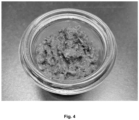
- guacamole samples one of which is depicted in Fig. 4 , were subjected to a taste analysis by an experienced panel. As a result, a pleasantly aromatic and slightly nutty taste profile comparable to that of conventional guacamole was unanimously attributed to the samples.
- the method of the present invention enables the in vitro -production of biomass efficiently and at a scale suitable for the manufacture of food compositions, providing a valuable alternative to conventional fruit processing methods and overcoming the associated disadvantages.
Landscapes
- Life Sciences & Earth Sciences (AREA)
- Developmental Biology & Embryology (AREA)
- Health & Medical Sciences (AREA)
- Engineering & Computer Science (AREA)
- Environmental Sciences (AREA)
- Botany (AREA)
- Organic Chemistry (AREA)
- Chemical & Material Sciences (AREA)
- Biotechnology (AREA)
- Physiology (AREA)
- Zoology (AREA)
- Wood Science & Technology (AREA)
- Cell Biology (AREA)
- Microbiology (AREA)
- General Chemical & Material Sciences (AREA)
- Chemical Kinetics & Catalysis (AREA)
- Biochemistry (AREA)
- Bioinformatics & Cheminformatics (AREA)
- General Engineering & Computer Science (AREA)
- General Health & Medical Sciences (AREA)
- Genetics & Genomics (AREA)
- Natural Medicines & Medicinal Plants (AREA)
- Micro-Organisms Or Cultivation Processes Thereof (AREA)
- Preparation Of Compounds By Using Micro-Organisms (AREA)
Priority Applications (2)
| Application Number | Priority Date | Filing Date | Title |
|---|---|---|---|
| EP23172320.6A EP4461129A1 (fr) | 2023-05-09 | 2023-05-09 | Biomasse comestible de culture de cellules végétales à base d'endocarp de fruits et/ou d'explants de graines et ses procédés de préparation |
| PCT/EP2024/061891 WO2024231177A1 (fr) | 2023-05-09 | 2024-04-30 | Biomasse de culture de cellules végétales comestibles à base d'endocarpe de fruits et/ou d'explants de graines et ses procédés de préparation |
Applications Claiming Priority (1)
| Application Number | Priority Date | Filing Date | Title |
|---|---|---|---|
| EP23172320.6A EP4461129A1 (fr) | 2023-05-09 | 2023-05-09 | Biomasse comestible de culture de cellules végétales à base d'endocarp de fruits et/ou d'explants de graines et ses procédés de préparation |
Publications (1)
| Publication Number | Publication Date |
|---|---|
| EP4461129A1 true EP4461129A1 (fr) | 2024-11-13 |
Family
ID=86378235
Family Applications (1)
| Application Number | Title | Priority Date | Filing Date |
|---|---|---|---|
| EP23172320.6A Pending EP4461129A1 (fr) | 2023-05-09 | 2023-05-09 | Biomasse comestible de culture de cellules végétales à base d'endocarp de fruits et/ou d'explants de graines et ses procédés de préparation |
Country Status (2)
| Country | Link |
|---|---|
| EP (1) | EP4461129A1 (fr) |
| WO (1) | WO2024231177A1 (fr) |
Citations (5)
| Publication number | Priority date | Publication date | Assignee | Title |
|---|---|---|---|---|
| WO2012106723A1 (fr) * | 2011-02-04 | 2012-08-09 | Dianaplantsciences, Inc. | Production de polyphénol par des cultures cellulaires de vaccinium myrtillus |
| WO2014068557A1 (fr) * | 2012-10-30 | 2014-05-08 | Fruitura Bioscience Ltd. | Procédé pour la production de cellules de fruit à grande échelle |
| WO2015102003A1 (fr) * | 2014-01-05 | 2015-07-09 | Bioharvest Ltd. | Culture cellulaire dérivée de la grenade et ses méthodes de préparation et d'utilisation |
| EP2414509B1 (fr) | 2009-04-03 | 2015-09-23 | DianaPlantSciences S.A.S. | Production et extraction de procyanidines à partir de cultures de cellules végétales |
| WO2017130199A1 (fr) * | 2016-01-27 | 2017-08-03 | Bio Harvest Ltd. | Culture de cellules dérivées d'olive et procédés de préparation et d'utilisation associés |
-
2023
- 2023-05-09 EP EP23172320.6A patent/EP4461129A1/fr active Pending
-
2024
- 2024-04-30 WO PCT/EP2024/061891 patent/WO2024231177A1/fr not_active Ceased
Patent Citations (5)
| Publication number | Priority date | Publication date | Assignee | Title |
|---|---|---|---|---|
| EP2414509B1 (fr) | 2009-04-03 | 2015-09-23 | DianaPlantSciences S.A.S. | Production et extraction de procyanidines à partir de cultures de cellules végétales |
| WO2012106723A1 (fr) * | 2011-02-04 | 2012-08-09 | Dianaplantsciences, Inc. | Production de polyphénol par des cultures cellulaires de vaccinium myrtillus |
| WO2014068557A1 (fr) * | 2012-10-30 | 2014-05-08 | Fruitura Bioscience Ltd. | Procédé pour la production de cellules de fruit à grande échelle |
| WO2015102003A1 (fr) * | 2014-01-05 | 2015-07-09 | Bioharvest Ltd. | Culture cellulaire dérivée de la grenade et ses méthodes de préparation et d'utilisation |
| WO2017130199A1 (fr) * | 2016-01-27 | 2017-08-03 | Bio Harvest Ltd. | Culture de cellules dérivées d'olive et procédés de préparation et d'utilisation associés |
Non-Patent Citations (15)
| Title |
|---|
| A. N. F. ABUBAKAR ET AL., ASIAN PACIFIC JOURNAL OF TROPICAL BIOMEDICINE, vol. 7, no. 5, 2017, pages 397 - 400 |
| ANDI SEYED ALI ET AL: "Impact of light irradiance on the biosynthesis of ABA-elicited phenolic compounds in suspension-cultured Vitis vinifera L. cells", PLANT CELL, TISSUE AND ORGAN CULTURE (PCTOC), SPRINGER NETHERLANDS, DORDRECHT, vol. 146, no. 2, 10 April 2021 (2021-04-10), pages 387 - 400, XP037511739, ISSN: 0167-6857, [retrieved on 20210410], DOI: 10.1007/S11240-021-02077-4 * |
| BAENAS NIEVES ET AL: "Elicitation: A Tool for Enriching the Bioactive Composition of Foods", MOLECULES, vol. 19, no. 9, 1 January 2014 (2014-01-01), pages 13541 - 13563, XP093053664, Retrieved from the Internet <URL:https://www.ncbi.nlm.nih.gov/pmc/articles/PMC6270998/pdf/molecules-19-13541.pdf> DOI: 10.3390/molecules190913541 * |
| DESHMUKH S.R.: "Tissue specific expression of Anthraquinones, flavonoids and phenolics in leaf, fruit and root suspension cultures of Indian Mulberry (Morinda citrifola L.)", 1 January 2011 (2011-01-01), pages 6 - 13, XP93091356, Retrieved from the Internet <URL:http://www.pomics.com/deshmukh_4_1_2011_6_13.pdf> [retrieved on 20231013] * |
| DRIVERKUNIYUKI, HORTSCI, vol. 19, 1984, pages 507 - 509 |
| ESNA-ASHARI M. ET AL: "Effect of methyl jasmonate on resveratrol production in organs and cell suspension cultures of two Iranian grapevine ( Vitis vinifera L.) cultivars", JOURNAL OF HORTICULTURAL SCIENCE AND BIOTECHNOLOGY, vol. 86, no. 6, 1 January 2011 (2011-01-01), GB, pages 557 - 562, XP93091349, ISSN: 1462-0316, DOI: 10.1080/14620316.2011.11512803 * |
| GAMBORGMILLER OJIMA, EXP. CELL RES., vol. 50, 1968, pages 151 |
| LLOYDMCCOWN, INT. PLANT PROP. SOC. PROC., vol. 30, 1980, pages 421 |
| M. M. MEKONNENA. Y. HOEKSTRA, HYDROL. EARTH SYST. SCI., vol. 15, 2011, pages 1577 - 1600 |
| M. SIOLA. SADOWSKA, AGRICULTURE, vol. 13, 2023, pages 316 |
| MURASHIGESKOOG, PHYSIOL. PLANT, vol. 15, 1962, pages 473 - 497 |
| PARTAP MAHINDER ET AL: "Fruit derived callus and cell suspension culture as promising alternative sources for mogrosides production in Siraitia grosvenorii (Swingle) C. Jeffrey: a zero-caloric natural sweetener", JOURNAL OF FOOD COMPOSITION AND ANALYSIS, ELSEVIER, AMSTERDAM, NL, vol. 108, 4 February 2022 (2022-02-04), XP086979487, ISSN: 0889-1575, [retrieved on 20220204], DOI: 10.1016/J.JFCA.2022.104450 * |
| R. EIBL ET AL., APPLIED MICROBIOLOGY AND BIOTECHNOLOGY, vol. 102, 2018, pages 8661 - 8675 |
| VILLA-RODRIGUEZ JOSE A ET AL: "Ripening of 'Hass' avocado mesocarp alters its phytochemical profile and the in vitro cytotoxic activity of its methanolic extracts", SOUTH AFRICAN JOURNAL OF BOTANY - SUID-AFRIKAANS TYDSKRIFT VIRPLANTKUNDE, FOUNDATION FOR EDUCATION, SCIENCE AND TECHNOLOGY, PRETORIA, SA, vol. 128, 8 November 2019 (2019-11-08), pages 1 - 8, XP085976996, ISSN: 0254-6299, [retrieved on 20191108], DOI: 10.1016/J.SAJB.2019.09.020 * |
| W. WANG ET AL., FOOD CHEM, vol. 122, 2010, pages 1193 - 1198 |
Also Published As
| Publication number | Publication date |
|---|---|
| WO2024231177A1 (fr) | 2024-11-14 |
Similar Documents
| Publication | Publication Date | Title |
|---|---|---|
| Pavoković et al. | Complex biochemistry and biotechnological production of betalains | |
| De Vuyst et al. | The functional role of lactic acid bacteria in cocoa bean fermentation | |
| EP2414509B1 (fr) | Production et extraction de procyanidines à partir de cultures de cellules végétales | |
| US9167840B2 (en) | Production and extraction of procyanidins from plant cell cultures | |
| EP2413684A1 (fr) | Procédés pour créer une variation de couleur dans des anthocyanines produites par culture cellulaire | |
| CN114980875A (zh) | 提取物、可消费产品及用于富集提取物中的生物活性代谢物方法 | |
| KR101247935B1 (ko) | 보리 종자 또는 밀 종자를 이용한 기능성 식품 원료의 제조 방법 | |
| JP7579549B1 (ja) | 植物成長促進組成物 | |
| KR101805553B1 (ko) | 새싹 보리의 재배 방법과 새싹 보리를 이용한 음료 | |
| EP4426105B1 (fr) | Procédés de traitement de culture de cellules végétales de cacao et produits ainsi obtenus | |
| Pandey et al. | In vitro propagation and phytochemical assessment of Berberis chitria: an important medicinal shrub of Kumaun Himalaya, India | |
| KR102584847B1 (ko) | 블루베리로부터 함량이 증가된 ε-비니페린을 함유하는 캘러스 추출물의 제조방법 | |
| US5057424A (en) | Flavor composition and method | |
| Khan et al. | Polyethylene glycol-stimulated drought stress enhanced the biosynthesis of steviol glycosides in Stevia rebaudiana | |
| EP4461129A1 (fr) | Biomasse comestible de culture de cellules végétales à base d'endocarp de fruits et/ou d'explants de graines et ses procédés de préparation | |
| KR20160013408A (ko) | 2단 발효를 통한 뇌 기능 개선용 미나리 발효액 제조방법 | |
| Abo EL-Fadl et al. | Effect of foliar spraying with yeast extract and hydrogen peroxide on yield and quality of sweet potato | |
| Halim et al. | In vitro Regeneration of vanilla (Vanilla planifolia L.) | |
| Abo El-Fadl et al. | Micropropagation, conservation, molecular and biochemical studies on Capparis spinosa var. deserti, a wild endangered plant in Egyptian flora | |
| JP6807588B2 (ja) | 植物緑葉の乾燥粉末の製造方法 | |
| KR102678647B1 (ko) | 블루베리로부터 비니페린 및 테로스틸벤을 대량생산하는 방법 | |
| Krupa-Małkiewicz et al. | Chitosan and Meta-Topolin Supplementation of the Multiplication Media of Vitis Vinifera L. | |
| Obsuwan et al. | Application of chitosan on in vitro growth of Rhynchostylis gigantea protocorms and seedlings | |
| Dikkuruse et al. | Fermented Fruits in Asia: Fermentation Process, Microbes, and Health Benefits. | |
| EP4379042A1 (fr) | Procédés de préparation de milieux de culture à base de microvertes et produits associés |
Legal Events
| Date | Code | Title | Description |
|---|---|---|---|
| PUAI | Public reference made under article 153(3) epc to a published international application that has entered the european phase |
Free format text: ORIGINAL CODE: 0009012 |
|
| STAA | Information on the status of an ep patent application or granted ep patent |
Free format text: STATUS: THE APPLICATION HAS BEEN PUBLISHED |
|
| AK | Designated contracting states |
Kind code of ref document: A1 Designated state(s): AL AT BE BG CH CY CZ DE DK EE ES FI FR GB GR HR HU IE IS IT LI LT LU LV MC ME MK MT NL NO PL PT RO RS SE SI SK SM TR |
|
| STAA | Information on the status of an ep patent application or granted ep patent |
Free format text: STATUS: REQUEST FOR EXAMINATION WAS MADE |
|
| 17P | Request for examination filed |
Effective date: 20250513 |
|
| STAA | Information on the status of an ep patent application or granted ep patent |
Free format text: STATUS: EXAMINATION IS IN PROGRESS |