EP4461255A2 - Systèmes de traitement de problèmes dentaires ou parodontaux - Google Patents
Systèmes de traitement de problèmes dentaires ou parodontaux Download PDFInfo
- Publication number
- EP4461255A2 EP4461255A2 EP24181269.2A EP24181269A EP4461255A2 EP 4461255 A2 EP4461255 A2 EP 4461255A2 EP 24181269 A EP24181269 A EP 24181269A EP 4461255 A2 EP4461255 A2 EP 4461255A2
- Authority
- EP
- European Patent Office
- Prior art keywords
- nerve
- canal
- solution
- tissue
- tip
- Prior art date
- Legal status (The legal status is an assumption and is not a legal conclusion. Google has not performed a legal analysis and makes no representation as to the accuracy of the status listed.)
- Pending
Links
Images











Classifications
-
- A—HUMAN NECESSITIES
- A61—MEDICAL OR VETERINARY SCIENCE; HYGIENE
- A61C—DENTISTRY; APPARATUS OR METHODS FOR ORAL OR DENTAL HYGIENE
- A61C1/00—Dental machines for boring or cutting ; General features of dental machines or apparatus, e.g. hand-piece design
- A61C1/0046—Dental lasers
-
- A—HUMAN NECESSITIES
- A61—MEDICAL OR VETERINARY SCIENCE; HYGIENE
- A61C—DENTISTRY; APPARATUS OR METHODS FOR ORAL OR DENTAL HYGIENE
- A61C5/00—Filling or capping teeth
- A61C5/40—Implements for surgical treatment of the roots or nerves of the teeth; Nerve needles; Methods or instruments for medication of the roots
Definitions
- the present invention is related to the field of dentistry, medicine and veterinary medicine. More specifically, the present invention is a method and device for rapid molecular modification of biological structures for dental, medical and veterinary procedures and/or treatments. Additionally, the present invention is an integration of nanotechnology, chemistry, chemoacoustic wave propagation, lasers, photoacoustics, ultrasonics, radiofrequency, magnetic fields, electric fields and other sciences with treatments and procedures in dentistry, medicine and veterinary medicine.
- root canal dental procedures require the drilling and filing away of some dentin wall or physical structure of the tooth root, thereby weakening the integrity or strength of the tooth.
- the procedure of this invention without requiring mechanical filing of the root canal also has the possibility of totally removing the nerve and debriding the root canal, as well as, the lateral canals of the root canal system thus leaving the tooth structure intact.
- the root canal system includes the main root canal and all of the accessory or lateral canals that branch off of the main canal. Some of these accessory canals are very small and extremely difficult to reach in order to eliminate any bacteria and/or viruses. Such accessory canals may bend, twist, change cross-section and/or become long and small as they branch off from the main canal, making them very difficult to access or target therapeutically.
- the accepted dental procedure is to mechanically pull out the main canal nerve thereby separating it from the accessory canal nerves (which stay in place) then filing out the main canal with a tapered file. This action leaves an undesirable smear layer along the main canal and actually plugs some of the accessory canal openings, which potentially trap harmful pathogens or maladies. This is very undesirable.
- the dentist must then chemo-mechanically debride both main and accessory canals, including the smear layer produced by the filing.
- the present invention is useful in treating dental, medical, and veterinary problems; primarily dental surface and nerve preparations.
- the present invention uses therapeutic solution with or without nanotechnology and/or microtechnology in dental, medical, and veterinary application during procedures that otherwise face reoccurring infection, inefficient performance and at an increase in expenses.
- the result of this invention has the potential to decrease the patient chair time by over 50%, thereby reducing the cost of the procedure to the practitioner and reducing the potential for future failures over time.
- the overall scheme according to the present invention comprises a first solution that is introduced into nerve tissue, typically in a tooth.
- the first solution enlarges and porositizes the nerve tissue. Most, if not all, of the nerve is mechanically removed from the tooth by the forces produced by the expanding tissue on the tapered walls.
- a second solution is introduced into the canal left by the optionally removed the nerve tissue, which dissolves any remaining nerve tissue and debrides the accompanying area.
- the porosity of the tissue allows for rapid penetration of fluids. This may also be accomplished with a single solution containing components of the first and second solutions.
- the first dispensed solution comprises a carrier, and at least an oxidizing agent, such as hydrogen peroxide, perborates, hypochlorites, or other oxidizing agents and combinations thereof. Additional components may be included into the first solution, including reducing agents, sources of oxygen, chelating agents (such as ethylenediamine tetraacetic acid, EDTA), chelating agents coordinated with metals (such as EDTA-Calcium), anti-oxidants, sensitizing agents, catalytic agents, magnetic agents and rapidly expanding chemical, pressure or phase change agents and/or combinations of the like.
- the carrier is preferably water, pastes, foams, chemistry-based architectures (e.g. nanotubes, hollow spheres) and/or gels or a combination of the like.
- the source of oxygen is preferably an oxidizing bleach agent, such as sodium hypochlorite, perborate or peroxide and the like.
- the sensitizing agent is preferably a nano- or micro-structure as exemplified by fullerenes, such as nanotubes or buckyballs, or other nanodevices (including micro-sized) capable of sensitizing the oxygenating or activated or activatable chemical, e.g., oxidative bleaching agent.
- the catalytic agent may be titanium oxide or other similar inorganic agents or metals.
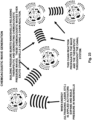
- the rapidly expanding chemical, pressure or phase change agent may be coated hollow spheres or tubes with chemistries encased, adsorbed or absorbed to the agent. When activated these chemistries expand rapidly producing a localized acoustic wave throughout the solution. This is a chemoacoustic wave phenomenon.
- the sensitizing is accomplished when the first solution is applied to a targeted area directly or with mechanical, physical or other assistance such as mild vibrational or ultrasonic stimulation.
- the sensitizer is then activated by an energy source.
- Preferred energy sources include, but are not limited to; photons (light), sonic, ultrasonic, photo-acoustic, thermo- acoustic, micromechanical stirring, magnetic fields, electric fields, radio-frequency, and/or other excitor mechanisms or other similar forms that can impart energy to the fluid or combination of these, which is absorbed by the sensitizer structure and/or fluid thus creating a resultant reaction, expansion, acoustic wave, or the like.
- Other energy sources include optical, ultraviolet, chemoacoustic (shock waves created by rapid chemical expansion creating shock and pressure waves), rotary-mechanical stirring (special stirring bit placed for dental handpiece), magnetic fields and electric fields (both can penetrate the tooth structure from external sources), radio-frequency and microwave.
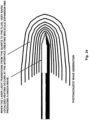
- the energy source is a pulsed laser light that is photoacoustically coupled to the first solution.
- the laser light is delivered using a commercially available laser source and an optical light fiber attached at a proximate end to the laser source and has an application tip at the distal end.
- the application tip may be flat, but is preferably a beveled or tapered tip having a taper angle (typically between 30 and 36 degrees but can be larger or smaller).
- any cladding on the optic fiber is stripped from approximately 5 mm to 15 mm of the distal end.
- the taper angle of the fiber tip and removal of the cladding provide improved lateral dispersion of the emitted laser light and photoacoustic effect.
- a photoacoustic wave is produced when the laser light transitions from the quartz tip to the fluid. This transmission is not 100% efficient and produces very rapid localized heating at the interface. This molecule expansion produces a strong photoacoustic wave that propagates throughout the canal system.
- the photoacoustic waves produced by the laser light in the first solution provides enhanced penetration of the first solution into the surrounding tissue and accessory canals, thereby allowing a therapeutic agent to reach areas of the canal system that are not accessible to laser light alone.
- the first solution can preferably include additional effective ingredients such as surfactants to reduce the surface tension of the solution and act as a lubricant between the nerves and the canals; antibiotics; stabilizers; polar, non-polar solvents, and the like.
- additional effective ingredients such as surfactants to reduce the surface tension of the solution and act as a lubricant between the nerves and the canals; antibiotics; stabilizers; polar, non-polar solvents, and the like.
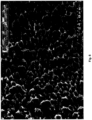
- the first solution In addition to expansion and porositizing the nerve tissue, it is found that the first solution also mechanically abrades, cleans and debrides the surface of the canal or tissues. Resultant Scanning Electron Micrographs (SEM' s) show the reticular surface of the dentin to be devoid of infection and malady and allowing for rinsed removal of the debris elements.
- the root nerve is first mechanically removed and the first solution is added to the resultant canal.
- the first solution is activated, thereby enlarging and porositizing any remaining nerve structures, which can then now be optionally mechanically removed, and mechanically abrades, cleans and debrides the surface of the canal.
- dissolution solution chemically dissolves any remaining nerve structure (i.e., that may remain in the bottom the main canal or in any accessory canals).
- Preferred dissolution solutions include hypochlorite, sodium hypochlorite, perborate, calcium hydroxide, acetic acid/lubricant/doxacyclene and other like nerve tissue or matrix dissolving substances such as chelating agents (EDTA) and inorganic agents such as titanium oxides.
- the resultant cleaned canal may be filled according to standard practices in the industry.
- This type of procedure combines the use of pre-activated, activatable, or activated therapeutics with or without nano/micro- technology with readily available stimulatory technology and is applicable not only to root canals, but also to bone and other highly networked material where infection is problematic, e.g. dental implants, bone infection, periodontal disease, vascular clotting, organ stones, scar tissues, etc.
- This application process may also be used in other soft tissue applications where it is necessary to expand the diseased tissue or material to allow more rapid access and penetration to healing agents, chemicals or biologicals; i.e. antibiotics, peptides, proteins, enzymes, catalysts, genetics (DNA, mRNA or RNA or derivatives) or antibody based therapeutics or combinations thereof.
- the present methodology may be used to rapidly dissolve or destroy the diseased tissue areas, i.e., expanding the diseased tissue in an abcess, allows for extremely rapid and efficient penetration of healing or biological agents.
- the method of this invention allows for the very rapid tissue expansion within the nanotechnology and resulting in rapid access by additional chemistry through repeated cycling until the targeted expansion and porosity of the material is obtained. This expansion effect is obtained within a few minutes by applying the activating energy source locally. This rapid action of the nanotechnology is limited to only those areas exposed or proximal to the nanotechnology and the extent of the reaction is limited by the amount and duration of the applied exciting energy source.
- the extreme porosity then allows for very rapid infusion with the subsequent chemical species that can impose destruction, healing or cleaning or a combination of these events.
- the speed of this healing action may allow medical procedures that currently are not viable because of extensive time required for standard healing processes, i.e., sometimes adjacent tissue is infected because the original infection cannot be controlled more rapidly than the infection propagates. In this case, expanding the diseased tissue to enhance porosity, will allow near instantaneous access for the medication, e.g., antibiotic or other agents.
- the medication e.g., antibiotic or other agents.
- the present invention includes the following effects: the ability to expand; induce pores, holes, channels; clean; decontaminate; debride; breakdown; denature; physically destroy, aid and accentuate the dissolution or extraction of biological structures, nerves and tissue.
- the present methodology expands the porosity of the tissue, which enhances the penetration and effectiveness and acceleration of subsequent chemical, mechanical, and/or procedural steps in the protocol or process.
- the present invention includes the ability to associate with and/or initiate in the reconstructive growth and healing process associated with healthy tissue after surgery and/or the ability to destroy diseased or necrotic tissues or cells.
- the present invention includes the ability to begin, construct or stage the activation of cells and/or tissues, including the area of transplantation and use in stem or primordial cells accentuation, their attachment and/or stimulation for growth and differentiation.
- the present invention can also be used to activate cells, e.g., progenitor, primordial or stem cells, to promote inherent nascent bone or tissue growth and differentiation, as well as in transplantation where stem or primordial cells are accentuated in their attachment and stimulated for growth and differentiation.
- cells e.g., progenitor, primordial or stem cells
- X-ray identifies a caries.
- the caries is entered using a minimal event (small dental drillbit or laser drilled holes), the first and second solutions are added and activated, this procedure arrests, cleans and debrides the pathological malady without according damage to the healthy tissue.
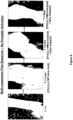
- the used solution is removed from the caries, a second X-ray may be performed with or without a radio-opaque fluid that is introduced into the caries to identify the extent of cleaning performed by the first solution.
- These solutions may be reintroduced into the caries in order to further clean the interior, as necessary.
- the caries After the caries has been determined to be clean and free from infection, it may then be filled according to current dental practices with only a small hole to seal on the surface.
- a single solution containing ingredients common to the first and/or second solutions may also be utilized for this purpose.
- An alternate method for introducing the first and/or second solutions would be to use a vacuum/pressure enhanced delivery methods. This would apply not only to caries but also to other root canal and other dental and medical applications.
- One such method would be to apply a vacuum to the root canal, thereby removing any included solution and pulling a vacuum on the canal, thus reducing the pressure within the canal. Note: this is not just using a standard dental vacuum probe. The vacuum probe will have a seal that completely seals the tooth and not just the standard suction action. This will allow the pressure within the canal system to be reduced significantly.
- Introducing either the first or second solution into the vacuum-vacated canal uses atmospheric pressure to force the solutions into small and typically inaccessible areas. In addition, since the tooth is sealed to this probe, pressure could be used to increase the penetration of the therapeutic solution throughout the canal system.
- This vacuum/pressure methodology can also be applicable to more effectively infusing the filling materials.
- Standard pressure and vacuum use in dentistry usually means using a pressurized syringe or a vacuum tool for a tooth open to the atmosphere.
- there is a seal closing the tooth to atmosphere allowing direct application of vacuum/pressure to the root canal system. This creates an actual vacuum or pressure to the root canal system that is not possible when the tooth is open to atmosphere.
- Nanotubes or other micro-structures can then be moved around in the therapeutic fluid by applying a magnetic field.
- An alternating or pulsed magnetic field could impart significant motion and stirring of the therapeutic. Since the field would penetrate the entire tooth, the stirring action would also occur throughout the lateral or accessory canal system.
- These moving micro-particles would also act as an abrasive on any bacteria, virus, nerve material, or debris within the canal system. The effect would be a more thorough circulation of the therapeutic throughout the canal system to provide superior cleaning and debridment of the canal system.
- Magnetic material can also be inserted into, adsorbed onto, or absorbed into the nanotube or other microstructure increasing its magnetic moment.
- TiO2 or other similar compounds can be activated and made bactericidal by exposing them to UV light or by inserting them in an electric field. Once excited these can destroy bacteria and other organic compounds such as remaining nerve tissue.
- Such compounds can be part of a therapeutic and can be activated by a UV light source pointed toward the therapeutic fluid, a UV source dipped into the fluid or a UV laser source.
- TiO2 or other similar compounds can also be activated by an alternating or pulsed electric field.
- One means to supply such an electric field could be by an external device that would bridge the tooth. Since the field propagates throughout the entire tooth it would also react TiO or other similar compounds within the accessory or lateral canals. This action could also be combined with the micro-particle based motion action mentioned above. This combination would more thoroughly clean and debride the canals.
- the present invention also includes embodiments of the individual components, kits, methods, their manufacture, and their assembly into one singular procedure. Still further herein included are methods and processes for use of the individual components and the integration in biological applications.
- Nanotechnology includes, but is not limited to the field of applied science focused on the design, synthesis, characterization and application .of materials and devices on the nanoscale, such as fullerenes, bucky-tubes, bucky-balls, nano-particles, ceramic particles, agglomerates of the same, and derivatives of the same. Nanotechnology is a sub classification of technology in colloidal science, biology, physics, chemistry and other scientific fields, defined as "the understanding and control of matter at dimensions of roughly 1 to 1000 nanometers, where unique phenomena enable novel applications.”
- microtechnology includes, but is not limited to the field of applied science focused on the design, synthesis, characterization and application of materials and devices on the microscale, such as long fullerenes, long bucky-tubes, micro-particles, ceramic particles, agglomerates of the same, and derivatives of the same.
- Microtechnology is a sub classification of technology in colloidal science, biology, physics, chemistry and other scientific fields, defined as "the understanding and control of matter at dimensions of roughly 1to 1000 micrometers, where unique phenomena enable novel applications.”
- poresitize includes, but is not limited to the generation of pores, holes, canals, or some form of opening, usually very small and the like in the targeted structure, e.g., nerve, tissue, bone, solids, gels, etc.
- chemoacoustic waves are waves created when a chemistry rapidly expands or changes phases, etc. This expansion or change can be initiated by an external excitation force similar to those previously mentioned.
- the chemistries can be contained within or absorbed within on onto nanotubes or other hollow structures.
- the rapid expansion of contained chemistry produces a chemoacoustic shock wave which propagates throughout the fluid. This wave can activate other localized caries producing a chain reaction. This action provides a very through stirring effect propagating the therapeutic throughout the targeted area, i.e. root canal system.
- titanium oxide provides energy and/or the ability to break carbon-carbon bonds and thereby dissolve tissue and/or provide a modality to kill bacteria and viruses.
- titanium dioxide TiO2
- UV light ultraviolet
- This photocatalytic activity ultimately results in the generation of reactive oxygen species, such as hydrogen peroxide, hydroxyl radical and superoxide anion that exhibit superior organic matter decomposition and strong bactericidal activity due to this photocatalytic property of the semiconductor.
- This action can be enhanced or improved by combining the catalytic agent with additional agents such as silver to provide improved antibacterial effect with or without light.
- the photocatalytic and the biocidal activity can also be significantly enhanced by reducing the size of the TiO particle and/or incorporation into alternate chemical architectures such as titanium oxide nanotubes. These modifications result in increasing the surface area with improvements in photoefficience and the photocatalytic property by making the surface of the particle more active to light and water adsorption.
- illuminated TiO2 can decompose and mineralize organic compounds and bio-microorganisms by participating in a series of oxidation reactions leading to carbon dioxide and water.
- This action can also be created by other exciting functions such as alternating electric fields. Therefore, this action could be initiated during the procedure with UV light and/or alternating electric fields or at some time in the future after the procedure is completed by alternating electric fields external to the tooth.
- micro-particles such as iron and/or other magnetic and paramagnetic material can be introduced providing stirring motion or abrasive action within the fluid.
- This motion is activated by an alternating or pulsed magnetic field, which is applied externally to the tooth providing a field throughout the tooth providing action within or to the accessory or lateral canals or throughout the entire tooth.
Landscapes
- Health & Medical Sciences (AREA)
- Epidemiology (AREA)
- Veterinary Medicine (AREA)
- Public Health (AREA)
- General Health & Medical Sciences (AREA)
- Animal Behavior & Ethology (AREA)
- Life Sciences & Earth Sciences (AREA)
- Oral & Maxillofacial Surgery (AREA)
- Dentistry (AREA)
- Nuclear Medicine, Radiotherapy & Molecular Imaging (AREA)
- Surgery (AREA)
- Neurosurgery (AREA)
- Neurology (AREA)
- Biomedical Technology (AREA)
- Engineering & Computer Science (AREA)
- Physics & Mathematics (AREA)
- Optics & Photonics (AREA)
- Dental Tools And Instruments Or Auxiliary Dental Instruments (AREA)
- Medicines That Contain Protein Lipid Enzymes And Other Medicines (AREA)
- Materials For Medical Uses (AREA)
- Radiation-Therapy Devices (AREA)
Applications Claiming Priority (5)
| Application Number | Priority Date | Filing Date | Title |
|---|---|---|---|
| US84028206P | 2006-08-24 | 2006-08-24 | |
| US11/704,655 US7959441B2 (en) | 2006-08-24 | 2007-02-09 | Laser based enhanced generation of photoacoustic pressure waves in dental and medical treatments and procedures |
| EP07837261.2A EP2059183B1 (fr) | 2006-08-24 | 2007-08-24 | Système pour traiter des problèmes dentaires et parodontaux |
| EP21160099.4A EP3888584B1 (fr) | 2006-08-24 | 2007-08-24 | Systèmes pour traiter des problèmes dentaires ou parodontaux |
| PCT/US2007/018664 WO2008024442A2 (fr) | 2006-08-24 | 2007-08-24 | Nanothérapeutique biomédicale à activation énergétique intégrant des traitements et des interventions dentaires et médicales |
Related Parent Applications (2)
| Application Number | Title | Priority Date | Filing Date |
|---|---|---|---|
| EP21160099.4A Division EP3888584B1 (fr) | 2006-08-24 | 2007-08-24 | Systèmes pour traiter des problèmes dentaires ou parodontaux |
| EP07837261.2A Division EP2059183B1 (fr) | 2006-08-24 | 2007-08-24 | Système pour traiter des problèmes dentaires et parodontaux |
Publications (2)
| Publication Number | Publication Date |
|---|---|
| EP4461255A2 true EP4461255A2 (fr) | 2024-11-13 |
| EP4461255A3 EP4461255A3 (fr) | 2025-01-08 |
Family
ID=39107414
Family Applications (3)
| Application Number | Title | Priority Date | Filing Date |
|---|---|---|---|
| EP21160099.4A Active EP3888584B1 (fr) | 2006-08-24 | 2007-08-24 | Systèmes pour traiter des problèmes dentaires ou parodontaux |
| EP07837261.2A Not-in-force EP2059183B1 (fr) | 2006-08-24 | 2007-08-24 | Système pour traiter des problèmes dentaires et parodontaux |
| EP24181269.2A Pending EP4461255A3 (fr) | 2006-08-24 | 2007-08-24 | Systèmes de traitement de problèmes dentaires ou parodontaux |
Family Applications Before (2)
| Application Number | Title | Priority Date | Filing Date |
|---|---|---|---|
| EP21160099.4A Active EP3888584B1 (fr) | 2006-08-24 | 2007-08-24 | Systèmes pour traiter des problèmes dentaires ou parodontaux |
| EP07837261.2A Not-in-force EP2059183B1 (fr) | 2006-08-24 | 2007-08-24 | Système pour traiter des problèmes dentaires et parodontaux |
Country Status (6)
| Country | Link |
|---|---|
| US (1) | US7959441B2 (fr) |
| EP (3) | EP3888584B1 (fr) |
| AU (1) | AU2007288207B2 (fr) |
| ES (1) | ES2988387T3 (fr) |
| SI (1) | SI3888584T1 (fr) |
| WO (1) | WO2008024442A2 (fr) |
Families Citing this family (37)
| Publication number | Priority date | Publication date | Assignee | Title |
|---|---|---|---|---|
| US10835355B2 (en) | 2006-04-20 | 2020-11-17 | Sonendo, Inc. | Apparatus and methods for treating root canals of teeth |
| EP3311770B1 (fr) | 2006-04-20 | 2023-06-21 | Sonendo, Inc. | Appareil de traitement des canaux radiculaires des dents |
| US12114924B2 (en) | 2006-08-24 | 2024-10-15 | Pipstek, Llc | Treatment system and method |
| US7980854B2 (en) * | 2006-08-24 | 2011-07-19 | Medical Dental Advanced Technologies Group, L.L.C. | Dental and medical treatments and procedures |
| WO2008092125A2 (fr) * | 2007-01-25 | 2008-07-31 | Dentatek Corporation | Appareil et procédés de surveillance d'une dent |
| WO2009064947A1 (fr) * | 2007-11-16 | 2009-05-22 | James Edwin Bollinger | Procédé et appareil de désinfection ou de stérilisation d'un système de canaux de racines par recours à des lasers ciblant l'eau |
| EP2276414A4 (fr) * | 2008-05-09 | 2012-07-04 | Sonendo Inc | Appareil et procédés destinés aux traitements de canal radiculaire |
| CA2753383A1 (fr) * | 2009-02-28 | 2010-09-02 | Medical Dental Advanced Technologies Group Llc | Systeme integrant procedures et traitements dentaires et medicaux |
| CA2761652C (fr) * | 2009-05-11 | 2019-10-01 | Leigh E. Colby | Ablation therapeutique de bourgeon dentaire |
| US10022202B2 (en) | 2013-03-15 | 2018-07-17 | Triagenics, Llc | Therapeutic tooth bud ablation |
| US12514679B2 (en) | 2009-05-11 | 2026-01-06 | TriAgenics, Inc. | Therapeutic tooth bud ablation |
| WO2014143014A1 (fr) | 2013-03-15 | 2014-09-18 | Triagenics, Llc | Ablation thérapeutique de bourgeon dentaire |
| WO2011060327A1 (fr) | 2009-11-13 | 2011-05-19 | Dentatek Corporation | Appareil à jet de liquide et procédés pour des traitements dentaires |
| JP5809251B2 (ja) * | 2010-05-25 | 2015-11-10 | インターナショナル・サイエンティフィック・プロプライエタリー・リミテッド | 口腔ケア製品の送達 |
| CN103347462B (zh) | 2010-10-21 | 2017-05-10 | 索南多股份有限公司 | 用于牙髓治疗的设备、方法和组合 |
| EP2760368A4 (fr) * | 2011-09-30 | 2015-08-26 | Biolase Inc | Système de nettoyage de canal radiculaire par onde de pression |
| EP4403132A3 (fr) | 2012-03-22 | 2024-10-02 | Sonendo, Inc. | Appareil de nettoyage des dents |
| US10631962B2 (en) | 2012-04-13 | 2020-04-28 | Sonendo, Inc. | Apparatus and methods for cleaning teeth and gingival pockets |
| US20130330684A1 (en) * | 2012-06-06 | 2013-12-12 | Ormco Corporation | Multifunction wand for an intra-oral imaging system |
| US10363120B2 (en) | 2012-12-20 | 2019-07-30 | Sonendo, Inc. | Apparatus and methods for cleaning teeth and root canals |
| US11213375B2 (en) | 2012-12-20 | 2022-01-04 | Sonendo, Inc. | Apparatus and methods for cleaning teeth and root canals |
| WO2014121293A1 (fr) * | 2013-02-04 | 2014-08-07 | Sonendo, Inc. | Système de traitement dentaire |
| US9438264B1 (en) | 2015-09-10 | 2016-09-06 | Realtek Semiconductor Corp. | High-speed capacitive digital-to-analog converter and method thereof |
| EP4218658B1 (fr) | 2013-05-01 | 2025-04-09 | Sonendo, Inc. | Apparatus for treating teeth |
| WO2014210220A2 (fr) | 2013-06-26 | 2014-12-31 | Sonendo, Inc. | Appareil et procédés de plombage dentaire et de dévitalisation |
| KR20150054179A (ko) | 2013-11-11 | 2015-05-20 | 삼성전자주식회사 | 레이저 유도 초음파 발생장치 및 그 제조방법 |
| ES2899999T3 (es) | 2014-02-20 | 2022-03-15 | Biolase Inc | Fibras ópticas preiniciadas para aplicaciones médicas |
| EP3178439B1 (fr) | 2015-12-03 | 2021-10-13 | Ormco Corporation | Lime endodontique cannelée |
| US10806544B2 (en) | 2016-04-04 | 2020-10-20 | Sonendo, Inc. | Systems and methods for removing foreign objects from root canals |
| USD842474S1 (en) | 2017-10-20 | 2019-03-05 | Ormco Corporation | Endodontic file |
| CN109953834A (zh) * | 2017-12-26 | 2019-07-02 | 苏州口腔医院有限公司 | 一种牙根清洗系统 |
| CA3140710A1 (fr) | 2019-06-06 | 2020-12-10 | Leigh E. Colby | Systemes de sonde d'ablation |
| USD997355S1 (en) | 2020-10-07 | 2023-08-29 | Sonendo, Inc. | Dental treatment instrument |
| EP4470491A3 (fr) | 2020-10-26 | 2025-01-22 | TriAgenics, Inc. | Systèmes de sonde d'ablation |
| CN112754689B (zh) * | 2021-01-13 | 2022-06-21 | 深圳和光医用橡胶材料科技有限公司 | 牙胶尖 |
| WO2023023084A2 (fr) * | 2021-08-17 | 2023-02-23 | Stylosonic Llc | Systèmes, dispositifs et procédés de surveillance de la santé gingivale |
| USD1118938S1 (en) | 2022-09-23 | 2026-03-17 | Sonendo, Inc. | Dental console |
Family Cites Families (25)
| Publication number | Priority date | Publication date | Assignee | Title |
|---|---|---|---|---|
| US4676586A (en) * | 1982-12-20 | 1987-06-30 | General Electric Company | Apparatus and method for performing laser material processing through a fiber optic |
| US5324200A (en) | 1988-08-25 | 1994-06-28 | American Dental Technologies, Inc. | Method for enlarging and shaping a root canal |
| FR2640537B1 (fr) * | 1988-12-21 | 1992-02-21 | Levy Guy | Installation et procede utilisant l'effet laser, pour la coupe ou la vaporisation de materiaux et tissus divers |
| US4985027A (en) * | 1990-02-26 | 1991-01-15 | Dressel Thomas D | Soft tissue aspiration device and method |
| US5116227A (en) | 1991-03-01 | 1992-05-26 | Endo Technic Corporation | Process for cleaning and enlarging passages |
| US5173049A (en) * | 1991-03-01 | 1992-12-22 | Endo Technic Corporation | Removing a post embedded in a tooth |
| US5968039A (en) * | 1991-10-03 | 1999-10-19 | Essential Dental Systems, Inc. | Laser device for performing canal surgery in narrow channels |
| US5374266A (en) * | 1991-11-27 | 1994-12-20 | Kabushiki Kaisha Morita Seisakusho | Medical laser treatment device |
| US5236360A (en) * | 1992-07-23 | 1993-08-17 | Laser Medical Technology, Inc. | Optical members for laser transmission |
| US5267995A (en) * | 1992-09-01 | 1993-12-07 | Pdt Systems | Optical waveguide with flexible tip |
| JP3060354B2 (ja) * | 1994-02-10 | 2000-07-10 | 矢崎総業株式会社 | 二重係止コネクタ |
| US5639239A (en) | 1995-01-12 | 1997-06-17 | Earle; Jeffrey O. | Dental dentin bonding system |
| US6379155B1 (en) * | 1996-06-06 | 2002-04-30 | Ultradent Products, Inc. | Endodontic systems and methods for the anatomical, sectional and progressive corono-apical preparation of root canals with instruments utilizing stops |
| US6558163B2 (en) * | 1995-06-06 | 2003-05-06 | Ultradent Products, Inc. | Endodontic systems and methods for preparing upper portions of root canals with increasingly rigid files |
| US7620290B2 (en) * | 1995-08-31 | 2009-11-17 | Biolase Technology, Inc. | Modified-output fiber optic tips |
| ATE218305T1 (de) * | 1996-09-06 | 2002-06-15 | Kaltenbach & Voigt | Medizinisches oder zahnmedizinisches laserinstrument, insbesondere für zahn- wurzelkanalbehandlungen |
| JP3638191B2 (ja) * | 1997-01-31 | 2005-04-13 | 信司 國分 | 医療用レーザハンドピース |
| BR0011321B1 (pt) | 1999-06-04 | 2009-01-13 | kit de vedaÇço e esterilizaÇço de canal radicular dentÁrio. | |
| DE20001584U1 (de) | 2000-01-29 | 2000-03-23 | Universitätsklinikum Freiburg, 79106 Freiburg | Spülkanüle zum Spülen eines Wurzelkanals eines Zahnes |
| US20020183728A1 (en) | 2001-05-14 | 2002-12-05 | Yitzhak Rosenberg | Laser probe |
| US7329273B2 (en) | 2001-11-29 | 2008-02-12 | Palomar Medicaltechnologies, Inc. | Tissue penetrating oral phototherapy applicator |
| IL148653A (en) | 2002-03-12 | 2007-08-19 | Lumenis Ltd | Laser instrument for endodontic treatment |
| AU2003251566A1 (en) * | 2002-06-19 | 2004-01-06 | Angiodynamics, Inc. | Endovascular treatment device with a protective sleeve |
| US7470124B2 (en) * | 2003-05-08 | 2008-12-30 | Nomir Medical Technologies, Inc. | Instrument for delivery of optical energy to the dental root canal system for hidden bacterial and live biofilm thermolysis |
| US7261561B2 (en) * | 2005-07-15 | 2007-08-28 | Ruddle Clifford J | Vibrational driver for endodontic activators |
-
2007
- 2007-02-09 US US11/704,655 patent/US7959441B2/en active Active
- 2007-08-24 EP EP21160099.4A patent/EP3888584B1/fr active Active
- 2007-08-24 AU AU2007288207A patent/AU2007288207B2/en not_active Ceased
- 2007-08-24 EP EP07837261.2A patent/EP2059183B1/fr not_active Not-in-force
- 2007-08-24 EP EP24181269.2A patent/EP4461255A3/fr active Pending
- 2007-08-24 WO PCT/US2007/018664 patent/WO2008024442A2/fr not_active Ceased
- 2007-08-24 SI SI200732204T patent/SI3888584T1/sl unknown
- 2007-08-24 ES ES21160099T patent/ES2988387T3/es active Active
Also Published As
| Publication number | Publication date |
|---|---|
| EP2059183A2 (fr) | 2009-05-20 |
| WO2008024442A2 (fr) | 2008-02-28 |
| EP2059183A4 (fr) | 2012-06-13 |
| EP2059183B1 (fr) | 2021-03-03 |
| CA2697497A1 (fr) | 2008-02-28 |
| EP3888584B1 (fr) | 2024-06-12 |
| EP4461255A3 (fr) | 2025-01-08 |
| WO2008024442A3 (fr) | 2008-12-18 |
| AU2007288207B2 (en) | 2014-09-25 |
| EP3888584A1 (fr) | 2021-10-06 |
| ES2988387T3 (es) | 2024-11-20 |
| AU2007288207A1 (en) | 2008-02-28 |
| US20080050702A1 (en) | 2008-02-28 |
| US7959441B2 (en) | 2011-06-14 |
| SI3888584T1 (sl) | 2024-10-30 |
Similar Documents
| Publication | Publication Date | Title |
|---|---|---|
| AU2007288207B2 (en) | Energetically activated biomedical nanotheurapeutics integrating dental and medical treatments and procedures | |
| US20080070195A1 (en) | Energetically activated biomedical nanotheurapeutics integrating dental and medical treatments and procedures | |
| US11684421B2 (en) | Dental and medical treatments and procedures | |
| JP7169074B2 (ja) | 歯科的および医学的な治療および処置 | |
| US12114924B2 (en) | Treatment system and method | |
| JP7432467B2 (ja) | 歯および歯根管を洗浄する装置および方法 | |
| US20140220511A1 (en) | Periodontal treatment system and method | |
| US20140087333A1 (en) | Periodontal treatment system and method | |
| CA2697497C (fr) | Systeme integrant procedures et traitements dentaires et medicaux | |
| AU2014280967A1 (en) | Energetically activated biomedical nanotheurapeutics integrating dental and medical treatments and procedures | |
| EP3003209A2 (fr) | Système et procédé pour le traitement d'affections endodontiques/parodontiques |
Legal Events
| Date | Code | Title | Description |
|---|---|---|---|
| STAA | Information on the status of an ep patent application or granted ep patent |
Free format text: STATUS: UNKNOWN |
|
| PUAI | Public reference made under article 153(3) epc to a published international application that has entered the european phase |
Free format text: ORIGINAL CODE: 0009012 |
|
| STAA | Information on the status of an ep patent application or granted ep patent |
Free format text: STATUS: THE APPLICATION HAS BEEN PUBLISHED |
|
| AC | Divisional application: reference to earlier application |
Ref document number: 2059183 Country of ref document: EP Kind code of ref document: P Ref document number: 3888584 Country of ref document: EP Kind code of ref document: P |
|
| AK | Designated contracting states |
Kind code of ref document: A2 Designated state(s): AT BE BG CH CY CZ DE DK EE ES FI FR GB GR HU IE IS IT LI LT LU LV MC MT NL PL PT RO SE SI SK TR |
|
| REG | Reference to a national code |
Ref country code: DE Ref legal event code: R079 Free format text: PREVIOUS MAIN CLASS: A61C0001000000 Ipc: A61C0005400000 |
|
| PUAL | Search report despatched |
Free format text: ORIGINAL CODE: 0009013 |
|
| AK | Designated contracting states |
Kind code of ref document: A3 Designated state(s): AT BE BG CH CY CZ DE DK EE ES FI FR GB GR HU IE IS IT LI LT LU LV MC MT NL PL PT RO SE SI SK TR |
|
| RIC1 | Information provided on ipc code assigned before grant |
Ipc: A61C 1/00 20060101ALI20241205BHEP Ipc: A61C 5/40 20170101AFI20241205BHEP |
|
| STAA | Information on the status of an ep patent application or granted ep patent |
Free format text: STATUS: REQUEST FOR EXAMINATION WAS MADE |
|
| 17P | Request for examination filed |
Effective date: 20250708 |
|
| STAA | Information on the status of an ep patent application or granted ep patent |
Free format text: STATUS: EXAMINATION IS IN PROGRESS |
|
| 17Q | First examination report despatched |
Effective date: 20260212 |