EP4464237A1 - Steuerung einer strahlentherapiebehandlung - Google Patents
Steuerung einer strahlentherapiebehandlung Download PDFInfo
- Publication number
- EP4464237A1 EP4464237A1 EP23173521.8A EP23173521A EP4464237A1 EP 4464237 A1 EP4464237 A1 EP 4464237A1 EP 23173521 A EP23173521 A EP 23173521A EP 4464237 A1 EP4464237 A1 EP 4464237A1
- Authority
- EP
- European Patent Office
- Prior art keywords
- subject
- circadian rhythm
- treatment
- data
- circadian
- Prior art date
- Legal status (The legal status is an assumption and is not a legal conclusion. Google has not performed a legal analysis and makes no representation as to the accuracy of the status listed.)
- Withdrawn
Links
Images




Classifications
-
- A—HUMAN NECESSITIES
- A61—MEDICAL OR VETERINARY SCIENCE; HYGIENE
- A61N—ELECTROTHERAPY; MAGNETOTHERAPY; RADIATION THERAPY; ULTRASOUND THERAPY
- A61N5/00—Radiation therapy
- A61N5/10—X-ray therapy; Gamma-ray therapy; Particle-irradiation therapy
- A61N5/103—Treatment planning systems
-
- A—HUMAN NECESSITIES
- A61—MEDICAL OR VETERINARY SCIENCE; HYGIENE
- A61B—DIAGNOSIS; SURGERY; IDENTIFICATION
- A61B5/00—Measuring for diagnostic purposes; Identification of persons
- A61B5/48—Other medical applications
- A61B5/4857—Indicating the phase of biorhythm
-
- G—PHYSICS
- G16—INFORMATION AND COMMUNICATION TECHNOLOGY [ICT] SPECIALLY ADAPTED FOR SPECIFIC APPLICATION FIELDS
- G16H—HEALTHCARE INFORMATICS, i.e. INFORMATION AND COMMUNICATION TECHNOLOGY [ICT] SPECIALLY ADAPTED FOR THE HANDLING OR PROCESSING OF MEDICAL OR HEALTHCARE DATA
- G16H20/00—ICT specially adapted for therapies or health-improving plans, e.g. for handling prescriptions, for steering therapy or for monitoring patient compliance
- G16H20/10—ICT specially adapted for therapies or health-improving plans, e.g. for handling prescriptions, for steering therapy or for monitoring patient compliance relating to drugs or medications, e.g. for ensuring correct administration to patients
-
- G—PHYSICS
- G16—INFORMATION AND COMMUNICATION TECHNOLOGY [ICT] SPECIALLY ADAPTED FOR SPECIFIC APPLICATION FIELDS
- G16H—HEALTHCARE INFORMATICS, i.e. INFORMATION AND COMMUNICATION TECHNOLOGY [ICT] SPECIALLY ADAPTED FOR THE HANDLING OR PROCESSING OF MEDICAL OR HEALTHCARE DATA
- G16H20/00—ICT specially adapted for therapies or health-improving plans, e.g. for handling prescriptions, for steering therapy or for monitoring patient compliance
- G16H20/30—ICT specially adapted for therapies or health-improving plans, e.g. for handling prescriptions, for steering therapy or for monitoring patient compliance relating to physical therapies or activities, e.g. physiotherapy, acupressure or exercising
-
- G—PHYSICS
- G16—INFORMATION AND COMMUNICATION TECHNOLOGY [ICT] SPECIALLY ADAPTED FOR SPECIFIC APPLICATION FIELDS
- G16H—HEALTHCARE INFORMATICS, i.e. INFORMATION AND COMMUNICATION TECHNOLOGY [ICT] SPECIALLY ADAPTED FOR THE HANDLING OR PROCESSING OF MEDICAL OR HEALTHCARE DATA
- G16H20/00—ICT specially adapted for therapies or health-improving plans, e.g. for handling prescriptions, for steering therapy or for monitoring patient compliance
- G16H20/40—ICT specially adapted for therapies or health-improving plans, e.g. for handling prescriptions, for steering therapy or for monitoring patient compliance relating to mechanical, radiation or invasive therapies, e.g. surgery, laser therapy, dialysis or acupuncture
-
- G—PHYSICS
- G16—INFORMATION AND COMMUNICATION TECHNOLOGY [ICT] SPECIALLY ADAPTED FOR SPECIFIC APPLICATION FIELDS
- G16H—HEALTHCARE INFORMATICS, i.e. INFORMATION AND COMMUNICATION TECHNOLOGY [ICT] SPECIALLY ADAPTED FOR THE HANDLING OR PROCESSING OF MEDICAL OR HEALTHCARE DATA
- G16H20/00—ICT specially adapted for therapies or health-improving plans, e.g. for handling prescriptions, for steering therapy or for monitoring patient compliance
- G16H20/60—ICT specially adapted for therapies or health-improving plans, e.g. for handling prescriptions, for steering therapy or for monitoring patient compliance relating to nutrition control, e.g. diets
-
- G—PHYSICS
- G16—INFORMATION AND COMMUNICATION TECHNOLOGY [ICT] SPECIALLY ADAPTED FOR SPECIFIC APPLICATION FIELDS
- G16H—HEALTHCARE INFORMATICS, i.e. INFORMATION AND COMMUNICATION TECHNOLOGY [ICT] SPECIALLY ADAPTED FOR THE HANDLING OR PROCESSING OF MEDICAL OR HEALTHCARE DATA
- G16H50/00—ICT specially adapted for medical diagnosis, medical simulation or medical data mining; ICT specially adapted for detecting, monitoring or modelling epidemics or pandemics
- G16H50/20—ICT specially adapted for medical diagnosis, medical simulation or medical data mining; ICT specially adapted for detecting, monitoring or modelling epidemics or pandemics for computer-aided diagnosis, e.g. based on medical expert systems
-
- A—HUMAN NECESSITIES
- A61—MEDICAL OR VETERINARY SCIENCE; HYGIENE
- A61N—ELECTROTHERAPY; MAGNETOTHERAPY; RADIATION THERAPY; ULTRASOUND THERAPY
- A61N5/00—Radiation therapy
- A61N5/10—X-ray therapy; Gamma-ray therapy; Particle-irradiation therapy
- A61N5/1048—Monitoring, verifying, controlling systems and methods
- A61N2005/1074—Details of the control system, e.g. user interfaces
-
- G—PHYSICS
- G06—COMPUTING OR CALCULATING; COUNTING
- G06N—COMPUTING ARRANGEMENTS BASED ON SPECIFIC COMPUTATIONAL MODELS
- G06N20/00—Machine learning
Definitions
- the present invention relates to the field of radiotherapy treatment, and more particularly to the field of controlling radiotherapy treatment of a subject.
- rhythm has a significant effect on their physiological and mental state, as each of their organ's function according to a circadian rhythm. Distinct organs usually function synchronously with the subject's master circadian rhythm (i.e. body clock). If this is not the case, mental and physiological problems such as prostate and breast cancer may arise. Sometimes, due to jetlag, deep anesthesia, or irregular behavior and sleep, the subject's master circadian rhythm may become disrupted. Thus, understanding of a personal history of the irregularities in the circadian rhythm of the subject is important to fully understand an interaction between behavior and/or environment of the subject and their physiological state.
- the circadian rhythm of a subject plays a key role in radiotherapy outcomes.
- the objective of radiotherapy in general is to maximize the TCP/NTCP ratio, where TCP stands for tumor control probability, and NTCP for normal tissue control probability. That is, radiotherapy aims to maximize tumor control and minimize toxicities for healthy tissues.
- Therapies to remove tumor cells are best administered when the tumor cells are dividing while at the same moment there is no cell division of healthy cells, thus maximizing the TCP to NTCP ratio.
- every cell in the subject's body divides according to the circadian rhythm, it is clear that the circadian rhythm has a large role to play in ensuring effective radiotherapy treatment.
- a digital twin of a subject is a set of virtual information constructs that mimics the structure, context and behavior of an individual, that is dynamically updated with data from its physical twin throughout its life-cycle.
- the digital twin typically receives data pertaining to the state of the subject, such as sensor readings or the like, based on which the digital twin can predict the actual or future status of the subject, e.g. through simulation.
- the digital twin enables the provision of information that would otherwise need to be acquired via time consuming and invasive testing and observations.
- a method for controlling radiotherapy treatment of a subject comprising:
- embodiments of the invention may ensure that the radiotherapy treatment of the subject is performed taking into account the circadian rhythm(s) of the subject. That is, because the circadian rhythm of the subject is responsible for the functions of various organs, as well as cell division rates of said organs and of a tumor of the subject, the circadian rhythm can greatly impact the effectiveness of radiotherapy treatment.
- a treatment parameter i.e. a time window for treatment, a dosage regime, etc.
- circadian rhythms of the subject are difficult to measure and predict.
- the interaction between behavior of the subject (e.g., food intake, hydration, sleep), an environment of the subject (e.g., light exposure, ambient temperature), and the resulting circadian rhythm of the subject is complex and impractical to generalize.
- the use of a digital twin may provide an effective means for prediction of the circadian rhythm of the subject, even taking into account lifestyle and environmental changes and/or variations.
- the digital twin of a subject enables interactive visualization and physical insights of relevant health information of the subject.
- the digital twin comprises predictive models that provide projections of future health status and outcome of medical interventions.
- the digital twin provides a tool for effective prediction and assessment of the subject, accounting for a variety of factors to predict an internal state of the subject (e.g. circadian rhythms of the subject).
- embodiments of the invention are based on the realization that the digital twin may be used for prediction of circadian rhythms of the subject, which in turn can be used to determine treatment parameters of effective radiotherapy treatment.
- a subject digital twin concept which incorporates circadian rhythm information and time-stamped sensor data in a learning model, overcomes limitations with existing circadian rhythm prediction methods, forming an interface between the subject and a personalized history of circadian aspects.
- the invention provides a treatment parameter that is subject-specific/personalized, resulting in the potential for better outcomes, including better prognostics and predictions.
- the method may further comprise processing the circadian rhythm data to determine a target change in the circadian rhythm of the subject; and generating a recommendation based on the target change, the recommendation describing a change to an environment and/or a behavior of the subject.
- subjects are usually considered as passive elements of their radiotherapy treatment. That is, the subject may be assessed, and their therapy/treatment tailored accordingly.
- the subject may be assessed, and their therapy/treatment tailored accordingly.
- some embodiments of the invention provide that the circadian rhythm data obtained from the digital twin be leveraged to determine a target change in the circadian rhythm.
- An ideal circadian rhythm may be determined/identified that may result in a greater chance of successful treatment, or more effective treatment in general. Once identified, recommendations may be produced that (if followed) aim to modify the subject's circadian rhythm to lead to a (greater chance of) more effective treatment.
- the recommendation may state that the subject should alter their sleep schedule by a few hours.
- the recommendation may be to change the lighting regime within a hospital environment so as to influence the subject's circadian rhythm.
- this embodiment of the invention goes one step further from the realization that the circadian rhythm is greatly influential on the effectiveness of treatment.
- the above described embodiment provides that the circadian rhythm itself may be influenced (alongside treatment parameters) in order to enable more effective treatment.
- the target change in the circadian rhythm may be adapted to increase a phase difference between a circadian rhythm of healthy tissue of the subject and a circadian rhythm of a tumor of the subject.
- the cell division rate of the normal tissue follows the peripheral clock of the associated organ (i.e. follows the circadian rhythm of the subject).
- An effective time for radiotherapy administration is when the difference in cell division rate between the tumor and the normal tissue is at a maximum.
- the phase difference between the circadian rhythm of healthy tissue and tumor there is an increase in the maximum difference between cell division rates of the tumor and normal tissue.
- this provides that the target change is such that the circadian rhythm of the subject is changed in an attempt to increase a maximum difference between the cell division rates of the tumor and the healthy tissue. As a result, the effectiveness of radiotherapy treatment may be improved.
- the recommendation may comprise at least one of a lighting regime, a temperature level regime, a nutrition regime, a hydration regime, a sleep regime, an exercise regime, and a medication regime.
- the circadian rhythm data of the subject may comprise circadian rhythm data of healthy tissue of the subject and circadian rhythm data of a tumor of the subject.
- Embodiments of the invention may provide that processing the circadian rhythm data comprises comparing the circadian rhythm data of the healthy tissue of the subject and of the tumor of the subject. In this case, identifying the treatment parameter value may be based on a result of the comparison.
- a treatment parameter value may be appropriately chosen. Indeed, a difference in the circadian rhythms is related to the ratio of tumor control probability (TCP) and normal tissue control probability (NTCP). Maximizing this ratio at the time that the radiotherapy treatment is performed is key for increasing the effectiveness of radiotherapy treatment.
- TCP tumor control probability
- NTCP normal tissue control probability
- identifying the treatment parameter value may comprise determining a time window during which the phase difference between the circadian rhythm of healthy tissue of the subject and the circadian rhythm of a tumor of the subject meets a predetermined requirement.
- the treatment parameter value may be based on the identified time window.
- identifying a period of time (for performing radiotherapy treatment) in which the cell division rate of the tumor is high, while the cell division rate of the surrounding healthy tissue is low, enables effective radiotherapy treatment.
- the method may further comprise obtaining historical treatment data describing previous radiotherapy treatment of the subject; and adapting the identified treatment parameter value based on the treatment data.
- the historical treatment data may comprise at least one of a treatment parameter value, a tumor response, a complication rate, and an immune system response.
- the treatment parameter value may comprise one of a treatment execution window, and a dosage delivery regime.
- the method may further comprise training the digital twin adapted to represent circadian rhythms of the subject using time-stamped circadian rhythm data of a tumor, time-stamped circadian rhythm data of healthy tissue, time-stamped circadian rhythm data of the body, and physiological data of the subject.
- an accurate prediction of the circadian rhythm of the subject may be obtained.
- an appropriate treatment parameter value can be identified.
- the physiological data may comprise lifestyle data, environmental data, and therapeutic data of the subject.
- a computer program product comprising computer program code means which, when executed on a computing device having a processing system, cause the processing system to perform all of the steps of a method for controlling radiotherapy treatment of a subject.
- a system for controlling radiotherapy treatment of a subject comprising:
- Proposed concepts aim to provide schemes, solutions, concepts, designs, methods, and systems pertaining to controlling radiotherapy treatment of a subject.
- a digital twin i.e. a set of virtual information constructs that mimics the structure, context, and behavior of the subject
- the digital twin may output circadian rhythm data of specific organs of the subject and/or a tumor of the subject.
- Such information may then be processed to identify a treatment parameter value(s), e.g. an optimal time window for treatment, a dosage regime, etc.
- the invention may provide information that can be used to improve the effectiveness of radiotherapy treatment, which accounts for the subject's specific circadian rhythm history.
- the digital twin provides a means for generating such data in a reliable, accurate and unintrusive way. Indeed, the digital twin accounts for the various complex and interrelated workings of the body of the subject, as well as the interaction of such mechanisms with changes to the lifestyle and environment of the subject. Thus, the digital twin can also be used to generate/predict future circadian rhythm data taking into account hypothetical changes to the subject (e.g. treatment, lifestyle changes and changes to the environment).
- a subject's circadian rhythm has a significant effect on their physiological and mental state because each organ functions according to a circadian 24-hour rhythm. In addition, all cells in the body divide according to this rhythm. It is important that distinct organs function synchronously with the master circadian clock. If this is not the case mental and physiological problems such as prostate and breast cancer may arise. Sometimes, due to jetlag, deep anesthesia, and irregular behavior and sleep, the master clock becomes disrupted. Thus, personalization and personal history of the irregularities in the circadian rhythm of a subject are important for a full understanding of the circadian rhythm of the subject. This understanding is essential when radiotherapy or surgery is planned.
- Radiotherapy aims to maximize tumor control and minimize toxicities provided to healthy tissues.
- Radiotherapy it is proposed to account for the circadian rhythms of normal (healthy) tissue and tumor tissue.
- Tumor cells especially those from fast growing or less differentiated tumors, can also follow ultradian rhythms (having a period of a few hours). This provides an opportunity to find optimal time windows when radiosensitivity is high in tumor tissue while low in normal (healthy) tissues.
- radiotherapy may alter the tumor rhythm to become circadian, which must also be considered when optimizing a radiotherapy schedule on an individual basis.
- embodiments of the invention utilize circadian rhythm information/data to enhance diagnosis and therapy.
- a digital twin concept which incorporates circadian rhythm information and time-stamped sensor data in a learning model, overcomes limitations with existing radiotherapy control methods. That is, the digital twin can be used as predictive model for circadian rhythms of a subject.
- the digital twin forms the interface between the subject and educated decisions that relate to personalized history of circadian aspects.
- the benefit is a personalized and adaptive therapy approach, further than is currently possible, with potentially better outcomes, including better prognostics and predictions.
- Fig. 1 presents representing a machine learning based digital twin.
- a digital twin with circadian rhythm information can be trained and applied to achieve a desired circadian rhythm of the body (master clock) and the coupled organs (peripheral clocks), based on adapting the lifestyle of the patient (sleep, light, food, exercise etc.).
- the digital twin of a subject offers advanced interactive visualization and physical insights of relevant health information of the subject. Combining visualization with predictive models that provide projections of future health status and outcome of medical interventions results in personalized clinical decision support. In turn, this enables improved diagnostics, treatment selection, and intervention selection in a healthcare process.
- the digital twin accounts for the complex interactions between many aspects of a subject (e.g. lifestyle, received healthcare, surrounding environment).
- the digital twin of a subject i.e. subject-specific computational simulations
- the digital twin may serve a number of purposes.
- the digital twin may be subjected to a number of virtual tests, e.g. lifestyle regimes, treatment plans, etc., to determine which a change is most likely to result in a successful change in circadian rhythm of the subject. This reduces the number of tests that physically need to be performed on the actual subject.
- the digital twin of a subject may be used to predict the onset, treatment (outcome) or development of medical conditions of the subject, as well as the current, past and future circadian rhythms of the subject.
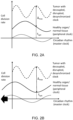
- Figs 2A and 2B depicting cell division rates/circadian rhythms with time for different parts of a subject.
- Fig. 2A shows that the peripheral clock (i.e. the circadian rhythm of healthy organs/normal tissue) lags slightly behind the master clock (circadian rhythm of the subject).
- the circadian rhythm (or ultradian rhythm) of the tumor may be desynchronized from the master clock and/or the peripheral clock. Therefore, the cell division rates of normal tissue and of the tumor are desynchronized. This means that a difference between the cell division rates of said tumor and healthy tissue will vary over time. Identifying time-windows in which the cell division rate is above a predetermined threshold will enable more effective treatment.
- the optimal moment may also be a time interval. For example, when ⁇ max stays substantially constant for a period.
- the digital twin of the subject can capture the relations between the different complex parameters, i.e. between the tumor, its micro- and macro-environment, and the patient lifestyle are complex.
- the digital twin enables the accurate calculation of ⁇ , and therefore a best time to perform radiotherapy treatment.
- the difference ⁇ at the time of therapy administration is unknown.
- the difference varies between -1 ⁇ ⁇ ⁇ 1 for normalized signals, i.e. divided by the amplitude minus the average value. If ⁇ is maximize, adjustment of the dose delivery to enhance TCP/NTCP in different known radiotherapy concepts is enabled. For example:
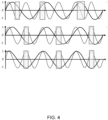
- Fig. 3 also demonstrate the above concept of identification of time windows for radiotherapy treatment in which cell division rate of a tumor is at a peak, while cell division rate of healthy tissue is low. Specifically, there is shown curve representing the normalized circadian rhythm signals of the master clock (solid line), normal tissue (dashed line) and the tumor (dotted line).
- the signals representing the different circadian rhythms of the body, organ and tumor are derived from different physiological signals, such as core body temperature, hormones or gene expression. However, the units and magnitudes of the signals are unimportant since it is the relative difference ⁇ between the tumor and normal tissue radiosensitivity that matters. In this case, it is assumed that the circadian rhythm signals represent the cell division rate or radiosensitivity.
- the signals are normalized by dividing the signals with their amplitude and subtracting the average value. This way the normalized circadian rhythm signals vary between -1 and 1 in a periodic fashion, and hence, the difference varies between -1 ⁇ ⁇ ⁇ 1.
- the shaded windows show ideal times during which the radiotherapy may be performed in an effective manner (i.e. when the relative radiosensitivity between the tumor and the normal tissue is high).
- the activity of the tumor may be dictated by an ultradian rhythm (as demonstrated in Fig. 4 ).
- Fig. 5 presents a flow diagram of a method 100 for controlling radiotherapy treatment of a subject.
- the method provides a means for controlling the execution of radiotherapy by generation of a treatment parameter value, or by control of one or more external parameters to treatment (i.e. factors that a subject or clinician may influence).
- the radiotherapy treatment of the subject may already be planned with a pre-defined set of parameter values, and the method is for augmentation/modification of said parameter values.
- the radiotherapy treatment may not yet be scheduled or planned, and the method generates a first set of parameter values (for review by a clinician).
- a digital twin is obtained.
- the digital twin is adapted to output predicted circadian rhythms of the subject.
- a digital twin is a complex set of models that represent/reflect the state and future state of a physical twin (i.e. the subject). This enables the digital twin to be interrogated to understand interactions between internal processes, and external stimuli.
- the digital twin is specifically adapted to output circadian rhythms (i.e. clocks) of the body.
- the digital twin may determine characteristics/parameters of a body/peripheral clock of the body of the subject, both in the past, present and future, dependent on various physiological changes.
- the digital twin enables an understanding of the subject, and specifically an interaction between changes to the subject and the circadian rhythm(s) of the subject.
- the digital twin adapted to represent circadian rhythms of the subject is trained using time-stamped circadian rhythm data of a tumor, time-stamped circadian rhythm data of healthy tissue, time-stamped circadian rhythm data of the body, and physiological data of the subject.
- the physiological data may comprise lifestyle data, environmental data, and therapeutic data of the subject.
- a fully trained subject-specific model is obtained that may be able to highlight links between physiological factors and circadian rhythms that may not be immediately apparent from inspection by a skilled person/clinician. This can enable accurate prediction and/or assessment of the circadian rhythms of the subject.
- step 120 circadian rhythm data of the subject is determined based on an output from the digital twin.
- the blocks shown in the block diagram Fig. 7 may be separate physical components, or logical subdivisions of single physical components, or may be all implemented in an integrated manner in one physical component.
- the functions of one block shown in the drawings may be divided between multiple components in an implementation, or the functions of multiple blocks shown in the drawings may be combined in single components in an implementation.
- Hardware components suitable for use in embodiments of the present invention include, but are not limited to, conventional microprocessors, application specific integrated circuits (ASICs), and field-programmable gate arrays (FPGAs).
- ASICs application specific integrated circuits
- FPGAs field-programmable gate arrays
- One or more blocks may be implemented as a combination of dedicated hardware to perform some functions and one or more programmed microprocessors and associated circuitry to perform other functions.
- a computer program may be stored/distributed on a suitable medium, such as an optical storage medium or a solid-state medium supplied together with or as part of other hardware, but may also be distributed in other forms, such as via the Internet or other wired or wireless telecommunication systems.
- a suitable medium such as an optical storage medium or a solid-state medium supplied together with or as part of other hardware, but may also be distributed in other forms, such as via the Internet or other wired or wireless telecommunication systems.
Landscapes
- Health & Medical Sciences (AREA)
- Engineering & Computer Science (AREA)
- Public Health (AREA)
- General Health & Medical Sciences (AREA)
- Medical Informatics (AREA)
- Life Sciences & Earth Sciences (AREA)
- Biomedical Technology (AREA)
- Epidemiology (AREA)
- Primary Health Care (AREA)
- Pathology (AREA)
- Nuclear Medicine, Radiotherapy & Molecular Imaging (AREA)
- Molecular Biology (AREA)
- Biophysics (AREA)
- Veterinary Medicine (AREA)
- Animal Behavior & Ethology (AREA)
- Surgery (AREA)
- Databases & Information Systems (AREA)
- Bioinformatics & Cheminformatics (AREA)
- Data Mining & Analysis (AREA)
- Nutrition Science (AREA)
- Chemical & Material Sciences (AREA)
- Urology & Nephrology (AREA)
- Physics & Mathematics (AREA)
- Heart & Thoracic Surgery (AREA)
- Medicinal Chemistry (AREA)
- Physical Education & Sports Medicine (AREA)
- Radiology & Medical Imaging (AREA)
- Radiation-Therapy Devices (AREA)
Priority Applications (3)
| Application Number | Priority Date | Filing Date | Title |
|---|---|---|---|
| EP23173521.8A EP4464237A1 (de) | 2023-05-16 | 2023-05-16 | Steuerung einer strahlentherapiebehandlung |
| EP24720242.7A EP4551103B1 (de) | 2023-05-16 | 2024-04-24 | Steuerung einer strahlentherapiebehandlung |
| PCT/EP2024/061145 WO2024235590A1 (en) | 2023-05-16 | 2024-04-24 | Controlling radiotherapy treatment |
Applications Claiming Priority (1)
| Application Number | Priority Date | Filing Date | Title |
|---|---|---|---|
| EP23173521.8A EP4464237A1 (de) | 2023-05-16 | 2023-05-16 | Steuerung einer strahlentherapiebehandlung |
Publications (1)
| Publication Number | Publication Date |
|---|---|
| EP4464237A1 true EP4464237A1 (de) | 2024-11-20 |
Family
ID=86386759
Family Applications (2)
| Application Number | Title | Priority Date | Filing Date |
|---|---|---|---|
| EP23173521.8A Withdrawn EP4464237A1 (de) | 2023-05-16 | 2023-05-16 | Steuerung einer strahlentherapiebehandlung |
| EP24720242.7A Active EP4551103B1 (de) | 2023-05-16 | 2024-04-24 | Steuerung einer strahlentherapiebehandlung |
Family Applications After (1)
| Application Number | Title | Priority Date | Filing Date |
|---|---|---|---|
| EP24720242.7A Active EP4551103B1 (de) | 2023-05-16 | 2024-04-24 | Steuerung einer strahlentherapiebehandlung |
Country Status (2)
| Country | Link |
|---|---|
| EP (2) | EP4464237A1 (de) |
| WO (1) | WO2024235590A1 (de) |
Citations (3)
| Publication number | Priority date | Publication date | Assignee | Title |
|---|---|---|---|---|
| US20190005200A1 (en) * | 2017-06-28 | 2019-01-03 | General Electric Company | Methods and systems for generating a patient digital twin |
| EP3586919A1 (de) * | 2018-06-28 | 2020-01-01 | Koninklijke Philips N.V. | Verfahren, computerprogrammprodukt und vorrichtung zur bestimmung eines behandlungszeitfensters zur verabreichung einer krebsbehandlung an einen patienten |
| US20210186419A1 (en) * | 2019-12-23 | 2021-06-24 | Koninklijke Philips N.V. | Optimizing sleep onset based on personalized exercise timing to adjust the circadian rhythm |
-
2023
- 2023-05-16 EP EP23173521.8A patent/EP4464237A1/de not_active Withdrawn
-
2024
- 2024-04-24 EP EP24720242.7A patent/EP4551103B1/de active Active
- 2024-04-24 WO PCT/EP2024/061145 patent/WO2024235590A1/en not_active Ceased
Patent Citations (3)
| Publication number | Priority date | Publication date | Assignee | Title |
|---|---|---|---|---|
| US20190005200A1 (en) * | 2017-06-28 | 2019-01-03 | General Electric Company | Methods and systems for generating a patient digital twin |
| EP3586919A1 (de) * | 2018-06-28 | 2020-01-01 | Koninklijke Philips N.V. | Verfahren, computerprogrammprodukt und vorrichtung zur bestimmung eines behandlungszeitfensters zur verabreichung einer krebsbehandlung an einen patienten |
| US20210186419A1 (en) * | 2019-12-23 | 2021-06-24 | Koninklijke Philips N.V. | Optimizing sleep onset based on personalized exercise timing to adjust the circadian rhythm |
Non-Patent Citations (1)
| Title |
|---|
| GUANGPENG CHEN ET AL.: "Rapid Progress in Intelligent Radiotherapy and Future Implementation", CANCER INVESTIGATION, vol. 40, no. 5, 3 April 2022 (2022-04-03), pages 425 - 436, XP009549261, ISSN: 0735-7907, DOI: 10.1080/07357907.2022.2044842 * |
Also Published As
| Publication number | Publication date |
|---|---|
| EP4551103A1 (de) | 2025-05-14 |
| WO2024235590A1 (en) | 2024-11-21 |
| EP4551103C0 (de) | 2025-07-16 |
| EP4551103B1 (de) | 2025-07-16 |
Similar Documents
| Publication | Publication Date | Title |
|---|---|---|
| US12048846B2 (en) | Neuromodulation therapy simulator | |
| KR102530169B1 (ko) | 경도 인지 장애와 치매 치료를 위한 디지털 장치 및 애플리케이션 | |
| CA3148648A1 (en) | Neuromodulation therapy data subject consent matrix | |
| US11347829B1 (en) | Method and system for calculating expected healthcare costs from insurance policy parameters | |
| US9370689B2 (en) | System and methods for providing dynamic integrated wellness assessment | |
| US20160253463A1 (en) | Simulation-based systems and methods to help healthcare consultants and hospital administrators determine an optimal human resource plan for a hospital | |
| US20190066849A1 (en) | Systems and Methods for Improved Patient Care | |
| US20190065687A1 (en) | Optimizing patient treatment recommendations using reinforcement learning combined with recurrent neural network patient state simulation | |
| US20230120397A1 (en) | Systems and methods for modelling a human subject | |
| US20210058257A1 (en) | Security and identity verification for neuromodulation therapy implant device programming | |
| US20250134452A1 (en) | Methods and systems for monitoring sleep activity and providing a treatment | |
| Mayo et al. | Incorporating big data into treatment plan evaluation: Development of statistical DVH metrics and visualization dashboards | |
| Roelofs | Phonological cueing of word finding in aphasia: insights from simulations of immediate and treatment effects | |
| US11817209B2 (en) | Neuromodulation therapy development environment | |
| EP4551103B1 (de) | Steuerung einer strahlentherapiebehandlung | |
| Song et al. | A digital, real-time, history-based sleep-management tool to enhance alertness | |
| EP4548264A1 (de) | Korrektur von maschinenlernmodelltrainingsdaten | |
| EP4017579B1 (de) | Neuromodulationstherapieüberwachung und kontinuierliche neuprogrammierung der therapie | |
| US20230207127A1 (en) | Copd monitoring | |
| US20140188507A1 (en) | Lifestyle progression models for use in preventative care | |
| US20210304885A1 (en) | Method and device for controlling a medical apparatus | |
| US20220076827A1 (en) | Systems and methods for modelling a human subject | |
| EP4654211A1 (de) | Medizinische bildgebung | |
| EP4571779A1 (de) | Vorhersage der gewichtszunahme in der schwangerschaft | |
| US20260057988A1 (en) | Real-time delivery of dynamic, personalized digital therapies to users for addressing obesity conditions using phenotype-driven digital twin models |
Legal Events
| Date | Code | Title | Description |
|---|---|---|---|
| PUAI | Public reference made under article 153(3) epc to a published international application that has entered the european phase |
Free format text: ORIGINAL CODE: 0009012 |
|
| STAA | Information on the status of an ep patent application or granted ep patent |
Free format text: STATUS: THE APPLICATION HAS BEEN PUBLISHED |
|
| AK | Designated contracting states |
Kind code of ref document: A1 Designated state(s): AL AT BE BG CH CY CZ DE DK EE ES FI FR GB GR HR HU IE IS IT LI LT LU LV MC ME MK MT NL NO PL PT RO RS SE SI SK SM TR |
|
| STAA | Information on the status of an ep patent application or granted ep patent |
Free format text: STATUS: THE APPLICATION IS DEEMED TO BE WITHDRAWN |
|
| 18D | Application deemed to be withdrawn |
Effective date: 20250521 |