EP4465626A2 - Systèmes et procédés d'estimation de volume de poisson, d'estimation de poids et de génération de valeur analytique - Google Patents
Systèmes et procédés d'estimation de volume de poisson, d'estimation de poids et de génération de valeur analytique Download PDFInfo
- Publication number
- EP4465626A2 EP4465626A2 EP24205418.7A EP24205418A EP4465626A2 EP 4465626 A2 EP4465626 A2 EP 4465626A2 EP 24205418 A EP24205418 A EP 24205418A EP 4465626 A2 EP4465626 A2 EP 4465626A2
- Authority
- EP
- European Patent Office
- Prior art keywords
- fish
- determining
- image
- computing device
- segmentation mask
- Prior art date
- Legal status (The legal status is an assumption and is not a legal conclusion. Google has not performed a legal analysis and makes no representation as to the accuracy of the status listed.)
- Pending
Links
Images


Classifications
-
- A—HUMAN NECESSITIES
- A01—AGRICULTURE; FORESTRY; ANIMAL HUSBANDRY; HUNTING; TRAPPING; FISHING
- A01K—ANIMAL HUSBANDRY; AVICULTURE; APICULTURE; PISCICULTURE; FISHING; REARING OR BREEDING ANIMALS, NOT OTHERWISE PROVIDED FOR; NEW BREEDS OF ANIMALS
- A01K61/00—Culture of aquatic animals
- A01K61/90—Sorting, grading, counting or marking live aquatic animals, e.g. sex determination
- A01K61/95—Sorting, grading, counting or marking live aquatic animals, e.g. sex determination specially adapted for fish
-
- A—HUMAN NECESSITIES
- A01—AGRICULTURE; FORESTRY; ANIMAL HUSBANDRY; HUNTING; TRAPPING; FISHING
- A01K—ANIMAL HUSBANDRY; AVICULTURE; APICULTURE; PISCICULTURE; FISHING; REARING OR BREEDING ANIMALS, NOT OTHERWISE PROVIDED FOR; NEW BREEDS OF ANIMALS
- A01K29/00—Other apparatus for animal husbandry
- A01K29/005—Monitoring or measuring activity
-
- A—HUMAN NECESSITIES
- A01—AGRICULTURE; FORESTRY; ANIMAL HUSBANDRY; HUNTING; TRAPPING; FISHING
- A01K—ANIMAL HUSBANDRY; AVICULTURE; APICULTURE; PISCICULTURE; FISHING; REARING OR BREEDING ANIMALS, NOT OTHERWISE PROVIDED FOR; NEW BREEDS OF ANIMALS
- A01K61/00—Culture of aquatic animals
- A01K61/10—Culture of aquatic animals of fish
-
- G—PHYSICS
- G06—COMPUTING OR CALCULATING; COUNTING
- G06T—IMAGE DATA PROCESSING OR GENERATION, IN GENERAL
- G06T5/00—Image enhancement or restoration
- G06T5/80—Geometric correction
-
- G—PHYSICS
- G06—COMPUTING OR CALCULATING; COUNTING
- G06T—IMAGE DATA PROCESSING OR GENERATION, IN GENERAL
- G06T7/00—Image analysis
- G06T7/0002—Inspection of images, e.g. flaw detection
- G06T7/0012—Biomedical image inspection
-
- G—PHYSICS
- G06—COMPUTING OR CALCULATING; COUNTING
- G06T—IMAGE DATA PROCESSING OR GENERATION, IN GENERAL
- G06T7/00—Image analysis
- G06T7/10—Segmentation; Edge detection
-
- G—PHYSICS
- G06—COMPUTING OR CALCULATING; COUNTING
- G06T—IMAGE DATA PROCESSING OR GENERATION, IN GENERAL
- G06T7/00—Image analysis
- G06T7/10—Segmentation; Edge detection
- G06T7/11—Region-based segmentation
-
- G—PHYSICS
- G06—COMPUTING OR CALCULATING; COUNTING
- G06T—IMAGE DATA PROCESSING OR GENERATION, IN GENERAL
- G06T7/00—Image analysis
- G06T7/10—Segmentation; Edge detection
- G06T7/12—Edge-based segmentation
-
- G—PHYSICS
- G06—COMPUTING OR CALCULATING; COUNTING
- G06T—IMAGE DATA PROCESSING OR GENERATION, IN GENERAL
- G06T7/00—Image analysis
- G06T7/20—Analysis of motion
-
- G—PHYSICS
- G06—COMPUTING OR CALCULATING; COUNTING
- G06T—IMAGE DATA PROCESSING OR GENERATION, IN GENERAL
- G06T7/00—Image analysis
- G06T7/50—Depth or shape recovery
- G06T7/55—Depth or shape recovery from multiple images
-
- G—PHYSICS
- G06—COMPUTING OR CALCULATING; COUNTING
- G06T—IMAGE DATA PROCESSING OR GENERATION, IN GENERAL
- G06T7/00—Image analysis
- G06T7/50—Depth or shape recovery
- G06T7/55—Depth or shape recovery from multiple images
- G06T7/593—Depth or shape recovery from multiple images from stereo images
-
- G—PHYSICS
- G06—COMPUTING OR CALCULATING; COUNTING
- G06T—IMAGE DATA PROCESSING OR GENERATION, IN GENERAL
- G06T7/00—Image analysis
- G06T7/60—Analysis of geometric attributes
-
- G—PHYSICS
- G06—COMPUTING OR CALCULATING; COUNTING
- G06T—IMAGE DATA PROCESSING OR GENERATION, IN GENERAL
- G06T7/00—Image analysis
- G06T7/60—Analysis of geometric attributes
- G06T7/62—Analysis of geometric attributes of area, perimeter, diameter or volume
-
- G—PHYSICS
- G06—COMPUTING OR CALCULATING; COUNTING
- G06T—IMAGE DATA PROCESSING OR GENERATION, IN GENERAL
- G06T7/00—Image analysis
- G06T7/70—Determining position or orientation of objects or cameras
-
- G—PHYSICS
- G06—COMPUTING OR CALCULATING; COUNTING
- G06V—IMAGE OR VIDEO RECOGNITION OR UNDERSTANDING
- G06V10/00—Arrangements for image or video recognition or understanding
- G06V10/40—Extraction of image or video features
- G06V10/44—Local feature extraction by analysis of parts of the pattern, e.g. by detecting edges, contours, loops, corners, strokes or intersections; Connectivity analysis, e.g. of connected components
- G06V10/443—Local feature extraction by analysis of parts of the pattern, e.g. by detecting edges, contours, loops, corners, strokes or intersections; Connectivity analysis, e.g. of connected components by matching or filtering
- G06V10/449—Biologically inspired filters, e.g. difference of Gaussians [DoG] or Gabor filters
- G06V10/451—Biologically inspired filters, e.g. difference of Gaussians [DoG] or Gabor filters with interaction between the filter responses, e.g. cortical complex cells
- G06V10/454—Integrating the filters into a hierarchical structure, e.g. convolutional neural networks [CNN]
-
- G—PHYSICS
- G06—COMPUTING OR CALCULATING; COUNTING
- G06V—IMAGE OR VIDEO RECOGNITION OR UNDERSTANDING
- G06V10/00—Arrangements for image or video recognition or understanding
- G06V10/70—Arrangements for image or video recognition or understanding using pattern recognition or machine learning
- G06V10/74—Image or video pattern matching; Proximity measures in feature spaces
- G06V10/75—Organisation of the matching processes, e.g. simultaneous or sequential comparisons of image or video features; Coarse-fine approaches, e.g. multi-scale approaches; using context analysis; Selection of dictionaries
- G06V10/757—Matching configurations of points or features
-
- G—PHYSICS
- G06—COMPUTING OR CALCULATING; COUNTING
- G06V—IMAGE OR VIDEO RECOGNITION OR UNDERSTANDING
- G06V10/00—Arrangements for image or video recognition or understanding
- G06V10/70—Arrangements for image or video recognition or understanding using pattern recognition or machine learning
- G06V10/82—Arrangements for image or video recognition or understanding using pattern recognition or machine learning using neural networks
-
- G—PHYSICS
- G06—COMPUTING OR CALCULATING; COUNTING
- G06V—IMAGE OR VIDEO RECOGNITION OR UNDERSTANDING
- G06V20/00—Scenes; Scene-specific elements
- G06V20/05—Underwater scenes
-
- G—PHYSICS
- G06—COMPUTING OR CALCULATING; COUNTING
- G06V—IMAGE OR VIDEO RECOGNITION OR UNDERSTANDING
- G06V40/00—Recognition of biometric, human-related or animal-related patterns in image or video data
- G06V40/10—Human or animal bodies, e.g. vehicle occupants or pedestrians; Body parts, e.g. hands
-
- G—PHYSICS
- G06—COMPUTING OR CALCULATING; COUNTING
- G06V—IMAGE OR VIDEO RECOGNITION OR UNDERSTANDING
- G06V40/00—Recognition of biometric, human-related or animal-related patterns in image or video data
- G06V40/10—Human or animal bodies, e.g. vehicle occupants or pedestrians; Body parts, e.g. hands
- G06V40/103—Static body considered as a whole, e.g. static pedestrian or occupant recognition
-
- G—PHYSICS
- G06—COMPUTING OR CALCULATING; COUNTING
- G06V—IMAGE OR VIDEO RECOGNITION OR UNDERSTANDING
- G06V40/00—Recognition of biometric, human-related or animal-related patterns in image or video data
- G06V40/20—Movements or behaviour, e.g. gesture recognition
- G06V40/23—Recognition of whole body movements, e.g. for sport training
-
- H—ELECTRICITY
- H04—ELECTRIC COMMUNICATION TECHNIQUE
- H04N—PICTORIAL COMMUNICATION, e.g. TELEVISION
- H04N13/00—Stereoscopic video systems; Multi-view video systems; Details thereof
- H04N13/20—Image signal generators
- H04N13/204—Image signal generators using stereoscopic image cameras
-
- H—ELECTRICITY
- H04—ELECTRIC COMMUNICATION TECHNIQUE
- H04N—PICTORIAL COMMUNICATION, e.g. TELEVISION
- H04N13/00—Stereoscopic video systems; Multi-view video systems; Details thereof
- H04N13/20—Image signal generators
- H04N13/296—Synchronisation thereof; Control thereof
-
- H—ELECTRICITY
- H04—ELECTRIC COMMUNICATION TECHNIQUE
- H04N—PICTORIAL COMMUNICATION, e.g. TELEVISION
- H04N23/00—Cameras or camera modules comprising electronic image sensors; Control thereof
- H04N23/60—Control of cameras or camera modules
- H04N23/67—Focus control based on electronic image sensor signals
-
- H—ELECTRICITY
- H04—ELECTRIC COMMUNICATION TECHNIQUE
- H04N—PICTORIAL COMMUNICATION, e.g. TELEVISION
- H04N7/00—Television systems
- H04N7/18—Closed-circuit television [CCTV] systems, i.e. systems in which the video signal is not broadcast
- H04N7/183—Closed-circuit television [CCTV] systems, i.e. systems in which the video signal is not broadcast for receiving images from a single remote source
-
- G—PHYSICS
- G06—COMPUTING OR CALCULATING; COUNTING
- G06T—IMAGE DATA PROCESSING OR GENERATION, IN GENERAL
- G06T2207/00—Indexing scheme for image analysis or image enhancement
- G06T2207/10—Image acquisition modality
- G06T2207/10004—Still image; Photographic image
- G06T2207/10012—Stereo images
-
- G—PHYSICS
- G06—COMPUTING OR CALCULATING; COUNTING
- G06T—IMAGE DATA PROCESSING OR GENERATION, IN GENERAL
- G06T2207/00—Indexing scheme for image analysis or image enhancement
- G06T2207/10—Image acquisition modality
- G06T2207/10016—Video; Image sequence
- G06T2207/10021—Stereoscopic video; Stereoscopic image sequence
-
- G—PHYSICS
- G06—COMPUTING OR CALCULATING; COUNTING
- G06T—IMAGE DATA PROCESSING OR GENERATION, IN GENERAL
- G06T2207/00—Indexing scheme for image analysis or image enhancement
- G06T2207/10—Image acquisition modality
- G06T2207/10024—Color image
-
- G—PHYSICS
- G06—COMPUTING OR CALCULATING; COUNTING
- G06T—IMAGE DATA PROCESSING OR GENERATION, IN GENERAL
- G06T2207/00—Indexing scheme for image analysis or image enhancement
- G06T2207/20—Special algorithmic details
- G06T2207/20076—Probabilistic image processing
-
- G—PHYSICS
- G06—COMPUTING OR CALCULATING; COUNTING
- G06T—IMAGE DATA PROCESSING OR GENERATION, IN GENERAL
- G06T2207/00—Indexing scheme for image analysis or image enhancement
- G06T2207/20—Special algorithmic details
- G06T2207/20084—Artificial neural networks [ANN]
-
- G—PHYSICS
- G06—COMPUTING OR CALCULATING; COUNTING
- G06T—IMAGE DATA PROCESSING OR GENERATION, IN GENERAL
- G06T2207/00—Indexing scheme for image analysis or image enhancement
- G06T2207/20—Special algorithmic details
- G06T2207/20112—Image segmentation details
- G06T2207/20132—Image cropping
-
- G—PHYSICS
- G06—COMPUTING OR CALCULATING; COUNTING
- G06T—IMAGE DATA PROCESSING OR GENERATION, IN GENERAL
- G06T2207/00—Indexing scheme for image analysis or image enhancement
- G06T2207/30—Subject of image; Context of image processing
- G06T2207/30108—Industrial image inspection
- G06T2207/30128—Food products
-
- G—PHYSICS
- G06—COMPUTING OR CALCULATING; COUNTING
- G06T—IMAGE DATA PROCESSING OR GENERATION, IN GENERAL
- G06T2207/00—Indexing scheme for image analysis or image enhancement
- G06T2207/30—Subject of image; Context of image processing
- G06T2207/30168—Image quality inspection
-
- G—PHYSICS
- G06—COMPUTING OR CALCULATING; COUNTING
- G06T—IMAGE DATA PROCESSING OR GENERATION, IN GENERAL
- G06T2207/00—Indexing scheme for image analysis or image enhancement
- G06T2207/30—Subject of image; Context of image processing
- G06T2207/30242—Counting objects in image
-
- Y—GENERAL TAGGING OF NEW TECHNOLOGICAL DEVELOPMENTS; GENERAL TAGGING OF CROSS-SECTIONAL TECHNOLOGIES SPANNING OVER SEVERAL SECTIONS OF THE IPC; TECHNICAL SUBJECTS COVERED BY FORMER USPC CROSS-REFERENCE ART COLLECTIONS [XRACs] AND DIGESTS
- Y02—TECHNOLOGIES OR APPLICATIONS FOR MITIGATION OR ADAPTATION AGAINST CLIMATE CHANGE
- Y02A—TECHNOLOGIES FOR ADAPTATION TO CLIMATE CHANGE
- Y02A40/00—Adaptation technologies in agriculture, forestry, livestock or agroalimentary production
- Y02A40/80—Adaptation technologies in agriculture, forestry, livestock or agroalimentary production in fisheries management
- Y02A40/81—Aquaculture, e.g. of fish
Definitions
- a computing device detects a location of a fish in an image captured by an underwater stereoscopic camera.
- the computing device determines a segmentation mask for the fish in the image.
- the computing device determines whether the segmentation mask is associated with a measurable fish.
- the computing device determines at least one dimension of the fish based on the image, determines a weight of the fish based on the at least one dimension of the fish, and adds the weight of the fish to a set of fish weight measurements.
- an underwater camera system for monitoring a plurality of fish in a fish pen.
- the system comprises at least one camera and a computing device communicatively coupled to the at least one camera.
- the computing device is configured to detect a fish in at least one image from the at least one camera; determine a motion behavior of the fish from the at least one image; and determine at least one fish monitoring analytic value based at least in part on the motion behavior of the fish.
- Non-transitory computer-readable medium having computer-executable instructions stored thereon.
- the instructions in response to execution by one or more processors of a computing device, cause the computing device to perform actions for monitoring a plurality of fish in a fish pen, the actions comprising receiving, by the computing device, an image captured by an underwater camera system that depicts at least one fish; determining, by the computing device, a measurability of at least one fish in the image based at least in part on whether the at least one fish is occluded; and in response to determining that at least one fish in the image is measurable, determining at least one characteristic of the at least one fish based on the image.
- an underwater camera system for monitoring at least one fish in a fish pen.
- the system comprises a stereoscopic camera, a variable focal lens camera, and a computing device.
- the computing device is communicatively coupled to the variable focal lens camera and the stereoscopic camera.
- the computing device is configured to detect a fish in an image from the stereoscopic camera; adjust a focus of the variable focal lens camera based on the image from the stereoscopic camera; capture a focused image of the fish using the variable focal lens camera; and determine at least one fish monitoring analytic value based at least in part on the focused image.
- Aquaculture techniques such as fish farming are becoming more prevalent as a way to cultivate fish for consumption.
- One relatively new form of aquaculture uses a fish pen deployed in open water. While such systems provide a beneficial environment for cultivating fish, the underwater deployment of the fish pen makes it difficult to monitor conditions and fish health within the pen.
- Weight and health are two conditions for which accurate monitoring is desired: monitoring changes in biomass within the fish pen can inform decisions regarding whether to increase or reduce supporting feeding systems, and monitoring health of fish within the fish pen can inform decisions regarding whether to provide treatments for any conditions afflicting the fish.
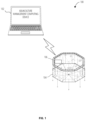
- FIG. 1 is a schematic drawing that illustrates a non-limiting example embodiment of a system for monitoring and controlling conditions within a fish pen according to various aspects of the present disclosure.
- an aquaculture management computing device 102 is communicatively coupled to an underwater camera system 106 that is installed with a fish pen 104.
- the underwater camera system 106 is configured to capture and analyze images of fish within the fish pen 104 to determine at least one of health information and biomass estimates for the fish.
- the underwater camera system 106 transmits the at least one of the health information and the biomass estimates to the aquaculture management computing device 102.
- the aquaculture management computing device 102 may present the received information to a user so that the user can take actions to manage the fish pen 104, including but not limiting to changing a rate of feeding and providing treatment for adverse health conditions.
- the aquaculture management computing device 102 may receive the information and autonomously take management actions with or without presenting the information to a user, including but not limited to automatically changing a rate of feeding by an automated feed pellet dispenser, automatically changing a depth of the fish pen 104, and automatically dispensing a medication.
- the aquaculture management computing device 102 is illustrated in FIG. 1 as being a laptop computing device, in some embodiments, other types of computing devices may be used for the aquaculture management computing device 102, including but not limited to a desktop computing device, a server computing device, a tablet computing device, a smartphone computing device, and one or more computing devices in a cloud computing system.
- FIG. 1 illustrates an example embodiment wherein the underwater camera system 106 is installed with a fish pen 104 that is an underwater fish pen that may be submerged in open water, such as in the open ocean.
- the underwater camera system 106 may be installed underwater in different environments.
- the underwater camera system 106 may be installed in a surface fish pen at an aquaculture site near a coastline.
- the underwater camera system 106 may be utilized underwater in a fish pen associated with a land-based hatchery or nursery in order to monitor fish larvae, hatchlings, and/or juveniles.
- the underwater camera system 106 may be utilized in a fish pen associated with a recirculating aquaculture system (RAS), in which a land-based fish pen coupled to sophisticated water processing systems is used to grow fish.
- RAS recirculating aquaculture system
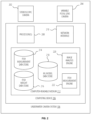
- FIG. 2 is a block diagram that illustrates a non-limiting example embodiment of an underwater camera system according to various aspects of the present disclosure.
- the underwater camera system 106 is designed to provide a high-accuracy system for monitoring fish in a fish pen to determine characteristics such as health and total biomass.
- the underwater camera system 106 includes a stereoscopic camera 202, a variable focal lens camera 204, and a computing device 206.
- a housing (not pictured) may enclose the components of the underwater camera system 106, or may enclose some components of the underwater camera system 106 and provide external mounting locations for other components of the underwater camera system 106.
- the stereoscopic camera 202 is a camera that includes two cameras that are physically offset from each other so that parallax can be used to determine depth information for pixels in an image.
- a camera that uses other depth-detection techniques, including but not limited to a time-of-flight sensor, may be used instead of a stereoscopic camera 202.
- the variable focal lens camera 204 is a camera that can take high-resolution pictures over a limited focal depth. Because the focal depth is limited, the variable focal lens camera 204 has a mechanism to adjust the distance of the focal point from the variable focal lens camera 204.
- any suitable stereoscopic camera 202 and variable focal lens camera 204 adapted for use underwater may be used.
- the underwater camera system 106 may include a wide field of view camera instead of or in addition to the stereoscopic camera 202.
- the computing device 206 includes one or more processor(s) 208, a network interface 210, and a computer-readable medium 212.
- the processor(s) 208 may include one or more commercially available general-purpose computer processors, each of which may include one or more processing cores.
- the processor(s) 208 may also include one or more special-purpose computer processors, including but not limited to one or more processors adapted for efficiently performing machine learning tasks and/or one or more processors adapted for efficiently performing computer vision tasks, including but not limited to a Compute Unified Device Architecture (CUDA)-enabled graphics processing unit (GPU).
- CUDA Compute Unified Device Architecture
- the network interface 210 may implement any suitable communication technology to communicate information from the underwater camera system 106 to another computing device.
- the network interface 210 may include a wireless interface that implements a 2G, 3G, 4G, 5G, LTE, Wi-Fi, WiMAX, Bluetooth, satellite-based, or other wireless communication technology.
- the network interface 210 may include a wired interface that implements an Ethernet, USB, Firewire, CAN-BUS, or other wired communication technology.
- the network interface 210 may include multiple communication technologies.
- the network interface 210 may include a wired interface that couples the underwater computing device 206 to a transceiver located on a buoy or other component at the surface, and the transceiver may use a wireless communication technology to communicate with a computing device on a ship or on shore.
- the underwater camera system 106 may transfer data via the exchange of a removable computer-readable medium, including but not limited to a flash memory or a hard drive.
- the computer-readable medium 212 is installed in the computing device 206 and stores computer-executable instructions that, in response to execution by the processor(s) 208, cause the underwater camera system 106 to provide various engines and/or data stores.
- the computer-readable medium 212 may include a magnetic computer-readable medium including but not limited to a hard disk drive.
- the computer-readable medium 212 may include an optical computer-readable medium including but not limited to a DVD or CD-ROM drive.
- the computer-readable medium 212 may include an electronic non-volatile storage medium including but not limited to flash memory.
- At least some of the computer-executable instructions may be programmed into a field-programmable gate array (FPGA), an application-specific integrated circuit (ASIC), or other device that combines storage of computer-executable instructions with one or more circuits for implementing logic.
- FPGA field-programmable gate array
- ASIC application-specific integrated circuit
- such an FPGA or ASIC may provide aspects of both the computer-readable medium 212 and the computing device 206.
- combinations of the above-described computer-readable media may be provided to collectively provide the illustrated computer-readable medium 212.
- the computer-readable medium 212 includes an image analysis engine 220, a fish measurement engine 222, a fish measurement data store 214, a fish weight data store 216, and a machine learning model data store 218.
- the image analysis engine 220 receives and processes information from the stereoscopic camera 202 and/or the variable focal lens camera 204 to capture images of fish in the fish pen 104 for analysis.
- the image analysis engine 220 also conducts pre-processing, filtering, and/or other analysis of the images.
- the image analysis engine 220 may transmit control commands to the stereoscopic camera 202 and/or the variable focal lens camera 204.
- the fish measurement engine 222 receives images that have been processed by the image analysis engine 220, and generates measurements of fish within the images. Further description of actions performed by the image analysis engine 220 and fish measurement engine 222 is provided below.
- the fish measurement data store 214 stores measurements of fish generated by the fish measurement engine 222 and/or the image analysis engine 220.
- the fish weight data store 216 stores correlations between characteristics of fish that are determinable by the image analysis engine 220, such as one or more dimensions of the fish, and a weight of the fish.
- the machine learning model data store 218 stores one or more machine learning models that have been trained to perform various tasks on images.
- the machine learning model data store 218 may store one or more convolutional neural networks that are trained to detect fish in an image. Further description of the information stored by and retrieved from the fish measurement data store 214, fish weight data store 216, and machine learning model data store 218 is provided below.
- engine refers to logic embodied in hardware or software instructions, which can be written in a programming language, such as C, C++, COBOL, JAVA TM , PHP, Perl, HTML, CSS, JavaScript, VBScript, ASPX, Microsoft .NET TM , Go, Python, and/or the like.
- An engine may be compiled into executable programs or written in interpreted programming languages.
- Software engines may be callable from other engines or from themselves.
- the engines described herein refer to logical modules that can be merged with other engines, or can be divided into sub-engines.
- the engines can be implemented by logic stored in any type of computer-readable medium or computer storage device and be stored on and executed by one or more general purpose computers, thus creating a special purpose computer configured to provide the engine or the functionality thereof.
- the engines can be implemented by logic programmed into an application-specific integrated circuit (ASIC), a field-programmable gate array (FPGA), or another hardware device.
- ASIC application-specific integrated circuit
- FPGA field-programmable gate array
- the fish measurement data store 214, the fish weight data store 216, and the machine learning model data store 218 are illustrated as being present on the computer-readable medium 212. In some embodiments, one or more of the fish measurement data store 214, the fish weight data store 216, and the machine learning model data store 218 may be present on a different computer-readable medium or different computing device.
- data store refers to any suitable device configured to store data for access by a computing device.
- a data store is a highly reliable, high-speed relational database management system (DBMS) executing on one or more computing devices and accessible over a high-speed network.
- DBMS relational database management system
- Another example of a data store is a key-value store.
- any other suitable storage technique and/or device capable of quickly and reliably providing the stored data in response to queries may be used, and the computing device may be accessible locally instead of over a network, or may be provided as a cloud-based service.
- a data store may also include data stored in an organized manner on a computer-readable storage medium, such as a hard disk drive, a flash memory, RAM, ROM, or any other type of computer-readable storage medium.
- a computer-readable storage medium such as a hard disk drive, a flash memory, RAM, ROM, or any other type of computer-readable storage medium.
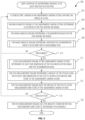
- FIG. 3 is a flowchart that illustrates a non-limiting example embodiment of a method of determining biomass of at least one fish in a fish pen according to various aspects of the present disclosure.
- Measuring fish in a fish pen in an automated manner using camera imagery faces multiple difficulties. For example, degraded image quality due to focus/motion blur, occlusion of fish by other fish or hardware of the fish pen, poor illumination, or angled fish may cause bad monitoring data to be generated.
- the method 300 attempts to avoid these issues by providing a quality-determination pipeline and unique measurement techniques in order to gather data from camera imagery that is accurate enough to produce reliable estimates of biomass in a fish pen.
- measurements of a plurality of fish may be collected and used with an estimate of a population count of the fish the fish pen to determine a total biomass of fish within the fish pen.
- the method 300 proceeds to block 302, where a stereoscopic camera 202 of an underwater camera system 106 captures an image of a fish.
- the image captured by the stereoscopic camera 202 may include more than one fish, and the method 300 may process multiple fish in a single image.
- the description of method 300 will assume that the image includes a single fish to be measured.
- the image captured by the stereoscopic camera 202 includes color information and depth information for each pixel within the image.
- an image analysis engine 220 of the underwater camera system 106 determines a location of the fish within the image.
- the image analysis engine 220 may use a first machine learning model from the machine learning model data store 218 in order to determine a bounding box that defines the location of the fish within the image.
- the first machine learning model used to determine the location of the fish within the image may be a convolutional neural network trained on other images of fish to detect fish in a stereoscopic image.
- the image analysis engine 220 determines a segmentation mask for the fish within the image.
- the image analysis engine 220 may use a second machine learning model from the machine learning model data store 218 to determine the segmentation mask.
- the image analysis engine 220 may crop out the portion of the image that includes the location of the fish that was determined at block 304, and may provide the cropped out portion as input to the second machine learning model.
- the second machine learning model may be another convolutional neural network.
- other techniques may be used to determine or refine the segmentation mask for the fish, including but not limited to edge detection and detection of depth discontinuities.
- the image analysis engine 220 determines whether the segmentation mask is associated with a measurable fish.
- One of the problems with automated processing of images from underwater cameras is that many of the images captured by the underwater cameras may be unsuitable for automated analysis. Accordingly, the method 300 may use any suitable procedure at procedure block 308 to determine whether the image is suitable for measuring the fish associated with the segmentation mask.
- One non-limiting example of such a procedure is illustrated in FIG. 4 and described in detail below.
- the method 300 then proceeds to decision block 310, where a decision is made based on whether or not the fish was determined to be measurable. If the fish was not determined to be measurable, then the result of decision block 310 is NO, and the method 300 returns to block 302 to capture another image of a fish. Otherwise, if the fish was determined to be measurable, then the result of decision block 310 is YES, and the method 300 proceeds to procedure block 312.
- a fish measurement engine 222 of the underwater camera system 106 determines at least one dimension of the fish based on the image and the segmentation mask, and at block 314, the fish measurement engine 222 determines a weight of the fish by using the at least one dimension of the fish to query a fish weight data store 216 of the underwater camera system 106.
- all of the fish within the fish pen 104 may be the same, and so the fish weight data store 216 may be queried without having to separately determine the species of fish.
- fish of multiple different species may be present in the fish pen 104, and so an additional step of determining a species of the fish (such as providing the segmentation mask to another machine learning model stored in the machine learning model data store 218) may be performed in order to obtain the species of the depicted fish for the query.
- an additional step of determining a species of the fish such as providing the segmentation mask to another machine learning model stored in the machine learning model data store 218, may be performed in order to obtain the species of the depicted fish for the query.
- the method 300 may determine any dimension (or dimensions) that can be used to query the fish weight data store 216 for a fish weight. For example, data is available (and may be stored in the fish weight data store 216) that correlates a length and/or a height of a fish of a given species with a weight. Accordingly, by using a length and/or height of a fish determined at procedure block 312 to query the fish weight data store 216, the weight of a fish may be determined. Any suitable technique for obtaining at least one dimension of the fish based on the image and the segmentation mask may be used. One non-limiting example of such a technique is illustrated in FIG. 6 and discussed in further detail below.
- the fish measurement engine 222 adds the weight of the fish to a fish measurement data store 214 of the underwater camera system 106.
- the fish measurement engine 222 may also store the measured dimensions of the fish to the fish measurement data store 214.
- the method 300 then proceeds to decision block 318, where a decision is made regarding whether enough measurements of fish have been added to the fish measurement data store 214.
- the total number of measurements of fish added to the fish measurement data store 214 may be compared to a threshold number of measurements.
- a confidence interval may be configured, and the confidence interval may be used to determine the threshold number of measurements. For example, if it is known that the fish pen 104 contains 40,000 fish, configuring the underwater camera system 106 to use a 95% confidence interval would mean that about 381 fish measurements should be collected to ensure that the true mean weight of all the fish in the pen is within 5% of the mean of the sample.
- the result of decision block 318 is NO, and the method 300 returns to block 302 to capture another image of a fish. Otherwise, if enough measurements have been stored in the fish measurement data store 214, then the result of decision block 318 is YES, and the method 300 advances to block 320.
- the fish measurement engine 222 uses the weights stored in the fish measurement data store 214 to determine a fish biomass.
- the fish measurement engine 222 may determine a mean of the stored fish measurements, and may multiply that mean by the population of fish in the fish pen 104 in order to determine the total fish biomass.
- the fish measurement engine 222 may determine the population of fish in the fish pen 104 based on an initial number of fish that were counted as being added to the fish pen 104, minus a mortality count that reflects a count of fish that were known to have died off, and minus an estimated shrinkage count that reflects a count of fish that were removed from the fish pen 104 by undetected means (including but not limited to external predation).
- the fish measurement engine 222 may use the mean of the stored fish measurements itself as the determined fish biomass.
- the method 300 then proceeds to an end block and terminates.
- FIG. 3 illustrates the method 300 as stopping at this point, in some embodiments, the method 300 may continue to use the determined total fish biomass for any purpose.
- the fish measurement engine 222 may transmit the total fish biomass to the aquaculture management computing device 102, which may then present the total fish biomass to a user.
- the fish measurement engine 222 may transmit the total fish biomass to the aquaculture management computing device 102, which may then use the total fish biomass to control an automated feeding device.
- the fish measurement engine 222 may transmit the mean of the stored fish measurements to be used for similar purposes.
- the aquaculture management computing device 102 may measure the rate of change of the fish biomass over time, and the rate of change may be used to control the fish feeding device.
- the biomass estimation and the trend on growth rates may be used to select a feed pellet size and/or a type of feed for the population within the fish pen 104.
- the biomass estimation and the trend on growth rates may also be used to set a total feed amount, feed delivery style, feed rate, and/or feed time.
- the biomass estimate and/or the rate of change of the total fish biomass over time may be an input to a feedback loop mechanism for controlling automated feeding devices.
- Other input to the feedback loop mechanism may include one or more of a set of environmental data such as water temperature and water pressure (distance beneath the surface).
- the output of the feedback loop mechanism may indicate a go/no go for feed delivery on a given day.
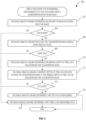
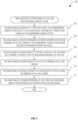
- FIG. 4 is a flowchart that illustrates a non-limiting example embodiment of a procedure for determining measurability of a fish associated with a segmentation mask in an image according to various aspects of the present disclosure.
- the procedure 400 is a non-limiting example of a procedure suitable for use at procedure block 308 of FIG. 3 .
- the procedure 400 provides an image quality estimation pipeline that allows images that are likely to lead to inaccurate fish weight estimates to be ignored.
- the procedure 400 operates on a cropped portion of an image determined by the image analysis engine 220 to contain a fish as discussed above.
- the procedure 400 may also receive the segmentation mask information that indicates the pixels of the image that are associated with the fish to be analyzed. As discussed above, because the image is captured by the stereoscopic camera 202, the image includes both color information and depth information for each pixel.
- an image analysis engine 220 determines an amount of blur associated with the image of the fish.
- Blur may be detected using any suitable technique, including but not limited to determining variation of the Laplacian, computing a Fast Fourier Transform and examining the distribution of high and low frequencies, using machine learning models trained on blurry and non-blurry images, or any other suitable technique.
- the procedure 400 then advances to decision block 404, where a decision is made based on the amount of blur determined by the image analysis engine 220.
- the decision may be made by comparing the amount of blur to a predetermined threshold amount of blur that depends on the blur detection technique that was used.
- the result of decision block 404 is YES, and the procedure 400 advances to block 418. Otherwise, if the comparison of the amount of blur to the predetermined threshold amount of blur does not indicate that the image of the fish is too blurry, then the result of decision block 404 is NO, and the procedure 400 advances to block 406.
- the image analysis engine 220 processes the segmentation mask using a shape analysis filter.
- the shape analysis filter is trained to extract features from the shape of the segmentation mask, and to compare those features to features extracted from a training set of known-good segmentation masks.
- a set of Zernike moments may be determined for the segmentation mask.
- the Zernike moments include features that are orthogonal to each other, thereby minimizing the redundancy of information.
- Features based on Zernike moments are also translation and scale invariant, thus providing strict shape matching criteria.
- the segmentation mask may be standardized to remove scale or translation invariance by rotating, tight cropping, and/or resizing the segmentation mask to fixed dimensions before extracting the features.
- the procedure 400 then advances to decision block 408, where a decision is made based on whether or not the shape analysis filter determined that the features extracted from the segmentation mask are sufficiently similar to the features extracted from the known-good segmentation masks. If the shape analysis filter determined that the segmentation mask is not similar enough, then the result of decision block 408 is YES, and the procedure 400 advances to block 418. Otherwise, if the shape analysis filter determined that the segmentation mask does have a shape that is similar to the known-good segmentation mask shapes, then the result of decision block 408 is NO, and the procedure 400 advances to block 410.
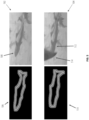
- FIG. 5 is an image that illustrates a non-limiting example embodiment of an occluded segmentation mask and image, as well as a non-limiting example embodiment of a non-occluded segmentation mask and image, according to various aspects of the present disclosure.
- a non-occluded fish 508 is visible to the camera in its entire length. Accordingly, the corresponding non-occluded segmentation mask 506 shows the entire non-occluded fish 508.
- a portion of an occluded fish 512 is visible to the camera, but an occluding fish 514 that is closer to the camera has a fin that is covering a front portion of the occluded fish 512. Accordingly, in the corresponding occluded segmentation mask 510 is truncated at the front portion of the occluded fish 512. That said, the shape of the occluded segmentation mask 510 is still fish-like, so it is possible that despite the occlusion, the shape analysis filter applied at block 406 may not have determined that the second image 504 is not measurable. Additional analysis should be performed in order to detect occlusions in the image that render the segmentation mask unsuitable for measurement.
- the image analysis engine 220 determines an average depth of pixels in a region inside the segmentation mask, and at block 412, the image analysis engine 220 compares depths of pixels in a region outside the segmentation mask to the average depth of pixels in the region inside the segmentation mask. As shown in FIG. 5 , the image analysis engine 220 may determine an average depth of pixels in a region a predetermined number of pixels outside the border of the segmentation mask, and may determine an average depth of pixels in a region a predetermined number of pixels inside the border of the segmentation mask (or within the entire segmentation mask).
- the image analysis engine 220 may first partition the segmentation mask into slices (e.g., into vertical, horizontal, or radial slices), and may determine the average depths of pixels inside and outside of the border of the segmentation mask within each slice separately. The image analysis engine 220 then compares the average depth of the pixels in the outer portion to the average depth of the pixels in the inner portion. If the fish is not occluded, then the average depth of the pixels in the outer portion (or in the outer portion for every slice) will be greater than the average depth of the pixels in the inner portion.
- slices e.g., into vertical, horizontal, or radial slices
- the average depth of the pixels in the outer portion (or in the outer portion for at least one slice) will be greater than the average depth of the pixels in the inner portion, signifying that there is an object closer to the camera than the fish.
- all of the pixels surrounding the segmentation mask for the non-occluded fish 508 in the first image 502 would have a greater depth than the pixels within the segmentation mask, whereas the pixels surrounding the segmentation mask for the occluded fish 512 in a slice of the front portion of the occluded fish 512 would have a lesser depth than the pixels within the segmentation mask, thus indicating the presence of the occluding fish 514.
- the procedure 400 then advances to decision block 414, where the comparison performed in block 412 is used to determine whether the object identified by the segmentation mask is occluded. If the comparison indicates that the object is occluded, then the result of decision block 414 is YES, and the procedure 400 advances to block 418.
- Block 418 is the target of each decision block result that indicates that the image of the fish is not appropriate for measurement. Accordingly, at block 418, the image analysis engine 220 determines that the fish is not measurable. The procedure 400 then advances to the end block and terminates.
- the procedure 400 advances to block 416.
- block 416 all of the tests on the image of the fish have been performed and none of the tests have indicated that the fish in the image is not measurable. Accordingly, at block 416, the image analysis engine 220 determines that the fish is measurable. The procedure 400 then advances to an end block and terminates.
- the procedure 400 Upon termination, the procedure 400 provides its determination of whether or not the fish is measurable to its caller.
- FIG. 6 is a flowchart that illustrates a non-limiting example embodiment of a procedure for measuring a length of a fish based on an image and a segmentation mask according to various aspects of the present disclosure.
- the procedure 600 is an example of a technique suitable for use at procedure block 312 of FIG. 3 , wherein length is the at least one dimension to be determined.
- the procedure 600 advances to block 602, where an image analysis engine 220 separates pixels along an axis of the segmentation mask into slices.
- the image analysis engine 220 may separate the segmentation mask into slices that are a given number of pixels wide.
- the number of pixels may be configurable in order to manage trade-offs between speed of computation and fine-grained accuracy.
- the image analysis engine 220 may separate the segmentation mask into slices that are ten pixels wide, though any other suitable number of pixels may be used.
- the image analysis engine 220 determines a depth value for each slice.
- the image analysis engine 220 may determine a mean depth of the pixels within each slice, and may use the mean depth as the depth of the slice.
- the image analysis engine 220 may determine a depth of a pixel at a midpoint of each slice, and may use the depth of the midpoint pixel as the depth of the slice.
- the image analysis engine 220 may determine a depth of pixels at each border of each slice.
- the image analysis engine 220 generates a curve representation of the fish based on the depth values for the slices. That is, in some embodiments, the image analysis engine 220 may determine locations for each of the slices in three-dimensional space with respect to the camera.
- the image analysis engine 220 determines a length of the curve representation using a pinhole model. That is, the image and the depth values may be processed as if the camera that captured the image were a pinhole camera, and the image analysis engine 220 may use the distances of each slice from the camera, along with the horizontal width of each slice, in order to compute the actual length in three-dimensional space of the curve representation of the fish. In some embodiments, the image analysis engine 220 may also compensate for underwater refraction as part of its pinhole model.
- the procedure 600 then advances to an end block and terminates.
- the procedure 400 provides its determination of the length of the fish to its caller.
- similar techniques could be used to determine a height of a fish by simply reorienting the process in a vertical direction instead of a horizontal one.
- FIG. 7 is a flowchart that illustrates a non-limiting example embodiment of a method of determining at least one fish monitoring analytic value according to various aspects of the present disclosure.
- the high-quality images captured by the underwater camera system 106 provide the capability to determine other analytic values for management of the fish pen 104.
- the method 700 proceeds to block 702, where an image analysis engine 220 of a computing device 206 of an underwater camera system 106 detects a fish in an image captured by a stereoscopic camera 202 of the underwater camera system 106.
- the image analysis engine 220 may use a machine learning model stored in the machine learning model data store 218, including but not limited to a convolutional neural network, to detect the fish in the image.
- the image captured by the stereoscopic camera 202 may include both color information and depth information for each pixel.
- the method 700 may use a technique such as procedure 400 to determine whether the at least one image is appropriate for analysis, though such steps are not illustrated in FIG. 7 .
- the image analysis engine 220 determines a distance between the fish and a variable focal lens camera 204 of the underwater camera system 106 based on depth information within the image.
- the image analysis engine 220 is aware of a relative position of the stereoscopic camera 202 and the variable focal lens camera 204, and uses this relative position along with the depth information within the image (that represents a distance between the stereoscopic camera 202 and the fish) to determine the distance between the fish and the variable focal lens camera 204.
- variable focal lens camera 204 is positioned in a way, including but not limited to between the lenses of the stereoscopic camera 202, such that the depth information within the image can be used as the distance between the variable focal lens camera 204 and the fish without further processing.
- the image analysis engine 220 predicts a future location of the fish based on a current location of the fish and motion behavior of the fish.
- the image analysis engine 220 may use indications of motion and/or orientation of the fish either in the image or in multiple consecutive images of the fish in order to determine the motion and/or orientation of the fish. This block is illustrated and described as optional because in some embodiments, a single image of a slow-moving fish may be analyzed, and the predicted motion of the fish may be immaterial for the analysis.
- the image analysis engine 220 adjusts a focus of the variable focal lens camera 204.
- the image analysis engine 220 may adjust the focus of the variable focal lens camera 204 to match the depth information (or the processed depth information) from block 704.
- the image analysis engine 220 may adjust the focus of the variable focal lens camera 204 to follow the predicted motion of the fish.
- the image analysis engine 220 may continually measure the depth information from the stereoscopic camera 202 and continually adjust the focus of the variable focal lens camera 204 based on the predicted motion of the fish.
- the predicted motion of the fish may include one or more of a vector representing the fish motion, an orientation of the fish, and a body movement of the fish.
- the image analysis engine 220 captures a focused image of the fish using the variable focal lens camera 204, and at block 712, the image analysis engine 220 determines at least one fish monitoring analytic value based at least in part on the focused image. Because the focus of the variable focal lens camera 204 has been adjusted to capture the focused image of the fish, a high-resolution view of the fish can be obtained from which detailed analysis of the condition of the fish can be determined.
- One example of a fish monitoring analytic value that can be determined based on the focused image and the predicted motion is the presence or absence of a skin condition, sea lice, or amoebal gill disease. Because focusing the variable focal lens camera 204 on the fish allows a high-resolution image of the skin of the fish to be captured, these conditions can be identified on the fish from the focused image using any suitable technique, including but not limited to a machine learning model trained to detect sea lice, skin conditions, or signs of amoebal gill disease.
- the fish monitoring analytic value may be used to control operation of the fish pen 104.
- the fish monitoring analytic value may be transmitted to the aquaculture management computing device 102 for presentation to a user so that the user may take action.
- the fish monitoring analytic value may be used by the aquaculture management computing device 102 to automatically control a function of the fish pen 104. For example, if sea lice are detected, a treatment for sea lice, such as dispensing of H2O2, providing an additive to feed to prevent the sea lice, or introduction of other fish that eat the sea lice, may be provided.
- FIG. 8 is a flowchart that illustrates a non-limiting example embodiment of a method of determining at least one fish monitoring analytic value according to various aspects of the present disclosure. Some fish monitoring analytic values can be determined based on the motion behavior of the fish, even if a focused image is not obtained.
- the method 800 proceeds to block 802, where an image analysis engine 220 of a computing device 206 of an underwater camera system 106 detects a fish in at least one image captured by a camera of the underwater camera system 106.
- the image analysis engine 220 may use a machine learning model stored in the machine learning model data store 218, including but not limited to a convolutional neural network, to detect the fish in the image.
- the image analysis engine 220 may use one or more images captured by a stereoscopic camera 202 or a variable focal lens camera 204.
- the method 800 may use a technique such as procedure 400 to determine whether the at least one image is appropriate for analysis, though such steps are not illustrated in FIG. 8 .
- the image analysis engine 220 determines motion behavior of the fish.
- the motion behavior may include a vector and/or an orientation of the fish.
- the image analysis engine 220 may use indications of motion and/or orientation of the fish either in the image or in multiple consecutive images of the fish in order to determine the motion and/or orientation of the fish.
- the image analysis engine 220 determines at least one fish monitoring analytic value based at least in part on the motion behavior of the fish.
- trematode infection One example of a fish monitoring analytic value that can be determined based on the motion behavior is the presence or absence of trematode infection.
- trematode infection will cause the fish to change orientation while swimming to rub against structures of the fish pen 104 such as netting or ropes, and may cause the fish to swim upside down. Detecting the inverted orientation of the fish and/or motion that brings the fish in contact with underwater structures can indicate the presence of trematode infection.
- a fish monitoring analytic value that can be determined based on the motion behavior is stress in fish species that have a swim bladder, including but not limited to trout and steelhead.
- a deflated swim bladder may occur in cases where fish remain in a submerged state and are not able to come to the surface to refill their swim bladder with air to control buoyancy.
- the motion behavior can indicate the presence of such stress when the predicted motion shows that the fish is swimming sideways and/or showing signs of lethargy, as their buoyancy is no longer compensated by their swim bladder.
- Still another example of a fish monitoring analytic value that can be determined based on the motion behavior is fish satiation. It has been observed that some fish species are known to change swim patterns and schooling patterns once they are satiated. Accordingly, the motion behavior can be compared to the known swim patterns and schooling patterns that indicate satiation in order to determine satiation as a fish monitoring analytic value.
- the fish monitoring analytic value may be used to control operation of the fish pen 104.
- the fish monitoring analytic value may be transmitted to the aquaculture management computing device 102 for presentation to a user so that the user may take action.
- the fish monitoring analytic value may be used by the aquaculture management computing device 102 to automatically control a function of the fish pen 104.
- a H 2 O 2 dispenser may be activated to bathe the fish pen 104 with a diluted concentration of H 2 O 2 for an effective amount of time to address the infection, such as a few seconds or minutes.
- a submersible fish pen 104 may be brought to the surface to allow the fish to recharge their bladders, or functionality of an artificial air bubble provided while the fish pen 104 is submerged may be verified or activated.
- the presence or absence of a detection of satiation may be used to control a feed dispenser.
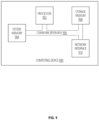
- FIG. 9 is a block diagram that illustrates aspects of an exemplary computing device 900 appropriate for use as a computing device of the present disclosure. While multiple different types of computing devices were discussed above, the exemplary computing device 900 describes various elements that are common to many different types of computing devices. While FIG. 9 is described with reference to a computing device that is implemented as a device on a network, the description below is applicable to servers, personal computers, mobile phones, smart phones, tablet computers, embedded computing devices, and other devices that may be used to implement portions of embodiments of the present disclosure. Some embodiments of a computing device may be implemented in or may include an application-specific integrated circuit (ASIC), a field-programmable gate array (FPGA), or other customized device. Moreover, those of ordinary skill in the art and others will recognize that the computing device 900 may be any one of any number of currently available or yet to be developed devices.
- ASIC application-specific integrated circuit
- FPGA field-programmable gate array
- the computing device 900 includes at least one processor 902 and a system memory 904 connected by a communication bus 906.
- the system memory 904 may be volatile or nonvolatile memory, such as read only memory (“ROM”), random access memory (“RAM”), EEPROM, flash memory, or similar memory technology.
- ROM read only memory
- RAM random access memory
- EEPROM electrically erasable programmable read-only memory
- flash memory or similar memory technology.
- system memory 904 typically stores data and/or program modules that are immediately accessible to and/or currently being operated on by the processor 902.
- the processor 902 may serve as a computational center of the computing device 900 by supporting the execution of instructions.
- the computing device 900 may include a network interface 910 comprising one or more components for communicating with other devices over a network. Embodiments of the present disclosure may access basic services that utilize the network interface 910 to perform communications using common network protocols.
- the network interface 910 may also include a wireless network interface configured to communicate via one or more wireless communication protocols, such as Wi-Fi, 2G, 3G, LTE, WiMAX, Bluetooth, Bluetooth low energy, and/or the like.
- the network interface 910 illustrated in FIG. 9 may represent one or more wireless interfaces or physical communication interfaces described and illustrated above with respect to particular components of the computing device 900.
- the computing device 900 also includes a storage medium 908.
- the storage medium 908 depicted in FIG. 9 is represented with a dashed line to indicate that the storage medium 908 is optional.
- the storage medium 908 may be volatile or nonvolatile, removable or nonremovable, implemented using any technology capable of storing information such as, but not limited to, a hard drive, solid state drive, CD ROM, DVD, or other disk storage, magnetic cassettes, magnetic tape, magnetic disk storage, and/or the like.
- FIG. 9 does not show some of the typical components of many computing devices.
- the computing device 900 may include input devices, such as a keyboard, keypad, mouse, microphone, touch input device, touch screen, tablet, and/or the like. Such input devices may be coupled to the computing device 900 by wired or wireless connections including RF, infrared, serial, parallel, Bluetooth, Bluetooth low energy, USB, or other suitable connections protocols using wireless or physical connections.
- the computing device 900 may also include output devices such as a display, speakers, printer, etc. Since these devices are well known in the art, they are not illustrated or described further herein.
Landscapes
- Engineering & Computer Science (AREA)
- Theoretical Computer Science (AREA)
- Physics & Mathematics (AREA)
- General Physics & Mathematics (AREA)
- Computer Vision & Pattern Recognition (AREA)
- Life Sciences & Earth Sciences (AREA)
- Multimedia (AREA)
- Environmental Sciences (AREA)
- General Health & Medical Sciences (AREA)
- Health & Medical Sciences (AREA)
- Evolutionary Computation (AREA)
- Biodiversity & Conservation Biology (AREA)
- Medical Informatics (AREA)
- Artificial Intelligence (AREA)
- Zoology (AREA)
- Animal Husbandry (AREA)
- Signal Processing (AREA)
- Software Systems (AREA)
- Databases & Information Systems (AREA)
- Computing Systems (AREA)
- Human Computer Interaction (AREA)
- Marine Sciences & Fisheries (AREA)
- Geometry (AREA)
- Quality & Reliability (AREA)
- Radiology & Medical Imaging (AREA)
- Nuclear Medicine, Radiotherapy & Molecular Imaging (AREA)
- Biomedical Technology (AREA)
- Molecular Biology (AREA)
- Biophysics (AREA)
- Psychiatry (AREA)
- Social Psychology (AREA)
- Image Analysis (AREA)
- Image Processing (AREA)
- Farming Of Fish And Shellfish (AREA)
- Closed-Circuit Television Systems (AREA)
- Studio Devices (AREA)
- Measurement Of Velocity Or Position Using Acoustic Or Ultrasonic Waves (AREA)
- Investigating Or Analysing Biological Materials (AREA)
- Mechanical Means For Catching Fish (AREA)
- Length Measuring Devices By Optical Means (AREA)
Applications Claiming Priority (3)
| Application Number | Priority Date | Filing Date | Title |
|---|---|---|---|
| US16/854,682 US11170209B1 (en) | 2020-04-21 | 2020-04-21 | Systems and methods for fish volume estimation, weight estimation, and analytic value generation |
| EP21792911.6A EP4139837B1 (fr) | 2020-04-21 | 2021-04-15 | Systèmes et procédés d'estimation du volume de poissons, d'estimation de poids et de génération de valeur analytique |
| PCT/US2021/027392 WO2021216343A1 (fr) | 2020-04-21 | 2021-04-15 | Systèmes et procédés d'estimation du volume de poissons, d'estimation de poids et de génération de valeur analytique |
Related Parent Applications (2)
| Application Number | Title | Priority Date | Filing Date |
|---|---|---|---|
| EP21792911.6A Division EP4139837B1 (fr) | 2020-04-21 | 2021-04-15 | Systèmes et procédés d'estimation du volume de poissons, d'estimation de poids et de génération de valeur analytique |
| EP21792911.6A Division-Into EP4139837B1 (fr) | 2020-04-21 | 2021-04-15 | Systèmes et procédés d'estimation du volume de poissons, d'estimation de poids et de génération de valeur analytique |
Publications (2)
| Publication Number | Publication Date |
|---|---|
| EP4465626A2 true EP4465626A2 (fr) | 2024-11-20 |
| EP4465626A3 EP4465626A3 (fr) | 2025-02-19 |
Family
ID=78080718
Family Applications (2)
| Application Number | Title | Priority Date | Filing Date |
|---|---|---|---|
| EP24205418.7A Pending EP4465626A3 (fr) | 2020-04-21 | 2021-04-15 | Systèmes et procédés d'estimation de volume de poisson, d'estimation de poids et de génération de valeur analytique |
| EP21792911.6A Active EP4139837B1 (fr) | 2020-04-21 | 2021-04-15 | Systèmes et procédés d'estimation du volume de poissons, d'estimation de poids et de génération de valeur analytique |
Family Applications After (1)
| Application Number | Title | Priority Date | Filing Date |
|---|---|---|---|
| EP21792911.6A Active EP4139837B1 (fr) | 2020-04-21 | 2021-04-15 | Systèmes et procédés d'estimation du volume de poissons, d'estimation de poids et de génération de valeur analytique |
Country Status (14)
| Country | Link |
|---|---|
| US (1) | US11170209B1 (fr) |
| EP (2) | EP4465626A3 (fr) |
| JP (2) | JP2023523700A (fr) |
| KR (2) | KR20230005874A (fr) |
| AU (1) | AU2021261234A1 (fr) |
| CA (1) | CA3179956A1 (fr) |
| CL (2) | CL2022002873A1 (fr) |
| DK (1) | DK4139837T3 (fr) |
| EC (1) | ECSP22081726A (fr) |
| ES (1) | ES3064843T3 (fr) |
| FI (1) | FI4139837T3 (fr) |
| MX (1) | MX2022012961A (fr) |
| PT (1) | PT4139837T (fr) |
| WO (1) | WO2021216343A1 (fr) |
Families Citing this family (34)
| Publication number | Priority date | Publication date | Assignee | Title |
|---|---|---|---|---|
| WO2020023643A1 (fr) | 2018-07-24 | 2020-01-30 | Running Tide Technologies, Inc. | Système et procédé d'élevage d'animaux aquatiques |
| WO2021065265A1 (fr) * | 2019-09-30 | 2021-04-08 | 日本電気株式会社 | Dispositif d'estimation de taille, procédé d'estimation de taille et support d'enregistrement |
| US11475689B2 (en) * | 2020-01-06 | 2022-10-18 | X Development Llc | Fish biomass, shape, size, or health determination |
| US11688154B2 (en) * | 2020-05-28 | 2023-06-27 | X Development Llc | Analysis and sorting in aquaculture |
| US20220000079A1 (en) * | 2020-07-06 | 2022-01-06 | Ecto, Inc. | Acoustics augmentation for monocular depth estimation |
| EP4225026A1 (fr) * | 2020-10-07 | 2023-08-16 | Forever Oceans Corporation | Optimisation autonome d'alimentation en temps réel et estimation de biomasse dans des systèmes d'aquaculture |
| US20230217906A1 (en) * | 2020-11-16 | 2023-07-13 | Woods Hole Oceanographic Institution | Aquaculture monitoring system and method |
| EP4284164A1 (fr) * | 2021-01-29 | 2023-12-06 | Running Tide Technologies, Inc. | Système et procédé pour classifier et compter des animaux aquatiques |
| US11864536B2 (en) | 2021-05-14 | 2024-01-09 | X Development Llc | State-specific aquaculture feeder controller |
| US20220400627A1 (en) * | 2021-06-18 | 2022-12-22 | Wan-Zhou YU | Intelligent cultivating system |
| US20220408701A1 (en) * | 2021-06-25 | 2022-12-29 | X Development Llc | Automated feeding system for fish |
| US20230077889A1 (en) * | 2021-09-15 | 2023-03-16 | Wan-Zhou YU | Automatic observing net and utilizing method thereof |
| CN114485415A (zh) * | 2021-12-27 | 2022-05-13 | 中国水产科学研究院黄海水产研究所 | 一种底栖鱼类生长表型高效测量方法及装置 |
| CN114612397B (zh) * | 2022-03-02 | 2024-12-03 | 广东省农业科学院农业经济与信息研究所 | 鱼苗分选方法、系统、电子设备及存储介质 |
| CN114758355A (zh) * | 2022-03-28 | 2022-07-15 | 五邑大学 | 基于机器视觉的水下鲑鱼重量估计方法及系统 |
| US12254712B2 (en) * | 2022-04-08 | 2025-03-18 | TidaIX AI Inc. | Monocular underwater camera biomass estimation |
| US20230360423A1 (en) * | 2022-05-04 | 2023-11-09 | X Development Llc | Underwater camera biomass distribution forecast |
| CN114972895B (zh) * | 2022-08-01 | 2022-09-30 | 武汉轻工大学 | 小龙虾品质无损检测方法及装置 |
| JP7608411B2 (ja) * | 2022-11-01 | 2025-01-06 | ソフトバンク株式会社 | 情報処理プログラム、情報処理装置及び情報処理方法 |
| CN115804355A (zh) * | 2022-11-29 | 2023-03-17 | 青海民泽龙羊峡生态水殖有限公司 | 一种基于统计的养殖网箱生物量评估方法 |
| US12474160B2 (en) * | 2023-01-13 | 2025-11-18 | WINGS ICT Solutions Private Company | Automated system and method for estimating average fish weight in an aquaculture environment |
| EP4649446A1 (fr) * | 2023-01-13 | 2025-11-19 | WINGS ICT Solutions Private Company | Système et procédé automatisés permettant d'estimer un poids de poisson moyen dans un environnement d'aquaculture |
| KR102925901B1 (ko) * | 2023-01-17 | 2026-02-11 | 전북대학교산학협력단 | 스마트 새우 양식장 관측 시스템 |
| WO2024163344A1 (fr) * | 2023-01-30 | 2024-08-08 | X Development Llc | Modèle de biomasse de poisson à nageoire différentiable de bout en bout |
| EP4690099A1 (fr) * | 2023-03-28 | 2026-02-11 | MEQ Probe Pty Ltd | Procédés, systèmes et supports lisibles par ordinateur pour évaluer la qualité de la viande |
| NO348408B1 (no) * | 2023-05-16 | 2025-01-13 | Fiskher As | Fremgangsmåte for analyse av fisk |
| CN116843085B (zh) * | 2023-08-29 | 2023-12-01 | 深圳市明心数智科技有限公司 | 淡水鱼生长监控方法、装置、设备及存储介质 |
| CN116935327B (zh) * | 2023-09-07 | 2023-12-22 | 深圳市明心数智科技有限公司 | 基于ai视觉的水产养殖监控方法、装置、设备及存储介质 |
| KR102832122B1 (ko) * | 2023-10-06 | 2025-07-08 | 호서대학교 산학협력단 | 어류 정보 인식 서비스 제공 시스템 |
| GB2635766A (en) * | 2023-11-27 | 2025-05-28 | Ace Aquatec Ltd | Camera control system for aquaculture |
| CN117455927B (zh) * | 2023-12-21 | 2024-03-15 | 万灵帮桥医疗器械(广州)有限责任公司 | 光斑阵列分割与光斑偏移量计算方法、装置、设备及存储介质 |
| GB202403904D0 (en) * | 2024-03-19 | 2024-05-01 | Optoscale As | Methods and system for monitoring fish treatment |
| CN118038259B (zh) * | 2024-04-10 | 2024-07-12 | 华南农业大学 | 鱼塘养殖鱼类死亡识别方法、系统、设备及介质 |
| US12094119B1 (en) | 2024-04-17 | 2024-09-17 | Onwater Llc | Physical characteristics determination system and method(s) |
Family Cites Families (14)
| Publication number | Priority date | Publication date | Assignee | Title |
|---|---|---|---|---|
| US6757009B1 (en) * | 1997-06-11 | 2004-06-29 | Eaton Corporation | Apparatus for detecting the presence of an occupant in a motor vehicle |
| JP2011060216A (ja) * | 2009-09-14 | 2011-03-24 | Fujifilm Corp | 画像処理装置および画像処理方法 |
| WO2012030899A1 (fr) * | 2010-08-31 | 2012-03-08 | University Of Massachusetts | Procédés et systèmes pour déterminer des prises de pêche |
| JP6552266B2 (ja) * | 2015-05-20 | 2019-07-31 | キヤノン株式会社 | 画像処理装置、画像処理方法およびプログラム |
| GB2539495B (en) | 2015-06-19 | 2017-08-23 | Ace Aquatec Ltd | Improvements relating to time-of-flight cameras |
| US9805274B2 (en) * | 2016-02-03 | 2017-10-31 | Honda Motor Co., Ltd. | Partially occluded object detection using context and depth ordering |
| CN109640641B (zh) * | 2016-09-05 | 2021-07-06 | 渔觅创新私人有限公司 | 投饵系统、图像处理装置及图像处理方法 |
| JP2018107547A (ja) * | 2016-12-26 | 2018-07-05 | キヤノン株式会社 | 撮像装置 |
| GB201710705D0 (en) | 2017-07-04 | 2017-08-16 | Optoscale As | Structured-Light Illumination |
| AU2018387713B2 (en) * | 2017-12-20 | 2024-08-08 | Intervet International B.V. | System for external fish parasite monitoring in aquaculture |
| US10599922B2 (en) * | 2018-01-25 | 2020-03-24 | X Development Llc | Fish biomass, shape, and size determination |
| US10534967B2 (en) * | 2018-05-03 | 2020-01-14 | X Development Llc | Fish measurement station keeping |
| WO2019232247A1 (fr) | 2018-06-01 | 2019-12-05 | Aquabyte, Inc. | Estimation de biomasse dans un environnement aquacole |
| WO2020046523A1 (fr) * | 2018-08-27 | 2020-03-05 | Aquabyte, Inc. | Alimentation optimale basée sur des signaux dans un environnement aquacole |
-
2020
- 2020-04-21 US US16/854,682 patent/US11170209B1/en active Active
-
2021
- 2021-04-15 CA CA3179956A patent/CA3179956A1/fr active Pending
- 2021-04-15 KR KR1020227039967A patent/KR20230005874A/ko active Pending
- 2021-04-15 ES ES21792911T patent/ES3064843T3/es active Active
- 2021-04-15 KR KR1020247011928A patent/KR20240053658A/ko active Pending
- 2021-04-15 DK DK21792911.6T patent/DK4139837T3/da active
- 2021-04-15 WO PCT/US2021/027392 patent/WO2021216343A1/fr not_active Ceased
- 2021-04-15 AU AU2021261234A patent/AU2021261234A1/en active Pending
- 2021-04-15 MX MX2022012961A patent/MX2022012961A/es unknown
- 2021-04-15 FI FIEP21792911.6T patent/FI4139837T3/fi active
- 2021-04-15 EP EP24205418.7A patent/EP4465626A3/fr active Pending
- 2021-04-15 JP JP2022562421A patent/JP2023523700A/ja active Pending
- 2021-04-15 PT PT217929116T patent/PT4139837T/pt unknown
- 2021-04-15 EP EP21792911.6A patent/EP4139837B1/fr active Active
-
2022
- 2022-10-18 CL CL2022002873A patent/CL2022002873A1/es unknown
- 2022-10-20 EC ECSENADI202281726A patent/ECSP22081726A/es unknown
-
2023
- 2023-05-09 CL CL2023001332A patent/CL2023001332A1/es unknown
-
2025
- 2025-05-12 JP JP2025079754A patent/JP2025118827A/ja active Pending
Also Published As
| Publication number | Publication date |
|---|---|
| EP4465626A3 (fr) | 2025-02-19 |
| CL2022002873A1 (es) | 2023-03-31 |
| EP4139837A4 (fr) | 2024-05-15 |
| CL2023001332A1 (es) | 2023-09-29 |
| FI4139837T3 (fi) | 2026-03-13 |
| KR20240053658A (ko) | 2024-04-24 |
| ECSP22081726A (es) | 2022-11-30 |
| US20210321593A1 (en) | 2021-10-21 |
| KR20230005874A (ko) | 2023-01-10 |
| DK4139837T3 (da) | 2026-03-09 |
| JP2023523700A (ja) | 2023-06-07 |
| PT4139837T (pt) | 2026-03-19 |
| AU2021261234A1 (en) | 2022-10-20 |
| CA3179956A1 (fr) | 2021-10-28 |
| ES3064843T3 (en) | 2026-04-29 |
| EP4139837B1 (fr) | 2026-01-21 |
| US11170209B1 (en) | 2021-11-09 |
| NZ792826A (en) | 2024-08-30 |
| EP4139837A1 (fr) | 2023-03-01 |
| MX2022012961A (es) | 2023-01-11 |
| JP2025118827A (ja) | 2025-08-13 |
| WO2021216343A1 (fr) | 2021-10-28 |
Similar Documents
| Publication | Publication Date | Title |
|---|---|---|
| US11170209B1 (en) | Systems and methods for fish volume estimation, weight estimation, and analytic value generation | |
| US12272169B2 (en) | Fish biomass, shape, size, or health determination | |
| JP2023523700A5 (fr) | ||
| US20230270081A1 (en) | Sea lice mitigation based on historical observations | |
| WO2020023467A1 (fr) | Identification unique de poissons nageant librement dans un environnement d'aquaculture | |
| CN115512215A (zh) | 水下生物监测方法、装置及存储介质 | |
| US20230267385A1 (en) | Forecasting growth of aquatic organisms in an aquaculture environment | |
| Kong et al. | Non-intrusive mass estimation method for crucian carp using instance segmentation and point cloud processing | |
| CN116778309A (zh) | 残饵监测方法、装置、系统和存储介质 | |
| Ivashchuk et al. | Neural network methods for the detection of farm animals in dense dynamic groups on images | |
| US20250365511A1 (en) | Position policy determination for underwater camera positioning in an aquaculture environment | |
| WO2024205983A1 (fr) | Estimation de biomasse en utilisant de caméras sous-marines monoculaires | |
| JP7310925B2 (ja) | 移動速度推定装置、給餌判定装置、移動速度推定方法、及び、移動速度推定プログラム | |
| CN117456310A (zh) | 智能投饵方法及水产生物状态识别模型的训练方法 | |
| EP4583069A1 (fr) | Système et procédé d'identification d'oiseaux individuels | |
| CN119048761B (zh) | 一种基于输入数据引导的单样本泛化目标分割方法、装置和介质 | |
| EP4581928B1 (fr) | Système et procédé de suivi des mouvements d'oiseaux individuels | |
| KR20210138448A (ko) | 영역별 개체 모니터링을 위한 유저 인터페이스 장치 |
Legal Events
| Date | Code | Title | Description |
|---|---|---|---|
| PUAI | Public reference made under article 153(3) epc to a published international application that has entered the european phase |
Free format text: ORIGINAL CODE: 0009012 |
|
| STAA | Information on the status of an ep patent application or granted ep patent |
Free format text: STATUS: REQUEST FOR EXAMINATION WAS MADE |
|
| 17P | Request for examination filed |
Effective date: 20241008 |
|
| AC | Divisional application: reference to earlier application |
Ref document number: 4139837 Country of ref document: EP Kind code of ref document: P |
|
| AK | Designated contracting states |
Kind code of ref document: A2 Designated state(s): AL AT BE BG CH CY CZ DE DK EE ES FI FR GB GR HR HU IE IS IT LI LT LU LV MC MK MT NL NO PL PT RO RS SE SI SK SM TR |
|
| REG | Reference to a national code |
Ref country code: DE Ref legal event code: R079 Free format text: PREVIOUS MAIN CLASS: H04N0007180000 Ipc: G06T0007000000 |
|
| PUAL | Search report despatched |
Free format text: ORIGINAL CODE: 0009013 |
|
| AK | Designated contracting states |
Kind code of ref document: A3 Designated state(s): AL AT BE BG CH CY CZ DE DK EE ES FI FR GB GR HR HU IE IS IT LI LT LU LV MC MK MT NL NO PL PT RO RS SE SI SK SM TR |
|
| RIC1 | Information provided on ipc code assigned before grant |
Ipc: H04N 7/18 20060101ALI20250116BHEP Ipc: H04N 13/296 20180101ALI20250116BHEP Ipc: H04N 13/204 20180101ALI20250116BHEP Ipc: G06V 40/10 20220101ALI20250116BHEP Ipc: G06V 20/05 20220101ALI20250116BHEP Ipc: G06V 10/82 20220101ALI20250116BHEP Ipc: G06V 10/75 20220101ALI20250116BHEP Ipc: G06V 10/44 20220101ALI20250116BHEP Ipc: A01K 61/95 20170101ALI20250116BHEP Ipc: G06T 7/12 20170101ALI20250116BHEP Ipc: G06T 7/70 20170101ALI20250116BHEP Ipc: G06T 7/11 20170101ALI20250116BHEP Ipc: G06T 7/60 20170101ALI20250116BHEP Ipc: G06T 7/20 20170101ALI20250116BHEP Ipc: G06T 7/62 20170101ALI20250116BHEP Ipc: G06T 7/593 20170101ALI20250116BHEP Ipc: G06T 7/00 20170101AFI20250116BHEP |