EP4465633A1 - Procédé de traitement vidéo et dispositif associé - Google Patents
Procédé de traitement vidéo et dispositif associé Download PDFInfo
- Publication number
- EP4465633A1 EP4465633A1 EP24188263.8A EP24188263A EP4465633A1 EP 4465633 A1 EP4465633 A1 EP 4465633A1 EP 24188263 A EP24188263 A EP 24188263A EP 4465633 A1 EP4465633 A1 EP 4465633A1
- Authority
- EP
- European Patent Office
- Prior art keywords
- motion information
- candidate list
- region
- historical motion
- information candidate
- Prior art date
- Legal status (The legal status is an assumption and is not a legal conclusion. Google has not performed a legal analysis and makes no representation as to the accuracy of the status listed.)
- Pending
Links
- 238000003672 processing method Methods 0.000 title claims abstract description 24
- 238000000034 method Methods 0.000 claims abstract description 232
- 230000008569 process Effects 0.000 claims description 111
- 230000015654 memory Effects 0.000 claims description 26
- 238000005192 partition Methods 0.000 claims description 25
- 239000013598 vector Substances 0.000 claims description 21
- 238000012545 processing Methods 0.000 abstract description 24
- 101100076570 Saccharomyces cerevisiae (strain ATCC 204508 / S288c) MER1 gene Proteins 0.000 description 16
- PXFBZOLANLWPMH-UHFFFAOYSA-N 16-Epiaffinine Natural products C1C(C2=CC=CC=C2N2)=C2C(=O)CC2C(=CC)CN(C)C1C2CO PXFBZOLANLWPMH-UHFFFAOYSA-N 0.000 description 10
- 238000010586 diagram Methods 0.000 description 10
- 101100033336 Saccharomyces cerevisiae (strain ATCC 204508 / S288c) REC107 gene Proteins 0.000 description 9
- 101000843497 Homo sapiens Probable ATP-dependent DNA helicase HFM1 Proteins 0.000 description 7
- 102100030730 Probable ATP-dependent DNA helicase HFM1 Human genes 0.000 description 7
- 230000009466 transformation Effects 0.000 description 7
- 101100501697 Mus musculus Erbb4 gene Proteins 0.000 description 6
- 230000006870 function Effects 0.000 description 5
- 238000004590 computer program Methods 0.000 description 4
- 238000010276 construction Methods 0.000 description 4
- 238000012935 Averaging Methods 0.000 description 3
- 230000002457 bidirectional effect Effects 0.000 description 3
- 238000004891 communication Methods 0.000 description 3
- 230000008878 coupling Effects 0.000 description 3
- 238000010168 coupling process Methods 0.000 description 3
- 238000005859 coupling reaction Methods 0.000 description 3
- 238000005516 engineering process Methods 0.000 description 3
- 208000037170 Delayed Emergence from Anesthesia Diseases 0.000 description 2
- 238000013461 design Methods 0.000 description 2
- 230000001360 synchronised effect Effects 0.000 description 2
- 230000002123 temporal effect Effects 0.000 description 2
- 238000013459 approach Methods 0.000 description 1
- 238000006073 displacement reaction Methods 0.000 description 1
- 230000001815 facial effect Effects 0.000 description 1
- 238000001914 filtration Methods 0.000 description 1
- 230000001788 irregular Effects 0.000 description 1
- 239000000463 material Substances 0.000 description 1
- 238000012986 modification Methods 0.000 description 1
- 230000004048 modification Effects 0.000 description 1
- 230000003287 optical effect Effects 0.000 description 1
- 238000013138 pruning Methods 0.000 description 1
- 230000002207 retinal effect Effects 0.000 description 1
- 238000005070 sampling Methods 0.000 description 1
Images

Classifications
-
- H—ELECTRICITY
- H04—ELECTRIC COMMUNICATION TECHNIQUE
- H04N—PICTORIAL COMMUNICATION, e.g. TELEVISION
- H04N19/00—Methods or arrangements for coding, decoding, compressing or decompressing digital video signals
- H04N19/50—Methods or arrangements for coding, decoding, compressing or decompressing digital video signals using predictive coding
- H04N19/503—Methods or arrangements for coding, decoding, compressing or decompressing digital video signals using predictive coding involving temporal prediction
- H04N19/51—Motion estimation or motion compensation
- H04N19/513—Processing of motion vectors
- H04N19/517—Processing of motion vectors by encoding
- H04N19/52—Processing of motion vectors by encoding by predictive encoding
-
- H—ELECTRICITY
- H04—ELECTRIC COMMUNICATION TECHNIQUE
- H04N—PICTORIAL COMMUNICATION, e.g. TELEVISION
- H04N19/00—Methods or arrangements for coding, decoding, compressing or decompressing digital video signals
- H04N19/10—Methods or arrangements for coding, decoding, compressing or decompressing digital video signals using adaptive coding
- H04N19/102—Methods or arrangements for coding, decoding, compressing or decompressing digital video signals using adaptive coding characterised by the element, parameter or selection affected or controlled by the adaptive coding
- H04N19/103—Selection of coding mode or of prediction mode
- H04N19/105—Selection of the reference unit for prediction within a chosen coding or prediction mode, e.g. adaptive choice of position and number of pixels used for prediction
-
- H—ELECTRICITY
- H04—ELECTRIC COMMUNICATION TECHNIQUE
- H04N—PICTORIAL COMMUNICATION, e.g. TELEVISION
- H04N19/00—Methods or arrangements for coding, decoding, compressing or decompressing digital video signals
- H04N19/10—Methods or arrangements for coding, decoding, compressing or decompressing digital video signals using adaptive coding
- H04N19/102—Methods or arrangements for coding, decoding, compressing or decompressing digital video signals using adaptive coding characterised by the element, parameter or selection affected or controlled by the adaptive coding
- H04N19/129—Scanning of coding units, e.g. zig-zag scan of transform coefficients or flexible macroblock ordering [FMO]
-
- H—ELECTRICITY
- H04—ELECTRIC COMMUNICATION TECHNIQUE
- H04N—PICTORIAL COMMUNICATION, e.g. TELEVISION
- H04N19/00—Methods or arrangements for coding, decoding, compressing or decompressing digital video signals
- H04N19/10—Methods or arrangements for coding, decoding, compressing or decompressing digital video signals using adaptive coding
- H04N19/134—Methods or arrangements for coding, decoding, compressing or decompressing digital video signals using adaptive coding characterised by the element, parameter or criterion affecting or controlling the adaptive coding
- H04N19/136—Incoming video signal characteristics or properties
- H04N19/137—Motion inside a coding unit, e.g. average field, frame or block difference
-
- H—ELECTRICITY
- H04—ELECTRIC COMMUNICATION TECHNIQUE
- H04N—PICTORIAL COMMUNICATION, e.g. TELEVISION
- H04N19/00—Methods or arrangements for coding, decoding, compressing or decompressing digital video signals
- H04N19/10—Methods or arrangements for coding, decoding, compressing or decompressing digital video signals using adaptive coding
- H04N19/134—Methods or arrangements for coding, decoding, compressing or decompressing digital video signals using adaptive coding characterised by the element, parameter or criterion affecting or controlling the adaptive coding
- H04N19/136—Incoming video signal characteristics or properties
- H04N19/137—Motion inside a coding unit, e.g. average field, frame or block difference
- H04N19/139—Analysis of motion vectors, e.g. their magnitude, direction, variance or reliability
-
- H—ELECTRICITY
- H04—ELECTRIC COMMUNICATION TECHNIQUE
- H04N—PICTORIAL COMMUNICATION, e.g. TELEVISION
- H04N19/00—Methods or arrangements for coding, decoding, compressing or decompressing digital video signals
- H04N19/10—Methods or arrangements for coding, decoding, compressing or decompressing digital video signals using adaptive coding
- H04N19/134—Methods or arrangements for coding, decoding, compressing or decompressing digital video signals using adaptive coding characterised by the element, parameter or criterion affecting or controlling the adaptive coding
- H04N19/167—Position within a video image, e.g. region of interest [ROI]
-
- H—ELECTRICITY
- H04—ELECTRIC COMMUNICATION TECHNIQUE
- H04N—PICTORIAL COMMUNICATION, e.g. TELEVISION
- H04N19/00—Methods or arrangements for coding, decoding, compressing or decompressing digital video signals
- H04N19/10—Methods or arrangements for coding, decoding, compressing or decompressing digital video signals using adaptive coding
- H04N19/169—Methods or arrangements for coding, decoding, compressing or decompressing digital video signals using adaptive coding characterised by the coding unit, i.e. the structural portion or semantic portion of the video signal being the object or the subject of the adaptive coding
- H04N19/17—Methods or arrangements for coding, decoding, compressing or decompressing digital video signals using adaptive coding characterised by the coding unit, i.e. the structural portion or semantic portion of the video signal being the object or the subject of the adaptive coding the unit being an image region, e.g. an object
- H04N19/176—Methods or arrangements for coding, decoding, compressing or decompressing digital video signals using adaptive coding characterised by the coding unit, i.e. the structural portion or semantic portion of the video signal being the object or the subject of the adaptive coding the unit being an image region, e.g. an object the region being a block, e.g. a macroblock
-
- H—ELECTRICITY
- H04—ELECTRIC COMMUNICATION TECHNIQUE
- H04N—PICTORIAL COMMUNICATION, e.g. TELEVISION
- H04N19/00—Methods or arrangements for coding, decoding, compressing or decompressing digital video signals
- H04N19/10—Methods or arrangements for coding, decoding, compressing or decompressing digital video signals using adaptive coding
- H04N19/169—Methods or arrangements for coding, decoding, compressing or decompressing digital video signals using adaptive coding characterised by the coding unit, i.e. the structural portion or semantic portion of the video signal being the object or the subject of the adaptive coding
- H04N19/177—Methods or arrangements for coding, decoding, compressing or decompressing digital video signals using adaptive coding characterised by the coding unit, i.e. the structural portion or semantic portion of the video signal being the object or the subject of the adaptive coding the unit being a group of pictures [GOP]
-
- H—ELECTRICITY
- H04—ELECTRIC COMMUNICATION TECHNIQUE
- H04N—PICTORIAL COMMUNICATION, e.g. TELEVISION
- H04N19/00—Methods or arrangements for coding, decoding, compressing or decompressing digital video signals
- H04N19/10—Methods or arrangements for coding, decoding, compressing or decompressing digital video signals using adaptive coding
- H04N19/169—Methods or arrangements for coding, decoding, compressing or decompressing digital video signals using adaptive coding characterised by the coding unit, i.e. the structural portion or semantic portion of the video signal being the object or the subject of the adaptive coding
- H04N19/1883—Methods or arrangements for coding, decoding, compressing or decompressing digital video signals using adaptive coding characterised by the coding unit, i.e. the structural portion or semantic portion of the video signal being the object or the subject of the adaptive coding the unit relating to sub-band structure, e.g. hierarchical level, directional tree, e.g. low-high [LH], high-low [HL], high-high [HH]
-
- H—ELECTRICITY
- H04—ELECTRIC COMMUNICATION TECHNIQUE
- H04N—PICTORIAL COMMUNICATION, e.g. TELEVISION
- H04N19/00—Methods or arrangements for coding, decoding, compressing or decompressing digital video signals
- H04N19/50—Methods or arrangements for coding, decoding, compressing or decompressing digital video signals using predictive coding
- H04N19/503—Methods or arrangements for coding, decoding, compressing or decompressing digital video signals using predictive coding involving temporal prediction
- H04N19/51—Motion estimation or motion compensation
- H04N19/513—Processing of motion vectors
-
- H—ELECTRICITY
- H04—ELECTRIC COMMUNICATION TECHNIQUE
- H04N—PICTORIAL COMMUNICATION, e.g. TELEVISION
- H04N19/00—Methods or arrangements for coding, decoding, compressing or decompressing digital video signals
- H04N19/90—Methods or arrangements for coding, decoding, compressing or decompressing digital video signals using coding techniques not provided for in groups H04N19/10-H04N19/85, e.g. fractals
- H04N19/96—Tree coding, e.g. quad-tree coding
Definitions
- the present disclosure relates to the field of image processing technologies and, more particularly, to a video processing method and a video processing device.
- Prediction is an important module of a mainstream video coding framework.
- Prediction includes intra-frame prediction and inter-frame prediction.
- An inter-frame prediction mode includes an advanced motion vector prediction (AMVP) mode and a merge (Merge) mode.
- AMVP advanced motion vector prediction
- Merge merge
- a motion vector prediction (MVP) can be determined in a motion vector prediction candidate list, and the MVP can be directly determined as the motion vector (MV).
- the MVP and reference frame index can be transmitted to a decoder side in a bitstream, for decoding on the decoder side.
- the candidate history-based motion vector prediction may be selected from the history-based motion vector prediction candidate list as the candidate MVP in the MVP candidate list.
- the HMVP candidate list is generated based on motion information of encoded or decoded blocks. For example, when encoding or decoding of an encoded or decoded block is completed, the motion information of the encoded or decoded block is used to update the HMVP list of a next block to-be-encoded or decoded. HMVP list can be further improved.
- the present disclosure provides a video processing method and a video processing device, to alleviate the dependency between the image blocks such that the image blocks can be encoded or decoded independently.
- a second aspect of the present disclosure provides a video processing method.
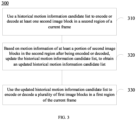
- the method includes: using a historical motion information candidate list to encode or decode at least one second image block in a second region of a current frame; based on motion information of at least a portion of second image blocks in the second region after being encoded or decoded, updating the historical motion information candidate list, to obtain an updated historical motion information candidate list; and using the updated historical motion information candidate list to encode or decode a plurality of first image blocks in a first region of the current frame.
- a fifth aspect of the present disclosure provides a computer system.
- the system include a memory configured to store computer-executable instructions, and a processor.
- the processor is configured to access the memory and execute the computer-executable instructions to perform the video processing method in the first or seccond aspect of the present disclosure.
- a sixth aspect of the present disclosure provides a computer storage medium.
- the computer storage medium stores program codes.
- the program codes are configured to be executed to perform the method in the first or second aspect of the present disclosure.
- a seventh aspect of the present disclosure provides a computer program product.
- the computer program product includes program codes.
- the program codes are configured to be executed to perform the method in the first or second aspect of the present disclosure.
- the motion information of the second image blocks in the second region after being encoded or decoded may be used to establish the historical motion information candidate list, and then the historical motion information candidate list may be used to encode or decode the plurality of first image blocks.
- the dependency between the plurality of first image blocks may be overcame, such that each of the plurality of first image blocks can be encoded or decoded independently.
- the image may be initially divided into a plurality of image blocks.
- the image may be divided into a plurality of image blocks, which are called macroblocks, largest coding units (LCUs), or coding tree units (CTUs) in some coding standards.
- the plurality of image blocks may or may not have any overlapping parts.
- the image can be divided into any number of image blocks.
- the image can be divided into an array of mxn image blocks.
- Each of the plurality of image block may have a rectangular shape, a square shape, a circular shape, or any other shape.
- Each of the plurality of image block can have any size, such as p ⁇ q pixels.
- images of different resolutions can be encoded by first dividing each image of the images into multiple small blocks.
- an image block may be called a macroblock, and its size can be 16 ⁇ 16 pixels, and for HEVC, an image block may be called a largest coding unit, and its size can be 64 ⁇ 64.
- Each image block of the plurality of image blocks may have the same size and/or shape. Alternatively, two or more image blocks of the plurality of image blocks may have different sizes and/or shapes.
- an image block may not be a macro block or a largest coding unit, but a part of a macro block or a largest coding unit, or may include at least two complete macro blocks (or largest coding units), or may include at least one complete macroblock (or largest coding unit) and a part of a macroblock (or largest coding unit), or may include at least two complete macroblocks (or largest coding units) and parts of some macroblocks (or largest coding units).
- the image blocks in the image data can be respectively coded.
- the image may be predicted. Different images in the video can use different prediction methods. According to the prediction method adopted by the image, the image can be divided into an intra-frame prediction image and an inter-frame prediction image, where the inter-frame prediction image includes a forward prediction image and a bidirectional prediction image.
- An I image is an intra-frame prediction image, also called a key frame.
- a P image is a forward prediction image, that is, a previously encoded P image or I image is used as a reference image.
- a B image is a bidirectional prediction image, that is, the images before and after the image are used as reference images.
- One way to achieve this may be that the encoder side generates a group of images (GOP) including multiple segments after encoding multiple images.
- the GOP may include one I image, and multiple B images (or bidirectional predictive images) and/or P images (or forward prediction images).
- the decoder side may read a segment of the GOP, decode it, read the images, and then render and display.
- a most similar block in the reference frame (usually a reconstructed frame near the time domain) can be found for each image block of the plurality of image blocks as the prediction block of the current image block.
- a relative displacement between the current block and the predicted block is a motion vector (MV).
- the MVP may be determined first.
- an MVP candidate list (AMVP candidate list) can be constructed first.
- the MVP candidate list at least one candidate MVP can be included, and each candidate MVP can correspond to an index.
- the starting point of the motion estimation can be determined according to the MVP.
- a motion search may be performed near the starting point.
- the optimal MV may be obtained.
- the MV may be used to determine the position of the reference block in the reference image.
- the reference block may be subtracted from the current block to obtain a residual block, and the MV may be subtracted from the MVP to obtain a motion vector difference (MVD).
- the index corresponding to the MVP and the MVD may be transmitted to the decoder through the bitstream.
- the MVP can be determined first, and the MVP can be directly determined as the MV.
- an MVP candidate list (merge candidate list) may be established first.
- the MVP candidate list may include at least one candidate MVP. Each candidate MVP may correspond to an index.
- the encoder may write the index corresponding to the MVP into the bitstream, and the decoder may find the MVP corresponding to the index from the MVP candidate list according to the index, to realize the decoding of the image block.
- the MVP candidate list may be obtained.
- an optimal MVP may be selected from the MVP candidate list and an index of the optimal MVP in the MVP candidate list may also be obtained.
- the optimal MVP may be determined as the MV of the current block.
- the current block may be subtracted from the reference block to obtain the residual block.
- an image blocks may be a coding unit (CU), or of course, may also be a prediction unit (PU), which is not specifically limited in the embodiments of the present disclosure.
- CU coding unit
- PU prediction unit
- the priority of each second image block in the second region not only can be determined according to the position coordinates and/or coding order of the second image block, but also can be determined according to other factors.
- the present disclosure has no limit on this.
- the encoded or decoded image blocks can be selected from the second region according to the quantity of historical motion information that needs to be updated each time.
- the motion information of the selected encoded or decoded image blocks may be used to update the historical motion information candidate list.
- the number of pieces of historical motion information that needs to be updated can be equal to the number of selected encoded or decoded image blocks.
- two encoded or decoded image blocks from the second region may be selected.
- the motion information of the selected two encoded or decoded image blocks may be added to the historical motion information candidate list and two pieces of candidate historical motion information may be deleted.
- the number of pieces of historical motion information that need to be updated to the historical motion information candidate list is one, and the number of selected encoded or decoded image blocks is three.
- the motion information of the three encoded or decoded image blocks can be weighted to obtain one piece of candidate historical motion information.
- the one piece of candidate historical motion information is added to the candidate list of historical motion information, and one piece of candidate historical motion information is deleted from the historical motion information candidate list.
- the number of pieces of historical motion information that need to be updated to the historical motion information candidate list is two, and the number of selected encoded or decoded image blocks is three.
- the motion information of two of the three encoded or decoded image blocks can be weighted to obtain one piece of candidate historical motion information.
- the obtained one piece of candidate historical motion information and one piece of candidate motion information which is not processed are added to the historical motion information candidate list, and two pieces of candidate historical motion information are deleted from the historical motion information candidate list.
- the averaging process may or may not be performed.
- the weight of each motion information may be determined based on the position relationship of one corresponding encoded or decoded image block and the region, and/or encoding or decoding order of each encoded or decoded image block.
- multiple pieces of motion information may need to be added to the historical motion information candidate list.
- the multiple pieces of motion information may have priority, and the motion information with higher priority may be added to a position closer to the begin in the head.
- the motion information with lower priority may be added to a position of the head closer to the end.
- the priority of the motion information of each coded or decoded image block may be determined according to the positional relationship between the coded or decoded image block and the current region.
- the priority of the motion information of the image block located on the left side of the current region may be higher than the priority of the motion information of the image blocks on the upper left and lower left.
- the image blocks in the second region that can be used to update the historical motion information candidate list may be image blocks in an affine transformation motion compensation mode (affine) mode.
- the affine mode may be an affine motion (irregular motion such as zoom in/out, rotation, etc.) field describing the entire image block according to the motion information of the control point.
- one or more second regions can be selected to update the historical motion information candidate list.
- the one second region may be a region encoded or decoded before the first region.
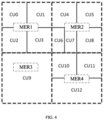
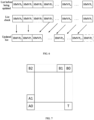
- MER1 can be used to update the HMVP candidate list for encoding or decoding MER2
- MER3 can be used to update the HMVP candidate list for encoding or decoding MER4.
- MER2 cannot be used to update the HMVP candidate list for encoding or decoding MER3.
- MER1 can be used to update the HMVP candidate list for encoding or decoding MER3
- MER2 can be used to update the HMVP candidate list for encoding or decoding MER4.
- MER3 cannot be used to update the HMVP candidate list for encoding or decoding MER2.
- the HMVP candidate list used for encoding or decoding the second region at this time may be empty.
- the row (or column) mentioned here can include multiple regions. After multiple regions of one row (column) are encoded, multiple regions of the next row (column) can be encoded. A range of row (or column) coordinates of each row (or column) may be the same, and the range of column (or row) coordinates may be different.
- each CTU row or CTU column may include at least one CTU, and each CTU may include at least one region.
- the HMVP list can be cleared, and then the next CTU row or column can be encoded.
- the scope of the present disclosure is not limited to the above description.
- the historical motion information candidate list is empty, and the historical motion information candidate lists of other regions can be updated based on the motion information of the image blocks in the previous region.
- the historical motion information candidate list used by all image blocks in MER1 is empty. If MER1 is not the first MER in the current frame, the historical motion information candidate list used by all image blocks in MER1 is the historical motion information candidate list updated based on the motion information of the image blocks in the previous MER.
- the maximum number of comparisons can be determined according to parameters including the number of pieces of candidate motion information (or candidate motion information already in the motion information list) in other lists with higher priority, or the number of pieces of candidate historical motion information included in the historical motion information candidate list.
- storing the aforementioned historical motion information candidate list in a storage space can be understood as that the number of historical motion information candidate lists is one.
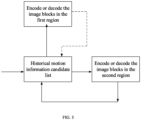
- the historical motion information candidate list may be updated by using the motion information of the corresponding image blocks. Then the updated historical motion information candidate list may be used to encode or decode the image blocks in the current region. After encoding or decoding the image blocks in the current region, the historical motion information candidate list may be updated again, and the updated historical motion information candidate list may be used for encoding or decoding of the next region.
- the historical motion information candidate list is respectively stored in a first storage space and a second storage space, and the second region is encoded or decoded by using the historical motion information candidate list in the second storage space.
- the motion information of at least one second image block included in the second region is used to update the historical motion information candidate list in the first storage space.
- each of the first image blocks is encoded or decoded respectively.
- a storage space A and a storage space B respectively store the same historical motion information candidate list (the list can be empty).
- the region 1 can be encoded or decoded using the historical motion information candidate list in the storage space A. Since the encoding or decoding of the image blocks in the region 1 is completed in sequence, the motion information of the encoded or decoded image blocks can be used to update the historical motion information candidate list in the storage space B. After the encoding or decoding process of the region 1 is completed, the historical motion information candidate list in the storage space B may have been updated.
- the updated historical motion information candidate list in the storage space B can be used to encode or decode the second region, that is, the region 2. And at the same time the updated historical motion information candidate list in the storage space B can be used to update the historical motion information candidate list in the storage space A. After the historical motion information candidate list in the storage space A is updated based on the updated historical motion information candidate list in the storage space B, during the encoding or decoding process of the region 2, the encoded or decoded image blocks in the region 2 can be used to updates the historical motion information candidate list in the storage space A again.
- the updated historical motion information candidate list in the storage space B can be used to update the historical motion information candidate list in the storage space A, to obtain the updated historical motion information candidate list in the storage space A.
- the updated historical motion information candidate list in the storage space A can be used to encode or decode the second region, that is, the region 2.
- the historical motion information candidate list in the storage space B can be updated again. After the encoding or decoding process of the region 2 is completed, the historical motion information candidate list in the storage space B may have been updated again.
- the historical motion information candidate list may be stored in two storage spaces respectively.
- the historical motion information candidate list in a first storage space of the two storage spaces may be used for encoding or decoding of the regions, and during the encoding or decoding process of the regions, the historical motion information candidate list in a second storage space of the two storage spaces can be updated. After the encoding or decoding process of the regions, the updated historical motion information candidate list in the second storage space may be used to update the historical motion information candidate list in the first storage space.
- the first image block to be encoded when selecting motion information from the motion information list, the first image block to be encoded can be matched with the image block corresponding to each motion information in the motion information list, and the motion information corresponding to one image block with the least matching cost may be used as the selected motion information, and the index of the selected motion information may be written into the bitstream.
- the decoder side can construct the motion information list in the same way, and read the index of the motion information from the bitstream. Then the decoder side may directly select the motion information of the current image block from the motion information list according to the index, to further decode according to the motion information.
- the embodiment with the Merge mode and the motion information list which is an MVP candidate list will be used as an example to illustrate how to establish the motion information list.
- the MVP candidate list may include at least a portion of (1) to (5) described below.
- the space domain candidate MVs in (1) can be used to construct the MVP candidate list. If the number of candidate MVPs included in the formed MVP candidate list at this time does not reach the preset number, the time domain candidates MVs in (2) may be added further to the MVP candidate list including the space domain candidate MVs. If the number of candidate MVPs candidates included in the MVP candidate list formed at this time does not reach the preset number, the paired average candidate MVs in (3) can be further added to the MVP candidate list including the space domain candidate MVs and the time domain candidate MVs at this time.
- the HMVPs in (4) can be further added to the MVP candidate list including the space domain candidate MVs, the time domain candidate MVs, and the paired average candidate MVs. If the number of candidate MVPs included in the formed MVP candidate list does not reach the preset number, the zero vectors in (5) can be further added to the MVP candidate list including the space domain candidate MVs, the time domain candidate MVs, the paired average candidate MVs, and the HMVPs, until the number of candidate MVPs in the MVP candidate list reaches the preset value.
- the remaining elements of the item may be stopped to be added to the MVP candidate list.
- the MVs of the adjacent image blocks in the spatial domain of the current image block can be used as the candidate MVPs that can be added to the MVP candidate list.
- the order to be sued as the candidate MVPs is A1->B1->B0->A0->B2 from high to low in priority.
- the MVs of the image blocks adjacent to the current image block in the time domain can be used as candidate MVPs that can be added to the MVP candidate list.
- the temporal candidate MV may not directly use the motion information of the candidate block, and may be adjusted according to the temporal position relationship between the current frame and the reference frame.
- the paired average candidate MVs are derived by averaging the candidate MVPs currently constituting the MVP candidate list according to a predefined pairing manner.
- the predefined pairing manner and sequence can be: (0, 1), (0, 2), (1, 2), (0, 3), (1, 3), (2, 3), where 0, 1, 2, and 3 respectively represent the 1st, 2nd, 3rd, and 4th candidate MVP candidates in the MVP candidate list, and each bracket represents the MVP candidates within it for averaging.
- the MVs of the encoded image blocks can be used to construct the HMVP candidate list, and the candidate HMVPs in the HMVP candidate list can be selected as the candidate MVP that can be selected to be added to the MVP candidate list.
- the zero vectors may be used to fill until the number of the MVP candidates in the MVP candidate list reaches the preset value.
- the spatial domain motion information candidate list when constructing the spatial domain motion information candidate list, it is also possible to avoid using the motion information of the image blocks in the same region for construction. Specifically, the image blocks corresponding to the motion information in the spatial domain motion information candidate list corresponding to each first image block does not belong to the first region.
- the spatial domain candidate motion information should originally include the motion information of the image blocks corresponding to the three surrounding black filling blocks and one white filling block.
- the spatial domain candidate motion information of CU5 may not include the motion information of these blocks and may be empty, or the motion information of other MER image blocks can be selected as candidates for the spatial domain candidate motion information list.
- the spatial domain candidate motion information should originally include the motion information of the image blocks corresponding to the two surrounding gray filling blocks, the one black filling block, and the two white filling blocks.
- the spatial domain candidate motion information list of CU9 may include the motion information of the image blocks corresponding to the two gray filling blocks.
- the motion information of the encoded or decoded second image blocks can be used to construct the historical motion information candidate list, and the constructed historical motion information candidate list can be used to encode or decode the plurality of first image blocks in the first region.
- the dependence of the plurality of first image blocks may be overcame, to allow the plurality of first image blocks in the first region to be independently encoded or decoded.
- a region in the embodiments of the present disclosure may refer to an image block corresponding to a specific parent node.
- the specific parent node is explained below.
- each image block can be further divided into different image blocks according to a quadtree method, a ternary tree method, or a binary tree method.
- the depths of different image blocks can be the same or different.
- an image block corresponding to a leaf node on a partition tree is also referred to as a prediction unit (PU), or a coding unit (CU)/decoding unit (DU).
- the specific parent node means that, in the partition tree of image blocks, the image blocks located at all the leaf nodes of the specific parent node use the same motion information candidate list when acquiring their respective motion information. For example, same merge candidate list (Share Merge List) is used. All leaf nodes under a specific parent node are encoded/decoded in parallel.
- the size of the image block at a specific parent node is greater than, or greater than or equal to, X pixels (X is a positive integer, for example, 32), and the size of the image block corresponding to at least one of the leaf nodes after the specific parent node is divided is less than or equal to, or less than, Y pixels (Y is a positive integer less than or equal to X, for example, 32).
- the image block at the specific parent node is used as the current block to construct the candidate list.
- a candidate HMVP is selected from the HMVP candidate list as a candidate in the motion information candidate list. All leaf nodes under a specific parent node use the same HMVP candidate list in the process of making prediction.
- the HMVP candidate list was set before the encoding/decoding of the first leaf node under the specific parent node.
- the setting method includes backing up the HMVP candidate list for which encoding/decoding has proceeded to the current node, to obtain a backup HMVP candidate List. That is, when the leaf nodes under the specific parent node are being encoded, there are an original HMVP candidate list and a backup HMVP candidate list, i.e., a total of two HMVP candidate lists.
- one of the HMVP candidate lists is used to determine the candidates in the motion information candidate list, but the used HMVP candidate list is not updated; while the other HMVP candidate list is not used, but after each leaf node under the specific parent node is subject to encoding/decoding, the unused HMVP candidate list is updated according to the motion information of the leaf node.
- the leaf nodes of the specific parent node when the leaf nodes of the specific parent node are being encoded/decoded, there is no need to back up the HMVP candidate list.
- the HMVP candidate list shared by all leaf nodes remains unchanged.
- the HMVP candidate list is updated. This can save the memory cost caused by the use of two HMVP candidate lists, reduce design complexity, and ensure the purpose of parallel encoding/decoding of all leaf nodes under the specific parent node. Experimental results show that this approach has negligible impact on performance, and at the same time saves a certain amount of time complexity.
- the HMVP candidate list may be updated according to the motion information of the last leaf node that was encoded/decoded or the motion information of the last N (N is a positive integer greater than 1) leaf nodes that were encoded/decoded.
- the HMVP candidate list is updated according to the motion information of the leaf node whose lower right pixel position coincides with the lower right pixel position of the specific parent node, among the leaf nodes under the specific parent node.
- the leaf node whose lower right pixel position coincides with the lower right pixel position of the specific parent node is also the last leaf node under the specific parent node that was encoded/decoded.
- the pixel coordinates of the upper left corner, the length, and the width of the image block at the specific parent node are (x0, y0), L0, and W0, respectively.
- a target leaf node is determined from all the leaf nodes under the specific parent node, and the HMVP candidate list is updated according to the motion information of the target leaf node.
- a specific parent node may be a certain image block in an MER.
- Scheme one and scheme two both specify some examples of the timing for updating the HMVP candidate list.
- the specific parent node can be an image block in an MER (for example, an image block in the first region or the second region)
- the HMVP candidate list may only be updated when the conditions for the update timing specified in both scheme one and scheme two are met; alternatively, the HMVP candidate list can be updated as long as the condition for the update timing in one of the two schemes is met.
- both scheme one and scheme two specify some examples of motion information of an image block used to update the HMVP candidate list.
- the specific parent node may be a certain image block in an MER (for example, a certain image block in the first region or the second region).
- a certain image block in the second region only the motion information of an image block satisfying the conditions in both scheme one and scheme two is used to update the HMVP candidate list; alternatively, the motion information of an image block can be used to update the HMVP candidate list as long as the image block satisfies the condition specified in one of the two schemes.
- the present disclosure also provides a video processing device 400.
- the video processing device 400 includes an acquisition unit 410 and an encoding/decoding unit 420.
- the acquisition unit 410 is configured to acquire a historical motion information candidate list.
- the historical motion information candidate list is used to encode or decode each first image block of a plurality of first image blocks included in a first region in a current frame.
- the historical motion information candidate list is obtained based on motion information of second image blocks, and the second image blocks are encoded or decoded image blocks other than the image blocks included in the first region.
- the encoding/decoding unit 420 is configured to separately encode or decode each of the plurality of first image blocks according to the historical motion information candidate list.
- the acquisition unit 410 may be further configured to: encode or decode the plurality of first image blocks in parallel.
- the used historical motion information candidate list may include candidate historical motion information with an order same as an order of the candidate historical motion information in the historical motion information candidate list.
- the acquisition unit 410 may be further configured to: use the motion information of at least one second image block included in the second region of the current frame to update the historical motion information candidate list.
- the updated historical motion information candidate list may be used to encode or decode the plurality of first image blocks.
- the encoding or decoding process of the second region may be earlier than that of the first region, and the image blocks of the second region may be encoded or decoded using the historical motion information candidate list that has not been updated.
- the number of pieces of candidate historical motion information added to the historical motion information candidate list may be less than a preset value, and/or the number of pieces of candidate historical motion information deleted from the historical motion information candidate list may be less than the preset value.
- the device 400 may further including a selection unit 430.
- the selection unit 430 may be configured to select at least one second image block from the image blocks included in the second region according to position coordinates of the image blocks included in the second region.
- the priority of the image blocks on the right in the second region may be higher than the priority of the image blocks on the left in the second region, and/or the priority of the image blocks at the lower side of the second region may be higher than the priority of the image blocks at the upper side of the second region.
- the at least one second image block may include an image block in the second region being encoded or decoded last, and/or include image blocks at specified positions in the second region.
- the image blocks at the specified position in the second region may include image blocks located at at least one of the positions including the upper left corner of the second region, the upper right corner of the second region, the lower left corner of the second region, the lower right corner of the second region, and the center point of the second region.
- the acquisition unit 410 may be further configured to: perform weighting process on the motion information of a plurality of second image blocks; and update the historical motion information candidate list by using the motion information after the weighting process.
- the second region and the first region may be arranged along the row direction of the image, or arranged along the column direction of the image.
- the first region and the second region may belong to same coding tree unit (CTU) rows or columns, and each CTU row or CTU column may include at least one CTU, and each CTU may include at least one region.
- CTU coding tree unit
- the historical motion information candidate list used for encoding or decoding the second region may be empty.
- the second region may be a region that is encoded or decoded before the first region.
- the acquisition unit 410 may be further configured to: add the first candidate historical motion information to be added to the header of the historical motion information candidate list.
- the acquisition unit 410 may be further configured to: delete the candidate historical motion information at the end of the historical motion information candidate list or the candidate historical motion information that is the same as the first candidate historical motion information.
- the second image blocks may be image blocks with affine transformation motion compensation mode.
- the encoding/decoding unit 420 may be further configured to: using the historical motion information candidate list to generate a motion information list for each first image block of the plurality of first image blocks, and select the motion information for each first image block of the plurality of first image blocks by using the generated motion information list for each first image block of the plurality of first image blocks.
- the encoding/decoding unit 420 may be further configured to: use the historical motion information candidate list and the spatial domain motion information candidate list corresponding to each first image block of the plurality of first image blocks, to generate a motion information list for each first image block of the plurality of first image blocks.
- the image blocks corresponding to the motion information in the spatial domain motion information candidate list corresponding to each first image block of the plurality of first image blocks may not belong to the first region.
- the historical motion information candidate list is an HMVP candidate list predicted based on historical motion vectors.
- the historical motion information candidate list may be stored in a storage space.
- updating of the historical motion information candidate list using the motion information of the at least one second image block included in the second region of the current frame may be performed after the second region is encoded or decoded.
- the historical motion information candidate list may be stored in a first storage space and a second storage space respectively.
- the second region may be encoded or decoded by using the historical motion information candidate list in the second storage space.
- the acquisition unit may be further configured to: when encoding or decoding the second region, use the motion information of the at least one second image block in the second region to update the historical motion information candidate list stored in the first storage space.
- the encoding/decoding unit 420 may be further configured to: encode or decode each first image block of the plurality of first image blocks in the first region according to the updated historical motion information candidate list stored in the first storage space.
- the acquisition unit 410 may be further configured to: after the encoding process or decoding process of the second region is completed, use the updated historical motion information candidate list in the first storage space to update the historical motion information candidate list in the second storage space.
- the acquisition unit 410 may be further configured to: make the updated historical motion information candidate list in the second storage space same as the historical motion information candidate list in the first storage space by update the historical motion information candidate list in the second storage space.
- the historical motion information candidate list may be stored in a first storage space and a second storage space respectively.
- the second region may be encoded or decoded by using the historical motion information candidate list in the second storage space.
- the acquisition unit may be further configured to:
- the encoding/decoding unit 420 may be further configured to: encode or decode each of the first image blocks respectively according to the updated historical motion information candidate list in the second storage space.
- the acquisition unit may be further configured to:
- the acquisition unit 410 may be further configured to: make the updated historical motion information candidate list in the second storage space same as the historical motion information candidate list in the first storage space by update the historical motion information candidate list in the second storage space.
- the plurality of first image blocks in the first region are image blocks obtained by subjecting the first region to quadtree partition, ternary tree partition, or binary tree partition.
- the plurality of first image blocks in the first region share the same motion information candidate list during prediction.
- the plurlaity of first image blocks in the first region all adopt the merge mode during prediction, and share the same merge mode motion information candidate list.
- the acquiring unit is further configured to obtain a candidate HMVP according to the historical motion information candidate list, where the candidate HMVP is a candidate in the motion information candidate list.
- the encoding/decoding unit 420 is further configured to update the historical motion information candidate list after completing the encoding/decoding of the plurlaity of first image blocks in the first region.
- the encoding/decoding unit 420 is further configured to update the historical motion information candidate list according to the motion information of the last first image block in the first region that was encoded/decoded.
- the lower right corner of the last first image block in the first region that was encoded/decoded coincides with the lower right corner of the first region.
- the video processing device 400 may be used to implement operations performed by the encoder side or the decoder side in the video processing method provided by various embodiments of the present disclosure.
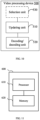
- the present disclosure also provides another video processing device 500 shown in FIG. 10 .
- the video processing device 500 includes an encoding/decoding unit 510 and an updating unit 520.
- the encoding/decoding unit 510 is configured to: use the historical motion information candidate list to encode or decode at least one second image block in the second region of the current frame.
- the updating unit 520 is configured to: update the historical motion information candidate list according to the motion information of at least a portion of the second image blocks in the second region after being encoded or decoded, to obtain the updated historical motion information candidate list.
- the encoding/decoding unit 510 is further configured to: use the updated historical motion information candidate list to encode or decode the plurality of first image blocks in the first region of the current frame.
- the encoding/decoding unit 510 may be further configured to: use the updated historical motion information candidate list to encode or decode the plurality of first image blocks in the first region of the current frame in parallel.
- the used historical motion information candidate list may include candidate historical motion information with an order same as an order of the candidate historical motion information in the historical motion information candidate list.
- the number of pieces of candidate historical motion information added to the historical motion information candidate list may be less than a preset value, and/or the number of pieces of candidate historical motion information deleted from the historical motion information candidate list may be less than the preset value.
- the device 500 may further include a selection unit 530 configured to: select at least a portion of the second image blocks from the image blocks included in the second region based on the position coordinates of the image blocks of the second region.
- a selection unit 530 configured to: select at least a portion of the second image blocks from the image blocks included in the second region based on the position coordinates of the image blocks of the second region.
- the priority of the image blocks on the right in the second region may be higher than the priority of the image blocks on the left in the second region, and/or the priority of the image blocks at the lower side of the second region may be higher than the priority of the image blocks at the upper side of the second region.
- the updating unit 520 may be further configured to: perform weighting process on the motion information of the at least portion of the second image blocks; and update the historical motion information candidate list by using the motion information after the weighting process.
- the second region and the first region may be arranged along the row direction of the image, or arranged along the column direction of the image.
- the first region and the second region may belong to same coding tree unit (CTU) rows or columns, and each CTU row or CTU column may include at least one CTU, and each CTU may include at least one region.
- CTU coding tree unit
- the historical motion information candidate list used for encoding or decoding the second region may be empty.
- the second region may be a region that is encoded or decoded before the first region.
- the updating unit 520 may be further configured to: add the first candidate historical motion information to be added to the header of the historical motion information candidate list.
- the updating unit 520 may be further configured to: delete the candidate historical motion information at the end of the historical motion information candidate list or the candidate historical motion information that is the same as the first candidate historical motion information.
- the second image blocks may be image blocks not in affine transformation motion compensation mode.
- the encoding/decoding unit 510 may be further configured to: using the historical motion information candidate list to generate a motion information list for each first image block of the plurality of first image blocks, and select the motion information for each first image block of the plurality of first image blocks by using the generated motion information list for each first image block of the plurality of first image blocks.
- the encoding/decoding unit 510 may be further configured to: use the historical motion information candidate list and the spatial domain motion information candidate list corresponding to each first image block of the plurality of first image blocks, to generate a motion information list for each first image block of the plurality of first image blocks.
- the image blocks corresponding to the motion information in the spatial domain motion information candidate list corresponding to each first image block of the plurality of first image blocks may not belong to the first region.
- the historical motion information candidate list is an HMVP candidate list predicted based on historical motion vectors.
- the at least one second image block may include an image block in the second region being encoded or decoded last, and/or include image blocks at specified positions in the second region.
- the image blocks at the specified position in the second region may include image blocks located at at least one of the positions including the upper left corner of the second region, the upper right corner of the second region, the lower left corner of the second region, the lower right corner of the second region, and the center point of the second region.
- the historical motion information candidate list may be stored in a storage space.
- updating of the historical motion information candidate list using the motion information of the at least portion of the second image blocks included in the second region of the current frame may be performed after the second region is encoded or decoded.
- the historical motion information candidate list may be stored in a first storage space and a second storage space respectively.
- the second region may be encoded or decoded by using the historical motion information candidate list in the second storage space.
- the updating unit may be further configured to: when encoding or decoding the second region, use the motion information of the at least portion of the second image blocks in the second region to update the historical motion information candidate list stored in the first storage space.
- the encoding/decoding unit 510 may be further configured to: encode or decode each first image block of the plurality of first image blocks in the first region according to the updated historical motion information candidate list stored in the first storage space.
- the updating unit 520 may be further configured to: after the encoding process or decoding process of the second region is completed, use the updated historical motion information candidate list in the first storage space to update the historical motion information candidate list in the second storage space.
- the updating unit 520 may be further configured to: make the updated historical motion information candidate list in the second storage space same as the historical motion information candidate list in the first storage space by update the historical motion information candidate list in the second storage space.
- the historical motion information candidate list may be stored in a first storage space and a second storage space respectively.
- the second region may be encoded or decoded by using the historical motion information candidate list in the second storage space.
- the updating unit 520 may be further configured to:
- the encoding/decoding unit 510 may be further configured to: encode or decode each of the first image blocks respectively according to the updated historical motion information candidate list in the second storage space.
- the updating unit 520 may be further configured to:
- the updating unit 520 may be further configured to: make the updated historical motion information candidate list in the second storage space same as the historical motion information candidate list in the first storage space by update the historical motion information candidate list in the second storage space.
- the plurality of first image blocks in the first region are image blocks obtained by subjecting the first region to quadtree partition, ternary tree partition, or binary tree partition.
- the plurality of first image blocks in the first region share the same motion information candidate list during prediction.
- the plurlaity of first image blocks in the first region all adopt the merge mode during prediction, and share the same merge mode motion information candidate list.
- the acquiring unit is further configured to obtain a candidate HMVP according to the historical motion information candidate list, where the candidate HMVP is a candidate in the motion information candidate list.
- the historical motion information candidate list remains unchanged while prediction is being performed for the plurlaity of first image blocks in the first region.
- the updating unit 520 is further configured to update the historical motion information candidate list after completing the encoding/decoding of the plurlaity of first image blocks in the first region.
- the updating unit 520 is further configured to update the historical motion information candidate list according to the motion information of the last first image block in the first region that was encoded/decoded.
- the lower right corner of the last first image block in the first region that was encoded/decoded coincides with the lower right corner of the first region.
- the pixel coordinates of the upper left corner of the first region are (x0, y0), the length and width of the first region are L0 and W0, respectively.
- the updating unit 520 is further configured to determine a target first image block in the first region, and update the historical motion information candidate list according to the motion information of the target first image block.
- the video processing device 500 may be used to implement operations performed by the encoder side or the decoder side in the video processing method provided by various embodiments of the present disclosure.
- the present disclosure also provides a computer system 600 shown in FIG. 11 .
- the computer system 600 includes a processor 610 and a memory 620.
- the computer system 600 may also include components commonly included in other computer systems, such as input and output devices, communication interfaces, etc., which are not limited in the embodiments of the present disclosure.
- the memory 620 is configured to store computer-executable instructions.
- the memory 620 may be various types of memory.
- the memory 620 may include a high-speed random access memory (RAM), and may also include a non-volatile memory, such as at least one disk memory.
- RAM random access memory
- non-volatile memory such as at least one disk memory. The present disclosure has no limit on this.
- the processor 610 is configured to access the memory 620 and execute the computer-executable instructions to perform operations in the video processing method provided by various embodiments of the present disclosure.
- the processor 610 may include a microprocessor, a field programmable gate array (FPGA), a central processing unit (CPU), a graphics processing unit (GPU), etc.
- FPGA field programmable gate array
- CPU central processing unit
- GPU graphics processing unit
- the video processing device and the computer system provided by various embodiments of the present disclosure may correspond to the execution body of the video processing method provided by various embodiments of the present disclosure.
- the operations and/or functions of various modules of the video processing device and the computer system are for implementing corresponding processes of the above-described video processing methods, and are not described here for simplicity.
- the present disclosure also provides an electronic apparatus.
- the electronic apparatus may include the video processing device and the computer system provided by various embodiments of the present disclosure.
- the present disclosure also provides a computer storage medium.
- the computer storage medium is configured to store computer program codes.
- the computer program codes are used to execute the ring filtering method provided by various embodiments of the present disclosure.
- the disclosed system, device, and method may be implemented in other ways.
- the device embodiments described above are only illustrative.
- the division of the units is only a logical function division, and there may be other divisions in actual implementation.
- multiple units or components may be combined or can be integrated into another system, or some features can be ignored or not implemented.
- the displayed or discussed mutual coupling or direct coupling or communication connection may be indirect coupling or communication connection through some interfaces, devices or units, and may also be electrical, mechanical or other forms of connection.
- the units described as separate components may or may not be physically separated, and the components displayed as units may or may not be physical units, that is, they may be located in one place, or they may be distributed on multiple network units. Some or all of the units may be selected according to actual needs to achieve the objectives of the solutions of the embodiments of the present disclosure.
- the functional units in the various embodiments of the present disclosure may be integrated into one processing unit, or each unit may exist alone physically, or two or more units may be integrated into one unit.
- the above-mentioned integrated unit can be implemented in the form of hardware or software functional unit.
- the integrated unit When the integrated unit is implemented in the form of a software functional unit and sold or used as an independent product, it can be stored in a computer readable storage medium.
- the technical solution of the present disclosure is essentially or the part that contributes to the existing technology, or all or part of the technical solution can be embodied in the form of a software product.
- the computer software product is stored in a storage medium, and includes several instructions to enable a computer device (which may be a personal computer, a server, or a network device, etc.) to perform all or part of the steps of the method described in each embodiment of the present disclosure.
- the aforementioned storage medium includes: a U disk, a mobile hard disk, a read-only memory (ROM), a random access memory (RAM), a magnetic disk, an optical disk, or another medium that can store program codes.
Landscapes
- Engineering & Computer Science (AREA)
- Multimedia (AREA)
- Signal Processing (AREA)
- Compression Or Coding Systems Of Tv Signals (AREA)
Applications Claiming Priority (3)
| Application Number | Priority Date | Filing Date | Title |
|---|---|---|---|
| PCT/CN2018/125843 WO2020133518A1 (fr) | 2018-12-29 | 2018-12-29 | Procédé et dispositif de traitement vidéo |
| EP19902243.5A EP3905693B1 (fr) | 2018-12-29 | 2019-03-13 | Procédé et dispositif de traitement vidéo |
| PCT/CN2019/078049 WO2020133717A1 (fr) | 2018-12-29 | 2019-03-13 | Procédé et dispositif de traitement vidéo |
Related Parent Applications (2)
| Application Number | Title | Priority Date | Filing Date |
|---|---|---|---|
| EP19902243.5A Division EP3905693B1 (fr) | 2018-12-29 | 2019-03-13 | Procédé et dispositif de traitement vidéo |
| EP19902243.5A Division-Into EP3905693B1 (fr) | 2018-12-29 | 2019-03-13 | Procédé et dispositif de traitement vidéo |
Publications (1)
| Publication Number | Publication Date |
|---|---|
| EP4465633A1 true EP4465633A1 (fr) | 2024-11-20 |
Family
ID=70790032
Family Applications (5)
| Application Number | Title | Priority Date | Filing Date |
|---|---|---|---|
| EP18944635.4A Active EP3905684B1 (fr) | 2018-12-29 | 2018-12-29 | Procédé et dispositif de traitement vidéo |
| EP24190647.8A Active EP4429246B1 (fr) | 2018-12-29 | 2018-12-29 | Procédé et dispositif de traitement vidéo |
| EP26158351.2A Pending EP4718849A2 (fr) | 2018-12-29 | 2018-12-29 | Procédé de traitement vidéo et dispositif associé |
| EP24188263.8A Pending EP4465633A1 (fr) | 2018-12-29 | 2019-03-13 | Procédé de traitement vidéo et dispositif associé |
| EP19902243.5A Active EP3905693B1 (fr) | 2018-12-29 | 2019-03-13 | Procédé et dispositif de traitement vidéo |
Family Applications Before (3)
| Application Number | Title | Priority Date | Filing Date |
|---|---|---|---|
| EP18944635.4A Active EP3905684B1 (fr) | 2018-12-29 | 2018-12-29 | Procédé et dispositif de traitement vidéo |
| EP24190647.8A Active EP4429246B1 (fr) | 2018-12-29 | 2018-12-29 | Procédé et dispositif de traitement vidéo |
| EP26158351.2A Pending EP4718849A2 (fr) | 2018-12-29 | 2018-12-29 | Procédé de traitement vidéo et dispositif associé |
Family Applications After (1)
| Application Number | Title | Priority Date | Filing Date |
|---|---|---|---|
| EP19902243.5A Active EP3905693B1 (fr) | 2018-12-29 | 2019-03-13 | Procédé et dispositif de traitement vidéo |
Country Status (6)
| Country | Link |
|---|---|
| US (4) | US11936847B2 (fr) |
| EP (5) | EP3905684B1 (fr) |
| JP (4) | JP7343097B2 (fr) |
| KR (3) | KR102768555B1 (fr) |
| CN (5) | CN111213381B (fr) |
| WO (3) | WO2020133518A1 (fr) |
Families Citing this family (15)
| Publication number | Priority date | Publication date | Assignee | Title |
|---|---|---|---|---|
| CN111213381B (zh) * | 2018-12-29 | 2021-11-12 | 深圳市大疆创新科技有限公司 | 视频处理方法和设备 |
| US12132909B2 (en) * | 2019-03-26 | 2024-10-29 | Intellectual Discovery Co., Ltd. | Image encoding/decoding method and apparatus |
| CN117395397A (zh) | 2019-06-04 | 2024-01-12 | 北京字节跳动网络技术有限公司 | 使用临近块信息的运动候选列表构建 |
| KR20220016839A (ko) | 2019-06-04 | 2022-02-10 | 베이징 바이트댄스 네트워크 테크놀로지 컴퍼니, 리미티드 | 기하학적 분할 모드 코딩을 갖는 모션 후보 리스트 |
| CN113950838B (zh) | 2019-06-06 | 2026-03-17 | 北京字节跳动网络技术有限公司 | 基于子块的帧内块复制 |
| KR102662603B1 (ko) | 2019-06-06 | 2024-04-30 | 베이징 바이트댄스 네트워크 테크놀로지 컴퍼니, 리미티드 | 비디오 코딩을 위한 움직임 후보 리스트 구성 |
| CN119277088A (zh) * | 2019-06-10 | 2025-01-07 | 株式会社 Xris | 用于对图像信号进行编码/解码方法及其装置 |
| CN114128258B (zh) | 2019-07-14 | 2023-12-22 | 北京字节跳动网络技术有限公司 | 视频编解码中的变换块尺寸的限制 |
| WO2021057996A1 (fr) | 2019-09-28 | 2021-04-01 | Beijing Bytedance Network Technology Co., Ltd. | Mode de partition géométrique dans un codage vidéo |
| US11722692B2 (en) * | 2019-12-31 | 2023-08-08 | Qualcomm Incorporated | History-based motion vector predictor constraint for merge estimation region |
| WO2021180022A1 (fr) | 2020-03-07 | 2021-09-16 | Beijing Bytedance Network Technology Co., Ltd. | Gestion de mode de saut de transformée dans un codage vidéo |
| WO2022037700A1 (fr) | 2020-08-21 | 2022-02-24 | Beijing Bytedance Network Technology Co., Ltd. | Sélection de mode de saut de transformée dépendant du mode de codage |
| CN116601953A (zh) | 2020-11-24 | 2023-08-15 | 抖音视界有限公司 | 编解码视频中的位置相关系数重新排序 |
| CN117643050A (zh) * | 2021-07-15 | 2024-03-01 | 谷歌有限责任公司 | 参考运动矢量候选库 |
| WO2025150809A1 (fr) * | 2024-01-09 | 2025-07-17 | 동아대학교 산학협력단 | Procédé et dispositif de codage/décodage vidéo, et support d'enregistrement stockant un flux binaire |
Citations (2)
| Publication number | Priority date | Publication date | Assignee | Title |
|---|---|---|---|---|
| WO2020150577A1 (fr) * | 2019-01-17 | 2020-07-23 | Tencent America LLC | Procédé et appareil de codage vidéo |
| EP3843389A1 (fr) * | 2018-09-21 | 2021-06-30 | Guangdong Oppo Mobile Telecommunications Corp., Ltd. | Procédé de codage/décodage de signal d'image et appareil associé |
Family Cites Families (40)
| Publication number | Priority date | Publication date | Assignee | Title |
|---|---|---|---|---|
| JP4536310B2 (ja) * | 2002-01-11 | 2010-09-01 | ソニー株式会社 | 動きベクトル検出装置および動き補償予測符号化装置 |
| US9401178B2 (en) | 2010-08-26 | 2016-07-26 | Blast Motion Inc. | Event analysis system |
| US9049455B2 (en) * | 2010-12-28 | 2015-06-02 | Panasonic Intellectual Property Corporation Of America | Image coding method of coding a current picture with prediction using one or both of a first reference picture list including a first current reference picture for a current block and a second reference picture list including a second current reference picture for the current block |
| CN102611881B (zh) * | 2011-01-19 | 2014-06-25 | 华为技术有限公司 | 参考运动矢量获取方法、模块及编、解码装置 |
| US9247249B2 (en) * | 2011-04-20 | 2016-01-26 | Qualcomm Incorporated | Motion vector prediction in video coding |
| ES2754657T3 (es) * | 2011-06-27 | 2020-04-20 | Samsung Electronics Co Ltd | Codificación y decodificación de información de movimiento |
| KR20130002242A (ko) * | 2011-06-28 | 2013-01-07 | 주식회사 케이티 | 영상 정보의 부호화 방법 및 복호화 방법 |
| EP2728878B1 (fr) * | 2011-06-30 | 2020-02-19 | Sun Patent Trust | Procédé de décodage d'image, procédé de codage d'image dispositif de décodage d'image, dispositif de codage d'image et dispositif de codage/décodage d'image |
| KR102004113B1 (ko) * | 2011-06-30 | 2019-07-25 | 가부시키가이샤 제이브이씨 켄우드 | 화상 부호화 장치, 화상 부호화 방법, 화상 부호화 프로그램, 화상 복호 장치, 화상 복호 방법 및 화상 복호 프로그램 |
| US9426494B2 (en) * | 2011-07-18 | 2016-08-23 | Ziilabs Inc., Ltd. | Systems and methods with early variance measure used to optimize video encoding |
| MX365013B (es) * | 2011-08-29 | 2019-05-20 | Ibex Pt Holdings Co Ltd | Metodo para generar un bloque de prediccion en modo de prediccion de vector de movimiento avanzada (amvp). |
| RS67751B1 (sr) * | 2011-09-09 | 2026-03-31 | Lg Electronics Inc | Uređaj za dekodiranje slike, uređaj za kodiranje slike, i uređaj za prenos podataka za sliku |
| SG10201502731VA (en) * | 2011-11-08 | 2015-05-28 | Samsung Electronics Co Ltd | Method and apparatus for motion vector determination in video encoding or decoding |
| US8964845B2 (en) * | 2011-12-28 | 2015-02-24 | Microsoft Corporation | Merge mode for motion information prediction |
| US20130272412A1 (en) * | 2012-04-12 | 2013-10-17 | Qualcomm Incorporated | Common motion information candidate list construction process |
| US9357214B2 (en) * | 2012-12-07 | 2016-05-31 | Qualcomm Incorporated | Advanced merge/skip mode and advanced motion vector prediction (AMVP) mode for 3D video |
| KR102127281B1 (ko) | 2013-04-08 | 2020-06-26 | 지이 비디오 컴프레션, 엘엘씨 | 효율적인 다-시점/계층 코딩을 허용하는 코딩 개념 |
| CN104079944B (zh) * | 2014-06-30 | 2017-12-01 | 华为技术有限公司 | 视频编码的运动矢量列表构建方法和系统 |
| EP3180917B1 (fr) * | 2014-09-01 | 2022-04-20 | HFI Innovation Inc. | Procédé de copie de bloc d'image de type intra à des fins de codage de contenu d'écran et vidéo |
| WO2016085229A1 (fr) * | 2014-11-27 | 2016-06-02 | 주식회사 케이티 | Procédé et dispositif de traitement de signal vidéo |
| WO2017043734A1 (fr) * | 2015-09-07 | 2017-03-16 | 엘지전자(주) | Procédé de traitement d'image basé sur un mode de prédiction inter et dispositif associé |
| EP3414900B1 (fr) * | 2016-03-15 | 2025-08-06 | HFI Innovation Inc. | Procédé et appareil de codage vidéo avec compensation de mouvement affine |
| KR102228298B1 (ko) * | 2016-09-30 | 2021-03-15 | 후아웨이 테크놀러지 컴퍼니 리미티드 | 비디오 인코딩 방법, 비디오 디코딩 방법, 및 단말 |
| CN118972591A (zh) * | 2018-05-24 | 2024-11-15 | 株式会社Kt | 对视频进行解码和编码的方法以及用于发送压缩视频数据的装置 |
| JP7295230B2 (ja) | 2018-06-29 | 2023-06-20 | 北京字節跳動網絡技術有限公司 | スライス/タイル/lcuの行ごとのルックアップテーブルのリセット |
| US10491902B1 (en) | 2018-07-16 | 2019-11-26 | Tencent America LLC | Method and apparatus for history-based motion vector prediction |
| US10440378B1 (en) * | 2018-07-17 | 2019-10-08 | Tencent America LLC | Method and apparatus for history-based motion vector prediction with parallel processing |
| WO2020030183A1 (fr) * | 2018-08-10 | 2020-02-13 | Huawei Technologies Co., Ltd. | Procédé, dispositif et système de codification avec mode de fusion |
| US11336914B2 (en) * | 2018-08-16 | 2022-05-17 | Qualcomm Incorporated | History-based candidate list with classification |
| US11089297B2 (en) * | 2018-08-31 | 2021-08-10 | Hulu, LLC | Historical motion vector prediction with reset list |
| WO2020058896A1 (fr) * | 2018-09-19 | 2020-03-26 | Beijing Bytedance Network Technology Co., Ltd. | Codage de mode intra en fonction d'informations d'historique |
| US11070796B2 (en) | 2018-09-28 | 2021-07-20 | Qualcomm Incorporated | Ultimate motion vector expression based pruning for video coding |
| US20200112715A1 (en) | 2018-10-05 | 2020-04-09 | Qualcomm Incorporated | History-based motion vector prediction for inter prediction coding |
| EP3857888A4 (fr) * | 2018-10-06 | 2022-08-03 | HFI Innovation Inc. | Procédé et appareil destinés à une zone d'une liste de candidats à une fusion partagée permettant un codage vidéo |
| CN109068140B (zh) * | 2018-10-18 | 2021-06-22 | 北京奇艺世纪科技有限公司 | 视频编码中运动向量的确定方法、装置及视频编解码设备 |
| CN113170212B (zh) | 2018-12-05 | 2024-04-12 | 华为技术有限公司 | 具有合并模式的译码方法、设备、系统 |
| CN118042115A (zh) * | 2018-12-07 | 2024-05-14 | 松下电器(美国)知识产权公司 | 编码装置、解码装置、编码方法、解码方法和计算机可读取介质 |
| US11470340B2 (en) * | 2018-12-10 | 2022-10-11 | Tencent America LLC | Simplified merge list construction for small coding blocks |
| US11394989B2 (en) * | 2018-12-10 | 2022-07-19 | Tencent America LLC | Method and apparatus for video coding |
| CN111213381B (zh) * | 2018-12-29 | 2021-11-12 | 深圳市大疆创新科技有限公司 | 视频处理方法和设备 |
-
2018
- 2018-12-29 CN CN201880065711.3A patent/CN111213381B/zh active Active
- 2018-12-29 EP EP18944635.4A patent/EP3905684B1/fr active Active
- 2018-12-29 CN CN202111243540.9A patent/CN113905239B/zh active Active
- 2018-12-29 EP EP24190647.8A patent/EP4429246B1/fr active Active
- 2018-12-29 KR KR1020217020756A patent/KR102768555B1/ko active Active
- 2018-12-29 WO PCT/CN2018/125843 patent/WO2020133518A1/fr not_active Ceased
- 2018-12-29 EP EP26158351.2A patent/EP4718849A2/fr active Pending
- 2018-12-29 KR KR1020257004423A patent/KR20250026874A/ko active Pending
- 2018-12-29 JP JP2021531890A patent/JP7343097B2/ja active Active
-
2019
- 2019-03-13 CN CN202111241960.3A patent/CN113992910B/zh active Active
- 2019-03-13 JP JP2021533606A patent/JP7239702B2/ja active Active
- 2019-03-13 KR KR1020217020254A patent/KR102762916B1/ko active Active
- 2019-03-13 EP EP24188263.8A patent/EP4465633A1/fr active Pending
- 2019-03-13 CN CN201980005316.0A patent/CN111279693B/zh active Active
- 2019-03-13 EP EP19902243.5A patent/EP3905693B1/fr active Active
- 2019-03-13 WO PCT/CN2019/078049 patent/WO2020133717A1/fr not_active Ceased
- 2019-09-30 CN CN201980004976.7A patent/CN111567046B/zh active Active
- 2019-09-30 WO PCT/CN2019/109659 patent/WO2020134304A1/fr not_active Ceased
-
2021
- 2021-06-29 US US17/362,309 patent/US11936847B2/en active Active
- 2021-06-29 US US17/362,078 patent/US11997254B2/en active Active
-
2023
- 2023-02-28 JP JP2023029970A patent/JP7415065B2/ja active Active
- 2023-08-18 JP JP2023133667A patent/JP7578355B2/ja active Active
-
2024
- 2024-03-18 US US18/608,642 patent/US12407814B2/en active Active
-
2025
- 2025-08-04 US US19/289,252 patent/US20250358403A1/en active Pending
Patent Citations (2)
| Publication number | Priority date | Publication date | Assignee | Title |
|---|---|---|---|---|
| EP3843389A1 (fr) * | 2018-09-21 | 2021-06-30 | Guangdong Oppo Mobile Telecommunications Corp., Ltd. | Procédé de codage/décodage de signal d'image et appareil associé |
| WO2020150577A1 (fr) * | 2019-01-17 | 2020-07-23 | Tencent America LLC | Procédé et appareil de codage vidéo |
Non-Patent Citations (1)
| Title |
|---|
| LI ZHANG ET AL: "CE4-related: History-based Motion Vector Prediction", no. JVET-K0104_v5; JVET-K0104, 18 July 2018 (2018-07-18), pages 1 - 7, XP030200019, Retrieved from the Internet <URL:http://phenix.int-evry.fr/jvet/doc_end_user/documents/11_Ljubljana/wg11/JVET-K0104-v5.zip JVET-K0104_r4.docx> [retrieved on 20180718] * |
Also Published As
Similar Documents
| Publication | Publication Date | Title |
|---|---|---|
| US12407814B2 (en) | Video processing method and device thereof | |
| US12132912B2 (en) | Inter-prediction mode based image processing method, and apparatus therefor | |
| JP2020522913A (ja) | 低減されたメモリアクセスを用いてfrucモードでビデオデータを符号化又は復号する方法及び装置 | |
| US20150117535A1 (en) | Motion search with scaled and unscaled pictures | |
| CN110337810A (zh) | 用于视频处理的方法和设备 |
Legal Events
| Date | Code | Title | Description |
|---|---|---|---|
| PUAI | Public reference made under article 153(3) epc to a published international application that has entered the european phase |
Free format text: ORIGINAL CODE: 0009012 |
|
| STAA | Information on the status of an ep patent application or granted ep patent |
Free format text: STATUS: THE APPLICATION HAS BEEN PUBLISHED |
|
| AC | Divisional application: reference to earlier application |
Ref document number: 3905693 Country of ref document: EP Kind code of ref document: P |
|
| AK | Designated contracting states |
Kind code of ref document: A1 Designated state(s): AL AT BE BG CH CY CZ DE DK EE ES FI FR GB GR HR HU IE IS IT LI LT LU LV MC MK MT NL NO PL PT RO RS SE SI SK SM TR |
|
| STAA | Information on the status of an ep patent application or granted ep patent |
Free format text: STATUS: REQUEST FOR EXAMINATION WAS MADE |
|
| 17P | Request for examination filed |
Effective date: 20250407 |