EP4465675A1 - Verfahren und vorrichtung zum senden von csi-berichten, verfahren und vorrichtung zum empfangen von csi-berichten, vorrichtung und medium - Google Patents
Verfahren und vorrichtung zum senden von csi-berichten, verfahren und vorrichtung zum empfangen von csi-berichten, vorrichtung und medium Download PDFInfo
- Publication number
- EP4465675A1 EP4465675A1 EP22919424.6A EP22919424A EP4465675A1 EP 4465675 A1 EP4465675 A1 EP 4465675A1 EP 22919424 A EP22919424 A EP 22919424A EP 4465675 A1 EP4465675 A1 EP 4465675A1
- Authority
- EP
- European Patent Office
- Prior art keywords
- csi
- period
- transmissions
- report
- amplitude
- Prior art date
- Legal status (The legal status is an assumption and is not a legal conclusion. Google has not performed a legal analysis and makes no representation as to the accuracy of the status listed.)
- Pending
Links
- 238000000034 method Methods 0.000 title claims abstract description 74
- 230000005540 biological transmission Effects 0.000 claims description 172
- 238000004891 communication Methods 0.000 claims description 19
- 238000004590 computer program Methods 0.000 claims description 8
- 238000005259 measurement Methods 0.000 abstract description 14
- 230000011664 signaling Effects 0.000 abstract description 10
- 238000010295 mobile communication Methods 0.000 abstract description 8
- 238000013461 design Methods 0.000 description 18
- 238000010586 diagram Methods 0.000 description 11
- 230000008569 process Effects 0.000 description 9
- 230000006870 function Effects 0.000 description 8
- 230000007246 mechanism Effects 0.000 description 6
- 230000001413 cellular effect Effects 0.000 description 3
- 238000005516 engineering process Methods 0.000 description 3
- XLYOFNOQVPJJNP-UHFFFAOYSA-N water Substances O XLYOFNOQVPJJNP-UHFFFAOYSA-N 0.000 description 3
- 230000003044 adaptive effect Effects 0.000 description 2
- 230000003993 interaction Effects 0.000 description 2
- 230000003287 optical effect Effects 0.000 description 2
- 238000012545 processing Methods 0.000 description 2
- 230000003190 augmentative effect Effects 0.000 description 1
- 230000009286 beneficial effect Effects 0.000 description 1
- 239000003795 chemical substances by application Substances 0.000 description 1
- 238000013500 data storage Methods 0.000 description 1
- 230000003203 everyday effect Effects 0.000 description 1
- 239000011521 glass Substances 0.000 description 1
- 230000010365 information processing Effects 0.000 description 1
- 230000000977 initiatory effect Effects 0.000 description 1
- 230000010354 integration Effects 0.000 description 1
- 238000012986 modification Methods 0.000 description 1
- 230000004048 modification Effects 0.000 description 1
- 238000012544 monitoring process Methods 0.000 description 1
- 239000004984 smart glass Substances 0.000 description 1
- 238000001228 spectrum Methods 0.000 description 1
- 230000003068 static effect Effects 0.000 description 1
- 238000001356 surgical procedure Methods 0.000 description 1
- 239000013598 vector Substances 0.000 description 1
Images


Classifications
-
- H—ELECTRICITY
- H04—ELECTRIC COMMUNICATION TECHNIQUE
- H04L—TRANSMISSION OF DIGITAL INFORMATION, e.g. TELEGRAPHIC COMMUNICATION
- H04L5/00—Arrangements affording multiple use of the transmission path
- H04L5/003—Arrangements for allocating sub-channels of the transmission path
- H04L5/0053—Allocation of signalling, i.e. of overhead other than pilot signals
-
- H—ELECTRICITY
- H04—ELECTRIC COMMUNICATION TECHNIQUE
- H04L—TRANSMISSION OF DIGITAL INFORMATION, e.g. TELEGRAPHIC COMMUNICATION
- H04L1/00—Arrangements for detecting or preventing errors in the information received
- H04L1/08—Arrangements for detecting or preventing errors in the information received by repeating transmission, e.g. Verdan system
-
- H—ELECTRICITY
- H04—ELECTRIC COMMUNICATION TECHNIQUE
- H04B—TRANSMISSION
- H04B7/00—Radio transmission systems, i.e. using radiation field
- H04B7/02—Diversity systems; Multi-antenna system, i.e. transmission or reception using multiple antennas
- H04B7/04—Diversity systems; Multi-antenna system, i.e. transmission or reception using multiple antennas using two or more spaced independent antennas
- H04B7/06—Diversity systems; Multi-antenna system, i.e. transmission or reception using multiple antennas using two or more spaced independent antennas at the transmitting station
- H04B7/0613—Diversity systems; Multi-antenna system, i.e. transmission or reception using multiple antennas using two or more spaced independent antennas at the transmitting station using simultaneous transmission
- H04B7/0615—Diversity systems; Multi-antenna system, i.e. transmission or reception using multiple antennas using two or more spaced independent antennas at the transmitting station using simultaneous transmission of weighted versions of same signal
- H04B7/0619—Diversity systems; Multi-antenna system, i.e. transmission or reception using multiple antennas using two or more spaced independent antennas at the transmitting station using simultaneous transmission of weighted versions of same signal using feedback from receiving side
- H04B7/0621—Feedback content
- H04B7/0626—Channel coefficients, e.g. channel state information [CSI]
-
- H—ELECTRICITY
- H04—ELECTRIC COMMUNICATION TECHNIQUE
- H04L—TRANSMISSION OF DIGITAL INFORMATION, e.g. TELEGRAPHIC COMMUNICATION
- H04L1/00—Arrangements for detecting or preventing errors in the information received
- H04L1/0001—Systems modifying transmission characteristics according to link quality, e.g. power backoff
- H04L1/0023—Systems modifying transmission characteristics according to link quality, e.g. power backoff characterised by the signalling
- H04L1/0026—Transmission of channel quality indication
-
- H—ELECTRICITY
- H04—ELECTRIC COMMUNICATION TECHNIQUE
- H04L—TRANSMISSION OF DIGITAL INFORMATION, e.g. TELEGRAPHIC COMMUNICATION
- H04L1/00—Arrangements for detecting or preventing errors in the information received
- H04L1/0001—Systems modifying transmission characteristics according to link quality, e.g. power backoff
- H04L1/0023—Systems modifying transmission characteristics according to link quality, e.g. power backoff characterised by the signalling
- H04L1/0027—Scheduling of signalling, e.g. occurrence thereof
-
- H—ELECTRICITY
- H04—ELECTRIC COMMUNICATION TECHNIQUE
- H04L—TRANSMISSION OF DIGITAL INFORMATION, e.g. TELEGRAPHIC COMMUNICATION
- H04L5/00—Arrangements affording multiple use of the transmission path
- H04L5/003—Arrangements for allocating sub-channels of the transmission path
- H04L5/0048—Allocation of pilot signals, i.e. of signals known to the receiver
-
- H—ELECTRICITY
- H04—ELECTRIC COMMUNICATION TECHNIQUE
- H04L—TRANSMISSION OF DIGITAL INFORMATION, e.g. TELEGRAPHIC COMMUNICATION
- H04L5/00—Arrangements affording multiple use of the transmission path
- H04L5/003—Arrangements for allocating sub-channels of the transmission path
- H04L5/0048—Allocation of pilot signals, i.e. of signals known to the receiver
- H04L5/005—Allocation of pilot signals, i.e. of signals known to the receiver of common pilots, i.e. pilots destined for multiple users or terminals
-
- H—ELECTRICITY
- H04—ELECTRIC COMMUNICATION TECHNIQUE
- H04L—TRANSMISSION OF DIGITAL INFORMATION, e.g. TELEGRAPHIC COMMUNICATION
- H04L5/00—Arrangements affording multiple use of the transmission path
- H04L5/0091—Signalling for the administration of the divided path, e.g. signalling of configuration information
- H04L5/0094—Indication of how sub-channels of the path are allocated
-
- H—ELECTRICITY
- H04—ELECTRIC COMMUNICATION TECHNIQUE
- H04W—WIRELESS COMMUNICATION NETWORKS
- H04W24/00—Supervisory, monitoring or testing arrangements
- H04W24/10—Scheduling measurement reports ; Arrangements for measurement reports
-
- H—ELECTRICITY
- H04—ELECTRIC COMMUNICATION TECHNIQUE
- H04L—TRANSMISSION OF DIGITAL INFORMATION, e.g. TELEGRAPHIC COMMUNICATION
- H04L5/00—Arrangements affording multiple use of the transmission path
- H04L5/003—Arrangements for allocating sub-channels of the transmission path
- H04L5/0078—Timing of allocation
- H04L5/0082—Timing of allocation at predetermined intervals
Definitions
- the present disclosure relates to the field of mobile communication, more particularly, to a method for transmitting a CSI report, a method for receiving a CSI report, an apparatus, a device and a storage medium.
- Channel state information is obtained by measuring, by a user equipment (UE), a channel state information reference signal (CSI-RS) sent by a base station.
- the CSI is configured to represent a channel quality of a downlink channel.
- Embodiments of the present disclosure provide a method for transmitting a CSI report, a method for receiving a CSI report, an apparatus, a device and a storage medium, capable of, in a high mobility scenario of a UE, ensuring a feedback accuracy of CSI, and reducing a signaling overhead of the CSI in a configuration process and a reporting process.
- the technical solution is described as follows.
- a method for transmitting a channel state information (CSI) report includes: transmitting, by a terminal, a CSI report, in which the CSI report includes CSI corresponding to at least one transmission of at least two transmissions of at least one channel state information reference signal (CSI-RS) in one period.
- CSI-RS channel state information reference signal
- a method for receiving a channel state information (CSI) report includes: receiving, by a network device, a CSI report, in which the CSI report includes CSI corresponding to at least one transmission of at least two transmissions of at least one channel state information reference signal (CSI-RS) in one period.
- CSI-RS channel state information reference signal
- an apparatus for transmitting a channel state information (CSI) report includes: a transmitting module, configured to transmit a CSI report, wherein the CSI report comprises CSI corresponding to at least one transmission of at least two transmissions of at least one channel state information reference signal (CSI-RS) in one period.
- CSI-RS channel state information reference signal
- an apparatus for receiving a channel state information (CSI) report includes: a receiving module, configured to receive a CSI report, in which the CSI report includes CSI corresponding to at least one transmission of at least two transmissions of at least one channel state information reference signal (CSI-RS) in one period.
- CSI-RS channel state information reference signal
- a communication device includes: a processor and a memory, in which, the memory stores a computer program, and the computer program is loaded and executed by the processor to implement the method for transmitting and/or receiving the CSI report as described above.
- a chip is provided.
- the chip includes a programmable logic circuit and/or program instructions, and when the chip is in operation, the method for transmitting and/or receiving the CSI report as described above is implemented.
- a computer-readable storage medium has a computer program stored thereon, in which the computer program is executed by a processor, to implement the method for transmitting and/or receiving the CSI report as described above.
- the UE By transmitting the at least one CSI-RS at least twice in one period, the UE selects a measurement result of the at least one CSI-RS in one period to report, such that the UE may report the measurement results of the CSI-RSs at different time domain positions in one CSI report, while saving a signaling overhead of the CSI in a reporting process.
- Broadband refers to an entire bandwidth, or an entire bandwidth corresponding to a cell, or an entire bandwidth available to a terminal, or an entire bandwidth used by the terminal, or an entire bandwidth configured by the terminal. For example, a bandwidth corresponding to an activated BWP (bandwidth part).
- Narrowband refers to a plurality of sub-bands that divides the entire bandwidth into. For example, when the bandwidth is 24-72 physical resource blocks (PRBs), a size of the sub-band is 4 or 8 PRBs, or when the bandwidth is 73-144 PRBs, the size of the sub-band is 8 or 16 PRBs, or when the bandwidth is 145-275 PRBs, the size of the sub-band is 16 or 32 PRBs. Further, the sub-band may be divided into a plurality of frequency domain units or frequency domain basis vectors.
- PRBs physical resource blocks
- FIG. 1 is a diagram illustrating a framework of a mobile communication system according to an embodiment of the present disclosure.
- the mobile communication system may include a network device 102.
- the network device 102 may be a device for communicating with a terminal 101 (or referred to as a communication terminal, or a terminal).
- the network device 102 may provide communication coverage for a specific geographic area, and may communicate with terminals located within the coverage area.
- FIG. 1 illustrates, for example, one network device 102 and two terminals 101.
- the mobile communication system may include a plurality of network devices 102, and the coverage area of each network device 102 may include other number of terminals 101, which is not limited in an embodiment of the present disclosure.
- the terminal 101 may be a station (ST) in a WLAN (wireless local area network), and may be a cellular phone, a cordless phone, a session initiation protocol (SIP) phone, a wireless local loop (WLL) station, a personal digital assistant (PDA) device, a handheld device with a wireless communication function, a computing device or other processing device connected to a wireless modem, a vehicle-mounted device, a wearable device, a terminal 101 in next-generation mobile communication system, such as a NR network, or a terminal 101 in a future evolved public land mobile network (PLMN) network, etc.
- ST station
- WLAN wireless local area network
- PDA personal digital assistant
- the terminal 101 may be a device that provides voice and/or data connectivity to users, and may be used to connect people, objects and machines, such as handheld devices or vehicle-mounted devices with wireless connection functions, etc.
- the terminal 101 in an embodiment of the present disclosure may be a mobile phone, a Pad, a notebook computer, a palmtop computer, a mobile Internet device (MID), a wearable device, a virtual reality (VR) device, an augmented reality (AR) device, a wireless terminal in industrial control, a wireless terminal in self-driving, a wireless terminal in remote medical surgery, a wireless terminal in smart grid, a wireless terminal in transportation safety, a wireless terminal in a smart city, a wireless terminal in smart home, etc.
- MID mobile Internet device
- VR virtual reality
- AR augmented reality
- the UE can be used to act as a base station.
- the terminal 101 may serve as a scheduling entity, which provides sidelink signals between the terminals 101 in V2X or D2D, etc.
- the cellular phone and an automobile communicate with each other using the sidelink signals.
- the cellular phone communicates with a smart home device, without relaying communication signals through the base station.
- the terminal 101 may be deployed on land, including indoor or outdoor, handheld, wearable or vehicle-mounted, or may also be deployed on water (such as a ship, etc.), or may also be deployed in the air (such as an aircraft, a balloon and a satellite).
- the terminal 101 in an embodiment of the present disclosure may also be referred to as a terminal, a user equipment (UE), an access terminal, a vehicle-mounted terminal, an industrial control terminal, a UE unit, a UE station, a mobile station, a mobile station, a remote station, a remote terminal, a mobile device, a UE terminal, a wireless communication device, a UE agent or a UE device, etc.
- the terminal 101 may also be fixed or movable.
- the terminal 101 may also be a wearable device.
- the wearable device also referred to as a wearable smart device, is a general term for wearable devices that are designed and developed with wearable technology for intelligent integration into everyday attire, such as glasses, gloves, watches, clothing and shoes, etc.
- the wearable device is a portable device that is worn directly on the body or integrated into clothing or accessories of the user.
- the wearable device is not only a hardware device, but also achieve powerful functions through software support, data interaction, and cloud interaction.
- the wearable smart devices include devices that are fully functional, large in size, and can achieve complete or partial functions without relying on smart phones, such as smart watches or smart glasses, etc., as well as devices that only focus on a certain type of application function and need to be cooperate with other devices like the smart phones, for example, various smart bracelets for physical sign monitoring and smart jewelry.
- the network device 102 in an embodiment of the present disclosure may be a device for communicating with the terminal 101, and the network device 102 may also be referred to as an access network device or a wireless access network device, for example, the network device 102 may be a base station.
- the network device 102 in an embodiment of the present disclosure may refer to a radio access network (RAN) node (or device) that connects the terminal 101 to a wireless network.
- RAN radio access network
- the base station may broadly cover various following names, or replace with the following names, such as: a NodeB, an evolved NodeB (eNB), a next generation NodeB (gNB), a relay station, an access point, a transmitting and receiving point (TRP), a transmitting point (TP), a primary station MeNB, a secondary station SeNB, a multi-standard wireless (MSR) node, a home base station, a network controller, an access node , a wireless node, an access point (AP), a transmitting and receiving node, a transceiver node, a base band unit (BBU), a remote radio unit (RRU), an active antenna unit (AAU), a remote radio head (RRH), a central unit (CU), a distributed unit (DU), a positioning node, etc.
- a NodeB an evolved NodeB (eNB), a next generation NodeB (gNB), a relay station, an access point, a transmitting and receiving point (TRP), a
- the base station may be a macro base station, a micro base station, a relay node, a donor node, or the like, or a combination thereof.
- the base station may also refer to a communication module, a modem or a chip configured in the aforementioned equipment or device.
- the base station may also be a mobile switching center and a device that undertakes a base station function in device-to-device (D2D), vehicle-to-everything (V2X), machine-to-machine (M2M) communication, a network-side device in the 6G network, a device that undertakes the base station function in the future mobile communication system, etc.
- the case stations may support networks with the same or different access technologies.
- An embodiment of the present disclosure does not limit a specific technology and a specific device form adopted by the network device 102.
- the base station can be fixed or movable.
- a helicopter or an unmanned aerial vehicle can be configured to act as a mobile base station, and one or more cells can move according to a location of the mobile base station.
- the helicopter or the unmanned aerial vehicle may be configured to serve as a device in communication with another base station.
- the network device 102 in an embodiment of the present disclosure may refer to the CU or the DU, or, the network device 102 includes the CU and the DU.
- the gNB may also include the AAU.
- the network device 102 and the terminal 101 may be deployed on land, including indoor or outdoor, handheld or vehicle-mounted, or may also be deployed on water; or may also be deployed on an airplane, a balloon and a satellite in the air. In an embodiment of the present disclosure, scenarios where the network device 102 and the terminal 101 are located are not limited.
- the network device 102 may have a mobile feature, for example, the network device 102 may be a mobile device.
- the network device 102 may be the satellite or the balloon station.
- the satellite may be a low earth orbit (LEO) satellite, a medium earth orbit (MEO) satellite, a geostationary earth orbit (GEO) satellite, a high elliptical orbit (HEO) satellite, etc.
- the network device 102 may also be a base station installed on land, in water, and other locations.
- the network device 102 may provide services for a cell, and the terminal 101 communicates with the network device 102 through transmitting and receiving resources (for example, frequency domain resources, or spectrum resources) used by the cell.
- the cell may be a cell corresponding to the network device 102 (such as a base station), the cell may belong to the macro base station, or may belong to a base station corresponding to a small cell, and the small cell may include a metro cell, a micro cell, a pico cell, a femto cell, etc. These small cells have characteristics of small coverage and low transmitting power, and are suitable for providing high-rate data transmitting and receiving services.
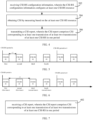
- FIG. 2 is a flowchart illustrating a method for transmitting a CSI report according to an exemplary embodiment of the present disclosure. This embodiment is described by taking the method performed by a terminal as an example. The method includes a following step.
- a CSI report is transmitted.
- the CSI report includes CSI corresponding to at least one transmission of at least two transmissions of at least one channel state information reference signal (CSI-RS) in one period.
- CSI-RS channel state information reference signal
- the at least one CSI-RS is transmitted at least twice in one period.
- the terminal measures the CSI-RS corresponding to the at least one transmission of the at least two transmissions in one period, and generates a corresponding CSI report.
- the at least one CSI-RS includes a non zero power (NZP) CSI-RS and/or a zero power (ZP) CSI-RS.
- the NZP CSI-RS can be actually generated and mapped to a resource element (RE), and the ZPCSI-RS cannot be generated and mapped to the RE.
- RE resource element
- At least two transmissions may be understood as any one of at least two times of transmitting/receiving, at least two CSI resources, or CSI-RSs transmitted at different time domain positions.
- the CSI-RSs of the at least two transmissions may be the same CSI-RS, that is, the CSI-RSs of the at least two transmissions have the same index.
- the CSI-RSs of the at least two transmissions may also be different CSI-RSs, or have different indexes.
- a longitudinal coordinate represents a frequency domain
- a horizontal ordinate represents a time domain.
- the CSI-RS may be transmitted repeatedly 4 times.
- FIG. 3 shows a CSI-RS transmitted for first time, a CSI-RS transmitted for second time, a CSI-RS transmitted for third time, and a CSI-RS transmitted for fourth time in a CSI-RS period n, and a CSI-RS transmitted for first time, a CSI-RS transmitted for second time in a CSI-RS period (n+1) (the remaining two transmissions are not shown).
- the terminal may measure all or part of the CSI-RSs, generate CSIs corresponding to all or part of the CSI-RSs, and send the CSI report to a base station.
- the CSI report includes CSIs corresponding to the CSI-RSs of all four transmissions in the CSI-RS period n.
- the CSI report includes CSIs corresponding to the CSI-RS transmitted for first time and the CSI-RS transmitted for fourth time in the CSI-RS period n.
- the UE by transmitting the at least one CSI-RS at least twice in one period, the UE selects a measurement result of the at least one CSI-RS in one period to report, such that the UE may report the measurement results of the CSI-RSs at different time domain positions in one CSI report, while saving a signaling overhead of the CSI in a reporting process.
- FIG. 4 is a flowchart illustrating a method for transmitting a CSI report according to another exemplary embodiment of the present disclosure. This embodiment is described by taking the method performed by a terminal as an example. The method includes following steps.
- CSI-RS configuration information is received.
- the CSI-RS configuration information indicates at least one CSI-RS resource.
- the CSI-RS configuration information includes at least one of CSI-RS measurement configuration or CSI reporting configuration corresponding to the CSI-RS.
- the CSI-RS configuration information carries at least one of following information.
- the repetition refers to a mechanism for retransmitting the same CSI-RS at different time domain positions in the same period, the repetition also be referred to as a number of repetitions.
- the state is the on state
- the mechanism of the repetition is enabled
- the state is the off state
- the mechanism of the repetition is stopped.
- illustration is made by taking the state being the on state as an example.
- the number L of transmission of the at least one CSI-RS in one period may be 1.
- the state of the repetition is the on state
- the number L of transmission of the at least one CSI-RS in one period may be an integer greater than 1, such as 2 or 4.
- the time interval T is an integer number of time slots and/or an integer number of symbols.
- the silence pattern is used to indicate that CSI-RS transmissions are omitted at which time positions in which CSI-RS periods.
- the CSI-RS configuration information also carries at least one of following information.
- Periods of different CSI-RSs may be the same or different. In this embodiment, illustration is made by taking the periods of different CSI-RSs being the same as an example.
- each CSI-RS has its own slot offset.
- the slot offsets of respective CSI-RSs are different.
- the slot offset may be represented by s slot offset of the CSI-RS of the first transmission.
- the QCL Type D information is configured to indicate a spatial receiving parameter corresponding to the CSI-RS, which is commonly called a beam.
- the CSI-RSs of the repetitions at different time domain positions in the same period may be transmitted based on the same beam or based on different beams.
- Step 304 CSI is obtained by measuring based on the at least one CSI-RS resource.
- each CSI-RS period in the CSI-RS configuration information includes at least two CSI-RS resources, and there is a CSI-RS to be transmitted on each of the at least two CSI-RS resources.
- the CSI-RSs transmitted on the at least two CSI-RS resources are the same CSI-RS, or the CSI-RSs transmitted on the at least two CSI-RS resources are different CSI-RSs.
- the at least one CSI-RS includes: a NZP CSI-RS and/or a ZP CSI-RS.
- the NZP CSI-RS can be actually generated and mapped to a resource element (RE), and the ZPCSI-RS cannot be generated and mapped to the RE.
- RE resource element
- the number L of transmissions of the CSI-RS with an index "#1" is equal to 4, and a slot offset of a first CSI-RS#1 is 0, an interval between two adjacent transmissions of the same CSI-RS is t1.
- Four transmissions of the same CSI-RS in one period correspond to the same beam, or correspond to different beams.
- all four transmissions are transmitted on beam 1.
- four transmissions are transmitted on beam 1, beam 2, beam 3, and beam 4, respectively.
- the first transmission and the third transmission are transmitted on beam 1, and the second transmission and the fourth transmission are transmitted on beam 2.
- the number L of transmissions of each of CSI-RSs with an index "#1" and an index "#2" is equal to 2
- a slot offset of a first CSI-RS#1 is 0, and a slot offset of a second CSI-RS#1 is greater than 0, an interval between two adjacent transmissions of the same CSI-RS is t2.
- four transmissions of two CSI-RSs in one period correspond to the same beam, or correspond to different beams.
- all four transmissions are transmitted on beam 1.
- four transmissions are transmitted on beam 1, beam 2, beam 3, and beam 4, respectively.
- the first transmission and the third transmission are transmitted on beam 1, and the second transmission and the fourth transmission are transmitted on beam 2.
- a CSI report is transmitted.
- the CSI report includes CSI corresponding to at least one transmission of at least two transmissions of at least one CSI-RS in one period.
- At least two transmissions may be understood as any one of at least two times of transmitting/receiving, at least two CSI resources, or CSI-RSs transmitted at different time domain positions.
- the CSI-RSs of the at least two transmissions may be the same CSI-RS, that is, the CSI-RSs of the at least two transmissions have the same index.
- the CSI-RSs of the at least two transmissions may also be different CSI-RSs, or have different indexes.
- the terminal may measure all or part of the CSI-RSs, generate CSIs corresponding to all or part of the CSI-RSs in one period, and send the CSI report to a base station.
- the CSI report includes CSIs corresponding to the CSI-RSs of all four transmissions in the CSI-RS period n.
- the CSI report includes CSIs corresponding to the CSI-RS transmitted for third time and the CSI-RS transmitted for fourth time in the CSI-RS period n.
- a reporting period of the CSI report is greater than or equal to the CSI-RS period.
- the CSI report includes CSIs corresponding to at least two transmissions of the at least one CSI-RS in one period.
- the CSI report includes the CSIs corresponding to CSI-RS#1 of all four transmissions in the CSI-RS period n; or, the CSI report includes the CSIs corresponding to CSI-RS#1 transmitted for second time and CSI-RS#1 transmitted for fourth time in the CSI-RS period n.
- the CSI report includes the CSIs corresponding to CSI-RS#1 of two transmissions and CSI-RS#2 of two transmissions in the CSI-RS period n; or, the CSI report includes the CSI corresponding to CSI-RS#1 transmitted for second time and the CSI corresponding to CSI-RS#2 transmitted for second time in the CSI-RS period n.
- the CSI-RS report indicates: an index of the at least one CSI-RS, and a sequence number corresponding to at least one transmission of L transmissions in one period for the index of the at least one CSI-RS.
- the CSI-RS report carries at least one of amplitude or phase of the at least one CSI-RS.
- the amplitude includes an amplitude corresponding to the at least one transmission of the L transmissions of the at least one CSI-RS in one period.
- the amplitude includes at least one of a broadband amplitude or a narrowband amplitude.
- the phase includes an amplitude corresponding to the at least one transmission of the L transmissions of the at least one CSI-RS in one period.
- the phase includes at least one of a broadband phase or a narrowband phase.
- the CSI report includes the CSIs corresponding to CSI-RS#1 of all four transmissions in the CSI-RS period n, and Table 1 illustratively shows the content of the CSI report.
- Table 1 index sequence number CSI amplitude phase #1 1 CSI 1 amplitude 1 phase 1 #1 2 CSI 2 amplitude 2 phase 2 #1 3 CSI 3 amplitude 3 phase 3 #1 4 CSI 4 amplitude 4 phase 4
- the CSI report includes the CSIs corresponding to CSI-RS#1 transmitted for second time and CSI-RS#1 transmitted for fourth time in the CSI-RS period n, and Table 2 illustratively shows the content of the CSI report.
- Table 2 index sequence number CSI amplitude phase #1 2 CSI 2 amplitude 2 phase 2 #1 4 CSI 4 amplitude 4 phase 4
- the CSI report includes the CSIs corresponding to CSI-RSs of all four transmissions in the CSI-RS period n, and Table 3 illustratively shows the content of the CSI report.
- Table 3 index sequence number CSI amplitude phase #1 1 CSI 1 amplitude 1 phase 1 #2 1 CSI 2 amplitude 2 phase 2 #1 2 CSI 3 amplitude 3 phase 3 #2 2 CSI 4 amplitude 4 phase 4
- the CSI report includes the CSI corresponding to CSI-RS#1 transmitted for second time and the CSI corresponding to CSI-RS#2 transmitted for second time in the CSI-RS period n, and Table 4 illustratively shows the content of the CSI report.
- Table 4 index sequence number CSI amplitude phase #1 2 CSI 3 amplitude 3 phase 3 #2 2 CSI 4 amplitude 4 phase 4
- the terminal may measure the CSI-RS on the plurality of CSI-RS resources in one period. For example, the terminal may measure the same CSI-RS transmitted on one beam at four different time domain positions, and report the corresponding CSI report, causing the base station to obtain the CSIs at the plurality of different time domain positions in one CSI report. Therefore, the real-time and accurate CSI may also be obtained in a high mobility scenario of the UE.
- the UE by transmitting the at least one CSI-RS at least twice in one period, the UE selects a measurement result of the at least one CSI-RS in one period to report, such that the UE may report the measurement results of the CSI-RSs at different time domain positions in one CSI report, while saving a signaling overhead of the CSI in a reporting process.
- the base station since the base station can configure the at least one CSI-RS to be transmitted at least twice in one period in the same CSI-RS configuration information, a signaling overhead in a CSI configuration process may be saved.
- FIG. 7 is a flowchart illustrating a method for receiving a CSI report according to an exemplary embodiment of the present disclosure. This embodiment is described by taking the method performed by an access network device (such as a base station) as an example. The method includes a following step.
- an access network device such as a base station
- a CSI report is received.
- the CSI report includes CSI corresponding to at least one transmission of at least two transmissions of at least one channel state information reference signal (CSI-RS) in one period.
- CSI-RS channel state information reference signal
- the access network device receives the CSI report received by the terminal.
- the at least one CSI-RS is transmitted at least twice in one period.
- the terminal measures the CSI-RS corresponding to the at least one transmission of the at least two transmissions in one period, and generates a corresponding CSI report.
- the at least one CSI-RS includes a NZP CSI-RS and/or a ZP CSI-RS.
- the NZP CSI-RS can be actually generated and mapped to a RE, and the ZPCSI-RS cannot be generated and mapped to the RE.
- At least two transmissions may be understood as any one of at least two times of transmitting/receiving, at least two CSI resources, or CSI-RSs transmitted at different time domain positions.
- the CSI-RSs of the at least two transmissions may be the same CSI-RS, that is, the CSI-RSs of the at least two transmissions have the same index.
- the CSI-RSs of the at least two transmissions may also be different CSI-RSs, or have different indexes.
- the UE by transmitting the at least one CSI-RS at least twice in one period, the UE selects a measurement result of the at least one CSI-RS in one period to report, such that the UE may report the measurement results of the CSI-RSs at different time domain positions in one CSI report, while saving a signaling overhead of the CSI in a reporting process.
- FIG. 8 is a flowchart illustrating a method for transmitting a CSI report according to another exemplary embodiment of the present disclosure. This embodiment is described by taking the method performed by an access network device (such as a base station) as an example. The method includes following steps.
- an access network device such as a base station
- CSI-RS configuration information is transmitted.
- the CSI-RS configuration information indicates at least one CSI-RS resource.
- the CSI-RS configuration information includes at least one of CSI-RS measurement configuration or CSI reporting configuration corresponding to the CSI-RS.
- the CSI-RS configuration information carries at least one of following information.
- the repetition refers to a mechanism for retransmitting the same CSI-RS at different time domain positions in the same period, the repetition also be referred to as a number of repetitions.
- the state is the on state
- the mechanism of the repetition is enabled
- the state is the off state
- the mechanism of the repetition is stopped.
- illustration is made by taking the state being the on state as an example.
- the number L of transmission of the at least one CSI-RS in one period may be 1.
- the state of the repetition is the on state
- the number L of transmission of the at least one CSI-RS in one period may be an integer greater than 1, such as 2 or 4.
- the time interval T is an integer number of time slots and/or an integer number of symbols.
- the silence pattern is used to indicate that CSI-RS transmissions are omitted at which time positions in which CSI-RS periods.
- the CSI-RS configuration information also carries at least one of following information.
- Periods of different CSI-RSs may be the same or different. In this embodiment, illustration is made by taking the periods of different CSI-RSs being the same as an example.
- each CSI-RS has its own slot offset.
- the slot offsets of respective CSI-RSs are different.
- the slot offset may be represented by s slot offset of the CSI-RS of the first transmission.
- the QCL Type D information is configured to indicate a spatial receiving parameter corresponding to the CSI-RS, which is commonly called a beam.
- the CSI-RSs of the repetitions at different time domain positions in the same period may be transmitted based on the same beam or based on different beams.
- Step 604 the CSI-RS is transmitted based on the at least one CSI-RS resource.
- each CSI-RS period in the CSI-RS configuration information includes at least two CSI-RS resources, and there is a CSI-RS to be transmitted on each of the at least two CSI-RS resources.
- the CSI-RSs transmitted on the at least two CSI-RS resources are the same CSI-RS, or the CSI-RSs transmitted on the at least two CSI-RS resources are different CSI-RSs.
- the at least one CSI-RS includes: a NZP CSI-RS and/or a ZP CSI-RS.
- the NZP CSI-RS can be actually generated and mapped to a resource element (RE), and the ZPCSI-RS cannot be generated and mapped to the RE.
- RE resource element
- the number L of transmissions of the CSI-RS with an index "#1" is equal to 4, and a slot offset of a first CSI-RS#1 is 0, an interval between two adjacent transmissions of the same CSI-RS is t1.
- Four transmissions of the same CSI-RS in one period correspond to the same beam, or correspond to different beams.
- all four transmissions are transmitted on beam 1.
- four transmissions are transmitted on beam 1, beam 2, beam 3, and beam 4, respectively.
- the first transmission and the third transmission are transmitted on beam 1, and the second transmission and the fourth transmission are transmitted on beam 2.
- the number L of transmissions of each of CSI-RSs with an index "#1" and an index "#2" is equal to 2
- a slot offset of a first CSI-RS#1 is 0, and a slot offset of a second CSI-RS#1 is greater than 0, an interval between two adjacent transmissions of the same CSI-RS is t2.
- four transmissions of two CSI-RSs in one period correspond to the same beam, or correspond to different beams.
- all four transmissions are transmitted on beam 1.
- four transmissions are transmitted on beam 1, beam 2, beam 3, and beam 4, respectively.
- the first transmission and the third transmission are transmitted on beam 1, and the second transmission and the fourth transmission are transmitted on beam 2.
- a CSI report is received.
- the CSI report includes CSI corresponding to at least one transmission of at least two transmissions of at least one CSI-RS in one period.
- At least two transmissions may be understood as any one of at least two times of transmitting/receiving, at least two CSI resources, or CSI-RSs transmitted at different time domain positions.
- the CSI-RSs of the at least two transmissions may be the same CSI-RS, that is, the CSI-RSs of the at least two transmissions have the same index.
- the CSI-RSs of the at least two transmissions may also be different CSI-RSs, or have different indexes.
- the terminal may measure all or part of the CSI-RSs, generate CSIs corresponding to all or part of the CSI-RSs in one period, and send the CSI report to a base station.
- the CSI report includes CSIs corresponding to the CSI-RSs of all four transmissions in the CSI-RS period n.
- the CSI report includes CSIs corresponding to the CSI-RS transmitted for third time and the CSI-RS transmitted for fourth time in the CSI-RS period n.
- a reporting period of the CSI report is greater than or equal to the CSI-RS period.
- the CSI report includes CSIs corresponding to at least two transmissions of the at least one CSI-RS in one period.
- the CSI report includes the CSIs corresponding to CSI-RS#1 of all four transmissions in the CSI-RS period n; or, the CSI report includes the CSIs corresponding to CSI-RS#1 transmitted for second time and CSI-RS#1 transmitted for fourth time in the CSI-RS period n.
- the CSI report includes the CSIs corresponding to CSI-RS#1 of two transmissions and CSI-RS#2 of two transmissions in the CSI-RS period n; or, the CSI report includes the CSI corresponding to CSI-RS#1 transmitted for second time and the CSI corresponding to CSI-RS#2 transmitted for second time in the CSI-RS period n.
- the CSI-RS report indicates: an index of the at least one CSI-RS, and a sequence number corresponding to at least one transmission of L transmissions in one period for the index of the at least one CSI-RS.
- the CSI-RS report carries at least one of amplitude or phase of the at least one CSI-RS.
- the amplitude includes an amplitude corresponding to the at least one transmission of the L transmissions of the at least one CSI-RS in one period.
- the amplitude includes at least one of a broadband amplitude or a narrowband amplitude.
- the phase includes an amplitude corresponding to the at least one transmission of the L transmissions of the at least one CSI-RS in one period.
- the phase includes at least one of a broadband phase or a narrowband phase.
- the terminal may measure the CSI-RS on the plurality of CSI-RS resources in one period. For example, the terminal may measure the same CSI-RS transmitted on one beam at four different time domain positions, and report the corresponding CSI report, causing the base station to obtain the CSIs at the plurality of different time domain positions in one CSI report. Therefore, the real-time and accurate CSI may also be obtained in a high mobility scenario of the UE.
- the UE by transmitting the at least one CSI-RS at least twice in one period, the UE selects a measurement result of the at least one CSI-RS in one period to report, such that the UE may report the measurement results of the CSI-RSs at different time domain positions in one CSI report, while saving a signaling overhead of the CSI in a reporting process.
- the base station since the base station can configure the at least one CSI-RS to be transmitted at least twice in one period in the same CSI-RS configuration information, a signaling overhead in a CSI configuration process may be saved.
- FIG. 9 is a block diagram illustrating a structure of an apparatus for transmitting a CSI report according to an exemplary embodiment of the present disclosure.
- the apparatus includes: a transmitting module 920, configured to transmit a CSI report, in which, the CSI report includes CSI corresponding to at least one transmission of at least two transmissions of at least one channel state information reference signal (CSI-RS) in one period.
- CSI-RS channel state information reference signal
- the apparatus further includes: a receiving module 940, configured to receive CSI-RS configuration information, in which the CSI-RS configuration information indicates at least one CSI-RS resource;
- the CSI report includes CSI obtained by measuring based on the at least one CSI-RS resource.
- the CSI-RS configuration information carries at least one of:
- the CSI-RS configuration information further carries at least one of:
- the CSI-RS report indicates: an index of the at least one CSI-RS, and a sequence number corresponding to at least one transmission of L transmissions in one period for the index of the at least one CSI-RS.
- the CSI-RS report indicates: at least one of amplitude and phase of the at least one CSI-RS.
- the amplitude includes at least one of a broadband amplitude or a narrowband amplitude.
- the amplitude includes an amplitude corresponding to the at least one transmission of the L transmissions of the at least one CSI-RS in one period.
- the phase includes at least one of a broadband phase or a narrowband phase.
- the phase includes a phase corresponding to the at least one transmission of the L transmissions of the at least one CSI-RS in one period.
- FIG. 10 is a block diagram illustrating a structure of an apparatus for transmitting a CSI report according to an exemplary embodiment of the present disclosure.
- the apparatus includes: a receiving module 1020, configured to receive a CSI report, wherein the CSI report comprises CSI corresponding to at least one transmission of at least two transmissions of at least one channel state information reference signal (CSI-RS) in one period.
- CSI-RS channel state information reference signal
- the apparatus further includes:
- the CSI-RS configuration information carries at least one of:
- the CSI-RS configuration information further carries at least one of:
- the CSI-RS report indicates: an index of the at least one CSI-RS, and a sequence number corresponding to at least one transmission of L transmissions in one period for the index of the at least one CSI-RS.
- the CSI-RS report indicates: at least one of amplitude or phase of the at least one CSI-RS.
- the amplitude includes at least one of a broadband amplitude or a narrowband amplitude.
- the amplitude includes an amplitude corresponding to the at least one transmission of the L transmissions of the at least one CSI-RS in one period.
- the phase includes at least one of a broadband phase or a narrowband phase.
- the phase includes a phase corresponding to the at least one transmission of the L transmissions of the at least one CSI-RS in one period.
- FIG. 11 is a diagram illustrating a structure of a communication device (a UE or a network device) according to an exemplary embodiment of the present disclosure.
- the communication device includes a processor 1101, a receiver 1102, a transmitter 1103, a memory 1104 and a bus 1105.
- the processor 1101 includes one or more processing cores.
- the processor 1101 executes various function applications and information processing by running a software program or a module.
- the receiver 1102 and the transmitter 1103 may be implemented as a communication component, which may be a communication chip.
- the memory 1104 is communicatively connected to the processor 1701 via the bus 1105.
- the memory 1104 may be configured to store at least one instruction, and the processor 1701 is configured to execute the at least one instruction to implement all steps in the above method embodiments.
- the memory 1104 may be implemented by any type of volatile or non-volatile storage devices or their combination.
- the volatile or non-volatile storage device includes but not limited to a magnetic disk or an optical disk, an electrically-erasable programmable read only memory (EEPROM), an erasable programmable read-only memory (EPROM), a static random access memory (SRAM), a read-only memory (ROM), a magnetic memory, a flash memory and a programmable read-only memory (PROM).
- the present disclosure is also provided a non-transitory computer-readable storage medium including instructions, such as a memory including instructions, which can be executed by a processor of a communication device to implement the above-mentioned method for determining a coverage enhancement level.
- the non-transitory computer-readable storage medium can be a ROM, a random-access memory (RAM), a compact disc read only memory (CD-ROM), a magnetic tape, a floppy disk and an optical data storage device, etc.
- the non-transitory computer-readable storage medium is provided, the instructions in the non-transitory computer storage medium are executed by a processor of a communication device, causing the communication device to execute the above method for transmitting or receiving the CSI report.
- An example embodiment of the present disclosure also provides a network device.
- the network device includes a processor; a transceiver connected to the processor.
- the processor is configured to load and execute executable instructions to implement the method for transmitting or receiving the CSI report provided by the above method embodiments.
- An example embodiment of the present disclosure also provides a chip.
- the chip includes a programmable logic circuit and/or program instructions, and when the chip is in operation, the method for transmitting or receiving the CSI report provided by the above method embodiments.
- An example embodiment of the present disclosure also provides a computer-readable storage medium.
- the computer-readable storage medium stores at least one instruction, at least one program, code set or instruction set, and the at least one instruction, the at least one program, the code set or the instruction set is loaded and executed by the processor to implement the method for transmitting or receiving the CSI report provided by the above method embodiments.
Landscapes
- Engineering & Computer Science (AREA)
- Signal Processing (AREA)
- Computer Networks & Wireless Communication (AREA)
- Quality & Reliability (AREA)
- Mobile Radio Communication Systems (AREA)
Applications Claiming Priority (1)
| Application Number | Priority Date | Filing Date | Title |
|---|---|---|---|
| PCT/CN2022/071844 WO2023133761A1 (zh) | 2022-01-13 | 2022-01-13 | Csi报告的发送方法、接收方法、装置、设备及介质 |
Publications (2)
| Publication Number | Publication Date |
|---|---|
| EP4465675A1 true EP4465675A1 (de) | 2024-11-20 |
| EP4465675A4 EP4465675A4 (de) | 2025-03-12 |
Family
ID=81489435
Family Applications (1)
| Application Number | Title | Priority Date | Filing Date |
|---|---|---|---|
| EP22919424.6A Pending EP4465675A4 (de) | 2022-01-13 | 2022-01-13 | Verfahren und vorrichtung zum senden von csi-berichten, verfahren und vorrichtung zum empfangen von csi-berichten, vorrichtung und medium |
Country Status (6)
| Country | Link |
|---|---|
| US (1) | US20250105896A1 (de) |
| EP (1) | EP4465675A4 (de) |
| JP (1) | JP7764622B2 (de) |
| KR (1) | KR20240132066A (de) |
| CN (1) | CN114503504B (de) |
| WO (1) | WO2023133761A1 (de) |
Families Citing this family (5)
| Publication number | Priority date | Publication date | Assignee | Title |
|---|---|---|---|---|
| CN117545000A (zh) * | 2022-07-29 | 2024-02-09 | 北京紫光展锐通信技术有限公司 | 信道状态信息报告传输方法与装置、终端设备和网络设备 |
| CN117956618A (zh) * | 2022-10-31 | 2024-04-30 | 华为技术有限公司 | 一种资源配置的方法和装置 |
| CN118741548A (zh) * | 2023-03-31 | 2024-10-01 | 中国移动通信有限公司研究院 | 一种配置方法及终端、网络设备、存储介质 |
| CN119485359A (zh) * | 2023-08-10 | 2025-02-18 | 华为技术有限公司 | 一种通信方法和装置 |
| WO2025091305A1 (zh) * | 2023-10-31 | 2025-05-08 | 北京小米移动软件有限公司 | 信息传输方法及装置、存储介质 |
Family Cites Families (16)
| Publication number | Priority date | Publication date | Assignee | Title |
|---|---|---|---|---|
| AU2015234324B2 (en) * | 2011-01-07 | 2017-06-29 | Interdigital Patent Holdings, Inc. | Communicating channel state information (CSI) of multiple transmission points |
| KR102105962B1 (ko) * | 2015-11-03 | 2020-04-29 | 엘지전자 주식회사 | 무선 통신 시스템에서 채널 상태 보고 방법 및 이를 위한 장치 |
| CN106899378B (zh) * | 2015-12-18 | 2020-09-08 | 中兴通讯股份有限公司 | 信道状态信息报告实例的确定方法及装置 |
| WO2018147676A1 (ko) * | 2017-02-10 | 2018-08-16 | 엘지전자(주) | 무선 통신 시스템에서 채널 상태 정보를 측정 및 보고하는 방법 및 이를 위한 장치 |
| WO2019028878A1 (en) * | 2017-08-11 | 2019-02-14 | Qualcomm Incorporated | TECHNIQUES FOR NON-NULL POWER BEAMS IN WIRELESS SYSTEMS |
| CN110034802B (zh) * | 2018-01-12 | 2021-08-20 | 大唐移动通信设备有限公司 | 一种信息传输方法及装置 |
| CN110167062B (zh) * | 2018-02-14 | 2020-08-25 | 维沃移动通信有限公司 | 信道状态信息报告发送和接收方法及装置 |
| JP2020039073A (ja) | 2018-09-05 | 2020-03-12 | シャープ株式会社 | 基地局装置、端末装置および通信方法 |
| EP3854133A4 (de) * | 2018-09-21 | 2022-04-27 | Qualcomm Incorporated | Csi-berichtskonfiguration für multi-trp-übertragung |
| WO2020063211A1 (zh) * | 2018-09-30 | 2020-04-02 | 维沃移动通信有限公司 | 确定信道状态信息csi处理单元占用时间的方法、终端设备 |
| WO2020087529A1 (en) * | 2018-11-02 | 2020-05-07 | Qualcomm Incorporated | Channel state information (csi) with spatial and time domain compression |
| WO2020248218A1 (en) | 2019-06-14 | 2020-12-17 | Qualcomm Incorporated | Csi report related to ul transmission bandwidth by full duplex capable ue |
| US20220400495A1 (en) * | 2019-10-04 | 2022-12-15 | Nokia Technologies Oy | Virtual multi-transmission reception point/panel transmission for urllc |
| CN113517965B (zh) * | 2020-04-10 | 2023-04-25 | 维沃移动通信有限公司 | 信道状态信息报告的获取方法及终端 |
| US11652589B2 (en) | 2020-05-22 | 2023-05-16 | Qualcomm Incorporated | Techniques for coherent joint transmission for a multi-transmit and receive point (TRP) with a different physical cell identifier (PCID) by using a type-II port selection codebook |
| EP4173203A4 (de) * | 2020-06-30 | 2024-03-27 | Qualcomm Incorporated | Wiederholungskonfigurationen für referenzsignale (rs) von kanalzustandsinformationen (csi-rs) für hochdopplersysteme |
-
2022
- 2022-01-13 JP JP2024541966A patent/JP7764622B2/ja active Active
- 2022-01-13 EP EP22919424.6A patent/EP4465675A4/de active Pending
- 2022-01-13 US US18/728,264 patent/US20250105896A1/en active Pending
- 2022-01-13 WO PCT/CN2022/071844 patent/WO2023133761A1/zh not_active Ceased
- 2022-01-13 CN CN202280000157.7A patent/CN114503504B/zh active Active
- 2022-01-13 KR KR1020247026394A patent/KR20240132066A/ko active Pending
Also Published As
| Publication number | Publication date |
|---|---|
| JP2025503699A (ja) | 2025-02-04 |
| CN114503504A (zh) | 2022-05-13 |
| CN114503504B (zh) | 2024-10-22 |
| EP4465675A4 (de) | 2025-03-12 |
| US20250105896A1 (en) | 2025-03-27 |
| WO2023133761A1 (zh) | 2023-07-20 |
| JP7764622B2 (ja) | 2025-11-05 |
| KR20240132066A (ko) | 2024-09-02 |
Similar Documents
| Publication | Publication Date | Title |
|---|---|---|
| US12375152B2 (en) | Beam switching method and apparatus | |
| EP4465675A1 (de) | Verfahren und vorrichtung zum senden von csi-berichten, verfahren und vorrichtung zum empfangen von csi-berichten, vorrichtung und medium | |
| JP2021503845A (ja) | 通信方法および通信デバイス | |
| KR20230037590A (ko) | 상향 전송 파라미터의 결정 방법 및 단말 디바이스 | |
| US20240236655A1 (en) | Information indication method, first access network device, and core network element | |
| US12231916B2 (en) | Wireless communication method and device | |
| US20240259904A1 (en) | Wireless communication method, terminal device, and network device | |
| CN118216201A (zh) | 切换过程的资源配置方法、装置、设备、芯片及存储介质 | |
| US20250038911A1 (en) | Method and apparatus for frequency density determination, and storage medium | |
| US20250338160A1 (en) | Method for determining channel state information acquisition solution, and device | |
| CN118555650A (zh) | 通信方法及相关装置 | |
| CN115428527B (zh) | 数据传输的方法和设备 | |
| US12425915B2 (en) | Quality of service (QoS) control method, terminal device, and network device | |
| RU2848094C2 (ru) | Способ и устройство отправки отчета csi, способ и устройство получения отчета csi, устройство и носитель | |
| CN117639880A (zh) | 一种通信方法及通信装置 | |
| CN117499003A (zh) | 通信方法、装置、设备以及存储介质 | |
| WO2023283776A1 (zh) | 功率控制的方法、终端设备和网络设备 | |
| US20260082403A1 (en) | Wireless communication method and wireless communication device | |
| US20260121899A1 (en) | Wireless communication method, terminal device and network device | |
| US20260032627A1 (en) | Wireless communication method, terminal device and network device | |
| CN116326132B (zh) | 无线通信的方法及装置 | |
| US20250317771A1 (en) | Wireless communication method and device | |
| US20250097856A1 (en) | Wireless communication method, terminal device, and network device | |
| US20250274944A1 (en) | Wireless communication method, terminal device, and network device | |
| WO2025252136A1 (zh) | 一种通信方法及相关装置 |
Legal Events
| Date | Code | Title | Description |
|---|---|---|---|
| STAA | Information on the status of an ep patent application or granted ep patent |
Free format text: STATUS: THE INTERNATIONAL PUBLICATION HAS BEEN MADE |
|
| PUAI | Public reference made under article 153(3) epc to a published international application that has entered the european phase |
Free format text: ORIGINAL CODE: 0009012 |
|
| STAA | Information on the status of an ep patent application or granted ep patent |
Free format text: STATUS: REQUEST FOR EXAMINATION WAS MADE |
|
| 17P | Request for examination filed |
Effective date: 20240812 |
|
| AK | Designated contracting states |
Kind code of ref document: A1 Designated state(s): AL AT BE BG CH CY CZ DE DK EE ES FI FR GB GR HR HU IE IS IT LI LT LU LV MC MK MT NL NO PL PT RO RS SE SI SK SM TR |
|
| REG | Reference to a national code |
Ref country code: DE Ref legal event code: R079 Free format text: PREVIOUS MAIN CLASS: H04W0024000000 Ipc: H04L0005000000 |
|
| A4 | Supplementary search report drawn up and despatched |
Effective date: 20250210 |
|
| RIC1 | Information provided on ipc code assigned before grant |
Ipc: H04L 1/00 20060101ALI20250204BHEP Ipc: H04W 24/10 20090101ALI20250204BHEP Ipc: H04L 1/08 20060101ALI20250204BHEP Ipc: H04L 5/00 20060101AFI20250204BHEP |
|
| DAV | Request for validation of the european patent (deleted) | ||
| DAX | Request for extension of the european patent (deleted) |