EP4467211A1 - Fitnessalterschätzverfahren und elektronische vorrichtung - Google Patents
Fitnessalterschätzverfahren und elektronische vorrichtung Download PDFInfo
- Publication number
- EP4467211A1 EP4467211A1 EP23876427.8A EP23876427A EP4467211A1 EP 4467211 A1 EP4467211 A1 EP 4467211A1 EP 23876427 A EP23876427 A EP 23876427A EP 4467211 A1 EP4467211 A1 EP 4467211A1
- Authority
- EP
- European Patent Office
- Prior art keywords
- age
- electronic device
- fitness age
- fitness
- user
- Prior art date
- Legal status (The legal status is an assumption and is not a legal conclusion. Google has not performed a legal analysis and makes no representation as to the accuracy of the status listed.)
- Pending
Links
Images




Classifications
-
- G—PHYSICS
- G16—INFORMATION AND COMMUNICATION TECHNOLOGY [ICT] SPECIALLY ADAPTED FOR SPECIFIC APPLICATION FIELDS
- G16H—HEALTHCARE INFORMATICS, i.e. INFORMATION AND COMMUNICATION TECHNOLOGY [ICT] SPECIALLY ADAPTED FOR THE HANDLING OR PROCESSING OF MEDICAL OR HEALTHCARE DATA
- G16H20/00—ICT specially adapted for therapies or health-improving plans, e.g. for handling prescriptions, for steering therapy or for monitoring patient compliance
- G16H20/30—ICT specially adapted for therapies or health-improving plans, e.g. for handling prescriptions, for steering therapy or for monitoring patient compliance relating to physical therapies or activities, e.g. physiotherapy, acupressure or exercising
-
- A—HUMAN NECESSITIES
- A63—SPORTS; GAMES; AMUSEMENTS
- A63B—APPARATUS FOR PHYSICAL TRAINING, GYMNASTICS, SWIMMING, CLIMBING, OR FENCING; BALL GAMES; TRAINING EQUIPMENT
- A63B24/00—Electric or electronic controls for exercising apparatus of preceding groups; Controlling or monitoring of exercises, sportive games, training or athletic performances
- A63B24/0062—Monitoring athletic performances, e.g. for determining the work of a user on an exercise apparatus, the completed jogging or cycling distance
-
- A—HUMAN NECESSITIES
- A61—MEDICAL OR VETERINARY SCIENCE; HYGIENE
- A61B—DIAGNOSIS; SURGERY; IDENTIFICATION
- A61B5/00—Measuring for diagnostic purposes; Identification of persons
- A61B5/02—Detecting, measuring or recording for evaluating the cardiovascular system, e.g. pulse, heart rate, blood pressure or blood flow
- A61B5/024—Measuring pulse rate or heart rate
- A61B5/02438—Measuring pulse rate or heart rate with portable devices, e.g. worn by the patient
-
- A—HUMAN NECESSITIES
- A61—MEDICAL OR VETERINARY SCIENCE; HYGIENE
- A61B—DIAGNOSIS; SURGERY; IDENTIFICATION
- A61B5/00—Measuring for diagnostic purposes; Identification of persons
- A61B5/08—Measuring devices for evaluating the respiratory organs
- A61B5/083—Measuring rate of metabolism by using breath test, e.g. measuring rate of oxygen consumption
- A61B5/0833—Measuring rate of oxygen consumption
-
- A—HUMAN NECESSITIES
- A61—MEDICAL OR VETERINARY SCIENCE; HYGIENE
- A61B—DIAGNOSIS; SURGERY; IDENTIFICATION
- A61B5/00—Measuring for diagnostic purposes; Identification of persons
- A61B5/145—Measuring characteristics of blood in vivo, e.g. gas concentration or pH-value ; Measuring characteristics of body fluids or tissues, e.g. interstitial fluid or cerebral tissue
- A61B5/14542—Measuring characteristics of blood in vivo, e.g. gas concentration or pH-value ; Measuring characteristics of body fluids or tissues, e.g. interstitial fluid or cerebral tissue for measuring blood gases
-
- A—HUMAN NECESSITIES
- A61—MEDICAL OR VETERINARY SCIENCE; HYGIENE
- A61B—DIAGNOSIS; SURGERY; IDENTIFICATION
- A61B5/00—Measuring for diagnostic purposes; Identification of persons
- A61B5/48—Other medical applications
- A61B5/4866—Evaluating metabolism
-
- A—HUMAN NECESSITIES
- A61—MEDICAL OR VETERINARY SCIENCE; HYGIENE
- A61B—DIAGNOSIS; SURGERY; IDENTIFICATION
- A61B5/00—Measuring for diagnostic purposes; Identification of persons
- A61B5/68—Arrangements of detecting, measuring or recording means, e.g. sensors, in relation to patient
- A61B5/6801—Arrangements of detecting, measuring or recording means, e.g. sensors, in relation to patient specially adapted to be attached to or worn on the body surface
- A61B5/6802—Sensor mounted on worn items
- A61B5/6803—Head-worn items, e.g. helmets, masks, headphones or goggles
-
- A—HUMAN NECESSITIES
- A61—MEDICAL OR VETERINARY SCIENCE; HYGIENE
- A61B—DIAGNOSIS; SURGERY; IDENTIFICATION
- A61B5/00—Measuring for diagnostic purposes; Identification of persons
- A61B5/68—Arrangements of detecting, measuring or recording means, e.g. sensors, in relation to patient
- A61B5/6801—Arrangements of detecting, measuring or recording means, e.g. sensors, in relation to patient specially adapted to be attached to or worn on the body surface
- A61B5/6802—Sensor mounted on worn items
- A61B5/681—Wristwatch-type devices
-
- A—HUMAN NECESSITIES
- A61—MEDICAL OR VETERINARY SCIENCE; HYGIENE
- A61B—DIAGNOSIS; SURGERY; IDENTIFICATION
- A61B5/00—Measuring for diagnostic purposes; Identification of persons
- A61B5/72—Signal processing specially adapted for physiological signals or for diagnostic purposes
- A61B5/7271—Specific aspects of physiological measurement analysis
- A61B5/7275—Determining trends in physiological measurement data; Predicting development of a medical condition based on physiological measurements, e.g. determining a risk factor
-
- A—HUMAN NECESSITIES
- A63—SPORTS; GAMES; AMUSEMENTS
- A63B—APPARATUS FOR PHYSICAL TRAINING, GYMNASTICS, SWIMMING, CLIMBING, OR FENCING; BALL GAMES; TRAINING EQUIPMENT
- A63B71/00—Games or sports accessories not covered in groups A63B1/00 - A63B69/00
- A63B71/06—Indicating or scoring devices for games or players, or for other sports activities
- A63B71/0619—Displays, user interfaces and indicating devices, specially adapted for sport equipment, e.g. display mounted on treadmills
-
- A—HUMAN NECESSITIES
- A63—SPORTS; GAMES; AMUSEMENTS
- A63B—APPARATUS FOR PHYSICAL TRAINING, GYMNASTICS, SWIMMING, CLIMBING, OR FENCING; BALL GAMES; TRAINING EQUIPMENT
- A63B24/00—Electric or electronic controls for exercising apparatus of preceding groups; Controlling or monitoring of exercises, sportive games, training or athletic performances
- A63B24/0062—Monitoring athletic performances, e.g. for determining the work of a user on an exercise apparatus, the completed jogging or cycling distance
- A63B2024/0065—Evaluating the fitness, e.g. fitness level or fitness index
-
- A—HUMAN NECESSITIES
- A63—SPORTS; GAMES; AMUSEMENTS
- A63B—APPARATUS FOR PHYSICAL TRAINING, GYMNASTICS, SWIMMING, CLIMBING, OR FENCING; BALL GAMES; TRAINING EQUIPMENT
- A63B24/00—Electric or electronic controls for exercising apparatus of preceding groups; Controlling or monitoring of exercises, sportive games, training or athletic performances
- A63B24/0062—Monitoring athletic performances, e.g. for determining the work of a user on an exercise apparatus, the completed jogging or cycling distance
- A63B2024/0068—Comparison to target or threshold, previous performance or not real time comparison to other individuals
-
- A—HUMAN NECESSITIES
- A63—SPORTS; GAMES; AMUSEMENTS
- A63B—APPARATUS FOR PHYSICAL TRAINING, GYMNASTICS, SWIMMING, CLIMBING, OR FENCING; BALL GAMES; TRAINING EQUIPMENT
- A63B71/00—Games or sports accessories not covered in groups A63B1/00 - A63B69/00
- A63B71/06—Indicating or scoring devices for games or players, or for other sports activities
- A63B71/0619—Displays, user interfaces and indicating devices, specially adapted for sport equipment, e.g. display mounted on treadmills
- A63B2071/0658—Position or arrangement of display
- A63B2071/0661—Position or arrangement of display arranged on the user
- A63B2071/0663—Position or arrangement of display arranged on the user worn on the wrist, e.g. wrist bands
-
- A—HUMAN NECESSITIES
- A63—SPORTS; GAMES; AMUSEMENTS
- A63B—APPARATUS FOR PHYSICAL TRAINING, GYMNASTICS, SWIMMING, CLIMBING, OR FENCING; BALL GAMES; TRAINING EQUIPMENT
- A63B71/00—Games or sports accessories not covered in groups A63B1/00 - A63B69/00
- A63B71/06—Indicating or scoring devices for games or players, or for other sports activities
- A63B71/0619—Displays, user interfaces and indicating devices, specially adapted for sport equipment, e.g. display mounted on treadmills
- A63B2071/0658—Position or arrangement of display
- A63B2071/0661—Position or arrangement of display arranged on the user
- A63B2071/0666—Position or arrangement of display arranged on the user worn on the head or face, e.g. combined with goggles or glasses
-
- A—HUMAN NECESSITIES
- A63—SPORTS; GAMES; AMUSEMENTS
- A63B—APPARATUS FOR PHYSICAL TRAINING, GYMNASTICS, SWIMMING, CLIMBING, OR FENCING; BALL GAMES; TRAINING EQUIPMENT
- A63B2230/00—Measuring physiological parameters of the user
- A63B2230/04—Measuring physiological parameters of the user heartbeat characteristics, e.g. ECG, blood pressure modulations
- A63B2230/06—Measuring physiological parameters of the user heartbeat characteristics, e.g. ECG, blood pressure modulations heartbeat rate only
-
- A—HUMAN NECESSITIES
- A63—SPORTS; GAMES; AMUSEMENTS
- A63B—APPARATUS FOR PHYSICAL TRAINING, GYMNASTICS, SWIMMING, CLIMBING, OR FENCING; BALL GAMES; TRAINING EQUIPMENT
- A63B2230/00—Measuring physiological parameters of the user
- A63B2230/20—Measuring physiological parameters of the user blood composition characteristics
- A63B2230/207—P-O2, i.e. partial O2 value
-
- G—PHYSICS
- G16—INFORMATION AND COMMUNICATION TECHNOLOGY [ICT] SPECIALLY ADAPTED FOR SPECIFIC APPLICATION FIELDS
- G16H—HEALTHCARE INFORMATICS, i.e. INFORMATION AND COMMUNICATION TECHNOLOGY [ICT] SPECIALLY ADAPTED FOR THE HANDLING OR PROCESSING OF MEDICAL OR HEALTHCARE DATA
- G16H50/00—ICT specially adapted for medical diagnosis, medical simulation or medical data mining; ICT specially adapted for detecting, monitoring or modelling epidemics or pandemics
- G16H50/30—ICT specially adapted for medical diagnosis, medical simulation or medical data mining; ICT specially adapted for detecting, monitoring or modelling epidemics or pandemics for calculating health indices; for individual health risk assessment
Definitions
- This application relates to the technical field of terminals, and in particular, to a fitness age estimation method and an electronic device.
- the fitness age is relative to the chronological age.
- the chronological age is a length of time since birth.
- the fitness age represents vitality of an individual. For example, some people have a chronological age of 50 years old, but have a fitness age of only about 40 years old. Therefore, these people are healthy and viable. In contrast, some other people have a chronological age of 40 years, but have a fitness age of 50 years old. Therefore, these people usually "look older than they really are”. In other words, determining the fitness age allows for a person to be more accurately aware of his or her vitality.
- this application provides a fitness age estimation method and an electronic device, to estimate a fitness age based on a maximal oxygen uptake during exercise. This can routinely obtain a fitness age, and reduce the difficulty in obtaining the fitness age.
- an embodiment of this application provides a fitness age estimation method.
- the method may be applied to a wearable electronic device such as a watch, smart glasses, an earphone, or the like.
- An electronic device displays a first interface, where the first interface includes a first control, and the first control is configured to trigger the electronic device to test a maximal oxygen uptake, that is, VO2max of a user.
- the electronic device displays test guide information after the electronic device detects a first operation performed by the user on the first control, where the test guide information is used for guiding the user to complete a test exercise for testing the maximal oxygen uptake.
- the electronic device displays a second interface after detecting that the test exercise ends, where the second interface includes a fitness age of the user, and the fitness age is obtained by the electronic device by performing mapping based on the maximal oxygen uptake obtained through testing.
- the electronic device may perform mapping based on the maximal oxygen uptake to obtain a fitness age and display the fitness age.
- the fitness age may be estimated after daily exercise is completed. This can routinely obtain a fitness age, and reduce the difficulty in obtaining the fitness age.
- the second interface further includes indication information, where the indication information is used for indicating a level of the fitness age.
- the indication information is "Go beyond 50% of users", "Your fitness age is excellent", or the like. In this way, the electronic device may intuitively provide the level of the fitness age for the user.
- the method further includes: determining, by the electronic device, a level of the maximal oxygen uptake in a first oxygen uptake range corresponding to a target age bracket, to obtain the level of the fitness age, where the target age bracket is an age bracket to which a chronological age of the user belongs.
- a plurality of age brackets include age brackets aged 18-25 years old, 26-35 years old, ..., the chronological age of the user is 30 years old, and in this case, the target age bracket is in a range of 26 to 35 years old.
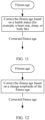
- the method further includes: displaying, by the electronic device, a third interface, where the third interface includes the fitness age and a second control, and the second control is configured to trigger the electronic device to re-estimate the fitness age; displaying, by the electronic device, guide information after the electronic device detects a second operation performed by the user on the second control, where the guide information is used for guiding the user to complete a test exercise for testing the maximal oxygen uptake; and displaying, by the electronic device, a fourth interface after detecting that the test exercise ends, where the fourth interface includes an updated fitness age.
- the electronic device may provide, in the interface for displaying the fitness age, an entry for re-estimating the fitness age, to flexibly trigger re-estimation on the fitness age after viewing the fitness age.
- the electronic device includes a mapping relationship between an age and an oxygen uptake.
- the mapping relationship between an age and an oxygen uptake may be shown in Table 3 below. That the electronic device obtains the fitness age by performing mapping based on the maximal oxygen uptake obtained through testing includes: querying, by the electronic device, the maximal oxygen uptake in the mapping relationship, and determining an age having a mapping relationship with the maximal oxygen uptake as the fitness age.
- the electronic device may estimate the fitness age only through simple mapping. This requires no complex operation and is easy to implement.
- that the electronic device tests the maximal oxygen uptake of the user includes: calculating, by the electronic device, a probability distribution of the maximal oxygen uptake based on an exercise heart rate and an exercise speed of the user during the test exercise; and performing, by the electronic device, weighted summation on an oxygen uptake and a probability corresponding to the oxygen uptake that are included in the probability distribution, to obtain the maximal oxygen uptake.
- the method further includes: determining, by the electronic device, whether the maximal oxygen uptake is in a second oxygen uptake range of a target population, where the target population is a group to which the user belongs; and correcting, by the electronic device, the maximal oxygen uptake to a preset oxygen uptake if the maximal oxygen uptake is not in the second oxygen uptake range, where the preset oxygen uptake is any oxygen uptake in the second oxygen uptake range.
- the maximal oxygen uptake is corrected to be in a proper maximal oxygen uptake range (that is, the second oxygen uptake range) corresponding to the target population to which the user belongs, to make the maximal oxygen uptake corrective.
- the electronic device obtains the fitness age by performing mapping based on the maximal oxygen uptake obtained through testing is: obtaining, by the electronic device, the fitness age through mapping based on the preset oxygen uptake. In this way, a more accurate fitness age may be obtained.
- the method further includes: correcting, by the electronic device, the fitness age based on exercise duration of the user in a first preset time interval, to obtain a corrected fitness age, where longer exercise duration indicates a smaller corrected fitness age; and that the second interface includes a fitness age of the user is specifically: the second interface includes the corrected fitness age.
- a fitness age obtained through correction when an exercise habit becomes better may be lower than a fitness age obtained through correction when an exercise habit becomes better.
- age1' represents the corrected fitness age
- age0 represents the chronological age
- age1 represents the fitness age
- p represents a target probability corresponding to the maximal oxygen uptake in the probability distribution
- n1 represents a correction factor, where longer exercise duration indicates a smaller correction factor
- n1 is in a range of [-1, 1].
- the watch may lower the fitness age, to make the fitness age appropriately close to the chronological age. If the exercise duration is longer, a smaller correction factor n1 is used, and the corrected fitness age age1' finally obtained is smaller. In this way, for better exercise habits, the fitness age is more likely to be lowered, and therefore, the fitness age may be lowered more significantly.
- the method further includes: correcting, by the electronic device, the fitness age based on a change in a health status of the user in second preset time, to obtain the corrected fitness age, where when the health status shows a trend of improvement, the electronic device lowers the fitness age; or when the health status shows a trend of worsening, the electronic device increases the fitness age. In this way, the corrected fitness age matches the health status of the user.
- the correcting, by the electronic device, the fitness age based on a change in a health status of the user in second preset time, to obtain the corrected fitness age includes at least one of the following:
- the method further includes: if a difference between the fitness age and any historical fitness age in a third preset time interval exceeds a preset difference, correcting, by the electronic device, the fitness age, to obtain a corrected fitness age, where a difference between the corrected fitness age and any historical fitness age in the third preset time interval does not exceed the preset difference.
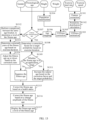
- the fitness age of the user may not greatly change in a short period of time. For example, a case in which the fitness age in three days is 33 years old and the fitness age is 25 years old today may not occur. Based on this, in some embodiments, referring to FIG. 12 , after obtaining a fitness age, the watch may further correct, based on a fitness age in the third preset time interval (for example, the last week, half month, or the like), the current fitness age obtained through calculation (that is, correcting the fitness age based on a change amplitude of the fitness age as shown in FIG. 12 ), to obtain a corrected fitness age. Therefore, the fitness age does not greatly change in a short period of time.
- a fitness age in the third preset time interval for example, the last week, half month, or the like
- the second interface includes a fitness age of the user is specifically: the second interface includes the corrected fitness age. In this way, a more accurate fitness age can be provided for the user.
- the correcting the fitness age includes: if the fitness age is in a preset age range, correcting the fitness age; and if the fitness age is not in the preset age range, adjusting, by the electronic device, the fitness age to be in the preset age range, and correcting the fitness age.
- the fitness age obtained through mapping may be very improper, for example, the fitness age exceeds a normal fitness age range by 18 to 65 years old. Based on this, if the fitness age is further corrected, there may be significant deviations in both a determined correction scheme and a correction result due to a severely improper correction basis. In view of this, in this embodiment, the fitness age is further corrected after the fitness age is adjusted to a proper age range, to improve rationality of correction on the fitness age.
- an embodiment of this application further provides an electronic device.
- the electronic device includes a display screen, a memory, and one or more processors.
- the display screen, the memory, and the processor are coupled.
- the memory is configured to store computer program code, the computer program code includes computer instructions, and when the computer instructions are executed by the processor, the electronic device is enabled to perform the following steps: displaying, by an electronic device, a first interface, where the first interface includes a first control, and the first control is configured to trigger the electronic device to test a maximal oxygen uptake of a user;
- the electronic device displays test guide information after the electronic device detects a first operation performed by the user on the first control, where the test guide information is used for guiding the user to complete a test exercise for testing the maximal oxygen uptake.
- the electronic device displays a second interface after detecting that the test exercise ends, where the second interface includes a fitness age of the user, and the fitness age is obtained by the electronic device by performing mapping based on the maximal oxygen uptake obtained through testing.
- the second interface further includes indication information, where the indication information is used for indicating a level of the fitness age.
- the electronic device when the computer instructions are executed by the processor, the electronic device is enabled to perform the following steps: determining, by the electronic device, a level of the maximal oxygen uptake in a first oxygen uptake range corresponding to a target age bracket, to obtain the level of the fitness age, where the target age bracket is an age bracket to which a chronological age of the user belongs.
- the electronic device when the computer instructions are executed by the processor, the electronic device is enabled to perform the following steps: displaying, by the electronic device, a third interface, where the third interface includes the fitness age and a second control, and the second control is configured to trigger the electronic device to re-estimate the fitness age; displaying, by the electronic device, guide information after the electronic device detects a second operation performed by the user on the second control, where the guide information is used for guiding the user to complete a test exercise for testing the maximal oxygen uptake; and displaying, by the electronic device, a fourth interface after detecting that the test exercise ends, where the fourth interface includes an updated fitness age.
- the electronic device includes a mapping relationship between an age and an oxygen uptake.
- the electronic device is enabled to perform the following steps: querying, by the electronic device, the maximal oxygen uptake in the mapping relationship, and determining an age having a mapping relationship with the maximal oxygen uptake as the fitness age.
- the electronic device when the computer instructions are executed by the processor, the electronic device is enabled to perform the following steps: calculating, by the electronic device, a probability distribution of the maximal oxygen uptake based on an exercise heart rate and an exercise speed of the user during the test exercise; and performing, by the electronic device, weighted summation on an oxygen uptake and a probability corresponding to the oxygen uptake that are included in the probability distribution, to obtain the maximal oxygen uptake.
- the electronic device when the computer instructions are executed by the processor, the electronic device is enabled to perform the following steps: determining, by the electronic device, whether the maximal oxygen uptake is in a second oxygen uptake range of a target population; correcting, by the electronic device, the maximal oxygen uptake to a preset oxygen uptake if the maximal oxygen uptake is not in the second oxygen uptake range, where the preset oxygen uptake is any oxygen uptake in the second oxygen uptake range; and obtaining, by the electronic device, the fitness age through mapping based on the preset oxygen uptake.
- the electronic device when the computer instructions are executed by the processor, the electronic device is enabled to perform the following steps: correcting, by the electronic device, the fitness age based on exercise duration of the user in a first preset time interval, to obtain a corrected fitness age, where longer exercise duration indicates a smaller corrected fitness age; and that the second interface includes a fitness age of the user is specifically: the second interface includes the corrected fitness age.
- the electronic device when the computer instructions are executed by the processor, the electronic device is enabled to perform the following steps: correcting, by the electronic device, the fitness age based on a change in a health status of the user in second preset time, to obtain the corrected fitness age, where when the health status shows a trend of improvement, the electronic device lowers the fitness age; or when the health status shows a trend of worsening, the electronic device increases the fitness age.
- the electronic device when the computer instructions are executed by the processor, the electronic device is enabled to perform the following steps: if a resting heart rate of the user in a second preset time interval shows a trend of decreasing, the electronic device lowers the fitness age by n2 years; or if a resting heart rate of the user in a second preset time interval shows a trend of increasing, the electronic device increases the fitness age by n2 years; if a maximum heart rate of the user in a second preset time interval shows a trend of increasing, lowering, by the electronic device, the fitness age by n3 years; or if a resting heart rate of the user in a second preset time interval shows a trend of decreasing, increasing, by the electronic device, the fitness age by n3 years; if sleep quality of the user in a second preset time interval shows a trend of improvement, lowering, by the electronic device, the fitness age by n4 years; or if sleep quality of the user in a second preset time interval shows a trend of a trend of improvement
- the electronic device when the computer instructions are executed by the processor, the electronic device is enabled to perform the following steps: if a difference between the fitness age and any historical fitness age in a third preset time interval exceeds a preset difference, correcting, by the electronic device, the fitness age, to obtain a corrected fitness age, where a difference between the corrected fitness age and any historical fitness age in the third preset time interval does not exceed the preset difference.
- the second interface includes a fitness age of the user is specifically: the second interface includes the corrected fitness age.
- the electronic device when the computer instructions are executed by the processor, the electronic device is enabled to perform the following steps: if the fitness age is in a preset age range, correcting the fitness age; and if the fitness age is not in the preset age range, adjusting, by the electronic device, the fitness age to be in the preset age range, and correcting the fitness age.
- an embodiment of this application provides a chip system.
- the chip system is used in an electronic device including a display screen and a memory.
- the chip system includes one or more interface circuits and one or more processors.
- the interface circuit and the processor are interconnected through a line.
- the interface circuit is configured to receive a signal from the memory of the electronic device and send the signal to the processor, where the signal includes computer instructions stored in the memory, and when the processor executes the computer instructions, the electronic device performs the method according to the first aspect and any possible design of the first aspect.
- this application provides a computer-readable storage medium, where the computer-readable storage medium includes computer instructions, and when the computer instructions are run on an electronic device, the electronic device is enabled to perform the method according to the first aspect and any possible design of the first aspect.
- this application provides a computer program product.
- the computer When computer program product is run on a computer, the computer is enabled to perform the method according to the first aspect and any possible design of the first aspect.
- An embodiment of this application provides a fitness age estimation method.
- the method may be applied to a wearable electronic device such as a watch, smart glasses, an earphone, or the like.
- a wearable electronic device such as a watch, smart glasses, an earphone, or the like.
- the electronic device may calculate a fitness age of a user, and provide the fitness age for the user.
- the electronic device may display the fitness age, to provide the fitness age for the user.
- the watch may provide a target option (or may be referred to as a first control) for a specific exercise for testing a maximal oxygen uptake.
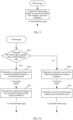
- the specific exercise includes outdoor brisk walking, and in this case, the watch may provide an outdoor brisk walking option 102 in an interface 101 (or may be referred to as a first interface) shown in FIG. 1 . That is, the target option is the outdoor brisk walking option 102.
- a preset exercise may alternatively be another type of exercise such as outdoor running, hill climbing, or the like.
- the watch may display the interface 103 shown in FIG. 1 .
- the interface 103 includes options such as “exercise”, “exercise records", “training status”, and the like.
- the watch may detect an operation on the "exercise” option by the user.
- the watch may display an interface including the target option (for example, the outdoor brisk walking option 102), thereby providing the target option.
- the interface including the target option for example, the outdoor brisk walking option 102
- the interface 101 includes the outdoor brisk walking option 102, and further includes options such as "indoor running", "free training", and the like.
- the watch may detect the operation on the target option by the user.
- the watch may guide the user to complete a test exercise for testing the maximal oxygen uptake.
- the watch needs to use positioning to calculate pace during exercise for subsequent calculation on the fitness age.
- the watch may display a positioning prompt to prompt whether the positioning is successful or not.
- the watch may display an interface 104 shown in FIG. 1 after detecting the selection operation by the user on the outdoor brisk walking option 102 (where the outdoor brisk walking option 102 is the target option) in the interface 101 shown in FIG. 1 .
- the interface 104 includes a positioning prompt 105.
- a global positioning system (Global Positioning System, GPS) in the positioning prompt 105 has signal fullness. This may prompt successful GPS positioning.
- the watch needs to calculate the fitness age based on a heart rate during exercise.
- the watch may display a heart rate prompt after detecting the selection operation on the target option by the user, where the heart rate prompt may further include a heart rate recommendation prompt and a real-time heart rate prompt. In this way, the user may be guided to control the heart rate during exercise.
- the watch may display an interface 104 shown in FIG. 1 after detecting the selection operation by the user on the outdoor brisk walking option 102 (where the outdoor brisk walking option 102 is the target option) in the interface 101 shown in FIG. 1 .
- the interface 104 includes a real-time heart rate prompt 106, where the real-time heart rate prompt 106 display a resting heart rate of the user before exercise of 95 beats per minute.
- the interface 104 may further include an operation prompt for starting exercise, for example, "Be ready, and click a down button to start exercise.” In this way, the user is guided to start the test exercise.
- an operation prompt for starting exercise for example, "Be ready, and click a down button to start exercise.” In this way, the user is guided to start the test exercise.
- the watch may display an interface 107 shown in FIG. 1 after detecting a user's operation of triggering to start the test exercise, for example, detecting a user's operation of clicking the down button in the interface 104 shown in FIG. 1 .
- the interface 107 includes the heart rate recommendation prompt, for example "A heart rate recommendation is 89-138 beats/minute", that is, a heart rate recommendation is 89-138 beats per minute.
- the operation of triggering to start the test exercise may alternatively be the selection operation on the target option by the user. That is, after detecting the selection operation on the target option by the user, the watch may directly start the test exercise, for example, display the interface 107.
- the watch may receive and display a remaining duration prompt, to prompt remaining duration of the test exercise.
- the watch may display the interface 107 shown in FIG. 1 after detecting the user's operation of clicking the down button in the interface 104 shown in FIG. 1 .
- the interface 107 includes the remaining duration prompt, for example, remaining duration is 3 minutes.
- the watch may display an interface 108 shown in FIG. 1 , where the interface 108 includes the remaining duration prompt, for example, remaining duration is 1 minute and 37 seconds.
- the test exercise includes a plurality of test stages, and the test stages are used to test for different fitness situations, such as testing for endurance, explosion, and the like.
- the watch may display a test stage prompt after detecting the user's operation of triggering to start the test exercise.
- the watch may display the interface 107 shown in FIG. 1 after detecting the user's operation of clicking the down button in the interface 104 shown in FIG. 1 .
- the interface 107 includes the test stage prompt, for example, prompting that the test stage is "1/5 brisk walking", that is, the current test stage is the first stage in five stages of brisk walking.
- the watch may display the interface 108 shown in FIG. 1 .
- the interface 108 includes the test stage prompt, for example, prompting that the test stage is "1/5 brisk walking", and prompting that the stage is mainly for an "aerobic endurance" test.
- the heart rate recommendation prompt is a heart rate recommendation at a corresponding test stage
- the real-time heart rate is a real-time heart rate detected at the corresponding test stage
- the remaining duration is remaining duration of the corresponding test stage.
- the watch may display the interface 107 shown in FIG. 1 .
- the test stage prompt in the interface 107 is "1/5 brisk walking".
- the heart rate recommendation prompt "A recommended heart rate is in a range of 89 to 138 beats/minute” in the interface 107 indicates that a recommended heart rate for the "1/5 brisk walking" stage is in a range of 89 to 138 beats per minute.
- the remaining duration prompt "03:00" in the interface 107 indicates that the remaining duration of the "1/5 brisk walking" stage is 3 minutes.
- the watch may calculate the maximal oxygen uptake, that is, VO2max based on exercise data such as an exercise heart rate, an exercise speed, and the like detected during the test exercise. Then, the fitness age is estimated based on VO2max.
- the watch may display a currently estimated fitness age.
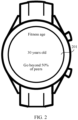
- the watch may display an interface 201 shown in FIG. 2 , where the interface 201 includes a value of the fitness age, for example, 30 years old.
- an interface displaying the currently estimated fitness age is referred to as a second interface.
- the watch may further display information indicating a level of the fitness age.
- the interface 201 further includes information of "Go beyond 50% of peers" for indicating that the fitness age of the user is superior to 50% of peers.
- the watch may further provide a function of viewing historically estimated fitness ages.
- the watch may also provide historical data for viewing by the user.
- the watch may display an interface 301 shown in FIG. 3 , where the interface 301 includes a training status option 302.
- the watch may display historical training data such as a training load, a maximal oxygen uptake, and a fitness age.
- the user may perform a slide operation to trigger the watch to slide to display various training data.
- the interface 303 shown in FIG. 3 may be displayed, where the interface 303 includes the last estimated fitness age.
- an interface displaying the historically estimated fitness age is referred to as a third interface.
- the interface 303 further includes a re-measurement option 304 for triggering re-estimation on the fitness age.
- the watch may re-guide the user to complete the test exercise. For example, the user may be guided to complete the test exercise according to processes of the interface 104, the interface 107, and the interface 108 shown in FIG. 1 . Details are not described herein.
- the watch may display an updated fitness age after the test exercise is completed.
- a control for example, the re-measurement option 304 for triggering the watch to re-estimate the fitness age is referred to as a second control, and an operation of triggering the watch to re-estimate the fitness age is referred to as a second operation.
- the watch may transmit the currently estimated fitness age to another electronic device such as a mobile phone, a tablet, or the like.
- another electronic device such as a mobile phone, a tablet, or the like. Descriptions are provided below mainly by using an example in which the another electronic device is a mobile phone.
- the mobile phone may perform statistics analysis on the fitness age of the user.
- a sport and health application (Application, APP) is installed in the mobile phone, and the sport and health APP in the mobile phone may perform statistics analysis on the fitness age of the user after receiving the fitness age. Subsequently, the mobile phone may display an analysis result for the user after detecting that the user views the fitness age recorded in the sport and health APP.
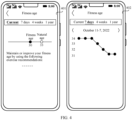
- the mobile phone may display an interface 401 shown in FIG. 4 , where the interface 401 includes viewing options for a plurality of time intervals, for example, four viewing options for current time, 7 days, 4 weeks, and 1 year. The mobile phone may display a corresponding analysis result after a viewing option is selected.
- the mobile phone may display a result of comparison between a fitness age and a chronological age, as shown in the interface 401.
- the phone may display a curve of changes in the fitness age of the user in over 7 days, as shown in the interface 402.
- the fitness age may be estimated based on the exercise data such as the exercise heart rate, the exercise speed, and the like detected during the test exercise.
- the watch may first calculate a maximal oxygen uptake during the test exercise based on the exercise data such as the exercise heart rate, the exercise speed, and the like, and then calculate a fitness age based on the maximal oxygen uptake.
- the fitness age of the user may be estimated after daily exercise is completed. This can routinely obtain a fitness age, and reduce the difficulty in obtaining the fitness age.
- the electronic device may include a processor 510, an external memory interface 520, an internal memory 521, a universal serial bus (universal serial bus, USB) interface 530, a charging management module 540, a power management module 541, a battery 542, an antenna 1, an antenna 2, a mobile communication module 550, a wireless communication module 560, and an audio module 570, a speaker 570A, a telephone receiver 570B, a microphone 570C, a headset jack 570D, a sensor module 580, a button 590, a motor 591, an indicator 592, a camera 593, a display screen 594, a subscriber identity module (subscriber identity module, SIM) card interface 595, and the like.
- a processor 510 an external memory interface 520, an internal memory 521, a universal serial bus (universal serial bus, USB) interface 530, a charging management module 540, a power management module 541, a battery 542, an antenna 1, an antenna 2, a mobile communication module 550,
- the sensor module 580 includes, but is not limited to, an optical heart rate sensor 580A, an accelerometer (Accelerometer, ACC) sensor 580B, a gyroscope (Gyroscope, GYRO) 580C, and a GPS sensor 580D.
- an optical heart rate sensor 580A an accelerometer (Accelerometer, ACC) sensor 580B, a gyroscope (Gyroscope, GYRO) 580C, and a GPS sensor 580D.
- the structure illustrated in this embodiment does not constitute a specific limitation on the watch.
- the watch may include more or fewer components than those shown in the figure, or some components may be combined, or some components may be split, or components are arranged in different manners.
- the components in the figure may be implemented by hardware, software, or a combination of software and hardware.
- the processor 510 may include one or more processing units.
- the processor 510 may include an application processor (application processor, AP), a modem processor, a graphics processing unit (graphics processing unit, GPU), an image signal processor (image signal processor, ISP), a controller, a memory, a video codec, a digital signal processor (digital signal processor, DSP), a baseband processor, and/or a neural-network processing unit (neural-network processing unit, NPU), and the like.
- Different processing units may be separate devices, or may be integrated into one or more processors.
- the processor 510 may perform the following processing: calculating a maximal oxygen uptake during the test exercise based on data such as a heart rate, a speed, and the like, and further calculating a fitness age based on the maximal oxygen uptake.
- the charging management module 540 is configured to receive a charging input from a charger.
- the charger may be a wireless charger or a wired charger.
- the charging management module 540 may receive a charging input of a wired charger by using the USB interface 530.
- the charging management module 540 may receive a wireless charging input by using a wireless charging coil of the mobile phone 500.
- the charging management module 540 may further supply power to the watch through the power management module 541 while charging the battery 542.
- the power management module 541 is configured to connect the battery 542, the charging management module 540, and the processor 510.
- the power management module 541 receives an input of the battery 542 and/or the charging management module 540, to supply power to the processor 510, the internal memory 521, an external memory, a display screen 594, the camera 593, the wireless communication module 560, and the like.
- the power management module 541 may be further configured to monitor parameters such as a battery capacity, battery recycling times, and a battery health status (leakage and impedance).
- the power management module 541 may alternatively be disposed in the processor 510.
- the power management module 541 and the charging management module 540 may alternatively be disposed in a same device.
- a wireless communication function of the watch may be implemented by using the antenna 1, the antenna 2, the mobile communication module 550, the wireless communication module 560, the modem processor, the baseband processor, and the like.
- the wireless communication module 560 may provide solutions of wireless communication applied to the watch, including a wireless local area network (wireless local area network, WLAN) (such as a wireless fidelity (wireless fidelity, Wi-Fi) network) and Bluetooth (bluetooth, BT), a global navigation satellite system (global navigation satellite system, GNSS), frequency modulation (frequency modulation, FM), near field communication (near field communication, NFC), and infrared (infrared, IR).
- the wireless communication module 560 may be one or more devices that integrate at least one communication processing module.
- the wireless communication module 560 receives an electromagnetic wave by using the antenna 2, performs frequency modulation and filtering processing on an electromagnetic wave signal, and sends a processed signal to the processor 510.
- the wireless communication module 560 may alternatively receive a to-be-sent signal from the processor 510, perform frequency modulation and amplification on the to-be-sent signal, and convert the signal into an electromagnetic wave for radiation by using the antenna 2.
- the watch implements a display function by using the GPU, a display screen 594, the application processor, and the like.
- the GPU is a microprocessor for image processing, and is connected to the display screen 594 and the application processor.
- the GPU is configured to perform mathematical and geometric calculation, and is configured to render graphics.
- the processor 510 may include one or more GPUs, and the GPU executes program instructions to generate or change display information.
- the display screen 594 may be configured to display a fitness age, and display information for guiding the user to complete a test exercise.
- the display screen 594 of the watch may display content in interfaces in FIG. 1 to FIG. 3 .
- the watch may implement a photographing function by using an ISP, the camera 593, a video codec, the GPU, the display screen 594, the application processor, and the like.
- the ISP is configured to process data fed back by the camera 593.
- the camera 593 is configured to capture a static image or a video. An optical image is generated for an object by using the lens and is projected onto the photosensitive element.
- the watch may include one or N cameras 593, where N is a positive integer greater than 1.
- the camera 593 may include a depth camera, a binocular camera and/or a monocular camera.
- the external memory interface 520 may be configured to connect to an external storage card such as a micro SD card, to extend a storage capability of the watch.
- the external storage card communicates with the processor 510 by using the external memory interface 520, to implement a data storage function, for example, storing a file such as a music or a video in the external storage card.
- the internal memory 521 may be configured to store computer executable program code, where the executable program code includes instructions.
- the processor 510 runs the instructions stored in the internal memory 521, to perform various function applications and data processing of the watch. For example, the processor 510 may display different content on the display screen 594 in response to the user's operation of expanding the display screen 594 by executing instructions stored in the internal memory 521.
- the internal memory 521 may include a program storage area and a data storage area.
- the program storage area may store an operating system, an application required by at least one function (such as a voice playing function and an image playing function), and the like.
- the data storage area may store data (for example, audio data or a phone book) and the like created during use of the watch.
- the internal memory 521 may include a high-speed random access memory, and may also include a non-volatile memory, for example, at least one magnetic disk storage device, a flash memory device, or a universal flash storage (universal flash storage, UFS).
- a non-volatile memory for example, at least one magnetic disk storage device, a flash memory device, or a universal flash storage (universal flash storage, UFS).
- the watch may implement an audio function, for example, music playback or recording, by using the audio module 570, the speaker 570A, the phone receiver 570B, the microphone 570C, the headset jack 570D, the application processor, and the like.
- an audio function for example, music playback or recording
- the optical heart rate sensor 580A is currently one of the most popular sensors for heart rate detection.
- the optical heart rate sensor measures a heart rate and other biometrics by using Photoplethysmography (Photoplethysmography, PPG).
- a measurement principle of the PPG is as follows: Light is directed to the skin by a capacitive lamp, light reflected back through the skin tissue is received by a photosensitive sensor and converted into an electrical signal, the electrical signal is converted into a digital signal via the electrical signal, and a heart rate is calculated based on an absorbance of blood.
- the ACC sensor 580B may be configured to detect a value of acceleration of the watch in various directions (generally three axes).
- the GYRO 580C may be configured to detect an angular velocity of the watch about three axes (e.g., x, y, and z axes).
- the GPS sensor 580D may be configured to position the watch.
- the watch may use the optical heart rate sensor 580A, the ACC sensor 580B, and the GYRO 580C to detect a real-time heart rate of the user during fitness age detection.
- the optical heart rate sensor 580A may detect a heart rate signal included and may further detect a noise signal such as ambient light.
- the ACC sensor 580B and the GYRO 580C may filter out the noise signal from the signal detected by the optical heart rate sensor 580A, to obtain the heart rate signal.
- the watch may use the ACC sensor 580B, the GYRO 580C, and the GPS sensor 580D to detect an exercise speed of the user during fitness age detection. Specific implementations of detecting the heart rate and the speed are not described herein. For details, reference may be made to descriptions in the related art.
- the button 590 includes a power button, a volume button, and the like.
- the button 590 may be a mechanical button, or a touch-type button.
- the watch may receive a key-based input, and generate a key signal input related to a user setting and function control of the watch.
- the motor 591 can generate a vibration prompt.
- the motor 591 may be configured to provide a vibration prompt for an incoming call, and may be further configured to provide a touch vibration feedback.
- the indicator 592 may be an indicator light, and may be configured to indicate a charging state or a battery change, or may be further configured to indicate a message, a missed call, a notification, or the like.
- the SIM card interface 595 is configured to connect to a SIM card.
- the SIM card may be inserted into the SIM card interface 595 or removed from the SIM card interface 595, to come into contact with or be separated from the watch.
- the watch may support one or N SIM card interfaces, where N is a positive integer greater than 1.
- the fitness age estimation method provided in embodiments of this application may be implemented by the watch having the foregoing hardware structure.
- the watch may detect the exercise heart rate and the exercise speed when the user performs the test exercise. For example, the exercise heart rate is detected through the optical heart rate sensor 580A, the ACC sensor 580B, and the GYRO 580C, and the exercise speed is detected through the ACC sensor 580B, the GYRO 580C, and the GPS sensor 580D. After detecting the end of the test exercise or a user's operation of triggering to end the test exercise, the watch may calculate a maximal oxygen uptake VO2max during the test exercise based on the exercise heart rate and the exercise speed, and estimate a fitness age of the user based on the maximal oxygen uptake.
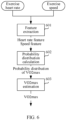
- that the watch calculates the maximal oxygen uptake based on the exercise heart rate and the exercise speed includes: performing feature extraction on the exercise heart rate and the exercise speed (feature extraction shown as 601 in FIG. 6 ); calculating a probability distribution of VO2max based on a heart rate feature and a speed feature that are extracted (probability distribution calculation shown as 602 in FIG. 6 ); and estimating VO2max based on the probability distribution of VO2max (VO2max estimation shown as 603 in FIG. 6 ). Descriptions are separately provided below.
- the watch extracts the heart rate feature based on a resting heart rate before the test exercise and a real-time heart rate per second during the test exercise, and extracts the speed feature based on an exercise speed per second during the test exercise.
- the heart rate feature includes, but is not limited to, a statistical feature related to a resting heart rate, a maximum heart rate, and heart rate time and frequency domain, and a derived feature on a timing period.
- the speed feature includes, but is not limited to, statistical features and derived features on an average speed, a maximum speed, and a speed timing.
- the probability distribution includes a plurality of possible VO2max after the user completes the test exercise, and a probability for each possible VO2max.
- the watch may run a maximal oxygen uptake prediction model by using the heart rate feature and the velocity feature that are extracted as inputs, to obtain a probability distribution of the maximal oxygen uptake.
- the maximal oxygen uptake prediction model may be a Bayesian regression analysis model, a support vector machine model, a tree model, or a neural network model. This is not specifically limited in embodiments of this application.
- the watch may calculate a probability distribution p (VO2max
- p VO 2 max HRn , w p HRn , w VO 2 max p VO 2 max p HRn , w
- HRn represents a normalized heart rate
- w represents an exercise load
- the watch may transmit the probability distribution to another electronic device such as a mobile phone, a tablet, or the like communicatively connected to the watch. Then, the probability distribution is stored by the another electronic device. Subsequently, when probability distribution calculation needs to be completed, the watch may obtain a historical probability distribution from the another electronic device.
- the watch can obtain a probability that VO2max of the user is equal to each VO2max value in a preset interval.
- the preset interval is 20-90 mL/(kg min)
- probabilities that VO2max is equal to 71 VO2max values ranging from 20 to 90 may be obtained.
- a calculated probability distribution result for VO2max is [k1, k2, k3, ..., k71], indicating that probabilities that VO2max is equal to 20 mL/(kg min), 21 mL/(kg min), 22 mL/(kg min), ..., and 90 mL/(kg min) are sequentially k1, k2, k3, ..., and k71.
- the watch may estimate VO2max.
- the watch may obtain, from the probability distribution of VO2max, an oxygen uptake with the largest probability as VO2max. For example, if k25 of k1 to k71 has the largest probability, an oxygen uptake corresponding to k25 is 44, and it may be determined that VO2max is 44.
- VO2max may be obtained through the process shown in FIG. 6 for subsequent calculation on the fitness age.
- a person skilled in the art may also calculate VO2max by using relevant existing technologies, which is not limited to the manner of calculating VO2max shown in FIG. 6 .
- the exercise heart rate and the exercise speed captured by the sensor may be inaccurate, and user's exercise during the test exercise may not meet a test condition, for example, there may be a deviation in calculated VO2max due to factors such as insufficient exercise time, an exercise heart rate not controlled within the range of the recommended heart rate, and the like.
- the watch may correct VO2max based on a target population to which the user belongs, to improve rationality of VO2max.
- the population may be classified into three classes, namely, lean, fat, and normal according to a body mass index (Body Mass Index, BMI).
- BMI Body Mass Index
- a plurality of classes of populations corresponding to a plurality of chronological age ranges may be classified, for example, the populations may be classified into three classes, namely, a population aged 20-30 years old, a population aged 30-40 years old, and a population aged 40-50 years old.
- the population may be classified according to a body fat percentage.
- a higher body fat percentage indicates a higher fat content and a poor physical condition; or a lower body fat percentage indicates a lower fat content and a better physical condition.
- the populations may be classified into populations with different physical conditions according to body fat percentages. Further, the population can be classified into males and females according to genders, for example, the population is classified into leaner, fatter, and normal females, and leaner, fatter, and normal males.
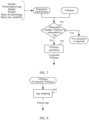
- VO2max correction include: determining whether VO2max is proper or not based on a proper range of VO2max (or may be referred to as a second oxygen uptake range) of the target population (that is, a VO2max proper or not determining process shown as 701 in FIG. 7 ); and if VO2max is not proper, correcting VO2max to obtain corrected VO2max (that is, a VO2max correction process shown as 702 in FIG. 7 ). Descriptions are separately provided below.
- Each population classification has its proper VO2max range.
- a proper range of VO2max for males aged 20-30 years old is 30-50 mL/(kg min).
- a proper range of VO2max is generally higher for a population with a low body fat percentage.
- the watch may compare VO2max calculated to a proper range of VO2max of the target population. If VO2max calculated is in the proper range of VO2max of the target population, it is determined that VO2max calculated is proper. Conversely, if VO2max calculated is not in the proper range of VO2max of the target population, it is determined that VO2max calculated is improper. In this case, the watch needs to perform VO2max correction.
- the watch may correct VO2max to a preset VO2max.
- the preset VO2max may be a mean value of VO2max of the target population, or may be a median of VO2max of the target population, or may be any value such as an intermediate value in the proper range of VO2max of the target population. In this way, the deviation of VO2max may be reduced.
- Embodiments of this application exemplarily describe a process of obtaining the target population by the watch.
- target parameters such as a gender, a chronological age, a height, a weight, a body fat percentage, heart rate variability (Heart Rate Variability, HRV)
- the watch may determine the target population to which the user belongs. For example, the watch may calculate the BMI of the user based on the height and the weight, thereby determining the target population to which the user belongs.
- the watch may determine the target population to which the user belongs.
- the target parameters may be obtained by the watch receiving an input by the user, or the target parameters may be obtained by the watch from another electronic device.
- the target population may be determined by the another electronic device based on the target parameters, and then transmitted to the watch.
- the watch may query a mapping relationship between a fitness age range and a range of VO2max corresponding to the user's gender, to determine a fitness age matching the target VO2max (that is, an age mapping process shown as 801 in FIG. 8 ).
- Table 1 Age bracket Male Female 18-25 years old 43-45 mL/(kg min) 37-42 mL/(kg min) 26-35 years old 39-42 mL/(kg min) 36-45 years old 36-38 mL/(kg min) 33-36 mL/(kg min) 46-55 years old 32-35 mL/(kg min) 29-31 mL/(kg min) 56-65 years old 30-32 mL/(kg min) 26-28 mL/(kg min) 65 years old or above 26-28 mL/(kg min) 23-25 mL/(kg min)
- a range of VO2max of males with a fitness age of 18-25 years old is 43-45mL/(kg min)
- a range of VO2max of males with a fitness age of 26-35 years old is 39-42mL/(kg ⁇ min)
- a range of VO2max of males with a fitness age of 65 years old or above is 26-28mL/(kg ⁇ min).
- a range of VO2max of females with a fitness age of 18-35 years old is 37-42mL/(kg ⁇ min); a range of VO2max of females with a fitness age of 36-45 years old is 33-36mL/(kg ⁇ min), ..., and a range of VO2max of females with a fitness age of 65 years old or above is 23-25mL/(kg ⁇ min).
- the mapping relationship between the fitness age range and the range of VO2max may be refined, to obtain a mapping relationship between each fitness age and VO2max.
- the range of VO2max may be divided evenly based on a plurality of fitness ages included in the corresponding fitness age range.
- a range of VO2max of the males is 43-45 mL/(kg-min)
- a difference 2 between an upper limit and a lower limit of 43-45 mL/(kg-min) may be divided by a value of the fitness ages included in a range of 18-25 years old (that is, a total of 8 for 18, 19, 20, 21, 22, 23, 24, and 25) minus 1, to obtain a result of about 0.285. In this way, it can be incremented at intervals of 0.285 (or 0.28 alternating with 0.29), and a mapping relationship between each fitness age and VO2max of males aged 18-25 years old is shown in Table 2 below.
- mapping relationships between all fitness age ranges and ranges of VO2max in Table 1 are refined, so that a mapping relationship between a fitness age and VO2max can be obtained as shown in Table 3 below.
- a unit of age (that is, years old) and a unit of VO2max, that is, mL/(kg min) are omitted, to simplify the table.
- the watch may query the target VO2max from the refined mapping relationship corresponding to the gender of the user, and determine a fitness age having the mapping relationship with VO2max having the smallest difference from the target VO2max as a fitness age corresponding to the target VO2max. For example, if the target VO2max is 43.6 mL/(kg min), and the gender of the user is male, Table 3 is queried, it may be determined that VO2max with the smallest difference from 43.6 mL/(kg min) in the refined mapping relationship corresponding to male is 43.57, and a fitness age corresponding to 43.6 mL/(kg min) is 23 years old having a mapping relationship with 43.57.
- the watch can determine the fitness age corresponding to the target VO2max only by querying the mapping relationship.
- the user may be a professional user, such as a professional athlete, who is very clear of target VO2max of the user.
- the watch may provide a preset entry for inputting the target VO2max. After detecting a user's operation of inputting the target VO2max through the preset entry, the watch may directly obtain the fitness age through mapping based on the target VO2max inputted by the user.
- the watch may display historical training data, such as a training load, VO2max, and a fitness age.
- the user may perform a slide operation to trigger the watch to slide to display various training data.
- an interface 305 may be displayed.
- a change option in the interface 305 is a preset entry.
- a chronological age of the user may be defaulted as the fitness age and displayed in the watch.
- the watch may correct the fitness age, to make the fitness age more proper.
- the watch may correct the fitness age based on user's exercise habits, to obtain a corrected fitness age.
- the exercise habits may be measured by using parameters such as exercise frequency, exercise duration, and the like, where higher exercise frequency indicates better exercise habits, and longer exercise duration indicates better exercise habits. Descriptions are provided below mainly by using exercise duration as an example.
- the fitness age is corrected, so that a fitness age obtained through correction when an exercise habit becomes better may be lower than a fitness age obtained through correction when an exercise habit becomes better.
- the calculated fitness age may be less than the chronological age, it indicates that the physical fitness of the user is good. For example, the fitness age is 33 years old, and the chronological age is 35 years old. In some cases, if the user is under high stress and has less daily exercise, the calculated fitness age may be greater than the chronological age, it indicates that the physical fitness of the user is poor. For example, the fitness age is 33 years old, and the chronological age is 30 years.
- the watch may determine whether the fitness age is greater than the chronological age (that is, a process of determining whether the fitness age is greater than the chronological age shown as 1001 in FIG. 10 ). For two different determination results, the watch may correct the fitness age in a corresponding manner, to improve rationality of the corrected fitness age. Two cases are separately described below.
- Case 1 If the fitness age is greater than the chronological age, the watch may lower the fitness age, to make the fitness age appropriately close to the chronological age. Longer exercise duration indicates a smaller corrected fitness age. In this way, for better exercise habits, the fitness age is more likely to be lowered, and therefore, the fitness age may be lowered more significantly.
- the watch may determine, based on the exercise duration, a correction factor for correcting a target probability (a process of determining a correction factor for a target probability based on the exercise duration, shown as 1002 in FIG. 10 ), where the target probability is a corresponding probability value of the target VO2max in a probability distribution.
- the probability distribution is [20(k1), 21(k2), 22(k3), ... 40 (k21) ... 90(k71)]
- the target VO2max is 40 mL/(kg min)
- the target probability p is k21.
- a smaller correction factor may be determined; or if the exercise duration is shorter, a larger correction factor may be determined.
- a smaller correction factor indicates a lower corrected target probability obtained by correcting the target probability.
- a larger correction factor indicates a higher corrected target probability obtained by correcting the target probability.
- the watch may determine the correction factor to be a first factor if the exercise duration of the user during a first preset time interval (for example, last 1 week, 14 days, 15 days, ...) is less than the first preset duration.
- the watch may determine the correction factor to be a second factor if the exercise duration of the user during the first preset time interval is greater than the second preset duration.
- the first preset duration is equal to the second preset duration.
- the first factor is greater than the second factor, and both the first factor and the second factor are in a range of [-1, 1]. For the same fitness age, a fitness age corrected by using the first factor is greater than a fitness age corrected by using the second factor.
- the first preset time interval is 1 week
- the first preset duration and the second preset duration are each 120 min. If the exercise duration of the user in 1 week is less than 120 min, the correction factor may be determined to be the first factor, for example, 0.5. If the exercise duration of the user in 1 week is greater than 120 min, the correction factor may be determined to be the second factor, for example, -0.5.
- the first preset duration may alternatively be less than the second preset duration.
- the watch may determine the correction factor to be a third factor if the exercise duration of the user during the first preset time interval is greater than the first preset duration and less than the second preset duration.
- Table 4 Exercise duration T Correction factor T ⁇ first preset duration First factor First preset duration ⁇ T ⁇ second preset duration Third factor T>second preset duration Second factor
- the third factor is less than the first factor and greater than the second factor, and the third factor is also in a range of [-1, 1].
- a fitness age corrected by using the third factor is less than the fitness age corrected by using the first factor and greater than the fitness age corrected by using the second factor.
- the first preset time interval is 1 week
- the first preset duration is 90 min
- the second preset duration is 150 min.
- the correction factor may be determined to be the first factor, for example, 0.5.
- the correction factor may be determined to be the third factor, for example, -0.05.
- the correction factor may be determined to be the second factor, for example, -0.5.
- the watch may adjust the target probability based on the correction factor, and increase the chronological age by using the adjusted target probability, to obtain a corrected fitness age (that is, a process of increasing the chronological age based on the correction factor and the target probability, shown as in 1003 in FIG. 10 ).
- a corrected target probability corrected by using the first factor is greater than a corrected target probability corrected by using the third factor; and the corrected target probability corrected by using the third factor is greater than a corrected target probability corrected by using the second factor.
- the corrected target probability p' p ⁇ (l+n1), where p is the target probability before correction, and n1 is the correction factor.
- n1 is the first factor 0.5, and in this case, the corrected target probability p1' is equal to 1.5p.
- n1 is the second factor -0.5, and in this case, the corrected target probability p2' is equal to 0.5p. It is clear that p1' is greater than p2'.
- age1 is equal to 45 years
- age0 is equal to 30 years
- p is equal to 0.2
- the first factor is 0.5
- the second factor is - 0.5
- the third factor is - 0.05.
- the fitness age may be corrected in another manner, which is not limited to the foregoing manner of using Formula (2).
- the watch can determine corrected years for correcting the fitness age based on the exercise duration (a process of determining corrected years of the fitness age based on the exercise duration, shown as 1004 in FIG. 10 ), and then add corresponding corrected years based on the fitness age (a process of increasing or lowering the fitness age based on the corrected years, shown as 1005 in FIG. 10 ), to obtain the corrected fitness age.
- the watch may determine the corrected years to be a first number of years if the exercise duration of the user during a first preset time interval (for example, last 1 week, 14 days, 15 days, ...) is less than the first preset duration.
- the watch may determine the corrected years to be a second number of years if the exercise duration of the user during the first preset time interval is greater than the first preset duration and less than the second preset duration.
- the watch may determine the corrected years to be a third number of years if the exercise duration of the user during the first preset time interval is greater than the second preset duration.
- the first number of years is greater than the second number of years
- the second number of years is greater than the third number of years
- the first number of years, the second number of years, and the third number of years are all in a range of [-2, 2].
- a fitness age corrected by using the first number of years is greater than a fitness age corrected by using the second number of years
- the fitness age corrected by using the second number of years is greater than a fitness age corrected by using the third number of years.
- both the first number of years and the second number of years are both positive, and the third number of years is negative.
- corrected years may be added based on the fitness age.
- the first number of years is 2 years
- the second number of years is 0.5 years
- the third number of years is - 1 years
- the first years is 33 years old.
- the corrected fitness age age1' finally obtained is smaller.
- T ⁇ first preset duration that is, the exercise duration is short
- large corrected years such as, 2 years are added
- the first preset duration T ⁇ second preset duration, that is, the exercise duration is normal
- small corrected years such as 0.5 years are added, so that the fitness age is increased by a small value.
- T ⁇ second preset duration that is, the exercise duration is long
- a correction coefficient may also be used to replace the corrected years. For example, if T ⁇ first preset duration, the correction factor may be determined to be a first coefficient, where the first coefficient is greater than 1, for example, 1.1. The fitness age is multiplied by the first coefficient, to obtain an increased fitness age. If first preset duration ⁇ T ⁇ second preset duration, the correction coefficient may be determined to be a second coefficient, where the second coefficient is greater than 1 but less than the first coefficient, for example, 1.05. The fitness age is multiplied by the second coefficient to obtain an increased fitness age, but an increase amplitude is small. If T ⁇ second preset duration, the correction factor may be determined to be a third coefficient, where the third coefficient is less than 1, for example, 0.95. The fitness age is multiplied by the third coefficient, to obtain a decreased fitness age. This is not specifically limited in this embodiment of this application.
- the watch may further correct the fitness age based on a health status (for example, a heart rate, sleep, or body fat), to obtain a corrected fitness age.
- a health status for example, a heart rate, sleep, or body fat
- the fitness age is lowered; or when the health status shows a trend of worsening, the fitness age is increased. In this way, the corrected fitness age matches the health status of the user.
- a resting heart rate of the user during a second preset time interval (for example, 1 week, 14 days, 15 days, ...) shows a trend of decreasing, it indicates that the health status of the user becomes better, and the watch may lower the fitness age by n2 years; or if a resting heart rate of the user during a second preset time interval shows a trend of increasing, it indicates that the health status of the user becomes worse, and the watch may increase the fitness age by n2 years.
- a maximum heart rate of the user during a second preset time interval shows a trend of increasing, it indicates that the health status of the user becomes better, and the watch may lower the fitness age by n3 years; or if a maximum heart rate of the user during a second preset time interval shows a trend of decreasing, it indicates that the health status of the user becomes worse, and the watch may increase the fitness age by n3 years.
- sleep quality of the user during a second preset time interval shows a trend of improvement, it indicates that the health status of the user becomes better, and the watch may lower the fitness age by n4 years; or if sleep quality of the user during a second preset time interval shows a trend of worsening, it indicates that the health status of the user becomes worse, and the watch may increase the fitness age by n4 years.
- a body fat percentage of the user during a second preset time interval shows a trend of decreasing, it indicates that the health status of the user becomes better, and the watch may lower the fitness age by n5 years; or if a body fat percentage of the user during a second preset time interval shows a trend of increasing, it indicates that the health status of the user becomes worse, and the watch may increase the fitness age by n5 years.
- the health status parameters such as the resting heart rate, the maximum heart rate, the sleep quality, and the body fat percentage may be routinely detected through a sensor in the watch and stored in the watch.
- the sensor in the watch may send the health status parameters to another electronic device for storage, When the watch needs to use the health status parameters, the health status parameters are obtained from the another electronic device. In this way, storage pressure of the watch may be reduced.
- the fitness age of the user may not greatly change in a short period of time. For example, a case in which the fitness age in three days is 33 years old and the fitness age is 25 years old today may not occur. Based on this, in some embodiments, referring to FIG. 12 , after obtaining a fitness age, the watch may further correct, based on a fitness age in the third preset time interval (for example, the last week, half month, or the like), the current fitness age obtained through calculation (that is, correcting the fitness age based on a change amplitude of the fitness age as shown in FIG. 12 ), to obtain a corrected fitness age. Therefore, the fitness age does not greatly change in a short period of time.
- a fitness age in the third preset time interval for example, the last week, half month, or the like
- the watch may calculate difference between a current fitness age and a plurality of fitness ages in a third preset time interval (for example, the last week, half month, or the like), and determine whether a maximum difference exceeds a preset difference, for example, 3 years, 5 years, or the like. If the maximum difference does not exceed the preset difference, no processing may be performed. If the maximum difference exceeds the preset difference, it indicates that a change amplitude in the fitness age in a short period of time is excessive, and the fitness age is corrected, so that the differences between the current fitness age and the plurality of fitness ages in the third preset time interval (for example, the last week, half month, or the like) is in a range of the preset difference.
- a third preset time interval for example, the last week, half month, or the like
- the preset difference is 3 years
- the current fitness age is 33 years old
- the plurality of fitness ages (which may be corrected fitness ages) obtained in the last week include 30 years old, 31 years old, 30 years old, 29 years old, and 32 years old.
- the watch may first correct the fitness age by using the embodiment shown in FIG. 9 .
- the fitness age may be corrected by using the embodiments in FIG. 11 and FIG. 12 sequentially, to finally obtain the corrected fitness age.
- the fitness age displayed by the watch is the corrected fitness age.
- the fitness age obtained through mapping may be very improper, for example, the fitness age exceeds a normal fitness age range by 18 to 65 years old. Based on this, if the fitness age is further corrected by using the embodiments shown in FIG. 9 to FIG. 12 , there may be significant deviations in both a determined correction scheme and a correction result due to a severely improper correction basis.
- the watch may first detect whether the fitness age is in a proper fitness age range (or may be referred to as a preset age range). If the fitness age is in the proper fitness age range, the watch may further correct the fitness age. If the fitness age is not in the proper fitness age range, the watch may directly adjust the fitness age to be in the proper age range. For example, the proper fitness age range is 20-65 years old, and if the fitness age obtained through mapping is 75 years old, that is, 65 years old or above, the watch may adjust the fitness age to 65 years old. Further, after the fitness age is adjusted to be in the proper age range, the watch may further correct the fitness age by using the embodiments in FIG. 9 to FIG. 12 .
- the watch may detect whether the fitness age is in the proper fitness age range, and when the fitness age is in the proper fitness age range, the fitness age is further corrected by using Formula (2). If the fitness age is not in the proper fitness age range, the fitness age may be directly adjusted to be in the proper age range, and a process of correcting the fitness age by using Formula (2) is omitted. However, subsequent correction on the fitness age is performed still in the manner shown in FIG. 11 and FIG. 12 .
- the watch may further determine a level of the fitness age of the user in peers and provide the level for the user. For example, a prompt of "Go beyond 50% of peers" shown in FIG. 2 is displayed to indicate that the fitness age of the user is superior to 50% of peers.
- the watch may determine a target age bracket of the user based on the chronological age of the user. Matching is performed on VO2max of the user and ranges of VO2max (or may be referred to as first oxygen uptake ranges) corresponding to a plurality of levels in the target age bracket, and the level of the fitness age of the user is determined.
- the age bracket includes 6 ranges of 18-25 years old, 26-35 years old, 36-45 years old, 46-55 years old, 56-65 years old, and 65 years old or above shown in Table 1, and each age bracket includes 7 levels, namely, "excellent", “good”, “above average”, “average”, “below average”, “poor”, and "very poor”.
- the age bracket of 26-35 years old is used as an example, and ranges of VO2max corresponding to the 7 levels are shown in Table 7 below: Table 7 26-35 years old Level Male Female Excellent 60-95 mL/(kg min) 58-95 mL/(kg min) Good 50-55 mL/(kg min) 48-53 mL/(kg min) Above average 44-48 mL/(kg min) 43-45 mL/(kg min) Average 39-42 mL/(kg min) 37-41 mL/(kg min) Below average 34-38 mL/(kg min) 34-36 mL/(kg min) Poor 30-33 mL/(kg min) 28-32 mL/(kg min) Very poor 15-27 mL/(kg min) 14-25 mL/(kg min)
- a range of VO2max corresponding to the "excellent” level of the fitness age is 60-95 mL/(kg min)
- a range of VO2max corresponding to the "good” level of the fitness age is 50-55 mL/(kg min)
- a range of VO2max corresponding to the "very poor” level of the fitness age is 15-27 mL/(kg min).
- a range of VO2max corresponding to the "excellent” level of the fitness age is 58-95 mL/(kg min)
- a range of VO2max corresponding to the "good” level of the fitness age is 48-53 mL/(kg min)
- a range of VO2max corresponding to the "very poor” level of the fitness age is 14-25 mL/(kg min).
- the watch may simultaneously prompt the user for the level of fitness age, such as "good”, “very good”, “go beyond 80% of peers", and the like.
- the watch may further determine the level of the fitness age and provide the fitness age for the user when determining that the fitness age is less than the chronological age, that is, after determining that the fitness age is less than the chronological age, shown as 1001 in FIG. 10 .
- the maximal oxygen uptake that is, VO2max.
- a heart rate feature is extracted from the exercise heart rate and a speed feature is extracted from the exercise speed for calculating VO2max.
- a heart rate feature is extracted from the exercise heart rate and a speed feature is extracted from the exercise speed for calculating VO2max.
- Probabilities of all possible values of VO2max are calculated. For details, reference may be made to related descriptions of 602 shown in FIG. 6 .
- VO2max is obtained by performing weighted calculation. For details, reference may be made to related descriptions of 602 shown in FIG. 6 .
- VO2max may be corrected based on population classifications. S1304 and S 1305 are described below.
- the target population to which the user belongs may be determined based on the gender, the chronological age, the height, the weight, and the like. For details, reference may be made to related descriptions of FIG. 7 .
- VO2max may be corrected to the proper range of VO2max of the target population, so that VO2max is in a proper range.
- a mapping relationship between a fitness age range corresponding to the gender of the user and the range of VO2max is queried, to determine a fitness age matching the target VO2max (VO2max obtained in S1303 or S1306).
- the mapping relationship shown in Table 3 may be queried, and an age having a mapping relationship with an oxygen uptake having the smallest difference from VO2max may be used as the fitness age.
- the fitness age may be further corrected to make the fitness age more proper.
- Manners for correction include: correcting the fitness age based on the exercise duration, correcting the fitness age based on the health status, correcting the fitness age based on the change amplitude of the fitness age, and correcting the fitness age based on the range of the fitness age, and the like.
- S1307. Determine whether the fitness age is greater than the chronological age. If the fitness age is greater than the chronological age, S1308 is performed; or if the fitness age is not greater than the chronological age, S1312 is performed.
- a smaller correction factor is determined for increasing the chronological age in a smaller magnitude, to obtain a smaller corrected fitness age. If the exercise duration is shorter, a larger correction factor is determined for increasing the chronological age in a larger magnitude, to obtain a larger corrected fitness age. For details, reference may be made to descriptions of 1002 shown in FIG. 10 .
- S1309. Determine whether the fitness age is in an applicable range. If yes, S1311 is executed, and if no, S1310 is executed.
- the fitness age is adjusted to be in a proper age range, for example, in a range of 18-65 years old.
- the chronological age is increased by using Formula (2), to obtain a corrected fitness age.
- Formula (2) for details, reference may be made to related descriptions of 1003 shown in FIG. 10 .
- the level of the fitness age may be determined obtain a positive feedback result, as shown in S1312 below, or the fitness age may be corrected based on the exercise duration, as shown in S1313 and S1314 below.
- the level of the fitness age is determined by using ranges of VO2max corresponding to a plurality of levels in the age bracket similar to that shown in Table 7. For details, reference may be made to the descriptions above and below Table 7.
- S1313 Determine a correction factor for a fitness age based on exercise duration.
- correction on the fitness age further includes: correcting the fitness age to match the health status of the user, as shown in S1315 below; and correcting the fitness age, so that a change amplitude in the fitness age in a short period of time is not excessively large, as shown in S1316 below.
- the health status may be measured by using one or more of the following parameters: a change in the resting heart rate, a change in the maximum heart rate, a change in sleep quality, and a change in the body fat percentage. For details, reference may be made to related descriptions of FIG. 11 .
- the fitness age is corrected, so that the change amplitude in the fitness age in the last week does not exceed 3 years.
- the level of the fitness age is determined only for the case that the fitness age is less than the chronological age, and therefore, displayed information is generally positive. For example, the information is "Go beyond 50% of peers", “Your fitness age is excellent”, or the like.
- the fitness age may be obtained through mapping based on VO2max and then is displayed. In this way, the fitness age may be estimated after daily exercise is completed. This can routinely obtain a fitness age, and reduce the difficulty in obtaining the fitness age. In addition, the fitness age may be corrected in a plurality of dimensions, to make the fitness age finally obtained more proper.
- An embodiment of this application further provides an electronic device.
- the electronic device may include a memory and one or more processors.
- the memory is coupled to the processor.
- the memory is configured to store computer program code, where the computer program code includes computer instructions.
- the processor executes the computer instructions, the electronic device can perform the functions or the steps performed by the watch in the foregoing method embodiments, to estimate a fitness age.
- An embodiment of this application further provides a communication system
- the communication system may include the electronic device (or referred to as a first electronic device) for estimating a fitness age and a second electronic device.
- the second electronic device is in communication connection to the first electronic device.
- the second electronic device includes at least a memory.
- the memory is configured to store data stored in other electronic devices in the foregoing method embodiments. For example, the memory stores data for group classification, a historical probability distribution, a health status parameter, and the like.
- the chip system 1400 includes at least one processor 1401 and at least one interface circuit 1402.
- the processor 1401 and the interface circuit 1402 may be interconnected through a line.
- the interface circuit 1402 may be configured to receive a signal from another apparatus (for example, the memory of the electronic device).
- the interface circuit 1402 may be configured to send a signal to another apparatus (for example, the processor 1401).
- the interface circuit 1402 may read instructions stored in the memory and send the instructions to the processor 1401.
- the electronic device is enabled to perform the steps in the foregoing embodiments.
- the chip system may further include other discrete devices. This is not specifically limited in this embodiment of this application.
- An embodiment of this application further provides a computer-readable storage medium.
- the computer-readable storage medium stores computer instructions.
- the computer instructions When the computer instructions are run on an electronic device, the electronic device is enabled to perform the functions or steps performed by the watch in the method embodiments, to estimate a fitness age.
- An embodiment of this application further provides a computer program product.
- the computer program product When the computer program product is run on a computer, the computer is enabled to perform the functions or steps performed by the watch in the foregoing method embodiments, to estimate a fitness age.
- an embodiment of this application further provides an apparatus.
- the apparatus may specifically be a chip, a component, or a module.
- the apparatus may include a processor and a memory that are connected to each other, where the memory is configured to store computer-executable instructions, and when the apparatus operates, the processor may execute the computer-executable instructions stored in the memory, so that the chip performs the functions or steps performed by the watch in the foregoing method embodiments, to estimate a fitness age.
- the electronic device, the communication system, the computer-readable storage medium, the computer program product, or the chip provided in embodiments is configured to perform the corresponding method provided above. Therefore, for beneficial effects that can be achieved, refer to the beneficial effects in the corresponding method provided above. Details are not described herein.
- the disclosed apparatus and method may be implemented in another manner.
- the described apparatus embodiment is merely exemplary.
- the module or the unit division is merely a logical function division and may be other division during actual implementation.
- a plurality of units or components may be combined or integrated into another apparatus, or some features may be ignored or not performed.
- the displayed or discussed mutual couplings or direct couplings or communication connections may be implemented through some interfaces.
- the indirect couplings or communication connections between the apparatuses or units may be implemented in electronic, mechanical, or other forms.
- the units described as separate parts may or may not be physically separate, and parts displayed as units may be one or more physical units, that is, may be located in one place, or may be distributed in a plurality of different places. Some or all of the units may be selected based on actual requirements to achieve the objectives of the solutions of embodiments.
- functional units in embodiments of this application may be integrated into one processing unit, each of the units may exist alone physically, or two or more units are integrated into one unit.
- the integrated unit may be implemented in a form of hardware, or may be implemented in a form of a software functional unit.
- the integrated unit When the integrated unit is implemented in the form of a software function unit and sold or used as an independent product, the integrated unit may be stored in a readable storage medium. Based on such an understanding, the technical solutions in embodiments of this application essentially, or the part contributing to the related art, or all or some of the technical solutions may be implemented in the form of a software product.
- the software product is stored in a storage medium and includes several instructions for instructing a device (which may be a single-chip microcomputer, a chip, or the like) or a processor (processor) to perform all or some of the steps of the methods described in embodiments of this application.
- the foregoing storage medium includes any medium that can store program code, such as a USB flash drive, a removable hard disk, a read-only memory (Read-Only Memory, ROM), a random access memory (Random Access Memory, RAM), a magnetic disk, or an optical disc.
- program code such as a USB flash drive, a removable hard disk, a read-only memory (Read-Only Memory, ROM), a random access memory (Random Access Memory, RAM), a magnetic disk, or an optical disc.
Landscapes
- Health & Medical Sciences (AREA)
- Life Sciences & Earth Sciences (AREA)
- General Health & Medical Sciences (AREA)
- Engineering & Computer Science (AREA)
- Public Health (AREA)
- Biophysics (AREA)
- Physics & Mathematics (AREA)
- Medical Informatics (AREA)
- Veterinary Medicine (AREA)
- Biomedical Technology (AREA)
- Heart & Thoracic Surgery (AREA)
- Molecular Biology (AREA)
- Surgery (AREA)
- Animal Behavior & Ethology (AREA)
- Pathology (AREA)
- Physical Education & Sports Medicine (AREA)
- Physiology (AREA)
- Human Computer Interaction (AREA)
- Obesity (AREA)
- Cardiology (AREA)
- Computer Vision & Pattern Recognition (AREA)
- Psychiatry (AREA)
- Signal Processing (AREA)
- Emergency Medicine (AREA)
- Pulmonology (AREA)
- Epidemiology (AREA)
- Primary Health Care (AREA)
- Artificial Intelligence (AREA)
- Optics & Photonics (AREA)
- Measuring Pulse, Heart Rate, Blood Pressure Or Blood Flow (AREA)
- Investigating Or Analysing Biological Materials (AREA)
- Measurement Of The Respiration, Hearing Ability, Form, And Blood Characteristics Of Living Organisms (AREA)
Applications Claiming Priority (2)
| Application Number | Priority Date | Filing Date | Title |
|---|---|---|---|
| CN202211260641.1A CN116726470A (zh) | 2022-10-14 | 2022-10-14 | 一种体能年龄的估计方法及电子设备 |
| PCT/CN2023/117818 WO2024078222A1 (zh) | 2022-10-14 | 2023-09-08 | 一种体能年龄的估计方法及电子设备 |
Publications (2)
| Publication Number | Publication Date |
|---|---|
| EP4467211A1 true EP4467211A1 (de) | 2024-11-27 |
| EP4467211A4 EP4467211A4 (de) | 2025-05-14 |
Family
ID=87901781
Family Applications (1)
| Application Number | Title | Priority Date | Filing Date |
|---|---|---|---|
| EP23876427.8A Pending EP4467211A4 (de) | 2022-10-14 | 2023-09-08 | Fitnessalterschätzverfahren und elektronische vorrichtung |
Country Status (4)
| Country | Link |
|---|---|
| US (1) | US20250205554A1 (de) |
| EP (1) | EP4467211A4 (de) |
| CN (1) | CN116726470A (de) |
| WO (1) | WO2024078222A1 (de) |
Families Citing this family (2)
| Publication number | Priority date | Publication date | Assignee | Title |
|---|---|---|---|---|
| CN120260894A (zh) * | 2024-01-04 | 2025-07-04 | 华为技术有限公司 | 卵巢健康评估方法及相关设备 |
| CN117972302B (zh) * | 2024-03-11 | 2024-07-02 | 北京师范大学-香港浸会大学联合国际学院 | 基于贝叶斯自适应方法的运动负荷感知参数估计方法 |
Family Cites Families (10)
| Publication number | Priority date | Publication date | Assignee | Title |
|---|---|---|---|---|
| US20050228237A1 (en) * | 2004-04-12 | 2005-10-13 | Frank Shallenberger | Method for analyzing the biological age of a subject |
| US9852266B2 (en) * | 2012-09-21 | 2017-12-26 | Md Revolution, Inc. | Interactive graphical user interfaces for implementing personalized health and wellness programs |
| CN105530858B (zh) * | 2013-09-16 | 2022-06-07 | 皇家飞利浦有限公司 | 用于估计人员的心血管健康的系统和方法 |
| US9626478B2 (en) * | 2013-10-24 | 2017-04-18 | Logitech Europe, S.A. | System and method for tracking biological age over time based upon heart rate variability |
| CN111260186B (zh) * | 2020-01-08 | 2023-09-26 | 有品国际科技(深圳)有限责任公司 | 一种运动能力评估方法、系统和体脂秤、移动终端 |
| CN112138361B (zh) * | 2020-10-14 | 2022-02-11 | 中国科学院合肥物质科学研究院 | 一种基于摄氧量计算的心肺耐力测量方法及系统 |
| CN112582067A (zh) * | 2020-12-21 | 2021-03-30 | 安徽华米智能科技有限公司 | 基于大数据的年龄估计模型训练、年龄估计方法和装置 |
| CN112967780A (zh) * | 2021-01-27 | 2021-06-15 | 安徽华米健康科技有限公司 | 基于pai的体能年龄预测方法、装置、设备和存储介质 |
| CN112967802A (zh) * | 2021-01-28 | 2021-06-15 | 安徽华米健康科技有限公司 | 估计生理年龄的线性融合模型训练、年龄估计方法和装置 |
| US20220314072A1 (en) * | 2021-03-30 | 2022-10-06 | Rehab2Fit Technologies, Inc. | Adjustment of exercise based on artificial intelligence, exercise plan, and user feedback |
-
2022
- 2022-10-14 CN CN202211260641.1A patent/CN116726470A/zh active Pending
-
2023
- 2023-09-08 WO PCT/CN2023/117818 patent/WO2024078222A1/zh not_active Ceased
- 2023-09-08 EP EP23876427.8A patent/EP4467211A4/de active Pending
- 2023-09-08 US US18/844,342 patent/US20250205554A1/en active Pending
Also Published As
| Publication number | Publication date |
|---|---|
| CN116726470A (zh) | 2023-09-12 |
| US20250205554A1 (en) | 2025-06-26 |
| WO2024078222A1 (zh) | 2024-04-18 |
| EP4467211A4 (de) | 2025-05-14 |
Similar Documents
| Publication | Publication Date | Title |
|---|---|---|
| EP4467211A1 (de) | Fitnessalterschätzverfahren und elektronische vorrichtung | |
| EP4023149B1 (de) | Blutdruckmessverfahren und elektronische vorrichtung | |
| AU2017248115B2 (en) | A device and method for measuring viewing distances | |
| CN105411590A (zh) | 一种人体坐姿检测和健康评估系统及方法 | |
| CN104042219B (zh) | 一种用于检测运动状态的方法和装置 | |
| CN113116344A (zh) | 基于电子设备的血氧监测方法、介质及系统 | |
| US20210113157A1 (en) | Electronic device for integrating and presenting physiological data between multiple devices and method thereof | |
| WO2021248976A1 (zh) | 脉搏检测方法、终端设备和智能鞋 | |
| US20260069148A1 (en) | Detection method and wearable device | |
| EP4620538A1 (de) | Übungssteuerungsverfahren, elektronische vorrichtung und computerlesbares medium | |
| WO2022100407A1 (zh) | 智能眼罩、终端设备、健康管理方法与系统 | |
| CN115721293A (zh) | 一种呼吸监测方法、装置、可穿戴设备及存储介质 | |
| CN114424933B (zh) | 基于便携式电子设备的pwv检测方法和装置 | |
| EP4335477A1 (de) | Elektronische vorrichtung zur bereitstellung einer benutzerschnittstelle gemäss des schlafzustands und betriebsverfahren dafür | |
| CN114895790A (zh) | 一种人机交互方法、装置、电子设备和存储介质 | |
| CN113539487A (zh) | 数据处理方法、装置与终端设备 | |
| CN115177226B (zh) | 一种血压计控制方法及相关装置 | |
| CN117503133A (zh) | 糖尿病风险检测方法、电子设备及系统 | |
| EP4293684A1 (de) | Verfahren zur messung des bluthochdruckrisikos und zugehörige vorrichtung | |
| CN119423706A (zh) | 生命体征数据检测方法、装置、电子设备及存储介质 | |
| CN116439674A (zh) | 一种基于心率数据的高血压风险评估方法和系统 | |
| WO2023216267A1 (zh) | 热量消耗估算方法、装置及存储介质 | |
| EP4599761A1 (de) | System und verfahren zur erkennung von gesundheitsdaten und vorrichtung | |
| CN117122885A (zh) | 一种配速确定方法和电子设备 | |
| CN109512235B (zh) | 可穿戴设备、食物补给方法、装置及存储介质 |
Legal Events
| Date | Code | Title | Description |
|---|---|---|---|
| STAA | Information on the status of an ep patent application or granted ep patent |
Free format text: STATUS: THE INTERNATIONAL PUBLICATION HAS BEEN MADE |
|
| PUAI | Public reference made under article 153(3) epc to a published international application that has entered the european phase |
Free format text: ORIGINAL CODE: 0009012 |
|
| STAA | Information on the status of an ep patent application or granted ep patent |
Free format text: STATUS: REQUEST FOR EXAMINATION WAS MADE |
|
| 17P | Request for examination filed |
Effective date: 20240821 |
|
| AK | Designated contracting states |
Kind code of ref document: A1 Designated state(s): AL AT BE BG CH CY CZ DE DK EE ES FI FR GB GR HR HU IE IS IT LI LT LU LV MC ME MK MT NL NO PL PT RO RS SE SI SK SM TR |
|
| A4 | Supplementary search report drawn up and despatched |
Effective date: 20250416 |
|
| RIC1 | Information provided on ipc code assigned before grant |
Ipc: G16H 20/30 20180101ALI20250410BHEP Ipc: G06N 7/01 20230101ALI20250410BHEP Ipc: A61B 5/00 20060101ALI20250410BHEP Ipc: A61B 5/145 20060101ALI20250410BHEP Ipc: A61B 5/024 20060101ALI20250410BHEP Ipc: A63B 71/06 20060101AFI20250410BHEP |
|
| STAA | Information on the status of an ep patent application or granted ep patent |
Free format text: STATUS: EXAMINATION IS IN PROGRESS |
|
| 17Q | First examination report despatched |
Effective date: 20250930 |
|
| DAV | Request for validation of the european patent (deleted) | ||
| DAX | Request for extension of the european patent (deleted) | ||
| GRAP | Despatch of communication of intention to grant a patent |
Free format text: ORIGINAL CODE: EPIDOSNIGR1 |
|
| STAA | Information on the status of an ep patent application or granted ep patent |
Free format text: STATUS: GRANT OF PATENT IS INTENDED |
|
| INTG | Intention to grant announced |
Effective date: 20260129 |