EP4467286A1 - Procédé de fabrication d'une fenêtre de tampon de polissage, et fenêtre de tampon de polissage fabriquée par celui-ci - Google Patents
Procédé de fabrication d'une fenêtre de tampon de polissage, et fenêtre de tampon de polissage fabriquée par celui-ci Download PDFInfo
- Publication number
- EP4467286A1 EP4467286A1 EP22922309.4A EP22922309A EP4467286A1 EP 4467286 A1 EP4467286 A1 EP 4467286A1 EP 22922309 A EP22922309 A EP 22922309A EP 4467286 A1 EP4467286 A1 EP 4467286A1
- Authority
- EP
- European Patent Office
- Prior art keywords
- window
- polishing pad
- thickness
- diisocyanate
- temperature
- Prior art date
- Legal status (The legal status is an assumption and is not a legal conclusion. Google has not performed a legal analysis and makes no representation as to the accuracy of the status listed.)
- Pending
Links
Images
Classifications
-
- B—PERFORMING OPERATIONS; TRANSPORTING
- B24—GRINDING; POLISHING
- B24B—MACHINES, DEVICES, OR PROCESSES FOR GRINDING OR POLISHING; DRESSING OR CONDITIONING OF ABRADING SURFACES; FEEDING OF GRINDING, POLISHING, OR LAPPING AGENTS
- B24B37/00—Lapping machines or devices; Accessories
- B24B37/11—Lapping tools
- B24B37/20—Lapping pads for working plane surfaces
- B24B37/24—Lapping pads for working plane surfaces characterised by the composition or properties of the pad materials
-
- B—PERFORMING OPERATIONS; TRANSPORTING
- B24—GRINDING; POLISHING
- B24B—MACHINES, DEVICES, OR PROCESSES FOR GRINDING OR POLISHING; DRESSING OR CONDITIONING OF ABRADING SURFACES; FEEDING OF GRINDING, POLISHING, OR LAPPING AGENTS
- B24B37/00—Lapping machines or devices; Accessories
- B24B37/11—Lapping tools
- B24B37/20—Lapping pads for working plane surfaces
-
- B—PERFORMING OPERATIONS; TRANSPORTING
- B24—GRINDING; POLISHING
- B24B—MACHINES, DEVICES, OR PROCESSES FOR GRINDING OR POLISHING; DRESSING OR CONDITIONING OF ABRADING SURFACES; FEEDING OF GRINDING, POLISHING, OR LAPPING AGENTS
- B24B37/00—Lapping machines or devices; Accessories
- B24B37/11—Lapping tools
- B24B37/20—Lapping pads for working plane surfaces
- B24B37/205—Lapping pads for working plane surfaces provided with a window for inspecting the surface of the work being lapped
-
- B—PERFORMING OPERATIONS; TRANSPORTING
- B24—GRINDING; POLISHING
- B24D—TOOLS FOR GRINDING, BUFFING OR SHARPENING
- B24D11/00—Constructional features of flexible abrasive materials; Special features in the manufacture of such materials
-
- B—PERFORMING OPERATIONS; TRANSPORTING
- B24—GRINDING; POLISHING
- B24D—TOOLS FOR GRINDING, BUFFING OR SHARPENING
- B24D11/00—Constructional features of flexible abrasive materials; Special features in the manufacture of such materials
- B24D11/001—Manufacture of flexible abrasive materials
-
- B—PERFORMING OPERATIONS; TRANSPORTING
- B24—GRINDING; POLISHING
- B24D—TOOLS FOR GRINDING, BUFFING OR SHARPENING
- B24D18/00—Manufacture of grinding tools or other grinding devices, e.g. wheels, not otherwise provided for
- B24D18/0009—Manufacture of grinding tools or other grinding devices, e.g. wheels, not otherwise provided for using moulds or presses
-
- B—PERFORMING OPERATIONS; TRANSPORTING
- B29—WORKING OF PLASTICS; WORKING OF SUBSTANCES IN A PLASTIC STATE IN GENERAL
- B29C—SHAPING OR JOINING OF PLASTICS; SHAPING OF MATERIAL IN A PLASTIC STATE, NOT OTHERWISE PROVIDED FOR; AFTER-TREATMENT OF THE SHAPED PRODUCTS, e.g. REPAIRING
- B29C45/00—Injection moulding, i.e. forcing the required volume of moulding material through a nozzle into a closed mould; Apparatus therefor
- B29C45/0001—Injection moulding, i.e. forcing the required volume of moulding material through a nozzle into a closed mould; Apparatus therefor characterised by the choice of material
-
- B—PERFORMING OPERATIONS; TRANSPORTING
- B29—WORKING OF PLASTICS; WORKING OF SUBSTANCES IN A PLASTIC STATE IN GENERAL
- B29C—SHAPING OR JOINING OF PLASTICS; SHAPING OF MATERIAL IN A PLASTIC STATE, NOT OTHERWISE PROVIDED FOR; AFTER-TREATMENT OF THE SHAPED PRODUCTS, e.g. REPAIRING
- B29C45/00—Injection moulding, i.e. forcing the required volume of moulding material through a nozzle into a closed mould; Apparatus therefor
- B29C45/17—Component parts, details or accessories; Auxiliary operations
- B29C45/72—Heating or cooling
- B29C45/73—Heating or cooling of the mould
-
- C—CHEMISTRY; METALLURGY
- C08—ORGANIC MACROMOLECULAR COMPOUNDS; THEIR PREPARATION OR CHEMICAL WORKING-UP; COMPOSITIONS BASED THEREON
- C08G—MACROMOLECULAR COMPOUNDS OBTAINED OTHERWISE THAN BY REACTIONS ONLY INVOLVING UNSATURATED CARBON-TO-CARBON BONDS
- C08G18/00—Polymeric products of isocyanates or isothiocyanates
- C08G18/06—Polymeric products of isocyanates or isothiocyanates with compounds having active hydrogen
- C08G18/08—Processes
- C08G18/10—Prepolymer processes involving reaction of isocyanates or isothiocyanates with compounds having active hydrogen in a first reaction step
-
- C—CHEMISTRY; METALLURGY
- C08—ORGANIC MACROMOLECULAR COMPOUNDS; THEIR PREPARATION OR CHEMICAL WORKING-UP; COMPOSITIONS BASED THEREON
- C08G—MACROMOLECULAR COMPOUNDS OBTAINED OTHERWISE THAN BY REACTIONS ONLY INVOLVING UNSATURATED CARBON-TO-CARBON BONDS
- C08G18/00—Polymeric products of isocyanates or isothiocyanates
- C08G18/06—Polymeric products of isocyanates or isothiocyanates with compounds having active hydrogen
- C08G18/28—Polymeric products of isocyanates or isothiocyanates with compounds having active hydrogen characterised by the compounds used containing active hydrogen
- C08G18/40—High-molecular-weight compounds
- C08G18/42—Polycondensates having carboxylic or carbonic ester groups in the main chain
-
- C—CHEMISTRY; METALLURGY
- C08—ORGANIC MACROMOLECULAR COMPOUNDS; THEIR PREPARATION OR CHEMICAL WORKING-UP; COMPOSITIONS BASED THEREON
- C08G—MACROMOLECULAR COMPOUNDS OBTAINED OTHERWISE THAN BY REACTIONS ONLY INVOLVING UNSATURATED CARBON-TO-CARBON BONDS
- C08G18/00—Polymeric products of isocyanates or isothiocyanates
- C08G18/06—Polymeric products of isocyanates or isothiocyanates with compounds having active hydrogen
- C08G18/28—Polymeric products of isocyanates or isothiocyanates with compounds having active hydrogen characterised by the compounds used containing active hydrogen
- C08G18/40—High-molecular-weight compounds
- C08G18/42—Polycondensates having carboxylic or carbonic ester groups in the main chain
- C08G18/4266—Polycondensates having carboxylic or carbonic ester groups in the main chain prepared from hydroxycarboxylic acids and/or lactones
- C08G18/4269—Lactones
- C08G18/4277—Caprolactone and/or substituted caprolactone
-
- C—CHEMISTRY; METALLURGY
- C08—ORGANIC MACROMOLECULAR COMPOUNDS; THEIR PREPARATION OR CHEMICAL WORKING-UP; COMPOSITIONS BASED THEREON
- C08G—MACROMOLECULAR COMPOUNDS OBTAINED OTHERWISE THAN BY REACTIONS ONLY INVOLVING UNSATURATED CARBON-TO-CARBON BONDS
- C08G18/00—Polymeric products of isocyanates or isothiocyanates
- C08G18/06—Polymeric products of isocyanates or isothiocyanates with compounds having active hydrogen
- C08G18/28—Polymeric products of isocyanates or isothiocyanates with compounds having active hydrogen characterised by the compounds used containing active hydrogen
- C08G18/40—High-molecular-weight compounds
- C08G18/42—Polycondensates having carboxylic or carbonic ester groups in the main chain
- C08G18/44—Polycarbonates
-
- C—CHEMISTRY; METALLURGY
- C08—ORGANIC MACROMOLECULAR COMPOUNDS; THEIR PREPARATION OR CHEMICAL WORKING-UP; COMPOSITIONS BASED THEREON
- C08G—MACROMOLECULAR COMPOUNDS OBTAINED OTHERWISE THAN BY REACTIONS ONLY INVOLVING UNSATURATED CARBON-TO-CARBON BONDS
- C08G18/00—Polymeric products of isocyanates or isothiocyanates
- C08G18/06—Polymeric products of isocyanates or isothiocyanates with compounds having active hydrogen
- C08G18/28—Polymeric products of isocyanates or isothiocyanates with compounds having active hydrogen characterised by the compounds used containing active hydrogen
- C08G18/40—High-molecular-weight compounds
- C08G18/48—Polyethers
-
- C—CHEMISTRY; METALLURGY
- C08—ORGANIC MACROMOLECULAR COMPOUNDS; THEIR PREPARATION OR CHEMICAL WORKING-UP; COMPOSITIONS BASED THEREON
- C08G—MACROMOLECULAR COMPOUNDS OBTAINED OTHERWISE THAN BY REACTIONS ONLY INVOLVING UNSATURATED CARBON-TO-CARBON BONDS
- C08G18/00—Polymeric products of isocyanates or isothiocyanates
- C08G18/06—Polymeric products of isocyanates or isothiocyanates with compounds having active hydrogen
- C08G18/28—Polymeric products of isocyanates or isothiocyanates with compounds having active hydrogen characterised by the compounds used containing active hydrogen
- C08G18/65—Low-molecular-weight compounds having active hydrogen with high-molecular-weight compounds having active hydrogen
- C08G18/6505—Low-molecular-weight compounds having active hydrogen with high-molecular-weight compounds having active hydrogen the low-molecular compounds being compounds of group C08G18/32 or polyamines of C08G18/38
- C08G18/6511—Low-molecular-weight compounds having active hydrogen with high-molecular-weight compounds having active hydrogen the low-molecular compounds being compounds of group C08G18/32 or polyamines of C08G18/38 compounds of group C08G18/3203
-
- C—CHEMISTRY; METALLURGY
- C08—ORGANIC MACROMOLECULAR COMPOUNDS; THEIR PREPARATION OR CHEMICAL WORKING-UP; COMPOSITIONS BASED THEREON
- C08G—MACROMOLECULAR COMPOUNDS OBTAINED OTHERWISE THAN BY REACTIONS ONLY INVOLVING UNSATURATED CARBON-TO-CARBON BONDS
- C08G18/00—Polymeric products of isocyanates or isothiocyanates
- C08G18/06—Polymeric products of isocyanates or isothiocyanates with compounds having active hydrogen
- C08G18/28—Polymeric products of isocyanates or isothiocyanates with compounds having active hydrogen characterised by the compounds used containing active hydrogen
- C08G18/65—Low-molecular-weight compounds having active hydrogen with high-molecular-weight compounds having active hydrogen
- C08G18/6505—Low-molecular-weight compounds having active hydrogen with high-molecular-weight compounds having active hydrogen the low-molecular compounds being compounds of group C08G18/32 or polyamines of C08G18/38
- C08G18/6523—Compounds of group C08G18/3225 or C08G18/3271 or polyamines of C08G18/38
-
- C—CHEMISTRY; METALLURGY
- C08—ORGANIC MACROMOLECULAR COMPOUNDS; THEIR PREPARATION OR CHEMICAL WORKING-UP; COMPOSITIONS BASED THEREON
- C08G—MACROMOLECULAR COMPOUNDS OBTAINED OTHERWISE THAN BY REACTIONS ONLY INVOLVING UNSATURATED CARBON-TO-CARBON BONDS
- C08G18/00—Polymeric products of isocyanates or isothiocyanates
- C08G18/06—Polymeric products of isocyanates or isothiocyanates with compounds having active hydrogen
- C08G18/70—Polymeric products of isocyanates or isothiocyanates with compounds having active hydrogen characterised by the isocyanates or isothiocyanates used
- C08G18/72—Polyisocyanates or polyisothiocyanates
- C08G18/73—Polyisocyanates or polyisothiocyanates acyclic
-
- C—CHEMISTRY; METALLURGY
- C08—ORGANIC MACROMOLECULAR COMPOUNDS; THEIR PREPARATION OR CHEMICAL WORKING-UP; COMPOSITIONS BASED THEREON
- C08G—MACROMOLECULAR COMPOUNDS OBTAINED OTHERWISE THAN BY REACTIONS ONLY INVOLVING UNSATURATED CARBON-TO-CARBON BONDS
- C08G18/00—Polymeric products of isocyanates or isothiocyanates
- C08G18/06—Polymeric products of isocyanates or isothiocyanates with compounds having active hydrogen
- C08G18/70—Polymeric products of isocyanates or isothiocyanates with compounds having active hydrogen characterised by the isocyanates or isothiocyanates used
- C08G18/72—Polyisocyanates or polyisothiocyanates
- C08G18/74—Polyisocyanates or polyisothiocyanates cyclic
- C08G18/75—Polyisocyanates or polyisothiocyanates cyclic cycloaliphatic
-
- C—CHEMISTRY; METALLURGY
- C08—ORGANIC MACROMOLECULAR COMPOUNDS; THEIR PREPARATION OR CHEMICAL WORKING-UP; COMPOSITIONS BASED THEREON
- C08G—MACROMOLECULAR COMPOUNDS OBTAINED OTHERWISE THAN BY REACTIONS ONLY INVOLVING UNSATURATED CARBON-TO-CARBON BONDS
- C08G18/00—Polymeric products of isocyanates or isothiocyanates
- C08G18/06—Polymeric products of isocyanates or isothiocyanates with compounds having active hydrogen
- C08G18/70—Polymeric products of isocyanates or isothiocyanates with compounds having active hydrogen characterised by the isocyanates or isothiocyanates used
- C08G18/72—Polyisocyanates or polyisothiocyanates
- C08G18/74—Polyisocyanates or polyisothiocyanates cyclic
- C08G18/76—Polyisocyanates or polyisothiocyanates cyclic aromatic
-
- B—PERFORMING OPERATIONS; TRANSPORTING
- B29—WORKING OF PLASTICS; WORKING OF SUBSTANCES IN A PLASTIC STATE IN GENERAL
- B29K—INDEXING SCHEME ASSOCIATED WITH SUBCLASSES B29B, B29C OR B29D, RELATING TO MOULDING MATERIALS OR TO MATERIALS FOR MOULDS, REINFORCEMENTS, FILLERS OR PREFORMED PARTS, e.g. INSERTS
- B29K2075/00—Use of PU, i.e. polyureas or polyurethanes or derivatives thereof, as moulding material
-
- B—PERFORMING OPERATIONS; TRANSPORTING
- B29—WORKING OF PLASTICS; WORKING OF SUBSTANCES IN A PLASTIC STATE IN GENERAL
- B29K—INDEXING SCHEME ASSOCIATED WITH SUBCLASSES B29B, B29C OR B29D, RELATING TO MOULDING MATERIALS OR TO MATERIALS FOR MOULDS, REINFORCEMENTS, FILLERS OR PREFORMED PARTS, e.g. INSERTS
- B29K2105/00—Condition, form or state of moulded material or of the material to be shaped
- B29K2105/0005—Condition, form or state of moulded material or of the material to be shaped containing compounding ingredients
-
- B—PERFORMING OPERATIONS; TRANSPORTING
- B29—WORKING OF PLASTICS; WORKING OF SUBSTANCES IN A PLASTIC STATE IN GENERAL
- B29K—INDEXING SCHEME ASSOCIATED WITH SUBCLASSES B29B, B29C OR B29D, RELATING TO MOULDING MATERIALS OR TO MATERIALS FOR MOULDS, REINFORCEMENTS, FILLERS OR PREFORMED PARTS, e.g. INSERTS
- B29K2105/00—Condition, form or state of moulded material or of the material to be shaped
- B29K2105/0094—Condition, form or state of moulded material or of the material to be shaped having particular viscosity
-
- B—PERFORMING OPERATIONS; TRANSPORTING
- B29—WORKING OF PLASTICS; WORKING OF SUBSTANCES IN A PLASTIC STATE IN GENERAL
- B29K—INDEXING SCHEME ASSOCIATED WITH SUBCLASSES B29B, B29C OR B29D, RELATING TO MOULDING MATERIALS OR TO MATERIALS FOR MOULDS, REINFORCEMENTS, FILLERS OR PREFORMED PARTS, e.g. INSERTS
- B29K2995/00—Properties of moulding materials, reinforcements, fillers, preformed parts or moulds
- B29K2995/0037—Other properties
- B29K2995/0088—Molecular weight
-
- B—PERFORMING OPERATIONS; TRANSPORTING
- B29—WORKING OF PLASTICS; WORKING OF SUBSTANCES IN A PLASTIC STATE IN GENERAL
- B29K—INDEXING SCHEME ASSOCIATED WITH SUBCLASSES B29B, B29C OR B29D, RELATING TO MOULDING MATERIALS OR TO MATERIALS FOR MOULDS, REINFORCEMENTS, FILLERS OR PREFORMED PARTS, e.g. INSERTS
- B29K2995/00—Properties of moulding materials, reinforcements, fillers, preformed parts or moulds
- B29K2995/0037—Other properties
- B29K2995/0094—Geometrical properties
- B29K2995/0097—Thickness
-
- B—PERFORMING OPERATIONS; TRANSPORTING
- B29—WORKING OF PLASTICS; WORKING OF SUBSTANCES IN A PLASTIC STATE IN GENERAL
- B29L—INDEXING SCHEME ASSOCIATED WITH SUBCLASS B29C, RELATING TO PARTICULAR ARTICLES
- B29L2031/00—Other particular articles
- B29L2031/736—Grinding or polishing equipment
-
- B—PERFORMING OPERATIONS; TRANSPORTING
- B29—WORKING OF PLASTICS; WORKING OF SUBSTANCES IN A PLASTIC STATE IN GENERAL
- B29L—INDEXING SCHEME ASSOCIATED WITH SUBCLASS B29C, RELATING TO PARTICULAR ARTICLES
- B29L2031/00—Other particular articles
- B29L2031/74—Domestic articles
- B29L2031/7406—Sponges; Cleaning equipment
Definitions
- the present invention relates to a method for manufacturing a window for a polishing pad and a window for a polishing pad manufactured by the method.
- CMP chemical mechanical planarization/polishing
- polishing speed and planarization are important and are determined by process conditions of polishing equipment and polishing slurry and a polishing pad that are consumable members.
- the polishing pad uniformly disperses the supplied polishing slurry on the wafer while contacting a surface of the wafer, and performs a function of causing a physical removal action by polishing particles inside the polishing slurry and surface protrusions of the polishing pad.
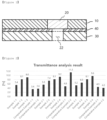
- the polishing pad includes a polishing layer 10, a window 20 formed on the polishing layer, and a lower support layer 30, and the lower support layer 30 has an opening 22 formed under the window.
- the polishing layer and the lower support layer are bonded by an adhesive layer 40.
- the window is formed to detect a polishing end point of the wafer in the CMP process, and the detection is performed by transmitting an optical beam such as a laser beam through the window. Therefore, the window should have a transmittance in a specific area through which the optical beam may pass.
- the conventional window does not have sufficient transmittance for the passage of the optical beam, and therefore, have the disadvantage of making it difficult to accurately and reliably detect the polishing end point of the wafer in the CMP process.
- the present invention provides a method for manufacturing a window for a polishing pad capable of efficiently manufacturing a window with excellent transmittance.
- the present invention provides a window for a polishing pad capable of accurately and reliably detecting a polishing end point of a wafer through excellent transmittance, and a polishing pad including the same.
- the present invention provides a method for manufacturing a window for a polishing pad, includes:
- the present invention provides a window for a polishing pad manufactured by the method and having a transmittance of 5% or more based on a thickness of 1.9 mm.
- the present invention provides a polishing pad including the window.
- a method for manufacturing a window for a polishing pad of the present invention provides a method capable of efficiently manufacturing a window with excellent transmittance.
- the window for a polishing pad and the polishing pad including the same of the present invention make it possible to accurately and reliably detect a polishing end point of a wafer through improved transmittance.
- the meaning of "-including” means that other components may further be included in addition to any included components, but it also refers to a case where it is composed of only one of the above components without any other components.
- a method for manufacturing a window for a polishing pad according to the present invention includes:
- the present inventors completed the present invention by discovering that in the case of windows made of a polyurethane material, a transmittance varies depending on heat generation control during curing and a manufacturing method.
- the present inventors completed the present invention by discovering that when manufacturing a window made of a polyurethane material, a temperature of the polyurethane prepolymer and a temperature of a mold affect a transmittance of the window, and a thickness of a cake-shaped polyurethane cured product also affects the transmittance of the window.
- the transmittance of the window is greatly improved.
- the transmittance of the window significantly decreases.
- the temperature of the polyurethane prepolymer may be preferably 50°C to 90°C, and more preferably 50°C to 70°C.
- the polyurethane prepolymer with a weight average molecular weight of 500 to 3000, and more preferably, 800 to 2500 may be used.
- the polyurethane prepolymer may be prepared by a polymerization of compositions including at least one isocyanate compound selected from the group consisting of toluene diisocyanate, 4,4'-diphenylmethane diisocyanate, naphthalene-1,5-diisocyanate, toluidine diisocyanate, paraphenylene diisocyanate, xylene diisocyanate, isophorone diisocyanate, hexamethylene diisocyanate, 4,4'-dicyclohexylmethane diisocyanate, and cyclohexane diisocyanate; and one or more polyol compound components selected from the group consisting of polyether polyol (e.g., poly(oxytetramethylene) glycol, poly(oxypropylene) glycol, poly(oxyethylene) glycol), polycarbonate polyol, polyester polyol, polycaprolactone polyol, etc.
- polyether polyol
- the isocyanate compound above those selected from toluene diisocyanate (TDI), 4,4'-diphenyl methane diisocyanate, dicyclohexylmethane diisocyanate, etc., may be more preferably used, and as the polyol compound, those selected from polycaprolactone polyol, polytetramethylene ether glycol (PTMEG), polypropylene ether glycol (PPG), polyethylene ether glycol (PEG), etc., may be more preferably used.
- polycaprolactone polyol polytetramethylene ether glycol (PTMEG), polypropylene ether glycol (PPG), polyethylene ether glycol (PEG), etc.
- PTMEG polytetramethylene ether glycol
- PPG polypropylene ether glycol
- PEG polyethylene ether glycol
- the polymerization composition may further include at least one chain extenders selected from the group consisting of ethylene glycol (EG), 1,2-propylene glycol, 1,3-propylene glycol, 1,2-butanediol, 1,3-butanediol, 2-methyl-1,3-propanediol, 1,4-butanediol (BDO), neopentyl glycol, 1,5-pentanediol, 3-methyl-1,5-pentanediol, 1,6-hexanediol, diethylene glycol, dipropylene glycol, tripropylene glycol, etc.
- EG ethylene glycol
- 1,2-propylene glycol 1,3-propylene glycol
- 1,2-butanediol 1,3-butanediol
- 2-methyl-1,3-propanediol 1,4-butanediol
- BDO 1,4-butanediol
- step a) above at least one selected from the group consisting of 4,4'-methylene-bis-(2-chloroaniline) (MBOCA), diethyltoluenediamine (DETDA), 3,5-dimethylthio-2,4-toluenediamine and isomers thereof (e.g., 3,5-diethyltoluene-2,6-diamine); 3,5-diethyltoluene-2,4-diamine and isomers thereof; 4,4'-bis-(sec-butylamino)-diphenylmethane; 1,4-bis-(sec-butylamino)-benzene; 4,4'-methylene-bis-(2-chloroaniline); 4,4'-methylene-bis-(3-chloro-2,6-diethylaniline) (MCDEA); polytetramethyleneoxide-di-p-aminobenzoate; N,N'-dialkyldiamino
- the polyurethane prepolymer and the curing agent may be mixed in a weight ratio of 9: 1 to 7: 3 based on a dry weight.
- step b) above the mold heated to a temperature of 30°C or higher to less than 100°C is used.
- the temperature of the mold is less than 30°C, the transmittance may be improved, but since the polyurethane is not hardened, it is difficult to apply to the present invention.
- the temperature of the mold is 100°C or higher, the transmittance of the window significantly decreases, which is not preferable.
- the temperature of the mold may be preferably 30°C to 80°C, more preferably 30°C to 70°C, even more preferably 30°C to 60°C, and particularly preferably 30°C to 50°C.
- the injection of the mixture of the polyurethane prepolymer and the curing agent into the mold may be made to a thickness of 5 mm or less.
- the transmittance of the window significantly decreases.
- the reason why the transmittance decreases according to the injection thickness is because when the injection thickness becomes thicker, heat energy is accumulated during an exothermic reaction with the curing agent, the internal temperature increases, and the degree of crystallinity increases.
- the injection thickness may preferably be 2 mm to 5 mm, more preferably 2 mm to 4 mm, and even more preferably 2 mm to 3 mm.
- the thickness of the polyurethane cured product is also determined depending on the injection thickness.
- the temperature of the polyurethane prepolymer in step a) above is 50°C to 70°C
- the temperature of the mold in step b) above is 30°C to 60°C
- the injection of the mixture of the polyurethane prepolymer and the curing agent in step b) above into the mold is made to a thickness of 2 mm to 3 mm.
- the window for a polishing pad of the present invention is manufactured by the manufacturing method of the present invention, and has a transmittance of 5% or more, preferably 7% or more, and more preferably 8% or more based on a thickness of 1.9 mm.
- Example 1-1 Manufacturing of window for polishing pad
- Example 1-2 Manufacturing of window for polishing pad
- a window with a thickness of 1.9 mm was manufactured in the same method as in Example 1-1, except that the polyurethane prepolymer having a temperature of 70°C in Example 1-1 was used.
- Example 1-3 Manufacturing of window for polishing pad
- a window with a thickness of 1.9 mm was manufactured in the same method as in Example 1-1, except that the polyurethane prepolymer having a temperature of 50°C in Example 1-1 was used.
- Example 2-1 Manufacturing of window for polishing pad
- a window with a thickness of 1.9 mm was manufactured in the same method as in Example 1-1, except that the polyurethane prepolymer heated to 70°C in Example 1-1 was used and the mold heated to 80°C was used.
- Example 2-2 Manufacturing of window for polishing pad
- a window with a thickness of 1.9 mm was manufactured in the same method as in Example 2-1, except that the mold heated to 60°C in Example 2-1 was used.
- a window with a thickness of 1.9 mm was manufactured in the same method as in Example 2-1, except that the mold heated to 50°C in Example 2-1 was used.
- Example 2-4 Manufacturing of window for polishing pad
- a window with a thickness of 1.9 mm was manufactured in the same method as in Example 2-1, except that the mold heated to 30°C in Example 2-1 was used.
- Example 3-1 Manufacturing of window for polishing pad
- a window with a thickness of 1.9 mm was manufactured in the same method as in Example 1-1, except that the polyurethane prepolymer heated to 70°C in Example 1-1 was used and the thickness of the Cake was adjusted to 5 mm.
- Example 3-2 Manufacturing of window for polishing pad
- a window with a thickness of 1.9 mm was manufactured in the same method as in Example 3-1, except that the thickness of the Cake in Example 3-1 was adjusted to 4 mm.
- a window with a thickness of 1.9 mm was manufactured in the same method as in Example 3-1, except that the thickness of the Cake in Example 3-1 was adjusted to 3 mm.
- a window with a thickness of 1.9 mm was manufactured in the same method as in Example 3-1, except that the thickness of the Cake in Example 3-1 was adjusted to 2 mm.
- a window with a thickness of 1.9 mm was manufactured in the same method as in Example 1-1, except that the polyurethane prepolymer heated to 100°C in Example 1-1 was used.
- Comparative Example 1-2 Manufacturing of window for polishing pad
- a window with a thickness of 1.9 mm was manufactured in the same method as in Example 1-1, except that the polyurethane prepolymer heated to 40°C in Example 1-1 was used.
- a window with a thickness of 1.9 mm was manufactured in the same method as in Example 1-1, except that the polyurethane prepolymer heated to a temperature of 70°C in Example 1-1 was used and the mold heated to 100°C was used.
- a window with a thickness of 1.9 mm was manufactured in the same method as in Comparative Example 2-1, except that the mold heated to 20°C in Comparative Example 2-1 was used.
- a window with a thickness of 1.9 mm was manufactured in the same method as in Example 1-1, except that the polyurethane prepolymer heated to 70°C in Example 1-1 was used and the thickness of the Cake was adjusted to 6 mm.
- a window with a thickness of 1.9 mm was manufactured in the same method as in Comparative Example 3-1, except that the thickness of the Cake in Comparative Example 3-1 was adjusted to 8mm.
- Example 1-1 [Table 1] Division Prepolymer temperature Mold temperature Cake thickness Transmittance °C °C mm %
- Example 1-1 90 50 3 5.4
- Example 1-2 70 50 3 8.1
- Example 1-3 50 50 3 9.0
- Comparative Example 1-1 100 50 3 3.4 Comparative Example 1-2 40 50 3 3.6
- Example 2-2 70 60 3 7.4
- Example 2-3 70 50 3 8.1
- Example 3-4 70 50 2 9.8 Comparative Example 3-1 70 50 6 4.5 Comparative Example 3-2 70 50 8 4.0
Landscapes
- Chemical & Material Sciences (AREA)
- Engineering & Computer Science (AREA)
- Mechanical Engineering (AREA)
- Medicinal Chemistry (AREA)
- Polymers & Plastics (AREA)
- Organic Chemistry (AREA)
- Health & Medical Sciences (AREA)
- Chemical Kinetics & Catalysis (AREA)
- Manufacturing & Machinery (AREA)
- Polyurethanes Or Polyureas (AREA)
- Mechanical Treatment Of Semiconductor (AREA)
- Finish Polishing, Edge Sharpening, And Grinding By Specific Grinding Devices (AREA)
- Casting Or Compression Moulding Of Plastics Or The Like (AREA)
Applications Claiming Priority (2)
| Application Number | Priority Date | Filing Date | Title |
|---|---|---|---|
| KR1020220008594A KR20230112387A (ko) | 2022-01-20 | 2022-01-20 | 연마패드용 윈도우의 제조방법 및 이 방법으로 제조된 연마패드용 윈도우 |
| PCT/KR2022/012667 WO2023140450A1 (fr) | 2022-01-20 | 2022-08-24 | Procédé de fabrication d'une fenêtre de tampon de polissage, et fenêtre de tampon de polissage fabriquée par celui-ci |
Publications (2)
| Publication Number | Publication Date |
|---|---|
| EP4467286A1 true EP4467286A1 (fr) | 2024-11-27 |
| EP4467286A4 EP4467286A4 (fr) | 2026-01-21 |
Family
ID=87348461
Family Applications (1)
| Application Number | Title | Priority Date | Filing Date |
|---|---|---|---|
| EP22922309.4A Pending EP4467286A4 (fr) | 2022-01-20 | 2022-08-24 | Procédé de fabrication d'une fenêtre de tampon de polissage, et fenêtre de tampon de polissage fabriquée par celui-ci |
Country Status (7)
| Country | Link |
|---|---|
| US (1) | US12570029B2 (fr) |
| EP (1) | EP4467286A4 (fr) |
| JP (1) | JP7737476B2 (fr) |
| KR (2) | KR20230112387A (fr) |
| CN (1) | CN117396308A (fr) |
| TW (1) | TWI888771B (fr) |
| WO (1) | WO2023140450A1 (fr) |
Family Cites Families (18)
| Publication number | Priority date | Publication date | Assignee | Title |
|---|---|---|---|---|
| JPH1135652A (ja) * | 1997-07-16 | 1999-02-09 | Mitsubishi Chem Corp | 注型用ポリウレタン系エラストマー組成物及びその成形品 |
| DE19835113A1 (de) * | 1998-08-04 | 2000-02-10 | Basf Ag | Verfahren zur Herstellung von kompakten, transparenten Polyisocyanat-Polyadditionsprodukten |
| KR100344528B1 (ko) | 1999-06-16 | 2002-07-24 | 동성에이앤티 주식회사 | 세포조직 구조의 미세 중공 폴리머 다발을 갖는 폴리싱 패드 및 그 제조방법 |
| US6984163B2 (en) * | 2003-11-25 | 2006-01-10 | Rohm And Haas Electronic Materials Cmp Holdings, Inc. | Polishing pad with high optical transmission window |
| WO2008047631A1 (fr) * | 2006-10-18 | 2008-04-24 | Toyo Tire & Rubber Co., Ltd. | Procédé pour produire un tampon à polir long |
| JP5240502B2 (ja) * | 2008-03-21 | 2013-07-17 | Dic株式会社 | 光ディスク用紫外線硬化型組成物及び光ディスク |
| US8585790B2 (en) | 2009-04-23 | 2013-11-19 | Applied Materials, Inc. | Treatment of polishing pad window |
| JP5715770B2 (ja) | 2010-06-17 | 2015-05-13 | ローム アンド ハース エレクトロニック マテリアルズ シーエムピー ホウルディングス インコーポレイテッド | 低欠陥の一体型窓を有する化学機械研磨パッド及び当該化学機械研磨パッドを用いて基体を化学機械研磨する方法 |
| JP2013086217A (ja) | 2011-10-19 | 2013-05-13 | Dic Corp | 研磨パッド用ウレタン樹脂組成物、ポリウレタン研磨パッド及びポリウレタン研磨パッドの製造方法 |
| US9238295B2 (en) * | 2013-05-31 | 2016-01-19 | Rohm And Haas Electronic Materials Cmp Holdings, Inc. | Soft and conditionable chemical mechanical window polishing pad |
| US9314897B2 (en) * | 2014-04-29 | 2016-04-19 | Rohm And Haas Electronic Materials Cmp Holdings, Inc. | Chemical mechanical polishing pad with endpoint detection window |
| KR101889081B1 (ko) * | 2017-03-16 | 2018-08-16 | 에스케이씨 주식회사 | 연마패드 및 이의 제조방법 |
| US10293456B2 (en) * | 2017-04-19 | 2019-05-21 | Rohm And Haas Electronic Materials Cmp Holdings, Inc. | Aliphatic polyurethane optical endpoint detection windows and CMP polishing pads containing them |
| KR101945874B1 (ko) * | 2017-08-07 | 2019-02-11 | 에스케이씨 주식회사 | 표면 처리된 연마패드용 윈도우 및 이를 포함하는 연마패드 |
| TWI743831B (zh) * | 2019-06-17 | 2021-10-21 | 南韓商Skc索密思股份有限公司 | 用於研磨墊之組成物、研磨墊及半導體裝置之製備方法 |
| KR102237351B1 (ko) | 2019-06-17 | 2021-04-07 | 에스케이씨솔믹스 주식회사 | 연마패드용 조성물, 연마패드 및 반도체 소자의 제조방법 |
| JP7365836B2 (ja) | 2019-09-30 | 2023-10-20 | 富士紡ホールディングス株式会社 | 研磨パッド |
| KR20220008594A (ko) | 2020-07-14 | 2022-01-21 | 주식회사 위니아딤채 | 냉장고의 도어 |
-
2022
- 2022-01-20 KR KR1020220008594A patent/KR20230112387A/ko not_active Ceased
- 2022-08-24 CN CN202280039190.0A patent/CN117396308A/zh active Pending
- 2022-08-24 EP EP22922309.4A patent/EP4467286A4/fr active Pending
- 2022-08-24 WO PCT/KR2022/012667 patent/WO2023140450A1/fr not_active Ceased
- 2022-08-24 JP JP2023571578A patent/JP7737476B2/ja active Active
- 2022-08-24 US US18/565,809 patent/US12570029B2/en active Active
- 2022-12-20 TW TW111148960A patent/TWI888771B/zh active
-
2025
- 2025-12-15 KR KR1020250198789A patent/KR20260002463A/ko active Pending
Also Published As
| Publication number | Publication date |
|---|---|
| US20240367356A1 (en) | 2024-11-07 |
| JP2024523121A (ja) | 2024-06-28 |
| US12570029B2 (en) | 2026-03-10 |
| KR20230112387A (ko) | 2023-07-27 |
| KR20260002463A (ko) | 2026-01-06 |
| WO2023140450A1 (fr) | 2023-07-27 |
| TW202330743A (zh) | 2023-08-01 |
| JP7737476B2 (ja) | 2025-09-10 |
| CN117396308A (zh) | 2024-01-12 |
| TWI888771B (zh) | 2025-07-01 |
| EP4467286A4 (fr) | 2026-01-21 |
Similar Documents
| Publication | Publication Date | Title |
|---|---|---|
| EP1535699B1 (fr) | Tampon de polissage comprenant une fenêtre | |
| US7018581B2 (en) | Method of forming a polishing pad with reduced stress window | |
| US9333620B2 (en) | Chemical mechanical polishing pad with clear endpoint detection window | |
| US9314897B2 (en) | Chemical mechanical polishing pad with endpoint detection window | |
| KR101911083B1 (ko) | 내크리프성 연마 패드 창 | |
| DE102015003200A1 (de) | Weiches und konditionierbares chemisch-mechanisches polierkissen mit fenster | |
| DE102016007777A1 (de) | Verfahren mit Porositätseinstellung zur Bildung eines Polierkissens | |
| DE102016007771A1 (de) | Verfahren zur Herstellung einer Polierschicht für ein chemisch-mechanisches Polierkissen | |
| KR102390145B1 (ko) | 종점 검출 윈도우를 갖는 화학 기계적 연마 패드 | |
| CN102310366B (zh) | 具有低缺陷整体窗的化学机械抛光垫 | |
| EP4467286A1 (fr) | Procédé de fabrication d'une fenêtre de tampon de polissage, et fenêtre de tampon de polissage fabriquée par celui-ci | |
| JP2023050503A (ja) | 終点検出用窓材の製造方法 | |
| CN118456278B (zh) | 终点检测窗口、化学机械抛光垫及其应用 | |
| KR102959354B1 (ko) | 연마패드, 이의 제조방법 및 평가방법 |
Legal Events
| Date | Code | Title | Description |
|---|---|---|---|
| STAA | Information on the status of an ep patent application or granted ep patent |
Free format text: STATUS: THE INTERNATIONAL PUBLICATION HAS BEEN MADE |
|
| PUAI | Public reference made under article 153(3) epc to a published international application that has entered the european phase |
Free format text: ORIGINAL CODE: 0009012 |
|
| STAA | Information on the status of an ep patent application or granted ep patent |
Free format text: STATUS: REQUEST FOR EXAMINATION WAS MADE |
|
| 17P | Request for examination filed |
Effective date: 20231116 |
|
| AK | Designated contracting states |
Kind code of ref document: A1 Designated state(s): AL AT BE BG CH CY CZ DE DK EE ES FI FR GB GR HR HU IE IS IT LI LT LU LV MC MK MT NL NO PL PT RO RS SE SI SK SM TR |
|
| DAV | Request for validation of the european patent (deleted) | ||
| DAX | Request for extension of the european patent (deleted) | ||
| REG | Reference to a national code |
Ref country code: DE Ref legal event code: R079 Free format text: PREVIOUS MAIN CLASS: B24D0011000000 Ipc: C08G0018420000 |
|
| A4 | Supplementary search report drawn up and despatched |
Effective date: 20251223 |
|
| RIC1 | Information provided on ipc code assigned before grant |
Ipc: C08G 18/42 20060101AFI20251217BHEP Ipc: B24D 11/00 20060101ALI20251217BHEP Ipc: B24B 37/20 20120101ALI20251217BHEP Ipc: B24B 37/24 20120101ALI20251217BHEP Ipc: C08G 18/10 20060101ALI20251217BHEP Ipc: C08G 18/65 20060101ALI20251217BHEP Ipc: C08G 18/44 20060101ALI20251217BHEP Ipc: C08G 18/48 20060101ALI20251217BHEP Ipc: C08G 18/73 20060101ALI20251217BHEP Ipc: C08G 18/75 20060101ALI20251217BHEP Ipc: C08G 18/76 20060101ALI20251217BHEP Ipc: B24D 18/00 20060101ALI20251217BHEP Ipc: B29C 45/00 20060101ALI20251217BHEP |