EP4467536A1 - Kristalline form eines schwefelhaltigen isoindolinderivats - Google Patents
Kristalline form eines schwefelhaltigen isoindolinderivats Download PDFInfo
- Publication number
- EP4467536A1 EP4467536A1 EP23742962.6A EP23742962A EP4467536A1 EP 4467536 A1 EP4467536 A1 EP 4467536A1 EP 23742962 A EP23742962 A EP 23742962A EP 4467536 A1 EP4467536 A1 EP 4467536A1
- Authority
- EP
- European Patent Office
- Prior art keywords
- crystal form
- compound
- formula
- ray powder
- represented
- Prior art date
- Legal status (The legal status is an assumption and is not a legal conclusion. Google has not performed a legal analysis and makes no representation as to the accuracy of the status listed.)
- Pending
Links
Images











Classifications
-
- C—CHEMISTRY; METALLURGY
- C07—ORGANIC CHEMISTRY
- C07D—HETEROCYCLIC COMPOUNDS
- C07D401/00—Heterocyclic compounds containing two or more hetero rings, having nitrogen atoms as the only ring hetero atoms, at least one ring being a six-membered ring with only one nitrogen atom
- C07D401/14—Heterocyclic compounds containing two or more hetero rings, having nitrogen atoms as the only ring hetero atoms, at least one ring being a six-membered ring with only one nitrogen atom containing three or more hetero rings
-
- A—HUMAN NECESSITIES
- A61—MEDICAL OR VETERINARY SCIENCE; HYGIENE
- A61K—PREPARATIONS FOR MEDICAL, DENTAL OR TOILETRY PURPOSES
- A61K31/00—Medicinal preparations containing organic active ingredients
- A61K31/33—Heterocyclic compounds
- A61K31/395—Heterocyclic compounds having nitrogen as a ring hetero atom, e.g. guanethidine or rifamycins
- A61K31/435—Heterocyclic compounds having nitrogen as a ring hetero atom, e.g. guanethidine or rifamycins having six-membered rings with one nitrogen as the only ring hetero atom
- A61K31/44—Non condensed pyridines; Hydrogenated derivatives thereof
- A61K31/445—Non condensed piperidines, e.g. piperocaine
- A61K31/4523—Non condensed piperidines, e.g. piperocaine containing further heterocyclic ring systems
- A61K31/454—Non condensed piperidines, e.g. piperocaine containing further heterocyclic ring systems containing a five-membered ring with nitrogen as a ring hetero atom, e.g. pimozide, domperidone
-
- A—HUMAN NECESSITIES
- A61—MEDICAL OR VETERINARY SCIENCE; HYGIENE
- A61K—PREPARATIONS FOR MEDICAL, DENTAL OR TOILETRY PURPOSES
- A61K31/00—Medicinal preparations containing organic active ingredients
- A61K31/33—Heterocyclic compounds
- A61K31/395—Heterocyclic compounds having nitrogen as a ring hetero atom, e.g. guanethidine or rifamycins
- A61K31/435—Heterocyclic compounds having nitrogen as a ring hetero atom, e.g. guanethidine or rifamycins having six-membered rings with one nitrogen as the only ring hetero atom
- A61K31/44—Non condensed pyridines; Hydrogenated derivatives thereof
- A61K31/445—Non condensed piperidines, e.g. piperocaine
- A61K31/4523—Non condensed piperidines, e.g. piperocaine containing further heterocyclic ring systems
- A61K31/4545—Non condensed piperidines, e.g. piperocaine containing further heterocyclic ring systems containing a six-membered ring with nitrogen as a ring hetero atom, e.g. pipamperone, anabasine
-
- A—HUMAN NECESSITIES
- A61—MEDICAL OR VETERINARY SCIENCE; HYGIENE
- A61P—SPECIFIC THERAPEUTIC ACTIVITY OF CHEMICAL COMPOUNDS OR MEDICINAL PREPARATIONS
- A61P25/00—Drugs for disorders of the nervous system
-
- A—HUMAN NECESSITIES
- A61—MEDICAL OR VETERINARY SCIENCE; HYGIENE
- A61P—SPECIFIC THERAPEUTIC ACTIVITY OF CHEMICAL COMPOUNDS OR MEDICINAL PREPARATIONS
- A61P35/00—Antineoplastic agents
-
- C—CHEMISTRY; METALLURGY
- C07—ORGANIC CHEMISTRY
- C07B—GENERAL METHODS OF ORGANIC CHEMISTRY; APPARATUS THEREFOR
- C07B2200/00—Indexing scheme relating to specific properties of organic compounds
- C07B2200/13—Crystalline forms, e.g. polymorphs
Definitions
- the present disclosure relates to a crystal form of a sulfur-containing isoindoline derivative and a preparation method therefor. Specifically, the present disclosure provides a crystal form of a compound of formula I and a preparation method therefor.
- MM Multiple myeloma
- the current treatment methods are mainly drug therapy and autologous stem cell transplantation.
- drugs widely used in clinical practice, which are alidomide immunomodulator, proteasome inhibitors, hormones and monoclonal antibodies.
- the drugs in clinical research stage include diabody, ADC, CAR-T, etc. Those drugs have different mechanisms of action, and they can often achieve better efficacy when used in combination.
- dual, triple or even quadruple therapy is generally adopted, usually a combination therapy of an immunomodulator, a proteasome inhibitor and a hormone, sometimes with an additional antibody.
- Lenalidomide is the most commonly used immunomodulator, and is used in first-line therapy, maintenance therapy after stem cell transplantation, and second-line and third-line therapies after relapse. The drug reached $9.7 billion in sales in 2018/2019.
- the overall MM market is considerable and growing rapidly due to longer patient survival, and correspondingly longer duration of medication after continuous improvements and refinements in the diagnosis and treatment of MM.
- the MM market is expected to reach a scale of $33 billion in 2022, with the largest proportion still being immunomodulators such as lenalidomide.
- IMD immunomodulators
- IMiD drugs can activate the E3 ligase activity of CRBN after binding to Cereblon (CRBN) protein to selectively bind to transcription factors Ikaros (IKZF 1) and Aiolos (IKZF3), thereby resulting in rapid ubiquitination and degradation of Ikaros and Aiolos.
- Ikaros/Aiolos results in downregulation of c-Myc, followed by the downregulation of IRF4, ultimately resulting in inhibition of growth and apoptosis of myeloma cells.
- IKZF3 can also inhibit the transcription of cytokines IL2 and TNF in T/NK cells.
- thalidomide As IMiD drugs that have been approved for marketing include thalidomide, lenalidomide and pomalidomide, all from Celgene (now incorporated by BMS). For those three compounds, the binding forces to CRBN are increased sequentially, so the clinical doses are reduced sequentially.
- the primary indication for the three compounds is MM, and there are other indications for thalidomide and lenalidomide (especially lenalidomide), such as myelodysplastic syndrome (MDS).
- MDS myelodysplastic syndrome
- lenalidomide and pomalidomide are similar in performance, with significant myelosuppressive effect caused by target-related toxicity; thalidomide has some other side effects such as sedation, constipation, and neurological side effects.
- adipimide moiety of all IMiDs binds to a hydrophobic pocket defined by the three tryptophan residues in CRBN (referred to as "thalidomide binding pocket").
- the phthalimide/isoindolone ring is exposed to the solvent and alters the molecular surface of CRBN, thereby modulating substrate recognition.
- Different IMiDs result in significant modification of the surface of CRBN molecules and different preferences for substrate recognition.
- modifications of IMiDs may lead to degradation of other transcription factors, causing unwanted toxic and side effects.
- This mode of action of IMiDs is also known as molecular glue, which vividly expresses the bonding effect of this small molecule on two protein substrates.
- Disclosed patent applications for Cereblon regulators include WO2008115516A2 , WO2011100380A1 , WO2019226770A1 , WO2019014100A1 , WO2020064002A1 , etc.
- the applicant's patent application WO2022017365 discloses a compound of formula I, chemically named ( S )-4-(4-((5-(((2-(2,6-dioxopiperidin-3-yl)-1-oxoisoindolin-4-yl)oxy)methyl)pyridin-2-yl)thio)piperidin-1-yl)-3-fluorobenzonitrile.
- This compound exhibits a relatively good Cereblon modulating activity.
- the crystal forms of the active ingredients of a drug and its salts not only affect the physical and chemical stability of the drug itself, but also affect the difficulty of later drug preparation and production costs. Different crystallization and storage conditions may lead to changes in the crystal forms of the compound and its salts, sometimes resulting in the formation of other forms of crystal forms. Therefore, considering comprehensively from the perspectives of stability, ease of drug preparation process, production costs, etc., it is necessary to conduct an in-depth study of the crystal forms of the compound of formula (I).
- the present disclosure provides a crystal form of a compound of formula (I) and a preparation method therefor, wherein the compound of formula I is chemically named ( S )-4-(4-((5-(((2-(2,6-dioxopiperidin-3-yl)-1-oxoisoindolin-4-yl)oxy)methyl)pyridin-2-yl)thio)piperidin-1-yl)-3-fluorobenzonitrile,
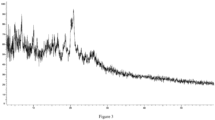
- the present disclosure provides an amorphous form of the compound of formula (I), which has an X-ray powder diffraction pattern comprising no obvious characteristic peaks at a diffraction angle 2 ⁇ in the range of 2 to 48°.
- the present disclosure further provides a method for preparing the amorphous form of the compound of formula (I), comprising method 1: a) mixing the compound of formula (I) with propylene glycol methyl ether, n-heptane, or petroleum ether; b) slurrying for crystallization.
- the volume ( ⁇ l) of the solvent used in the present disclosure can be 1 to 200 times the mass (mg) of the compound of formula (I); in non-limiting embodiments, it can be 1, 5, 10, 15, 20, 25, 30, 35, 40, 45, 50, 55, 60, 65, 70, 75, 80, 85, 90, 95, 100, 105, 110, 115, 120, 125, 130, 135, 140, 145, 150, 155, 160, 165, 170, 175, 180, 185, 190, 200.
- the method for preparing the amorphous form of the compound of formula (I) according to the present disclosure further includes steps of filtering, washing, or drying.
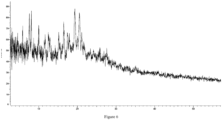
- the present disclosure provides a crystal form A of the compound of formula (I), which has an X-ray powder diffraction pattern, represented by a diffraction angle 2 ⁇ , having characteristic peaks at 5.765, 8.061, 9.925, 16.632, 17.900, 19.469, and 21.115.
- the crystal form A of the compound of formula (I) has characteristic peaks at 5.765, 7.465, 8.061, 9.925, 12.890, 15.085, 16.632, 17.900, 19.469, and 21.115.
- the crystal form A of the compound of formula (I) has characteristic peaks at 5.765, 7.465, 8.061, 9.925, 11.674, 12.890, 14.270, 15.085, 16.632, 17.900, 18.715, 19.469, and 21.115.
- the crystal form A of the compound of formula (I) has the X-ray powder diffraction pattern represented by the diffraction angle 2 ⁇ as shown in Figure 2 .
- the present disclosure further provides a method for preparing the crystal form A of the compound of formula (I), comprising method 1: a) mixing the compound of formula (I) with tetrahydrofuran and dissolving to clarification; b) adding n -heptane for crystallization;
- the volume ( ⁇ l) of the solvent used in the present disclosure can be 1 to 200 times the mass (mg) of the compound of formula (I); in non-limiting embodiments, it can be 1, 5, 10, 15, 20, 25, 30, 35, 40, 45, 50, 55, 60, 65, 70, 75, 80, 85, 90, 95, 100, 105, 110, 115, 120, 125, 130, 135, 140, 145, 150, 155, 160, 165, 170, 175, 180, 185, 190, 200.
- the method for preparing the crystal form A of the compound of formula (I) according to the present disclosure further includes steps of filtering, washing, drying, etc.
- the present disclosure provides a crystal form B of the compound of formula (I), which has an X-ray powder diffraction pattern, represented by a diffraction angle 2 ⁇ , having characteristic peaks at 4.977, 6.788, 10.047, 14.143, 15.684, 18.547, and 20.840.
- the crystal form B of the compound of formula (I) has characteristic peaks at 4.977, 6.788, 10.047, 14.143, 15.684, 18.547, 20.840, 24.096, and 25.505.
- the crystal form B of the compound of formula (I) has the X-ray powder diffraction pattern represented by the diffraction angle 2 ⁇ as shown in Figure 3 .
- the present disclosure further provides a method for preparing the crystal form B of the compound of formula (I), comprising a) mixing the compound of formula (I) with ethyl acetate or acetonitrile/methanol; b) slurrying for crystallization, and drying at 30°C.
- the volume ( ⁇ l) of the solvent used in the present disclosure can be 1 to 200 times the mass (mg) of the compound of formula (I); in non-limiting embodiments, it can be 1, 5, 10, 15, 20, 25, 30, 35, 40, 45, 50, 55, 60, 65, 70, 75, 80, 85, 90, 95, 100, 105, 110, 115, 120, 125, 130, 135, 140, 145, 150, 155, 160, 165, 170, 175, 180, 185, 190, 200.
- the method for preparing the crystal form B of the compound of formula (I) according to the present disclosure further includes steps of filtering, washing, drying, etc.
- the present disclosure provides a crystal form C of the compound of formula (I), which has an X-ray powder diffraction pattern, represented by a diffraction angle 2 ⁇ , having characteristic peaks at 5.653, 7.974, 9.989, 16.143, 17.860, 18.992, and 20.972.
- the crystal form C of the compound of formula (I) has characteristic peaks at 5.653, 7.974, 9.989, 11.505, 12.798, 14.265, 16.143, 17.860, 18.992, and 20.972.
- the crystal form C of the compound of formula (I) has characteristic peaks at 3.533, 5.653, 7.974, 8.790, 9.989, 11.505, 12.798, 14.265, 15.277, 16.143, 17.860, 18.992, and 20.972.
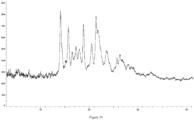
- the crystal form C of the compound of formula (I) has the X-ray powder diffraction pattern represented by the diffraction angle 2 ⁇ as shown in Figure 4 .
- the present disclosure further provides a method for preparing the crystal form C of the compound of formula (I), comprising method 1: a) mixing the compound of formula I with ethanol, isopropanol, methyl tert -butyl ether, methyl isobutyl ketone, water/ethanol, water/isopropanol, water/methanol (1:1), cyclohexane, or isopropyl ether; b) slurrying for crystallization; or method 2: a) mixing the compound of formula (I) with dichloromethane, water/acetone, or tetrahydrofuran/ethanol, and dissolving to clarification; b) evaporating for crystallization.
- the volume ( ⁇ l) of the solvent used in the present disclosure can be 1 to 200 times the mass (mg) of the compound of formula (I); in non-limiting embodiments, it can be 1, 5, 10, 15, 20, 25, 30, 35, 40, 45, 50, 55, 60, 65, 70, 75, 80, 85, 90, 95, 100, 105, 110, 115, 120, 125, 130, 135, 140, 145, 150, 155, 160, 165, 170, 175, 180, 185, 190, 200.
- the method for preparing the crystal form C of the compound of formula (I) according to the present disclosure further includes steps of filtering, washing, drying, etc.
- the present disclosure provides a crystal form D of the compound of formula (I), which has an X-ray powder diffraction pattern, represented by a diffraction angle 2 ⁇ , having characteristic peaks at 6.831, 9.845, 13.453, 18.225, 20.117, 20.891, and 23.006.
- the crystal form D of the compound of formula (I) has characteristic peaks at 6.831, 9.845, 10.927, 13.453, 16.096, 18.225, 20.117, 20.891, 23.006, and 26.132.
- the crystal form D of the compound of formula (I) has the X-ray powder diffraction pattern represented by the diffraction angle 2 ⁇ as shown in Figure 5 .
- the present disclosure further provides a method for preparing the crystal form D of the compound of formula (I), comprising: method 1: a) mixing the compound of formula (I) with acetonitrile; b) slurrying for crystallization.
- the volume ( ⁇ l) of the solvent used in the present disclosure can be 1 to 200 times the mass (mg) of the compound of formula (I); in non-limiting embodiments, it can be 1, 5, 10, 15, 20, 25, 30, 35, 40, 45, 50, 55, 60, 65, 70, 75, 80, 85, 90, 95, 100, 105, 110, 115, 120, 125, 130, 135, 140, 145, 150, 155, 160, 165, 170, 175, 180, 185, 190, 200.
- the method for preparing the crystal form D of the compound of formula (I) according to the present disclosure further includes steps of filtering, washing, drying, etc.
- the present disclosure provides a crystal form E of the compound of formula (I), which has an X-ray powder diffraction pattern, represented by a diffraction angle 2 ⁇ , having characteristic peaks at 5.864, 7.573, 8.087, 10.003, 16.444, 19.349, and 20.553.
- the crystal form E of the compound of formula (I) has characteristic peaks at 5.864, 7.573, 8.087, 10.003, 12.471, 15.165, 16.444, 17.432, 19.349, and 20.553.
- the crystal form E of the compound of formula (I) has characteristic peaks at 5.864, 7.573, 8.087, 10.003, 11.701, 12.471, 15.165, 16.444, 17.432, 19.349, 20.553, 21.067, and 21.709.
- the crystal form E of the compound of formula (I) has the X-ray powder diffraction pattern represented by the diffraction angle 2 ⁇ as shown in Figure 6 .
- the present disclosure further provides a method for preparing the crystal form E of the compound of formula (I), comprising method 1: a) mixing the compound of formula I with 2-butanone or 10% water/methanol; b) slurrying for crystallization; or method 2: a) mixing the compound of formula I with DCM and dissolving to clarification; b) adding n -heptane for crystallization.
- the volume ( ⁇ l) of the solvent used in the present disclosure can be 1 to 200 times the mass (mg) of the compound of formula (I); in non-limiting embodiments, it can be 1, 5, 10, 15, 20, 25, 30, 35, 40, 45, 50, 55, 60, 65, 70, 75, 80, 85, 90, 95, 100, 105, 110, 115, 120, 125, 130, 135, 140, 145, 150, 155, 160, 165, 170, 175, 180, 185, 190, 200.
- the method for preparing the crystal form E of the compound of formula (I) according to the present disclosure further includes steps of filtering, washing, drying, etc.
- the present disclosure provides a crystal form F of the compound of formula (I), which has an X-ray powder diffraction pattern, represented by a diffraction angle 2 ⁇ , having characteristic peaks at 5.062, 7.820, 10.077, 14.231, 16.672, 18.586, and 20.435.
- the crystal form F of the compound of formula (I) has characteristic peaks at 5.062, 7.820, 10.077, 14.231, 15.192, 16.672, 18.586, 20.435, 21.868, and 25.442.
- the crystal form F of the compound of formula (I) has characteristic peaks at 5.062, 7.820, 10.077, 14.231, 15.192, 16.672, 18.586, 20.435, 21.868, 24.193, 25.442, 26.303, and 28.629.
- the crystal form F of the compound of formula (I) has the X-ray powder diffraction pattern represented by the diffraction angle 2 ⁇ as shown in Figure 7 .
- the present disclosure further provides a method for preparing the crystal form F of the compound of formula (I), comprising:
- the volume ( ⁇ l) of the solvent used in the present disclosure can be 1 to 200 times the mass (mg) of the compound of formula (I); in non-limiting embodiments, it can be 1, 5, 10, 15, 20, 25, 30, 35, 40, 45, 50, 55, 60, 65, 70, 75, 80, 85, 90, 95, 100, 105, 110, 115, 120, 125, 130, 135, 140, 145, 150, 155, 160, 165, 170, 175, 180, 185, 190, 200.
- the method for preparing the crystal form F of the compound of formula (I) according to the present disclosure further includes steps of filtering, washing, drying, etc.
- the present disclosure provides a crystal form G of the compound of formula (I), which has an X-ray powder diffraction pattern, represented by a diffraction angle 2 ⁇ , having characteristic peaks at 5.999, 7.972, 9.951, 11.388, 17.812, 20.975, and 25.819.
- the crystal form G of the compound of formula (I) has characteristic peaks at 5.999, 7.396, 7.972, 8.637, 9.951, 11.388, 15.291, 17.812, 20.975, and 25.819.
- the crystal form G of the compound of formula (I) has characteristic peaks at 5.999, 7.396, 7.972, 8.637, 9.951, 11.388, 12.763, 15.291, 17.812, 20.975, 23.408, 25.819, and 27.400.
- the crystal form G of the compound of formula (I) has the X-ray powder diffraction pattern represented by the diffraction angle 2 ⁇ as shown in Figure 8 .
- the present disclosure further provides a method for preparing the crystal form G of the compound of formula (I), comprising:
- the volume ( ⁇ l) of the solvent used in the present disclosure can be 1 to 200 times the mass (mg) of the compound of formula (I); in non-limiting embodiments, it can be 1, 5, 10, 15, 20, 25, 30, 35, 40, 45, 50, 55, 60, 65, 70, 75, 80, 85, 90, 95, 100, 105, 110, 115, 120, 125, 130, 135, 140, 145, 150, 155, 160, 165, 170, 175, 180, 185, 190, 200.
- the method for preparing the crystal form G of the compound of formula (I) according to the present disclosure further includes steps of filtering, washing, drying, etc.
- the present disclosure provides a crystal form H of the compound of formula (I), which has an X-ray powder diffraction pattern, represented by a diffraction angle 2 ⁇ , having characteristic peaks at 5.758, 7.533, 9.901, 14.267, 16.420, 18.103, and 26.356.
- the crystal form H of the compound of formula (I) has characteristic peaks at 5.758, 7.533, 9.901, 14.267, 16.420, 18.103, 18.917, 20.489, 24.049, and 26.356.
- the crystal form H of the compound of formula (I) has characteristic peaks at 5.758, 7.533, 9.901, 14.267, 16.420, 18.103, 18.917, 20.489, 24.049, and 26.356.
- the crystal form H of the compound of formula (I) has the X-ray powder diffraction pattern represented by the diffraction angle 2 ⁇ as shown in Figure 9 .
- the present disclosure further provides a method for preparing the crystal form H of the compound of formula (I), comprising: method 1: a) mixing the compound of formula (I) with n -octane or n -hexane; b) slurrying for crystallization.
- the volume ( ⁇ l) of the solvent used in the present disclosure can be 1 to 200 times the mass (mg) of the compound of formula (I); in non-limiting embodiments, it can be 1, 5, 10, 15, 20, 25, 30, 35, 40, 45, 50, 55, 60, 65, 70, 75, 80, 85, 90, 95, 100, 105, 110, 115, 120, 125, 130, 135, 140, 145, 150, 155, 160, 165, 170, 175, 180, 185, 190, 200.
- the method for preparing the crystal form H of the compound of formula (I) according to the present disclosure further includes steps of filtering, washing, drying, etc.
- the present disclosure provides a crystal form I of the compound of formula (I), which has an X-ray powder diffraction pattern, represented by a diffraction angle 2 ⁇ , having characteristic peaks at 5.294, 6.826, 7.564, 10.739, 13.699, 16.812, and 20.709.
- the crystal form I of the compound of formula (I) has the X-ray powder diffraction pattern represented by the diffraction angle 2 ⁇ as shown in Figure 10 .
- the present disclosure further provides a method for preparing the crystal form I of the compound of formula (I), comprising:
- the volume ( ⁇ l) of the solvent used in the present disclosure can be 1 to 200 times the mass (mg) of the compound of formula (I); in non-limiting embodiments, it can be 1, 5, 10, 15, 20, 25, 30, 35, 40, 45, 50, 55, 60, 65, 70, 75, 80, 85, 90, 95, 100, 105, 110, 115, 120, 125, 130, 135, 140, 145, 150, 155, 160, 165, 170, 175, 180, 185, 190, 200.
- the method for preparing the crystal form I of the compound of formula (I) according to the present disclosure further includes steps of filtering, washing, drying, etc.
- the present disclosure provides a crystal form J of the compound of formula (I), which has an X-ray powder diffraction pattern, represented by a diffraction angle 2 ⁇ , having characteristic peaks at 5.041, 10.068, 16.424, 20.544, 21.190, 24.077, and 25.433.
- the crystal form J of the compound of formula (I) has characteristic peaks at 5.041, 8.212, 10.068, 14.101, 15.167, 16.424, 20.544, 21.190, 24.077, and 25.433.
- the crystal form J of the compound of formula (I) has characteristic peaks at 5.041, 8.212, 10.068, 14.101, 15.167, 16.424, 20.544, 21.190, 22.036, 22.679, 24.077, 25.433, and 26.454.
- the crystal form J of the compound of formula (I) has the X-ray powder diffraction pattern represented by the diffraction angle 2 ⁇ as shown in Figure 11 .
- the present disclosure further provides a method for preparing the crystal form J of the compound of formula (I), comprising: a) mixing the compound of formula (I) with dimethyl sulfoxide and dissolving to clarification; b) adding water, isopropyl acetate, or methyl tert- butyl ether for crystallization.
- the volume ( ⁇ l) of the solvent used in the present disclosure can be 1 to 200 times the mass (mg) of the compound of formula (I); in non-limiting embodiments, it can be 1, 5, 10, 15, 20, 25, 30, 35, 40, 45, 50, 55, 60, 65, 70, 75, 80, 85, 90, 95, 100, 105, 110, 115, 120, 125, 130, 135, 140, 145, 150, 155, 160, 165, 170, 175, 180, 185, 190, 200.
- the method for preparing the crystal form J of the compound of formula (I) according to the present disclosure further includes steps of filtering, washing, drying, etc.
- the present disclosure provides a crystal form K of the compound of formula (I), which has an X-ray powder diffraction pattern, represented by a diffraction angle 2 ⁇ , having characteristic peaks at 5.156, 7.699, 10.339, 14.334, 16.203, 18.327, and 23.418.
- the crystal form K of the compound of formula (I) has characteristic peaks at 5.156, 7.699, 10.339, 14.334, 16.203, 18.327, 23.418, 25.348, 25.919, and 26.446.
- the crystal form K of the compound of formula (I) has the X-ray powder diffraction pattern represented by the diffraction angle 2 ⁇ as shown in Figure 12 .
- the present disclosure further provides a method for preparing the crystal form K of the compound of formula (I), comprising: a) mixing the compound of formula (I) with N- methylpyrrolidone and dissolving to clarification; b) evaporating for crystallization.
- the volume ( ⁇ l) of the solvent used in the present disclosure can be 1 to 200 times the mass (mg) of the compound of formula (I); in non-limiting embodiments, it can be 1, 5, 10, 15, 20, 25, 30, 35, 40, 45, 50, 55, 60, 65, 70, 75, 80, 85, 90, 95, 100, 105, 110, 115, 120, 125, 130, 135, 140, 145, 150, 155, 160, 165, 170, 175, 180, 185, 190, 200.
- the method for preparing the crystal form K of the compound of formula (I) further includes steps of filtering, washing, drying, etc.
- the present disclosure provides a crystal form L of the compound of formula (I), which has an X-ray powder diffraction pattern, represented by a diffraction angle 2 ⁇ , having characteristic peaks at 4.932, 5.360, 9.831, 14.844, 18.244, 20.104, and 24.914.
- the crystal form L of the compound of formula (I) has characteristic peaks at 4.932, 5.360, 9.831, 10.753, 14.844, 16.369, 18.244, 20.104, 23.129, and 24.914.
- the crystal form L of the compound of formula (I) has the X-ray powder diffraction pattern represented by the diffraction angle 2 ⁇ as shown in Figure 13 .
- the present disclosure further provides a method for preparing the crystal form L of the compound of formula (I), comprising: a) mixing the compound of formula (I) with N,N- dimethylacetamide and dissolving to clarification; b) evaporating for crystallization.
- the volume ( ⁇ l) of the solvent used in the present disclosure can be 1 to 200 times the mass (mg) of the compound of formula (I); in non-limiting embodiments, it can be 1, 5, 10, 15, 20, 25, 30, 35, 40, 45, 50, 55, 60, 65, 70, 75, 80, 85, 90, 95, 100, 105, 110, 115, 120, 125, 130, 135, 140, 145, 150, 155, 160, 165, 170, 175, 180, 185, 190, 200.
- the method for preparing the crystal form L of the compound of formula (I) according to the present disclosure further includes steps of filtering, washing, drying, etc.
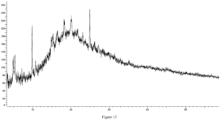
- the present disclosure provides a crystal form M of the compound of formula (I), which has an X-ray powder diffraction pattern, represented by a diffraction angle 2 ⁇ , having characteristic peaks at 14.959, 16.322, 18.410, 20.748, 22.067, 23.670, and 26.863.
- the crystal form M of the compound of formula (I) has characteristic peaks at 14.959, 16.322, 18.410, 20.748, 22.067, 23.670, 24.839, 25.873, 26.863, and 27.811.
- the crystal form M of the compound of formula (I) has characteristic peaks at 14.959, 16.322, 18.410, 20.748, 22.067, 23.670, 24.322, 24.839, 25.873, 26.863, and 27.811.
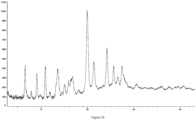
- the crystal form M of the compound of formula (I) has the X-ray powder diffraction pattern represented by the diffraction angle 2 ⁇ as shown in Figure 14 .
- the present disclosure further provides a method for preparing the crystal form M of the compound of formula (I), comprising: a) heating the crystal form A, crystal form B, crystal form C, crystal form E, crystal form H, or crystal form I of the compound of formula (I) to 225°C.
- the volume ( ⁇ l) of the solvent used in the present disclosure can be 1 to 200 times the mass (mg) of the compound of formula (I); in non-limiting embodiments, it can be 1, 5, 10, 15, 20, 25, 30, 35, 40, 45, 50, 55, 60, 65, 70, 75, 80, 85, 90, 95, 100, 105, 110, 115, 120, 125, 130, 135, 140, 145, 150, 155, 160, 165, 170, 175, 180, 185, 190, 200.
- the method for preparing the crystal form M of the compound of formula (I) according to the present disclosure further includes steps of filtering, washing, drying, etc.
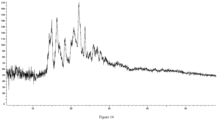
- the present disclosure provides a crystal form N of the compound of formula (I), which has an X-ray powder diffraction pattern, represented by a diffraction angle 2 ⁇ , having characteristic peaks at 5.028, 9.942, 10.900, 15.428, 18.410, 20.274, and 25.252.
- the crystal form N of the compound of formula (I) has characteristic peaks at 5.028, 7.671, 9.942, 10.900, 15.428, 16.560, 18.410, 20.274, 24.036, and 25.252.
- the crystal form N of the compound of formula (I) has characteristic peaks at 5.028, 7.671, 9.942, 10.900, 12.677, 15.428, 16.560, 18.410, 20.274, 24.036, 25.252, and 26.385.
- the crystal form N of the compound of formula (I) has the X-ray powder diffraction pattern represented by the diffraction angle 2 ⁇ as shown in Figure 15 .
- the present disclosure further provides a method for preparing the crystal from N of the compound of formula (I), comprising: a) mixing the compound of formula (I) with ethyl acetate/tetrahydrofuran (1:1), heating and dissolving to clarification; b) cooling for crystallization.
- the volume ( ⁇ l) of the solvent used in the present disclosure can be 1 to 200 times the mass (mg) of the compound of formula (I); in non-limiting embodiments, it can be 1, 5, 10, 15, 20, 25, 30, 35, 40, 45, 50, 55, 60, 65, 70, 75, 80, 85, 90, 95, 100, 105, 110, 115, 120, 125, 130, 135, 140, 145, 150, 155, 160, 165, 170, 175, 180, 185, 190, 200.
- the method for preparing the crystal form N of the compound of formula (I) according to the present disclosure further includes steps of filtering, washing, drying, etc.
- the present disclosure provides a crystal form O of the compound of formula (I), which has an X-ray powder diffraction pattern, represented by a diffraction angle 2 ⁇ , having characteristic peaks at 11.796, 17.423, 18.081, 19.136, 21.707, 22.165, and 25.719.
- the crystal form O of the compound of formula (I) has characteristic peaks at 7.843, 11.796, 17.423, 18.081, 19.136, 21.707, 22.165, 24.412, 25.719, and 28.521.
- the crystal form O of the compound of formula (I) has characteristic peaks at 7.843, 11.796, 15.455, 17.423, 18.081, 19.136, 21.055, 21.707, 22.165, 24.412, 25.719, 27.538, and 28.521.
- the crystal form O of the compound of formula (I) has the X-ray powder diffraction pattern represented by the diffraction angle 2 ⁇ as shown in Figure 16 .
- the present disclosure further provides a method for preparing the crystal from O of the compound of formula (I), comprising: a) mixing the compound of formula I with acetonitrile and benzenesulfonic acid, and heating; b) cooling for crystallization.
- the volume ( ⁇ l) of the solvent used in the present disclosure can be 1 to 200 times the mass (mg) of the compound of formula (I); in non-limiting embodiments, it can be 1, 5, 10, 15, 20, 25, 30, 35, 40, 45, 50, 55, 60, 65, 70, 75, 80, 85, 90, 95, 100, 105, 110, 115, 120, 125, 130, 135, 140, 145, 150, 155, 160, 165, 170, 175, 180, 185, 190, 200.
- the method for preparing the crystal form O of the compound of formula (I) according to the present disclosure further includes steps of filtering, washing, drying, etc.
- the present disclosure provides a crystal form P of the compound of formula (I), which has an X-ray powder diffraction pattern, represented by a diffraction angle 2 ⁇ , having characteristic peaks at 5.359, 7.491, 10.786, 14.249, 16.527, 17.729, and 20.798.
- the crystal form P of the compound of formula (I) has characteristic peaks at 5.359, 7.491, 9.905, 10.786, 13.192, 14.249, 16.527, 17.729, 18.862, and 20.798.
- the crystal form P of the compound of formula (I) has characteristic peaks at 5.359, 7.491, 9.905, 10.786, 13.192, 14.249, 16.527, 17.729, 18.862, 20.798, 23.799, and 26.555.
- the crystal form P of the compound of formula (I) has the X-ray powder diffraction pattern represented by the diffraction angle 2 ⁇ as shown in Figure 17 .
- the present disclosure further provides a method for preparing the crystal form P of the compound of formula (I), comprising: a) mixing the crystal form C of the compound of formula (I) with 1,4-dioxane; b) slurrying for crystallization.
- the volume ( ⁇ l) of the solvent used in the present disclosure can be 1 to 200 times the mass (mg) of the compound of formula (I); in non-limiting embodiments, it can be 1, 5, 10, 15, 20, 25, 30, 35, 40, 45, 50, 55, 60, 65, 70, 75, 80, 85, 90, 95, 100, 105, 110, 115, 120, 125, 130, 135, 140, 145, 150, 155, 160, 165, 170, 175, 180, 185, 190, 200.
- the method for preparing the crystal form P of the compound of formula (I) according to the present disclosure further includes steps of filtering, washing, drying, etc.
- the present disclosure provides a crystal form Q of the compound of formula (I), which has an X-ray powder diffraction pattern, represented by a diffraction angle 2 ⁇ , having characteristic peaks at 5.038, 10.152, 15.850, 16.574, 18.892, 20.760, and 21.835.
- the crystal form Q of the compound of formula (I) has characteristic peaks at 5.038, 10.152, 11.175, 15.850, 16.574, 18.892, 20.760, 21.835, 23.905, and 25.784.
- the crystal form Q of the compound of formula (I) has characteristic peaks at 5.038, 7.682, 10.152, 11.175, 14.218, 15.850, 16.574, 18.892, 20.760, 21.835, 23.905, 25.784, and 26.418.
- the crystal form Q of the compound of formula (I) has the X-ray powder diffraction pattern represented by the diffraction angle 2 ⁇ as shown in Figure 18 .
- the present disclosure further provides a method for preparing the crystal form Q of the compound of formula (I), comprising method 1: a) mixing the compound of formula (I) with ethyl acetate; b) slurrying for crystallization, and drying the solid at 70°C or 130°C.
- the volume ( ⁇ l) of the solvent used in the present disclosure can be 1 to 200 times the mass (mg) of the compound of formula (I); in non-limiting embodiments, it can be 1, 5, 10, 15, 20, 25, 30, 35, 40, 45, 50, 55, 60, 65, 70, 75, 80, 85, 90, 95, 100, 105, 110, 115, 120, 125, 130, 135, 140, 145, 150, 155, 160, 165, 170, 175, 180, 185, 190, 200.
- the method for preparing the crystal form Q of the compound of formula (I) according to the present disclosure further includes steps of filtering, washing, drying, etc.
- the present disclosure provides a crystal form U of the compound of formula (I), which has an X-ray powder diffraction pattern, represented by a diffraction angle 2 ⁇ , having characteristic peaks at 14.155, 15.745, 17.314, 17.997, 18.838, 20.512, and 21.415.
- the crystal form U of the compound of formula (I) has characteristic peaks at 14.155, 15.745, 16.564, 17.314, 17.997, 18.838, 20.512, 21.415, 23.557, and 26.313.
- the crystal form U of the compound of formula (I) has characteristic peaks at 7.657, 14.155, 15.745, 16.564, 17.314, 17.997, 18.838, 20.512, 21.415, 23.557, 25.711, 26.313, and 28.029.
- the crystal form U of the compound of formula (I) has the X-ray powder diffraction pattern represented by the diffraction angle 2 ⁇ as shown in Figure 19 .
- the present disclosure further provides a method for preparing the crystal form U of the compound of formula (I), comprising method 1: a) mixing the crystal form Q of the compound of formula (I) with water; b) slurrying for crystallization; or method 2: a) mixing the compound of formula I with DMSO, heating and dissolving to clarification; b) adding water for crystallization.
- the volume ( ⁇ l) of the solvent used in the present disclosure can be 1 to 200 times the mass (mg) of the compound of formula (I); in non-limiting embodiments, it can be 1, 5, 10, 15, 20, 25, 30, 35, 40, 45, 50, 55, 60, 65, 70, 75, 80, 85, 90, 95, 100, 105, 110, 115, 120, 125, 130, 135, 140, 145, 150, 155, 160, 165, 170, 175, 180, 185, 190, 200.
- the method for preparing the crystal form U of the compound of formula (I) according to the present disclosure further includes steps of filtering, washing, drying, etc.
- the present disclosure provides a crystal form X of the compound of formula (I), which has an X-ray powder diffraction pattern, represented by a diffraction angle 2 ⁇ , having characteristic peaks at 6.864, 9.873, 10.963, 13.801, 16.089, 18.006, and 20.929.
- the crystal form X of the compound of formula (I) has characteristic peaks at 6.864, 9.873, 10.963, 13.801, 16.089, 18.006, 20.929, and 26.203.
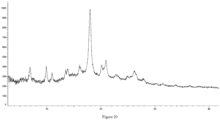
- the crystal form X of the compound of formula (I) has the X-ray powder diffraction pattern represented by the diffraction angle 2 ⁇ as shown in Figure 20 .
- the present disclosure further provides a method for preparing the crystal form X of the compound of formula (I): comprising: method 1: a) mixing the crystal form D of the compound of formula (I) with isopropyl ether or n -heptane; b) slurrying for crystallization.
- the volume ( ⁇ l) of the solvent used in the present disclosure can be 1 to 200 times the mass (mg) of the compound of formula (I); in non-limiting embodiments, it can be 1, 5, 10, 15, 20, 25, 30, 35, 40, 45, 50, 55, 60, 65, 70, 75, 80, 85, 90, 95, 100, 105, 110, 115, 120, 125, 130, 135, 140, 145, 150, 155, 160, 165, 170, 175, 180, 185, 190, 200.
- the method for preparing the crystal form X of the compound of formula (I) according to the present disclosure further includes steps of filtering, washing, drying, etc.
- the present disclosure provides a crystal form Y of the compound of formula (I), which has an X-ray powder diffraction pattern, represented by a diffraction angle 2 ⁇ , having characteristic peaks at 5.676, 7.666, 14.260, 16.562, 18.020, 21.802, and 26.425.
- the crystal form Y of the compound of formula (I) has characteristic peaks at 5.676, 7.666, 9.985, 12.634, 14.260, 16.562, 18.020, 21.802, 26.425, and 26.974.
- the crystal form Y of the compound of formula (I) has characteristic peaks at 5.676, 7.666, 9.985, 12.634, 14.260, 16.562, 18.020, 21.802, 24.051, 25.846, 26.425, and 26.974.
- the crystal form Y of the compound of formula (I) has the X-ray powder diffraction pattern represented by the diffraction angle 2 ⁇ as shown in Figure 21 .
- the present disclosure further provides a method for preparing the crystal form Y of the compound of formula (I): comprising: a) mixing the crystal form Q of the compound of formula (I) with isopropyl ether or n -heptane; b) slurrying for crystallization.
- the volume ( ⁇ l) of the solvent used in the present disclosure can be 1 to 200 times the mass (mg) of the compound of formula (I); in non-limiting embodiments, it can be 1, 5, 10, 15, 20, 25, 30, 35, 40, 45, 50, 55, 60, 65, 70, 75, 80, 85, 90, 95, 100, 105, 110, 115, 120, 125, 130, 135, 140, 145, 150, 155, 160, 165, 170, 175, 180, 185, 190, 200.
- the method for preparing the crystal form Y of the compound of formula (I) according to the present disclosure further includes steps of filtering, washing, drying, etc.
- the present disclosure provides a crystal form V of the compound of formula (I), which has an X-ray powder diffraction pattern, represented by a diffraction angle 2 ⁇ , having characteristic peaks at 5.649, 6.154, 6.720, 11.651, 18.757, 19.813, and 23.948.
- the crystal form V of the compound of formula (I) has characteristic peaks at 5.649, 6.154, 6.720, 9.778, 11.651, 17.570, 18.757, 19.813, 23.948, and 26.995.
- the crystal form V of the compound of formula (I) has characteristic peaks at 5.649, 6.154, 6.720, 9.778, 11.651, 13.576, 17.570, 18.757, 19.813, 21.905, 23.948, 25.825, and 26.995.
- the crystal form V of the compound of formula (I) has the X-ray powder diffraction pattern represented by the diffraction angle 2 ⁇ as shown in Figure 22 .
- the present disclosure further provides a method for preparing the crystal form V of the compound of formula (I), comprising method 1: a) mixing the compound of formula (I) with N,N- dimethylformamide and dissolving to clarification; b) adding acetone or acetonitrile for crystallization; or method 2: a) mixing the compound of formula (I) with X,X-dimethylformamide; b) cooling for crystallization or stirring for crystallization.
- the volume ( ⁇ l) of the solvent used in the present disclosure can be 1 to 200 times the mass (mg) of the compound of formula (I); in non-limiting embodiments, it can be 1, 5, 10, 15, 20, 25, 30, 35, 40, 45, 50, 55, 60, 65, 70, 75, 80, 85, 90, 95, 100, 105, 110, 115, 120, 125, 130, 135, 140, 145, 150, 155, 160, 165, 170, 175, 180, 185, 190, 200.
- the method for preparing the crystal form V of the compound of formula (I) according to the present disclosure further includes steps of filtering, washing, drying, etc.
- the present disclosure provides a crystal form R of the compound of formula (I), which has an X-ray powder diffraction pattern, represented by a diffraction angle 2 ⁇ , having characteristic peaks at 5.534, 7.611, 10.033, 15.782, 17.101, 19.017, and 20.567.
- the crystal form R of the compound of formula (I) has characteristic peaks at 5.534, 7.611, 10.033, 11.857, 12.737, 15.782, 17.101, 19.017, 20.567, and 23.692.
- the crystal form R of the compound of formula (I) has characteristic peaks at 5.534, 7.611, 10.033, 11.148, 11.857, 12.737, 14.179, 15.782, 17.101, 19.017, 20.567, 21.871, and 23.692.
- the crystal form R of the compound of formula (I) has the X-ray powder diffraction pattern represented by the diffraction angle 2 ⁇ as shown in Figure 23 .
- the present disclosure further provides a method for preparing the crystal form R of the compound of formula (I), comprising: a) mixing the compound of formula (I) with tetrahydrofuran and dissolving; b) concentrating for crystallization.
- the volume ( ⁇ l) of the solvent used in the present disclosure can be 1 to 200 times the mass (mg) of the compound of formula (I); in non-limiting embodiments, it can be 1, 5, 10, 15, 20, 25, 30, 35, 40, 45, 50, 55, 60, 65, 70, 75, 80, 85, 90, 95, 100, 105, 110, 115, 120, 125, 130, 135, 140, 145, 150, 155, 160, 165, 170, 175, 180, 185, 190, 200.
- the method for preparing the crystal form R of the compound of formula (I) according to the present disclosure further includes steps of filtering, washing, drying, etc.
- the present disclosure provides a crystal form S of the compound of formula (I), which has an X-ray powder diffraction pattern, represented by a diffraction angle 2 ⁇ , having characteristic peaks at 6.576, 9.082, 10.921, 13.592, 19.965, 21.403, and 24.207.
- the crystal form S of the compound of formula (I) has characteristic peaks at 6.576, 9.082, 10.921, 13.592, 16.805, 19.965, 21.403, 24.207, 25.662, and 27.457.
- the crystal form S of the compound of formula (I) has characteristic peaks at 6.576, 7.890, 9.082, 10.921, 13.592, 15.043, 16.805, 19.965, 21.403, 24.207, 25.662, 26.537, and 27.457.
- the crystal form S of the compound of formula (I) has the X-ray powder diffraction pattern represented by the diffraction angle 2 ⁇ as shown in Figure 24 .
- the present disclosure further provides a method for preparing the crystal form S of the compound of formula (I), comprising method 1: a) mixing the compound of formula (I) with DMF, heating to dissolve, and cooling to precipitate; b) filtering, mixing the filter cake with acetonitrile, and slurrying; c) filtering, mixing the filter cake with water, and slurrying; d) filtering, drying, then slurrying with acetonitrile for crystallization, and drying.
- the volume ( ⁇ l) of the solvent used in the present disclosure can be 1 to 200 times the mass (mg) of the compound of formula (I); in non-limiting embodiments, it can be 1, 5, 10, 15, 20, 25, 30, 35, 40, 45, 50, 55, 60, 65, 70, 75, 80, 85, 90, 95, 100, 105, 110, 115, 120, 125, 130, 135, 140, 145, 150, 155, 160, 165, 170, 175, 180, 185, 190, 200.
- the method for preparing the crystal form S of the compound of formula (I) according to the present disclosure further includes steps of filtering, washing, drying, etc.
- the present disclosure provides a crystal form T of the compound of formula (I), which has an X-ray powder diffraction pattern, represented by a diffraction angle 2 ⁇ , having characteristic peaks at 6.915, 9.177, 9.984, 11.012, 13.595, 16.156, and 20.138.
- the crystal form T of the compound of formula (I) has characteristic peaks at 6.915, 9.177, 9.984, 11.012, 13.595, 15.174, 16.156, 20.138, 24.261, and 26.391.
- the crystal form T of the compound of formula (I) has characteristic peaks at 6.915, 9.177, 9.984, 11.012, 13.595, 15.174, 16.156, 18.509, 20.138, 22.954, 24.261, 26.391, and 27.514.
- the crystal form T of the compound of formula (I) has the X-ray powder diffraction pattern represented by the diffraction angle 2 ⁇ as shown in Figure 25 .
- the present disclosure further provides a method for preparing the crystal form T of the compound of formula (I), comprising method 1: a) mixing the compound of formula (I) with DMF, heating to dissolve, and cooling for crystallization; b) filtering, mixing the filter cake with water and stirring; c) filtering, again mixing the filter cake with water and stirring; d) filtering, drying, then mixing with acetonitrile, stirring for crystallization, and drying.
- the volume ( ⁇ l) of the solvent used in the present disclosure can be 1 to 200 times the mass (mg) of the compound of formula (I); in non-limiting embodiments, it can be 1, 5, 10, 15, 20, 25, 30, 35, 40, 45, 50, 55, 60, 65, 70, 75, 80, 85, 90, 95, 100, 105, 110, 115, 120, 125, 130, 135, 140, 145, 150, 155, 160, 165, 170, 175, 180, 185, 190, 200.
- the method for preparing the crystal form T of the compound of formula (I) according to the present disclosure further includes steps of filtering, washing, drying, etc.
- the present disclosure further provides a pharmaceutical composition prepared from the aforementioned crystal forms of the compound of formula (I).
- the present disclosure further provides a pharmaceutical composition
- a pharmaceutical composition comprising the aforementioned crystal form, and optionally a pharmaceutically acceptable carrier, a diluent, or an excipient.
- the present disclosure further provides a method for preparing a pharmaceutical composition, the method comprising the step of mixing the aforementioned crystal form with a pharmaceutically acceptable carrier, a diluent, or an excipient.
- the present disclosure further provides a use of the aforementioned crystal form, the aforementioned composition, or the composition prepared by the aforementioned method in the manufacture of a medicament for treating and/or preventing a CRBN protein-related disease.
- the present disclosure further provides a use of the aforementioned crystal form, the aforementioned composition, or the composition prepared by the aforementioned method in the manufacture of a medicament for treating and/or preventing a cancer, an angiogenesis-related condition, pain, macular degeneration or related syndrome, a skin disease, a pulmonary disease, an asbestos-related disease, a parasitic disease, an immunodeficiency disease, a CNS disease, a CNS injury, atherosclerosis or related condition, sleep disorder or related condition, an infectious disease, hemoglobinopathy or related condition, or a TNF ⁇ -related condition; preferably, a use in the manufacture of a medicament for treating and/or preventing a cancer or a CNS injury.
- the cancer is selected from the group consisting of leukemia, myeloma, lymphoma, melanoma, skin cancer, liver cancer, kidney cancer, lung cancer, nasopharyngeal cancer, gastric cancer, esophageal cancer, colorectal cancer, gallbladder cancer, bile duct cancer, chorionic epithelioma, pancreatic cancer, polycythemia vera, pediatric tumor, cervical cancer, ovarian cancer, breast cancer, bladder cancer, urothelial cancer, ureteral tumor, prostate cancer, seminoma, testicular tumor, head and neck tumor, head and neck squamous cell carcinoma, endometrial cancer, thyroid cancer, sarcoma, osteoma, neuroblastoma, neuroendocrine cancer, brain tumor, CNS cancer, astrocytoma, and glioma; preferably, the liver cancer is hepatocellular carcinoma; the colorectal cancer is colon cancer or rectal cancer; the
- the myeloma is multiple myeloma (MM) and myelodysplastic syndrome (MDS); preferably, the multiple myeloma is relapsed, refractory, or resistant.
- MM multiple myeloma
- MDS myelodysplastic syndrome
- the multiple myeloma is refractory or resistant to lenalidomide or pomalidomide.
- the "2 ⁇ " or "2 ⁇ angle” in the present disclosure refers to the diffraction angle, where ⁇ represents the Bragg angle with units in ° or degrees.
- the error range of 2 ⁇ for each characteristic peak is ⁇ 0.20 (including cases where numbers exceeding one decimal place are rounded), and may be -0.20, -0.19, -0.18, -0.17, -0.16, -0.15, -0.14, -0.13, -0.12, -0.11, -0.10, - 0.09, -0.08, -0.07, -0.06, -0.05, -0.04, -0.03, -0.02, -0.01, 0.00, 0.01, 0.02, 0.03, 0.04, 0.05, 0.06, 0.07, 0.08, 0.09, 0.10, 0.11, 0.12, 0.13, 0.14, 0.15, 0.16, 0.17, 0.18, 0.19, and 0.20.
- Deliquescent Absorbs sufficient moisture to form a liquid
- Hygroscopic weight gain is no less than 15%
- Hygroscopic weight gain is less than 15% but no less than 2%;
- Hygroscopic weight gain is less than 2% but no less than 0.2%
- Hygroscopic weight gain is less than 0.2%.
- DSC differential scanning calorimetry
- the drying temperature described in the present disclosure generally ranges from 25°C to 150°C, preferably from 40°C to 80°C. Drying can be carried out under atmospheric pressure or under reduced pressure.
- “Pharmaceutical composition” refers to a mixture containing one or more than one compound of formula (I) described herein or a pharmaceutically acceptable salt thereof and other chemical components, and other components, for example, a pharmaceutically acceptable carrier and an excipient.
- the pharmaceutical composition is intended to promote the administration to an organism, so as to facilitate the absorption of the active ingredient, thereby exerting biological activities.
- the crystal forms in the present disclosure include, but are not limited to, solvates of the compound of formula (I).
- the solvents include, but are not limited to, water, methanol, ethanol, isopropanol, acetone, ethyl acetate, acetonitrile, isopropyl acetate, methyl tert- butyl ether, 2-butanone, tetrahydrofuran, dimethyl sulfoxide, N- methylpyrrolidone, methyl isobutyl ketone, dichloromethane, n -heptane, 1,4-dioxane, nitromethane, propylene glycol methyl ether, chloroform, N,N -dimethylformamide, N , N -dimethylacetamide, p -xylene, cyclohexane, dichloroethane, n -hexane, petroleum ether, n -octane,
- solvate described in the present disclosure includes, but is not limited to, a complex formed by combining the compound of formula (I) with a solvent.
- NMR nuclear magnetic resonance
- MS mass spectrometry
- Mass spectra were determined using Agilent 1200/1290 DAD- 6110/6120 Quadrupole MS liquid chromatography-mass spectrometry system (manufacturer: Agilent; MS model: 6110/6120 Quadrupole MS), Waters ACQuity UPLC-QD/SQD (manufacturer: Waters, MS model: Waters ACQuity Qda Detector/Waters SQ Detector), and THERMO Ultimate 3000-Q Exactive (manufacturer: THERMO, MS model: THERMO Q Exactive).
- HPLC High performance liquid chromatography
- HPLC preparation was performed using Waters 2767, Waters 2767-SQ Detecor2, Shimadzu LC-20AP, and Gilson-281 preparative chromatographs.
- TLC thin layer chromatography
- Yantai Huanghai silica gel of 200 to 300-mesh was generally used as a carrier in silica gel column chromatography.
- the mean inhibition of kinase and the IC 50 value were determined using a NovoStar microplate reader (BMG, Germany).
- the reactions can be performed in an argon atmosphere or a nitrogen atmosphere unless otherwise specified.
- the argon atmosphere or nitrogen atmosphere means that the reaction flask is connected to a balloon containing about 1 L of argon or nitrogen.
- a hydrogen atmosphere means that the reaction flask is connected to a balloon containing about 1 L of hydrogen.
- Parr 3916EKX hydrogenator, Qinglan QL-500 hydrogenator, or HC2-SS hydrogenator was used in the pressurized hydrogenation reactions.
- the hydrogenation reactions usually involve 3 cycles of vacuumization and hydrogen purge.
- a CEM Discover-S 908860 microwave reactor was used in the microwave reactions.
- a solution refers to an aqueous solution unless otherwise specified.
- reaction temperature was room temperature, i.e ., 20°C to 30°C, unless otherwise specified.
- the monitoring of the reaction progress in the examples was conducted by thin layer chromatography (TLC).
- TLC thin layer chromatography
- the volume ratio of the solvents was adjusted according to the polarity of the compound, or by adding a small amount of basic or acidic reagents such as triethylamine and acetic acid.
- Test conditions for the instruments used in the experiments described in the present disclosure are as follows:
- the following method was used to determine the inhibitory activity of the compounds of the present disclosure on the proliferation of NCI-H929 cells.
- the experimental method was briefly described as follows.
- NCI-H929 cells (ATCC, CRL-9068) were cultured in a complete medium (RPMI 1640 medium (Hyclone, SH30809.01) containing 10% fetal bovine serum (Corning, 35-076-CV) and 0.05 mM 2-mercaptoethanol (Sigma, M3148)).
- RPMI 1640 medium Hyclone, SH30809.01
- 10% fetal bovine serum Corning, 35-076-CV
- 0.05 mM 2-mercaptoethanol Sigma, M3148
- the compound was firstly dissolved in DMSO, with an initial concentration of 10 mM, and then subjected to serial dilution at a 5-fold concentration gradient for a total of 9 concentration points, with a blank control of 100% DMSO. Another 5 ⁇ L of the compound dissolved in DMSO was added to 95 ⁇ L of complete medium, i.e., the compound was diluted 20-fold with the complete medium. Finally the compound diluted in the complete medium at 10 ⁇ L/well was added to the cell suspension, wherein the final concentrations of the compound were 9 concentration points obtained by 5-fold gradient dilution starting from 50 ⁇ M. A blank control containing 0.5% DMSO was set.
- IC 50 values for the inhibitory activity of the compounds were calculated using Graphpad Prism software, with the results shown in Table I. Table I. IC 50 values for the inhibition of proliferation of NCI-H929 cells by the compounds of the present disclosure Compound IC 50 (nM) 1 0.02
- Compound 1 of the present disclosure has good inhibitory activity for the proliferation of NCI-H929 cells.
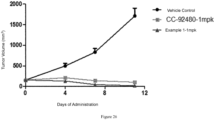
- Solutions of the compound of Example 1 and the control example CC-92480 were prepared with 5% DMSO + 20% PEG400 + 70% (10% TPGS) + 5% (1% HPMC K100LV).
- mice purchased from Beijing Vital River Laboratory Animal Technology Co., Ltd. (certificate No. 20170011006049, SCXK (Shanghai) 2017-0011), weighing about 19 g at the time of purchase, were bred at 5 mice/cage (in a 12/12 hour light/dark cycle, at a constant temperature of 23 ⁇ 1°C and humidity of 50%-60%) and had free access to food and water.
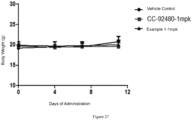
- mice were grouped as follows: Group n Route of administration Vehicle control 7 5% DMSO + 20% PEG400 + 70% (10% TPGS) + 5% (1%HPMC K100LV) (i.g/qd)
- Example 1 7 1 mg/kg (i.g/qd) CC-92480 7 1 mg/kg (i.g/qd)
- qd denotes once a day; i.g. denotes intragastric administration.
- NCI-H929 cells in a logarithmic growth phase were inoculated subcutaneously into the right flank of 30 female CB-17 SCID mice at 5 ⁇ 10 6 cells/mouse/100 ⁇ L (containing 50 ⁇ L of Matrigel).
- vehicle control group CC-92480-1 mpk
- compound of Example 1-1 mpk was administered once a day for 11 days.
- the tumor volume was measured with a vernier caliper and the body weight was measured with a balance twice a week, and the data were recorded.
- the tumor-bearing animals were euthanized as the experimental endpoint when the tumor volume reached 2000 mm 3 or when most tumors showed rupture or when the tumor-bearing animals showed 20% of body weight loss.
- V 1/2 ⁇ a ⁇ b 2 , where a and b represent length and width, respectively.
- T/C (%) (T-T 0 ) / (C-C 0 ) ⁇ 100 (%), where T and C are the tumor volume of animals at the end of the experiment in the treatment group and control group, respectively; T 0 and C 0 are the tumor volume of animals at the beginning of the experiment in the treatment group and control group, respectively.
- Tumor growth inhibition TGI (%) 1 - T/C (%), and when TGI (%) exceeds 100%, no specific value will be shown, and it is expressed only by >100%.
- Tumor regression % T 0 ⁇ T / T 0 ⁇ 100 %
- the compound of Example 1 was administered once a day starting from 10 days after tumor cell transplantation, and significant tumor volume regressions occurred 11 days after administration. Upon calculation, the tumor inhibition rate is > 100%, and the tumor regression rate is 88%. The statistical difference (p ⁇ 0.05) is obtained when compared with an equal dose of CC-92480 at the end point of the experiment, and the administration has no influence on the body weight of mice. Under the same conditions, the tumor regression rate of the control example CC-92480 is 34%.
- the drug concentration in the plasma of the test animals (mice) at different time points after intragastric administration of the compound of Example 1 and the control example CC-92480 was determined by an LC/MS/MS method.
- the pharmacokinetic behavior of the compound of the present disclosure in mice was studied and its pharmacokinetic profile was evaluated.
- mice Female, purchased from Beijing Vital River Laboratory Animal Technology Co., Ltd., with animal production license number of SCXK (Shanghai) 2017-0005.
- Example 1 A certain amount of compound of Example 1 was weighed, dissolved by adding 5% by volume of DMSO and 5% Tween 80 (Shanghai Titan Scientific Co., Ltd.), and then prepared into a 0.1 mg/mL clear solution by adding 90% normal saline.
- control example CC-92480 was weighed, dissolved by adding 5% by volume of DMSO and 5% Tween 80 (Shanghai Titan Scientific Co., Ltd.), and then prepared into a 0.1 mg/mL clear solution by adding 90% normal saline.
- mice Nine mice were intragastrically administered with the compound of Example 1 at a dose of 2 mg/kg and at a volume of 0.2 mL/10 g.
- mice Nine mice were intragastrically administered with the control example CC-92480 at a dose of 2 mg/kg and at a volume of 0.2 mL/10 g.
- mice were intragastrically administered with the compound of Example 1 and the control example CC-92480, and 0.2 mL of blood was collected before the administration and 0.25 h, 0.5 h, 1.0 h, 2.0 h, 4.0 h, 6.0 h, 8.0 h, 11.0 h and 24.0 h after the administration (3 animals at each time point), placed in EDTA-K2 anticoagulation tubes, and centrifuged at 10,000 rpm for 1 min (4°C). Plasma was separated within 1 hour, and stored at -20°C for testing. The process from blood sampling to centrifugation was performed under an ice bath.
- the content of the test compounds at different concentrations in mouse plasma after the administration was determined: 25 ⁇ L of mouse plasma at each time point after the administration was mixed with 50 ⁇ L (100 ng/mL) of internal standard solution camptothecin (National Institutes for Drug Control) and 175 ⁇ L of acetonitrile. The mixture was vortexed for 5 min and centrifuged for 10 min (3700 rpm), and 1 ⁇ L of the supernatant of the plasma sample was taken for LC/MS/MS assay (API4000 triple quadrupole tandem mass spectrometer, Applied Biosystems, USA; Shimadzu, LC-30AD ultra high performance liquid chromatography system, Shimadzu, Japan).
- Pharmacokinetic parameters for the compound of the present disclosure are shown in Table III below.
- Table III Pharmacokinetic parameters of the compound of the present disclosure No. Pharmacokinetic experiment (2 mg/kg) Plasma concentration Area under curve Half-life Residence time Clearance rate Apparent volume of distribution Cmax (ng/mL) AUC (ng /mL * h) T1/2 (h) MRT (h) CL/F (mL/min/kg) Vz/F (ml/kg)
- Example 1 799 4686 2.9 4.6 7.1 1785 CC-92480 692 1937 1.3 2.3 17.2 1961
- the compound of the present disclosure demonstrates good absorption profile and has significant pharmacokinetic advantages.
- Monkey plasma was purchased from Shanghai Medicilon Inc.
- a certain amount of the compound of Example 1 was weighed and prepared with DMSO to obtain a 30 mM stock solution.
- a certain volume of the stock solution was diluted into a solution I at a concentration of 1600 ⁇ M with DMSO; and a certain volume of the solution I at 1600 ⁇ M was diluted with 50% methanol to obtain a working solution II at a concentration of 16 ⁇ M.
- A30 mM stock solution, a 1600 ⁇ M solution I', and a 16 ⁇ M working solution II' of CC-92480 were prepared as described above.
- Table IV Stability data of the compound of the present disclosure in monkey plasma No. T 1/2 (min)/monkey Example 1 806 CC-92480 199
- the compound of the present disclosure has stability advantages in monkey plasma.
- the crystal form A of the compound of formula (I) (10 mg) was heated to 225°C to obtain the product. After X-ray powder diffraction detection, the product was defined as crystal form M.
- the XRPD pattern is shown in Figure 14 , and its characteristic peak positions are shown in Table 13. Table 13 Peak No.
- the crystal form C of the compound of formula (I) (40 mg) was added to dioxane (2.0 mL), slurried at room temperature, and filtered. The solid was dried under vacuum to obtain the product. After X-ray powder diffraction detection, the product was defined as crystal form P.
- the XRPD pattern is shown in Figure 17 . DSC pattern showed endothermic peaks at 127.49°C, 180.10°C, and 249.23°C. TGA pattern showed a weight loss of 8.79% from 40°C to 230°C. Table 16 Peak No.
- the crystal form Q of the compound of formula (I) (10 mg) was added to water (1.0 mL), and slurried at room temperature for 1 day to obtain the product. After X-ray powder diffraction detection, the product was defined as crystal form U.
- the crystal form D of the compound of formula (I) (10 mg) was added to n-heptane (1.0 mL), and the mixture was slurried at room temperature and centrifuged. The solid was dried under vacuum to obtain the product. After X-ray powder diffraction detection, the product was defined as crystal form X.
- the XRPD pattern is shown in Figure 20 , and its characteristic peak positions are shown in Table 19. DSC pattern showed endothermic peaks at 158.81°C, 184.14°C, and 249.04°C. Table 19 Peak No.
- the crystal form Q of the compound of formula (I) (10 mg) was added to n -heptane (1.0 mL), slurried at room temperature, and centrifuged. The solid was dried under vacuum to obtain the product. After X-ray powder diffraction detection, the product was defined as crystal form Y.
- the XRPD pattern is shown in Figure 21 , and its characteristic peak positions are shown in Table 20. DSC pattern showed endothermic peaks at 184.97°C and 248.72°C. Table 20 Peak No.
- the mixture was filtered under reduced pressure, then dried under reduced pressure for 17 hours to obtain the product.
- the product was defined as crystal form T.
- the XRPD pattern is shown in Figure 25 , and its characteristic peak positions are shown in Table 24. DSC pattern showed endothermic peaks at 164.78°C and 247.66°C. Table 24 Peak No.
- Example 39 Stability of Factors Influencing Crystal Forms D, E, Q, and U of Compound of Formula (I)
- Example 40 Long-term/Accelerated Stability of Crystal Forms D, E, Q, and U of Compound of Formula (I)
Landscapes
- Health & Medical Sciences (AREA)
- Chemical & Material Sciences (AREA)
- Organic Chemistry (AREA)
- Medicinal Chemistry (AREA)
- Pharmacology & Pharmacy (AREA)
- Life Sciences & Earth Sciences (AREA)
- Animal Behavior & Ethology (AREA)
- General Health & Medical Sciences (AREA)
- Public Health (AREA)
- Veterinary Medicine (AREA)
- Chemical Kinetics & Catalysis (AREA)
- General Chemical & Material Sciences (AREA)
- Nuclear Medicine, Radiotherapy & Molecular Imaging (AREA)
- Epidemiology (AREA)
- Engineering & Computer Science (AREA)
- Bioinformatics & Cheminformatics (AREA)
- Biomedical Technology (AREA)
- Neurology (AREA)
- Neurosurgery (AREA)
- Pharmaceuticals Containing Other Organic And Inorganic Compounds (AREA)
- Plural Heterocyclic Compounds (AREA)
- Indole Compounds (AREA)
Applications Claiming Priority (2)
| Application Number | Priority Date | Filing Date | Title |
|---|---|---|---|
| CN202210060175 | 2022-01-19 | ||
| PCT/CN2023/073077 WO2023138647A1 (zh) | 2022-01-19 | 2023-01-19 | 一种含硫异吲哚啉类衍生物的晶型 |
Publications (2)
| Publication Number | Publication Date |
|---|---|
| EP4467536A1 true EP4467536A1 (de) | 2024-11-27 |
| EP4467536A4 EP4467536A4 (de) | 2025-08-06 |
Family
ID=87347885
Family Applications (1)
| Application Number | Title | Priority Date | Filing Date |
|---|---|---|---|
| EP23742962.6A Pending EP4467536A4 (de) | 2022-01-19 | 2023-01-19 | Kristalline form eines schwefelhaltigen isoindolinderivats |
Country Status (10)
| Country | Link |
|---|---|
| US (1) | US20250154126A1 (de) |
| EP (1) | EP4467536A4 (de) |
| JP (1) | JP2025503063A (de) |
| KR (1) | KR20240136385A (de) |
| CN (1) | CN118510766A (de) |
| AU (1) | AU2023210002A1 (de) |
| CA (1) | CA3248757A1 (de) |
| MX (1) | MX2024008959A (de) |
| TW (1) | TW202340167A (de) |
| WO (1) | WO2023138647A1 (de) |
Family Cites Families (7)
| Publication number | Priority date | Publication date | Assignee | Title |
|---|---|---|---|---|
| KR101791757B1 (ko) * | 2007-03-20 | 2017-10-30 | 셀진 코포레이션 | 4'-o-치환된 아이소인돌린 유도체 및 이를 포함하는 조성물 및 이의 사용 방법 |
| EP2536706B1 (de) | 2010-02-11 | 2017-06-14 | Celgene Corporation | Arylmethoxyisoindolinderivate, zusammensetzungen damit und anwendungsverfahren dafür |
| TWI791552B (zh) * | 2017-07-10 | 2023-02-11 | 美商西建公司 | 抗增生化合物及其使用方法 |
| BR112020023756A2 (pt) * | 2018-05-23 | 2021-02-09 | Celgene Corporation | tratamento de mieloma múltiplo e uso de biomarcadores para 4-(4-(4-(((2-(2,6-dioxopiperidin-3-il)-1-oxoisoindolin-4-il)oxi)metil)benzil)piperazin-1-il)-3-fluorobenzonitrila |
| KR102672549B1 (ko) | 2018-09-30 | 2024-06-10 | 상하이 인스티튜트 오브 마테리아 메디카 차이니즈 아카데미 오브 싸이언시즈 | 이소인돌린계 화합물, 이의 제조 방법, 약학 조성물 및 용도 |
| US20220380368A1 (en) * | 2019-09-19 | 2022-12-01 | The Regents Of The University Of Michigan | Spirocyclic androgen receptor protein degraders |
| EP4183781A4 (de) * | 2020-07-20 | 2024-01-03 | Jiangsu Hengrui Pharmaceuticals Co., Ltd. | Schwefelhaltiges isoindolinderivat und herstellungsverfahren dafür und medizinische verwendung davon |
-
2023
- 2023-01-19 WO PCT/CN2023/073077 patent/WO2023138647A1/zh not_active Ceased
- 2023-01-19 AU AU2023210002A patent/AU2023210002A1/en active Pending
- 2023-01-19 JP JP2024543229A patent/JP2025503063A/ja active Pending
- 2023-01-19 MX MX2024008959A patent/MX2024008959A/es unknown
- 2023-01-19 US US18/728,652 patent/US20250154126A1/en active Pending
- 2023-01-19 CN CN202380016119.5A patent/CN118510766A/zh active Pending
- 2023-01-19 EP EP23742962.6A patent/EP4467536A4/de active Pending
- 2023-01-19 KR KR1020247027045A patent/KR20240136385A/ko active Pending
- 2023-01-19 CA CA3248757A patent/CA3248757A1/en active Pending
- 2023-01-19 TW TW112102783A patent/TW202340167A/zh unknown
Also Published As
| Publication number | Publication date |
|---|---|
| WO2023138647A1 (zh) | 2023-07-27 |
| CA3248757A1 (en) | 2025-07-09 |
| KR20240136385A (ko) | 2024-09-13 |
| EP4467536A4 (de) | 2025-08-06 |
| TW202340167A (zh) | 2023-10-16 |
| AU2023210002A1 (en) | 2024-08-22 |
| MX2024008959A (es) | 2024-07-30 |
| JP2025503063A (ja) | 2025-01-30 |
| CN118510766A (zh) | 2024-08-16 |
| US20250154126A1 (en) | 2025-05-15 |
Similar Documents
| Publication | Publication Date | Title |
|---|---|---|
| EP4058151B1 (de) | Neuartiges salz von terphenylverbindung | |
| EP4293027A1 (de) | Pyrimidinverbindungen mit aromatischem ring | |
| EP4640689A1 (de) | Kristallform des kras-g12d-inhibitors und herstellungsverfahren dafür | |
| TWI585088B (zh) | 作爲激酶抑制劑之咪唑并[1,2-b]嗒衍生物 | |
| WO2021190467A1 (zh) | 含螺环的喹唑啉化合物 | |
| JP7749263B2 (ja) | Kat6阻害剤としての化合物 | |
| CN115667246A (zh) | 一种哒嗪类衍生物自由碱的晶型及其制备方法和应用 | |
| CN116390728B (zh) | 喹唑啉衍生物及其制备方法和用途 | |
| EP4467536A1 (de) | Kristalline form eines schwefelhaltigen isoindolinderivats | |
| WO2024188999A1 (en) | Crystalline form | |
| EP4293021A1 (de) | Salz einer stickstoffhaltigen kondensierten heterocyclischen verbindung oder kristallform davon und herstellungsverfahren dafür, pharmazeutische zusammensetzung davon und verwendung davon | |
| EP3941472B1 (de) | Crystalline and amorphous forms of-(5-((4-ethylpiperazin-1-yl)methyl)pyridine-2-yl)-5-fluoro-4-(3-isopropyl-2-methyl-2 <ns1:i>h</ns1:i>?-indazol-5-yl)pyrimidin-2-amine and its salts, and preparation methods and therapeutic uses thereof | |
| EA052388B1 (ru) | Кристаллическая форма серосодержащего производного изоиндолина | |
| EP4596538A1 (de) | Pharmazeutisch akzeptables salz und kristalline form eines tetrahydronaphthalinderivats sowie herstellungsverfahren dafür | |
| EP4570800A1 (de) | Kristallform einer pyridinopyrimidinonverbindung, säuresalz davon, kristallform eines säuresalzes davon und verwendung | |
| CN116462660A (zh) | 一种异喹啉酮类化合物的盐及其晶型 | |
| TWI914461B (zh) | 一種吲唑類衍生物的藥學上可接受鹽、結晶形式及其製備方法 | |
| KR20250024987A (ko) | 4-[(5-클로로피리딘-2-일)메톡시]-1-[3-(프로판-2-일)-1H,2H,3H,4H,5H-[1,4]디아제피노[1,7-a]인돌-9-일]-1,2-디하이드로피리딘-2-온의결정질 형태 및 이의 염, 이의 제조 방법 및 용도 | |
| EP4644374A1 (de) | Naphthylamidverbindung und herstellungsverfahren dafür und verwendung davon | |
| EP4714947A1 (de) | Kristallform einer pyrimido-azacycloverbindung sowie herstellungsverfahren dafür und verwendung davon | |
| EP4667467A1 (de) | Protac-abbauer von mllt1 und/oder mllt3 | |
| EP4538268A1 (de) | Pyridazin-3-carboxamidverbindung als tyk2-inhibitor | |
| HK40079587A (en) | Crystal form of pyridazine derivative free base, and preparation method therefor and use thereof | |
| HK40063209B (zh) | 固态形式 |
Legal Events
| Date | Code | Title | Description |
|---|---|---|---|
| STAA | Information on the status of an ep patent application or granted ep patent |
Free format text: STATUS: THE INTERNATIONAL PUBLICATION HAS BEEN MADE |
|
| PUAI | Public reference made under article 153(3) epc to a published international application that has entered the european phase |
Free format text: ORIGINAL CODE: 0009012 |
|
| STAA | Information on the status of an ep patent application or granted ep patent |
Free format text: STATUS: REQUEST FOR EXAMINATION WAS MADE |
|
| 17P | Request for examination filed |
Effective date: 20240730 |
|
| AK | Designated contracting states |
Kind code of ref document: A1 Designated state(s): AL AT BE BG CH CY CZ DE DK EE ES FI FR GB GR HR HU IE IS IT LI LT LU LV MC ME MK MT NL NO PL PT RO RS SE SI SK SM TR |
|
| DAV | Request for validation of the european patent (deleted) | ||
| DAX | Request for extension of the european patent (deleted) | ||
| STAA | Information on the status of an ep patent application or granted ep patent |
Free format text: STATUS: EXAMINATION IS IN PROGRESS |
|
| A4 | Supplementary search report drawn up and despatched |
Effective date: 20250709 |
|
| RIC1 | Information provided on ipc code assigned before grant |
Ipc: C07D 401/14 20060101AFI20250703BHEP Ipc: A61K 31/454 20060101ALI20250703BHEP Ipc: A61P 35/00 20060101ALI20250703BHEP |
|
| 17Q | First examination report despatched |
Effective date: 20250723 |