EP4467628A1 - Composition de fluide frigorigène et pompe à chaleur la comprenant - Google Patents
Composition de fluide frigorigène et pompe à chaleur la comprenant Download PDFInfo
- Publication number
- EP4467628A1 EP4467628A1 EP24177398.5A EP24177398A EP4467628A1 EP 4467628 A1 EP4467628 A1 EP 4467628A1 EP 24177398 A EP24177398 A EP 24177398A EP 4467628 A1 EP4467628 A1 EP 4467628A1
- Authority
- EP
- European Patent Office
- Prior art keywords
- refrigerant composition
- mixed refrigerant
- experimental example
- content
- weight
- Prior art date
- Legal status (The legal status is an assumption and is not a legal conclusion. Google has not performed a legal analysis and makes no representation as to the accuracy of the status listed.)
- Pending
Links
Images
Classifications
-
- C—CHEMISTRY; METALLURGY
- C09—DYES; PAINTS; POLISHES; NATURAL RESINS; ADHESIVES; COMPOSITIONS NOT OTHERWISE PROVIDED FOR; APPLICATIONS OF MATERIALS NOT OTHERWISE PROVIDED FOR
- C09K—MATERIALS FOR MISCELLANEOUS APPLICATIONS, NOT PROVIDED FOR ELSEWHERE
- C09K5/00—Heat-transfer, heat-exchange or heat-storage materials, e.g. refrigerants; Materials for the production of heat or cold by chemical reactions other than by combustion
- C09K5/02—Materials undergoing a change of physical state when used
- C09K5/04—Materials undergoing a change of physical state when used the change of state being from liquid to vapour or vice versa
- C09K5/041—Materials undergoing a change of physical state when used the change of state being from liquid to vapour or vice versa for compression-type refrigeration systems
- C09K5/044—Materials undergoing a change of physical state when used the change of state being from liquid to vapour or vice versa for compression-type refrigeration systems comprising halogenated compounds
- C09K5/045—Materials undergoing a change of physical state when used the change of state being from liquid to vapour or vice versa for compression-type refrigeration systems comprising halogenated compounds containing only fluorine as halogen
-
- C—CHEMISTRY; METALLURGY
- C09—DYES; PAINTS; POLISHES; NATURAL RESINS; ADHESIVES; COMPOSITIONS NOT OTHERWISE PROVIDED FOR; APPLICATIONS OF MATERIALS NOT OTHERWISE PROVIDED FOR
- C09K—MATERIALS FOR MISCELLANEOUS APPLICATIONS, NOT PROVIDED FOR ELSEWHERE
- C09K5/00—Heat-transfer, heat-exchange or heat-storage materials, e.g. refrigerants; Materials for the production of heat or cold by chemical reactions other than by combustion
- C09K5/02—Materials undergoing a change of physical state when used
- C09K5/04—Materials undergoing a change of physical state when used the change of state being from liquid to vapour or vice versa
- C09K5/041—Materials undergoing a change of physical state when used the change of state being from liquid to vapour or vice versa for compression-type refrigeration systems
- C09K5/044—Materials undergoing a change of physical state when used the change of state being from liquid to vapour or vice versa for compression-type refrigeration systems comprising halogenated compounds
-
- F—MECHANICAL ENGINEERING; LIGHTING; HEATING; WEAPONS; BLASTING
- F25—REFRIGERATION OR COOLING; COMBINED HEATING AND REFRIGERATION SYSTEMS; HEAT PUMP SYSTEMS; MANUFACTURE OR STORAGE OF ICE; LIQUEFACTION SOLIDIFICATION OF GASES
- F25B—REFRIGERATION MACHINES, PLANTS OR SYSTEMS; COMBINED HEATING AND REFRIGERATION SYSTEMS; HEAT PUMP SYSTEMS
- F25B30/00—Heat pumps
-
- F—MECHANICAL ENGINEERING; LIGHTING; HEATING; WEAPONS; BLASTING
- F25—REFRIGERATION OR COOLING; COMBINED HEATING AND REFRIGERATION SYSTEMS; HEAT PUMP SYSTEMS; MANUFACTURE OR STORAGE OF ICE; LIQUEFACTION SOLIDIFICATION OF GASES
- F25B—REFRIGERATION MACHINES, PLANTS OR SYSTEMS; COMBINED HEATING AND REFRIGERATION SYSTEMS; HEAT PUMP SYSTEMS
- F25B30/00—Heat pumps
- F25B30/02—Heat pumps of the compression type
-
- C—CHEMISTRY; METALLURGY
- C09—DYES; PAINTS; POLISHES; NATURAL RESINS; ADHESIVES; COMPOSITIONS NOT OTHERWISE PROVIDED FOR; APPLICATIONS OF MATERIALS NOT OTHERWISE PROVIDED FOR
- C09K—MATERIALS FOR MISCELLANEOUS APPLICATIONS, NOT PROVIDED FOR ELSEWHERE
- C09K2205/00—Aspects relating to compounds used in compression type refrigeration systems
- C09K2205/10—Components
- C09K2205/12—Hydrocarbons
- C09K2205/122—Halogenated hydrocarbons
-
- C—CHEMISTRY; METALLURGY
- C09—DYES; PAINTS; POLISHES; NATURAL RESINS; ADHESIVES; COMPOSITIONS NOT OTHERWISE PROVIDED FOR; APPLICATIONS OF MATERIALS NOT OTHERWISE PROVIDED FOR
- C09K—MATERIALS FOR MISCELLANEOUS APPLICATIONS, NOT PROVIDED FOR ELSEWHERE
- C09K2205/00—Aspects relating to compounds used in compression type refrigeration systems
- C09K2205/22—All components of a mixture being fluoro compounds
Definitions
- the present disclosure relates to a composition containing a refrigerant and a heat pump including the same. More specifically, the present disclosure relates to a composition containing different refrigerants and a heat pump including the same.
- Refrigerants are substances used to remove heat from heat pumps utilized in air conditioners, refrigerators, cooling towers and the like.
- the refrigerants may include, for example, natural refrigerants, chlorofluorocarbon (CFC)-based refrigerants, hydrochlorofluorocarbon (HCFC)-based refrigerants, hydrofluorocarbon (HFC)-based refrigerants, and hydrofluoroolefin (HFO)-based refrigerants.
- CFC chlorofluorocarbon
- HCFC hydrochlorofluorocarbon
- HFC hydrofluorocarbon
- HFO hydrofluoroolefin
- R-1234yf 2,3,3,3-tetrafluoropropene which is a type of hydrofluoroolefin-based refrigerant does not contain chlorine atoms. Therefore, this substance is actively used as a refrigerant in an air conditioner for a vehicle due to a low global warming potential (GWP).
- GWP global warming potential
- An object according to exemplary embodiments is to provide a mixed refrigerant composition with improved environmental friendliness.
- Another object according to exemplary embodiments is to provide a heat pump which includes the mixed refrigerant composition, and has improved cooling performance.
- a mixed refrigerant composition including trifluoroiodomethane (R-13I1), 1,1-difluoroethane (R-152a) and difluoromethane (R-32), wherein a content of the trifluoroiodomethane (R-13I1) is 20 to 60% by weight based on a total weight of the mixed refrigerant composition.
- a content of the 1,1-difluoroethane (R-152a) may be 30 to 75% by weight or 40 to 65% by weight based on the total weight of the mixed refrigerant composition, and/or a content of the difluoromethane (R-32) may be or 1 to 20% by weight or 5 to 20% by weight or 5 to 10% by weight based on the total weight of the mixed refrigerant composition.
- the content of the trifluoroiodomethane (R-13I1) may be 30 to 60 % by weight or 40 to 60% by weight or 40 to 55 % by weight based on the total weight of the mixed refrigerant composition.
- a sum of the content of the 1,1-difluoroethane (R-152a) and the content of the difluoromethane (R-32) may be 40 to 75 % by weight or 40 to 60% by weight or 45 to 55 % by weight based on the total weight of the mixed refrigerant composition.
- a ratio of the content of the trifluoroiodomethane (R-13I1) to the content of the 1,1-difluoroethane (R-152a) based on the total weight of the mixed refrigerant composition may be 10 or lower, or 0.1 to 10 or 0.2 to 5.
- a ratio of the content of the difluoromethane (R-32) to the content of the 1,1-difluoroethane (R-152a) based on the total weight of the mixed refrigerant composition may be 0.01 to 1 or 0.05 to 0.4 or 0.1 to 0.2.
- a ratio of the content of the trifluoroiodomethane (R-13I1) to the content of the difluoromethane (R-32) based on the total weight of the mixed refrigerant composition may be 1 to 15 or 2 to 13 or 5 to 11 or 9 to 11.
- a boiling point of the mixed refrigerant composition at 1 atm may be -50 to -25 °C or -45 to -30 °C..
- a critical temperature of the mixed refrigerant composition may be 90 to 120 °C or 100 to 120 °C or 100 to 110 °C.
- a critical pressure of the mixed refrigerant composition may be 35 to 60 bar or 40 to 50 bar.
- a temperature glide of the mixed refrigerant composition at a pressure of 1.5 bar may be 1 to 15 °C or 1 to 10 °C or 3 to 8 °C.
- a temperature glide of the mixed refrigerant composition at a pressure of 15 bar may be 1 to 10 °C or 2 to 8 °C or 3 to 5 °C.
- a latent heat of the mixed refrigerant composition at -25 °C may be 150 to 300 kJ/kg or 170 to 280 kJ/kg or 180 to 275 kJ/kg.
- a global warming potential (GWP) of the mixed refrigerant composition may be 30 to 160 or 30 to 120.
- an ozone depleting potential (ODP) of the mixed refrigerant composition may be 0.
- a flammability of the mixed refrigerant composition may be Class A2L or lower in the refrigerant safety group classification of The American Society of Heating, Refrigerating and Air-Conditioning Engineers (ASHRAE).
- ASHRAE American Society of Heating, Refrigerating and Air-Conditioning Engineers
- a heat pump including the above-described mixed refrigerant composition.
- the mixed refrigerant composition may include trifluoroiodomethane (R-13I1), 1,1-difluoroethane (R-152a) and difluoromethane (R-32). Accordingly, the refrigerant included in the mixed refrigerant composition may not contain chlorine (Cl) atoms, thus environmental pollution such as ozone layer destruction can be suppressed.
- R-13I1 trifluoroiodomethane
- R-152a 1,1-difluoroethane
- R-32 difluoromethane
- the mixed refrigerant composition may optionally consist only of trifluoroiodomethane (R-13I1), 1,1-difluoroethane (R-152a) and difluoromethane (R-32).
- the mixed refrigerant composition may have a low boiling point. Accordingly, the mixed refrigerant composition may effectively decrease the ambient temperature during vaporization from liquid to gas even at a low temperature..
- the mixed refrigerant composition may have a high critical temperature.
- the mixed refrigerant composition may not become a supercritical state, such that the condensation pressure of the compressor may not be reduced. Accordingly, the coefficient of performance of a heat pump including the mixed refrigerant composition may be improved.
- a mixed refrigerant composition which includes trifluoroiodomethane (R-13I1), 1,1-difluoroethane (R-152a) and difluoromethane (R-32), and a heat pump including the mixed refrigerant composition are provided.
- the mixed refrigerant composition may be a mixture of refrigerants which do not contain chlorine atoms (Cl).
- refrigerants which do not contain chlorine atoms (Cl) may include natural refrigerants, hydrofluorocarbon (HFC)-based refrigerants, and hydrofluoroolefin (HFO)-based refrigerants.
- the natural refrigerant is a substance that exists naturally on earth, distinct from the artificial compound.
- the natural refrigerant may include at least one of ammonia (R-717), carbon dioxide (R-744), propane (R-290), propylene (R-1270) and butane (R-600a).
- the hydrofluorocarbon (HFC)-based refrigerant is a refrigerant composed of hydrogen atoms (H), fluorine atoms (F), and carbon atoms (C).
- the hydrofluorocarbon (HFC)-based refrigerant may include, for example, at least one of difluoromethane (R-32), trifluoroiodomethane (R-13I1), 1,1-difluoroethane (R-152a), pentafluoroethane (R-125), 1,1,1-trifluoroethane (R-143a), trifluoromethane (R-23), fluoroethane (R-161), 1,1,1,2,3,3,3-heptafluoropropane (R-227ea), 1,1,1,2,3,3-hexafluoropropane (R-236ea), 1,1,1,3,3,3-hexafluoropropane (R-236fa), 1,1,1,3,3-pentaflu
- the hydrofluoroolefin (HFO)-based refrigerant is a refrigerant composed of hydrogen atoms (H), fluorine atoms (F) and carbon atoms (C), and has at least one double bond between the carbon atoms.
- the hydrofluoroolefin (HFO)-based refrigerant may include, for example, at least one of 1,1,2-trifluoroethylene (R-1123), 2,3,3,3-tetrafluoropropene (R-1234yf), 1,3,3,3-tetrafluoropropene (R-1234ze), 1,2,3,3-tetrafluoropropene (R-1234ye), 3,3,3-trifluoropropene (R-1243zf), 1,1-difluoroethylene (R-1132a) and 1,2,3,3,3-pentafluoropropene (R-1225ye).
- 1,1,2-trifluoroethylene R-1123
- 2,3,3,3-tetrafluoropropene R-1234yf
- 1,3,3,3-tetrafluoropropene R-1234ze
- 1,2,3,3-tetrafluoropropene R-1234ye
- 3,3,3-trifluoropropene R-1243zf
- the mixed refrigerant composition may include trifluoroiodomethane (R-13I1), 1,1-difluoroethane (R-152a), and difluoromethane (R-32).
- the trifluoroiodomethane (R-13I1), the 1,1-difluoroethane (R-152a), and the and difluoromethane (R-32) included in the mixed refrigerant composition do not contain chlorine atoms (Cl).
- the trifluoroiodomethane (R-13I1) is a type of the hydrofluorocarbon (HFC)-based refrigerant, and has an ozone depleting potential (ODP) of 0 and a global warming potential (GWP) of less than 5.
- the trifluoroiodomethane (R-13I1) may have high thermal and chemical stabilities. Due to the trifluoroiodomethane (R-13I1) included in the mixed refrigerant composition, the environmental friendliness and stability of the mixed refrigerant composition may be improved.
- the 1,1-difluoroethane (R-152a) is a type of the hydrofluorocarbon (HFC)-based refrigerant, and has an ozone depleting potential (ODP) of 0 and a global warming potential (GWP) of 150 or less.
- the 1,1-difluoroethane (R-152a) may have a low molecular mass and a low saturated density. Due to the 1,1-difluoroethane (R-152a) included in the mixed refrigerant composition, the environmental friendliness of the mixed refrigerant composition may be improved. In addition, a discharge pressure from a compressor may be low due to the low saturation density. Therefore, a change in the enthalpy at the same pressure may be increased. Accordingly, refrigeration capacity of the mixed refrigerant composition may be improved.
- the difluoromethane (R-32) is a type of hydrofluorocarbon (HFC)-based refrigerant, and has an ozone depletion potential (ODP) of 0 and a global warming potential (GWP) of 675.
- the difluoromethane (R-32) may have high thermal stability. Therefore, the stability of the mixed refrigerant composition can be improved by including the difluoromethane (R-32) in the mixed refrigerant composition.
- the mixed refrigerant composition may not be mixed with any refrigerant other than the trifluoroiodomethane (R-13I1), 1,1-difluoroethane (R-152a) and difluoromethane (R-32).
- the mixed refrigerant composition may consist only of trifluoroiodomethane (R-13I1), 1,1-difluoroethane (R-152a) and difluoromethane (R-32). Accordingly, it is possible to prevent the thermal and chemical stabilities of the mixed refrigerant composition from being reduced due to the refrigerant having a low thermal or chemical stability mixed therewith. In addition, it is possible to prevent the condensation temperature of the mixed refrigerant composition from being increased due to the refrigerant having a low evaporating pressure mixed therewith.
- a content of the trifluoroiodomethane (R-13I1) may be 20 to 60% by weight ("wt.%") based on a total weight of the mixed refrigerant composition.
- the content of the trifluoroiodomethane (R-13I1) is less than 20 wt.% based on the total weight of the mixed refrigerant composition, thermal and chemical stabilities of the mixed refrigerant composition may be reduced.
- the content of the trifluoroiodomethane (R-13I1) exceeds 60 wt.%, a refrigeration capacity of the heat pump including the mixed refrigerant composition may be reduced. Within the above content range, and the refrigeration capacity may be improved, while the thermal and chemical stabilities and environmental friendliness of the mixed refrigerant composition are improved.
- the content of the trifluoroiodomethane (R-13I1) may be 25 to 60 wt.%, 30 to 60 wt.%, 35 to 60 wt.%, 40 to 60 wt.%, or 45 to 55 wt.% based on the total weight of the mixed refrigerant composition.
- the stability and refrigeration capacity of the mixed refrigerant composition may be further improved.
- the content of the 1,1-difluoroethane (R-152a) based on the total weight of the mixed refrigerant composition may be 30 to 75 wt.%, 40 to 75 wt.%, 40 to 70 wt.%, 40 to 65 wt.%, or 40 to 60 wt.%.
- the refrigeration capacity of the mixed refrigerant composition may be improved. Accordingly, the temperature can be controlled even with a small amount of mixed refrigerant composition, and the efficiency of the air conditioner containing the mixed refrigerant composition may be improved.
- the content of the difluoromethane (R-32) based on the total weight of the mixed refrigerant composition may be 1 to 20 wt.%, 5 to 20 wt.%, or 5 to 10 wt.%. Within the above content range, the thermal stability of the mixed refrigerant composition may be further improved.
- a sum of the content of the 1,1-difluoroethane (R-152a) and the content of the difluoromethane (R-32) based on the total weight of the mixed refrigerant composition may be 40 to 75 wt.%, 40 to 70 wt.%, 40 to 65 wt.%, 40 to 60 wt.%, or 45 to 55 wt.%.
- the environmental friendliness of the mixed refrigerant composition may be improved by preventing the global warming potential (GWP) value from being increased, and thermal and chemical stabilities may be improved.
- GWP global warming potential
- a ratio of the content of the trifluoroiodomethane (R-13I1) to the content of the 1,1-difluoroethane (R-152a) based on the total weight of the mixed refrigerant composition may be 0.1 to 10, 0.1 to 5, or 0.2 to 5.
- the high temperature stability of the mixed refrigerant composition may be improved, while preventing the global warming potential (GWP) value of the mixed refrigerant composition from being increased.
- GWP global warming potential
- the ratio of the content of the trifluoroiodomethane (R-13I1) to the content of the 1,1-difluoroethane (R-152a) based on the total weight of the mixed refrigerant composition may be 0.25 to 3, 0.2 to 2, 0.5 to 1.3, or 0.7 to 1.3.
- the environmental friendliness of the mixed refrigerant composition may be improved, while the high temperature stability can be further improved.
- the ratio of the content of the difluoromethane (R-32) to the content of the 1,1-difluoroethane (R-152a) based on the total weight of the mixed refrigerant composition may be 0.01 to 1, 0.05 to 1, 0.05 to 0.5 or 0.05 to 0.35.
- the refrigeration capacity of the mixed refrigerant composition may be improved, while preventing the global warming potential (GWP) value of the mixed refrigerant composition from being increased.
- GWP global warming potential
- the ratio of the content of the difluoromethane (R-32) to the content of the 1,1-difluoroethane (R-152a) based on the total weight of the mixed refrigerant composition may be 0.01 to 1, 0.05 to 0.4, 0.05 to 0.3, 0.1 to 0.3, or 0.1 to 0.2. Within the above range, the refrigeration capacity of the mixed refrigerant composition may be further improved, while environmental friendliness is improved.
- the ratio of the content of the trifluoroiodomethane (R-13I1) to the content of the difluoromethane (R-32) based on the total weight of the mixed refrigerant composition may be 1 to 15, 1 to 13, or 2 to 13.
- the thermal stability of the mixed refrigerant composition may be further improved, while preventing the global warming potential (GWP) value of the mixed refrigerant composition from being increased.
- GWP global warming potential
- the ratio of the content of the trifluoroiodomethane (R-13I1) to the content of the difluoromethane (R-32) based on the total weight of the mixed refrigerant composition may be 2 to 12, 2 to 11, 5 to 11, or 9 to 11. Within the above content range, the stability of the mixed refrigerant composition may be further improved, while the environmental friendliness is improved.
- a boiling point of the mixed refrigerant composition at 1 atm may be -50 to -25 °C, -45 to -25 °C, -45 to -30 °C, -42 to - 30 °C, -40 to -30 °C, or -35 to - 30 °C.
- a specific volume may be decreased, without an increase in the condensation pressure. Accordingly, the refrigeration capacity of the refrigerant may be improved, while decreasing the amount of mixed refrigerant composition.
- a critical temperature of the mixed refrigerant composition may be 90 to 120 °C, 100 to 120 °C, 100 to 110 °C, or 105 to 110 °C.
- the critical temperature refers to a maximum temperature at which a specific substance may exist in a liquid state. If the critical temperature of the refrigerant is low, it may be difficult to liquefy the refrigerant in the refrigeration cycle.
- the mixed refrigerant composition may not become a supercritical fluid state in the refrigeration cycle. Therefore, it is possible to prevent a portion of the mixed refrigerant composition from being not liquefied, and thus the refrigeration capacity may be improved.
- a critical pressure of the mixed refrigerant composition may be 35 to 60 bar, 35 to 50 bar, 40 to 50 bar, 43 to 50 bar, or 43 to 47 bar.
- the critical pressure refers to a maximum pressure at which a specific substance may exist in a liquid state. If the critical pressure of the refrigerant is high, it may be difficult to liquefy the refrigerant in the refrigeration cycle.
- the mixed refrigerant composition may not become the supercritical fluid state in the refrigeration cycle. Therefore, it is possible to prevent a portion of the mixed refrigerant composition from not being liquefied, and thus the refrigeration capacity may be improved.
- a temperature glide (temperature gradient) of the mixed refrigerant composition at a pressure of 1.5 bar may be 1 to 15 °C, 1 to 10 °C, 1 to 8 °C, or 3 to 7 °C.
- the temperature glide of the mixed refrigerant composition at a pressure of 15 bar may be 1 to 10 °C, 1 to 8 °C, 2 to 8 °C, or 3 to 5 °C.
- a latent heat of the mixed refrigerant composition at -25 °C may be 150 to 300 kJ/kg, 150 to 280 kJ/kg, or 170 to 280 kJ/kg.
- the heat released or absorbed during the phase change of the mixed refrigerant composition may be sufficient. Accordingly, the thermal efficiency of the mixed refrigerant composition may be improved.
- the latent heat at -25 °C may be 180 to 275 kJ/kg, 200 to 250 kJ/kg, or 200 to 230 kJ/kg.
- the thermal efficiency of the refrigerant composition may be improved, while suppressing a reduction in the environmental friendliness of the mixed refrigerant composition.
- the global warming potential (GWP) of the mixed refrigerant composition may be 30 to 160, 30 to 140, 30 to 120, 30 to 110, or 30 to 100.
- the global warming potential is a value obtained by calculating a degree of effect on global warming using carbon dioxide (CO 2 ) as a reference material over a certain period of time (for example, 100 years), when 1 kg of any chemical substance is released into the Earth's troposphere.
- the ozone depleting potential (ODP) of the mixed refrigerant composition may be 0.
- the ozone depleting potential is a value obtained by calculating a degree of effect on ozone layer destruction by any chemical substance, when assuming that the effect of trichlorofluoromethane (CFC-11) on the ozone layer destruction is 1.
- ODP ozone depleting potential
- the mixed refrigerant composition may have low flammability.
- the mixed refrigerant composition may have a flammability of Class A2L or lower in the refrigerant safety group classification of The American Society of Heating, Refrigerating and Air-Conditioning Engineers (ASHRAE). Accordingly, stability during operation and leakage of the heat pump may be improved.
- ASHRAE American Society of Heating, Refrigerating and Air-Conditioning Engineers
- the heat pump may include the mixed refrigerant composition. Accordingly, the refrigeration performance of the heat pump may be enhanced, while improving the environmental friendliness and stability.
- the heat pump may include a compressor, a condenser, an expansion valve and an evaporator.
- the above-described mixed refrigerant composition may be compressed to a high temperature and high pressure state
- the expansion valve the above-described mixed refrigerant composition may be expanded to a low temperature and low pressure state.
- the above-described mixed refrigerant composition may emit or absorb heat while circulating through the compressor, the condenser, the expansion valve, and the evaporator inside the heat pump.
- the mixed refrigerant composition may be maintained in a gaseous state at high temperature and high pressure in the compressor.
- the mixed refrigerant composition may be liquefied into a liquid state by releasing the heat in the condenser.
- the mixed refrigerant composition may be maintained in a low-temperature and low-pressure liquid state, or a mixture state of liquid and gas in the expansion valve.
- the mixed refrigerant composition may absorb the heat to be vaporized into a gaseous state in the evaporator.
- the heat pump may contain oil.
- the oil may include polyester (POE), mineral oil, alkylbenzene (AB), polyalkylene glycol (PAG), polyvinyl ether (PVE) and the like.
- a coefficient of performance (COP) of the heat pump may be 1 to 10.
- the coefficient of performance (COP) refers to a ratio of an amount of heat effectively gained to an amount of work input when operating the heat pump.
- a highly efficient heat pump having the coefficient of performance in the above range may be provided using the above-described refrigerant.
- the global warming potentials (GWPs) of the mixed refrigerant compositions were calculated by calculating an arithmetic mean according to the weight ratio of each of R-13I1, R-152a, R-32 and R-1234yf.
- the GWP was calculated with reference to IPCC AR4 and Wiebbles (1995), and the GWP values of R-13I1, R-152a and R-32 were calculated as 1, 124 and 675, respectively.
- the global warming potential (GWP) according to the IPCC was based on the global warming potential (GWP) on the basis of 100 years.
- GWPs global warming potentials
- Table 3 The calculated global warming potentials (GWPs) are shown in Table 3 below. [TABLE 3] Global warming potential (GWP) Example 1 83.9 Example 2 90.1 Example 3 96.2 Example 4 102.4 Example 5 108.5 Example 6 114.7 Example 7 120.8 Example 8 127.0 Example 9 105.3 Example 10 111.5 Example 11 117.6 Example 12 123.8 Example 13 129.9 Example 14 136.1 Example 15 142.2 Example 16 148.4 Example 17 154.5 Comparative Example 1 4.0 Comparative Example 2 133.1 Comparative Example 3 160.7 Comparative Example 4 47.0 Comparative Example 5 74.6
- the global warming potential was 154.5 or less.
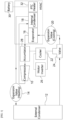
- FIG. 1 is a schematic view illustrating the flow of the mixed refrigerant for heat exchange in a cooling mode of the heat exchanger according to exemplary embodiments.
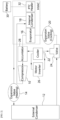
- FIG. 2 is a schematic view illustrating the flow of the mixed refrigerant for heat exchange in a heating mode of the heat exchanger according to exemplary embodiments.
- the flow of the mixed refrigerant is shown by using directions of the arrows in FIGS. 1 and 2 .
- the mixed refrigerant in the cooling mode, is compressed through a compressor 10, bypasses an internal condenser 18 and an expansion valve (heating) 14 in turn, releases heat in an external condenser 12, then expands in the expansion valve (cooling) 20, and reabsorbs the heat through an evaporator 16.
- the mixed refrigerant in the heating mode, is compressed through the compressor 10, releases heat in the internal condenser 18, expands in the expansion valve (heating) 14, absorbs heat from the external condenser 12, and then further absorbs the heat through a cooler 22.
- the process diagram of FIGS. 1 and 2 further shows valve 24 which can route the refrigerant to either the expansion valve (cooling) 20 during the cooling mode or through the cooler 22 during the heating mode.
- a motor inverter 26 is used for improved energy efficiency by allowing the speed of the cooler system's motor to be adjusted based on the cooling demand.
- the system also includes an accumulator 28 before the compressor 10 for ensuring that that only refrigerant vapor enters the compressor 10.
- the system may also include a battery 30 and a PTC heater 32.
- the battery 30 is used as a primary or back up power source for the various components of the system and may, for example, power the PTC heater for defrosting evaporator coils etc.
- Cooling evaluation and heating evaluation were performed using the refrigerant combinations of Examples 1 to 17 and Comparative Examples 1 to 5 through the above-described heat exchanger at different outside air temperatures.
- the cooling evaluation was performed by setting the outside air temperature to 45 °C, and the heating evaluation was performed by setting the outside air temperature to -7 °C and - 20 °C, respectively.
- Conditions for cooling evaluation and heating evaluation according to the above-described examples and comparative examples are shown in Table 4 below.
- the outdoor temperature (°C), refrigerant temperature at a condenser outlet, refrigerant supercooling degree at the condenser outlet, refrigerant temperature at an evaporator outlet, and refrigerant superheating degree at the evaporator outlet are shown in Table 4 below.
- a volumetric capacity in the cooling evaluation (outside air temperature of 45 °C) was 2717.3 kJ/m 3 or more, and a temperature at the compressor outlet was 103.0 °C or lower.
- the volumetric capacity is an amount of energy that the refrigerant can include per unit volume. The larger the volumetric capacity, the lager the amount of energy that the same volume of refrigerant can move, thus it is a refrigerant with good air conditioning performance.
- Example 9 which contain R-152a and R-32 in an amount of 40 to 60 wt.% based on the total weight of the refrigerant composition, the volumetric capacity was increased compared to Example 1.
- Example 1 which uses R-1234yf alone as the refrigerant, the volumetric capacity was decreased compared to Example 1.
- Comparative Examples 4 and 5 which include all of R-13I1, R-152a and R-32 as the refrigerant but contain R-13I1 in an amount of more than 60 wt.% based on the total weight of the refrigerant composition, the volumetric capacity was decreased compared to Example 1, and the temperature at the compressor outlet was increased.
- the volumetric capacity in the heating evaluation (outside air temperature of -7 °C) was 1382.6 kJ/m 3 or more, and the temperature at the compressor outlet was 101.7 °C or lower.
- Example 9 which contain R-152a and R-32 in an amount of 40 to 60 wt.% based on the total weight of the refrigerant composition, the volumetric capacity was increased compared to Example 1.
- Example 1 which uses R-1234yf alone as the refrigerant, the volumetric capacity was decreased and the temperature at the compressor outlet was increased compared to Example 1.
- the volumetric capacity in the heating evaluation (outside air temperature of -20 °C) was 1007.2 kJ/m 3 or more, and the temperature at the compressor outlet was 71.2 °C or lower.
- Example 9 which contain R-152a and R-32 in an amount of 40 to 60 wt.% based on the total weight of the refrigerant composition, the volumetric capacity was increased compared to Example 1.
- Example 1 which uses R-1234yf alone as the refrigerant, the volumetric capacity was decreased compared to Example 1.
- Comparative Examples 4 and 5 which include all of R-13I1, R-152a and R-32 as the refrigerant but contain R-13I1 in an amount of more than 60 wt.% based on the total weight of the refrigerant composition, the pressure and temperature at the compressor outlet were increased.
Landscapes
- Engineering & Computer Science (AREA)
- Chemical & Material Sciences (AREA)
- Physics & Mathematics (AREA)
- Thermal Sciences (AREA)
- Chemical Kinetics & Catalysis (AREA)
- Combustion & Propulsion (AREA)
- Materials Engineering (AREA)
- Organic Chemistry (AREA)
- Mechanical Engineering (AREA)
- General Engineering & Computer Science (AREA)
- Organic Low-Molecular-Weight Compounds And Preparation Thereof (AREA)
- Sorption Type Refrigeration Machines (AREA)
Applications Claiming Priority (2)
| Application Number | Priority Date | Filing Date | Title |
|---|---|---|---|
| KR20230067697 | 2023-05-25 | ||
| KR1020240042909A KR20240170397A (ko) | 2023-05-25 | 2024-03-29 | 혼합 냉매 조성물 및 이를 포함하는 히트 펌프 |
Publications (1)
| Publication Number | Publication Date |
|---|---|
| EP4467628A1 true EP4467628A1 (fr) | 2024-11-27 |
Family
ID=91226898
Family Applications (1)
| Application Number | Title | Priority Date | Filing Date |
|---|---|---|---|
| EP24177398.5A Pending EP4467628A1 (fr) | 2023-05-25 | 2024-05-22 | Composition de fluide frigorigène et pompe à chaleur la comprenant |
Country Status (6)
| Country | Link |
|---|---|
| US (1) | US20240392177A1 (fr) |
| EP (1) | EP4467628A1 (fr) |
| JP (1) | JP2024169419A (fr) |
| CN (1) | CN119019984A (fr) |
| MX (1) | MX2025013868A (fr) |
| WO (1) | WO2024242437A1 (fr) |
Citations (4)
| Publication number | Priority date | Publication date | Assignee | Title |
|---|---|---|---|---|
| WO1997015637A1 (fr) * | 1995-10-20 | 1997-05-01 | Tsinghua University | Refrigerant |
| US20080121837A1 (en) * | 2003-10-27 | 2008-05-29 | Honeywell International, Inc. | Compositions containing fluorine substituted olefins |
| CN110699043B (zh) * | 2019-10-18 | 2020-11-27 | 天津大学 | 一种环保混合制冷工质 |
| US20220364007A1 (en) * | 2019-09-27 | 2022-11-17 | Idemitsu Kosan Co.,Ltd. | Lubricating oil composition for refrigerators |
Family Cites Families (4)
| Publication number | Priority date | Publication date | Assignee | Title |
|---|---|---|---|---|
| US20060116310A1 (en) * | 2004-04-16 | 2006-06-01 | Honeywell International Inc. | Compositions of HFC-152a and CF3I |
| GB201818411D0 (en) * | 2018-11-12 | 2018-12-26 | Mexichem Fluor Sa De Cv | Compositions |
| CN109852348B (zh) * | 2019-01-10 | 2020-10-23 | 珠海格力电器股份有限公司 | 环保混合工质 |
| CN111154456A (zh) * | 2020-02-23 | 2020-05-15 | 扬州摩笛尔电子材料有限公司 | 一种含三氟碘甲烷的环保混合制冷剂及其制备方法 |
-
2024
- 2024-05-21 WO PCT/KR2024/006841 patent/WO2024242437A1/fr not_active Ceased
- 2024-05-22 EP EP24177398.5A patent/EP4467628A1/fr active Pending
- 2024-05-23 CN CN202410648946.2A patent/CN119019984A/zh active Pending
- 2024-05-23 US US18/671,993 patent/US20240392177A1/en active Pending
- 2024-05-24 JP JP2024084981A patent/JP2024169419A/ja active Pending
-
2025
- 2025-11-20 MX MX2025013868A patent/MX2025013868A/es unknown
Patent Citations (4)
| Publication number | Priority date | Publication date | Assignee | Title |
|---|---|---|---|---|
| WO1997015637A1 (fr) * | 1995-10-20 | 1997-05-01 | Tsinghua University | Refrigerant |
| US20080121837A1 (en) * | 2003-10-27 | 2008-05-29 | Honeywell International, Inc. | Compositions containing fluorine substituted olefins |
| US20220364007A1 (en) * | 2019-09-27 | 2022-11-17 | Idemitsu Kosan Co.,Ltd. | Lubricating oil composition for refrigerators |
| CN110699043B (zh) * | 2019-10-18 | 2020-11-27 | 天津大学 | 一种环保混合制冷工质 |
Also Published As
| Publication number | Publication date |
|---|---|
| WO2024242437A1 (fr) | 2024-11-28 |
| CN119019984A (zh) | 2024-11-26 |
| US20240392177A1 (en) | 2024-11-28 |
| JP2024169419A (ja) | 2024-12-05 |
| MX2025013868A (es) | 2026-01-07 |
Similar Documents
| Publication | Publication Date | Title |
|---|---|---|
| TWI492917B (zh) | 以氫氟烴類為底質之組成物 | |
| EP4166624B1 (fr) | Composition pour système à cycle thermique, et système à cycle thermique | |
| JP7060017B2 (ja) | 熱サイクル用作動媒体、熱サイクルシステム用組成物および熱サイクルシステム | |
| KR20110042265A (ko) | 히드로플루오로올레핀 조성물 | |
| CN106029821A (zh) | 热循环用工作介质、热循环系统用组合物以及热循环系统 | |
| GB2576328A (en) | Refrigerant composition | |
| CN108700343A (zh) | 热循环系统以及使用了该热循环系统的热循环方法 | |
| CN110869461A (zh) | 共沸或类共沸组合物、热循环用工作介质和热循环系统 | |
| EP4467628A1 (fr) | Composition de fluide frigorigène et pompe à chaleur la comprenant | |
| EP4509576A1 (fr) | Composition de réfrigérant mixte et pompe à chaleur la comprenant | |
| WO2024211642A1 (fr) | Compositions réfrigérantes comprenant du z-1,3,3,3-tétrafluoropropène, procédés de fabrication et utilisations associés | |
| EP4509575A1 (fr) | Composition de réfrigérant mixte et pompe à chaleur la comprenant | |
| US20250388795A1 (en) | Mixed Refrigerant Composition and Heat Pump Including the Same | |
| WO1993014173A1 (fr) | Compositions utilisees comme refrigerants | |
| WO2024090386A1 (fr) | Milieu de travail à cycle thermique et composition de système à cycle thermique | |
| EP3960833B1 (fr) | Composition caloporteuse et système d'échange de chaleur | |
| KR20240170397A (ko) | 혼합 냉매 조성물 및 이를 포함하는 히트 펌프 | |
| KR20250026109A (ko) | 혼합 냉매 조성물 및 이를 포함하는 히트 펌프 | |
| KR20250026108A (ko) | 혼합 냉매 조성물 및 이를 포함하는 히트 펌프 | |
| KR20240161573A (ko) | 혼합 냉매 조성물 및 이를 포함하는 히트 펌프 | |
| KR20260045348A (ko) | 혼합 냉매 조성물 및 이를 포함하는 히트 펌프 | |
| CN118895102A (zh) | 混合制冷剂组合物及包括其的热泵 | |
| JP7430921B2 (ja) | 熱媒体 |
Legal Events
| Date | Code | Title | Description |
|---|---|---|---|
| PUAI | Public reference made under article 153(3) epc to a published international application that has entered the european phase |
Free format text: ORIGINAL CODE: 0009012 |
|
| STAA | Information on the status of an ep patent application or granted ep patent |
Free format text: STATUS: REQUEST FOR EXAMINATION WAS MADE |
|
| 17P | Request for examination filed |
Effective date: 20240522 |
|
| AK | Designated contracting states |
Kind code of ref document: A1 Designated state(s): AL AT BE BG CH CY CZ DE DK EE ES FI FR GB GR HR HU IE IS IT LI LT LU LV MC ME MK MT NL NO PL PT RO RS SE SI SK SM TR |
|
| GRAP | Despatch of communication of intention to grant a patent |
Free format text: ORIGINAL CODE: EPIDOSNIGR1 |
|
| STAA | Information on the status of an ep patent application or granted ep patent |
Free format text: STATUS: GRANT OF PATENT IS INTENDED |
|
| INTG | Intention to grant announced |
Effective date: 20260202 |
|
| RAP1 | Party data changed (applicant data changed or rights of an application transferred) |
Owner name: SK INNOVATION CO., LTD. Owner name: SK ON CO., LTD. |