EP4468092A1 - Procédé pour un composant d'optimisation de fonctionnement d'une installation - Google Patents
Procédé pour un composant d'optimisation de fonctionnement d'une installation Download PDFInfo
- Publication number
- EP4468092A1 EP4468092A1 EP23175810.3A EP23175810A EP4468092A1 EP 4468092 A1 EP4468092 A1 EP 4468092A1 EP 23175810 A EP23175810 A EP 23175810A EP 4468092 A1 EP4468092 A1 EP 4468092A1
- Authority
- EP
- European Patent Office
- Prior art keywords
- tariff
- candidate
- current
- costs associated
- variable
- Prior art date
- Legal status (The legal status is an assumption and is not a legal conclusion. Google has not performed a legal analysis and makes no representation as to the accuracy of the status listed.)
- Pending
Links
Images


Classifications
-
- G—PHYSICS
- G05—CONTROLLING; REGULATING
- G05B—CONTROL OR REGULATING SYSTEMS IN GENERAL; FUNCTIONAL ELEMENTS OF SUCH SYSTEMS; MONITORING OR TESTING ARRANGEMENTS FOR SUCH SYSTEMS OR ELEMENTS
- G05B13/00—Adaptive control systems, i.e. systems automatically adjusting themselves to have a performance which is optimum according to some preassigned criterion
- G05B13/02—Adaptive control systems, i.e. systems automatically adjusting themselves to have a performance which is optimum according to some preassigned criterion electric
- G05B13/0205—Adaptive control systems, i.e. systems automatically adjusting themselves to have a performance which is optimum according to some preassigned criterion electric not using a model or a simulator of the controlled system
- G05B13/024—Adaptive control systems, i.e. systems automatically adjusting themselves to have a performance which is optimum according to some preassigned criterion electric not using a model or a simulator of the controlled system in which a parameter or coefficient is automatically adjusted to optimise the performance
-
- G—PHYSICS
- G06—COMPUTING OR CALCULATING; COUNTING
- G06Q—INFORMATION AND COMMUNICATION TECHNOLOGY [ICT] SPECIALLY ADAPTED FOR ADMINISTRATIVE, COMMERCIAL, FINANCIAL, MANAGERIAL OR SUPERVISORY PURPOSES; SYSTEMS OR METHODS SPECIALLY ADAPTED FOR ADMINISTRATIVE, COMMERCIAL, FINANCIAL, MANAGERIAL OR SUPERVISORY PURPOSES, NOT OTHERWISE PROVIDED FOR
- G06Q10/00—Administration; Management
- G06Q10/06—Resources, workflows, human or project management; Enterprise or organisation planning; Enterprise or organisation modelling
- G06Q10/063—Operations research, analysis or management
- G06Q10/0633—Workflow analysis
-
- G—PHYSICS
- G05—CONTROLLING; REGULATING
- G05B—CONTROL OR REGULATING SYSTEMS IN GENERAL; FUNCTIONAL ELEMENTS OF SUCH SYSTEMS; MONITORING OR TESTING ARRANGEMENTS FOR SUCH SYSTEMS OR ELEMENTS
- G05B19/00—Program-control systems
- G05B19/02—Program-control systems electric
- G05B19/04—Program control other than numerical control, i.e. in sequence controllers or logic controllers
- G05B19/042—Program control other than numerical control, i.e. in sequence controllers or logic controllers using digital processors
- G05B19/0423—Input/output
-
- G—PHYSICS
- G05—CONTROLLING; REGULATING
- G05B—CONTROL OR REGULATING SYSTEMS IN GENERAL; FUNCTIONAL ELEMENTS OF SUCH SYSTEMS; MONITORING OR TESTING ARRANGEMENTS FOR SUCH SYSTEMS OR ELEMENTS
- G05B15/00—Systems controlled by a computer
- G05B15/02—Systems controlled by a computer electric
-
- G—PHYSICS
- G06—COMPUTING OR CALCULATING; COUNTING
- G06Q—INFORMATION AND COMMUNICATION TECHNOLOGY [ICT] SPECIALLY ADAPTED FOR ADMINISTRATIVE, COMMERCIAL, FINANCIAL, MANAGERIAL OR SUPERVISORY PURPOSES; SYSTEMS OR METHODS SPECIALLY ADAPTED FOR ADMINISTRATIVE, COMMERCIAL, FINANCIAL, MANAGERIAL OR SUPERVISORY PURPOSES, NOT OTHERWISE PROVIDED FOR
- G06Q50/00—Information and communication technology [ICT] specially adapted for implementation of business processes of specific business sectors, e.g. utilities or tourism
- G06Q50/04—Manufacturing
-
- G—PHYSICS
- G05—CONTROLLING; REGULATING
- G05B—CONTROL OR REGULATING SYSTEMS IN GENERAL; FUNCTIONAL ELEMENTS OF SUCH SYSTEMS; MONITORING OR TESTING ARRANGEMENTS FOR SUCH SYSTEMS OR ELEMENTS
- G05B2219/00—Program-control systems
- G05B2219/20—Pc systems
- G05B2219/25—Pc structure of the system
- G05B2219/25257—Microcontroller
Definitions
- optimization components are limited in their functionality due to being specialized for determining setpoint for plant operation.
- the object is achieved by the present invention.
- the invention provides a method, system, computer program product, and computer-readable medium according to the independent claims. Preferred embodiments are laid down in the dependent claims.
- the invention provides a computer-implemented method for a plant operation optimization component.
- the method comprises determining, based on a current tariff and a technical plant configuration, optimal operation setpoints and corresponding operational costs associated with the current tariff.
- the method further comprises receiving a candidate tariff that is different from the current tariff.
- the method further comprises determining whether the operational costs associated with the modified candidate tariff meet a target criterion.
- the method further comprises in response to determining that the target criterion is not met, repeating the modifying of the candidate tariff until the target criterion is met.
- the method further comprises in response to determining that the target criterion is met, providing an output allowing for selecting a new current tariff and for determining corresponding operation set points.
- the modified candidate tariff for which the target criterion is met is a final modified candidate tariff.
- the output comprises at least one of: the final modified candidate tariff, the value of the variable associated with the final modified candidate tariff, one or more tariff selection criteria determined based on the final modified candidate tariff and/or the value of the variable associated with the final modified candidate tariff.
- the target criterion is:
- the invention provides a method that allows for utilizing components that are specifically dedicated for determining operation setpoints for a plant and its constituent components. These components take into account how a plant is configured.
- the technical configuration of a plant may entail the loads of the plant and their characteristics.
- each load may be characterized by operation characteristics, e.g., a setpoint range, efficiency at different setpoints, or the like.
- operation of each load may depend on the overall plant operation requirements, e.g., a load may not be required to operate at all times or may operate at different setpoints, potentially associated with different operation efficiency, according to overall plant operation requirements.
- Plant operation optimization components are generally configured for taking technical characteristics like the ones described above as input and carrying out optimization to obtain operation setpoints yielding minimal operational costs, optionally within certain boundary conditions.
- the plant operation optimization components also receive the values characterizing the current tariff as input, as this allows for the optimization to also take into account the tariff in the cost optimization.
- the type of tariff for otherwise unchanged demand, technical characteristics, and boundary conditions, may yield entirely different optimization results for the setpoints. For example, in some cases it may depend on the tariff whether to consume energy from the grid or from an energy storage at a given time, where the energy price is time-dependent, or where the tariff entails an increased price for power consumption peaks. This also illustrates that the effect of a changed tariff on the overall costs may not be immediately apparent, as even a slightly changed tariff might entirely change the optimization results.
- the present invention allows for extending the functionality of said existing plant operation optimization components by providing the claimed method.
- the plant operation optimization need not be interfered with, such that existing plant operation optimization components can be extended rather than having to be exchanged or having their core functionality modified, which avoids deterioration of the functionality and/or high costs associated with exchanging them or modifying the core functionality.
- the method of the present disclosure is compatible with any of the existing plant optimization components, so any existing plant optimization components can be retrofitted with the extended functionality.
- the extended functionality provided by the invention is a decision-support for deciding whether to select a new tariff, which, as explained above, is generally not straightforward in view of the interdependency of the tariff parameters and the optimization. Moreover, optimized operation setpoints can then be provided for operation with a newly selected tariff.
- the method of the present disclosure is a method for a plant operation optimization component.
- the method is to be carried out by a plant operation optimization component, e.g. as explained above, specifically a pre-existing plant operation optimization component.
- the method of the present disclosure allows to provide additional functionality for such components without replacing them or modifying their core functionality.
- the plant operation optimization component may comprise an optimization engine taking, as input, technical plant characteristics and pricing, like the costs for grid energy, peak power or for energy retrieved from energy storage.
- the method comprises determining, based on a current tariff and a technical plant configuration, optimal operation setpoints and corresponding operational costs associated with the current tariff.
- a tariff may be characterized by several parameters, for example an energy price, a peak power price, base price, or the like.
- a tariff may be in one of multiple categories, for example, a variable energy price tariff, for example market-dependent and/or time-dependent, or a fixed energy price tariff.
- Tariff parameters may also comprise parameters representative prices associated with gas, heat, water, or the like, consumed and/or output by plant operation and/or associated with emissions associated with plant operation.
- the current tariff may be the tariff with which the plant is currently being operated.
- the technical plant configuration may comprise the plant components, such as loads, energy storage, energy sources, or the like, of the plant and their characteristics, for example their respective energy consumption at a given setpoint, output at a given setpoint, and/or operation efficiency at a given setpoint.
- Operational costs may be derivable from these characteristics when taking into account the current tariff. That is, taking certain setpoints and the current tariff as input, operational costs can be determined.
- optimal operation setpoints may be setpoints that are obtained by optimizing operational costs.
- the corresponding operational costs, i.e. corresponding to the optimal operation setpoints, associated with the current tariff are those operational costs that are calculated taking the optimized operational costs and the current tariff, e.g., pricing values, as input.
- the method further comprises receiving a candidate tariff that is different from the current tariff.
- the tariff being different may entail that it differs in the value of at least one variable characterizing the tariff.
- the tariff being different may entail that the tariff is in a different category, e.g. a different type of tariff, for example a fixed energy price tariff as opposed to a variable energy price tariff.
- This scenario may mean that in one case the variable "energy price” has a fixed value.
- the variable "energy price” may be a function of time, which, for the sake of simplicity, will also be referred to as having a different value from the fixed energy price in the following, even if the function may at some moment in time have the value of the fixed energy price.
- the candidate tariff may be obtained in any manner, it serves as starting point for an optionally iterative, method to arrive at a final modified candidate tariff that meets a certain criterion. As such, it does not need to fulfill any particular requirements.
- a value for the fixed energy price that is derived from the variable energy price may be selected, for example a mean energy price determined from a historical development of the variable energy price. This may improve efficiency for arriving at the final modified candidate tariff.
- the method further comprises modifying the candidate tariff so as to obtain a modified candidate tariff by changing a value of a variable of a plurality of variables characterizing the candidate tariff and determining, based on the modified candidate tariff and the technical plant configuration, optimal operation setpoints and corresponding operational costs associated with the modified candidate tariff.
- exactly one value may be changed.
- the fixed energy price value may be increased or reduced.
- the variable to be changed may be selected automatically, e.g. in a given order or according to any other given rule, or may be selected based on a user input, for example.
- the direction of change of the value may be automatically determined.
- the direction change may be determined by determining, for the candidate tariff and using optimal operation set points determined for the candidate tariff, whether the associated operation costs are higher or lower than the operation costs for the current tariff. As an example, if the operation costs associated with the candidate tariff are lower than those of the current tariff, the value of an energy price might be increased.
- the direction may also be predetermined or selected randomly. As will be seen below, due to the possibility for iterations, even modifying the candidate tariff in an unfavorable direction will eventually lead to the desired outcome, even if potentially after more iterations.
- modifying the candidate tariff may comprise changing the value of exactly one of the variables.
- subsequently other variables might also be changed and the method may similarly be applied for said other variables, optionally while keeping the previously determined value(s) for other variable(s) fixed.
- values for variables can be sequentially obtained, which reduces complexity of calculations and may be particularly easy to incorporate into the existing optimization component.
- the values of two or more variables may be changed at once. This allows an immediate tradeoff between their values, for example.
- the above step allows for observing changes to the overall costs when changing values characterizing the candidate tariff.
- the method further comprises determining whether the operational costs associated with the modified candidate tariff meet a target criterion.
- the operational costs associated with the modified candidate tariff may be obtained.
- the determining whether a target criterion is met may allow for determining whether the modified candidate tariff requires further modification or not.
- a criterion may be that the operational costs associated with the modified candidate tariff have a predetermined relation to the operational costs of the current tariff, for example, equals or essentially equals the operational costs associated with current tariff or yields a predetermined saving relative to the current tariff.
- the target criterion may be that the operational costs associated with the modified candidate tariff equal the operational costs associated with the current tariff. That is, the target is to keep the overall costs the same when changing the tariff.
- a breakeven value can be determined indicating the value above or below which a potential new tariff is better or worse in terms of overall costs than the current tariff.
- the target criterion may, alternatively, be that the operational costs associated with the modified candidate tariff are within a predetermined range relative to the operational costs associated with the current tariff, the range comprising the costs associated with the current tariff and values smaller than the costs associated with the current tariff or the range comprising only values smaller than the costs associated with the current tariff. That is, it may not be necessary to arrive at the overall costs of the current tariff or any other target value for the overall costs precisely.
- the target criterion may be that the operational costs associated with the modified candidate tariff are lower than the operational costs associated with the current tariff by a predetermined amount. That is, rather than looking for a breakeven point relative to the current overall costs, a lower value for the overall costs may be used and a breakeven point may be determined with respect to said lower value. This allows for also looking for saving costs, rather than just keeping costs the same.
- the determination may check whether the overall operational costs of the modified candidate tariff equal the operational costs identified in step S11 for the current tariff. Thus, it can be determined whether modifying the candidate tariff yielded the break-even value for the modified variable.
- the method comprises, in response to determining that the target criterion is not met, repeating the modifying of the candidate tariff until the target criterion is met, as indicated by the arrow in the flow chart, indicating that the method reverts to step S13.
- iterations of modifying the candidate tariff may be carried out as long as the target criterion is not met.
- an abortion criterion may be used for terminating the method, for example to address cases where the iterations do not lead to a converging result, e.g., in case the target criterion is not met after a predetermined number of iterations or after a predetermined time.
- steps S13 to S15 may be carried out repeatedly, each repetition for a single one of the variables, optionally while keeping the values obtained from the previous repetition(s) unchanged.
- different variables can be examined individually.
- Step S16 may entail outputting the value of the variable that had been modified when modifying the candidate tariff for which the target criterion was met, for example, a break-even value for a variable, where the overall costs of the modified tariff equal the overall costs of the modified candidate tariff.
- the modified candidate tariff for which the target criterion is met is a final modified candidate tariff.
- the output may comprise the final modified candidate tariff, i.e., values for all variable characterizing the tariff, or only one or some of the values of the variables associated with the final modified candidate tariff, particularly only the value for variables having changed in the course of the modifying, i.e., free variable.
- the output may alternatively or in addition comprise one or more tariff selection criteria determined based on the final modified candidate tariff and/or the value of the variable associated with the final modified candidate tariff. That is, instead of directly outputting the final modified candidate tariff and/or the value of the variable associated with the final modified candidate tariff, the tariff selection criteria may be derived therefrom, and the selection criteria may be output.
- the method may also comprise the optional step of receiving, in step S17, a proposed new tariff and, in step S18, determining whether the proposed new tariff meets the selection criteria.
- the method may comprise approving, in step S19, selection of the proposed new tariff as current tariff if this is the case and otherwise disapproving, in step S20, selection of the proposed new tariff.
- the output of step S16 may be used for evaluating any proposed new tariff as to whether it should be selected or not.
- the target criterion e.g. maintain costs or reduce costs
- decision-making is straightforward and does not require any simulation to be run for the proposed new tariff. Instead, only the selection criteria have to be checked.
- the value of the variable that had been modified when modifying the candidate tariff for which the target criterion was met for example, a break-even value for a variable.
- the selection criterion may be that selection of a new tariff is approved in case the value of the same variable or corresponding variable of the new tariff is the same as or exceeds or remains below the value obtained in the modifying procedure.
- the method of the present disclosure may be performed in a system as shown in Figure 1 , the method steps, for example, being carried out by the processing system 2, or any other suitable system, particular a system according to the present disclosure.
- FIG. 3 A method according to the present disclosure is shown in Figure 3 . It comprises three steps that are explained with the help of a concrete example, which is, however, not to be considered to be limiting.
- the number values have only exemplary character, and the money values are given in arbitrary currency [CUR].
- Data employed in the method are current tariff data, such as cost for energy, peaks, connection, and/or time-series data and also site information data, such as available assets including generation, load, and storage, flexibility options, and time series data, e.g. on demand and generation, or the like.
- the data may be used to run an operational cost minimization for a certain time-period in step 1, yielding a minimal total energy cost with the current (also referred to as "old") tariff for a given time-period.
- a similar operational cost minimization is run for a candidate tariff (here referred to as "new" tariff) as shown in step 2.
- step 1 and step 2 are used for determining a value of a free tariff parameter, for example in such a manner as to match the total costs for the new tariff to the total costs of the old tariff.
- the result may be output, e.g. as a break-even value.
- Step 3 may receive input as to which parameter is to be used as free tariff parameter.
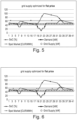
- Figures 4 to 6 each show two input curves (power demand and energy price) as well as two optimized curves (energy intake and a state-of-charge), each for a different scenario.
- a current tariff having a spot market energy price is considered.
- the energy intake and the state-of-charge result are a result of the total cost optimization obtained as described below or, e.g., by step S11 above.
- Figure 6 shows a scenario after switching from a spot market to a flat energy price, i.e., after step 2 below. It becomes immediately apparent that the curves yielded by the optimization are entirely different, also reflecting that the optimization yields different setpoints for a different energy tariff. For example, optimization here, no longer having to account for variability in energy price, may now have more freedom to arrive at setpoints reducing power peaks, as becomes apparent from the flat line for the energy intake.
- Figure 5 shows a scenario for the break-even point, i.e., where the total costs match those of the current tariff is shown, i.e., after step 3 below.
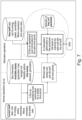
- Step numbers refer to Figures 3 and 7 respectively.
- Step 1 Obtain real/original cost for current tariff and example time-horizon:
- BESS energy storage
- SoC state of charge
- Step 1 now determines, among others and using plant operation optimization, the optimal operation strategy, including the grid-supply and the usage of the energy storage to minimize the overall electrical costs.
- the result is shown in Figure 4 and results in the following exemplary numbers: Current tariff example unit spot market optimized E-cost CUR/MWh 59.3 E-cost CUR 112302 optimized Power peak kW 64.2 Peak power cost CUR 32107 Total cost CUR 144409
- Step 2 Optimize hypothetic cost for same example, but a candidate tariff (changed compared to the current tariff)
- Step 1 Assuming an overall goal is to switch to a fixed energy cost tariff, for simplicity, in this example with the same power cost (500 CUR/kW). All assets and parameters are also kept identical to Step1, except for the Energy Cost, that is now fixed to a constant value. This constant value may be selected arbitrarily, yet in this example it is set at, 59.3 CUR/MWh, which was the average energy cost of the current tariff in Step 1.
- Step 3 Modify candidate tariff, specifically a flexible tariff parameter, to match the original total energy cost
- a flexible tariff parameter here as an example the energy price
- this can be achieved by increasing the energy cost from 59.3 to 64.0 CUR/MWh.
- the result is an optimized operational strategy minimizing the power peak (here to 46.4) and maximizing the constant energy cost parameter (here to 64.0), so as to exactly match the original total cost in Step 1 of 144409 CUR. As such, a break-even value is obtained for the constant energy cost parameter in the present example.
- Step 3 is quite simple. This might not always be the case.
- Alternatives to said calculation in Step 3, indicated by dashed lines in Figure 7 are provided below:
- the method of the present disclosure may involve running the method on arbitrary time-intervals of the past (historic data) or the future (forecasted time-series).
- a method is provided that allows to at least one obtain parameter value of a new energy tariff that leads to a "break even total costs" in comparison with the current/existing tariff. This is done by operational optimization calculations on time-series data, with variation of one parameter to reach the breakeven total cost.
- Facilities, Campuses, or Industrial Sites are large conglomerates of multi-energy streams (electricity, gas, heat) with energy consumers, grid connections and potentially different options for energy generation.
- the total energy bill can make up a large portion of the annual operational costs.
- To reduce the energy costs there are two options: one is changing the consumption pattern and the second one is changing the energy tariff.
- consumption pattern and energy tariff are closely interwoven, and a tariff may have multiple components contributing in different ways to the overall costs, again closely linked with the consumption pattern.
- a changed energy tariff might entirely change an optimized consumption pattern as obtained by operation optimization. Accordingly, it is challenging to optimize operational costs and the present disclosure allows to address this challenge.
- the present disclosure may calculate tariff-parameter values that lead to a break-even or cost reduction.
- the method may determine a tariff parameter set that would, based on historic or forecasted patterns, result in the same energy cost as the current tariff or in a target cost reduction.
- a break-even value it can be determined whether a candidate tariff is more favorable than the current tariff in terms of overall costs. This can be done for arbitrary time intervals in the past and/or in the future, e.g. using forecast estimates.
- an iterative method may be carried out.
- An example for such an iterative method is provided below for arriving at a break-even value.
Landscapes
- Engineering & Computer Science (AREA)
- Business, Economics & Management (AREA)
- Human Resources & Organizations (AREA)
- General Physics & Mathematics (AREA)
- Physics & Mathematics (AREA)
- Strategic Management (AREA)
- Economics (AREA)
- Automation & Control Theory (AREA)
- General Business, Economics & Management (AREA)
- Theoretical Computer Science (AREA)
- Marketing (AREA)
- Entrepreneurship & Innovation (AREA)
- Tourism & Hospitality (AREA)
- Health & Medical Sciences (AREA)
- Game Theory and Decision Science (AREA)
- Quality & Reliability (AREA)
- Development Economics (AREA)
- Educational Administration (AREA)
- Primary Health Care (AREA)
- General Health & Medical Sciences (AREA)
- Operations Research (AREA)
- Manufacturing & Machinery (AREA)
- General Engineering & Computer Science (AREA)
- Artificial Intelligence (AREA)
- Computer Vision & Pattern Recognition (AREA)
- Evolutionary Computation (AREA)
- Medical Informatics (AREA)
- Software Systems (AREA)
- Management, Administration, Business Operations System, And Electronic Commerce (AREA)
Priority Applications (3)
| Application Number | Priority Date | Filing Date | Title |
|---|---|---|---|
| EP23175810.3A EP4468092A1 (fr) | 2023-05-26 | 2023-05-26 | Procédé pour un composant d'optimisation de fonctionnement d'une installation |
| CN202410607687.9A CN119024735A (zh) | 2023-05-26 | 2024-05-16 | 用于工厂操作优化组件的方法 |
| US18/672,552 US20240394633A1 (en) | 2023-05-26 | 2024-05-23 | Method for a Plant Operation Optimization Component |
Applications Claiming Priority (1)
| Application Number | Priority Date | Filing Date | Title |
|---|---|---|---|
| EP23175810.3A EP4468092A1 (fr) | 2023-05-26 | 2023-05-26 | Procédé pour un composant d'optimisation de fonctionnement d'une installation |
Publications (1)
| Publication Number | Publication Date |
|---|---|
| EP4468092A1 true EP4468092A1 (fr) | 2024-11-27 |
Family
ID=86605820
Family Applications (1)
| Application Number | Title | Priority Date | Filing Date |
|---|---|---|---|
| EP23175810.3A Pending EP4468092A1 (fr) | 2023-05-26 | 2023-05-26 | Procédé pour un composant d'optimisation de fonctionnement d'une installation |
Country Status (3)
| Country | Link |
|---|---|
| US (1) | US20240394633A1 (fr) |
| EP (1) | EP4468092A1 (fr) |
| CN (1) | CN119024735A (fr) |
Citations (1)
| Publication number | Priority date | Publication date | Assignee | Title |
|---|---|---|---|---|
| EP0688085A1 (fr) * | 1994-06-17 | 1995-12-20 | Schlumberger Industries S.A. | Système de contrÔle de la température avec optimalisation du changement du tarif |
Family Cites Families (17)
| Publication number | Priority date | Publication date | Assignee | Title |
|---|---|---|---|---|
| US5924486A (en) * | 1997-10-29 | 1999-07-20 | Tecom, Inc. | Environmental condition control and energy management system and method |
| WO2002013119A2 (fr) * | 2000-08-08 | 2002-02-14 | Retx.Com, Inc. | Systeme et procedes d'information permettant de reguler la gestion de l'alimentation en energie |
| US7747339B2 (en) * | 2002-10-03 | 2010-06-29 | Hewlett-Packard Development Company, L.P. | Managing procurement risk |
| GB2464625A (en) * | 2006-10-13 | 2010-04-28 | Responsiveload Ltd | Optimisation of use or provision of a resource or service |
| US7881825B2 (en) * | 2007-03-28 | 2011-02-01 | Praxair Technology, Inc. | Production control utilizing real time optimization |
| WO2010150059A1 (fr) * | 2009-06-26 | 2010-12-29 | Abb Research Ltd | Optimisation de programmation de charge dans un système distribué |
| US20110106327A1 (en) * | 2009-11-05 | 2011-05-05 | General Electric Company | Energy optimization method |
| US20120303412A1 (en) * | 2010-11-24 | 2012-11-29 | Oren Etzioni | Price and model prediction system and method |
| WO2012131869A1 (fr) * | 2011-03-28 | 2012-10-04 | 中国電力株式会社 | Dispositif de coordination de plan de demande d'énergie, procédé de coordination de plan de demande d'énergie et programme |
| US10949776B2 (en) * | 2011-09-06 | 2021-03-16 | Planetecosystems, Llc | Systems and methods to generate facility reconfiguration plans that can be used to reconfigure energy systems of facilities to achieve financial objectives |
| US20130144451A1 (en) * | 2011-10-25 | 2013-06-06 | San Diego State University Research Foundation | Residential and commercial energy management system |
| US9626634B2 (en) * | 2012-09-12 | 2017-04-18 | Abb Schweiz Ag | Industrial plant equipment, process and maintenance optimization |
| US10628838B2 (en) * | 2013-04-24 | 2020-04-21 | International Business Machines Corporation | System and method for modeling and forecasting cyclical demand systems with dynamic controls and dynamic incentives |
| US10580094B1 (en) * | 2013-08-07 | 2020-03-03 | Promanthan Brains LLC, Series Cold Futures only | Energy cost optimizer |
| KR101589231B1 (ko) * | 2013-11-08 | 2016-01-28 | 한양대학교 에리카산학협력단 | 전력 관리 방법 및 시스템 |
| US11164126B2 (en) * | 2018-12-18 | 2021-11-02 | Johnson Controls Tyco IP Holdings LLP | Cost optimization of a central energy facility with block-and-index rate structure |
| US20230418346A1 (en) * | 2022-06-23 | 2023-12-28 | Google Llc | Methods, systems, and media for automatic and continuous control of energy-consuming devices |
-
2023
- 2023-05-26 EP EP23175810.3A patent/EP4468092A1/fr active Pending
-
2024
- 2024-05-16 CN CN202410607687.9A patent/CN119024735A/zh active Pending
- 2024-05-23 US US18/672,552 patent/US20240394633A1/en active Pending
Patent Citations (1)
| Publication number | Priority date | Publication date | Assignee | Title |
|---|---|---|---|---|
| EP0688085A1 (fr) * | 1994-06-17 | 1995-12-20 | Schlumberger Industries S.A. | Système de contrÔle de la température avec optimalisation du changement du tarif |
Non-Patent Citations (1)
| Title |
|---|
| CANO ADRIAN LOPEZ ET AL: "Impact of Different Tariffs on the Optimal Sizing and Operation of a Household with PV, Storage and Electric Vehicle", 2021 IEEE PES INNOVATIVE SMART GRID TECHNOLOGIES CONFERENCE - LATIN AMERICA (ISGT LATIN AMERICA), IEEE, 15 September 2021 (2021-09-15), pages 1 - 5, XP033980550, DOI: 10.1109/ISGTLATINAMERICA52371.2021.9543034 * |
Also Published As
| Publication number | Publication date |
|---|---|
| CN119024735A (zh) | 2024-11-26 |
| US20240394633A1 (en) | 2024-11-28 |
Similar Documents
| Publication | Publication Date | Title |
|---|---|---|
| US11163271B2 (en) | Cloud based building energy optimization system with a dynamically trained load prediction model | |
| US11159022B2 (en) | Building energy optimization system with a dynamically trained load prediction model | |
| Talent et al. | Optimal sizing and energy scheduling of photovoltaic-battery systems under different tariff structures | |
| CN104778504B (zh) | 一种家庭用户智能家电的用电安排优化方法 | |
| Jain et al. | A generalized approach for DG planning and viability analysis under market scenario | |
| Shang et al. | Improved genetic algorithm for economic load dispatch in hydropower plants and comprehensive performance comparison with dynamic programming method | |
| CN103208085B (zh) | 企业用电提高负荷率与降低最大需量的分析智能系统 | |
| CN107203826A (zh) | 一种工业用户的用电方案优化方法 | |
| van der Weijde et al. | Locational-based coupling of electricity markets: benefits from coordinating unit commitment and balancing markets | |
| CN107194502A (zh) | 一种居民用户电力负荷预测方法 | |
| CN106575421A (zh) | 设备运转设定值决定装置、设备运转设定值决定方法以及设备运转设定值决定程序 | |
| Vedullapalli et al. | Optimal demand response in a building by battery and HVAC scheduling using model predictive control | |
| Lee et al. | Development of energy storage system scheduling algorithm for simultaneous self-consumption and demand response program participation in South Korea | |
| CN113673830B (zh) | 基于非侵入式负荷监测技术的自适应家庭能量管理方法 | |
| Rushkoff et al. | Current and future energy storage market revenues sensitivity study | |
| CN105930919A (zh) | 基于两阶段随机规划的虚拟电厂风险规避优化运行方法 | |
| CN115511204B (zh) | 一种基于双层优化的台区充电桩配置方法 | |
| CN116780627A (zh) | 一种建筑园区内的微电网调控方法 | |
| EP4468092A1 (fr) | Procédé pour un composant d'optimisation de fonctionnement d'une installation | |
| Nath et al. | Online battery scheduling for grid-connected photo-voltaic systems | |
| CN106339777A (zh) | 一种发电机组检修计划优化的最小失负荷期望模型计算方法 | |
| Liu et al. | Impacts of emission trading and renewable energy support schemes on electricity market operation | |
| CN116681294A (zh) | 采用改进WCVaR的可调节风险偏好综合能源系统容量控制方法 | |
| CN114139830A (zh) | 一种智慧能源站的优化调度方法、装置及电子设备 | |
| Jasim et al. | A Multi-Objective Demand/Generation Scheduling Model Based Microgrid Energy Management System. Sustainability 2022, 14, 10158 |
Legal Events
| Date | Code | Title | Description |
|---|---|---|---|
| PUAI | Public reference made under article 153(3) epc to a published international application that has entered the european phase |
Free format text: ORIGINAL CODE: 0009012 |
|
| STAA | Information on the status of an ep patent application or granted ep patent |
Free format text: STATUS: THE APPLICATION HAS BEEN PUBLISHED |
|
| AK | Designated contracting states |
Kind code of ref document: A1 Designated state(s): AL AT BE BG CH CY CZ DE DK EE ES FI FR GB GR HR HU IE IS IT LI LT LU LV MC ME MK MT NL NO PL PT RO RS SE SI SK SM TR |
|
| STAA | Information on the status of an ep patent application or granted ep patent |
Free format text: STATUS: REQUEST FOR EXAMINATION WAS MADE |
|
| 17P | Request for examination filed |
Effective date: 20250409 |