EP4468292A2 - Procédé et dispositif pour générer un format audio intermédiaire à partir d'un signal audio multicanal d'entrée - Google Patents
Procédé et dispositif pour générer un format audio intermédiaire à partir d'un signal audio multicanal d'entrée Download PDFInfo
- Publication number
- EP4468292A2 EP4468292A2 EP24198271.9A EP24198271A EP4468292A2 EP 4468292 A2 EP4468292 A2 EP 4468292A2 EP 24198271 A EP24198271 A EP 24198271A EP 4468292 A2 EP4468292 A2 EP 4468292A2
- Authority
- EP
- European Patent Office
- Prior art keywords
- audio signal
- multichannel
- multichannel audio
- objects
- machine learning
- Prior art date
- Legal status (The legal status is an assumption and is not a legal conclusion. Google has not performed a legal analysis and makes no representation as to the accuracy of the status listed.)
- Pending
Links
Images


Classifications
-
- G—PHYSICS
- G10—MUSICAL INSTRUMENTS; ACOUSTICS
- G10L—SPEECH ANALYSIS TECHNIQUES OR SPEECH SYNTHESIS; SPEECH RECOGNITION; SPEECH OR VOICE PROCESSING TECHNIQUES; SPEECH OR AUDIO CODING OR DECODING
- G10L25/00—Speech or voice analysis techniques not restricted to a single one of groups G10L15/00 - G10L21/00
- G10L25/27—Speech or voice analysis techniques not restricted to a single one of groups G10L15/00 - G10L21/00 characterised by the analysis technique
- G10L25/30—Speech or voice analysis techniques not restricted to a single one of groups G10L15/00 - G10L21/00 characterised by the analysis technique using neural networks
-
- G—PHYSICS
- G06—COMPUTING OR CALCULATING; COUNTING
- G06N—COMPUTING ARRANGEMENTS BASED ON SPECIFIC COMPUTATIONAL MODELS
- G06N20/00—Machine learning
-
- G—PHYSICS
- G10—MUSICAL INSTRUMENTS; ACOUSTICS
- G10L—SPEECH ANALYSIS TECHNIQUES OR SPEECH SYNTHESIS; SPEECH RECOGNITION; SPEECH OR VOICE PROCESSING TECHNIQUES; SPEECH OR AUDIO CODING OR DECODING
- G10L21/00—Speech or voice signal processing techniques to produce another audible or non-audible signal, e.g. visual or tactile, in order to modify its quality or its intelligibility
- G10L21/02—Speech enhancement, e.g. noise reduction or echo cancellation
- G10L21/0272—Voice signal separating
-
- H—ELECTRICITY
- H04—ELECTRIC COMMUNICATION TECHNIQUE
- H04S—STEREOPHONIC SYSTEMS
- H04S7/00—Indicating arrangements; Control arrangements, e.g. balance control
- H04S7/30—Control circuits for electronic adaptation of the sound field
- H04S7/302—Electronic adaptation of stereophonic sound system to listener position or orientation
-
- G—PHYSICS
- G10—MUSICAL INSTRUMENTS; ACOUSTICS
- G10L—SPEECH ANALYSIS TECHNIQUES OR SPEECH SYNTHESIS; SPEECH RECOGNITION; SPEECH OR VOICE PROCESSING TECHNIQUES; SPEECH OR AUDIO CODING OR DECODING
- G10L19/00—Speech or audio signals analysis-synthesis techniques for redundancy reduction, e.g. in vocoders; Coding or decoding of speech or audio signals, using source filter models or psychoacoustic analysis
- G10L19/008—Multichannel audio signal coding or decoding using interchannel correlation to reduce redundancy, e.g. joint-stereo, intensity-coding or matrixing
-
- H—ELECTRICITY
- H04—ELECTRIC COMMUNICATION TECHNIQUE
- H04S—STEREOPHONIC SYSTEMS
- H04S2400/00—Details of stereophonic systems covered by H04S but not provided for in its groups
- H04S2400/01—Multi-channel, i.e. more than two input channels, sound reproduction with two speakers wherein the multi-channel information is substantially preserved
-
- H—ELECTRICITY
- H04—ELECTRIC COMMUNICATION TECHNIQUE
- H04S—STEREOPHONIC SYSTEMS
- H04S2400/00—Details of stereophonic systems covered by H04S but not provided for in its groups
- H04S2400/11—Positioning of individual sound objects, e.g. moving airplane, within a sound field
-
- H—ELECTRICITY
- H04—ELECTRIC COMMUNICATION TECHNIQUE
- H04S—STEREOPHONIC SYSTEMS
- H04S3/00—Systems employing more than two channels, e.g. quadraphonic
- H04S3/008—Systems employing more than two channels, e.g. quadraphonic in which the audio signals are in digital form, i.e. employing more than two discrete digital channels
Definitions
- the present disclosure relates generally to methods and apparatus for generating an intermediate audio format (such as, for example, a Dolby ® Atmos TM audio format) from an input multichannel audio signal, and more specifically to generating audio objects with audio tracks and position metadata from e.g. 2.0, 3.1, 5.1 or 7.1 multichannel audio signals.
- an intermediate audio format such as, for example, a Dolby ® Atmos TM audio format
- Dolby ® Atmos TM technology allows up to 128 audio tracks plus associated spatial audio description metadata for optimal, dynamic rendering to theatre loudspeakers.
- said audio tracks and spatial metadata need to be extracted from the respective legacy multi-channel audio format. This problem is denoted as source separation within this document.
- DNNs deep neural networks
- MLP feedforward multilayer perceptrons
- CNNs convolutional neural networks
- RNNs recurrent neural networks
- GANs generative adversarial networks
- a method for training a machine learning algorithm may include receiving a first input multichannel audio signal.
- the method may further include generating, using the machine learning algorithm, an intermediate audio signal based on the first input multichannel audio signal.
- the method may further include rendering the intermediate audio signal into a first output multichannel audio signal.
- the method may include improving the machine learning algorithm based on a difference between the first input multichannel audio signal and the first output multichannel audio signal.
- the machine learning algorithm may undergo an iterative training such that the performance of the machine learning algorithm is iteratively improved or even optimized with regard to a certain criterion.
- a plurality of first input multichannel audio signals may be used as training data.
- Receiving the first input multichannel audio signal may include receiving a reference intermediate audio signal, and rendering the reference intermediate audio signal into the first input multichannel audio signal.
- the latter signals are compared indirectly based on the difference between the rendered first input multichannel audio signal and the rendered first output multichannel audio signal.
- the reference intermediate audio signal may have the same format as the intermediate audio signal.
- the first input multichannel audio signal may have the same format as the first output multichannel audio signal. For instance, both may be multichannel audio signals obtained by rendering to a predefined channel layout.
- Improving the machine learning algorithm may include comparing the first input multichannel audio signal and the first output multichannel audio signal using a loss function.
- the difference between the first input multichannel audio signal and the first output multichannel audio signal may be evaluated using a loss function which is e.g. based on a mean squared error.
- the intermediate audio signal may include one or more audio objects, wherein each of the audio objects includes an audio track and position metadata.
- the position metadata may include a position (location) of the respective audio object, such as in the form of a coordinate vector.
- the intermediate audio format may include a Dolby ® Atmos TM format.
- the intermediate audio format may include an Ambisonics audio format (e.g., a first-order or higher-order Ambisonics audio format).
- the reference intermediate audio signal may include one or more audio objects, wherein each of the audio objects includes an audio track and position metadata.
- the number of audio objects of the reference intermediate audio signal may be larger than the number of audio objects of the intermediate audio signal.
- the intermediate audio signal may further include a bed channel residual, wherein the bed channel residual is a multichannel audio signal having the same format as the first input multichannel audio signal.
- the reference intermediate audio signal may also include a bed channel, wherein the bed channel is a multichannel audio signal having the same format as the input multichannel audio signal.
- the first input multichannel audio signal may include a 2.0, 3.1, 5.1 or 7.1 multichannel audio signal
- the first output multichannel audio signal may comprise a 2.0, 3.1, 5.1, 7.1, 9.1, 5.1.2, 7.1.4, or 9.1.6 multichannel audio signal
- the first input multichannel audio signal may additionally or alternatively include a 5.1.2, 7.1.4, or 9.1.6 multichannel audio signal.
- the method may further include rendering a second input multichannel audio signal from the reference intermediate audio signal.
- the method may further include rendering the intermediate audio signal into a second output multichannel audio signal. This may amount to rendering the intermediate audio signal to a predefined speaker layout, such as any of the predefined speaker layouts mentioned above.
- the method may further include improving the machine learning algorithm based on a first difference between the first input multichannel audio signal and the first output multichannel audio signal, and based on a second difference between the second input multichannel audio signal and the second output multichannel audio signal.
- the second input multichannel audio signal may have the same format as the second output multichannel audio signal.
- a plurality of N input/output signal pairs may be compared, and the obtained differences may be weighted to obtain an overall difference which is subsequently used to further improve the machine learning algorithm.
- Generating the intermediate audio signal using the machine learning algorithm may further include generating, using the machine learning algorithm, a multichannel object based on the first input multichannel audio signal, and determining, using a de-panning algorithm, position meta data of an audio object of the intermediate audio signal based on the multichannel object.
- the multichannel audio object may relate to an audio track of an audio object that is present in (e.g., panned to) multiple audio channels.
- the de-panning algorithm may be based on a further machine learning algorithm, and the method may further include jointly improving the de-panning algorithm and the machine learning algorithm based on the difference between the first input multichannel audio signal and the first output multichannel audio signal.
- the machine learning algorithm may include (or be implemented by) a deep neural network.
- the machine learning algorithm may include a combination of a deep neural network and a digital signal processing algorithm.
- the comparing of the first input multichannel audio signal and the first output multichannel audio signal may be performed in the waveform domain or in the spectral domain (e.g., spectrogram domain).
- the comparing of the first input multichannel audio signal and the first output multichannel audio signal may involve at least one of: a mean squared error, a mean absolute error, and a mean squared logarithmic error. That is, different loss functions may be used.
- Improving the machine learning algorithm may further include minimizing a cost function term involving a position, a motion, or an acceleration of an audio object.
- the position, motion, or acceleration of the audio object may be described in the position metadata or derivable from the position metadata.
- the cost function term may implement one or more penalties for predefined conditions.
- improving the machine learning algorithm may further include minimizing a cost function term involving a correlation between audio tracks of two different audio objects and/or between the audio track of an audio object and the bed channel residual. Thereby, certain trivial and undesired outputs of the machine learning algorithm can be avoided.
- an apparatus for generating an intermediate audio format from an input multichannel audio signal wherein the apparatus includes a processor configured to perform some or all of the steps of the above-described method.
- a computer program product comprising a computer-readable storage medium with instructions adapted to cause the device to carry out some or all of the steps of the above-described method when executed by a device having processing capability.
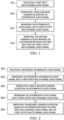
- a method for training a machine learning algorithm is illustrated.
- a first input multichannel audio signal is received.
- the first input multichannel audio signal may comprise a 2.0, 3.1, 5.1 or 7.1 multichannel audio signal, also referred to as layout within this document. That is, the multichannel audio signal may correspond to a predefined speaker layout, such as a 2.0, 3.1, 5.1, or 7.1 speaker layout.
- a machine learning algorithm is used to generate an intermediate audio signal based on the first input multichannel audio signal.
- the machine learning algorithm may comprise a deep neural network such as e.g. a network based on the U-net architecture.
- the U-net architecture is described, for example, in O. Ronneberger, P. Fischer, T. Brox (2015), "U-Net: Convolutional Networks for Biomedical Image Segmentation", arXiv:1505.04597 and builds upon a stack of convolutional layers organized in a contracting path and an expansive path.
- the contracting path follows the typical architecture of a convolutional network.
- Every step in the expansive path may consist of an up-sampling of the feature map followed by a convolution that halves the number of feature channels, a concatenation with the correspondingly cropped feature map from the contracting path, and further convolutions, each followed by a ReLU.
- the intermediate audio signal may comprise one or more audio objects, wherein each of the audio objects comprises an audio track and position metadata.
- the intermediate audio format may comprise (e.g., relate to) a Dolby ® Atmos TM format.
- the intermediate audio format may comprise (e.g., relate to) an Ambisonics audio format.
- the intermediate audio signal is rendered into a first output multichannel audio signal.
- This rendering step may involve a differentiable function. This may amount to rendering the first output multichannel signal to a predefined speaker layout.
- the first output multichannel audio signal may have the same format as the first input multichannel audio signal. Both may be multichannel audio signals obtained by rendering to a predefined (e.g., same) channel layout (or speaker layout).
- the first output multichannel audio signal may comprise (e.g., relate to) a 2.0, 3.1, 5.1, 7.1, 9.1, 5.1.2, 7.1.4, or 9.1.6 multichannel audio signal.
- the intermediate audio signal may also be rendered into more than one output multichannel audio signal in some implementations.
- the machine learning algorithm is improved based on a difference between the first input multichannel audio signal and the first output multichannel audio signal.
- the machine learning algorithm may be trained using a back-propagation algorithm.
- the quality of the generated intermediate audio signal is evaluated indirectly by comparing two rendered layouts which may be actually perceived by human listener.
- This improvement may be done iteratively by repeatedly inputting the first input multichannel audio signal to the machine learning algorithm (e.g., to a deep neural network implementing the machine learning algorithm) and comparing the first input multichannel audio signal and the first output multichannel audio signal.
- the improvement may correspond to iterative training of the machine learning algorithm. Improvement or training may involve backpropagation of (a gradient of) an error function (e.g., the aforementioned difference), as the skilled person will appreciate.
- FIG. 2 illustrates a flow diagram of another example of a method for training a machine learning algorithm.
- a reference intermediate audio signal is received, wherein said reference intermediate audio signal has the same format as the intermediate audio signal generated based on the first input multichannel audio signal.
- the received reference intermediate audio signal is rendered into the first input multichannel audio signal. This may involve rendering the reference intermediate audio signal to a predefined channel (or speaker) layout.
- a machine learning algorithm is used to generate an intermediate audio signal based on the first input multichannel audio signal.
- the intermediate audio signal is rendered into a first output multichannel audio signal. This may involve rendering the generated intermediate audio signal to a predefined channel (or speaker) layout using one or more differentiable functions.
- step 205 the machine learning algorithm is improved based on a difference between the first input multichannel audio signal and the first output multichannel audio signal.
- the rendering and the improvement e.g., training
- the rendering and the improvement may proceed in analogy to what has been described in the context of FIG. 1 .
- FIG. 3 illustrates a flow diagram of a further example of a method for training a machine learning algorithm.
- a reference intermediate audio signal is received.
- the received reference intermediate audio signal is rendered into a first input multichannel audio signal.
- the received reference intermediate audio signal is rendered into a second input multichannel audio signal.
- a machine learning algorithm is used to generate an intermediate audio signal based on the first input multichannel audio signal.
- the intermediate audio signal is rendered into a first output multichannel audio signal.
- the intermediate audio signal is rendered into a second output multichannel audio signal.
- both renderings in steps 304 and 307 may involve one or more dedicated differentiable functions.
- step 308 the machine learning algorithm is improved based on (a) a first difference between the first input multichannel audio signal and the first output multichannel audio signal and based on (b) a second difference between the second input multichannel audio signal and the second output multichannel audio signal.
- the rendering and the improvement e.g., training may proceed in analogy to what has been described in the context of FIG. 1 .
- the reference intermediate audio signal and the intermediate audio signal may be generated and compared to each other.
- the reference intermediate audio signal and the intermediate audio signal may be rendered to two or more of a 2.0 multichannel audio format, a 5.1 multichannel audio format, a 7.1 multichannel audio format, and a 9.1 multichannel audio format.
- Respective results of comparisons e.g., respective differences or loss functions
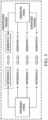
- FIG. 4A and FIG. 4B illustrate an exemplary architecture for source separation based on deep learning. All items inside the dashed box 400 may be running internally a deep neural network (DNN) and may be back-propagated.
- DNN deep neural network
- An Atmos mix 401 is rendered in a plurality of different multichannel layouts 402, 403, 404, 405.
- a core DNN 406 e.g., based on U-net
- These masks may relate to masks indicating certain time-frequency bins (e.g., FFT bins) of the respective audio signal or audio channel to belong to a given audio object or to the bed channel residual, respectively.
- the object masks subsequently undergo an objection reconstruction 409, resulting in a plurality of multichannel objects 411.
- Said multichannel objects relate to audio tracks of respective audio objects panned to the multichannel layout.
- the de-trimmer 414 may be configured to increase a level of an object which is far from a screen.
- de-trimming is regarded as the inverse function of trimming, which may involve applying a level decay to an object which is far from the screen.
- the mono objects 415 in FIG. 4A and FIG. 4B represent an example of the claimed audio tracks.
- position metadata 416 is determined by de-panning 412 the multichannel objects 411.
- the bed channels 417 are generated on a parallel processing path using bed channel reconstruction techniques 410 based on the bed channel mask 408.
- the mono objects 415, the position metadata 416, and the bed channels 417 may be seen as an example representation of the claimed audio objects. Subsequently, the mono objects 415, the position metadata 416, and the bed channels 417 are processed by an Atmos panner 418 and are trimmed 419 with regard to a third-dimension (i.e. with regard to a distance to the screen) to obtain the multichannel layouts 420, 421, 422, 423. As already discussed in the foregoing description, within this document, trimming may involve applying a level decay to an object which is far from the screen.
- multichannel layouts 420, 421, 422, 423 may then be compared either individually or jointly (e.g., using appropriate weighting factors) to the original multichannel layouts 402, 403, 404, 405 for improving/optimizing the core DNN 406.
- the de-panner 412 may comprise another neural network which is jointly improved/optimized together with the core DNN 406.
- Wiener filter soft mask
- the inner network may be a neural network such as a U-net, and it is trainable.
- the intermediate network may be the object extraction network (or object extraction module) which wraps-up the neural network (e.g., U-net) with several non-trainable modules, the most important of which are the de-panner 412 and a de-trimmer 414. This network generates the Atmos mix.
- the outer network is the training network (or training module), only used for training. It renders the generated Atmos mix into the different layouts.
- the additional processing blocks introduced by the outer network may be non-trainable.
- the de-panner 412 may be implemented by a trainable neural network.
- the loss function may involve computing the renders to different layouts (e.g., 5.1, 7.1, 2.1) and comparing the renders with the reference renders using some loss function (e.g., mean squared error).
- Some loss function e.g., mean squared error.
- a bed channel reminder to avoid trivial solution of bypassing object extraction
- a penalty for objects close to the 5.1 channel positions to avoid objects close to 5.1 channels
- a penalty for slowly moving objects to avoid static objects
- a penalty for very rapidly accelerating objects to avoid "jumpy” objects
- objects beyond the first one a penalty increasing for every additional object (dynamic object creation)
- a penalty for correlation between object content and bed channel reminder to avoid bed channels and object having similar content
- a penalty for correlated object content to avoid objects sharing similar content
- a penalty for correlated object trajectories to avoid parallel moving objects.
- All penalties may be associated with a penalty pre-factor. Penalties with a penalty pre-factor equal to zero may be de-activated. Penalty pre-factors may be considered network hyper-parameters that need to be optimized.
- Implementing some of these penalties may involve determining correlations between audio tracks of two different audio objects and/or determining correlations between the audio tracks of audio objects and the bed channel residual.
- FIG. 5 illustrates different exemplary training modes.
- a first training mode is denoted supervised training mode. In this training mode, an Atmos training database may be needed.
- the training network (see e.g. box 400 in FIG. 4A and FIG.4B ) is based on the rendering to a set of pre-defined layouts (e.g., 2.0, 5.1, 7.1, 9.1).
- the input to the training network may be a list of reference renders to the set of pre-defined layouts.
- the output of the training network may be a list of renders to the same pre-defined layouts.
- the loss function may be based on the comparison between the two lists of renders, in addition to the penalties described above.
- a second training mode is denoted unsupervised training mode.
- an Atmos training database may be not needed.
- the training network (see e.g. box 400 in Fig. 4 ) may be based on the rendering to the 5.1 layout only.
- the input of the training network may be the 5.1 reference render.
- the output of the training network may be a 5.1 render.
- the loss function may be based on the comparison of the two 5.1 renders only, in addition to the penalties described above. Therefore, in the unsupervised training mode, the training network has the form of an auto-encoder, going from a 5.1 render to a 5.1 render.
- the unsupervised training mode has an additional possibility: the network can be custom-trained for every particular piece of content.
- the network may be trained not only with planar layouts, but also with layouts having height channels such as 5.1.2, 5.1.4, 7.1.4. and 9.1.6.
- the bed reconstruction module may have a trainable up-mixer module that converts the input 5.1 residual into a 7.1.2 bed channel.
- the de-panner module may also be trainable, or has a trainable part, and is able to generate height metadata z in addition to x and y metadata.
- the input channel could be any of 2.0 or 7.1 instead of 5.1. In the case of 2.0 input, the de-panner module should be trainable to generate y metadata from the 2.0 mix.
- processor may refer to any device or portion of a device that processes electronic data, e.g., from registers and/or memory to transform that electronic data into other electronic data that, e.g., may be stored in registers and/or memory.
- a "computer” or a “computing machine” or a “computing platform” may include one or more processors.
- the methodologies described herein are, in one example embodiment, performable by one or more processors that accept computer-readable (also called machine-readable) code containing a set of instructions that when executed by one or more of the processors carry out at least one of the methods described herein.
- Any processor capable of executing a set of instructions (sequential or otherwise) that specify actions to be taken are included.
- a typical processing system that includes one or more processors.
- Each processor may include one or more of a CPU, a graphics processing unit, and a programmable DSP unit.
- the processing system further may include a memory subsystem including main RAM and/or a static RAM, and/or ROM.
- a bus subsystem may be included for communicating between the components.
- the processing system further may be a distributed processing system with processors coupled by a network. If the processing system requires a display, such a display may be included, e.g., a liquid crystal display (LCD) or a cathode ray tube (CRT) display. If manual data entry is required, the processing system also includes an input device such as one or more of an alphanumeric input unit such as a keyboard, a pointing control device such as a mouse, and so forth. The processing system may also encompass a storage system such as a disk drive unit. The processing system in some configurations may include a sound output device, and a network interface device.
- LCD liquid crystal display
- CRT cathode ray tube
- the memory subsystem thus includes a computer-readable carrier medium that carries computer-readable code (e.g., software) including a set of instructions to cause performing, when executed by one or more processors, one or more of the methods described herein.
- computer-readable code e.g., software
- the software may reside in the hard disk, or may also reside, completely or at least partially, within the RAM and/or within the processor during execution thereof by the computer system.
- the memory and the processor also constitute computer-readable carrier medium carrying computer-readable code.
- a computer-readable carrier medium may form, or be included in a computer program product.
- the one or more processors operate as a standalone device or may be connected, e.g., networked to other processor(s), in a networked deployment, the one or more processors may operate in the capacity of a server or a user machine in server-user network environment, or as a peer machine in a peer-to-peer or distributed network environment.
- the one or more processors may form a personal computer (PC), a tablet PC, a Personal Digital Assistant (PDA), a cellular telephone, a web appliance, a network router, switch or bridge, or any machine capable of executing a set of instructions (sequential or otherwise) that specify actions to be taken by that machine.
- machine shall also be taken to include any collection of machines that individually or jointly execute a set (or multiple sets) of instructions to perform any one or more of the methodologies discussed herein.
- each of the methods described herein is in the form of a computer-readable carrier medium carrying a set of instructions, e.g., a computer program that is for execution on one or more processors, e.g., one or more processors that are part of web server arrangement.
- example embodiments of the present disclosure may be embodied as a method, an apparatus such as a special purpose apparatus, an apparatus such as a data processing system, or a computer-readable carrier medium, e.g., a computer program product.
- the computer-readable carrier medium carries computer readable code including a set of instructions that when executed on one or more processors cause the processor or processors to implement a method.
- aspects of the present disclosure may take the form of a method, an entirely hardware example embodiment, an entirely software example embodiment or an example embodiment combining software and hardware aspects.
- the present disclosure may take the form of carrier medium (e.g., a computer program product on a computer-readable storage medium) carrying computer-readable program code embodied in the medium.
- the software may further be transmitted or received over a network via a network interface device.
- the carrier medium is in an example embodiment a single medium, the term “carrier medium” should be taken to include a single medium or multiple media (e.g., a centralized or distributed database, and/or associated caches and servers) that store the one or more sets of instructions.
- the term “carrier medium” shall also be taken to include any medium that is capable of storing, encoding or carrying a set of instructions for execution by one or more of the processors and that cause the one or more processors to perform any one or more of the methodologies of the present disclosure.
- a carrier medium may take many forms, including but not limited to, non-volatile media, volatile media, and transmission media.
- Non-volatile media includes, for example, optical, magnetic disks, and magneto-optical disks.
- Volatile media includes dynamic memory, such as main memory.
- Transmission media includes coaxial cables, copper wire and fiber optics, including the wires that comprise a bus subsystem. Transmission media may also take the form of acoustic or light waves, such as those generated during radio wave and infrared data communications.
- carrier medium shall accordingly be taken to include, but not be limited to, solid-state memories, a computer product embodied in optical and magnetic media; a medium bearing a propagated signal detectable by at least one processor or one or more processors and representing a set of instructions that, when executed, implement a method; and a transmission medium in a network bearing a propagated signal detectable by at least one processor of the one or more processors and representing the set of instructions.
- any one of the terms comprising, comprised of or which comprises is an open term that means including at least the elements/features that follow, but not excluding others.
- the term comprising, when used in the claims should not be interpreted as being limitative to the means or elements or steps listed thereafter.
- the scope of the expression a device comprising A and B should not be limited to devices consisting only of elements A and B.
- Any one of the terms including or which includes or that includes as used herein is also an open term that also means including at least the elements/features that follow the term, but not excluding others. Thus, including is synonymous with and means comprising.
- a method for training a machine learning algorithm, the method comprising:
- EEE 2 The method according to EEE 1, wherein the receiving comprises
- EEE 3 The method according to EEE 1 or 2, wherein the reference intermediate audio signal has the same format as the intermediate audio signal.
- EEE 4 The method according to any one of the preceding EEEs, wherein the first input multichannel audio signal has the same format as the first output multichannel audio signal.
- EEE 5 The method according to any one of the preceding EEEs, wherein improving the machine learning algorithm includes comparing the first input multichannel audio signal and the first output multichannel audio signal using a loss function.
- EEE 6 The method according to any one of the preceding EEEs, wherein the intermediate audio signal comprises one or more audio objects, wherein each of the audio objects comprises an audio track and position metadata.
- EEE 7 The method according to EEE 6, wherein the intermediate audio signal further comprises a bed channel residual, wherein the bed channel residual is a multichannel audio signal having the same format as the first input multichannel audio signal.
- EEE 10 The method according to any one of the preceding EEEs, wherein the first input multichannel audio signal comprises a 2.0, 3.1, 5.1 or 7.1 multichannel audio signal, and the first output multichannel audio signal comprises a 2.0, 3.1, 5.1, 7.1, 9.1, 5.1.2, 7.1.4, or 9.1.6 multichannel audio signal.
- EEE 11 The method according to EEE 2 or any EEE referring to EEE 2, further comprising:
- EEE 12 The method according to EEE 11, wherein the second input multichannel audio signal has the same format as the second output multichannel audio signal.
- EEE 14 The method according to EEE 13, wherein the de-panning algorithm is based on a further machine learning algorithm, and the method further comprises: jointly improving the de-panning algorithm and the machine learning algorithm based on the difference between the first input multichannel audio signal and the first output multichannel audio signal.
- EEE 15 The method according to any one of the preceding EEEs, wherein the machine learning algorithm comprises a deep neural network.
- EEE 16 The method according to any one of EEEs 1 to 14, wherein the machine learning algorithm comprises a combination of a deep neural network and a digital signal processing algorithm.
- EEE 17 The method according to EEE 5 or any EEE referring to EEE 5, wherein the comparing of the first input multichannel audio signal and the first output multichannel audio signal is performed in the waveform domain or in the spectrogram domain.
- EEE 18 The method according to EEE 5 or any EEE referring to EEE 5, wherein the comparing of the first input multichannel audio signal and the first output multichannel audio signal involves at least one of: a mean squared error, a mean absolute error, and a mean squared logarithmic error.
- EEE 19 The method according to EEE 6 or any EEE referring to EEE 6, wherein the improving further comprises minimizing a cost function term involving a position, a motion, or an acceleration of an audio object.
- EEE 20 The method according to EEE 7 or any EEE referring to EEE 7, wherein the improving further comprises minimizing a cost function term involving a correlation between audio tracks of two different audio objects and/or between the audio track of an audio object and the bed channel residual.
- EEE 21 Apparatus for generating an intermediate audio format from an input multichannel audio signal, wherein the apparatus includes a processor configured to perform the steps of the method according to any one of EEEs 1 to 20.
- EEE 22 A computer program product comprising a computer-readable storage medium with instructions adapted to cause the device to carry out the method according to any one of EEEs 1 to 20 when executed by a device having processing capability.
Landscapes
- Engineering & Computer Science (AREA)
- Physics & Mathematics (AREA)
- Acoustics & Sound (AREA)
- Signal Processing (AREA)
- Multimedia (AREA)
- Theoretical Computer Science (AREA)
- Software Systems (AREA)
- Artificial Intelligence (AREA)
- Evolutionary Computation (AREA)
- Human Computer Interaction (AREA)
- Audiology, Speech & Language Pathology (AREA)
- Health & Medical Sciences (AREA)
- Computational Linguistics (AREA)
- Computer Vision & Pattern Recognition (AREA)
- Mathematical Physics (AREA)
- General Physics & Mathematics (AREA)
- General Engineering & Computer Science (AREA)
- Computing Systems (AREA)
- Medical Informatics (AREA)
- Data Mining & Analysis (AREA)
- Quality & Reliability (AREA)
- Stereophonic System (AREA)
Applications Claiming Priority (5)
| Application Number | Priority Date | Filing Date | Title |
|---|---|---|---|
| ES202031054 | 2020-10-17 | ||
| EP21150392 | 2021-01-06 | ||
| US202163136694P | 2021-01-13 | 2021-01-13 | |
| EP21790501.7A EP4229638B1 (fr) | 2020-10-17 | 2021-10-14 | Procédé et dispositif pour générer un format audio intermédiaire à partir d'un signal audio multicanal d'entrée |
| PCT/EP2021/078444 WO2022079165A1 (fr) | 2020-10-17 | 2021-10-14 | Procédé et appareil pour générer un format audio intermédiaire à partir d'un signal audio multicanal d'entrée |
Related Parent Applications (1)
| Application Number | Title | Priority Date | Filing Date |
|---|---|---|---|
| EP21790501.7A Division EP4229638B1 (fr) | 2020-10-17 | 2021-10-14 | Procédé et dispositif pour générer un format audio intermédiaire à partir d'un signal audio multicanal d'entrée |
Publications (2)
| Publication Number | Publication Date |
|---|---|
| EP4468292A2 true EP4468292A2 (fr) | 2024-11-27 |
| EP4468292A3 EP4468292A3 (fr) | 2024-12-11 |
Family
ID=78087395
Family Applications (2)
| Application Number | Title | Priority Date | Filing Date |
|---|---|---|---|
| EP24198271.9A Pending EP4468292A3 (fr) | 2020-10-17 | 2021-10-14 | Procédé et dispositif pour générer un format audio intermédiaire à partir d'un signal audio multicanal d'entrée |
| EP21790501.7A Active EP4229638B1 (fr) | 2020-10-17 | 2021-10-14 | Procédé et dispositif pour générer un format audio intermédiaire à partir d'un signal audio multicanal d'entrée |
Family Applications After (1)
| Application Number | Title | Priority Date | Filing Date |
|---|---|---|---|
| EP21790501.7A Active EP4229638B1 (fr) | 2020-10-17 | 2021-10-14 | Procédé et dispositif pour générer un format audio intermédiaire à partir d'un signal audio multicanal d'entrée |
Country Status (5)
| Country | Link |
|---|---|
| US (1) | US12574696B2 (fr) |
| EP (2) | EP4468292A3 (fr) |
| JP (1) | JP2023546147A (fr) |
| CN (1) | CN116325807A (fr) |
| WO (1) | WO2022079165A1 (fr) |
Families Citing this family (1)
| Publication number | Priority date | Publication date | Assignee | Title |
|---|---|---|---|---|
| WO2023086253A1 (fr) * | 2021-11-09 | 2023-05-19 | Dolby Laboratories Licensing Corporation | Génération et classification de contenu audio |
Family Cites Families (25)
| Publication number | Priority date | Publication date | Assignee | Title |
|---|---|---|---|---|
| US20090238371A1 (en) | 2008-03-20 | 2009-09-24 | Francis Rumsey | System, devices and methods for predicting the perceived spatial quality of sound processing and reproducing equipment |
| WO2013006324A2 (fr) | 2011-07-01 | 2013-01-10 | Dolby Laboratories Licensing Corporation | Commande de système de lecture audio |
| US20150243289A1 (en) | 2012-09-14 | 2015-08-27 | Dolby Laboratories Licensing Corporation | Multi-Channel Audio Content Analysis Based Upmix Detection |
| US9805725B2 (en) | 2012-12-21 | 2017-10-31 | Dolby Laboratories Licensing Corporation | Object clustering for rendering object-based audio content based on perceptual criteria |
| CN104683933A (zh) * | 2013-11-29 | 2015-06-03 | 杜比实验室特许公司 | 音频对象提取 |
| EP3007467B1 (fr) | 2014-10-06 | 2017-08-30 | Oticon A/s | Dispositif auditif comprenant une unité de séparation de source acoustique à faible latence |
| CN107211227B (zh) | 2015-02-06 | 2020-07-07 | 杜比实验室特许公司 | 用于自适应音频的混合型基于优先度的渲染系统和方法 |
| CN105992120B (zh) * | 2015-02-09 | 2019-12-31 | 杜比实验室特许公司 | 音频信号的上混音 |
| JP6797187B2 (ja) | 2015-08-25 | 2020-12-09 | ドルビー ラボラトリーズ ライセンシング コーポレイション | オーディオ・デコーダおよびデコード方法 |
| WO2017035281A2 (fr) | 2015-08-25 | 2017-03-02 | Dolby International Ab | Codage et décodage audio à l'aide de paramètres de transformation de présentation |
| KR101724320B1 (ko) | 2015-12-14 | 2017-04-10 | 광주과학기술원 | 서라운드 채널 오디오 생성 방법 |
| WO2017126895A1 (fr) | 2016-01-19 | 2017-07-27 | 지오디오랩 인코포레이티드 | Dispositif et procédé pour traiter un signal audio |
| CN109074818B (zh) | 2016-04-08 | 2023-05-05 | 杜比实验室特许公司 | 音频源参数化 |
| US10863297B2 (en) | 2016-06-01 | 2020-12-08 | Dolby International Ab | Method converting multichannel audio content into object-based audio content and a method for processing audio content having a spatial position |
| WO2017207465A1 (fr) | 2016-06-01 | 2017-12-07 | Dolby International Ab | Procédé de conversion de contenu audio multicanaux en contenu audio basé sur des objets et procédé de traitement d'un contenu audio ayant une position spatiale |
| US9875747B1 (en) | 2016-07-15 | 2018-01-23 | Google Llc | Device specific multi-channel data compression |
| US10224058B2 (en) | 2016-09-07 | 2019-03-05 | Google Llc | Enhanced multi-channel acoustic models |
| WO2019027812A1 (fr) | 2017-08-01 | 2019-02-07 | Dolby Laboratories Licensing Corporation | Classification d'objet audio sur la base de métadonnées de localisation |
| US9947338B1 (en) | 2017-09-19 | 2018-04-17 | Amazon Technologies, Inc. | Echo latency estimation |
| EP3570566B1 (fr) | 2018-05-14 | 2022-12-28 | Nokia Technologies Oy | Prévisualisation de scènes audio spatiales comprenant plusieurs sources sonores |
| WO2019229199A1 (fr) | 2018-06-01 | 2019-12-05 | Sony Corporation | Remixage adaptatif de contenu audio |
| JP7243052B2 (ja) * | 2018-06-25 | 2023-03-22 | カシオ計算機株式会社 | オーディオ抽出装置、オーディオ再生装置、オーディオ抽出方法、オーディオ再生方法、機械学習方法及びプログラム |
| KR102645589B1 (ko) | 2019-08-30 | 2024-03-07 | 엘지전자 주식회사 | 음향 제어 시스템, 장치 및 방법 |
| US11962989B2 (en) * | 2020-07-20 | 2024-04-16 | Orbital Audio Laboratories, Inc. | Multi-stage processing of audio signals to facilitate rendering of 3D audio via a plurality of playback devices |
| JPWO2022050087A1 (fr) * | 2020-09-03 | 2022-03-10 |
-
2021
- 2021-10-14 EP EP24198271.9A patent/EP4468292A3/fr active Pending
- 2021-10-14 JP JP2023523224A patent/JP2023546147A/ja active Pending
- 2021-10-14 WO PCT/EP2021/078444 patent/WO2022079165A1/fr not_active Ceased
- 2021-10-14 EP EP21790501.7A patent/EP4229638B1/fr active Active
- 2021-10-14 US US18/247,600 patent/US12574696B2/en active Active
- 2021-10-14 CN CN202180070446.XA patent/CN116325807A/zh active Pending
Also Published As
| Publication number | Publication date |
|---|---|
| WO2022079165A1 (fr) | 2022-04-21 |
| EP4229638A1 (fr) | 2023-08-23 |
| JP2023546147A (ja) | 2023-11-01 |
| CN116325807A (zh) | 2023-06-23 |
| EP4229638B1 (fr) | 2024-09-04 |
| EP4468292A3 (fr) | 2024-12-11 |
| US12574696B2 (en) | 2026-03-10 |
| US20240022868A1 (en) | 2024-01-18 |
Similar Documents
| Publication | Publication Date | Title |
|---|---|---|
| US20230359898A1 (en) | Augmentation of Audiographic Images for Improved Machine Learning | |
| CN114341979B (zh) | 用于基于卷积神经网络的语音源分离的方法和装置 | |
| WO2022265992A1 (fr) | Modèles de diffusion ayant une précision améliorée et une consommation réduite de ressources de calcul | |
| CN112699991A (zh) | 用于加速神经网络训练的信息处理的方法、电子设备和计算机可读介质 | |
| US20240355017A1 (en) | Text-Based Real Image Editing with Diffusion Models | |
| US12456493B2 (en) | System for automated multitrack mixing | |
| CN114861822A (zh) | 用于改进的少试学习的任务增强和自训练 | |
| CN113287167B (zh) | 用于混合语音合成的方法、设备及系统 | |
| EP4165557A1 (fr) | Systèmes et procédés pour la génération de modèles multitâches appris par machine | |
| EP3824461A1 (fr) | Procédé et système pour créer un contenu audio basé sur un objet | |
| EP4315327B1 (fr) | Amélioration de la parole fondée sur l'apprentissage profond contre les artefacts et la distorsion | |
| Yechuri et al. | A nested u-net with efficient channel attention and d3net for speech enhancement | |
| US12574696B2 (en) | Method and apparatus for generating an intermediate audio format from an input multichannel audio signal | |
| Ananth et al. | Multi-Channel Audio Enhancement using Dual-Stream Encoders with Attention Mechanisms and Spatial Discrimination GAN | |
| CN119314484A (zh) | 一种文本生成方法、装置、设备、存储介质及程序产品 | |
| Xiong et al. | M-CMGAN: Attempting to Use Mamba on Speech Enhancement | |
| Peethala et al. | Lightweight Multi-axial Transformer with MS-SENet and D3Net for Single Channel Speech Enhancement | |
| Zhang et al. | BirdDenoiser: a bird sound denoising network based on optimized modern convolution | |
| Jia et al. | The Attention-Based Fusion of Master-Auxiliary Network for Speech Enhancement | |
| WO2025134624A1 (fr) | Système de génération de forme d'onde de parole, procédé de génération de forme d'onde de parole et programme de prédiction de forme d'onde de parole | |
| Phan | Understanding modern deep learning techniques for audio applications and beyond | |
| Li et al. | A Pipelined Framework with Serialized Output Training for Overlapping Speech Recognition | |
| DE102025132317A1 (de) | Räumlich bewusste, audioerweiterte, konversationelle agenten | |
| CN118940141A (zh) | 基于神经架构搜索的喉电信号分类方法、装置及电子设备 | |
| CN120067557A (zh) | 模型构建和训练方法、设备及存储介质 |
Legal Events
| Date | Code | Title | Description |
|---|---|---|---|
| PUAI | Public reference made under article 153(3) epc to a published international application that has entered the european phase |
Free format text: ORIGINAL CODE: 0009012 |
|
| STAA | Information on the status of an ep patent application or granted ep patent |
Free format text: STATUS: THE APPLICATION HAS BEEN PUBLISHED |
|
| REG | Reference to a national code |
Ref country code: DE Ref legal event code: R079 Free format text: PREVIOUS MAIN CLASS: G10L0019008000 Ipc: G10L0021027200 |
|
| PUAL | Search report despatched |
Free format text: ORIGINAL CODE: 0009013 |
|
| AC | Divisional application: reference to earlier application |
Ref document number: 4229638 Country of ref document: EP Kind code of ref document: P |
|
| AK | Designated contracting states |
Kind code of ref document: A2 Designated state(s): AL AT BE BG CH CY CZ DE DK EE ES FI FR GB GR HR HU IE IS IT LI LT LU LV MC MK MT NL NO PL PT RO RS SE SI SK SM TR |
|
| AK | Designated contracting states |
Kind code of ref document: A3 Designated state(s): AL AT BE BG CH CY CZ DE DK EE ES FI FR GB GR HR HU IE IS IT LI LT LU LV MC MK MT NL NO PL PT RO RS SE SI SK SM TR |
|
| RIC1 | Information provided on ipc code assigned before grant |
Ipc: H04S 3/00 20060101ALI20241106BHEP Ipc: G10L 19/008 20130101ALI20241106BHEP Ipc: G10L 25/30 20130101ALI20241106BHEP Ipc: G10L 21/0272 20130101AFI20241106BHEP |
|
| P01 | Opt-out of the competence of the unified patent court (upc) registered |
Free format text: CASE NUMBER: APP_66674/2024 Effective date: 20241217 |
|
| STAA | Information on the status of an ep patent application or granted ep patent |
Free format text: STATUS: REQUEST FOR EXAMINATION WAS MADE |
|
| 17P | Request for examination filed |
Effective date: 20250516 |