EP4468652A1 - Service de signature à distance utilisant un service de messagerie instantanée - Google Patents
Service de signature à distance utilisant un service de messagerie instantanée Download PDFInfo
- Publication number
- EP4468652A1 EP4468652A1 EP24177048.6A EP24177048A EP4468652A1 EP 4468652 A1 EP4468652 A1 EP 4468652A1 EP 24177048 A EP24177048 A EP 24177048A EP 4468652 A1 EP4468652 A1 EP 4468652A1
- Authority
- EP
- European Patent Office
- Prior art keywords
- user
- signature
- server
- instant messaging
- service
- Prior art date
- Legal status (The legal status is an assumption and is not a legal conclusion. Google has not performed a legal analysis and makes no representation as to the accuracy of the status listed.)
- Granted
Links
Images



Classifications
-
- H—ELECTRICITY
- H04—ELECTRIC COMMUNICATION TECHNIQUE
- H04L—TRANSMISSION OF DIGITAL INFORMATION, e.g. TELEGRAPHIC COMMUNICATION
- H04L9/00—Cryptographic mechanisms or cryptographic arrangements for secret or secure communications; Network security protocols
- H04L9/32—Cryptographic mechanisms or cryptographic arrangements for secret or secure communications; Network security protocols including means for verifying the identity or authority of a user of the system or for message authentication, e.g. authorization, entity authentication, data integrity or data verification, non-repudiation, key authentication or verification of credentials
- H04L9/3247—Cryptographic mechanisms or cryptographic arrangements for secret or secure communications; Network security protocols including means for verifying the identity or authority of a user of the system or for message authentication, e.g. authorization, entity authentication, data integrity or data verification, non-repudiation, key authentication or verification of credentials involving digital signatures
-
- G—PHYSICS
- G06—COMPUTING OR CALCULATING; COUNTING
- G06F—ELECTRIC DIGITAL DATA PROCESSING
- G06F21/00—Security arrangements for protecting computers, components thereof, programs or data against unauthorised activity
- G06F21/60—Protecting data
- G06F21/64—Protecting data integrity, e.g. using checksums, certificates or signatures
-
- H—ELECTRICITY
- H04—ELECTRIC COMMUNICATION TECHNIQUE
- H04L—TRANSMISSION OF DIGITAL INFORMATION, e.g. TELEGRAPHIC COMMUNICATION
- H04L51/00—User-to-user messaging in packet-switching networks, transmitted according to store-and-forward or real-time protocols, e.g. e-mail
- H04L51/04—Real-time or near real-time messaging, e.g. instant messaging [IM]
-
- H—ELECTRICITY
- H04—ELECTRIC COMMUNICATION TECHNIQUE
- H04L—TRANSMISSION OF DIGITAL INFORMATION, e.g. TELEGRAPHIC COMMUNICATION
- H04L63/00—Network architectures or network communication protocols for network security
- H04L63/08—Network architectures or network communication protocols for network security for authentication of entities
- H04L63/0823—Network architectures or network communication protocols for network security for authentication of entities using certificates
-
- H—ELECTRICITY
- H04—ELECTRIC COMMUNICATION TECHNIQUE
- H04L—TRANSMISSION OF DIGITAL INFORMATION, e.g. TELEGRAPHIC COMMUNICATION
- H04L63/00—Network architectures or network communication protocols for network security
- H04L63/12—Applying verification of the received information
- H04L63/126—Applying verification of the received information the source of the received data
-
- H—ELECTRICITY
- H04—ELECTRIC COMMUNICATION TECHNIQUE
- H04L—TRANSMISSION OF DIGITAL INFORMATION, e.g. TELEGRAPHIC COMMUNICATION
- H04L9/00—Cryptographic mechanisms or cryptographic arrangements for secret or secure communications; Network security protocols
- H04L9/32—Cryptographic mechanisms or cryptographic arrangements for secret or secure communications; Network security protocols including means for verifying the identity or authority of a user of the system or for message authentication, e.g. authorization, entity authentication, data integrity or data verification, non-repudiation, key authentication or verification of credentials
- H04L9/3263—Cryptographic mechanisms or cryptographic arrangements for secret or secure communications; Network security protocols including means for verifying the identity or authority of a user of the system or for message authentication, e.g. authorization, entity authentication, data integrity or data verification, non-repudiation, key authentication or verification of credentials involving certificates, e.g. public key certificate [PKC] or attribute certificate [AC]; Public key infrastructure [PKI] arrangements
Definitions
- the invention relates to a method, a server and a system for providing a remote signature service using an instant messaging service.
- Digital signatures are an essential component of these cryptographic procedures. Digital signatures are used in a wide range of areas, such as e-government, e-justice (electronic legal transactions), e-commerce (online trading) and similar contract signings in the private sector, but also in various forms of private data exchange. Digital signatures are generally used as cryptographic means for confirming data, in particular its origin and/or its authenticity.
- Examples enable simple and secure signing of data or digital documents using an instant messaging service.
- a user To use a remote signature service using an instant messaging service, a user must first register with the relevant remote signature service. To do this, the user sends a registration request to a server of the remote signature service. For example, the user calls up a remote signature service via a browser on a computer system. opens a registration page provided by the server and enters the registration data required for registration into a registration mask. The data is transmitted between the server and the computer system, for example, via a communication connection secured by end-to-end encryption, for example using an HTTPS session.
- the computer system used for registration is, for example, the same device, such as a smartphone, with which signatures are subsequently to be created using the remote signature service.
- the computer system used for registration is a different device than the one with which signatures are subsequently to be created using the remote signature service.
- the registration data provided includes contact details of the user that need to be verified, such as the user's first telephone number and/or an email address of the user.
- the server sends an activation TAN in the form of an SMS TAN via SMS to the user's first telephone number.
- the activation TAN can also be sent to the user's first telephone number via an automatically generated voice message, for example.
- This user's first telephone number is successfully verified if the user provides it correctly to the server, for example by entering it in a corresponding input field on the registration page of the remote signature service. The user thereby confirms successful receipt of the activation TAN via the specified user's first telephone number.
- the server sends an activation email with an activation link to the user's email address, for example.
- the user’s email address is successfully verified when the user clicks on the activation link and thereby confirms receipt of the activation email via the specified email address.
- the first telephone number provided by the user is, for example, a mobile phone number of a user’s mobile portable device, such as a smartphone.
- the server of the remote signature service when registering the user, the server of the remote signature service generates an asymmetric cryptographic key pair for the user and stores it on the server side.
- the asymmetric cryptographic key pair includes a private cryptographic key as a signature key for creating digital signatures of the user and a public cryptographic key as a signature verification key for verifying digital signatures created with the signature key.
- the corresponding asymmetric cryptographic key pair is uniquely assigned to the registered user.
- a certificate is created which assigns the signature verification key and thus the asymmetric cryptographic key pair to the user.
- the corresponding certificate is, for example, a certificate from a PKI.
- the corresponding certificate is issued by the remote signature service using the server.
- the corresponding certificate is issued by an issuing service upon request from the remote signature service server.
- the server To provide an individual remote signature service for the registered user via the instant messaging service, the server generates a server-side second telephone number that is uniquely assigned to the registered user. Using this server-side second telephone number that is uniquely assigned to the registered user, the server sets up a server-side instant messaging account with the instant messaging service. This instant messaging account is used exclusively to provide a remote signature service to the individual user to whom the server-side second telephone number is assigned. The resulting server-side instant messaging account is assigned to the server-side second telephone number.
- a contact request is sent from the server-side instant messaging account to a user-side instant messaging account using the user-side first telephone number.
- the user in order to use the remote signature service, the user must have a user-side instant messaging account that is set up using the user-side first telephone number or is assigned to it.
- the user confirms receipt of the contact request and thus of the server-side second telephone number by sending a contact confirmation from the user-side instant messaging account to the server-side instant messaging account. This also confirms that the remote signature service has been set up successfully via the instant messaging service.
- an asymmetric cryptographic key pair assigned to the user is stored on the server side and a server-side instant messaging account using the server-side second telephone number uniquely assigned to the registered user, the user can now request signatures for digital documents from the remote signature service using the server-side second telephone number using his user-side instant messaging account.
- the user sends a corresponding signature request from his user-side instant messaging account using a mobile portable device, such as a smartphone, to the server-side instant messaging account, which was set up individually for the corresponding user for this purpose, and receives the requested digital signature in response for further use. For example, he can forward the corresponding signature to a third party, e.g. via the instant messaging service.
- the server of the remote signature service receives the user's signature request to create a digital signature for a digital document with the user's signature key from the user-side instant messaging account via the server-side instant messaging account.
- the server creates a digital signature for the digital document to be signed using the signature key and sends the created digital signature to the user-side instant messaging account in response to the signature request via the server-side instant messaging account.
- the server uses, for example, a hash value of the digital document, which is encrypted with the user's signature key.
- the server calculates the hash value of the digital document to be signed to create the digital signature.
- the hash value of the digital document to be signed is provided to the server to create the digital signature.
- a digital document is generally understood to be a digital data set.
- the data set is a file, such as a text, image, audio or video file.
- a text file can be, for example, a Word, Excel or PDF document.
- a digital signature is based on an asymmetric cryptosystem in which a signer uses a secret signature key, i.e. a private cryptographic key, to calculate a value for a digital document to be signed, which is called a digital signature.
- This value is, for example, a hash value of the document to be signed encrypted with the signature key. document.
- This value enables anyone to verify the non-repudiation of the origin of the signer and the integrity of the document using a public signature verification key, i.e. a public cryptographic key.
- the associated signature verification key In order to be able to assign a signature created with a signature key to a person or entity, the associated signature verification key must be assigned to this person or entity without any doubt. Such an unambiguous assignment can be ensured, for example, by means of a certificate, in particular a PKI certificate, which includes the signature verification key, for example, and assigns the signature verification key to a specific person or entity.
- the present method for providing a remote signature service using an instant messaging service now enables, for example, such agreements in the form of digital documents which describe the content of the agreement to be confirmed, i.e. signed, and archived by the participants concerned in a simple and quick manner using the instant messaging service.
- This confirmation in the form of the signed digital document can then be made available to all participants.
- the digital signature gives corresponding agreements the status of a contract, for example. It is also possible for only the signing participant to archive the signed document for themselves as proof of the agreement made.
- the signed digital document can also be an agreement or a description of a situation which is confirmed or signed by a third party.
- the user provides the digital document to be signed.
- the corresponding digital document can, for example, generally be a digital data set.
- it is a data set that can be signed using a mobile, portable A text, image, audio or video file selected or created on the user's device.
- it is a photo.
- it is an email.
- the corresponding digital document to be signed is sent, for example, via the user-side instant messaging account to the instant messaging account set up for the user on the server side for the purpose of creating digital signatures.
- the user receives, for example, the signed digital document.
- the signed document also includes a time stamp that indicates a time at which the digital signature was created.
- the user calculates a hash value of the digital document to be signed using his mobile portable device and sends this hash value via the user-side instant messaging account to the instant messaging account set up for the user on the server side for the purpose of creating digital signatures.
- the user receives, for example, the digital signature.
- This digital signature includes, for example, the hash value of the document to be signed, encrypted using the user's signature key.
- the signature also includes a time stamp that indicates a time at which the digital signature was created.
- the digital signature and/or the signed digital document can then be forwarded by the user to one or more communication partners, for example using the instant messaging service.
- the digital signature and/or the signed digital document can also be stored by the user, for example, additionally or alternatively, in a virtual data room.
- the digital signature for example, proves the user's consent to the data contained in the digital document.
- the digital file or the corresponding digital document can be forwarded to a third party, for example to an instant messaging account of the third party.
- the third party can then sign the received digital document using an instant messaging service using the remote signature service, for example by sending the received digital document to an individual server-side instant messaging account that is clearly assigned to it for signature purposes and receiving the signed digital document in response.
- the signature is created on the server side, for example using a high security module (HSM).
- HSM high security module
- a "high security module”, which is also referred to as a hardware security module or hardware security module, is understood here to be a peripheral device, in particular an (internal or external) peripheral device, for storing a cryptographic key and executing cryptographic operations.
- An HSM makes it possible to ensure the trustworthiness and integrity of data and the associated information, particularly in IT systems. In order to ensure trustworthiness, the cryptographic keys used should be protected both by software and against physical attacks or side-channel attacks.
- the digital signature is sent together with the digital document as a signed digital document via the server-side instant messaging account to the user-side instant messaging account.
- the user thus receives the digital document together with the created digital signature, which includes, for example, a hash value of the document encrypted with the user's signature key, via his user-side instant messaging account in response to the signature request.
- the combination of digital document and digital signature represents, for example, the signed digital document.
- the method further comprises providing a certificate of a PKI which includes the signature verification key.
- the digital signature is sent, for example, together with the certificate via the server-side instant messaging account to the user-side instant messaging account.
- the user can make the corresponding certificate available to third parties, for example to verify the signature of the digital document.
- the certificate itself can be verified using the PKI, for example.
- the certificate proves, for example, that the signature verification key contained in the certificate is assigned to the user. If a signature is successfully verified using the signature verification key contained in the certificate, this means that it is a valid signature of the user.
- the corresponding certificate is issued by the remote signature service using the server.
- the corresponding certificate is issued by an issuing service upon request from the remote signature service server.
- An instant messaging service is a service that enables instant messaging or the immediate sending of messages between two or more participants who communicate with each other using text messages.
- a sender sends a message, they trigger a transmission using the so-called push process so that the messages reach the recipient as quickly as possible.
- the prerequisite for messages to be transmitted is that the participants each have an instant messaging application installed on a computer system with an instant messaging account.
- These instant messaging applications communicate with each other via a network and/or a server of the instant messaging service.
- an instant messaging service can also enable the transfer of files such as text, image, audio and/or video files.
- the user uses a mobile portable device on which an application of the instant messaging service is installed, with which the user can access his user-side instant messaging account.
- the use of a mobile portable device can have the advantage that the remote signature service for signing digital documents by the user can be enabled via the instant messaging service anywhere and at any time.
- no additional technical devices or no additional technical infrastructure are necessary.
- a signature of a digital document can also be initiated by the user using the mobile portable device, for example, when the user is on the move.
- the mobile portable device is, for example, a tablet, a laptop, a smartphone, a smartwatch, smart glasses or another mobile portable smart device.
- a smart device is defined here as a device with a processor and a memory for storing program instructions of an application, such as a Application of an instant messaging service, understood to be executed by the processor.
- the smart device also has a communication interface for establishing a wireless communication connection to a network, via which messages can be sent to instant messaging accounts of the instant messaging service.
- a smart device with such a communication interface represents, for example, an Internet of Things device (loT device), which as a component of the Internet of Things (Internet of Things/loT) can be integrated into a network of electronic devices via the Internet.
- Internet of Things device Internet of Things device
- the server of the remote signature service receives the registration request from the user's computer system via an encrypted communication connection between the server of the remote signature service and the user's computer system.
- the corresponding communication connection is encrypted using end-to-end encryption.
- communication via the instant messaging service i.e. between the server-side instant messaging account and the user-side instant messaging account, takes place in encrypted form.
- communication is encrypted using end-to-end encryption.
- signing the digital document requires receipt of an additional signature confirmation from the user.
- additional signature confirmation the user also confirms that a signature should actually be created using his signature key by the remote signature service. This can increase the security of the process.
- the method further comprises sending a first TAN to the user and receiving the first TAN as an additional signature confirmation of the user from the user-side instant messaging account via the server-side instant messaging account.
- An additional signature confirmation of the user can thus be provided, for example, by means of a corresponding TAN.
- a transaction number is a one-time password for the one-time authorization of a process by a user using the TAN.
- a one-time password also known as a one-time password or OTP (One-Time Password)
- OTP One-Time Password
- a one-time password is only valid for one-time use and cannot be used a second time.
- a new one-time password is therefore required for each authorization or authorization process. Since they can only be used once, one-time passwords are secure against both passive attacks, such as eavesdropping, and replay attacks.
- the first TAN is an SMS TAN, which is sent via SMS to the user's first telephone number.
- the user receives the TAN as an SMS, for example on a mobile device configured as a telecommunications terminal, which can be reached using the first telephone number as a mobile phone number, and sends this received TAN for additional confirmation of the signature request, for example from his user-side instant messaging account to the server-side instant messaging account using the server-side second telephone number that is uniquely assigned to the user, i.e. to the instant messaging account that has been individually set up for him on the server.
- a “telecommunications terminal” is understood here to mean a portable, battery-powered device with a mobile radio interface, in particular a mobile phone, a smartphone or a portable computer, such as a laptop, notebook or tablet PC with a mobile radio interface.
- the telecommunications terminal can have one or more other communication interfaces for wireless communication, such as a Bluetooth and/or WLAN interface, for communication via a network, such as the Internet.
- a “mobile network” is understood here to mean a digital cellular telecommunications network that operates according to a mobile radio standard, such as a GSM, UMTS, CDMA, LTE, or G5 standard.
- a connection to the Internet can also be established via such a mobile radio network, for example.
- the first TAN is sent to the user's first telephone number using an automatically generated voice message.
- the user receives the automatically generated voice message with the TAN, for example on a mobile portable device configured as a telecommunications terminal, which can be reached using the first telephone number as a mobile phone number, and sends this received TAN for additional confirmation of the signature request, for example from his user-side instant messaging account to the server-side instant messaging account using the server-side second telephone number uniquely assigned to the user, i.e. to the instant messaging account individually set up for him on the server.
- the first TAN is sent by email to the user's email address.
- the user receives the email with the TAN and sends this received TAN for additional confirmation of the signature request, for example from his user-side instant messaging account to the server-side instant messaging account using the server-side second telephone number that is uniquely assigned to the user, i.e. to the instant messaging account that was individually set up for him on the server.
- the user has access to his email address or an email account for the corresponding email address using a mobile portable device, he calls up the email with the TAN to forward the TAN.
- a confirmation request is sent as a push message to a confirmation application implemented on a mobile portable device of the user.
- the user's additional signature confirmation is received by the confirmation application in response to the confirmation request.
- the confirmation request Upon receipt of the push message by the confirmation application, the user is shown the confirmation request, for example on a display of his mobile portable device with a confirmation field. By clicking on the confirmation field, the user can, for example, confirm the confirmation request and initiate the sending of the additional signature confirmation in response to the confirmation request to the server of the remote signature service using the confirmation application.
- the digital document to be signed is received from the user-side instant messaging account via the server-side instant messaging account.
- This offers the user the option of creating the corresponding digital document or a corresponding digital data set themselves and using it for signing under Using the instant messaging service to send the digital signature to the remote signature service server.
- the server can then, for example, calculate a hash value of the digital document received via the server-side instant messaging account and use it to create the digital signature.
- the signature request is received in the form of the digital document to be signed.
- the user can, for example, simply send the document to be signed to the user-specific server-side instant messaging account.
- the server of the remote signature service is configured, for example, to sign digital data records that it receives via the user-specific server-side instant messaging account with the user's signature key, to which the server-side second telephone number of the corresponding user-specific server-side instant messaging account is uniquely assigned.
- the signature request includes the digital document to be signed in the form of a message text, a text file, an image file, an audio file or a video file.
- the user can, for example, simply send the message text, the text file, the image file, the audio file or the video file to the user-specific server-side instant messaging account.
- the server of the remote signature service is, for example, configured to sign digital data records such as the message text, the text file, the image file, the audio file or the video file, which it receives via the user-specific server-side instant messaging account, with the user's signature key, to which the server-side second telephone number of the corresponding user-specific server-side instant messaging account is uniquely assigned.
- the signature request includes a hash value of the document to be signed, which is used to create the digital signature for the digital document to be signed.
- a hash value of the document to be signed such as a message text, a text file, an image file, an audio file or a video file, to the user-specific server-side instant messaging account.
- the user calculates, for example, using a mobile portable device, the corresponding hash value of the document to be signed.
- the server of the remote signature service is, for example, configured to send hash values that it receives from the user-specific server-side instant messaging account receives, to create signatures using the user's signature key, to which the server-side second telephone number of the corresponding user-specific server-side instant messaging account is uniquely assigned. A resulting signature is sent back to the user-side instant messaging account using the instant messaging service.
- the signature request includes an indication of a network address via which the digital document to be signed can be read out by the server.
- the method further includes reading out the digital document to be signed using the network address.
- the server receives an indication of a network address which it uses to read out the digital document to be signed from a storage location accessible via the network.
- the digital document to be signed was created by a third party and the corresponding network address was made available to the user for reading out.
- the digital document to be signed was created by the user and saved under the corresponding network address for further use by themselves and/or others.
- the server can, for example, read out the digital document to be signed, calculate a hash value of the digital document to be signed and use the calculated hash value to create the digital signature.
- a hash value of the digital document to be signed is stored under the network address, which can be read using the received network address.
- the signature request also includes a second TAN to prove read authorization to read the digital document to be signed.
- the server uses the second TAN to prove read authorization. Examples make it possible to additionally secure the reading of the digital document stored under the network address and to be signed against unauthorized access. For example, knowing the network address is not enough to read the digital document to be signed.
- knowledge of the second TAN is necessary to prove read authorization to read the digital document to be signed.
- This second TAN represents, for example, a one-time password that authorizes the digital document to be signed to be read once.
- the complete document to be signed instead of the complete document to be signed, only a hash value of the digital document to be signed is stored under the network address, which can be read out using the second TAN as proof of read authorization to read the hash value of the document to be signed.
- the complete digital document to be signed is actually stored under the network address, but the second TAN only authorizes the user to read the hash value of the digital document to be signed.
- the second TAN upon receipt of a read request from the server of the remote signature service with the corresponding network address and the second TAN, the second TAN is first checked by a server managing the stored digital document to be signed.
- the corresponding server calculates, for example, the hash value of the document to be signed and sends this back to the server of the remote signature service in response to the read request.
- registering the user also includes identifying the user.
- identifying the user includes receiving one or more attributes of the user read from an ID token of the user from an ID provider service, which are signed with a signature key of the ID provider service.
- the user is in possession of an ID token assigned to the user with identification data in the form of the user's attributes.
- One or more of these user attributes are read, for example, by an ID provider service that has read authorization to read the corresponding attributes and signed with a signature key of an ID provider service. With the signature, the ID provider service guarantees that the corresponding attributes are attributes read from the user's ID token.
- identifying the user by the remote signature service server includes sending an attribute request for providing one or more attributes of the user from the remote signature service server to an ID provider server and receiving the requested one or more attributes of the user from the ID provider server in response to the attribute request.
- the ID provider server reads the user's attributes, for example, from an ID token of the user.
- the received attributes of the user are signed with a signature key of the ID provider server.
- the remote signature service server verifies the signature of the received attributes using a signature verification key of the ID provider server.
- the corresponding attributes of the user include, for example, information about a name, a date of birth, a place of birth and/or a residential address of the user, by means of which the user can be identified.
- the user's attributes are received by the ID provider server, which confirms with its signature that it has read the corresponding attributes from an ID token and that the attributes provided are authentic attributes that match the read attributes.
- the ID provider server has, for example, an authorization certificate with which it can prove its authorization to read the attributes.
- the signature key and the signature verification key of the ID provider server are, for example, a private and a public cryptographic key of an asymmetric key pair assigned to the ID provider server or an ID provider service.
- An "ID token” is understood here to be a mobile, portable electronic device, for example a chip card or an electronic ID document with a processor and a memory on which personal attributes of a user, i.e. user attributes, are stored.
- An electronic ID document is understood in particular to be an electronic identification, valuables or security document, in particular an official electronic document, in particular a paper-based and/or plastic-based document with a processor and a memory, such as an electronic identification document, in particular a passport, identity card, visa, driver's license, vehicle registration document, vehicle registration document, health card, or a company ID, or another ID document, a chip card, means of payment, in particular a banknote, bank card or credit card, consignment note or other proof of authorization.
- the ID token can be a Machine-Readable Travel Document, as standardized, for example, by the International Civil Aviation Authority (ICAO) and/or the Federal Office for Information Security (BSI).
- the ID token is provided in the form of an ID application installed on a user's mobile portable device.
- the user's attributes are provided, for example, by the user's mobile portable device.
- Examples may have the advantage that the ID token with the user's attributes is provided by the end device.
- the attributes are, for example, stored securely on the end device using a security element of the end device.
- the attributes are stored in a protected memory area of the security element. This means that the attributes can only be read using the security element.
- the attributes are stored in encrypted form on the end device, with one or more cryptographic keys for decrypting the attributes stored in a protected memory area of the security element. This means that the attributes can only be read in plain text using the security element.
- Reading the attributes for example for identification purposes, is therefore not possible without further ado. Rather, the attributes are effectively protected against unauthorized reading.
- proof of authorization using an authorization certificate is necessary.
- the ID provider server has an authorization certificate with which it can prove its authorization to read the attributes.
- the authorization certificate assigns the ID provider server a public cryptographic key of an asymmetric key pair.
- the ID provider server also has a private cryptographic key of the asymmetric key pair.
- the ID provider server sends a read request to read the user's attributes to the end device or the ID application implemented on the end device.
- the read request is signed, for example, with the private cryptographic key of the asymmetric key pair.
- the end device or the ID application checks the validity of the signature of the read request using the authorization certificate or the public cryptographic key provided by the authorization certificate. If the validity check is successful, the end device or the security element of the end device grants the ID provider server read access to the attributes.
- an encrypted communication connection is established between the end device and the ID provider server.
- the corresponding communication connection is encrypted using end-to-end encryption.
- the remote signature service server receives the user's attributes read from the ID provider server via an encrypted communication connection between the remote signature service server and the ID provider server.
- the corresponding communication connection is encrypted using end-to-end encryption.
- identifying the user includes receiving one or more attributes of the user from a computer system of an entity authorized to identify the user. This may, for example, involve identifying the user in a local branch or remotely, e.g. via a video identification process. During the identification of the user in a local branch or remotely, the one or more attributes of the user are recorded and verified, e.g. using the user's ID document. The verified one or more attributes of the user are signed using a computer system of an entity authorized to identify the user, e.g. using a signature key of the corresponding entity, and sent to the server of the remote signature service.
- the remote signature service server receives the verified attributes of the user from the computer system of the entity authorized to identify the user via an encrypted communication connection between the remote signature service server and the computer system of the corresponding entity.
- the corresponding communication connection is encrypted using end-to-end encryption.
- An ID document is understood to mean in particular an identification, value or security document, in particular an official electronic document, in particular a paper-based and/or plastic-based document, such as an identification document, in particular a passport, identity card, visa, driving license, vehicle registration document, vehicle registration certificate, health card, or a company ID card, or another ID document, a chip card, means of payment, in particular a banknote, bank card or Credit card, waybill or other proof of authorization.
- the ID token can be a machine-readable travel document, such as that standardized by the International Aviation Authority (ICAO) and/or the Federal Office for Information Security (BSI).
- IAO International Aviation Authority
- BAI Federal Office for Information Security
- the method further comprises entering the created signature into a blockchain.
- a document ID of the digital document is entered into the blockchain together with the signature to identify the signature.
- the document ID is a hash value of the document.
- the signature verification key is entered into the blockchain together with the signature.
- the server of the remote signature service is a blockchain server that manages a blockchain.
- an additional blockchain server is provided that manages a blockchain and to which the server of the remote signature service can send data for storage in the blockchain.
- the created signature is entered into the blockchain by the blockchain server in a blockchain that is managed or at least co-managed by the blockchain server.
- Embodiments may have the advantage that a blockchain provides an effective way to store the created signature in a tamper-proof manner.
- a blockchain is a continuously expandable list of data records in the form of individual blocks. New blocks are created according to a defined procedure and appended to an existing chain of blocks using cryptographic procedures. Each new block contains a cryptographically secure hash value, i.e. a hash value, of at least the data of the immediately preceding block in the blockchain. If a block of the blockchain is to be changed or manipulated, the hash values stored in all subsequent blocks, i.e. all subsequent blocks, would also have to be manipulated.
- the cryptographic chaining procedure which includes the use of the hash function, can thus ensure that the blockchain cannot be subsequently changed.
- the resulting cryptographically linked chain of blocks is therefore unchangeable and forgery-proof and tamper-proof.
- the blockchain can be a public blockchain, a consortium blockchain or a private blockchain.
- a public blockchain is publicly accessible and generally runs on a public network.
- a consortium blockchain is only accessible to selected entities and is generally operated on a network in which only these entities participate.
- a private blockchain is only privately accessible to one entity and is generally operated on a private network of the corresponding entity.
- New blocks of the blockchain are created using a consensus process. This consensus process can, for example, include one of the following processes: a proof of work, a proof of stake, or a proof of authority.
- the method for storing the created signature in the blockchain comprises the blockchain server providing the blockchain or a copy of the blockchain, receiving an entry request for entering the created signature in the blockchain, creating an additional block for the blockchain in which the received signature is entered, and adding the additional block with the received signature to the blockchain.
- the registration request for registration of the created signature is signed by the server of the remote signature service with a signature key of the remote signature service.
- the method for storing the created signature in the blockchain further comprises verifying the signature of the registration request using a signature verification key associated with the signature key of the remote signature service.
- successful verification of the signature of the registration request using the signature verification key of the remote signature service is a prerequisite for entering the created signature of the digital document in the additional block of the blockchain.
- the signature key of the remote signature service is, for example, a private cryptographic key of the remote signature service, which together with a public cryptographic key of the remote signature service forms an asymmetric cryptographic key pair associated with the remote signature service.
- the public cryptographic key serves, for example, as a signature verification key for verifying signatures that were created with the signature key of the remote signature service.
- the method for storing the created signature in the blockchain comprises providing the blockchain or a copy of the blockchain, creating an additional block for the blockchain in which the created signature is entered, and adding the additional block with the created signature to the blockchain.
- a server for providing a remote signature service using an instant messaging service.
- the server includes a processor and a memory with program instructions.
- the server also includes a communication interface for communication over a network.
- the server is configured to perform any of the previously described examples of the method for providing the remote signature service using the instant messaging service
- a system which comprises a server for providing a remote signature service using an instant messaging service according to one of the previously described examples and the user's mobile portable terminal.
- system is configured to perform any of the previously described examples of the method for providing the remote signature service using the instant messaging service.
- program or “program instructions” is understood here, without restriction, to mean any type of computer program that includes machine-readable instructions for controlling a functionality of the computer.
- a "processor” is understood here and below to mean a logic circuit that is used to execute program instructions.
- the logic circuit can be implemented on one or more discrete components, in particular on a chip.
- a processor includes, for example, an arithmetic unit, a control unit, registers and data lines for communication with other components.
- a "processor” is understood to mean a microprocessor or a microprocessor system comprising several processor cores and/or several microprocessors.
- a security element is understood to be a secured element of a mobile device that provides cryptographic means. These cryptographic means are protected against manipulation and are only accessible to authorized services and applications, for example via cryptographic keys. In particular, the cryptographic means can only be introduced into the security element, supplemented, changed and/or deleted by authorized services and applications.
- a security element therefore offers a tamper-proof platform, for example implemented in the form of a secure single-chip microcontroller, on which applets and/or confidential and/or cryptographic data can be stored in accordance with predefined rules and security requirements by reliably identified trusted instances and can thus be made available to authorized applications and/or operating systems.
- a security element can be embedded or integrated, for example non-destructively removable or firmly connected, i.e.
- a security element can be implemented, for example, in the form of a secure element (SE).
- SE secure element
- the security element can, for example, comprise a SIM, UICC, SmartMicroSD, smart card, eSE, eSIM or eUICC.
- cryptographic keys are stored on a security element, i.e. the security element comprises a data safe for cryptographic keys or a "key store".
- a key store or security element can also be implemented as part of the main processor, for example in a TEE ("Trusted Execution Environment").
- TEE Trusteon Environment
- the security element can be implemented using a TEE.
- Security elements are implemented, for example, as hardware and/or firmware. According to embodiments, security elements or key stores can also be implemented as software.
- memory here refers to both volatile and non-volatile electronic memories or digital storage media.
- non-volatile memory is understood here to mean an electronic memory for the permanent storage of data, in particular static cryptographic keys, attributes or identifiers.
- a non-volatile memory can be configured as a non-changeable memory, which is also referred to as a read-only memory (ROM), or as a changeable memory, which is also referred to as a non-volatile memory (NVM).
- ROM read-only memory
- NVM non-volatile memory
- this can be an EEPROM, for example a flash EEPROM, referred to as flash for short.
- a non-volatile memory is characterized by the fact that the data stored on it is retained even after the power supply is switched off.
- a “volatile memory” is understood here to be an electronic memory for the temporary storage of data, which is characterized by the fact that stored data is lost when the power supply is switched off.
- this can be a volatile direct access memory, which is also referred to as random access memory (RAM), or a volatile main memory of the processor.
- RAM random access memory
- a "protected memory area” is understood here to be an area of an electronic memory to which access, i.e. read access or write access, is only possible is possible via a processor of the corresponding electronic device. According to embodiments, access from the processor coupled to the memory is only possible if a condition required for this is met. This can be, for example, a cryptographic condition, in particular a successful authentication and/or a successful authorization check of an access request.
- An “interface” or “communication interface” is understood here to be an interface via which data can be received and sent, whereby the communication interface can be configured as contact-based or contactless.
- a communication interface can, for example, enable communication via a network.
- a communication interface can, for example, provide wireless communication according to a mobile radio standard, Bluetooth, RFID, WiFi and/or NFC standard.
- a communication interface can, for example, provide cable-based communication.
- Network is understood here to mean any transmission medium with a connection for communication, in particular a local connection or a local network, in particular a local area network (LAN), a private network, in particular an intranet, and a digital private network (Virtual Private Network - VPN).
- a device can have a standard radio interface for connection to a WLAN. It can also be a public network, such as the Internet.
- a network connection can also be established via a mobile network.
- An encrypted communication channel for example, is an encrypted end-to-end connection.
- An "encrypted end-to-end connection” or an “encrypted end-to-end communication channel” is understood here to be a connection between a sender and a receiver with end-to-end encryption, in which data to be transmitted is encrypted by the sender and only decrypted again by the receiver.
- the encryption of transmitted data is thus carried out across all transmission stations, so that intermediate stations cannot gain knowledge of the content of the transmitted data due to the encryption.
- the connection is cryptographically secured by the encryption in order to prevent spying and/or manipulation of the transmission, whereby a so-called secure messaging procedure can be used for this purpose.
- End-to-end encryption is based on for example, on two symmetric cryptographic keys, where a first symmetric key is used to encrypt messages and a second symmetric key is used to authenticate the sender of the message, for example using Message Authentication Code (MAC) algorithms.
- MAC Message Authentication Code
- ephemeral encryption keys are negotiated for an encrypted communication channel during the setup process, and these keys become invalid when the communication channel is terminated. Using different ephemeral keys for different communication channels makes it possible to operate a number of communication channels in parallel.
- An encrypted communication channel can be established, for example, using the Transport Layer Security (TLS) protocol, for example as part of the Hypertext Transfer Protocol Secure (HTTPS) protocol.
- TLS Transport Layer Security
- HTTPS Hypertext Transfer Protocol Secure
- Asymmetric key pairs are used for a variety of cryptosystems and play an important role in the secure transmission of electronic data.
- An asymmetric key pair consists of a public cryptographic key, which is used to encrypt and/or decrypt data and can be passed on to third parties, for example to a sender or receiver of data, and a private cryptographic key, which is used to encrypt and/or decrypt, but also to sign data and must usually be kept secret.
- the public key enables anyone to encrypt data for the owner of the private cryptographic key and/or to check digital signatures created with the private cryptographic key.
- a private key enables its owner to decrypt data encrypted with the public cryptographic key and/or to create digital signatures for data.
- a digital signature of data includes, for example, creating a check value of the data, such as a hash value, which is encrypted with a private cryptographic key of an asymmetric key pair used as a signature key.
- a check value of the data such as a hash value
- the signature recipient only has the public cryptographic key, i.e. signature verification key, of the asymmetric key pair used.
- the signature recipient can therefore check the signature, but cannot calculate it himself.
- the signature recipient calculates the verification value of the signed data and compares this with the result of decrypting the signature using the signature verification key. If the calculated hash value matches the result of the decryption, the signature is correct. If the authenticity of the signature verification key is also confirmed, for example by a certificate, in particular a PKI certificate, the signature is valid.
- a “certificate” is understood here to be a digital certificate, which is also referred to as a public key certificate (PKI certificate).
- a certificate is structured data that is used to assign a public cryptographic key of an asymmetric cryptosystem to an identity, such as a person, institution or device. For cryptographic security and to prove the authenticity of the certificate data, these are signed by a certificate issuer.
- PKI public key infrastructure
- a so-called public key infrastructure (PKI) is implemented using PKI certificates that are based on asymmetric key pairs and, with the exception of a root certificate, are each signed by a certificate issuer with a signature key whose associated signature verification key is assigned to the certificate issuer by a PKI certificate of the corresponding certificate issuer.
- the certificate can correspond to the X.509 standard or another standard.
- the certificate is a Card Verifiable Certificate (CVC).
- An authorization certificate includes structured data that also defines the rights of the identity.
- the PKI provides a system for issuing, distributing and verifying digital certificates.
- a digital certificate can confirm the authenticity of a public cryptographic key and its permissible scope of application and validity.
- the digital certificate itself is protected by a digital signature, the authenticity of which can be verified using the public cryptographic key of the certificate issuer.
- a digital certificate is used to verify the authenticity of the issuer key.
- a chain of digital certificates can be built up, each of which confirms the authenticity of the public cryptographic key with which the previous certificate can be verified.
- Such a chain of certificates forms a so-called validation path or certification path.
- the participants of the PKI must be able to rely on the authenticity of the last certificate, the so-called root certificate, and the key certified by it, for example without another certificate.
- the root certificate is managed by a so-called root certification authority, whose assumed authenticity is the basis for the authenticity of all certificates in the PKI.
- the PKI is, for example, a hierarchical PKI in which all validation and certification paths lead to the same root certificate.
- Digital certificates are, for example, confirmed by an independent, trustworthy authority (certification service provider/ZDA or trust service provider/VDA), i.e. the certification authority that issues the certificate. Certificates can be made available to a wide range of people to enable them to check electronic signatures for authenticity and validity.
- a certificate can be associated with an electronic signature and provide a signature verification key in the form of the public cryptographic key if the private key associated with the signature verification key was used as the signature key.
- a ZDA/VDA enables users of asymmetric cryptosystems to assign the public cryptographic key to an identity, for example a person, organization, or computer system.
- a computer or a computer system can be, for example, a stationary computer, such as a personal computer (PC), service terminal or server, or a mobile portable computer, such as a laptop, tablet, smartphone or other smart device.
- the computer can include an interface for connecting to the network, whereby the network can be a private or public network, in particular the Internet. Depending on the embodiment, this connection can also be established via a mobile network.
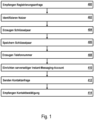
- Figure 1 shows an exemplary registration of a user to use a remote signature service in the course of a method for providing the remote signature service using an instant messaging service.
- a server of the remote signature service receives a registration request to register the user from a computer system of the user via a network.
- the registration request includes a user-side first telephone number of the user.
- the server of the remote signature service generates an asymmetric cryptographic key pair that is uniquely assigned to the registered user.
- the asymmetric cryptographic key pair comprises a private cryptographic key as a signature key for creating the user's digital signatures and a public cryptographic key as a signature verification key for verifying digital signatures created with the signature key.
- the server of the remote signature service stores the generated key pair on the server side.
- the remote signature service server generates a server-side second telephone number uniquely associated with the registered user.
- the remote signature service server sets up a server-side instant messaging account with the instant messaging service using the server-side second telephone number uniquely associated with the user.
- the remote signature service server sends a contact request from the server-side instant messaging account to a user-side instant messaging account using the user-side first telephone number.
- the remote signature service server receives a contact confirmation from the user's instant messaging account as confirmation of successful setup of the remote signature service via the instant messaging service.
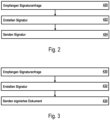
- FIG. 2 shows an exemplary use of a remote signature service using an instant messaging service in the course of a method for providing the remote signature service using the instant messaging service.
- a server of the remote signature service receives a signature request for creating a digital signature for a digital document with the signature key from the user-side instant messaging account via the server-side instant messaging account.
- the server of the remote signature service creates a digital signature for the digital document to be signed using a signature key that is uniquely assigned to the user of the user-side instant messaging account and is stored on the server.
- the server of the remote signature service sends the digital signature to the user-side instant messaging account via the server-side instant messaging account.
- the signature request received in block 420 includes a hash value of the digital document to be signed, which is used in block 422 by the server of the remote signature service to create the digital signature.
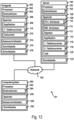
- Figure 3 shows an exemplary use of a remote signature service using an instant messaging service in the course of a method for providing the remote signature service using the instant messaging service.
- a server of the remote signature service receives a signature request for creating a digital signature for a digital document with the signature key from the user-side instant messaging account via the server-side instant messaging account.
- the server of the remote signature service creates a digital signature for the digital document to be signed using a signature key that is uniquely assigned to the user of the user-side instant messaging account and is stored on the server.
- the server of the remote signature service sends the signed digital document with the created digital signature to the user-side instant messaging account via the server-side instant messaging account.
- the signature request received in block 430 includes the digital document to be signed, which is used in block 432 by the server of the remote signature service to create the digital signature.
- the signature request is received by the server of the remote signature service in the form of the digital document to be signed.
- the signature request includes the digital document to be signed in Form of a message text, a text file, an image file, an audio file or a video file.
- the server of the remote signature service calculates a hash value of the digital document to be signed, which is used to create the digital signature.
- Figure 4 shows an exemplary use of a remote signature service using an instant messaging service in the course of a method for providing the remote signature service using the instant messaging service.
- a server of the remote signature service receives a signature request for creating a digital signature for a digital document with the signature key from the user-side instant messaging account via the server-side instant messaging account.
- the signature request includes an indication of a network address via which the digital document to be signed can be read from the server.
- the server of the remote signature service reads the digital document to be signed using the received network address.
- the server of the remote signature service creates a digital signature for the digital document to be signed using a signature key that is uniquely assigned to the user of the user-side instant messaging account and is stored on the server.
- the remote signature service server sends the signed digital document with the created digital signature to the user-side instant messaging account via the server-side instant messaging account.
- a TAN is also required to prove reading authorization in order to read the document to be signed.
- the server of the remote signature service receives the TAN to prove reading authorization in order to read the digital document to be signed together with the network address in block 440 as part of the signature request and uses the received TAN to prove reading authorization when reading the digital document to be signed in block 442.
- FIG. 5 shows an exemplary use of a remote signature service using an instant messaging service in the course of a method for providing the remote signature service using the instant messaging service.
- a server of the remote signature service receives a signature request for creating a digital signature for a digital document with the signature key from the user-side instant messaging account via the server-side instant messaging account.
- a prerequisite for signing the digital document is, for example, receipt of an additional signature confirmation from the user by the server of the remote signature service.
- the server of the remote signature service generates a TAN.
- the server of the remote signature service sends the generated TAN to the user.
- the TAN is an SMS TAN which is sent via an SMS to the user's first telephone number.
- the TAN is a TAN which is sent via an automatically generated voice message to the user's first telephone number.
- the TAN is a TAN which is sent via an email to an email address of the user.
- the server of the remote signature service receives the corresponding TAN as an additional signature confirmation of the user from the user-side instant messaging account via the server-side instant messaging account.
- the server of the remote signature service checks the received TAN. If the received TAN is identical to the sent TAN, the user's signature confirmation is valid.
- the server of the remote signature service creates a digital signature for the digital document to be signed using a signature key that is uniquely assigned to the user of the user-side instant messaging account and is stored on the server.
- the server of the remote signature service sends the digital signature and/or the signed digital document with the created digital signature to the user-side instant messaging account via the server-side instant messaging account.
- Figure 6 shows an exemplary use of a remote signature service using an instant messaging service in the course of a method for providing the remote signature service using the instant messaging service.
- a server of the remote signature service receives a signature request for creating a digital signature for a digital document with the signature key from the user-side instant messaging account via the server-side instant messaging account.
- a prerequisite for signing the digital document is, for example, receipt of an additional signature confirmation from the user by the server of the remote signature service.
- the server of the remote signature service sends a confirmation request as a push message to a confirmation application implemented on a mobile portable device of the user.
- the server of the remote signature service receives an additional signature confirmation from the user in response to the confirmation request from the confirmation application.
- the remote signature service server creates a digital signature for the digital document to be signed using a signature key unique to the user of the user-side instant messaging account, which is stored on the server side.
- the remote signature service server sends the digital signature and/or the signed digital document with the created digital signature to the user-side instant messaging account via the server-side instant messaging account.
- Figure 7 shows an exemplary method for identifying a user during registration of the user to use a remote signature service.
- a server of the remote signature service sends an attribute request to an ID provider server to provide one or more attributes of the user by which the user can be identified.
- the server of the remote signature service receives the requested attributes by which the user can be identified from the ID provider server.
- Figure 8 shows an exemplary method for providing attributes of the user for the purpose of identifying the user in the course of registering the user to use a remote signature service.
- an ID provider server receives an attribute request for providing one or more attributes of the user from a remote signature server.
- the ID provider server sends a read request for reading the one or more requested attributes of the user to an ID token of the user.
- the ID token is provided, for example, as a standalone electronic device which the ID provider server accesses via a computer system of the user. Communication between the ID token and the ID provider server takes place, for example, via an encrypted communication connection between the ID token and the ID provider server.
- the corresponding communication connection is encrypted using end-to-end encryption.
- the ID token is provided in the form of an ID application which is installed on a mobile portable device of the user.
- the ID provider server reads the attributes from the ID token.
- the ID provider server has an authorization certificate with which it can prove its authorization to read the attributes.
- the authorization certificate assigns the ID provider server a public cryptographic key of an asymmetric key pair.
- the ID provider server also has a private cryptographic key of the asymmetric key pair.
- the read request is, for example, signed with the private cryptographic key of the asymmetric key pair.
- the ID token checks the validity of the signature of the read request using the authorization certificate or the public cryptographic key provided by the authorization certificate. Upon successful validity check, the ID token grants the ID provider server read access to the attributes.
- the ID provider server signs the read attributes and sends them to the remote signature service server in response to the attribute request in block 498.
- Figure 9 shows an exemplary method for entering a signature created by a server of the remote signature service into a blockchain.
- the server of the remote signature service generates an entry request to enter the created signature into the blockchain.
- the entry request to enter the created signature is signed by the server of the remote signature service, for example with a signature key of the remote signature service.
- the signature key of the remote signature service is, for example, a private cryptographic key of the remote signature service, which together with a public cryptographic key of the remote signature service forms an asymmetric cryptographic key pair assigned to the remote signature service.
- the public cryptographic key serves, for example, as a signature verification key for verifying signatures that were created with the signature key of the remote signature service.
- the server of the remote signature service sends the entry request with the created digital signature of the digital document to a blockchain server that manages the blockchain or at least part of the blockchain.
- Figure 10 shows an exemplary method for entering a signature created by a server of the remote signature service into a blockchain.
- a blockchain server provides the blockchain or a copy of the blockchain.
- the blockchain server receives an entry request from a server of a remote signature service to enter a created digital signature of a digital document into the blockchain.
- the blockchain server verifies the received entry request using a signature verification key of the server of the remote signature service or the remote signature service.
- the signature verification key of the remote signature service is, for example, a public cryptographic key of the remote signature service, which together with a private cryptographic key of the remote signature service forms an asymmetric cryptographic key pair assigned to the remote signature service.
- the public cryptographic key serves as a signature verification key for verifying signatures that were created with the signature key of the remote signature service.
- the blockchain server Upon successful verification of the signature of the registration request, the blockchain server creates in block 516, an additional block for the blockchain in which the received digital signature of the digital document is entered. In block 518, the blockchain server adds the additional block with the received digital signature of the digital document to the blockchain.
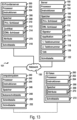
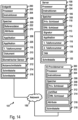
- FIG 11 shows an exemplary server 100 of a remote signature service for providing the remote signature service using an instant messaging service.
- the server 100 includes a processor 102 and a memory 106.
- the processor 102 is configured to execute program instructions 104. Execution of the program instructions 104 by the processor 102 causes the processor 102, for example, to control the server 100 to execute a method for providing the remote signature service using an instant messaging service.
- an instant messaging application 114 of the instant messaging service is stored in the memory 106, which enables the server 100 to control the instant messaging service for providing digital signatures 113 of digital documents.
- the server 100 also includes a communication interface 122 for communication via a network, for example the Internet.
- the server 100 is configured to receive a registration request for registering the user from a computer system of the user via the network during registration of a user to use the remote signature service using the communication interface 122.
- the registration request includes a user-side first telephone number 116 of the user, which the server 100 stores, for example, in the memory 106.
- the server 100 generates an asymmetric key pair that is uniquely assigned to the registered user and which includes a private cryptographic key 110 and a public cryptographic key 112.
- the private cryptographic key 110 is stored, for example, on the server side in a protected storage area 108 of the memory 106.
- the private cryptographic key 110 is protected using an HSM and the protected storage area 108 is provided by an HSM.
- the public cryptographic key 112 is also stored, for example, in the memory 106.
- the private cryptographic key 110 serves as a signature key for creating digital signatures 113 of the user, while the public cryptographic key serves, for example, as a signature verification key for verifying digital signatures 113 created with the signature key 110.
- the server 100 generates a server-side second telephone number 118 that is uniquely assigned to the registered user and is also stored, for example, in the memory 106. Using the instant messaging application 114, the server 100 sets up a server-side instant messaging account with the instant messaging service. To do this, the server 100 uses the server-side second telephone number 118 that is uniquely assigned to the user.
- This second telephone number 118 serves, for example, as an identifier of the corresponding server-side instant messaging account.
- the server 100 sends a contact request from the server-side instant messaging account to a user-side instant messaging account using the user-side first telephone number 116.
- the first telephone number 116 serves, for example, as an identifier of the corresponding user-side instant messaging account.
- the contact request informs the user, for example, of the second telephone number 118 assigned to him, via which he can request individual remote signature services via the instant messaging service.
- the user can confirm the contact request from his user-side instant messaging account by sending a contact confirmation from the user-side instant messaging account to the server-side instant messaging account. For example, the receipt of the contact confirmation serves as confirmation to the server 100 of a successful setup of the remote signature service via the instant messaging service.
- the server 100 receives a signature request for creating a digital signature 113 for a digital document with the signature key 110 via the communication interface 122 with the instant messaging application 114.
- the corresponding signature request is sent from the user-side instant messaging account to the server-side instant messaging account to which the instant messaging application 114 has access.
- the server 100 creates the digital signature 113 for the digital document to be signed using the signature key 110 and sends the digital signature 113 using the instant messaging application 114 via the server-side instant messaging account to the user-side instant messaging account for further use by the user.
- the server 100 receives a hash value of the file to be signed with the signature request, which it uses to create the signature 113.
- the digital document to be signed is generally a digital data set.
- the digital document to be signed is a message text that includes the signature request.
- the digital document to be signed is a file, such as a text, audio, image or video file.
- the server 100 receives the corresponding digital document to be signed with the signature request.
- the server 100 receives a network address with the signature request, via which it can read the digital document to be signed.
- the server 100 can receive a TAN in addition to the network address to prove a read authorization to read the digital document to be signed.
- the server 100 sends the created digital signature 113 together with the digital document as a signed digital document using the instant messaging application 114 via the server-side instant messaging account to the user-side instant messaging account for further use by the user.
- the server 100 can generate a TAN 120 upon receipt of the signature request and send it to the user in order to request additional signature confirmation from the user.
- the user receives the TAN and sends it from his user-side instant messaging account to the server-side instant messaging account.
- the server 100 can compare the TAN received in this way via the server-side instant messaging account with the instant messaging application 114 with the sent TAN 120, which is stored in the memory 106. If both match, the additional signature confirmation in the form of the received TAN is successful.
- the TAN is, for example, an SMS-TAN, which is sent by SMS to the user's first telephone number 116.
- the server 100 includes, for example, an additional communication interface for communication via a telecommunications network, such as a cellular mobile network.
- a telecommunications network such as a cellular mobile network.
- the TAN is sent to the user's first telephone number 116 by means of an automatically generated voice message.
- the server 100 comprises, for example, an additional communication interface for communication via a telecommunications network, such as a cellular mobile network.
- the TAN is sent by means of an email to an email address of the user.
- an additional confirmation of the signature request is made by the user using a confirmation application implemented on a mobile portable terminal of the user.
- the server 100 sends a confirmation request as a push message to the confirmation application implemented on the mobile portable terminal of the user.
- the user can then use the confirmation application send an additional signature confirmation to the server 100 in response to the confirmation request.
- Figure 12 shows an exemplary system 101 for providing a remote signature service using an instant messaging service.
- the system 101 comprises a server 100 of the remote signature service, which, for example, corresponds to the server 100 of Figure 11
- the system 101 comprises, for example, a computer system 240 for registering the user with the remote signature service.
- the system 101 comprises, for example, a mobile portable terminal 200 for using the remote signature service provided by the server 100 using an instant messaging service.
- the registration of the user can also be carried out using the mobile portable terminal 200 instead of the computer system 240.
- the computer system 240 comprises a processor 242, a memory 246 and a communication interface 250 for communicating with the server 100 of the remote signature service via the network 150, for example the Internet.
- the computer system 240 also comprises a user interface 248 via which the user can control the computer system 240.
- the processor 242 is configured, for example, to execute program instructions 244 which are stored, for example, in the memory 246 of the computer system 240. Execution of the program instructions 244 by the processor 242 causes the processor 242, for example, to control the computer system 240 to register the user with the remote signature service. To do this, the computer system 240 sends, for example, a registration request to register the user via the network 150 to the server 100 of the remote signature service.
- the registration request includes, for example, the user's user-side telephone number 116.
- This user-side telephone number 116 of the user is, for example, a mobile phone number of the mobile portable terminal 200, which is, for example, a mobile portable telecommunications terminal.
- the mobile portable terminal 200 comprises, for example, a processor 202, a memory 206 and a first communication interface 216 for communicating with the server 100 of the remote signature service via the network 150, for example the Internet.
- the mobile portable terminal 200 is a mobile portable telecommunications terminal which is configured to communicate via a cellular telecommunications network, for example a mobile radio network.
- the mobile portable terminal 200 comprises, for example, a second communication interface 208 for communication via the cellular telecommunications network, for example a mobile radio network.
- the mobile portable terminal 200 comprises, for example, the telephone number 116, for example a mobile radio number, under which the mobile portable terminal 200 can be reached via the cellular telecommunications network, for example a mobile radio network.
- the mobile portable terminal 200 sends the digital document 210 to be signed from the user-side instant messaging account to the server-side instant messaging account, for example using the instant messaging application 208.
- the mobile portable terminal 200 calculates a hash value of the digital document 210 to be signed using the instant messaging application 208 from the user-side instant messaging account to the server-side instant messaging account to create the digital signature 113.
- the mobile portable terminal 200 sends a network address via which the digital document to be signed can be read using the instant messaging application 208 from the user-side instant messaging account to the server-side instant messaging account.
- Figure 13 shows a system 101 which is configured to identify the user during registration for the use of the remote signature service using an instant messaging service.
- the system comprises a server 100 of the remote signature service, which, for example, is assigned to the server 100 from Figure 11
- the system 101 comprises, for example, a computer system 240, which corresponds to the computer system 240 out Figure 12
- the computer system 240 serves as a terminal for reading one or more attributes 270 from an ID token 260 for identifying the user.
- the computer system 252 comprises, for example, an additional communication interface 252 for establishing a contactless communication connection with the ID token 260, for example via NFC.
- the mobile portable terminal 200 could also consist of Figure 12 as a terminal for reading the one or more attributes 270 from the ID token 260 to identify the user.
- the mobile portable terminal 200 would have to include, for example, an additional communication interface 252 for establishing a contactless communication connection with the ID token 260, for example via NFC.
- the system 101 includes an ID provider server 300 of an ID provider server for reading the one or more attributes 270 from the ID token 260.
- the ID provider server 300 comprises a processor 302, a memory 306 and a communication interface 318 for communicating with the computer system 240 for accessing the ID token 260 and the server 100 of the remote signature service via the network 150, for example the Internet.
- the server 100 of the remote signature service sends an attribute request to the ID provider server 300 in the course of registering the user for the remote signature service.
- the processor 302 of the ID provider server 300 executes program instructions 304 which are stored, for example, in the memory 306 of the ID provider server 300.
- the execution of the program instructions 304 by the processor 302 of the ID provider server 300 causes the processor 302, for example, to control the ID provider server 300 to provide one or more attributes 270 stored in the ID token 260.
- the signature key 310 is protected using an HSM and the protected storage area 308 is protected by a HSM provided.
- the ID provider server 300 further comprises, for example, an authorization certificate 312 with which the ID provider server 300 can prove its authorization to read the attributes 270.
- the authorization certificate 312 comprises a public cryptographic key 314 of the asymmetric key pair of the ID provider service as a signature verification key for verifying digital signatures created with the signature key 310.
- the ID token 260 comprises a processor 262, a memory 266 and a communication interface 272 for contactless communication with the computer system 240, for example via NFC. Attributes of the user are stored in a protected memory area 268 of the memory 266.
- the processor 262 of the ID token 260 executes program instructions 264, which are stored, for example, in the memory 266 of the ID token 260.
- the execution of the program instructions 264 by the processor 262 of the ID token 260 causes the processor 262, for example, to control the ID token 260 to provide one or more of the attributes 270 stored in the ID token 260.
- the ID token 260 checks, for example, the signature of the read request, for example using the authorization certificate 312. Upon successful verification of the life question, the ID token 260 grants the ID provider server 300, for example, read access to the attributes 270.
- successful authentication of the user with the ID token 260 is also necessary, for example using the user interface 248 of the computer system 240.
- the authentication of the user includes, for example, entering a PIN and/or recording the user's biometric authentication data.
- the ID provider server 300 reads the attributes 270 from the ID token 260, signs the read attributes 270 and forwards them to the server 100 of the remote signature service for identification of the user. For example, the ID provider server 300 signs the read attributes 270 with the signature key 310. For example, the ID provider server 300 includes a further signature key for signing the read attributes 270, which is also stored in the protected memory area 308 of the memory 306, for example.
- Figure 14 shows a system 101 which is configured to inform the user during registration for the use of the remote signature service using an instant messaging service
- the system 101 comprises a server 100 of the remote signature service, which, for example, is assigned to the server 100 of Figure 11
- the system 101 comprises, for example, an ID provider server 300, which, for example, corresponds to the ID provider server 300 from Figure 13
- the system 101 comprises a mobile portable terminal 200, which corresponds to the mobile portable terminal 200 of Figure 12
- the mobile portable terminal 200 additionally comprises an ID token, which is provided in the form of an ID application 226 installed on the mobile portable terminal 200.
- the user's attributes 270 are in this case stored, for example, in a protected memory area 220 of the memory 206 of the mobile portable terminal 200.
- the ID provider server 300 sends the read request to the mobile portable terminal 200.
- the execution of the program instructions 204 by the processor 202 of the mobile portable terminal 200 causes the processor 202, for example, to control the mobile portable terminal 200 using the ID application in addition to providing one or more of the attributes 270 stored in the mobile portable terminal 200.
- the mobile portable terminal 200 verifies the signature of the read request, for example using the authorization certificate 312. Upon successful verification of the life question, the mobile portable terminal 200 grants the ID provider server 300, for example, read access to the attributes 270.
- successful authentication of the user to the mobile portable terminal 200 is also necessary, for example using the user interface 212 and/or the biometric sensor 228 of the mobile portable terminal 200.
- Authentication of the user includes, for example, entering a PIN and/or recording the user's biometric authentication data.
- Successful authentication of the user requires, for example, a match or sufficient match between the recorded biometric authentication data and the user's stored biometric reference data 222.
- the user's biometric reference data 222 is stored, for example, in a protected memory area 220 of the memory 206 of the mobile portable terminal 200.
- the biometric sensor 228 is, for example, a sensor for capturing DNA data, fingerprint data, body geometry data/anthropometry data such as face, hand, ear geometry data, hand line structure data, vein structure data such as hand vein structure data, iris data, retina data, voice recognition data, Nail bed patterns, tooth pattern data and/or behavior-based data, such as movement pattern data, gait patterns, arm, hand, finger movement patterns, lip movement patterns.
- the biometric sensor 228 comprises, for example, an optical sensor component for detecting electromagnetic radiation in the visible and/or beyond the visible spectrum, an acoustic sensor component for detecting acoustic signals and/or a motion sensor for detecting movements of the terminal when the user carries it with him and/or uses it.
- the biometric authentication data may, for example, include one or more of the following data: DNA data, fingerprint data, body geometry data/anthropometry data such as face, hand, ear geometry data, palm line structure data, vein structure data such as palm vein structure data, iris data, retina data, voice recognition data, nail bed pattern, tooth pattern data, and/or behavior-based data such as movement pattern data, gait pattern, arm, hand, finger movement pattern, lip movement pattern.
- the ID provider server 300 reads the attributes 270 from the mobile portable terminal 200, signs the read attributes 270 and forwards them to the server 100 of the remote signature service for identification of the user. For example, the ID provider server 300 signs the read attributes 270 with the signature key 310. For example, the ID provider server 300 includes a further signature key for signing the read attributes 270, which is also stored, for example, in the protected memory area 308 of the memory 306.
- FIG 15 shows a system 101 which is configured to enter a digital signature 113 created by means of a remote signature service using an instant messaging service into a blockchain 328.
- the system 101 comprises a server 100 of the remote signature service, which, for example, is assigned to the server 100 from Figure 11 Furthermore, the system 101 comprises a mobile portable terminal 200, which corresponds to the mobile portable terminal 200 of Figure 12
- the server 100 of the remote signature service After creating the digital signature 113, the server 100 of the remote signature service generates an entry request for entering the created signature 113 into the blockchain 328, which is managed by the blockchain server 100.
- the entry request for entering the created signature 113 is signed by the server 100 of the remote signature service, for example with a signature key of the remote signature service.
- the signature key of the remote signature service is, for example, a private cryptographic key of the remote signature service, which together with a public cryptographic key of the remote signature service forms an asymmetric cryptographic key pair assigned to the remote signature service.
- the public cryptographic key serves, for example, as a signature verification key for verifying signatures that were created with the signature key of the remote signature service.
- the server 100 of the remote signature service sends the registration request with the created digital signature 113 of the digital document 210 to a blockchain server 320, which manages the blockchain 328 or at least part of the blockchain 328.
- the blockchain server 320 comprises a processor 322, a memory 326 and a communication interface 330 for communicating with the server 100 of the remote signature service via the network 150, for example the Internet.
- a copy of the blockchain 328 is stored in the memory 326 of the blockchain server 320.
- the processor 322 of the blockchain server 320 executes program instructions 324, which are stored, for example, in the memory 326 of the blockchain server 320.
- the execution of the program instructions 324 by the processor 322 of the blockchain server 320 causes the processor 322, for example, to control the blockchain server 320 to enter the digital signature 113 created for the user by the server 100 of the remote signature service into the blockchain 328.
- the blockchain server 320 receives the entry request from a server 100 of a remote signature service for entering a created digital signature 113 of a digital document 210 into the blockchain 328.
- the blockchain server 320 verifies the received entry request using a signature verification key of the server 100 of the remote signature service or the remote signature service.
- the signature verification key of the remote signature service is, for example, a public cryptographic key of the remote signature service, which together with a private cryptographic key of the remote signature service forms an asymmetric cryptographic key pair assigned to the remote signature service.
- the public cryptographic key serves as a signature verification key for verifying signatures that were created with the signature key of the remote signature service.
- the blockchain server 320 Upon successful verification of the signature of the entry request, the blockchain server 320 creates an additional block for the blockchain 328, in which the received digital signature 113 of the digital document 210 is entered. The blockchain server 320 adds the additional block with the received digital signature 113 of the digital document 210 to the blockchain 328.
Landscapes
- Engineering & Computer Science (AREA)
- Computer Security & Cryptography (AREA)
- Signal Processing (AREA)
- Computer Networks & Wireless Communication (AREA)
- Computer Hardware Design (AREA)
- General Engineering & Computer Science (AREA)
- Computing Systems (AREA)
- Theoretical Computer Science (AREA)
- Health & Medical Sciences (AREA)
- Bioethics (AREA)
- General Health & Medical Sciences (AREA)
- Software Systems (AREA)
- Physics & Mathematics (AREA)
- General Physics & Mathematics (AREA)
- Telephonic Communication Services (AREA)
Applications Claiming Priority (1)
| Application Number | Priority Date | Filing Date | Title |
|---|---|---|---|
| DE102023113422.1A DE102023113422A1 (de) | 2023-05-23 | 2023-05-23 | Fernsignaturdienst unter Verwendung eines Instant-Messaging-Dienstes |
Publications (2)
| Publication Number | Publication Date |
|---|---|
| EP4468652A1 true EP4468652A1 (fr) | 2024-11-27 |
| EP4468652B1 EP4468652B1 (fr) | 2026-02-04 |
Family
ID=91193483
Family Applications (1)
| Application Number | Title | Priority Date | Filing Date |
|---|---|---|---|
| EP24177048.6A Active EP4468652B1 (fr) | 2023-05-23 | 2024-05-21 | Service de signature à distance utilisant un service de messagerie instantanée |
Country Status (2)
| Country | Link |
|---|---|
| EP (1) | EP4468652B1 (fr) |
| DE (1) | DE102023113422A1 (fr) |
Citations (3)
| Publication number | Priority date | Publication date | Assignee | Title |
|---|---|---|---|---|
| US20040210772A1 (en) * | 2002-11-20 | 2004-10-21 | Jeff Hooker | Method and apparatus for secure instant messaging utilizing server-supervised publication |
| US20130036302A1 (en) * | 2003-02-20 | 2013-02-07 | Marathon Solutions | Secure instant messaging system |
| DE102015208098B4 (de) * | 2015-04-30 | 2022-07-21 | Bundesdruckerei Gmbh | Verfahren zur Erzeugung einer elektronischen Signatur |
Family Cites Families (3)
| Publication number | Priority date | Publication date | Assignee | Title |
|---|---|---|---|---|
| DE102015206623A1 (de) * | 2015-04-14 | 2016-10-20 | IDnow GmbH | Digitale signatur mit fern-identifizierung |
| TW202103472A (zh) * | 2019-07-12 | 2021-01-16 | 謝清茹 | 線上簽約系統與方法 |
| EP4330892A1 (fr) * | 2021-04-29 | 2024-03-06 | Notarize, Inc. | Systèmes et procédés destinés à faciliter des interactions d'observateurs avec un système d'interaction en ligne |
-
2023
- 2023-05-23 DE DE102023113422.1A patent/DE102023113422A1/de active Pending
-
2024
- 2024-05-21 EP EP24177048.6A patent/EP4468652B1/fr active Active
Patent Citations (3)
| Publication number | Priority date | Publication date | Assignee | Title |
|---|---|---|---|---|
| US20040210772A1 (en) * | 2002-11-20 | 2004-10-21 | Jeff Hooker | Method and apparatus for secure instant messaging utilizing server-supervised publication |
| US20130036302A1 (en) * | 2003-02-20 | 2013-02-07 | Marathon Solutions | Secure instant messaging system |
| DE102015208098B4 (de) * | 2015-04-30 | 2022-07-21 | Bundesdruckerei Gmbh | Verfahren zur Erzeugung einer elektronischen Signatur |
Also Published As
| Publication number | Publication date |
|---|---|
| DE102023113422A1 (de) | 2024-12-12 |
| EP4468652B1 (fr) | 2026-02-04 |
Similar Documents
| Publication | Publication Date | Title |
|---|---|---|
| EP4092958B1 (fr) | Émission d'une identification numérique vérifiable | |
| EP2962439B1 (fr) | Lecture d'un attribut enregistré dans un jeton id | |
| EP3699791B1 (fr) | Contrôle d'accès comprenant un appareil radio mobile | |
| EP4327510B1 (fr) | Création d'une identité électronique sécurisée par cryptographie | |
| EP4128695B1 (fr) | Mécanisme d'authentification personnalisé et pour un serveur spécifique | |
| EP4327511B1 (fr) | Personnalisation d'un applet de sécurité sur un terminal mobile | |
| EP4295605B1 (fr) | Authentification d'utilisateur à l'aide de deux éléments de sécurité indépendants | |
| EP3319003B1 (fr) | Procédé et système d'authentification d'un appareil de télécommunication mobile sur un système informatique de service et appareil de télécommunication mobile | |
| EP4295257B1 (fr) | Extraction d'attributs d'identité au moyen d'un élément de sécurité distant | |
| EP3882796B1 (fr) | Authentification de l'utilisateur à l'aide de deux éléments de sécurité indépendants | |
| DE102015208098B4 (de) | Verfahren zur Erzeugung einer elektronischen Signatur | |
| EP4295533B1 (fr) | Authentification au moyen d'une pluralité d'identités électroniques | |
| EP4295536B1 (fr) | Lecture d'attributs d'identité chiffrés mis en mémoire localement | |
| EP4468652B1 (fr) | Service de signature à distance utilisant un service de messagerie instantanée | |
| EP4016339B1 (fr) | Fourniture d'une appliquette de sécurité à un terminal mobile | |
| DE102021103993A1 (de) | Initialisieren applikationsspezifischer kryptographischer Sicherheitsfunktionen | |
| DE102021110144A1 (de) | Provisionieren eines Sicherheitsapplets auf einem mobilen Endgerät | |
| EP4657287A1 (fr) | Fourniture d'une preuve d'id numérique | |
| WO2024161018A1 (fr) | Procédé de génération d'un jeton d'approvisionnement au moyen d'un terminal |
Legal Events
| Date | Code | Title | Description |
|---|---|---|---|
| PUAI | Public reference made under article 153(3) epc to a published international application that has entered the european phase |
Free format text: ORIGINAL CODE: 0009012 |
|
| STAA | Information on the status of an ep patent application or granted ep patent |
Free format text: STATUS: THE APPLICATION HAS BEEN PUBLISHED |
|
| AK | Designated contracting states |
Kind code of ref document: A1 Designated state(s): AL AT BE BG CH CY CZ DE DK EE ES FI FR GB GR HR HU IE IS IT LI LT LU LV MC ME MK MT NL NO PL PT RO RS SE SI SK SM TR |
|
| STAA | Information on the status of an ep patent application or granted ep patent |
Free format text: STATUS: REQUEST FOR EXAMINATION WAS MADE |
|
| 17P | Request for examination filed |
Effective date: 20250527 |
|
| GRAP | Despatch of communication of intention to grant a patent |
Free format text: ORIGINAL CODE: EPIDOSNIGR1 |
|
| STAA | Information on the status of an ep patent application or granted ep patent |
Free format text: STATUS: GRANT OF PATENT IS INTENDED |
|
| RAP3 | Party data changed (applicant data changed or rights of an application transferred) |
Owner name: BUNDESDRUCKEREI GMBH |
|
| INTG | Intention to grant announced |
Effective date: 20251105 |
|
| GRAS | Grant fee paid |
Free format text: ORIGINAL CODE: EPIDOSNIGR3 |
|
| GRAA | (expected) grant |
Free format text: ORIGINAL CODE: 0009210 |
|
| STAA | Information on the status of an ep patent application or granted ep patent |
Free format text: STATUS: THE PATENT HAS BEEN GRANTED |
|
| AK | Designated contracting states |
Kind code of ref document: B1 Designated state(s): AL AT BE BG CH CY CZ DE DK EE ES FI FR GB GR HR HU IE IS IT LI LT LU LV MC ME MK MT NL NO PL PT RO RS SE SI SK SM TR |
|
| REG | Reference to a national code |
Ref country code: CH Ref legal event code: F10 Free format text: ST27 STATUS EVENT CODE: U-0-0-F10-F00 (AS PROVIDED BY THE NATIONAL OFFICE) Effective date: 20260204 Ref country code: GB Ref legal event code: FG4D Free format text: NOT ENGLISH |
|
| REG | Reference to a national code |
Ref country code: IE Ref legal event code: FG4D Free format text: LANGUAGE OF EP DOCUMENT: GERMAN |
|
| REG | Reference to a national code |
Ref country code: DE Ref legal event code: R096 Ref document number: 502024000703 Country of ref document: DE |
|
| P01 | Opt-out of the competence of the unified patent court (upc) registered |
Free format text: CASE NUMBER: UPC_APP_0004906_4468652/2026 Effective date: 20260211 |