EP4468724A1 - Bildverarbeitungsverfahren und -vorrichtung, endgerätevorrichtung und speichermedium - Google Patents
Bildverarbeitungsverfahren und -vorrichtung, endgerätevorrichtung und speichermedium Download PDFInfo
- Publication number
- EP4468724A1 EP4468724A1 EP23742852.9A EP23742852A EP4468724A1 EP 4468724 A1 EP4468724 A1 EP 4468724A1 EP 23742852 A EP23742852 A EP 23742852A EP 4468724 A1 EP4468724 A1 EP 4468724A1
- Authority
- EP
- European Patent Office
- Prior art keywords
- image
- vehicle
- image processing
- feature point
- camera
- Prior art date
- Legal status (The legal status is an assumption and is not a legal conclusion. Google has not performed a legal analysis and makes no representation as to the accuracy of the status listed.)
- Pending
Links
Images


Classifications
-
- B—PERFORMING OPERATIONS; TRANSPORTING
- B60—VEHICLES IN GENERAL
- B60R—VEHICLES, VEHICLE FITTINGS, OR VEHICLE PARTS, NOT OTHERWISE PROVIDED FOR
- B60R1/00—Optical viewing arrangements; Real-time viewing arrangements for drivers or passengers using optical image capturing systems, e.g. cameras or video systems specially adapted for use in or on vehicles
- B60R1/20—Real-time viewing arrangements for drivers or passengers using optical image capturing systems, e.g. cameras or video systems specially adapted for use in or on vehicles
-
- B—PERFORMING OPERATIONS; TRANSPORTING
- B60—VEHICLES IN GENERAL
- B60R—VEHICLES, VEHICLE FITTINGS, OR VEHICLE PARTS, NOT OTHERWISE PROVIDED FOR
- B60R1/00—Optical viewing arrangements; Real-time viewing arrangements for drivers or passengers using optical image capturing systems, e.g. cameras or video systems specially adapted for use in or on vehicles
-
- G—PHYSICS
- G06—COMPUTING OR CALCULATING; COUNTING
- G06T—IMAGE DATA PROCESSING OR GENERATION, IN GENERAL
- G06T5/00—Image enhancement or restoration
- G06T5/60—Image enhancement or restoration using machine learning, e.g. neural networks
-
- H—ELECTRICITY
- H04—ELECTRIC COMMUNICATION TECHNIQUE
- H04N—PICTORIAL COMMUNICATION, e.g. TELEVISION
- H04N23/00—Cameras or camera modules comprising electronic image sensors; Control thereof
- H04N23/60—Control of cameras or camera modules
-
- H—ELECTRICITY
- H04—ELECTRIC COMMUNICATION TECHNIQUE
- H04N—PICTORIAL COMMUNICATION, e.g. TELEVISION
- H04N7/00—Television systems
- H04N7/18—Closed-circuit television [CCTV] systems, i.e. systems in which the video signal is not broadcast
- H04N7/181—Closed-circuit television [CCTV] systems, i.e. systems in which the video signal is not broadcast for receiving images from a plurality of remote sources
-
- B—PERFORMING OPERATIONS; TRANSPORTING
- B60—VEHICLES IN GENERAL
- B60R—VEHICLES, VEHICLE FITTINGS, OR VEHICLE PARTS, NOT OTHERWISE PROVIDED FOR
- B60R2300/00—Details of viewing arrangements using cameras and displays, specially adapted for use in a vehicle
- B60R2300/10—Details of viewing arrangements using cameras and displays, specially adapted for use in a vehicle characterised by the type of camera system used
- B60R2300/105—Details of viewing arrangements using cameras and displays, specially adapted for use in a vehicle characterised by the type of camera system used using multiple cameras
-
- B—PERFORMING OPERATIONS; TRANSPORTING
- B60—VEHICLES IN GENERAL
- B60R—VEHICLES, VEHICLE FITTINGS, OR VEHICLE PARTS, NOT OTHERWISE PROVIDED FOR
- B60R2300/00—Details of viewing arrangements using cameras and displays, specially adapted for use in a vehicle
- B60R2300/30—Details of viewing arrangements using cameras and displays, specially adapted for use in a vehicle characterised by the type of image processing
-
- B—PERFORMING OPERATIONS; TRANSPORTING
- B60—VEHICLES IN GENERAL
- B60R—VEHICLES, VEHICLE FITTINGS, OR VEHICLE PARTS, NOT OTHERWISE PROVIDED FOR
- B60R2300/00—Details of viewing arrangements using cameras and displays, specially adapted for use in a vehicle
- B60R2300/80—Details of viewing arrangements using cameras and displays, specially adapted for use in a vehicle characterised by the intended use of the viewing arrangement
- B60R2300/8006—Details of viewing arrangements using cameras and displays, specially adapted for use in a vehicle characterised by the intended use of the viewing arrangement for monitoring and displaying scenes of vehicle interior, e.g. for monitoring passengers or cargo
-
- G—PHYSICS
- G06—COMPUTING OR CALCULATING; COUNTING
- G06T—IMAGE DATA PROCESSING OR GENERATION, IN GENERAL
- G06T2207/00—Indexing scheme for image analysis or image enhancement
- G06T2207/20—Special algorithmic details
- G06T2207/20081—Training; Learning
-
- G—PHYSICS
- G06—COMPUTING OR CALCULATING; COUNTING
- G06T—IMAGE DATA PROCESSING OR GENERATION, IN GENERAL
- G06T2207/00—Indexing scheme for image analysis or image enhancement
- G06T2207/20—Special algorithmic details
- G06T2207/20084—Artificial neural networks [ANN]
-
- H—ELECTRICITY
- H04—ELECTRIC COMMUNICATION TECHNIQUE
- H04N—PICTORIAL COMMUNICATION, e.g. TELEVISION
- H04N23/00—Cameras or camera modules comprising electronic image sensors; Control thereof
- H04N23/90—Arrangement of cameras or camera modules, e.g. multiple cameras in TV studios or sports stadiums
Definitions
- the present application relates to the field of image processing technology, specifically to an image processing method and a device, a terminal device, and a storage medium.
- vehicle-mounted cameras are primarily used for reversing assistance, offering limited functionality. Even if vehicles are provided with cameras for user entertainment, however, the intelligence level is relatively low and cannot meet the shooting needs of users.
- One objective of the present application is to provide an image processing method and device, a terminal device, and a storage medium that enhance the functionality and intelligence level of in-vehicle cameras.
- an image processing method which includes:
- an image processing device which includes:
- a terminal device which includes: a memory, a processor, and a computer program stored in the memory and capable of running on the processor which, when executed by the processor, cause the processor to perform the image processing method described in the first aspect.
- a computer-readable storage medium storing a computer program which, when executed by a processor, cause the processor to perform the image processing method described in the first aspect.
- a computer program product which, when executed on a terminal device, causes the terminal device to perform the image processing method described in the first aspect.
- the first aspect of the present application has the following beneficial effects: the vehicle target information and the first image set shot by at least two camera devices inside the vehicle are first obtained, and then the first image set is processed based on the vehicle target information to obtain the second image, and the display device inside the vehicle is controlled to display the second image, the present application enriches the functionality of in-vehicle cameras and improves the intelligence level. Unlike vehicles equipped with a single camera, the present application enhances functionality by positioning the plurality of camera devices at different locations inside the vehicle.
- the present application provides an image processing method that utilizes at least two camera devices in the vehicle, satisfying both driver information collection and non-driver photography needs, thereby the automation level of vehicles is improved.
- FIG. 1 illustrates a schematic diagram of an application scenario for an image processing method provided in one embodiment of the present application.
- the method can be used to shoot images inside the vehicle.
- at least two camera devices 20 are arranged inside the vehicle, with at least two camera devices 20 positioned at different locations within the vehicle.
- the terminal device 10 controls the at least two camera devices 20 to shoot the first image.
- the terminal device 10 is configured to obtain the current speed information collected by the vehicle speed sensor of the vehicle, the positioning information collected by the positioning device of the vehicle, and the environmental information collected by the environment collection device of the vehicle.
- the environment collection device may include light sensors, temperature sensors, humidity sensors, etc.
- the terminal device 10 is also configured to control the display device 30 inside the vehicle to display the second image obtained after processing the first image by the terminal device 10.
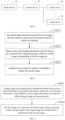
- FIG. 2 shows the flowchart of the image processing method provided in the present application. As shown in FIG.2 , the detailed description of the method is as follows: In a step S101: the vehicle target information and a first set of images shot by at least two camera devices located inside the vehicle are obtained.
- the images shot by each camera device in the vehicle are referred to as the first image
- the at least two first images shot by the at least two camera devices are referred to as the first image set.
- the vehicle target information can include one or more of current speed information of the vehicle, location information of the vehicle, or the environmental information where the vehicle is located. Additionally, it may include other information characterizing vehicle attributes, such as the vehicle ignition status, remaining battery power of the vehicle, and fuel level, etc.
- at least two camera devices are arranged at different positions inside the vehicle. The positions of the camera devices can be moved freely. Since at least two camera devices are positioned at different locations inside the vehicle, each first image is an image from different angles within the vehicle. It should be noted that in the embodiment, the positions of the plurality of camera devices are not limited.
- two camera devices can be positioned adjacent to each other, both pointing towards the rear seats, or two cameras can be arranged with overlapping shooting areas to shoot the rear seat images as fully as possible.
- the embodiment does not restrict whether the shooting area of the camera is inside or outside the vehicle, nor does it restrict the installation method of the cameras, whether fixed inside the vehicle or adjustable based on actual shooting needs.
- the camera devices can include RGB cameras, which can shoot color images.
- the cameras can use lenses with resolutions higher than 10 megapixels and be encased in packaging material of PVC materials.
- the camera devices can be arranged on the dashboard inside the vehicle, interior walls of the vehicle, etc.
- the first image set can consist of images shot simultaneously by at least two camera devices, or images shot at different times by at least two camera devices.
- the camera devices can be placed inside a camera storage box.
- the terminal device can control the opening of the camera storage box to activate the camera devices and control the closing of the camera storage box to deactivate the camera devices.
- the first image set is performed by image processing to obtain a second image corresponding to the first image set.
- the image processing includes at least one of denoising, color correction, clarity enhancement, and High Dynamic Range Imaging (HDR).
- HDR High Dynamic Range Imaging
- the embodiment provides a specific implementation method for performing image processing on the first image set based on the vehicle target information to obtain the second image corresponding to the first image set, as follows:
- the embodiment further provides a target image processing model adaptation scheme, different image processing models are arranged for different vehicle target information, to determine the chip with adapted computing power based on the vehicle target information, thereby meeting the image processing requirements at a lower cost.
- the terminal device can pre-construct a model library for storing a plurality of target image processing models, each corresponding to a preset speed range. Therefore, the terminal device can search the pre-constructed model library for the target image processing model matching the target movement speed of the camera during shooting.
- the preset speed range can be set as actual needed, without limitation here.
- the preset speed range can be set to: (0,10), [10,30], (30,40], (40,60], (60,80], (80,100], (100,120], and (120,+ ⁇ ), with any speed in these ranges measured in km/h.
- the terminal device can determine the target speed range based on the target movement speed, and then find the target image processing model corresponding to the image to be processed from the pre-constructed model library based on the target speed range.
- the terminal device constructs the model library through the following steps:
- the terminal device can pre-abtain a plurality of images taken by the camera at different movement speeds and classify these images based on the plurality of preset speed ranges and the movement speed of each image during shooting, to obtain original sample images corresponding to each of the plurality of preset speed ranges.
- the terminal device after the terminal device obtains the original sample images corresponding to each of the plurality of preset speed ranges, to improve the success rate of subsequent image deblurring for the image to be processed, for each of the plurality of preset speed ranges, the terminal device only uses the original sample images corresponding to each of the plurality of preset speed ranges as the training set to train the preset original target image processing model, thereby the trained target image processing model corresponding to the preset speed range is obtained.
- the preset original target image processing model can be a pre-constructed first deep learning model.
- the terminal device can construct the model library using the target image processing models corresponding to each of the plurality of preset speed ranges.
- the terminal device can input the original sample images corresponding to the preset speed ranges into a preset original image deblurring model for processing to obtain pre-processed sample images.
- the original image deblurring model can be a pre-constructed first deep learning model, such as a DeblurGAN model.
- the terminal device can use edge detection algorithms to process the original sample images and the pre-processed sample images, respectively, so as to obtain a first operator corresponding to the original sample image and a second operator corresponding to the pre-processed sample image.
- the edge detection algorithms include but are not limited to Sobel edge detection algorithm, Canny edge detection algorithm, or Laplacian edge detection algorithm.
- the terminal device can use the loss function as a backpropagation error to update the network weights in the original image deblurring model, i.e., to optimize the parameters of the original image deblurring model based on the loss function, thereby the image deblurring model corresponding to the preset speed range is obtained.
- the embodiment provides an image deblurring method, when training the original image deblurring model corresponding to each preset speed range, the original sample images corresponding to each preset speed range are input into the preset original image deblurring model for processing to obtain pre-processed sample images. Then, edge detection algorithms are used to process the pre-processed sample images and the original sample images, respectively, to obtain the first operator corresponding to the original sample image and the second operator corresponding to the pre-processed sample image.
- the loss function is obtained and used as a backpropagation error to optimize the parameters of the original image deblurring model, to achieve the purpose of strengthening the edge part in the original sample image by the original deblurring model,, thereby obtaining the trained image deblurring model.
- the resulting image deblurring model can provide higher image clarity and improve the quality of the deblurred images.
- the vehicle target information can also include positioning information and environmental information.
- the embodiment can set different positioning information corresponding to different image processing models, and can also set different environmental information corresponding to different image processing models.
- a combination of multiple target information can correspond to different image processing models.
- different locations such as underground parking lots, tunnels, and road surfaces can correspond to different image processing models based on the positioning information.
- Different environmental information such as good lighting, poor lighting, rainy days, and sunny days can also correspond to different image processing models.
- a display device inside the vehicle is controlled to display the second image.
- the display device can include a display screen. Displaying the second image on the display device allows the user to view the multi-angle images in a timely manner.
- the second image can be one or more. After displaying each second image on the display device, the user can select the desired image based on the second images.
- the second image selected by a user can be sent to a device of the user via Bluetooth or a local area network within the vehicle.
- the device of the user can include a mobile phone, tablet, etc. Additionally, the terminal device can also send the second image to cloud storage through the gateway inside the vehicle.
- the second image is displayed on the display device, if a first operation on the beautification control is detected, the second image is processed according to the processing mode corresponding to the beautification control to obtain a processed third image.
- the processing modes can include beautification processing, filter addition processing, sticker addition processing, matting processing, etc.
- the present application obtaining vehicle target information and the first image shot by at least two imaging devices inside the vehicle, compared to the technology with only one imaging device installed on the vehicle, the present application sets a plurality of imaging devices at different positions inside the vehicle, which can meet needs of the user for multi-angle shooting, the functions of in-vehicle cameras are enriched, and the level of intelligence level is improved; the present application processes the first image based on the vehicle target information to obtain the second image, which can improve the image effect of the first image collected by the imaging device. Compared to the existing technology where the first image collected by the imaging device is directly displayed, the present application can obtain images with better effects; therefore, the present application can meet needs of the user for shooting.
- the method can further include: In a step S201, the first images in the first image set is screened to obtain a third image.
- the third image is an image in the first image that includes human body information. After the third image is obtained, the third image can be input into the trained target image processing model, and the output of the target image processing model is determined to be the second image.
- the human body information can include the face information and human body information of the user.
- the face information can be a side face or a frontal face.
- screening the first image can include: inputting the first image into a neural network model, recognizing the first image to determine whether the human body information exists the first image. If there is human body information in the first image, the first image is used as the third image; if there is no human body information in the first image, the first image is removed.
- the images with human body information are screened, which can meet the entertainment needs and photo-taking needs of the user.
- the method can further include: S301, if there is human body information of the same user in at least two second images, the human body information of the same user are merged in the at least two second images to obtain a three-dimensional image of the user.
- a step S302 the display device is controlled to display the three-dimensional image.
- displaying the three-dimensional image of the human body on the display device allows the user to view the shot images from multiple angles, increasing human-computer interaction is increased, the interest in enhanced, and the needs of more users are met.
- the method of converting the second image into a three-dimensional image includes:
- the first imaging device and the second imaging device can refer to different imaging devices installed at different shooting positions, or the same imaging device placed at different shooting positions.
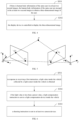
- FIG. 5 is a schematic diagram of shooting at two positions provided in the embodiment.
- point p represents a space point in the in-vehicle space
- Oixyz is the first camera coordinate system at the first shooting position
- O 2 xyz is the second camera coordinate system at the second shooting position
- x 1 is the pixel point (i.e., the first feature point) in the sixth image corresponding to point p
- x 2 is the pixel point (i.e., the second feature point) in the fourth image corresponding to point p.
- each of the sixth images and the fourth images includes a plurality of feature points, each feature point corresponding to a space point in the in-vehicle space.
- a first transformation matrix is calculated based on a first feature point and a second feature point.
- the first feature point is a feature point in the sixth image
- the second feature point is a feature point in the fourth image corresponding to the first feature point
- the first transformation matrix is the transformation matrix between the first camera coordinate system to which the first imaging device belongs and the second camera coordinate system to which the second imaging device belongs.
- the first transformation matrix includes a plurality of parameters, it is necessary to use a plurality of sets of feature points for calculating.
- Each set of feature points includes the first feature point and the second feature point corresponding to the first feature point. The calculation process of any set of feature points is introduced below.
- the calculating method of the first transformation matrix includes: In a step S4031, feature point matching processing is performed on the sixth image and the fourth image to obtain the first feature point and the second feature point.
- SIFT Scale-invariant feature transform
- SUFT Speeded Up Robust Features
- the first feature point is converted to a first coordinate point and the second feature point is converted to a second coordinate point based on a preset internal parameter matrix, and the internal parameter matrix represents a conversion relationship between an image coordinate system and a camera coordinate system.
- the internal parameter matrix is pre-calibrated.
- the specific process is as follows: using the imaging device to shoot a preset calibration pattern, and calculating the internal parameter matrix based on the coordinates of the pixel points in the shot image.
- K is used in the above two formulas; when the first imaging device and the second imaging device are different devices, the K in the above two formulas respectively refers to the internal parameter matrix corresponding to the first imaging device and the second imaging device.
- the first transformation matrix is calculated according to the first coordinate point and the second coordinate point.
- step S4033 the essential matrix is calculated according to the first coordinate point and the second coordinate point; and the first transformation matrix is decomposed from the essential matrix.
- the essential matrix represents the conversion relationship between the first camera coordinate system and the second camera coordinate system.
- the first camera coordinate system is determined as the world coordinate system.
- the matrix decomposition (such as SVD decomposition, etc.) can be performed on the essential matrix to obtain the first transformation matrix, and the first transformation matrix includes the rotation matrix R 2 and translation matrix T 2 .
- the first transformation matrix can be obtained using simple mathematical methods (i.e., matrix decomposition). Since the calculation method of matrix decomposition is relatively simple, it can effectively reduce computational complexity.
- a step S404 the three-dimensional coordinates of the first spatial point in the in-vehicle space is calculated based on the first transformation matrix.
- the first spatial point corresponds to the spatial point indicated by the first feature point and the second feature point.
- the step S404 includes: obtaining a first distance between a position of the first spatial point in the in-vehicle space and the second camera device; and calculating the three-dimensional coordinates of the first spatial point based on the first distance, the preset internal parameter matrix, and the first transformation matrix.
- the first distance can be obtained through laser ranging assistance.
- X represents the three-dimensional coordinates of the spatial point corresponding to the second feature point x 2 .
- a step S405 the three-dimensional scene of the in-vehicle space is constructed based on the three-dimensional coordinates of the first spatial point.
- a three-dimensional scene of the in-vehicle space can be constructed using the plurality of first spatial points.
- the sixth image and fourth image are obtained through the camera devices located in different positions for shooting in the in-vehicle space; the transformation matrix between the camera coordinate systems to which different camera devices belong is calculated based on the sixth image and fourth image, and then the three-dimensional coordinates of the spatial points in the in-vehicle space are calculated according to the transformation matrix. Finally, the three-dimensional scene of the in-vehicle space is constructed based on the three-dimensional coordinates of the spatial points in the in-vehicle space.
- the step S405 includes: In a step S4051, a fifth image of the in-vehicle space is obtained, and the fifth image is shot by a third camera device.
- the third camera device, the first camera device, and the second camera device may refer to different camera devices installed in different shooting positions or the same camera device placed in different shooting positions.
- a second transformation matrix is determined based on a third feature point and a fourth feature point.
- the third feature point is a feature point in the fourth image
- the fourth feature point is a feature point in the fifth image corresponding to the second feature point
- the second transformation matrix is a transformation matrix between the third camera coordinate system to which the third camera device belongs and a second camera coordinate system to which the second camera device belongs.
- existing feature matching algorithms can be used to process feature points in the fifth image and the fourth image, to obtain the third feature point and the fourth feature point.
- the fourth image contains a plurality of third feature points
- the fifth image contains a plurality of fourth feature points that match each of the plurality of third feature points.
- the third feature points obtained after matching feature points between the fourth and fifth images may include the fifth feature points.
- the fifth feature points are feature points in the third feature points that belong to the second feature points. In other words, some feature points in the fourth image match both feature points in the sixth image and feature points in the fifth image; these feature points are the fifth feature points.
- the remaining feature points in the fourth image that do not match the sixth image but match the fifth image are the new added feature points.
- the three-dimensional coordinates corresponding to the fifth feature points are determined in the previous steps, which allows the position of the third camera device to be corrected based on the fifth feature points.
- An optional method for calculating the second transformation matrix is as follows: calculating a third shooting position of the third camera device based on three-dimensional coordinates of a spatial point corresponding to the fifth feature point; and calculating the second transformation matrix between the third camera coordinate system corresponding to the third shooting position and the second camera coordinate system corresponding to the second shooting position.
- the second transformation matrix can be calculated using the solvePnP toolkit in OpenCV.
- a step S4053 three-dimensional coordinates of a second spatial point in the in-vehicle space is calculated based on the second transformation matrix, and the second spatial point is a spatial point corresponding to the third feature point and the fourth feature point.
- the fourth image includes the fifth points and new added feature points.
- the three-dimensional coordinates of the spatial points corresponding to the fifth feature points in the second spatial points are consistent with the three-dimensional coordinates of the spatial points corresponding to the fifth feature points in the first spatial points.
- the spatial points in the second spatial points, except for those corresponding to the fifth feature points, are the spatial points corresponding to the new added feature points, which equivalent to determining the three-dimensional coordinates of more spatial points through the fifth image.
- a step S4054 the three-dimensional scene of the in-vehicle space is constructed based on the three-dimensional coordinates of the first spatial point and the second spatial point.
- images of the in-vehicle space corresponding to multiple shooting positions can be introduced after the step S4054, the three-dimensional coordinates of multiple spatial points in the in-vehicle space are calculated by jointly capturing images of the in-vehicle space corresponding to multiple shooting positions.
- the method for introducing the next shooting position is the same as the method in steps S4051-S4053, which will not be repeated here.
- the method further includes: calculating a loss value corresponding to scene construction parameters based on a preset cost function, and the scene construction parameters include a preset internal parameter matrix, transformation matrices corresponding to each shooting position, three-dimensional coordinates of spatial points in the interior space of the vehicle, and pixel coordinates of each image of the spatial points in the interior space of the vehicle; and optimizing the scene construction parameters based on a gradient descent method and the loss value.
- ⁇ i is the loss function corresponding to the i th shooting position.
- the method may further include: In a step S501, in response to receiving a first instruction, a light value inside the vehicle collected by a light sensor inside the vehicle is obtained.
- the first instruction can be generated by a second operation of a button on the vehicle.
- the second operation can be a pressing action by the user.
- the first instruction can also be generated by a third operation on a control element on a display device of the vehicle.
- the third operation can be a touching action by the user.
- the light value inside the vehicle can be detected before shooting. Specifically, after receiving the first instruction, the terminal device obtains the light value inside the vehicle collected by the internal light sensor of the vehicle.
- a light compensation instruction is sent to a light compensation device inside the vehicle.
- the light compensation instruction is configured to instruct the light compensation device to provide lighting for the environment inside the vehicle.
- the preset value can be set as needed.
- the light compensation device in order to obtain clearer images, can be set inside the vehicle.
- the light compensation can be performed when shooting to obtain clearer images.
- the light compensation device can be a lighting lamp installed on the top of the vehicle, utilizing the existing lighting lamp in the vehicle as the light compensation device, which saves resources and space without the need to add additional equipment inside the vehicle.
- a plurality of light compensation devices can be provided, each of the plurality of light compensation devices is installed on a camera device.
- the corresponding light compensation device of that camera can be turned on to provide light compensation.
- the light compensation device is the lighting lamp inside the vehicle, if the light value is less than the preset value, determining the light interval in which the light value falls, with each light interval corresponding to a light compensation brightness level. Checking whether the interior lighting lamp is turned on, and if yes, adjusting the brightness of the lighting lamp according to the determined light compensation brightness level. If the lighting lamp is off, the lighting lamp is needed controlling to be turned on at the determined light compensation brightness level.
- the light interval being ranged from 4to 6 corresponds to light compensation brightness of level 2. If the lighting lamp is turned on, the lighting lamp is controlled to be adjusted to brightness level 2. If the lighting lamp is turned off, the lighting lamp is controlled to be turned on at brightness level 2.
- a light compensation reminder message can be sent to prompt the user to turn on the light compensation device.
- the light value is greater than or equal to the preset value, it is determined that light compensation is not needed.
- a shooting instruction is sent to at least two camera devices.
- the shooting instruction is configured to instruct at least two camera devices to each shoot a first image. At least two camera devices can be randomly selected by the terminal device.
- the internal human detection device of the vehicle can be controlled to detect the position of the human body inside the vehicle, and then at least two camera devices within a preset range from the detected human position can be controlled to shoot to obtain clearer images containing human information.
- the fourth operation of the user on the control element corresponding to each camera device can be monitored. If a user operation on a control element corresponding to a camera device is detected, it is determined that the camera device needs to shoot the first image, and the terminal device sends a shooting instruction to that camera device.
- the vehicle is provided with a camera device A, a camera device B, and a camera device C; the camera device A corresponds to a control element a, the camera device B corresponds to a control element b, and the camera device C corresponds to a control element c.
- shooting instructions are sent to the camera device B and the camera device C, such that the camera device B and the camera device C are controlled to shoot.
- the roof inner wall of the vehicle is provided with a track.
- the track can be elliptical, circular, or a straight line, set as needed.
- At least one camera device is slidingly connected to the track.
- the user can manually move the camera device along the track to select the desired shooting angle, so as to obtain images from multiple angles.
- the process of implementing step S503 may include: In a step S5031,if there are at least two camera devices slidingly connected to the track inside the vehicle, the shooting instruction is sent to the at least two camera devices connected to the track.
- the shooting instructions can be sent directly to the camera devices connected to the track.
- shooting instructions can also be sent to camera devices not connected to the track.
- the shooting instructions will be sent to the camera device A and the camera device B.
- a step S5032 if there is one camera device slidingly connected to the track inside the vehicle, the shooting instruction is sent to the one camera device connected to the track and to at least one camera device not connected to the track.
- the shooting instructions need to be sent to both the camera device connected to the track and the camera device not connected to the track.
- the at least one camera device not connected to the track can be any selected camera device or a camera device selected by the user.
- the information of the camera device selected by the user not connected to the track is obtained, and shooting instructions are sent to the camera device selected by the user not connected to the track.
- the shooting instructions are sent to camera device A, and to the camera device B and the camera device C or to one of the camera device B and the camera device C.
- the roof inner wall of the vehicle is provided with a track, and there is one camera device slidingly connected to the track inside the vehicle, a plurality of position sensors are provided on the track at different positions, and the plurality of position sensors are configured to send a first signal after position information of the one camera device slidingly connected to the track is detected.
- the track 1 is provided with four position sensors 2, and the positions of the four position sensors 2 are set as needed.
- the sensor(s) when the camera device on the track touches the position sensor(s), the sensor(s) sends the first signal to the terminal device.
- step S503 may include:
- position sensors are configured to detect the positions of the camera device, so as to achieve the effect of automatically shooting when the camera device reaches specified positions.
- the method may further include: In a step S701, if the human body information in the second image includes human body information of a driver, determining whether a driving posture of the driver meets a preset posture requirement based on the human body information of the driver.
- the preset posture requirement can include holding the steering wheel with both hands, not holding a mobile phone to talk, not looking down, wearing a seat belt, etc.
- the position of the user in the vehicle can determine whether the human body information in the second image belongs to the driver. Alternatively, it can be determined whether the second image contains the human body information of the driver by equipment surrounding the human body information, such as whether the steering wheel is existed or not.
- the driving posture of the driver is identified, and the driving posture included in the human body information in the second image is compared with the preset posture requirement to determine whether the driving posture of the driver meets the preset posture requirement.
- the driving posture of the driver can be more accurately determined whether the driving posture of the driver meets the preset posture requirement by using a plurality of human body information of the driver, so as to prevent inaccurate judgment due to obstruction of the driving posture of the driver in a single image.
- the first reminder message is configured to remind the driver to adjust the driving posture.
- the first reminder message can be played in the form of a voice message.
- the human body information of the passenger in the second image can be determined by the position of the human body in the second image within the vehicle; it can also be determined by the equipment around the human body in the second image.
- the second image contains the human body information of the passenger, checking other second images for the presence of the human body information of the passenger. If the other second images do not contain the human body information of the passenger, it is determined whether the passenger is wearing a seat belt based on the current second image. If the human body information of the passenger exists other second images, it is determined whether the passenger is wearing a seat belt based on all the human body information corresponding to the passenger. By using the human body information of the passenger from different angles, it is possible to more accurately determine whether the passenger is wearing a seat belt and reduce errors caused by obstruction.
- step S704 if the passenger is not wearing a seat belt, sending a second reminder message.
- the second reminder message is configured to remind the passenger to fasten their seat belts.
- the second reminder message can be played in the form of a voice message.
- FIG. 9 shows a structural block diagram of an image processing device provided by the embodiments of the present application. For convenience of illustration, only the parts related to the embodiments of the present application are shown.
- the device 800 may include: an image obtaining module 810, an image processing module 820, and a display control module 830.
- the image obtaining module 810 is configured to obtain vehicle target information of a vehicle and a first image set shot by at least two camera devices located inside the vehicle, and the at least two camera devices are positioned at different locations inside the vehicle, and the vehicle target information comprises at least one of current speed information of the vehicle, location information of the vehicle, or the environmental information where the vehicle is located;
- the image processing module 820 is configured to perform image processing on the first image set based on the vehicle target information to obtain a second image corresponding to the first image set, and the image processing comprises at least one of noise reduction, color correction, and clarity processing;
- the display control module 830 is configured to control a display device inside the vehicle to display the second image.
- the image processing module 820 can specifically be configured to:
- the image obtaining module 810 is also connected to: a screening module configured to screen a first images in the first image set to obtain a third image, and the third image is an image from the first image set that includes human body information, and the first image set includes at least two first images;
- the image processing module 820 can specifically be configured to: input the third image into the trained target image processing model and determine that the output of the target image processing model is the second image.
- the image obtaining module 810 is also connected to:
- the image processing module 820 is also connected to:
- a roof inner wall of the vehicle is provided with a track
- the instruction sending module can be configured to:
- a roof inner wall of the vehicle is provided with a track, and there is one camera device slidingly connected to the track inside the vehicle, a plurality of position sensors are provided on the track at different positions, and the plurality of position sensors are configured to send a first signal after position information of the one camera device slidingly connected to the track is detected;
- the instruction sending module can be configured to:
- the image obtaining module 810 is also connected to:
- the embodiment of the present application also provides a terminal device.
- the terminal device 900 may include: at least one processor 910, a memory 920, and a computer program stored in the memory 920 and executable on the at least one processor 910.
- the processor 910 which when executing the computer program, performs the steps in any of the method embodiments, such as steps S101 to S103 in the embodiment shown in FIG. 2 .
- the processor 910 which when executing the computer program, implements the functions of each module/unit in the above device embodiments, such as the functions of modules 810 to 830 shown in FIG. 9 .
- the computer program can be divided into one or more modules/units, which are stored in the memory 920 and executed by the processor 910 to complete the present application.
- These one or more modules/units can be a series of computer program segments capable of completing specific functions. These segments describe the execution process of the computer program in the terminal device 900.
- FIG. 10 is merely an example of the terminal device and does not constitute a limitation of the terminal device. It may include more or fewer components than shown, or combine certain components, or different components, such as input and output devices, network access devices, buses, etc.
- the processor 910 can be CPU (Central Processing Unit), and can also be other general purpose processor, DSP (Digital Signal Processor), ASIC (Application Specific Integrated Circuit), FGPA (Field-Programmable Gate Array), or some other programmable logic devices, discrete gate or transistor logic device, discrete hardware component, etc.
- the general purpose processor can be a microprocessor, or alternatively, the processor can also be any conventional processor and so on.
- the memory 920 can be an internal storage unit of the terminal device or an external storage device, such as a plug-in hard drive, Smart Media Card (SMC), Secure Digital (SD) card, Flash Card, etc.
- the memory 920 is configured to store the computer program and other programs and data required by the terminal device.
- the memory 920 can also be used to temporarily store data that has been output or will be output.
- the bus can be an Industry Standard Architecture (ISA) bus, Peripheral Component (PCI) bus, or Extended Industry Standard Architecture (EISA) bus, etc.
- ISA Industry Standard Architecture
- PCI Peripheral Component
- EISA Extended Industry Standard Architecture
- the bus can be divided into an address bus, data bus, control bus, etc.
- the bus shown in the drawings of the present application is not limited to only one type of bus.
- the image processing method provided in the present application can be applied to computers, tablets, laptops, netbooks, personal digital assistant (PDA), and other terminal devices, the present application does not limit the specific type of terminal device.
- PDA personal digital assistant
- the disclosed device/terminal device and method could be implemented in other ways.
- the device described above are merely illustrative; for example, the division of the units is only a logical function division, and other division could be used in the actual implementation, for example, multiple units or components could be combined or integrated into another system, or some features can be ignored, or not performed.
- the coupling or direct coupling or communicating connection shown or discussed could be an indirect, or a communicating connection through some interfaces, devices or units, which could be electrical, mechanical, or otherwise.
- the units described as separate components could or could not be physically separate, the components shown as units could or could not be physical units, which can be located in one place, or can be distributed to multiple network elements. Parts or all of the elements could be selected according to the actual needs to achieve the object of the present embodiment.
- each of the embodiments of the present application can be integrated into a single processing unit, or exist individually and physically, or two or more than two units are integrated into a single unit.
- the aforesaid integrated unit can either be achieved by hardware, or be achieved in the form of software functional units.
- the integrated unit is achieved in the form of software functional units, and is sold or used as an independent product, it can be stored in a computer readable storage medium. Based on this understanding, a whole or part of flow process of implementing the method in the aforesaid embodiments of the present application can also be accomplished by using computer program to instruct relevant hardware. When the computer program is executed by the processor, the steps in the various method embodiments described above can be implemented.
- the integrated unit is implemented as a software functional unit and sold or used as an independent product, it can be stored in a computer-readable storage medium. Based on this understanding, all or part of the processes in the method embodiments can be implemented by instructing related hardware through a computer program.
- the computer program can be stored in a computer-readable storage medium, and when executed by one or more processors, it can implement the steps in the method embodiments.
- the computer program product when the computer program product runs on a terminal device, it enables the terminal device to execute the steps in the method embodiments.
- the computer program includes computer program codes, which can be in the form of source code, object code, executable documents or some intermediate form, etc.
- the computer readable medium can include: any entity or device that can carry the computer program codes, recording medium, USB flash disk, mobile hard disk, hard disk, optical disk, computer storage device, ROM (Read-Only Memory), RAM (Random Access Memory), electrical carrier signal, telecommunication signal and software distribution medium, etc. It needs to be explained that, the contents contained in the computer readable medium can be added or reduced appropriately according to the requirement of legislation and patent practice in a judicial district, for example, in some judicial districts, according to legislation and patent practice, the computer readable medium doesn't include electrical carrier signal and telecommunication signal.
Landscapes
- Engineering & Computer Science (AREA)
- Multimedia (AREA)
- Mechanical Engineering (AREA)
- Signal Processing (AREA)
- Physics & Mathematics (AREA)
- General Physics & Mathematics (AREA)
- Theoretical Computer Science (AREA)
- Image Processing (AREA)
- Image Analysis (AREA)
Applications Claiming Priority (2)
| Application Number | Priority Date | Filing Date | Title |
|---|---|---|---|
| CN202210056928.6A CN115134537B (zh) | 2022-01-18 | 2022-01-18 | 一种图像处理方法、装置及车辆 |
| PCT/CN2023/072392 WO2023138537A1 (zh) | 2022-01-18 | 2023-01-16 | 一种图像处理方法、装置、终端设备及存储介质 |
Publications (2)
| Publication Number | Publication Date |
|---|---|
| EP4468724A1 true EP4468724A1 (de) | 2024-11-27 |
| EP4468724A4 EP4468724A4 (de) | 2025-04-30 |
Family
ID=83375197
Family Applications (1)
| Application Number | Title | Priority Date | Filing Date |
|---|---|---|---|
| EP23742852.9A Pending EP4468724A4 (de) | 2022-01-18 | 2023-01-16 | Bildverarbeitungsverfahren und -vorrichtung, endgerätevorrichtung und speichermedium |
Country Status (3)
| Country | Link |
|---|---|
| EP (1) | EP4468724A4 (de) |
| CN (1) | CN115134537B (de) |
| WO (1) | WO2023138537A1 (de) |
Families Citing this family (7)
| Publication number | Priority date | Publication date | Assignee | Title |
|---|---|---|---|---|
| CN115134537B (zh) * | 2022-01-18 | 2024-08-06 | 长城汽车股份有限公司 | 一种图像处理方法、装置及车辆 |
| CN115661785B (zh) * | 2022-10-19 | 2026-03-17 | 浙江吉利控股集团有限公司 | 图像处理方法、装置及设备 |
| CN116228535A (zh) * | 2023-02-09 | 2023-06-06 | 长城汽车股份有限公司 | 图像处理方法、装置、电子设备及车辆 |
| CN116847515B (zh) * | 2023-09-01 | 2023-11-07 | 深圳市朝阳辉电气设备有限公司 | 一种智能路灯节能控制系统及方法 |
| CN117058765A (zh) * | 2023-09-07 | 2023-11-14 | 阿维塔科技(重庆)有限公司 | 车辆中基于手势识别的图像处理方法、装置、存储介质 |
| CN117319964B (zh) * | 2023-09-25 | 2026-02-10 | 赛力斯汽车有限公司 | 一种基于v2x的图像共享方法及装置 |
| CN119574066B (zh) * | 2025-02-08 | 2025-05-30 | 富赛汽车电子有限公司 | 一种车载显示设备的测试方法及相关设备 |
Family Cites Families (18)
| Publication number | Priority date | Publication date | Assignee | Title |
|---|---|---|---|---|
| US8948442B2 (en) * | 1982-06-18 | 2015-02-03 | Intelligent Technologies International, Inc. | Optical monitoring of vehicle interiors |
| US7415126B2 (en) * | 1992-05-05 | 2008-08-19 | Automotive Technologies International Inc. | Occupant sensing system |
| EP2512133B1 (de) * | 2009-12-07 | 2018-07-18 | Clarion Co., Ltd. | Peripheres bildanzeigesystem für ein fahrzeug |
| JP5759907B2 (ja) * | 2012-01-19 | 2015-08-05 | クラリオン株式会社 | 車載撮像装置 |
| CN102795174A (zh) * | 2012-08-29 | 2012-11-28 | 深圳市航盛电子股份有限公司 | 车载倒车模拟系统 |
| CN103533241B (zh) * | 2013-10-14 | 2017-05-10 | 厦门美图网科技有限公司 | 一种智能滤镜的拍照方法 |
| WO2015162605A2 (en) * | 2014-04-22 | 2015-10-29 | Snapaid Ltd | System and method for controlling a camera based on processing an image captured by other camera |
| US10829072B2 (en) * | 2015-04-10 | 2020-11-10 | Robert Bosch Gmbh | Detection of occupant size and pose with a vehicle interior camera |
| WO2017020150A1 (zh) * | 2015-07-31 | 2017-02-09 | 深圳市大疆创新科技有限公司 | 一种图像处理方法、装置及摄像机 |
| US10576892B2 (en) * | 2016-03-24 | 2020-03-03 | Ford Global Technologies, Llc | System and method for generating a hybrid camera view in a vehicle |
| KR101949358B1 (ko) * | 2016-04-04 | 2019-02-18 | 엘지전자 주식회사 | 차량용 어라운드뷰 제공 장치 및 이를 구비한 차량 |
| CN110290945A (zh) * | 2016-08-26 | 2019-09-27 | 奈特雷代恩股份有限公司 | 记录操作员和周围视场的视频 |
| JP7102890B2 (ja) * | 2018-04-16 | 2022-07-20 | 株式会社Ihi | 経路シミュレーション装置 |
| CN110386064B (zh) * | 2018-04-20 | 2021-07-09 | 比亚迪股份有限公司 | 车载摄像头的控制系统、方法、车载设备以及汽车 |
| CN111724408B (zh) * | 2020-06-05 | 2021-09-03 | 广东海洋大学 | 基于5g通信下异常驾驶行为算法模型的验证实验方法 |
| CN111931579B (zh) * | 2020-07-09 | 2023-10-31 | 上海交通大学 | 利用眼动追踪和手势识别技术的自动驾驶辅助系统及方法 |
| CN113436412A (zh) * | 2021-07-23 | 2021-09-24 | 陕西科技大学 | 一种网约车安全行驶报警装置及方法 |
| CN115134537B (zh) * | 2022-01-18 | 2024-08-06 | 长城汽车股份有限公司 | 一种图像处理方法、装置及车辆 |
-
2022
- 2022-01-18 CN CN202210056928.6A patent/CN115134537B/zh active Active
-
2023
- 2023-01-16 WO PCT/CN2023/072392 patent/WO2023138537A1/zh not_active Ceased
- 2023-01-16 EP EP23742852.9A patent/EP4468724A4/de active Pending
Also Published As
| Publication number | Publication date |
|---|---|
| WO2023138537A1 (zh) | 2023-07-27 |
| CN115134537A (zh) | 2022-09-30 |
| EP4468724A4 (de) | 2025-04-30 |
| CN115134537B (zh) | 2024-08-06 |
Similar Documents
| Publication | Publication Date | Title |
|---|---|---|
| EP4468724A1 (de) | Bildverarbeitungsverfahren und -vorrichtung, endgerätevorrichtung und speichermedium | |
| EP4528678A1 (de) | 3d-zielerkennungsverfahren und -vorrichtung auf basis von mehrfachansichtsfusion | |
| CN111126182B (zh) | 车道线检测方法、装置、电子设备及存储介质 | |
| US9195881B2 (en) | Image transformation apparatus and method | |
| CN111114554B (zh) | 行驶轨迹预测方法、装置、终端及存储介质 | |
| CN111538009B (zh) | 雷达点的标记方法和装置 | |
| CN110422168B (zh) | 车道识别系统、方法及自动驾驶汽车 | |
| US11227175B2 (en) | Method and system for automatic license-plate recognition | |
| CN116343158B (zh) | 车道线检测模型的训练方法、装置、设备及存储介质 | |
| CN111104893A (zh) | 目标检测方法、装置、计算机设备及存储介质 | |
| CN107463927A (zh) | 一种基于卷积神经网络的道路减速带检测方法及装置 | |
| WO2023138538A1 (zh) | 车载视频稳像方法、装置、车辆及存储介质 | |
| CN115953747A (zh) | 车端目标分类检测方法及车端雷视融合设备 | |
| CN116486351A (zh) | 行车预警方法、装置、设备及存储介质 | |
| CN114693865B (zh) | 数据处理方法及相关装置 | |
| Sang et al. | Improved generalizability of CNN based lane detection in challenging weather using adaptive preprocessing parameter tuning | |
| CN114821544B (zh) | 感知信息生成方法、装置、车辆、电子设备及存储介质 | |
| CN112132902B (zh) | 车载摄像头外参调整方法、装置、电子设备以及介质 | |
| CN112241963A (zh) | 基于车载视频的车道线识别方法、系统和电子设备 | |
| US12148184B2 (en) | Temporally consistent position estimation refinement for aerial refueling | |
| CN117441190A (zh) | 一种部位定位方法及装置 | |
| WO2025214424A1 (zh) | 无车位线的泊车环境感知方法、装置、车辆及计算机可读存储介质 | |
| CN110765877B (zh) | 基于热像仪和双目相机的行人检测方法及系统 | |
| CN111797659A (zh) | 辅助驾驶方法、装置、存储介质及电子设备 | |
| CN109034137A (zh) | 头部姿态标记更新方法、装置、存储介质和终端设备 |
Legal Events
| Date | Code | Title | Description |
|---|---|---|---|
| STAA | Information on the status of an ep patent application or granted ep patent |
Free format text: STATUS: THE INTERNATIONAL PUBLICATION HAS BEEN MADE |
|
| PUAI | Public reference made under article 153(3) epc to a published international application that has entered the european phase |
Free format text: ORIGINAL CODE: 0009012 |
|
| STAA | Information on the status of an ep patent application or granted ep patent |
Free format text: STATUS: REQUEST FOR EXAMINATION WAS MADE |
|
| 17P | Request for examination filed |
Effective date: 20240816 |
|
| AK | Designated contracting states |
Kind code of ref document: A1 Designated state(s): AL AT BE BG CH CY CZ DE DK EE ES FI FR GB GR HR HU IE IS IT LI LT LU LV MC ME MK MT NL NO PL PT RO RS SE SI SK SM TR |
|
| REG | Reference to a national code |
Ref country code: DE Ref legal event code: R079 Free format text: PREVIOUS MAIN CLASS: H04N0023000000 Ipc: B60R0001200000 |
|
| DAV | Request for validation of the european patent (deleted) | ||
| DAX | Request for extension of the european patent (deleted) | ||
| A4 | Supplementary search report drawn up and despatched |
Effective date: 20250327 |
|
| RIC1 | Information provided on ipc code assigned before grant |
Ipc: G06T 5/60 20240101ALI20250321BHEP Ipc: H04N 7/18 20060101ALI20250321BHEP Ipc: B60R 1/20 20220101AFI20250321BHEP |
|
| STAA | Information on the status of an ep patent application or granted ep patent |
Free format text: STATUS: EXAMINATION IS IN PROGRESS |
|
| 17Q | First examination report despatched |
Effective date: 20251121 |