EP4470460A2 - Système de traitement de plaie avec estimation du volume de la plaie - Google Patents
Système de traitement de plaie avec estimation du volume de la plaie Download PDFInfo
- Publication number
- EP4470460A2 EP4470460A2 EP24207849.1A EP24207849A EP4470460A2 EP 4470460 A2 EP4470460 A2 EP 4470460A2 EP 24207849 A EP24207849 A EP 24207849A EP 4470460 A2 EP4470460 A2 EP 4470460A2
- Authority
- EP
- European Patent Office
- Prior art keywords
- wound
- negative pressure
- controller
- drawdown
- volume
- Prior art date
- Legal status (The legal status is an assumption and is not a legal conclusion. Google has not performed a legal analysis and makes no representation as to the accuracy of the status listed.)
- Granted
Links
Images







Classifications
-
- A—HUMAN NECESSITIES
- A61—MEDICAL OR VETERINARY SCIENCE; HYGIENE
- A61B—DIAGNOSIS; SURGERY; IDENTIFICATION
- A61B5/00—Measuring for diagnostic purposes; Identification of persons
- A61B5/103—Measuring devices for testing the shape, pattern, colour, size or movement of the body or parts thereof, for diagnostic purposes
- A61B5/107—Measuring physical dimensions, e.g. size of the entire body or parts thereof
- A61B5/1072—Measuring physical dimensions, e.g. size of the entire body or parts thereof measuring distances on the body, e.g. measuring length, height or thickness
-
- A—HUMAN NECESSITIES
- A61—MEDICAL OR VETERINARY SCIENCE; HYGIENE
- A61B—DIAGNOSIS; SURGERY; IDENTIFICATION
- A61B5/00—Measuring for diagnostic purposes; Identification of persons
- A61B5/44—Detecting, measuring or recording for evaluating the integumentary system, e.g. skin, hair or nails
- A61B5/441—Skin evaluation, e.g. for skin disorder diagnosis
- A61B5/445—Evaluating skin irritation or skin trauma, e.g. rash, eczema, wound, bed sore
-
- A—HUMAN NECESSITIES
- A61—MEDICAL OR VETERINARY SCIENCE; HYGIENE
- A61B—DIAGNOSIS; SURGERY; IDENTIFICATION
- A61B5/00—Measuring for diagnostic purposes; Identification of persons
- A61B5/48—Other medical applications
- A61B5/4836—Diagnosis combined with treatment in closed-loop systems or methods
-
- A—HUMAN NECESSITIES
- A61—MEDICAL OR VETERINARY SCIENCE; HYGIENE
- A61B—DIAGNOSIS; SURGERY; IDENTIFICATION
- A61B5/00—Measuring for diagnostic purposes; Identification of persons
- A61B5/72—Signal processing specially adapted for physiological signals or for diagnostic purposes
- A61B5/7235—Details of waveform analysis
- A61B5/7264—Classification of physiological signals or data, e.g. using neural networks, statistical classifiers, expert systems or fuzzy systems
-
- A—HUMAN NECESSITIES
- A61—MEDICAL OR VETERINARY SCIENCE; HYGIENE
- A61B—DIAGNOSIS; SURGERY; IDENTIFICATION
- A61B5/00—Measuring for diagnostic purposes; Identification of persons
- A61B5/72—Signal processing specially adapted for physiological signals or for diagnostic purposes
- A61B5/7271—Specific aspects of physiological measurement analysis
- A61B5/7278—Artificial waveform generation or derivation, e.g. synthesizing signals from measured signals
-
- A—HUMAN NECESSITIES
- A61—MEDICAL OR VETERINARY SCIENCE; HYGIENE
- A61B—DIAGNOSIS; SURGERY; IDENTIFICATION
- A61B5/00—Measuring for diagnostic purposes; Identification of persons
- A61B5/74—Details of notification to user or communication with user or patient; User input means
- A61B5/7465—Arrangements for interactive communication between patient and care services, e.g. by using a telephone network
- A61B5/747—Arrangements for interactive communication between patient and care services, e.g. by using a telephone network in case of emergency, i.e. alerting emergency services
-
- A—HUMAN NECESSITIES
- A61—MEDICAL OR VETERINARY SCIENCE; HYGIENE
- A61M—DEVICES FOR INTRODUCING MEDIA INTO, OR ONTO, THE BODY; DEVICES FOR TRANSDUCING BODY MEDIA OR FOR TAKING MEDIA FROM THE BODY; DEVICES FOR PRODUCING OR ENDING SLEEP OR STUPOR
- A61M1/00—Suction or pumping devices for medical purposes; Devices for carrying-off, for treatment of, or for carrying-over, body-liquids; Drainage systems
- A61M1/71—Suction drainage systems
- A61M1/73—Suction drainage systems comprising sensors or indicators for physical values
-
- A—HUMAN NECESSITIES
- A61—MEDICAL OR VETERINARY SCIENCE; HYGIENE
- A61M—DEVICES FOR INTRODUCING MEDIA INTO, OR ONTO, THE BODY; DEVICES FOR TRANSDUCING BODY MEDIA OR FOR TAKING MEDIA FROM THE BODY; DEVICES FOR PRODUCING OR ENDING SLEEP OR STUPOR
- A61M1/00—Suction or pumping devices for medical purposes; Devices for carrying-off, for treatment of, or for carrying-over, body-liquids; Drainage systems
- A61M1/71—Suction drainage systems
- A61M1/74—Suction control
- A61M1/742—Suction control by changing the size of a vent
-
- A—HUMAN NECESSITIES
- A61—MEDICAL OR VETERINARY SCIENCE; HYGIENE
- A61M—DEVICES FOR INTRODUCING MEDIA INTO, OR ONTO, THE BODY; DEVICES FOR TRANSDUCING BODY MEDIA OR FOR TAKING MEDIA FROM THE BODY; DEVICES FOR PRODUCING OR ENDING SLEEP OR STUPOR
- A61M1/00—Suction or pumping devices for medical purposes; Devices for carrying-off, for treatment of, or for carrying-over, body-liquids; Drainage systems
- A61M1/90—Negative pressure wound therapy devices, i.e. devices for applying suction to a wound to promote healing, e.g. including a vacuum dressing
- A61M1/96—Suction control thereof
- A61M1/964—Suction control thereof having venting means on or near the dressing
-
- A—HUMAN NECESSITIES
- A61—MEDICAL OR VETERINARY SCIENCE; HYGIENE
- A61M—DEVICES FOR INTRODUCING MEDIA INTO, OR ONTO, THE BODY; DEVICES FOR TRANSDUCING BODY MEDIA OR FOR TAKING MEDIA FROM THE BODY; DEVICES FOR PRODUCING OR ENDING SLEEP OR STUPOR
- A61M1/00—Suction or pumping devices for medical purposes; Devices for carrying-off, for treatment of, or for carrying-over, body-liquids; Drainage systems
- A61M1/90—Negative pressure wound therapy devices, i.e. devices for applying suction to a wound to promote healing, e.g. including a vacuum dressing
- A61M1/96—Suction control thereof
- A61M1/966—Suction control thereof having a pressure sensor on or near the dressing
-
- A—HUMAN NECESSITIES
- A61—MEDICAL OR VETERINARY SCIENCE; HYGIENE
- A61B—DIAGNOSIS; SURGERY; IDENTIFICATION
- A61B2562/00—Details of sensors; Constructional details of sensor housings or probes; Accessories for sensors
- A61B2562/02—Details of sensors specially adapted for in-vivo measurements
- A61B2562/0247—Pressure sensors
-
- A—HUMAN NECESSITIES
- A61—MEDICAL OR VETERINARY SCIENCE; HYGIENE
- A61M—DEVICES FOR INTRODUCING MEDIA INTO, OR ONTO, THE BODY; DEVICES FOR TRANSDUCING BODY MEDIA OR FOR TAKING MEDIA FROM THE BODY; DEVICES FOR PRODUCING OR ENDING SLEEP OR STUPOR
- A61M1/00—Suction or pumping devices for medical purposes; Devices for carrying-off, for treatment of, or for carrying-over, body-liquids; Drainage systems
- A61M1/71—Suction drainage systems
- A61M1/77—Suction-irrigation systems
-
- A—HUMAN NECESSITIES
- A61—MEDICAL OR VETERINARY SCIENCE; HYGIENE
- A61M—DEVICES FOR INTRODUCING MEDIA INTO, OR ONTO, THE BODY; DEVICES FOR TRANSDUCING BODY MEDIA OR FOR TAKING MEDIA FROM THE BODY; DEVICES FOR PRODUCING OR ENDING SLEEP OR STUPOR
- A61M1/00—Suction or pumping devices for medical purposes; Devices for carrying-off, for treatment of, or for carrying-over, body-liquids; Drainage systems
- A61M1/84—Drainage tubes; Aspiration tips
- A61M1/85—Drainage tubes; Aspiration tips with gas or fluid supply means, e.g. for supplying rinsing fluids or anticoagulants
-
- A—HUMAN NECESSITIES
- A61—MEDICAL OR VETERINARY SCIENCE; HYGIENE
- A61M—DEVICES FOR INTRODUCING MEDIA INTO, OR ONTO, THE BODY; DEVICES FOR TRANSDUCING BODY MEDIA OR FOR TAKING MEDIA FROM THE BODY; DEVICES FOR PRODUCING OR ENDING SLEEP OR STUPOR
- A61M1/00—Suction or pumping devices for medical purposes; Devices for carrying-off, for treatment of, or for carrying-over, body-liquids; Drainage systems
- A61M1/90—Negative pressure wound therapy devices, i.e. devices for applying suction to a wound to promote healing, e.g. including a vacuum dressing
- A61M1/92—Negative pressure wound therapy devices, i.e. devices for applying suction to a wound to promote healing, e.g. including a vacuum dressing with liquid supply means
-
- A—HUMAN NECESSITIES
- A61—MEDICAL OR VETERINARY SCIENCE; HYGIENE
- A61M—DEVICES FOR INTRODUCING MEDIA INTO, OR ONTO, THE BODY; DEVICES FOR TRANSDUCING BODY MEDIA OR FOR TAKING MEDIA FROM THE BODY; DEVICES FOR PRODUCING OR ENDING SLEEP OR STUPOR
- A61M2205/00—General characteristics of the apparatus
- A61M2205/15—Detection of leaks
-
- A—HUMAN NECESSITIES
- A61—MEDICAL OR VETERINARY SCIENCE; HYGIENE
- A61M—DEVICES FOR INTRODUCING MEDIA INTO, OR ONTO, THE BODY; DEVICES FOR TRANSDUCING BODY MEDIA OR FOR TAKING MEDIA FROM THE BODY; DEVICES FOR PRODUCING OR ENDING SLEEP OR STUPOR
- A61M2205/00—General characteristics of the apparatus
- A61M2205/33—Controlling, regulating or measuring
- A61M2205/3331—Pressure; Flow
-
- A—HUMAN NECESSITIES
- A61—MEDICAL OR VETERINARY SCIENCE; HYGIENE
- A61M—DEVICES FOR INTRODUCING MEDIA INTO, OR ONTO, THE BODY; DEVICES FOR TRANSDUCING BODY MEDIA OR FOR TAKING MEDIA FROM THE BODY; DEVICES FOR PRODUCING OR ENDING SLEEP OR STUPOR
- A61M2205/00—General characteristics of the apparatus
- A61M2205/33—Controlling, regulating or measuring
- A61M2205/3331—Pressure; Flow
- A61M2205/3344—Measuring or controlling pressure at the body treatment site
-
- A—HUMAN NECESSITIES
- A61—MEDICAL OR VETERINARY SCIENCE; HYGIENE
- A61M—DEVICES FOR INTRODUCING MEDIA INTO, OR ONTO, THE BODY; DEVICES FOR TRANSDUCING BODY MEDIA OR FOR TAKING MEDIA FROM THE BODY; DEVICES FOR PRODUCING OR ENDING SLEEP OR STUPOR
- A61M2205/00—General characteristics of the apparatus
- A61M2205/33—Controlling, regulating or measuring
- A61M2205/3379—Masses, volumes, levels of fluids in reservoirs, flow rates
-
- A—HUMAN NECESSITIES
- A61—MEDICAL OR VETERINARY SCIENCE; HYGIENE
- A61M—DEVICES FOR INTRODUCING MEDIA INTO, OR ONTO, THE BODY; DEVICES FOR TRANSDUCING BODY MEDIA OR FOR TAKING MEDIA FROM THE BODY; DEVICES FOR PRODUCING OR ENDING SLEEP OR STUPOR
- A61M2205/00—General characteristics of the apparatus
- A61M2205/50—General characteristics of the apparatus with microprocessors or computers
-
- A—HUMAN NECESSITIES
- A61—MEDICAL OR VETERINARY SCIENCE; HYGIENE
- A61M—DEVICES FOR INTRODUCING MEDIA INTO, OR ONTO, THE BODY; DEVICES FOR TRANSDUCING BODY MEDIA OR FOR TAKING MEDIA FROM THE BODY; DEVICES FOR PRODUCING OR ENDING SLEEP OR STUPOR
- A61M2205/00—General characteristics of the apparatus
- A61M2205/70—General characteristics of the apparatus with testing or calibration facilities
-
- A—HUMAN NECESSITIES
- A61—MEDICAL OR VETERINARY SCIENCE; HYGIENE
- A61M—DEVICES FOR INTRODUCING MEDIA INTO, OR ONTO, THE BODY; DEVICES FOR TRANSDUCING BODY MEDIA OR FOR TAKING MEDIA FROM THE BODY; DEVICES FOR PRODUCING OR ENDING SLEEP OR STUPOR
- A61M2205/00—General characteristics of the apparatus
- A61M2205/70—General characteristics of the apparatus with testing or calibration facilities
- A61M2205/702—General characteristics of the apparatus with testing or calibration facilities automatically during use
-
- A—HUMAN NECESSITIES
- A61—MEDICAL OR VETERINARY SCIENCE; HYGIENE
- A61M—DEVICES FOR INTRODUCING MEDIA INTO, OR ONTO, THE BODY; DEVICES FOR TRANSDUCING BODY MEDIA OR FOR TAKING MEDIA FROM THE BODY; DEVICES FOR PRODUCING OR ENDING SLEEP OR STUPOR
- A61M2205/00—General characteristics of the apparatus
- A61M2205/75—General characteristics of the apparatus with filters
- A61M2205/7536—General characteristics of the apparatus with filters allowing gas passage, but preventing liquid passage, e.g. liquophobic, hydrophobic, water-repellent membranes
Definitions
- the present disclosure relates generally to a wound therapy system, and more particularly to a wound therapy system configured to estimate the volume of a wound.
- Negative pressure wound therapy is a type of wound therapy that involves applying a negative pressure to a wound site to promote wound healing.
- Some wound treatment systems apply negative pressure to a wound using a pneumatic pump to generate the negative pressure and flow required.
- Recent advancements in wound healing with NPWT involve applying topical fluids to wounds to work in combination with NPWT.
- it can be difficult to accurately monitor and track healing progression over time.
- the wound therapy system includes a negative pressure circuit, a pump, a pressure sensor, and a controller.
- the negative pressure circuit is configured to apply negative pressure to a wound.
- the pump is fluidly coupled to the negative pressure circuit and configured to produce a negative pressure at the wound or within the negative pressure circuit.
- the pressure sensor is configured to measure the negative pressure within the negative pressure circuit or at the wound.
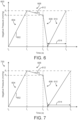
- the controller is configured to perform a testing procedure including a first drawdown period, a leak rate determination period, a vent period, and a second drawdown period.
- the controller is configured to receive one or more pressure measurements of the pressure sensor over the leak rate determination period to determine a leak rate parameter. In some embodiments, the controller is configured to monitor an amount of elapsed time over the second drawdown period to determine a drawdown parameter. In some embodiments, the controller is configured to estimate a volume of the wound based on the leak rate parameter and the drawdown parameter.
- the first drawdown period of the testing procedure includes operating the pump to achieve a predetermined negative pressure within the negative pressure circuit.
- the leak rate determination period of the testing procedure includes maintaining the predetermined negative pressure for a predetermined time duration and receiving pressure measurements from the pressure sensor during the predetermined time duration.
- the leak rate parameter is a change in pressure of the negative pressure circuit over the leak rate determination period.
- the leak rate parameter is a change of pressure with respect to time over at least a portion of the leak rate determination period.
- the vent period of the testing procedure includes opening a valve of the negative pressure circuit to allow the negative pressure circuit to return to atmospheric pressure.
- the second drawdown period of the testing procedure includes operating the pump to produce a negative pressure within the negative pressure circuit at a predetermined rate.
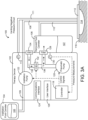
- testing procedure controller 148 monitors the value of the performance variable y received from pressure sensors 130, 113 via pressure monitor 152 and compares the value of the performance variable y to the desired/setpoint value r.
- the desired/setpoint value r is a negative pressure value at wound 114 that pneumatic pump 120 is trying to achieve (e.g., a target pressure value).
- the setpoint value r may be p 1 .
- the setpoint value r is greater than or less than p 1 . In this way, the target pressure value of second drawdown period 610 may be the same, or greater than, or less than the target pressure value of first drawdown period 604.
- Testing procedure controller 148 continues monitoring the value of the performance variable y and monitoring an amount of elapsed time since the beginning (e.g., t 3 ) of second drawdown period 610, according to some embodiments.
- testing procedure controller 148 includes a timer configured to reset at the beginning of second drawdown period 610 (e.g., at t 3 ) or to store a time at which second drawdown period 610 begins (e.g., store the value of t 3 ).
- the timer resets or records the time value immediately after valve 132 has transitioned into the closed configuration and once pneumatic pump 120 has begun drawing down pressure at wound 114.
- Testing procedure controller 148 can perform the testing procedure as described in greater detail above to determine values of the leak rate parameter ⁇ leak and the drawdown time parameter ⁇ time for a known volume of wound 114 and/or a known training circuit volume. For example, testing procedure controller 148 can perform the testing procedure multiple times for a variety of several training circuits having known volumes (e.g., 50 cc, 100 cc, 200 cc, 300 cc, etc.). In some embodiments, testing procedure controller 148 is configured to perform the testing procedure several times for each of the training circuits having known volumes. In some embodiments, the resulting values of the leak rate parameter ⁇ leak and the drawdown time parameter ⁇ time are averaged for each of the training circuits to mitigate an amount of random error.
- the testing procedure may be performed 10 times for a training circuit having the known volume of 50 cc and the leak rate parameter ⁇ leak and the drawdown time parameter ⁇ time can be averaged to reduce random error.
- the testing procedure is performed for various NPWT systems having different pneumatic pumps 120, therapy pressures, training circuit volumes, etc.
- model generator 154 is configured to generate a model for each of multiple training circuits using any of the methods and techniques described in greater detail below.
- the training circuit volume includes known volume values of the various pipes, canisters, tubes, etc., which pneumatic pump 120 is configured to draw down.
- the training circuit volume includes a known volume of wound 114, V wound .
- the testing procedure can be performed multiple times for a variety of values of V wound .
- the testing procedure is performed multiple times for each value of V wound to determine average parameter values associated with the particular value of V wound .
- V system is held constant while the testing procedure is repeated for various values of V wound . In this way, changes in the overall volume of the training circuit, V training are due to changes in V wound .
- the testing procedure can also be performed multiple times for each value of V wound having multiple leak rates.
- testing procedure controller 148 is configured to provide model generator 154 with the leak rate parameter ⁇ leak and the drawdown time parameter ⁇ time for each combination of leak rate and V wound resulting from performing the testing procedure.
- controller 118 performs the testing procedure for various systems having different values of V system . In some embodiments, controller 118 performs the testing procedure multiple times for various values of V wound for each of the various systems.
- model generator 154 is configured to generate a model for each of the various systems using any of the methods and techniques described in greater detail below. For example, model generator 154 can generate a model for various training circuits which may be used during NPWT.
- model generator 154 is configured to determine a model to relate the recorded/determined parameters (i.e., ⁇ leak and ⁇ time ) to V wound for the known values of V wound . This model can then be used during NPWT to determine the volume of an unknown wound 114.
- Model generator 154 can be configured to perform a multi-variable regression (e.g., perform a multi-variable polynomial curve fit, perform a multi-variable linear regression), use a neural network, or create a matrix/table to create a model that relates the parameters to known values of V wound .
- model generator 154 creates a model for a variety of values of V system . For example, model generator 154 can create a table for each of a variety of typical values of V system which correspond to various NPWT circuits that may be used during NPWT.
- Each performance of the training procedure may include applying the pressure stimulus to a training circuit having a known volume, observing the dynamic pressure response of the training circuit to the pressure stimulus (e.g., determining/measuring ⁇ leak and ⁇ time ), and associating the known volume with the dynamic pressure response of the training circuit.
- model generator 154 is configured to receive various data sets where each data set includes a value of V wound for which the particular test was performed, and the values of ⁇ time and ⁇ leak that resulted from the test. In some embodiments, model generator 154 is configured to receive data sets from each iteration of the test and create matrix A based on the data sets. In some embodiments, matrix A is created (e.g., sorted, arranged, generated, constructed, etc.) such that the values of ⁇ time (e.g., associated with the columns of matrix A ) increase from left to right, and such that the values of ⁇ leak (e.g., associated with the rows of matrix A ) increase from top to bottom of matrix A.
- model generator 154 creates f wound using a polynomial approximation model to relate the values of the parameters to the corresponding volume.
- model generator 154 can perform a curve fitting process such as polynomial regression using any of a variety of regression techniques. Examples of regression techniques which can be used by model generator 154 include least squares, ordinary least squares, linear least squares, partial least squares, total least squares, generalized least squares, weighted least squares non-linear least squares, non-negative least squares, iteratively reweighted least squares, ridge regression, least absolute deviations, Bayesian linear regression, Bayesian multivariate linear regression, etc.
- controller 118 is shown to include wound volume estimator 156, according to some embodiments.
- wound volume estimator 156 is provided with any of matrix A and the associated vectors B and C , table 900, and/or the mathematical model determined by model generator 154 (e.g., f wound ) .
- wound volume estimator 156 is configured to cause testing procedure controller 148 to perform the testing procedure as described in greater detail above with reference to FIG. 6 for an unknown wound volume.
- wound volume estimator 156 is configured to perform the testing procedure.
- wound volume estimator 156 may be configured to perform any of the functionality of testing procedure controller 148 (e.g., to perform first drawdown period 604, operate valve 132, control pneumatic pump 120, etc.). In some embodiments, wound volume estimator 156 determines the values of ⁇ time and ⁇ leak or receives the determined values of ⁇ time and ⁇ leak from testing procedure controller 148. In some embodiments, wound volume estimator 156 uses any of the mathematical models (e.g., f wound ), matrix A, table 900, etc., generated and received from model generator 154 to determine an estimated value of the unknown value of V wound .
- the mathematical models e.g., f wound
- wound volume estimator 156 uses table 900 and/or matrix A, and one or both of the values of ⁇ time and ⁇ leak do not correspond to the values of ⁇ time and ⁇ leak as stored in vectors B and C or in table 900, wound volume estimator 156 is configured to perform an interpolation to determine V wound .
- wound volume estimator 156 uses table 900 to determine the unknown value V wound based on the determined parameters ⁇ time and ⁇ leak resulting from performing the testing procedure on wound 114 with an unknown volume. In some embodiments, wound volume estimator 156 first checks through the values of side header 904 to determine if any of the values of ⁇ leak in side header 904 are substantially equal to the value of ⁇ leak determined from performing the testing procedure on wound 114 with the unknown value of V wound . For example, if wound volume estimator 156 determines that ⁇ leak is substantially equal to ⁇ leak ,2 of side header 904, wound volume estimator 156 determines that the value of V wound is one of the values of V in the row corresponding to ⁇ leak, 2 .
- wound volume estimator 156 can compare the various values of ⁇ time in the top header 902 to the value of ⁇ time determined from performing the testing procedure on wound 114. For example, if wound volume estimator 156 determines that ⁇ time is substantially equal to ⁇ time, 5 , and ⁇ leak is substantially equal to ⁇ leak, 2 , wound volume estimator 156 can determine that the volume of wound 114 is substantially equal to V 2,5 .
- wound volume estimator 156 can perform an interpolation or an extrapolation to determine the volume of wound 114.
- wound volume estimator 156 uses any of the values of table 900 in a multi-variable linear interpolation (or extrapolation) to determine the volume of wound 114.
- wound volume estimator 156 performs a non-linear interpolation to determine the volume of wound 114.
- Wound volume estimator 156 can be similarly configured to determine the volume of wound 114 using matrix A and vectors B and C .
- wound volume estimator 156 can compare the value of ⁇ time to values of the elements of vector C to determine a column value of matrix A, and compare the value of ⁇ leak to values of the elements of vector B to determine a row value of matrix A. For example, if ⁇ time is equal to the fifth element of vector C and ⁇ leak is equal to the tenth element of vector C , wound volume estimator 156 can select A (10,5) or V 10,5 as V wound for wound 114.
- wound volume estimator 156 can be configured to interpolate or extrapolate values of matrix A to determine values of V wound that are associated with a value of ⁇ time and/or ⁇ leak not included in vector B and vector C .
- wound volume estimator 156 is configured to use a linear multi-variable interpolation technique or a non-linear interpolation technique.
- V wound linear regression equation
- wound volume estimator 156 can input the determined values of ⁇ leak and ⁇ time (e.g., the parameters resulting from performing the testing procedure on a wound 114 with an unknown volume) into f wound to determine the volume V wound of wound 114.
- wound volume estimator 156 is configured to select an appropriate model (e.g., an appropriate table 900, an appropriate matrix A, an appropriate f wound ) based on a volume (e.g., V system ) of circuit which pneumatic pump 120 is configured to drawdown.
- wound volume estimator 156 can select an appropriate f wound model generated from a testing procedure for a system having a similar volume from a database of various f wound models.
- a wound application for a wound having volume V wound with a high leak rate may have a higher value of ⁇ time when compared to a wound with the same volume V wound but a lower leak rate (e.g., a lower value of ⁇ leak ) .
- model generator 154 and wound volume estimator 156 can account for the degree of leakage for the particular wound and accurately determine V wound , regardless of high or low leakage rates (e.g., high or low values of ⁇ leak ).
- Controller 118 can use the estimated wound volume to calculate a volume of instillation fluid 105 to deliver to wound 114 (step 1102). In some embodiments, controller 118 calculates the volume of instillation fluid 105 to deliver to wound 114 by multiplying the estimated wound volume by a fluid instillation factor.
- the fluid instillation factor may be less than one (i.e., between zero and one) such that the calculated volume of instillation fluid 105 is less than the volume of wound 114. In some embodiments, the fluid instillation factor is between approximately 0.2 and approximately 0.8. However, it is contemplated that the fluid instillation factor can have any value in various alternative embodiments.
- line 1002 represents the estimated volume of wound 114 as a function of time
- line 1004 represents the calculated volume of instillation fluid 105 to deliver to wound 114 over time.
- the estimated volume of wound 114 is V 4 .
- the estimated volume of wound 114 decreases and reaches a value of V 2 at time t 2 .
- Controller 118 can then operate a pump to deliver the calculated volume of instillation fluid 105 to wound 114 (step 1104).
- Step 1104 can include operating instillation pump 122 to draw instillation fluid 105 from instillation fluid canister 104 and deliver instillation fluid 105 to wound 114 via tubing 109 and 108.
- the calculated volume of instillation fluid 105 is also used to control the operation of pneumatic pump 120.
- controller 118 can operate pneumatic pump 120 to remove the volume of instillation fluid 105 from wound 114 via tubing 110.
- the amount of time that pneumatic pump 120 operates may be a function of the volume of instillation fluid 105 that was delivered to wound 114.
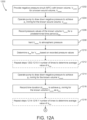
- a process 1200 for generating a model (e.g., f wound ) to relate one or more parameters (e.g., ⁇ leak and ⁇ time ) to a wound volume (e.g., V wound ) is shown, according to some embodiments.
- controller 118 is configured to perform process 1200.
- process 1200 is performed by controller 118 and/or the various components of NPWT system 100.
- process 1200 illustrates various steps that controller 118 can perform to determine f wound .
- process 1200 is the testing procedure described in greater detail above with reference to FIGS. 5-7 .
- Process 1200 includes steps 1202-1226, according to some embodiments.
- Process 1200 includes providing a negative pressure circuit (NPC) with a known volume V system for a known wound volume V wound (step 1202), according to some embodiments.
- NPC negative pressure circuit
- providing the NPC circuit for the known wound includes setting up a NPC circuit by providing wound dressing 112 to patient's skin 116 over wound 114.
- V wound is a known volume of wound 114.
- step 1202 may include configuring NPWT system 100 (e.g., having a known V system ) to perform NPWT for a test wound (e.g., wound 114 with a known volume V wound ).
- step 1202 includes setting up NPWT system 100 and starting therapy device 102.
- Process 1200 includes operating a pump to draw down negative pressure at wound 114 to achieve p 1 at the known wound volume V wound (step 1204), according to some embodiments, in some embodiments, step 1204 is first drawdown period 604.
- the pump is pneumatic pump 120.
- step 1204 includes any of the functionality, techniques, steps, etc., of first drawdown period 604.
- step 1204 is performed by testing procedure controller 148.
- p 1 is 200 mmHg.
- step 1204 is performed by testing procedure controller 148 and pump controller 146.
- Pneumatic pump 120 is configured to produce a negative pressure at wound 114, according to some embodiments.
- step 1204 includes testing procedure controller 148 monitoring pressure measurements at wound 114 via pressure sensors 130, 113, and continuing to cause pneumatic pump 120 to drawdown the negative pressure until the measured/monitored pressure is substantially equal to p 1 .
- step 1204 is also performed by valve controller.
- step 1204 includes valve controller 150 sending a control signal to valve 132 to transition valve 132 into a closed configuration such pneumatic pump 120 can drawdown a negative pressure at wound 114.
- Process 1200 includes recording pressure values of the known volume V wound for a predetermined time period ⁇ t leak (step 1206), according to some embodiments.
- step 1206 is leak rate determination period 606.
- controller 118 is configured to perform step 1206.
- step 1206 is performed by testing procedure controller 148.
- testing procedure controller 148 can be configured to receive pressure measurements from pressure sensors 130/113 over time period ⁇ t leak (e.g., t 2 - t 1 as shown in FIG. 6 ) to perform step 1206.
- step 1206 includes recording multiple pressure values of the negative pressure (e.g., vacuum pressures) of wound 114.
- step 1206 includes recording an initial pressure value (e.g., p 1 ) of wound 114 at a beginning of time period ⁇ t leak , and a final pressure value (e.g., p 2 ) at an end of time period ⁇ t leak .
- step 1206 is performed by testing procedure controller 148 and pressure monitor 152.
- Process 1200 includes venting wound 114 to atmospheric pressure (step 1208), according to some embodiments.
- step 1208 is performed after step 1210.
- step 1208 and step 1210 are performed simultaneously.
- step 1208 is performed by testing procedure controller 148 and valve controller 150.
- step 1208 may include testing procedure controller 148 sending a command to valve controller 150 to transition valve 132 into the open configuration such that wound 114 can return to atmospheric pressure.
- step 1208 is performed by testing procedure controller, valve controller 150, and valve 132.
- step 1208 is vent period 608.
- Process 1200 includes determining the leak rate parameter ⁇ leak for V wound based on the pressure values of wound 114 recorded during step 1206 (step 1210), according to some embodiments.
- step 1210 is performed by testing procedure controller 148.
- ⁇ leak is a difference between an initial pressure value and a final pressure value of time interval ⁇ t leak .
- ⁇ leak is slope 612.
- Process 1200 includes repeating steps 1202-1210 (step 1212), according to some embodiments.
- controller 118 and/or NPWT system 100 repeat steps 1202-1210 X number of times to determine an average value of ⁇ leak to minimize random error.
- step 1212 is optional.
- Process 1200 includes operating the pump (e.g., pneumatic pump 120) to draw down negative pressure at wound 114 to achieve p 1 (step 1214), according to some embodiments.
- step 1214 is second drawdown period 610.
- step 1214 is performed by testing procedure controller 148, pump controller 146, and pneumatic pump 120.
- the pressure is drawn down to pressure p 1 .
- the pressure is drawn down to a pressure greater than or less than pressure p 1 .
- Process 1200 includes recording a time duration ⁇ t drawdown to achieve p 1 for wound 114 as ⁇ time (step 1216), according to some embodiments.
- time duration ⁇ t drawdown is time interval 614.
- ⁇ time is the amount of time that pneumatic pump 120 must operate to achieve pressure p 1 .
- step 1216 is performed by testing procedure controller 148.
- Process 1200 includes repeating steps 1214-1216 Y number of times to determine an average value of ⁇ time (step 1218), according to some embodiments. In some embodiments, steps 1214-1216 are repeated in order to reduce an amount of random error in ⁇ time . In some embodiments, step 1218 is optional.
- Process 1200 includes recording the leak rate parameter ⁇ leak and the drawdown time parameter ⁇ time associated with the value of V wound in a dataset (step 1220), according to some embodiments.
- step 1220 is performed by testing procedure controller 148.
- the matrix N is stored, and additional performances of steps 1202-1220 define additional rows for the matrix N .
- Process 1200 includes repeating steps 1202-1220 for various values of V wound , ⁇ leak , and ⁇ time (step 1222), according to some embodiments.
- each additional iteration of steps 1202-1220 results in an additional row of the matrix N.
- steps 1202-1220 are performed until a sufficient amount of test data is recorded in matrix N .
- steps 1202-1220 are performed for various values of V wound which are typical, and for various leakages ⁇ leak that may be encountered during implementation of NPWT.
- Process 1200 includes generating a model (e.g., f wound ) relating V wound to ⁇ leak and ⁇ time for a current value of V system (step 1224) based on the recorded datasets (e.g., matrix N ), according to some embodiments.
- step 1224 is performed by model generator 154.
- step 1224 includes providing the recorded datasets (e.g., matrix N ) to model generator 154.
- the generated model is matrix A, table 900, f wound , etc.
- step 1224 includes performing any of a regression, a curve fitting technique, a machine learning algorithm, etc., to determine f wound .
- step 1224 includes arranging, sorting, etc., matrix N to generate matrix A or table 900.
- a model is generated for each of multiple values of V system .
- step 1224 includes providing the generated model to wound volume estimator 156.
- Process 1200 includes repeating steps 1202-1224 for various values of V system (step 1226) to determine models that relate ⁇ leak and ⁇ time to V wound for each of the various values of V system , according to some embodiments.
- step 1226 includes performing steps 1204-1224 for various NPWT systems.
- step 1226 is performed by controller 118 and a test technician (e.g., step 1202 may include replacing a current NPWT system with a different system having a different V system ).
- Process 1300 may rely on the model(s) generated in process 1200 by model generator 154. In some embodiments, process 1300 can be performed intermittently throughout NPWT to determine the volume of wound 114. Process 1300 can be performed by controller 118. Process 1300 includes steps 1302-1308, according to some embodiments.
- Process 1400 includes estimating V wound based on the leak rate parameter ⁇ leak and the drawdown time parameter ⁇ time (step 1408), according to some embodiments.
- step 1408 is performed by wound volume estimator 156 using the model generated by model generator 154.
- the model f wound , or table 900, or matrix A (and vectors B and C ) are preloaded into memory 144 of controller 118 for a variety of values of V system .
- step 1408 is step 1306 of process 1300.
- step 1408 includes inputting the leak rate parameter ⁇ leak and the drawdown time parameter ⁇ time into the model (as generated by model generator 154, described in greater detail above) to determine V wound .
- the present disclosure contemplates methods, systems and program products on any machine-readable media for accomplishing various operations.
- the embodiments of the present disclosure can be implemented using existing computer processors, or by a special purpose computer processor for an appropriate system, incorporated for this or another purpose, or by a hardwired system.
- Embodiments within the scope of the present disclosure include program products comprising machine-readable media for carrying or having machine-executable instructions or data structures stored thereon.
- Such machine-readable media can be any available media that can be accessed by a general purpose or special purpose computer or other machine with a processor.
Landscapes
- Health & Medical Sciences (AREA)
- Life Sciences & Earth Sciences (AREA)
- Heart & Thoracic Surgery (AREA)
- Engineering & Computer Science (AREA)
- Public Health (AREA)
- Biomedical Technology (AREA)
- Veterinary Medicine (AREA)
- Animal Behavior & Ethology (AREA)
- General Health & Medical Sciences (AREA)
- Physics & Mathematics (AREA)
- Surgery (AREA)
- Molecular Biology (AREA)
- Biophysics (AREA)
- Pathology (AREA)
- Medical Informatics (AREA)
- Vascular Medicine (AREA)
- Anesthesiology (AREA)
- Hematology (AREA)
- Artificial Intelligence (AREA)
- Computer Vision & Pattern Recognition (AREA)
- Signal Processing (AREA)
- Psychiatry (AREA)
- Physiology (AREA)
- Dermatology (AREA)
- Oral & Maxillofacial Surgery (AREA)
- Nursing (AREA)
- Fuzzy Systems (AREA)
- Emergency Management (AREA)
- Critical Care (AREA)
- Business, Economics & Management (AREA)
- Pulmonology (AREA)
- Evolutionary Computation (AREA)
- Emergency Medicine (AREA)
- Mathematical Physics (AREA)
- Dentistry (AREA)
- External Artificial Organs (AREA)
- Media Introduction/Drainage Providing Device (AREA)
- Measuring And Recording Apparatus For Diagnosis (AREA)
- Measuring Pulse, Heart Rate, Blood Pressure Or Blood Flow (AREA)
Priority Applications (1)
| Application Number | Priority Date | Filing Date | Title |
|---|---|---|---|
| EP24207849.1A EP4470460B1 (fr) | 2019-03-27 | 2019-03-27 | Système de traitement de plaie avec estimation du volume de la plaie |
Applications Claiming Priority (3)
| Application Number | Priority Date | Filing Date | Title |
|---|---|---|---|
| EP24207849.1A EP4470460B1 (fr) | 2019-03-27 | 2019-03-27 | Système de traitement de plaie avec estimation du volume de la plaie |
| EP19716738.0A EP3946493B1 (fr) | 2019-03-27 | 2019-03-27 | Système de traitement de plaie permettant une estimation du volume de la plaie |
| PCT/US2019/024311 WO2020197552A1 (fr) | 2019-03-27 | 2019-03-27 | Système de traitement de plaie permettant une estimation du volume de la plaie |
Related Parent Applications (1)
| Application Number | Title | Priority Date | Filing Date |
|---|---|---|---|
| EP19716738.0A Division EP3946493B1 (fr) | 2019-03-27 | 2019-03-27 | Système de traitement de plaie permettant une estimation du volume de la plaie |
Publications (3)
| Publication Number | Publication Date |
|---|---|
| EP4470460A2 true EP4470460A2 (fr) | 2024-12-04 |
| EP4470460A3 EP4470460A3 (fr) | 2024-12-11 |
| EP4470460B1 EP4470460B1 (fr) | 2026-08-05 |
Family
ID=66102311
Family Applications (2)
| Application Number | Title | Priority Date | Filing Date |
|---|---|---|---|
| EP19716738.0A Active EP3946493B1 (fr) | 2019-03-27 | 2019-03-27 | Système de traitement de plaie permettant une estimation du volume de la plaie |
| EP24207849.1A Active EP4470460B1 (fr) | 2019-03-27 | 2019-03-27 | Système de traitement de plaie avec estimation du volume de la plaie |
Family Applications Before (1)
| Application Number | Title | Priority Date | Filing Date |
|---|---|---|---|
| EP19716738.0A Active EP3946493B1 (fr) | 2019-03-27 | 2019-03-27 | Système de traitement de plaie permettant une estimation du volume de la plaie |
Country Status (4)
| Country | Link |
|---|---|
| EP (2) | EP3946493B1 (fr) |
| JP (3) | JP7354279B2 (fr) |
| CN (2) | CN113573748B (fr) |
| WO (1) | WO2020197552A1 (fr) |
Cited By (1)
| Publication number | Priority date | Publication date | Assignee | Title |
|---|---|---|---|---|
| WO2026150257A1 (fr) * | 2025-01-10 | 2026-07-16 | Solventum Intellectual Properties Company | Détection et manipulation de liquide dans une plaie pendant un traitement par pression négative |
Citations (2)
| Publication number | Priority date | Publication date | Assignee | Title |
|---|---|---|---|---|
| US7651484B2 (en) | 2006-02-06 | 2010-01-26 | Kci Licensing, Inc. | Systems and methods for improved connection to wound dressings in conjunction with reduced pressure wound treatment systems |
| US8394081B2 (en) | 2010-01-29 | 2013-03-12 | Kci Licensing, Inc. | Wound treatment apparatuses and methods for controlled delivery of fluids to a wound |
Family Cites Families (10)
| Publication number | Priority date | Publication date | Assignee | Title |
|---|---|---|---|---|
| US7862339B2 (en) * | 2006-09-21 | 2011-01-04 | Tyco Healthcare Group Lp | Negative wound pressure therapy test system |
| GB0723855D0 (en) * | 2007-12-06 | 2008-01-16 | Smith & Nephew | Apparatus and method for wound volume measurement |
| CN101966364A (zh) * | 2010-09-03 | 2011-02-09 | 惠州市华阳多媒体电子有限公司 | 可检测漏气率的负压伤口治疗系统 |
| US8992494B2 (en) * | 2012-02-02 | 2015-03-31 | Kci Licensing, Inc. | Systems and methods for delivering fluid to a wound therapy dressing |
| KR101637976B1 (ko) * | 2015-03-10 | 2016-07-08 | (주)시지바이오 | 상처 치료 방법 및 장치 |
| WO2017027850A1 (fr) * | 2015-08-13 | 2017-02-16 | Smith & Nephew, Inc. | Systèmes et procédés pour la mise en oeuvre d'une thérapie par pression réduite |
| ES2729154T5 (es) | 2015-12-30 | 2022-12-01 | Hartmann Paul Ag | Procedimientos y dispositivos para controlar la presión negativa en un sitio de herida |
| EP3372256B1 (fr) * | 2017-03-07 | 2023-11-29 | BSN medical GmbH | Procédé de détection de lumière |
| WO2019023311A1 (fr) * | 2017-07-27 | 2019-01-31 | Kci Licensing, Inc. | Système de traitement de plaie avec instillation et retrait de fluide |
| EP3773777B1 (fr) * | 2018-03-29 | 2024-01-17 | 3M Innovative Properties Company | Système de traitement de plaie permettant une estimation du volume de la plaie |
-
2019
- 2019-03-27 JP JP2021557062A patent/JP7354279B2/ja active Active
- 2019-03-27 EP EP19716738.0A patent/EP3946493B1/fr active Active
- 2019-03-27 CN CN201980094244.1A patent/CN113573748B/zh active Active
- 2019-03-27 WO PCT/US2019/024311 patent/WO2020197552A1/fr not_active Ceased
- 2019-03-27 EP EP24207849.1A patent/EP4470460B1/fr active Active
- 2019-03-27 CN CN202410543653.8A patent/CN118403235A/zh active Pending
-
2023
- 2023-09-20 JP JP2023151960A patent/JP7703604B2/ja active Active
-
2025
- 2025-06-25 JP JP2025107041A patent/JP2025160174A/ja active Pending
Patent Citations (2)
| Publication number | Priority date | Publication date | Assignee | Title |
|---|---|---|---|---|
| US7651484B2 (en) | 2006-02-06 | 2010-01-26 | Kci Licensing, Inc. | Systems and methods for improved connection to wound dressings in conjunction with reduced pressure wound treatment systems |
| US8394081B2 (en) | 2010-01-29 | 2013-03-12 | Kci Licensing, Inc. | Wound treatment apparatuses and methods for controlled delivery of fluids to a wound |
Cited By (1)
| Publication number | Priority date | Publication date | Assignee | Title |
|---|---|---|---|---|
| WO2026150257A1 (fr) * | 2025-01-10 | 2026-07-16 | Solventum Intellectual Properties Company | Détection et manipulation de liquide dans une plaie pendant un traitement par pression négative |
Also Published As
| Publication number | Publication date |
|---|---|
| JP2023175840A (ja) | 2023-12-12 |
| EP3946493A1 (fr) | 2022-02-09 |
| EP3946493B1 (fr) | 2024-10-23 |
| WO2020197552A1 (fr) | 2020-10-01 |
| CN113573748B (zh) | 2024-05-17 |
| EP4470460B1 (fr) | 2026-08-05 |
| CN113573748A (zh) | 2021-10-29 |
| JP2025160174A (ja) | 2025-10-22 |
| JP7354279B2 (ja) | 2023-10-02 |
| JP7703604B2 (ja) | 2025-07-07 |
| EP4470460A3 (fr) | 2024-12-11 |
| JP2022535645A (ja) | 2022-08-10 |
| CN118403235A (zh) | 2024-07-30 |
Similar Documents
| Publication | Publication Date | Title |
|---|---|---|
| US11141317B2 (en) | Wound therapy system with wound volume estimation | |
| US12367974B2 (en) | Wound therapy system with wound volume estimation | |
| US12161530B2 (en) | Wound therapy system with wound volume estimation using geometric approximation | |
| US11471573B2 (en) | Wound therapy system with wound volume estimation | |
| US11253401B2 (en) | Wound therapy system with wound volume estimation | |
| US20150224239A1 (en) | Systems and methods for delivering fluid to a wound therapy dressing | |
| JP2025160174A (ja) | 創傷体積推定を行う創傷療法システム | |
| JP2026000941A (ja) | 創傷体積推定を伴う創傷療法システム |
Legal Events
| Date | Code | Title | Description |
|---|---|---|---|
| PUAI | Public reference made under article 153(3) epc to a published international application that has entered the european phase |
Free format text: ORIGINAL CODE: 0009012 |
|
| STAA | Information on the status of an ep patent application or granted ep patent |
Free format text: STATUS: THE APPLICATION HAS BEEN PUBLISHED |
|
| REG | Reference to a national code |
Ref legal event code: R079 Free format text: PREVIOUS MAIN CLASS: A61B0005107000 Ref country code: DE Ref legal event code: R079 Ref document number: 602019087286 Country of ref document: DE Free format text: PREVIOUS MAIN CLASS: A61B0005107000 Ipc: A61M0001000000 |
|
| PUAL | Search report despatched |
Free format text: ORIGINAL CODE: 0009013 |
|
| AC | Divisional application: reference to earlier application |
Ref document number: 3946493 Country of ref document: EP Kind code of ref document: P |
|
| AK | Designated contracting states |
Kind code of ref document: A2 Designated state(s): AL AT BE BG CH CY CZ DE DK EE ES FI FR GB GR HR HU IE IS IT LI LT LU LV MC MK MT NL NO PL PT RO RS SE SI SK SM TR |
|
| AK | Designated contracting states |
Kind code of ref document: A3 Designated state(s): AL AT BE BG CH CY CZ DE DK EE ES FI FR GB GR HR HU IE IS IT LI LT LU LV MC MK MT NL NO PL PT RO RS SE SI SK SM TR |
|
| RIC1 | Information provided on ipc code assigned before grant |
Ipc: A61B 5/00 20060101ALI20241106BHEP Ipc: A61B 5/107 20060101ALI20241106BHEP Ipc: A61M 1/00 20060101AFI20241106BHEP |
|
| STAA | Information on the status of an ep patent application or granted ep patent |
Free format text: STATUS: REQUEST FOR EXAMINATION WAS MADE |
|
| 17P | Request for examination filed |
Effective date: 20250611 |
|
| GRAP | Despatch of communication of intention to grant a patent |
Free format text: ORIGINAL CODE: EPIDOSNIGR1 |
|
| STAA | Information on the status of an ep patent application or granted ep patent |
Free format text: STATUS: GRANT OF PATENT IS INTENDED |
|
| INTG | Intention to grant announced |
Effective date: 20260325 |
|
| RAP3 | Party data changed (applicant data changed or rights of an application transferred) |
Owner name: SOLVENTUM INTELLECTUAL PROPERTIES COMPANY |
|
| GRAS | Grant fee paid |
Free format text: ORIGINAL CODE: EPIDOSNIGR3 |
|
| GRAA | (expected) grant |
Free format text: ORIGINAL CODE: 0009210 |
|
| STAA | Information on the status of an ep patent application or granted ep patent |
Free format text: STATUS: THE PATENT HAS BEEN GRANTED |
|
| AC | Divisional application: reference to earlier application |
Ref document number: 3946493 Country of ref document: EP Kind code of ref document: P |
|
| AK | Designated contracting states |
Kind code of ref document: B1 Designated state(s): AL AT BE BG CH CY CZ DE DK EE ES FI FR GB GR HR HU IE IS IT LI LT LU LV MC MK MT NL NO PL PT RO RS SE SI SK SM TR |
|
| REG | Reference to a national code |
Ref country code: CH Ref legal event code: F10 Free format text: ST27 STATUS EVENT CODE: U-0-0-F10-F00 (AS PROVIDED BY THE NATIONAL OFFICE) Effective date: 20260805 |