EP4472005A1 - Regelung parallel geschalteter gleichspannungsquellen - Google Patents
Regelung parallel geschalteter gleichspannungsquellen Download PDFInfo
- Publication number
- EP4472005A1 EP4472005A1 EP24176429.9A EP24176429A EP4472005A1 EP 4472005 A1 EP4472005 A1 EP 4472005A1 EP 24176429 A EP24176429 A EP 24176429A EP 4472005 A1 EP4472005 A1 EP 4472005A1
- Authority
- EP
- European Patent Office
- Prior art keywords
- current signal
- power supply
- current
- voltage
- generator
- Prior art date
- Legal status (The legal status is an assumption and is not a legal conclusion. Google has not performed a legal analysis and makes no representation as to the accuracy of the status listed.)
- Pending
Links
Images


Classifications
-
- H—ELECTRICITY
- H02—GENERATION; CONVERSION OR DISTRIBUTION OF ELECTRIC POWER
- H02J—ELECTRIC POWER NETWORKS; CIRCUIT ARRANGEMENTS OR SYSTEMS FOR SUPPLYING OR DISTRIBUTING ELECTRIC POWER; SYSTEMS FOR STORING ELECTRIC ENERGY
- H02J1/00—Circuit arrangements for DC mains or DC distribution networks
- H02J1/10—Parallel operation of DC sources
- H02J1/12—Parallel operation of DC sources having power converters with further DC sources without power converters
-
- H—ELECTRICITY
- H02—GENERATION; CONVERSION OR DISTRIBUTION OF ELECTRIC POWER
- H02J—ELECTRIC POWER NETWORKS; CIRCUIT ARRANGEMENTS OR SYSTEMS FOR SUPPLYING OR DISTRIBUTING ELECTRIC POWER; SYSTEMS FOR STORING ELECTRIC ENERGY
- H02J1/00—Circuit arrangements for DC mains or DC distribution networks
- H02J1/10—Parallel operation of DC sources
-
- G—PHYSICS
- G05—CONTROLLING; REGULATING
- G05F—SYSTEMS FOR REGULATING ELECTRIC OR MAGNETIC VARIABLES
- G05F1/00—Automatic systems in which deviations of an electric quantity from one or more predetermined values are detected at the output of the system and fed back to a device within the system to restore the detected quantity to its predetermined value or values, i.e. retroactive systems
- G05F1/10—Regulating voltage or current
- G05F1/46—Regulating voltage or current wherein the variable actually regulated by the final control device is DC
- G05F1/56—Regulating voltage or current wherein the variable actually regulated by the final control device is DC using semiconductor devices in series with the load as final control devices
- G05F1/565—Regulating voltage or current wherein the variable actually regulated by the final control device is DC using semiconductor devices in series with the load as final control devices sensing a condition of the system or its load in addition to means responsive to deviations in the output of the system, e.g. current, voltage, power factor
- G05F1/569—Regulating voltage or current wherein the variable actually regulated by the final control device is DC using semiconductor devices in series with the load as final control devices sensing a condition of the system or its load in addition to means responsive to deviations in the output of the system, e.g. current, voltage, power factor for protection
- G05F1/573—Regulating voltage or current wherein the variable actually regulated by the final control device is DC using semiconductor devices in series with the load as final control devices sensing a condition of the system or its load in addition to means responsive to deviations in the output of the system, e.g. current, voltage, power factor for protection with overcurrent detector
-
- H—ELECTRICITY
- H02—GENERATION; CONVERSION OR DISTRIBUTION OF ELECTRIC POWER
- H02H—EMERGENCY PROTECTIVE CIRCUIT ARRANGEMENTS
- H02H9/00—Emergency protective circuit arrangements for limiting excess current or voltage without disconnection
- H02H9/02—Emergency protective circuit arrangements for limiting excess current or voltage without disconnection responsive to excess current
-
- H—ELECTRICITY
- H02—GENERATION; CONVERSION OR DISTRIBUTION OF ELECTRIC POWER
- H02J—ELECTRIC POWER NETWORKS; CIRCUIT ARRANGEMENTS OR SYSTEMS FOR SUPPLYING OR DISTRIBUTING ELECTRIC POWER; SYSTEMS FOR STORING ELECTRIC ENERGY
- H02J1/00—Circuit arrangements for DC mains or DC distribution networks
- H02J1/10—Parallel operation of DC sources
- H02J1/108—Parallel operation of DC sources having arrangements for blocking reverse current flow, e.g. using diodes
-
- H—ELECTRICITY
- H02—GENERATION; CONVERSION OR DISTRIBUTION OF ELECTRIC POWER
- H02J—ELECTRIC POWER NETWORKS; CIRCUIT ARRANGEMENTS OR SYSTEMS FOR SUPPLYING OR DISTRIBUTING ELECTRIC POWER; SYSTEMS FOR STORING ELECTRIC ENERGY
- H02J2105/00—Networks for supplying or distributing electric power characterised by their spatial reach or by the load
- H02J2105/30—Networks for supplying or distributing electric power characterised by their spatial reach or by the load the load networks being external to vehicles, i.e. exchanging power with vehicles
- H02J2105/32—Networks for supplying or distributing electric power characterised by their spatial reach or by the load the load networks being external to vehicles, i.e. exchanging power with vehicles for aircrafts
Definitions
- the present invention generally relates to parallel direct current (DC) sources, and more specifically, to feedback used to control power sharing of paralleled sources.
- Aircraft require electrical power to operate many parts of the aircraft system, including on-board flight control systems, lighting, air conditioning etc.
- the current and future generations of aircraft use more and more electrical control in place of conventional hydraulic, pneumatic etc. control.
- Such more electric aircraft have advantages in terms of the size and weight of the controls and power systems as well as in terms of maintenance and reliability.
- HVDC high voltage dc
- voltage is provided on board an aircraft in one of two (or more) ways.
- power comes from an external ground generator supplying, say 115 V ac at 400 Hz.
- An auto-transformer rectifier unit (ATRU) rectifies the supply voltage to provide voltages required for the different loads on the aircraft.
- ATRU auto-transformer rectifier unit
- the power can be rectified by active rectification using power flow controllers.
- the power comes from the aircraft engine or auxiliary power unit (APU) via a three-phase ac generator that could then be rectified.
- the rectified power is provided to a so-called DC bus.
- Embodiments of the present invention are directed to a system for controlling aircraft power systems.
- the system is directed to system that includes a first direct current (DC) power supply comprising a first generator and a first rectifier circuit and a second DC power supply comprising a second generator and a second rectifier, wherein a first output of the first DC power supply and a second output of the second DC power supply are commonly coupled at a common bus point.
- the system also includes: a first current sensing device coupled between the first output of the first DC power supply and the common bus point; a second current sensing device coupled between the second output of the second DC power supply and the common bus point; and a first generator controller.
- the first controller is configured to: receive a first current signal from the first current sensing device and a second current signal from the second current sensing device; analyze the first current signal and the second current signal to determine a first voltage foldback value based on a first common mode current calculated from the first current signal and the second current signal; and operate the first DC power supply to reduce a first voltage output of the first DC power supply by the first voltage foldback value.
- the first DC power supply can be in parallel with the second DC power supply.
- the first voltage foldback value can based off of a first common mode current portion (i CM ) of the first current signal.
- i CM ( i 1 + i 2 )*0.5 wherein i 1 is the first current signal and i 2 is the second current signal.
- system can further include a second generator controller configured to: receive the first current signal and the second current signal; analyze the first current signal and the second current signal to determine a second voltage foldback value based on a second common mode current calculated from the first current signal and the second current signal; and operate the second DC power supply to reduce a second voltage output of the second DC power supply by the second voltage foldback value.
- a second generator controller configured to: receive the first current signal and the second current signal; analyze the first current signal and the second current signal to determine a second voltage foldback value based on a second common mode current calculated from the first current signal and the second current signal; and operate the second DC power supply to reduce a second voltage output of the second DC power supply by the second voltage foldback value.
- the second voltage foldback value is based off of a second common mode current portion ( i CM2 ) of the second current signal.
- i CM2 ( i 1 + i 2 )*0.5.
- determining the first voltage foldback value can include filtering, by an electronic filter, the first current signal and the second current signal.
- the first current sensing device can be a hall effect sensor.
- the first generator comprises a wound field synchronous generator.
- the system can be any system mentioned above in any combination thereof.
- the method includes: providing a first direct current (DC) power supply comprising a first generator and a first rectifier circuit; providing a second DC power supply comprising a second generator and a second rectifier, wherein a first output of the first DC power supply and a second output of the second DC power supply are commonly coupled at a common bus point; providing a first current sensing device coupled between the first output of the first DC power supply and the common bus point; providing a second current sensing device coupled between the second output of the second DC power supply and the common bus point; receiving a first current signal from the first current sensing device and a second current signal from the second current sensing device; analyzing the first current signal and the second current signal to determine a first voltage foldback value based on a first common mode current calculated from the first current signal and the second current signal; and operating the first DC power supply to reduce a first voltage output of the first DC power supply by the first voltage foldback value.
- DC direct current
- the first DC power supply can be in parallel with the second DC power supply.
- the first voltage foldback value can be based off of a first common mode current portion (i CM ) of the first current signal.
- i CM ( i 1 + i 2 )*0.5 wherein i 1 is the first current signal and i 2 is the second current signal.
- the method can further include: providing a second generator controller; receiving at the second generator controller the first current signal and the second current signal; analyzing with the second generator controller the first current signal and the second current signal to determine a second voltage foldback value based on a second common mode current calculated from the first current signal and the second current signal; and operating the second DC power supply to reduce a first voltage output of the second DC power supply by the second voltage foldback value.
- second voltage foldback value can based off of a second common mode current portion (i CM2 ) of the second current signal.
- i CM2 ( i 1 + i 2 )*0.5.
- determining the first voltage foldback value comprises: filtering, by an electronic filter, the first current signal and the second current signal.
- FIG. 1 illustrates an example of a commercial aircraft 10 having aircraft engines 20 that may embody aspects of the teachings of this disclosure.
- the aircraft 10 includes two wings 22 that each include one or more slats 24 and one or more flaps 26.
- the aircraft further includes ailerons 27, spoilers 28, horizontal stabilizer trim tabs 29, rudder 30 and horizontal stabilizer 31.
- the term "control surface" used herein includes but is not limited to either a slat or a flap or any of the above described. It will be understood that the slats 24 and/or the flaps 26 can include one or more slat/flap panels that move together.
- the aircraft 10 also includes a system 200 (described in greater detail in FIG. 2 ) which allows for passive power sharing for parallel sources according to one or more embodiments.
- the parallel sources can supply power to a DC bus that provides power for a variety of power applications on the aircraft.
- an electric power generating system which typically includes one or more generators.
- An example generator includes, but is not limited to, permanent magnet generators (PMG) that include permanent magnets mounted on a rotating shaft driven by a prime mover such as the turbine engine on the aircraft.
- PMG permanent magnet generators
- the power generator from these generators can be rectified to provide a DC power supply to power a DC bus on the aircraft.
- Using parallel DC power supplies provide flexibility when there is a demand for a high load current that is more than a single DC power supply can provide. Advantages of the parallel supplies versus using a larger DC power supply includes the ability for independent channel operation, installation flexibility & the load management configuration.
- aspects described herein address power sharing amongst parallel DC power supplies.
- FIG. 2 depicts a block diagram of a power sharing system with two parallel sources according to one or more embodiments.
- the system 200 includes two generators 204a, 204b.
- the generators 204 can be a permanent magnet generator (PMG) on an aircraft as discussed above.
- the system 200 also includes a two rectifiers 206a, 206b which can be any type of rectifier circuit including both active and passive rectifiers.
- the system 200 can optionally includes an impedance 208a, 208b to capture parasitic impedance of the feeders.
- the bus includes feeder impedances (e.g. resistance and inductance between the generator and rectifier, as part of the rectifier/filter circuit, between the rectifier and point of common coupling (PCC), and between the PCC and the load.
- the DC bus is commonly coupled to provide DC power to the load 220 at a point of common coupling.
- the DC bus can have a filter 210 attached prior to the commonly coupled DC bus providing power to the load 220.
- the filter 210 can be positioned before the point of common coupling of the DC bus, for example two filters could be directly after the two rectifiers 206a, 206b.
- the filter 210 can be any type of electronic filter.
- the generators 204a, 204b are controlled and operated by a generator controller 202a, 202b. Further, the generator controllers 202a, 202b are configured to receive current readings and/or signals from a current sensing device 212a, 212b before the point of common coupling of the sources.
- the current sensing devices 212a, 212b can be any type of device operable to sense current values from a bus such as, for example, a hall effect sensor or a current sense resistor.
- the generator controllers 202a, 202b are configured to reduce or "foldback" the voltage output of the generators 204a, 204b in the system 200 responsive to sensing a feedback current measured from the current sensing devices 212a, 212b. As shown in FIG. 2 , the sensing devices 212a, 212b, respectively, measure currents i 1 and i 2 .
- the foldback for electrical systems is typically to limit power draw of the generator from the APU/engine and/or to limit the current that the generator supplies to the system in the event of a system fault in order to protect the system wiring. For example, for normal operation (up to 1.5 rated current) in order to provide load sharing between channels differential mode current is used for control. The foldback discussed herein is for situations that are above such conditions.
- generator controllers performed the foldback of the voltage for their respective generator independent of the current value measured for the other generator and independent of the current of the entire system load.
- each current sensor 212 includes both a common mode and a differential mode components.
- generator 204a produces an AC voltage that is rectified by the rectifier circuit 206a to produce a DV voltage to the DC bus.
- the DC current Prior to the point of the common coupling of the DC bus, the DC current is measured by current sensing device 212a and provided to the generator controller 202a.
- the generator controller 202a analyzes this DC current and provides a command to foldback the voltage of the generator 204a based on this DC current value.
- the command to foldback the voltage of a generator 204a, 204b can be calculated, for example, as a function of the DC current value.
- the command to foldback the voltage of a generator 204a, 204b can be calculated, for example, as a function of the common mode DC current value.
- the inventors herein have recognized that two channel parallel system the two DC channel currents can be separated into common and differential mode components.
- the inventors hereof have discovered that when in foldback the common mode component drives the DC voltage down and in so doing completes the current feedback loop.
- the differential current component has no effect on the DC voltage and so sees a very different, much higher gain, feedback transmission. A greater change in current occurs because the voltage is not 'free to move'.
- This very high gain DM path forces a compromise to be made when designing the foldback controller. Such a compromise can include adding additional low-pass filtering to maintain stability with reduced performance.
- the generator controllers 202a, 202b will each compute the CM current and use that for scheduling the voltage foldback.
- each generator controllers 202a, 202b will receive measurements of both i 1 and i 2 . From that, the generator controllers 202a, 202b will compute i CM from equation 2 above. Using a control algorithm, a new desired i 1 can then be computed by using i CM as opposed to i 1 as in the prior art. The same can be done for i 2 .
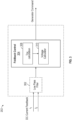
- FIG. 3 depicts a block diagram of a generator controller 202 performing foldback control for a generator according to one or more embodiments.
- the controller 202 receives the DC current feedback from the current sensing devices 212a/212b in the form of currents i 1 and i 2 .
- these currents can be passed through a low pass filter 302.
- the low pass filter 302 can be any type of low pass filter circuit design.
- the low pass filter 302 filters out noise that may be present in the DC current feedback signals i 1 and i 2 received from the current sensing device 212.
- the foldback control 304 module can calculate the voltage foldback by first determining the desired i CM as discussed above. This can be performed by i CM current calculation block 308.
- a voltage calculator 310 can be employed to command the generator to output a particular voltage based on the measured calculated i CM .
- a lookup table 310 can be utilized for calculating the voltage droop value by the droop control 304 module.
- the lookup table 310 can include stored voltage droop values with corresponding current feedback values.
- the drop control 304 module can determine the current feedback value and select the voltage droop value based on these values in the lookup table 310.
- the generator controller 202 can operate the generator 204 (from FIG. 2 ) to reduce its output voltage by the calculated foldback voltage value. For example, in a wound field synchronous machine, the generator controller would adjust the field current in order lower the output voltage. In the case of a PMG, a power converter can be included to lower the DC link voltage (e.g. an active rectifier). Another example for adjusting PMG output voltage includes adjusting the speed of the generator, if available as an option in the generator configuration. In one or more embodiments, the generator controllers 202a, 202b can receive DC current values from the current sensing devices 212a, 212b at a defined sampling rate. An exemplary sampling rate could be between 50 - 100 ⁇ s. Any sampling rate can be utilized herein.
- the generator controller 202a, 202b or any of the hardware referenced in the system 200 can be implemented by executable instructions and/or circuitry such as a processing circuit and memory.
- the processing circuit can be embodied in any type of central processing unit (CPU), including a microprocessor, a digital signal processor (DSP), a microcontroller, an application specific integrated circuit (ASIC), a field programmable gate array (FPGA), or the like.
- the memory may include random access memory (RAM), read only memory (ROM), or other electronic, optical, magnetic, or any other computer readable medium onto which is stored data and algorithms as executable instructions in a non-transitory form.
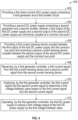
- FIG. 4 depicts a flow diagram of a method for passive power sharing of parallel sources according to one or more embodiments.
- the method 400 includes providing a first direct current (DC) power supply comprising a first generator and a first rectifier circuit, as shown in block 402.
- the method 400 includes providing a second DC power supply comprising a second generator and a second rectifier, wherein a first output of the first DC power supply and a second output of the second DC power supply are commonly coupled at a common bus point.
- the first DC power supply and the second DC power supply can be arranged as parallel power supplies to provide high voltage DC current to a DC bus on an aircraft for various applications.
- the method 400 also includes providing a first current sensing device coupled between the first output of the first DC power supply and the common bus point and providing a second current sensing device coupled between the second output of the second DC power supply and the common bus point, as shown in block 406.
- the method 400 includes receiving, by the first generator controller, a first current signal from the first current sensing device and a second current signal from a second current sensing device.
- the method 400 then includes analyzing, by the first generator controller, the first current signal to determine a first voltage foldback value based on the first current signal and the second current signal, as shown in block 410. This voltage foldback is based off of the common mode voltage as discussed above.
- the method 400 includes operating, by the first generator controller, the first DC power supply to reduce a first voltage output of the first DC power supply by the first voltage foldback value.
- exemplary is used herein to mean “serving as an example, instance or illustration.” Any embodiment or design described herein as “exemplary” is not necessarily to be construed as preferred or advantageous over other embodiments or designs.
- the terms “at least one” and “one or more” may be understood to include any integer number greater than or equal to one, i.e. one, two, three, four, etc.
- the terms “a plurality” may be understood to include any integer number greater than or equal to two, i.e. two, three, four, five, etc.
- connection may include both an indirect “connection” and a direct “connection.”
Landscapes
- Engineering & Computer Science (AREA)
- Power Engineering (AREA)
- Physics & Mathematics (AREA)
- Electromagnetism (AREA)
- General Physics & Mathematics (AREA)
- Radar, Positioning & Navigation (AREA)
- Automation & Control Theory (AREA)
- Direct Current Feeding And Distribution (AREA)
Applications Claiming Priority (1)
| Application Number | Priority Date | Filing Date | Title |
|---|---|---|---|
| US18/318,222 US12322961B2 (en) | 2023-05-16 | 2023-05-16 | Parallel channel voltage feedback |
Publications (1)
| Publication Number | Publication Date |
|---|---|
| EP4472005A1 true EP4472005A1 (de) | 2024-12-04 |
Family
ID=91129738
Family Applications (1)
| Application Number | Title | Priority Date | Filing Date |
|---|---|---|---|
| EP24176429.9A Pending EP4472005A1 (de) | 2023-05-16 | 2024-05-16 | Regelung parallel geschalteter gleichspannungsquellen |
Country Status (2)
| Country | Link |
|---|---|
| US (1) | US12322961B2 (de) |
| EP (1) | EP4472005A1 (de) |
Families Citing this family (1)
| Publication number | Priority date | Publication date | Assignee | Title |
|---|---|---|---|---|
| US20240351701A1 (en) * | 2023-04-20 | 2024-10-24 | Honeywell International Inc. | Electric hybrid emergency power unit |
Citations (3)
| Publication number | Priority date | Publication date | Assignee | Title |
|---|---|---|---|---|
| US20220371744A1 (en) * | 2021-05-24 | 2022-11-24 | Hamilton Sundstrand Corporation | Passive power sharing of paralleled sources |
| US20220376498A1 (en) * | 2021-05-24 | 2022-11-24 | Hamilton Sundstrand Corporation | Power sharing coordination of paralleled sources |
| US20230065688A1 (en) * | 2021-08-26 | 2023-03-02 | Hamilton Sundstrand Corporation | Parallel generator systems and controllers therefor |
Family Cites Families (6)
| Publication number | Priority date | Publication date | Assignee | Title |
|---|---|---|---|---|
| JP3373349B2 (ja) * | 1995-06-09 | 2003-02-04 | 三菱電機株式会社 | 整流器制御装置 |
| DK174717B1 (da) | 2002-05-22 | 2003-10-06 | Danfoss Drives As | Motorstyring indeholdende et elektronisk kredsløb til beskyttelse mod inrushstrømme |
| US7911244B2 (en) | 2007-11-30 | 2011-03-22 | Sony Corporation | Differential drive circuit and communication device |
| US8853885B2 (en) * | 2008-12-31 | 2014-10-07 | Linear Technology Corporation | Method and system for voltage independent power supply load sharing |
| US10830810B2 (en) | 2017-12-27 | 2020-11-10 | Hamilton Sundstrand Corporation | Method and system for detecting resolver/synchro faults |
| US12269350B2 (en) * | 2023-04-28 | 2025-04-08 | Bae Systems Controls Inc. | Common-mode current sensing system and protection method for power converters |
-
2023
- 2023-05-16 US US18/318,222 patent/US12322961B2/en active Active
-
2024
- 2024-05-16 EP EP24176429.9A patent/EP4472005A1/de active Pending
Patent Citations (3)
| Publication number | Priority date | Publication date | Assignee | Title |
|---|---|---|---|---|
| US20220371744A1 (en) * | 2021-05-24 | 2022-11-24 | Hamilton Sundstrand Corporation | Passive power sharing of paralleled sources |
| US20220376498A1 (en) * | 2021-05-24 | 2022-11-24 | Hamilton Sundstrand Corporation | Power sharing coordination of paralleled sources |
| US20230065688A1 (en) * | 2021-08-26 | 2023-03-02 | Hamilton Sundstrand Corporation | Parallel generator systems and controllers therefor |
Also Published As
| Publication number | Publication date |
|---|---|
| US12322961B2 (en) | 2025-06-03 |
| US20240388084A1 (en) | 2024-11-21 |
Similar Documents
| Publication | Publication Date | Title |
|---|---|---|
| US11355929B1 (en) | Power sharing coordination of paralleled sources | |
| US9257838B2 (en) | Circuit and method for allocating power among generators | |
| DE2701495C2 (de) | Elektronische Spannungs-Regeleinrichtung für Drehstrom-Generatoren | |
| CN103181052B (zh) | 用于稳定供电网的方法 | |
| EP2551515B1 (de) | Verfahren und Anordnung zum Betreiben eines Windparks innerhalb einer Spannungsgrenze | |
| US20070159737A1 (en) | Method for operating a wind turbine during a disturbance in the grid | |
| US20110313591A1 (en) | Method and system for controlling a power production entity | |
| EP4472005A1 (de) | Regelung parallel geschalteter gleichspannungsquellen | |
| EP3258587A1 (de) | Drehzahlvariable leistungsregelung mit konstanter frequenz | |
| Barker et al. | Further developments in autonomous converter control in a multi-terminal HVDC system | |
| EP3772791B1 (de) | System und verfahren zum hinzufügen einer hochspannungsgleichstromquelle zu einem leistungsbus | |
| EP4096042A1 (de) | Passive leistungsaufteilung parallelisierter quellen | |
| US20150014992A1 (en) | Operating wind turbines as damping loads | |
| CN106575869A (zh) | 用于飞行器的高压直流供电系统 | |
| EP4131696A2 (de) | Kaskadierter mehrfachrückkopplungsregler | |
| CN109391193B (zh) | 一种航空发电机用电流补偿变积分的调压方法 | |
| US11804789B2 (en) | System and method for protecting an electrical load of a drive system | |
| CA1115344A (en) | Voltage regulator for a.c. generator | |
| CN206135757U (zh) | 一种tfkx‑h系列可控船用相复励发电机电控线路结构 | |
| US12088108B2 (en) | Smart power router and protection for medium voltage DC distribution | |
| US11283382B1 (en) | Sensorless current determination in variable speed constant frequency (VSCF) generator control system | |
| US20150303677A1 (en) | Electric power generation system using permanent magnet machine with improved fault remediation | |
| CN116995963A (zh) | 一种高增益鲁棒控制调压器 | |
| Hall et al. | Nonlinear, Bidirectional Control of Three-Stage Aircraft Generators | |
| CN115207970A (zh) | 一种基于功率自适应分配的三级式发电机电能控制器及其控制方法 |
Legal Events
| Date | Code | Title | Description |
|---|---|---|---|
| PUAI | Public reference made under article 153(3) epc to a published international application that has entered the european phase |
Free format text: ORIGINAL CODE: 0009012 |
|
| STAA | Information on the status of an ep patent application or granted ep patent |
Free format text: STATUS: THE APPLICATION HAS BEEN PUBLISHED |
|
| AK | Designated contracting states |
Kind code of ref document: A1 Designated state(s): AL AT BE BG CH CY CZ DE DK EE ES FI FR GB GR HR HU IE IS IT LI LT LU LV MC ME MK MT NL NO PL PT RO RS SE SI SK SM TR |
|
| STAA | Information on the status of an ep patent application or granted ep patent |
Free format text: STATUS: REQUEST FOR EXAMINATION WAS MADE |
|
| 17P | Request for examination filed |
Effective date: 20250604 |