EP4472123A2 - Verfahren und vorrichtung zur sequenzbasierten signalverarbeitung - Google Patents
Verfahren und vorrichtung zur sequenzbasierten signalverarbeitung Download PDFInfo
- Publication number
- EP4472123A2 EP4472123A2 EP24179765.3A EP24179765A EP4472123A2 EP 4472123 A2 EP4472123 A2 EP 4472123A2 EP 24179765 A EP24179765 A EP 24179765A EP 4472123 A2 EP4472123 A2 EP 4472123A2
- Authority
- EP
- European Patent Office
- Prior art keywords
- sequence
- signal
- elements
- sequences
- signal processing
- Prior art date
- Legal status (The legal status is an assumption and is not a legal conclusion. Google has not performed a legal analysis and makes no representation as to the accuracy of the status listed.)
- Pending
Links
Images




Classifications
-
- H—ELECTRICITY
- H04—ELECTRIC COMMUNICATION TECHNIQUE
- H04L—TRANSMISSION OF DIGITAL INFORMATION, e.g. TELEGRAPHIC COMMUNICATION
- H04L27/00—Modulated-carrier systems
- H04L27/26—Systems using multi-frequency codes
- H04L27/2601—Multicarrier modulation systems
- H04L27/2614—Peak power aspects
- H04L27/262—Reduction thereof by selection of pilot symbols
-
- H—ELECTRICITY
- H04—ELECTRIC COMMUNICATION TECHNIQUE
- H04L—TRANSMISSION OF DIGITAL INFORMATION, e.g. TELEGRAPHIC COMMUNICATION
- H04L27/00—Modulated-carrier systems
- H04L27/26—Systems using multi-frequency codes
- H04L27/2601—Multicarrier modulation systems
- H04L27/2647—Arrangements specific to the receiver only
- H04L27/2649—Demodulators
- H04L27/265—Fourier transform demodulators, e.g. fast Fourier transform [FFT] or discrete Fourier transform [DFT] demodulators
-
- H—ELECTRICITY
- H04—ELECTRIC COMMUNICATION TECHNIQUE
- H04J—MULTIPLEX COMMUNICATION
- H04J13/00—Code division multiplex systems
- H04J13/0007—Code type
- H04J13/0055—ZCZ [zero correlation zone]
- H04J13/0059—CAZAC [constant-amplitude and zero auto-correlation]
- H04J13/0062—Zadoff-Chu
-
- H—ELECTRICITY
- H04—ELECTRIC COMMUNICATION TECHNIQUE
- H04L—TRANSMISSION OF DIGITAL INFORMATION, e.g. TELEGRAPHIC COMMUNICATION
- H04L27/00—Modulated-carrier systems
- H04L27/26—Systems using multi-frequency codes
- H04L27/2601—Multicarrier modulation systems
- H04L27/2602—Signal structure
- H04L27/261—Details of reference signals
- H04L27/2613—Structure of the reference signals
-
- H—ELECTRICITY
- H04—ELECTRIC COMMUNICATION TECHNIQUE
- H04L—TRANSMISSION OF DIGITAL INFORMATION, e.g. TELEGRAPHIC COMMUNICATION
- H04L27/00—Modulated-carrier systems
- H04L27/26—Systems using multi-frequency codes
- H04L27/2601—Multicarrier modulation systems
- H04L27/2626—Arrangements specific to the transmitter only
- H04L27/2627—Modulators
- H04L27/2634—Inverse fast Fourier transform [IFFT] or inverse discrete Fourier transform [IDFT] modulators in combination with other circuits for modulation
- H04L27/2636—Inverse fast Fourier transform [IFFT] or inverse discrete Fourier transform [IDFT] modulators in combination with other circuits for modulation with FFT or DFT modulators, e.g. standard single-carrier frequency-division multiple access [SC-FDMA] transmitter or DFT spread orthogonal frequency division multiplexing [DFT-SOFDM]
-
- H—ELECTRICITY
- H04—ELECTRIC COMMUNICATION TECHNIQUE
- H04L—TRANSMISSION OF DIGITAL INFORMATION, e.g. TELEGRAPHIC COMMUNICATION
- H04L5/00—Arrangements affording multiple use of the transmission path
- H04L5/0001—Arrangements for dividing the transmission path
- H04L5/0003—Two-dimensional division
- H04L5/0005—Time-frequency
- H04L5/0007—Time-frequency the frequencies being orthogonal, e.g. OFDM(A) or DMT
-
- H—ELECTRICITY
- H04—ELECTRIC COMMUNICATION TECHNIQUE
- H04L—TRANSMISSION OF DIGITAL INFORMATION, e.g. TELEGRAPHIC COMMUNICATION
- H04L5/00—Arrangements affording multiple use of the transmission path
- H04L5/003—Arrangements for allocating sub-channels of the transmission path
- H04L5/0044—Allocation of payload; Allocation of data channels, e.g. PDSCH or PUSCH
-
- H—ELECTRICITY
- H04—ELECTRIC COMMUNICATION TECHNIQUE
- H04L—TRANSMISSION OF DIGITAL INFORMATION, e.g. TELEGRAPHIC COMMUNICATION
- H04L5/00—Arrangements affording multiple use of the transmission path
- H04L5/003—Arrangements for allocating sub-channels of the transmission path
- H04L5/0048—Allocation of pilot signals, i.e. of signals known to the receiver
-
- H—ELECTRICITY
- H04—ELECTRIC COMMUNICATION TECHNIQUE
- H04L—TRANSMISSION OF DIGITAL INFORMATION, e.g. TELEGRAPHIC COMMUNICATION
- H04L25/00—Baseband systems
- H04L25/02—Details ; arrangements for supplying electrical power along data transmission lines
- H04L25/0202—Channel estimation
- H04L25/0224—Channel estimation using sounding signals
-
- H—ELECTRICITY
- H04—ELECTRIC COMMUNICATION TECHNIQUE
- H04L—TRANSMISSION OF DIGITAL INFORMATION, e.g. TELEGRAPHIC COMMUNICATION
- H04L27/00—Modulated-carrier systems
- H04L27/18—Phase-modulated carrier systems, i.e. using phase-shift keying
- H04L27/20—Modulator circuits; Transmitter circuits
- H04L27/2032—Modulator circuits; Transmitter circuits for discrete phase modulation, e.g. in which the phase of the carrier is modulated in a nominally instantaneous manner
- H04L27/2035—Modulator circuits; Transmitter circuits for discrete phase modulation, e.g. in which the phase of the carrier is modulated in a nominally instantaneous manner using a single or unspecified number of carriers
-
- H—ELECTRICITY
- H04—ELECTRIC COMMUNICATION TECHNIQUE
- H04L—TRANSMISSION OF DIGITAL INFORMATION, e.g. TELEGRAPHIC COMMUNICATION
- H04L27/00—Modulated-carrier systems
- H04L27/26—Systems using multi-frequency codes
- H04L27/2601—Multicarrier modulation systems
- H04L27/2614—Peak power aspects
Definitions
- This application relates to the field of communications technologies, and in particular, to a sequence-based signal processing method and apparatus.
- a demodulation reference signal (demodulation reference signal, DMRS) is used to perform channel estimation, and to further perform signal demodulation.
- DMRS demodulation reference signal
- the DMRS may be obtained based on a Gold sequence, a computer generated sequence (computer generated sequence, CGS), or a Zadoff-Chu sequence (ZC sequence).
- a Gold sequence a computer generated sequence
- CGS computer generated sequence
- ZC sequence a Zadoff-Chu sequence
- a discrete fourier transform spread orthogonal frequency division multiplexing multiple access (discrete fourier transform spread OFDM, DFT-s-OFDM) waveform, and a ⁇ /2 binary phase shift keying (binary phase shift keying, BPSK) modulation scheme may be supported in being used on a physical uplink shared channel (physical uplink shared channel, PUSCH).
- a discrete fourier transform spread orthogonal frequency division multiplexing multiple access (discrete fourier transform spread OFDM, DFT-s-OFDM) waveform
- a ⁇ /2 binary phase shift keying (binary phase shift keying, BPSK) modulation scheme may be supported in being used on a physical uplink shared channel (physical uplink shared channel, PUSCH).
- sequences used for the existing DMRS cannot meet a requirement of a communication application environment in which a reference signal is sent on the PUSCH.
- This application provides a sequence-based signal processing method and apparatus.
- a sequence that can satisfy a condition that frequency domain flatness of a sequence is relatively good and a PAPR value is relatively small is provided, and a first signal is generated based on the sequence.
- the first signal is a reference signal of a signal carried on a PUSCH
- the relatively good frequency domain flatness of the sequence, and the relatively small PAPR value may be maintained for the sent first signal. Therefore, a requirement of a communication application environment in which the reference signal is sent can be met.
- a sequence-based signal processing method includes: determining a sequence ⁇ x n ⁇ including N elements, where N is equal to 18, x n is an element in the sequence ⁇ x n ⁇ , and the sequence ⁇ x n ⁇ satisfies a preset condition; generating a first signal based on the sequence ⁇ x n ⁇ ; and sending the first signal.
- n y ( n + M ) mod N , where n traverses 0, 1, ... N-1.
- n may represent an index of each element in the sequence ⁇ x n ⁇ .
- M ⁇ ⁇ 0,1,2, ... , N - 1 ⁇ , and it should be understood that M may be an integer less than N.
- values of u may be the same for all elements in a same currently selected sequence, and values of u may be different for elements in different sequences.
- the value of M is constant and fixed.
- the value of M may be 1 or another integer less than N.
- Sequences in the first sequence set include:
- a simulation result shows that sequences ⁇ x n ⁇ that correspond to the sequences described above and equivalent sequences of the sequences after ⁇ /2 BPSK modulation is performed on the sequences and the equivalent sequences of the sequences may satisfy the following conditions.
- Time-domain filtering is used.
- a filtering coefficient is [0.1, 1, 0.1]
- a PAPR is less than 2.89 dB.
- a filtering coefficient is [0.16, 1, 0.16]
- a PAPR is less than 2.35 dB.
- a filtering coefficient is [0.22, 1, 0.22]
- a PAPR is less than 1.76 dB.
- a filtering coefficient is [0.28, 1, 0.28]
- a PAPR is less than 1.27 dB.
- a maximum normalized power is less than 0.5 dB, and a minimum normalized power is greater than -0.5 dB. That is, frequency domain flatness of the sequences ⁇ s n ⁇ is relatively good.
- the first signal may also satisfy the foregoing condition 1 and condition 2.
- a relatively small PAPR of the sent first signal may help reduce energy consumption of a transmit end (such as a terminal device), and relatively good frequency domain flatness of the sent first signal is advantageous to improving performance of performing channel estimation by using the first signal.
- the first signal is generated based on the sequence ⁇ x n ⁇ .
- the sequence ⁇ x n ⁇ may satisfy a condition in which frequency domain flatness of a sequence is relatively good and a PAPR value is relatively small, so that when the first signal is a reference signal of a signal carried on a PUSCH, the relatively good frequency domain flatness of the sequence, and the relatively small PAPR value may be maintained for the sent first signal. Therefore, a requirement of a communication application environment in which the reference signal is sent can be met.
- the modulation scheme of the first signal is the ⁇ /2 BPSK.
- the first signal is a reference signal, or the first signal is used to carry communication information.
- the first signal is a reference signal of a second signal
- a modulation scheme of the second signal is ⁇ /2 binary phase shift keying BPSK.
- the second signal is carried on a shared channel.
- the set of the sequences ⁇ s n ⁇ includes at least one sequence in a second sequence set, and the second sequence set includes some or all of the sequences that are in the first sequence set.
- the generating a first signal based on the sequence ⁇ x n ⁇ includes: performing discrete fourier transform on the N elements that are in the sequence ⁇ x n ⁇ , to obtain a sequence ⁇ f n ⁇ including N elements; respectively mapping the N elements in the sequence ⁇ f n ⁇ to N subcarriers, to obtain a frequency domain signal including N elements; and generating the first signal based on the frequency domain signal.
- the N subcarriers are N consecutive subcarriers or N evenly spaced subcarriers.
- the first signal processing method before the performing discrete fourier transform on the N elements that are in the sequence ⁇ x n ⁇ , the first signal processing method further includes: filtering the sequence ⁇ x n ⁇ ; or after the performing discrete fourier transform on the N elements that are in the sequence ⁇ x n ⁇ , the first signal processing method further includes: filtering the sequence ⁇ x n ⁇ .
- the set of the sequences ⁇ s n ⁇ including the element s n includes at least a first sequence that is in the first sequence set, or an equivalent sequence of a first sequence that is in the first sequence set.
- Sequences in the first sequence set include:
- the first signal is generated based on the sequence ⁇ x n ⁇ .
- the sequence ⁇ x n ⁇ may satisfy a condition in which frequency domain flatness of a sequence is relatively good and a PAPR value is relatively small, so that when the first signal is a reference signal of a signal carried on a PUSCH, the relatively good frequency domain flatness of the sequence, and the relatively small PAPR value may be maintained for the sent first signal. Therefore, a requirement of a communication application environment in which the reference signal is sent can be met.
- the set of the sequences ⁇ s n ⁇ includes at least one sequence in a second sequence set, and the second sequence set includes some or all of the sequences that are in the first sequence set.
- the receiving a first signal, to obtain N elements in a sequence ⁇ x n ⁇ includes: obtaining the first signal on N consecutive subcarriers, or obtaining the first signal on N evenly spaced subcarriers; obtaining N elements in a sequence ⁇ f n ⁇ , where N is a positive integer greater than 1, the first signal is generated by mapping the sequence ⁇ f n ⁇ to the N subcarriers, and f n is an element in the sequence ⁇ f n ⁇ ; and performing inverse discrete fourier transform on the sequence ⁇ f n ⁇ , to obtain the N elements that are in the sequence ⁇ x n ⁇ .
- the first signal is a reference signal of a second signal
- a modulation scheme of the second signal is ⁇ /2 binary phase shift keying BPSK.
- the set of the sequences ⁇ s n ⁇ including the element s n includes at least a first sequence that is in the first sequence set, or an equivalent sequence of a first sequence that is in the first sequence set.
- the first sequence set may further include another feasible sequence with a length of 18.
- the first sequence set may further include a sequence: ⁇ 1, 1, 0, 1, 1, 0, 1, 0, 1, 0, 1, 1, 0, 0, 0, 0, 0, 1 ⁇ .
- a signal processing apparatus may be a communications device, or may be a chip in a communications device, and the communications device or the chip has a function of implementing the sequence-based signal processing method according to any one of the first aspect or the possible designs of the first aspect.
- the function may be implemented by using hardware, or implemented by using hardware executing corresponding software.
- the hardware or the software includes one or more units corresponding to the foregoing function.
- the communications device includes a processing unit and a transceiver unit.
- the processing unit may be a processor, the transceiver unit may be a transceiver, and the transceiver includes a radio frequency circuit.
- the communications device further includes a storage unit, and the storage unit may be, for example, a memory.
- the storage unit is configured to store a computer-executable instruction
- the processing unit is connected to the storage unit, and the processing unit executes the computer-executable instruction stored in the storage unit, so that the communications device performs the sequence-based signal processing method according to any one of the first aspect or the possible designs of the first aspect.
- the chip includes a processing unit and a transceiver unit.
- the processing unit may be a processor, and the transceiver unit may be an input/output interface, a pin, a circuit, or the like on the chip.
- the processing unit may execute the computer-executable instruction stored in the storage unit, so that the chip performs the sequence-based signal processing method according to any one of the first aspect or the possible designs of the first aspect.
- the storage unit may be a storage unit (for example, a register or a buffer) in the chip, or the storage unit may be a storage unit (for example, a read-only memory (read-only memory, ROM)) that is in the communications device and that is located outside the chip, another type of static storage device (for example, a random access memory (random access memory, RAM)) that can store static information and an instruction, or the like.
- a storage unit for example, a register or a buffer
- the storage unit may be a storage unit (for example, a read-only memory (read-only memory, ROM)) that is in the communications device and that is located outside the chip, another type of static storage device (for example, a random access memory (random access memory, RAM)) that can store static information and an instruction, or the like.
- ROM read-only memory
- RAM random access memory
- the processor mentioned in the third aspect may be a central processing unit (central processing unit, CPU), a microprocessor, or an application-specific integrated circuit (application specific integrated circuit, ASIC), or may be one or more integrated circuits for controlling program execution of the sequence-based signal processing method according to any one of the first aspect or the possible designs of the first aspect.
- CPU central processing unit
- ASIC application specific integrated circuit
- a signal processing apparatus may be a communications device, or may be a chip in a communications device, and the communications device or the chip has a function of implementing the sequence-based signal processing method according to any one of the second aspect or the possible designs of the second aspect.
- the function may be implemented by using hardware, or implemented by using hardware executing corresponding software.
- the hardware or the software includes one or more units corresponding to the foregoing function.
- the communications device includes a processing unit and a transceiver unit.
- the processing unit may be a processor, the transceiver unit may be a transceiver, and the transceiver includes a radio frequency circuit.
- the communications device further includes a storage unit, and the storage unit may be, for example, a memory.
- the storage unit is configured to store a computer-executable instruction
- the processing unit is connected to the storage unit, and the processing unit executes the computer-executable instruction stored in the storage unit, so that the communications device performs the sequence-based signal processing method according to any one of the second aspect or the possible designs of the second aspect.
- the chip includes a processing unit and a transceiver unit.
- the processing unit may be a processor, and the transceiver unit may be an input/output interface, a pin, a circuit, or the like on the chip.
- the processing unit may execute the computer-executable instruction stored in the storage unit, so that the chip performs the sequence-based signal processing method according to any one of the second aspect or the possible designs of the second aspect.
- the storage unit may be a storage unit (for example, a register or a buffer) in the chip, or the storage unit may be a storage unit (for example, a read-only memory (read-only memory, ROM)) that is in the communications device and that is located outside the chip, another type of static storage device (for example, a random access memory (random access memory, RAM)) that can store static information and an instruction, or the like.
- a storage unit for example, a register or a buffer
- the storage unit may be a storage unit (for example, a read-only memory (read-only memory, ROM)) that is in the communications device and that is located outside the chip, another type of static storage device (for example, a random access memory (random access memory, RAM)) that can store static information and an instruction, or the like.
- ROM read-only memory
- RAM random access memory
- the processor mentioned in the fourth aspect may be a central processing unit (central processing unit, CPU), a microprocessor, or an application-specific integrated circuit (application specific integrated circuit, ASIC), or may be one or more integrated circuits for controlling program execution of the sequence-based signal processing method according to any one of the second aspect or the possible designs of the second aspect.
- CPU central processing unit
- ASIC application specific integrated circuit
- a communications system includes the signal processing apparatus provided in the third aspect of the embodiments of this application, and the signal processing apparatus provided in the fourth aspect of the embodiments of this application.
- a computer-readable storage medium where a computer program is stored in the computer-readable storage medium, and when the computer program is executed by a computer, the computer is enabled to implement the method according to any possible implementation of the first aspect or the second aspect.
- a computer program product including an instruction is provided, where when the instruction is executed by a computer, the computer is enabled to implement the method according to any possible implementation of the first aspect or the second aspect.
- the first signal is generated based on the sequence ⁇ x n ⁇ .
- the sequence ⁇ x n ⁇ may satisfy the condition in which the frequency domain flatness of the sequence is relatively good and the PAPR value is relatively small, so that when the first signal is the reference signal of the signal carried on the PUSCH, the relatively good frequency domain flatness of the sequence, and the relatively small PAPR value may be maintained for the sent first signal. Therefore, the requirement of the communication application environment in which the reference signal is sent can be met.
- a plurality of means two or more than two.
- words such as “first”, “second”, and the like are used to distinguish between same objects or similar objects whose functions and purposes are basically the same.
- the terms such as “first” and “second” do not constitute a limitation on a quantity or an execution sequence, and that the terms such as “first” and “second” do not indicate a definite difference.
- the terms “include” and “have” in the embodiments of this application are not exclusive. For example, a process, method, system, product, or device including a series of steps or modules is not limited to the listed steps or modules, and may further include a step or module that is not listed.
- a channel estimation matrix is usually obtained through calculation using a reference signal, to demodulate data information.
- a reference signal to demodulate data information.
- a DFT-s-OFDM waveform and a ⁇ /2 BPSK modulation scheme are supported in being used for a DMRS used on a PUSCH (the DMRS used on the PUSCH may be referred to as an uplink DMRS).
- a Gold-sequence-based sequence and a CGS-based sequence are supported in being used for the DMRS.
- the Gold-sequence-based sequence and the CGS-based sequence are used for the DMRS, if proper filtering cannot be performed, frequency flatness of the sequence is relatively poor, and this is not advantageous to performing channel estimation.
- a ZC-sequence-based sequence is supported in being used for the DMRS.
- the ZC sequence satisfies a constant amplitude zero auto-correlation (constant amplitude zero auto-correlation, CAZAC) sequence property.
- a periodicity of the ZC sequence is a length of the sequence, and the ZC sequence satisfies a centrosymmety property.
- the ZC sequence has great self-correlation and cross-correlation.
- a PAPR of the DMRS is greater than a PAPR of transmitted data. Consequently, out-of-band spurious emission and in-band signal loss of a pilot signal is caused, and channel estimation performance is affected, or uplink coverage is limited.
- the embodiments of this application provide a sequence-based signal processing method and apparatus.
- the sequence-based signal processing method is mainly described from a receiver side and a transmitter side in the communications system or the communications application environment.
- the receiver side may be a network device
- the transmitter side may be a terminal device.
- the receiver side may be a terminal device
- the transmitter side may be a network device.
- an example in which the receiver side is the network device, and the transmitter side is the terminal device is used for description.
- this application is not limited thereto.
- the terminal device in the embodiments of this application may be user equipment.
- the user equipment may be a wired device, or may be a wireless device.
- the wireless device may be a handheld device having a wireless connection function, another processing device connected to a wireless modem, or a mobile terminal that communicates with one or more core networks through a radio access network.
- the wireless terminal may be a mobile telephone, a mobile phone, a computer, a tablet computer, a personal digital assistant (personal digital assistant, PDA), a mobile internet device (mobile internet device, MID), a wearable device, an electronic reader, or the like.
- the wireless terminal may alternatively be a portable, a pocket-sized, a handheld, a computer built-in, or an in-vehicle mobile device.
- the wireless terminal may be a mobile station or an access point.
- the network device in the embodiments of this application may be a base station.
- the base station may include macro base stations, micro base stations, relay nodes, access points, base station controllers, transmission reception points, and the like that are in various forms. In systems in which different radio access technologies are used, specific names of the base station may be different.
- a demodulation reference signal in the embodiments of this application is a reference signal that can be used to demodulate data or signaling. Based on different transmission directions, demodulation reference signals may be classified into an uplink demodulation reference signal and a downlink demodulation reference signal.
- the demodulation reference signal may be a DMRS in the LTE protocol or the NR protocol, or may be another reference signal that is defined in a future protocol and that is used to implement a same or similar function. This is not limited in the embodiments of this application.
- the DMRS may be carried on a physical shared channel and sent together with a data signal, to demodulate the data signal carried on the physical shared channel.
- the DMRS is sent together with downlink data on a physical downlink shared channel (physical downlink share channel, PDSCH), or the DMRS is sent together with uplink data on the physical uplink shared channel (physical uplink share channel, PUSCH).
- the DMRS may alternatively be carried on a physical control channel and sent together with control signaling, to demodulate the control signaling carried on the physical control channel.
- the DMRS is sent together with downlink control signaling on a PDCCH, or the DMRS is sent together with uplink control signaling on aPUCCH.
- the demodulation reference signal may include the downlink demodulation reference signal used for demodulation on the PDCCH or the PDSCH, or may include the uplink demodulation reference signal used for demodulation on the PUCCH or the PUSCH.
- the demodulation reference signal is referred to as the DMRS for short.
- FIG. 1 is a schematic interaction diagram of a sequence-based signal processing method 100 according to an embodiment of this application.
- a transmitter side is a terminal device
- a receiver side is a network device.
- the signal processing method 100 includes the following steps.
- the terminal device determines a sequence ⁇ x n ⁇ including N elements, where N is equal to 18, x n is an element in the sequence ⁇ x n ⁇ , and the sequence ⁇ x n ⁇ satisfies the following preset condition.
- n y ( n + M ) mod N , where n traverses 0, 1, ... N-1.
- n may represent an index of each element in the sequence ⁇ x n ⁇ .
- M ⁇ ⁇ 0,1,2,..., N - 1 ⁇ , and it should be understood that M may be an integer less than N.
- Sequences in the first sequence set include:
- step 110 may be performed as follows: After accessing a network, the terminal device determines the sequence ⁇ x n ⁇ including the N elements. Alternatively, when the terminal device accesses a network, the network device determines and configures a sequence ⁇ b n ⁇ for the terminal device, and the terminal device determines, based on the sequence ⁇ b n ⁇ , the sequence ⁇ x n ⁇ including the N elements, where N is a positive integer greater than 1.
- values of u may be the same for all elements in a same currently selected sequence, and values of u may be different for elements in different sequences.
- the value of M is constant and fixed.
- the value of M may be 1 or another integer less than N.
- the set of the sequences ⁇ s n ⁇ is pre-stored in the terminal device and the network device.
- the network device determines a to-be-used sequence (denoted as a first sequence) in the set of the sequences ⁇ s n ⁇ , and then configures the first sequence for the terminal device.
- the terminal device may generate the sequence ⁇ x n ⁇ based on the foregoing preset condition.
- the network device may send, to the terminal device, a number of the first sequence, an identifier of the first sequence, a cell identity of the first sequence, or another piece of information that can identify the first sequence.
- the network device configures the first sequence for the terminal device.
- the set of the sequences ⁇ s n ⁇ is pre-stored in the terminal device and the network device.
- the terminal device generates, based on the foregoing preset condition, a corresponding sequence ⁇ x n ⁇ for each sequence that is in the set of the sequences ⁇ s n ⁇ .
- the network device also generates, based on the foregoing preset condition, the corresponding sequence ⁇ x n ⁇ for each sequence that is in the set of the sequences ⁇ s n ⁇ .
- the network device selects a to-be-used sequence (denoted as a second sequence) from these generated sequences ⁇ x n ⁇ , and then configures the second sequence to the terminal device.
- the terminal device learns of a to-be-used sequence ⁇ x n ⁇ based on the configuration of the network device, and may generate a first signal based on the sequence ⁇ x n ⁇ .
- the network device may send, to the terminal device, a number of the second sequence, an identifier of the second sequence, a cell identity of the second sequence, or another piece of information that can identify the second sequence.
- the network device configures the second sequence for the terminal device.
- a modulation scheme of the first signal is ⁇ /2 binary phase shift keying (BPSK).
- a waveform of the first signal may be DFT-s-OFDM.
- the terminal device generates the first signal based on the sequence ⁇ x n ⁇ .
- the network device receives the first signal sent by the terminal device.
- the network device obtains the sequence ⁇ x n ⁇ , and processes the first signal based on the N elements that are in the sequence ⁇ x n ⁇ .
- a sequence with a relatively small PAPR also has a relatively small CM value. It is verified that CM values of sequences ⁇ s n ⁇ are all small; in other words, PAPRs of the sequences ⁇ s n ⁇ are relatively small.
- a simulation result shows that sequences ⁇ x n ⁇ that correspond to the sequences described above and equivalent sequences of the sequences after ⁇ /2 BPSK modulation is performed on the sequences and the equivalent sequences of the sequences may satisfy the following conditions.
- Time-domain filtering is used.
- a filtering coefficient is [0.1, 1, 0.1]
- a PAPR is less than 2.89 dB.
- a filtering coefficient is [0.16, 1, 0.16]
- a PAPR is less than 2.35 dB.
- a filtering coefficient is [0.22, 1, 0.22]
- a PAPR is less than 1.76 dB.
- a filtering coefficient is [0.28, 1, 0.28]
- a PAPR is less than 1.27 dB.
- a maximum normalized power is less than 0.5 dB, and a minimum normalized power is greater than -0.5 dB. That is, frequency domain flatness of the sequences ⁇ s n ⁇ is relatively good.
- the first signal may also satisfy the foregoing condition 1 and condition 2.
- a relatively small PAPR of the sent first signal may help reduce energy consumption of a transmit end (such as the terminal device), and relatively good frequency domain flatness of the sent first signal is advantageous to improving performance of performing channel estimation by using the first signal.
- the first signal is generated based on the sequence ⁇ x n ⁇ .
- the sequence ⁇ x n ⁇ may satisfy a condition in which frequency domain flatness of a sequence is relatively good and a PAPR value is relatively small, so that when the first signal is a reference signal of a signal carried on a PUSCH, the relatively good frequency domain flatness of the sequence, and the relatively small PAPR value may be maintained for the sent first signal. Therefore, a requirement of a communication application environment in which the reference signal is sent can be met.
- the first signal is a reference signal.
- the first signal may be any one of the following: uplink control information (uplink control information, UCI), a DMRS, a sounding reference signal (Sounding Reference Signal, SRS), a phase-tracking reference signal (Phase-tracking Reference Signal, PTRS), acknowledgment (acknowledgment, ACK) information, negative acknowledgment (negative acknowledgment, NACK) information, or uplink scheduling request (scheduling request, SR) information.
- uplink control information uplink control information
- UCI uplink control information
- DMRS Downlink Reference Signal
- SRS Sounding Reference Signal
- PTRS phase-tracking Reference Signal
- acknowledgment acknowledgment
- NACK negative acknowledgment
- NACK negative acknowledgment
- uplink scheduling request scheduling request
- the first signal is a reference signal of a second signal
- a modulation scheme of the second signal is the ⁇ /2 binary phase shift keying BPSK.
- the set of the sequences ⁇ s n ⁇ includes one or more of all the sequences that are in the first sequence set.
- the set of the sequences ⁇ s n ⁇ includes one or more of some sequences that are in the first sequence set.
- the set of the sequences ⁇ s n ⁇ includes one or more sequences that are in a second sequence set, and the second sequence set includes some sequences that are in the first sequence set.
- the second sequence set includes first 10 sequences of 20 sequences included in the first sequence set described above.
- the first sequence set may further include another feasible sequence with a length of 18.
- the first sequence set may further include a sequence: ⁇ 1, 1, 0, 1, 1, 0, 1, 0, 1, 0, 1, 1, 0, 0, 0, 0, 0, 1 ⁇ .
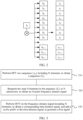
- FIG. 2 is a schematic diagram of determining a sequence ⁇ x n ⁇ by a terminal device.
- a procedure in which the terminal device determines the sequence ⁇ x n ⁇ includes the following steps.
- n may represent an index of each element in the sequence, and N is 18.
- the value of u is not fixed.
- the values of u may be the same for all the elements in the same currently selected sequence, and the values of u may be different for the elements in the different sequences.
- the set of the sequences ⁇ s n ⁇ is pre-stored in the terminal device and the network device.
- the network device determines the to-be-used sequence (denoted as the first sequence) in the set of the sequences ⁇ s n ⁇ , and then configures the first sequence for the terminal device.
- the network device may send, to the terminal device, the number of the first sequence, the identifier of the first sequence, the cell identity of the first sequence, or the another piece of information that can identify the first sequence.
- the set of the sequences ⁇ s n ⁇ is pre-stored in the terminal device and the network device.
- the network device selects a to-be-used sequence (denoted as a third sequence) from these generated sequences ⁇ b n ⁇ , and then configures the third sequence to the terminal device.
- the terminal device learns of a to-be-used sequence ⁇ b n ⁇ based on the configuration of the network device.
- the network device may send, to the terminal device, a number of the third sequence, an identifier of the third sequence, a cell identity of the third sequence, or another piece of information that can identify the third sequence.
- the first signal is generated based on the sequence ⁇ x n ⁇ .
- the sequence ⁇ x n ⁇ may satisfy the condition in which the frequency domain flatness of the sequence is relatively good and the PAPR value is relatively small, so that when the first signal is the reference signal of the signal carried on the PUSCH, the relatively good frequency domain flatness of the sequence, and the relatively small PAPR value may be maintained for the sent first signal. Therefore, the requirement of the communication application environment in which the reference signal is sent can be met.
- the following describes a process of generating the first signal based on the sequence ⁇ x n ⁇ in step 120.
- step 120 includes: performing discrete fourier transform (discrete fourier transform, DFT) on the N elements that are in the sequence ⁇ x n ⁇ , to obtain a sequence ⁇ f n ⁇ including N elements; and respectively mapping the N elements in the sequence ⁇ f n ⁇ to N subcarriers, to generate the first signal.
- DFT discrete fourier transform
- the method before the performing discrete fourier transform on the N elements that are in the sequence ⁇ x n ⁇ , the method further includes: filtering the sequence ⁇ x n ⁇ ,
- the method further includes: filtering the sequence ⁇ x n ⁇ ,
- the respectively mapping the N elements in the sequence ⁇ f n ⁇ to N subcarriers, to generate the first signal includes: respectively mapping the N elements in the sequence ⁇ f n ⁇ to the N subcarriers, to generate a frequency domain signal including N elements; performing inverse fast fourier transform on the frequency domain signal, to obtain a time-domain signal; and adding a cyclic prefix to the time-domain signal, to generate the first signal.
- the respectively mapping the N elements in the sequence ⁇ f n ⁇ to N subcarriers, to generate the first signal includes: respectively mapping the N elements in the sequence ⁇ f n ⁇ to the N subcarriers, to generate a frequency domain signal including N elements; and using the frequency domain signal as the signal.
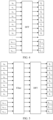
- FIG. 3 is a schematic flowchart of generating a sequence ⁇ x n ⁇ .
- a procedure of generating the sequence ⁇ x n ⁇ includes the following steps.
- the terminal device performs DFT on the sequence ⁇ x n ⁇ including the N elements, to obtain the sequence ⁇ f n ⁇ .
- a filter may not be used.
- the terminal device may first process the sequence ⁇ x n ⁇ by using a filter, and perform the DFT on a sequence ⁇ x n ⁇ obtained after the filtering processing, to obtain the sequence ⁇ f n ⁇ .
- the terminal device may first perform the DFT on the sequence ⁇ x n ⁇ , and then perform processing by using a filter, to obtain the sequence ⁇ f n ⁇ .
- the terminal device respectively maps the N elements in the sequence ⁇ f n ⁇ to the N subcarriers, to obtain an N-point frequency domain signal.
- the N-point frequency domain signal may be the frequency domain signal including the N elements.
- the terminal device respectively maps the N elements in the sequence ⁇ f n ⁇ to N consecutive subcarriers.
- elements, from f 0 to f N -1 , in the sequence ⁇ f n ⁇ are mapped, respectively, to the N consecutive subcarriers whose numbers are s+0, s+1, ... s+N-1.
- s represents an index, in subcarriers in a communications system, of the first subcarrier of the N subcarriers to which the sequence ⁇ f n ⁇ is mapped.
- the terminal device sequentially maps the N elements in the sequence ⁇ f n ⁇ to the N subcarriers in descending order of the subcarriers.
- the frequency domain subcarrier is a minimum unit of a frequency domain resource, and is used to carry data information.
- the terminal device sequentially maps the N elements in the sequence ⁇ f n ⁇ to the N subcarriers in ascending order of the subcarriers.
- Mapping one element in the sequence ⁇ f n ⁇ to one subcarrier means that the element is carried on the subcarrier. After the mapping, the terminal device sends data by using a radio frequency, and this is equivalent to that the terminal device sends the element on the subcarrier.
- different terminal devices may occupy different subcarriers to send the data.
- Locations of the N subcarriers in a plurality of subcarriers in the communications system may be predefined or may be configured by the network device by using signaling.
- the terminal device may respectively map the N elements in the sequence ⁇ f n ⁇ to N evenly spaced subcarriers.
- an interval between the N subcarriers is 1, and the N subcarriers are evenly distributed in frequency domain.
- elements, from f 0 to f N -1 , in the sequence ⁇ f n ⁇ are mapped, respectively, to the N evenly spaced subcarriers whose numbers are s+0, s+2, ... s+2(N-1).
- a manner of respectively mapping the N elements in the sequence ⁇ f n ⁇ to the N subcarriers is not limited to the foregoing manners.
- the terminal device performs the inverse fast fourier transform (inverse fast fourier transformation, IFFT) on the frequency domain signal including the N elements, to obtain the corresponding time-domain signal, and adds the cyclic prefix to the time-domain signal, to generate the first signal.
- IFFT inverse fast fourier transformation
- the time-domain signal obtained after the terminal device performs the IFFT on the frequency domain signal including the N elements is an orthogonal frequency division multiplexing (orthogonal frequency division multiplexing, OFDM) symbol.
- the terminal device sends the first signal by using the radio frequency.
- the terminal device sends the first signal by using the radio frequency.
- the terminal device sends, on the N subcarriers, the first signal that carries the sequence ⁇ f n ⁇ .
- the terminal device may send, on one OFDM symbol, the first signal that carries the sequence ⁇ f n ⁇ , or may send, on a plurality of OFDM symbols, the first signal carrying the sequence ⁇ f n ⁇ .
- step 120 includes: processing, by using a molding filter, the N elements that are in the sequence ⁇ x n ⁇ , to obtain the sequence ⁇ f n ⁇ I including the N elements; and respectively mapping the N elements in the sequence ⁇ f n ⁇ to the N subcarriers, to generate the first signal.
- the N subcarriers are the N consecutive subcarriers or the N evenly spaced subcarriers.
- the first signal in this application may be the reference signal, but this application is not limited thereto.
- the first signal is a signal used to carry communication information.
- the communication information may be carried in a sequence selection manner, or may be carried in a sequence modulation manner. This is not limited in this application.
- the communication information is carried in the sequence selection manner.
- 2 n orthogonal sequences are allocated to one terminal device.
- the 2 n orthogonal sequences may be 2 n cyclic shifts of one root sequence, and the 2 n orthogonal sequences can carry n-bit information.
- n-bit information For example, it is assumed that there are four sequences numbered 0, 1, 2, and 3, where 00 corresponds to the sequence 0, 01 corresponds to the sequence 1, 10 corresponds to the sequence 2, and 11 corresponds to the sequence 3. In this way, the four sequences can carry 2-bit information.
- the communication information is carried in the sequence modulation manner.
- one sequence is allocated to one user, and a modulation symbol is generated based on information that is of the user and that needs to be transmitted.
- the modulation symbol includes but is not limited to a BPSK symbol, a QPSK symbol, an 8QAM symbol, a 16QAM symbol, and the like.
- the modulation symbol is multiplied by the sequence, to generate an actual sent sequence. It is assumed that one BPSK symbol is 1 or -1.
- the sent sequence may be a sequence ⁇ x n ⁇ or ⁇ - x n ⁇ .
- the terminal device may determine, based on A and the sequence ⁇ b n ⁇ , the sequence ⁇ x n ⁇ that includes the N elements and that is configured by the network device.
- the first signal is the signal used to carry the communication information, and the communication information is carried in the sequence modulation manner, the first signal carries different information based on different values of A in the sequence ⁇ x n ⁇ .
- A may be a modulation symbol.
- A is obtained after a data information bit or a control information bit is modulated.
- A is carried on the N elements included in the sequence ⁇ x n ⁇ , and A does not change with n.
- A is a constant.
- A 1.
- A may be a symbol known to both the terminal device and the network device.
- A may indicate an amplitude.
- A is a constant in a transmission time unit does not mean that A is fixed, and A may change when the first signal is sent at different moments.
- all the N elements included in the sequence ⁇ x n ⁇ are reference signals, and A is an amplitude of the reference signals.
- the following describes a process of processing the first signal after the receiver side, namely, the network device receives the first signal.
- step 130 the network device receives the first signal sent by the terminal device.
- the network device receives, based on locations that are predefined or configured by a base station and that are of the N subcarriers in the subcarriers of the communications system, the first signal that is on the N subcarriers.
- the network device obtains the first signal on the N consecutive subcarriers or the N evenly spaced subcarriers.
- step 140 the network device obtains the sequence ⁇ x n ⁇ , and processes the first signal based on the N elements that are in the sequence ⁇ x n ⁇ .
- a process in which the network device obtains the N elements that are in the sequence ⁇ x n ⁇ includes: receiving, by the network device, the first signal on the N subcarriers; removing the cyclic prefix of the first signal, to obtain the time-domain signal; performing M-point DFT on the time-domain signal, to obtain the frequency domain signal including the N elements, where M is greater than or equal to N; determining, based on the frequency domain signal including the N elements, the N elements that are in the sequence ⁇ f n ⁇ ; and performing inverse discrete fourier transform (inverse discrete fourier transformation, IDFT) on the sequence ⁇ f n ⁇ , to obtain the N elements that are in the sequence ⁇ x n ⁇ .
- IDFT inverse discrete fourier transform
- the network device and the terminal device already know a used sequence ⁇ s n ⁇
- N-1 N is equal to 18
- A is the non-zero complex number
- j ⁇ 1 , M ⁇ ⁇ 0,1,2,..., N - 1 ⁇
- the set of the sequences ⁇ s n ⁇ includes at least one sequence in the foregoing first sequence set.
- N-1 N is equal to 18
- A is the non-zero complex number
- j ⁇ 1 , M ⁇ ⁇ 0,1,2, ..., N - 1 ⁇
- the set of the sequences ⁇ s n ⁇ includes at least one sequence in the foregoing first sequence set.
- the network device may directly process the first signal by using N elements that are in the sequence
- the first signal is the reference signal of the second signal.
- the second signal is carried on a shared channel.
- the network device may obtain, by processing the first signal based on the sequence ⁇ x n ⁇ , a channel matrix H of the shared channel on which the second signal is carried.
- the method further includes: demodulating the second signal based on the channel matrix.
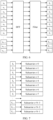
- FIG. 9 a process in which the network device processes the first signal is shown in FIG. 9 .
- the network device obtains all possible sequences by traversing a locally stored sequence ⁇ x n ' ⁇ .
- the network device separately performs related processing on the obtained sequence ⁇ x n ⁇ , and all the possible sequences of the sequence ⁇ x n ' ⁇ , and performs maximum likelihood comparison, to obtain the data transmitted by the terminal device.
- a value combination of 2-bit information is ⁇ (0, 0), (0, 1), (1, 0), (1, 1) ⁇ .
- an obtained sequence of ⁇ x n ' ⁇ is a sequence ⁇ x 1, n ' ⁇ .
- an obtained sequence of ⁇ x n ' ⁇ is a sequence ⁇ x 2, n ' ⁇ .
- an obtained sequence of ⁇ x n ' ⁇ is a sequence ⁇ x 3, n ' ⁇ .
- an obtained sequence of ⁇ x n ' ⁇ is a sequence ⁇ x 4, n ' ⁇ .
- the four sequences: ⁇ x 1, n ' ⁇ , ⁇ x 2, n ' ⁇ , ⁇ x 3, n ' ⁇ , and ⁇ x 4, n ' ⁇ , may be cyclic shift sequences of a same sequence.
- the sequence ⁇ x n ⁇ is separately correlated with ⁇ x 1, n ' ⁇ , ⁇ x 2, n ' ⁇ , ⁇ x 3, n ' ⁇ , and ⁇ x 4, n ' ⁇ , to obtain four correlation values.
- a value of 2-bit information corresponding to the largest correlation value is the data obtained by the network device. For example, if the largest correlation value is obtained by correlating the sequence ⁇ x n ⁇ with ⁇ x 1, n ' ⁇ , the 2-bit information is (0, 0); to be specific, the data obtained by the network device is the bit information (0, 0).
- the first signal is generated based on the sequence ⁇ x n ⁇ .
- the sequence ⁇ x n ⁇ may satisfy the condition in which the frequency domain flatness of the sequence is relatively good and the PAPR value is relatively small, so that when the first signal is the reference signal of the signal carried on the PUSCH, the relatively good frequency domain flatness of the sequence, and the relatively small PAPR value may be maintained for the sent first signal. Therefore, the requirement of the communication application environment, especially an NR system or an NR similar scenario, in which the reference signal is sent can be met.
- the first signal is generated based on the sequence ⁇ x n ⁇ .
- the sequence ⁇ x n ⁇ may satisfy the condition in which the frequency domain flatness of the sequence is relatively good and the PAPR value is relatively small, so that when the first signal is the reference signal of the signal carried on the PUSCH, the relatively good frequency domain flatness of the sequence, and the relatively small PAPR value may be maintained for the sent first signal. Therefore, the requirement of the communication application environment in which the reference signal is sent can be met.
- whether a time domain sequence is flat in frequency domain may be determined according to a procedure shown in FIG. 10 or FIG. 11 .
- a first-type maximum normalized power of a frequency domain sequence corresponding to one time domain sequence ⁇ x n ⁇ is defined as a maximum value that exists after a sequence f n ⁇ is normalized
- a first-type minimum normalized power of the frequency domain sequence corresponding to the time domain sequence ⁇ x n ⁇ is defined as a minimum value that exists after the sequence f n ⁇ is normalized
- a second-type maximum normalized power of a frequency domain sequence corresponding to one time domain sequence ⁇ x n ⁇ is defined as a maximum value that exists after a sequence f n ⁇ ⁇ is normalized
- a second-type minimum normalized power of the frequency domain sequence corresponding to the time domain sequence ⁇ x n ⁇ is defined as a minimum value that exists after the sequence f n ⁇ ⁇ is normalized
- the first signal is generated based on the sequence ⁇ x n ⁇ .
- the sequence ⁇ x n ⁇ may satisfy the condition in which the frequency domain flatness of the sequence is relatively good and the PAPR value is relatively small, so that when the first signal is the reference signal of the signal carried on the PUSCH, the relatively good frequency domain flatness of the sequence, and the relatively small PAPR value may be maintained for the sent first signal. Therefore, the requirement of the communication application environment in which the reference signal is sent can be met.
- an embodiment of this application provides a sequence-based signal processing apparatus 1200.
- the signal processing apparatus 1200 may be a communications device, or may be a chip in a communications device.
- the signal processing apparatus 1200 corresponds to the terminal device in the foregoing method embodiments.
- the signal processing apparatus 1200 includes the following units.
- Sequences in the first sequence set include:
- the processing unit 1210 is further configured to generate a first signal based on the sequence ⁇ x n ⁇ .
- a transceiver unit 1220 is configured to send the first signal.
- the first signal is generated based on the sequence ⁇ x n ⁇ .
- the sequence ⁇ x n ⁇ may satisfy a condition in which frequency domain flatness of a sequence is relatively good and a PAPR value is relatively small, so that when the first signal is a reference signal of a signal carried on a PUSCH, the relatively good frequency domain flatness of the sequence, and the relatively small PAPR value may be maintained for the sent first signal. Therefore, a requirement of a communication application environment in which the reference signal is sent can be met.
- the set of the sequences ⁇ s n ⁇ includes at least one sequence in a second sequence set, and the second sequence set includes some or all of the sequences that are in the first sequence set.
- the processing unit 1210 is configured to: perform discrete fourier transform on the N elements that are in the sequence ⁇ x n ⁇ , to obtain a sequence ⁇ f n ⁇ including N elements; respectively map the N elements in the sequence ⁇ f n ⁇ to N subcarriers, to obtain a frequency domain signal including N elements; and generate the first signal based on the frequency domain signal.
- the N subcarriers are N consecutive subcarriers or N evenly spaced subcarriers.
- the processing unit 1210 is configured to: before performing discrete fourier transform on the N elements that are in the sequence ⁇ x n ⁇ , filter the sequence ⁇ x n ⁇ .
- the processing unit 1210 is configured to: after performing discrete fourier transform on the N elements that are in the sequence ⁇ x n ⁇ , filter the sequence ⁇ x n ⁇ .
- the first signal is a reference signal of a second signal
- a modulation scheme of the second signal is ⁇ /2 binary phase shift keying BPSK.
- processing unit 1210 may be implemented by using a processor or a processor-related circuit.
- the transceiver unit 1220 may be implemented by using a transceiver or a transceiver-related circuit.
- the signal processing apparatus 1200 or the signal processing apparatus 1300 provided in the embodiments of this application may correspond to the terminal device in the foregoing method embodiments, and operations and/or functions of modules in the signal processing apparatus 1200 or the signal processing apparatus 1300 are used to implement corresponding procedures of the method described above. For brevity, details are not described herein again.
- An embodiment of this application further provides a sequence-based signal processing apparatus.
- the signal processing apparatus may be a terminal device, or may be an integrated circuit or a chip.
- the signal processing apparatus may be configured to perform an action performed by the terminal device in the foregoing method embodiments.
- FIG. 14 is a simplified schematic structural diagram of a terminal device.
- the terminal device includes a processor, a memory, a radio frequency circuit, an antenna, and an input/output apparatus.
- the processor is mainly configured to: process a communications protocol and communication data, control the terminal device, execute a software program, process data of the software program, and the like.
- the memory is mainly configured to store the software program and the data.
- the radio frequency circuit is mainly configured to: perform conversion between a baseband signal and a radio frequency signal, and process the radio frequency signal.
- the antenna is mainly configured to send and receive a radio frequency signal in a form of an electromagnetic wave.
- the input/output apparatus such as a touchscreen, a display, or a keyboard is mainly configured to receive data entered by a user and output data to the user. It should be noted that some types of terminal devices may not have the input/output apparatus.
- the processor When data needs to be sent, after performing baseband processing on the to-be-sent data, the processor outputs a baseband signal to the radio frequency circuit, and the radio frequency circuit performs radio frequency processing on the baseband signal and then sends a radio frequency signal to the outside in the form of the electromagnetic wave through the antenna.
- the radio frequency circuit receives a radio frequency signal through the antenna, converts the radio frequency signal into a baseband signal, and outputs the baseband signal to the processor.
- the processor converts the baseband signal into data, and processes the data.
- FIG. 14 shows only one memory and one processor. In an actual terminal device product, there may be one or more processors and one or more memories.
- the memory may also be referred to as a storage medium, a storage device, or the like.
- the memory may be disposed independent of the processor, or may be integrated with the processor. This is not limited in this embodiment of this application.
- a component that is in the transceiver unit 1410 and that is configured to implement the receiving function may be considered as a receiving unit
- a component that is in the transceiver unit 1410 and that is configured to implement the sending function may be considered as a sending unit. That is, the transceiver unit 1410 includes the receiving unit and the sending unit.
- the transceiver unit sometimes may also be referred to as the transceiver machine, the transceiver, the transceiver circuit, or the like.
- the receiving unit sometimes may also be referred to as a receiving machine, a receiver, a receiving circuit, or the like.
- the sending unit sometimes may also be referred to as a sending machine, a transmitter, a sending circuit, or the like.
- transceiver unit 1410 is configured to perform a sending operation and a receiving operation that are on a terminal device side and that are in the foregoing method embodiments
- processing unit 1420 is configured to perform another operation, other than the sending operation and the receiving operation, that is on the terminal device side and that is in the foregoing method embodiments.
- the processing unit 1420 is configured to perform step 310 to step 330 in FIG. 3 , and/or the processing unit 1420 is further configured to perform another processing step that is on the terminal device side and that is in the embodiments of this application.
- the transceiver unit 1410 is further configured to perform other sending and receiving steps that are on the terminal device side and that are in the embodiments of this application.
- the chip When the communications apparatus is the chip, the chip includes a transceiver unit and a processing unit.
- the transceiver unit may be an input/output circuit or a communications interface.
- the processing unit is a processor, a microprocessor, or an integrated circuit integrated on the chip.
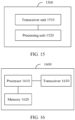
- an embodiment of this application provides a sequence-based signal processing apparatus 1500.
- the signal processing apparatus 1500 may be a communications device, or may be a chip in a communications device.
- the signal processing apparatus 1500 corresponds to the network device in the foregoing method embodiments.
- the signal processing apparatus 1500 includes the following units.
- a transceiver unit 1510 is configured to receive a first signal.
- Sequences in the first sequence set include:
- the first signal is generated based on the sequence ⁇ x n ⁇ .
- the sequence ⁇ x n ⁇ may satisfy a condition in which frequency domain flatness of a sequence is relatively good and a PAPR value is relatively small, so that when the first signal is a reference signal of a signal carried on a PUSCH, the relatively good frequency domain flatness of the sequence, and the relatively small PAPR value may be maintained for the sent first signal. Therefore, a requirement of a communication application environment in which the reference signal is sent can be met.
- the set of the sequences ⁇ s n ⁇ includes at least one sequence in a second sequence set, and the second sequence set includes some or all of the sequences that are in the first sequence set.
- the transceiver unit 1510 is further configured to: obtain the first signal on N consecutive subcarriers, or obtain the first signal on N evenly spaced subcarriers.
- the processing unit 1520 is further configured to: obtain N elements in a sequence ⁇ f n ⁇ , where N is a positive integer greater than 1, the first signal is generated by mapping the sequence ⁇ f n ⁇ to the N subcarriers, and f n is an element in the sequence ⁇ f n ⁇ ; and perform inverse discrete fourier transform on the sequence ⁇ f n ⁇ , to obtain the N elements that are in the sequence ⁇ x n ⁇ .
- the first signal is a reference signal of a second signal
- a modulation scheme of the second signal is ⁇ /2 binary phase shift keying BPSK.
- transceiver unit 1510 may be implemented by using a transceiver or a transceiver-related circuit.
- the processing unit 1520 may be implemented by using a processor or a processor-related circuit.
- an embodiment of this application further provides a sequence-based signal processing apparatus 1600.
- the signal processing apparatus 1600 includes a processor 1610, a memory 1620, and a transceiver 1630.
- the memory 1620 stores an instruction or a program
- the processor 1610 is configured to execute the instruction or program stored in the memory 1620.
- the processor 1610 is configured to perform an operation performed by the processing unit 1520 in the foregoing embodiment
- the transceiver 1630 is configured to perform an operation performed by the transceiver module 1510 in the foregoing embodiment.
- the signal processing apparatus 1500 or the signal processing apparatus 1600 provided in the embodiments of this application may correspond to the network device in the foregoing method embodiments, and operations and/or functions of modules in the signal processing apparatus 1500 or the signal processing apparatus 1600 are used to implement corresponding procedures of the method described above. For brevity, details are not described herein again.
- An embodiment of this application further provides a sequence-based signal processing apparatus.
- the signal processing apparatus may be a network device or a chip.
- the second communications apparatus may be configured to perform an action performed by the network device in the foregoing method embodiments.
- FIG. 17 is a simplified schematic structural diagram of a base station.
- the base station includes a part 1710 and a part 1720.
- the part 1710 is mainly configured to: send and receive a radio frequency signal, and perform conversion between the radio frequency signal and a baseband signal.
- the part 1720 is mainly configured to: perform baseband processing, control the base station, and the like.
- the part 1710 may usually be referred to as a transceiver unit, a transceiver machine, a transceiver circuit, a transceiver, or the like.
- the part 1720 is usually a control center of the base station, may usually be referred to as a processing unit, and is configured to control the base station to perform an action of generating a first message by the network device in the foregoing method embodiments.
- a control center of the base station may usually be referred to as a processing unit, and is configured to control the base station to perform an action of generating a first message by the network device in the foregoing method embodiments.
- the transceiver unit in the part 1710 may also be referred to as a transceiver machine, a transceiver, or the like.
- the transceiver unit includes an antenna and a radio frequency unit.
- the radio frequency unit is mainly configured to perform radio frequency processing.
- a component that is in the part 1710 and that is configured to implement a receiving function may be considered as a receiving unit, and a component that is configured to implement a sending function may be considered as a sending unit. That is, the part 1710 includes the receiving unit and the sending unit.
- the receiving unit may also be referred to as a receiving machine, a receiver, a receiving circuit, or the like.
- the sending unit may be referred to as a sending machine, a transmitter, a sending circuit, or the like.
- the part 1720 may include one or more boards. Each board may include one or more processors and one or more memories. A processor is configured to read and execute a program in a memory, to implement a baseband processing function and control the base station. If there are a plurality of boards, the boards may be interconnected to enhance a processing capability. In an optional implementation, the plurality of boards may share one or more processors, or the plurality of boards may share one or more memories, or the plurality of boards may simultaneously share one or more processors.
- the transceiver unit is configured to perform a receiving operation that is on a network device side and that is in step 130 in FIG. 1 , and/or the transceiver unit is further configured to perform other receiving and sending steps that are on the network device side and that are in the embodiments of this application.
- the processing unit is configured to perform an action that is in step 140, and/or the processing unit is further configured to perform another processing step that is on the network device side and that is in the embodiments of this application.
- the chip When the communications apparatus is the chip, the chip includes a transceiver unit and a processing unit.
- the transceiver unit may be an input/output circuit or a communications interface.
- the processing unit is a processor, a microprocessor, or an integrated circuit integrated on the chip.
- FIG. 18 shows a communications system 1800 according to an embodiment of this application.
- the communications system 1800 includes a first communications device 1810 and a second communications device 1820.
- the first communications device 1810 is a device on a transmitter side.
- the first communications device 1810 is the terminal device in the foregoing method embodiments.
- the second communications device 1820 is a device on a receiver side.
- the second communications device 1820 is the network device in the foregoing method embodiments.
- the first communications device 1810 is configured to: determine a sequence ⁇ x n ⁇ including N elements, perform DFT on the N elements that are in the sequence ⁇ x n ⁇ , to obtain a sequence ⁇ f n ⁇ , then map the sequence ⁇ f n ⁇ to N subcarriers to generate a first signal, and send the first signal to the second communications device 1820.
- determine a sequence ⁇ x n ⁇ including N elements perform DFT on the N elements that are in the sequence ⁇ x n ⁇ , to obtain a sequence ⁇ f n ⁇ , then map the sequence ⁇ f n ⁇ to N subcarriers to generate a first signal, and send the first signal to the second communications device 1820.
- the second communications device 1820 is configured to: receive the first signal sent by the first communications device 1810, obtain N elements that are in the sequence ⁇ f n ⁇ , perform IDFT on the sequence ⁇ f n ⁇ to obtain the N elements that are in the sequence ⁇ x n ⁇ , and process the first signal based on the N elements that are in the sequence ⁇ x n ⁇ .
- a quantity of first communications devices 1810 and a quantity of second communications devices 1820 are not limited.
- the first communications device 1810 may be the communications device disclosed in FIG. 12 , FIG. 13, and FIG. 14 .
- the first communications device 1810 may be configured to perform a corresponding operation performed by the terminal device in the foregoing method embodiments.
- the second communications device 1820 may be the communications device disclosed in FIG. 15, FIG. 16 , and FIG. 17 .
- the second communications device 1820 may be configured to perform a corresponding operation performed by the network device in the foregoing method embodiments.
- the processor in the embodiments of this application may be a central processing unit (Central Processing Unit, CPU), or may be another general-purpose processor, a digital signal processor (Digital Signal Processor, DSP), an application-specific integrated circuit (Application Specific Integrated Circuit, ASIC), a field programmable gate array (Field Programmable Gate Array, FPGA) or another programmable logic device, a discrete gate or transistor logic device, a discrete hardware component, or the like.
- the general-purpose processor may be a microprocessor, or may be any conventional processor or the like.
- the memory mentioned in the embodiments of this application may be a volatile memory or a nonvolatile memory, or may include both a volatile memory and a nonvolatile memory.
- the nonvolatile memory may be a read-only memory (Read-Only Memory, ROM), a programmable read-only memory (Programmable ROM, PROM), an erasable programmable read-only memory (Erasable PROM, EPROM), an electrically erasable programmable read-only memory (Electrically EPROM, EEPROM), or a flash memory.
- the volatile memory may be a random access memory (Random Access Memory, RAM) that is used as an external cache.
- RAMs may be used, for example, a static random access memory (Static RAM, SRAM), a dynamic random access memory (Dynamic RAM, DRAM), a synchronous dynamic random access memory (Synchronous DRAM, SDRAM), a double data rate synchronous dynamic random access memory (Double Data Rate SDRAM, DDR SDRAM), an enhanced synchronous dynamic random access memory (Enhanced SDRAM, ESDRAM), a synchlink dynamic random access memory (Synchlink DRAM, SLDRAM), and a direct rambus random access memory (Direct Rambus RAM, DR RAM).
- Static RAM static random access memory
- DRAM dynamic random access memory
- DRAM synchronous dynamic random access memory
- SDRAM synchronous dynamic random access memory
- DDR SDRAM double data rate synchronous dynamic random access memory
- Enhanced SDRAM, ESDRAM enhanced synchronous dynamic random access memory
- Synchlink dynamic random access memory Synchlink dynamic random access memory
- SLDRAM direct rambus random access memory
- Direct Rambus RAM Direct Rambus RAM
- the processor is a general-purpose processor, a DSP, an ASIC, an FPGA or another programmable logic device, a discrete gate or a transistor logic device, or a discrete hardware component
- the memory storage module
- the disclosed systems, apparatuses, and method may be implemented in other manners.
- the described apparatus embodiments are merely examples.
- the unit division is merely logical function division and may be other division during actual implementation.
- a plurality of units or components may be combined or integrated into another system, or some features may be ignored or not performed.
- the displayed or discussed mutual couplings or direct couplings or communication connections may be implemented by using some interfaces.
- the indirect couplings or communication connections between the apparatuses or units may be implemented in electrical, mechanical, or other forms.
- the units described as separate parts may or may not be physically separate, and parts displayed as units may or may not be physical units, to be specific, may be located at one position, or may be distributed on a plurality of network units. Some or all of the units may be selected based on actual requirements to achieve the objectives of the solutions of the embodiments.
- function units in the embodiments of this application may be integrated into one processing unit, or each of the units may exist alone physically, or two or more units may be integrated into one unit.
- the functions When implemented in a form of a software function unit and sold or used as an independent product, the functions may be stored in a computer-readable storage medium. Based on such an understanding, the technical solutions of this application essentially, or the part contributing to the prior art, or some of the technical solutions may be implemented in a form of a software product.
- the software product is stored in a storage medium, and includes several instructions for instructing a computer device (which may be a personal computer, a server, or a network device) to perform all or some of the steps of the method described in the embodiments of this application.
- the foregoing storage medium includes any medium that can store program code, such as a USB flash drive, a removable hard disk, a read-only memory (Read-Only Memory, ROM), a random access memory (Random Access Memory, RAM), a magnetic disk, or an optical disc.
- program code such as a USB flash drive, a removable hard disk, a read-only memory (Read-Only Memory, ROM), a random access memory (Random Access Memory, RAM), a magnetic disk, or an optical disc.
- Embodiment 1 A sequence-based signal processing method, comprising:
- Embodiment 2 The signal processing method according to embodiment 1, wherein the set of the sequences ⁇ s n ⁇ comprises at least one sequence in a second sequence set, and the second sequence set comprises some or all of the sequences that are in the first sequence set.
- Embodiment 3 The signal processing method according to embodiment 1 or 2, wherein the generating a first signal based on the sequence ⁇ x n ⁇ comprises:
- Embodiment 4 The signal processing method according to embodiment 3, wherein the N subcarriers are N consecutive subcarriers or N evenly spaced subcarriers.
- Embodiment 5 The signal processing method according to embodiment 3 or 4, wherein before the performing discrete fourier transform on the N elements that are in the sequence ⁇ x n ⁇ , the first signal processing method further comprises: filtering the sequence ⁇ x n ⁇ ; or after the performing discrete fourier transform on the N elements that are in the sequence ⁇ x n ⁇ , the first signal processing method further comprises: filtering the sequence ⁇ x n ⁇ .
- Embodiment 6 The signal processing method according to any one of embodiments 1 to 5, wherein the first signal is a reference signal of a second signal, and a modulation scheme of the second signal is ⁇ /2 binary phase shift keying BPSK.
- Embodiment 7 A sequence-based signal processing method, comprising:
- Embodiment 8 The signal processing method according to embodiment 7, wherein the set of the sequences ⁇ s n ⁇ comprises at least one sequence in a second sequence set, and the second sequence set comprises some or all of the sequences that are in the first sequence set.
- Embodiment 9 The signal processing method according to embodiment 7 or 8, wherein the receiving a first signal, to obtain N elements in a sequence ⁇ x n ⁇ comprises:
- Embodiment 10 The signal processing method according to any one of embodiments 7 to 9, wherein the first signal is a reference signal of a second signal, and a modulation scheme of the second signal is ⁇ /2 binary phase shift keying BPSK.
- a sequence-based signal processing apparatus comprising:
- Embodiment 12 The signal processing apparatus according to embodiment 11, wherein the set of the sequences ⁇ s n ⁇ comprises at least one sequence in a second sequence set, and the second sequence set comprises some or all of the sequences that are in the first sequence set.
- Embodiment 13 The signal processing apparatus according to embodiment 11 or 12, wherein the processing unit is configured to:
- Embodiment 14 The signal processing apparatus according to embodiment 13, wherein the N subcarriers are N consecutive subcarriers or N evenly spaced subcarriers.
- Embodiment 15 The signal processing apparatus according to embodiment 13 or 14, wherein the processing unit is configured to: before performing discrete fourier transform on the N elements that are in the sequence ⁇ x n ⁇ , filter the sequence ⁇ x n ⁇ ; or the processing unit is configured to: after performing discrete fourier transform on the N elements that are in the sequence ⁇ x n ⁇ , filter the sequence ⁇ x n ⁇ .
- Embodiment 16 The signal processing apparatus according to any one of embodiments 11 to 15, wherein the first signal is a reference signal of a second signal, and a modulation scheme of the second signal is ⁇ /2 binary phase shift keying BPSK.
- Embodiment 17 A sequence-based signal processing apparatus, comprising:
- Embodiment 18 The signal processing apparatus according to embodiment 17, wherein the set of the sequences ⁇ s n ⁇ comprises at least one sequence in a second sequence set, and the second sequence set comprises some or all of the sequences that are in the first sequence set.
- Embodiment 19 The signal processing apparatus according to embodiment 17 or 18, wherein the transceiver unit is further configured to: obtain the first signal on N consecutive subcarriers, or obtain the first signal on N evenly spaced subcarriers; and the processing unit is further configured to: obtain N elements in a sequence ⁇ f n ⁇ , wherein N is a positive integer greater than 1, the first signal is generated by mapping the sequence ⁇ f n ⁇ to the N subcarriers, and f n is an element in the sequence ⁇ f n ⁇ ; and perform inverse discrete fourier transform on the sequence ⁇ f n ⁇ , to obtain the N elements that are in the sequence ⁇ x n ⁇ .
- Embodiment 20 The signal processing apparatus according to any one of embodiments 17 to 19, wherein the first signal is a reference signal of a second signal, and a modulation scheme of the second signal is ⁇ /2 binary phase shift keying BPSK.
- a signal processing apparatus comprising:
- Embodiment 22 A computer-readable storage medium, configured to store a computer program, wherein the computer program is used to execute an instruction of the signal processing method according to any one of embodiments 1 to 6, or embodiments 7 to 10.
Landscapes
- Engineering & Computer Science (AREA)
- Signal Processing (AREA)
- Computer Networks & Wireless Communication (AREA)
- Physics & Mathematics (AREA)
- Discrete Mathematics (AREA)
- General Physics & Mathematics (AREA)
- Mathematical Physics (AREA)
- Power Engineering (AREA)
- Mobile Radio Communication Systems (AREA)
- Digital Transmission Methods That Use Modulated Carrier Waves (AREA)
- Cable Transmission Systems, Equalization Of Radio And Reduction Of Echo (AREA)
- Compression, Expansion, Code Conversion, And Decoders (AREA)
Applications Claiming Priority (3)
| Application Number | Priority Date | Filing Date | Title |
|---|---|---|---|
| CN201910020924.0A CN111431829B (zh) | 2019-01-09 | 2019-01-09 | 基于序列的信号处理方法与装置 |
| EP20738420.7A EP3879777B1 (de) | 2019-01-09 | 2020-01-08 | Verfahren und vorrichtung zur sequenzbasierten signalverarbeitung |
| PCT/CN2020/070821 WO2020143649A1 (zh) | 2019-01-09 | 2020-01-08 | 基于序列的信号处理方法与装置 |
Related Parent Applications (1)
| Application Number | Title | Priority Date | Filing Date |
|---|---|---|---|
| EP20738420.7A Division EP3879777B1 (de) | 2019-01-09 | 2020-01-08 | Verfahren und vorrichtung zur sequenzbasierten signalverarbeitung |
Publications (2)
| Publication Number | Publication Date |
|---|---|
| EP4472123A2 true EP4472123A2 (de) | 2024-12-04 |
| EP4472123A3 EP4472123A3 (de) | 2025-02-26 |
Family
ID=71520345
Family Applications (2)
| Application Number | Title | Priority Date | Filing Date |
|---|---|---|---|
| EP20738420.7A Active EP3879777B1 (de) | 2019-01-09 | 2020-01-08 | Verfahren und vorrichtung zur sequenzbasierten signalverarbeitung |
| EP24179765.3A Pending EP4472123A3 (de) | 2019-01-09 | 2020-01-08 | Verfahren und vorrichtung zur sequenzbasierten signalverarbeitung |
Family Applications Before (1)
| Application Number | Title | Priority Date | Filing Date |
|---|---|---|---|
| EP20738420.7A Active EP3879777B1 (de) | 2019-01-09 | 2020-01-08 | Verfahren und vorrichtung zur sequenzbasierten signalverarbeitung |
Country Status (5)
| Country | Link |
|---|---|
| US (2) | US12028199B2 (de) |
| EP (2) | EP3879777B1 (de) |
| CN (3) | CN118972220A (de) |
| BR (1) | BR112021013420A2 (de) |
| WO (1) | WO2020143649A1 (de) |
Families Citing this family (10)
| Publication number | Priority date | Publication date | Assignee | Title |
|---|---|---|---|---|
| CN113383606A (zh) * | 2019-02-01 | 2021-09-10 | 株式会社Ntt都科摩 | 用户终端以及无线通信方法 |
| CN111092838B (zh) * | 2019-09-10 | 2024-05-24 | 中兴通讯股份有限公司 | 一种序列生成方法、装置和存储介质 |
| CN116800574A (zh) * | 2022-03-17 | 2023-09-22 | 华为技术有限公司 | 一种安全ltf序列确定方法及相关装置 |
| CN118509291A (zh) * | 2023-02-16 | 2024-08-16 | 华为技术有限公司 | 一种信号发送方法及装置 |
| WO2024168694A1 (zh) * | 2023-02-16 | 2024-08-22 | 华为技术有限公司 | 一种通信方法及装置 |
| CN118890708A (zh) * | 2023-04-26 | 2024-11-01 | 华为技术有限公司 | 一种通信方法及装置 |
| CN120263605A (zh) * | 2024-01-02 | 2025-07-04 | 华为技术有限公司 | 传输信号的方法和通信装置 |
| CN120433902A (zh) * | 2024-02-05 | 2025-08-05 | 华为技术有限公司 | 信号传输方法、装置及系统 |
| CN121239542A (zh) * | 2024-06-21 | 2025-12-30 | 中兴通讯股份有限公司 | 调制方法、装置、电子设备、介质及产品 |
| CN121486147A (zh) * | 2024-08-05 | 2026-02-06 | 华为技术有限公司 | 一种通信方法及相关装置 |
Family Cites Families (9)
| Publication number | Priority date | Publication date | Assignee | Title |
|---|---|---|---|---|
| CN101005478B (zh) * | 2007-01-18 | 2010-08-25 | 西安电子科技大学 | 降低ofdm系统峰均功率比papr的矩阵分块交织方法及装置 |
| US9210020B1 (en) * | 2014-07-02 | 2015-12-08 | Huawei Technologies Co., Inc. | System and method for suppressing PAPR in MC-CDMA and derivatives |
| CN106817331A (zh) * | 2015-12-02 | 2017-06-09 | 华为技术有限公司 | 通信系统中处理通信信号的方法和装置 |
| US10412745B2 (en) * | 2016-11-30 | 2019-09-10 | Telefonaktiebolaget Lm Ericsson (Publ) | Peak-to-average power ratio reduction in multiuser MIMO systems |
| CN109391576B (zh) * | 2017-08-11 | 2021-12-21 | 华为技术有限公司 | 基于序列的信号处理方法、通信设备及通信系统 |
| CN112511285B (zh) * | 2017-09-08 | 2021-11-19 | 华为技术有限公司 | 基于序列的信号处理方法及装置 |
| CN109274473B (zh) * | 2017-09-08 | 2019-10-22 | 华为技术有限公司 | 基于序列的信号处理方法及装置 |
| WO2019096268A1 (zh) * | 2017-11-16 | 2019-05-23 | 华为技术有限公司 | 基于序列的信号处理方法及信号处理装置 |
| CN112532368B (zh) * | 2017-11-16 | 2021-08-20 | 华为技术有限公司 | 基于序列的信号处理方法及信号处理装置 |
-
2019
- 2019-01-09 CN CN202410815240.0A patent/CN118972220A/zh active Pending
- 2019-01-09 CN CN201910020924.0A patent/CN111431829B/zh active Active
- 2019-01-09 CN CN202011563803.XA patent/CN112600785B/zh active Active
-
2020
- 2020-01-08 WO PCT/CN2020/070821 patent/WO2020143649A1/zh not_active Ceased
- 2020-01-08 BR BR112021013420-4A patent/BR112021013420A2/pt unknown
- 2020-01-08 EP EP20738420.7A patent/EP3879777B1/de active Active
- 2020-01-08 EP EP24179765.3A patent/EP4472123A3/de active Pending
-
2021
- 2021-06-29 US US17/361,720 patent/US12028199B2/en active Active
-
2024
- 2024-06-07 US US18/737,732 patent/US20240406049A1/en active Pending
Also Published As
| Publication number | Publication date |
|---|---|
| US20210328842A1 (en) | 2021-10-21 |
| CN112600785A (zh) | 2021-04-02 |
| CN112600785B (zh) | 2022-04-12 |
| WO2020143649A1 (zh) | 2020-07-16 |
| CN111431829B (zh) | 2024-06-25 |
| CN111431829A (zh) | 2020-07-17 |
| EP3879777B1 (de) | 2024-07-03 |
| CN118972220A (zh) | 2024-11-15 |
| BR112021013420A2 (pt) | 2021-09-21 |
| EP4472123A3 (de) | 2025-02-26 |
| EP3879777C0 (de) | 2024-07-03 |
| US12028199B2 (en) | 2024-07-02 |
| US20240406049A1 (en) | 2024-12-05 |
| EP3879777A4 (de) | 2022-02-16 |
| EP3879777A1 (de) | 2021-09-15 |
Similar Documents
| Publication | Publication Date | Title |
|---|---|---|
| EP3879777B1 (de) | Verfahren und vorrichtung zur sequenzbasierten signalverarbeitung | |
| US12407556B2 (en) | Sequence-based signal processing method and signal processing apparatus | |
| EP4271091B1 (de) | Verfahren und vorrichtung zur sequenzbasierten signalverarbeitung | |
| US11082269B2 (en) | Signal processing method, signal processing apparatus, computer readable storage medium, and computer program product | |
| EP3598666B1 (de) | Verfahren und vorrichtung zur signalverarbeitung auf sequenzbasis | |
| WO2019096268A1 (zh) | 基于序列的信号处理方法及信号处理装置 | |
| US11252003B2 (en) | Sequence-based signal processing method and apparatus |
Legal Events
| Date | Code | Title | Description |
|---|---|---|---|
| PUAI | Public reference made under article 153(3) epc to a published international application that has entered the european phase |
Free format text: ORIGINAL CODE: 0009012 |
|
| STAA | Information on the status of an ep patent application or granted ep patent |
Free format text: STATUS: THE APPLICATION HAS BEEN PUBLISHED |
|
| AC | Divisional application: reference to earlier application |
Ref document number: 3879777 Country of ref document: EP Kind code of ref document: P |
|
| AK | Designated contracting states |
Kind code of ref document: A2 Designated state(s): AL AT BE BG CH CY CZ DE DK EE ES FI FR GB GR HR HU IE IS IT LI LT LU LV MC MK MT NL NO PL PT RO RS SE SI SK SM TR |
|
| REG | Reference to a national code |
Ref country code: DE Ref legal event code: R079 Free format text: PREVIOUS MAIN CLASS: H04L0005000000 Ipc: H04L0027260000 |
|
| PUAL | Search report despatched |
Free format text: ORIGINAL CODE: 0009013 |
|
| AK | Designated contracting states |
Kind code of ref document: A3 Designated state(s): AL AT BE BG CH CY CZ DE DK EE ES FI FR GB GR HR HU IE IS IT LI LT LU LV MC MK MT NL NO PL PT RO RS SE SI SK SM TR |
|
| RIC1 | Information provided on ipc code assigned before grant |
Ipc: H04L 27/20 20060101ALN20250123BHEP Ipc: H04L 5/00 20060101ALI20250123BHEP Ipc: H04L 27/26 20060101AFI20250123BHEP |
|
| STAA | Information on the status of an ep patent application or granted ep patent |
Free format text: STATUS: REQUEST FOR EXAMINATION WAS MADE |
|
| 17P | Request for examination filed |
Effective date: 20250826 |
|
| STAA | Information on the status of an ep patent application or granted ep patent |
Free format text: STATUS: EXAMINATION IS IN PROGRESS |