EP4472257A1 - Carte sim et dispositif par liaison radio via un serveur d'habilitation - Google Patents
Carte sim et dispositif par liaison radio via un serveur d'habilitation Download PDFInfo
- Publication number
- EP4472257A1 EP4472257A1 EP24175266.6A EP24175266A EP4472257A1 EP 4472257 A1 EP4472257 A1 EP 4472257A1 EP 24175266 A EP24175266 A EP 24175266A EP 4472257 A1 EP4472257 A1 EP 4472257A1
- Authority
- EP
- European Patent Office
- Prior art keywords
- sim
- update
- repository
- entitlement server
- data
- Prior art date
- Legal status (The legal status is an assumption and is not a legal conclusion. Google has not performed a legal analysis and makes no representation as to the accuracy of the status listed.)
- Pending
Links
Images




Classifications
-
- H—ELECTRICITY
- H04—ELECTRIC COMMUNICATION TECHNIQUE
- H04W—WIRELESS COMMUNICATION NETWORKS
- H04W8/00—Network data management
- H04W8/18—Processing of user or subscriber data, e.g. subscribed services, user preferences or user profiles; Transfer of user or subscriber data
- H04W8/20—Transfer of user or subscriber data
- H04W8/205—Transfer to or from user equipment or user record carrier
-
- H—ELECTRICITY
- H04—ELECTRIC COMMUNICATION TECHNIQUE
- H04W—WIRELESS COMMUNICATION NETWORKS
- H04W8/00—Network data management
- H04W8/18—Processing of user or subscriber data, e.g. subscribed services, user preferences or user profiles; Transfer of user or subscriber data
- H04W8/183—Processing at user equipment or user record carrier
Definitions
- SIM Subscriber Identity Module
- RAN radio access network
- SIM card is an embedded semiconductor molded into a plastic card made of PVC.
- the embedded semiconductor circuit is part of a universal integrated circuit card (UICC) physical smart card that contains a unique serial number, Integrated Circuit Card Identifier (ICCID), IMSI, and other security information associated with the mobile service provider.
- UICC universal integrated circuit card
- the SIM card is removable from the subscriber device.
- the SIM is an embedded-SIM (eSIM) or embedded universal integrated circuit card (eUICC) that is embedded directly into a subscriber device.
- Information in such eSIMs and eUICCs may be updated without removing the eSIM or eUICC from the device using secure communications and a secure re-programming process.
- SIM cards and eSIMs may also be referred to as SIM devices.
- a method of updating Subscriber Identity Module (SIM) data in a user equipment (UE) associated with a wireless communication service provider comprises receiving, by a SIM configuration repository executing on a network server of the wireless communication service provider, a SIM update inquiry from an entitlement server of the wireless communication service provider, the SIM update inquiry comprising UE identifying information that identifies the UE and information identifying UE SIM configuration data stored in the UE; determining, by the SIM configuration repository, whether some or all of repository SIM configuration data stored in the SIM configuration repository and associated with the UE identifying information is more recent than the UE SIM configuration data; and sending, by the SIM configuration repository, a SIM status message to the entitlement server comprising information based on the determination of whether the repository SIM configuration data is more recent than the UE SIM configuration data.
- SIM Subscriber Identity Module
- a method of updating Subscriber Identity Module (SIM) data in a user equipment (UE) associated with a wireless communication service provider comprises receiving, by an entitlement server executing on a network server of the wireless communication service provider, a UE SIM update inquiry from a UE associated with the wireless communication service provider, the UE SIM update inquiry comprising UE identifying information identifying the UE and information identifying UE SIM configuration data stored in the UE; sending, by the entitlement server, a SIM update inquiry to a SIM configuration repository of the wireless communication service provider, the SIM update inquiry comprising the UE identifying information and the information identifying the UE SIM configuration data; receiving, by the entitlement server, a SIM status message from the SIM configuration repository, the SIM status message indicating whether repository SIM configuration data stored in the SIM configuration repository is more recent than the UE SIM configuration data; and sending, by the entitlement server, a UE SIM update response to the UE, the UE SIM update response comprising the SIM status message.
- SIM Subscriber Identity Module
- a method of updating Subscriber Identity Module (SIM) data in a user equipment (UE) associated with a wireless communication service provider comprises sending, by the UE, a UE SIM update inquiry to an entitlement server of the wireless communication service provider, the UE SIM update inquiry comprising UE identifying information identifying the UE and information identifying UE SIM configuration data stored in the UE; and receiving, by the UE, a UE SIM update response from the entitlement server, the UE SIM update response comprising update information indicating whether SIM configuration data more recent than the UE SIM configuration data is available.
- SIM Subscriber Identity Module
- SIM and/or device features or configurations are one way over-the-air (OTA) updates wherein the service provider makes such changes and pushes them to user equipment (UE) using Short Message Service (SMS) messaging.
- SMS Short Message Service
- the service provider makes SIM configuration changes that affect a large number of subscribers' UEs, a high volume of SMS messages may be required to update all the affected UEs. Because SMS traffic is normally heavy, this large additional SMS traffic volume may result in long delays for delivering OTA updates and further slow delivery of user SMS messages.
- a new flexible SIM configuration process is used that avoids congesting the SMS messaging channel while at the same time supporting near real-time SIM updates-for example, by triggering UEs to update their SIM more immediately upon an updated SIM becoming available.
- Some such processes according to the disclosure are based on the UE querying an Entitlement Server.
- the Entitlement Server can fetch the SIM delta and send the delta to the device.
- the communication between the UE and the Entitlement Server is via Internet protocol (IP) Hypertext Transfer Protocol (HTTP) in some cases, rather than via SMS.
- IP Internet protocol
- HTTP Hypertext Transfer Protocol
- the Entitlement Server may also push a notification to the UE to come fetch a SIM delta.
- the UE may communicate with the Entitlement Server to obtain access to system resources or other reasons unrelated to SIM updates, but these contacts may prompt the Entitlement Server to push a notification to the UE to come fetch a SIM delta.
- the Entitlement Server is located in the network core and its function is being extended in systems according to the disclosure.
- the Entitlement Server can inform the UE of a future time to check back for possible future SIM deltas.
- This feature of the disclosure allows the Entitlement Server to manage the SIM updating load for a large number of UEs under its purview. Using this feature, the Entitlement Server can stagger device call-backs in time and/or by geographical region, whereby to reduce communication traffic jams.
- SIM configuration data examples include access point names (APNs), frequency bands, Carrier Identification Code (CIC), IMSI number, home cell site, roaming lists, UE priority of cell site selection, and information relating to whether the UE is able to make WiFi calls.
- APNs access point names
- CIC Carrier Identification Code
- IMSI number home cell site
- roaming lists UE priority of cell site selection
- information relating to whether the UE is able to make WiFi calls are examples of some SIM configuration data that may change.
- MVNOs may change their data in SIM configurations more frequently, as they may be adapting their service plans and service contracts more frequently. MVNOs may have occasion to more frequently migrate subscribers between MVNOs, and systems according to the disclosure better support such migrations. Changing the manner of authorization that the web does can be easily updated by the Entitlement Server, which may be leveraged when migrating a large number of UEs between MVNOs or when MVNO policies are changing.
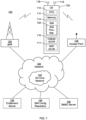
- the system 100 comprises User Equipment (UE) 102, an entitlement server 130, a SIM configuration repository 140, and an SMSC server 150, which communicate by wired or wireless communication links via a network 120.
- the UE 102 may be a handheld device, such as a smart phone or tablet, or a laptop computer, communicating wirelessly with the network 120.
- the network 120 may be one or more public networks, one or more private networks, or a combination thereof.
- the network 120 may comprise or be coupled to a 5G core network 122 or, in other embodiments, a 4G or 4G Long Term Evolution (LTE) network.
- LTE Long Term Evolution
- the UE 102 comprises a processor 110, a memory 112, a subscriber identification (or identity) device (SIM) 114, a cellular radio transceiver 116, a radio antenna 118, a WiFi transceiver 117, and a WiFi antenna 119.
- SIM subscriber identification
- the SIM 114 may be an embedded SIM (eSIM).
- the SIM 114 includes a SIM provisioning application 132.
- a portion of the memory 112 may be a non-transitory memory and a portion of the memory 112 may be a transitory memory.
- the UE 102 When properly activated and provisioned, the UE 102 may be able to establish a wireless communication link to a radio access network (RAN), for example to a Next Generation enhanced Node B (gNB) 124.
- RAN radio access network
- gNB Next Generation enhanced Node B
- the gNB 124 may also be referred to as a cell site or cell tower in some contexts.
- the gNB 124 may provide the UE 102 a communication link to the network 120.
- the UE 102 may communicate via the gNB 124 and via the network 120 to the entitlement server 130.
- the UE 102 may be able to establish a WiFi communication link (or WiFi connection) to the network 120, for example via a WiFi access point 126.
- the access point 126 may provide the UE 102 a WiFi connection to the network 120.
- the UE 102 may communicate via the access point 126 and via the network 120 to the entitlement server 130.
- the network 120 may include elements from more than one wired or wireless service provider.
- the UE 102 may be coupled to the network 120 via a first service provider, while the access point 126 may be coupled via a second service provider. Any of the elements of system 100 may be coupled to other elements via the 5G core network 122.
- the network 120 may include a plurality of 5G core networks 122, each supported by a different service provider and coupled to each other directly or via wired or wireless connections through non-5G elements of the network 120.
- the entitlement server 130 provides to the UE 102 entitlement verification for the activation of services such as SMS over IP, Voice-over-Wi-Fi, Voice-over-LTE, On-Device Service Activation of eSIM companion devices, and data plan information.
- the entitlement server 130 further sends to the UE 102 SIM configuration data, and/or SIM configuration update data (collectively "SIM update data"), and/or information relating to SIM update data.
- SIM update data collectively "SIM update data”
- the entitlement server 130 may send such SIM update data and/or information over-the-air via the gNB 124 or via the WiFi access point 126.
- the SIM configuration repository 140 stores SIM configuration data and/or SIM configuration update data that is associated with UE identifying information.
- the UE identifying information identifies one or more UEs that are intended to receive the SIM update data.
- the UE identifying information includes, for example, information identifying one or more of an individual UE, a UE manufacturer, a UE model, a service provider or MVNO associated with the UE, and a provider plan associated with the UE.
- the SIM configuration repository 140 may send the SIM update data to the entitlement server 130 in response to an update inquiry from the entitlement server 130.
- the SIM configuration repository 140 may send an update status message to the entitlement server 130 in response to receiving SIM update data and UE identifying information, the update status message indicating that SIM update data is available for UEs identified by the update UE identifying information.
- the SMSC server 150 provides SMS communication between at least the entitlement server 130 and the UE 102.
- the SMSC server 150 may receive a SIM transfer message from the SIM configuration repository 140 and, in response, send the SIM update data to the UE 102 via an SMS message.
- the SIM configuration repository 140 may send the SIM transfer message to the SMSC server 150 in order to use SMS communication as a backup path to the OTA communication of SIM update data to the UE 102.
- the UE 102 may 'pull' the SIM update data by sending a SIM update inquiry to the entitlement server 130.
- the SIM configuration repository 140 may 'push' SIM update data by sending an update status message to the entitlement server 130, causing the entitlement server 130 to prompt the UE 102 to pull the SIM update data from the entitlement server 130.
- FIG. 2A is a sequence diagram 200 of a SIM update according to a first embodiment of the disclosure.
- the UE 102 sends to the entitlement server 130 a UE SIM update inquiry.
- the UE SIM update inquiry includes UE identifying information that identifies the UE 102 and information that identifies SIM configuration data stored in the UE 102.
- the entitlement server 130 sends to the SIM configuration repository 140 a SIM update inquiry.
- the SIM update inquiry includes the UE identifying information and the information that identifies the UE SIM configuration data stored in the UE 102.
- the entitlement server 130 receives from the SIM configuration repository 140 a SIM status message that includes update information indicating whether SIM configuration data stored in the SIM configuration repository 140 is more recent than the SIM configuration data stored in the UE 102.
- the entitlement server 130 sends to the UE 102 a UE SIM update response, the UE SIM update response based on the update information received in the SIM status message.
- the update information received in the SIM status message may indicate that there is not more recent SIM configuration data in the SIM configuration repository 140 than the SIM configuration data in the UE 102. However, if the SIM configuration data in the SIM configuration repository 140 is more recent than the SIM configuration data in the UE 102, the SIM status message further includes SIM update data, which includes SIM configuration data that is (i) stored in the SIM configuration repository 140, (ii) associated with the UE identifying information, and (iii) is more recent than the SIM configuration data stored in the UE 102. If the entitlement server 130 receives such SIM update data, the SIM update data is included in the UE SIM update response sent to the UE 102 in step 208.
- FIG. 2B is a sequence diagram 250 of a SIM update according to a second embodiment of the disclosure. Steps 202 and 204 are as described with reference to FIG. 2A : the entitlement server 130 receives a UE SIM update inquiry from the UE and sends to the SIM configuration repository 140 a SIM update inquiry.
- the entitlement server 130 receives from the SIM configuration repository 140 a SIM status message further comprises backup delivery information indicating that the SIM update data is being sent to the UE 102 by the SIM configuration repository 140 via a short message service (SMS) center (SMSC) 150.
- SMS short message service
- the entitlement server 130 sends to the UE 102 a SIM update response comprising the backup delivery information and configured to indicate to the UE 102 that the SIM update data will be received via SMS.
- the SIM configuration repository 140 may send the SIM update data via the SMSC 150 because of an issue with the entitlement server 130 (e.g., the entitlement server 130 is not available or attempts to respond by the entitlement server 130 to the UE 102 have failed) or because the SIM configuration repository 140 is configured to send all SIM configuration updates via SMS.
- the SIM configuration repository 140 sends a SIM transfer message to the SMSC 150, the SIM transfer message configured to cause the SMSC 150, in step 216, to send the SIM update data to the UE 102 via an SMS message.
- FIG. 3 is a sequence diagram 300 of a SIM update notification according to a third embodiment of the disclosure.
- the SIM configuration repository 140 can send a secure push notification to the UE 102 via the entitlement server 130, the push notification configured to cause the UE 102 to send to the entitlement server 130 a UE SIM update inquiry, as described with reference to step 202 of sequence diagrams 200 and 250.
- the SIM configuration repository 140 in response to receiving a SIM update message that includes SIM update data and UE identifying information identifying one or more UEs associated with the SIM update data, the SIM configuration repository 140 sends a SIM update status message to the entitlement server 130.
- the SIM update status message comprises the UE identifying information and SIM configuration data associated with the UEs identified by the update UE identifying information.
- the SIM update status message is configured to cause the entitlement server 130, to store SIM configuration data and associate the SIM configuration data with the UE identifying information.
- the entitlement server 130 in response to receiving the SIM update status message, sends a UE SIM update prompt to the UE 102 and other UEs identified in the UE identifying information, if any.
- the UE SIM update prompt includes prompt information that is configured to cause the UE 102 and any other UEs to send the UE SIM update inquiry to the entitlement server 130, as described above with reference to step 202 of the sequence diagram 200.
- the UE 102 may contact the entitlement server 130 for some purpose unrelated to SIM configuration updates (for example, to obtain entitlement verification for the activation of a service such as Voice-over-Wi-Fi or Voice-over-LTE, etc.).
- the entitlement server 130 may determine whether it has stored SIM configuration data that is associated with UE identifying information of the UE 102. If so, the entitlement server 130 additionally sends the UE SIM update prompt to the UE 102 to cause the UE 102 to send the UE SIM update inquiry to the entitlement server 130, thereby initiating the SIM update process described with reference to the sequence diagram 200.
- the prompt information sent to the UE 102 and any other UEs includes inquiry timing information, specifying a time for the UE 102 to send the UE SIM update inquiry.
- the inquiry timing information may specify an individual time for each UE identified in the UE identifying information or may specify an individual time for one or more groups of the UEs. Such UEs may be grouped by geographical region.
- the inquiry timing information may specify a time period (for example, 24 hours or one week) for each of one or more UEs to wait sending the UE SIM update inquiry.
- the inquiry timing information may instruct one or more UEs to send a UE SIM update inquiry no more often than once in a specified time period.
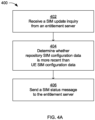
- FIG. 4A is a flow chart of a method 400 according to an embodiment of the disclosure.
- the method 400 updates SIM data in a UE associated with a wireless communication service provider and may be performed by the SIM configuration repository 140 executing on a network server of the wireless communication service provider.
- the SIM configuration repository 140 receives a SIM update inquiry from the entitlement server 130, where the SIM update inquiry includes UE identifying information identifying the UE 102, as well as information identifying UE SIM configuration data stored in the UE 102.
- the SIM configuration repository 140 determines whether some or all of repository SIM configuration data that is stored in the SIM configuration repository and associated with the UE identifying information is more recent than the UE SIM configuration data.
- the SIM configuration repository 140 sends a SIM status message to the entitlement server 130, where the information is based on the determination of whether the repository SIM configuration data is more recent than the UE SIM configuration data.
- the UE identifying information includes information identifying one or more of an individual UE, a manufacturer of the UE, a model of the UE, a service provider or MVNO associated with the UE, and a provider plan associated with the UE.
- the method 400 may further include the SIM configuration repository 140 generating SIM update data that includes repository SIM configuration data associated with the UE identifying information that is more recent than the UE SIM configuration data.
- the SIM configuration repository 140 may send the SIM update data to the entitlement server 130 as part of the SIM status message.
- the method 400 may further include the SIM configuration repository 140 sending a SIM transfer message to the SMSC 150, where the SIM transfer message configured to cause the SMSC 150 to send the SIM update data to the UE 102 via an SMS message.
- the SIM configuration repository 140 may send information indicating that the SIM update data is being sent to the UE 102 via the SMSC 150 to the entitlement server 130 as part of the SIM status message.
- FIG. 4B is a flow chart of a method 420 according to an embodiment of the disclosure.
- the method 420 updates SIM data in a UE associated with a wireless communication service provider, and may be performed by the entitlement server 130 executing on a network server of the wireless communication service provider.
- the entitlement server 130 receives a UE SIM update inquiry from the UE 102, the UE SIM update inquiry including UE identifying information identifying the UE 102, as well as information identifying UE SIM configuration data that is stored in the UE 102.
- the entitlement server 130 sends a SIM update inquiry to the SIM configuration repository 140, where the SIM update inquiry includes the UE identifying information and the information identifying the UE SIM configuration data.
- the entitlement server 130 receives a SIM status message from the SIM configuration repository 140 that indicates whether repository SIM configuration data that is stored in the SIM configuration repository 140 is more recent than the UE SIM configuration data.
- the entitlement server 130 sends a UE SIM update response to the UE 102, where the UE SIM update response includes the SIM status message.
- the SIM status message further includes SIM update data that includes repository SIM configuration data associated with the UE identifying information that is more recent than the UE SIM configuration data, and the UE SIM update response further includes the SIM update data.
- the SIM status message further includes backup delivery information that indicating whether the SIM update data is being sent to the UE 102 by the SIM configuration repository 140 via the SMSC 150.
- the entitlement server 130 receives a SIM update status message from the SIM configuration repository 140, where the SIM update status message includes (i) update UE identifying information identifying one or more update UEs and (ii) repository SIM configuration data associated with the update UEs.
- the entitlement server 130 also stores the repository SIM configuration data and associate the repository SIM configuration data with the update UE identifying information.
- the entitlement server 130 further sends a UE SIM update prompt to one or more of the update UEs, where the UE SIM update prompt includes prompt information that is configured to cause the update UEs to send a UE SIM update inquiry to the entitlement server 130.
- the prompt information includes inquiry timing information that specifies one or more times for the update UEs to send the UE SIM update inquiry.
- the entitlement server 130 determines, in response to receiving the UE SIM update inquiry, whether repository SIM configuration data associated with the UE identifying information is stored in the entitlement server 130 and, if so, sends the stored repository SIM configuration data to the UE 102.
- the entitlement server 130 receives from the UE a message other than the UE SIM update inquiry, where the message comprising UE identifying information that identifies the UE, and entitlement server 130 determines whether repository SIM configuration data that is associated with the UE identifying information is stored in the entitlement server and, if so, sends a UE SIM update prompt to the UE, the UE SIM update prompt comprising prompt information configured to cause the UE to send the UE SIM update inquiry to the entitlement server.
- the prompt information includes inquiry timing information that specifies one or more times for the update UEs to send the UE SIM update inquiry.
- the UE identifying information includes information identifying one or more of (i) an individual UE, (ii) a manufacturer of the UE, (iii) a model of the UE, (iv) a service provider or MVNO associated with the UE, and (v) a provider plan associated with the UE.
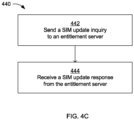
- FIG. 4C is a flow chart of a method 440 according to an embodiment of the disclosure.
- the method 440 updates SIM data in a UE associated with a wireless communication service provider, and may be performed by the UE 102.
- the UE 102 sends a UE SIM update inquiry to the entitlement server 130, the UE SIM update inquiry comprising UE identifying information identifying the UE 102, as well as information identifying UE SIM configuration data stored in the UE 102.
- the UE 102 receives a UE SIM update response from the entitlement server 130, the UE SIM update response comprising update information indicating whether SIM configuration data more recent than the UE SIM configuration data is available.
- the UE SIM update response further includes SIM update data that comprises repository SIM configuration data that is associated with the UE identifying information and is more recent than the UE SIM configuration data.
- the UE SIM update response further includes backup delivery information that indicating whether the SIM update data is being sent via the SMSC 150.
- the UE 102 receives a UE SIM update prompt from the entitlement server, where the UE SIM update prompt includes prompt information and, in response, sends the UE SIM update inquiry to the entitlement server 130.
- the prompt information includes inquiry timing information and the UE 102 determines a time to send the UE SIM update inquiry to the entitlement server 130 based on the inquiry timing information.
- the UE identifying information includes information identifying one or more of (i) the UE 102, (ii) a manufacturer of the UE 102, (iii) a model of the UE 102, (iv) a service provider or MVNO associated with the UE 102, and (v) a provider plan associated with the UE 102.
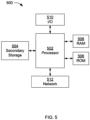
- FIG. 5 illustrates a computer system 500 suitable for implementing one or more embodiments disclosed herein.
- the computer system 500 includes a processor 502 (which may be referred to as a central processor unit, CPU, or device processor) that is in communication with memory devices including secondary storage 504, read only memory (ROM) 506, random access memory (RAM) 508, input/output (I/O) devices 510, and network connectivity devices 512.
- the processor 502 may be implemented as one or more CPU chips.
- a design that is still subject to frequent change may be preferred to be implemented in software, because re-spinning a hardware implementation is more expensive than re-spinning a software design.
- a design that is stable that will be produced in large volume may be preferred to be implemented in hardware, for example in an application specific integrated circuit (ASIC), because for large production runs the hardware implementation may be less expensive than the software implementation.
- ASIC application specific integrated circuit
- a design may be developed and tested in a software form and later transformed, by well-known design rules, to an equivalent hardware implementation in an application specific integrated circuit that hardwires the instructions of the software.
- a machine controlled by a new ASIC is a particular machine or apparatus, likewise a computer that has been programmed and/or loaded with executable instructions may be viewed as a particular machine or apparatus.
- the CPU 502 may execute a computer program or application.
- the CPU 502 may execute software or firmware stored in the ROM 506 or stored in the RAM 508.
- the CPU 502 may copy the application or portions of the application from the secondary storage 504 to the RAM 508 or to memory space within the CPU 502 itself, and the CPU 502 may then execute instructions that the application is comprised of.
- the CPU 502 may copy the application or portions of the application from memory accessed via the network connectivity devices 512 or via the I/O devices 510 to the RAM 508 or to memory space within the CPU 502, and the CPU 502 may then execute instructions that the application is comprised of.
- an application may load instructions into the CPU 502, for example load some of the instructions of the application into a cache of the CPU 502.
- an application that is executed may be said to configure the CPU 502 to do something, e.g., to configure the CPU 502 to perform the function or functions promoted by the subject application.
- the CPU 502 becomes a specific purpose computer or a specific purpose machine.
- the secondary storage 504 is typically comprised of one or more disk drives or tape drives and is used for non-volatile storage of data and as an over-flow data storage device if RAM 508 is not large enough to hold all working data. Secondary storage 504 may be used to store programs which are loaded into RAM 508 when such programs are selected for execution.
- the ROM 506 is used to store instructions and perhaps data which are read during program execution. ROM 506 is a non-volatile memory device which typically has a small memory capacity relative to the larger memory capacity of secondary storage 504.
- the RAM 508 is used to store volatile data and perhaps to store instructions. Access to both ROM 506 and RAM 508 is typically faster than to secondary storage 504.
- the secondary storage 504, the RAM 508, and/or the ROM 506 may be referred to in some contexts as computer readable storage media and/or non-transitory computer readable media.
- I/O devices 510 may include printers, video monitors, liquid crystal displays (LCDs), touch screen displays, keyboards, keypads, switches, dials, mice, track balls, voice recognizers, card readers, paper tape readers, or other well-known input devices.
- LCDs liquid crystal displays
- touch screen displays keyboards, keypads, switches, dials, mice, track balls, voice recognizers, card readers, paper tape readers, or other well-known input devices.
- the network connectivity devices 512 may take the form of modems, modem banks, Ethernet cards, universal serial bus (USB) interface cards, serial interfaces, token ring cards, fiber distributed data interface (FDDI) cards, wireless local area network (WLAN) cards, radio transceiver cards, and/or other well-known network devices.
- the network connectivity devices 512 may provide wired communication links and/or wireless communication links (e.g., a first network connectivity device 512 may provide a wired communication link and a second network connectivity device 512 may provide a wireless communication link). Wired communication links may be provided in accordance with Ethernet (IEEE 802.3), Internet protocol (IP), time division multiplex (TDM), data over cable service interface specification (DOCSIS), wavelength division multiplexing (WDM), and/or the like.
- Ethernet IEEE 802.3
- IP Internet protocol
- TDM time division multiplex
- DOCSIS data over cable service interface specification
- WDM wavelength division multiplexing
- the radio transceiver cards may provide wireless communication links using protocols such as code division multiple access (CDMA), global system for mobile communications (GSM), long-term evolution (LTE), WiFi (IEEE 802.11), Bluetooth, Zigbee, narrowband Internet of things (NB loT), near field communications (NFC) and radio frequency identity (RFID).
- CDMA code division multiple access
- GSM global system for mobile communications
- LTE long-term evolution
- WiFi IEEE 802.11
- Bluetooth Zigbee
- NFC narrowband Internet of things
- NFC near field communications
- RFID radio frequency identity
- the radio transceiver cards may promote radio communications using 5G, 5G New Radio, or 5G LTE radio communication protocols.
- These network connectivity devices 512 may enable the processor 502 to communicate with the Internet or one or more intranets. With such a network connection, it is contemplated that the processor 502 might receive information from the network, or might output information to the network in the course of performing the above-described method steps. Such information, which is often represented as a
- Such information may be received from and outputted to the network, for example, in the form of a computer data baseband signal or signal embodied in a carrier wave.
- the baseband signal or signal embedded in the carrier wave may be generated according to several methods well-known to one skilled in the art.
- the baseband signal and/or signal embedded in the carrier wave may be referred to in some contexts as a transitory signal.
- the processor 502 executes instructions, codes, computer programs, scripts which it accesses from hard disk, floppy disk, optical disk (these various disk based systems may all be considered secondary storage 504), flash drive, ROM 506, RAM 508, or the network connectivity devices 512. While only one processor 502 is shown, multiple processors may be present. Thus, while instructions may be discussed as executed by a processor, the instructions may be executed simultaneously, serially, or otherwise executed by one or multiple processors.
- the computer system 500 may comprise two or more computers in communication with each other that collaborate to perform a task.
- an application may be partitioned in such a way as to permit concurrent and/or parallel processing of the instructions of the application.
- the data processed by the application may be partitioned in such a way as to permit concurrent and/or parallel processing of different portions of a data set by the two or more computers.
- virtualization software may be employed by the computer system 500 to provide the functionality of a number of servers that is not directly bound to the number of computers in the computer system 500.
- virtualization software may provide twenty virtual servers on four physical computers.
- the functionality disclosed above may be provided by executing the application and/or applications in a cloud computing environment.
- Cloud computing may comprise providing computing services via a network connection using dynamically scalable computing resources.
- Cloud computing may be supported, at least in part, by virtualization software.
- a cloud computing environment may be established by an enterprise and/or may be hired on an as-needed basis from a third party provider.
- Some cloud computing environments may comprise cloud computing resources owned and operated by the enterprise as well as cloud computing resources hired and/or leased from a third party provider.
- the computer program product may comprise one or more computer readable storage medium having computer usable program code embodied therein to implement the functionality disclosed above.
- the computer program product may comprise data structures, executable instructions, and other computer usable program code.
- the computer program product may be embodied in removable computer storage media and/or non-removable computer storage media.
- the removable computer readable storage medium may comprise, without limitation, a paper tape, a magnetic tape, magnetic disk, an optical disk, a solid state memory chip, for example analog magnetic tape, compact disk read only memory (CD-ROM) disks, floppy disks, jump drives, digital cards, multimedia cards, and others.
- the computer program product may be suitable for loading, by the computer system 500, at least portions of the contents of the computer program product to the secondary storage 504, to the ROM 506, to the RAM 508, and/or to other non-volatile memory and volatile memory of the computer system 500.
- the processor 502 may process the executable instructions and/or data structures in part by directly accessing the computer program product, for example by reading from a CD-ROM disk inserted into a disk drive peripheral of the computer system 500.
- the processor 502 may process the executable instructions and/or data structures by remotely accessing the computer program product, for example by downloading the executable instructions and/or data structures from a remote server through the network connectivity devices 512.
- the computer program product may comprise instructions that promote the loading and/or copying of data, data structures, files, and/or executable instructions to the secondary storage 504, to the ROM 506, to the RAM 508, and/or to other non-volatile memory and volatile memory of the computer system 500.
- the secondary storage 504, the ROM 506, and the RAM 508 may be referred to as a non-transitory computer readable medium or a computer readable storage media.
- a dynamic RAM embodiment of the RAM 508, likewise, may be referred to as a non-transitory computer readable medium in that while the dynamic RAM receives electrical power and is operated in accordance with its design, for example during a period of time during which the computer system 500 is turned on and operational, the dynamic RAM stores information that is written to it.
- the processor 502 may comprise an internal RAM, an internal ROM, a cache memory, and/or other internal non-transitory storage blocks, sections, or components that may be referred to in some contexts as non-transitory computer readable media or computer readable storage media.
- FIG. 6 depicts the UE 102, which is operable for implementing aspects of the present disclosure, but the present disclosure should not be limited to these implementations.
- the UE 102 may take various forms including a wireless handset, a pager, a personal digital assistant (PDA), a gaming device, or a media player.
- the UE 102 includes a touchscreen display 602 having a touch-sensitive surface for input by a user.
- a small number of application icons 604 are illustrated within the touch screen display 602. It is understood that in different embodiments, any number of application icons 604 may be presented in the touch screen display 602.
- a user may be able to download and install additional applications on the UE 102, and an icon associated with such downloaded and installed applications may be added to the touch screen display 602 or to an alternative screen.
- the UE 102 may have other components such as electro-mechanical switches, speakers, camera lenses, microphones, input and/or output connectors, and other components as are well known in the art.
- the UE 102 may present options for the user to select, controls for the user to actuate, and/or cursors or other indicators for the user to direct.
- the UE 102 may further accept data entry from the user, including numbers to dial or various parameter values for configuring the operation of the handset.
- the UE 102 may further execute one or more software or firmware applications in response to user commands.
- the UE 102 may be programmed and/or configured over-the-air, for example from a wireless base station, a wireless access point, or a peer UE 102.
- the UE 102 may execute a web browser application which enables the touch screen display 602 to show a web page.
- the web page may be obtained via wireless communications with a base transceiver station, a wireless network access node, a peer UE 102 or any other wireless communication network or system.
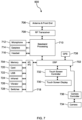
- FIG. 7 shows a block diagram of the UE 102. While a variety of known components of handsets are depicted, in an embodiment a subset of the listed components and/or additional components not listed may be included in the UE 102.
- the UE 102 includes a digital signal processor (DSP) 702 and a memory 704.
- DSP digital signal processor
- the UE 102 may further include one or more antenna and front end unit 706, a one or more radio frequency (RF) transceiver 708, a baseband processing unit 710, a microphone 712, an earpiece speaker 714, a headset port 716, an input/output interface 718, a removable memory card 720, a universal serial bus (USB) port 722, an infrared port 724, a vibrator 726, one or more electro-mechanical switches 728, a touch screen display 730, a touch screen controller 732, a camera 734, a camera controller 736, and a global positioning system (GPS) receiver 738.
- the UE 102 may include another kind of display that does not provide a touch sensitive screen.
- the UE 102 may include both the touch screen display 730 and additional display component that does not provide a touch sensitive screen.
- the DSP 702 may communicate directly with the memory 704 without passing through the input/output interface 718. Additionally, in an embodiment, the UE 102 may comprise other peripheral devices that provide other functionality.
- the DSP 702 or some other form of controller or central processing unit operates to control the various components of the UE 102 in accordance with embedded software or firmware stored in memory 704 or stored in memory contained within the DSP 702 itself.
- the DSP 702 may execute other applications stored in the memory 704 or made available via information carrier media such as portable data storage media like the removable memory card 720 or via wired or wireless network communications.
- the application software may comprise a compiled set of machine-readable instructions that configure the DSP 702 to provide the desired functionality, or the application software may be high-level software instructions to be processed by an interpreter or compiler to indirectly configure the DSP 702.
- the DSP 702 may communicate with a wireless network via the analog baseband processing unit 710.
- the communication may provide Internet connectivity, enabling a user to gain access to content on the Internet and to send and receive e-mail or text messages.
- the input/output interface 718 interconnects the DSP 702 and various memories and interfaces.
- the memory 704 and the removable memory card 720 may provide software and data to configure the operation of the DSP 702.
- the interfaces may be the USB port 722 and the infrared port 724.
- the USB port 722 may enable the UE 102 to function as a peripheral device to exchange information with a personal computer or other computer system.
- the infrared port 724 and other optional ports such as a Bluetooth ® interface or an IEEE 802.11 compliant wireless interface may enable the UE 102 to communicate wirelessly with other nearby handsets and/or wireless base stations.
- one or more of the radio transceivers is a cellular radio transceiver.
- a cellular radio transceiver promotes establishing a wireless communication link with a cell site according to one or more of a 5G, a long term evolution (LTE), a code division multiple access (CDMA), a global system for mobile communications (GSM) wireless communication protocol.
- one of the radio transceivers 708 may comprise a near field communication (NFC) transceiver.
- the NFC transceiver may be used to complete payment transactions with point-of-sale terminals or other communications exchanges.
- each of the different radio transceivers 708 may be coupled to its own separate antenna.
- the UE 102 may comprise a radio frequency identify (RFID) reader and/or writer device.
- RFID radio frequency identify
- the switches 728 may couple to the DSP 702 via the input/output interface 718 to provide one mechanism for the user to provide input to the UE 102.
- one or more of the switches 728 may be coupled to a motherboard of the UE 102 and/or to components of the UE 102 via a different path (e.g., not via the input/output interface 718), for example coupled to a power control circuit (power button) of the UE 102.
- the touch screen display 730 is another input mechanism, which further displays text and/or graphics to the user.
- the touch screen LCD controller 732 couples the DSP 702 to the touch screen display 730.
- the GPS receiver 738 is coupled to the DSP 702 to decode global positioning system signals, thereby enabling the UE 102 to determine its position.
- FIG. 8A illustrates a software environment 802 that may be implemented by the DSP 702.
- the DSP 702 executes operating system software 804 that provides a platform from which the rest of the software operates.
- the operating system software 804 may provide a variety of drivers for the handset hardware with standardized interfaces that are accessible to application software.
- the operating system software 804 may be coupled to and interact with application management services (AMS) 806 that transfer control between applications running on the UE 400.
- AMS application management services
- FIG. 8A are also shown in FIG. 8A a web browser application 808, a media player application 810, and JAVA applets 812.
- the web browser application 808 may be executed by the UE 400 to browse content and/or the Internet, for example when the UE 400 is coupled to a network via a wireless link.
- the web browser application 808 may permit a user to enter information into forms and select links to retrieve and view web pages.
- the media player application 810 may be executed by the UE 400 to play audio or audiovisual media.
- the JAVA applets 812 may be executed by the UE 400 to provide a variety of functionality including games, utilities, and other functionality.
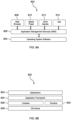
- FIG. 8B illustrates another software environment 820 that may be implemented by the DSP 702.
- the DSP 702 executes operating system kernel (OS kernel) 828 and an execution runtime 830.
- the DSP 702 executes applications 822 that may execute in the execution runtime 830 and may rely upon services provided by the application framework 824.
- Applications 822 and the application framework 824 may rely upon functionality provided via the libraries 826.
Landscapes
- Engineering & Computer Science (AREA)
- Databases & Information Systems (AREA)
- Computer Networks & Wireless Communication (AREA)
- Signal Processing (AREA)
- Mobile Radio Communication Systems (AREA)
Applications Claiming Priority (1)
| Application Number | Priority Date | Filing Date | Title |
|---|---|---|---|
| US18/325,921 US20240406707A1 (en) | 2023-05-30 | 2023-05-30 | Over-The-Air SIM and Device Configuration via Entitlement Server |
Publications (1)
| Publication Number | Publication Date |
|---|---|
| EP4472257A1 true EP4472257A1 (fr) | 2024-12-04 |
Family
ID=91076647
Family Applications (1)
| Application Number | Title | Priority Date | Filing Date |
|---|---|---|---|
| EP24175266.6A Pending EP4472257A1 (fr) | 2023-05-30 | 2024-05-10 | Carte sim et dispositif par liaison radio via un serveur d'habilitation |
Country Status (2)
| Country | Link |
|---|---|
| US (1) | US20240406707A1 (fr) |
| EP (1) | EP4472257A1 (fr) |
Cited By (1)
| Publication number | Priority date | Publication date | Assignee | Title |
|---|---|---|---|---|
| WO2025106370A1 (fr) * | 2023-11-14 | 2025-05-22 | Dish Wireless L.L.C. | Mise à jour dynamique de cartes sim par voie hertzienne |
Citations (5)
| Publication number | Priority date | Publication date | Assignee | Title |
|---|---|---|---|---|
| EP1569475A1 (fr) * | 2004-02-27 | 2005-08-31 | ORGA Systems enabling services GmbH | Dispositif et procédé pour la mise-à-jour de la configuration d'une mémoire de données dans une carte à puce d'un terminal mobile |
| US20160127176A1 (en) * | 2014-10-30 | 2016-05-05 | Amazon Technologies, Inc. | Configuring an electronic device for wireless communications |
| US20160373880A1 (en) * | 2015-06-17 | 2016-12-22 | Verizon Patent And Licensing Inc., | Subscription-aware and updates-aware sim process |
| WO2020234037A1 (fr) * | 2019-05-17 | 2020-11-26 | Thales Dis France Sa | Procédé de mise à niveau d'un profil stocké dans un élément sécurisé |
| US11418958B1 (en) * | 2019-10-15 | 2022-08-16 | Sprint Communications Company L.P. | Subscriber identity module (SIM) remote update agent |
Family Cites Families (5)
| Publication number | Priority date | Publication date | Assignee | Title |
|---|---|---|---|---|
| DE102006040086A1 (de) * | 2006-08-28 | 2008-03-20 | Vodafone Holding Gmbh | Individualisierung von Mobilfunknehmer-Identifikations-Modulen |
| CN102682228A (zh) * | 2011-03-09 | 2012-09-19 | 北京网秦天下科技有限公司 | 利用sim卡查杀移动设备的病毒的方法和系统 |
| US8843179B2 (en) * | 2012-05-11 | 2014-09-23 | Li Li | Provisioning an embedded subscriber identity module |
| US10321298B2 (en) * | 2017-06-03 | 2019-06-11 | Apple Inc. | Selection of preferred mechanisms for telephone number validation |
| US11432134B2 (en) * | 2019-09-18 | 2022-08-30 | Jio Platforms Limited | System and method of customizing and updating information |
-
2023
- 2023-05-30 US US18/325,921 patent/US20240406707A1/en active Pending
-
2024
- 2024-05-10 EP EP24175266.6A patent/EP4472257A1/fr active Pending
Patent Citations (5)
| Publication number | Priority date | Publication date | Assignee | Title |
|---|---|---|---|---|
| EP1569475A1 (fr) * | 2004-02-27 | 2005-08-31 | ORGA Systems enabling services GmbH | Dispositif et procédé pour la mise-à-jour de la configuration d'une mémoire de données dans une carte à puce d'un terminal mobile |
| US20160127176A1 (en) * | 2014-10-30 | 2016-05-05 | Amazon Technologies, Inc. | Configuring an electronic device for wireless communications |
| US20160373880A1 (en) * | 2015-06-17 | 2016-12-22 | Verizon Patent And Licensing Inc., | Subscription-aware and updates-aware sim process |
| WO2020234037A1 (fr) * | 2019-05-17 | 2020-11-26 | Thales Dis France Sa | Procédé de mise à niveau d'un profil stocké dans un élément sécurisé |
| US11418958B1 (en) * | 2019-10-15 | 2022-08-16 | Sprint Communications Company L.P. | Subscriber identity module (SIM) remote update agent |
Cited By (1)
| Publication number | Priority date | Publication date | Assignee | Title |
|---|---|---|---|---|
| WO2025106370A1 (fr) * | 2023-11-14 | 2025-05-22 | Dish Wireless L.L.C. | Mise à jour dynamique de cartes sim par voie hertzienne |
Also Published As
| Publication number | Publication date |
|---|---|
| US20240406707A1 (en) | 2024-12-05 |
Similar Documents
| Publication | Publication Date | Title |
|---|---|---|
| US11716612B1 (en) | Bootstrap electronic subscriber identity module configuration | |
| US11722880B2 (en) | Electronic subscriber identity module (eSIM) profile delivery and activation system and methods | |
| US9357378B1 (en) | Subscriber identity module (SIM) card initiation of custom application launcher installation on a mobile communication device | |
| US9794727B1 (en) | Network access tiered based on application launcher installation | |
| EP4221286B1 (fr) | Système de courtage de profil sim | |
| US10382920B2 (en) | Delivery of branding content and customizations to a mobile communication device | |
| US10506398B2 (en) | Implementation of remotely hosted branding content and customizations | |
| US9204239B1 (en) | Segmented customization package within distributed server architecture | |
| US9426641B1 (en) | Multiple carrier partition dynamic access on a mobile device | |
| US12200815B2 (en) | Subscriber identity module (SIM) remote update agent | |
| US9363622B1 (en) | Separation of client identification composition from customization payload to original equipment manufacturer layer | |
| US10433156B1 (en) | Adapting subscriber identity module (SIM) card | |
| US11102646B1 (en) | Triggering electronic subscriber identity module activation | |
| US10902307B1 (en) | Universal integrated circuit card (UICC) toolkit | |
| JP2018510517A (ja) | ダイナミック加入者識別モジュール | |
| WO2015060965A2 (fr) | Livraison de contenu de marque et de personnalisations à un dispositif de communication mobile | |
| US12063509B2 (en) | Hyperledger authorization into a radio access network (RAN) | |
| EP3413600A1 (fr) | Dispositif de communication et procédé de gestion de profils | |
| US11259160B1 (en) | Provisioning a voicemail platform | |
| EP4472257A1 (fr) | Carte sim et dispositif par liaison radio via un serveur d'habilitation | |
| US20250056201A1 (en) | Multi-SIM Device Handling via Entitlement Server | |
| US11190523B1 (en) | Post-activation installation of custom applications with system privileges | |
| US9485711B1 (en) | Providing service to a portable electronic device using allowed network codes | |
| US9014669B1 (en) | Limit failed network connection attempts with factory default settings | |
| US12610227B2 (en) | SIM provisioning via WiFi |
Legal Events
| Date | Code | Title | Description |
|---|---|---|---|
| PUAI | Public reference made under article 153(3) epc to a published international application that has entered the european phase |
Free format text: ORIGINAL CODE: 0009012 |
|
| STAA | Information on the status of an ep patent application or granted ep patent |
Free format text: STATUS: THE APPLICATION HAS BEEN PUBLISHED |
|
| AK | Designated contracting states |
Kind code of ref document: A1 Designated state(s): AL AT BE BG CH CY CZ DE DK EE ES FI FR GB GR HR HU IE IS IT LI LT LU LV MC ME MK MT NL NO PL PT RO RS SE SI SK SM TR |
|
| RAP3 | Party data changed (applicant data changed or rights of an application transferred) |
Owner name: T-MOBILE INNOVATIONS LLC |
|
| STAA | Information on the status of an ep patent application or granted ep patent |
Free format text: STATUS: REQUEST FOR EXAMINATION WAS MADE |
|
| 17P | Request for examination filed |
Effective date: 20250603 |