EP4472260A2 - Procédé de protection de paramètre tronqué et appareil - Google Patents
Procédé de protection de paramètre tronqué et appareil Download PDFInfo
- Publication number
- EP4472260A2 EP4472260A2 EP24179768.7A EP24179768A EP4472260A2 EP 4472260 A2 EP4472260 A2 EP 4472260A2 EP 24179768 A EP24179768 A EP 24179768A EP 4472260 A2 EP4472260 A2 EP 4472260A2
- Authority
- EP
- European Patent Office
- Prior art keywords
- terminal
- truncated
- parameter
- nas
- tmsi
- Prior art date
- Legal status (The legal status is an assumption and is not a legal conclusion. Google has not performed a legal analysis and makes no representation as to the accuracy of the status listed.)
- Pending
Links
Images




Classifications
-
- H—ELECTRICITY
- H04—ELECTRIC COMMUNICATION TECHNIQUE
- H04W—WIRELESS COMMUNICATION NETWORKS
- H04W12/00—Security arrangements; Authentication; Protecting privacy or anonymity
- H04W12/03—Protecting confidentiality, e.g. by encryption
- H04W12/037—Protecting confidentiality, e.g. by encryption of the control plane, e.g. signalling traffic
-
- H—ELECTRICITY
- H04—ELECTRIC COMMUNICATION TECHNIQUE
- H04W—WIRELESS COMMUNICATION NETWORKS
- H04W12/00—Security arrangements; Authentication; Protecting privacy or anonymity
- H04W12/10—Integrity
- H04W12/106—Packet or message integrity
-
- H—ELECTRICITY
- H04—ELECTRIC COMMUNICATION TECHNIQUE
- H04W—WIRELESS COMMUNICATION NETWORKS
- H04W12/00—Security arrangements; Authentication; Protecting privacy or anonymity
- H04W12/12—Detection or prevention of fraud
- H04W12/121—Wireless intrusion detection systems [WIDS]; Wireless intrusion prevention systems [WIPS]
- H04W12/122—Counter-measures against attacks; Protection against rogue devices
-
- H—ELECTRICITY
- H04—ELECTRIC COMMUNICATION TECHNIQUE
- H04W—WIRELESS COMMUNICATION NETWORKS
- H04W28/00—Network traffic management; Network resource management
- H04W28/02—Traffic management, e.g. flow control or congestion control
- H04W28/06—Optimizing the usage of the radio link, e.g. header compression, information sizing, discarding information
-
- H—ELECTRICITY
- H04—ELECTRIC COMMUNICATION TECHNIQUE
- H04W—WIRELESS COMMUNICATION NETWORKS
- H04W4/00—Services specially adapted for wireless communication networks; Facilities therefor
- H04W4/20—Services signaling; Auxiliary data signalling, i.e. transmitting data via a non-traffic channel
-
- H—ELECTRICITY
- H04—ELECTRIC COMMUNICATION TECHNIQUE
- H04W—WIRELESS COMMUNICATION NETWORKS
- H04W60/00—Affiliation to network, e.g. registration; Terminating affiliation with the network, e.g. de-registration
- H04W60/04—Affiliation to network, e.g. registration; Terminating affiliation with the network, e.g. de-registration using triggered events
-
- H—ELECTRICITY
- H04—ELECTRIC COMMUNICATION TECHNIQUE
- H04W—WIRELESS COMMUNICATION NETWORKS
- H04W76/00—Connection management
- H04W76/10—Connection setup
- H04W76/19—Connection re-establishment
-
- H—ELECTRICITY
- H04—ELECTRIC COMMUNICATION TECHNIQUE
- H04W—WIRELESS COMMUNICATION NETWORKS
- H04W76/00—Connection management
- H04W76/20—Manipulation of established connections
-
- H—ELECTRICITY
- H04—ELECTRIC COMMUNICATION TECHNIQUE
- H04W—WIRELESS COMMUNICATION NETWORKS
- H04W8/00—Network data management
- H04W8/26—Network addressing or numbering for mobility support
-
- H—ELECTRICITY
- H04—ELECTRIC COMMUNICATION TECHNIQUE
- H04W—WIRELESS COMMUNICATION NETWORKS
- H04W76/00—Connection management
- H04W76/10—Connection setup
- H04W76/11—Allocation or use of connection identifiers
Definitions
- This application relates to the field of communications technologies, and in particular, to a method for protecting a truncated parameter and an apparatus.
- a terminal sends, to an access network device, a radio resource control (radio resource control, RRC) message that carries a 5th generation-system architecture evolution-temporary mobile subscriber identity (5th generation-system architecture evolution-temporary mobile subscriber identity, 5G-S-TMSI), so that the access network device can determine a specific access and mobility management function (access and mobility management function, AMF) based on the 5G-S-TMSI.
- RRC radio resource control
- the RRC message may not carry the complete 5G-S-TMSI.
- the terminal needs to truncate the 5G-S-TMSI by using a truncated parameter, and then report a truncated 5G-S-TMSI to the access network device by using the RRC message.
- the access network device After receiving a parameter that is obtained after truncation (for example, the truncated 5G-S-TMSI), the access network device restores the parameter that is obtained after the truncation to a complete parameter (for example, the complete 5G-S-TMSI).
- the terminal may also need to truncate some other specific parameters, and perform a similar operation described above.
- the truncated parameter used by the terminal is usually configured by a network side.
- An access stratum (access stratum, AS) security context is not established between the access network device and a terminal that uses a control plane cellular internet of things (cellular internet of things, CIoT) 5th generation system (5th generation system, 5GS) optimization function. Therefore, the access network device cannot perform AS security protection on the truncated parameter, and the access network device can only send a truncated parameter without AS security protection to the terminal.
- the truncated parameter may be tampered with by an attacker.
- the terminal cannot obtain the correct truncated parameter. As a result, the terminal cannot access a network.
- This application provides a method for protecting a truncated parameter and an apparatus, to reduce a security risk of a truncated parameter in a transmission process.
- a method for protecting a truncated parameter includes: A mobility management network element determines whether a terminal meets a preset condition, where the preset condition includes that the terminal uses a control plane CIoT 5GS optimization function. The mobility management network element sends, to the terminal when the terminal meets the preset condition, a downlink NAS message on which NAS security protection is performed by using a NAS security context, where the downlink NAS message includes a truncated parameter, and the truncated parameter is used to truncate a 5G-S-TMSI of the terminal.
- the terminal when the terminal meets the preset condition, the terminal is a terminal that uses the control plane CIoT 5GS optimization function. Therefore, the mobility management network element sends, to the terminal, the downlink NAS message on which the NAS security protection is performed by using the NAS security context, so that the terminal obtains the truncated parameter on which the NAS security protection is performed. In this way, it is ensured that the truncated parameter received by the terminal is not tampered with or forged, thereby avoiding a denial of service attack launched by an attacker against the terminal, and further ensuring that the terminal can normally access a network.
- the truncated parameter is pre-stored by the mobility management network element.
- the mobility management network element does not need to obtain the truncated parameter from another device (for example, an access network device), thereby simplifying a procedure.
- the method further includes: The mobility management network element receives the truncated parameter sent by an access network device. It may be understood that the mobility management network element obtains the truncated parameter from the access network device. Therefore, the mobility management network element does not need to pre-configure the truncated parameter, thereby reducing configuration complexity of the truncated parameter.
- a mobility management network element determines whether a terminal meets a preset condition includes: The mobility management network element determines whether the terminal uses the control plane CIoT 5GS optimization function. If the terminal uses the control plane CIoT 5GS optimization function, the mobility management network element determines that the terminal meets the preset condition; or if the terminal does not use the control plane CIoT 5GS optimization function, the mobility management network element determines that the terminal does not meet the preset condition.
- the preset condition further includes that the terminal is initially registered with a network. That a mobility management network element determines whether a terminal meets a preset condition includes: The mobility management network element determines whether the terminal uses the control plane CIoT 5GS optimization function and whether the terminal is initially registered with the network. If the terminal uses the control plane CIoT 5GS optimization function and the terminal is initially registered with the network, the mobility management network element determines that the terminal meets the preset condition; or if the terminal does not use the control plane CIoT 5GS optimization function or the terminal is not initially registered with the network, the mobility management network element determines that the terminal does not meet the preset condition.
- that the mobility management network element determines whether the terminal is initially registered with the network includes: The mobility management network element determines, based on a registration type reported by the terminal, that the terminal is initially registered with the network.
- the preset condition further includes that the truncated parameter needs to be updated for the terminal needs to be updated for the terminal. That a mobility management network element determines whether a terminal meets a preset condition includes: The mobility management network element determines whether the terminal uses the control plane CIoT 5GS optimization function and whether the truncated parameter needs to be updated for the terminal needs to be updated for the terminal.
- the mobility management network element determines that the terminal meets the preset condition; or if the terminal does not use the control plane CIoT 5GS optimization function or the truncated parameter does not need to be updated for the terminal does not need to be updated for the terminal, the mobility management network element determines that the terminal does not meet the preset condition.
- that the mobility management network element determines whether the truncated parameter needs to be updated for the terminal includes: When a truncated parameter configured in the mobility management network element is different from the truncated parameter that is stored in a context of the terminal, the mobility management network element determines that the truncated parameter needs to be updated for the terminal.
- that the mobility management network element determines whether the truncated parameter needs to be updated for the terminal includes: After the mobility management network element updates the truncated parameter, the mobility management network element determines that the truncated parameter needs to be updated for the terminal. In a possible design, that the mobility management network element determines whether the terminal uses the control plane CIoT 5GS optimization function includes: If a preferred network behavior reported by the terminal indicates that the terminal prefers to use the control plane CIoT 5GS optimization function, and the mobility management network element supports the control plane CIoT 5GS optimization function, the mobility management network element determines that the terminal uses the control plane CIoT 5GS optimization function.
- that the mobility management network element determines whether the terminal uses the control plane CIoT 5GS optimization function includes: If the context of the terminal indicates that the terminal uses the control plane CIoT 5GS optimization function, the mobility management network element determines that the terminal uses the control plane CIoT 5GS optimization function.
- a mobility management network element determines whether a terminal meets a preset condition includes: After the mobility management network element receives a registration request message or a service request message of the terminal, the mobility management network element determines whether the terminal meets the preset condition.
- the downlink NAS message is a service accept message or a registration accept message.
- the first bit to the tenth bit of the 5G-S-TMSI are used to indicate an AMF set ID
- the eleventh bit to the sixteenth bit of the 5G-S-TMSI are used to indicate an AMF pointer
- the seventeenth bit to the forty-eighth bit of the 5G-S-TMSI are used to indicate a 5G-TMSI.
- the truncated parameter includes a first truncated parameter and a second truncated parameter, the first truncated parameter is used to truncate the AMF set ID and the 5G-TMSI, and the second truncated parameter is used to truncate the AMF pointer and the 5G-TMSI.
- the method further includes: The mobility management network element updates the truncated parameter based on a quantity of AMF set IDs and/or a quantity of AMF pointers. Alternatively, the mobility management network element updates the truncated parameter according to an instruction of a network management system. Alternatively, the mobility management network element receives an updated truncated parameter sent by the access network device.
- a method for protecting a truncated parameter includes: A terminal receives a downlink NAS message that is sent by a mobility management network element and on which NAS security protection is performed by using a NAS security context, where the downlink NAS message includes a truncated parameter, and the truncated parameter is used to truncate a 5G-S-TMSI of the terminal. The terminal performs security deprotection on the downlink NAS message. The terminal stores the truncated parameter after successfully performing security deprotection on the downlink NAS message.
- the truncated parameter is carried in the downlink NAS message on which the NAS security protection is performed, the truncated parameter is also under the NAS security protection. In this way, it is ensured that the truncated parameter is not tampered with or forged, thereby avoiding a denial of service attack launched by an attacker against the terminal, and further ensuring that the terminal can normally access a network.
- that the terminal stores the truncated parameter includes: A NAS layer of the terminal stores the truncated parameter.
- the method further includes: The NAS layer of the terminal sends the truncated parameter to an RRC layer of the terminal.
- the RRC layer of the terminal truncates the 5G-S-TMSI of the terminal based on the truncated parameter, to obtain a truncated 5G-S-TMSI.
- the method further includes: The NAS layer of the terminal truncates the 5G-S-TMSI of the terminal based on the truncated parameter, to obtain a truncated 5G-S-TMSI.
- the NAS layer of the terminal sends the truncated 5G-S-TMSI to an RRC layer of the terminal.
- that the terminal stores the truncated parameter includes: A NAS layer of the terminal sends the truncated parameter to an RRC layer of the terminal.
- the RRC layer of the terminal stores the truncated parameter.
- the method further includes: The RRC layer of the terminal truncates the 5G-S-TMSI of the terminal based on the truncated parameter, to obtain a truncated 5G-S-TMSI.
- the method further includes:
- the RRC layer of the terminal sends the truncated parameter to the NAS layer of the terminal.
- the NAS layer of the terminal truncates the 5G-S-TMSI of the terminal based on the truncated parameter, to obtain a truncated 5G-S-TMSI.
- the NAS layer of the terminal sends the truncated 5G-S-TMSI to the RRC layer of the terminal.
- the method further includes: The terminal sends an RRC reestablishment request message to an access network device, where the RRC reestablishment request message includes the truncated 5G-S-TMSI.
- the downlink NAS message is a service accept message or a registration accept message.
- the first bit to the tenth bit of the 5G-S-TMSI are used to indicate an AMF set ID
- the eleventh bit to the sixteenth bit of the 5G-S-TMSI are used to indicate an AMF pointer
- the seventeenth bit to the forty-eighth bit of the 5G-S-TMSI are used to indicate a 5G-TMSI.
- the truncated parameter includes a first truncated parameter and a second truncated parameter, the first truncated parameter is used to truncate the AMF set ID and the 5G-TMSI, and the second truncated parameter is used to truncate the AMF pointer and the 5G-TMSI.
- a method for protecting a truncated parameter includes: An access network device determines whether a terminal supports a CIoT 5GS optimization feature. The access network device sends a truncated parameter to a mobility management network element when the terminal supports the CIoT 5GS optimization feature, where the truncated parameter is used to truncate a 5G-S-TMSI of the terminal.
- the access network device sends the truncated parameter to the mobility management network element when the terminal supports the CIoT 5GS optimization feature, so that the mobility management network element performs NAS security protection on the truncated parameter.
- the access network device is prevented from directly sending the truncated parameter with no security protection to the terminal, and a security risk of the truncated parameter in a transmission process is reduced.
- that an access network device determines whether a terminal supports a CIoT 5GS optimization feature includes: If capability indication information of the terminal is used to indicate that the terminal supports the CIoT 5GS optimization feature, the access network device determines that the terminal supports the CIoT 5GS optimization feature.
- an access network device determines whether a terminal supports a CIoT 5GS optimization feature includes: If a frequency used by the terminal is the same as a frequency used by a CIoT device, the access network device determines that the terminal supports the CIoT 5GS optimization feature.
- an access network device determines whether a terminal supports a CIoT 5GS optimization feature includes: If a type of a message sent by the terminal is the same as a type of a message sent by a CIoT device, the access network device determines that the terminal supports the CIoT 5GS optimization feature.
- an access network device determines whether a terminal supports a CIoT 5GS optimization feature includes: After the access network device receives an uplink RRC message sent by the terminal, the access network device determines whether the terminal supports the CIoT 5GS optimization feature.
- the uplink RRC message is an RRC establishment request message or an RRC establishment complete message.
- that the access network device sends a truncated parameter to a mobility management network element includes: The access network device sends an initial UE message to the mobility management network element, where the initial UE message includes the truncated parameter.
- the truncated parameter is pre-stored in the access network device.
- the method further includes: The access network device receives an RRC reestablishment request message sent by the terminal, where the RRC reestablishment request message includes a truncated 5G-S-TMSI.
- the first bit to the tenth bit of the 5G-S-TMSI are used to indicate an AMF set ID
- the eleventh bit to the sixteenth bit of the 5G-S-TMSI are used to indicate an AMF pointer
- the seventeenth bit to the forty-eighth bit of the 5G-S-TMSI are used to indicate a 5G-TMSI.
- the truncated parameter includes a first truncated parameter and a second truncated parameter, the first truncated parameter is used to truncate the AMF set ID and the 5G-TMSI, and the second truncated parameter is used to truncate the AMF pointer and the 5G-TMSI.
- a method for protecting a truncated parameter includes: A mobility management network element updates a truncated parameter, where the truncated parameter is used to truncate a 5G-S-TMSI.
- the mobility management network element searches for a terminal that uses a control plane CIoT 5GS optimization function.
- the mobility management network element sends, to the terminal that uses the control plane CIoT 5GS optimization function, a downlink NAS message on which NAS security protection is performed by using a NAS security context, where the downlink NAS message includes an updated truncated parameter.
- the mobility management network element sends, to the terminal that uses the control plane CIoT 5GS optimization function, the downlink NAS message on which the NAS security protection is performed by using the NAS security context. Because the updated truncated parameter is carried in the downlink NAS message, the updated truncated parameter is not tampered with or forged by an attacker during transmission over an air interface. In this way, the terminal that uses the control plane CIoT 5GS optimization function can obtain the correct updated truncated parameter in a timely manner, to ensure that the terminal that uses the control plane CIoT 5GS optimization function can normally access a network.
- a mobility management network element updates a truncated parameter includes: The mobility management network element updates the truncated parameter based on a quantity of AMF set IDs and/or a quantity of AMF pointers. Alternatively, the mobility management network element updates the truncated parameter according to an instruction of a network management system. Alternatively, the mobility management network element receives the updated truncated parameter sent by an access network device.
- that the mobility management network element sends, to the terminal that uses the control plane CIoT 5GS optimization function, a downlink NAS message on which NAS security protection is performed by using a NAS security context includes: When the terminal that uses the control plane CIoT 5GS optimization function is in a connected state, the mobility management network element sends the downlink NAS message to the terminal that uses the control plane CIoT 5GS optimization function.
- that the mobility management network element sends, to the terminal that uses the control plane CIoT 5GS optimization function, a downlink NAS message on which NAS security protection is performed by using a NAS security context includes: When the terminal that uses the control plane CIoT 5GS optimization function is in a non-connected state, the mobility management network element waits for the terminal that uses the control plane CIoT 5GS optimization function to enter a connected state. After the terminal that uses the control plane CIoT 5GS optimization function enters the connected state, and the mobility management network element and the terminal that uses the control plane CIoT 5GS optimization function activate NAS security, the mobility management network element sends the downlink NAS message to the terminal that uses the control plane CIoT 5GS optimization function.
- that the mobility management network element sends, to the terminal that uses the control plane CIoT 5GS optimization function, a downlink NAS message on which NAS security protection is performed by using a NAS security context includes: When the terminal that uses the control plane CIoT 5GS optimization function is in a non-connected state, the mobility management network element triggers, through paging, the terminal that uses the control plane CIoT 5GS optimization function to enter a connected state.
- the mobility management network element After the terminal that uses the control plane CIoT 5GS optimization function enters the connected state, and the mobility management network element and the terminal that uses the control plane CIoT 5GS optimization function activate NAS security, the mobility management network element sends the downlink NAS message to the terminal that uses the control plane CIoT 5GS optimization function.
- the downlink NAS message is a UE configuration update command message or a service accept message.
- the first bit to the tenth bit of the 5G-S-TMSI are used to indicate an AMF set ID
- the eleventh bit to the sixteenth bit of the 5G-S-TMSI are used to indicate an AMF pointer
- the seventeenth bit to the forty-eighth bit of the 5G-S-TMSI are used to indicate a 5G-TMSI.
- the truncated parameter includes a first truncated parameter and a second truncated parameter, the first truncated parameter is used to truncate the AMF set ID and the 5G-TMSI, and the second truncated parameter is used to truncate the AMF pointer and the 5G-TMSI.
- a method for protecting a truncated parameter includes: A mobility management network element receives a truncated parameter sent by an access network device, where the truncated parameter is used to truncate a 5G-S-TMSI of a terminal.
- the mobility management network element performs integrity calculation on the 5G-S-TMSI of the terminal based on a NAS security context of the terminal, to generate a first NAS MAC.
- the mobility management network element sends the first NAS MAC to the access network device.
- the mobility management network element performs integrity calculation on the truncated parameter to obtain the first NAS MAC, and sends the first NAS MAC to the access network device.
- the access network device may send the first NAS MAC and the truncated parameter to the terminal, to ensure that the truncated parameter is not tampered with or forged by an attacker in a transmission process, thereby reducing a security risk of the truncated parameter in the transmission process.
- the method further includes: The mobility management network element receives protection indication information and/or a freshness parameter sent by the access network device, where the protection indication information is used to indicate the mobility management network element to perform security protection on the truncated parameter, and the freshness parameter is used to perform integrity calculation on the truncated parameter.
- the first bit to the tenth bit of the 5G-S-TMSI are used to indicate an AMF set ID
- the eleventh bit to the sixteenth bit of the 5G-S-TMSI are used to indicate an AMF pointer
- the seventeenth bit to the forty-eighth bit of the 5G-S-TMSI are used to indicate a 5G-TMSI.
- the truncated parameter includes a first truncated parameter and a second truncated parameter, the first truncated parameter is used to truncate the AMF set ID and the 5G-TMSI, and the second truncated parameter is used to truncate the AMF pointer and the 5G-TMSI.
- a method for protecting a truncated parameter includes: An access network device sends a truncated parameter to a mobility management network element, where the truncated parameter is used to truncate a 5G-S-TMSI of a terminal.
- the access network device receives a first NAS MAC sent by the mobility management network element, where the first NAS MAC is obtained by performing integrity calculation on the truncated parameter.
- the access network device sends the first NAS MAC and the truncated parameter to the terminal.
- the access network device may send the first NAS MAC and the truncated parameter to the terminal, to ensure that the truncated parameter is not tampered with or forged by an attacker in a transmission process, thereby reducing a security risk of the truncated parameter in the transmission process.
- the method further includes: The access network device determines whether the terminal supports a CIoT 5GS optimization feature. That an access network device sends a truncated parameter to a mobility management network element includes: The access network device sends the truncated parameter to the mobility management network element when the terminal supports the CIoT 5GS optimization feature.
- that the access network device determines whether the terminal supports a CIoT 5GS optimization feature includes: If capability indication information of the terminal is used to indicate that the terminal supports the CIoT 5GS optimization feature, the access network device determines that the terminal supports the CIoT 5GS optimization feature.
- that the access network device determines whether the terminal supports a CIoT 5GS optimization feature includes: If a frequency used by the terminal is the same as a frequency used by a CIoT device, the access network device determines that the terminal supports the CIoT 5GS optimization feature.
- that the access network device determines whether the terminal supports a CIoT 5GS optimization feature includes: If a type of a message sent by the terminal is the same as a type of a message sent by a CIoT device, the access network device determines that the terminal supports the CIoT 5GS optimization feature.
- that the access network device determines whether the terminal supports a CIoT 5GS optimization feature includes: After the access network device receives an uplink RRC message sent by the terminal, the access network device determines whether the terminal supports the CIoT 5GS optimization feature.
- the uplink RRC message is an RRC establishment request message or an RRC establishment complete message.
- the method further includes: The access network device sends protection indication information and/or a freshness parameter to the mobility management network element, where the protection indication information is used to indicate the mobility management network element to perform security protection on the truncated parameter, and the freshness parameter is used to perform integrity calculation on the truncated parameter.
- the method further includes: The access network device receives an RRC reestablishment request message sent by the terminal, where the RRC reestablishment request message includes a truncated 5G-S-TMSI.
- the first bit to the tenth bit of the 5G-S-TMSI are used to indicate an AMF set ID
- the eleventh bit to the sixteenth bit of the 5G-S-TMSI are used to indicate an AMF pointer
- the seventeenth bit to the forty-eighth bit of the 5G-S-TMSI are used to indicate a 5G-TMSI.
- the truncated parameter includes a first truncated parameter and a second truncated parameter, the first truncated parameter is used to truncate the AMF set ID and the 5G-TMSI, and the second truncated parameter is used to truncate the AMF pointer and the 5G-TMSI.
- a method for protecting a truncated parameter includes: A terminal receives a first NAS MAC and a truncated parameter that are sent by an access network device, where the truncated parameter is used to truncate a 5G-S-TMSI of the terminal. The terminal performs integrity calculation on the truncated parameter based on a NAS security context, to generate a second NAS MAC. The terminal checks the first NAS MAC based on the second NAS MAC. The terminal stores the truncated parameter if the check on the first NAS MAC succeeds.
- the terminal can verify integrity of the truncated parameter by checking the first NAS MAC.
- the terminal stores the truncated parameter, to truncate the 5G-S-TMSI based on the truncated parameter in a subsequent process.
- that the terminal stores the truncated parameter includes: An RRC layer of the terminal stores the truncated parameter.
- the method further includes: The RRC layer of the terminal truncates the 5G-S-TMSI of the terminal based on the truncated parameter, to obtain a truncated 5G-S-TMSI.
- the method further includes:
- the RRC layer of the terminal sends the truncated parameter to a NAS layer of the terminal.
- the NAS layer of the terminal truncates the 5G-S-TMSI of the terminal based on the truncated parameter, to obtain a truncated 5G-S-TMSI.
- the NAS layer of the terminal sends the truncated 5G-S-TMSI to the RRC layer of the terminal.
- that the terminal stores the truncated parameter includes: An RRC layer of the terminal sends the truncated parameter to a NAS layer of the terminal.
- the NAS layer of the terminal stores the truncated parameter.
- the method further includes: The NAS layer of the terminal truncates the 5G-S-TMSI of the terminal based on the truncated parameter, to obtain a truncated 5G-S-TMSI.
- the NAS layer of the terminal sends the truncated 5G-S-TMSI to the RRC layer of the terminal.
- the method further includes:
- the NAS layer of the terminal sends the truncated parameter to the RRC layer of the terminal.
- the RRC layer of the terminal truncates the 5G-S-TMSI of the terminal based on the truncated parameter, to obtain a truncated 5G-S-TMSI.
- the method further includes: The terminal sends an RRC reestablishment request message to the access network device, where the RRC reestablishment request message includes the truncated 5G-S-TMSI.
- the first bit to the tenth bit of the 5G-S-TMSI are used to indicate an AMF set ID
- the eleventh bit to the sixteenth bit of the 5G-S-TMSI are used to indicate an AMF pointer
- the seventeenth bit to the forty-eighth bit of the 5G-S-TMSI are used to indicate a 5G-TMSI.
- the truncated parameter includes a first truncated parameter and a second truncated parameter, the first truncated parameter is used to truncate the AMF set ID and the 5G-TMSI, and the second truncated parameter is used to truncate the AMF pointer and the 5G-TMSI.
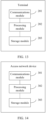
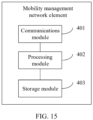
- a communications apparatus includes: a processing module, configured to determine whether a terminal meets a preset condition, where the preset condition includes that the terminal uses a control plane CIoT 5GS optimization function; and a communications module, configured to send, to the terminal when the terminal meets the preset condition, a downlink NAS message on which NAS security protection is performed by using a NAS security context, where the downlink NAS message includes a truncated parameter, and the truncated parameter is used to truncate a 5G-S-TMSI of the terminal.
- the communications apparatus further includes a storage module; and the storage module is configured to store the truncated parameter.
- the communications module is further configured to receive the truncated parameter sent by an access network device.
- that the processing module is configured to determine whether the terminal meets the preset condition includes: determining whether the terminal uses the control plane CIoT 5GS optimization function; and if the terminal uses the control plane CIoT 5GS optimization function, determining that the terminal meets the preset condition; or if the terminal does not use the control plane CIoT 5GS optimization function, determining that the terminal does not meet the preset condition.
- the preset condition further includes that the terminal is initially registered with a network. That the processing module is configured to determine whether the terminal meets the preset condition includes: determining whether the terminal uses the control plane CIoT 5GS optimization function and whether the terminal is initially registered with the network; and if the terminal uses the control plane CIoT 5GS optimization function and the terminal is initially registered with the network, determining that the terminal meets the preset condition; or if the terminal does not use the control plane CIoT 5GS optimization function or the terminal is not initially registered with the network, determining that the terminal does not meet the preset condition.
- the processing module is specifically configured to determine, based on a registration type reported by the terminal, that the terminal is initially registered with the network.
- the preset condition further includes that the truncated parameter needs to be updated for the terminal. That the processing module is configured to determine whether the terminal meets the preset condition includes: determining whether the terminal uses the control plane CIoT 5GS optimization function and whether the truncated parameter needs to be updated for the terminal; and if the terminal uses the control plane CIoT 5GS optimization function and the truncated parameter needs to be updated for the terminal, determining that the terminal meets the preset condition; or if the terminal does not use the control plane CIoT 5GS optimization function or the truncated parameter does not need to be updated for the terminal, determining that the terminal does not meet the preset condition.
- the processing module is specifically configured to: when a truncated parameter configured in a mobility management network element is different from the truncated parameter that is stored in a context of the terminal, determine that the truncated parameter needs to be updated for the terminal.
- the processing module is specifically configured to: after the mobility management network element updates the truncated parameter, determine that the truncated parameter needs to be updated for the terminal.
- the processing module is further configured to update the truncated parameter based on a quantity of AMF set IDs and/or a quantity of AMF pointers; or update the truncated parameter according to an instruction of a network management system; or receive the updated truncated parameter sent by an access network device.
- the processing module is specifically configured to: if a preferred network behavior reported by the terminal indicates that the terminal prefers to use the control plane CIoT 5GS optimization function, and the mobility management network element supports the control plane CIoT 5GS optimization function, determine that the terminal uses the control plane CIoT 5GS optimization function.
- the processing module is specifically configured to: if the context of the terminal indicates that the terminal uses the control plane CIoT 5GS optimization function, determine that the terminal uses the control plane CIoT 5GS optimization function.
- the processing module is specifically configured to: after the communications module receives a registration request message or a service request message of the terminal, determine whether the terminal meets the preset condition.
- the downlink NAS message is a service accept message or a registration accept message.
- the first bit to the tenth bit of the 5G-S-TMSI are used to indicate an AMF set ID
- the eleventh bit to the sixteenth bit of the 5G-S-TMSI are used to indicate an AMF pointer
- the seventeenth bit to the forty-eighth bit of the 5G-S-TMSI are used to indicate a 5G-TMSI.
- the truncated parameter includes a first truncated parameter and a second truncated parameter, the first truncated parameter is used to truncate the AMF set ID and the 5G-TMSI, and the second truncated parameter is used to truncate the AMF pointer and the 5G-TMSI.
- the processing module is configured to update the truncated parameter based on a quantity of AMF set IDs and/or a quantity of AMF pointers.
- the processing module is configured to update the truncated parameter according to an instruction of a network management system.
- the communications module is further configured to receive an updated truncated parameter sent by the access network device.
- a communications apparatus includes: a communications module, configured to receive a downlink NAS message that is sent by a mobility management network element and on which NAS security protection is performed by using a NAS security context, where the downlink NAS message includes a truncated parameter, and the truncated parameter is used to truncate a 5G-S-TMSI of a terminal; a processing module, configured to perform security deprotection on the downlink NAS message; and a storage module, configured to store the truncated parameter after the processing module successfully performs security deprotection on the downlink NAS message.
- the storage module is configured to store the truncated parameter, including: storing, by a NAS layer, the truncated parameter.
- the processing module is further configured to obtain a truncated 5G-S-TMSI, including: sending, by the NAS layer, the truncated parameter to an RRC layer; and truncating, by the RRC layer, the 5G-S-TMSI of the terminal based on the truncated parameter, to obtain the truncated 5G-S-TMSI.
- the processing module is further configured to obtain a truncated 5G-S-TMSI, including: truncating, by the NAS layer, the 5G-S-TMSI of the terminal based on the truncated parameter, to obtain the truncated 5G-S-TMSI; and sending, by the NAS layer, the truncated 5G-S-TMSI to an RRC layer.
- the storage module is configured to store the truncated parameter, including: sending, by a NAS layer, the truncated parameter to an RRC layer; and storing, by the RRC layer, the truncated parameter.
- the processing module is further configured to obtain a truncated 5G-S-TMSI, including: truncating, by the RRC layer, the 5G-S-TMSI of the terminal based on the truncated parameter, to obtain the truncated 5G-S-TMSI.
- the processing module is further configured to obtain a truncated 5G-S-TMSI, including: sending, by the RRC layer, the truncated parameter to the NAS layer; truncating, by the NAS layer, the 5G-S-TMSI of the terminal based on the truncated parameter, to obtain the truncated 5G-S-TMSI; and sending, by the NAS layer, the truncated 5G-S-TMSI to the RRC layer.
- the downlink NAS message is a service accept message or a registration accept message.
- the first bit to the tenth bit of the 5G-S-TMSI are used to indicate an AMF set ID
- the eleventh bit to the sixteenth bit of the 5G-S-TMSI are used to indicate an AMF pointer
- the seventeenth bit to the forty-eighth bit of the 5G-S-TMSI are used to indicate a 5G-TMSI.
- the truncated parameter includes a first truncated parameter and a second truncated parameter, the first truncated parameter is used to truncate the AMF set ID and the 5G-TMSI, and the second truncated parameter is used to truncate the AMF pointer and the 5G-TMSI.
- the communications module is further configured to send an RRC reestablishment request message to an access network device, where the RRC reestablishment request message includes the truncated 5G-S-TMSI.
- a communications apparatus includes: a processing module, configured to determine whether a terminal supports a CIoT 5GS optimization feature; and a communications module, configured to: send a truncated parameter to a mobility management network element when the terminal supports the CIoT 5GS optimization feature, where the truncated parameter is used to truncate a 5G-S-TMSI of the terminal.
- the processing module is specifically configured to: if capability indication information of the terminal is used to indicate that the terminal supports the CIoT 5GS optimization feature, determine that the terminal supports the CIoT 5GS optimization feature.
- the processing module is specifically configured to: if a frequency used by the terminal is the same as a frequency used by a CIoT device, determine that the terminal supports the CIoT 5GS optimization feature.
- the processing module is specifically configured to: if a type of a message sent by the terminal is the same as a type of a message sent by a CIoT device, determine that the terminal supports the CIoT 5GS optimization feature.
- the processing module is specifically configured to: after the communications module receives an uplink RRC message sent by the terminal, determine whether the terminal supports the CIoT 5GS optimization feature.
- the uplink RRC message is an RRC establishment request message or an RRC establishment complete message.
- the communications module is specifically configured to send an initial UE message to the mobility management network element, where the initial UE message includes the truncated parameter.
- the communications apparatus further includes a storage module; and the storage module is configured to store the truncated parameter.
- the communications module is configured to receive an RRC reestablishment request message sent by the terminal, where the RRC reestablishment request message includes a truncated 5G-S-TMSI.
- the first bit to the tenth bit of the 5G-S-TMSI are used to indicate an AMF set ID
- the eleventh bit to the sixteenth bit of the 5G-S-TMSI are used to indicate an AMF pointer
- the seventeenth bit to the forty-eighth bit of the 5G-S-TMSI are used to indicate a 5G-TMSI.
- the truncated parameter includes a first truncated parameter and a second truncated parameter, the first truncated parameter is used to truncate the AMF set ID and the 5G-TMSI, and the second truncated parameter is used to truncate the AMF pointer and the 5G-TMSI.
- a communications apparatus includes: a processing module, configured to: update a truncated parameter, where the truncated parameter is used to truncate a 5G-S-TMSI; and search for a terminal that uses a control plane CIoT 5GS optimization function; and a communications module, configured to send, to the terminal that uses the control plane CIoT 5GS optimization function, a downlink NAS message on which NAS security protection is performed by using a NAS security context, where the downlink NAS message includes an updated truncated parameter.
- the processing module is configured to update the truncated parameter based on a quantity of AMF set IDs and/or a quantity of AMF pointers; or update the truncated parameter according to an instruction of a network management system; or receive the updated truncated parameter sent by an access network device.
- the communications module is specifically configured to: when the terminal that uses the control plane CIoT 5GS optimization function is in a connected state, send the downlink NAS message to the terminal that uses the control plane CIoT 5GS optimization function.
- the communications module is specifically configured to: when the terminal that uses the control plane CIoT 5GS optimization function is in a non-connected state, wait for the terminal that uses the control plane CIoT 5GS optimization function to enter a connected state; and after the terminal that uses the control plane CIoT 5GS optimization function enters the connected state, and a mobility management network element and the terminal that uses the control plane CIoT 5GS optimization function activate NAS security, send the downlink NAS message to the terminal that uses the control plane CIoT 5GS optimization function.
- the communications module is specifically configured to: when the terminal that uses the control plane CIoT 5GS optimization function is in a non-connected state, trigger, through paging, the terminal that uses the control plane CIoT 5GS optimization function to enter a connected state; and after the terminal that uses the control plane CIoT 5GS optimization function enters the connected state, and a mobility management network element and the terminal that uses the control plane CIoT 5GS optimization function activate NAS security, send the downlink NAS message to the terminal that uses the control plane CIoT 5GS optimization function.
- the downlink NAS message is a UE configuration update command message or a service accept message.
- the first bit to the tenth bit of the 5G-S-TMSI are used to indicate an AMF set ID
- the eleventh bit to the sixteenth bit of the 5G-S-TMSI are used to indicate an AMF pointer
- the seventeenth bit to the forty-eighth bit of the 5G-S-TMSI are used to indicate a 5G-TMSI.
- the truncated parameter includes a first truncated parameter and a second truncated parameter, the first truncated parameter is used to truncate the AMF set ID and the 5G-TMSI, and the second truncated parameter is used to truncate the AMF pointer and the 5G-TMSI.
- a communications apparatus includes: a communications module, configured to receive a truncated parameter sent by an access network device, where the truncated parameter is used to truncate a 5G-S-TMSI of a terminal; and a processing module, configured to perform integrity calculation on the 5G-S-TMSI of the terminal based on a NAS security context of the terminal, to generate a first NAS MAC, where the communications module is further configured to send the first NAS MAC to the access network device.
- the communications module is further configured to receive protection indication information and/or a freshness parameter sent by the access network device, where the protection indication information is used to indicate a mobility management network element to perform security protection on the truncated parameter, and the freshness parameter is used to perform integrity calculation on the truncated parameter.
- the first bit to the tenth bit of the 5G-S-TMSI are used to indicate an AMF set ID
- the eleventh bit to the sixteenth bit of the 5G-S-TMSI are used to indicate an AMF pointer
- the seventeenth bit to the forty-eighth bit of the 5G-S-TMSI are used to indicate a 5G-TMSI.
- the truncated parameter includes a first truncated parameter and a second truncated parameter, the first truncated parameter is used to truncate the AMF set ID and the 5G-TMSI, and the second truncated parameter is used to truncate the AMF pointer and the 5G-TMSI.
- a communications apparatus includes: a communications module, configured to: send a truncated parameter to a mobility management network element, where the truncated parameter is used to truncate a 5G-S-TMSI of a terminal; receive a first NAS MAC sent by the mobility management network element, where the first NAS MAC is obtained by performing integrity calculation on the truncated parameter; and send the first NAS MAC and the truncated parameter to the terminal.
- a communications module configured to: send a truncated parameter to a mobility management network element, where the truncated parameter is used to truncate a 5G-S-TMSI of a terminal; receive a first NAS MAC sent by the mobility management network element, where the first NAS MAC is obtained by performing integrity calculation on the truncated parameter; and send the first NAS MAC and the truncated parameter to the terminal.
- the communications apparatus further includes a processing module; the processing module is configured to determine whether the terminal supports a CIoT 5GS optimization feature; and the communications module is specifically configured to send the truncated parameter to the mobility management network element when the terminal supports the CIoT 5GS optimization feature.
- the processing module is specifically configured to: if capability indication information of the terminal is used to indicate that the terminal supports the CIoT 5GS optimization feature, determine that the terminal supports the CIoT 5GS optimization feature.
- the processing module is specifically configured to: if a frequency used by the terminal is the same as a frequency used by a CIoT device, determine that the terminal supports the CIoT 5GS optimization feature.
- the processing module is specifically configured to: if a type of a message sent by the terminal is the same as a type of a message sent by a CIoT device, determine that the terminal supports the CIoT 5GS optimization feature.
- the communications module is further configured to receive an uplink RRC message sent by the terminal; and the processing module is specifically configured to: after the communications module receives the uplink RRC message sent by the terminal, determine whether the terminal supports the CIoT 5GS optimization feature.
- the uplink RRC message is an RRC establishment request message or an RRC establishment complete message.
- the communications module is further configured to send protection indication information and/or a freshness parameter to the mobility management network element, where the protection indication information is used to indicate the mobility management network element to perform security protection on the truncated parameter, and the freshness parameter is used to perform integrity calculation on the truncated parameter.
- the communications module is further configured to receive an RRC reestablishment request message sent by the terminal, where the RRC reestablishment request message includes a truncated 5G-S-TMSI.
- the first bit to the tenth bit of the 5G-S-TMSI are used to indicate an AMF set ID
- the eleventh bit to the sixteenth bit of the 5G-S-TMSI are used to indicate an AMF pointer
- the seventeenth bit to the forty-eighth bit of the 5G-S-TMSI are used to indicate a 5G-TMSI.
- the truncated parameter includes a first truncated parameter and a second truncated parameter, the first truncated parameter is used to truncate the AMF set ID and the 5G-TMSI, and the second truncated parameter is used to truncate the AMF pointer and the 5G-TMSI.
- a communications apparatus includes: a communications module, configured to receive a first NAS MAC and a truncated parameter that are sent by an access network device, where the truncated parameter is used to truncate a 5G-S-TMSI of a terminal; a processing module, configured to: perform integrity calculation on the truncated parameter based on a NAS security context, to generate a second NAS MAC; and check the first NAS MAC based on the second NAS MAC; and a storage module, configured to store the truncated parameter if the check on the first NAS MAC succeeds.
- the storage module is configured to store the truncated parameter, including: storing, by an RRC layer, the truncated parameter.
- the processing module is further configured to obtain a truncated 5G-S-TMSI, including: truncating, by the RRC layer, the 5G-S-TMSI of the terminal based on the truncated parameter, to obtain the truncated 5G-S-TMSI.
- the processing module is further configured to obtain a truncated 5G-S-TMSI, including: sending, by the RRC layer, the truncated parameter to a NAS layer; truncating, by the NAS layer, the 5G-S-TMSI of the terminal based on the truncated parameter, to obtain the truncated 5G-S-TMSI; and sending, by the NAS layer, the truncated 5G-S-TMSI to the RRC layer.
- the storage module is configured to store the truncated parameter, including: sending, by an RRC layer, the truncated parameter to a NAS layer; and storing, by the NAS layer, the truncated parameter.
- the processing module is further configured to obtain a truncated 5G-S-TMSI, including: truncating, by the NAS layer, the 5G-S-TMSI of the terminal based on the truncated parameter, to obtain the truncated 5G-S-TMSI; and sending, by the NAS layer, the truncated 5G-S-TMSI to the RRC layer.
- the processing module is further configured to obtain a truncated 5G-S-TMSI, including: sending, by the NAS layer, the truncated parameter to the RRC layer; and truncating, by the RRC layer, the 5G-S-TMSI of the terminal based on the truncated parameter, to obtain the truncated 5G-S-TMSI.
- the communications module is further configured to send an RRC reestablishment request message to the access network device, where the RRC reestablishment request message includes the truncated 5G-S-TMSI.
- the first bit to the tenth bit of the 5G-S-TMSI are used to indicate an AMF set ID
- the eleventh bit to the sixteenth bit of the 5G-S-TMSI are used to indicate an AMF pointer
- the seventeenth bit to the forty-eighth bit of the 5G-S-TMSI are used to indicate a 5G-TMSI.
- the truncated parameter includes a first truncated parameter and a second truncated parameter, the first truncated parameter is used to truncate the AMF set ID and the 5G-TMSI, and the second truncated parameter is used to truncate the AMF pointer and the 5G-TMSI.
- a communications apparatus includes a processor and a communications interface.
- the processor is configured to execute a computer program instruction, so that the communications apparatus implements the method for protecting a truncated parameter in any design provided in any one of the first aspect to the seventh aspect.
- a computer-readable storage medium stores an instruction, and when the instruction is run on a computer, the computer is enabled to implement the method for protecting a truncated parameter in any design provided in any one of the first aspect to the seventh aspect.
- a computer program product includes an instruction, and when the computer program product runs on a computer, the computer is enabled to implement the method for protecting a truncated parameter in any design provided in any one of the first aspect to the seventh aspect.
- a chip is provided.
- the chip includes a processor, and when the processor executes a computer program instruction, the chip is enabled to implement the method for protecting a truncated parameter in any design of the first aspect to the seventh aspect.
- a communications system includes a mobility management network element and an access network device.
- the mobility management network element is configured to perform the method for protecting a truncated parameter in any design of the first aspect.
- the access network device is configured to perform the method for protecting a truncated parameter in any design of the third aspect.
- a communications system includes a mobility management network element and an access network device.
- the mobility management network element is configured to perform the method for protecting a truncated parameter in any design of the fifth aspect.
- the access network device is configured to perform the method for protecting a truncated parameter in any design of the sixth aspect.
- A/B may represent A or B.
- the term "and/or” in this specification describes only an association relationship for associated objects and represents that three relationships may exist.
- a and/or B may represent the following three cases: Only A exists, both A and B exist, and only B exists.
- "at least one” means one or more, and "a plurality of” means two or more. Words such as “first” and “second” do not limit a quantity and an execution sequence, and the words such as “first” and “second” do not indicate a definite difference.
- the "indication" may include a direct indication and an indirect indication, or may include an explicit indication and an implicit indication.
- Information indicated by a piece of information (first indication information described below) is referred to as to-be-indicated information.
- first indication information described below
- the to-be-indicated information may be directly indicated, where the to-be-indicated information itself, an index of the to-be-indicated information, or the like is indicated.
- the to-be-indicated information may be indirectly indicated by indicating other information, and there is an association relationship between the other information and the to-be-indicated information.
- to-be-indicated information only a part of the to-be-indicated information may be indicated, and the other part of the to-be-indicated information is already known or pre-agreed on.
- specific information may also be indicated by using a pre-agreed (for example, stipulated in a protocol) arrangement sequence of various pieces of information, to reduce indication overheads to some extent.
- the encryption/decryption protects the confidentiality of data during transmission. (Therefore, the encryption/decryption may also be referred to as confidentiality protection.)
- the confidentiality means that the actual content cannot be directly seen.
- Encryption protection may be implemented by encrypting data by using a key and an encryption algorithm. For a specific encryption protection method, refer to related descriptions in section 8.2 in 3GPP TS 33.401 f50 or section 6.4.4 in 33.501 f50. Details are not described herein again.
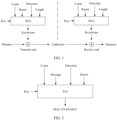
- an encryption process at a transmit end may be as follows: The transmit end may input parameters such as a count (count), a length (length), a bearer (bearer), and a direction (direction) into an NEA, to determine a keystream (keystream). Then, the transmit end determines a ciphertext (ciphertext) based on the keystream and a plaintext (plaintext).
- the transmit end may input parameters such as a count (count), a length (length), a bearer (bearer), and a direction (direction) into an NEA, to determine a keystream (keystream). Then, the transmit end determines a ciphertext (ciphertext) based on the keystream and a plaintext (plaintext).
- a decryption process at a receive end may be as follows: The receive end may input parameters such as a count, a length, a bearer, and a direction into an NEA, to determine a keystream. Then, the receive end determines a plaintext based on the keystream and a ciphertext.
- the integrity protection/check is used to determine whether content of a message is modified during transmission, and may also be used for identity authentication to determine a source of the message.
- the integrity check and protection require a message authentication code (MAC).
- MAC message authentication code
- the MAC may be used to check whether content of a message is modified during transmission.
- the MAC may be used for identity authentication to determine a source of the message.
- a transmit end inputs parameters such as a key (key), a count (count), a length (length), a bearer (bearer), a message (message), and a direction (direction) into an evolved packet system integrity algorithm (evolved packet system integrity algorithm, EIA), to obtain a message authentication code for integrity (message authentication code integrity, MAC-I) or a NAS-MAC.
- EIA evolved packet system integrity algorithm
- a receive end inputs parameters such as an integrity protection key, a count, a length, a bearer, a message, and a direction into an EIA, to obtain an expected message authentication code for integrity (excepted message authentication code integrity, XMAC-I) or an expected non-access stratum message authentication code (excepted non-access stratum message authentication code, XNAS-MAC).
- parameters such as an integrity protection key, a count, a length, a bearer, a message, and a direction into an EIA, to obtain an expected message authentication code for integrity (excepted message authentication code integrity, XMAC-I) or an expected non-access stratum message authentication code (excepted non-access stratum message authentication code, XNAS-MAC).
- the receive end may compare a received MAC-I with the XMAC-I generated by the receive end, to check whether a message is complete. If the MAC-I is the same as the XMAC-I, the receive end determines that check on the received MAC-I succeeds, and the receive end can determine that the message sent by the transmit end is complete. If the MAC-I is different from the XMAC-I, the receive end can determine that check on the received MAC-I fails, and the receive end can determine that the message sent by the transmit end is incomplete.
- the security context refers to information that can be used to implement security protection (for example, encryption/decryption, and/or integrity protection/check) of data.
- security protection for example, encryption/decryption, and/or integrity protection/check
- the security context may include one or more of the following: a root key, an encryption key, an integrity protection key, a specific parameter (such as a NAS count), a key set identifier (key set identifier, KSI), a security algorithm, a security indication (for example, an indication indicating whether encryption is enabled, an indication indicating whether integrity protection is enabled, an indication indicating a validity period of a key, or a key length), or the like.
- the encryption key is a parameter input by a transmit end when the transmit end encrypts a plaintext based on an encryption algorithm to generate a ciphertext. If a symmetric encryption method is used, the encryption key and a decryption key are the same.
- a receive end may decrypt the ciphertext based on the same encryption algorithm and encryption key. In other words, the transmit end and the receive end may perform encryption and decryption based on a same key.
- the integrity protection key is a parameter input by the transmit end when the transmit end performs integrity protection on a plaintext or a ciphertext based on an integrity protection algorithm.
- the receive end may perform, based on the same integrity protection algorithm and integrity protection key, integrity check on data on which integrity protection is performed.
- the specific parameter (for example, the NAS count) is a parameter input by the transmit end when the transmit end performs anti-replay protection on a plaintext or a ciphertext based on an anti-replay protection algorithm.
- the receive end may perform, based on the same anti-replay protection algorithm, anti-replay check on data on which anti-replay protection is performed.
- the security algorithm is used to perform security protection on data, such as an encryption algorithm, a decryption algorithm, and an integrity protection algorithm.
- the security context may include a NAS security context and an AS security context. It may be understood that the NAS security context is used to protect information transmitted between a terminal and a core network.
- the AS security context is used to protect information transmitted between the terminal and a base station.
- the NAS security activation includes NAS integrity protection activation and NAS encryption protection activation.
- NAS integrity protection activation Once NAS integrity protection is activated, a NAS integrity key and a NAS integrity protection algorithm in a current security context need to be used for integrity protection of subsequent uplink/downlink NAS messages. All messages without NAS integrity protection are not accepted and need to be discarded, except for some special NAS messages such as an attach request, a location area update request, a service request, a control plane service request, an authentication request, and an identity request.
- each time the user equipment sends an uplink NAS message the user equipment performs integrity protection on the uplink NAS message based on a NAS integrity key and a NAS integrity protection algorithm in a current security context; each time the user equipment receives a downlink NAS message, the user equipment performs integrity check on the downlink NAS message based on the NAS integrity key and the NAS integrity protection algorithm in the current security context.
- a mobility management network element activates NAS integrity protection
- the mobility management network element performs integrity check on the uplink NAS message based on the NAS integrity key and the NAS integrity protection algorithm in the current security context
- the mobility management network element performs integrity protection on the downlink NAS message based on the NAS integrity key and the NAS integrity protection algorithm in the current security context.
- NAS encryption protection activation Once NAS encryption protection is activated, a NAS encryption key and a NAS encryption algorithm in a current security context need to be used for encryption protection of subsequent uplink/downlink NAS messages. All messages without NAS encryption protection are not accepted and need to be discarded. For example, after the user equipment activates NAS encryption protection, each time the user equipment sends an uplink NAS message, the user equipment performs encryption protection on the uplink NAS message based on a NAS encryption key and a NAS encryption algorithm in a current security context; each time the user equipment receives a downlink NAS message, the user equipment decrypts the downlink NAS message based on the NAS encryption key and the NAS encryption algorithm in the current security context.
- the mobility management network element activates NAS integrity protection
- the user equipment decrypts the uplink NAS message based on a NAS encryption key and a NAS encryption algorithm in a current security context
- the mobility management network element performs encryption protection on the downlink NAS message based on the NAS encryption key and the NAS encryption algorithm in the current security context.
- a 5th generation-globally unique temporary identity (5th generation-globally unique temporary identity, 5G-GUTI) is assigned by an AMF to a terminal.
- 5G-GUTI ⁇ MCC> + ⁇ MNC> + ⁇ AMF region ID> + ⁇ AMF set ID> + ⁇ AMF pointer> + ⁇ 5G-TMSI>.
- the mobile country code (mobile country code, MCC) is a 3-digit decimal number, and is used to identify a country.
- the mobile network code (mobile network Code) is a 2- or 3-digit decimal number, and is used to identify a carrier network in a country.
- the AMF region ID occupies eight bits, and is used to identify a group of AMF sets (set).
- the AMF set ID occupies 10 bits, and is used to identify a group of AMFs.
- the group of AMFs support a same network slice.
- the AMF pointer occupies six bits, and is used to identify an AMF.
- the 5th generation-temporary mobile subscriber identity (5th generation-temporary mobile subscriber identity, 5G-TMSI) occupies 32 bits, and is used to identify an AMF.
- the 5G-S-TMSI is the least significant 48 bits of the 5G-GUTI.
- the 5G-S-TMSI includes 48 bits, where the first bit to the tenth bit are used to indicate the AMF set ID, the eleventh bit to the sixteenth bit are used to indicate the AMF pointer, and the seventeenth bit to the forty-eighth bit are used to indicate the 5G-TMSI.
- This parameter is used to truncate the 5G-S-TMSI.
- the truncated parameter may include a first truncated parameter and a second truncated parameter.
- the first truncated parameter is used to truncate the AMF set ID and the 5G-TMSI.
- the second truncated parameter is used to truncate the AMF pointer and the 5G-TMSI.
- the first truncated parameter is denoted as n and the second truncated parameter is denoted as m below.
- truncated 5G-S-TMSI ⁇ truncated AMF set ID> + ⁇ truncated AMF pointer> + ⁇ truncated 5G-TMSI>.
- the truncated AMF set ID includes the last n bits in the original AMF set ID.
- the truncated AMF pointer includes the last m bits in the original AMF pointer.
- the truncated 5G-TMSI includes the last 40-n-m bits in the original 5G-TMSI.
- 5G-TMSI ⁇ 0000001010 (10 bits)> ⁇ 000110 (6 bits)> ⁇ 000100... 10 (32 bits)>.
- truncated 5G-TMSI ⁇ 01010 (5 bits)> ⁇ 110 (3 bits)> ⁇ 000100... 10 (32 bits)>.
- an access network device may restore the truncated 5G-TMSI to the complete 5G-TMSI by adding zeros.
- CIoT terminals such as electricity meters
- this type of terminals require that the battery can be used for 10 years.
- a CIoT 5GS optimization feature is designed in a 5G technology.
- a feature that a terminal periodically reports measurement reports is removed by using the CIoT 5GS optimization feature. Therefore, a source base station cannot obtain signal data to indicate the terminal to perform a handover procedure.
- a terminal that uses a control plane CIoT 5GS optimization function cannot be handed over, during movement, to another base station through a handover procedure like a conventional terminal. Therefore, a reestablishment procedure is introduced for the terminal that uses the control plane CIoT 5GS optimization function, to ensure session continuity during movement of the terminal.
- an RRC message reported by the terminal needs to carry a 5G-S-TMSI of the terminal, so that an access network device can determine a specific AMF based on the 5G-S-TMSI, and the AMF can find a security context of the terminal based on the 5G-S-TMSI.
- the RRC message has a limited length, and a length of the 5G-S-TMSI exceeds a maximum length of the RRC message, the RRC message cannot carry the complete 5G-S-TMSI. Therefore, the terminal needs to truncate the 5G-S-TMSI by using a truncated parameter, so that the RRC message carries a truncated 5G-S-TMSI.
- a procedure in which an access network device configures a truncated parameter for a terminal includes the following steps.
- the access network device pre-configures m and n.
- the terminal and a network side perform a registration procedure.
- the access network device sends an RRC reconfiguration message to the terminal, where the RRC reconfiguration message includes m and n.
- the terminal stores m and n.
- the terminal obtains a truncated 5G-S-TMSI based on m, n, and a 5G-S-TMSI.
- a condition for performing step S14 by the terminal may be that a reestablishment procedure is triggered.
- the terminal sends an RRC reestablishment request message to the access network device, where the RRC reestablishment request message includes the truncated 5G-S-TMSI.
- the RRC reestablishment request message may carry a maximum of 67 bits (bit) of information. At least 27 bits in the RRC reestablishment request message need to be reserved for parameters other than the 5G-S-TMSI. Therefore, the truncated 5G-S-TMSI carried in the RRC reestablishment request message cannot exceed 40 bits.
- the access network device restores the 5G-S-TMSI based on m, n, and the truncated 5G-S-TMSI.
- the embodiments of this application provide a method for protecting a truncated parameter and an apparatus.
- a method for protecting a truncated parameter and an apparatus For specific content of the method and apparatus, refer to the following descriptions.
- the technical solutions provided in the embodiments of this application may be applied to various communications systems, for example, a 5G communications system, a future evolved system, or a plurality of converged communications systems.
- the technical solutions provided in this application may be applied to a plurality of application scenarios, for example, machine to machine (machine to machine, M2M), macro-micro communication, enhanced mobile broadband (enhanced mobile broadband, eMBB), ultra-reliable low-latency communication (ultra reliable & low latency communication, uRLLC), and massive machine-type communications (massive machine type communication, mMTC).
- These scenarios may include but are not limited to a scenario of communication between communications devices, a scenario of communication between network devices, a scenario of communication between a network device and a communications device, and the like.
- the following provides descriptions by using an example in which the technical solutions are applied to a scenario in which a network device communicates with a terminal.
- a network architecture and a service scenario that are described in the embodiments of this application are intended to describe the technical solutions in the embodiments of this application more clearly, and do not constitute a limitation on the technical solutions provided in the embodiments of this application.
- a person of ordinary skill in the art may learn that as network architectures evolve and new service scenarios emerge, the technical solutions provided in the embodiments of this application are also applicable to similar technical problems.
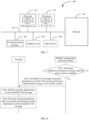
- FIG. 5 shows an architecture of a 5G network to which the technical solutions provided in the embodiments of this application are applicable.
- the 5G network may include a terminal, a radio access network (radio access network, RAN) or an access network (access network, AN) (where the RAN and the AN are collectively referred to as a (R)AN below), a core network (core network, CN), and a data network (data network, DN).
- RAN radio access network
- AN access network
- R access network
- CN core network
- DN data network
- the terminal may have a wireless transceiver function.
- the terminal may have different names, for example, user equipment (user equipment, UE), an access terminal, a terminal unit, a terminal station, a mobile station, a mobile console, a remote station, a remote terminal, a mobile device, a wireless communications device, a terminal agent, or a terminal apparatus.
- the terminal may be deployed on land, including an indoor device, an outdoor device, a handheld device, or a vehicle-mounted device, or may be deployed on a water surface (such as on a ship), or may be deployed in the air (for example, on an aircraft, a balloon, or a satellite).
- the terminal includes a handheld device, a vehicle-mounted device, a wearable device, or a computing device that has a wireless communication function.
- the terminal may be a mobile phone (mobile phone), a tablet computer, or a computer having a wireless transceiver function.
- the terminal device may alternatively be a virtual reality (virtual reality, VR) terminal device, an augmented reality (augmented reality, AR) terminal device, a wireless terminal in industrial control, a wireless terminal in self-driving, a wireless terminal in telemedicine, a wireless terminal in a smart grid, a wireless terminal in a smart city (smart city), a wireless terminal in a smart home (smart home), or the like.
- an apparatus for implementing a terminal function may be a terminal, or may be an apparatus that can support a terminal in implementing the function, for example, a chip system.
- the chip system may include a chip, or may include a chip and another discrete component.
- an example in which an apparatus for implementing a terminal function is a terminal is used to describe the technical solutions provided in the embodiments of this application.
- the terminal may be a terminal that uses a control plane CloT 5GS optimization function.
- the terminal that uses the CIoT 5GS optimization function transmits uplink and downlink subscriber data between the terminal and an SMF by using a payload (payload) of a NAS message, with no need to establish a PDU session for a user-plane connection.
- the terminal that uses the CIoT 5GS optimization function and an AMF perform integrity protection and encryption on the subscriber data by using a NAS security context.
- control plane CIoT 5GS optimization may also be denoted as CIoT 5GS control plane optimization. This is not limited in the embodiments of this application.
- the access network device may also be referred to as a base station.
- base stations in various forms, for example, a macro base station, a micro base station (also referred to as a small cell), a relay station, and an access point.
- the base station may be an access point (access point, AP) in a wireless local area network (wireless local area network, WLAN), a base transceiver station (Base Transceiver Station, BTS) in global system for mobile communications (Global System for Mobile Communications, GSM) or code division multiple access (Code Division Multiple Access, CDMA), a NodeB (NodeB, NB) in wideband code division multiple access (Wideband Code Division Multiple Access, WCDMA), an eNB, a relay station, an access point, a vehicle-mounted device, or a wearable device in LTE, a next generation NodeB (the next generation node B, gNB) in a future 5G network, a base station in a future evolved public land mobile network (public land mobile network, P
- the base station generally includes a baseband unit (baseband unit, BBU), a remote radio unit (remote radio unit, RRU), an antenna, and a feeder used to connect the RRU and the antenna.
- BBU baseband unit
- RRU remote radio unit
- the BBU is configured to be responsible for signal modulation.
- the RRU is configured to be responsible for radio frequency processing.
- the antenna is configured to be responsible for conversion between a pilot wave on a cable and a space wave in the air.
- a distributed base station greatly shortens a length of the feeder between the RRU and the antenna, thereby reducing a signal loss, and reducing costs of the feeder.
- the RRU and the antenna are relatively small and can be installed anywhere, making network planning more flexible.
- the RRU may be remotely placed.
- all BBUs may be centralized and placed in a central office (central office, CO). In this centralized manner, a quantity of base station equipment rooms can be greatly reduced, energy consumption of auxiliary devices, especially air conditioners, can be reduced, and carbon emissions can be greatly reduced.
- the BBUs can be managed and scheduled in a unified manner, and resources can be allocated more flexibly. In this mode, all physical base stations evolve into virtual base stations. All the virtual base stations share information such as data sent and received by users and channel quality in the BBU baseband pool, and cooperate with each other, to implement joint scheduling.
- the base station may include a centralized unit (centralized unit, CU) and a distributed unit (distributed unit, DU).
- the base station may further include an active antenna unit (active antenna unit, AAU).
- the CU implements some functions of the base station, and the DU implements some functions of the base station.
- the CU is responsible for processing a non-real-time protocol and service, and implements functions of an RRC layer and a packet data convergence protocol (packet data convergence protocol, PDCP) layer.
- packet data convergence protocol packet data convergence protocol
- the DU is responsible for processing a physical layer protocol and a real-time service, and implements functions of a radio link control (radio link control, RLC for short) layer, a media access control (media access control, MAC) layer, and a physical (physical, PHY) layer.
- RLC radio link control
- MAC media access control
- PHY physical (physical, PHY) layer.
- the AAU implements some physical layer processing functions, radio frequency processing, and a function related to an active antenna.
- Information at the RRC layer eventually becomes information at the PHY layer, or is converted from information at the PHY layer. Therefore, in this architecture, higher layer signaling, for example, RRC signaling or PDCP signaling, may also be considered as being sent by the DU or sent by the DU and the AAU.
- the access network device may be a device including one or more of the CU node, the DU node, and the AAU node.
- the CU may be classified as a network device in a RAN, or the CU may be classified as a network device in a core network (core network, CN). This is not limited herein.
- a control plane (control plane, CP) and a user plane (user plane, UP) of the CU may be further separated and implemented by using different entities.
- the CU may be divided into a CU-CP and a CU-UP.
- the core network includes a plurality of core network elements (or referred to as network function network elements), for example, an access and mobility management function (access and mobility management function, AMF) network element, a session management function (session management function, SMF) network element, a policy control function (policy control function, PCF) network element, a user plane function (user plane function, UPF) network element, an application function (application function) network element, an authentication server function (authentication server function, AUSF) network element, and a unified data management (unified data management, UDM) network element.
- AMF access and mobility management function
- SMF session management function
- policy control function policy control function
- PCF policy control function
- UPF user plane function
- UPF application function
- authentication server function authentication server function
- UDM unified data management
- the core network may further include some network elements not shown in FIG. 5 , for example, a security anchor function (security anchor function, SEAF) network element and an authentication credential repository and processing function (authentication credential repository and processing function, ARPF). Details are not described herein in the embodiments of this application.
- SEAF security anchor function
- ARPF authentication credential repository and processing function
- the AMF network element is mainly responsible for mobility management processing, for example, functions such as access control, mobility management, attachment and detachment, and SMF selection.
- the AMF network element provides a service for a session in the terminal, the AMF network element provides a control plane storage resource for the session, to store a session identifier, an SMF identifier associated with the session identifier, and the like.
- the terminal communicates with the AMF by using a next generation (Next generation, N) 1 interface (N1 for short), the RAN device communicates with the AMF by using an N2 interface (N2 for short), the RAN device communicates with the UPF by using an N3 interface (N3 for short), and the UPF communicates with the DN by using an N6 interface (N6 for short).
- N1 next generation 1 interface
- N2 N2 interface
- N3 N3 interface
- N6 N6 interface
- Control plane network elements such as the AMF, the SMF, the UDM, the AUSF, or the PCF, can also interact with each other by using service-oriented interfaces.
- a service-oriented interface externally provided by the AMF may be Namf
- a service-oriented interface externally provided by the SMF may be Nsmf
- a service-oriented interface externally provided by the UDM may be Nudm
- a service-oriented interface externally provided by the PCF may be Npcf
- a service-oriented interface externally provided by the AUSF may be Nausf. Details are not described herein.
- FIG. 6 is a schematic diagram of a protocol stack according to an embodiment of this application.
- a protocol stack of a terminal includes at least a non-access stratum, an RRC layer, a packet data convergence protocol (packet data convergence protocol, PDCP) layer, a radio link control (radio link control, RLC) layer, a media access control (media access control, MAC) layer, and a physical layer (PHY layer).
- the RRC layer, the PDCP layer, the RLC layer, the MAC layer, and the PHY layer all belong to an access stratum.
- the non-access stratum is a function layer between the terminal and a core network, and is used to support signaling and data transmission between the terminal and a network element (for example, a mobility management network element) of the core network.
- a network element for example, a mobility management network element
- the RRC layer is used to support functions such as radio resource management and RRC connection control.
- all devices mentioned in the embodiments of this application such as the terminal, the mobility management network element, and the access network device, may be implemented by the apparatus shown in FIG. 7 .
- the apparatus 100 includes at least one processor 101, a communications line 102, a memory 103, and at least one communications interface 104.
- the processor 101 may be a general-purpose central processing unit (central processing unit, CPU), a microprocessor, an application-specific integrated circuit (application-specific integrated circuit, ASIC), or one or more integrated circuits configured to control program execution of the solutions of this application.
- CPU central processing unit
- ASIC application-specific integrated circuit
- the communications line 102 is configured to transmit information between the foregoing components.
- the communications interface 104 is configured to communicate with another device or a communications network, such as an Ethernet, a radio access network (radio access network, RAN), or a wireless local area network (wireless local area networks, WLAN) via any apparatus such as a transceiver.
- a communications network such as an Ethernet, a radio access network (radio access network, RAN), or a wireless local area network (wireless local area networks, WLAN)
- RAN radio access network
- WLAN wireless local area network
- the memory 103 may be a read-only memory (read-only memory, ROM) or another type of static storage device that can store static information and instructions, random access memory (random access memory, RAM) or another type of dynamic storage device that can store information and instructions, or may be an electrically erasable programmable read-only memory (electrically erasable programmable read-only memory, EEPROM), a compact disc read-only memory (compact disc read-only memory, CD-ROM) or another compact disc storage, an optical disc storage (including a compact disc, a laser disc, an optical disc, a digital versatile disc, a Blu-ray optical disc, and the like), a magnetic disk storage medium or another magnetic storage device, or any other medium that can be used to carry or store program code in a form of an instruction or a data structure and that can be accessed by a computer.
- the memory is not limited thereto.
- the memory may exist independently, and is connected to the processor through the communications line 102. Alternatively, the memory may be integrated with the processor.
- the memory 103 is configured to store a computer-executable instruction for performing the solutions of this application, and the processor 101 controls execution of the computer-executable instruction.
- the processor 101 is configured to execute the computer-executable instruction stored in the memory 103, to implement the technical solutions provided in the embodiments of this application.
- the compute-executable instruction in the embodiments of this application may also be referred to as application program code. This is not specifically limited in the embodiments of this application.
- the processor 101 may include one or more CPUs, for example, a CPU 0 and a CPU 1 in FIG. 7 .
- the apparatus 100 may include a plurality of processors, for example, the processor 101 and a processor 107 in FIG. 7 .
- Each of the processors may be a single-core (single-CPU) processor or a multi-core (multi-CPU) processor.
- the processor herein may be one or more devices, circuits, and/or processing cores configured to process data (for example, a computer program instruction).
- the apparatus 100 may further include an output device 105 and an input device 106.
- the output device 105 communicates with the processor 101, and may display information in a plurality of manners.
- the output device 105 may be a liquid crystal display (liquid crystal display, LCD), a light emitting diode (light emitting diode, LED) display device, a cathode ray tube (cathode ray tube, CRT) display device, or a projector (projector).
- the input device 106 communicates with the processor 101, and may receive an input from a user in a plurality of manners.
- the input device 106 may be a mouse, a keyboard, a touchscreen device, or a sensor device.
- this application provides the following three embodiments.
- Embodiment 1 and Embodiment 3 may be applied to a scenario in which a terminal accesses a network
- Embodiment 2 is applied to a scenario in which an AMF updates a truncated parameter for a terminal served by the AMF.
- an AMF updates a truncated parameter for a terminal served by the AMF.
- the three embodiments may be combined with each other. For example, when a terminal X that uses a control plane CIoT 5GS optimization function is registered with a network, execution of the solution in Embodiment 1 may be triggered, to securely obtain a truncated parameter. Subsequently, an AMF on a network side also actively updates the truncated parameter of the terminal X according to the method described in Embodiment 2.
- FIG. 8 shows a method for protecting a truncated parameter according to an embodiment of this application. The method includes the following steps.
- a mobility management network element determines whether a terminal that accesses a network meets a preset condition.
- the mobility management network element may be an AMF.
- the mobility management network element may be a NAS security termination point similar to an AMF.
- the preset condition includes at least that the terminal uses a control plane CIoT 5GS optimization function.
- the preset condition includes the following cases: Case 1: The preset condition is that the terminal uses the control plane CIoT 5GS optimization function.
- step S101 may be specifically implemented as follows: The mobility management network element determines whether the terminal uses the control plane CIoT 5GS optimization function. If the terminal uses the control plane CIoT 5GS optimization function, the mobility management network element determines that the terminal meets the preset condition; or if the terminal does not use the control plane CIoT 5GS optimization function, the mobility management network element determines that the terminal does not meet the preset condition.
- that the mobility management network element determines whether the terminal uses the control plane CIoT 5GS optimization function includes the following implementations:
- the mobility management network element determines, based on a preferred network behavior (preferred network behavior) reported by the terminal, whether the terminal uses the control plane CIoT 5GS optimization function.
- the preferred network behavior may be carried in a registration request message sent by the terminal.
- the preferred network behavior is used to indicate a network function supported by the terminal.
- the preferred network behavior is used to indicate a network function that the terminal prefers to use.
- the preferred network behavior may indicate whether the terminal supports the control plane CIoT 5GS optimization function, supports a user plane CIoT 5GS optimization function, N3 data transmission, header compression, and the like.
- the mobility management network element may determine that the terminal uses the control plane CIoT 5GS optimization function.
- the mobility management network element may determine that the terminal does not use the control plane CIoT 5GS optimization function.
- the mobility management network element determines that the terminal does not use the control plane CIoT 5GS optimization function.
- the mobility management network element determines, based on a context of the terminal, whether the terminal uses the control plane CloT 5GS optimization function.
- the mobility management network element determines that the terminal uses the control plane CIoT 5GS optimization function.
- the mobility management network element determines that the terminal does not use the control plane CIoT 5GS optimization function.
- the mobility management network element needs to perform the following step S102.
- Case 2 The preset condition is that the terminal uses the control plane CIoT 5GS optimization function, and the terminal is initially registered with a network.
- step S101 may be specifically implemented as follows: The mobility management network element determines whether the terminal uses the control plane CIoT 5GS optimization function, and whether the terminal is initially registered with the network. If the terminal uses the control plane CIoT 5GS optimization function and the terminal is initially registered with the network, the mobility management network element determines that the terminal meets the preset condition; or if the terminal does not use the control plane CIoT 5GS optimization function or the terminal is not initially registered with the network, the mobility management network element determines that the terminal does not meet the preset condition.
- the mobility management network element determines, based on a registration type reported by the terminal, whether the terminal is initially registered with the network.
- the registration type of the terminal may be carried in a registration request message sent by the terminal.
- the registration type of the terminal includes initial registration, mobility update registration, periodic registration update, and emergency registration.
- the mobility management network element may determine that the terminal is initially registered with the network.
- the registration type of the terminal is mobility update registration, periodic registration update, or emergency registration
- the mobility management network element may determine that the terminal is not initially registered with the network.
- the preset condition may be the preset condition in the case 2.
- the truncated parameter does not change frequently. Therefore, a network side does not need to send the truncated parameter to the terminal in each registration procedure of the terminal. Therefore, for the terminal that uses the control plane CIoT 5GS optimization function, if the terminal is initially registered with the network, the mobility management network element performs the following step S102, to ensure that the terminal receives a correct truncated parameter; if the terminal is not initially registered with the network, it indicates that the terminal stores the truncated parameter, and the mobility management network element may choose not to perform the following step S102, to reduce signaling overheads.
- Case 3 The preset condition is that the terminal uses the control plane CIoT 5GS optimization function and the truncated parameter needs to be updated for the terminal.
- step S101 may be specifically implemented as follows: The mobility management network element determines whether the terminal uses the control plane CIoT 5GS optimization function, and whether the truncated parameter needs to be updated for the terminal. If the terminal uses the control plane CIoT 5GS optimization function and the truncated parameter needs to be updated for the terminal, the mobility management network element determines that the terminal meets the preset condition; or if the terminal does not use the control plane CIoT 5GS optimization function, or the truncated parameter does not need to be updated for the terminal, the mobility management network element determines that the terminal does not meet the preset condition.
- the mobility management network element determines whether the truncated parameter needs to be updated for the terminal includes one of the following implementations:
- the mobility management network element determines whether a truncated parameter configured in the mobility management network element is the same as the truncated parameter that is stored in a context of the terminal, to determine whether the truncated parameter needs to be updated for the terminal.
- the mobility management network element stores, in the context of the terminal, the truncated parameter currently used by the terminal. That is, the truncated parameter stored in the context of the terminal is the truncated parameter currently used by the terminal.
- the mobility management network element may determine that the truncated parameter needs to be updated for the terminal.
- the mobility management network element may determine that the truncated parameter does not need to be updated for the terminal.
- the mobility management network element determines whether a current time is within a preset time period, to determine whether the truncated parameter needs to be updated for the terminal.
- a start moment of the preset time period is a moment at which the mobility management network element determines that the truncated parameter is updated, and duration of the preset time period is preset duration.
- the preset duration may be one minute, or may be 10 minutes.
- the preset duration is greater than a time interval of periodic registration update.
- the preset duration may be greater than twice the time interval of the periodic registration update.
- a network side may configure the time interval of the periodic registration update for the terminal, for example, 10 minutes. After a waiting time of the terminal exceeds the time interval, the terminal actively initiates a registration request, so that the network side knows that the terminal is still online. Therefore, if the network side sets the preset duration to be greater than twice the time interval of the periodic registration update, within the preset duration, the mobility management network element can ensure that all online terminals can update the truncated parameter.
- the mobility management network element determines that the truncated parameter needs to be updated for the terminal.
- the mobility management network element determines that the truncated parameter does not need to be updated for the terminal.
- the preset condition may be the preset condition in the case 3.
- step S401 for a manner of updating the truncated parameter by the mobility management network element, refer to the following description of step S401. Details are not described herein.
- the network side when the network side updates the truncated parameter, the network side needs to send an updated truncated parameter to the terminal, to prevent the terminal from obtaining an incorrect truncated 5G-S-TMSI by using the truncated parameter that is before the update.
- the mobility management network element when the mobility management network element determines that the truncated parameter needs to be updated for the terminal, the mobility management network element performs the following step S102, to ensure that the terminal can obtain a latest truncated parameter, thereby ensuring that the terminal can normally access the network; when the mobility management network element determines that the truncated parameter does not need to be updated for the terminal, the mobility management network element may not perform the following step S102, to reduce signaling overheads.
- case 1 to case 3 are merely examples of the preset condition, and this embodiment of this application is not limited thereto.
- the mobility management network element sends, to the terminal when the terminal meets the preset condition, a downlink NAS message on which NAS security protection is performed by using a NAS security context, where the downlink NAS message includes the truncated parameter.
- the mobility management network element may pre-store the truncated parameter, or the mobility management network element obtains the truncated parameter from the access network device.
- the NAS security protection includes at least integrity protection.
- the NAS security protection further includes encryption protection.
- NAS security protection is performed on the downlink NAS message
- NAS security protection is also performed on the truncated parameter in the downlink NAS message, so that security of the truncated parameter can be ensured.
- the downlink NAS message may be new signaling, or signaling in an existing procedure may be reused.
- the downlink NAS message may be a registration accept (registration accept) message.
- the downlink NAS message may be a service accept (servers accept) message.
- the terminal performs security deprotection on the downlink NAS.
- the security deprotection is integrity check.
- the security deprotection is integrity check and decryption.
- the terminal stores the truncated parameter after successfully performing security deprotection on the downlink NAS message.
- the NAS layer of the terminal stores the truncated parameter.
- the NAS layer of the terminal after a NAS layer of the terminal successfully performs security deprotection on the downlink NAS message, the NAS layer of the terminal sends the truncated parameter to an RRC layer of the terminal, and the RRC layer of the terminal stores the truncated parameter.
- the mobility management network element sends, to the terminal, the downlink NAS message on which NAS security protection is performed by using the NAS security context, to ensure that NAS security protection is performed on the truncated parameter in a transmission process. In this way, it is ensured that the truncated parameter is not tampered with or forged, thereby avoiding a denial of service attack launched by an attacker against the terminal, and further ensuring that the terminal can normally access the network.
- Scenario 1 The mobility management network element pre-stores the truncated parameter.
- FIG. 9 shows a method for protecting a truncated parameter according to an embodiment of this application.
- the method includes the following steps.
- the mobility management network element pre-stores the truncated parameter.
- an operator may configure the truncated parameter for the mobility management network element by using a network management system, so that the mobility management network element may pre-store the truncated parameter.
- the truncated parameter may be at a PLMN granularity, or may be at a region granularity. That is, the truncated parameter configured in the network management system may be applicable to an entire PLMN, or only to a region.
- a specific implementation of how the mobility management network element pre-configures the truncated parameter is not limited in this embodiment of this application.
- the terminal sends an uplink NAS message to the mobility management network element, so that the mobility management network element receives the uplink NAS message sent by the terminal.
- the uplink NAS message may be a registration request message, a service request message, or the like. This is not limited in this embodiment of this application.
- the registration request message may include a registration type (5GS registration type) and a preferred network behavior.
- the terminal and the mobility management network element activate NAS security.
- the uplink NAS message is a registration request message.
- the mobility management network element After the mobility management network element receives the registration request message, the mobility management network element performs an authentication and key agreement (authentication and key agreement, AKA) procedure for the terminal. Then, after the authentication succeeds, the mobility management network element and the terminal activate the NAS security context between the terminal and the mobility management network element by using a NAS security mode command (security mode command, SMC) procedure.
- AKA authentication and key agreement
- SMC security mode command
- the uplink NAS message is a service request message.
- the mobility management network element After the mobility management network element receives the service request message, the mobility management network element performs integrity check on the service request message. After the integrity check on the service request message succeeds, the mobility management network element activates the NAS security context between the terminal and the mobility management network element.
- S203 to S206 are similar to steps S101 to S104. For specific descriptions thereof, refer to the embodiment shown in FIG. 8 . Details are not described herein again.
- the downlink NAS message is a registration accept message.
- the downlink NAS message is a service accept message.
- the mobility management network element may actively determine whether the terminal meets the preset condition.
- the mobility management network element sends, to the terminal when the terminal meets the preset condition, the truncated parameter on which NAS security protection is performed, so that the terminal can use the truncated parameter in a subsequent procedure.
- Scenario 2 The access network device pre-stores the truncated parameter.
- FIG. 10 shows a method for protecting a truncated parameter according to an embodiment of this application.
- the method includes the following steps.
- the access network device pre-stores the truncated parameter.
- the access network device usually pre-configures the truncated parameter, so that the access network device restores a complete 5G-S-TMSI based on the truncated parameter and a truncated 5G-S-TMSI.
- an operator may configure the truncated parameter for the access network device by using a network management system, so that the access network device can pre-store the truncated parameter.
- the truncated parameter may be at a PLMN granularity, or may be at a region granularity. That is, the truncated parameter configured in the network management system may be applicable to an entire PLMN, or only to a region.
- a specific implementation of how the access network device pre-configures the truncated parameter is not limited in this embodiment of this application.
- the terminal sends an uplink RRC message to the access network device.
- the uplink RRC message may be an RRC establishment request message or an RRC establishment complete message. This is not limited in this embodiment of this application.
- the terminal may further send an uplink NAS message to the access network device, so that the access network device forwards the uplink NAS message to the mobility management network element.
- the uplink NAS message may be a registration request message or a service request message. This is not limited in this embodiment of this application.
- the uplink NAS message may be used as a payload of the uplink RRC message.
- the uplink RRC message includes a NAS container (container), and the NAS container includes the uplink NAS message.
- the terminal sends the uplink RRC message to the access network device, to transmit the uplink RRC message and the uplink NAS message together to the network side.
- the terminal separately sends the uplink NAS message and the uplink RRC message to the access network device.
- the access network device determines whether the terminal supports a CIoT 5GS optimization feature.
- the CIoT 5GS Optimization feature includes the user plane CIoT 5GS optimization function and/or the control plane CIoT 5GS optimization function.
- the terminal supports the CIoT 5GS optimization feature, indicating that the terminal may support the user plane CIoT 5GS optimization function and/or the control plane CIoT 5GS optimization function.
- step S302 At least one of the following implementations is used in step S302:
- Implementation 1 When the uplink RRC message includes a capability indication, the access network device determines, based on the capability indication, whether the terminal supports the CIoT 5GS optimization feature. To be specific, if the capability indication is used to indicate that the terminal supports the CIoT 5GS optimization feature, the access network device determines that the terminal supports the CIoT 5GS optimization feature.
- the access network device determines that the terminal does not support the CIoT 5GS optimization feature.
- the access network device determines, based on a frequency for access of the terminal, whether the terminal supports the CIoT 5GS optimization feature. To be specific, if a frequency used by a CIoT device is the frequency for access of the terminal, the access network device determines that the terminal supports the CIoT 5GS optimization feature.
- the access network device determines that the terminal does not support the CIoT 5GS optimization feature.
- Implementation 3 The access network device determines, based on a type of a message sent by the terminal, whether the terminal supports the CIoT 5GS optimization feature. To be specific, if the type of the message sent by the terminal is the same as a type of a message dedicated to a CIoT device, the access network device determines that the terminal supports the CIoT 5GS optimization feature.
- the access network device determines that the terminal does not support the CIoT 5GS optimization feature.
- Implementation 1 to Implementation 3 are merely examples of specific implementations of step S302. In an actual application, Implementation 1, Implementation 2, and/or Implementation 3 may be used in combination.
- the access network device determines that the terminal supports the CIoT 5GS optimization feature, the access network device performs the following step S303.
- the access network device sends an N2 message to the mobility management network element, so that the mobility management network element receives the N2 message sent by the access network device.
- the N2 message includes the truncated parameter.
- the N2 message may be an initial UE message (Initial UE message).
- the N2 message carries the uplink NAS message.
- S304 to S307 are similar to steps S101 to S104. For specific descriptions thereof, refer to the embodiment shown in FIG. 8 . Details are not described herein again.
- the access network device determines whether the accessed terminal supports the CIoT 5GS optimization feature. Then, the access network device sends the truncated parameter to the mobility management network element when the terminal supports the CIoT 5GS optimization feature, so that in a subsequent procedure, the mobility management network element may send, to the terminal that uses the control plane CIoT 5GS optimization function, the truncated parameter on which NAS security protection is performed. In the foregoing process, the mobility management network element may obtain the truncated parameter from the access network device. Therefore, the mobility management network element does not need to pre-configure the truncated parameter, thereby reducing configuration complexity of the truncated parameter.
- FIG. 11 shows a method for protecting a truncated parameter according to an embodiment of this application. The method includes the following steps.
- a mobility management network element updates a truncated parameter.
- step S401 may include one of the following implementations:
- Implementation 1 The mobility management network element updates the truncated parameter based on a quantity of AMF set IDs and/or a quantity of AMF pointers.
- an AMF set ID and/or an AMF pointer that are/is truncated based on a current truncated parameter cannot represent all allocated mobility management network elements, the mobility management network element needs to adjust the truncated parameter.
- n is set to 5, and m is set to 3.
- a truncated AMF set ID has only five bits, and a total quantity of AMF sets that can be indicated by the truncated AMF set ID is 32; a truncated AMF pointer has only three bits, and a total quantity of pointers that can be indicated by the truncated AMF pointer is 8.
- n may be adjusted to 4
- m may be adjusted to 4. In this way, a total quantity of AMF sets that can be indicated by a truncated AMF set ID is 16, and a total quantity of pointers that can be indicated by a truncated AMF pointer is 16.
- Implementation 2 The mobility management network element updates the truncated parameter according to an instruction of a network management system.
- the network management system may be an operation, administration and maintenance (operation administration and maintenance, OAM) system.
- OAM operation administration and maintenance
- Implementation 3 The mobility management network element receives the updated truncated parameter sent by an access network device.
- the access network device may update the truncated parameter according to an instruction of a network management system.
- the mobility management network element searches for a terminal that uses a control plane CIoT 5GS optimization function.
- the mobility management network element stores a context of the terminal, and the context of the terminal includes indication information indicating whether the corresponding terminal uses the control plane CIoT 5GS optimization function.
- the mobility management network element determines, based on contexts of a plurality of terminals that are stored in the mobility management network element, the terminal that uses the control plane CIoT 5GS optimization function.
- control plane CIoT 5GS optimization function there may be one or more terminals using the control plane CIoT 5GS optimization function.
- the mobility management network element sends, to the terminal that uses the control plane CIoT 5GS optimization function, a downlink NAS message on which NAS security protection is performed by using a NAS security context.
- the downlink NAS message includes the updated truncated parameter.
- the mobility management network element sends the downlink NAS message to the terminal includes one of the following implementations:
- Implementation 1 If the terminal that uses the control plane CIoT 5GS optimization function is in a connected (CONNECTED) state, the mobility management network element may directly send, to the terminal that uses the control plane CIoT 5GS optimization function, the downlink NAS message on which NAS security protection is performed by using the NAS security context.
- the downlink NAS message may be a UE configuration update command (UE Configuration Update Command) message.
- UE Configuration Update Command UE Configuration Update Command
- Implementation 2 If the terminal that uses the control plane CIoT 5GS optimization function is in a non-connected state, the mobility management network element waits for the terminal to enter a connected state. After the terminal enters the connected state and NAS security is activated, the mobility management network element sends, to the terminal, the downlink NAS message on which NAS security protection is performed by using the NAS security context.
- the non-connected state may be an idle (idle) state or an RRC inactive (inactive) state.
- the terminal in the non-connected state may actively initiate a service request message to enter the connected state.
- the downlink NAS message may be a service accept message or a UE configuration update command message.
- Implementation 3 If the terminal that uses the control plane CIoT 5GS optimization function is in a non-connected state, the mobility management network element pages the terminal to trigger the terminal to enter a connected state. After the terminal enters the connected state and NAS security is activated, the mobility management network element sends, to the terminal, the downlink NAS message on which NAS security protection is performed by using the NAS security context.
- the downlink NAS message may be a service accept message or a UE configuration update command (UE Configuration Update Command) message.
- UE Configuration Update Command UE Configuration Update Command
- the terminal when the terminal is in the non-connected state, the terminal does not need to truncate a 5G-S-TMSI. Therefore, the terminal in the non-connected state does not need to immediately update the truncated parameter.
- the mobility management network element updates the truncated parameter for the terminal after the terminal is restored to the connected state, to prevent the mobility management network element from sending a large amount of NAS signaling to the terminal at the same time, thereby avoiding signaling congestion.
- the mobility management network element does not actively wake up the terminal that is in the non-connected state, which helps reduce power consumption of the terminal.
- S404 and S405 are similar to steps S103 and S104. For specific descriptions thereof, refer to the embodiment shown in FIG. 8 . Details are not described herein again.
- the mobility management network element after updating the truncated parameter, the mobility management network element actively sends the updated truncated parameter on which NAS security protection is performed to the terminal that uses the control plane CIoT 5GS optimization function, so that the terminal can obtain the updated truncated parameter. This avoids a case in which the terminal cannot normally access a network because the terminal uses an incorrect truncated parameter.
- FIG. 12 shows a method for protecting a truncated parameter according to an embodiment of this application. The method includes the following steps.
- S500 to S503 are similar to steps S300 to S303. For specific descriptions thereof, refer to the embodiment shown in FIG. 10 . Details are not described herein again.
- the access network device may further send a freshness parameter and/or protection indication information to the mobility management network element.
- the freshness parameter is used for integrity calculation of the truncated parameter, and the freshness parameter is used to ensure that NAS MACs generated at two times are different.
- the freshness parameter may be a downlink PDCP count (count).
- the protection indication information is used to indicate the mobility management network element to perform security protection on the truncated parameter.
- the mobility management network element performs integrity calculation on the truncated parameter based on a NAS security context, to generate a first NAS MAC.
- the mobility management network element when the mobility management network element receives the truncated parameter, the mobility management network element performs integrity calculation on the truncated parameter, to generate the first NAS MAC.
- the mobility management network element when the mobility management network element receives the truncated parameter and the protection indication information, the mobility management network element performs integrity calculation on the truncated parameter, to generate the first NAS MAC.
- the mobility management network element receives the truncated parameter but does not receive the protection instruction information, the mobility management network element does not perform integrity calculation on the truncated parameter.
- the mobility management network element generates the first NAS MAC based on an integrity protection key, the truncated parameter, and an integrity protection algorithm.
- the mobility management network element when the access network device sends the freshness parameter to the mobility management network element, the mobility management network element generates the first NAS MAC based on the integrity protection key, the truncated parameter, the integrity protection algorithm, and the freshness parameter.
- the mobility management network element sends the first NAS MAC to the access network device, so that the access network device receives the first NAS MAC sent by the mobility management network element.
- the access network device sends the truncated parameter and the first NAS MAC to the terminal, so that the terminal receives the truncated parameter and the first NAS MAC that are sent by the access network device.
- the truncated parameter and the first NAS MAC may be carried in a downlink RRC message.
- the downlink RRC message further carries a freshness parameter indication, and the freshness parameter indication may be some bits of the downlink PDCP count.
- the downlink RRC message may be an RRC reconfiguration message. This is not limited in this embodiment of this application.
- the terminal performs integrity calculation on the truncated parameter based on the NAS security context, to generate a second NAS MAC.
- the terminal generates the second NAS MAC based on the integrity protection key, the truncated parameter, and the integrity protection algorithm.
- the terminal when the terminal further receives the freshness parameter indication sent by the access network device, the terminal generates the second NAS MAC based on the integrity protection key, the truncated parameter, a freshness parameter, and the integrity protection algorithm.
- the terminal may obtain the freshness parameter based on the freshness parameter indication. For example, the terminal restores the complete downlink PDCP COUNT based on the some bits of the downlink PDCP COUNT.
- the terminal checks the first NAS MAC based on the second NAS MAC.
- the terminal determines whether the second NAS MAC is the same as the first NAS MAC. If the first NAS MAC is the same as the second NAS MAC, the terminal determines that the check on the first NAS MAC succeeds. If the first NAS MAC is different from the second NAS MAC, the terminal determines that the check on the first NAS MAC fails.
- the terminal stores the truncated parameter after the check on the first NAS MAC succeeds.
- an RRC layer of the terminal stores the truncated parameter.
- an RRC layer of the terminal sends the truncated parameter to a NAS layer of the terminal. Then, the NAS layer of the terminal stores the truncated parameter.
- the access network device when the access network device needs to send the truncated parameter to the terminal, the access network device first sends the truncated parameter to the mobility management network element, to obtain the first NAS MAC corresponding to the truncated parameter. Then, the access network device sends the truncated parameter and the first NAS MAC to the terminal. In this way, the terminal can check, by using the first NAS MAC, whether the truncated parameter is tampered with by an attacker, thereby ensuring integrity of the truncated parameter. When the terminal obtains the correct truncated parameter, the terminal can normally access a network.
- a terminal that uses the control plane CIoT 5GS optimization function may trigger an RRC connection reestablishment procedure.
- RRC connection reestablishment procedure the terminal needs to send an RRC reestablishment request (RRC Reestablishment Request) message to a target access network device, and the RRC reestablishment request message carries a truncated 5G-S-TMSI.
- the UE needs to obtain the truncated 5G-S-TMSI in the RRC connection reestablishment procedure.
- the terminal obtains the truncated 5G-S-TMSI includes one of the following implementations:
- the truncated parameter stored in the terminal is obtained by the terminal by using the technical solution shown in any one of FIG. 8 to FIG. 12 .
- the terminal that uses the control plane CIoT 5GS optimization function does not have an available AS security context. Therefore, to protect the reestablishment procedure, an AS layer of the terminal triggers the NAS layer to provide UL_NAS_MAC and XDL_NAS_MAC.
- UL_NAS_MAC indicates that the terminal requests to reestablish an RRC connection
- XDL_NAS_MAC is used to indicate that the terminal is in a call with a real network.
- the terminal sets Key to an integrity key (KNASint), sets a count to an uplink NAS count, sets DIRECTION to 0, and sets Message to a target cell identifier (cell ID) and the entire RRC reestablishment request message that excludes an LSB of the NAS count and UL_NAS_MAC. Then, the terminal inputs these parameters (for example, the key and the message) into a currently used integrity algorithm, to generate a NAS MAC.
- KNASint an integrity key
- cell ID target cell identifier
- the terminal inputs these parameters (for example, the key and the message) into a currently used integrity algorithm, to generate a NAS MAC.
- the first 16 bits of the NAS MAC form UL_NAS_MAC, and the last 16 bits of the NAS MAC form XDL_NAS_MAC.
- the terminal sends the RRC reestablishment request message to the target access network device, where the RRC reestablishment request message includes the truncated 5G-S-TMSI and five least significant bits of the NAS count.
- the least significant bits of the NAS count are used to calculate the NAS MAC.
- the target access network device restores a complete 5G-S-TMSI based on the truncated 5G-S-TMSI in the RRC reestablishment request message and locally configured truncated parameter (m and n).
- the target access network device may determine, based on the complete 5G-S-TMSI, a mobility management network element serving the terminal.
- the target access network device sends the 5G-S-TMSI, the target cell-ID, and the entire RRC reestablishment request message excluding the truncated 5G-S-TMSI to the mobility management network element.
- the mobility management network element estimates a complete uplink NAS count by using an LSB of the NAS count associated with a NAS connection identifier "0x01". Then, the mobility management network element uses the estimated uplink NAS count to calculate XNAS-MAC.
- the mobility management network element compares whether the first 16 bits of UL_NAS_MAC are the same as those of XNAS-MAC. When the first 16 bits of UL_NAS_MAC are the same as those of XNAS-MAC, the mobility management network element determines that a real terminal sends the RRC reestablishment request message.
- connection establishment indication connection establishment indication
- DL_NAS_MAC is the last 16 bits of XNAS-MAC.
- the access network device sends an RRC reestablishment (RRC Reestablishment) message to the terminal, where the RRC reestablishment message includes DL_NAS_MAC.
- RRC Reestablishment RRC Reestablishment
- the terminal checks whether received DL_NAS_MAC is the same as XDL_NAS_MAC. If DL_NAS_MAC and XDL_NAS_MAC are the same, the terminal completes the RRC connection reestablishment procedure.
- each network element for example, the terminal, the access network device, and the mobility management network element, includes a corresponding hardware structure or software module for performing each function, or a combination thereof.
- a person skilled in the art should be easily aware that units, algorithms, and steps in the examples described with reference to the embodiments disclosed in this specification can be implemented by hardware or a combination of hardware and computer software in this application. Whether a function is performed by hardware or hardware driven by computer software depends on particular applications and design constraints of the technical solutions. A person skilled in the art may use different methods to implement the described functions for each particular application, but it should not be considered that the implementation goes beyond the scope of this application.
- function modules of the access network device, the mobility management network element, and the terminal may be obtained through division based on the foregoing method examples.
- each function module may be obtained through division based on each corresponding function, or two or more functions may be integrated into one processing module.
- the integrated module may be implemented in a form of hardware, or may be implemented in a form of a software function module.
- division into the modules is an example, and is merely a logical function division. In actual implementation, another division manner may be used. An example in which each function module is obtained through division based on each corresponding function is used below for description.
- FIG. 13 is a schematic structural diagram of a terminal according to an embodiment of this application.
- the terminal includes a communications module 201, a processing module 202, and a storage module 203.
- the communications module 201 is configured to support the terminal in performing step S102 in FIG. 8 , steps S201 and S204 in FIG. 9 , steps S301 and S305 in FIG. 10 , step S403 in FIG. 11 , steps S501 and S506 in FIG. 12 , and/or another communication operation that needs to be performed by the terminal in the embodiments of this application.
- the processing module 202 is configured to support the terminal in performing step S103 in FIG. 8 , steps S202 and S205 in FIG. 9 , step S306 in FIG.
- the storage module 203 is configured to support the terminal in performing step S104 in FIG. 8 , step S206 in FIG. 9 , step S307 in FIG. 10 , step S405 in FIG. 11 , step S509 in FIG. 12 , and/or another storage operation that needs to be performed by the terminal in the embodiments of this application.
- the processing module 202 in FIG. 13 may be implemented by the processor 101 in FIG. 7
- the communications module 201 in FIG. 13 may be implemented by the communications interface 104 in FIG. 7
- the storage module 203 in FIG. 13 may be implemented by the memory 103 in FIG. 7 . This is not limited in the embodiments of this application.
- FIG. 14 is a schematic structural diagram of an access network device according to an embodiment of this application.
- the access network device includes a communications module 301, a processing module 302, and a storage module 303.
- the communications module 301 is configured to support the access network device in performing steps S301 and S303 in FIG. 10 , steps S501, S503, S505, and S506 in FIG. 12 , and/or another communication operation that needs to be performed by the access network device in the embodiments of this application.
- the processing module 302 is configured to support the access network device in performing step S302 in FIG. 10 , step S502 in FIG. 12 , and/or another processing operation that needs to be performed by the access network device in the embodiments of this application.
- the storage module 303 is configured to support the access network device in performing step S300 in FIG. 10 , step S500 in FIG. 12 , and/or another storage operation that needs to be performed by the access network device in the embodiments of this application.
- the processing module 302 in FIG. 14 may be implemented by the processor 101 in FIG. 7
- the communications module 301 in FIG. 14 may be implemented by the communications interface 104 in FIG. 7
- the storage module 303 in FIG. 14 may be implemented by the memory 103 in FIG. 7 . This is not limited in the embodiments of this application.
- FIG. 15 is a schematic structural diagram of a mobility management network element according to an embodiment of this application.
- the mobility management network element includes a communications module 401, a processing module 402, and a storage module 403.
- the communications module 401 is configured to support the mobility management network element in performing step S102 in FIG. 8 , steps S201 and S204 in FIG. 9 , steps S303 and S305 in FIG. 10 , step S403 in FIG. 11 , steps S503 and S505 in FIG. 12 , and/or another communication operation that needs to be performed by the mobility management network element in the embodiments of this application.
- the processing module 402 is configured to support the mobility management network element in performing step S101 in FIG. 8 , steps S202 and S203 in FIG.
- the storage module 403 is configured to support the mobility management network element in performing step S200 in FIG. 9 , and/or another storage operation that needs to be performed by the mobility management network element in the embodiments of this application.
- the processing module 402 in FIG. 15 may be implemented by the processor 101 in FIG. 7
- the communications module 401 in FIG. 15 may be implemented by the communications interface 104 in FIG. 7
- the storage module 403 in FIG. 15 may be implemented by the memory 103 in FIG. 7 . This is not limited in the embodiments of this application.
- An embodiment of this application further provides a computer-readable storage medium.
- the computer-readable storage medium stores an instruction, and when the computer-readable storage medium runs on a computer, the computer is enabled to perform the method for protecting a truncated parameter provided in the embodiments of this application.
- An embodiment of this application further provides a computer program product including a computer instruction.
- the computer program product runs on a computer, the computer is enabled to perform the method for protecting a truncated parameter provided in the embodiments of this application.
- An embodiment of this application provides a chip.
- the chip includes a processor.
- the processor When executing an instruction, the processor enables the chip to perform the method for protecting a truncated parameter provided in the embodiments of this application.
- the computer instruction may be stored in a computer-readable storage medium or may be transmitted from a computer-readable storage medium to another computer-readable storage medium.
- the computer instruction may be transmitted from a website, computer, server, or data center to another website, computer, server, or data center in a wired (for example, a coaxial cable, an optical fiber, or a digital subscriber line) or wireless (for example, infrared, radio, or microwave) manner.
- the computer-readable storage medium may be any usable medium accessible by a computer, or a data storage device, such as a server or a data center, integrating one or more usable media.
- the usable medium may be a magnetic medium (for example, a floppy disk, a hard disk, or a magnetic tape), an optical medium, a semiconductor medium (for example, a solid-state drive), or the like.
- the disclosed apparatuses and methods may be implemented in other manners.
- the described apparatus embodiments are merely examples.
- division into the modules or units is merely logical function division.
- a plurality of units or components may be combined or may be integrated into another apparatus, or some features may be ignored or not be performed.
- the displayed or discussed mutual couplings or direct couplings or communication connections may be implemented through some interfaces.
- the indirect couplings or communication connections between the apparatuses or units may be implemented in an electrical form, a mechanical form, or another form.
- the units described as separate components may or may not be physically separate, and components displayed as units may be one or more physical units, that is, may be located in one place, or may be distributed on a plurality of different places. Some or all of the units may be selected based on actual requirements to achieve the objectives of the solutions of the embodiments.
- functional units in the embodiments of this application may be integrated into one processing unit, or each of the units may exist alone physically, or two or more units are integrated into one unit.
- the integrated unit may be implemented in a form of hardware, or may be implemented in a form of a software function unit.
- the integrated unit When the integrated unit is implemented in a form of a software function unit and sold or used as an independent product, the integrated unit may be stored in a readable storage medium.
- the technical solutions in the embodiments of this application essentially, or the part contributing to the current technology, or all or some of the technical solutions may be implemented in a form of a software product.
- the software product is stored in a storage medium and includes several instructions for instructing a device (which may be a single-chip microcomputer, a chip, or the like) or a processor (processor) to perform all or some of the steps of the methods described in the embodiments of this application.
Landscapes
- Engineering & Computer Science (AREA)
- Computer Networks & Wireless Communication (AREA)
- Signal Processing (AREA)
- Computer Security & Cryptography (AREA)
- Databases & Information Systems (AREA)
- Mobile Radio Communication Systems (AREA)
- Information Transfer Between Computers (AREA)
Priority Applications (1)
| Application Number | Priority Date | Filing Date | Title |
|---|---|---|---|
| EP24179768.7A EP4472260A3 (fr) | 2019-11-08 | 2019-11-08 | Procédé de protection de paramètre tronqué et appareil |
Applications Claiming Priority (3)
| Application Number | Priority Date | Filing Date | Title |
|---|---|---|---|
| EP19951784.8A EP4050916B1 (fr) | 2019-11-08 | 2019-11-08 | Procédé et dispositif de protection de paramètre tronqué |
| EP24179768.7A EP4472260A3 (fr) | 2019-11-08 | 2019-11-08 | Procédé de protection de paramètre tronqué et appareil |
| PCT/CN2019/116867 WO2021088067A1 (fr) | 2019-11-08 | 2019-11-08 | Procédé et dispositif de protection de paramètre tronqué |
Related Parent Applications (1)
| Application Number | Title | Priority Date | Filing Date |
|---|---|---|---|
| EP19951784.8A Division EP4050916B1 (fr) | 2019-11-08 | 2019-11-08 | Procédé et dispositif de protection de paramètre tronqué |
Publications (2)
| Publication Number | Publication Date |
|---|---|
| EP4472260A2 true EP4472260A2 (fr) | 2024-12-04 |
| EP4472260A3 EP4472260A3 (fr) | 2024-12-25 |
Family
ID=75849539
Family Applications (2)
| Application Number | Title | Priority Date | Filing Date |
|---|---|---|---|
| EP24179768.7A Pending EP4472260A3 (fr) | 2019-11-08 | 2019-11-08 | Procédé de protection de paramètre tronqué et appareil |
| EP19951784.8A Active EP4050916B1 (fr) | 2019-11-08 | 2019-11-08 | Procédé et dispositif de protection de paramètre tronqué |
Family Applications After (1)
| Application Number | Title | Priority Date | Filing Date |
|---|---|---|---|
| EP19951784.8A Active EP4050916B1 (fr) | 2019-11-08 | 2019-11-08 | Procédé et dispositif de protection de paramètre tronqué |
Country Status (6)
| Country | Link |
|---|---|
| US (2) | US12432562B2 (fr) |
| EP (2) | EP4472260A3 (fr) |
| CN (2) | CN114631342B (fr) |
| BR (1) | BR112022008445A2 (fr) |
| MX (1) | MX2022005507A (fr) |
| WO (1) | WO2021088067A1 (fr) |
Families Citing this family (4)
| Publication number | Priority date | Publication date | Assignee | Title |
|---|---|---|---|---|
| GB2592095A (en) * | 2020-02-14 | 2021-08-18 | Samsung Electronics Co Ltd | User confidentiality in network |
| US12004221B2 (en) | 2020-05-21 | 2024-06-04 | Qualcomm Incorporated | Truncated identification indicators for early user equipment (UE) capability retrieval |
| US12143836B2 (en) * | 2022-05-10 | 2024-11-12 | T-Mobile Innovations Llc | Optimization of device configuration relating to wireless access technologies |
| US20240373219A1 (en) * | 2023-04-21 | 2024-11-07 | Samsung Electronics Co., Ltd. | Method for selecting security algorithm in authentication procedure of wireless communication network |
Family Cites Families (26)
| Publication number | Priority date | Publication date | Assignee | Title |
|---|---|---|---|---|
| US20080118067A1 (en) * | 2006-11-21 | 2008-05-22 | Innovative Sonic Limited | Method and apparatus for performing ciphering in a wireless communications system |
| TWI489839B (zh) * | 2007-10-29 | 2015-06-21 | Nokia Corp | 用以鑑別從行動性管理實體到傳統第三代行動通訊合作計劃系統的上下文傳送動作之系統及方法 |
| FI20075761A0 (fi) | 2007-10-29 | 2007-10-29 | Nokia Siemens Networks Oy | Käyttäjälaitetunnisteen allokointi |
| CN101541076B (zh) * | 2008-03-19 | 2013-01-30 | 华为技术有限公司 | 节约信令消息的方法、系统和网络节点 |
| US9374799B2 (en) * | 2013-12-23 | 2016-06-21 | Cellco Partnership | Mobile device locating using long term evolution signals |
| WO2016017886A1 (fr) * | 2014-08-01 | 2016-02-04 | Lg Electronics Inc. | Procédé pour réaliser un accès initial par protection de la confidentialité sur un réseau et équipement utilisateur associé |
| US10462769B2 (en) | 2015-07-02 | 2019-10-29 | Lg Electronics Inc. | Method for transmitting and receiving uplink data in wireless communication system and device for same |
| US10887742B2 (en) * | 2015-08-13 | 2021-01-05 | Apple Inc. | CIoT architecture for efficient data transmission |
| WO2017133021A1 (fr) * | 2016-02-06 | 2017-08-10 | 华为技术有限公司 | Procédé de traitement de sécurité et dispositif pertinent |
| WO2017171924A1 (fr) * | 2016-04-01 | 2017-10-05 | Intel Corporation | Dispositifs et procédés de repli sur échec de reprise |
| KR20170123236A (ko) * | 2016-04-28 | 2017-11-07 | 엘지전자 주식회사 | 데이터 볼륨 정보를 전송하는 방법 및 사용자기기 |
| CN107396455B (zh) * | 2016-05-16 | 2021-01-05 | 中兴通讯股份有限公司 | 连接处理方法及装置 |
| CN108377518B (zh) * | 2016-11-04 | 2023-01-13 | 中兴通讯股份有限公司 | 一种连接重建立方法及装置、电子设备 |
| US10200967B2 (en) * | 2017-01-06 | 2019-02-05 | Qualcomm Incorporated | Systems and methods for limiting a message size for a positioning protocol |
| US10624020B2 (en) * | 2017-02-06 | 2020-04-14 | Qualcomm Incorporated | Non-access stratum transport for non-mobility management messages |
| US10433174B2 (en) | 2017-03-17 | 2019-10-01 | Qualcomm Incorporated | Network access privacy |
| EP4203384B1 (fr) * | 2017-05-08 | 2024-07-03 | Telefonaktiebolaget LM Ericsson (publ) | Procédés fournissant une sécurité pour de multiples connexions nas à l'aide de comptes séparés et de n uds de réseau et de terminaux sans fil associés |
| WO2018236819A1 (fr) | 2017-06-19 | 2018-12-27 | Idac Holdings, Inc. | Systèmes et procédés de protection de la confidentialité d'un identifiant de tranche 5g |
| US11026128B2 (en) * | 2017-10-19 | 2021-06-01 | Qualcomm Incorporated | Mechanism to enable interworking between network slicing and evolved packet core connectivity |
| KR102216156B1 (ko) * | 2017-11-13 | 2021-02-16 | 엘지전자 주식회사 | 무선 통신 시스템에서 액세스의 전환에 관련된 신호 송수신 방법 및 이를 위한 장치 |
| US10805973B2 (en) | 2018-02-15 | 2020-10-13 | Apple Inc. | Apparatus, system, and method for performing GUTI reallocation |
| CN111972029B (zh) | 2018-03-28 | 2022-10-21 | 中兴通讯股份有限公司 | 用于传送临时标识符的方法和系统 |
| WO2019193538A1 (fr) | 2018-04-05 | 2019-10-10 | Telefonaktiebolaget Lm Ericsson (Publ) | Optimisation de radiorecherche à l'aide d'identifiants d'ue tronqués |
| US11140047B2 (en) * | 2018-04-09 | 2021-10-05 | Intel Corporation | Network data analytics function (NWDAF) influencing fifth generation (5G) quality of service (QoS) configuration and adjustment |
| EP3565373A1 (fr) | 2018-04-26 | 2019-11-06 | HTC Corporation | Dispositif et procédé de gestion du rétablissement de commande de ressources radio |
| US11570626B2 (en) * | 2018-06-26 | 2023-01-31 | Nokia Technologies Oy | Methods and apparatuses for dynamically updating routing identifier(s) |
-
2019
- 2019-11-08 WO PCT/CN2019/116867 patent/WO2021088067A1/fr not_active Ceased
- 2019-11-08 CN CN201980101852.0A patent/CN114631342B/zh active Active
- 2019-11-08 BR BR112022008445A patent/BR112022008445A2/pt unknown
- 2019-11-08 MX MX2022005507A patent/MX2022005507A/es unknown
- 2019-11-08 EP EP24179768.7A patent/EP4472260A3/fr active Pending
- 2019-11-08 EP EP19951784.8A patent/EP4050916B1/fr active Active
- 2019-11-08 CN CN202411427191.XA patent/CN119485291A/zh active Pending
-
2022
- 2022-05-06 US US17/738,785 patent/US12432562B2/en active Active
-
2025
- 2025-09-03 US US19/317,427 patent/US20260113636A1/en active Pending
Also Published As
| Publication number | Publication date |
|---|---|
| US20260113636A1 (en) | 2026-04-23 |
| CN114631342A (zh) | 2022-06-14 |
| EP4050916B1 (fr) | 2024-07-03 |
| EP4050916A1 (fr) | 2022-08-31 |
| MX2022005507A (es) | 2022-06-02 |
| CN119485291A (zh) | 2025-02-18 |
| CN114631342B (zh) | 2024-10-29 |
| EP4050916A4 (fr) | 2022-11-02 |
| BR112022008445A2 (pt) | 2022-07-19 |
| US20220264305A1 (en) | 2022-08-18 |
| EP4472260A3 (fr) | 2024-12-25 |
| US12432562B2 (en) | 2025-09-30 |
| WO2021088067A1 (fr) | 2021-05-14 |
Similar Documents
| Publication | Publication Date | Title |
|---|---|---|
| US12432562B2 (en) | Method for protecting truncated parameter and apparatus | |
| US11425683B2 (en) | Information transmission method and network device | |
| US12317361B2 (en) | Data transmission method and apparatus | |
| US10299115B2 (en) | Selection and use of a security agent for device-to-device (D2D) wireless communications | |
| EP3955615B1 (fr) | Procédé et dispositif d'acquisition d'informations | |
| US12231900B2 (en) | Communication method and apparatus | |
| US12185395B2 (en) | Communications method and apparatus to reduce a data transmission latency between an IAB node and IAB donor | |
| CN112087751B (zh) | 安全校验方法及装置 | |
| US20230337002A1 (en) | Security context generation method and apparatus, and computer-readable storage medium | |
| WO2020207401A1 (fr) | Récupération de nas 5g depuis un échec de nasc | |
| EP3731565A1 (fr) | Procédé et terminal de redirection de réseau, dispositif de réseau d'accès et dispositif de gestion mobile | |
| US20240381092A1 (en) | Data transmission protection method, device, and system | |
| US20250227797A1 (en) | Communication method and apparatus | |
| RU2805219C1 (ru) | Способ защиты усеченного параметра, устройство, считываемый компьютером носитель данных и микросхема | |
| CN114208240B (zh) | 数据传输方法、装置及系统 | |
| WO2025066165A1 (fr) | Procédé et appareil de communication |
Legal Events
| Date | Code | Title | Description |
|---|---|---|---|
| PUAI | Public reference made under article 153(3) epc to a published international application that has entered the european phase |
Free format text: ORIGINAL CODE: 0009012 |
|
| STAA | Information on the status of an ep patent application or granted ep patent |
Free format text: STATUS: THE APPLICATION HAS BEEN PUBLISHED |
|
| REG | Reference to a national code |
Ref country code: DE Ref legal event code: R079 Free format text: PREVIOUS MAIN CLASS: H04W0012106000 Ipc: H04W0004200000 |
|
| PUAL | Search report despatched |
Free format text: ORIGINAL CODE: 0009013 |
|
| AC | Divisional application: reference to earlier application |
Ref document number: 4050916 Country of ref document: EP Kind code of ref document: P |
|
| AK | Designated contracting states |
Kind code of ref document: A2 Designated state(s): AL AT BE BG CH CY CZ DE DK EE ES FI FR GB GR HR HU IE IS IT LI LT LU LV MC MK MT NL NO PL PT RO RS SE SI SK SM TR |
|
| AK | Designated contracting states |
Kind code of ref document: A3 Designated state(s): AL AT BE BG CH CY CZ DE DK EE ES FI FR GB GR HR HU IE IS IT LI LT LU LV MC MK MT NL NO PL PT RO RS SE SI SK SM TR |
|
| RIC1 | Information provided on ipc code assigned before grant |
Ipc: H04W 60/04 20090101ALI20241119BHEP Ipc: H04W 8/26 20090101ALI20241119BHEP Ipc: H04W 12/106 20210101ALI20241119BHEP Ipc: H04W 12/037 20210101ALI20241119BHEP Ipc: H04W 4/20 20180101AFI20241119BHEP |
|
| STAA | Information on the status of an ep patent application or granted ep patent |
Free format text: STATUS: REQUEST FOR EXAMINATION WAS MADE |
|
| 17P | Request for examination filed |
Effective date: 20250625 |
|
| STAA | Information on the status of an ep patent application or granted ep patent |
Free format text: STATUS: EXAMINATION IS IN PROGRESS |
|
| 17Q | First examination report despatched |
Effective date: 20251029 |