EP4475478A1 - Procédés de calcul d'intersection d'ensembles sécurisé et dispositif électronique - Google Patents
Procédés de calcul d'intersection d'ensembles sécurisé et dispositif électronique Download PDFInfo
- Publication number
- EP4475478A1 EP4475478A1 EP23190139.8A EP23190139A EP4475478A1 EP 4475478 A1 EP4475478 A1 EP 4475478A1 EP 23190139 A EP23190139 A EP 23190139A EP 4475478 A1 EP4475478 A1 EP 4475478A1
- Authority
- EP
- European Patent Office
- Prior art keywords
- feature
- information
- party
- share
- identification information
- Prior art date
- Legal status (The legal status is an assumption and is not a legal conclusion. Google has not performed a legal analysis and makes no representation as to the accuracy of the status listed.)
- Pending
Links
Images




Classifications
-
- G—PHYSICS
- G06—COMPUTING OR CALCULATING; COUNTING
- G06F—ELECTRIC DIGITAL DATA PROCESSING
- G06F21/00—Security arrangements for protecting computers, components thereof, programs or data against unauthorised activity
- G06F21/60—Protecting data
- G06F21/602—Providing cryptographic facilities or services
-
- H—ELECTRICITY
- H04—ELECTRIC COMMUNICATION TECHNIQUE
- H04L—TRANSMISSION OF DIGITAL INFORMATION, e.g. TELEGRAPHIC COMMUNICATION
- H04L9/00—Cryptographic mechanisms or cryptographic arrangements for secret or secure communications; Network security protocols
- H04L9/08—Key distribution or management, e.g. generation, sharing or updating, of cryptographic keys or passwords
- H04L9/0816—Key establishment, i.e. cryptographic processes or cryptographic protocols whereby a shared secret becomes available to two or more parties, for subsequent use
- H04L9/085—Secret sharing or secret splitting, e.g. threshold schemes
-
- H—ELECTRICITY
- H04—ELECTRIC COMMUNICATION TECHNIQUE
- H04L—TRANSMISSION OF DIGITAL INFORMATION, e.g. TELEGRAPHIC COMMUNICATION
- H04L9/00—Cryptographic mechanisms or cryptographic arrangements for secret or secure communications; Network security protocols
- H04L9/008—Cryptographic mechanisms or cryptographic arrangements for secret or secure communications; Network security protocols involving homomorphic encryption
-
- G—PHYSICS
- G06—COMPUTING OR CALCULATING; COUNTING
- G06F—ELECTRIC DIGITAL DATA PROCESSING
- G06F21/00—Security arrangements for protecting computers, components thereof, programs or data against unauthorised activity
- G06F21/60—Protecting data
- G06F21/64—Protecting data integrity, e.g. using checksums, certificates or signatures
-
- H—ELECTRICITY
- H04—ELECTRIC COMMUNICATION TECHNIQUE
- H04L—TRANSMISSION OF DIGITAL INFORMATION, e.g. TELEGRAPHIC COMMUNICATION
- H04L2209/00—Additional information or applications relating to cryptographic mechanisms or cryptographic arrangements for secret or secure communication H04L9/00
- H04L2209/46—Secure multiparty computation, e.g. millionaire problem
Definitions
- Example embodiments of the present disclosure generally relate to the field of computers, and in particular to data processing methods, apparatuses, devices, and computer-readable storage mediums.
- MPC Secure Multi-party Computing
- the MPC aims to solve the problem of a group of untrusted parties performing collaborative computing while protecting data security, and to provide the data demander with a multi-party collaborative computing capability without disclosing the original data.
- the MPC may be used to support secure data cooperation and a fusion application, to collaborate with multiple data sources for computation and analysis on the premise of being legal and compliant with regulations and data not leaving the domain.
- a data processing method is provided.
- the method is implemented at a first party in secure multi-party computing (MPC), and the method comprises: obtaining first double-encrypted identification information and a first feature share and a second feature share of first feature information of respective data entries in a first dataset of the first party, and second double-encrypted identification information and a third feature share of second feature information of respective data entries in a second dataset of a second party in the MPC; determining a first intersection of the first dataset and the second dataset by matching the first double-encrypted identification information with the second double-encrypted identification information, data entries in the first intersection comprising matched identification information, and the second feature share of the first feature information and the third feature share of the second feature information identified by the identification information; performing, using the first feature share of the first feature information, a first round of secure permutation on the first feature information with the second party, to obtain a first target feature share of the first feature information; performing, using the third feature share of the second
- a data processing method is provided.
- the method is implemented at a second party in secure multi-party computing (MPC), and the method comprises: obtaining a fourth feature share of first feature information for respective data entries in a first dataset of a first party in the MPC and first permutation information for the first dataset, and a first feature share of second feature information for respective data entries in a second dataset of the second party; performing, using the first permutation information and the fourth feature share of the first feature information, a first round of secure permutation on the first feature information with the first party, to obtain a second target feature share of the first feature information; performing, using the first feature share of the second feature information, a second round of secure permutation on the second feature information with the first party, to obtain a second target feature share of the second feature information; generating a second intersection for the first dataset and the second dataset based on the second target feature share of the first feature information and a first target feature share of the second feature information; and performing the MPC with the first party
- a data processing apparatus is provided.
- the apparatus is implemented at a first party in secure multi-party computing (MPC), and the apparatus comprises: an information obtaining module configured to obtain first double-encrypted identification information and a first feature share and a second feature share of first feature information of respective data entries in a first dataset of the first party, and second double-encrypted identification information and a third feature share of second feature information of respective data entries in a second dataset of a second party in the MPC; a first intersection determination module configured to determine a first intersection of the first dataset and the second dataset by matching the first double-encrypted identification information with the second double-encrypted identification information, data entries in the first intersection comprising matched identification information, and the second feature share of the first feature information and the third feature share of the second feature information identified by the identification information; a first secure permutation module configured to perform, using the first feature share of the first feature information, a first round of secure permutation on the first feature information with the second party, to obtain a first
- a data processing apparatus is provided.
- the apparatus is implemented at a second party in secure multi-party computing (MPC), and the apparatus comprises: an information obtaining module configured to obtain a fourth feature share of first feature information for respective data entries in a first dataset of a first party in the MPC and first permutation information for the first dataset, and a first feature share of second feature information for respective data entries in a second dataset of the second party; a first secure permutation module configured to perform, using the first permutation information and the fourth feature share of the first feature information, a first round of secure permutation on the first feature information with the first party, to obtain a second target feature share of the first feature information; a second secure permutation module configured to perform, using the first feature share of the second feature information, a second round of secure permutation on the second feature information with the first party, to obtain a second target feature share of the second feature information; a second intersection generation module configured to generate a second intersection for the first dataset and the second dataset based on the second target feature
- an electronic device comprising at least one processing module; and at least one memory coupled to the at least one processing module and storing instructions executable by the at least one processing module, the instructions, when executed by the at least one processing module, causing the device to perform the method of the first aspect.
- an electronic device comprising at least one processing module; and at least one memory coupled to the at least one processing module and storing instructions executable by the at least one processing module, the instructions, when executed by the at least one processing module, causing the device to perform the method of the second aspect.
- a computer readable storage medium has a computer program stored thereon which, when executed by a processor, performs the method of the first aspect.
- a computer readable storage medium has a computer program stored thereon which, when executed by a processor, performs the method of the second aspect.
- the term “including” and similar terms should be understood as open inclusion, that is, “including but not limited to”.
- the term “based on” should be understood as “at least partially based on”.
- the term “one embodiment” or “the embodiment” should be understood as “at least one embodiment”.
- the term “some embodiments” should be understood as “at least some embodiments”.
- Other explicit and implicit definitions may also be included below.
- performing a step "in response to A” does not mean performing the step immediately after "A”, but may include one or more intermediate steps.
- Secure multi-party computing refers to the existence of N parties P1, P2,..., PN, where a party Pi has input data Xi, and N parties jointly calculate a function f (X1, X2,..., XN) without disclosing their input data to any other parties.
- the security of input data may be ensured by applying cryptography (such as Homomorphic Encryption), the secret share, differential privacy and other security mechanisms in the operation. For example, a secret share value of input data of multiple parties may calculate a specified arithmetic operation, a logic operation, and an output operation result is still in the form of secret share.
- Elliptic Curve Diffie-Hellman key Exchange two parties implement a key exchange through the elliptic curve encryption algorithm.
- Homomorphic Encryption is one of the methods to implement secure multi-party computation. Homomorphic Encryption allows performing a specific form of algebraic operation on ciphertext to obtain an operation result which is still in a ciphertext space.
- the encrypted data may be calculated through homomorphic addition, multiplication, and other operations to obtain new ciphertext without decrypting the data. After decrypting the new ciphertext, data that has undergone a corresponding homomorphic operation may be obtained. That is to say, an operation in the ciphertext space is equivalent to an operation in a plaintext space. Therefore, a Homomorphic Encryption technology may be used to operate on the encrypted data without decrypting data in the whole operation process.
- FIG. 1 shows a schematic diagram of an example environment 100 in which embodiments of the present disclosure can be applied.
- the environment 100 relates to secure computation based on an MPC protocol.
- a party 110 sometimes referred to as a first party, a party C, or a C party herein
- a party 120 also referred to as a second party, a party P, or a P party
- the party 110 has its own dataset 112
- the party 120 has its own dataset 122.
- MPC operation two parties expect to perform a specified operation while ensuring the data security of their respective datasets.
- Each dataset in the dataset 112 and the dataset 122 may include one or more data entries, each of which comprises identification information and feature information.
- the identification information of each data entry may include identifiers (ID) corresponding to one or more identification types, and the feature information may include features corresponding to one or more feature types.
- the identification information section is used to identify or differentiate the feature information section. For example, for a dataset that records advertising placement, types of identification information may include an advertising placement platform identification and an advertising placement user identification, while types of feature information may include whether an advertisement has been clicked on, duration of time an advertisement has been watched, and whether an advertisement has been added to favorites.
- the identification information of the dataset 112 and the dataset 122 may include one or more identical identification types, for example both include the advertising placement platform identification and the advertising placement user identification.
- the feature information of the dataset 112 and the dataset 122 may include one or more identical feature types or may include completely different feature types.
- either the party 110 or the party 120 may correspond to any type of one or more electronic devices with computing capabilities, including terminal devices or server devices.
- the terminal device may be any type of mobile terminal, fixed terminal or portable terminal, including a mobile phone, a desktop computer, a laptop computer, a notebook computer, a netbook computer, a tablet computer, a media computer, a multimedia tablet, a personal communication system (PCS) device, a personal navigation device, a personal digital assistant (PDA), an audio/video player, a digital camera/camera, a positioning device, a television receiver, a radio broadcasting receiver, an e-book device, a gaming device, or any combination thereof, including accessories and peripherals of these devices or any combination thereof.
- the server device may include a computing system/server, such as a mainframe, an edge computing node, a computing device in a cloud environment, and so on.
- MPC operations may also involve more parties, each of which may have its own dataset.
- intersection matching between datasets of multiple parties. For example, multiple parties each input a dataset and determine the intersection of multiple datasets without compromising the intersection of both parties.
- the intersection here refers to data entries that match the identification information in two datasets.
- the combination of different feature information indexed by a same identifier in two datasets may be determined through the intersection matching.
- a password share of feature information of data entries in the intersection may also be generated for a subsequent MPC operation.
- an anonymous identity (ID) of a union of both parties is generated based on the ECDH technology, and an intersection part of both parties may be mapped to a same anonymous ID.
- the both parties perform the MPC protocol through the anonymous ID to complete a subsequent computation.
- the result generated by this type of protocol is a union of both parties.
- intersection matching scheme that is efficient in communication and computation, and can ensure the security of intersection information.
- an improved scheme for data processing is provided.
- This scheme is based on a secure permutation protocol, also referred to as an oblivious permutation protocol.
- the first party obtains first double-encrypted identification information and a first feature share and a second feature share of first feature information of respective data entries in a first dataset of the first party, and second feature information and a third feature share of second feature information of respective data entries in a second dataset of the second party.
- the first party determines a first intersection of the first dataset and the second dataset by matching the first double-encrypted identification information with the second double-encrypted identification information, data entries in the first intersection comprising matched identification information, and the second feature share of the first feature information and the third feature share of the second feature information identified by the identification information. Then, the first party performs, using the first feature share of the first feature information, a first round of secure permutation on the first feature information with the second party, to obtain a first target feature share of the first feature information; and performs, using the third feature share of the second feature information, a second round of secure permutation on the second feature information with the second party, to obtain a first target feature share of the second feature information.
- the first party updates the first intersection based on the first target feature share of the first feature information and the first target feature share of the second feature information; and performs the MPC with the second party based on the updated first intersection.
- a feature share (that is, a secret share) of an intersection feature of data from both parties is generated without exposing the intersection through the secure permutation technology. This scheme significantly improves the efficiency of intersection matching.
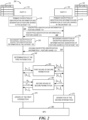
- FIG. 2 shows a flowchart of a multi-party signaling flow 200 for data processing according to some embodiments of the present disclosure.
- the signaling flow 200 will be described with reference to the environment 100 of FIG. 1 .
- the signaling flow 200 related to the party 110 with the dataset 112 and the party 120 with the dataset 122.
- data entries in the dataset 112 and the dataset 122 all include one or more types of identification information; the dataset 112 comprises n c data entries, each of which comprises m c features; the dataset 122 comprises n p data entries, each of which comprises m p features.
- the dataset 112 may be represented as ⁇ ( Cid i , u i ,0 , ..., u i,m c ) ⁇ i ⁇ [ n c ] (a range [0, n c ) is represented in a form of [ n c ], same below), where Cid i refers to the identification information of the i th data entry, u i ,0 refers to a feature 0 of the i th data entry, and u i,m c refers to a feature m c of the i th data entry.
- the dataset 122 may be represented as Pid i , v i , 0 , ... , v i , m p i ⁇ n p .
- the party 110 and the party 120 obtain information required for subsequent secure permutation respectively.
- the party 110 obtains double-encrypted identification information Cid ⁇ i and a first feature share [ u i , j ] 0 and a second feature share u" i,j of feature information u i , j of respective data entries in the dataset 112, and double-encrypted identification information Pid ⁇ i and a first feature share v' i,j of feature information v i,j of respective data entries in the dataset 122 of the party 120.
- the party 120 obtains a fourth feature share [ u i,j ] 1 of first feature information u i,j for respective data entries in the dataset 112 of the party 110 and first permutation information ⁇ 1 for the dataset 112, and a first feature share [ v i,j ] 0 of the feature information v i,j for respective data entries in the dataset 122 of the party 120.
- the party 110 initially has its own original dataset 112, while the party 120 initially has its own original dataset 122.
- the party 110 and the party 120 may exchange information by encrypting the identification information and generating a secret share of the feature information.
- the party 110 and the party 120 may determine an encryption method and a key to use, respectively.
- the identification information in the dataset 112 and the dataset 122 may be realized based on the Elliptic Curve encryption algorithm, and the party 110 and the party 120 may realize a key exchange through the Elliptic Curve Key Exchange.
- the party 110 may randomly select an elliptic curve encryption key r c ; and the party 120 may randomly select an elliptic curve encryption key r p .
- the encryption of the identification information may also be based on any other appropriate encryption algorithm, as long as the party 110 and the party 120 choose a key used to encrypt the identification information respectively.
- the party 110 and the party 120 may first synchronize data size of the dataset 112 and the dataset 122. If the number of data entries in the dataset 112 is not equal to the number of data entries in the dataset 122 (that is, n c ⁇ n p ), then the party 110 and/or the party 120 need to fill the dataset. This is because a secure permutation protocol will be used subsequently, and the secure permutation protocol cannot change the data size. Therefore, in the initial stage, it is required that both parties have a same data size. In some embodiments, the party 110 and/or the party 120 may use random identification information and use 0 as the feature information to fill in the dataset 112 and/or the dataset 122.
- the filled random identification information may differ from true identification information in the dataset 112 or the dataset 122.
- the random identification information may be selected from a large range to ensure that a probability of an appearance of the same identification information is negligible.
- the party 110 and the party 120 may perform encryption of the identification information and generation and exchange of the feature share of the feature information for respective datasets.
- the party 110 may perform primary encryption on the identification information and generate the feature share (210) for the feature information for respective data entries in their dataset 112, to obtain encrypted identification information and the third feature share for the feature information (marked as "encrypted identification information 1" and "feature share 1-3" in FIG. 2 , respectively).
- the party 120 may perform the primary encryption on the identification of respective data entries in their dataset 122 and generate the feature share of the feature information (212), to obtain the encrypted identification information and the third feature share of the feature information (marked as "encrypted identification information 2" and "feature share 2-3" in FIG. 2 , respectively).
- the encryption of the identification information and feature share generation of the feature information may be triggered by either party.
- a request may be firstly initiated by the party 120.
- the party 110 may determine whether to fill in a pseudo data entry in the dataset 112 according to the size of the dataset 122 of a client 120 (that is, the number of data entries). It should be understood that the party 110 and the party 120 may correspond to different entities in different application scenarios, and their intersection matching may be triggered based on any reason, by either party, or through negotiation between both parties.
- the party 110 may perform disorder processing on respective data entries in the dataset 112.
- the party 120 may perform disorder processing on respective data entries in the dataset 122.
- a first encryption key for example an elliptic curve encryption key r c
- the identification information of respective data entries in the dataset 112 is randomized to avoid disclosing the true identification information to other parties.
- a second encryption key for example an elliptic curve encryption key r p
- the identification information of respective data entries in the dataset 122 is randomized to avoid disclosing the true identification information to other parties.
- H: 0,1 * ⁇ G is a hash function that maps any input to an elliptic curve point.
- the encryption of the identification information may also be based on any other appropriate encryption algorithm.
- the party 110 sends (220) the encrypted identification information and the third feature share Cid ′ i , u ′ i , j i ⁇ n c , j ⁇ m c of the feature information of the dataset 112 to the party 120.
- the party 120 sends (222) the encrypted identification information and the third feature share Pid ′ i , v ′ i , j i ⁇ n p , j ⁇ m p of the feature information of the dataset 122 to the party 110.
- the party 110 and the party 120 encrypt the received encrypted identification information of the other party again to obtain the double-encrypted identification information.
- the party 110 after receiving the encrypted identification information and the third feature share Pid ′ i , v ′ i , j i ⁇ n p , j ⁇ m p of the feature information of the dataset 122, the party 110 performs secondary encryption (230) on the received encrypted identification information Pid' i of the dataset 122.
- the first encryption key for example, an elliptic curve encryption key r c for performing the primary encryption on the identification information in the dataset 112
- the party 120 performs the secondary encryption and generation of the feature share (232) on the encrypted identification information Cid' i of the received dataset 112.
- the second encryption key for example, an elliptic curve encryption key r p for performing the primary encryption on the identification information in the dataset 122
- a second feature share ( u" i,j ) of the feature information u i,j of the dataset 112, for example subtracting the feature share [ u i,j ] 1 from u' i,j , to obtain the second feature share u" i,j u' i,j - [ u i,j ] 1 .
- the party 120 randomly generates the first permutation information ⁇ 1 , which may be a random permutation vector in a range of [0, n c ) for disrupting a correspondence (that is, ⁇ 1 Cid ⁇ i , u " i , j i ⁇ n c , j ⁇ m c ) between the double-encrypted identification information Cid ⁇ i and the second feature share u" i,j of the dataset 112.
- a correspondence that is, ⁇ 1 Cid ⁇ i , u " i , j i ⁇ n c , j ⁇ m .
- the party 112 sends (234) the double-encrypted identification information Cid ⁇ i and the second feature share u" i,j (represented as ⁇ double-encrypted identification information 1, feature share 1-2> in the figure) to the party 110.
- the party 110 obtains the double-encrypted identification information Cid ⁇ i of the dataset 112 and the double-encrypted identification information Pid ⁇ i of the dataset 122.
- the party 110 performs intersection matching according to the double-encrypted identification information of data of both parties, to obtain the necessary permutation to align the datasets of both parties (that is, data entries in the intersection are in the same position). For example, the party 110 determines (240) the first intersection of the dataset 112 and the dataset 122 by matching the double-encrypted identification information Cid ⁇ i of the dataset 112 and the double-encrypted identification information Pid ⁇ i of the dataset 122.
- the intersection of two datasets refers to finding data entries with matched (or identical) identification information in the two datasets.
- the data entries in the first intersection comprise matched identification information, and the second feature share ( u" i,j ) of the feature information u i,j and the third feature share v' i,j of the feature information v i,j identified by the identification information.
- the party 110 determines which data entries in the dataset 112 and the dataset 122 have matched identification information based on a matching result between the double-encrypted identification information Cid ⁇ i i ⁇ n c of the dataset 112 and the double-encrypted identification information Pid ⁇ i i ⁇ n p of the dataset 122.
- the identification information of a data entry in the dataset 112 matches the identification information of a data entry in the dataset 122, then after encryption by two keys r c and r p , the identification information of these two data entries still matches. Therefore, whether the identification information is matched or not may be performed by the party 110 without disclosing the actual identification information.
- the data entries in the first intersection include matched identification information and the second feature share ( u" i,j ) of the feature information u i,j and the third feature share ( v' i,j ) of the feature information v i,j identified by the identification information
- the party 120 performed one disturbance before sending the double-encrypted identification information Cid ⁇ i and the second feature share u" i,j of the dataset 112 to the party 110, the correspondence between the second feature share u" i,j and the identification information may be inaccurate. Therefore, the party 110 and the party 120 will call the secure permutation protocol to adjust the feature share of the dataset 112 and the feature share of the dataset 122.
- FIG. 3 Main functions of a secure permutation protocol 300 are shown in the figure, where P0 inputs permutation ⁇ and a share [ x ] 0 of the dataset and P1 inputs another share [ x ] 1 of the dataset.
- There are multiple implementations of the secure permutation protocol and a typical three-party implementation is used as an example in the present disclosure.
- the three parties P0, P1, and P2 perform the following steps without collusion:
- HE technology may be used to implement the secure permutation protocol of both parties:
- the party 110 and the party 120 perform a first round of secure permutation (250) for the feature information of the dataset 112.
- the party 110 is equivalent to P1 in the secure permutation protocol
- the party 120 is equivalent to P0 in the secure permutation protocol.
- the feature share of the dataset 112 in the first intersection may be adjusted to obtain the feature share of the dataset 112 sequentially aligned with the intersection.
- the first target feature share and the second target feature share of the feature information u i,j satisfy
- the party 110 and the party 120 perform a second round of secure permutation (260) for the feature information of the dataset 122.
- the party 110 also generates second permutation information ⁇ 0 required to align (that is, data entries of the intersection are in the same position) the datasets of both parties by matching the double-encrypted identification information Cid ⁇ i of the dataset 112 and the double-encrypted identification information Pid ⁇ i of the dataset 122. Firstly, the party 110 holds the double-encrypted identification information Cid ⁇ i i ⁇ n c of the dataset 112 and the double-encrypted identification information Cid ⁇ i i ⁇ n p of the dataset 122.
- the party 110 uses the double-encrypted identification information Pid ⁇ i i ⁇ n p to match Cid ⁇ i i ⁇ n c , to generate the second permutation information ⁇ 0 corresponding to the encrypted identification information Pid' i of the party 120.
- the party 110 traverses the double-encrypted identification information Pid ⁇ i i ⁇ n p . If the identification information (that is, the double-encrypted identification information) of the first data entry in the dataset 112 and the identification information of the second data entry in the dataset 122 are determined to be matched through matching, the generated second permutation information ( ⁇ 0 ) comprises an index of the position of the first data entry or the second data entry.
- the party 110 is equivalent to P0 in the secure permutation protocol
- the party 120 is equivalent to P2 in the secure permutation protocol.
- the feature share of the dataset 122 in the first intersection may be adjusted to obtain the feature share of the dataset 122 sequentially aligned with the intersection.
- the party 110 updates (270) the first intersection based on the obtained first target feature share [ ⁇ i,j ] 0 of the feature information of the dataset 112 and the obtained first target feature share [ ⁇ i,j ] 0 of the feature information v i,j of the dataset 122.
- the third feature share v' i,j of the feature information v i,j in the dataset 122 is updated as the first target feature share [ ⁇ i,j ] 0 of the feature information v i,j .
- the party 110 may concatenate [ ⁇ i,j ] 2 and [ ⁇ i,j ] 0 by row, to obtain the updated first intersection.
- the party 110 also sets matching flags for respective data entries in the updated first intersection, where a matching flag for data entries with matched double-encrypted identification information is set to a first value indicating a true match of the identification information, and a matching flag for data entries with mismatched double-encrypted identification information is set to a second value indicating a pseudo match of the identification information.
- the setting of a matching flag may be based on a matching situation recorded when generating the second permutation information ⁇ 0 .
- the first value may be set to 1, and the second value may be set to 0.
- the party 110 may set an additional matching flag list in the updated first intersection, which records matching flags (also known as is-real flag bit) of corresponding data entries for identifying whether a data entry is a true intersection or a falsely filled intersection.
- the party 110 may set the is_real flag bit of the true matched intersection to 1 and set the is_real flag bit of the falsely matched intersection to 0 based on the actual filling situation.
- the party 120 After the first round of secure permutation and the second round of secure permutation, the party 120 generates (272) a second intersection of the dataset 112 and the dataset 122 based on the second target feature share [ ⁇ i,j ] 1 of the feature information u i,j of the dataset 112 and the first target feature share [ ⁇ i,j ] 0 of the feature information v i,j of the dataset 122.
- the party 120 concatenates [ ⁇ i,j ] 1 and [ ⁇ i,j ] 1 by row, to obtain the second intersection.
- Data entries in the second intersection comprise no identification information, and the second target feature share [ ⁇ i,j ] 1 of the feature information u i,j corresponds to the first target feature share [ ⁇ i,j ] 0 of the feature information v i,j sequentially in a granularity of data entries.
- the party 120 similarly sets matching flags for the second intersection. Because the party 120 cannot determine whether the identification information of data entries in the second intersection is matched, the party 120 may set the matching flags of all data entries to indicate a pseudo match of the identification information, that is, is_real flag bits are all set to indicate mismatched, for example, all set to 0.
- the party 110 performs (280) the MPC of the dataset 112 and the dataset 122 based on the updated first intersection
- the party 120 performs (280) the MPC of the dataset 112 and the dataset 122 based on the updated second intersection.
- candidate computation results may be obtained by performing the MPC using the first intersection and the second intersection.
- the party 110 may determine the target computation result of the MPC based on the determined candidate computation results of each pair of data entries in the first intersection and matching flags for the first intersection. For example, if the matching flag bit of data entries corresponding to the true index in matching flags of the first intersection is set to 1, and the matching flag bit of data entries corresponding to the pseudo index is set to 0, the party 110 may generate the target computation result based on a multiplication operation between the candidate computation results of the data entries in the first intersection and the matching flag of the data entry in the first intersection.
- the party 120 may determine the target computation result of the MPC based on the determined candidate computation results of data entries in the second intersection and the matching flags for the second intersection. If the matching flags of data entries in the second intersection are set to 0, the party 120 may generate the target computation result based on the multiplication operation between the candidate computation results of data entries in the second intersection and the matching flags of the data entries in the second intersection.
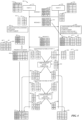
- the party 110 randomizes the identification information in the dataset 112, that is, performs the primary encryption on the identification information using the first encryption key rc; and generates the first feature share and the third feature share of the feature information.
- the party 110 sends the encrypted identification information and the third feature share ( ⁇ [rp]ID, Enc(feature 1)>) 414 of the dataset 112 to the party 120 in message 2. It can be seen that in message 2, the identification information and the feature information in the dataset 112 are encrypted.
- the party 110 preserves a first feature share 410 of the feature information in the dataset 112, and is aware of the correspondence between these first feature share 410 and identification information 412 in its own dataset.
- the party 120 disrupting, using first permutation information ⁇ 1 434, a set composed of the double-encrypted identification information and the fourth feature share in the dataset 112, to obtain a disturbed set 430.
- the party 120 calculates the second feature share u" i,j in the disturbed set 430 and sends a set 435 to the party 110 in message 3.
- the set 435 comprises the double-encrypted identification information and the second feature share u" i,j of the dataset 112.
- the party 110 performs an operation 415, including performing disorder processing on the received encrypted identification information and the third feature share ( ⁇ [rp]ID, Enc(feature 2)>) of the dataset 122 of the party 120; performing, using the first encryption key rc, the secondary encryption on the encrypted identification information [rp]ID, to obtain the double-encrypted identification information [rc] [rp]ID.
- the set 402 received by the party 110 is called a set 422, which comprises the double-encrypted identification information [rc] [rp]ID and third feature share of the dataset 122.
- the party 110 and the party 120 perform a first round of secure permutation 450 to synchronize the feature information of the dataset 112 of the party 110.
- the party 110 inputs the first feature share 410 of the dataset 112 (which aligns to the identification information 412); the party 120 inputs a fourth feature share 438 and the first permutation information ⁇ 1 434 of the dataset 112, and the fourth feature share 438 is a feature share that is not disturbed by the first permutation information ⁇ 1 434.
- the party 120 may also obtain permutation information 432, for example, from the third party P2.
- the party 110 After the first round of secure permutation 450, the party 110 obtains the first target feature share [ ⁇ i,j ] 0 452 of the feature information of the dataset 112, and the party 120 obtains the second target feature share [ ⁇ i,j ] 1 454 of the feature information of the dataset 112.
- the party 110 may determine the correspondence between the first target feature share [ ⁇ i,j ] 0 452 of the feature information and identification information 456 of the dataset 112.
- the party 110 and the party 120 perform the first round of secure permutation 460 to synchronize the feature information of the dataset 122 of the party 120.
- the party 110 inputs the third feature share 462 and the second permutation information ⁇ 0 424 of the dataset 122; the party 120 inputs the first feature 405 of the dataset 122.
- the party 110 may obtain the correspondence between the third feature share 462 of the dataset 122 and the identification information 464 of the first intersection.
- the party 110 may also obtain permutation information 425, for example, from the third party P2.
- the party 110 After the second round of secure permutation 460, the party 110 obtains the first target feature share [ ⁇ i,j ] 0 466 of the feature information of the dataset 122, and the party 120 obtains the second target feature share [ ⁇ i,j ] 1 468 of the feature information of the dataset 122.
- the party 110 may determine the correspondence between the first target feature share [ ⁇ i,j ] 0 466 of the feature information and identification information 472 in the dataset 122.
- the party 110 updates, based on the first target feature share [ ⁇ i,j ] 0 452 of the feature information of the dataset 112 and the first target feature share [ ⁇ i,j ] 0 466 of the feature information, the first intersection 426, to obtain an updated first intersection 474.
- the party 120 generates, based on the second target feature share [ ⁇ i,j ] 1 454 of the feature information of the dataset 112 and the second target feature share [ ⁇ i,j ] 1 468 of the feature information of the dataset 122, a second intersection 476.
- the party 110 may also set matching flags (is_real flag bits) for respective data entries in the first intersection 474.
- the party 120 may also set matching flags (is_real flag bits) for the second intersection 476.
- the party 110 may set the is_real flag bits of a true intersection to 1, and set the is_real flag bits of a false intersection to 0 according to the actual matching situation of the double identification information. However, the party 120 may set all is_real flag bits to 0.
- a true intersection operation result may be preserved through a multiplication of the candidate computation results of the MPC operation and the is_real flag bits by calling an MPC multiplication.
- obtaining the feature share required by the MPC protocol for MPC operations without exposing the true information of both datasets may be supported.
- the secure permutation technology By applying the secure permutation technology, the efficiency of the feature share and the intersection matching is improved, and the amount of data to be buffer by both parties is reduced.
- the ECDH and the secure permutation protocol are used to achieve efficient computation and communication.
- the scale of the intersection may be kept confidential to one of the parties, to ensure data security.
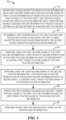
- FIG. 5 shows a flowchart of a data processing method 500 implemented at the first party according to some embodiments of the present disclosure.
- the method 500 may be implemented as a first party in the MPC, for example the party 110 of FIG. 1 .
- the method 500 is described with reference to the environment 100 in FIG. 1 .
- the party 110 obtains first double-encrypted identification information and a first feature share and a second feature share of first feature information of respective data entries in a first dataset of the first party, and second double-encrypted identification information and a third feature share of second feature information of respective data entries in a second dataset of a second party in the MPC.
- the party 110 determines a first intersection of the first dataset and the second dataset by matching the first double-encrypted identification information with the second double-encrypted identification information, data entries in the first intersection comprising matched identification information, and the second feature share of the first feature information and the third feature share of the second feature information identified by the identification information.
- the party 110 performs, using the first feature share of the first feature information, a first round of secure permutation on the first feature information with the second party, to obtain a first target feature share of the first feature information.
- the party 110 performs, using the third feature share of the second feature information, a second round of secure permutation on the second feature information with the second party, to obtain a first target feature share of the second feature information.
- the party 110 updates the first intersection based on the first target feature share of the first feature information and the first target feature share of the second feature information.
- the party 110 performs the MPC with the second party based on the updated first intersection.
- the method 500 before obtaining the first double-encrypted identification information and the first feature share of the first feature information, the method 500 further comprises: encrypting first identification information of respective data entries in the first dataset, to obtain first encrypted identification information; generating, based on the first feature share of the first feature information, the third feature share of the first feature information; and sending the first encrypted identification information and the third feature share of the first feature information to the second party for generating and sending, by the second party, the first double-encrypted identification information and the first feature share of the first feature information to the first party.
- encrypting the first identification information comprises: encrypting, using a first encryption key, the first identification information of respective data entries in the first dataset, to obtain the first encrypted identification information.
- the first double-encrypted identification information is obtained after encrypting the first identification information by the second party using a second encryption key.
- obtaining the second double-encrypted identification information comprises: receiving, from the second party, the second encrypted identification information and the third feature share of the second feature information of respective data entries in the second dataset of the second party, the second encrypted identification information being obtained by encryption by the second party using the second encryption key; and performing, using the first encryption key, the secondary encryption on the second encrypted identification information, to obtain the second double-encrypted identification information.
- obtaining the first double-encrypted identification information and the second feature share of the first feature information comprises: receiving, from the second party, the first double-encrypted identification information and the second feature share of the first feature information, a correspondence between the first double-encrypted identification information and the second feature share of the first feature information being permutated by the second party based on first permutation information.
- At least the first permutation information used by the second party in the first round of secure permutation is not limited
- performing the second round of secure permutation with the second party comprises: generating, based on a matching between the first double-encrypted identification information and the second double-encrypted identification information, second permutation information corresponding to the second encrypted identification information for the second party; and performing, using the second permutation information and the third feature share of the second feature information, the second round of secure permutation with the second party.
- generating the second permutation information comprises: in accordance with a determination that the double-encrypted identification information of a first data entry in the first dataset and a second data entry in the second dataset matches with each other based on the matching, generating the second permutation information to comprise an index of a position of the first data entry or the second data entry; and in accordance with a determination that the double-encrypted identification information of the first data entry and the second data entry mismatches with each other based on the matching, generating the second permutation information to comprise a pseudo index.
- updating the first intersection comprises: updating the first intersection, in the updated first intersection, the second feature share of the first feature information being updated to be a sum of the first target feature share and the second feature share of the first feature information, and the third feature share of the second feature information being updated to be the first target feature share of the second feature information.
- the method 500 before the first round of secure permutation, further comprises: in accordance with a determination that a number of data entries in the first dataset is not equal to a number of data entries in the second dataset, causing the number of data entries in the first dataset equal to the number of data entries in the second dataset by filling in a pseudo data entry.
- the method 500 further comprises: setting matching flags for respective data entries in the updated first intersection, wherein a matching flag for data entries with matched double-encrypted identification information is set to a first value indicating a true match of identification information, a matching flag for data entries with mismatched double-encrypted identification information is set to a second value indicating a pseudo match of identification information.
- performing the MPC comprises: performing the MPC with the second party based on the updated first intersection, to obtain candidate computation results for respective data entries in the updated first intersection; and determining, based on the matching flags for respective data entries in the updated first intersection and the candidate computation results, a target computation result of the MPC.
- the first value is set to 1
- the second value is set to 0
- determining the target computation result comprises: generating a target computation result of the MPC based at least on a multiplication operation between the matching flags for respective data entries in the updated first intersection and the candidate computation results.
- FIG. 6 shows a flowchart of a data processing method implemented at a second party according to some embodiments of the present disclosure.
- the method 600 may be implemented, for example, by the party 120 of FIG. 1 .
- the method 600 is described with reference to the environment 100 of FIG. 1 .
- the party 120 obtains a fourth feature share of first feature information for respective data entries in a first dataset of a first party in the MPC and first permutation information for the first dataset, and a first feature share of second feature information for respective data entries in a second dataset of the second party.
- the party 120 performs, using the first permutation information and the fourth feature share of the first feature information, a first round of secure permutation on the first feature information with the first party, to obtain a second target feature share of the first feature information.
- the party 120 performs, using the first feature share of the second feature information, a second round of secure permutation on the second feature information with the first party, to obtain a second target feature share of the second feature information.
- the party 120 generates a second intersection for the first dataset and the second dataset based on the second target feature share of the first feature information and a first target feature share of the second feature information.
- the party 120 performs the MPC with the first party based on the second intersection.
- the method 600 further comprises: encrypting second identification information of respective data entries in the second dataset, to obtain second encrypted identification information; generating, based on the first feature share of the second feature information, the third feature share of the second feature information; and sending the second encrypted identification information and the third feature share of the second feature information to the first party for determining and sending, by the first party, the first feature share of the second feature information to the second party.
- the method 600 before performing the first round of secure permutation, further comprises: receiving, from the first party, the first encrypted identification information and a third feature share of the first feature information; performing the secondary encryption on the first encrypted identification information, to obtain the first double-encrypted identification information; generating the second feature share of the first feature information based on the third feature share and the fourth feature share of the first feature information; permutating, using first permutation information, a correspondence between the first double-encrypted identification information and the second feature share of the first feature information; and sending, to the first party, the permutated first double-encrypted identification information and the permutated second feature share of the first feature information.
- the first encrypted identification information is encrypted by the first party using the first encryption key
- performing the secondary encryption comprises encrypting, using the second encryption key, the first identification information, to obtain the first double-encrypted identification information.
- data entries in the second intersection comprise no identification information
- the second target feature share of the first feature information corresponds to the first target feature share of the second feature information sequentially in a granularity of data entries.
- performing the MPC comprises: setting matching flags for respective data entries in the second intersection, the matching flags being set to indicate a pseudo match of identification information; performing the MPC with the first party based on the second intersection, to obtain candidate computation results for respective data entries in the second intersection; and determining, based on the matching flags for respective data entries in the second intersection and the candidate computation results, a target computation result of the MPC.
- the matching flags for respective data entries in the second intersection are set to 0, and determining the target computation result comprises: generating a target computation result of the MPC based at least on a multiplication operation between the candidate computation results and the matching flags for respective data entries in the second intersection.
- FIG. 7 shows a schematic structural block diagram of a data processing apparatus 700 implemented at a first party according to some embodiments of the present disclosure.
- the apparatus 700 can be implemented or included in the party 110.
- Each module/component in the apparatus 700 can be implemented by hardware, software, firmware, or any combination thereof.
- the apparatus 700 comprises an information obtaining module 710 configured to obtain first double-encrypted identification information and a first feature share and a second feature share of first feature information of respective data entries in a first dataset of the first party, and second double-encrypted identification information and a third feature share of second feature information of respective data entries in a second dataset of a second party in the MPC.
- the apparatus 700 further comprises a first intersection determination module 720 configured to determine a first intersection of the first dataset and the second dataset by matching the first double-encrypted identification information with the second double-encrypted identification information, data entries in the first intersection comprising matched identification information, and the second feature share of the first feature information and the third feature share of the second feature information identified by the identification information.
- the apparatus 700 further comprises a first secure permutation module 730 configured to perform, using the first feature share of the first feature information, a first round of secure permutation on the first feature information with the second party, to obtain a first target feature share of the first feature information.
- the apparatus 700 further comprises a second secure permutation module 740 configured to perform, using the third feature share of the second feature information, a second round of secure permutation on the second feature information with the second party, to obtain a first target feature share of the second feature information.
- the apparatus 700 further comprises an intersection update module 750 configured to update the first intersection based on the first target feature share of the first feature information and the first target feature share of the second feature information; and an MPC performing module 760, configured to perform the MPC with the second party based on the updated first intersection.
- intersection update module 750 configured to update the first intersection based on the first target feature share of the first feature information and the first target feature share of the second feature information
- MPC performing module 760 configured to perform the MPC with the second party based on the updated first intersection.
- the apparatus 700 further comprises: a primary encryption module configured to before obtaining the first double-encrypted identification information and the first feature share of the first feature information, encrypting first identification information of respective data entries in the first dataset, to obtain first encrypted identification information; a feature share generation module configured to generate, based on the first feature share of the first feature information, the third feature share of the first feature information; and a feature share sending module configured to send the first encrypted identification information and the third feature share of the first feature information to the second party for generating and sending, by the second party, the first double-encrypted identification information and the first feature share of the first feature information to the first party.
- a primary encryption module configured to before obtaining the first double-encrypted identification information and the first feature share of the first feature information, encrypting first identification information of respective data entries in the first dataset, to obtain first encrypted identification information
- a feature share generation module configured to generate, based on the first feature share of the first feature information, the third feature share of the first feature information
- the primary encryption module is configured to encrypt, using a first encryption key, the first identification information of respective data entries in the first dataset, to obtain the first encrypted identification information.
- the first double-encrypted identification information is obtained after encrypting the first identification information by the second party using a second encryption key.
- the information obtaining module 710 comprises: a first information receiving module configured to receive, from the second party, the second encrypted identification information and the third feature share of the second feature information of respective data entries in the second dataset of the second party, the second encrypted identification information being obtained by encryption by the second party using the second encryption key; and a secondary encryption module configured to perform, using the first encryption key, secondary encryption on the second encrypted identification information, to obtain the second double-encrypted identification information.
- the information obtaining module 710 comprises a second information receiving module configured receive, from the second party, the first double-encrypted identification information and the second feature share of the first feature information, a correspondence between the first double-encrypted identification information and the second feature share of the first feature information being permutated by the second party based on first permutation information.
- At least the first permutation information used by the second party in the first round of secure permutation is not limited
- the second secure permutation module 740 comprises a permutation information generation module configured to generate, based on a matching between the first double-encrypted identification information and the second double-encrypted identification information, second permutation information corresponding to the second encrypted identification information for the second party; and a secure performing module configured to perform, using the second permutation information and the third feature share of the second feature information, the second round of secure permutation with the second party.
- the permutation information generation module is configured to in accordance with a determination that the double-encrypted identification information of a first data entry in the first dataset and a second data entry in the second dataset matches with each other based on the matching, generate the second permutation information to comprise an index of a position of the first data entry or the second data entry; and in accordance with a determination that the double-encrypted identification information of the first data entry and the second data entry mismatches with each other based on the matching, generate the second permutation information to comprise a pseudo index.
- the intersection update module 750 is configured to update the first intersection, in the updated first intersection, the second feature share of the first feature information being updated to be a sum of the first target feature share and the second feature share of the first feature information, and the third feature share of the second feature information being updated to be the first target feature share of the second feature information.
- the apparatus 700 before the first round of secure permutation, further comprises a filling module configured to in accordance with a determination that a number of data entries in the first dataset is not equal to a number of data entries in the second dataset, cause the number of data entries in the first dataset equal to the number of data entries in the second dataset by filling in a pseudo data entry.
- a filling module configured to in accordance with a determination that a number of data entries in the first dataset is not equal to a number of data entries in the second dataset, cause the number of data entries in the first dataset equal to the number of data entries in the second dataset by filling in a pseudo data entry.
- the apparatus 700 further comprises a flag setting module configured to set matching flags for respective data entries in the updated first intersection, wherein a matching flag for data entries with matched double-encrypted identification information is set to a first value indicating a true match of identification information, a matching flag for data entries with mismatched double-encrypted identification information is set to a second value indicating a pseudo match of identification information.
- a flag setting module configured to set matching flags for respective data entries in the updated first intersection, wherein a matching flag for data entries with matched double-encrypted identification information is set to a first value indicating a true match of identification information, a matching flag for data entries with mismatched double-encrypted identification information is set to a second value indicating a pseudo match of identification information.
- the MPC performing module 760 comprises a candidate result determination module configured to perform the MPC with the second party based on the updated first intersection, to obtain candidate computation results for respective data entries in the updated first intersection; and a target result determination module configured to determine, based on the matching flags for respective data entries in the updated first intersection and the candidate computation results, a target computation result of the MPC.
- the first value is set to 1
- the second value is set to 0
- determining the target computation result comprises: generating a target computation result of the MPC based at least on a multiplication operation between the matching flags for respective data entries in the updated first intersection and the candidate computation results.
- FIG. 8 shows a schematic structural block diagram of a data processing apparatus 800 implemented at a second party according to some embodiments of the present disclosure.
- the apparatus 800 can be implemented or included in party 120.
- Each module/component in the apparatus 800 can be implemented by hardware, software, firmware, or any combination of them.
- the apparatus 800 comprises an information obtaining module 810 configured to obtain a fourth feature share of first feature information for respective data entries in a first dataset of a first party in the MPC and first permutation information for the first dataset, and a first feature share of second feature information for respective data entries in a second dataset of the second party.
- the apparatus 800 further comprises a first secure permutation module 820 configured to perform, using the first permutation information and the fourth feature share of the first feature information, a first round of secure permutation on the first feature information with the first party, to obtain a second target feature share of the first feature information.
- a first secure permutation module 820 configured to perform, using the first permutation information and the fourth feature share of the first feature information, a first round of secure permutation on the first feature information with the first party, to obtain a second target feature share of the first feature information.
- the apparatus 800 further comprises a second secure permutation module 830 configured to perform, using the first feature share of the second feature information, a second round of secure permutation on the second feature information with the first party, to obtain a second target feature share of the second feature information.
- a second secure permutation module 830 configured to perform, using the first feature share of the second feature information, a second round of secure permutation on the second feature information with the first party, to obtain a second target feature share of the second feature information.
- the apparatus 800 further comprises a second intersection generation module 840 configured to generate a second intersection for the first dataset and the second dataset based on the second target feature share of the first feature information and a first target feature share of the second feature information.
- the apparatus 800 further comprises an MPC performing module 850 configured to perform the MPC with the first party based on the second intersection.
- the apparatus 800 further comprises a primary encryption module configured to encrypt second identification information of respective data entries in the second dataset, to obtain second encrypted identification information; a first feature share generation module configured to generate, based on the first feature share of the second feature information, the third feature share of the second feature information; and a feature share sending module configured to send the second encrypted identification information and the third feature share of the second feature information to the first party for determining and sending, by the first party, the first feature share of the second feature information to the second party.
- a primary encryption module configured to encrypt second identification information of respective data entries in the second dataset, to obtain second encrypted identification information
- a first feature share generation module configured to generate, based on the first feature share of the second feature information, the third feature share of the second feature information
- a feature share sending module configured to send the second encrypted identification information and the third feature share of the second feature information to the first party for determining and sending, by the first party, the first feature share of the second feature information to the second party.
- the apparatus 800 further comprises a feature share receiving module configured to before performing the first round of secure permutation, receiving, from the first party, the first encrypted identification information and a third feature share of the first feature information; a secondary encryption module configured to perform secondary encryption on the first encrypted identification information, to obtain the first double-encrypted identification information; a first feature share generation module configured to generate the second feature share of the first feature information based on the third feature share and the fourth feature share of the first feature information; a permutation module configured to permutate, using first permutation information, a correspondence between the first double-encrypted identification information and the second feature share of the first feature information; and a message sending module configured to send, to the first party, the permutated first double-encrypted identification information and the permutated second feature share of the first feature information.
- a feature share receiving module configured to before performing the first round of secure permutation, receiving, from the first party, the first encrypted identification information and a third feature share of the first feature information
- a secondary encryption module configured to
- the first encrypted identification information is encrypted by the first party using the first encryption key
- the secondary encryption module is configured to encrypt, using the second encryption key, the first identification information, to obtain the first double-encrypted identification information.
- data entries in the second intersection comprise no identification information
- the second target feature share of the first feature information corresponds to the first target feature share of the second feature information sequentially in a granularity of data entries.
- the MPC performing module 850 comprises a flag setting module configured to set matching flags for respective data entries in the second intersection, the matching flags being set to indicate a pseudo match of identification information; a candidate result determination module configured to perform the MPC with the first party based on the second intersection, to obtain candidate computation results for respective data entries in the second intersection; and a target result determination module configured to determine, based on the matching flags for respective data entries in the second intersection and the candidate computation results, a target computation result of the MPC.
- the matching flags for respective data entries in the second intersection are set to 0, and the target result determination module is configured to determine generating a target computation result of the MPC based at least on a multiplication operation between the candidate computation results and the matching flags for respective data entries in the second intersection.
- FIG. 9 shows a block diagram of an electronic device 900 in which one or more embodiments of the present disclosure may be implemented. It would be appreciated that the electronic device 900 shown in FIG. 9 is only an example and should not constitute any restriction on the function and scope of the embodiments described herein.
- the electronic device 900 shown in FIG. 9 may be used to implement the party 110 or the party 120 of FIG. 1 , the apparatus 700 of FIG. 7 or the apparatus 800 of FIG. 8 .
- the electronic device 900 is in the form of a general computing device.
- the components of the electronic device 900 may include, but are not limited to, one or more processors or processing units 910, a memory 920, a storage device 930, one or more communication units 940, one or more input devices 950, and one or more output devices 960.
- the processing unit 910 may be an actual or virtual processor and can execute various processes according to the programs stored in the memory 920. In a multiprocessor system, multiple processing units execute computer executable instructions in parallel to improve the parallel processing capability of the electronic device 900.
- the electronic device 900 typically comprises a variety of computer storage medium. Such medium may be any available medium that is accessible to the electronic device 900, including but not limited to volatile and non-volatile medium, removable and non-removable medium.
- the memory 920 may be volatile memory (for example, a register, cache, a random access memory (RAM)), a non-volatile memory (for example, a read-only memory (ROM), an electrically erasable programmable read-only memory (EEPROM), a flash memory) or any combination thereof.
- the storage device 930 may be any removable or non-removable medium, and may include a machine-readable medium, such as a flash drive, a disk, or any other medium, which can be used to store information and/or data (such as training data for training) and can be accessed within the electronic device 900.
- a machine-readable medium such as a flash drive, a disk, or any other medium, which can be used to store information and/or data (such as training data for training) and can be accessed within the electronic device 900.
- the electronic device 900 may further include additional removable/non-removable, volatile/non-volatile storage medium.
- a disk driver for reading from or writing to a removable, non-volatile disk (such as a "floppy disk")
- an optical disk driver for reading from or writing to a removable, non-volatile optical disk
- each driver may be connected to the bus (not shown) by one or more data medium interfaces.
- the memory 920 may include a computer program product 925, which has one or more program modules configured to perform various methods or acts of various embodiments of the present disclosure.
- the communication unit 940 communicates with a further computing device through the communication medium.
- functions of components in the electronic device 900 may be implemented by a single computing cluster or multiple computing machines, which can communicate through a communication connection. Therefore, the electronic device 900 may be operated in a networking environment using a logical connection with one or more other servers, a network personal computer (PC), or another network node.
- PC network personal computer
- the input device 950 may be one or more input devices, such as a mouse, a keyboard, a trackball, etc.
- the output device 960 may be one or more output devices, such as a display, a speaker, a printer, etc.
- the electronic device 900 may also communicate with one or more external devices (not shown) through the communication unit 940 as required.
- the external device such as a storage device, a display device, etc., communicate with one or more devices that enable users to interact with the electronic device 900, or communicate with any device (for example, a network card, a modem, etc.) that makes the electronic device 900 communicate with one or more other computing devices. Such communication may be executed via an input/output (I/O) interface (not shown).
- I/O input/output
- a computer-readable storage medium on which a computer-executable instruction or computer program is stored, wherein the computer-executable instructions or the computer program is executed by the processor to implement the method described above.
- a computer program product is also provided. The computer program product is physically stored on a non-transient computer-readable medium and comprises computer-executable instructions, which are executed by the processor to implement the method described above.
- These computer-readable program instructions may be provided to the processing units of general-purpose computers, special computers or other programmable data processing devices to produce a machine that generates a device to implement the functions/acts specified in one or more blocks in the flow chart and/or the block diagram when these instructions are executed through the processing units of the computer or other programmable data processing devices.
- These computer-readable program instructions may also be stored in a computer-readable storage medium. These instructions enable a computer, a programmable data processing device and/or other devices to work in a specific way. Therefore, the computer-readable medium containing the instructions comprises a product, which comprises instructions to implement various aspects of the functions/acts specified in one or more blocks in the flowchart and/or the block diagram.
- each block in the flowchart or the block diagram may represent a part of a module, a program segment or instructions, which contains one or more executable instructions for implementing the specified logic function.
- the functions marked in the block may also occur in a different order from those marked in the drawings. For example, two consecutive blocks may actually be executed in parallel, and sometimes can also be executed in a reverse order, depending on the function involved.
Landscapes
- Engineering & Computer Science (AREA)
- Computer Security & Cryptography (AREA)
- Theoretical Computer Science (AREA)
- Signal Processing (AREA)
- Computer Networks & Wireless Communication (AREA)
- Software Systems (AREA)
- Computer Hardware Design (AREA)
- Physics & Mathematics (AREA)
- General Engineering & Computer Science (AREA)
- General Physics & Mathematics (AREA)
- General Health & Medical Sciences (AREA)
- Bioethics (AREA)
- Health & Medical Sciences (AREA)
- Storage Device Security (AREA)
Applications Claiming Priority (1)
| Application Number | Priority Date | Filing Date | Title |
|---|---|---|---|
| CN202310666563.3A CN117077156B (zh) | 2023-06-06 | 2023-06-06 | 数据处理方法和电子设备 |
Publications (1)
| Publication Number | Publication Date |
|---|---|
| EP4475478A1 true EP4475478A1 (fr) | 2024-12-11 |
Family
ID=87557987
Family Applications (1)
| Application Number | Title | Priority Date | Filing Date |
|---|---|---|---|
| EP23190139.8A Pending EP4475478A1 (fr) | 2023-06-06 | 2023-08-07 | Procédés de calcul d'intersection d'ensembles sécurisé et dispositif électronique |
Country Status (4)
| Country | Link |
|---|---|
| US (1) | US20240413967A1 (fr) |
| EP (1) | EP4475478A1 (fr) |
| CN (1) | CN117077156B (fr) |
| WO (1) | WO2024251098A1 (fr) |
Families Citing this family (1)
| Publication number | Priority date | Publication date | Assignee | Title |
|---|---|---|---|---|
| CN117077156B (zh) * | 2023-06-06 | 2025-02-07 | 北京火山引擎科技有限公司 | 数据处理方法和电子设备 |
Citations (2)
| Publication number | Priority date | Publication date | Assignee | Title |
|---|---|---|---|---|
| WO2022076038A1 (fr) * | 2020-10-08 | 2022-04-14 | Visa International Service Association | Intersection actualisable d'ensembles privés |
| WO2023014929A1 (fr) * | 2021-08-06 | 2023-02-09 | Amazon Technologies, Inc. | Calcul de préservation de confidentialité avec un service tiers |
Family Cites Families (18)
| Publication number | Priority date | Publication date | Assignee | Title |
|---|---|---|---|---|
| US9158925B2 (en) * | 2013-11-27 | 2015-10-13 | Microsoft Technology Licensing, Llc | Server-aided private set intersection (PSI) with data transfer |
| US11126709B2 (en) * | 2019-01-28 | 2021-09-21 | Nec Corporation Of America | Secure multiparty computation of shuffle, sort, and set operations |
| CN111523673B (zh) * | 2019-02-01 | 2021-07-27 | 创新先进技术有限公司 | 模型训练方法、装置及系统 |
| CN112751665B (zh) * | 2019-10-30 | 2022-12-09 | 阿里巴巴(中国)网络技术有限公司 | 一种安全多方计算方法、设备、系统及存储介质 |
| CN111753318B (zh) * | 2020-06-04 | 2024-04-26 | 上海蚂蚁创将信息技术有限公司 | 私有数据的多方安全计算方法、装置及系统 |
| CN111739595B (zh) * | 2020-07-24 | 2020-11-13 | 湖南创星科技股份有限公司 | 一种医疗大数据共享分析方法及装置 |
| CN113190871B (zh) * | 2021-05-28 | 2023-10-31 | 脸萌有限公司 | 数据保护方法、装置、可读介质及电子设备 |
| US20220400107A1 (en) * | 2021-06-15 | 2022-12-15 | Capital One Services, Llc | Modifying a document object of a graphical user interface to present a temporary credential |
| IL285766B2 (en) * | 2021-08-22 | 2025-06-01 | Google Llc | Cryptographically secure control using secure multi-party computation |
| CN114553593B (zh) * | 2022-03-22 | 2024-05-28 | 杭州博盾习言科技有限公司 | 多方安全计算隐私求交方法、装置、设备及存储介质 |
| CN114697030B (zh) * | 2022-05-31 | 2022-09-20 | 蓝象智联(杭州)科技有限公司 | 多方安全计算参与方的数据验证方法 |
| CN115913537B (zh) * | 2022-11-10 | 2025-08-08 | 深圳市洞见智慧科技有限公司 | 基于隐私保护的数据求交方法、系统及相关设备 |
| US12373578B2 (en) * | 2022-11-23 | 2025-07-29 | Microsoft Technology Licensing, Llc | Secure multi-party computation |
| CN115987484B (zh) * | 2022-12-21 | 2025-04-29 | 山东大学 | 一种支持更新的隐私集合求交集势与和的方法及系统 |
| CN116090002A (zh) * | 2022-12-30 | 2023-05-09 | 中移动信息技术有限公司 | 多方隐私集合求交方法、装置、系统及存储介质 |
| CN115967491B (zh) * | 2023-03-07 | 2023-05-23 | 华控清交信息科技(北京)有限公司 | 一种隐私求交方法、系统和可读存储介质 |
| US11829512B1 (en) * | 2023-04-07 | 2023-11-28 | Lemon Inc. | Protecting membership in a secure multi-party computation and/or communication |
| CN117077156B (zh) * | 2023-06-06 | 2025-02-07 | 北京火山引擎科技有限公司 | 数据处理方法和电子设备 |
-
2023
- 2023-06-06 CN CN202310666563.3A patent/CN117077156B/zh active Active
- 2023-08-07 EP EP23190139.8A patent/EP4475478A1/fr active Pending
- 2023-08-16 US US18/450,840 patent/US20240413967A1/en active Pending
-
2024
- 2024-06-03 WO PCT/CN2024/097142 patent/WO2024251098A1/fr not_active Ceased
Patent Citations (2)
| Publication number | Priority date | Publication date | Assignee | Title |
|---|---|---|---|---|
| WO2022076038A1 (fr) * | 2020-10-08 | 2022-04-14 | Visa International Service Association | Intersection actualisable d'ensembles privés |
| WO2023014929A1 (fr) * | 2021-08-06 | 2023-02-09 | Amazon Technologies, Inc. | Calcul de préservation de confidentialité avec un service tiers |
Non-Patent Citations (1)
| Title |
|---|
| BENNY PINKAS ET AL: "Phasing: Private Set Intersection using Permutation-based Hashing", IACR, INTERNATIONAL ASSOCIATION FOR CRYPTOLOGIC RESEARCH, vol. 20150702:114451, 26 June 2015 (2015-06-26), pages 1 - 21, XP061018781 * |
Also Published As
| Publication number | Publication date |
|---|---|
| WO2024251098A1 (fr) | 2024-12-12 |
| CN117077156A (zh) | 2023-11-17 |
| US20240413967A1 (en) | 2024-12-12 |
| CN117077156B (zh) | 2025-02-07 |
Similar Documents
| Publication | Publication Date | Title |
|---|---|---|
| EP3673609B1 (fr) | Procédé et appareil pour obtenir une entrée d'un protocole de calcul multipartite sécurisé | |
| US10691835B1 (en) | Verifying integrity of data stored in a consortium blockchain using a public sidechain | |
| CN110915164B (zh) | 基于可信执行环境中执行的智能合约操作处理区块链数据 | |
| US10903976B2 (en) | End-to-end secure operations using a query matrix | |
| US9846785B2 (en) | Efficient two party oblivious transfer using a leveled fully homomorphic encryption | |
| US9158925B2 (en) | Server-aided private set intersection (PSI) with data transfer | |
| US20220078023A1 (en) | Private set calculation using private intersection and calculation, and applications thereof | |
| WO2024138854A1 (fr) | Procédé et système de protection de la confidentialité dans un étage de prédiction d'apprentissage fédéré | |
| WO2023050687A1 (fr) | Procédé et appareil d'alignement d'échantillon dans un apprentissage fédéré, dispositif, et support de stockage | |
| CN114240347A (zh) | 业务服务安全对接方法、装置、计算机设备、存储介质 | |
| US20190081790A1 (en) | Authenticated broadcast encryption | |
| EP4475478A1 (fr) | Procédés de calcul d'intersection d'ensembles sécurisé et dispositif électronique | |
| CN113904865A (zh) | 一种基于非对称算法的日志传输方法及装置 | |
| EP4475477A1 (fr) | Procédés de traitement de données et dispositif électronique | |
| CN115859375A (zh) | 一种数据处理方法、装置、电子设备及存储介质 | |
| US12587359B2 (en) | Multi-party computation of split private data with address geo-coded component | |
| CN116204901B (zh) | 隐私求交的方法及装置 | |
| US20230085577A1 (en) | Secured performance of an elliptic curve cryptographic process | |
| CN114117404B (zh) | 一种用户认证方法、装置、设备、系统及存储介质 | |
| US20240111842A1 (en) | License authentication method and apparatus, electronic device, system, and storage medium | |
| WO2022110716A1 (fr) | Procédé et appareil de recommandation de démarrage à froid, dispositif informatique et support de stockage | |
| US20250317287A1 (en) | Unbalanced private set intersection protocols on social media platforms | |
| CN114629876A (zh) | 一种通讯录处理方法及装置 | |
| CN119155018A (zh) | 一种数据处理方法、装置、设备以及计算机可读存储介质 | |
| CN120338956A (zh) | 一种交易处理方法、装置、介质及设备 |
Legal Events
| Date | Code | Title | Description |
|---|---|---|---|
| PUAI | Public reference made under article 153(3) epc to a published international application that has entered the european phase |
Free format text: ORIGINAL CODE: 0009012 |
|
| STAA | Information on the status of an ep patent application or granted ep patent |
Free format text: STATUS: REQUEST FOR EXAMINATION WAS MADE |
|
| 17P | Request for examination filed |
Effective date: 20240108 |
|
| AK | Designated contracting states |
Kind code of ref document: A1 Designated state(s): AL AT BE BG CH CY CZ DE DK EE ES FI FR GB GR HR HU IE IS IT LI LT LU LV MC ME MK MT NL NO PL PT RO RS SE SI SK SM TR |
|
| STAA | Information on the status of an ep patent application or granted ep patent |
Free format text: STATUS: EXAMINATION IS IN PROGRESS |
|
| 17Q | First examination report despatched |
Effective date: 20250718 |