EP4477117A2 - Plateforme de publicité et de commercialisation intelligente - Google Patents
Plateforme de publicité et de commercialisation intelligente Download PDFInfo
- Publication number
- EP4477117A2 EP4477117A2 EP24209917.4A EP24209917A EP4477117A2 EP 4477117 A2 EP4477117 A2 EP 4477117A2 EP 24209917 A EP24209917 A EP 24209917A EP 4477117 A2 EP4477117 A2 EP 4477117A2
- Authority
- EP
- European Patent Office
- Prior art keywords
- product container
- retail product
- door
- display
- retail
- Prior art date
- Legal status (The legal status is an assumption and is not a legal conclusion. Google has not performed a legal analysis and makes no representation as to the accuracy of the status listed.)
- Withdrawn
Links
Images







Classifications
-
- G—PHYSICS
- G06—COMPUTING OR CALCULATING; COUNTING
- G06Q—INFORMATION AND COMMUNICATION TECHNOLOGY [ICT] SPECIALLY ADAPTED FOR ADMINISTRATIVE, COMMERCIAL, FINANCIAL, MANAGERIAL OR SUPERVISORY PURPOSES; SYSTEMS OR METHODS SPECIALLY ADAPTED FOR ADMINISTRATIVE, COMMERCIAL, FINANCIAL, MANAGERIAL OR SUPERVISORY PURPOSES, NOT OTHERWISE PROVIDED FOR
- G06Q30/00—Commerce
- G06Q30/06—Buying, selling or leasing transactions
-
- A—HUMAN NECESSITIES
- A47—FURNITURE; DOMESTIC ARTICLES OR APPLIANCES; COFFEE MILLS; SPICE MILLS; SUCTION CLEANERS IN GENERAL
- A47F—SPECIAL FURNITURE, FITTINGS, OR ACCESSORIES FOR SHOPS, STOREHOUSES, BARS, RESTAURANTS OR THE LIKE; PAYING COUNTERS
- A47F3/00—Show cases or show cabinets
- A47F3/005—Show cases or show cabinets with glass panels
-
- A—HUMAN NECESSITIES
- A47—FURNITURE; DOMESTIC ARTICLES OR APPLIANCES; COFFEE MILLS; SPICE MILLS; SUCTION CLEANERS IN GENERAL
- A47F—SPECIAL FURNITURE, FITTINGS, OR ACCESSORIES FOR SHOPS, STOREHOUSES, BARS, RESTAURANTS OR THE LIKE; PAYING COUNTERS
- A47F3/00—Show cases or show cabinets
- A47F3/04—Show cases or show cabinets air-conditioned, refrigerated
- A47F3/0404—Cases or cabinets of the closed type
- A47F3/0426—Details
- A47F3/0434—Glass or transparent panels
-
- G—PHYSICS
- G06—COMPUTING OR CALCULATING; COUNTING
- G06Q—INFORMATION AND COMMUNICATION TECHNOLOGY [ICT] SPECIALLY ADAPTED FOR ADMINISTRATIVE, COMMERCIAL, FINANCIAL, MANAGERIAL OR SUPERVISORY PURPOSES; SYSTEMS OR METHODS SPECIALLY ADAPTED FOR ADMINISTRATIVE, COMMERCIAL, FINANCIAL, MANAGERIAL OR SUPERVISORY PURPOSES, NOT OTHERWISE PROVIDED FOR
- G06Q10/00—Administration; Management
- G06Q10/08—Logistics, e.g. warehousing, loading or distribution; Inventory or stock management
- G06Q10/087—Inventory or stock management, e.g. order filling, procurement or balancing against orders
-
- G—PHYSICS
- G06—COMPUTING OR CALCULATING; COUNTING
- G06Q—INFORMATION AND COMMUNICATION TECHNOLOGY [ICT] SPECIALLY ADAPTED FOR ADMINISTRATIVE, COMMERCIAL, FINANCIAL, MANAGERIAL OR SUPERVISORY PURPOSES; SYSTEMS OR METHODS SPECIALLY ADAPTED FOR ADMINISTRATIVE, COMMERCIAL, FINANCIAL, MANAGERIAL OR SUPERVISORY PURPOSES, NOT OTHERWISE PROVIDED FOR
- G06Q20/00—Payment architectures, schemes or protocols
- G06Q20/08—Payment architectures
- G06Q20/20—Point-of-sale [POS] network systems
- G06Q20/203—Inventory monitoring
-
- G—PHYSICS
- G06—COMPUTING OR CALCULATING; COUNTING
- G06Q—INFORMATION AND COMMUNICATION TECHNOLOGY [ICT] SPECIALLY ADAPTED FOR ADMINISTRATIVE, COMMERCIAL, FINANCIAL, MANAGERIAL OR SUPERVISORY PURPOSES; SYSTEMS OR METHODS SPECIALLY ADAPTED FOR ADMINISTRATIVE, COMMERCIAL, FINANCIAL, MANAGERIAL OR SUPERVISORY PURPOSES, NOT OTHERWISE PROVIDED FOR
- G06Q30/00—Commerce
- G06Q30/02—Marketing; Price estimation or determination; Fundraising
-
- G—PHYSICS
- G06—COMPUTING OR CALCULATING; COUNTING
- G06Q—INFORMATION AND COMMUNICATION TECHNOLOGY [ICT] SPECIALLY ADAPTED FOR ADMINISTRATIVE, COMMERCIAL, FINANCIAL, MANAGERIAL OR SUPERVISORY PURPOSES; SYSTEMS OR METHODS SPECIALLY ADAPTED FOR ADMINISTRATIVE, COMMERCIAL, FINANCIAL, MANAGERIAL OR SUPERVISORY PURPOSES, NOT OTHERWISE PROVIDED FOR
- G06Q30/00—Commerce
- G06Q30/02—Marketing; Price estimation or determination; Fundraising
- G06Q30/0207—Discounts or incentives, e.g. coupons or rebates
-
- G—PHYSICS
- G06—COMPUTING OR CALCULATING; COUNTING
- G06Q—INFORMATION AND COMMUNICATION TECHNOLOGY [ICT] SPECIALLY ADAPTED FOR ADMINISTRATIVE, COMMERCIAL, FINANCIAL, MANAGERIAL OR SUPERVISORY PURPOSES; SYSTEMS OR METHODS SPECIALLY ADAPTED FOR ADMINISTRATIVE, COMMERCIAL, FINANCIAL, MANAGERIAL OR SUPERVISORY PURPOSES, NOT OTHERWISE PROVIDED FOR
- G06Q30/00—Commerce
- G06Q30/02—Marketing; Price estimation or determination; Fundraising
- G06Q30/0241—Advertisements
- G06Q30/0251—Targeted advertisements
-
- G—PHYSICS
- G06—COMPUTING OR CALCULATING; COUNTING
- G06Q—INFORMATION AND COMMUNICATION TECHNOLOGY [ICT] SPECIALLY ADAPTED FOR ADMINISTRATIVE, COMMERCIAL, FINANCIAL, MANAGERIAL OR SUPERVISORY PURPOSES; SYSTEMS OR METHODS SPECIALLY ADAPTED FOR ADMINISTRATIVE, COMMERCIAL, FINANCIAL, MANAGERIAL OR SUPERVISORY PURPOSES, NOT OTHERWISE PROVIDED FOR
- G06Q30/00—Commerce
- G06Q30/02—Marketing; Price estimation or determination; Fundraising
- G06Q30/0241—Advertisements
- G06Q30/0251—Targeted advertisements
- G06Q30/0261—Targeted advertisements based on user location
-
- G—PHYSICS
- G06—COMPUTING OR CALCULATING; COUNTING
- G06Q—INFORMATION AND COMMUNICATION TECHNOLOGY [ICT] SPECIALLY ADAPTED FOR ADMINISTRATIVE, COMMERCIAL, FINANCIAL, MANAGERIAL OR SUPERVISORY PURPOSES; SYSTEMS OR METHODS SPECIALLY ADAPTED FOR ADMINISTRATIVE, COMMERCIAL, FINANCIAL, MANAGERIAL OR SUPERVISORY PURPOSES, NOT OTHERWISE PROVIDED FOR
- G06Q30/00—Commerce
- G06Q30/02—Marketing; Price estimation or determination; Fundraising
- G06Q30/0241—Advertisements
- G06Q30/0251—Targeted advertisements
- G06Q30/0268—Targeted advertisements at point-of-sale [POS]
-
- G—PHYSICS
- G06—COMPUTING OR CALCULATING; COUNTING
- G06Q—INFORMATION AND COMMUNICATION TECHNOLOGY [ICT] SPECIALLY ADAPTED FOR ADMINISTRATIVE, COMMERCIAL, FINANCIAL, MANAGERIAL OR SUPERVISORY PURPOSES; SYSTEMS OR METHODS SPECIALLY ADAPTED FOR ADMINISTRATIVE, COMMERCIAL, FINANCIAL, MANAGERIAL OR SUPERVISORY PURPOSES, NOT OTHERWISE PROVIDED FOR
- G06Q30/00—Commerce
- G06Q30/02—Marketing; Price estimation or determination; Fundraising
- G06Q30/0281—Customer communication at a business location, e.g. providing product or service information, consulting
-
- G—PHYSICS
- G06—COMPUTING OR CALCULATING; COUNTING
- G06Q—INFORMATION AND COMMUNICATION TECHNOLOGY [ICT] SPECIALLY ADAPTED FOR ADMINISTRATIVE, COMMERCIAL, FINANCIAL, MANAGERIAL OR SUPERVISORY PURPOSES; SYSTEMS OR METHODS SPECIALLY ADAPTED FOR ADMINISTRATIVE, COMMERCIAL, FINANCIAL, MANAGERIAL OR SUPERVISORY PURPOSES, NOT OTHERWISE PROVIDED FOR
- G06Q30/00—Commerce
- G06Q30/06—Buying, selling or leasing transactions
- G06Q30/0601—Electronic shopping [e-shopping]
- G06Q30/0641—Electronic shopping [e-shopping] utilising user interfaces specially adapted for shopping
- G06Q30/0643—Electronic shopping [e-shopping] utilising user interfaces specially adapted for shopping graphically representing goods, e.g. 3D product representation
-
- G—PHYSICS
- G07—CHECKING-DEVICES
- G07F—COIN-FREED OR LIKE APPARATUS
- G07F11/00—Coin-freed apparatus for dispensing, or the like, discrete articles
- G07F11/02—Coin-freed apparatus for dispensing, or the like, discrete articles from non-movable magazines
-
- G—PHYSICS
- G07—CHECKING-DEVICES
- G07F—COIN-FREED OR LIKE APPARATUS
- G07F11/00—Coin-freed apparatus for dispensing, or the like, discrete articles
- G07F11/62—Coin-freed apparatus for dispensing, or the like, discrete articles in which the articles are stored in compartments in fixed receptacles
-
- G—PHYSICS
- G07—CHECKING-DEVICES
- G07F—COIN-FREED OR LIKE APPARATUS
- G07F9/00—Details other than those peculiar to special kinds or types of apparatus
- G07F9/009—User recognition or proximity detection
-
- G—PHYSICS
- G07—CHECKING-DEVICES
- G07F—COIN-FREED OR LIKE APPARATUS
- G07F9/00—Details other than those peculiar to special kinds or types of apparatus
- G07F9/02—Devices for alarm or indication, e.g. when empty; Advertising arrangements in coin-freed apparatus
- G07F9/023—Arrangements for display, data presentation or advertising
-
- G—PHYSICS
- G07—CHECKING-DEVICES
- G07F—COIN-FREED OR LIKE APPARATUS
- G07F9/00—Details other than those peculiar to special kinds or types of apparatus
- G07F9/02—Devices for alarm or indication, e.g. when empty; Advertising arrangements in coin-freed apparatus
- G07F9/023—Arrangements for display, data presentation or advertising
- G07F9/0235—Arrangements for display, data presentation or advertising the arrangements being full-front touchscreens
-
- G—PHYSICS
- G07—CHECKING-DEVICES
- G07F—COIN-FREED OR LIKE APPARATUS
- G07F9/00—Details other than those peculiar to special kinds or types of apparatus
- G07F9/02—Devices for alarm or indication, e.g. when empty; Advertising arrangements in coin-freed apparatus
- G07F9/026—Devices for alarm or indication, e.g. when empty; Advertising arrangements in coin-freed apparatus for alarm, monitoring and auditing in vending machines or means for indication, e.g. when empty
Definitions
- the present invention generally relates to merchandising solutions, and more specifically relates to an intelligent marketing and advertising platform which employs digital "smart" screens on retail product containers thereby providing an innovative advertising solution.
- coolers are the most overlooked, least promoted, least technology sophisticated and one of the most operationally challenged sections of a retail store.
- coolers and refrigerators in grocery stores are one area that is difficult for brands to conduct effective "on-the-spot" advertisements and promotions.
- brands rely on other advertising medias (e.g. print, billboards, online and TV advertisements, etc.) to promote products that are retailed on the shelves of coolers/freezers and/or refrigerators at retail and convenience stores.
- other advertising medias e.g. print, billboards, online and TV advertisements, etc.
- current advertising efforts are not effective and impactful. Recognizing these inefficiencies several display manufacturers explored opportunities to convert the "see-thru" glass windows on the cooler doors into transparent displays that can enable running ads while the shoppers still see the products and continue their usual shopping experience.
- Transparent display technology that was being developed started to be targeted for these applications and were eventually integrated into cooler doors by several manufacturers. These systems allowed the conversion of these "passive" doors into an advertising platform while minimally disrupting a typical consumer shopping experience. The consumer could still see through and select the items they plan to pick; while the store owners or media platform owners can run promotional videos and advertisements on transparent display media. However, over the last few years it was evident that the market penetration of such systems has been very slow. There are a number of factors that have worked to limit adoption, such as:
- An object of an embodiment of the present invention is to provide an intelligent marketing and advertising platform.
- an embodiment of the present invention provides an intelligent marketing and advertising platform which comprises a plurality of retail product containers (such as coolers, freezers and/or vending machines).
- Each retail product container has internal storage volume, and each comprises at least one non-transparent display which prohibits viewing of the internal storage volume of the retail product container.
- Each retail product container further comprises customer-detecting hardware and inventory-taking hardware.
- the platform also comprises a controller/data collector which is in communication with the retail product containers.
- the controller/data collector is configured to control the at least one non-transparent display of each retail product container such that each non-transparent display provides a planogram relating to retail products physically contained in the internal storage volume of the retail product container based on inventory taken by the controller/data collector using the inventory-taking hardware of the retail product container.
- the controller/data collector is preferably configured to control the at least one non-transparent display of each retail product container to display current pricing information regarding products physically contained in the internal storage volume of the retail container, wherein the pricing is dictated by the controller/data collector.
- the controller/data collector is preferably configured to detect customers using the customer-detecting hardware, and is configured to display promotions on the at least one non-transparent display of each retail product container based on what is detected by the controller/data collector using the customer-detecting hardware.
- the intelligent marketing and advertising platform provides an innovative merchandising solution for retailers by effectively transforming the glass surface of retail product containers (such as cooler doors) into a non-transparent display of planograms.
- the merchandising solution disclosed herein provides for digital planograms and pricing management, real time promotional updates and sales data, etc.
- the advertising method innovation for in-store retail signage disclosed herein is effectively accomplished by converting/transforming the simple glass surface of a retail product container (such as cooler/freezer doors) into digital "smart" screens that provide for innovative advertising solutions.
- FIG 1 illustrates an intelligent marketing and advertising platform 10 which in accordance with an embodiment of the present invention.
- the intelligent marketing and advertising platform 10 provides that a controller/data collector 12 is networked with a plurality of retail product containers 14.
- the retail product containers 14 need not be the same, but preferably each is a device such as a cooler, freezer and/or vending machine. Regardless, preferably each has internal storage volume in which products for purchase can be stored.
- each retail product container 14 comprises at least one display 16, such as a display on a door of the retail product container 14.
- the display 16 comprises a non-transparent display which prohibits customers from viewing, through the display, products which are being stored in the internal storage volume.
- the display 16 can comprise, for example, a touchscreen LCD with which customers can interact.
- each retail product container 14 further comprises customer-detecting hardware 18, such as one or more proximity sensors (such as heat maps), cameras, facial sensors or scanners, and eye-sensors (i.e., iris-tracking sensors).
- customer-detecting hardware 18 such as one or more proximity sensors (such as heat maps), cameras, facial sensors or scanners, and eye-sensors (i.e., iris-tracking sensors).
- cameras are mounted on doors of the retail product containers 14.
- the cameras have a depth of field of view of twenty feet or more, and have a range of field of view of 170 degrees with preferably 150 degree of facial recognition ability.
- software is employed in association with the cameras to monitor shopper interactions, serve up relevant advertisement content on the displays 16, and track advertisement engagement in-store.
- the controller/data collector 12 may be configured to independently control each camera, as well as collectively control a plurality of displays 16, to serve up single-screen and/or multiple screen content and interactions.
- the controller/data collector 12 and displays 16 are configured to allow for both banner advertisements and full-screen advertisements to be displayed at the same time on a single display 16.
- each retail product container 14 further comprises inventory-taking hardware 20 such as additional cameras and/or sensors that are disposed inside the retail product container 14 and face the products.
- inventory-taking hardware 20 such as additional cameras and/or sensors that are disposed inside the retail product container 14 and face the products.
- the controller/data collector 12 is networked (preferably a cloud network) with the retail product containers 14, such as via conventional means, such the Internet, Bluetooth, etc., via wired Ethernet, wireless LAN or a cellular network.
- the controller/data collector 12 is configured to control the displays 16 of the retail product containers 14, as well as is configured to receive information from the retail product containers 14, such as information from the displays 16 (such as information regarding touchscreen interactions), as well as information from the customer-detecting hardware 18 and inventory-taking hardware 20 of the retail product containers 14.
- each retail product container 14 includes interfacing/additional hardware 22 which is configured to facilitate, among other things, the networking and transfer of information (i.e., data) between the controller/data collector 12 and the retail product container 14 and overall control and function of the display 16, customer-detecting hardware 18 and inventory-taking hardware 20.
- interfacing/additional hardware 22 is configured to facilitate, among other things, the networking and transfer of information (i.e., data) between the controller/data collector 12 and the retail product container 14 and overall control and function of the display 16, customer-detecting hardware 18 and inventory-taking hardware 20.
- the controller/data collector 12 may comprise a server having one or more processors, memory storage, a user interface, etc. and is configured to not only dictate what is displayed on the displays 16 of the retail product containers 14 and receive information and data from the retail product containers 14, but is also preferably configured to perform analytics based on information and data which has been received.
- the controller/data collector 12 is configured to control the display 16 of each retail product container 14 such that each display 16 provides planograms relating to retail products physically contained in the internal storage volume of the retail product container 14 (but not viewable through the display 16) based on inventory taken by the controller/data collector 12 using the inventory-taking hardware 20 of the retail product container 14.
- each display 16 provides planograms relating to retail products physically contained in the internal storage volume of the retail product container 14 (but not viewable through the display 16) based on inventory taken by the controller/data collector 12 using the inventory-taking hardware 20 of the retail product container 14.
- the controller/data collector 12 is configured to control the display 16 of each retail product container 14 to display current pricing information regarding products physically contained in the internal storage volume of the retail product container 14, wherein the pricing is dictated by the controller/data collector 12.
- the controller/data collector 12 is configured to detectcustomers using the customer-detecting hardware 18, and is configured to display promotions on the at least display 16 based on what is detected by the controller/data collector 12 using the customer-detecting hardware 18.
- the controller/data collector 12 effectively takes an inventory of each retail product container 14 (i.e., using the inventory-taking hardware 20 along with image recognition software).
- the controller/data collector 12 is configured to transmit data to a distributor and/or store regarding overall stock relating to the inventory of the plurality of retail product containers 14.
- the overall system can be configured to issue restock notifications, provide merchandising updates, pricing management, real time sales data and behavioral consumer analytics.
- the system provides advertising, flawless merchandising, real time pricing and promotions, an inventory and direct store delivery solution and the power of analytics.
- Figure 2 only depicts some of the components of a retail product container 14 and the retail product container 14 will inevitably include other components, such as possibly a refrigeration unit, etc. which are not specifically relevant to the present invention.
- a plurality of retail product containers 14 and associated displays 16 are arranged side-by-side down an aisle of a retail store, such as a grocery store, and the controller/data collector 12 is configured to operate the displays 16 depending on what is detected by both the customer-detecting hardware 18 and inventory-taking hardware 20.
- the controller/data collector 12 is configured to operate the displays 16 such that the displays 16 display full screen advertisements if no motion is detected (or motion is no longer detected) by the customer-detecting hardware 18. In other words, as a customer is approaching an aisle, the customer sees full screen advertisements on the displays 16.
- the controller/data collector 12 is configured such that if motion is detected within twenty feet of a retail product container 14 (i.e., by customer-detecting hardware 18) mounted on the door of that retail product container 14), the controller/data collector 12 operates that particular display 16 to stop displaying a full screen advertisement, and instead display a planogram of products which are located inside the retail product container 14.
- banner advertisements and pricing tags are also loaded and displayed at the same time.
- the controller/data collector 12 is configured to manage merchandising advertising objects and layers. This can be facilitated and managed remotely, or locally at an individual retail location such as by using a content management application.
- the controller/data collector 12 is configured such that as a shopper approaches closer to a given retail product container 14, the display 16 associated with the retail product container 14 changes again.
- the display 16 can change such that it then displays labels (e.g., organic, non-gmo, etc.) and tags (e.g., sale with local card, locally made, trending, etc.).
- labels e.g., organic, non-gmo, etc.
- tags e.g., sale with local card, locally made, trending, etc.
- These promotional labels and tags can be activated via the controller/data collector 12 and can be either selected from a pre-determined set of static animated icons, or they can be customized by the retailer and/or brands based on their business and marketing needs.
- the controller/data collector 12 can be configured to incorporate customer rating scores (e.g., 1-5 stars, trending, favorites, etc.) using one or more consumer review sources.
- the controller/data collector 12 is configured such that as a shopper stands or lingers in front of a given retail product container 14, the display 16 associated with the retail product container 14 changes yet again. At this point, preferably the controller/data collector 12 has been able to use the customer-detecting hardware 18 to effectively learn more about that particular customer, such as gender, age, mood, etc.
- the controller/data collector 12 is configured to take what has been detected about the customer to determine which advertisement and other information to present to that particular customer on the display 16 associated with the retail product container 14 in front of which the customer is standing. By tracking shopper data in parallel with which advertising content is being served on all displays 16 within the viewing range of the shopper, the retailer and the brands are better served, providing new influence opportunities at the moment of purchasing decision, optimizing marketing spend and generating new revenue streams.
- the controller/data collector 12 and displays 16 are configured such that, while a shopper is standing in front of a given display 16 (as detected by a camera mounted on a door of that particular retail product container 14) relevant conditional ads are displayed on that display 16 such as real-time data relating to news events, weather, sporting events, etc. (i.e., in addition to information and advertisements relating to the contents of the retail product container 14, such as banner advertisements, horizontal advertisements, full screen advertisements, tags, labels, spot advertisements, etc.).
- the controller/data collector 12 is configured to keep track of the inventory of a given retail product container 14 by using inventory-taking hardware 20, such as one or more cameras and/or sensors on the inside of the retail product container 14.
- inventory-taking hardware 20 such as one or more cameras and/or sensors on the inside of the retail product container 14.
- the controller/data collector 12 takes this into consideration when controlling what is displayed on the display 16 of that particular retail product container 14. For example, out of stock artwork can be displayed and/or advertisements can be swapped, such that out of stock advertising opportunities can be sold to different brands, wherein certain advertisements are displayed given certain out of stock scenarios.
- FIG 3 illustrates the hardware stack of the platform.
- the hardware stack consists of an LCD display (i.e., display 16), display content supplied via dedicated PC-based media players, connected to the network via Edge router and equipped with smart IOT devices (i.e., cameras and sensors).
- the diagram shown in Figure 6 describes the system configuration diagram and flow chart of the advertisement content and key hardware components involved.
- proprietary UI/UX content products are generated, that are managed centrally (remotely) via network. This will help manage the media scheduling and any layout modifications remotely.
- all inputs collected by the IOT devices will be analyzed locally as well as remotely (via cloud) to provide the feedback inputs for the system to push more relevant/targeted content, tailored for the consumer.
- the analytics are preferably conducted anonymously, images captured by cameras are preferably processed to collect statistics on consumer demographic characteristics: (such as age and gender). This data is preferably subsequently analyzed for additional statistics for the retailors that are valuable for in-store merchandise layout design and smart merchandizing, including the ability to track the shoppers "traffic" areas, known as "heat maps", areas were customers would concentrate more and spend more time exploring, etc.
- the interior facing cameras are utilized to ensure that products on the shelves are constantly monitored for out-of-stock warning.
- the signal preferably alerts the system to update the layout on the display as well as the store operator.
- the platform is preferably programmed to run full screen advertisements.
- Customer-facing cameras are programmed to have motion detection capability, analyze an approaching customer, and switch the system to display planograms of products placed on the shelves. Further analytics based on the images captured by these cameras preferably triggers tailored promotional ads.
- At least a portion of the display is configured to have interactive touch capability, enabling the shoppers to explore further detailed information about various products, while minimizing the interference with other shoppers who would be able to see all the products displayed on the planogram and be able to proceed and pick up the product of their choice.
- the system may be configured to track eye movements of the consumer (such as by using powerful software tools coupled with specific hardware that uses infrared sources to track eye movements) and correlate gaze spots with advertisements. This amounts to a very powerful demonstration tool to measure the success of the advertisement and its ability to impact the decision of the shopping consumer.
- each retail storage container 14 has a door and a display 16 is mounted on that door along with customer-detecting hardware 18, such as one or more proximity sensors (such as heat maps), cameras, facial sensors or scanners, and eye-sensors (i.e., iris-tracking sensors).
- Figure 4 illustrates the front 31 of the door 30 providing the display 16 and the customer-detecting hardware 18, such as a camera.
- the display 16 is in the form of an LCD panel comprising one or more touch zones 32 which are interactive by the customer.
- An access panel 34 may be provided proximate the bottom of the door 30 along with a media player 36.
- a protective panel may be generally mounted over the display 16.
- cameras or other types of sensors may be provided on the back 33 of the door 30 which the controller/data collector 12 (shown in Figure 1 ) can use to keep track of inventory regarding the interior contents of the retail product container 14.
- the intelligent marketing and advertising platform provides an innovative merchandising solution for retailers by effectively transforming the glass surface of retail product containers (such as cooler doors) into a non-transparent display of planograms.
- the merchandising solution disclosed herein provides for digital planograms and pricing management, real time promotional updates and sales data, etc.
- the advertising method innovation for in-store retail signage disclosed herein is effectively accomplished by converting/transforming the simple glass surface of a retail product container (such as cooler/freezer doors) into digital "smart" screens that provide for innovative advertising solutions.
- cooler doors of a retail store can be retrofit with "smart" cooler doors having displays, cameras and sensors that collectively measure, react, learn and communicate in order to optimize the metrics.
- the intelligent marketing and advertising platform disclosed herein effectively prides for at least the following: the convergence of a brick and mortar retail establishment with e-commerce; in-store promotions as an electronic marketplace; real time and algorithmic-driven pricing and promotions; self-learning /machine-learning artificial intelligence algorithm-driven advertising which is personalized to a given consumer; behavior response and external data (i.e. weather, events, competition, etc.); and smart-sensor and digital merchandising for planogram compliance, automatic-restock, in-store audits, etc.
- the advertising method for in-store retail signage disclosed herein effectively employs two primary technologies - large scale brand/product advertising rotations and planogram screens (preferably activated when a customer gets within three feet) with non-obtrusive ad banners or hot-spots.
- Figure 6 illustrates solution architecture of the intelligent marketing and advertising platform disclosed herein
- Figure 7 illustrates one possible platform stack of the intelligent marketing and advertising platform disclosed herein
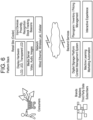
- Figure 8 (the left half of Figure 8 is Figure 8A and the right half of Figure 8 is Figure 8B ) illustrates one possible system architecture which can be implemented in connection with the present invention.
- Figure 9 illustrates a "sandwich" of layers of possible content for the display 16 disclosed herein.
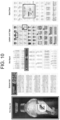
- Figure 10 illustrates different types of advertisements that can be displayed on the display 16, such as full size advertisement, a banner advertisement, a hot spot, labels and tags, and a spot deal, for example.
- Figures 6-10 are self-explanatory.
- each retail product container 14 preferably comprises inventory-taking hardware 20, such as cameras, that are disposed inside the retail product container 14 and face the products.
- the cameras may be provided on the back 33 of the door 30 which the controller/data collector 12 (shown in Figure 1 ) can use to keep track of inventory regarding the interior contents of the retail product container 14.
- the controller/data collector 12 is preferably configured to keep track of the inventory of a given retail product container 14 by using the cameras.
- an embodiment of the present invention effectively provides an automated ability to detect the inventory of products placed inside each retail product container 14 and update the planograms that are displaying the products on the display 16 (such as an LCD screen). If any item has gone "out of stock,” preferably the system is configured to detect and update the information on the display 16 to guide the consumers and store operators.
- the automatic detection system utilizes cameras, pointed to take pictures of the interior shelves of the retail product container 14 in conjunction with software that utilizes smart algorithms to conduct image analysis and subsequent analytics to extract the required information.
- FIG. 11 a more preferred embodiment is shown in Figure 11 , wherein cameras (one of the cameras is identified with reference numeral 40 in Figure 11 ) are mounted on the edge of the back 33 of the door 30, and preferably the cameras are housed on brackets 42 tilted at an angle to enable taking pictures when the door 30 is swung open.
- cameras one of the cameras is identified with reference numeral 40 in Figure 11
- brackets 42 tilted at an angle to enable taking pictures when the door 30 is swung open.
- a more preferred embodiment provides that miniature cameras with 120° Field of View (Diagonal) are mounted on 45° angled housings along the edge on the handle side of the door 30.
- the cameras are housed within an empty bezel space 43, between the display panel assembly 44 and the unit's mechanical frame 46.
- Any number of cameras can be provided on the inside of each door of each retail product container 14.
- three cameras 40 may be distributed at an equal distance along the height of each door 30 to allow for complete height and width coverage of the shelf space (i.e., inside the retail product container 14).
- the system is configured such that during door operation (i.e., when the door 30 is opened), the cameras 40 get triggered and take pictures at various intervals when the door 30 is open.
- the system is configured to process the images and effectively reconstruct the entire shelf.
- the system may be configured such that the cameras get triggered in any number of ways.
- the system could be configured such that the cameras get triggered by:
- the system is configured such that images captured by the cameras are effectively "stitched” together to reconstruct the entire shelf space.
- the system is configuredto utilize image processing compare the images and conclude whether any of the products on shelves are missing. If any of the particular products are missing, preferably the system is configured to send a signal to content management software to update the planogram appropriately (i.e., on the display 16), preferably displaying that product as being "out of stock”. Additionally, preferably the system is configured to notify a store inventory management team, such that re-stocking of that particular item on that particular shelf can take place quickly.
- the disclosed system may capture a plurality of images using a first, second, and third camera as the door rotates.
- the first photo may be taken by the first camera
- the second photo may be taken by the second camera
- a controller on or near the retail product container may combine the pertinent portion of the three photos into a single, composite image.
- the first camera may take multiple photos and combine them with one or more photos taken by the second camera and third camera.
- the controller may instruct the plurality of cameras to capture a number of images as the door rotates, thus capturing images from different positions/angles with respect to the internal contents of the retail product container.
- the controller may change the frequency of capture of photos-i.e., the controller may increase the number of images captured- if the controller receives measurements that the door is swinging at a higher rotational speed.
- the controller may change the frequency and/or other parameters of the cameras based on other situational or environmental factors. For example, in low light situations, the operating parameters of the one or more cameras may be adjusted to accommodate. In other examples, moisture or condensation on a camera lens may be detected and result in the controller modifying the operational parameters of affected cameras.
- the plurality of cameras installed on the swingable door of a retail product container may be one or more motion video cameras.
- these video cameras may capture multiple video frames from a start position to a predefined end position of the rotation of the door.
- the end position may be a set predefined position, a predefined range, or a predefined relative rotation angle from the start position (e.g., once the door has rotated through 60 degrees from a start position.)
- the plurality of images which are captured by the system using a first, second, and third camera as the door rotates, may be sent to an electronic controller at or near the retail product container.
- the controller may execute computer-executable instructions to digitally combine the plurality of images into a single panoramic, composite image.
- the composite image may be large in size, thus consume a sizable amount of computer memory/storage at the controller.
- the composite image may undergo post-processing to reduce the storage consumed by the image.
- artificial intelligence using a neural network such as a convolutional neural network, may be used to identify a boundary edge of the pertinent portions of the contents of the retail product container.
- a controller may be coupled with the one or more cameras installed in or on the door to automatically adjust parameters.
- the controller may adjust parameters of the camera, such as, but not limited to, exposure, focus position, sensor gain/ISO speed, aperture size, etc. Values for exposure may be in units of time, and other parameters may be in others units in different operating scenarios.
- parameters may be interrelated or dependent. For example, an exposure of 1/25 sec at f/11, ISO 100 is equivalent to an exposure of 1/400 sec at f/2.8, ISO 100. In other words, because the shutter speed has been reduced by four stops, this means less light is being captured by the image sensor in the camera.
- the aperture is increased in size by four stops to allow more light into the camera assembly.
- a person having ordinary skill in the art would appreciate that there are benefits and disadvantages to adjusting the parameters in one way versus another. For example, to maximize exposure, camera settings/parameters might be set to a large aperture, 6400 ISO, and a slow shutter speed. In contrast, to minimize exposure, camera settings/parameters would be set to a small aperture, 100 ISO, and a fast shutter speed. Of course, the sharpness of the captured image might be effected by depth of field, aperture, and shutter speed parameters.
- the ability to capture an image without introducing blurriness or planar warp is a consideration.
- the image sensor of the camera may be in motion at the time of image capture, thus introducing a relative motion between the subject being captured and the camera.
- the camera position shown in Figure 11 protrudes beyond the thin cover of the display screen assembly.
- the proudest point of the camera lies in the same plane as the face of the camera lenses in the display screen assembly, in some embodiments.
- the camera is intentionally positioned to protrude past the edge of the LCD/LED display unit, which is shown as the large light-colored object in the lower left of the illustration of Figure 11 .
- At least one benefit of such positioning is that the camera's view might not be obstructed.
- such positioning might lead to the location of the camera to be about 28" from the hinge axis.
- the positioning may be in a range that includes 28". Meanwhile, in other embodiments, the location may be outside of any such range, depending on the implementation.
- the camera to shelf distance may be positioned at four inches, and the retail products on the shelves may be generally centered relative to the door frame. Meanwhile, the camera may have an about 120° diagonal field of view (FOV) and oriented so that the view is wider in the direction of the camera's skinny dimension. That is, the camera is positioned near the handle side of the door with a 40° tilt towards the hinge side without having its view blocked by the display screen inside the door. While one embodiment identifies a 4" positioning, the disclosure is not so limited.
- the camera-to-shelf distance may be set to a value other than four inches, in some examples.
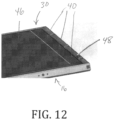
- FIG. 12 a portion of a door of a retail product container is shown.
- the three cameras oriented as shown in Figure 12 can capture the entirety of a shelf of a retail product container when the door is open at any angle larger than about 25°. In some other examples, the type of camera and/or specifications of the camera may result in the angle being greater or less than 25°.
- two cameras may be enough.
- the disclosure is not limited to the 21", 30", and 50-degree specifications indicated in the preceding example. Rather, the specifications are understood to be adjusted based on the fundamental teachings of this disclosure.
- Figure 13 provides a block diagram of a method that is in accordance with an embodiment of the present invention and is self-explanatory given the foregoing description.
- FIG. 14 one example of spacing for the cameras on a door of a retail product container is illustrated.
- the top and bottom cameras are 16.5" from the outer faces of the door frame.
- the center camera is centered on the door edge and 20" from each of the other two cameras.
- the position of one or more of the three cameras may be shifted up or down accordingly.
- the cameras may be angled so their FOV is just slightly missing the inside surface of the door. Because the hinge is close to the edge of the shelves, this positioning keeps the hinge side of the scene at the edge of the camera image for almost all door angles.
- FIG. 15 four illustrations are shown of different views of an illustrative retail product container and door from the front and top when the door is open about 44° or 25°.
- the camera field of view (FOV) is shown as a transparent pyramid (triangle in the top views).
- the face of the shelves is shown as a (red) inner plane.
Landscapes
- Business, Economics & Management (AREA)
- Accounting & Taxation (AREA)
- Finance (AREA)
- Physics & Mathematics (AREA)
- Engineering & Computer Science (AREA)
- General Physics & Mathematics (AREA)
- Strategic Management (AREA)
- Development Economics (AREA)
- General Business, Economics & Management (AREA)
- Theoretical Computer Science (AREA)
- Economics (AREA)
- Marketing (AREA)
- Entrepreneurship & Innovation (AREA)
- Game Theory and Decision Science (AREA)
- Tourism & Hospitality (AREA)
- Quality & Reliability (AREA)
- Thermal Sciences (AREA)
- Operations Research (AREA)
- Human Resources & Organizations (AREA)
- Freezers Or Refrigerated Showcases (AREA)
- Display Racks (AREA)
- Management, Administration, Business Operations System, And Electronic Commerce (AREA)
- Cold Air Circulating Systems And Constructional Details In Refrigerators (AREA)
Applications Claiming Priority (3)
| Application Number | Priority Date | Filing Date | Title |
|---|---|---|---|
| US16/222,643 US10769666B2 (en) | 2017-08-10 | 2018-12-17 | Intelligent marketing and advertising platform |
| PCT/US2019/066869 WO2020131881A1 (fr) | 2018-12-17 | 2019-12-17 | Plateforme de publicité et de commercialisation intelligente |
| EP19900402.9A EP3899853B1 (fr) | 2018-12-17 | 2019-12-17 | Plateforme de publicité et de commercialisation intelligente |
Related Parent Applications (1)
| Application Number | Title | Priority Date | Filing Date |
|---|---|---|---|
| EP19900402.9A Division EP3899853B1 (fr) | 2018-12-17 | 2019-12-17 | Plateforme de publicité et de commercialisation intelligente |
Publications (2)
| Publication Number | Publication Date |
|---|---|
| EP4477117A2 true EP4477117A2 (fr) | 2024-12-18 |
| EP4477117A3 EP4477117A3 (fr) | 2024-12-25 |
Family
ID=71100866
Family Applications (2)
| Application Number | Title | Priority Date | Filing Date |
|---|---|---|---|
| EP24209917.4A Withdrawn EP4477117A3 (fr) | 2018-12-17 | 2019-12-17 | Plateforme de publicité et de commercialisation intelligente |
| EP19900402.9A Active EP3899853B1 (fr) | 2018-12-17 | 2019-12-17 | Plateforme de publicité et de commercialisation intelligente |
Family Applications After (1)
| Application Number | Title | Priority Date | Filing Date |
|---|---|---|---|
| EP19900402.9A Active EP3899853B1 (fr) | 2018-12-17 | 2019-12-17 | Plateforme de publicité et de commercialisation intelligente |
Country Status (8)
| Country | Link |
|---|---|
| EP (2) | EP4477117A3 (fr) |
| JP (2) | JP7445592B2 (fr) |
| KR (2) | KR102586911B1 (fr) |
| CN (2) | CN113366519B (fr) |
| CA (1) | CA3123879A1 (fr) |
| MX (2) | MX2021007315A (fr) |
| TW (4) | TWI820477B (fr) |
| WO (1) | WO2020131881A1 (fr) |
Families Citing this family (11)
| Publication number | Priority date | Publication date | Assignee | Title |
|---|---|---|---|---|
| CA3177901C (fr) * | 2020-06-01 | 2024-01-02 | Ido Merkado | Systemes et methodes pour environnements de detail |
| MX2022015710A (es) | 2020-06-09 | 2023-03-28 | Anthony Inc | Puerta para montaje de pantalla de visualizacion electrónica removible. |
| JP2022093039A (ja) * | 2020-12-11 | 2022-06-23 | Kddi株式会社 | 情報処理装置、情報処理方法及び情報処理システム |
| CN114726969A (zh) * | 2021-01-04 | 2022-07-08 | 博西华电器(江苏)有限公司 | 用于制冷器具的摄像方法和制冷器具 |
| US12055339B2 (en) | 2021-12-09 | 2024-08-06 | Anthony, Inc. | Supporting an electronic display in a display case door |
| USD1019576S1 (en) | 2022-02-28 | 2024-03-26 | Anthony, Inc. | Door switch casing |
| US12523414B2 (en) | 2022-05-19 | 2026-01-13 | Anthony, Inc. | Display case door with barrier between glass panel and electronic display |
| MX2023008600A (es) | 2022-07-21 | 2024-01-22 | Anthony Inc | Dispositivo de cierre suave para puertas. |
| US12167554B2 (en) | 2022-10-17 | 2024-12-10 | Anthony, Inc. | Display case door with door frame electrical connection |
| MX2024001180A (es) | 2023-01-25 | 2024-07-26 | Hussmann Corp | Panel de puerta para exhibidor. |
| CN120071507B (zh) * | 2025-02-12 | 2025-09-09 | 广东三胜电器股份有限公司 | 制冷设备的控制方法和系统 |
Family Cites Families (33)
| Publication number | Priority date | Publication date | Assignee | Title |
|---|---|---|---|---|
| JP2001294308A (ja) * | 2000-04-10 | 2001-10-23 | Matsushita Electric Ind Co Ltd | 物品収納庫 |
| US20030154141A1 (en) * | 2001-09-18 | 2003-08-14 | Pro Corp Holdings International Ltd. | Image recognition inventory management system |
| US7909241B2 (en) * | 2004-03-09 | 2011-03-22 | Lowe's Companies, Inc. | Systems, methods and computer program products for implementing processes relating to retail sales |
| US20060174641A1 (en) * | 2004-12-13 | 2006-08-10 | Liu Chi W | Refrigerator with a display module |
| JP2006209550A (ja) | 2005-01-28 | 2006-08-10 | Brother Ind Ltd | 情報提供装置、情報提供システム及び自動販売機 |
| TWI442344B (zh) * | 2007-03-15 | 2014-06-21 | Kuo Ching Chiang | 無線分享影像之方法與系統 |
| US8140185B2 (en) * | 2008-06-09 | 2012-03-20 | The Coca-Cola Company | Virtual vendor shelf inventory management |
| KR101493748B1 (ko) | 2008-06-16 | 2015-03-02 | 삼성전자주식회사 | 물품 제공장치, 디스플레이 장치 및 이를 이용한 gui제공방법 |
| US20120004769A1 (en) * | 2008-10-22 | 2012-01-05 | Newzoom, Inc. | Automated retail shelf units and systems |
| US20100268792A1 (en) | 2009-04-13 | 2010-10-21 | Crane Merchandising Systems, Inc. | Vending machine with interactive display |
| US9092768B2 (en) * | 2010-01-11 | 2015-07-28 | R4 Technologies, Llc | Machine retrofits and interactive soda fountains |
| KR101843337B1 (ko) * | 2010-10-28 | 2018-03-30 | 삼성전자주식회사 | 디스플레이 모듈 및 디스플레이 시스템 |
| JP2012161413A (ja) | 2011-02-04 | 2012-08-30 | Sanyo Electric Co Ltd | ショーケース |
| KR20120097683A (ko) | 2011-02-25 | 2012-09-05 | 삼성전자주식회사 | 냉장고 |
| MX345442B (es) * | 2011-03-01 | 2017-01-31 | Procter & Gamble | Visualizar informacion de un entorno fisico de tienda minorista en una ilustracion virtual del entorno fisico de tienda minorista. |
| US8683745B2 (en) * | 2011-05-10 | 2014-04-01 | Anthony, Inc. | Refrigerated display case door with transparent LCD panel |
| US20120330757A1 (en) * | 2011-06-24 | 2012-12-27 | Smith Brothers Agency, LP | Digital advertising trade amplifier |
| WO2013134304A1 (fr) * | 2012-03-06 | 2013-09-12 | Planar Systems, Inc. | Appareil d'affichage d'image électronique transparent pour présentoirs réfrigérés et analogues |
| US9430752B2 (en) * | 2012-11-02 | 2016-08-30 | Patrick Soon-Shiong | Virtual planogram management, systems, and methods |
| US10157316B2 (en) | 2012-11-05 | 2018-12-18 | Whirlpool Corporation | Interactive touch screen device for wine |
| EP2973446A2 (fr) * | 2013-03-12 | 2016-01-20 | Intercontinental Great Brands LLC | Appareil et procédé de distribution à base d'affichage |
| US9349238B2 (en) * | 2013-03-13 | 2016-05-24 | Pantry Retail, Inc. | Vending kit and method |
| JP6240890B2 (ja) * | 2013-04-12 | 2017-12-06 | パナソニックIpマネジメント株式会社 | 冷蔵庫 |
| US10368662B2 (en) * | 2013-05-05 | 2019-08-06 | Trax Technology Solutions Pte Ltd. | System and method of monitoring retail units |
| US9280757B2 (en) * | 2013-05-14 | 2016-03-08 | DecisionGPS, LLC | Automated inventory management |
| EP2843336A1 (fr) * | 2013-09-03 | 2015-03-04 | Panasonic Corporation | Système de réfrigérateur et réfrigérateur pour verifier l'état des aliments |
| KR20150093289A (ko) * | 2014-02-06 | 2015-08-18 | 지민수 | 고객 응대 및 가격 조정 기능을 구비한 무인 점포 시스템 |
| JP6305122B2 (ja) * | 2014-03-10 | 2018-04-04 | 三菱電機株式会社 | 冷蔵庫及び冷蔵庫を備えたネットワークシステム |
| US20150269593A1 (en) * | 2014-03-19 | 2015-09-24 | Thao Le | Product Authentication System |
| KR101722554B1 (ko) * | 2015-09-16 | 2017-04-21 | 주식회사 아스티엄 | 스마트 벤딩머신 장치 및 이를 포함하는 스마트 벤딩머신 관리 시스템 |
| WO2017079348A1 (fr) * | 2015-11-02 | 2017-05-11 | Olson Kenneth Stanley | Systèmes et procédés de présentation à des fins de marketing |
| US20170148005A1 (en) * | 2015-11-20 | 2017-05-25 | The Answer Group, Inc. | Integrated Automatic Retail System and Method |
| JP2018151923A (ja) | 2017-03-14 | 2018-09-27 | 株式会社野村総合研究所 | 商品販売支援システム |
-
2019
- 2019-12-17 TW TW110132225A patent/TWI820477B/zh active
- 2019-12-17 CN CN201980090632.2A patent/CN113366519B/zh active Active
- 2019-12-17 JP JP2020520519A patent/JP7445592B2/ja active Active
- 2019-12-17 KR KR1020217022635A patent/KR102586911B1/ko active Active
- 2019-12-17 WO PCT/US2019/066869 patent/WO2020131881A1/fr not_active Ceased
- 2019-12-17 TW TW112137447A patent/TWI860863B/zh active
- 2019-12-17 EP EP24209917.4A patent/EP4477117A3/fr not_active Withdrawn
- 2019-12-17 TW TW108146270A patent/TWI741451B/zh active
- 2019-12-17 TW TW113136386A patent/TW202509835A/zh unknown
- 2019-12-17 MX MX2021007315A patent/MX2021007315A/es unknown
- 2019-12-17 CA CA3123879A patent/CA3123879A1/fr active Pending
- 2019-12-17 EP EP19900402.9A patent/EP3899853B1/fr active Active
- 2019-12-17 CN CN202411583206.1A patent/CN119515484A/zh active Pending
- 2019-12-17 KR KR1020237033890A patent/KR20230142843A/ko active Pending
-
2021
- 2021-06-17 MX MX2025000240A patent/MX2025000240A/es unknown
-
2024
- 2024-02-26 JP JP2024026563A patent/JP2024055919A/ja active Pending
Also Published As
| Publication number | Publication date |
|---|---|
| CN113366519B (zh) | 2024-11-19 |
| JP2022510521A (ja) | 2022-01-27 |
| JP7445592B2 (ja) | 2024-03-07 |
| TW202038136A (zh) | 2020-10-16 |
| TW202429358A (zh) | 2024-07-16 |
| KR20210111784A (ko) | 2021-09-13 |
| EP4477117A3 (fr) | 2024-12-25 |
| CN113366519A (zh) | 2021-09-07 |
| MX2025000240A (es) | 2025-02-10 |
| EP3899853A1 (fr) | 2021-10-27 |
| TWI860863B (zh) | 2024-11-01 |
| KR20230142843A (ko) | 2023-10-11 |
| TW202223806A (zh) | 2022-06-16 |
| TWI741451B (zh) | 2021-10-01 |
| TWI820477B (zh) | 2023-11-01 |
| EP3899853A4 (fr) | 2022-08-17 |
| JP2024055919A (ja) | 2024-04-19 |
| CA3123879A1 (fr) | 2020-06-25 |
| KR102586911B1 (ko) | 2023-10-11 |
| CN119515484A (zh) | 2025-02-25 |
| TW202509835A (zh) | 2025-03-01 |
| WO2020131881A1 (fr) | 2020-06-25 |
| MX2021007315A (es) | 2021-11-17 |
| EP3899853B1 (fr) | 2024-11-13 |
Similar Documents
| Publication | Publication Date | Title |
|---|---|---|
| EP3899853B1 (fr) | Plateforme de publicité et de commercialisation intelligente | |
| US10769666B2 (en) | Intelligent marketing and advertising platform | |
| US11763252B2 (en) | Intelligent marketing and advertising platform | |
| KR102427141B1 (ko) | 지능형 마케팅 및 광고 플랫폼 | |
| US11768030B2 (en) | Smart movable closure system for cooling cabinet | |
| US20240240853A1 (en) | Smart Movable Closure System for Cooling Cabinet | |
| US11725866B2 (en) | Intelligent marketing and advertising platform | |
| US20230041374A1 (en) | Interactive signage and data gathering techniques | |
| US20250037075A1 (en) | Intelligent Marketing and Advertising Platform |
Legal Events
| Date | Code | Title | Description |
|---|---|---|---|
| PUAI | Public reference made under article 153(3) epc to a published international application that has entered the european phase |
Free format text: ORIGINAL CODE: 0009012 |
|
| STAA | Information on the status of an ep patent application or granted ep patent |
Free format text: STATUS: THE APPLICATION HAS BEEN PUBLISHED |
|
| REG | Reference to a national code |
Ref country code: DE Ref legal event code: R079 Free format text: PREVIOUS MAIN CLASS: A47F0003040000 Ipc: G07F0009000000 |
|
| PUAL | Search report despatched |
Free format text: ORIGINAL CODE: 0009013 |
|
| AC | Divisional application: reference to earlier application |
Ref document number: 3899853 Country of ref document: EP Kind code of ref document: P |
|
| AK | Designated contracting states |
Kind code of ref document: A2 Designated state(s): AL AT BE BG CH CY CZ DE DK EE ES FI FR GB GR HR HU IE IS IT LI LT LU LV MC MK MT NL NO PL PT RO RS SE SI SK SM TR |
|
| AK | Designated contracting states |
Kind code of ref document: A3 Designated state(s): AL AT BE BG CH CY CZ DE DK EE ES FI FR GB GR HR HU IE IS IT LI LT LU LV MC MK MT NL NO PL PT RO RS SE SI SK SM TR |
|
| RIC1 | Information provided on ipc code assigned before grant |
Ipc: A47F 3/00 20060101ALI20241119BHEP Ipc: A47F 3/04 20060101ALI20241119BHEP Ipc: G06Q 30/0251 20230101ALI20241119BHEP Ipc: G06Q 30/0207 20230101ALI20241119BHEP Ipc: G06Q 20/20 20120101ALI20241119BHEP Ipc: G06Q 10/087 20230101ALI20241119BHEP Ipc: G07F 11/62 20060101ALI20241119BHEP Ipc: G07F 11/02 20060101ALI20241119BHEP Ipc: G06Q 30/06 20230101ALI20241119BHEP Ipc: G06Q 10/08 20240101ALI20241119BHEP Ipc: G06Q 10/00 20230101ALI20241119BHEP Ipc: G06Q 30/02 20230101ALI20241119BHEP Ipc: G06F 3/147 20060101ALI20241119BHEP Ipc: G06F 3/00 20060101ALI20241119BHEP Ipc: G07F 9/02 20060101ALI20241119BHEP Ipc: G07F 9/00 20060101AFI20241119BHEP |
|
| STAA | Information on the status of an ep patent application or granted ep patent |
Free format text: STATUS: THE APPLICATION IS DEEMED TO BE WITHDRAWN |
|
| 18D | Application deemed to be withdrawn |
Effective date: 20250626 |