EP4477652A1 - Polymorph als schilddrüsenhormonrezeptoragonisten und verwendung davon - Google Patents
Polymorph als schilddrüsenhormonrezeptoragonisten und verwendung davon Download PDFInfo
- Publication number
- EP4477652A1 EP4477652A1 EP23749331.7A EP23749331A EP4477652A1 EP 4477652 A1 EP4477652 A1 EP 4477652A1 EP 23749331 A EP23749331 A EP 23749331A EP 4477652 A1 EP4477652 A1 EP 4477652A1
- Authority
- EP
- European Patent Office
- Prior art keywords
- compound
- formula
- ray powder
- diffraction pattern
- powder diffraction
- Prior art date
- Legal status (The legal status is an assumption and is not a legal conclusion. Google has not performed a legal analysis and makes no representation as to the accuracy of the status listed.)
- Pending
Links
Images












Classifications
-
- C—CHEMISTRY; METALLURGY
- C07—ORGANIC CHEMISTRY
- C07D—HETEROCYCLIC COMPOUNDS
- C07D403/00—Heterocyclic compounds containing two or more hetero rings, having nitrogen atoms as the only ring hetero atoms, not provided for by group C07D401/00
- C07D403/02—Heterocyclic compounds containing two or more hetero rings, having nitrogen atoms as the only ring hetero atoms, not provided for by group C07D401/00 containing two hetero rings
- C07D403/12—Heterocyclic compounds containing two or more hetero rings, having nitrogen atoms as the only ring hetero atoms, not provided for by group C07D401/00 containing two hetero rings linked by a chain containing hetero atoms as chain links
-
- A—HUMAN NECESSITIES
- A61—MEDICAL OR VETERINARY SCIENCE; HYGIENE
- A61K—PREPARATIONS FOR MEDICAL, DENTAL OR TOILETRY PURPOSES
- A61K31/00—Medicinal preparations containing organic active ingredients
- A61K31/33—Heterocyclic compounds
- A61K31/395—Heterocyclic compounds having nitrogen as a ring hetero atom, e.g. guanethidine or rifamycins
- A61K31/53—Heterocyclic compounds having nitrogen as a ring hetero atom, e.g. guanethidine or rifamycins having six-membered rings with three nitrogens as the only ring hetero atoms, e.g. chlorazanil, melamine
-
- A—HUMAN NECESSITIES
- A61—MEDICAL OR VETERINARY SCIENCE; HYGIENE
- A61P—SPECIFIC THERAPEUTIC ACTIVITY OF CHEMICAL COMPOUNDS OR MEDICINAL PREPARATIONS
- A61P3/00—Drugs for disorders of the metabolism
- A61P3/06—Antihyperlipidemics
-
- C—CHEMISTRY; METALLURGY
- C07—ORGANIC CHEMISTRY
- C07B—GENERAL METHODS OF ORGANIC CHEMISTRY; APPARATUS THEREFOR
- C07B59/00—Introduction of isotopes of elements into organic compounds ; Labelled organic compounds per se
- C07B59/002—Heterocyclic compounds
-
- C—CHEMISTRY; METALLURGY
- C07—ORGANIC CHEMISTRY
- C07B—GENERAL METHODS OF ORGANIC CHEMISTRY; APPARATUS THEREFOR
- C07B2200/00—Indexing scheme relating to specific properties of organic compounds
- C07B2200/13—Crystalline forms, e.g. polymorphs
Definitions
- the present invention belongs to the pharmaceutical field and in particular to a polymorph of a thyroid hormone receptor agonist, a preparation method therefor and use thereof.
- FH Classical familial hypercholestemlemia
- LDL-C serum low density lipoprotein-cholesterol
- HoFH homozygous familial hypercholesterolemia
- statin medications are the drugs of first choice for treatment, not only to reduce LDL-C levels, but also to improve the prognosis of the patients with FH.
- Patients who do not respond well to statin therapy or have adverse reactions can be treated in combination with the cholesterol absorption inhibitor of ezetimibe.
- PCSK9 inhibitor may be additionally administered to patients who do not reach the standard cholesterol level after the treatments described above. Although there are corresponding treatments with respect to HeFH, many patients (up to 40% of HeFH patients) are unable to reach the standard level of cholesterol (LDL-C) after these treatments, and the accumulation of cholesterol in their bodies becomes a lifelong burden.
- Thyroid hormone receptors are divided into two subtypes, ⁇ and ⁇ subtypes. Binding of thyroid hormone to the ⁇ subtype receptor can promote the cholesterol metabolism. As a result, several thyroid hormone analogs or thyromimetics that selectively agonise the ⁇ subtype receptor have been developed in recent years.
- the oral agonist of MGL-3196 developed by the Madrigal company, has been shown to significantly reduce the LDL-C levels in patients, and ameliorate the metabolic syndromes (such as insulin resistance and dyslipidemia) and fatty liver diseases (including lipid toxicity and inflammation).
- the present invention provides a polymorph of a compound of formula I, which has excellent properties, such as a high purity, good solubility, stable physical and chemical properties, high temperature resistance, high-humidity and strong-light stability, and low hygroscopicity.
- n is 0 to 2. In some embodiments, n is 0 to 1.
- X is H 2 O.
- n 2
- X is H 2 O
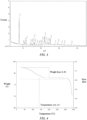
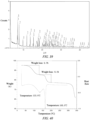
- the polymorph is of Form A having an X-ray powder diffraction pattern with characteristic diffraction peaks at the following 2 ⁇ positions using Cu-K ⁇ radiation: 5.68° ⁇ 0.2°, 11.44° ⁇ 0.2°, 17.19° ⁇ 0.2°, 24.94° ⁇ 0.2°, 26.40° ⁇ 0.2°, 29.47° ⁇ 0.2°.
- Form A the X-ray powder diffraction pattern of which also has characteristic diffraction peaks at the following 2 ⁇ positions: 12.68° ⁇ 0.2°, 19.44° ⁇ 0.2°, 19.79° ⁇ 0.2°, 23.27° ⁇ 0.2°.
- Form A the X-ray powder diffraction pattern of which has characteristic diffraction peaks at the following 2 ⁇ positions: Number Pos. [°2 ⁇ ] 1 5.68 2 11.44 3 12.68 4 14.56 5 16.02 6 17.19 7 19.44 8 19.79 9 22.79 10 23.27 11 24.94 12 25.55 13 25.82 14 26.40 15 29.47 16 35.89 17 36.10 18 41.41
- Form A the X-ray powder diffraction pattern of which is substantially as shown in Figure 1 .
- Form A has a DSC and/or TGA diagram of Figure 2 .
- n 0.4
- X 4-methyl-2-pentanone
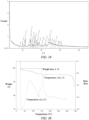
- the polymorph is of Form B having an X-ray powder diffraction pattern with characteristic diffraction peaks at the following 2 ⁇ positions using Cu-K ⁇ radiation: 8.03° ⁇ 0.2°, 11.05° ⁇ 0.2°, 11.82 ⁇ 0.2°, 16.14 ⁇ 0.2°, 16.55° ⁇ 0.2°, 22.01° ⁇ 0.2°, 22.34° ⁇ 0.2°, 23.43 ⁇ 0.2°, 24.34 ⁇ 0.2°, 25.18° ⁇ 0.2°, 29.30° ⁇ 0.2°.
- Form B the X-ray powder diffraction pattern of which has characteristic diffraction peaks at the following 2 ⁇ positions: Number Pos.[°2 ⁇ ] 1 8.03 2 11.05 3 11.82 4 14.12 5 14.97 6 16.14 7 16.55 8 22.01 9 22.34 10 23.43 11 24.34 12 25.18 13 29.30
- Form B X-ray powder diffraction pattern of which is substantially as shown in Figure 3 .
- Form B has a DSC and/or TGA diagram of Figure 4 .
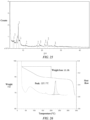
- n is 0 and the polymorph is of Form C having an X-ray powder diffraction pattern with characteristic diffraction peaks at the following 2 ⁇ positions using Cu-K ⁇ radiation: 11.03° ⁇ 0.2°, 15.79° ⁇ 0.2°, 16.97° ⁇ 0.2°, 23.27° ⁇ 0.2°, 23.76° ⁇ 0.2°, 27.61° ⁇ 0.2°.
- Form C the X-ray powder diffraction pattern of which also has characteristic diffraction peaks at the following 2 ⁇ positions: 14.12° ⁇ 0.2°, 19.73° ⁇ 0.2°, 22.51° ⁇ 0.2°, 25.37° ⁇ 0.2°, 28.21° ⁇ 0.2°, 33.73° ⁇ 0.2°.
- Form C the X-ray powder diffraction pattern of which has characteristic diffraction peaks at the following 2 ⁇ positions: Number Pos.[°2 ⁇ ] 1 11.03 2 11.71 3 14.12 4 15.79 5 16.97 6 19.73 7 22.51 8 22.79 9 23.27 10 23.76 11 24.55 12 25.37 13 27.61 14 28.21 15 28.52 16 28.93 17 33.73
- Form C the X-ray powder diffraction pattern of which is substantially as shown in Figure 5 .
- Form C has a DSC and/or TGA diagram of Figure 6 .
- n 0.4
- X is toluene
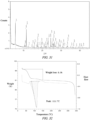
- the polymorph is of Form D having an X-ray powder diffraction pattern with characteristic diffraction peaks at the following 2 ⁇ positions using Cu-K ⁇ radiation: 5.93 ⁇ 0.2°, 11.90° ⁇ 0.2°, 13.38° ⁇ 0.2°, 15.50° ⁇ 0.2°, 16.84° ⁇ 0.2°, 17.91° ⁇ 0.2°, 18.51° ⁇ 0.2°, 20.24° ⁇ 0.2°, 20.86° ⁇ 0.2°, 23.95° ⁇ 0.2°, 26.25° ⁇ 0.2°, 29.94° ⁇ 0.2°, 32.48° ⁇ 0.2°, 36.29° ⁇ 0.2°.
- Form D the X-ray powder diffraction pattern of which is substantially as shown in Figure 7 .
- Form D has a DSC and/or TGA diagram of Figure 8 .
- n 0.8
- X is DMF
- the polymorph is of Form E having an X-ray powder diffraction pattern with characteristic diffraction peaks at the following 2 ⁇ positions using Cu-K ⁇ radiation: 4.75° ⁇ 0.2°, 5.76° ⁇ 0.2°, 8.23° ⁇ 0.2°, 9.47° ⁇ 0.2°, 10.83° ⁇ 0.2°, 14.21° ⁇ 0.2°, 16.43° ⁇ 0.2°, 18.43° ⁇ 0.2°, 18.70° ⁇ 0.2°, 19.02° ⁇ 0.2°, 22.84° ⁇ 0.2°, 26.42° ⁇ 0.2°.
- Form E the X-ray powder diffraction pattern of which is substantially as shown in Figure 9 .
- Form E has a DSC and/or TGA diagram of Figure 10 .
- n is 1
- X is acetone
- the polymorph is of Form F having an X-ray powder diffraction pattern with characteristic diffraction peaks at the following 2 ⁇ positions using Cu-K ⁇ radiation: 6.67° ⁇ 0.2°, 7.65° ⁇ 0.2°, 8.34° ⁇ 0.2°, 10.17° ⁇ 0.2°, 12.37 ⁇ 0.2°, 13.42° ⁇ 0.2°, 15.48° ⁇ 0.2°, 18.49 ⁇ 0.2°, 19.05° ⁇ 0.2°, 20.47° ⁇ 0.2°, 21.64° ⁇ 0.2°, 22.86° ⁇ 0.2°, 23.17° ⁇ 0.2°, 23.41° ⁇ 0.2°, 24.88° ⁇ 0.2°, 28.15° ⁇ 0.2°, 28.75° ⁇ 0.2°, 32.85° ⁇ 0.2°.
- Form F the X-ray powder diffraction pattern of which is substantially as shown in Figure 11 .
- Form F has a DSC and/or TGA diagram of Figure 12 .
- n is 1, X is ethyl acetate, and the polymorph is of Form G having an X-ray powder diffraction pattern with characteristic diffraction peaks at the following 2 ⁇ positions using Cu-K ⁇ radiation: 8.69° ⁇ 0.2°, 9.14° ⁇ 0.2°, 11.03° ⁇ 0.2°, 11.88° ⁇ 0.2°, 12.62° ⁇ 0.2°, 13.53° ⁇ 0.2°, 16.14° ⁇ 0.2°, 16.66° ⁇ 0.2°, 16.94° ⁇ 0.2°, 17.40° ⁇ 0.2°, 18.70° ⁇ 0.2°, 18.82° ⁇ 0.2°, 19.19° ⁇ 0.2°, 20.73° ⁇ 0.2°, 22.82° ⁇ 0.2°, 23.76° ⁇ 0.2°, 24.15° ⁇ 0.2°, 24.36° ⁇ 0.2°, 24.79° ⁇ 0.2°, 25.60° ⁇ 0.2°, 26.28° ⁇
- Form G X-ray powder diffraction pattern of which is substantially as shown in Figure 13 .
- Form G has a DSC and/or TGA diagram of Figure 14 .
- n is 1
- X is DMSO
- the polymorph is of Form H having an X-ray powder diffraction pattern with characteristic diffraction peaks at the following 2 ⁇ positions using Cu-K ⁇ radiation: 5.53° ⁇ 0.2°, 8.54° ⁇ 0.2°, 11.05° ⁇ 0.2°, 16.59° ⁇ 0.2°, 18.16° ⁇ 0.2°, 21.04° ⁇ 0.2°, 21.91° ⁇ 0.2°, 22.16° ⁇ 0.2°, 22.75° ⁇ 0.2°, 23.45° ⁇ 0.2°, 25.70° ⁇ 0.2°, 26.65° ⁇ 0.2°, 27.57° ⁇ 0.2°.
- Form H the X-ray powder diffraction pattern of which is substantially as shown in Figure 15 .
- Form H has a DSC and/or TGA diagram of Figure 16 .
- n 0.9
- X is isopropyl acetate
- the polymorph is of Form I having an X-ray powder diffraction pattern with characteristic diffraction peaks at the following 2 ⁇ positions using Cu-K ⁇ radiation: 8.36° ⁇ 0.2°, 10.17° ⁇ 0.2°, 11.36° ⁇ 0.2°, 12.72° ⁇ 0.2°, 13.20° ⁇ 0.2°, 16.55° ⁇ 0.2°, 16.78° ⁇ 0.2°, 17.13° ⁇ 0.2°, 18.92° ⁇ 0.2°, 19.85° ⁇ 0.2°, 23.50° ⁇ 0.2°, 23.97° ⁇ 0.2°, 24.50° ⁇ 0.2°, 25.60° ⁇ 0.2°, 26.79° ⁇ 0.2°, 30.00° ⁇ 0.2°.
- Form I the X-ray powder diffraction pattern of which is substantially as shown in Figure 17 .
- Form I has a DSC and/or TGA diagram of Figure 18 .
- X is acetonitrile and the polymorph is of Form J having an X-ray powder diffraction pattern with characteristic diffraction peaks at the following 2 ⁇ positions using Cu-K ⁇ radiation: 10.07° ⁇ 0.2°, 11.07° ⁇ 0.2°, 11.53° ⁇ 0.2°, 13.34° ⁇ 0.2°, 14.08° ⁇ 0.2°, 14.23° ⁇ 0.2°, 14.51° ⁇ 0.2°, 14.99° ⁇ 0.2°, 15.17° ⁇ 0.2°, 15.56° ⁇ 0.2°, 15.83° ⁇ 0.2°, 16.02° ⁇ 0.2°, 16.70° ⁇ 0.2°, 16.99° ⁇ 0.2°, 17.75° ⁇ 0.2°, 17.97° ⁇ 0.2°, 18.35° ⁇ 0.2°, 19.00° ⁇ 0.2°, 20.10° ⁇ 0.2°, 21.97° ⁇ 0.2°, 22.47° ⁇ 0.2°, 23.27° ⁇ 0.2°, 19.00
- Form J the X-ray powder diffraction pattern of which is substantially as shown in Figure 19 .
- Form J has a DSC and/or TGA diagram of Figure 20 .
- n 0.9
- X is dioxane
- the polymorph is of Form K having an X-ray powder diffraction pattern with characteristic diffraction peaks at the following 2 ⁇ positions using Cu-K ⁇ radiation: 7.63° ⁇ 0.2°, 8.34° ⁇ 0.2°, 22.26° ⁇ 0.2°, 23.04° ⁇ 0.2°, 23.27° ⁇ 0.2°.
- Form K the X-ray powder diffraction pattern of which is substantially as shown in Figure 21 .
- Form K has a DSC and/or TGA diagram of Figure 22 .
- n 2
- X is H 2 O
- the polymorph is of Form L having an X-ray powder diffraction pattern with characteristic diffraction peaks at the following 2 ⁇ positions using Cu-K ⁇ radiation: 5.72° ⁇ 0.2°, 11.49° ⁇ 0.2°, 12.56° ⁇ 0.2°, 14.33° ⁇ 0.2°, 17.32° ⁇ 0.2°, 25.33° ⁇ 0.2°, 26.25° ⁇ 0.2°.
- Form L the X-ray powder diffraction pattern of which has characteristic diffraction peaks at the following 2 ⁇ positions: Number Pos.[°2 ⁇ ] 1 5.72 2 9.98 3 11.49 4 12.56 5 14.33 6 16.24 7 17.32 8 20.78 9 25.33 10 26.25 11 27.12 12 27.51 13 28.97 14 42.01
- Form L the X-ray powder diffraction pattern of which is substantially as shown in Figure 23 .
- Form L has a DSC and/or TGA diagram of Figure 24 .
- the polymorph is of Form M having an X-ray powder diffraction pattern with characteristic diffraction peaks at the following 2 ⁇ positions using Cu-K ⁇ radiation: 4.73° ⁇ 0.2°, 5.24° ⁇ 0.2°, 6.56° ⁇ 0.2°, 7.53° ⁇ 0.2°, 8.31° ⁇ 0.2°, 18.84° ⁇ 0.2°, 21.48° ⁇ 0.2°, 22.88° ⁇ 0.2°.
- Form M the X-ray powder diffraction pattern of which is substantially as shown in Figure 25 .
- Form M has a DSC and/or TGA diagram of Figure 26 .
- n 0.6
- X is acetonitrile
- the polymorph is of Form N having an X-ray powder diffraction pattern with characteristic diffraction peaks at the following 2 ⁇ positions using Cu-K ⁇ radiation: 8.42° ⁇ 0.2°, 9.08° ⁇ 0.2°, 10.85° ⁇ 0.2°, 16.86° ⁇ 0.2°, 17.23° ⁇ 0.2°.
- Form N the X-ray powder diffraction pattern of which has characteristic diffraction peaks at the following 2 ⁇ positions: Number Pos.[°2 ⁇ ] 1 7.65 2 8.42 3 9.08 4 10.85 5 16.86 6 17.23
- Form N the X-ray powder diffraction pattern of which is substantially as shown in Figure 27 .
- Form N has a DSC and/or TGA diagram of Figure 28 .
- n 0.8
- X is DMF
- the polymorph is of Form O having an X-ray powder diffraction pattern with characteristic diffraction peaks at the following 2 ⁇ positions using Cu-K ⁇ radiation: 5.49° ⁇ 0.2°, 8.64° ⁇ 0.2°, 10.89° ⁇ 0.2°, 11.45° ⁇ 0.2°, 16.37° ⁇ 0.2°, 18.55° ⁇ 0.2°, 21.44° ⁇ 0.2°, 22.14° ⁇ 0.2°, 22.73° ⁇ 0.2°, 22.98° ⁇ 0.2°, 23.25° ⁇ 0.2°, 26.17° ⁇ 0.2°.
- Form O the X-ray powder diffraction pattern of which is substantially as shown in Figure 29 .
- Form O has a DSC and/or TGA diagram of Figure 30 .
- n 2
- X is H 2 O
- the polymorph is of Form P having an X-ray powder diffraction pattern with characteristic diffraction peaks at the following 2 ⁇ positions using Cu-K ⁇ radiation: 5.76° ⁇ 0.2°, 11.55° ⁇ 0.2°, 17.38° ⁇ 0.2°, 23.12° ⁇ 0.2°, 24.50° ⁇ 0.2°, 26.58° ⁇ 0.2°.
- Form P the X-ray powder diffraction pattern of which also has characteristic diffraction peaks at the following 2 ⁇ positions: 14.60° ⁇ 0.2°, 17.13° ⁇ 0.2°, 25.90° ⁇ 0.2°, 29.48° ⁇ 0.2°.
- Form P the X-ray powder diffraction pattern of which has characteristic diffraction peaks at the following 2 ⁇ positions: Number Pos.[°2 ⁇ ] 1 5.76 2 10.58 3 10.99 4 11.55 5 14.60 6 17.13 7 17.38 8 17.79 9 19.58 10 21.25 11 21.85 12 22.11 13 23.12 14 24.50 15 25.72 16 25.91 17 26.58 18 27.20 19 29.51 20 33.20 21 33.46
- Form P the X-ray powder diffraction pattern of which is substantially as shown in Figure 31 .
- Form P has a DSC and/or TGA diagram of Figure 32 .
- X is water and tetrahydrofuran
- the polymorph is of Form Q having an X-ray powder diffraction pattern with characteristic diffraction peaks at the following 2 ⁇ positions using Cu-K ⁇ radiation: 7.55° ⁇ 0.2°, 8.25° ⁇ 0.2°, 10.09° ⁇ 0.2°, 12.29° ⁇ 0.2°, 15.42° ⁇ 0.2°, 18.47° ⁇ 0.2°, 18.96° ⁇ 0.2°, 22.16° ⁇ 0.2°, 22.90° ⁇ 0.2°, 23.17° ⁇ 0.2°, 23.54° ⁇ 0.2°, 24.07° ⁇ 0.2°, 24.79° ⁇ 0.2°, 25.97° ⁇ 0.2°.
- Form Q the X-ray powder diffraction pattern of which is substantially as shown in Figure 33 .
- Form Q has a DSC and/or TGA diagram of Figure 34 .
- n 0.9
- X is dioxane
- the polymorph is of Form R having an X-ray powder diffraction pattern with characteristic diffraction peaks at the following 2 ⁇ positions using Cu-K ⁇ radiation: 7.53° ⁇ 0.2°, 8.25° ⁇ 0.2°, 10.07° ⁇ 0.2°, 13.32° ⁇ 0.2°, 15.32° ⁇ 0.2°, 18.33° ⁇ 0.2°, 22.14° ⁇ 0.2°, 22.82° ⁇ 0.2°, 23.14° ⁇ 0.2°.
- Form R the X-ray powder diffraction pattern of which is substantially as shown in Figure 35 .
- Form R has a DSC and/or TGA diagram of Figure 36 .
- n is 1
- X is DMSO
- the polymorph is of Form S having an X-ray powder diffraction pattern with characteristic diffraction peaks at the following 2 ⁇ positions using Cu-K ⁇ radiation: 7.74° ⁇ 0.2°, 8.46° ⁇ 0.2°, 10.29° ⁇ 0.2°, 12.37° ⁇ 0.2°, 13.55° ⁇ 0.2°, 15.61° ⁇ 0.2°, 18.65° ⁇ 0.2°, 19.09° ⁇ 0.2°, 23.23° ⁇ 0.2°, 23.49° ⁇ 0.2°, 24.79° ⁇ 0.2°.
- Form S the X-ray powder diffraction pattern of which is substantially as shown in Figure 37 .
- Form S has a DSC and/or TGA diagram of Figure 38 .
- n is 1
- X is 4-methyl-2-pentanone
- the polymorph is of Form T having an X-ray powder diffraction pattern with characteristic diffraction peaks at the following 2 ⁇ positions using Cu-K ⁇ radiation: 6.81° ⁇ 0.2°, 6.98° ⁇ 0.2°, 7.78° ⁇ 0.2°, 9.76° ⁇ 0.2°, 11.82° ⁇ 0.2°, 13.65° ⁇ 0.2°, 15.36° ⁇ 0.2°, 17.42° ⁇ 0.2°, 18.26° ⁇ 0.2°, 18.51° ⁇ 0.2°, 21.78° ⁇ 0.2°, 22.22° ⁇ 0.2°, 23.82° ⁇ 0.2°, 25.04° ⁇ 0.2°, 28.52° ⁇ 0.2°.
- Form T the X-ray powder diffraction pattern of which is substantially as shown in Figure 39 .
- Form T has a DSC and/or TGA diagram of Figure 40 .
- n is 1
- X is acetonitrile
- the polymorph is of Form U having an X-ray powder diffraction pattern with characteristic diffraction peaks at the following 2 ⁇ positions using Cu-K ⁇ radiation: 7.72° ⁇ 0.2°, 8.42° ⁇ 0.2°, 18.63° ⁇ 0.2°, 23.25° ⁇ 0.2°, 23.49° ⁇ 0.2°.
- Form U the X-ray powder diffraction pattern of which is substantially as shown in Figure 41 .
- Form U has a DSC and/or TGA diagram of Figure 42 .
- n is 0 and the polymorph is of Form V having an X-ray powder diffraction pattern with characteristic diffraction peaks at the following 2 ⁇ positions using Cu-K ⁇ radiation: 7.41° ⁇ 0.2°, 11.05° ⁇ 0.2°, 15.81° ⁇ 0.2°, 16.97° ⁇ 0.2°, 22.53° ⁇ 0.2°, 23.29° ⁇ 0.2°, 27.63° ⁇ 0.2°.
- Form V the X-ray powder diffraction pattern of which also has characteristic diffraction peaks at the following 2 ⁇ positions: 14.16° ⁇ 0.2°, 15.59° ⁇ 0.2°, 19.73° ⁇ 0.2°, 21.33° ⁇ 0.2°, 23.78° ⁇ 0.2°, 25.39° ⁇ 0.2°, 33.75° ⁇ 0.2°.
- Form V the X-ray powder diffraction pattern of which has characteristic diffraction peaks at the following 2 ⁇ positions: Number Pos.[°2 ⁇ ] 1 5.27 2 6.60 3 7.41 4 11.05 5 14.16 6 15.59 7 15.81 8 16.97 9 19.73 10 21.33 11 22.53 12 22.82 13 23.29 14 23.78 15 25.39 16 27.63 17 28.23 18 33.75
- Form V the X-ray powder diffraction pattern of which is substantially as shown in Figure 43 .
- Form V has a DSC and/or TGA diagram of Figure 44 .
- n 0.7
- X is ethylene glycol monomethyl ether
- the polymorph is of Form W having an X-ray powder diffraction pattern with characteristic diffraction peaks at the following 2 ⁇ positions using Cu-K ⁇ radiation: 6.69° ⁇ 0.2°, 7.51° ⁇ 0.2°, 8.31° ⁇ 0.2°, 10.17° ⁇ 0.2°, 12.48° ⁇ 0.2°, 13.46° ⁇ 0.2°, 15.52° ⁇ 0.2°, 18.28° ⁇ 0.2°, 18.55° ⁇ 0.2°, 22.20° ⁇ 0.2°, 22.79° ⁇ 0.2°, 23.17° ⁇ 0.2°, 23.89° ⁇ 0.2°, 24.42° ⁇ 0.2°, 25.10° ⁇ 0.2°, 26.65° ⁇ 0.2°, 28.01° ⁇ 0.2°, 28.29° ⁇ 0.2°.
- Form W the X-ray powder diffraction pattern of which is substantially as shown in Figure 45 .
- the polymorph is of Form X having an X-ray powder diffraction pattern with characteristic diffraction peaks at the following 2 ⁇ positions using Cu-K ⁇ radiation: 5.99° ⁇ 0.2°, 10.52° ⁇ 0.2°, 11.16° ⁇ 0.2°, 12.21° ⁇ 0.2°, 15.71° ⁇ 0.2°, 16.41° ⁇ 0.2°, 18.02° ⁇ 0.2°, 19.95° ⁇ 0.2°, 21.91° ⁇ 0.2°, 22.32° ⁇ 0.2°, 26.05° ⁇ 0.2°.
- Form X the X-ray powder diffraction pattern of which is substantially as shown in Figure 46 .
- the polymorph is of Form Y having an X-ray powder diffraction pattern with characteristic diffraction peaks at the following 2 ⁇ positions using Cu-K ⁇ radiation: 3.21° ⁇ 0.2°, 3.23° ⁇ 0.2°, 7.66° ⁇ 0.2°, 8.36° ⁇ 0.2°, 9.08° ⁇ 0.2°, 10.25° ⁇ 0.2°, 12.43° ⁇ 0.2°, 18.61° ⁇ 0.2°, 19.03° ⁇ 0.2°, 22.98° ⁇ 0.2°, 23.27° ⁇ 0.2°, 23.70° ⁇ 0.2°, 24.92° ⁇ 0.2°, 26.13° ⁇ 0.2°.
- Form Y the X-ray powder diffraction pattern of which is substantially as shown in Figure 47 .
- n 0.9
- X is DMF
- the polymorph is of Form Z having an X-ray powder diffraction pattern with characteristic diffraction peaks at the following 2 ⁇ positions using Cu-K ⁇ radiation: 8.34° ⁇ 0.2°, 10.17° ⁇ 0.2°, 11.40° ⁇ 0.2°, 13.51° ⁇ 0.2°, 14.84° ⁇ 0.2°, 18.28° ⁇ 0.2°, 18.76° ⁇ 0.2°, 20.16° ⁇ 0.2°, 20.45° ⁇ 0.2°, 20.73° ⁇ 0.2°, 21.15° ⁇ 0.2°, 24.71° ⁇ 0.2°, 25.99° ⁇ 0.2°, 26.50° ⁇ 0.2°, 26.79° ⁇ 0.2°, 30.04° ⁇ 0.2°.
- Form Z the X-ray powder diffraction pattern of which is substantially as shown in Figure 48 .
- Form Z has a DSC and/or TGA diagram of Figure 49 .
- the present invention further provides a pharmaceutical composition comprising the above polymorph of any one of the Form A to Form Z, and a pharmaceutically acceptable carrier and/or excipient.
- the pharmaceutical composition comprises the above polymorph of any one of Forms A, C, L, P, and V, and a pharmaceutically acceptable carrier and/or excipient.
- the present invention further provides the use of the above polymorph of any one of the Form A to Form Z, or a composition comprising same, in the manufacture of a medicament for the treatment of a disease mediated by the thyroid hormone ⁇ receptor.
- the disease mediated by the thyroid hormone ⁇ receptor is primary hypercholesterolemia.
- the polymorph of Form A to Form Z of the present invention is present in an amount from about 5% to about 100% by weight of active pharmaceutical ingredients; in certain embodiments, in an amount from about 10% to about 100% by weight of the active pharmaceutical ingredients; in certain embodiments, in an amount from 15% to about 100% by weight of the active pharmaceutical ingredients; in certain embodiments, in an amount from about 20% to about 100% by weight of the active pharmaceutical ingredients; in certain embodiments, in an amount from about 25% to about 100% by weight of the active pharmaceutical ingredients; in certain embodiments, in an amount from about 30% to about 100% by weight of the active pharmaceutical ingredients; in certain embodiments, in an amount from about 35% to about 100% by weight of the active pharmaceutical ingredients; in certain embodiments, in an amount from about 40% to about 100% by weight of the active pharmaceutical ingredients; in certain embodiments, in an amount from about 45% to about 100% by weight of the active pharmaceutical ingredients; in certain embodiments, in an amount from about 50% to about 100% by weight of the active pharmaceutical ingredients; in certain embodiments, in an amount from about 55% to about 100% by weight of the active pharmaceutical ingredients;
- the present invention further provides a method for preparing the polymorph of any one of Form A to Form Z, including:
- the good and poor solvents according to the present invention are relative; and in a pair of solvents, the one with a higher solubility is a good solvent and the one with a lower solubility is a poor solvent.
- the good solvent is selected from ethylene glycol methyl ether, ethylene glycol dimethyl ether, dioxane, DMF, DMSO, methanol, ethanol, n-propanol, butyl formate, 4-methyl-2-pentanone, tetrahydrofuran, isopropanol, ethyl acetate, n-heptane, diethyl ether, water, acetonitrile, toluene, chloroform, acetone, butyl formate, MTBE, and cyclohexane with a higher solubility
- the poor solvent is selected from the above solvents with a lower solubility.
- the good solvent is selected from ethylene glycol methyl ether, ethylene glycol dimethyl ether, dioxane, DMF, DMSO, methanol, ethanol, n-propanol, butyl formate, 4-methyl-2-pentanone, tetrahydrofuran or a mixture solvent thereof.
- the poor solvent is selected from isopropanol, ethyl acetate, n-heptane, diethyl ether, water, acetonitrile, toluene, chloroform, acetone, butyl formate, MTBE, cyclohexane or a mixture solvent thereof.
- the solvents used in the above five preparation methods may be a single solvent or a combination of two or more solvents, if not specified.
- the solvent in the suspension method is chloroform. In some embodiments, the solvent in the suspension method is tetrahydrofuran. In some embodiments, the solvent in the suspension method is a combination of 4-methyl-2-pentanone and cyclohexane. In some embodiments, the solvent in the suspension method is isopropyl acetate. In some embodiments, the solvent in the suspension method is acetonitrile. In some embodiments, the solvent in the suspension method is chloroform and ethanol. In some embodiments, the solvent in the suspension method is toluene. In some embodiments, the solvent in the suspension method is water and DMF.
- the solvent used in the anti-solvent crystallization method is ethylene glycol methyl ether and toluene. In some embodiments, the solvent used in the anti-solvent crystallization method is DMF and water. In some embodiments, the solvent used in the anti-solvent crystallization method is ethylene glycol monomethyl ether and acetone. In some embodiments, the solvent used in the anti-solvent crystallization method is dioxane and diethyl ether. In some embodiments, the solvent used in the anti-solvent crystallization method is ethylene glycol methyl ether and ethyl acetate. In some embodiments, the solvent used in the anti-solvent crystallization method is DMSO and water.
- the solvent used in the anti-solvent crystallization method is dioxane and n-heptane. In some embodiments, the solvent used in the anti-solvent crystallization method is dioxane and water. In some embodiments, the solvent used in the anti-solvent crystallization method is ethylene glycol dimethyl ether and chloroform.
- the solvent used in the cooling method is ethanol and DMSO. In some embodiments, the solvent used in the cooling method is acetonitrile and methanol. In some embodiments, the solvent used in the cooling method is ethylene glycol dimethyl ether and acetonitrile. In some embodiments, the solvent used in the cooling method is methanol and DMF. In some embodiments, the solvent used in the cooling method is toluene and methanol.
- the vapor diffusion method involves the vapor diffusion of an ethylene glycol monomethyl ether solution in diethyl ether.
- the crystal form of the present invention has excellent physicochemical properties, such as, good flowability and significantly improved viscosity, etc., so that the crystal form of the present invention can significantly reduce the filtration time, shorten the production cycle, and save costs when being used to prepare a formulation; good photostability, thermal stability and wet stability can ensure the reliability of the crystal form during storage and transportation, thus ensuring the safety and efficacy of the formulation after long-term storage, and the crystal form does not require special packaging treatments to prevent exposure to light, temperature and humidity, thereby reducing costs; the crystal form is not degraded by light, high temperature, or high humidity, and patients taking the crystal form do not need to worry about the photosensitive reaction of the formulation due to exposure to sunlight; and the crystal form also has a high solubility, which facilitates the drug dissolution and improves the bioavailability.
- the polymorphs of the present invention have XRPD results showing good crystalline solids with very good stability.
- the crystal form has a high melting point, good thermal stability, and no crystal form transformation under high temperature, high humidity, light, and accelerated conditions, and many forms give more stable Form C after crystal transformation, with little hygroscopicity.
- Such a form is very useful as an active ingredient in pharmaceutical formulations, stable even when stored at temperatures above room temperature, and also stable during the preparation of formulations at high temperatures.
- the crystallised compounds of the present invention have DSC patterns showing characteristic peak positions, which have essentially the same properties as the DSC patterns provided in the drawings of the present invention, with an error tolerance of measured values within ⁇ 5°C, which is generally required to be within ⁇ 3°C.
- crystal forms of the present invention are not limited to the characteristic patterns such as XRPD, DSC, TGA, DVS and adsorption isotherm curve graphs which are completely identical to those described in the drawings disclosed by the present invention, and any crystal form having a characteristic pattern which is essentially or essentially the same as those described in the drawings falls within the scope of the present invention.
- the "therapeutically effective amount” means an amount that causes a physiological or medical response in a tissue, system or subject and is a desirable amount, including the amount of a compound that is, when administered to a subject to be treated, sufficient to prevent occurrence of one or more symptoms of the disease or condition to be treated or to reduce the symptom(s) to a certain degree.
- the “room temperature” refers to 10°C-30°C.
- carrier refers to: a system that does not cause significant irritation to the organism and does not eliminate the biological activity and characteristics of the administered compound, and can change the way the drug enters the human body and the distribution of the drug in the body, control the release rate of the drug and delivery the drug to targeted organs.
- Non-limiting examples of the carrier include microcapsule, microsphere, nanoparticle, liposome, etc.
- excipient refers to: a substance that is not a therapeutic agent per se, but used as a diluent, adjuvant, adhesive and/or vehicle for addition to a pharmaceutical composition, thereby improving the disposal or storage properties thereof, or allowing to or promoting the formation of a compound or a pharmaceutical composition into a unit dosage form for administration.
- a pharmaceutically acceptable excipient can provide various functions and can be described as a wetting agent, a buffer, a suspending agent, a lubricant, an emulsifier, a disintegrating agent, an absorbent, a preservative, a surfactant, a colorant, a flavouring agent and a sweetening agent.
- Examples of pharmaceutically acceptable excipients include, but are not limited to: (1) sugars, such as lactose, glucose and sucrose; (2) starch, such as corn starch and potato starch; (3) cellulose and its derivatives, such as sodium carboxymethyl cellulose, ethyl cellulose, cellulose acetate, hydroxypropyl methylcellulose, hydroxypropyl cellulose, microcrystalline cellulose and croscarmellose (such as croscarmellose sodium); (4) tragacanth powder; (5) malt; (6) gelatine; (7) talc; (8) excipients, such as cocoa butter or suppository wax; (9) oils, such as peanut oil, cottonseed oil, safflower oil, sesame oil, olive oil, corn oil and soybean oil; (10) diols, such as propylene glycol; (11) polyols, such as glycerol, sorbitol, mannitol and polyethylene glycol; (12) esters, such as eth
- Crystal form or “crystal” or “polymorph” refers to any solid substance that exhibits a three-dimensional order and, in contrast to an amorphous solid substance, results in a characteristic XRPD pattern with well-defined peaks.
- X-ray powder diffraction pattern refers to an experimentally observed diffraction pattern or parameters, data or values derived therefrom. XRPD patterns are typically characterised by peak positions (abscissa) and/or peak intensities (ordinate).
- 2 ⁇ refers to the position of the peak in degrees (°) set in X-ray diffraction experiments, and is usually the abscissa unit in the diffraction pattern. If the reflection is diffracted when the incident beam forms a ⁇ angle with a lattice plane, the experimental setup requires that the reflected beam be recorded at a 2 ⁇ angle. It should be understood that the specific 2 ⁇ value of a particular form referred to herein is intended to represent the 2 ⁇ value (in degrees) measured using the X-ray diffraction experimental conditions described herein.
- the structures of the compounds are determined by nuclear magnetic resonance (NMR) or (and) mass spectrometry (MS).
- NMR shift ( ⁇ ) is given in the unit of 10-6 (ppm).
- NMR is determined with Bruker Avance III 400 and Bruker Avance 300 NMR spectrometer; the solvents for determination are deuterated dimethyl sulfoxide (DMSO-d6), deuterated chloroform (CDCl3) and deuterated methanol (CD3OD); and the internal standard is tetramethylsilane (TMS).
- DMSO-d6 deuterated dimethyl sulfoxide
- CDCl3 deuterated chloroform
- CD3OD deuterated methanol
- TMS tetramethylsilane
- MS is determined with Agilent 6120B (ESI) and Agilent 6120B (APCI).
- HPLC is measured with Agilent 1260DAD high pressure liquid chromatography (Zorbax SB-C18 100 ⁇ 4.6 mm).
- XRPD is determined using an X-ray powder diffractometer, Bruker D8 Advance (Bruker, GER).
- the 2 ⁇ scan angle is from 3° to 45°
- the scan step size is 0.02°
- the exposure time is 0.12 seconds.
- the tube voltage and current are 40 kV and 40 mA, respectively
- the sample pan is a zero background sample pan.
- the TGA is determined using TA Model TA Discovery 55 (TA, US). 2-5 mg of a sample is placed in a balanced, open aluminium sample pan and automatically weighed in a TGA furnace. The sample is heated to the final temperature at a rate of 10°C/min with a nitrogen purge rate at 60 mL/min at the sample and 40 mL/min at the balance.
- the DSC is determined using TA Model TA Discovery 2500 (TA, US). A 1-2 mg sample is accurately weighed and placed in a perforated DSC Tzero sample pan and heated to the final temperature at a rate of 10°C/min with a nitrogen purge rate in the furnace at 50 mL/min.
- the known starting materials of the present invention can be synthesised by or according to methods known in the art (e.g., the method in the patent WO 2019240938 A1 ), or can be purchased from Titan Technology Co., Ltd., Energy Chemical Co., Ltd., Shanghai Demo Co., Ltd., Chengdu Kelong Chemical Co., Ltd., Accela ChemBio Co., Ltd., J&K Scientific Co., Ltd. and other companies.
- Step 1 preparation of compound b
- the reaction solution was cooled to 60-65°C, and concentrated under reduced pressure to remove most of the acetic acid. After the concentration was completed, 10 L of anhydrous ethanol was added to the residue and uniformly mixed. Then the mixed solution was slowly added to 250 L of water, while maintaining the rapid stirring, and a large amount of solid precipitated during the addition, and stirring was continued for about 0.5 hours after the addition, followed by centrifugation. The filter cake was washed with purified water (20 L ⁇ 2) to give compound b in 100% yield, which went directly to the next step.
- Step 2 preparation of compound c
- the temperature was reduced to 25°C, 30 L of water was added, the pH was adjusted to 8-9 with an ammonium chloride solid, and 35.0 L of ethyl acetate was added and stirred.
- the solution was phase-separated.
- the aqueous phase was extracted with ethyl acetate (15.0 L ⁇ 2).
- the organic phases were combined and washed with a 5% aqueous sodium chloride solution (25 L ⁇ 2).
- the organic phase was dried over 3.0 Kg of anhydrous sodium sulphate, filtered, and concentrated until no significant distillate flowed out, so as to obtain a crude product.
- Step 4 preparation of compound e
- the temperature was controlled at 5 ⁇ 5°C and a sodium acetate solution (1.5 kg of sodium acetate dissolved in 6.0 kg of purified water) was added dropwise, then 0.99 kg of N-cyanoacetourethane was added, and then the temperature was increased to 10 ⁇ 5°C for a reaction for about 2 hours. Then a sample was taken for HPLC monitoring, after which time samples were taken at each about 2-hour interval, and the reaction was not stopped until the content of compound d was determined by HPLC to be ⁇ 1.0%.
- the temperature was controlled to 10 ⁇ 5°C, and 30.0 kg of purified water was added to the reaction kettle. After the addition, the temperature was controlled at 10 ⁇ 5°C with stirring continued for 1 hour, followed by filtration, and the cake was washed with 3.0 kg of purified water.
- the filter cake and 12.6 kg of anhydrous ethanol were added to a 100 L reaction kettle, heated to 50 ⁇ 5°C, and stirred for about 1 hour. The mixture was cooled to 20 ⁇ 5°C, stirred for 0.5 hours and filtered, and the filter cake was washed once with 1.26 kg of anhydrous ethanol.
- the filter cake was dried at 55 ⁇ 5°C with vacuum ⁇ -0.07 MPa for about 17 hours, and compound e was obtained and collected, weighing 2.6327 kg.
- the temperature was reduced to 60 ⁇ 5°C, 0.788 kg of purified water was added to the reaction solution, and after the addition, the reaction solution was filtered while still hot and quickly added to 13.66 kg of purified water, and the temperature was lowered to 10 ⁇ 5°C.
- the filter cake was added to 20 L of dimethyl sulfoxide and warmed for complete dissolution. 800 L of acetone was added and stirred for 0.5 to 1 h, and then filtered. The filter cake was dried at 55 ⁇ 5°C with vacuum ⁇ -0.07 MPa for about 20 hours to give the amorphous form of the compound of formula (I), weighing 1.56 kg.
- Form A was characterised by XRPD, DSC and TGA, with an XRPD pattern shown in Figure 1 and DSC and TGA diagram shown in Figure 2 .
- TGA results show that Form A has a weight loss of 7.4% during heating to 130°C and decomposes at 315°C or more.
- DSC results show that Form A has an endothermic signal corresponding to a weight loss of TGA at around 99°C and a crystal transformation exothermic peak at around 171°C.
- Form B of the compound of formula I was characterised by XRPD, DSC and TGA.
- the XRPD pattern is shown in Figure 3
- the DSC and TGA diagram is shown in Figure 4 .
- TGA results show that Form B has a weight loss of 8.8% during heating to 200°C and may decompose at 315°C or more.
- DSC results show that Form B has an endothermic signal corresponding to a weight loss at around 139°C.
- NMR results show no change in the structure of the compound, solvent peaks visible at 1.40 ppm for cyclohexane, and solvent peaks visible at 0.85 ppm, 1.99 ppm, 2.06 ppm, and 2.30 ppm for 4-methyl-2-pentanone.
- the ratio of the compound to cyclohexane is 1 : 0.05
- the ratio of the compound to 4-methyl-2-pentanone is 1 : 0.4
- the roughly estimated mass percentage of 4-methyl-2-pentanone is about 8.5%, corresponding to the weight loss of TGA.
- Form B is a solvate of 4-methyl-2-pentanone in a ratio of 1 : 0.4 of the compound to 4-methyl-2-pentanone.
- Form C of the compound of formula I was characterised by XRPD, DSC and TGA, with an XRPD pattern shown in Figure 5 and DSC and TGA diagram shown in Figure 6 .
- TGA results show that Form C has a weight loss of 0.8% during heating to 200°C and may decompose at 315°C or more.
- DSC results show that Form C has an endothermic signal corresponding to a weight loss of TGA at around 70°C and no melting endothermic signal at 300°C or less.
- Form C is a crystal form free of water.
- Form D of the compound of formula I was characterised by XRPD, DSC and TGA, with an XRPD pattern shown in Figure 7 and DSC and TGA diagram shown in Figure 8 . TGA results show that Form D has a weight loss of 7.6% during heating to 150°C, and a weight loss of 8.5% at 150-200°C, and may decompose at 330°C or more.
- Form D has endothermic peaks corresponding to weight losses at around 139°C and 177°C.
- NMR results show no change in the structure of the compound, and solvent peaks visible at 2.30 ppm, 7.18 ppm, and 7.24 ppm for toluene. Based on the integration results, the roughly estimated mass percentage is about 14.0%, corresponding to the weight loss of TGA.
- Form D is a solvate of toluene in a ratio of 1 : 0.4 of the compound to toluene.
- Form E of the compound of formula I was characterised by XRPD, DSC and TGA, with an XRPD pattern shown in Figure 9 and DSC and TGA diagram shown in Figure 10 . TGA results show that Form E has a weight loss of 10.2% during heating to 120°C, and a weight loss of 11.2% at 120-180°C, and may decompose at 330°C or more.
- DSC results show that Form E has endothermic peaks at around 112°C and 157°C corresponding to weight losses of TGA.
- the results of the thermal crystal transformation experiments show that Form E transforms to Form C by desolvation.
- NMR results show no change in the structure of the compound, and solvent peaks visible at 2.73 ppm, 2.89 ppm, and 7.95 ppm for DMF. Based on the integration results, the roughly estimated mass percentage is about 20.5%, corresponding to the weight loss of TGA.
- Form E is a solvate of DMF in a ratio of 1 : 0.8 of the compound to DMF.
- Form F of the compound of formula I was characterised by XRPD, DSC and TGA, with an XRPD pattern shown in Figure 11 and DSC and TGA diagram shown in Figure 12 . TGA results show that Form F has a weight loss of 11.3% during heating to 150°C and may decompose at 330°C or more.
- DSC results show that Form F has an endothermic signal corresponding to a weight loss of TGA at around 125-180°C and a crystal transformation exothermic peak at around 204°C.
- the results of the thermal crystal transformation experiments show that Form F transforms to Form C when heated to 230°C or more.
- NMR results show no change in the structure of the compound, and a solvent peak visible at 2.09 ppm for acetone. Based on the integration results, the roughly estimated mass percentage is about 10.0%, corresponding to the weight loss of TGA.
- Form F is a solvate of acetone in a ratio of 1 : 1 of the compound to acetone.
- Form G of the compound of formula I was characterised by XRPD, DSC and TGA, with an XRPD pattern shown in Figure 13 and DSC and TGA diagram shown in Figure 14 .
- TGA results show that Form G has a weight loss of 16.2% during heating to 200°C and may decompose at 330°C or more.
- DSC results show that Form G has an endothermic signal corresponding to a weight loss of TGA at around 152°C.
- Form G is a solvate of ethyl acetate in a ratio of 1 : 1 of the compound to ethyl acetate.
- Form H of the compound of formula I was characterised by XRPD, DSC and TGA, with an XRPD pattern shown in Figure 15 and DSC and TGA diagram shown in Figure 16 .
- TGA results show that Form H has a weight loss of 15.2% during heating to 210°C and may decompose at 320°C or more.
- DSC results show that Form H has an endothermic signal corresponding to a weight loss of TGA at around 160-230°C.
- Form H is a solvate of DMSO in a ratio of 1 : 1 of the compound to DMSO.
- Form I of the compound of formula I was characterised by XRPD, DSC and TGA, as shown in Figures 17-18 , respectively.
- TGA results show that Form I has a weight loss of 17.7% during heating to 200°C and may decompose at 315°C or more.
- DSC results show that Form I has an endothermic peak corresponding to a weight loss of TGA at around 158°C.
- NMR results show no change in the structure of the compound, and solvent peaks visible at 1.17 ppm, 1.96 ppm, and 4.84 ppm for isopropyl acetate. Based on the integration results, the roughly estimated mass percentage is about 17.6%, corresponding to the weight loss of TGA.
- Form I is a solvate of isopropyl acetate in a ratio of 1 : 0.9 of the compound to isopropyl acetate.
- Form J of the compound of formula I was characterised by XRPD, DSC and TGA, as shown in Figures 19-20 , respectively.
- TGA results show that Form J has a weight loss of 4.1% during heating to 150°C and may decompose at 320°C or more.
- DSC results show that Form J has an endothermic signal corresponding to a weight loss of TGA at around 133°C and a crystal transformation exothermic signal at around 157°C.
- Form K of the compound of formula I was characterised by XRPD, DSC and TGA, as shown in Figures 21-22 , respectively.
- TGA results show that Form K has a weight loss of 15.6% during heating to 210°C and may decompose at 315°C or more.
- DSC results show that Form K has an endothermic signal corresponding to a weight loss of TGA at around 185-205°C and a recrystallization exothermic peak at around 254°C.
- Form L of the compound of formula I was characterised by XRPD, DSC and TGA, as shown in Figures 23-24 , respectively.
- TGA results show that Form L has a weight loss of 7.3% during heating to 100°C and may decompose at 330°C or more.
- DSC results show that Form L has an endothermic peak corresponding to a weight loss of TGA at around 80°C and a crystal transformation exothermic peak at around 158°C.
- Form M of the compound of formula I was characterised by XRPD, DSC and TGA, as shown in Figures 25-26 , respectively. TGA results show that Form M has a weight loss of 10.6% during heating to 200°C and may decompose at 315°C or more. DSC results show that Form M has a crystal transformation exothermic peak at around 228°C.
- Form N of the compound of formula I was characterised by XRPD, DSC and TGA, as shown in Figures 27-28 , respectively.
- TGA results show that Form N has a weight loss of 5.6% during heating to 150°C and may decompose at 315°C or more.
- DSC results show that Form N has an endothermic signal corresponding to a weight loss of TGA at around 100-160°C and a crystal transformation exothermic peak at around 204°C.
- Form O of the compound of formula I was characterised by XRPD, DSC and TGA, as shown in Figures 29-30 , respectively. TGA results show that Form O has a weight loss of 4.7% during heating to 110°C, and a weight loss of 9.8% at 110-150°C, and may decompose at 315°C or more.
- DSC results show that Form O has endothermic signals corresponding to weight losses of TGA at 80-110°C and 130-160°C.
- NMR results show no change in the structure of the compound, and solvent peaks visible at 2.73 ppm, 2.89 ppm, and 7.95 ppm for DMF. Based on the integration results, the roughly estimated mass percentage is about 11.7%.
- Form O is a solvate of DMF in a ratio of 1 : 0.8 of the compound to DMF.
- Form P of the compound of formula I was characterised by XRPD, DSC and TGA, as shown in Figures 31-32 , respectively.
- TGA results show that Form P has a weight loss of 8.0% during heating to 150°C and may decompose at 315°C or more.
- DSC results show that Form P has an endothermic signal corresponding to a weight loss of TGA at around 75-130°C.
- NMR results show no change in the structure of the compound, solvent peaks visible at 2.30 ppm, 7.18 ppm, 7.24 ppm for toluene, and solvent peaks visible at 3.17 ppm and 4.10 ppm for methanol. Based on the integration results, the roughly estimated methanol mass percentage is about 1.7%.
- the water content test results show that Form P has a water content of 8.2%, which corresponds to the weight loss of TGA. In summary, Form P is a dihydrate.
- Form Q of the compound of formula I was characterised by XRPD, DSC and TGA, as shown in Figures 33-34 , respectively.
- TGA results show that Form Q has a weight loss of 13.2% during heating to 200°C and may decompose at 330°C or more.
- DSC results show that Form Q has an endothermic signal corresponding to a weight loss of TGA at 190°C or less.
- Form Q may be a tetrahydrofuran solvate containing crystal water.
- Form R of the compound of formula I was characterised by XRPD, DSC and TGA, as shown in Figures 35-36 , respectively.
- TGA results show that Form R has a weight loss of 15.6% during heating to 200°C and may decompose at 315°C or more.
- DSC results show that Form R has an endothermic signal corresponding to a weight loss of TGA at around 185°C.
- Form S of the compound of formula I was characterised by XRPD, DSC and TGA, as shown in Figures 37-38 , respectively.
- TGA results show that Form S has a weight loss of 15.0% during heating to 230°C and may decompose at 315°C or more.
- DSC results show that Form S has an endothermic signal corresponding to a weight loss of TGA at around 190-230°C.
- Form S is a solvate of DMSO in a ratio of 1 : 1 of the compound to DMSO.
- Form T of the compound of formula I was characterised by XRPD, DSC and TGA, as shown in Figures 39-40 , respectively.
- TGA results show that Form T has a weight loss of 9.7% during heating to 130°C, and a weight loss of 8.1% at 130-200°C, and decomposes at 315°C or more.
- DSC results show that Form T has an endothermic signal corresponding to a weight loss of TGA at around 100-170°C.
- NMR results show no change in the structure of the compound, and solvent peaks visible at 0.85 ppm, 1.99 ppm, 2.06 ppm, and 2.30 ppm for 4-methyl-2-pentanone. Based on the integration results, the roughly estimated mass percentage is 18.0%, corresponding to the weight loss of TGA.
- Form T is a solvate of 4-methyl-2-pentanone in a ratio of 1 : 1 of the compound to 4-methyl-2-pentanone.
- Form U of the compound of formula I was characterised by XRPD, DSC and TGA, as shown in Figures 41-42 , respectively. TGA results show that Form U has a weight loss of 8.1% during heating to 200°C and decomposes at 250°C or more.
- DSC results show that Form U has an endothermic signal corresponding to a weight loss of TGA at around 80-150°C and a crystal transformation exothermic signal at 155-200°C.
- Form U transformed to Form L by leaving to stand at room temperature for 3 days.
- the results of the thermal crystal transformation experiments show that Form U transforms to Form C when heated to 250°C.
- NMR results show no change in the structure of the compound, and a solvent peak visible at 2.07 ppm for acetonitrile. Based on the integration results, the roughly estimated mass percentage is about 5.2%.
- Form U is a solvate of acetonitrile in a ratio of 1 : 1 of the compound to acetonitrile.
- Form V of the compound of formula I was characterised by XRPD, DSC and TGA, as shown in Figures 43-44 , respectively. TGA results show that Form V has a weight loss of 3.4% during heating to 200°C and decomposes at 315°C or more. DSC results show that Form V has no significant heat flow signal at 300°C or less.
- Form W of the compound of formula I was characterised by XRPD, as shown in Figure 45 . NMR results show no change in the structure of the compound, solvent peaks visible at 1.09 ppm, and 3.38 ppm for diethyl ether, and solvent peaks visible at 3.24 ppm, 3.48 ppm and 4.56 ppm for ethylene glycol monomethyl ether.
- Form W is a solvate of ethylene glycol monomethyl ether, with a ratio of 1 : 0.7 of the compound to ethylene glycol monomethyl ether.
- Form X of the compound of formula I was characterised by XRPD, as shown in Figure 46 .
- Form G of the compound of formula I was characterised by XRPD, as shown in Figure 47 .
- Form Z of the compound of formula I was characterised by XRD, DSC and TGA, as shown in Figures 48-49 , respectively.
- TGA results show that Form Z has a weight loss of 0.5% during heating to 100°C, and a weight loss of 13.3% at 100-200°C, and decomposes at 330°C or more.
- DSC results show that Form Z has endothermic signals corresponding to weight losses of TGA at 50-80°C and 110-180°C.
- NMR results show no change in the structure of the compound, and solvent peaks visible at 2.73 ppm, 2.89 ppm, and 7.95 ppm for DMF. Based on the integration results, the roughly estimated mass percentage is 14.0%, corresponding to the weight loss of TGA.
- Form Z is a solvate of DMF in a ratio of about 1 : 0.9 of the compound to DMF.
- Dynamic Moisture Sorption and Desorption Analysis The dynamic moisture sorption and desorption analysis was determined using DVS Intrinsic (SMS, UK). The test was carried out in a gradient mode with a humidity change of 50%-95%-0%-50%, and a humidity change of 10% per gradient in the range of 0% to 90%, and the gradient endpoint was determined in dm/dt, with the gradient endpoint being dm/dt less than 0.002% and held for 10 minutes. After the test was complete, XRPD analysis of the sample was carried out to confirm whether the solid morphology has changed.
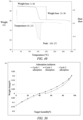
- the DVS results are shown in Figure 50 .
- the DVS results show that Form C has a weight gain of 0.20% at 95% humidity and a weight loss of 0.13% at 0% humidity, indicating that Form C has almost no hygroscopicity, and the XRPD results show that the samples after the DVS test have no change in crystal form.
- Form C does not change to a crystal form containing water under high moisture conditions by wet adsorption, which is very beneficial for pharmaceutical preservation and preparation processes.
- the Form C sample was measured using the HPLC method at 40°C ⁇ 2°C, 75% RH ⁇ 5% RH at months 0, 1, 2, 3, and 6 using a double layer pharmaceutical low density polyethylene bag as an inner wrap and a polyester/aluminium/polyethylene pharmaceutical composite bag as an outer wrap. The results are shown in the table below. Examination item Time (months) 0 1 2 3 6 Related Substances (%) Maximum individual impurity 0.05 0.05 0.05 0.05 0.05 0.05 0.05 0.05 0.05 0.05 Total impurity 0.26 0.25 0.26 0.26 0.28 Crystal form Form C Form C Form C Form C Form C Form C Form C Form C Form C Form C Form C Form C
- Form C has good stability within 6 months at 40°C ⁇ 2°C, 75% RH ⁇ 5% RH, with no significant increase in the related substances.
- the Form C sample was measured using the HPLC method at 5°C ⁇ 3°C at months 0, 3, 6, 9, and 12 using a double layer pharmaceutical low density polyethylene bag as an inner wrap and a polyester/aluminium/polyethylene pharmaceutical composite bag as an outer wrap. The results are shown in the table below. Examination item Time (months) 0 3 6 9 12 Related Substances (%) Maximum individual impurity 0.05 0.05 0.05 0.05 0.05 Total impurity 0.26 0.27 0.26 0.26 0.26 Crystal form Form C Form C Form C Form C Form C Form C Form C Form C Form C Form C Form C Form C
- Form C has good stability within 12 months at 5°C ⁇ 3°C, with no significant increase in the related substances.
- the Form C sample was measured using the HPLC method at 25°C ⁇ 2°C, 60% RH ⁇ 5% RH at months 0, 3, 6, 9, and 12 using a double layer pharmaceutical low density polyethylene bag as an inner wrap and a polyester/aluminium/polyethylene pharmaceutical composite bag as an outer wrap. The results are shown in the table below. Examination item Time (months) 0 3 6 9 12 Related Substances (%) Maximum individual impurity 0.05 0.05 0.05 0.05 0.05 0.05 0.05 0.05 0.05 0.05 Total impurity 0.26 0.27 0.26 0.26 0.27 Crystal form Form C Form C Form C Form C Form C Form C Form C Form C Form C Form C Form C
- Form C has good stability within 12 months at 25°C ⁇ 2°C, 60% RH ⁇ 5% RH, with no significant increase in the related substances.
- the Form C sample was measured using the HPLC method at 30°C ⁇ 2°C, 65% RH ⁇ 5% RH at months 0, 3, 6, 9, and 12 using a double layer pharmaceutical low density polyethylene bag as an inner wrap and a polyester/aluminium/polyethylene pharmaceutical composite bag as an outer wrap. The results are shown in the table below. Examination item Time (months) 0 3 6 9 12 Related Substances (%) Maximum individual impurity 0.05 0.05 0.05 0.05 0.05 0.05 0.05 0.05 0.05 0.05 Total impurity 0.26 0.26 0.27 0.25 0.26 Crystal form Form C Form C Form C Form C Form C Form C Form C Form C Form C Form C Form C Form C
- Form C has good stability within 12 months at 30°C ⁇ 2°C, 65% RH ⁇ 5% RH, with no significant increase in the related substances.
Landscapes
- Chemical & Material Sciences (AREA)
- Organic Chemistry (AREA)
- Health & Medical Sciences (AREA)
- General Health & Medical Sciences (AREA)
- Public Health (AREA)
- Veterinary Medicine (AREA)
- Animal Behavior & Ethology (AREA)
- Life Sciences & Earth Sciences (AREA)
- Pharmacology & Pharmacy (AREA)
- Medicinal Chemistry (AREA)
- Bioinformatics & Cheminformatics (AREA)
- Nuclear Medicine, Radiotherapy & Molecular Imaging (AREA)
- Chemical Kinetics & Catalysis (AREA)
- Obesity (AREA)
- Hematology (AREA)
- Engineering & Computer Science (AREA)
- General Chemical & Material Sciences (AREA)
- Diabetes (AREA)
- Epidemiology (AREA)
- Pharmaceuticals Containing Other Organic And Inorganic Compounds (AREA)
- Steroid Compounds (AREA)
- Organic Low-Molecular-Weight Compounds And Preparation Thereof (AREA)
- Medicines That Contain Protein Lipid Enzymes And Other Medicines (AREA)
Applications Claiming Priority (3)
| Application Number | Priority Date | Filing Date | Title |
|---|---|---|---|
| CN202210120295 | 2022-02-07 | ||
| CN202310008505 | 2023-01-04 | ||
| PCT/CN2023/000038 WO2023147752A1 (zh) | 2022-02-07 | 2023-02-07 | 作为甲状腺激素受体激动剂的多晶型物及其用途 |
Publications (2)
| Publication Number | Publication Date |
|---|---|
| EP4477652A1 true EP4477652A1 (de) | 2024-12-18 |
| EP4477652A4 EP4477652A4 (de) | 2026-03-04 |
Family
ID=87553159
Family Applications (1)
| Application Number | Title | Priority Date | Filing Date |
|---|---|---|---|
| EP23749331.7A Pending EP4477652A4 (de) | 2022-02-07 | 2023-02-07 | Polymorph als schilddrüsenhormonrezeptoragonisten und verwendung davon |
Country Status (10)
| Country | Link |
|---|---|
| US (1) | US20250179050A1 (de) |
| EP (1) | EP4477652A4 (de) |
| JP (1) | JP2025505211A (de) |
| KR (1) | KR20240146054A (de) |
| CN (1) | CN118613477A (de) |
| AU (1) | AU2023215515A1 (de) |
| CA (1) | CA3251389A1 (de) |
| MX (1) | MX2024009702A (de) |
| TW (1) | TW202337886A (de) |
| WO (1) | WO2023147752A1 (de) |
Family Cites Families (3)
| Publication number | Priority date | Publication date | Assignee | Title |
|---|---|---|---|---|
| ES3029158T3 (en) * | 2018-06-12 | 2025-06-23 | Xizang Haisco Pharmaceutical Co Ltd | Thyroid hormone receptor agonists and uses thereof |
| CN111484481A (zh) * | 2019-01-26 | 2020-08-04 | 察略盛医药科技(上海)有限公司 | 哒嗪酮类衍生物、其制备方法及其在医药上的用途 |
| CN114057701A (zh) * | 2020-08-07 | 2022-02-18 | 海思科医药集团股份有限公司 | 一种氘代哒嗪酮类化合物及其用途 |
-
2023
- 2023-02-07 KR KR1020247029819A patent/KR20240146054A/ko active Pending
- 2023-02-07 CN CN202380019787.3A patent/CN118613477A/zh active Pending
- 2023-02-07 WO PCT/CN2023/000038 patent/WO2023147752A1/zh not_active Ceased
- 2023-02-07 CA CA3251389A patent/CA3251389A1/en active Pending
- 2023-02-07 TW TW112104239A patent/TW202337886A/zh unknown
- 2023-02-07 US US18/836,748 patent/US20250179050A1/en active Pending
- 2023-02-07 MX MX2024009702A patent/MX2024009702A/es unknown
- 2023-02-07 JP JP2024547012A patent/JP2025505211A/ja active Pending
- 2023-02-07 AU AU2023215515A patent/AU2023215515A1/en active Pending
- 2023-02-07 EP EP23749331.7A patent/EP4477652A4/de active Pending
Also Published As
| Publication number | Publication date |
|---|---|
| CN118613477A (zh) | 2024-09-06 |
| US20250179050A1 (en) | 2025-06-05 |
| MX2024009702A (es) | 2024-08-19 |
| JP2025505211A (ja) | 2025-02-21 |
| AU2023215515A1 (en) | 2024-09-05 |
| TW202337886A (zh) | 2023-10-01 |
| EP4477652A4 (de) | 2026-03-04 |
| CA3251389A1 (en) | 2025-04-24 |
| KR20240146054A (ko) | 2024-10-07 |
| WO2023147752A1 (zh) | 2023-08-10 |
Similar Documents
| Publication | Publication Date | Title |
|---|---|---|
| US10301287B2 (en) | Solid forms of cenicriviroc mesylate and processes of making solid forms of cenicriviroc mesylate | |
| US20250163036A1 (en) | Dipeptidyl peptidase 1 inhibitor polymorph, preparation method and use therefor | |
| EP4455140B1 (de) | Kristalline formen eines glp-1-rezeptoragonisten und verfahren zu deren herstellung | |
| KR20200138283A (ko) | 결정질 형태, 및 결정질 형태의 화합물을 제조하는 방법 | |
| EP1853232B1 (de) | Stabile kristalline form von bifeprunoxmesylat, dosierungsformen davon und verfahren zu deren verwendung | |
| US12371439B2 (en) | Crystalline form B of tetrahydrothienopyridine compound, preparation method, composition and application thereof | |
| JP2025508792A (ja) | ジペプチジルペプチダーゼ阻害化合物の塩及び結晶形態 | |
| EP4477652A1 (de) | Polymorph als schilddrüsenhormonrezeptoragonisten und verwendung davon | |
| AU2023213780B2 (en) | Crystal form and salt of phenothiazine compound, preparation method therefor and use thereof | |
| EP4053143B1 (de) | Gallensäurederivatsalz, kristallstruktur davon, verfahren zu seiner herstellung und seine verwendung | |
| EP4667465A1 (de) | Salz eines heteroaromatischen benzostickstoffringderivats, kristalline form und pharmazeutische verwendung davon | |
| EP4442689A1 (de) | Kristallform eines derivats mit kondensiertem ring und herstellungsverfahren dafür und verwendung davon | |
| EP4653441A1 (de) | Salz einer antidepressivumverbindung und herstellungsverfahren dafür, pharmazeutische zusammensetzung damit und verwendung davon | |
| HK40072843A (en) | B crystal form of tetrahydrothienopyridine compound, preparation method therefor, composition and application | |
| HK40072843B (en) | B crystal form of tetrahydrothienopyridine compound, preparation method therefor, composition and application | |
| HK40112039A (en) | Crystal form of fused ring derivative, and preparation method therefor and use thereof | |
| EA051477B1 (ru) | Полиморф ингибитора дипептидилпептидазы 1, способ его получения и применение | |
| CN121824503A (zh) | 瑞司美替罗晶型及其制备方法 | |
| HK40025351B (en) | Crystal form of oxopicolinamide derivative and preparation method therefor | |
| WO2019086008A1 (zh) | 一种苯并三氮唑衍生物的晶型及其制备方法和用途 | |
| HK40025351A (en) | Crystal form of oxopicolinamide derivative and preparation method therefor | |
| HK1245770B (zh) | 尿嘧啶化合物的结晶 |
Legal Events
| Date | Code | Title | Description |
|---|---|---|---|
| STAA | Information on the status of an ep patent application or granted ep patent |
Free format text: STATUS: THE INTERNATIONAL PUBLICATION HAS BEEN MADE |
|
| PUAI | Public reference made under article 153(3) epc to a published international application that has entered the european phase |
Free format text: ORIGINAL CODE: 0009012 |
|
| STAA | Information on the status of an ep patent application or granted ep patent |
Free format text: STATUS: REQUEST FOR EXAMINATION WAS MADE |
|
| 17P | Request for examination filed |
Effective date: 20240821 |
|
| AK | Designated contracting states |
Kind code of ref document: A1 Designated state(s): AL AT BE BG CH CY CZ DE DK EE ES FI FR GB GR HR HU IE IS IT LI LT LU LV MC ME MK MT NL NO PL PT RO RS SE SI SK SM TR |
|
| DAV | Request for validation of the european patent (deleted) | ||
| DAX | Request for extension of the european patent (deleted) | ||
| A4 | Supplementary search report drawn up and despatched |
Effective date: 20260203 |
|
| RIC1 | Information provided on ipc code assigned before grant |
Ipc: C07D 403/12 20060101AFI20260128BHEP Ipc: A61K 31/53 20060101ALI20260128BHEP Ipc: A61P 3/06 20060101ALI20260128BHEP Ipc: C07B 59/00 20060101ALI20260128BHEP |