EP4477655A1 - Phenoxazinderivat und formulierung eines arzneimittelabgabesystems damit - Google Patents
Phenoxazinderivat und formulierung eines arzneimittelabgabesystems damit Download PDFInfo
- Publication number
- EP4477655A1 EP4477655A1 EP22924943.8A EP22924943A EP4477655A1 EP 4477655 A1 EP4477655 A1 EP 4477655A1 EP 22924943 A EP22924943 A EP 22924943A EP 4477655 A1 EP4477655 A1 EP 4477655A1
- Authority
- EP
- European Patent Office
- Prior art keywords
- group
- carbon atoms
- formula
- branched
- cyclic
- Prior art date
- Legal status (The legal status is an assumption and is not a legal conclusion. Google has not performed a legal analysis and makes no representation as to the accuracy of the status listed.)
- Pending
Links
Images


Classifications
-
- C—CHEMISTRY; METALLURGY
- C07—ORGANIC CHEMISTRY
- C07D—HETEROCYCLIC COMPOUNDS
- C07D498/00—Heterocyclic compounds containing in the condensed system at least one hetero ring having nitrogen and oxygen atoms as the only ring hetero atoms
- C07D498/02—Heterocyclic compounds containing in the condensed system at least one hetero ring having nitrogen and oxygen atoms as the only ring hetero atoms in which the condensed system contains two hetero rings
- C07D498/04—Ortho-condensed systems
-
- A—HUMAN NECESSITIES
- A61—MEDICAL OR VETERINARY SCIENCE; HYGIENE
- A61P—SPECIFIC THERAPEUTIC ACTIVITY OF CHEMICAL COMPOUNDS OR MEDICINAL PREPARATIONS
- A61P21/00—Drugs for disorders of the muscular or neuromuscular system
-
- A—HUMAN NECESSITIES
- A61—MEDICAL OR VETERINARY SCIENCE; HYGIENE
- A61K—PREPARATIONS FOR MEDICAL, DENTAL OR TOILETRY PURPOSES
- A61K31/00—Medicinal preparations containing organic active ingredients
- A61K31/70—Carbohydrates; Sugars; Derivatives thereof
- A61K31/7088—Compounds having three or more nucleosides or nucleotides
- A61K31/7105—Natural ribonucleic acids, i.e. containing only riboses attached to adenine, guanine, cytosine or uracil and having 3'-5' phosphodiester links
-
- A—HUMAN NECESSITIES
- A61—MEDICAL OR VETERINARY SCIENCE; HYGIENE
- A61K—PREPARATIONS FOR MEDICAL, DENTAL OR TOILETRY PURPOSES
- A61K31/00—Medicinal preparations containing organic active ingredients
- A61K31/70—Carbohydrates; Sugars; Derivatives thereof
- A61K31/7088—Compounds having three or more nucleosides or nucleotides
- A61K31/713—Double-stranded nucleic acids or oligonucleotides
-
- A—HUMAN NECESSITIES
- A61—MEDICAL OR VETERINARY SCIENCE; HYGIENE
- A61K—PREPARATIONS FOR MEDICAL, DENTAL OR TOILETRY PURPOSES
- A61K47/00—Medicinal preparations characterised by the non-active ingredients used, e.g. carriers or inert additives; Targeting or modifying agents chemically bound to the active ingredient
- A61K47/50—Medicinal preparations characterised by the non-active ingredients used, e.g. carriers or inert additives; Targeting or modifying agents chemically bound to the active ingredient the non-active ingredient being chemically bound to the active ingredient, e.g. polymer-drug conjugates
- A61K47/51—Medicinal preparations characterised by the non-active ingredients used, e.g. carriers or inert additives; Targeting or modifying agents chemically bound to the active ingredient the non-active ingredient being chemically bound to the active ingredient, e.g. polymer-drug conjugates the non-active ingredient being a modifying agent
- A61K47/54—Medicinal preparations characterised by the non-active ingredients used, e.g. carriers or inert additives; Targeting or modifying agents chemically bound to the active ingredient the non-active ingredient being chemically bound to the active ingredient, e.g. polymer-drug conjugates the non-active ingredient being a modifying agent the modifying agent being an organic compound
- A61K47/545—Heterocyclic compounds
-
- A—HUMAN NECESSITIES
- A61—MEDICAL OR VETERINARY SCIENCE; HYGIENE
- A61K—PREPARATIONS FOR MEDICAL, DENTAL OR TOILETRY PURPOSES
- A61K47/00—Medicinal preparations characterised by the non-active ingredients used, e.g. carriers or inert additives; Targeting or modifying agents chemically bound to the active ingredient
- A61K47/50—Medicinal preparations characterised by the non-active ingredients used, e.g. carriers or inert additives; Targeting or modifying agents chemically bound to the active ingredient the non-active ingredient being chemically bound to the active ingredient, e.g. polymer-drug conjugates
- A61K47/51—Medicinal preparations characterised by the non-active ingredients used, e.g. carriers or inert additives; Targeting or modifying agents chemically bound to the active ingredient the non-active ingredient being chemically bound to the active ingredient, e.g. polymer-drug conjugates the non-active ingredient being a modifying agent
- A61K47/54—Medicinal preparations characterised by the non-active ingredients used, e.g. carriers or inert additives; Targeting or modifying agents chemically bound to the active ingredient the non-active ingredient being chemically bound to the active ingredient, e.g. polymer-drug conjugates the non-active ingredient being a modifying agent the modifying agent being an organic compound
- A61K47/549—Sugars, nucleosides, nucleotides or nucleic acids
-
- C—CHEMISTRY; METALLURGY
- C07—ORGANIC CHEMISTRY
- C07F—ACYCLIC, CARBOCYCLIC OR HETEROCYCLIC COMPOUNDS CONTAINING ELEMENTS OTHER THAN CARBON, HYDROGEN, HALOGEN, OXYGEN, NITROGEN, SULFUR, SELENIUM OR TELLURIUM
- C07F9/00—Compounds containing elements of Groups 5 or 15 of the Periodic Table
- C07F9/02—Phosphorus compounds
- C07F9/547—Heterocyclic compounds, e.g. containing phosphorus as a ring hetero atom
- C07F9/6561—Heterocyclic compounds, e.g. containing phosphorus as a ring hetero atom containing systems of two or more relevant hetero rings condensed among themselves or condensed with a common carbocyclic ring or ring system, with or without other non-condensed hetero rings
-
- C—CHEMISTRY; METALLURGY
- C07—ORGANIC CHEMISTRY
- C07H—SUGARS; DERIVATIVES THEREOF; NUCLEOSIDES; NUCLEOTIDES; NUCLEIC ACIDS
- C07H19/00—Compounds containing a hetero ring sharing one ring hetero atom with a saccharide radical; Nucleosides; Mononucleotides; Anhydro-derivatives thereof
- C07H19/02—Compounds containing a hetero ring sharing one ring hetero atom with a saccharide radical; Nucleosides; Mononucleotides; Anhydro-derivatives thereof sharing nitrogen
- C07H19/04—Heterocyclic radicals containing only nitrogen atoms as ring hetero atom
- C07H19/23—Heterocyclic radicals containing two or more heterocyclic rings condensed among themselves or condensed with a common carbocyclic ring system, not provided for in groups C07H19/14 - C07H19/22
-
- C—CHEMISTRY; METALLURGY
- C07—ORGANIC CHEMISTRY
- C07H—SUGARS; DERIVATIVES THEREOF; NUCLEOSIDES; NUCLEOTIDES; NUCLEIC ACIDS
- C07H21/00—Compounds containing two or more mononucleotide units having separate phosphate or polyphosphate groups linked by saccharide radicals of nucleoside groups, e.g. nucleic acids
-
- C—CHEMISTRY; METALLURGY
- C12—BIOCHEMISTRY; BEER; SPIRITS; WINE; VINEGAR; MICROBIOLOGY; ENZYMOLOGY; MUTATION OR GENETIC ENGINEERING
- C12N—MICROORGANISMS OR ENZYMES; COMPOSITIONS THEREOF; PROPAGATING, PRESERVING, OR MAINTAINING MICROORGANISMS; MUTATION OR GENETIC ENGINEERING; CULTURE MEDIA
- C12N15/00—Mutation or genetic engineering; DNA or RNA concerning genetic engineering, vectors, e.g. plasmids, or their isolation, preparation or purification; Use of hosts therefor
- C12N15/09—Recombinant DNA-technology
- C12N15/11—DNA or RNA fragments; Modified forms thereof; Non-coding nucleic acids having a biological activity
- C12N15/113—Non-coding nucleic acids modulating the expression of genes, e.g. antisense oligonucleotides; Antisense DNA or RNA; Triplex- forming oligonucleotides; Catalytic nucleic acids, e.g. ribozymes; Nucleic acids used in co-suppression or gene silencing
-
- A—HUMAN NECESSITIES
- A61—MEDICAL OR VETERINARY SCIENCE; HYGIENE
- A61K—PREPARATIONS FOR MEDICAL, DENTAL OR TOILETRY PURPOSES
- A61K9/00—Medicinal preparations characterised by special physical form
- A61K9/0012—Galenical forms characterised by the site of application
- A61K9/0019—Injectable compositions; Intramuscular, intravenous, arterial, subcutaneous administration; Compositions to be administered through the skin in an invasive manner
-
- C—CHEMISTRY; METALLURGY
- C12—BIOCHEMISTRY; BEER; SPIRITS; WINE; VINEGAR; MICROBIOLOGY; ENZYMOLOGY; MUTATION OR GENETIC ENGINEERING
- C12N—MICROORGANISMS OR ENZYMES; COMPOSITIONS THEREOF; PROPAGATING, PRESERVING, OR MAINTAINING MICROORGANISMS; MUTATION OR GENETIC ENGINEERING; CULTURE MEDIA
- C12N2310/00—Structure or type of the nucleic acid
- C12N2310/10—Type of nucleic acid
- C12N2310/11—Antisense
-
- C—CHEMISTRY; METALLURGY
- C12—BIOCHEMISTRY; BEER; SPIRITS; WINE; VINEGAR; MICROBIOLOGY; ENZYMOLOGY; MUTATION OR GENETIC ENGINEERING
- C12N—MICROORGANISMS OR ENZYMES; COMPOSITIONS THEREOF; PROPAGATING, PRESERVING, OR MAINTAINING MICROORGANISMS; MUTATION OR GENETIC ENGINEERING; CULTURE MEDIA
- C12N2310/00—Structure or type of the nucleic acid
- C12N2310/30—Chemical structure
- C12N2310/31—Chemical structure of the backbone
- C12N2310/315—Phosphorothioates
-
- C—CHEMISTRY; METALLURGY
- C12—BIOCHEMISTRY; BEER; SPIRITS; WINE; VINEGAR; MICROBIOLOGY; ENZYMOLOGY; MUTATION OR GENETIC ENGINEERING
- C12N—MICROORGANISMS OR ENZYMES; COMPOSITIONS THEREOF; PROPAGATING, PRESERVING, OR MAINTAINING MICROORGANISMS; MUTATION OR GENETIC ENGINEERING; CULTURE MEDIA
- C12N2310/00—Structure or type of the nucleic acid
- C12N2310/30—Chemical structure
- C12N2310/32—Chemical structure of the sugar
- C12N2310/323—Chemical structure of the sugar modified ring structure
- C12N2310/3231—Chemical structure of the sugar modified ring structure having an additional ring, e.g. LNA, ENA
-
- C—CHEMISTRY; METALLURGY
- C12—BIOCHEMISTRY; BEER; SPIRITS; WINE; VINEGAR; MICROBIOLOGY; ENZYMOLOGY; MUTATION OR GENETIC ENGINEERING
- C12N—MICROORGANISMS OR ENZYMES; COMPOSITIONS THEREOF; PROPAGATING, PRESERVING, OR MAINTAINING MICROORGANISMS; MUTATION OR GENETIC ENGINEERING; CULTURE MEDIA
- C12N2310/00—Structure or type of the nucleic acid
- C12N2310/30—Chemical structure
- C12N2310/33—Chemical structure of the base
- C12N2310/334—Modified C
- C12N2310/3341—5-Methylcytosine
-
- C—CHEMISTRY; METALLURGY
- C12—BIOCHEMISTRY; BEER; SPIRITS; WINE; VINEGAR; MICROBIOLOGY; ENZYMOLOGY; MUTATION OR GENETIC ENGINEERING
- C12N—MICROORGANISMS OR ENZYMES; COMPOSITIONS THEREOF; PROPAGATING, PRESERVING, OR MAINTAINING MICROORGANISMS; MUTATION OR GENETIC ENGINEERING; CULTURE MEDIA
- C12N2310/00—Structure or type of the nucleic acid
- C12N2310/30—Chemical structure
- C12N2310/34—Spatial arrangement of the modifications
- C12N2310/341—Gapmers, i.e. of the type ===---===
-
- C—CHEMISTRY; METALLURGY
- C12—BIOCHEMISTRY; BEER; SPIRITS; WINE; VINEGAR; MICROBIOLOGY; ENZYMOLOGY; MUTATION OR GENETIC ENGINEERING
- C12N—MICROORGANISMS OR ENZYMES; COMPOSITIONS THEREOF; PROPAGATING, PRESERVING, OR MAINTAINING MICROORGANISMS; MUTATION OR GENETIC ENGINEERING; CULTURE MEDIA
- C12N2310/00—Structure or type of the nucleic acid
- C12N2310/30—Chemical structure
- C12N2310/35—Nature of the modification
- C12N2310/351—Conjugate
-
- Y—GENERAL TAGGING OF NEW TECHNOLOGICAL DEVELOPMENTS; GENERAL TAGGING OF CROSS-SECTIONAL TECHNOLOGIES SPANNING OVER SEVERAL SECTIONS OF THE IPC; TECHNICAL SUBJECTS COVERED BY FORMER USPC CROSS-REFERENCE ART COLLECTIONS [XRACs] AND DIGESTS
- Y02—TECHNOLOGIES OR APPLICATIONS FOR MITIGATION OR ADAPTATION AGAINST CLIMATE CHANGE
- Y02P—CLIMATE CHANGE MITIGATION TECHNOLOGIES IN THE PRODUCTION OR PROCESSING OF GOODS
- Y02P20/00—Technologies relating to chemical industry
- Y02P20/50—Improvements relating to the production of bulk chemicals
- Y02P20/55—Design of synthesis routes, e.g. reducing the use of auxiliary or protecting groups
Definitions
- the present invention relates to a phenoxazine derivative and a drug delivery system formulation containing the same.
- An antisense drug which is one type of nucleic acid drug, controls the functions or expression of a disease-causing protein by forming a double strand of a target mRNA and a complementary antisense oligonucleotide (ASO).
- the antisense drug can target a gene such as mRNA or miRNA, and if the sequence is known, a drug can be quickly developed. Therefore, the antisense drug is expected as a novel drug development modality with potential for new treatment of an intractable disease.
- a nucleic acid drug has a problem in that it has poor cell membrane permeability and is easily excreted through the kidneys.
- a receptor-selective ligand is incorporated in an oligonucleotide. For example, binding of the ligand to a receptor expressed on the surface of a cell membrane makes it possible to induce endocytosis and effectively deliver the oligonucleotide into a cell.
- Non-Patent Document 1 states that conjugation of GalNac to a terminus of an oligonucleotide leads to induction of endocytosis via an asialoglycoprotein receptor expressed on the surface of the cell membrane of a hepatic mesenchymal cell in the liver and to success in efficient accumulation of the oligonucleotide in the liver.
- givosiran was approved as a world's first ligand-conjugated siRNA in 2019 and lumasiran and inclisiran, which are also ligand-conjugated siRNAs, were approved in 2020, and therefore, the strategy of conjugating a ligand to an oligonucleotide is very promising.
- Non-Patent Document 2 oligonucleotide to which a glucagon-like peptide-1 (eGLP-1) for delivery to the pancreas is conjugated
- eGLP-1 glucagon-like peptide-1
- Patent Document 3 palmitic acid-conjugated oligonucleotide having an effect on delivery to the muscular tissue
- the present invention is to solve the above-mentioned problems, and it is an object thereof to provide a compound that enables delivery of a nucleic acid drug to a viscus, an organ, or a tissue other than the liver, and a drug delivery system formulation containing the compound.
- the present invention is a compound represented by Formula (I) below or a pharmaceutically acceptable salt thereof (in Formula (I),
- Formula (I) is represented by Formula (Ia) below: (in Formula (Ia), R 2 , R 3 , R 4 , R 5 , R 6 , X 1 , and n are as defined above).
- Formula (I) is represented by Formula (Ib) below: (in Formula (Ib), R 1 , R 3 , R 4 , X 1 , Y', and s are as defined above).
- Formula (I) is represented by Formula (Ic) below: (in Formula (Ic), R 3 , R 4 , R 5 , R 6 , X 1 , Y', n, and s are as defined above).
- the present invention is also a drug delivery system formulation comprising a ligand derived from the above compound or pharmaceutically acceptable salt thereof.
- the present invention is also a drug delivery system formulation comprising
- R 1' in Formula (I') is the pentose moiety.
- the pentose moiety is a moiety obtained through desorption of a base moiety from an artificial nucleic acid monomer.
- the artificial nucleic acid monomer is a 2',4'-BNA/LNA monomer.
- the ligand is contained in the form of a conjugate where the ligand is linked to a polynucleic acid.
- the ligand is linked to the 5' terminus of the polynucleic acid.
- the number of the ligands linked to the polynucleic acid is one to three per polynucleic acid molecule.
- cyanoalkoxy group having 1 to 6 carbon atoms refers to a group obtained by substituting at least one hydrogen atom included in any linear, branched, or cyclic alkoxy group having 1 to 6 carbon atoms with a cyano group.
- linear alkylamino group having 1 to 6 carbon atoms encompasses amino groups that include any one or two linear alkyl groups having 1 to 6 carbon atoms. Examples thereof include a methylamino group, a dimethylamino group, an ethylamino group, a methylethylamino group, and a diethylamino group.
- dialkylamino group that includes alkyl groups having 1 to 6 carbon atoms encompasses amino groups that include any two alkyl groups having 1 to 6 carbon atoms.
- heteroaryl group having n 1 to n 2 carbon atoms encompasses any heteroaryl groups having n 1 to n 2 carbon atoms (where n 1 and n 2 are integers and satisfy the relationship n 1 ⁇ n 2 ) that include one or more heteroatoms.
- heteroatom included in the heteroaryl group include an oxygen atom, a nitrogen atom, and a sulfur atom.
- heteroaryl groups having 4 to 20 carbon atoms encompass heteroaryl groups having 4 to 20 carbon atoms that include one or more heteroatoms as described above.
- aralkyl group with an aryl moiety having 3 to 12 carbon atoms that may include a heteroatom examples include a benzyl group, a phenethyl group, a naphthylmethyl group, a 3-phenylpropyl group, a 2-phenylpropyl group, a 4-phenylbutyl group, a 2-phenylbutyl group, a pyridylmethyl group, an indolylmethyl group, a furylmethyl group, a thienylmethyl group, a pyrrolylmethyl group, a 2-pyridylethyl group, a 1-pyridylethyl group, and a 3-thienylpropyl group.
- acyl group examples include aliphatic acyl groups and aromatic acyl groups.
- the aliphatic acyl groups include alkylcarbonyl groups such as a formyl group, an acetyl group, a propionyl group, a butyryl group, an isobutyryl group, a pentanoyl group, a pivaloyl group, a valeryl group, an isovaleryl group, an octanoyl group, a nonanoyl group, a decanoyl group, a 3-methylnonanoyl group, a 8-methylnonanoyl group, a 3-ethyloctanoyl group, a 3,7-dimethyloctanoyl group, an undecanoyl group, a dodecanoyl group, a tridecanoyl group, a tetradecanoyl group, a pentade
- a formyl group, an acetyl group, a propionyl group, a butyryl group, an isobutyryl group, a pentanoyl group, a pivaloyl group, and a benzoyl group are favorable.
- sil group examples include tri-lower-alkyl-silyl groups such as a trimethylsilyl group, a triethylsilyl group, an isopropyldimethylsilyl group, a t-butyldimethylsilyl group, a methyldiisopropylsilyl group, a methyldi-t-butylsilyl group, and a triisopropylsilyl group; and tri-lower-alkyl-silyl groups that have undergone substitution by one or two aryl groups, such as a diphenylmethylsilyl group, a butyldiphenylbutylsilyl group, a diphenylisopropylsilyl group, and a phenyldiisopropylsilyl group.
- aryl groups such as a diphenylmethylsilyl group, a butyldiphenylbutylsilyl group, a dipheny
- a trimethylsilyl group, a triethylsilyl group, a triisopropylsilyl group, a t-butyldimethylsilyl group, and a t-butyldiphenylsilyl group are favorable, and a trimethylsilyl group is more favorable.
- halogen atom examples include a fluorine atom, a chlorine atom, a bromine atom, and an iodine atom.
- a fluorine atom or a chlorine atom is favorable.
- Protecting groups in the terms “amino group protecting group for nucleic acid synthesis", “hydroxy group protecting group for nucleic acid synthesis”, “hydroxy group protected by a protecting group for nucleic acid synthesis”, “phosphate group protected by a protecting group for nucleic acid synthesis”, and “mercapto group protected by a protecting group for nucleic acid synthesis” as used herein are not particularly limited as long as they can stably protect an amino group, a hydroxy group, a phosphate group, or a mercapto group during nucleic acid synthesis.
- the protecting groups are stable under an acidic or neutral condition and can be cleaved using chemical techniques such as hydrogenolysis, hydrolysis, electrolysis, and photolysis.
- protecting groups include lower alkyl groups, lower alkenyl groups, acyl groups, tetrahydropyranyl or tetrahydrothiopyranyl groups, tetrahydrofuranyl or tetrahydrothiofuranyl groups, silyl groups, lower-alkoxy-methyl groups, low-alkoxylated lower-alkoxy-methyl groups, halogeno lower-alkoxy-methyl groups, low-alkoxylated ethyl groups, halogenated ethyl groups, methyl groups that have undergone substitution by 1 to 3 aryl groups, "methyl groups that have undergone substitution by 1 to 3 aryl groups in which an aryl ring has undergone substitution by a lower alkyl group, lower alkoxy group, halogen atom, or cyano group", lower-alkoxy-carbonyl groups, "aryl groups that have undergone substitution by a halogen atom, lower alkoxy group, or nitro group", "lower-alkoxy
- tetrahydropyranyl groups or tetrahydrothiopyranyl groups include a tetrahydropyran-2-yl group, a 3-bromotetrahydropyran-2-yl group, a 4-methoxytetrahydropyran-4-yl group, a tetrahydrothiopyran-4-yl group, and a 4-methoxytetrahydrothiopyran-4-yl group.
- tetrahydrofuranyl groups or tetrahydrothiofuranyl groups include a tetrahydrofuran-2-yl group and a tetrahydrothiofuran-2-yl group.
- Examples of the lower-alkoxy-methyl groups include a methoxymethyl group, a 1,1-dimethyl-1-methoxymethyl group, an ethoxymethyl group, a propoxymethyl group, an isopropoxymethyl group, a butoxymethyl group, and a t-butoxymethyl group.
- An example of the low-alkoxylated lower-alkoxy-methyl groups is a 2-methoxyethoxymethyl group.
- the halogeno lower-alkoxy-methyl groups include a 2,2,2-trichloroethoxymethyl group and a bis(2-chloroethoxy)methyl group.
- Examples of the low-alkoxylated ethyl groups include a 1-ethoxyethyl group and a 1-(isopropoxy)ethyl group.
- An example of the halogenated ethyl groups is a 2,2,2-trichloroethyl group.
- Examples of the methyl groups that have undergone substitution by 1 to 3 aryl groups include a benzyl group, an ⁇ -naphthylmethyl group, a ⁇ -naphthylmethyl group, a diphenylmethyl group, a triphenylmethyl group, an ⁇ -naphthyldiphenylmethyl group, and a 9-anthrylmethyl group.
- Examples of the "methyl groups that have undergone substitution by 1 to 3 aryl groups in which an aryl ring has undergone substitution by a lower alkyl group, lower alkoxy group, halogen atom, or cyano group” include a 4-methylbenzyl group, a 2,4,6-trimethylbenzyl group, a 3,4,5-trimethylbenzyl group, a 4-methoxybenzyl group, a 4-methoxyphenyldiphenylmethyl group, a 4,4'-dimethoxytriphenylmethyl group, a 2-nitrobenzyl group, a 4-nitrobenzyl group, a 4-chlorobenzyl group, a 4-bromobenzyl group, and a 4-cyanobenzyl group.
- Examples of the lower-alkoxy-carbonyl groups include a methoxycarbonyl group, an ethoxycarbonyl group, a t-butoxycarbonyl group, and an isobutoxycarbonyl group.
- Examples of the "aryl groups that have undergone substitution by a halogen atom, lower alkoxy group, or nitro group” include a 4-chlorophenyl group, a 2-fluorophenyl group, a 4-methoxyphenyl group, a 4-nitrophenyl group, and a 2,4-dinitrophenyl group.
- Examples of the "lower-alkoxy-carbonyl groups that have undergone substitution by a halogen atom or tri-lower-alkyl-silyl group” include a 2,2,2-trichloroethoxycarbonyl group and 2-trimethylsilylethoxycarbonyl group.
- Examples of the alkenyloxycarbonyl groups include a vinyloxycarbonyl group and an aryloxycarbonyl group.
- Examples of the "aralkyloxycarbonyl groups in which an aryl ring may have undergone substitution by a lower alkoxy group or nitro group” include a benzyloxycarbonyl group, a 4-methoxybenzyloxycarbonyl group, a 3,4-dimethoxybenzyloxycarbonyl group, a 2-nitrobenzyloxycarbonyl group, and a 4-nitrobenzyloxycarbonyl group.
- examples of the "hydroxy group protecting group for nucleic acid synthesis” include aliphatic acyl groups, aromatic acyl groups, methyl groups that have undergone substitution by 1 to 3 aryl groups, "methyl groups that have undergone substitution by 1 to 3 aryl groups in which an aryl ring has undergone substitution by a lower alkyl, lower alkoxy, halogen, or cyano group", and silyl groups.
- examples of the "hydroxy group protecting group for nucleic acid synthesis” include an acetyl group, a benzoyl group, a benzyl group, a p-methoxybenzoyl group, a dimethoxytrityl group, a monomethoxytrityl group, a tert-butyldiphenylsilyl group, a tert-butyldimethylsilyl (TBDMS) group, a [(triisopropylsilyl)oxy]methyl (TOM) group, a [(2-nitrobenzyl)oxy]methyl (NBOM) group, a bis(acetoxyethoxy)methyl ether (ACE) group, a tetrahydro-4-methoxy-2H-pyran-2-yl (Mthp) group, a 1-(2-cyanoethoxy)ethyl (CEE) group, a 2-cyanoethoxymethyl (CEM) group, a
- examples of the protecting group used for the "hydroxy group protected by a protecting group for nucleic acid synthesis” include aliphatic acyl groups, aromatic acyl groups, "methyl groups that have undergone substitution by 1 to 3 aryl groups", “aryl groups that have undergone substitution by a halogen atom, lower alkoxy group, or nitro group", lower alkyl groups, and lower alkenyl groups.
- examples of the protecting group used for the "hydroxy group protected by a protecting group for nucleic acid synthesis” include a benzoyl group, a benzyl group, a 2-chlorophenyl group, a 4-chlorophenyl group, and a 2-propenyl group.
- examples of the "amino group protecting group for nucleic acid synthesis” include acyl groups, and a benzoyl group is favorable.
- examples of the "protecting group” used for the "phosphate group protected by a protecting group for nucleic acid synthesis” include lower alkyl groups, lower alkyl groups that have undergone substitution by a cyano group, aralkyl groups, “aralkyl groups in which an aryl ring has undergone substitution by a nitro group or halogen atom", and "aryl groups that have undergone substitution by a lower alkyl group, halogen atom, or nitro group”.
- examples of the "protecting group” used for the "phosphate group protected by a protecting group for nucleic acid synthesis” include a 2-cyanoethyl group, a 2,2,2-trichloroethyl group, a benzyl group, a 2-chlorophenyl group, and a 4-chlorophenyl group.
- examples of the "protecting group” used for the "mercapto group protected by a protecting group for nucleic acid synthesis” include aliphatic acyl groups and aromatic acyl groups, and a benzoyl group is favorable.
- salts including alkali metal salts such as sodium salts, potassium salts, and lithium salts, alkali earth metal salts such as calcium salts and magnesium salts, aluminum salts, iron salts, zinc salts, copper salts, nickel salts, and cobalt salts; amine salts including inorganic salts such as ammonium salts, and organic salts such as t-octylamine salts, dibenzylamine salts, morpholine salts, glucosamine salts, phenylglycine alkylester salts, ethylenediamine salts, N-methylglucamine salts, guanidine salts, diethylamine salts, triethylamine salts, dicyclohexylamine salts, N,N'-dibenz
- pharmaceutically acceptable cation means a cation that has no risk of entirely or partially inhibiting, for example, the purpose of a pharmaceutical application where the compound according to the present invention is used, and encompasses, for example, a hydrogen ion, a sodium ion, a potassium ion, an ammonium ion, and the like.
- pharmaceutically acceptable anion means an anion that has no risk of entirely or partially inhibiting, for example, the purpose of a pharmaceutical application where the compound according to the present invention is used, and encompasses, for example, a chloride ion, a bromide ion, a hydroxide ion, an acetate ion, a carbonate ion, a phosphate ion, and the like.
- nucleic acid as used herein is a generic term for ribonucleic acid (RNA) and deoxyribonucleic acid (DNA), and refers to a biopolymer consisting of nucleotides that are each composed of a base, a sugar, and a phosphate and are linked via phosphodiester bonds.
- RNA is nucleic acid in which the sugar moiety is ribose
- DNA is nucleic acid in which the sugar moiety is 2-deoxyribose obtained from ribose through substitution of a hydroxy group at position 2' with a hydrogen group.
- Position 5' of the sugar is linked to position 3' of the adjacent sugar via a phosphodiester bond, and a chain is formed through repeated formation of this bond.
- Nucleosides include “nucleosides” in which a purine base or a pyrimidine base is linked to a sugar, as well as “nucleosides” in which a heteroaromatic ring or an aromatic hydrocarbon ring other than purine and pyrimidine that can serve as a substitute for a purine or pyrimidine base is linked to a sugar.
- a nucleoside in a natural form is also referred to as a "natural nucleoside”.
- nucleoside in a modified and non-natural form is also referred to as a "modified nucleoside", and in particular, a nucleotide in which a sugar moiety is modified is referred to as a "sugar-modified nucleoside".
- nucleotide means a compound obtained through binding of a phosphate group to a sugar of a nucleoside.
- the "nucleosides” and the “nucleotides” include those contained in DNA and those contained in RNA.
- oligonucleotide refers to a polymer of "nucleotides” in which, for example, five to seventy, preferably ten to forty and more preferably twelve to thirty, of the same or different "nucleosides" are linked via phosphodiester bonds or other bonds, and includes oligonucleotides in a natural form and oligonucleotides in a non-natural form.
- oligonucleotides in a non-natural form include sugar derivatives with sugar moieties modified, thioated derivatives with phosphate diester moieties thioated; esters with terminal phosphate moieties esterified; and amides in which amino groups on purine bases are amidated, and the sugar derivatives with sugar moieties modified are more favorable.
- the "oligonucleotides” may be constituted by natural nucleosides or modified nucleosides, or may be a mixture of natural nucleosides and modified nucleosides.
- the bond (inter-nucleoside bond) between the sugars in the oligonucleotide may be a phosphodiester (D-oligo), which is a bond in a natural nucleic acid, or an artificially modified bond (e.g., phosphorothioate (S-oligo), methylphosphonate (M-oligo), or boranophosphonate). Any bonds known in the art can be used.
- the S-oligo (phosphorothioate) has a PS skeleton obtained by substituting oxygen atoms in the phosphate group moieties in the phosphodiester bonds between the nucleosides with sulfur atoms. This modification is incorporated into oligonucleotides according to a known method.
- An antisense oligonucleotide (ASO) with this modification at one or more sites per oligonucleotide is also referred to as an S-oligo-type (phosphorothioate-type) antisense oligonucleotide.
- ASO antisense oligonucleotide
- S-oligo-type (phosphorothioate-type) antisense oligonucleotide phosphorothioate-type) antisense oligonucleotide.
- all the bonds may be the same, or different bonds may be included. It is preferable that the oligonucleotide of the present invention includes the D-oligo and/or the S-oligo.
- nucleotide Any modification for a nucleotide known in the art can also be used.
- a sugar modification and a nucleic acid base modification are known as the modification for a nucleotide.
- nucleic acid modifications can be provided based on a method known in the art.
- nucleic acid base modification examples include 5-methylcytosine, 5-hydroxymethylcytosine, and 5-propynylcytosine.
- sugar modification examples include substitution at position 2' of the sugar, and a cross-linked structure between position 4' and position 2' of the sugar.
- substitution at position 2' of the sugar examples include 2'-F, 2'-OCH 3 (2'-OMe), and 2'-OCH 2 CH 2 OCH 3 (2'-MOE).
- an “alteration" of a nucleic acid refers to any change of nucleic acid, such as substitution, deletion, or insertion of a base, or a change in a chemical structure other than a base (e.g., the modification as described above).
- a substance that includes at least one of such alterations may be referred to as an "altered substance”.
- the compound and pharmaceutically acceptable salt thereof according to the present invention have, for example, a phenothiazine structure or a structure similar to phenothiazine.
- the present invention provides a compound represented by Formula (Ia) below and a pharmaceutically acceptable salt thereof (in Formula (Ia), R 2 , R 3 , R 4 , R 5 , R 6 , X 1 , and n are as defined above).
- the present invention provides a compound represented by Formula (Ib) below and a pharmaceutically acceptable salt thereof (in Formula (Ib), R 1 , R 3 , R 4 , X 1 , Y', and s are as defined above).
- the DDS formulation of the present invention includes, for example, a ligand derived from a compound represented by Formula (I') below or a pharmaceutically acceptable salt thereof (in Formula (I'),
- R 1' in Formula (I') above is a pentose moiety that includes a chemical structure selected from the group consisting of a ribos-1-yl structure and a 2-deoxyribos-1-yl structure.
- a pentose moiety is, for example, a moiety obtained through desorption of a base moiety from at least one monomer selected from the group consisting of a DNA monomer, an RNA monomer, and an artificial nucleic acid monomer. It is preferable that the above-mentioned pentose moiety is a moiety obtained through desorption of a base moiety from an artificial nucleic acid monomer.
- Such an artificial nucleic acid monomer is, for example, a 2',4'-BNA/LNA monomer having a structure represented by Formula (IV) below: (in Formula (IV),
- the oligonucleotide is an oligonucleotide with, for example, 5 to 70 bases having a sequence capable of binding to a target sequence in a target gene.
- the length of the oligonucleotide is preferably 5 or more bases, 6 or more bases, 7 or more bases, 8 or more bases, 9 or more bases, 10 or more bases, 11 or more bases, 12 or more bases, 13 or more bases, 14 or more bases, or 15 or more bases, and 70 or less bases, 50 or less bases, 40 or less bases, 30 or less bases, 25 or less bases, or 20 or less bases.
- the second strand is an oligonucleotide having a sequence capable of binding to the first strand oligonucleotide having a sequence capable of binding to a target sequence in a target gene.
- the second strand has, for example, 8 to 60 bases, and preferably has 8 or more bases, 9 or more bases, 10 or more bases, 11 or more bases, 12 or more bases, 13 or more bases, 14 or more bases, or 15 or more bases, and 60 or less bases, 50 or less bases, 40 or less bases, 30 or less bases, 25 or less bases, or 20 or less bases.
- the length of the second strand may be the same as the length of the first strand, or may be shorter than the length of the first strand by a length corresponding to one or several bases as long as the second strand binds to the first strand, or longer than the length of the first strand due to addition of one or several bases to one or two sides of a site that binds to the first strand.
- the wording "one or several bases” as used herein means, for example, 1 to 10 bases, preferably 1 to 5 bases, more preferably 1 to 3 bases, and even more preferably one or two bases.
- the favorable length of the second strand depends on the length of the first strand. For example, the favorable length of the second strand is 50% or more, 60% or more, 70% or more, 50 to 100%, 60 to 100%, or 70 to 100% of the length of the first strand.
- the oligonucleotide "binds to" a target sequence” means that a plurality of different single-stranded oligonucleotides or nucleic acids can form a nucleic acid having two or more strands due to complementarity of the nucleic acid bases.
- This wording preferably means that a double-stranded nucleic acid can be formed.
- T m melting temperature
- the melting temperature (T m ) of double-stranded nucleic acid can be determined, for example, as follows: Equimolar amounts of an oligonucleotide and a target RNA or DNA are mixed in a phosphate buffer solution (10 mM, pH 7.0) with sodium chloride (final concentration: 100 mM), and the resulting mixture is heated at 100°C and is then allowed to cool slowly to room temperature to form a double-stranded nucleic acid through annealing. The temperature of the double-stranded nucleic acid is raised from 5°C to 90°C at a heating rate of 0.5°C/minute, and the change in absorbance (A) at 260 nm with the temperature (T) is measured.
- An Avs T graph is drawn based on the measurement results, and the temperature at the point of the intersection of the median line of the tangent line to the pre-transition region and the tangent line to the post-transition region with the A vs T graph is taken as T m of the double-stranded nucleic acid.
- the melting temperature (T m ) of the double-stranded nucleic acid is, for example, 40°C or higher and preferably 50°C or higher.
- complementary means that two different single-stranded oligonucleotides or nucleic acids have such a paring relationship that they can form a double-stranded nucleic acid. It is preferable that the base sequences of the regions that form a double-strand is completely complementary to each other, but there may be one or several mismatches therebetween as long as the double-stranded nucleic acid can be formed and a desired function (e.g., suppression or regulation of expression) is exhibited.
- the term "one or several mismatches” means one to four mismatches, preferably one to three mismatches, and more preferably one or two mismatches, which may depend on the length of the oligonucleotide.
- the oligonucleotide included in the nucleic acid moiety preferably has 80% or more, 90% or more, 95% or more, 96% or more, 97% or more, 98% or more, or 99% or more complementarity to the base sequence of the region for forming a double-strand, or may be completely (100%) complementary thereto.
- the oligonucleotide also encompasses both oligonucleotides containing natural DNA (unmodified oligonucleotides) and oligonucleotides containing chemically modified DNA. Such modifications can alter the activity of the oligonucleotide, and can, for example, improve the affinity for a target nucleic acid or improve the resistance against a nucleolytic enzyme (nuclease). In the present invention, the affinity of the oligonucleotide for a target is improved, thus making it possible to use a shorter oligonucleotide.
- the oligonucleotide included in the polynucleic acid can be synthesized according to ordinary methods and can be easily synthesized using, for example, a commercially available automated nucleic acid synthesizer (manufactured by, for example, Applied Biosystems, Gene Design Co., Ltd., or the like).
- the synthesis methods include a solid-phase synthesis method in which phosphoramidites are used, and a solid-phase synthesis method in which hydrogen phosphonates are used.
- the dangling bond of the ligand above may be linked to at least one of the 3' terminus or the 5' terminus of the oligonucleotide and is preferably linked to the 5' terminus.
- the number of the ligands above linked to a single polylactic acid molecule is preferably one to three and more preferably one.
- Such a conjugate can be used to deliver the polynucleic acid to the liver as well as a viscus, an organ, or a tissue other than the liver.
- the viscus, the organ, or the tissue other than the liver is not necessarily limited, but examples thereof include the skeletal muscle, the spleen, the pancreas, the heart, the lung, the stomach, the intestine, the brain, the mammary gland, and the skin.
- the polynucleic acid is effectively delivered particularly to the skeletal muscle.
- a pharmaceutical according to the present invention contains the above-described drug delivery system formulation.
- the administration method and the dosage form there is no particular limitation on the administration method and the dosage form, and an administration method and a dosage form known in the art can be used.
- Topical administration including ocular instillation, intravaginal administration, intrarectal administration, intranasal administration, and percutaneous administration
- oral administration or parenteral administration
- parenteral administration examples include intravenous injection, intravenous instillation, subcutaneous transfusion, intraabdominal transfusion, intramuscular transfusion, pulmonary administration via the airway through aspiration or inhalation.
- the pharmaceutical according to the present invention can be topically administered using dosage forms such as a percutaneous patch, ointment, lotion, cream, gel, drops, suppository, spray, liquid medicine, and powder medicine.
- dosage forms such as a percutaneous patch, ointment, lotion, cream, gel, drops, suppository, spray, liquid medicine, and powder medicine.
- compositions for oral administration include powder medicine, granular medicine, a suspension or solution obtained through dissolution in water or a non-aqueous medium, a capsule, powdered medicine, and a tablet.
- compositions for parenteral administration include sterile aqueous solutions containing a buffer, a diluent, and other appropriate additives.
- the pharmaceutical according to the present invention can be obtained by mixing, as necessary, various additives for a drug such as a vehicle, a binder, a humectant, a disintegrator, a lubricant, and a diluent that are suitable for the dosage form to an effective amount of the "polynucleic acid" included in the conjugate in the drug delivery system formulation above.
- a drug such as a vehicle, a binder, a humectant, a disintegrator, a lubricant, and a diluent that are suitable for the dosage form
- An injection can be made into a formulation through sterilization together with an appropriate carrier.
- the administration target individuals are preferably mammals, more preferably humans, monkeys, pet animals such as dogs and cats, and livestock such as cattle and pigs, and even more preferably humans.
- the effective administration dose depends on the individual to which the pharmaceutical is to be administered, the effective administration dose can be determined as desired in accordance with the type, sex, age, weight, symptom and the like of the individual, and the method, route, frequency and the like of the administration.
- the MALDI-TOF-Mass results from all the new compounds were recorded using SpiralTOF JMS-S3000 manufactured by JEOL Ltd.
- the MALDI-TOF-Mass results from all the oligonucleotides were recorded using a mass spectrometer Autoflex maX TOF/TOF manufactured by Bruker Daltonics.
- Reagents and conditions for each step (a) tert -butyl bromoacetate, K 2 CO 3 , DMF, rt, 9 h, 76%. (b) 1,2,4-triazole, POCl 3 , TEA, ACN, rt, 20 h, 84%. (c) 2-aminoresorcinol, DBU, ACN, rt, 6 h, 83%. (d) N-Cbz-ethanolamine, PPh 3 , DIAD, THF, rt, 19 h, 66%. (e) KF, EtOH, reflux, 66 h, 65%. (f) TFA, DCM, rt, 20.5 h, 91%.
- Compound 7 was obtained from 5-bromouracil 1 via Compounds 2 to 6 using the method described in E. Pedroso et al., Org. Lett., 9, 4503-4506 (2007 ).
- Reagents and conditions for each step (g) TsCl, pyridine/DCM (1:1), rt, 18 h, 40%. (h) phthalimide, DBU, DMF, reflux, 17 h, 89%. (i) allyl bromide, NaH, THF/DMF (4:1), rt, 24 h, 80%. (j) potassium osmate(VI) dihydrate, N -methylmorpholine- N -oxide, H 2 O/acetone (5:2), it, 26 h, 83%. (k) DMTrCl, pyridine, rt, 4.5 h, 88%. (1) 40% aq. MeNH 2 , MeOH, reflux, 8 h, 99%.
- Compound 14 was obtained from Compound 8 via Compounds 9 to 13 using J. Chattopadhyaya et al., Helv. Chemica Acta, 82, 2186-2200 (1999 ).
- G-clamp linker moiety As used herein respectively refer to the following structures.
- a G-clamp linker (PO)-conjugated oligonucleotide was synthesized from Compound 18 obtained above on a 1.0- ⁇ mol scale using an automated DNA synthesizer (nS-8 Oligonucleotides Synthesizer manufactured by GeneDesign). Then, 5-[3,5-bis(trifluoromethyl)phenyl]-1H-tetrazole (Activator 42 (registered trademark)) was used as an activator in all coupling processes. Note that aqueous iodine was used as an oxidizing agent. Compound 18 and natural forms were prepared at a concentration of 100 mM in an ACN solution. The coupling times for Compound 18 and the natural forms were 180 seconds and 30 seconds, respectively.
- Oligonucleotide synthesis was performed in the DMTr-on mode.
- DMTr was removed from the crude oligonucleotide having a DMTr group, and the oligonucleotide was roughly purified using a simple reverse-phase column (Waters Sep-Pak (registered trademark) Plus C18 Environmental Cartridges). Specifically, the crude oligonucleotide was added to the Sep-Pak, and then the column was washed using a 10% aqueous solution of ACN. Subsequently, DMTr was removed using a 1% aqueous solution of trifluoroacetic acid, and the oligonucleotide was eluted using a 40% aqueous solution of MeOH.
- a simple reverse-phase column Waters Sep-Pak (registered trademark) Plus C18 Environmental Cartridges). Specifically, the crude oligonucleotide was added to the Sep-Pak, and then the column was washed using a 10% aqueous solution of ACN. Subsequently, DMTr was removed using a
- TEAA triethylammonium acetate
- the components of the purified oligonucleotide were examined through reverse-phase HPLC with XBridge TM OST C18 2.5 pm (4.6 ⁇ 50 mm) manufactured by Waters and mass spectroscopy with a MALDI-TOF mass spectrometer. The overall yield was calculated from the UV absorbance at 260 nm.
- Test strands that included, out of the oligonucleotides produced in Example 2, oligonucleotides (ODN 1X and ODN 2X) in which the G-clamp linkers (PO) shown in Table 6 had been introduced to their termini were evaluated for binding affinity for target strands (single-stranded oligo-DNAs and single-stranded oligo-RNAs) through melting temperature measurement.
- oligonucleotides having the following sequences were synthesized and purified:
- single-stranded oligonucleotides with a 4-base overhang protruding at the 3' terminus were used as complementary strands on the assumption of actual use for delivery, and it was examined how the double-strand forming ability changed depending on the number and positions of guanines.
- single-stranded oligo DNA 3'-d(YYYYCGCAAAAAACGA)-5' SEQ ID NOs: 4 to 9
- the double-strand forming ability of the oligonucleotides was examined by subjecting the different types of oligonucleotides and the target strands to an annealing treatment to form double strands, and then measuring their T m values. More specifically, a sample solution of each oligonucleotide (final concentration: 2 ⁇ M) in a phosphate buffer (10 mM, pH 7.0) containing sodium chloride (final concentration: 100 mM) was heated at 100°C and then slowly cooled to room temperature. After that, the sample solution was cooled to 5°C under nitrogen stream before starting the measurement.
- the temperature was raised to 90°C at a rate of 0.5°C/minute while absorbance at 260 nm was plotted at intervals of 0.5°C.
- the T m value was calculated using a median method, and a mean value of three independent measurements was adopted. The results are shown in Table 7.
- T m values of the target single-stranded oligo-DNAs with CTGG or CGGT in the overhang moiety significantly increased ( ⁇ T m : +4°C to +5°C) relative to the case of using ODN5.
- the T m values of the target oligo-RNAs with CAGU, CUGG, or CGGU in the overhang moiety remained substantially the same ( ⁇ T m : -1°C to +1°C) relative to the case of using ODN5.
- the T m values of the other target oligo-RNAs significantly decreased ( ⁇ T m : -10°C to -5°C) relative to the case of using ODN5.
- the T m values of the target oligo-DNAs with CGGT or CTGG in the overhang rose ( ⁇ T m : +3°C to +7°C) relative to the case of using ODN5.
- the T m values of the other target oligo-DNAs significantly decreased ( ⁇ T m : -9°C to -3°C).
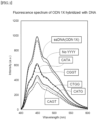
- Nucleic acid with a phenoxazine artificial base is known to be excited at 360 nm and produce fluorescence at 430 nm. It was examined how the fluorescence of the G-clamp linker introduced to the 5' terminus of the oligonucleotide was changed by the overhang sequence during the formation of a double-strand with the target oligo-DNA or oligo-RNA.
- fluorescence spectra of oligonucleotide (ODN 1X) with a single G-clamp linker (PO) introduced to the 5' terminus and oligonucleotide (ODN 2X) with three G-clamp linkers (PO) introduced to the 5' terminus were measured in the form of a single-strand and in the form of a double-strand formed with the target oligo-DNAs or oligo-RNAs having the overhang sequences shown in Table 7.
- the results are shown in FIGS. 1 to 4 .
- the fluorescence spectrum of the double-strand formed by the oligonucleotide (ODN 1X) with a single G-clamp linker (PO) introduced to the 5' terminus and the target oligo-DNA ("No YYYY” in FIG. 1 ) with no overhang was substantially the same as that of ODN 1X in the form of a single-strand.
- the fluorescence intensity decreased in the order of the double-strand (“CATA” in FIG. 1 ) formed by ODN 1X and the target oligo-DNA having the overhang with no guanine and the double-strands ("CGGT", "CTGG”, “CAGT”, and “CATG” in FIG. 1 ) formed by ODN 1X and the target oligo-DNAs having the overhang with a guanine.
- the fluorescence spectrum of the double-strand (No YYYY” in FIG. 2 ) formed by the oligonucleotide (ODN 2X) with three G-clamp linkers (PO) introduced to the 5' terminus and the target oligo-DNA with no overhang and the fluorescence spectrum of the double-strand (“CATA" in FIG. 2 ) formed by ODN 2X and the target oligo-DNA having the overhang with no guanine were substantially the same as that of ODN 2X in the form of a single-strand.
- ODN 2X oligonucleotide
- PO G-clamp linkers
- the fluorescence spectrum of the double-strand (No YYYY” in FIG. 3 ) formed by the oligonucleotide (ODN 1X) with a single G-clamp linker (PO) introduced to the 5' terminus and the target oligo-RNA with no overhang was substantially the same as that of ODN 1X in the form of a single-strand.
- the fluorescence intensity of the double-strand (“CAUA” in FIG. 3 ) formed by ODN 1X and the complementary RNA having the overhang with no guanine decreased to about half of that of ODN 1X.
- the fluorescence intensities of the other double-strands formed by ODN 1X and the oligo-DNAs having the overhang were substantially the same and the lowest.
- the fluorescence spectrum of the double-strand (No YYYY” in FIG. 4 ) formed by the oligonucleotide (ODN 2X) with three G-clamp linkers (PO) introduced to the 5' terminus and the oligo-RNA with no overhang and the fluorescence spectrum of the double-strand (“CAUA” in FIG. 4 ) formed by ODN 2X and the ohgo-RNA having the overhang with no guanine were substantially the same as that of ODN 2X in the form of a single-strand.
- the fluorescence intensity of the double-strand (“CGGU" in FIG. 4 ) formed by ODN 2X and the oligo-RNA having the overhang with two guanines at the center was the lowest.
- oligonucleotides having the following sequences were synthesized and purified:
- the double-strand forming ability (binding affinity) of the oligonucleotides were examined using, as the target strands, a single-stranded oligo- DNAs 3'-d(CGCAAYAAACGA)-5' (SEQ ID NOs: 17 and 18) in which Y was a guanine (G) (SEQ ID NO: 17) and a single-stranded oligo-RNA 3'-r(CGCAAYAAACGA)-5' in which Y was a guanine (G) (SEQ ID NO: 18).
- the double-strand forming ability of the oligonucleotides was examined by subjecting the different types of oligonucleotides and the target strands to an annealing treatment to form double strands, and then measuring their T m values. More specifically, a sample solution of each oligonucleotide (final concentration: 2 ⁇ M) in a phosphate buffer (10 mM, pH 7.0) containing sodium chloride (final concentration: 100 mM) was heated at 100°C and then slowly cooled to room temperature. After that, the sample solution was cooled to 5°C under nitrogen stream before starting the measurement.
- oligo-RNAs 3'-r(CGCAAYAAACGA)-5' (SEQ ID NOs: 22 to 24) in which Y was a mismatch (i.e.,
- the T m values of the target single-stranded oligo- DNA and the single-stranded oligo-RNA in which the base to be paired was a guanine serving as a matching base significantly decreased relative to the cases of using the corresponding oligonucleotides with the dG-clamp (PO) and dC.
- the T m values of the target single-stranded oligo-DNAs and the single-stranded oligo-RNAs in which the base to be paired was a cytosine, adenine, or thymine were lower by 10°C or more relative to the case of using target single-stranded oligo-DNA and the single-stranded oligo-RNA in which the base to be paired was a guanine.
- ASO antisense oligonucleotide
- PO G-clamp linker
- PS G-clamp linker
- GCL(1O), GCL(3O), GCL(1S), and GCL(3S) having a configuration in which one or three G-clamp linkers (PO) or G-clamp linkers (PS) are introduced to the 5' terminus of the ASO above, were designed.
- the conjugates were named according to the following definition: "GCL" before a parenthesis means an ASO to which the G-clamp linker
- GCL represents the number of the introduced G-clamp linkers (PO) or G-clamp linkers (PS)
- "O” and “S” represent the types of bonds included in the G-clamp linker and are "PO” and "PS", respectively.
- GCL without parentheses includes all of the four types of conjugates.
- GCL3 includes two types of conjugates, GCL(3O) and GCL(3S).
- GCS four types
- PXS four types having a configuration in which a dG-clamp or a dtC O is conjugated to the ASO above in the same manner were also synthesized. (These structures are shown in Table 12).
- GCL(1O), GCL(1S), GCL(3O), and GCL(3S) were synthesized using Compound 18 (amidite with the G-clamp linker moiety) with an automated DNA synthesizer (nS-8 Oligonucleotides Synthesizer manufactured by GeneDesign). Oligonucleotide synthesis was performed on a 1.0-pmol scale in the DMTr-on mode. 5-[3,5-bis(trifluoromethyl)phenyl]-1H-tetrazole (Activator 42 (registered trademark)) was used as an activator in all coupling processes.
- Activator 42 registered trademark
- Aqueous iodine was used as an oxidizing agent, and 3-[(dimethylaminomethylene)amino]-3H-1,2,4-dithiazole-5-thione, DDTT, was used as a sulfurizing agent.
- Compound 18, natural forms, and the 2',4'-BNA/LNA altered phosphoramidites other than m C were prepared at a concentration of 100 mM in an ANC solution, and the m C 2',4'-BNA/LNA altered phosphoramidite was prepared at a concentration of 100 mM in an ACN/THF (1/1) solution.
- the coupling times for Compound 18, the natural forms, and the 2',4'-BNA/LNA altered phosphoramidites were 180 seconds, 30 seconds, and 12 minutes, respectively.
- DMTr was removed from the crude oligonucleotide having a DMTr group, and the oligonucleotide was roughly purified using a simple reverse-phase column (Waters Sep-Pak (registered trademark) Plus C18 Environmental Cartridges). Specifically, the crude oligonucleotide was added to the Sep-Pak, and then the column was washed using a 10% aqueous solution of ACN. Subsequently, DMTr was removed using a 1% aqueous solution of trifluoroacetic acid, and the oligonucleotide was eluted using a 40% aqueous solution of MeOH.
- a simple reverse-phase column Waters Sep-Pak (registered trademark) Plus C18 Environmental Cartridges). Specifically, the crude oligonucleotide was added to the Sep-Pak, and then the column was washed using a 10% aqueous solution of ACN. Subsequently, DMTr was removed using a
- TEAA triethylammonium acetate
- the components of the purified oligonucleotide were examined through reverse-phase HPLC with XBridge TM OST C18 2.5 pm (4.6 ⁇ 50 mm) manufactured by Waters and mass spectroscopy with a MALDI-TOF mass spectrometer. The overall yield was calculated from the UV absorbance at 260 nm. Note that the measurement method and the conditions used for the reverse-phase HPLC were as shown in Table 11 below
- GCS(1O), GCS(1S), GCS(3O), GCS(3S), PXS(1O), PXS(1S), PXS(3O) and PXS(3S) were synthesized and purified by GeneDesign.
- the sequence information of the antisense oligonucleotides is as shown in Table 12.
- ODN GCL(3O) (Rt: 11.5min), ODN GCL (IS) (Rt: 11.3min), ODN GCL(3S) (Rt : 11.8min)
- Table 12 ASO Sequence (5'-3') MALDI-TOF-Mass Calculated [M-H] - Found [M-H] - GCL(1O) 5'- XC ⁇ T ⁇ A ⁇ g ⁇ t ⁇ t ⁇ c ⁇ a ⁇ c ⁇ t ⁇ g ⁇ a ⁇ a ⁇ T ⁇ G ⁇ C -3' (SEQ ID NO.
- the target model RNA sequence was a 20-mer sequence constituted by a sequence (16 mer) complementary to the ASO and GAAG serving as an overhang region linked to the 3' terminus of the 16-mer sequence.
- the double-strand forming ability of the antisense oligonucleotides for administration to a mouse was examined by subjecting the different types of oligonucleotides and the target strands to an annealing treatment to form double strands, and then measuring their T m values. More specifically, a sample solution of each oligonucleotide (final concentration: 2 ⁇ M) in a phosphate buffer (10 mM, pH 7.0) containing sodium chloride (final concentration: 100 mM) was heated at 100°C and then slowly cooled to room temperature. After that, the sample solution was cooled to 5°C under nitrogen stream before starting the measurement.
- the temperature was raised to 90°C at a rate of 0.5°C/minute while absorbance at 260 nm was plotted at intervals of 0.5°C.
- the T m value was calculated using a median method, and a mean value of three independent measurements was adopted. The results are shown in Table 13.
- the T m value remained substantially the same irrespective of the number of the ligands. Also, regarding GCL, PXS, and GCS, the T m value remained substantially the same irrespective of whether the PO bond or the PS bond was included, and the T m values of GCL and PXS were higher than that of naked ASO by 4°C to 6°C while the T m value of GCS was higher than that of naked ASO by even 13°C to 18°C.
- mice (Balb/c, female, 5 weeks old, seven mice) were purchased from Japan SLC, Inc. and delivered to an animal experimentation facility. After the mice were acclimated for at least 5 to 7 days, a physiological saline solution of GCL, GCS, or PXS was prepared and once administered to the caudal vein such that a dose per mouse was 100 pg. As a comparison, a physiological saline solution of an unconjugated ASO (ASO to which a ligand and a linker are not linked: "naked ASO”) was prepared and was administered to the caudal vein such that a dose per mouse was 100 pg. A physiological saline solution was used as a negative control.
- ASO to which a ligand and a linker are not linked unconjugated ASO
- mice were each anesthetized through intraperitoneal administration of a triple anesthetic combination (medetomidine, midazolam, butorphanol) 72 hours after the administration of the ASO, and were sacrificed by exsanguination through laparotomy followed by incision of the abdominal aorta. Then, 25 to 50 mg of the skeletal muscle tissue was collected from the thigh and was placed in a 2-mL tube in 96-well Collection Microtubes (Qiagen) in which 500 pL of RNAprotect Tissue Reagent (Thermo) had been dispensed per tube in advance, and then the tissue fragment was stored (-30°C) while being kept immersed in the reagent.
- a triple anesthetic combination medetomidine, midazolam, butorphanol
- MagMAX mirVana Total RNA Isolation Kit (Thermo; referred to as “mirVana kit” hereinafter) was used to extract total RNA from the collected tissue fragment.
- the 96-well Collection Microtubes in which the tissue fragment was stored were centrifuged (1000 ⁇ g, 3 minutes, 4°C) and the RNAprotect Tissue Reagent was removed.
- a lysis buffer (supplemented with 0.7% 2-mercaptoethanol) and one stainless-steel bead (5-mm diameter, QIAGEN), which are attached to the mirVana kit, were added to each tube of the Collection Microtubes, and a tissue homogenate was produced by repeating homogenization treatment at 30 Hz for 2 minutes at room temperature 5 or more times using TissueLyser II (QIAGEN).
- RNA samples were determined using Quant-iT RiboGreen RNA Assay Kit (Thermo).
- a reverse transcription product was prepared from about 10 ng of the total RNA using High-Capacity cDNA Reverse Transcription Kit (Thermo). The reaction was conducted in accordance with the protocol of the kit. Each reverse transcription product was subjected to real-time PCR conducted using PowerUp SYBR Green Master Mix (Thermo). Gapdh was used as the internal control of the PCR.
- the PCR reaction was conducted using StepOnePlus Real-Time PCR System (Thermo), and in the reacton, heat treatment was performed at 95°C for 20 seconds, followed by 45 cycles of thermal denaturation at 95°C for 3 seconds and extension reaction at 60°C for 30 seconds.
- the expression level of Malat1 was analyzed by comparing Ct values obtained from amplification curves of Malat1 and Gapdh ( ⁇ Ct method). The results are shown in FIG. 5 .
- GCL(1O) in which a single G-clamp linker had been introduced to the ASO via PO bonds statistically significantly suppressed the expression level of the mMALAT1 RNA in the skeletal muscle relative to the case of using the naked ASO, indicating that GCL(1O) had very high activity against at least the skeletal muscle among viscera, organs, and tissues other than the liver.
- the G-clamp linker produced in Example 1 is applicable to a drug delivery system formulation for selectively delivering a nucleic acid drug to the skeletal muscle.
- the dtC O is also applicable to a drug delivery system formulation for delivering a nucleic acid drug to at least the skeletal muscle among viscera, organs, and tissues other than the liver.
- the present invention is useful in, for example, the development and production of pharmaceuticals.
Landscapes
- Chemical & Material Sciences (AREA)
- Health & Medical Sciences (AREA)
- Life Sciences & Earth Sciences (AREA)
- Organic Chemistry (AREA)
- General Health & Medical Sciences (AREA)
- Molecular Biology (AREA)
- Biochemistry (AREA)
- Engineering & Computer Science (AREA)
- Genetics & Genomics (AREA)
- Bioinformatics & Cheminformatics (AREA)
- Pharmacology & Pharmacy (AREA)
- Animal Behavior & Ethology (AREA)
- Public Health (AREA)
- Veterinary Medicine (AREA)
- Biotechnology (AREA)
- Medicinal Chemistry (AREA)
- Epidemiology (AREA)
- Biomedical Technology (AREA)
- General Engineering & Computer Science (AREA)
- Wood Science & Technology (AREA)
- Zoology (AREA)
- Neurology (AREA)
- Microbiology (AREA)
- Plant Pathology (AREA)
- Physics & Mathematics (AREA)
- Biophysics (AREA)
- Orthopedic Medicine & Surgery (AREA)
- Physical Education & Sports Medicine (AREA)
- Chemical Kinetics & Catalysis (AREA)
- General Chemical & Material Sciences (AREA)
- Nuclear Medicine, Radiotherapy & Molecular Imaging (AREA)
- Pharmaceuticals Containing Other Organic And Inorganic Compounds (AREA)
- Saccharide Compounds (AREA)
Applications Claiming Priority (2)
| Application Number | Priority Date | Filing Date | Title |
|---|---|---|---|
| JP2022017564 | 2022-02-07 | ||
| PCT/JP2022/041129 WO2023149038A1 (ja) | 2022-02-07 | 2022-11-04 | フェノキサジン誘導体およびそれを用いたドラッグデリバリーシステム製剤 |
Publications (2)
| Publication Number | Publication Date |
|---|---|
| EP4477655A1 true EP4477655A1 (de) | 2024-12-18 |
| EP4477655A4 EP4477655A4 (de) | 2025-06-18 |
Family
ID=87552143
Family Applications (1)
| Application Number | Title | Priority Date | Filing Date |
|---|---|---|---|
| EP22924943.8A Pending EP4477655A4 (de) | 2022-02-07 | 2022-11-04 | Phenoxazinderivat und formulierung eines arzneimittelabgabesystems damit |
Country Status (4)
| Country | Link |
|---|---|
| US (1) | US20250136613A1 (de) |
| EP (1) | EP4477655A4 (de) |
| JP (1) | JPWO2023149038A1 (de) |
| WO (1) | WO2023149038A1 (de) |
Family Cites Families (6)
| Publication number | Priority date | Publication date | Assignee | Title |
|---|---|---|---|---|
| US20040033973A1 (en) * | 2002-08-16 | 2004-02-19 | Muthiah Manoharan | Compounds and oligomeric compounds comprising novel nucleobases |
| US7034131B2 (en) * | 2001-01-29 | 2006-04-25 | Bio-Rad Laboratories Inc. | Nucleic acid derivatives |
| US20030207804A1 (en) * | 2001-05-25 | 2003-11-06 | Muthiah Manoharan | Modified peptide nucleic acids |
| WO2005020885A2 (en) * | 2003-05-21 | 2005-03-10 | Isis Pharmaceuticals, Inc. | Compositions and methods for the treatment of severe acute respiratory syndrome (sars) |
| US9593141B2 (en) * | 2011-11-09 | 2017-03-14 | President And Fellows Of Harvard College | Lin28/let-7 crystal structures, purification protocols, and molecular probes suitable for screening assays and therapeutics |
| US20210189392A1 (en) * | 2019-12-12 | 2021-06-24 | Aligos Therapeutics, Inc. | S-antigen transport inhibiting oligonucleotide polymers and methods |
-
2022
- 2022-11-04 WO PCT/JP2022/041129 patent/WO2023149038A1/ja not_active Ceased
- 2022-11-04 EP EP22924943.8A patent/EP4477655A4/de active Pending
- 2022-11-04 US US18/835,370 patent/US20250136613A1/en active Pending
- 2022-11-04 JP JP2023578378A patent/JPWO2023149038A1/ja active Pending
Also Published As
| Publication number | Publication date |
|---|---|
| WO2023149038A1 (ja) | 2023-08-10 |
| EP4477655A4 (de) | 2025-06-18 |
| US20250136613A1 (en) | 2025-05-01 |
| JPWO2023149038A1 (de) | 2023-08-10 |
Similar Documents
| Publication | Publication Date | Title |
|---|---|---|
| JP6233903B2 (ja) | 架橋型ヌクレオシドおよびヌクレオチド | |
| EP4365290A1 (de) | Nukleinsäureligand und konjugat davon sowie herstellungsverfahren dafür und verwendung davon | |
| JP6048982B2 (ja) | グアニジン架橋を有する人工ヌクレオシドおよびオリゴヌクレオチド | |
| JP5669073B2 (ja) | 架橋型人工ヌクレオシドおよびヌクレオチド | |
| JP7441523B2 (ja) | 5’位修飾ヌクレオシドおよびそれを用いたヌクレオチド | |
| WO2016017422A1 (ja) | 架橋型ヌクレオシドおよびヌクレオチド | |
| EP3587432B1 (de) | Nukleinsäureverbindung und oligonukleotid | |
| JPWO2020027227A1 (ja) | オリゴヌクレオチドを含有する小細胞肺癌治療薬 | |
| JP7438546B2 (ja) | 5’位修飾ヌクレオシドおよびそれを用いたヌクレオチド | |
| US20250136613A1 (en) | Phenoxazine derivative and drug delivery system formulation using same | |
| CN119285688A (zh) | 修饰的核苷酸单体及其用途 | |
| US12606589B2 (en) | Bridged nucleoside and nucleotide using same | |
| US12534493B2 (en) | Bridged nucleoside and nucleotide | |
| JP2023110119A (ja) | 5’位修飾ヌクレオシドおよびそれを用いたヌクレオチド | |
| JP7650412B2 (ja) | 5′位修飾ヌクレオシドおよびそれを用いたヌクレオチド | |
| WO2022215704A1 (ja) | リガンド-核酸コンジュゲート体 | |
| WO2026023273A1 (ja) | リガンド-核酸コンジュゲート体およびそれを用いた医薬組成物 | |
| WO2023021715A1 (ja) | 糖誘導体および糖-核酸コンジュゲート体 | |
| US20230124641A1 (en) | Cross-linked nucleoside and nucleotide using same | |
| WO2025095052A1 (ja) | 炭素環式ヌクレオシド含有オリゴヌクレオチド | |
| WO2024101446A1 (ja) | 架橋部にグアニジノ構造を有する修飾ヌクレオシドおよびそれを用いたオリゴヌクレオチドの製造方法 |
Legal Events
| Date | Code | Title | Description |
|---|---|---|---|
| STAA | Information on the status of an ep patent application or granted ep patent |
Free format text: STATUS: THE INTERNATIONAL PUBLICATION HAS BEEN MADE |
|
| PUAI | Public reference made under article 153(3) epc to a published international application that has entered the european phase |
Free format text: ORIGINAL CODE: 0009012 |
|
| STAA | Information on the status of an ep patent application or granted ep patent |
Free format text: STATUS: REQUEST FOR EXAMINATION WAS MADE |
|
| 17P | Request for examination filed |
Effective date: 20240822 |
|
| AK | Designated contracting states |
Kind code of ref document: A1 Designated state(s): AL AT BE BG CH CY CZ DE DK EE ES FI FR GB GR HR HU IE IS IT LI LT LU LV MC ME MK MT NL NO PL PT RO RS SE SI SK SM TR |
|
| DAV | Request for validation of the european patent (deleted) | ||
| DAX | Request for extension of the european patent (deleted) | ||
| REG | Reference to a national code |
Ref country code: DE Ref legal event code: R079 Free format text: PREVIOUS MAIN CLASS: C07D0498040000 Ipc: C07H0019230000 |
|
| A4 | Supplementary search report drawn up and despatched |
Effective date: 20250521 |
|
| RIC1 | Information provided on ipc code assigned before grant |
Ipc: C07F 9/6561 20060101ALI20250515BHEP Ipc: C12N 15/115 20100101ALI20250515BHEP Ipc: C12N 15/113 20100101ALI20250515BHEP Ipc: A61P 21/00 20060101ALI20250515BHEP Ipc: A61K 48/00 20060101ALI20250515BHEP Ipc: A61K 31/7115 20060101ALI20250515BHEP Ipc: A61K 31/5383 20060101ALI20250515BHEP Ipc: C07D 498/04 20060101ALI20250515BHEP Ipc: C07H 21/00 20060101ALI20250515BHEP Ipc: C07H 19/23 20060101AFI20250515BHEP |