EP4477741A2 - Production d'oligosaccharides - Google Patents
Production d'oligosaccharides Download PDFInfo
- Publication number
- EP4477741A2 EP4477741A2 EP24202516.1A EP24202516A EP4477741A2 EP 4477741 A2 EP4477741 A2 EP 4477741A2 EP 24202516 A EP24202516 A EP 24202516A EP 4477741 A2 EP4477741 A2 EP 4477741A2
- Authority
- EP
- European Patent Office
- Prior art keywords
- cell
- sucrose
- lactose
- sialyl
- transferase
- Prior art date
- Legal status (The legal status is an assumption and is not a legal conclusion. Google has not performed a legal analysis and makes no representation as to the accuracy of the status listed.)
- Pending
Links
Images
Classifications
-
- C—CHEMISTRY; METALLURGY
- C12—BIOCHEMISTRY; BEER; SPIRITS; WINE; VINEGAR; MICROBIOLOGY; ENZYMOLOGY; MUTATION OR GENETIC ENGINEERING
- C12P—FERMENTATION OR ENZYME-USING PROCESSES TO SYNTHESISE A DESIRED CHEMICAL COMPOUND OR COMPOSITION OR TO SEPARATE OPTICAL ISOMERS FROM A RACEMIC MIXTURE
- C12P19/00—Preparation of compounds containing saccharide radicals
- C12P19/18—Preparation of compounds containing saccharide radicals produced by the action of a glycosyl transferase, e.g. alpha-, beta- or gamma-cyclodextrins
-
- C—CHEMISTRY; METALLURGY
- C07—ORGANIC CHEMISTRY
- C07K—PEPTIDES
- C07K14/00—Peptides having more than 20 amino acids; Gastrins; Somatostatins; Melanotropins; Derivatives thereof
- C07K14/195—Peptides having more than 20 amino acids; Gastrins; Somatostatins; Melanotropins; Derivatives thereof from bacteria
- C07K14/24—Peptides having more than 20 amino acids; Gastrins; Somatostatins; Melanotropins; Derivatives thereof from bacteria from Enterobacteriaceae (F), e.g. Citrobacter, Serratia, Proteus, Providencia, Morganella, Yersinia
- C07K14/245—Escherichia (G)
-
- C—CHEMISTRY; METALLURGY
- C12—BIOCHEMISTRY; BEER; SPIRITS; WINE; VINEGAR; MICROBIOLOGY; ENZYMOLOGY; MUTATION OR GENETIC ENGINEERING
- C12N—MICROORGANISMS OR ENZYMES; COMPOSITIONS THEREOF; PROPAGATING, PRESERVING, OR MAINTAINING MICROORGANISMS; MUTATION OR GENETIC ENGINEERING; CULTURE MEDIA
- C12N15/00—Mutation or genetic engineering; DNA or RNA concerning genetic engineering, vectors, e.g. plasmids, or their isolation, preparation or purification; Use of hosts therefor
- C12N15/09—Recombinant DNA-technology
- C12N15/11—DNA or RNA fragments; Modified forms thereof; Non-coding nucleic acids having a biological activity
- C12N15/52—Genes encoding for enzymes or proenzymes
-
- C—CHEMISTRY; METALLURGY
- C12—BIOCHEMISTRY; BEER; SPIRITS; WINE; VINEGAR; MICROBIOLOGY; ENZYMOLOGY; MUTATION OR GENETIC ENGINEERING
- C12N—MICROORGANISMS OR ENZYMES; COMPOSITIONS THEREOF; PROPAGATING, PRESERVING, OR MAINTAINING MICROORGANISMS; MUTATION OR GENETIC ENGINEERING; CULTURE MEDIA
- C12N9/00—Enzymes; Proenzymes; Compositions thereof; Processes for preparing, activating, inhibiting, separating or purifying enzymes
- C12N9/10—Transferases (2.)
- C12N9/1025—Acyltransferases (2.3)
- C12N9/1029—Acyltransferases (2.3) transferring groups other than amino-acyl groups (2.3.1)
-
- C—CHEMISTRY; METALLURGY
- C12—BIOCHEMISTRY; BEER; SPIRITS; WINE; VINEGAR; MICROBIOLOGY; ENZYMOLOGY; MUTATION OR GENETIC ENGINEERING
- C12N—MICROORGANISMS OR ENZYMES; COMPOSITIONS THEREOF; PROPAGATING, PRESERVING, OR MAINTAINING MICROORGANISMS; MUTATION OR GENETIC ENGINEERING; CULTURE MEDIA
- C12N9/00—Enzymes; Proenzymes; Compositions thereof; Processes for preparing, activating, inhibiting, separating or purifying enzymes
- C12N9/10—Transferases (2.)
- C12N9/1048—Glycosyltransferases (2.4)
- C12N9/1051—Hexosyltransferases (2.4.1)
-
- C—CHEMISTRY; METALLURGY
- C12—BIOCHEMISTRY; BEER; SPIRITS; WINE; VINEGAR; MICROBIOLOGY; ENZYMOLOGY; MUTATION OR GENETIC ENGINEERING
- C12N—MICROORGANISMS OR ENZYMES; COMPOSITIONS THEREOF; PROPAGATING, PRESERVING, OR MAINTAINING MICROORGANISMS; MUTATION OR GENETIC ENGINEERING; CULTURE MEDIA
- C12N9/00—Enzymes; Proenzymes; Compositions thereof; Processes for preparing, activating, inhibiting, separating or purifying enzymes
- C12N9/10—Transferases (2.)
- C12N9/12—Transferases (2.) transferring phosphorus containing groups, e.g. kinases (2.7)
- C12N9/1205—Phosphotransferases with an alcohol group as acceptor (2.7.1), e.g. protein kinases
-
- C—CHEMISTRY; METALLURGY
- C12—BIOCHEMISTRY; BEER; SPIRITS; WINE; VINEGAR; MICROBIOLOGY; ENZYMOLOGY; MUTATION OR GENETIC ENGINEERING
- C12N—MICROORGANISMS OR ENZYMES; COMPOSITIONS THEREOF; PROPAGATING, PRESERVING, OR MAINTAINING MICROORGANISMS; MUTATION OR GENETIC ENGINEERING; CULTURE MEDIA
- C12N9/00—Enzymes; Proenzymes; Compositions thereof; Processes for preparing, activating, inhibiting, separating or purifying enzymes
- C12N9/14—Hydrolases (3)
- C12N9/24—Hydrolases (3) acting on glycosyl compounds (3.2)
- C12N9/2402—Hydrolases (3) acting on glycosyl compounds (3.2) hydrolysing O- and S- glycosyl compounds (3.2.1)
-
- C—CHEMISTRY; METALLURGY
- C12—BIOCHEMISTRY; BEER; SPIRITS; WINE; VINEGAR; MICROBIOLOGY; ENZYMOLOGY; MUTATION OR GENETIC ENGINEERING
- C12N—MICROORGANISMS OR ENZYMES; COMPOSITIONS THEREOF; PROPAGATING, PRESERVING, OR MAINTAINING MICROORGANISMS; MUTATION OR GENETIC ENGINEERING; CULTURE MEDIA
- C12N9/00—Enzymes; Proenzymes; Compositions thereof; Processes for preparing, activating, inhibiting, separating or purifying enzymes
- C12N9/14—Hydrolases (3)
- C12N9/24—Hydrolases (3) acting on glycosyl compounds (3.2)
- C12N9/2402—Hydrolases (3) acting on glycosyl compounds (3.2) hydrolysing O- and S- glycosyl compounds (3.2.1)
- C12N9/2468—Hydrolases (3) acting on glycosyl compounds (3.2) hydrolysing O- and S- glycosyl compounds (3.2.1) acting on beta-galactose-glycoside bonds, e.g. carrageenases (3.2.1.83; 3.2.1.157); beta-agarase (3.2.1.81)
- C12N9/2471—Beta-galactosidase (3.2.1.23), i.e. exo-(1-->4)-beta-D-galactanase
-
- C—CHEMISTRY; METALLURGY
- C12—BIOCHEMISTRY; BEER; SPIRITS; WINE; VINEGAR; MICROBIOLOGY; ENZYMOLOGY; MUTATION OR GENETIC ENGINEERING
- C12P—FERMENTATION OR ENZYME-USING PROCESSES TO SYNTHESISE A DESIRED CHEMICAL COMPOUND OR COMPOSITION OR TO SEPARATE OPTICAL ISOMERS FROM A RACEMIC MIXTURE
- C12P19/00—Preparation of compounds containing saccharide radicals
-
- C—CHEMISTRY; METALLURGY
- C12—BIOCHEMISTRY; BEER; SPIRITS; WINE; VINEGAR; MICROBIOLOGY; ENZYMOLOGY; MUTATION OR GENETIC ENGINEERING
- C12P—FERMENTATION OR ENZYME-USING PROCESSES TO SYNTHESISE A DESIRED CHEMICAL COMPOUND OR COMPOSITION OR TO SEPARATE OPTICAL ISOMERS FROM A RACEMIC MIXTURE
- C12P19/00—Preparation of compounds containing saccharide radicals
- C12P19/04—Polysaccharides, i.e. compounds containing more than five saccharide radicals attached to each other by glycosidic bonds
-
- C—CHEMISTRY; METALLURGY
- C12—BIOCHEMISTRY; BEER; SPIRITS; WINE; VINEGAR; MICROBIOLOGY; ENZYMOLOGY; MUTATION OR GENETIC ENGINEERING
- C12P—FERMENTATION OR ENZYME-USING PROCESSES TO SYNTHESISE A DESIRED CHEMICAL COMPOUND OR COMPOSITION OR TO SEPARATE OPTICAL ISOMERS FROM A RACEMIC MIXTURE
- C12P19/00—Preparation of compounds containing saccharide radicals
- C12P19/12—Disaccharides
-
- C—CHEMISTRY; METALLURGY
- C12—BIOCHEMISTRY; BEER; SPIRITS; WINE; VINEGAR; MICROBIOLOGY; ENZYMOLOGY; MUTATION OR GENETIC ENGINEERING
- C12P—FERMENTATION OR ENZYME-USING PROCESSES TO SYNTHESISE A DESIRED CHEMICAL COMPOUND OR COMPOSITION OR TO SEPARATE OPTICAL ISOMERS FROM A RACEMIC MIXTURE
- C12P19/00—Preparation of compounds containing saccharide radicals
- C12P19/26—Preparation of nitrogen-containing carbohydrates
-
- C—CHEMISTRY; METALLURGY
- C12—BIOCHEMISTRY; BEER; SPIRITS; WINE; VINEGAR; MICROBIOLOGY; ENZYMOLOGY; MUTATION OR GENETIC ENGINEERING
- C12Y—ENZYMES
- C12Y203/00—Acyltransferases (2.3)
- C12Y203/01—Acyltransferases (2.3) transferring groups other than amino-acyl groups (2.3.1)
- C12Y203/01018—Galactoside O-acetyltransferase (2.3.1.18)
-
- C—CHEMISTRY; METALLURGY
- C12—BIOCHEMISTRY; BEER; SPIRITS; WINE; VINEGAR; MICROBIOLOGY; ENZYMOLOGY; MUTATION OR GENETIC ENGINEERING
- C12Y—ENZYMES
- C12Y204/00—Glycosyltransferases (2.4)
- C12Y204/01—Hexosyltransferases (2.4.1)
- C12Y204/01022—Lactose synthase (2.4.1.22)
-
- C—CHEMISTRY; METALLURGY
- C12—BIOCHEMISTRY; BEER; SPIRITS; WINE; VINEGAR; MICROBIOLOGY; ENZYMOLOGY; MUTATION OR GENETIC ENGINEERING
- C12Y—ENZYMES
- C12Y204/00—Glycosyltransferases (2.4)
- C12Y204/01—Hexosyltransferases (2.4.1)
- C12Y204/01086—Glucosaminylgalactosylglucosylceramide beta-galactosyltransferase (2.4.1.86)
-
- C—CHEMISTRY; METALLURGY
- C12—BIOCHEMISTRY; BEER; SPIRITS; WINE; VINEGAR; MICROBIOLOGY; ENZYMOLOGY; MUTATION OR GENETIC ENGINEERING
- C12Y—ENZYMES
- C12Y204/00—Glycosyltransferases (2.4)
- C12Y204/01—Hexosyltransferases (2.4.1)
- C12Y204/01149—N-Acetyllactosaminide beta-1,3-N-acetylglucosaminyltransferase (2.4.1.149)
-
- C—CHEMISTRY; METALLURGY
- C12—BIOCHEMISTRY; BEER; SPIRITS; WINE; VINEGAR; MICROBIOLOGY; ENZYMOLOGY; MUTATION OR GENETIC ENGINEERING
- C12Y—ENZYMES
- C12Y204/00—Glycosyltransferases (2.4)
- C12Y204/01—Hexosyltransferases (2.4.1)
- C12Y204/01222—O-Fucosylpeptide 3-beta-N-acetylglucosaminyltransferase (2.4.1.222)
-
- C—CHEMISTRY; METALLURGY
- C12—BIOCHEMISTRY; BEER; SPIRITS; WINE; VINEGAR; MICROBIOLOGY; ENZYMOLOGY; MUTATION OR GENETIC ENGINEERING
- C12Y—ENZYMES
- C12Y302/00—Hydrolases acting on glycosyl compounds, i.e. glycosylases (3.2)
- C12Y302/01—Glycosidases, i.e. enzymes hydrolysing O- and S-glycosyl compounds (3.2.1)
- C12Y302/01023—Beta-galactosidase (3.2.1.23), i.e. exo-(1-->4)-beta-D-galactanase
-
- C—CHEMISTRY; METALLURGY
- C12—BIOCHEMISTRY; BEER; SPIRITS; WINE; VINEGAR; MICROBIOLOGY; ENZYMOLOGY; MUTATION OR GENETIC ENGINEERING
- C12Y—ENZYMES
- C12Y302/00—Hydrolases acting on glycosyl compounds, i.e. glycosylases (3.2)
- C12Y302/01—Glycosidases, i.e. enzymes hydrolysing O- and S-glycosyl compounds (3.2.1)
- C12Y302/01026—Beta-fructofuranosidase (3.2.1.26), i.e. invertase
-
- C—CHEMISTRY; METALLURGY
- C12—BIOCHEMISTRY; BEER; SPIRITS; WINE; VINEGAR; MICROBIOLOGY; ENZYMOLOGY; MUTATION OR GENETIC ENGINEERING
- C12Y—ENZYMES
- C12Y204/00—Glycosyltransferases (2.4)
- C12Y204/01—Hexosyltransferases (2.4.1)
- C12Y204/01094—Protein N-acetylglucosaminyltransferase (2.4.1.94)
Definitions
- oligosaccharides of interest would be synthesized by enzymatic glycosylation of sugar acceptors mediated by one or more heterologous glycosyl transferases of the microorganisms, and the one or more activated sugar nucleotides necessary for glycosylation would be produced by the same microorganism through overexpressing one or more genes encoding endogenous activated sugar nucleotide producing enzymes.
- the metabolic pathways of such syntheses require a carbon source which is mainly a simple carbon building block, typically glycerol or glucose (see e.g.
- lactose can be the carbon source if it also serves as an acceptor ( Lee et al. Microb. Cell Fact. 11:48 (2012 )).
- antibiotic-resistance selection marker genes have been utilized to separate the transformed microorganisms from the non-transformed ones in the inoculum and the fermentation broth.
- the use of antibiotics has been avoided by integrating the genes coding for enzymes involved in the de novo biosynthesis of the donor sugar in the chromosome of the microorganisms ( Baumgärtner et al. Microb. Cell Fact. 12:40 (2013 )).
- sucrose As a carbon and energy source, but most of them are pathogenic.
- the E. coli strains used mainly in industry to synthesize chemical materials cannot live and grow on sucrose ( Bruschi et al. Biotechnol. Adv. 30, 1001 (2012 )).
- sucrose can be a cheaper carbon and energy source.
- attempts have been made to create suc + strains of E. coli that can live and grow on sucrose e.g. Sabri et al. Appl. Environ. Microbiol 79, 478 (2013 )
- produce industrially profitable products by them such as amino acids, biofuel, carotenoids etc. (e.g.
- WO 2012/007481 describes E . coli transformants that express either a sucrose phosphorylase or a sucrose invertase in combination with a fructokinase. Thereby, the microorganism is able to produce 2'-fucosyllactose, utilizing sucrose as its main carbon source. Furthermore, WO 2014/067696 describes an E.coli transformant comprising a csc-gene cluster that enables it to grow on sucrose and produces fucose.
- a first aspect of the invention relates to a process for making a recombinant oligosaccharide, preferably of 3-8 monosaccharide units, more preferably of 3-5 monosaccharide units, particularly a HMO, by glycosylating a carbohydrate acceptor which is preferably lactose and which is not sucrose, comprising the steps of:
- a second aspect of the invention relates to a cell, preferably an E.coli cell, that can internalize a carbohydrate acceptor, which is preferably lactose and which is not sucrose, into said cell and that comprises:
- the engineered microorganism is a fully metabolically active cell in which the growth and the oligosaccharide synthesis may proceed simultaneously.
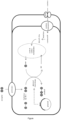
- the cell comprises a heterologous PTS-dependent sucrose utilization transport system containing a sucrose specific porin (facilitates the sucrose diffusion through the outer membrane), a sucrose transport protein (provides intracellular sucrose-6-phosphate from extracellular sucrose) and a sucrose-6-phosphate hydrolase (provides glucose-6-phosphate and fructose).
- the oxidation of glucose-6-phosphate and fructose provides biological energy source by the organism's own metabolic system.
- glucose-6-phosphate and fructose serve as carbon source for producing sugar nucleotides in the cell's natural biosynthetic pathway.
- the so-produced sugar nucleotides are donors for glycosylating carbohydrate acceptors (e.g. lactose), internalized through a specific permease by the cell, and thereby manufacturing oligosaccharides of interest.
- carbohydrate acceptors e.g. lactose
- the glycosylation is mediated by one or more glycosyl transferases which are directly produced by expressing heterologous genes.
- the organism lacks any enzyme degrading either the acceptor or the oligosaccharide product in the cell.
- an exogenous mono- or disaccharide acceptor preferably lactose
- a suitable genetically transformed microorganism particularly E.coli
- this carbohydrate acceptor can be glycosylated in the microorganism using sucrose as its carbon and energy source, and that an exogenous oligosaccharide can be produced and separated in good yield.
- oligosaccharide-producing microorganism that can live on sucrose, utilize sucrose for the metabolic syntheses of the necessary nucleotide sugar donors for glycosylaton, can internalize simple carbohydrate acceptors and perform glycosylation reactions on them for synthesizing more complex oligosaccharides.
- the invention therefore, in a first aspect, involves a process of making an oligosaccharide by:
- the process features the cell being transformed with one or more foreign genes encoding a sucrose utilization system that allows the cell to use sucrose as a carbon source, preferably the main carbon source, more preferably the sole carbon source, for the biosynthesis of the activated sugar nucleotide by the cell.
- the sucrose utilization system with which the cell is transformed, also preferably allows the cell to use sucrose as an energy source, preferably the main energy source, more preferably the sole energy source, for the biosynthesis of the oligosaccharide.
- the term "carbohydrate acceptor” or “acceptor” preferably means a mono- or disaccharide other than sucrose and its glycosides.
- a monosaccharide acceptor or a monosaccharide part of a disaccharide acceptor can comprise any 5-6 carbon atom sugar moiety that is an aldose (e.g. D-glucose, D-galactose, D-mannose, D-ribose, D-arabinose, L-arabinose, D-xylose, etc.), ketose (e.g. D-fructose, D-sorbose, D-tagatose, etc.), deoxysugar (e.g.
- L-rhamnose, L-fucose, etc. or deoxy-aminosugar (e.g. N-acetylglucosamine, N-acetylmannosamine, N-acetylgalactosamine, etc.).
- deoxy-aminosugar e.g. N-acetylglucosamine, N-acetylmannosamine, N-acetylgalactosamine, etc.
- the C-1 (in case of aldoses) or C-2 (in the case of ketoses) anomeric carbon atom at the reducing end of the mono- or disaccharide residue is linked to the non-sugar moiety by a covalent bond or a linker forming a O-, N-, S- or C-glycoside.
- the aglycon of these glycosidic derivatives, with or without a linker is one of the following groups:
- the carbohydrate acceptor is a galactosyl disaccharide, particularly lactose.
- oligosaccharide product or "oligosaccharide” preferably means a glycosylated derivative of a carbohydrate acceptor disclosed above wherein a glycosyl residue is attached to the carbohydrate moiety of the carbohydrate acceptor by interglycosidic linkage.
- an oligosaccharide product is of 3-8 monosaccharide units, particularly of 3-5 monosaccharide units.
- the oligosaccharide product of this invention is a recombinant product, i.e., it is made by a genetically transformed microorganism and is foreign or heterologous to the microorganism.
- microorganism or "cell” preferably means a cell of a microorganism, especially an E.coli cell, in which there is at least one alteration in its DNA sequence.
- the alteration can result in a change in the original characteristics of the wild type cell, e.g., the modified cell is able to perform additional chemical transformation due to the introduced new genetic material that encodes the expression of an enzymes not being in the wild type cell, or is not able to carry out transformation like degradation due to removal of gene/genes (knockout).
- a genetically modified cell can be produced in a conventional manner by genetic engineering techniques that are well-known to those skilled in the art.
- the genetically modified microorganism or cell used in the process of this invention can be selected from the group consisting of bacteria and yeasts, preferably a bacterium.
- Bacteria are preferably selected from the group of: Escherichia coli, Bacillus spp. (e.g.
- Bacillus subtilis Bacillus subtilis ), Campylobacter pylori, Helicobacter pylori, Agrobacterium tumefaciens, Staphylococcus aureus, Thermophilus aquaticus, Azorhizobium caulinodans, Rhizobium leguminosarum, Neisseria gonorrhoeae, Neisseria meningitis, Lactobacillus spp., Lactococcus spp., Enterococcus spp., Bifidobacterium spp., Sporolactobacillus spp., Micromomospora spp., Micrococcus spp., Rhodococcus spp., Pseudomonas, among which E . coli is preferred.
- the process of this invention also involves transporting the exogenous carbohydrate acceptor, preferably lactose, into the genetically modified microorganism for glycosylation to produce a foreign oligosaccharide of interest, preferably without adversely affecting the basic functions of the cell or destroying its integrity.
- the transport takes place via a passive mechanism, during which the exogenous acceptor diffuses passively across the plasma membrane of the cell. Diffusion of the acceptor into the microorganism is a function of the concentration differences between the fermentation broth and the extra- and intracellular space of the cell with respect to the acceptor, whereby the acceptor passes from the place of higher concentration to the place of lower concentration.
- the acceptor is internalized with the aid of an active transport.
- the genetically modified microorganism contains transporter proteins, called permeases, which act as enzymes and with which the microorganism is able to admit exogenous substances and to concentrate them in the cytoplasm.
- permeases transporter proteins
- lactose permease (LacY) acts specifically on galactose, simple galactosyl disaccharides such as lactose and their glycosides.
- the specificity towards the sugar moiety of the exogenous carbohydrate acceptor to be internalized can be altered by mutation of the microorganism by means of conventional recombinant DNA manipulation techniques.
- the internalization of exogenous lactose or its derivative takes place via an active transport mechanism mediated by a lactose permease.
- the genetically modified microorganism preferably lacks any enzyme activity (such as LacZ) that would degrade the acceptor. Likewise, the microorganism is not able to hydrolyze or degrade the oligosaccharide product.
- the genetically modified cell used in the process of the invention comprises one or more endogenous or recombinant genes encoding one or more glycosyl transferase enzymes that are able to transfer the glycosyl residue of an activated sugar nucleotide to the internalized acceptor.
- the gene or an equivalent DNA sequence thereof, if it is recombinant, can be introduced into the cell by conventional techniques, e.g. using an expression vector or by chromosomal intergration.
- the origin of the heterologous nucleic acid sequence can be any animal (including human) or plant, eukaryotic cells such as those from Saccharomyces cerevisae, Saccharomyces pombe, Candida albicans or from algae, prokaryotic cells such as those originated from E.
- coli Bacteroides fragilis, Photo bacterium sp., Bacillus subtilis, Campylobacter pylori, Helicobacter pylori, Agrobacterium tumefaciens, Staphylococcus aureus, Thermophilus aquaticus, Azorhizobium caulinodans, Rhizobium leguminosarum, Rhizobium meliloti, Neisseria gonorrhoeae and Neisseria meningitidis, or virus.
- glycosyl transferase enzyme/enzymes expressed by the protein(s) encoded by the gene(s) or equivalent DNA sequence(s) are preferably glucosyl transferases, galactosyl transferases, N-acetylglucosaminyl transferases, N-acetylgalactosaminyl transferases, glucuronosyl transferases, xylosyl transferases, mannosyl transferases, fucosyl transferases, sialyl transferases and the like.
- the glycosyl transferases are selected from the group consisting of ⁇ -1,3-N-acetylglucosaminyl-transferase, ⁇ -1,6-N-acetylglucosaminyl-transferase, ⁇ -1,3-galactosyl-transferase, ⁇ -1,4-galactosyl-transferase, ⁇ -1,3-N-acetylgalactosaminyl-transferase, ⁇ -1,3-glucuronosyl-transferase, ⁇ -2,3-sialyl-transferase, ⁇ -2,6-sialyl-transferase, ⁇ -2,8-sialyl-transferase, ⁇ -1,2-fucosyl-transferase, ⁇ -1,3-fucosyl-transferase and ⁇ -1,4-fucosyl
- the glycosyl transferases are selected from ⁇ -1,3-N-acetylglucosaminyl transferase, ⁇ -1,6-N-acetylglucosaminyl transferase, ⁇ -1,3-galactosyl transferase, ⁇ -1,4-galactosyl transferase, ⁇ -2,3-sialyl transferase, ⁇ -2,6-sialyl transferase, ⁇ -1,2-fucosyl transferase, ⁇ -1,3-fucosyl transferase and ⁇ -1,4 fucosyl transferase, that is from those involved in the construction of HMO core structures as well as fucosylated and/or sialylated HMOs and its glycosidic derivatives, wherein the aglycon is a moiety defined above at the group of carbohydrate acceptors.
- the genes encoding the above-mentioned transferases have been described
- activated sugar nucleotides serve as donors.
- Each activated sugar nucleotide generally comprises a phosphorylated glycosyl residue attached to a nucleoside, and the specific glycosyl transferase enzyme accepts only the specific sugar nucleotide.
- activated sugar nucleotides are involved in the glycosyl transfer: UDP-Glc, UDP-Gal, UDP-GIcNAc, UDP-GaINAc, UDP-glucuronic acid, UDP-Xyl, GDP-Man, GDP-Fuc and CMP-sialic acid, particularly those selected from the group consisting of UDP-Gal, UDP-GIcNAc, GDP-Fuc and CMP-sialic acid.
- the genetically modified microorganism used in the process of this invention possesses a biosynthetic pathway to the above mentioned activated sugar nucleotides, that is, it has one or more sets of genes encoding one or more enzymes responsible for the synthesis of one or more activated glycosyl nucleotides, ready for glycosylation in glycosyl transferase mediated reaction in the cell, when cultured.
- the sets of genes are either naturally present in the cell or introduced into the cell by means of recombinant DNA manipulation techniques.
- the production of the activated glycosyl nucleotides by the cell takes place under the action of enzymes involved in the biosynthetic pathway of that respective sugar nucleotide stepwise reaction sequence starting from a carbon source (for a review for monosaccharide metabolism see e.g. H. H. Freeze and A. D. Elbein: Chapter 4: Glycosylation precursors, in: Essentials of Glycobiology, 2nd edition (Eds. A. Varki et al.), Cold Spring Harbour Laboratory Press (2009 )).
- the production of the activated sugar nucleotides by the genetically modified microorganism via its own biosynthetic pathway is advantageous compared to in vitro versions of transfer glycosylation, as it avoids using the very expensive sugar nucleotide type donors added exogenously, hence the donors are formed by the cell in situ and the phosphatidyl nucleoside leaving groups are recycled in the cell.
- the microorganism used in the process of the invention comprises genes encoding a sucrose utilization system, that is the cell has a capability to catabolically utilize sucrose as a carbon source, as well as an energy source.
- the system that enables the cell to utilize sucrose can be one normally found in the gene pool of that cell but preferably is a heterologous system (i.e. derived from a different organism and transferred to the host cell by conventional recombinant DNA manipulation techniques, preferably via an expression vector).
- a heterologous system i.e. derived from a different organism and transferred to the host cell by conventional recombinant DNA manipulation techniques, preferably via an expression vector.
- two kinds of sucrose catabolism can be used.
- sucrose is transported into the microorganism and concomitantly phosphorylated to generate intracellular sucrose-6-phosphate which is hydrolysed to glucose-6-phosphate and fructose that are then involved in the central carbon metabolism of the cell.
- PTS can be encoded by scr or sac genes.
- non-PTS extracellular sucrose enters the cell with the aid of a proton symport transport system (sucrose permease) and, after transport, is hydrolysed by an invertase enzyme to glucose and fructose followed by phosphorylation.
- the csc regulon consists of genes encoding the enzymes that are responsible for the non-PTS sucrose utilization.
- the oligosaccharide-producing microorganism is fed with sucrose that provides energy via glycolysis for growing, reproducing and maintaining its structure.
- sucrose taken up by the cell provides, via sucrose catabolism, precursors for the synthesis of the activated sugar nucleotide(s) necessary for the glycosylation process that takes place in the cell.
- the internalized carbohydrate acceptor participates in the glycosyl transferase induced glycosylation reaction, in which a glycosyl residue of an activated nucleotide donor produced by the cell is transferred so that the acceptor is glycosylated.
- the cell when more than one glycosyl transferase is expressed by the cell, additional glycosylation reactions can occur resulting in the formation of the target oligosaccharide.
- the cell preferably lacks any enzyme activity which would degrade the oligosaccharide derivatives produced in the cell.
- the sucrose utilization system is heterologous.
- the microorganism preferably a bacterium, more preferably an E. coli
- a sucrose uptake cassette should be introduced, using an appropriate expression plasmid or via chromosome integration, in the sucrose minus cell to make it be sucrose plus.
- the sucrose pathway genes comprise a PTS-dependent sucrose utilization system, and especially the source regulon is scr.
- Microorganisms having scrgenes are for example Salmonella ssp., Klebsellia pneumonia, Bacteroides fragilis, Vibrio alginolyticus.
- the scr genes comprise the following: scrY, scrA, scrB and scrR.
- the gene scrA codes for the sucrose transport protein Enzyme II Scr that provides intracellular sucrose-6-phosphate from extracellular sucrose via an active transport through the cell membrane and the concomitant phosphorylation.
- the sucrose specific ScrY porin (encoded by scrY ) facilitate the sucrose diffusion through the outer membrane.
- the ScrB invertase enzyme (encoded by scrB ) splits the accumulated sucrose-6-phosphate by hydrolysis to glucose-6-phosphate and fructose.
- a fructokinase ScrK (encoded by scrK ) phosphorylates fructose to fructose-6-phosphate, however the presence of this enzyme is not crucial because the fructose can be phosphorylated by other mechanisms owned by the cell.
- the repressor protein ScrR (encoded by scrR ) negatively controls the expression of the scrYAB genes and is induced by sucrose or fructose. The expression of the sucrose genes are repressed in the presence of glucose.
- the heterologous scr genes are introduced into the microorganism using plasmids, more preferably by a two-plasmid system where one contains the scrA gene and the other does the scrB gene.
- the scrY, scrR and optionally the scrK gene can be carried by either plasmids.
- antibiotics are not added to the fermentation broth in the process of this invention.
- the carbohydrate acceptor to be glycosylated by the microorganism in the process of the invention can be a mono- or disaccharide selected from galactose, N-acetyl-glucosamine, a galactosylated monosaccharide, an N-acetyl-glucosaminylated monosaccharide, and glycosidic derivatives thereof defined above. All these carbohydrate derivatives can be easily taken up by a cell having a LacY permease by means of an active transport and accumulate in the cell before being glycosylated ( WO 01/04341 , Fort et al. J. Chem. Soc., Chem. Comm.
- the cell is able to transport these carbohydrate acceptors into the cell using its LacY permease, and the call lacks any enzymes that could degrade these acceptors, especially LacZ.
- the cell has a deleted or deficient lacA gene on the lac operon.
- the lacl gene for the lac repressor is also deleted in the microorganism. In the absence of the functioning repressor, no inducer is needed for expressing LacY.
- a genetically modified cell is cultured in an aqueous culture medium in the following phases:
- the exogenous carbohydrate acceptor preferably lactose, to be internalized by and glycosylated in the cell
- the acceptor can be added in this second phase as a pure solid/liquid or in a form of a concentrated aqueous solution or suspension.
- the oligosaccharide production takes place in this second phase and can take up to 6-7 days.
- this feeding phase is performed under conditions allowing the production of a culture with a high cell density.
- a feature of the process of this invention is that there is no need to change the carbon source and/or the energy source between the growth phase and the production phase of the microorganism.
- the process further comprises the addition of an inducer to the culture medium to induce the expression in the cell of enzyme(s) and/or of protein(s) involved in the transport of the acceptor and/or in the glycosylation of the internalized acceptor and/or in the biosynthesis of the activated sugar nucleotide donors.
- the inducer is preferably isopropyl ⁇ -D-thiogalactoside (IPTG) and is added to the culture medium in the beginning of the feeding phase.
- IPTG isopropyl ⁇ -D-thiogalactoside
- the use of inducer is not necessary if the cell is of Lacl - phenotype.
- microorganisms described above are highly stable under the process conditions of this invention described above. As a result, it is believed that these microorganisms can be used to produce oligosaccharides using sucrose as their carbon and energy sources at least at the same production rate as, and in a more reliable and reproducible manner than, like microorganisms using glycerol and/or glucose as their carbon and/or energy sources.
- one or more plasmids preferably one or two plasmids, containing the scrgenes (needed by the microorganisms for utilizing sucrose) plus one or more glycosyl transferase genes (needed by the microorganisms for making an exogenous oligosaccharide) are particularly stable in the above described microorganisms over fermentation periods of more than 4 days, preferably 5 to 7 days.
- the oligosaccharide product has accumulated both in the intra-and the extracellular matrix of the microorganism.
- the product is then preferably transported out of the cell to the supernatant in a passive way, i.e., it can diffuse outside across the cell membrane.
- This transport can be facilitated by one or more sugar efflux transporters in the cell, i.e. proteins that promote the effluence of sugar derivatives from the cell to the supernatant.
- the sugar efflux transporter(s) can be present exogenously or endogenously and can be overexpressed under the conditions of the fermentation to enhance the export of the oligosaccharide derivative produced.
- the specificity towards the sugar moiety of the product to be secreted can be altered by mutation of the cell by means of conventional recombinant DNA manipulation techniques.
- the oligosaccharide accumulates in the extracellular matrix.
- the oligosaccharide can be transported out of the cell to the supernatant by disrupting the cell walls in a conventional manner.
- the oligosaccharide product can then be separated in a conventional manner from the aqueous culture medium, in which it was made by the cell.
- a first step of separating the oligosaccharide from the culture medium preferably involves separating the oligosaccharide from the microorganism which produced it. This preferably involves clarifying the culture medium to remove suspended particulates and contaminants, particularly cells, cell components, insoluble metabolites and debris produced by culturing the genetically modified microorganism.
- the aqueous culture medium which contains the oligosaccharide product, can be clarified in a conventional manner.
- the culture medium is clarified by centrifugation and/or filtration.
- a second step of separating the oligosaccharide from the culture medium preferably involves removing substantially all the proteins, as well as peptides, amino acids, RNA and DNA and any endotoxins and glycolipids that could interfere with the subsequent separation step, from the aqueous culture medium, preferably after it has been clarified.
- proteins and related impurities can be removed from the culture medium in a conventional manner.
- proteins and related impurities are removed from the culture medium by ultrafiltration, tangential flow high-performance filtration, tangential flow ultrafiltration, affinity chromatography, ion exchange chromatography, hydrophobic interaction chromatography and/or gel filtration (i.e., size exclusion chromatography), particularly by chromatography, more particularly by ion exchange chromatography or hydrophobic interaction chromatography.
- size exclusion chromatography proteins and related impurities are retained by a chromatography medium or a selected membrane, while the oligosaccharide product remains in the aqueous culture medium.
- the oligosaccharide product in the aqueous culture medium can then be separated from sugar-like by-product(s) and from the culture medium, after proteins and related impurities have been removed from the culture medium.
- This can be suitably done by subjecting the culture medium to chromatographic separation.
- This separation can be carried out, in case of a neutral oligosaccharide product, in a chromatographic separation column, filled with a conventional acidic cationic ion exchange resin.
- the acidic cationic ion exchange resin can be in monovalent or divalent cationic form and is preferably in H + , K + , Na + , Mg 2+ or Ca 2+ form, particularly Ca 2+ .
- the chromatographic separation can be carried out in a conventional manner at a pH of the solution of 2 to 9.
- the eluent used in the chromatographic separation is preferably water, especially demineralized water, but aqueous salt solutions can also be used. Alcohols, such as ethanol, and aqueous alcohol mixtures can also be used.
- the process of this invention for producing an oligosaccharide preferably having a lactose unit at the reducing end or a glycoside thereof comprises the steps of:
- the glycosylated lactose is preferably an N-acetyl-glucosaminylated, galactosylated, fucosylated and/or sialylated lactose.
- the cell comprises one or more recombinant genes encoding an N-acetyl-glucosaminyl transferase, a galactosyl transferase, a sialyl transferase and/or a fucosyl transferase, and also comprise a biosyntethic pathway to the corresponding activated sugar type nucleotides, that is UDP-GIcNAc, UDP-Gal, GDP-Fuc and/or CMP-sialic acid.
- the compound of formula 1 made by this process can be characterized by formula 1a, 1b or 1c
- the compounds according to formulae 1a, 1b and 1c made by the process are human milk oligosaccharides (when Y is OH) or glycosides thereof (when Y is non-sugar aglycon).
- the preferred compounds of formula 1a made by the process are selected from lacto-N-neotetraose, para-lacto-N-hexaose, para-lacto-N-neohexaose, lacto-N-neohexaose, para-lacto-N-octaose, lacto-N-neooctaose and glycosides thereof, all of which can optionally be substituted with one or more sialyl and/or fucosyl residue.
- the preferred carbohydrate acceptor, exogenously added to the culture medium, is lactose
- the preferred oligosaccharide product is a human milk oligosaccharide (HMO).
- HMOs consist of a lactose unit at the reducing end and one or more from the following monosaccharide units: N-acetyl-glucosamine, galactose, fucose and sialic acid (see Urashima et al.: Milk Oligosaccharides, Nova Biomedical Books, New York, 2011, ISBN: 978-1-61122-831-1).
- the cell then comprises one or more recombinant genes encoding ⁇ -1,3-N-acetyl-glucosaminyl transferase, ⁇ -1,6-N-acetyl-glucosaminyl transferase, ⁇ -1,3-galactosyl transferase, ⁇ -1,4-galactosyl transferase, ⁇ -2,3-sialyl transferase, ⁇ -2,6-sialyl transferase, ⁇ -1,2-fucosyl transferase, ⁇ -1,3-fucosyl transferase and/or ⁇ -1,4 fucosyl transferase, and also comprise a biosyntethic pathway to the corresponding activated sugar type nucleotides, that is UDP-GIcNAc, UDP-Gal, GDP-Fuc and/or CMP-sialic acid.
- the process of this invention for producing an N-acetyled HMO preferably of 3-5 monosaccharide units, comprises the steps of:
- the process of this invention for producing a sialylated HMO preferably of 3-5 monosaccharide units, comprises the steps of:
- the heterologous PTS-dependent sucrose utilization system preferably comprises scrgenes, more preferably scrY, scrA, scrB and scrR, and particularly does not contain scrK.
- the process of this invention for producing a fucosylated and sialylated HMO, preferably of 3-5 monosaccharide units comprises the steps of:
- the heterologous PTS-dependent sucrose utilization system preferably comprises scrgenes, more preferably scrY, scrA, scrB and scrR, and particularly does not contain scrK.
- the product is preferably 3'-sialyl-3-fucosyllactose.
- a second aspect of the invention relates to providing a genetically modified microorganism that can internalize sucrose and a carbohydrate acceptor, which is not sucrose, preferably lactose, into said microorganism and that comprises:
- the genetically modified microorganism of the second aspect can be selected from the group consisting of bacteria and yeasts, preferably a bacterium.
- Bacteria are preferably selected from the group of: Escherichia coli, Bacillus spp. (e.g.
- the genetically modified cell of the second aspect comprises one or more endogenous or recombinant genes encoding one or more glycosyl transferase enzymes that are able to transfer the glycosyl residue of an activated sugar nucleotide to the internalized acceptor.
- the origin of the heterologous nucleic acid sequence can be any animal (including human) or plant, eukaryotic cells such as those from Saccharomyces cerevisae, Saccharomyces pombe, Candida albicans or from algae, prokaryotic cells such as those originated from E.
- coli Bacteroides fragilis, Photo bacterium sp., Bacillus subtilis, Campylobacter pylori, Helicobacter pylori, Agrobacterium tumefaciens, Staphylococcus aureus, Thermophilus aquaticus, Azorhizobium caulinodans, Rhizobium leguminosarum, Rhizobium meliloti, Neisseria gonorrhoeae and Neisseria meningitidis, or virus.
- glycosyl transferase enzyme/enzymes expressed by the protein(s) encoded by the gene(s) or equivalent DNA sequence(s) are preferably glucosyl transferases, galactosyl transferases, N-acetylglucosaminyl transferases, N-acetylgalactosaminyl transferases, glucuronosyl transferases, xylosyl transferases, mannosyl transferases, fucosyl transferases, sialyl transferases and the like.
- the glycosyl transferases are selected from the group consisting of ⁇ -1,3-N-acetylglucosaminyl-transferase, ⁇ -1,6-N-acetylglucosaminyl-transferase, ⁇ -1,3-galactosyl-transferase, ⁇ -1,4-galactosyl-transferase, ⁇ -1,3-N-acetylgalactosaminyl-transferase, ⁇ -1,3-glucuronosyl-transferase, ⁇ -2,3-sialyl-transferase, ⁇ -2,6-sialyl-transferase, ⁇ -2,8-sialyl-transferase, ⁇ -1,2-fucosyl-transferase, ⁇ -1,3-fucosyl-transferase and ⁇ -1,4-fucosyl
- the glycosyl transferases are selected from ⁇ -1,3-N-acetylglucosaminyl transferase, ⁇ -1,6-N-acetylglucosaminyl transferase, ⁇ -1,3-galactosyl transferase, ⁇ -1,4-galactosyl transferase, ⁇ -2,3-sialyl transferase, ⁇ -2,6-sialyl transferase, ⁇ -1,2-fucosyl transferase, ⁇ -1,3-fucosyl transferase and ⁇ -1,4 fucosyl transferase, that is from those involved in the construction of HMO core structures as well as fucosylated and/or sialylated HMOs and its glycosidic derivatives, wherein the aglycon is a moiety defined above at the group of carbohydrate acceptors.
- the genetically modified microorganism of the second aspect of the invention involves a transporting system that internalize the exogenous carbohydrate acceptor, preferably lactose, into the microorganism for glycosylation and to produce a foreign oligosaccharide of interest, preferably without adversely affecting the basic functions of the microorganism or destroying its integrity.
- the carbohydrate acceptor is internalized with the aid of an active transport, mediated by a transporter protein, called permease, which act as enzymes and with which the microorganism is able to admit exogenous substances and to concentrate them in the cytoplasm.
- lactose permease acts specifically on galactose, simple galactosyl disaccharides such as lactose and their glycosides.
- the genetically modified microorganism preferably lacks any enzyme activity (such as LacZ) that would degrade the acceptor. Likewise, the microorganism is not able to hydrolyze or degrade the oligosaccharide product.
- the genetically modified microorganism of the second aspect comprises genes encoding a the phosphoenolpyruvate (PEP)-dependent phosphotransferase (PTS) sucrose utilization system, that is the cell has a capability to catabolically utilize sucrose as a carbon source, as well as an energy source.
- PTS-system is heterologous (i.e. derived from a different organism and transferred to the host cell by conventional recombinant DNA manipulation techniques, preferably via an expression vector) and can be encoded by scr or sac genes, preferably scr genes.
- scr genes comprised by the genetically modified microorganism, preferably E. coli are the following: scrY, scrA, scrB and scrR.
- the gene scrA codes for the sucrose transport protein Enzyme II Scr that provides intracellular sucrose-6-phosphate from extracellular sucrose via an active transport through the cell membrane and the concomitant phosphorylation.
- the sucrose specific ScrY porin (encoded by scrY ) facilitate the sucrose diffusion through the outer membrane.
- the ScrB invertase enzyme (encoded by scrB ) splits the accumulated sucrose-6-phosphate by hydrolysis to glucose-6-phosphate and fructose.
- the presence of a fructokinase ScrK is not crucial because the fructose can be phosphorylated by other mechanisms owned by the cell.
- the repressor protein ScrR (encoded by scrR ) negatively controls the expression of the scrYAB genes and is induced by sucrose or fuctose.
- the heterologous scr genes are introduced into the microorganism using plasmids, more preferably by a two-plasmid system where one contains the scrA gene and the other does the scrB gene.
- the scrY and scrR can be carried by either plasmids.
- the genetically modified microorganism of the second aspect has a deleted or deficient lacA gene on the lac operon.
- the lacl gene for the lac repressor is also deleted in the genetically modified microorganism.
- the genetically modified microorganism disclosed above is suitable for preparing, from lactose or lactosides having an aglycon disclosed above, an oligosaccharide of formula 1
- the oligosaccharide of formula 1 is a human milk oligosaccharide (when Y is OH) or a glycosides thereof (when Y is non-sugar aglycon), more preferably a human milk oligosaccharide.
- the genetically modified microorganism is an E. coli cell of LacZ - , LacY + genotype or LacZ - , LacY + , Lacl - genotype, and comprises:
- the heterologous scr cluster particularly does not contain scrK.
- the N-acetyl-glucosaminyl transferase is a ⁇ -1,3-N-acetyl-glucosaminyl transferase and no recombinant gene encoding a galactosyl transferase is present in the cell.
- the genetically modified E. coli produces primarily lacto-N-triose.
- the N-acetyl-glucosaminyl transferase is a ⁇ -1,3-N-acetyl-glucosaminyl transferase and galactosyl transferase is a ⁇ -1,3-galactosyl transferase.
- the genetically modified E. coli produces primarily LNT.
- the N-acetyl-glucosaminyl transferase is a ⁇ -1,3-N-acetyl-glucosaminyl transferase and galactosyl transferase is a ⁇ -1,4-galactosyl transferase.
- the genetically modified E. coli produces primarily LNnT.
- the genetically modified microorganism is an E . coli cell of LacZ - , LacY + genotype or LacZ - , LacY + , Lacl - genotype, and comprises:
- the fucosyl transferase is an ⁇ -1,2-fucosyl transferase.
- the genetically modified E. coli produces primarily 2'-FL.
- the fucosyl transferase is an ⁇ -1,3-fucosyl transferase.
- the genetically modified E. coli produces primarily 3-FL.
- fucosyl transferases there are two fucosyl transferases present in the cell: an ⁇ -1,2-fucosyl transferase and an ⁇ -1,3-fucosyl transferase.
- the genetically modified E. coli produces primarily DFL.
- the genetically modified microorganism is an E . coli cell of LacZ - , LacY + genotype or LacZ - , LacY + , Lacl - genotype, and comprises:
- the heterologous scr cluster particularly does not contain scrK.
- the sialyl transferase is an ⁇ -2,3-sialyl transferase.
- the genetically modified E. coli produces primarily 3'-SL.
- the sialyl transferase is an ⁇ -2,6-sialyl transferase.
- the genetically modified E. coli produces primarily 6'-SL.
- the genetically modified microorganism is an E . coli cell of LacZ - , LacY + genotype or LacZ - , LacY + , Lacl - genotype, and comprises:
- the heterologous scr cluster particularly does not contain scrK.
- Example 1 Comparative test for making LNnT by a glycerol or sucrose utilizing E. coli
- strains were constructed from Escherichia coli K12 strain DH1 which was obtained from the Deutsche Sammlung von Mikroorganismen (reference DSM 5346) by deleting the genes: lacZ nanKETA lacA melA wcaJ mdoH, by inserting a Plac promoter, and maintaining genes involved in the UDP-GIcNAc and UDP-Gal biosynthesis.
- the glycerol utilizing strain (strain I) contains a pBBR3 -IgtA-tet plasmid carrying N.
- sucrose utilizing strain contains the two following plasmids:
- IPTG Isopropyl thio- ⁇ -D-galactopyranoside
- the culture was carried out in a 3 I fermenter containing ⁇ 0.9 I of mineral culture medium (Samain et al. J. Biotechnol. 72, 33 (1999); does not contain antibiotics for the sucrose system).
- the temperature was kept at 33 °C and the pH regulated at 6.8 with 28% NH 4 OH.
- the inoculum of the producing strain consisted in a LB medium (20 ml) supplemented with ampicillin and tetracycline for strain I or M9 medium (20 ml) supplemented with sucrose for strain II was added to the fermenter.
- the exponential growth phase started with the inoculation and stopped until exhaustion of the carbon source (glucose for strain I or sucrose for strain II, ⁇ 17.5 g/l) initially added to the medium.
- a lactose solution 70 g of lactose/500 ml of water
- the carbon source 500 g/l solution, 4.5 g/h of glycerol for strain I and 3 g/l of sucrose for strain II.
- the inducer isopropyl thio- ⁇ -D-galactopyranoside, IPTG, 1-2 ml of a 50 mg/ml solution
- the glycerol-fed fermentation (strain I) lasted for 90 hours after which the cells died (LNnT titre: 45 g/l).
- the sucrose-fed fermentation (strain II) produced an LNnT concentration of 56 g/l after 116 hours.
- Example 2 production of 2'-FL by a sucrose utilizing E. coli
- the strain was constructed from Escherichia coli K12 strain DH1 which was obtained from the Deutsche Sammlung von Mikroorganismen (reference DSM 5346) by deleting the genes: lacZ nanKETA lacA melA wcaJ mdoH and by inserting a Plac promoter to upstream the gmd gene.
- the starin contains the two following plasmids:
- IPTG Isopropyl thio- ⁇ -D-galactopyranoside
- the culture was carried out in a 2 I fermenter containing ⁇ 0.9 I of mineral culture medium ( Samain et al. J. Biotechnol. 72, 33 (1999 ); does not contain antibiotics).
- the temperature was kept at 33 °C and the pH regulated at 6.8 with 28% NH 4 OH.
- the inoculum of the producing strain consisted in a M9 medium supplemented with sucrose (20 ml) was added to the fermenter.
- the exponential growth phase started with the inoculation and stopped until exhaustion of sucrose ( ⁇ 22 g/l) initially added to the medium.
- the inducer (isopropyl thio- ⁇ -D-galactopyranoside, IPTG, 1-2 ml of a 50 mg/ml solution) was then added.
- a feeding with a lactose+sucrose solution 160 g of lactose + 500 g of sucrose/I in water
- the concentration of 2'-FL was around 100 g/l in the supernatant at the end of the fermentation.
Landscapes
- Chemical & Material Sciences (AREA)
- Organic Chemistry (AREA)
- Life Sciences & Earth Sciences (AREA)
- Health & Medical Sciences (AREA)
- Engineering & Computer Science (AREA)
- Genetics & Genomics (AREA)
- Zoology (AREA)
- Wood Science & Technology (AREA)
- Bioinformatics & Cheminformatics (AREA)
- General Health & Medical Sciences (AREA)
- Biochemistry (AREA)
- General Engineering & Computer Science (AREA)
- Biotechnology (AREA)
- Molecular Biology (AREA)
- Microbiology (AREA)
- Biomedical Technology (AREA)
- Medicinal Chemistry (AREA)
- General Chemical & Material Sciences (AREA)
- Chemical Kinetics & Catalysis (AREA)
- Biophysics (AREA)
- Gastroenterology & Hepatology (AREA)
- Proteomics, Peptides & Aminoacids (AREA)
- Physics & Mathematics (AREA)
- Plant Pathology (AREA)
- Preparation Of Compounds By Using Micro-Organisms (AREA)
- Micro-Organisms Or Cultivation Processes Thereof (AREA)
Priority Applications (1)
| Application Number | Priority Date | Filing Date | Title |
|---|---|---|---|
| EP24202516.1A EP4477741A3 (fr) | 2014-06-27 | 2015-06-29 | Production d'oligosaccharides |
Applications Claiming Priority (4)
| Application Number | Priority Date | Filing Date | Title |
|---|---|---|---|
| DKPA201470392 | 2014-06-27 | ||
| EP24202516.1A EP4477741A3 (fr) | 2014-06-27 | 2015-06-29 | Production d'oligosaccharides |
| PCT/DK2015/050191 WO2015197082A1 (fr) | 2014-06-27 | 2015-06-29 | Production d'oligosaccharides |
| EP15811450.4A EP3161143B8 (fr) | 2014-06-27 | 2015-06-29 | Production d'oligosaccharides |
Related Parent Applications (2)
| Application Number | Title | Priority Date | Filing Date |
|---|---|---|---|
| EP15811450.4A Division EP3161143B8 (fr) | 2014-06-27 | 2015-06-29 | Production d'oligosaccharides |
| EP15811450.4A Division-Into EP3161143B8 (fr) | 2014-06-27 | 2015-06-29 | Production d'oligosaccharides |
Publications (2)
| Publication Number | Publication Date |
|---|---|
| EP4477741A2 true EP4477741A2 (fr) | 2024-12-18 |
| EP4477741A3 EP4477741A3 (fr) | 2025-03-05 |
Family
ID=54937113
Family Applications (2)
| Application Number | Title | Priority Date | Filing Date |
|---|---|---|---|
| EP24202516.1A Pending EP4477741A3 (fr) | 2014-06-27 | 2015-06-29 | Production d'oligosaccharides |
| EP15811450.4A Active EP3161143B8 (fr) | 2014-06-27 | 2015-06-29 | Production d'oligosaccharides |
Family Applications After (1)
| Application Number | Title | Priority Date | Filing Date |
|---|---|---|---|
| EP15811450.4A Active EP3161143B8 (fr) | 2014-06-27 | 2015-06-29 | Production d'oligosaccharides |
Country Status (5)
| Country | Link |
|---|---|
| US (2) | US10731193B2 (fr) |
| EP (2) | EP4477741A3 (fr) |
| CN (2) | CN106460024B (fr) |
| ES (1) | ES3002778T3 (fr) |
| WO (1) | WO2015197082A1 (fr) |
Families Citing this family (54)
| Publication number | Priority date | Publication date | Assignee | Title |
|---|---|---|---|---|
| US10829508B2 (en) | 2015-12-18 | 2020-11-10 | Glycom A/S | Fermentative production of oligosaccharides |
| EP4674526A3 (fr) | 2016-04-19 | 2026-04-01 | Glycom A/S | Séparation d'oligosaccharides à partir d'un bouillon de fermentation |
| EP3474861A4 (fr) * | 2016-06-24 | 2020-04-15 | Glycom A/S | Composés comprenant des hmos pour la prévention et/ou le traitement d'infections virales et/ou bactériennes. |
| JP2019528088A (ja) * | 2016-08-31 | 2019-10-10 | オリゴサイエンス バイオテクノロジー ゲーエムベーハー | 子牛の肥育におけるヒト乳オリゴ糖の使用 |
| ES2856749T3 (es) * | 2016-10-29 | 2021-09-28 | Chr Hansen Hmo Gmbh | Proceso para la producción de oligosacáridos fucosilados |
| US10407516B2 (en) | 2016-10-31 | 2019-09-10 | Glycom A/S | Crystalline HMO |
| AU2018281511B2 (en) * | 2017-06-09 | 2020-04-16 | Sone Farm Co., Ltd. | Novel lactic acid bacteria and use thereof |
| CN110914284B (zh) | 2017-07-12 | 2025-01-07 | 格礼卡姆股份公司 | 包含中性单糖或寡糖和酸性非碳水化合物组分的无定形混合物 |
| CN111566117A (zh) | 2017-12-29 | 2020-08-21 | 糖模拟物有限公司 | E-选择蛋白和半乳凝素-3的异双功能抑制剂 |
| CN108410787A (zh) * | 2018-03-13 | 2018-08-17 | 光明乳业股份有限公司 | 一种合成乳酰-n-新四糖的重组枯草芽孢杆菌及其构建方法与应用 |
| EP3620510B1 (fr) | 2018-09-06 | 2023-11-01 | Chr. Hansen HMO GmbH | Production fermentative d'oligosaccharides par fermentation totale au moyen d'une charge mixte |
| CN109609422A (zh) * | 2018-11-20 | 2019-04-12 | 安徽天凯生物科技有限公司 | 一种可以产2’-岩藻基乳糖菌株的构建方法 |
| CA3121848A1 (fr) | 2018-12-18 | 2020-06-25 | Inbiose N.V. | Production de 3-fucosyllactose et enzimes a-1,3-fucosyltransferases de conversion de lactose |
| CN118373810A (zh) | 2018-12-27 | 2024-07-23 | 糖模拟物有限公司 | 抑制c-糖苷的半乳凝素-3 |
| US11845771B2 (en) | 2018-12-27 | 2023-12-19 | Glycomimetics, Inc. | Heterobifunctional inhibitors of E-selectin and galectin-3 |
| TW202126317A (zh) | 2019-09-24 | 2021-07-16 | 美商普拉塔生技公司 | 用於治療發炎和免疫疾病之組成物和方法 |
| JP7793519B2 (ja) * | 2019-12-19 | 2026-01-05 | ビーエーエスエフ ソシエタス・ヨーロピア | ファインケミカルを生成する際の空時収率、炭素変換効率、及び炭素基質適応性の増加 |
| JP2023519488A (ja) | 2020-03-12 | 2023-05-11 | グリコム・アクティーゼルスカブ | 2’-flの結晶化 |
| CN111471637A (zh) * | 2020-05-08 | 2020-07-31 | 江苏华燕集团有限公司 | 2`-岩藻糖基乳糖高产菌株及其制备方法和用途 |
| EP3929300A1 (fr) | 2020-06-26 | 2021-12-29 | Chr. Hansen HMO GmbH | Exportation améliorée d'oligosaccharides à partir de cellules bactériennes |
| EP4179102A1 (fr) * | 2020-07-13 | 2023-05-17 | Glycom A/S | Production d'oligosaccharide |
| US20250188504A1 (en) * | 2020-08-10 | 2025-06-12 | Inbiose N.V. | Production of a mixture of mammalian milk oligosaccharides by a cell |
| CA3188645A1 (fr) | 2020-08-14 | 2022-02-17 | Prolacta Bioscience, Inc. | Compositions d'oligosaccharide de lait humain destinees a etre utilisees avec des bacteriotherapies |
| EP4277634A1 (fr) | 2021-01-12 | 2023-11-22 | Prolacta Bioscience, Inc. | Régimes de traitement symbiotique |
| AU2022258873A1 (en) | 2021-04-16 | 2023-11-30 | Inbiose N.V. | Fermentative production |
| EP4341276A1 (fr) | 2021-05-17 | 2024-03-27 | DSM IP Assets B.V. | Nouvelle technologie pour permettre l'utilisation de saccharose dans des souches pour la production biosyntétique |
| CN117321071A (zh) * | 2021-05-17 | 2023-12-29 | 帝斯曼知识产权资产管理有限公司 | 表达转化酶/蔗糖水解酶的微生物菌株 |
| DK181242B1 (en) | 2021-05-17 | 2023-05-30 | Dsm Ip Assets Bv | GENETICALLY ENGINEERED CELLS COMPRISING A RECOMBINANT NUCLEIC ACID SEQUNCE ENCODING AN α-1,2-FUCOSYLTRANSFERASE CAPABLE OF PRODUCING LNFP-I, NUCLEIC ACID SEQUENCES ENCODING SAME AND METHODS FOR USE OF SAME |
| DK181442B1 (en) * | 2021-05-17 | 2024-01-17 | Dsm Ip Assets Bv | Cells capable of producing one or more human milk oligosaccharides (hmos) comprising expression of an invertase, method comprising said cells for biosynthetic production and use of said cells for biosynthetic production; use of an invertase in a biosynthetic production |
| DK181497B1 (en) * | 2021-05-17 | 2024-03-12 | Dsm Ip Assets Bv | ENHANCING FORMATION OF THE HMOS LNT AND/OR LNnT BY MODIFYING LACTOSE IMPORT IN THE CELL |
| US20240327885A1 (en) | 2021-05-17 | 2024-10-03 | Dsm Ip Assets B.V. | Methods of producting hmo blend profiles with lnfp-1 and 2'-fl as the predominant compounds |
| WO2023057598A1 (fr) | 2021-10-07 | 2023-04-13 | Eligo Bioscience | Procédés impliquant un remplacement de souche bactérienne |
| DK181991B1 (en) * | 2021-11-11 | 2025-05-15 | Dsm Ip Assets Bv | Combined fermentation process for producing one or more human milk oligosaccharide(s) (hmo(s)) in escherichia coli |
| US20250382649A1 (en) | 2021-12-01 | 2025-12-18 | Dsm Ip Assets B.V. | Cells with tri-, tetra- or pentasaccharide importers useful in oligosaccharide production |
| DK181683B1 (en) | 2022-03-02 | 2024-09-20 | Dsm Ip Assets Bv | Cells exprssing new sialyltransferases for in vivo synthesis of lst-a, methods using same and constructs encoding said sialyltransferases |
| US20260028634A1 (en) | 2022-03-02 | 2026-01-29 | Dsm Ip Assets B.V. | New sialyltransferases for in vivo synthesis of 3'sl and 6'sl |
| DK181319B1 (en) | 2022-03-02 | 2023-08-10 | Dsm Ip Assets Bv | Genetically engineered cells and methods comprising use of a sialyltransferase for in vivo synthesis of 3’sl |
| US20250290078A1 (en) | 2022-04-29 | 2025-09-18 | Dsm Ip Assets B.V. | Hmo producing microorganism with increased robustness towards glucose gradients |
| DK182075B1 (en) | 2022-06-13 | 2025-07-02 | Dsm Ip Assets Bv | Genetically engineered cells comprising sigma factor modifications for production of heterologous products and methods for use of same |
| DK182283B1 (en) | 2022-06-20 | 2026-02-10 | Dsm Ip Assets Bv | Methods and cell comprising new sialyltransferases for in vivo synthesis of lst-c and use of the same |
| DK181765B1 (en) | 2022-07-15 | 2024-12-04 | Dsm Ip Assets Bv | Cells expressing new fucosyltransferases for in vivo synthesis of lnfp-iii, and methods and uses of same |
| DK181911B1 (en) | 2022-07-15 | 2025-03-18 | Dsm Ip Assets Bv | GENETICALLY ENGINEERED CELLS COMPRISING A RECOMBINANT NUCLEIC ACID SEQUNCE ENCODING A FUCOSYLTRANSFERASE FOR IN VIVO SYNTHESIS OF COMPLEX FUCOSYLATED HUMAN MILK OLIGOSACCHARIDES (HMOs) AND METHODS FOR PRODUCING THE HMOs AND USE OF THE ENZYME |
| CN119546755A (zh) | 2022-07-15 | 2025-02-28 | 帝斯曼知识产权资产管理有限公司 | 用于体内合成复杂岩藻糖基化人乳寡糖的新型岩藻糖基转移酶 |
| EP4577061A1 (fr) | 2022-08-25 | 2025-07-02 | DSM IP Assets B.V. | Procédé hybride de production de hmos complexes |
| WO2024110667A1 (fr) | 2022-11-25 | 2024-05-30 | Dsm Ip Assets B.V. | Système à deux souches pour la production d'oligosaccharides |
| DK182291B1 (en) | 2022-12-09 | 2026-02-20 | Dsm Ip Assets Bv | Genetically modified udp-n- acetylglucosamine producing cells and methods using the same |
| WO2024130119A2 (fr) | 2022-12-16 | 2024-06-20 | Prolacta Bioscience, Inc. | Compositions symbiotiques pour la production d'acides gras à chaîne courte |
| DK182292B1 (en) | 2022-12-22 | 2026-02-24 | Dsm Ip Assets Bv | Genetically engineered cells comprising new fucosyltransferases for in vivo synthesis of complex fucosylated human milk oligosaccharides mixtures comprising lndfh-iii and methods, uses, and mixtures produced using the same |
| DK181996B1 (en) | 2022-12-22 | 2025-05-16 | Dsm Ip Assets Bv | Cells expressing a new fucosyltransferase osc-1 for production of 3fl, and uses and methods for producing 3-fl. |
| CN120677242A (zh) | 2023-02-24 | 2025-09-19 | 帝斯曼知识产权资产管理有限公司 | 用于体内合成人乳寡糖的产物特异性转运蛋白 |
| DK181822B1 (en) | 2023-06-07 | 2025-01-30 | Dsm Ip Assets Bv | Genetically engineered strains with reduced byproduct formation and methods and uses of same |
| DK182227B1 (en) | 2023-10-17 | 2025-12-18 | Dsm Ip Assets Bv | Genetically engineered cells comprising new fucosyltransferases for in vivo synthesis of complex fucosylated human milk oligosaccharides mixtures comprising lnfp-vi, methods using the same, and uses of new fucosyltransferases thereof. |
| WO2025190861A1 (fr) | 2024-03-11 | 2025-09-18 | Dsm Ip Assets B.V. | Mutants de fucosyltransférase à faible formation de dfl |
| DK202430472A1 (en) | 2024-08-19 | 2026-02-24 | Dsm Ip Assets Bv | Alpha-1,2 fucosyltransferase mutants with increased alpha 1,3-fucosyltransferase activity |
Citations (15)
| Publication number | Priority date | Publication date | Assignee | Title |
|---|---|---|---|---|
| WO2001004341A1 (fr) | 1999-07-07 | 2001-01-18 | Centre National De La Recherche Scientifique (Cnrs) | Procede de production d'oligosaccharides |
| EP1149911A2 (fr) | 2000-04-26 | 2001-10-31 | Ajinomoto Co., Ltd. | Souches d'Escherichia produisant des acides aminés et procédé de production d'acide aminé |
| EP1911850A1 (fr) | 2006-10-09 | 2008-04-16 | Centre National De La Recherche Scientifique (Cnrs) | Procédé de production de glycoprotéines et glycoconjugates 6-thio-sialylées |
| WO2009040363A1 (fr) | 2007-09-25 | 2009-04-02 | Glycom Aps | Glycoprotéines et cellules glycosylées, et procédé pour les préparer |
| WO2010051849A1 (fr) | 2008-11-07 | 2010-05-14 | Metabolic Explorer | Utilisation de saccharose en tant que substrat pour la production par fermentation de 1,2-propanediol |
| WO2010070104A1 (fr) | 2008-12-19 | 2010-06-24 | Jennewein Biotechnologie Gmbh | Synthèse de composés fucosylés |
| EP2239336A2 (fr) | 2009-02-13 | 2010-10-13 | CJ CheilJedang Corporation | Microorganisme permettant de produire des l-acides aminés et procédé de production de l-acides aminés l'utilisant |
| EP2371952A1 (fr) | 2008-11-05 | 2011-10-05 | Mitsui Chemicals, Inc. | Bactérie apte à produire du 2-désoxy-scyllo-inosose (doi) et procédé pour la production de 2-désoxy-scyllo-inosose (doi) l'utilisant |
| EP2405006A2 (fr) | 2009-03-03 | 2012-01-11 | CJ CheilJedang Corporation | Micro-organisme produisant un acide aminé l et procédé de production d'acide aminé l à l'aide de ce micro-organisme |
| WO2012007481A2 (fr) | 2010-07-12 | 2012-01-19 | Universiteit Gent | Organismes métaboliquement produits utiles pour produire des bio-produits à valeur ajoutée |
| WO2012078311A1 (fr) | 2010-12-06 | 2012-06-14 | E. I. Du Pont De Nemours And Company | Bactéries recombinées ayant la capacité de métaboliser le saccharose |
| WO2012112777A2 (fr) | 2011-02-16 | 2012-08-23 | Glycosyn LLC | Biosynthèse d'oligosaccharides de lait humain dans des bactéries manipulées |
| WO2013182206A1 (fr) | 2012-06-08 | 2013-12-12 | Glycom A/S | Procédé de production d'oligosaccharides et d'oligosaccharide glycosides par fermentation |
| WO2014048439A1 (fr) | 2012-09-25 | 2014-04-03 | Glycom A/S | Synthèse de glyco-conjugué |
| WO2014067696A1 (fr) | 2012-10-31 | 2014-05-08 | Jennewein Biotechnologie Gmbh | Procédé de production de monosaccharides |
Family Cites Families (11)
| Publication number | Priority date | Publication date | Assignee | Title |
|---|---|---|---|---|
| GB2155935B (en) * | 1984-02-16 | 1988-10-12 | Antibioticos Sa | Novel e. coli hybrid plasmid vector conferring sucrose fermenting capacity |
| WO2006034225A2 (fr) * | 2004-09-17 | 2006-03-30 | Neose Technologies, Inc. | Production d'oligosaccharides par des micro-organismes |
| PT1991690E (pt) * | 2006-03-09 | 2014-04-22 | Centre Nat Rech Scient | Método para a produção de oligossacáridos sialilados |
| KR101058893B1 (ko) * | 2009-03-03 | 2011-08-23 | 씨제이제일제당 (주) | L-아미노산 생산 미생물 및 이를 이용한 l-아미노산 생산방법 |
| EP3517631B9 (fr) * | 2011-12-16 | 2023-10-04 | Inbiose N.V. | Micro-organismes mutants pour synthétiser des molécules ph-sensitives et d'acides organiques |
| ES2930286T3 (es) * | 2013-03-14 | 2022-12-09 | Glycosyn LLC | Microorganismos y métodos para producir oligosacáridos sialilados y que contienen N-acetilglucosamina |
| EP3461890B1 (fr) | 2014-03-31 | 2025-09-24 | Chr. Hansen HMO GmbH | Fermentation totale d'oligosaccharides |
| EP3450443A1 (fr) | 2017-08-29 | 2019-03-06 | Jennewein Biotechnologie GmbH | Procédé de purification d'oligosaccharides sialylés |
| EP3473644A1 (fr) | 2017-10-17 | 2019-04-24 | Jennewein Biotechnologie GmbH | Production fermentative d'acide n-acetylneuraminique |
| US11608504B2 (en) | 2017-12-21 | 2023-03-21 | Glycom A/S | Nucleic acid construct for in vitro and in vivo gene expression |
| BR112021010116A2 (pt) | 2018-12-04 | 2021-08-31 | Glycom A/S | Síntese do oligossacarídeo fucosilado lnfp-v |
-
2015
- 2015-06-29 EP EP24202516.1A patent/EP4477741A3/fr active Pending
- 2015-06-29 CN CN201580034968.9A patent/CN106460024B/zh active Active
- 2015-06-29 ES ES15811450T patent/ES3002778T3/es active Active
- 2015-06-29 US US15/321,996 patent/US10731193B2/en active Active
- 2015-06-29 WO PCT/DK2015/050191 patent/WO2015197082A1/fr not_active Ceased
- 2015-06-29 CN CN202111067517.9A patent/CN113684233B/zh active Active
- 2015-06-29 EP EP15811450.4A patent/EP3161143B8/fr active Active
-
2020
- 2020-07-13 US US16/927,700 patent/US11293042B2/en active Active
Patent Citations (15)
| Publication number | Priority date | Publication date | Assignee | Title |
|---|---|---|---|---|
| WO2001004341A1 (fr) | 1999-07-07 | 2001-01-18 | Centre National De La Recherche Scientifique (Cnrs) | Procede de production d'oligosaccharides |
| EP1149911A2 (fr) | 2000-04-26 | 2001-10-31 | Ajinomoto Co., Ltd. | Souches d'Escherichia produisant des acides aminés et procédé de production d'acide aminé |
| EP1911850A1 (fr) | 2006-10-09 | 2008-04-16 | Centre National De La Recherche Scientifique (Cnrs) | Procédé de production de glycoprotéines et glycoconjugates 6-thio-sialylées |
| WO2009040363A1 (fr) | 2007-09-25 | 2009-04-02 | Glycom Aps | Glycoprotéines et cellules glycosylées, et procédé pour les préparer |
| EP2371952A1 (fr) | 2008-11-05 | 2011-10-05 | Mitsui Chemicals, Inc. | Bactérie apte à produire du 2-désoxy-scyllo-inosose (doi) et procédé pour la production de 2-désoxy-scyllo-inosose (doi) l'utilisant |
| WO2010051849A1 (fr) | 2008-11-07 | 2010-05-14 | Metabolic Explorer | Utilisation de saccharose en tant que substrat pour la production par fermentation de 1,2-propanediol |
| WO2010070104A1 (fr) | 2008-12-19 | 2010-06-24 | Jennewein Biotechnologie Gmbh | Synthèse de composés fucosylés |
| EP2239336A2 (fr) | 2009-02-13 | 2010-10-13 | CJ CheilJedang Corporation | Microorganisme permettant de produire des l-acides aminés et procédé de production de l-acides aminés l'utilisant |
| EP2405006A2 (fr) | 2009-03-03 | 2012-01-11 | CJ CheilJedang Corporation | Micro-organisme produisant un acide aminé l et procédé de production d'acide aminé l à l'aide de ce micro-organisme |
| WO2012007481A2 (fr) | 2010-07-12 | 2012-01-19 | Universiteit Gent | Organismes métaboliquement produits utiles pour produire des bio-produits à valeur ajoutée |
| WO2012078311A1 (fr) | 2010-12-06 | 2012-06-14 | E. I. Du Pont De Nemours And Company | Bactéries recombinées ayant la capacité de métaboliser le saccharose |
| WO2012112777A2 (fr) | 2011-02-16 | 2012-08-23 | Glycosyn LLC | Biosynthèse d'oligosaccharides de lait humain dans des bactéries manipulées |
| WO2013182206A1 (fr) | 2012-06-08 | 2013-12-12 | Glycom A/S | Procédé de production d'oligosaccharides et d'oligosaccharide glycosides par fermentation |
| WO2014048439A1 (fr) | 2012-09-25 | 2014-04-03 | Glycom A/S | Synthèse de glyco-conjugué |
| WO2014067696A1 (fr) | 2012-10-31 | 2014-05-08 | Jennewein Biotechnologie Gmbh | Procédé de production de monosaccharides |
Non-Patent Citations (14)
| Title |
|---|
| BAUMGARTNER ET AL., MICROB. CELL FACT., vol. 12, 2013, pages 40 |
| BRUSCHI ET AL., BIOTECHNOL. ADV., vol. 30, 2012, pages 1001 |
| DROUILLARD ET AL., ANGEW. CHEM. INT. ED., vol. 45, 2006, pages 1778 |
| FORT ET AL., CHEM. COMM., vol. 2558, 2005 |
| FORT ET AL., J. CHEM. SOC., CHEM. COMM., 2005, pages 2558 |
| H. H. FREEZEA. D. ELBEIN ET AL.: "Essentials of Glycobiology", 2009, COLD SPRING HARBOUR LABORATORY PRESS |
| KHAMDUANG ET AL., J. IND. MICROBIOL. BIOTECHNOL., vol. 36, 2009, pages 1267 |
| KIM ET AL., BIORES. TECHNOL., vol. 130, 2013, pages 288 |
| LEE ET AL., MICROB. CELL FACT., vol. 11, 2012, pages 48 |
| PGM WUTSTW GREENE: "Protective Groups in Organic Synthesis", 2007, JOHN WILEY & SONS |
| PRIEM ET AL., GLYCOBIOLOGY, vol. 12, 2002, pages 235 |
| SABRI ET AL., APPL. ENVIRON. MICROBIOL, vol. 79, 2013, pages 478 |
| SAMAIN ET AL., J. BIOTECHNOL., vol. 72, 1999, pages 33 |
| URASHIMA ET AL., MILK OLIGOSACCHARIDES, NOVA BIOMEDICAL BOOKS, 2011, ISBN: 978-1-61122-831-1 |
Also Published As
| Publication number | Publication date |
|---|---|
| EP3161143A4 (fr) | 2018-02-21 |
| US20170175154A1 (en) | 2017-06-22 |
| ES3002778T3 (en) | 2025-03-07 |
| CN113684233B (zh) | 2024-11-29 |
| EP3161143B1 (fr) | 2024-10-23 |
| WO2015197082A1 (fr) | 2015-12-30 |
| EP4477741A3 (fr) | 2025-03-05 |
| EP3161143C0 (fr) | 2024-10-23 |
| CN106460024A (zh) | 2017-02-22 |
| CN113684233A (zh) | 2021-11-23 |
| US11293042B2 (en) | 2022-04-05 |
| US20200354761A1 (en) | 2020-11-12 |
| EP3161143B8 (fr) | 2024-11-27 |
| CN106460024B (zh) | 2021-10-01 |
| US10731193B2 (en) | 2020-08-04 |
| EP3161143A1 (fr) | 2017-05-03 |
Similar Documents
| Publication | Publication Date | Title |
|---|---|---|
| EP3161143B1 (fr) | Production d'oligosaccharides | |
| EP3390652B1 (fr) | Production d'oligosaccharides par fermentation | |
| CA2378562C (fr) | Procede de production d'oligosaccharides | |
| EP3461890B1 (fr) | Fermentation totale d'oligosaccharides | |
| EP2900829B1 (fr) | Synthèse de glyco-conjugué | |
| JP6165872B2 (ja) | 単糖類の製造方法 | |
| US20110236934A1 (en) | Production of globosides oligosaccharieds using metabolically engineered microorganisms | |
| US11926858B2 (en) | Oligosaccharide production | |
| HK40063396A (en) | Oligosaccharide production | |
| WO2022013143A1 (fr) | Production d'oligosaccharide | |
| HK40006972A (en) | Total fermentation of oligosaccharides |
Legal Events
| Date | Code | Title | Description |
|---|---|---|---|
| PUAI | Public reference made under article 153(3) epc to a published international application that has entered the european phase |
Free format text: ORIGINAL CODE: 0009012 |
|
| STAA | Information on the status of an ep patent application or granted ep patent |
Free format text: STATUS: THE APPLICATION HAS BEEN PUBLISHED |
|
| AC | Divisional application: reference to earlier application |
Ref document number: 3161143 Country of ref document: EP Kind code of ref document: P |
|
| AK | Designated contracting states |
Kind code of ref document: A2 Designated state(s): AL AT BE BG CH CY CZ DE DK EE ES FI FR GB GR HR HU IE IS IT LI LT LU LV MC MK MT NL NO PL PT RO RS SE SI SK SM TR |
|
| RIN1 | Information on inventor provided before grant (corrected) |
Inventor name: DEKANY, GYULA Inventor name: CHAMPION, ELISE Inventor name: JOHANSON, TED Inventor name: BYCH, KATRINE Inventor name: PELTIER-PAIN, PAULINE Inventor name: SAMAIN, ERIC |
|
| REG | Reference to a national code |
Ref country code: DE Ref legal event code: R079 Free format text: PREVIOUS MAIN CLASS: C12N0001210000 Ipc: C12P0019180000 |
|
| PUAL | Search report despatched |
Free format text: ORIGINAL CODE: 0009013 |
|
| AK | Designated contracting states |
Kind code of ref document: A3 Designated state(s): AL AT BE BG CH CY CZ DE DK EE ES FI FR GB GR HR HU IE IS IT LI LT LU LV MC MK MT NL NO PL PT RO RS SE SI SK SM TR |
|
| RIC1 | Information provided on ipc code assigned before grant |
Ipc: C12N 1/21 20060101ALI20250129BHEP Ipc: C12P 19/18 20060101AFI20250129BHEP |
|
| STAA | Information on the status of an ep patent application or granted ep patent |
Free format text: STATUS: REQUEST FOR EXAMINATION WAS MADE |
|
| 17P | Request for examination filed |
Effective date: 20250905 |