EP4478288A1 - Invertierende neuronale strahlfelder zur teile- und szenenposenschätzung - Google Patents
Invertierende neuronale strahlfelder zur teile- und szenenposenschätzung Download PDFInfo
- Publication number
- EP4478288A1 EP4478288A1 EP24181675.0A EP24181675A EP4478288A1 EP 4478288 A1 EP4478288 A1 EP 4478288A1 EP 24181675 A EP24181675 A EP 24181675A EP 4478288 A1 EP4478288 A1 EP 4478288A1
- Authority
- EP
- European Patent Office
- Prior art keywords
- pose
- image
- generating
- scene
- render
- Prior art date
- Legal status (The legal status is an assumption and is not a legal conclusion. Google has not performed a legal analysis and makes no representation as to the accuracy of the status listed.)
- Granted
Links
Images
Classifications
-
- G—PHYSICS
- G06—COMPUTING OR CALCULATING; COUNTING
- G06T—IMAGE DATA PROCESSING OR GENERATION, IN GENERAL
- G06T7/00—Image analysis
- G06T7/70—Determining position or orientation of objects or cameras
- G06T7/73—Determining position or orientation of objects or cameras using feature-based methods
-
- G—PHYSICS
- G06—COMPUTING OR CALCULATING; COUNTING
- G06T—IMAGE DATA PROCESSING OR GENERATION, IN GENERAL
- G06T7/00—Image analysis
- G06T7/70—Determining position or orientation of objects or cameras
- G06T7/73—Determining position or orientation of objects or cameras using feature-based methods
- G06T7/75—Determining position or orientation of objects or cameras using feature-based methods involving models
-
- G—PHYSICS
- G06—COMPUTING OR CALCULATING; COUNTING
- G06N—COMPUTING ARRANGEMENTS BASED ON SPECIFIC COMPUTATIONAL MODELS
- G06N20/00—Machine learning
-
- G—PHYSICS
- G06—COMPUTING OR CALCULATING; COUNTING
- G06N—COMPUTING ARRANGEMENTS BASED ON SPECIFIC COMPUTATIONAL MODELS
- G06N3/00—Computing arrangements based on biological models
- G06N3/02—Neural networks
- G06N3/06—Physical realisation, i.e. hardware implementation of neural networks, neurons or parts of neurons
-
- G—PHYSICS
- G06—COMPUTING OR CALCULATING; COUNTING
- G06N—COMPUTING ARRANGEMENTS BASED ON SPECIFIC COMPUTATIONAL MODELS
- G06N3/00—Computing arrangements based on biological models
- G06N3/02—Neural networks
- G06N3/08—Learning methods
- G06N3/084—Backpropagation, e.g. using gradient descent
-
- G—PHYSICS
- G06—COMPUTING OR CALCULATING; COUNTING
- G06T—IMAGE DATA PROCESSING OR GENERATION, IN GENERAL
- G06T19/00—Manipulating three-dimensional [3D] models or images for computer graphics
- G06T19/006—Mixed reality
-
- G—PHYSICS
- G06—COMPUTING OR CALCULATING; COUNTING
- G06T—IMAGE DATA PROCESSING OR GENERATION, IN GENERAL
- G06T7/00—Image analysis
- G06T7/10—Segmentation; Edge detection
- G06T7/11—Region-based segmentation
-
- G—PHYSICS
- G06—COMPUTING OR CALCULATING; COUNTING
- G06T—IMAGE DATA PROCESSING OR GENERATION, IN GENERAL
- G06T7/00—Image analysis
- G06T7/70—Determining position or orientation of objects or cameras
-
- G—PHYSICS
- G06—COMPUTING OR CALCULATING; COUNTING
- G06T—IMAGE DATA PROCESSING OR GENERATION, IN GENERAL
- G06T2207/00—Indexing scheme for image analysis or image enhancement
- G06T2207/30—Subject of image; Context of image processing
- G06T2207/30244—Camera pose
Definitions
- Neural Radiance Fields is a technique for generating a 3D representation of an object/scene. NeRF learns this 3D representation of an object/scene from a plurality of 2D images using advanced machine learning. This technique encodes multiple 2D views of an object or scene into an artificial neural network, where, given viewpoint parameters as input, it can predict the light intensity, or radiance, at any point along imaginary rays emitted from the view point position. This allows for the generation of realistic images of the object or scene from different angles and positions. Essentially, from the limited set of multi-view images the NeRF learns how an object would look like if a camera pose were supplied.
- the iNeRF is actually repeatedly applying NeRF given a camera pose, and then generates renders for that given pose.
- the iNeRF will continue comparing the render with an actual observation and updating the pose estimate to try to minimize the error.
- understanding the pose of a moving camera (6DoF, including translational and rotational motions) in the scene, or the pose of an object part is essential for better situational awareness.
- Many existing pose estimation frameworks require large amount of labeled training data, such as through large scale labeling of key points on images for use in supervised training (e.g., deep learning).
- a method for generating an application specific pose estimation responsive to a camera pose, a scene pose and an object pose includes generating an observed image (I obs ) of an object and a scene using a camera, processing the observed image to generate a current pose estimate having an object image and a scene image, processing the current pose estimate to, generate an object render by applying the object image to a specialized NeRF, and generate a scene render by applying the scene image to a specialized NeRF.
- the method further includes generating a final rendered output (I rndr ) by combining the object render and the scene render, generating a final pose estimate, wherein generating a final pose estimate includes, comparing the observed image (I obs ) with the final rendered output (I rndr ) to obtain a loss metric, backpropagating the loss metric to update the current pose estimate, and repeating the generating a final pose estimate until the final rendered output (I rndr ) matches the observed image (I obs ).
- generating an object image includes operating a moving camera to generate an image of a stationary object from at least one predefined angle relative to a position of the object.
- generating an object image includes operating a stationary camera to generate an image of a moving object from at least one predefined angle relative to a position of the object.
- processing the observed image includes segmenting the observed image using a 2D segmentation technique to isolate and obtain the current scene pose and the current object pose from the observed image.
- generating a final rendered output includes compositing the object render and the scene render together using a predetermined compositing technique.
- generating a final pose estimate includes, comparing the observed image (I obs ) with the final rendered output (I rndr ) to obtain a loss metric, wherein the loss metric is responsive to a difference between the observed image (I obs ) and the final rendered output (I rndr ).
- the final rendered output (I rndr ) matches the observed image (I obs ) and is determined to be the final pose estimate.
- generating an object render includes applying the object image to a BARF, and generating a scene render by applying the scene image to a BARF.
- a method for generating an application specific pose estimation responsive to a camera pose, a scene pose and an object pose includes generating an observed image (I obs ) of an object and a scene using a camera and generating a current pose estimate having an object image render and a scene image render.
- the method further includes generating a final rendered output (I rndr ) by combining the object image render and the scene image render and processing the final rendered output (I rndr ) and the observed image (I obs ) to generate a final pose estimate, wherein the final pose estimate matches the observed image (I obs ).
- generating at least one object image includes at least one of, operating a moving camera to generate an image of a stationary object from at least one predefined angle relative to a position of the at least one object and operating a stationary camera to generate an image of a moving object from at least one predefined angle relative to a position of the at least one obj ect.
- processing the observed image includes segmenting the observed image using a 2D segmentation technique to isolate and obtain a current scene pose and at least one current object pose from the observed image.
- generating a current pose estimate includes, generating at least one object render by applying each of the at least one current object pose to a specialized NeRF, and generating a scene render by applying the scene image to a specialized NeRF.
- generating a final rendered output includes compositing the at least one object render and the scene render together using a predetermined compositing technique.
- generating a final pose estimate includes, comparing the observed image (I obs ) with the final rendered output (I rndr ) to obtain a loss metric, wherein the loss metric is responsive to a difference between the observed image (I obs ) and the final rendered output (I rndr ).
- the final rendered output (I rndr ) matches the observed image (I obs ) and is determined to be the final pose estimate.
- generating at least one object render includes applying the at least one object image to a BARF, and generating a scene render by applying the scene image to a BARF.
- NeRFs may be used for synthesizing novel views of a scene or object given desired/queried camera pose parameters.
- NeRFs may be trained by capturing multiple images from different viewpoints (e.g., multi-view), in which an artificial neural network learns to synthesize how an object or scene would look like given an arbitrary camera pose completely based on the captured 2D images.
- pose estimation may be performed via an initial pose estimate, which then generates a synthesized view which is compared to the current observation. The error may then be backpropagated to update and refine the pose estimation until convergence of the pose estimation and the observed image is achieved.
- the invention contemplates applying Bundle-Adjusting Neural Radiance Fields (BARF) approach for training NeRF from an imperfect (or even unknown) camera pose, where BARF can effectively optimize the neural scene representations and, at the same time, resolve large camera pose misalignment.
- BARF Neural Radiance Fields
- This may enable view synthesis and localization of image sequences from unknown camera poses and may help with having imperfect ground truth and limited data, so the data requirements don't have to be that high which may make it useful because there is no need to collect data and/or having to get an accurate camera pose to train the NeRF.
- BARF Bundle-Adjusting Neural Radiance Fields
- NeRF iNeRF for camera pose, scene pose and object pose estimation, as opposed to just object pose estimation.
- BARF as the initial, or forward, NeRF instead of the trained "vanilla" NeRF to address imperfect ground truths may result in a robust method for pose estimation based on real visual images which require no CAD models and no need to consider domain shift.
- the invention is applicable to a single branch approach (i.e., 1 nerf, no segmentation, only one estimate camera+object+scene pose is rigid) or a multiple branch approach (i.e., multiple NeRFs, segmentation, multiple estimates).
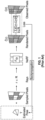
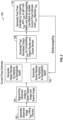
- a method 100 for generating an application specific pose estimation responsive to a camera pose estimation, object pose estimation and scene pose estimation for a camera, a scene and at least one object is provided, in accordance with an embodiment.
- the method 100 includes generating an observed image (I obs ) of the scene and an object, as shown in operational block 102. This may be accomplished using a camera which captures an image of the object/scene from one or more angles.
- the camera may be mounted on a robotic arm which moves around a stationary object and takes an image of the object at a predetermined inspection angle. For example, if a blade of a turbo fan is being inspected, the camera may take an image of the blade from a specific inspection angle.
- the camera may be stationary and the object may be moving.
- the observed image is processed to generate a scene image and an object image, as shown in operational block 104. This may be accomplished by segmenting the observed image using a 2D segmentation approach to isolate and obtain the current scene (i.e., foreground/background) pose and the current object pose from the observed image.
- the current scene pose and the object scene pose are separately fed into specialized NeRFs to generate a scene image rendering and an object image rendering, respectively, as shown in operational block 106.
- the scene image rendering and the object image rendering are composited to generate a rendered output (I rndr ) as shown in operational block 108.
- the final pose estimate is determined by comparing the observed image (I obs ) with the rendered output (I rndr ) to determine the loss metric (i.e., the difference between the observed image (I obs ) and the rendered output (I rndr )) and repeatedly backpropagating the loss metric to update the current pose estimate until the observed image (I obs ) and the rendered output (I rndr ) converge (i.e., match), as shown in operational block 110.
- the loss metric is a metric that corresponds to a difference between the observed image (I obs ) and the final rendered output (I rndr ).
- the invention may include a predetermined loss metric threshold, where if the loss metric is below the predetermined loss metric threshold, then the method may include backpropagating the loss metric to update the current pose estimate and repeating the backpropagating until the loss metric is equal to or greater than the predetermined loss metric threshold.
- the rendered output (I rndr ) is the final pose estimate when the rendered output (I rndr ) matches the observed image (I obs ).
- This final pose estimate may then be used to perform application specific functions, such as mapping a defect seen in the image space to a 3D CAD model. It should be appreciated that the method of the invention may be used with other ranges of the electromagnetic spectrum, such as infrared.
- the invention may be used for multiple objects.
- the invention is described hereinabove with regards to the camera being movable and the object being stationary (i.e., static), it is contemplated that in other embodiments the camera may be stationary and the object may be movable.
- the invention may use "multiple branches" and “multiple NeRFs" to achieve better rendering of scene (i.e., foreground/background, multiple objects, different camera pose vs object pose in a scene, etc.) such that multiple estimates are obtained.
- the invention may be used for application specific tasks involving complex parts, scenes, etc. especially in smart factories.
- the processing of at least a portion of the method in FIG. 2 may be implemented by a controller/processor disposed internal and/or external to a computing device.
- processing of at least a portion of the method in FIG. 2 may be implemented through a controller/processor operating in response to a computer program.
- the controller may include, but not be limited to, a processor(s), computer(s), memory, storage, register(s), timing, interrupt(s), communication interface(s), and input/output signal interface(s), as well as combination comprising at least one of the foregoing.
- the invention may be embodied in the form of a computer or controller implemented processes.
- the invention may also be embodied in the form of computer program code containing instructions embodied in tangible media, such as floppy diskettes, CD-ROMs, hard drives, and/or any other computer-readable medium, wherein when the computer program code is loaded into and executed by a computer or controller, the computer or controller becomes an apparatus for practicing the invention.
- the invention can also be embodied in the form of computer program code, for example, whether stored in a storage medium, loaded into and/or executed by a computer or controller, or transmitted over some transmission medium, such as over electrical wiring or cabling, through fiber optics, or via electromagnetic radiation, wherein when the computer program code is loaded into and executed by a computer or a controller, the computer or controller becomes an apparatus for practicing the invention.
- the computer-readable storage medium can be a tangible device that can retain and store instructions for use by an instruction execution device.
- the computer-readable storage medium may be, for example, but is not limited to, an electronic storage device, a magnetic storage device, an optical storage device, an electromagnetic storage device, a semiconductor storage device, or any suitable combination of the foregoing.
- a non-exhaustive list of more specific examples of the computer-readable storage medium includes the following: a portable computer diskette, a hard disk, a random access memory (RAM), a read-only memory (ROM), an erasable programmable read-only memory (EPROM or Flash memory), a static random access memory (SRAM), a portable compact disc read-only memory (CD-ROM), a digital versatile disk (DVD), a memory stick, a floppy disk, a mechanically encoded device, such as punch-cards or raised structures in a groove having instructions recorded thereon, and any suitable combination of the foregoing.
- RAM random access memory
- ROM read-only memory
- EPROM or Flash memory erasable programmable read-only memory
- SRAM static random access memory
- CD-ROM compact disc read-only memory
- DVD digital versatile disk
- memory stick a floppy disk
- mechanically encoded device such as punch-cards or raised structures in a groove having instructions recorded thereon, and any suitable combination of the foregoing
- a computer-readable storage medium is not to be construed as being transitory signals per se, such as radio waves or other freely propagating electromagnetic waves, electromagnetic waves propagating through a waveguide or other transmission media (e.g., light pulses passing through a fiber-optic cable), or electrical signals transmitted through a wire
- the computer program code segments may configure the microprocessor to create specific logic circuits.
- the processor may be part of a computing system that is configured to or adaptable to implement machine learning models which may include artificial neural networks, such as deep neural networks, convolutional neural networks, recurrent neural networks, vision transformers, encoders, decoders, or any other type of machine learning model.
- the machine learning models can be trained in a supervised, unsupervised, or hybrid manner. While the present disclosure has been described with reference to an exemplary embodiment or embodiments, it will be understood by those skilled in the art that various changes may be made and equivalents may be substituted for elements thereof without departing from the scope of the present disclosure. Moreover, the embodiments or parts of the embodiments may be combined in whole or in part without departing from the scope of the invention.
Landscapes
- Engineering & Computer Science (AREA)
- Theoretical Computer Science (AREA)
- Physics & Mathematics (AREA)
- General Physics & Mathematics (AREA)
- Software Systems (AREA)
- Computer Vision & Pattern Recognition (AREA)
- General Engineering & Computer Science (AREA)
- Biophysics (AREA)
- Mathematical Physics (AREA)
- Life Sciences & Earth Sciences (AREA)
- Artificial Intelligence (AREA)
- Biomedical Technology (AREA)
- Health & Medical Sciences (AREA)
- Data Mining & Analysis (AREA)
- Evolutionary Computation (AREA)
- Computing Systems (AREA)
- Computational Linguistics (AREA)
- General Health & Medical Sciences (AREA)
- Molecular Biology (AREA)
- Computer Hardware Design (AREA)
- Neurology (AREA)
- Computer Graphics (AREA)
- Medical Informatics (AREA)
- Image Analysis (AREA)
Applications Claiming Priority (1)
| Application Number | Priority Date | Filing Date | Title |
|---|---|---|---|
| US18/333,471 US12614306B2 (en) | 2023-06-12 | 2023-06-12 | Inverting neural radiance fields for part and scene pose estimation |
Publications (2)
| Publication Number | Publication Date |
|---|---|
| EP4478288A1 true EP4478288A1 (de) | 2024-12-18 |
| EP4478288B1 EP4478288B1 (de) | 2026-04-01 |
Family
ID=91530308
Family Applications (1)
| Application Number | Title | Priority Date | Filing Date |
|---|---|---|---|
| EP24181675.0A Active EP4478288B1 (de) | 2023-06-12 | 2024-06-12 | Invertierende neuronale strahlfelder zur teile- und szenenposenschätzung |
Country Status (2)
| Country | Link |
|---|---|
| US (1) | US12614306B2 (de) |
| EP (1) | EP4478288B1 (de) |
Family Cites Families (11)
| Publication number | Priority date | Publication date | Assignee | Title |
|---|---|---|---|---|
| US12354300B2 (en) * | 2020-11-16 | 2025-07-08 | Google Llc | Inverting neural radiance fields for pose estimation |
| GB2604928B (en) * | 2021-03-19 | 2024-02-07 | Imperial College Innovations Ltd | Modelling an environment using image data |
| CN117859074A (zh) | 2021-06-11 | 2024-04-09 | 网络无人机公司 | 用于无人机机群无线通信的系统和方法 |
| US12555309B2 (en) * | 2021-11-15 | 2026-02-17 | Google Llc | Robustifying NeRF model novel view synthesis to sparse data |
| US12106428B2 (en) * | 2022-03-01 | 2024-10-01 | Google Llc | Radiance fields for three-dimensional reconstruction and novel view synthesis in large-scale environments |
| US12456213B2 (en) * | 2022-06-13 | 2025-10-28 | Koninklijke Philips N.V. | Generating views of skin lesions for improved remote evaluation |
| US12394166B2 (en) * | 2022-10-06 | 2025-08-19 | Adobe Inc. | Modifying poses of two-dimensional humans in two-dimensional images by reposing three-dimensional human models representing the two-dimensional humans |
| EP4616369A1 (de) * | 2022-12-07 | 2025-09-17 | Google LLC | Modelle des neuronalen radiance-felds mit verbesserter robustheit gegenüber distraktorobjekten |
| US12475639B2 (en) * | 2022-12-13 | 2025-11-18 | Snap Inc. | Spatially disentangled generative radiance fields for controllable 3D-aware scene synthesis |
| WO2024163018A1 (en) * | 2023-02-01 | 2024-08-08 | Futurewei Technologies, Inc. | Virtual conferencing system using multi-neural-radiance-field synchronized rendering |
| US20240312123A1 (en) * | 2023-03-17 | 2024-09-19 | Nvidia Corporation | Data augmentation for model training in autonomous systems and applications |
-
2023
- 2023-06-12 US US18/333,471 patent/US12614306B2/en active Active
-
2024
- 2024-06-12 EP EP24181675.0A patent/EP4478288B1/de active Active
Non-Patent Citations (4)
| Title |
|---|
| CHEN-HSUAN LIN ET AL: "BARF: Bundle-Adjusting Neural Radiance Fields", ARXIV.ORG, CORNELL UNIVERSITY LIBRARY, 201 OLIN LIBRARY CORNELL UNIVERSITY ITHACA, NY 14853, 19 August 2021 (2021-08-19), XP091024204 * |
| KARL STELZNER ET AL: "Decomposing 3D Scenes into Objects via Unsupervised Volume Segmentation", ARXIV.ORG, CORNELL UNIVERSITY LIBRARY, 201 OLIN LIBRARY CORNELL UNIVERSITY ITHACA, NY 14853, 2 April 2021 (2021-04-02), XP081931740 * |
| LIN YEN-CHEN ET AL: "iNeRF: Inverting Neural Radiance Fields for Pose Estimation", ARXIV.ORG, CORNELL UNIVERSITY LIBRARY, 201 OLIN LIBRARY CORNELL UNIVERSITY ITHACA, NY 14853, 10 December 2020 (2020-12-10), XP081834080 * |
| YEN-CHEN LIN: "iNeRF: Inverting Neural Radiance Fields for Pose Estimation", 8 December 2020 (2020-12-08), XP093214193, Retrieved from the Internet <URL:https://www.youtube.com/watch?v=eQuCZaQN0tI&ab_channel=Yen-ChenLin> * |
Also Published As
| Publication number | Publication date |
|---|---|
| EP4478288B1 (de) | 2026-04-01 |
| US20240412409A1 (en) | 2024-12-12 |
| US12614306B2 (en) | 2026-04-28 |
Similar Documents
| Publication | Publication Date | Title |
|---|---|---|
| Shamwell et al. | Unsupervised deep visual-inertial odometry with online error correction for RGB-D imagery | |
| US10574967B2 (en) | Autonomous performance of an operation on an object using a generated dense 3D model of the object | |
| CN112652016A (zh) | 点云预测模型的生成方法、位姿估计方法及其装置 | |
| WO2019180414A1 (en) | Localisation, mapping and network training | |
| CN112580582A (zh) | 动作学习方法、装置、介质及电子设备 | |
| CN111047634A (zh) | 场景深度的确定方法、装置、设备及存储介质 | |
| Grimaldi et al. | Investigation of the challenges of underwater-visual-monocular-slam | |
| CN114943762B (zh) | 一种基于事件相机的双目视觉里程计方法 | |
| Alaniz-Plata et al. | Extrinsic calibration of complex machine vision system for mobile robot | |
| Fan et al. | Large-scale dense mapping system based on visual-inertial odometry and densely connected U-Net | |
| CN118071999A (zh) | 一种基于采样自适应的连续NeRF的多视角3D目标检测方法 | |
| EP4478288A1 (de) | Invertierende neuronale strahlfelder zur teile- und szenenposenschätzung | |
| Jiang et al. | Error analysis and experiments of 3D reconstruction using a RGB-D sensor | |
| CN117911613A (zh) | 一种稠密重建系统、方法、电子设备和存储介质 | |
| US20240221275A1 (en) | Information processing apparatus, information processing method, and storage medium | |
| Chaumont et al. | Robust and real-time 3d-face model extraction | |
| Huang et al. | Methods on visual positioning based on basketball shooting direction standardisation | |
| EP4571648A1 (de) | Automatisierte boroskopposenschätzung über virtuelle modalitäten | |
| US10896333B2 (en) | Method and device for aiding the navigation of a vehicle | |
| CN117893933B (zh) | 一种用于输变电设备的无人巡检故障检测方法和系统 | |
| Yang et al. | Linear perspective shape-from-shading method with two images | |
| Losada et al. | Adaptive threshold for robust segmentation of mobile robots from visual information of their own movement | |
| Wang et al. | Adaptive baseline monocular dense mapping with inter-frame depth propagation | |
| Bobkov et al. | Simulation program complex for studying motion control methods for autonomous underwater vehicles | |
| US20250218017A1 (en) | Defect depth estimation from borescope imagery |
Legal Events
| Date | Code | Title | Description |
|---|---|---|---|
| PUAI | Public reference made under article 153(3) epc to a published international application that has entered the european phase |
Free format text: ORIGINAL CODE: 0009012 |
|
| STAA | Information on the status of an ep patent application or granted ep patent |
Free format text: STATUS: THE APPLICATION HAS BEEN PUBLISHED |
|
| AK | Designated contracting states |
Kind code of ref document: A1 Designated state(s): AL AT BE BG CH CY CZ DE DK EE ES FI FR GB GR HR HU IE IS IT LI LT LU LV MC ME MK MT NL NO PL PT RO RS SE SI SK SM TR |
|
| STAA | Information on the status of an ep patent application or granted ep patent |
Free format text: STATUS: REQUEST FOR EXAMINATION WAS MADE |
|
| 17P | Request for examination filed |
Effective date: 20250618 |
|
| GRAP | Despatch of communication of intention to grant a patent |
Free format text: ORIGINAL CODE: EPIDOSNIGR1 |
|
| STAA | Information on the status of an ep patent application or granted ep patent |
Free format text: STATUS: GRANT OF PATENT IS INTENDED |
|
| RIC1 | Information provided on ipc code assigned before grant |
Ipc: G06T 7/70 20170101AFI20251001BHEP Ipc: G06T 7/73 20170101ALI20251001BHEP |
|
| INTG | Intention to grant announced |
Effective date: 20251022 |
|
| GRAS | Grant fee paid |
Free format text: ORIGINAL CODE: EPIDOSNIGR3 |
|
| GRAA | (expected) grant |
Free format text: ORIGINAL CODE: 0009210 |
|
| STAA | Information on the status of an ep patent application or granted ep patent |
Free format text: STATUS: THE PATENT HAS BEEN GRANTED |
|
| AK | Designated contracting states |
Kind code of ref document: B1 Designated state(s): AL AT BE BG CH CY CZ DE DK EE ES FI FR GB GR HR HU IE IS IT LI LT LU LV MC ME MK MT NL NO PL PT RO RS SE SI SK SM TR |
|
| REG | Reference to a national code |
Ref country code: CH Ref legal event code: F10 Free format text: ST27 STATUS EVENT CODE: U-0-0-F10-F00 (AS PROVIDED BY THE NATIONAL OFFICE) Effective date: 20260401 Ref country code: GB Ref legal event code: FG4D |
|
| REG | Reference to a national code |
Ref country code: IE Ref legal event code: FG4D |
|
| REG | Reference to a national code |
Ref country code: DE Ref legal event code: R096 Ref document number: 602024003577 Country of ref document: DE |