EP4478751A2 - Verfahren und system zur handhabung der dynamischen gruppenerzeugung in einem v2x-system - Google Patents
Verfahren und system zur handhabung der dynamischen gruppenerzeugung in einem v2x-system Download PDFInfo
- Publication number
- EP4478751A2 EP4478751A2 EP24209680.8A EP24209680A EP4478751A2 EP 4478751 A2 EP4478751 A2 EP 4478751A2 EP 24209680 A EP24209680 A EP 24209680A EP 4478751 A2 EP4478751 A2 EP 4478751A2
- Authority
- EP
- European Patent Office
- Prior art keywords
- platoon
- dynamic group
- group
- information
- dynamic
- Prior art date
- Legal status (The legal status is an assumption and is not a legal conclusion. Google has not performed a legal analysis and makes no representation as to the accuracy of the status listed.)
- Pending
Links
Images







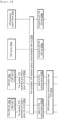
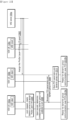
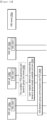


Classifications
-
- H—ELECTRICITY
- H04—ELECTRIC COMMUNICATION TECHNIQUE
- H04L—TRANSMISSION OF DIGITAL INFORMATION, e.g. TELEGRAPHIC COMMUNICATION
- H04L67/00—Network arrangements or protocols for supporting network services or applications
- H04L67/50—Network services
- H04L67/55—Push-based network services
-
- H—ELECTRICITY
- H04—ELECTRIC COMMUNICATION TECHNIQUE
- H04W—WIRELESS COMMUNICATION NETWORKS
- H04W4/00—Services specially adapted for wireless communication networks; Facilities therefor
- H04W4/06—Selective distribution of broadcast services, e.g. multimedia broadcast multicast service [MBMS]; Services to user groups; One-way selective calling services
- H04W4/08—User group management
-
- H—ELECTRICITY
- H04—ELECTRIC COMMUNICATION TECHNIQUE
- H04W—WIRELESS COMMUNICATION NETWORKS
- H04W4/00—Services specially adapted for wireless communication networks; Facilities therefor
- H04W4/30—Services specially adapted for particular environments, situations or purposes
- H04W4/40—Services specially adapted for particular environments, situations or purposes for vehicles, e.g. vehicle-to-pedestrians [V2P]
-
- H—ELECTRICITY
- H04—ELECTRIC COMMUNICATION TECHNIQUE
- H04W—WIRELESS COMMUNICATION NETWORKS
- H04W4/00—Services specially adapted for wireless communication networks; Facilities therefor
- H04W4/30—Services specially adapted for particular environments, situations or purposes
- H04W4/40—Services specially adapted for particular environments, situations or purposes for vehicles, e.g. vehicle-to-pedestrians [V2P]
- H04W4/44—Services specially adapted for particular environments, situations or purposes for vehicles, e.g. vehicle-to-pedestrians [V2P] for communication between vehicles and infrastructures, e.g. vehicle-to-cloud [V2C] or vehicle-to-home [V2H]
-
- H—ELECTRICITY
- H04—ELECTRIC COMMUNICATION TECHNIQUE
- H04W—WIRELESS COMMUNICATION NETWORKS
- H04W4/00—Services specially adapted for wireless communication networks; Facilities therefor
- H04W4/30—Services specially adapted for particular environments, situations or purposes
- H04W4/40—Services specially adapted for particular environments, situations or purposes for vehicles, e.g. vehicle-to-pedestrians [V2P]
- H04W4/46—Services specially adapted for particular environments, situations or purposes for vehicles, e.g. vehicle-to-pedestrians [V2P] for vehicle-to-vehicle communication [V2V]
-
- H—ELECTRICITY
- H04—ELECTRIC COMMUNICATION TECHNIQUE
- H04W—WIRELESS COMMUNICATION NETWORKS
- H04W4/00—Services specially adapted for wireless communication networks; Facilities therefor
- H04W4/70—Services for machine-to-machine communication [M2M] or machine type communication [MTC]
-
- H—ELECTRICITY
- H04—ELECTRIC COMMUNICATION TECHNIQUE
- H04W—WIRELESS COMMUNICATION NETWORKS
- H04W76/00—Connection management
- H04W76/10—Connection setup
- H04W76/14—Direct-mode setup
-
- H—ELECTRICITY
- H04—ELECTRIC COMMUNICATION TECHNIQUE
- H04W—WIRELESS COMMUNICATION NETWORKS
- H04W76/00—Connection management
- H04W76/20—Manipulation of established connections
- H04W76/23—Manipulation of direct-mode connections
-
- H—ELECTRICITY
- H04—ELECTRIC COMMUNICATION TECHNIQUE
- H04L—TRANSMISSION OF DIGITAL INFORMATION, e.g. TELEGRAPHIC COMMUNICATION
- H04L67/00—Network arrangements or protocols for supporting network services or applications
- H04L67/01—Protocols
- H04L67/12—Protocols specially adapted for proprietary or special-purpose networking environments, e.g. medical networks, sensor networks, networks in vehicles or remote metering networks
Definitions
- the disclosure relates to a vehicle to everything (V2X) communication system. More particularly, the disclosure relates to a method and system for handling dynamic group creation in the V2X communication system.
- V2X vehicle to everything
- the 5G or pre-5G communication system is also called a 'beyond 4G network' or a 'post long term evolution (LTE) system'.
- the 5G communication system is considered to be implemented in higher frequency (mmWave) bands, e.g., 60 GHz bands, so as to accomplish higher data rates.
- mmWave e.g. 60 GHz bands
- beamforming massive multiple-input multiple-output (MIMO), full dimensional MIMO (FD-MIMO), array antenna, analog beamforming, and large scale antenna techniques are discussed with respect to 5G communication systems.
- RANs cloud radio access networks
- D2D device-to-device
- SWSC sliding window superposition coding
- ACM advanced coding modulation
- FBMC filter bank multi carrier
- NOMA non-orthogonal multiple access
- SCMA sparse code multiple access
- the Internet which is a human centered connectivity network where humans generate and consume information
- IoT Internet of things
- IoE Internet of everything
- sensing technology “wired/wireless communication and network infrastructure”, “service interface technology”, and “security technology”
- M2M machine-to-machine
- MTC machine type communication
- IoT Internet technology services
- IoT may be applied to a variety of fields including smart home, smart building, smart city, smart car or connected cars, smart grid, health care, smart appliances and advanced medical services through convergence and combination between existing information technology (IT) and various industrial applications.
- IT information technology
- 5G communication systems to IoT networks.
- technologies such as a sensor network, MTC, and M2M communication may be implemented by beamforming, MIMO, and array antennas.
- Application of a cloud RAN as the above-described big data processing technology may also be considered to be as an example of convergence between the 5G technology and the IoT technology.
- V2X vehicle to everything
- aspects of the present disclosure provide an efficient communication methods in a communication system.
- an aspect of the disclosure is to provide a method and apparatus for handling dynamic group creation in a vehicle to everything (V2X) system.
- V2X vehicle to everything
- a method for handling dynamic group creation in a V2X system includes assigning, by a first server, a link layer identifier corresponding to a dynamic group information. Further, the method includes sending, by the first server, a push request including the link layer identifier corresponding to the dynamic group information to a first V2X user equipment (UE) from a plurality of V2X UEs. Further, the method includes receiving, by the first V2X UE, the link layer identifier corresponding to the dynamic group information. Further, the method includes storing, by the first V2X UE, the link layer identifier corresponding to the dynamic group information.
- UE V2X user equipment
- assigning, by the first server, the link layer identifier corresponding to the dynamic group information includes receiving, by the first server, a dynamic group configuration request corresponding to the dynamic group information from a second server, and assigning, by the first server, the link layer identifier corresponding to the dynamic group information based on the dynamic group configuration request.
- receiving, by the first V2X UE, the link layer identifier corresponding to the dynamic group information includes receiving, by the first V2X UE, a dynamic group configuration request corresponding to the dynamic group information, and receiving, by the first V2X UE, the link layer identifier corresponding to the dynamic group information based on the dynamic group configuration request.
- the method further includes broadcasting, by the first V2X UE, the link layer identifier corresponding to the dynamic group information to at least one second V2X UE from the plurality of V2X UEs in the V2X system.
- the method further includes receiving, by the at least one second V2X UE, the link layer identifier corresponding to the dynamic group information from the first V2X UE. Further, the method includes storing, by the at least one second V2X UE, the dynamic group information and the link layer identifier.
- the method further includes determining, by the at least one second V2X UE, whether the dynamic group information corresponding to at least one dynamic group is available in the V2X system. Further, the method includes sending, by the at least one second V2X UE, a dynamic group join request message corresponding to the dynamic group information to the second server in response to the dynamic group information corresponding to at least one dynamic group is available in the V2X system. Further, the method includes receiving, by the at least one second V2X UE, a dynamic group join response message corresponding to the dynamic group information from the second server. Further, the method includes establishing, by the at least one second V2X UE, dynamic group communication with the first V2X UE in the V2X system over a first communication interface.
- the method further includes determining, by the at least one second V2X UE, whether the at least one second V2X UE is in out of service area in the V2X system. Further, the method includes continuing, by the at least one second V2X UE, the dynamic group communication with the first V2X UE by switching to a second communication interface from the first communication interface.
- the dynamic group information comprises at least one of a dynamic group identifier (ID), a group definition, or a group leader.
- ID dynamic group identifier
- group definition a group definition
- group leader a group leader
- the link layer identifier is set to a ProSe Layer-2 Group ID obtained from a link layer identifier pool.
- the first communication interface is a Uu interface and the second communication interface is a PC5 interface.
- a method for handling dynamic group creation in a V2X system includes receiving, by a first server, a dynamic group configuration request corresponding to dynamic group information from a second server. Further, the method includes assigning, by the first server, a link layer identifier corresponding to the dynamic group information. Further, the method includes sending, by the first server, a push request including the link layer identifier corresponding to the dynamic group information to a first V2X UE from a plurality of V2X UEs.
- a method for handling dynamic group creation in a V2X system includes receiving, by a first V2X UE from a plurality of V2X UEs, a push request including a link layer identifier corresponding to dynamic group information from a first server. Further, the method includes storing, by the first V2X UE, the link layer identifier corresponding to the dynamic group information. Further, the method includes broadcasting, by the first V2X UE, the link layer identifier corresponding to the dynamic group information to at least one second V2X UE from the plurality of V2X UEs in the V2X system.
- a method for handling dynamic group creation in a V2X system includes receiving, by a first V2X UE, a link layer identifier corresponding to dynamic group information. Further, the method includes storing, by the first V2X UE, the link layer identifier corresponding to the dynamic group information. Further, the method includes broadcasting, by the first V2X UE, the link layer identifier corresponding to the dynamic group information to at least one second V2X UE from the plurality of V2X UEs in the V2X system. Further, the method includes establishing, by the first V2X UE, the dynamic group communication with the at least one second V2X UE based on the dynamic group information.
- a first server is configured to receive a dynamic group configuration request corresponding to dynamic group information from a second server. Further, the first server is configured to assign a link layer identifier corresponding to the dynamic group information.
- a first server is configured to send a push request including the link layer identifier corresponding to the dynamic group information to a first V2X UE from a plurality of V2X UEs.
- the first V2X UE is configured to receive the link layer identifier corresponding to the dynamic group information and store the link layer identifier corresponding to the dynamic group information.
- a server for handling dynamic group creation in a V2X system includes a processor coupled with a memory.
- the processor is configured to receive a dynamic group configuration request corresponding to dynamic group information from another server. Further, the processor is configured to assign a link layer identifier corresponding to the dynamic group information. Further, the processor is configured to send a push request including the link layer identifier corresponding to the dynamic group information to a first V2X UE from a plurality of V2X UEs.
- a V2X UE for handling dynamic group creation in a V2X system.
- the V2X UE includes a processor coupled with a memory.
- the processor is configured to receive the push request including a link layer identifier corresponding to dynamic group information from a server. Further, the processor is configured to store the link layer identifier corresponding to the dynamic group information.
- the processor is configured to broadcast the link layer identifier corresponding to the dynamic group information to at least one second V2X UE from the plurality of V2X UEs in the V2X system.
- the processor is configured to establish dynamic group communication with the first V2X UE in the V2X system over a first communication interface.
- a V2X UE for handling dynamic group creation in a V2X system.
- the V2X UE includes a processor coupled with a memory.
- the processor is configured to receive a link layer identifier corresponding to dynamic group information.
- the processor is configured to storing, by the first V2X UE, the link layer identifier corresponding to the dynamic group information.
- the processor is configured to broadcast the link layer identifier corresponding to the dynamic group information to at least one second V2X UE from the plurality of V2X UEs in the V2X system.
- the processor is configured to establish the dynamic group communication with the at least one second V2X UE based on the dynamic group information.
- circuits may, for example, be embodied in one or more semiconductor chips, or on substrate supports such as printed circuit boards and the like.
- circuits constituting a block may be implemented by dedicated hardware, or by a processor (e.g., one or more programmed microprocessors and associated circuitry), or by a combination of dedicated hardware to perform some functions of the block and a processor to perform other functions of the block.
- a processor e.g., one or more programmed microprocessors and associated circuitry
- Each block of the embodiments may be physically separated into two or more interacting and discrete blocks without departing from the scope of the disclosure.
- the blocks of the embodiments may be physically combined into more complex blocks without departing from the scope of the disclosure.
- V2X Vehicle to everything
- V2X Vehicle to everything
- V2X contain vehicle-to-vehicle (V2V), vehicle-to-infrastructure (V2I), vehicle-to-network (V2N), vehicle-to-pedestrian (V2P).
- V2V vehicle-to-vehicle
- V2I vehicle-to-infrastructure
- V2N vehicle-to-network
- V2P vehicle-to-pedestrian
- These four types of the V2X applications can use "co-operative awareness" to provide more intelligent services for end-users.
- the transportation services and message sets associated with the transportation services have been defined in various automotive standards development organizations (SDOs) and 3rd generation partnership project (3GPP) is handling a transport of the messages.
- SDOs automotive standards development organizations
- 3GPP 3rd generation partnership project
- V2X scenarios e.g., Vehicles Platooning, Advanced Driving, Extended Sensors, Remote Driving, or the like.
- V2X messages require the transport of V2X messages with a different performance requirements for the 3GPP system.
- platoon formation involves pre-determined set of vehicles including platoon leader identification.
- link layer identifier and "PC5 parameter” are used interchangeably in the disclosure.
- V2X on-network and “on-network” are used interchangeably in the disclosure.
- V2X off-network and “off-network” are used interchangeably in the disclosure.
- the principal aspect of the embodiments herein is to provide a method and system for dynamic group management and communication in a V2X system.
- Another aspect of the embodiments herein is to provide a dynamic platoon formation and management (e.g., joining a platoon, leaving a platoon, splitting platoon, merging platoons or the like).
- a dynamic platoon formation and management e.g., joining a platoon, leaving a platoon, splitting platoon, merging platoons or the like.
- Another aspect of the disclosure is to determine when a new platoon leader is required for the platoons.
- Another aspect of the disclosure is to announce new leader for the platoons.
- the embodiments herein disclose a method for handling dynamic group creation in a V2X system.
- the method includes receiving, by a first server, a dynamic group configuration request corresponding to dynamic group information from a second server. Further, the method includes assigning, by the first server, a link layer identifier corresponding to the dynamic group information. Further, the method includes sending, by the first server, a push request including the link layer identifier corresponding to the dynamic group information to a first V2X UE from a plurality of V2X UEs. Further, the method includes receiving, by the first V2X UE, the link layer identifier corresponding to the dynamic group information. Further, the method includes storing, by the first V2X UE, the link layer identifier corresponding to the dynamic group information.
- the proposed method can be used to form the platoons in an ad-hoc manner by dynamically determining the platoon leader.
- An on-network dynamic platoons are formed according to the proposed method, where a V2X user should join a platoon in order to communicate with platoon members.
- a platoon member can leave the platoon at any time and will not able to communicate further within that platoon.
- the platoon is dissolved when there are no platoon members left in the platoon to communicate.
- Two or more platoons can be merged as necessary, which might result in a new Platoon leader announcement.
- the platoon can be split into two or more and results in determining the Platoon leader for each split platoon.
- the dynamic groups can be formed for a specific purpose decided at an application layer by the V2X system.
- the members of a dynamic groups are determined dynamically (with the assistance of a V2X application server or independently by the V2X UEs when they are not connected to a network) during an operation.
- the proposed system supports an application layer for forming the V2X dynamic groups by including the V2X UEs to the group, determined in an ad-hoc fashion.
- the group management operations that need to be supported include adding or removing members of the group, splitting or merging of groups.
- the system enables application layer V2X dynamic group formation and communication.
- V2X dynamic group formation with the V2X UEs in Uu communication range, the system provides support to identify V2X UEs from one or more PLMNs, belonging to a dynamic group. Further, the system provides support to provision PC5 parameters enabling dynamic group communication continuity over V5. Further, the system provides support to dynamic group management (adding or removing members, split or merge dynamic groups).
- the system For V2X dynamic groups formed with the V2X UEs in PC5 communication range, the system provides support to identify V2X UEs belonging to the dynamic group. Further, the system provides support to dynamic group management (adding or removing members, split or merge dynamic groups).
- the proposed system supports an application layer for forming the V2X dynamic groups by including the V2X UEs (which could be from multiple PLMNs) to the group, determined in an ad-hoc fashion. Further, the system enables application layer V2X dynamic group formation and communication. For V2X dynamic group formation with the V2X UEs in Uu communication range, the system provides support to identify V2X UEs from one or more PLMNs. Further, the communication over Uu interface could be one of unicast or multicast or combination of both. Further, provides support to provision PC5 parameters enabling dynamic group communication continuity over V5. Further, provides support to dynamic group management.
- the system For V2X dynamic groups formed with the V2X UEs in PC5 communication range, the system provides support to identify V2X UEs belonging to the dynamic group. Further, provides support to enable dynamic group communication over V5. Further, provides support to dynamic group management. Group management operations include adding/removing group-members and splitting/merging of groups.
- V2X scenarios require group-based communication (e.g. platooning). Unlike V2X communication for safety scenarios where all V2X UEs in the communication range receive broadcasted communication, the group-based communication is expected to be received only by the V2X UEs of the members of that group.
- Dynamic groups can be formed for a specific purpose decided at the application layer. However the members of a dynamic groups are determined dynamically (with the assistance of the V2X application server or independently by the V2X UEs when they are not connected to the network) during the operation.
- V2X dynamic groups by including the V2X UEs to the group, determined in an ad-hoc fashion.
- group management operations that need to be supported include adding or removing members of the group, splitting or merging of groups.
- Dynamic platoons can be formed with the assistance of a V2X application server (AS) or independently by the V2X UEs if they are not connected to the network.
- AS V2X application server
- FIGS. 1-16 and 18-31 where similar reference characters denote corresponding features consistently throughout the figures, there are shown preferred embodiments.
- FIG. 1 illustrates an overview of a V2X system 1000a for handling dynamic group creation, according to an embodiment of the disclosure.
- the V2X system 1000a can be a V2X on-network.
- the V2X system 1000a includes a plurality of V2X UEs 100a-100n and a server 200 including a first server 200a and a second server 200b.
- the first server 200a is a V2X application enabler (VAE) server and the second server 200b is a V2X application specific server.
- VAE V2X application enabler
- the first server 200a is configured to receive a dynamic group configuration request corresponding to dynamic group information from the second server 200b.
- the dynamic group information comprises at least one of a dynamic group identifier (ID), a group definition, or a group leader.
- ID dynamic group identifier
- group definition a group definition
- group leader a group leader
- the first server 200a is configured to assign a link layer identifier corresponding to the dynamic group information.
- the link layer identifier can be a ProSe Layer-2 Group ID.
- the link layer identifier is set to a ProSe Layer-2 Group ID obtained from a link layer identifier pool.
- the first server 200a is configured send a push request including the link layer identifier corresponding to the dynamic group information to a first V2X UE 100a from a plurality of V2X UEs 100a-100n.
- the first V2X UE 100a is configured to receive the link layer identifier corresponding to the dynamic group information and store the link layer identifier corresponding to the dynamic group information.
- the first V2X UE 100a is configured to broadcast the link layer identifier corresponding to the dynamic group information to at least one second V2X UE from the plurality of V2X UEs 100b-100n in the V2X system 1000.
- the at least one second V2X UE 100b is configured to receive the link layer identifier corresponding to the dynamic group information from the first V2X UE 100a. Further, the at least one second V2X UE 100b is configured to store the dynamic group information and the link layer identifier. Further, the at least one second V2X UE 100b is configured to determine whether the dynamic group information corresponding to at least one dynamic group is available in the V2X system 1000. Further, the at least one second V2X UE 100b is configured to send a dynamic group join request message corresponding to the dynamic group information to the second server 200b.
- the at least one second V2X UE 100b is configured to receive a dynamic group join response message corresponding to the dynamic group information from the second server 200b. Further, the at least one second V2X UE 100b is configured to establish dynamic group communication with the first V2X UE 100a in the V2X system 1000 over a first communication interface.
- the at least one second V2X UE 100b is configured to determine whether the at least one second V2X UE is in out of service area in the V2X system 1000 and continue the dynamic group communication with the first V2X UE 100a by switching to a second communication interface from the first communication interface.
- the first communication interface can be a Uu interface and the second communication interface can be a PC5 interface.
- FIG. 2 illustrates another overview of a V2X system for handling dynamic group creation, according to an embodiment of the disclosure.
- the V2X system 1000b can be a V2X off-network.
- the V2X system 1000b includes a plurality of V2X UEs 100a-100n.
- the first V2X UE 100a from the plurality of V2X UEs 100a-100n configures the dynamic group corresponding to dynamic group information.
- the first V2X UE 100a generates the link layer identifier from at least one of the link layer identifier pool corresponding to the dynamic group information or the link layer identifier rule.
- the first V2X UE 100a sends a push request including the link layer identifier corresponding to the dynamic group information to at least one second V2X UE from a plurality of V2X UEs 100a-100n.
- the at least one second V2X UE 100b configured to receive the link layer identifier corresponding to the dynamic group information. Further, the at least one second V2X UE 100b is configured to store the link layer identifier corresponding to the dynamic group information. Further, the at least one second V2X UE 100b is configured to broadcast the link layer identifier corresponding to the dynamic group information to at least one third V2X UE from the plurality of V2X UEs 100a-100n in the V2X system 1000. Further, the at least one second V2X UE 100b is configured to establish dynamic group communication with at least one of the first V2X UE and the at least one third V2X UE based on the dynamic group information.
- FIG. 3 is a block diagram of the V2X UEs for handling dynamic group creation, according to an embodiment of the disclosure.
- the V2X UE 100a includes a processor 110, a memory 120, a communicator 130, and a VAE client 140.
- the processor 110 is coupled with the memory 120, the communicator 130, and the VAE client 140.
- the processor 110 is configured to receive the push request including the link layer identifier corresponding to dynamic group information from the first server 200a.
- the processor 110 is configured to store the link layer identifier corresponding to the dynamic group information.
- the processor 110 is configured to broadcast the link layer identifier corresponding to the dynamic group information to at least one second V2X UE from a plurality of V2X UEs 100a-100n in the V2X system 1000.
- the processor 110 is configured to establish dynamic group communication with the at least one second V2X UE in the V2X system 1000a over the first communication interface.
- the processor 110 is configured to determine whether the at least one second V2X UE is in out of service area in the V2X system 1000b. Based on the determination, the processor 110 is configured to continue the dynamic group communication with the first V2X UE 100a by switching to the second communication interface from the first communication interface.
- the processor 110 is configured to configure dynamic group corresponding to dynamic group information. Further, the processor 110 is configured to generate a link layer identifier from at least one of a link layer identifier pool corresponding to the dynamic group information or a link layer identifier rule. Further, the processor 110 is configured to send the push request including the link layer identifier corresponding to the dynamic group information to at least one second V2X UE from a plurality of V2X UEs 100b-100n).
- the processor 110 is configured to receive a link layer identifier corresponding to dynamic group information. Further, the processor 110 is configured to store the link layer identifier corresponding to the dynamic group information. Further, the processor 110 is configured to broadcast the link layer identifier corresponding to the dynamic group information to at least one second V2X UE from a plurality of V2X UEs 100a-100n in the V2X system. Further, the processor 110 is configured to establish the dynamic group communication with the at least one second V2X UE based on the dynamic group information.
- the V2X application specific client 150 provides the client side functionalities corresponding to the V2X applications (e.g. platooning client).
- the V2X application specific client 150 utilizes the VAE client 140 for the V2X application layer support functions.
- the V2X application specific client 150 is responsible for V2X dynamic group information.
- the V2X application specific client 150 requests the VAE client 140 to configure dynamic group corresponding to the dynamic group information.
- the VAE client 140 generates ProSe Layer-2 Group ID independently based on the provisioned ProSe Layer-2 Group ID(s) generation rules for its group information or the VAE client 140 assigns ProSe Layer-2 Group ID from the pool of configured ProSe Layer-2 Group IDs. Further, the VAE client 140 may further announce the dynamic group information including the corresponding ProSe Layer-2 Group ID to the other VAE clients within the PC5 communication proximity on a PC5 channel dedicated for V5-AE communications, enabling more V2X UEs to join the dynamic group. The VAE client 140 stores the PC5 communication parameters corresponding to the dynamic group information received from another VAE client.
- the VAE client 140 stores the received PC5 communication parameters corresponding to the dynamic group information received from the VAE server 200a.
- the VAE client 140 may further announce the dynamic group information including the corresponding ProSe Layer-2 Group ID to the other VAE clients within the PC5 communication proximity on the PC5 channel dedicated for V5-AE communications, enabling more V2X UEs to join the dynamic group.
- the communicator 130 is configured for communicating internally between internal hardware components and with external devices via one or more networks.
- the VAE client 140 can be, for example, but not limited to a V2X application, a platoons application or the like.
- the memory 120 stores instructions to be executed by the processor 110.
- the memory 120 may include non-volatile storage elements. Examples of such non-volatile storage elements may include magnetic hard discs, optical discs, floppy discs, flash memories, or forms of electrically programmable memories (EPROM) or electrically erasable and programmable (EEPROM) memories.
- EPROM electrically programmable memories
- EEPROM electrically erasable and programmable
- the memory 120 may, in some examples, be considered a non-transitory storage medium.
- non-transitory may indicate that the storage medium is not embodied in a carrier wave or a propagated signal. However, the term “non-transitory” should not be interpreted that the memory 120 is non-movable. In some examples, the memory 120 can be configured to store larger amounts of information than the memory. In certain examples, a non-transitory storage medium may store data that can, over time, change (e.g., in random access memory (RAM) or cache).
- RAM random access memory
- FIG. 3 shows various hardware components of the V2X UEs 100a-100n but it is to be understood that other embodiments are not limited thereon.
- the V2X UEs 100a-100n may include less or more number of components.
- the labels or names of the components are used only for illustrative purpose and does not limit the scope of the disclosure.
- One or more components can be combined together to perform same or substantially similar function to handle the dynamic group creation.
- FIG. 4 is a block diagram of the server for handling dynamic group creation, according to an embodiment of the disclosure.
- the server 200a includes a processor 210, a memory 220, and a communicator 230.
- the processor 210 is configured to receive a dynamic group configuration request corresponding to dynamic group information from another server 200b.
- the server 200a may be a base station (Node B), according to an embodiment of the disclosure.
- the processor 210 is configured to assign a link layer identifier corresponding to the dynamic group information.
- the processor 210 is configured to send the push request including the link layer identifier corresponding to the dynamic group information to a first V2X UE 100a from the plurality of V2X UEs 100a-100n.
- the communicator 230 is configured for communicating internally between internal hardware components and with external devices via one or more networks.
- the memory 220 stores instructions to be executed by the processor 210.
- the memory 220 may include non-volatile storage elements. Examples of such non-volatile storage elements may include magnetic hard discs, optical discs, floppy discs, flash memories, or forms of EPROM or EEPROM memories.
- the memory 220 may, in some examples, be considered a non-transitory storage medium.
- the term “non-transitory” may indicate that the storage medium is not embodied in a carrier wave or a propagated signal. However, the term “non-transitory” should not be interpreted that the memory 220 is non-movable.
- the memory 220 can be configured to store larger amounts of information than the memory.
- a non-transitory storage medium may store data that can, over time, change (e.g., in RAM or cache).
- FIG. 4 shows various hardware components of the server 200a but it is to be understood that other embodiments are not limited thereon.
- the server 200a may include less or more number of components.
- the labels or names of the components are used only for illustrative purpose and does not limit the scope of the disclosure.
- One or more components can be combined together to perform same or substantially similar function to handle the dynamic group creation.
- FIG. 5 is a block diagram of various elements in the processor 110 of the V2X UEs 100a-100n for handling dynamic group creation, according to an embodiment of the disclosure.
- the processor 110 includes a push request handler 110a, a dynamic group communication establisher 110b, a V2X UE condition determiner 110c, a dynamic group handler 110d, and a link layer identifier handler 110e.
- the push request handler 110a is configured to receive the push request including the link layer identifier corresponding to dynamic group information from the first server 200a. Further, the push request handler 110a is configured to store the link layer identifier corresponding to the dynamic group information.
- the dynamic group communication establisher 110b is configured to broadcast the link layer identifier corresponding to the dynamic group information to the at least one second V2X UE from the plurality of V2X UEs 100a-100n in the V2X system 1000.
- the dynamic group communication establisher 110b is configured to establish dynamic group communication with the at least one second V2X UE in the V2X system 1000a over the first communication interface.
- the V2X UE condition determiner 110c is configured to determine whether the at least one second V2X UE is in out of service area in the V2X system 1000b. Based on the determination, the dynamic group handler 110d is configured to continue the dynamic group communication with the first V2X UE 100a by switching to the second communication interface from the first communication interface.
- the dynamic group handler 110d is configured to configure dynamic group corresponding to dynamic group information.
- the link layer identifier handler 110e is configured to generate the link layer identifier from at least one of a link layer identifier pool corresponding to the dynamic group information or a link layer identifier rule.
- the push request handler 110a is configured to send the push request including the link layer identifier corresponding to the dynamic group information to at least one second V2X UE from a plurality of V2X UEs 100b-100n.
- the push request handler 110a is configured to receive the link layer identifier corresponding to dynamic group information. Further, the dynamic group communication establisher 110b is configured to establish the dynamic group communication with the at least one second V2X UE based on the dynamic group information.
- FIG. 5 shows various hardware components of the processor 110 but it is to be understood that other embodiments are not limited thereon.
- the processor 110 may include less or more number of components.
- the labels or names of the components are used only for illustrative purpose and does not limit the scope of the disclosure.
- One or more components can be combined together to perform same or substantially similar function to handle the dynamic group creation.
- FIG. 6 is a block diagram of various elements in the processor 210 of a server for handling dynamic group creation, according to an embodiment of the disclosure.
- the processor 210 includes a dynamic group configuration request receiver 210a, a link layer identifier assigner 210b, and a push request handler 210c.
- the dynamic group configuration request receiver 210a is configured to receive the dynamic group configuration request corresponding to dynamic group information from another server 200b.
- the link layer identifier assigner 210b is configured to assign the link layer identifier corresponding to the dynamic group information.
- the push request handler 210c is configured to send the push request including the link layer identifier corresponding to the dynamic group information to a first V2X UE 100a from the plurality of V2X UEs 100a-100n.
- FIG. 6 shows various hardware components of the processor 210 but it is to be understood that other embodiments are not limited thereon.
- the processor 210 may include less or more number of components.
- the labels or names of the components are used only for illustrative purpose and does not limit the scope of the disclosure.
- One or more components can be combined together to perform same or substantially similar function to handle the dynamic group creation.
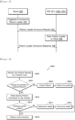
- FIG. 7 is a sequential diagram illustrating various operations in a platoon leader announcement in on-network, according to an embodiment of the disclosure.
- V2X communication in broadcast type of V2X communication it may not be necessary to form a group since all the entities receiving broadcasted message could consume it. However prior to V2X communication meant to a group, it is necessary to form the group with right set of V2X UEs. If the members of the V2X UE are already known while the group is being created, such organized groups can be created on an application server and used for on-network group communications. Same organized groups could be configured on the V2X UEs for off-network group communication as well.
- the groups can be created any time prior to V2X communication and a platoon leader can be assigned. But dynamic platoons are created on-demand basis for immediate V2X communication and the platoon leader is determined in run time.
- the dynamic platoons are short lived i.e., a dynamic group exists until at least one user is using the group for V2X communication.
- the dynamic platoons can be formed with the aid of network (e.g. road side unit (RSU), application server or the like) called on-network mode or in off-network mode without the assistance of the network.
- RSU road side unit
- the V2X UE includes an application client (client side functionalities corresponding to the V2X applications) and the enabler client (provides the client side V2X application layer support functions) functionality.
- On-network Dynamic Platoons In on-network dynamic platoons, the V2X user should join a platoon in order to communicate with the platoon members.
- the platoon member can leave the platoon at any time and will not able to communicate further within the platoon.
- the platoon is dissolved when there are no platoon members left in the platoon to communicate.
- Two or more platoons can be merged as necessary, which might result in a new Platoon leader announcement.
- a platoon can be split into two or more and results in determining Platoon leader for each split platoon.
- server 200 The dynamic platoons is created and maintained by the server 200, which are later on used for the on-network and off-network V2X communications. Examples of such server 200 include V2X application server, RSU etc. In case of V2X application server acting as a server 200, each of the V2X UEs of the platoon could belong to different PLMNs. In case of RSU acting as the server 200, V2X UEs of a platoon could belong to different PLMNs provided those PLMNs have service agreement.
- the application server may be further comprised with the application specific server (i.e., server side functionalities corresponding to the V2X applications) and application enabler server (i.e., server side V2X application layer support functions) functionality.
- Platoon information is created and maintained by the server 200a for each dynamic platoon.
- the information includes at least the Platoon ID, Platoon members IDs, Platoon Leader, Platoon Source Location, Platoon Destination Location, Platoon Direction, Platoon Path Nodes, Platoon Creation Time, Vehicle Type (may include Level of automation), Maximum members allowed, ProSe Layer-2 Platoon ID etc.
- Platoon Leader provides Platoon Management information such as Platoon Speed, Platoon Lane Position, Inter-vehicle Distance, etc. to the Following Vehicles. Platoon Leader may collate the commute information feedback from the Following Vehicles for determining such management information and then to provide to the Following Vehicles. Determining Platoon Leader is up to the application logic. At any point of time there will be only one Platoon Leader for each Platoon. Platoon Leader could be a vehicle which is at the front of the Platoon, a vehicle triggering a new platoon creation, a vehicle at the center of the Platoon, RSU, V2X Application Server, etc.
- Platoon Members need to be aware of the Platoon Leader so that the Following Vehicles react and adapt commute parameters (e.g., Speed, Lane Position, Inter-vehicle Distance etc.) of their respective vehicles in order to remain part of the Platoon. So anytime the Platoon Leader is changed or new members join the Platoon, Platoon Leader is announced to the entire Platoon or particular members of the Platoon.
- the operations in the FIG. 1 describes how the server 200 in on-network initiates Platoon Leader announcement with other Platoon members.
- the server 200 where the platoon resides is triggered (e.g. due to determination of new platoon leader) at operation 702 to update the platoon members.
- the server 200 sends platoon leader announce request to the platoon members (all or particular members as applicable), which includes the platoon leader to be followed during the platoon communication at operation 704.
- the platoon member receiving the announcement stores the received platoon leader information.
- the platoon members receiving the announcement sends the platoon leader announce response to the server 200 to confirm that the platoon leader announcement is complete.
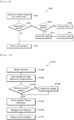
- FIG. 8 is a flow diagram S800 illustrating operations for joining the platoon in an on-network system, according to an embodiment of the disclosure.
- Pre-conditions The user of the V2X UE 100a has turned on the platoon application on the vehicle and is interested to platoon for travelling to a particular destination.
- the vehicle information i.e. vehicle type, vehicle location etc. is accessible to the platoon application.
- the user has indicated destination information to the platoon application.
- the server 200 is configured/available at the V2X UE 100a.
- the server 200 has received the platoon join request from the platoon application on the V2X UE including the vehicle information and the user indicated destination information.
- the server 200 considers the vehicle and user provided information to determine whether pertinent platoon already exists. If the platoon does not exist then, at operation S806, the server 200 may decide to create new the platoon. Even if such platoon exists the server 200 may decide to create a new platoon depending on the time of request and other factors such as maximum members limit has reached for the platoon. Otherwise, the server 200 may decide to add requesting the user to an existing platoon. Upon deciding to create a new platoon, the server 200 has to generate the platoon information.
- the platoon information requires a platoon leader to be determined.
- the platoon information is then shared to the platoon join requesting user.
- the server 200 decides to include the platoon join requesting user to an existing Platoon, the platoon information is shared to the platoon join requesting user.
- the server 200 determines whether a new platoon leader is required.
- the procedure described in section 1.3 is followed.
- the new platoon Leader is announced following the procedures described in section 1.4. In this case the announcement is made to all members of the platoon.
- platoon formation is completed and the members engage in the V2X communication.
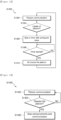
- FIG. 9 is a flow diagram S900 illustrating operations for leaving the platoon in on-network, according to an embodiment of the disclosure herein.
- Pre-conditions The user of the V2X UE is already a member of the platoon.
- the server 200 has received the leave platoon request from the platoon application on V2X UE 100a including the platoon ID for which the user is leaving.
- the server 200 checks if the user leaving platoon is platoon leader to decide whether to continue the platoon or not.
- the server 200 checks if the platoon is dissolved or to be continued based on the policy e.g. dissolve platoon on leader leaving the platoon, last member leaving the platoon.
- the server 200 determines the new platoon leader as described in section 1.3.
- the new platoon leader is announced following the procedures described in section 1.4. In this case the announcement is made to all members of the platoon. Existing platoon members continue to engage in the V2X communication at operation S914.
- FIG. 10 is a flow diagram S1000 illustrating operations for merging two or more platoons in the on-network, according to an embodiment of the disclosure.
- the server 200 decides to merge two or more platoons based on policy e.g. platoons having destinations on the same path, still within maximum members limit by merging platoon members from platoons being merged.
- the server 200 decides to extend from one of the existing platoons being merged with the members of the other platoons, so as to ensure that the total platoon members is still within maximum members limit.
- the server 200 determines whether a new platoon leader is required.
- the procedure described in section 1.3 is followed.
- updated platoon information (as described in section 1.2) is shared to all members of the platoon.
- the server 200 dissolves other platoons and releases the resources removing the relevant platoon information.
- the platoon members engage in V2X communication.
- FIG. 11 is a flow diagram S1100 illustrating operations for splitting the platoon into more than one platoon in an on-network, according to an embodiment of the disclosure.
- An existing platoon is the one that has to be split.
- the server 200 decides to split the platoon e.g. due to subset of platoon members having destination that requires a different path.
- the server 200 decides to move subset of the platoon members to a newly created platoon and remaining members continue to use the reformed platoon with updated platoon information (described in section 1.2).
- the server 200 has to decide if there is a platoon leader who can continue the reformed platoon.
- the procedure described in section 1.3 is followed.
- updated platoon information (as described in section 1.2) is shared to all members of the reformed platoon.
- existing platoon members continue to engage in V2X communication.
- a new platoon is created for the newer destination.
- subset of the platoon members from the original platoon are moved to the new platoon.
- the server 200 determines platoon leader following the procedure described in section 1.3.
- new platoon leader is announced following the procedures described in section 1.4. In this case the announcement is made to all members of the newly created platoon.
- platoon formation is completed and the members engage in V2X communication.
- FIG. 12 is a flow diagram S1200 illustrating operations for joining or creating the platoon in the off-network, according to an embodiment of the disclosure.
- Off-network Dynamic Platoons in off-network are created and maintained by individual platoon members.
- the V2X user should create a new platoon or join an existing platoon if aware of an existing platoon, in order to communicate with other platoon members.
- the platoon member moving out of communication range of other platoon members is considered to have left the platoon.
- the platoon may be released by the platoon member when no communication is received from any other platoon member for a configured amount of time.
- the platoon members can switch platoon if they are in communication range of multiple platoons.
- the platoon information is generated by the platoon leader (or the creator of the platoon) and updated, maintained and propagated to the subsequent platoon members.
- the information includes at least the platoon ID, platoon members IDs, platoon Leader, platoon source location, platoon destination location, platoon direction, platoon creation time, vehicle type (may include level of automation), maximum members allowed, ProSe Layer-2 Platoon ID etc.
- the platoon leader provides platoon management information such as platoon speed, platoon lane position, inter-vehicle distance, etc. to the following vehicles.
- the platoon leader may collate the inputs from the following vehicles for determining such management information and then to provide to the following vehicles. Determining platoon leader is up to the application logic. At any point of time there will be only one platoon leader for each platoon. In off-network, the platoon leader could be a vehicle which is at the front of the platoon, a vehicle triggering a new platoon creation, a vehicle at the center of the platoon, etc.
- the platoon is highly dynamic in nature, but a new platoon leader is determined only in 2 scenarios. When the platoon is merged with another platoon (which may have only 1 member) resulting in possibly two platoon leaders. When the leader of the current platoon leaves the platoon resulting in no platoon leader.
- Subsequent to determination of the new platoon leader the platoon members need to be updated about the change in platoon leader so that the following vehicles react and adapt parameters (speed, lane position, inter-vehicle distance etc.) of their respective vehicles in order to remain part of the platoon. So anytime the platoon leader is changed, the new platoon leader announces it to the entire platoon.
- the V2X UEs share commute information with each other such as traffic information, lane information, speed information etc.
- the Platoon leader takes this feedback information into account and generate instructions for the Following vehicles to maintain the platoon.
- the Platoon leader needs to periodically announce the platoon information for non-member V2X UEs to join the platoon and for platoon members to be aware that the Platoon leader is available.
- 2.6 Dissolve a platoon During platoon communication, if the V2X UE decides to end the platoon communication and dissolve the platoon, it simply stops sending or receiving or processing any communication related to the platoon. If the leader of the platoon decides to end platoon communication it eventually leads to following vehicles detecting absence of the platoon leader.
- Pre-conditions The user has turned on platoon application on the vehicle and is interested to platoon for travelling to the particular destination.
- Vehicle information i.e. vehicle type, vehicle location etc. is accessible to the platoon application.
- the user has indicated destination information to the platoon application.
- the V2X user request the V2X UE 100a to join a platoon.
- the user's request to join a platoon includes the destination information.
- the V2X UE 100a Upon receiving the user's request, the V2X UE 100a determines if the V2X UE is aware of an existing platoon that matches the request of the user at operation S 1204. To be aware of the existing platoons, the V2X UE 100a may process the received periodic platoon announcements from existing platoons in the communication range.
- the V2X UE joins the platoon at operation S 1206.
- the new platoon information includes, but not limited to, information such as platoon destination, vehicle type, Prose Layer-2 Platoon ID etc.
- the V2X UE 100 announces or broadcasts this platoon information to other V2X UEs in the communication range. This broadcast announcement helps other V2X UEs to be aware of existing V2X platoons within the communication range. If a periodic platoon announcement is not received for a configured amount of time, the V2X UE may assume that the platoon is no longer available.
- the V2X UEs 100 which are part of the platoon, i.e. Platoon leader and the following vehicles share commute information with each other.
- the platoon leader takes this feedback information in account and provide the Following vehicles with platoon related instructions at operation S1212.
- FIG. 13 is a flow diagram S1300 illustrating operations for the platoon communication in the off-network, according to an embodiment of the disclosure.
- the platoon communication is active.
- V2X UEs 100 check if they are the platoon leader.
- the V2X UE 100 if the V2X UE 100 is the platoon leader it starts a timer with a preconfigured value.
- the V2X UE waits for expiry of the timer and continues with the platoon communication and platoon leader responsibilities.
- the V2X UE 100 announces the platoon again for other non-member V2X UE to join and for platoon members to be aware that the Platoon leader is available.
- FIG. 14 is a flow diagram S1400 illustrating operations for dissolving the platoon in the off-network, according to an embodiment of the disclosure.
- the platoon communication is active.
- the V2X UE 100 decides to dissolve the platoon. This decision could be based on multiple factors such as, but not limited to, not receiving any communication from other platoon members, reaching the destination, diversion of the route, such as change in destination, change in vehicle conditions etc. If the V2X UE decides to dissolve the platoon then, at operation S1406, it stops processing any communication related to the platoon. If the V2X UE is the leader it also stops announcing the platoon.
- FIG. 15 is a flow diagram S1500 illustrating operations for switching between the platoons in the off-network, according to an embodiment of the disclosure.
- the V2X UE may receive platoon information from different platoon leaders while being part of a platoon. Some of these platoon information may be relevant to the V2X UE receiving it. If the V2X UE receives information of a new platoon which is more suitable for the V2X UE, the V2X UE may decide to switch the platoon. If all members of one platoon switch to another platoon, it results in a merged platoon.
- Pre-conditions Members of two or more similar platoons in communication range.
- the V2X UE 100 may be receiving platoon announcements from several platoon leaders.
- the V2X UE processes the received platoon announcements to detect and filter platoons relevant or similar to the platoons V2X UE 100 is part of it. These filtered information about other platoons is further analyzed by the V2X UE 100 to find platoons to which the V2X UE 100 can switch to.
- a decision is made by the V2X UE 100 or the V2X user on whether to switch the platoon to a different platoon which is more relevant.
- the platoon communication continues with the current platoon. If the V2X UE 100 or the V2X user decide to not switch the platoon then, at operation S 1508, the platoon communication continues with the current platoon. If the V2X UE 100 or the V2X user decide to switch the platoon then, the V2X UE 100 stops all the communication with the current platoon, and starts communication with the new platoon. At operation S 1510, the platoon communication continues with the selected platoon. This platoon communication includes sending periodic platoon announcements if the V2X UE is the leader of the platoon.
- FIG. 16 is a flow diagram S 1600 illustrating operations when the V2X vehicle detects absence of the platoon leader in the off-network, according to an embodiment of the disclosure.
- the platoon leader may leave the platoon without informing the Following vehicles. This could be due to multiple reasons such as, the platoon leader changing the destination, the platoon leader going out of communication range etc. in such a scenario, the Following vehicles need to monitor the presence of the platoon leader by, for example monitoring the platoon announcements, and when absence of the platoon leader is detected, a new platoon leader should be determined.
- the following vehicles need to monitor the presence of a Platoon leader in off-network.
- the following vehicles may detect absence of the platoon leader, for e.g. by not receiving platoon announcements for a configured period of time.
- a new platoon leader should be selected immediately.
- the following vehicles contend by sharing information about their V2X UEs 100 with each other. This information may include elements such as geographic location of the vehicle, position of the vehicle, destination of the vehicle, lane information, speed information, type of the vehicle etc. on receiving information from other V2X UEs, the V2X UE 100 compares its own information with other V2X UEs. Based on the available inputs, the V2X UE 100 determines if the vehicle is the new platoon leader or not. This decision can be based on the input parameters such as position of the vehicle.
- V2X UE determines that it is not the platoon leader and there is another following member which is better suitable to be the platoon leader at operation S 1606.
- the V2X UE 100 waits to receive the platoon announcement from the other V2X UE 100. If the V2X UE 100 receives the platoon announcement it continues with the platoon communication as mentioned at operation S 1608.
- the V2X UE determines that it is the new platoon leader the, at operation S 1610, it starts sending a periodic platoon announcement to other V2X UEs.
- This platoon announcement includes information such as the destination of the platoon, type of vehicles, inter-vehicle distance, Prose layer-2 platoon ID etc.
- the RSU creating a new platoon stores the Platoon information in a central repository.
- the RSU retrieves the Platoon information (as described in 1.2) from a central repository and the new RSU performs the role of Platoon leader.
- FIG. 17 illustrates a conventional V2X application layer functional model detailed V2X which includes functional entities at a V2X application layer, according to an embodiment of the disclosure.
- the V2X application server 200 consists of VAE server 200a and the V2X application specific server 200b.
- the VAE server 200a provides the V2X application layer support functions to the V2X application specific server 200b over Vs reference point.
- the V2X UEs 100a-100n consist of the VAE client and the V2X application specific client.
- the VAE client provides the V2X application layer support functions to the V2X application specific client.
- the VAE client communicates with the VAE server over V1-AE reference point.
- the V2X application specific client communicates with V2X application specific server over V1-APP reference point.
- the VAE client of V2X UE2 communicates with VAE client of V2X UE1 over V5-AE reference point.
- the V2X application specific client of V2X UE2 communicates with VAE client of V2X UE1 over V5-APP reference point.
- the V2X UE1 can also act as a UE-to-network relay to enable VAE client on V2X UE2 to access VAE server over V1-AE reference point and to enable V2X application specific client on V2X UE2 to access V2X application specific server over V1-APP reference point.
- a V1-AE message can be sent over unicast, transparent multicast via xMB, transparent multicast via MB2.
- the non-transparent multicast via xMB is triggered by a V1-AE message.
- Multicast distribution can be supported by both transparent and non-transparent multicast modes.
- the VAE server interacts with the 3GPP network systems 300 over V2, MB2, xMB, Rx and T8 reference points.
- the EPS and 5GS are considered as the 3GPP network systems.
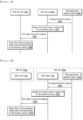
- FIG. 18 is a sequential diagram illustrating step by step procedure for on-network dynamic group creation, according to an embodiment of the disclosure.
- the V2X application specific server 200b requests the VAE server 200a to configure dynamic group corresponding to the dynamic group information.
- the VAE server 200a assigns ProSe Layer-2 Group ID to the received dynamic group information from the available ProSe Layer-2 Group ID pool.
- the VAE server 200a triggers a push request including ProSe Layer-2 Group ID corresponding to the dynamic group information to the VAE client 140.
- the VAE client 140 stores the received PC5 communication parameters corresponding to the dynamic group information received from the VAE server 200a.
- the dynamic group is defined at the V2X application specific server 200b with the V2X UE 100 of the VAE client 140 assigned as dynamic group leader.
- the VAE server 200a has a pool of the ProSe Layer-2 Group IDs that can be assigned to the dynamic groups.
- the VAE client 140 may further announce the dynamic group information including the corresponding ProSe Layer-2 Group ID to the other VAE clients within the PC5 communication proximity on a PC5 channel dedicated for V5-AE communications, enabling more V2X UEs to join the dynamic group.
- FIG. 19 is a sequential diagram illustrating step by step procedure for off-network dynamic group creation, according to an embodiment of the disclosure.
- the V2X application specific client 2 requests the VAE client 2 to configure dynamic group corresponding to the dynamic group information.
- each VAE client generates ProSe Layer-2 Group ID independently based on the provisioned ProSe Layer-2 Group ID(s) generation rules for its group information or the VAE client 2 assigns ProSe Layer-2 Group ID from the pool of configured ProSe Layer-2 Group IDs.
- the VAE client may further announce the dynamic group information including the corresponding ProSe Layer-2 Group ID to the other VAE clients within the PC5 communication proximity on a PC5 channel dedicated for V5-AE communications, enabling more V2X UEs to join the dynamic group.
- the VAE client 140 announcing the dynamic group information indicates itself as the platoon Leader of that dynamic group.
- the VAE client stores the PC5 communication parameters corresponding to the dynamic group information received from another VAE client.
- the VAE client(s) are configured with the unique pool of ProSe Layer-2 Group IDs, when they are in coverage area of the VAE server 200a.
- FIG. 20 is a sequential diagram illustrating step by step procedure for creating the dynamic group for Uu communication, according to an embodiment of the disclosure.
- the V2X application specific server 200b is responsible for V2X dynamic group creation (including information like group ID assignment, defining group criteria), membership management (e.g. user authorization), checking if there is an existing dynamic group for the defined group criteria, regulating and distribution of dynamic group communication over Uu interface and interactions with the VAE server 200a.
- the VAE server 200a is responsible for assigning the ProSe Layer-2 Group ID from the ProSe Layer-2 Group ID pool corresponding to the V2X application specific server provided dynamic group creation information and then delivering the assignment of the ProSe Layer-2 Group ID and the V2X dynamic group creation information to the VAE client 140 over V1 reference point.
- Pre-condition The V2X user at the second V2X UE 100b requested to create the dynamic group including the information required for defining the group criteria as shown at operation 2002.
- the second V2X UE 100b determines whether there is an existing dynamic group already defined corresponding to the group information provided by the V2X user.
- the second V2X UE 100b sends the create dynamic group request including the V2X user provided group information to the V2X application specific server 200b.
- the V2X application specific server 200b checks for the V2X user authorization to create the dynamic group and also if there is an existing dynamic group already defined corresponding to the group information provided by the V2X user. If the corresponding dynamic group does not exist to the group information provided by the V2X user, the V2X application specific server 200b creates the new dynamic group assigning group ID, adding V2X user as group member and defining the group criteria.
- the V2X application specific server 200b includes relevant information from the dynamic group created in create dynamic group response and sends to the second V2X UE 100b.
- the V2X application specific server 200b requests the VAE server 200a to configure the dynamic group for PC5 communication including the dynamic group ID, the V2X group member and the group criteria.
- the VAE server 200b assigns the ProSe Layer-2 Group ID from the ProSe Layer-2 Group ID pool corresponding to the V2X application specific server 200b provided dynamic group creation information.
- the VAE server 200a triggers a push request including the PC5 parameters and the dynamic group creation information to the VAE client 140 of the second V2X UE 100b requesting to create the dynamic group.
- the VAE client 140 stores the received PC5 parameters in the second V2X UE 100b.
- the VAE client 140 broadcasts PC5 parameters and the dynamic group creation information using the ProSe Layer-2 ID pre-configured per V2X service, received by the V2X UEs 100a-110n in the PC5 communication proximity.
- the VAE client 140 upon receiving the broadcast, stores the received PC5 parameters and the dynamic group creation information in the V2X UE 100a.
- the VAE client(s) 140 receiving the acknowledgement for the dynamic group creation may engage in the group communication over Uu interface.
- FIG. 21 is a sequential diagram illustrating step by step procedure for joining the dynamic group for Uu communication, according to an embodiment of the disclosure.
- Pre-condition Upon receiving the broadcast, the first V2X UE 100a has stored the received PC5 parameters and the dynamic group creation information as shown at operation 2102.
- Pre-condition The V2X user of the first V2X UE 100a requested to create the dynamic group including the information required for defining the group criteria as shown at operation 2104.
- the first V2X UE 100a determines whether there is an existing dynamic group already defined corresponding to the group information provided by the V2X user at second V2X UE 100b.
- the 100a sends the join dynamic group request including the V2X group ID to the V2X application specific server 200b.
- the V2X application specific server 200b checks for the V2X user authorization to join the existing dynamic group. If the V2X user is authorized to join the dynamic group, the V2X application specific server 200b adds the V2X user as the group member.
- the V2X application specific server 200b acknowledges the first V2X UE 100a in the Join dynamic group response.
- the V2X application specific server 200b notifies about the user associated with the first V2X UE 100a joining the dynamic group to all the existing members of the group.
- the VAE client(s) 140 which are members of the dynamic group may engage in the group communication over the Uu interface.
- FIG. 22 is a sequential diagram illustrating step by step procedure for service continuity of the dynamic group when moving from Uu communication to PC5 communication, according to an embodiment of the disclosure.
- Pre-condition Upon receiving the broadcast, the first and second V2X UEs 100a and 100b has stored the received PC5 parameters and the dynamic group creation information as shown at operations 2202a and 2202b.
- V2X UEs 100a and 100b which are members of the dynamic group may be engage in the group communication over the Uu interface as shown at operations 2204a and 2204b.
- the V2X UEs 100a and 100b have moved to an area where they have lost connectivity with the system 1000a.
- the V2X service requires V2X UEs 100a and 100b of the dynamic group communicating over Uu interface to support service continuity within the dynamic group members who have moved to an area where there is no coverage over PC5 interface. So the V2X UEs 100a and 100b of the dynamic group switch to PC5 communication mode using the parameters configured at operations 2202a and 2202b.
- the VAE client(s) 140 which are members of the dynamic group and switched to PC5 communication mode may continue their group communication over PC5 interface.
- FIG. 23 is a sequential diagram illustrating step by step procedures for creating the dynamic group for PC5 communication, according to an embodiment of the disclosure.
- the V2X UEs 100a-100n are configured with unique pool of ProSe Layer 2 IDs when V2X UEs 100a-100n are still in the coverage area of the VAE server 200a.
- the V2X user associated with the first V2X UE 100a requested to create the dynamic group providing the information required for defining the group criteria, when the first V2X 100a is not in the coverage area of the system 1000a.
- the first V2X UE 100a determines whether there is an existing dynamic group already defined corresponding to the group information provided by the V2X user.
- the VAE client 140 at the first V2X UE 100a assigns ProSe Layer-2 Group ID from the ProSe Layer-2 Group ID pool corresponding to the V2X user provided dynamic group creation information.
- the VAE client 140 at the first V2X UE 100a triggers the broadcast request including the PC5 parameters and dynamic group creation information using the ProSe Layer-2 ID pre-configured per V2X service and received by the V2X UEs 100b-100n in the PC5 communication proximity.
- the VAE client 140 upon receiving the broadcast, stores the received PC5 parameters and the dynamic group creation information in the first V2X UE 100a.
- the VAE client(s) 140 receiving the PC5 parameters for the dynamic group may engage in the group communication over the PC5 interface.
- FIG. 24 is a sequential diagram illustrating step by step procedures for joining the dynamic group for the PC5 communication, according to an embodiment of the disclosure.
- Pre-condition Upon receiving the broadcast, the VAE client 140 has stored the received PC5 parameters and the dynamic group creation information in the second V2X UE 100b as shown at operation 2402.
- the V2X user at the second V2X UE 100b requested to create the dynamic group providing the information required for defining the group criteria, when the first V2X UE 100a is not in the coverage area of the system 1000b.
- the second V2X UE 100b determines whether there is an existing dynamic group already defined corresponding to the group information provided by the V2X user.
- the VAE client 140 at the second V2X UE 100b use the stored PC5 parameters for the dynamic group and may engage in the group communication over PC5 interface.
- FIG. 25 is a sequential diagram illustrating step by step procedures for merging the dynamic groups during PC5 communication, according to an embodiment of the disclosure.
- Pre-condition As per V2X user at the V2X UE 1's request (not in the coverage area of the system 1000a), the dynamic group has been created and broadcasted PC5 parameters and dynamic group creation information over the PC5 interface. However, the VAE client 140 of the third V2X UE 100c was not in proximity of the PC5 communication with first V2X UE 100a and has not received the broadcast from the VAE client 140 of the first V2X UE 100a as shown at operation 2502.
- the V2X user at the third V2X UE 100c requested to create the dynamic group providing the information required for defining the group criteria.
- the third V2X UE 100c determines that there is no existing dynamic group already defined corresponding to the group information and assigns the ProSe Layer-2 Group ID from the ProSe Layer-2 Group ID pool.
- the VAE client 140 of the third V2X UE 100c triggers the broadcast request including the PC5 parameters and dynamic group creation information using the ProSe Layer-2 ID pre-configured per V2X service and received by the V2X UEs 100a and 100b in the PC5 communication proximity.
- the VAE client 140 at the first V2X UE 100a determines that there is an already existing dynamic group for the same group criteria.
- the VAE client 140 of the first V2X UE 100a triggers the broadcast request including PC5 parameters and dynamic group creation information using the ProSe Layer-2 ID pre-configured per V2X service and received by the V2X UEs in the PC5 communication proximity including the third V2X UE 100c.
- the VAE client 140 of the third V2X UE 100c analyses that there is an existing dynamic group and stops using ProSe Layer 2 ID that was assigned in operation 2504.
- the VAE client 140 stores the received PC5 parameters and the dynamic group creation information in the first V2X UE 100a.
- the V2X UEs 100a-100c engage in dynamic group communication over the PC5 interface using the ProSe Layer 2 ID that was assigned in operation 2502.
- FIG. 26 is a sequential diagram illustrating step by step procedures for merging the dynamic groups during PC5 communication, according to an embodiment of the disclosure.
- Pre-condition As per V2X user associated with the first V2X UE 100a request (not in the coverage area of the system 1000a), the dynamic group has been created and broadcasted PC5 parameters and dynamic group creation information over PC5 interface. However, the VAE client 140 pf the third V2X UE 100c was not in proximity of PC5 communication with the first V2X UE 100a and has not received the broadcast from the VAE client 140 of the first V2X UE 100a as shown at operation 2602.
- the V2X user at the third V2X UE 100c requested to create a dynamic group providing the information required for defining the group criteria.
- the third V2X UE 100c determines that there is no existing dynamic group already defined corresponding to the group information and assigns a ProSe Layer-2 Group ID from the ProSe Layer-2 Group ID pool.
- the VAE client 140 at the V2X UE 100c triggers a broadcast request including PC5 parameters and dynamic group creation information using the ProSe Layer-2 ID pre-configured per V2X service and received by the V2X UEs in the PC5 communication proximity.
- the VAE client 140 at the V2X UE 100a determines that there is an already existing dynamic group for the same group criteria.
- the VAE client 140 at the first V2X UE 100a stops using ProSe Layer 2 ID that was assigned in operation 2602.
- the VAE client 140 at the V2X UE 100a stores the received PC5 parameters and the dynamic group creation information in the V2X UE.
- the V2X UEs 100a-100c engage in dynamic group communication over PC5 interface using the ProSe Layer 2 ID that was assigned in operation 2608.
- FIG. 27 is a sequential diagram illustrating step by step procedures for splitting the dynamic group during PC5 communication, according to an embodiment of the disclosure.
- VAE client(s) 140 are engaged in the dynamic group communication over PC5 interface using a ProSe Layer-2 ID corresponding to a dynamic group as shown at operation 2702.
- the VAE client 140 at the first V2X UE 100a stops using ProSe Layer 2 ID that was being used for communication in operation 2702.
- FIG. 28 is a flow chart S2800 illustrating a method for handling dynamic group creation in a V2X system 1000a, according to an embodiment of the disclosure.
- Operations S2802-S2806 are performed by the processor 210.
- the method includes receiving the dynamic group configuration request corresponding to dynamic group information from the second server 200b.
- the method includes assigning the link layer identifier corresponding to the dynamic group information.
- the method includes sending the push request including the link layer identifier corresponding to the dynamic group information to the first V2X UE 100a from the plurality of V2X UEs 100a-100n.
- FIG. 29 is a flow chart S2900 illustrating a method for handling dynamic group creation in the V2X system 1000a, according to an embodiment of the disclosure.
- Operations S2902-S2906 are performed by the processor 110.
- the method includes receiving the push request including the link layer identifier corresponding to dynamic group information from the first server 200a.
- the method includes storing the link layer identifier corresponding to the dynamic group information.
- the method includes broadcasting the link layer identifier corresponding to the dynamic group information to at least one second V2X UE from the plurality of V2X UEs 100a-100n in the V2X system 1000a.
- FIG. 30 is a flow chart S3000 illustrating a method for handling dynamic group creation in the V2X system 1000b, according to an embodiment of the disclosure.
- Operations S3002-S3006 are performed by the processor 110.
- the method includes configuring dynamic group corresponding to dynamic group information.
- the method includes generating the link layer identifier from at least one of the link layer identifier pool corresponding to the dynamic group information or the link layer identifier rule.
- the method includes sending the push request including the link layer identifier corresponding to the dynamic group information to at least one second V2X UE from the plurality of V2X UEs 100a-100n.
- FIG. 31 is a flow chart S3100 illustrating a method for handling dynamic group creation in the V2X system 1000b, according to an embodiment of the disclosure.
- Operations S3102-S3108 are performed by the processor 110.
- the method includes receiving the link layer identifier corresponding to dynamic group information.
- the method includes storing the link layer identifier corresponding to the dynamic group information.
- the method includes broadcasting the link layer identifier corresponding to the dynamic group information to at least one second V2X UE from the plurality of V2X UEs 100a-100n in the V2X system 1000.
- the method includes establishing, by the first V2X UE 100a, the dynamic group communication with the at least one second V2X UE based on the dynamic group information.
- FIG. 32 is a block diagram of a V2X UE, according to an embodiment of the disclosure.
- the V2X UE 3200 may include a processor 3210, a transceiver (e.g., a communicator) 3220 and a memory 3230.
- a processor 3210 e.g., a communicator
- the V2X UE 3200 may be implemented by more or less components than those illustrated in FIG. 32 .
- the processor 3210 and the transceiver 3220 and the memory 3230 may be implemented as a single chip according to another embodiment.
- the V2X UE 3200 may correspond to V2X UE of FIG. 3 .
- the processor 3210 may correspond to the processor 110 of FIG. 5 .
- the aforementioned components will now be described in detail.
- the processor 3210 may include one or more processors or other processing devices that control the proposed function, process, and/or method. Operation of the user equipment 3200 may be implemented by the processor 3210. The processor may operate to perform the embodiments of the disclosure and the operation of the processor 3210 may correspond to the processor 110 of FIG. 5 .
- the transceiver 3220 may include a RF transmitter for up-converting and amplifying a transmitted signal, and a RF receiver for down-converting a frequency of a received signal.
- the transceiver 3220 may be implemented by more or less components than those illustrated in components.
- the transceiver 3220 may be connected to the processor 3210 and transmit and/or receive a signal.
- the signal may include control information and data.
- the transceiver 3220 may receive the signal through a wireless channel and output the signal to the processor 3210.
- the transceiver 3220 may transmit a signal output from the processor 3210 through the wireless channel.
- the memory 3230 may store the control information or the data included in a signal obtained by the V2X UE 3200.
- the memory 3230 may be connected to the processor 3210 and store at least one instruction or a protocol or a parameter for the proposed function, process, and/or method.
- the memory 3230 may include read-only memory (ROM) and/or RAM and/or hard disk and/or compact disc (CD)-ROM and/or digital versatile disc (DVD) and/or other storage devices.
- the embodiments disclosed herein can be implemented using at least one software program running on at least one hardware device and performing network management functions to control the elements.
Landscapes
- Engineering & Computer Science (AREA)
- Computer Networks & Wireless Communication (AREA)
- Signal Processing (AREA)
- Multimedia (AREA)
- Mobile Radio Communication Systems (AREA)
- Management, Administration, Business Operations System, And Electronic Commerce (AREA)
Applications Claiming Priority (4)
| Application Number | Priority Date | Filing Date | Title |
|---|---|---|---|
| IN201841017872 | 2018-05-11 | ||
| IN201841026329 | 2018-07-13 | ||
| EP19799551.7A EP3782383A4 (de) | 2018-05-11 | 2019-05-13 | Verfahren und system zur handhabung dynamischer gruppenbildung in einem v2x-system |
| PCT/KR2019/005703 WO2019216726A1 (en) | 2018-05-11 | 2019-05-13 | Method and system for handling dynamic group creation in v2x system |
Related Parent Applications (1)
| Application Number | Title | Priority Date | Filing Date |
|---|---|---|---|
| EP19799551.7A Division EP3782383A4 (de) | 2018-05-11 | 2019-05-13 | Verfahren und system zur handhabung dynamischer gruppenbildung in einem v2x-system |
Publications (2)
| Publication Number | Publication Date |
|---|---|
| EP4478751A2 true EP4478751A2 (de) | 2024-12-18 |
| EP4478751A3 EP4478751A3 (de) | 2025-03-12 |
Family
ID=68465040
Family Applications (2)
| Application Number | Title | Priority Date | Filing Date |
|---|---|---|---|
| EP19799551.7A Pending EP3782383A4 (de) | 2018-05-11 | 2019-05-13 | Verfahren und system zur handhabung dynamischer gruppenbildung in einem v2x-system |
| EP24209680.8A Pending EP4478751A3 (de) | 2018-05-11 | 2019-05-13 | Verfahren und system zur handhabung der dynamischen gruppenerzeugung in einem v2x-system |
Family Applications Before (1)
| Application Number | Title | Priority Date | Filing Date |
|---|---|---|---|
| EP19799551.7A Pending EP3782383A4 (de) | 2018-05-11 | 2019-05-13 | Verfahren und system zur handhabung dynamischer gruppenbildung in einem v2x-system |
Country Status (4)
| Country | Link |
|---|---|
| US (2) | US11051136B2 (de) |
| EP (2) | EP3782383A4 (de) |
| CN (2) | CN112400330B (de) |
| WO (1) | WO2019216726A1 (de) |
Families Citing this family (45)
| Publication number | Priority date | Publication date | Assignee | Title |
|---|---|---|---|---|
| WO2019153082A1 (en) * | 2018-02-07 | 2019-08-15 | Clearpath Robotics Inc. | Communication systems for self-driving vehicles, and methods of providing thereof |
| KR102569131B1 (ko) * | 2018-05-11 | 2023-08-24 | 삼성전자주식회사 | 차량 통신 서비스를 수행하는 장치 및 방법 |
| EP3782383A4 (de) * | 2018-05-11 | 2021-03-10 | Samsung Electronics Co., Ltd. | Verfahren und system zur handhabung dynamischer gruppenbildung in einem v2x-system |
| CN110753300B (zh) * | 2018-07-06 | 2021-10-15 | 华为技术有限公司 | 一种物联网编队通信方法 |
| WO2020093328A1 (en) * | 2018-11-08 | 2020-05-14 | Lenovo (Beijing) Limited | Method and apparatus for groupcast connection establishment and transmission |
| EP3671692A1 (de) * | 2018-12-19 | 2020-06-24 | Ningbo Geely Automobile Research & Development Co. Ltd. | Zeit für die durchfahrt eines fahrzeugzuges |
| US11928959B2 (en) * | 2019-01-11 | 2024-03-12 | Toyota Jidosha Kabushiki Kaisha | On-demand formation of stationary vehicular micro clouds |
| US11234241B2 (en) * | 2019-01-11 | 2022-01-25 | At&T Intellectual Property I, L.P. | Assisted resource allocation in a peer to peer wireless network |
| EP3912408B1 (de) * | 2019-01-18 | 2022-08-03 | Telefonaktiebolaget LM Ericsson (publ) | Dienstinformationen für eine v2x-dienst-koordination in einem anderen frequenzspektrum |
| AU2019100368B4 (en) * | 2019-01-25 | 2019-11-28 | Norman BOYLE | A driverless impact attenuating traffic management vehicle |
| US11597088B2 (en) * | 2019-01-31 | 2023-03-07 | Honda Motor Co., Ltd. | Systems and methods for fully coupled models for crowd navigation |
| US11630461B2 (en) | 2019-01-31 | 2023-04-18 | Honda Motor Co., Ltd. | Systems and methods for utilizing interacting gaussian mixture models for crowd navigation |
| JP7207438B2 (ja) * | 2019-02-04 | 2023-01-18 | 日本電気株式会社 | 車両管理装置、車両管理方法、プログラム |
| WO2020168341A1 (en) * | 2019-02-15 | 2020-08-20 | DRiV Automotive Inc. | Autonomous vehicle platooning system and method |
| KR102727116B1 (ko) * | 2019-03-20 | 2024-11-06 | 현대자동차주식회사 | 내비게이션 시스템 및 그의 경로 탐색 방법 |
| EP3716243A1 (de) * | 2019-03-28 | 2020-09-30 | Volkswagen Aktiengesellschaft | Verfahren, vorrichtungen und computerprogramme für fahrzeuge und für eine basisstation eines mobilkommunikationssystems |
| KR102645057B1 (ko) * | 2019-04-10 | 2024-03-11 | 현대자동차주식회사 | 차량의 군집 주행 정보 출력 장치 및 방법 |
| WO2020231308A1 (en) * | 2019-05-13 | 2020-11-19 | Telefonaktiebolaget Lm Ericsson (Publ) | Network node, vehicle to everything wireless device and methods performed therein |
| US10966265B2 (en) * | 2019-06-11 | 2021-03-30 | Blackberry Limited | Interworking system and operation in V2X applications |
| US20240080340A1 (en) * | 2019-10-07 | 2024-03-07 | Telefonaktiebolaget Lm Ericsson (Publ) | Security for Groupcast Message in D2D Communication |
| AU2020379142B2 (en) * | 2019-11-10 | 2023-08-03 | Telefonaktiebolaget Lm Ericsson (Publ) | Network information delivery towards application at device side |
| US11787053B2 (en) | 2019-11-19 | 2023-10-17 | Honda Motor Co., Ltd. | Systems and methods for utilizing interacting Gaussian mixture models for crowd navigation |
| US11356251B2 (en) * | 2019-12-19 | 2022-06-07 | Intel Corporation | Secure vehicle communication with privacy-preserving features |
| US20230039024A1 (en) * | 2020-01-06 | 2023-02-09 | Telefonaktiebolaget Lm Ericsson (Publ) | Method and apparatus for dynamic group management |
| EP4098015A1 (de) * | 2020-01-31 | 2022-12-07 | Telefonaktiebolaget LM Ericsson (publ) | Konfiguration von ue-messungen |
| JP7343438B2 (ja) * | 2020-04-02 | 2023-09-12 | トヨタ自動車株式会社 | 自律走行車両及び自律走行車両の運行管理装置 |
| KR102862415B1 (ko) * | 2020-04-30 | 2025-09-18 | 퀄컴 인코포레이티드 | V2x 그룹 관리에서의 리더 선택 |
| US11443636B2 (en) * | 2020-05-06 | 2022-09-13 | Toyota Motor Engineering & Manufacturing North America, Inc. | Systems and methods of platoon leadership as a service |
| EP4147440B1 (de) * | 2020-05-08 | 2023-11-22 | Telefonaktiebolaget LM Ericsson (publ) | Verfahren zur auslösung und aktualisierung von telebetriebenem fahren an einem v2x-anwendungsserver |
| US12490061B2 (en) | 2020-07-14 | 2025-12-02 | Samsung Electronics Co., Ltd. | Methods and systems for updating group information |
| CN114189828B (zh) * | 2020-08-24 | 2025-01-17 | 大唐移动通信设备有限公司 | 一种信息处理方法、装置、服务器及车联网终端 |
| CN114189836B (zh) * | 2020-09-15 | 2025-08-19 | 中信科智联科技有限公司 | 一种编队车辆的通信方法及车辆 |
| CN112235749B (zh) * | 2020-09-30 | 2024-06-14 | 博泰车联网科技(上海)股份有限公司 | 组队出行方法及相关设备 |
| US11501646B2 (en) * | 2020-10-06 | 2022-11-15 | Qualcomm Incorporated | Coordinating vehicle platooning using V2X assistance |
| US12169775B2 (en) * | 2020-10-08 | 2024-12-17 | Toyota Motor Engineering & Manufacturing North America, Inc. | Methods and systems for enhanced scene perception using vehicle platoon |
| CN112596522B (zh) * | 2020-12-15 | 2025-05-09 | 腾讯科技(深圳)有限公司 | 车辆编队行驶控制方法及相关设备 |
| CN113015085B (zh) * | 2021-02-22 | 2022-02-01 | 同济大学 | 高速公路场景中开放式无人驾驶车群动态演化探测方法 |
| WO2022188996A1 (en) * | 2021-03-12 | 2022-09-15 | Nokia Technologies Oy | Apparatus, method, and computer program |
| WO2022195814A1 (ja) * | 2021-03-18 | 2022-09-22 | 三菱電機株式会社 | 中継装置、通信システム、信号中継方法、制御回路および記憶媒体 |
| JP7468425B2 (ja) * | 2021-03-25 | 2024-04-16 | トヨタ自動車株式会社 | ライドシェアシステム及びライドシェア方法 |
| US11869361B2 (en) * | 2021-04-01 | 2024-01-09 | Gm Cruise Holdings Llc | Coordinated multi-vehicle routing |
| US11862024B2 (en) * | 2021-08-13 | 2024-01-02 | GM Global Technology Operations LLC | System and method for software architecture for leader vehicle capabilities for an on-demand autonomy (ODA) service |
| US20240420574A1 (en) * | 2023-06-15 | 2024-12-19 | Qualcomm Incorporated | Communication for vehicle safety system |
| US20250260738A1 (en) * | 2024-02-08 | 2025-08-14 | Hoseo University Academic Cooperation Foundation | Fuzzy logic based forwarding method and system for mitigation of push-based data broadcast in VNDN |
| DE102024121582A1 (de) * | 2024-07-30 | 2026-02-05 | Dr. Ing. H.C. F. Porsche Aktiengesellschaft | Verfahren zum Kommunikationsablauf bei einer Fahrzeuggruppenfahrt |
Family Cites Families (23)
| Publication number | Priority date | Publication date | Assignee | Title |
|---|---|---|---|---|
| KR100957137B1 (ko) * | 2009-02-26 | 2010-05-11 | 한국과학기술원 | 군집주행 제어 시스템 및 방법 |
| US8903930B2 (en) * | 2010-04-07 | 2014-12-02 | Lg Electronics Inc. | Group-based M2M communication method |
| CA2877453A1 (en) * | 2012-06-21 | 2013-12-27 | Cellepathy Ltd. | Device context determination |
| EP3047696B1 (de) * | 2013-09-18 | 2020-05-20 | Telefonaktiebolaget LM Ericsson (publ) | Gerät-zu-gerät-kommunikation zwischen drahtlosen kommunikationsgeräten unter verwendung der gruppen-id und anwendungs-id |
| CN106211087A (zh) * | 2015-01-16 | 2016-12-07 | 中兴通讯股份有限公司 | 数据处理方法及装置 |
| CN112867095B (zh) * | 2015-04-07 | 2024-06-18 | 玛利基创新有限公司 | 用于任务关键的语音呼叫的基于网络的操作与基于中继的操作之间的切换 |
| CN106331978B (zh) * | 2015-06-19 | 2019-09-17 | 电信科学技术研究院 | 一种层2链路标识的选择、通知方法及装置 |
| CN106331008A (zh) | 2015-06-26 | 2017-01-11 | 中兴通讯股份有限公司 | 车联网中车辆分组的管理方法及装置 |
| KR101943990B1 (ko) * | 2015-06-29 | 2019-01-30 | 삼성전자주식회사 | 무선 통신 시스템에서 통신을 수행하는 방법 및 이를 위한 장치 |
| EP3627723B1 (de) * | 2015-07-24 | 2025-10-15 | Panasonic Intellectual Property Corporation of America | Verbesserte ue-aktivierung eines prose-relais |
| US10524099B2 (en) * | 2015-10-30 | 2019-12-31 | Lg Electronics Inc. | Method and apparatus for supporting bearer type for V2X communication in wireless communication system |
| WO2017123004A1 (ko) * | 2016-01-13 | 2017-07-20 | 엘지전자(주) | V2x 서비스를 위한 단말의 인터페이스 변경 방법 및 이를 위한 장치 |
| US10849031B2 (en) * | 2016-02-06 | 2020-11-24 | Lg Electronics Inc. | Method and apparatus for performing V2X communication |
| US10212102B2 (en) * | 2016-03-17 | 2019-02-19 | Lg Electronics Inc. | Method and apparatus for buffering V2X message for path switching in wireless communication system |
| WO2017173072A1 (en) * | 2016-03-30 | 2017-10-05 | Interdigital Patent Holdings, Inc. | Method and wireless unit for v2x communication |
| WO2018044144A1 (ko) * | 2016-09-05 | 2018-03-08 | 엘지전자(주) | 무선 통신 시스템에서 서비스 요청 절차를 수행하기 위한 방법 및 이를 위한 장치 |
| EP3512294B1 (de) * | 2016-10-07 | 2021-06-16 | LG Electronics Inc. | Verfahren und vorrichtung zur durchführung von v2x-kommunikation |
| WO2018182603A1 (en) * | 2017-03-30 | 2018-10-04 | Intel IP Corporation | Device-to-device discovery for cooperative operation |
| SG11201909943SA (en) * | 2017-05-01 | 2019-11-28 | Parkofon Inc | System and method for high accuracy location determination and parking |
| US11405885B2 (en) * | 2017-12-18 | 2022-08-02 | Telefonaktiebolaget Lm Ericsson (Publ) | Methods and apparatus for wireless device communication |
| EP3782383A4 (de) * | 2018-05-11 | 2021-03-10 | Samsung Electronics Co., Ltd. | Verfahren und system zur handhabung dynamischer gruppenbildung in einem v2x-system |
| CN112385248B (zh) * | 2018-05-17 | 2022-06-03 | Idac控股公司 | 启用关于高级车辆至所有事物(v2x)服务的pc5通信参数的配置的过程 |
| JP7116010B2 (ja) * | 2019-06-04 | 2022-08-09 | 矢崎総業株式会社 | 車両通信装置 |
-
2019
- 2019-05-13 EP EP19799551.7A patent/EP3782383A4/de active Pending
- 2019-05-13 EP EP24209680.8A patent/EP4478751A3/de active Pending
- 2019-05-13 WO PCT/KR2019/005703 patent/WO2019216726A1/en not_active Ceased
- 2019-05-13 CN CN201980045582.6A patent/CN112400330B/zh active Active
- 2019-05-13 US US16/410,286 patent/US11051136B2/en active Active
- 2019-05-13 CN CN202211042714.XA patent/CN115567881B/zh active Active
-
2021
- 2021-06-28 US US17/360,146 patent/US11974195B2/en active Active
Also Published As
| Publication number | Publication date |
|---|---|
| US11051136B2 (en) | 2021-06-29 |
| EP4478751A3 (de) | 2025-03-12 |
| EP3782383A1 (de) | 2021-02-24 |
| EP3782383A4 (de) | 2021-03-10 |
| CN112400330B (zh) | 2022-09-16 |
| CN112400330A (zh) | 2021-02-23 |
| CN115567881B (zh) | 2026-03-20 |
| US11974195B2 (en) | 2024-04-30 |
| WO2019216726A1 (en) | 2019-11-14 |
| US20190349719A1 (en) | 2019-11-14 |
| CN115567881A (zh) | 2023-01-03 |
| US20210329422A1 (en) | 2021-10-21 |
Similar Documents
| Publication | Publication Date | Title |
|---|---|---|
| EP4478751A2 (de) | Verfahren und system zur handhabung der dynamischen gruppenerzeugung in einem v2x-system | |
| US11729590B2 (en) | Seal system and method for provisioning inter-services communication in seal system of wireless communication network | |
| EP4055928B1 (de) | Verfahren und vorrichtung zum senden und empfangen von broadcast-informationen in einem drahtloskommunikationssystem | |
| US20250220394A1 (en) | Groupcast procedures for v2x | |
| CN108260163B (zh) | 信息的发送、接收方法及装置 | |
| US11483734B2 (en) | Apparatus and method for providing direct communication services in wireless communication system | |
| US12284587B2 (en) | Dynamic path selection | |
| WO2016206465A1 (zh) | 车联网中车辆的分组方法及装置 | |
| US11792884B2 (en) | System and method for dynamic group data protection | |
| CN106331008A (zh) | 车联网中车辆分组的管理方法及装置 | |
| KR102569131B1 (ko) | 차량 통신 서비스를 수행하는 장치 및 방법 | |
| WO2016177934A1 (en) | Method, system and apparatus | |
| CN113475146A (zh) | 侧链组播通信技术的装置及方法 | |
| Wang et al. | A packet collision avoidance resource selection scheme for reliable intra-platoon message delivery in a C-V2X network | |
| US11057746B2 (en) | Method, device and system for transmitting broadcasting services, and computer storage medium | |
| CN108605232B (zh) | 一种组通信的方法、设备及系统 | |
| US20230292400A1 (en) | Method and apparatus for handling multicast broadcast service in wireless communication system | |
| Lyu et al. | Mobility-Aware and Collision-Avoidance MAC Design | |
| CN116939507A (zh) | 基于侧行链路的通信方法、装置、存储介质和芯片系统 |
Legal Events
| Date | Code | Title | Description |
|---|---|---|---|
| PUAI | Public reference made under article 153(3) epc to a published international application that has entered the european phase |
Free format text: ORIGINAL CODE: 0009012 |
|
| STAA | Information on the status of an ep patent application or granted ep patent |
Free format text: STATUS: THE APPLICATION HAS BEEN PUBLISHED |
|
| AC | Divisional application: reference to earlier application |
Ref document number: 3782383 Country of ref document: EP Kind code of ref document: P |
|
| AK | Designated contracting states |
Kind code of ref document: A2 Designated state(s): AL AT BE BG CH CY CZ DE DK EE ES FI FR GB GR HR HU IE IS IT LI LT LU LV MC MK MT NL NO PL PT RO RS SE SI SK SM TR |
|
| PUAL | Search report despatched |
Free format text: ORIGINAL CODE: 0009013 |
|
| AK | Designated contracting states |
Kind code of ref document: A3 Designated state(s): AL AT BE BG CH CY CZ DE DK EE ES FI FR GB GR HR HU IE IS IT LI LT LU LV MC MK MT NL NO PL PT RO RS SE SI SK SM TR |
|
| RIC1 | Information provided on ipc code assigned before grant |
Ipc: H04W 76/23 20180101ALI20250204BHEP Ipc: H04W 4/70 20180101ALI20250204BHEP Ipc: H04W 4/46 20180101ALI20250204BHEP Ipc: H04W 4/44 20180101ALI20250204BHEP Ipc: H04W 76/14 20180101ALI20250204BHEP Ipc: H04W 76/11 20180101ALI20250204BHEP Ipc: H04W 4/40 20180101ALI20250204BHEP Ipc: H04W 4/08 20090101AFI20250204BHEP |
|
| STAA | Information on the status of an ep patent application or granted ep patent |
Free format text: STATUS: REQUEST FOR EXAMINATION WAS MADE |
|
| 17P | Request for examination filed |
Effective date: 20250730 |
|
| RIC1 | Information provided on ipc code assigned before grant |
Ipc: H04W 4/08 20090101AFI20260115BHEP Ipc: H04W 4/40 20180101ALI20260115BHEP Ipc: H04W 76/14 20180101ALI20260115BHEP Ipc: H04W 4/44 20180101ALI20260115BHEP Ipc: H04W 4/46 20180101ALI20260115BHEP Ipc: H04W 4/70 20180101ALI20260115BHEP Ipc: H04W 76/23 20180101ALI20260115BHEP Ipc: H04L 67/12 20220101ALI20260115BHEP |
|
| GRAP | Despatch of communication of intention to grant a patent |
Free format text: ORIGINAL CODE: EPIDOSNIGR1 |
|
| STAA | Information on the status of an ep patent application or granted ep patent |
Free format text: STATUS: GRANT OF PATENT IS INTENDED |
|
| INTG | Intention to grant announced |
Effective date: 20260302 |