EP4480320A1 - Umweltattribut für tierfutter, menschliches nahrungsmittel und nahrungsergänzungsmittel - Google Patents
Umweltattribut für tierfutter, menschliches nahrungsmittel und nahrungsergänzungsmittel Download PDFInfo
- Publication number
- EP4480320A1 EP4480320A1 EP23180682.9A EP23180682A EP4480320A1 EP 4480320 A1 EP4480320 A1 EP 4480320A1 EP 23180682 A EP23180682 A EP 23180682A EP 4480320 A1 EP4480320 A1 EP 4480320A1
- Authority
- EP
- European Patent Office
- Prior art keywords
- animal feed
- dietary supplement
- human food
- environmental
- digital asset
- Prior art date
- Legal status (The legal status is an assumption and is not a legal conclusion. Google has not performed a legal analysis and makes no representation as to the accuracy of the status listed.)
- Pending
Links
Images

Classifications
-
- A—HUMAN NECESSITIES
- A23—FOODS OR FOODSTUFFS; TREATMENT THEREOF, NOT COVERED BY OTHER CLASSES
- A23K—FODDER
- A23K10/00—Animal feeding-stuffs
-
- A—HUMAN NECESSITIES
- A23—FOODS OR FOODSTUFFS; TREATMENT THEREOF, NOT COVERED BY OTHER CLASSES
- A23L—FOODS, FOODSTUFFS OR NON-ALCOHOLIC BEVERAGES, NOT OTHERWISE PROVIDED FOR; PREPARATION OR TREATMENT THEREOF
- A23L33/00—Modifying nutritive qualities of foods; Dietetic products; Preparation or treatment thereof
- A23L33/10—Modifying nutritive qualities of foods; Dietetic products; Preparation or treatment thereof using additives
- A23L33/15—Vitamins
-
- G—PHYSICS
- G06—COMPUTING OR CALCULATING; COUNTING
- G06Q—INFORMATION AND COMMUNICATION TECHNOLOGY [ICT] SPECIALLY ADAPTED FOR ADMINISTRATIVE, COMMERCIAL, FINANCIAL, MANAGERIAL OR SUPERVISORY PURPOSES; SYSTEMS OR METHODS SPECIALLY ADAPTED FOR ADMINISTRATIVE, COMMERCIAL, FINANCIAL, MANAGERIAL OR SUPERVISORY PURPOSES, NOT OTHERWISE PROVIDED FOR
- G06Q10/00—Administration; Management
- G06Q10/06—Resources, workflows, human or project management; Enterprise or organisation planning; Enterprise or organisation modelling
- G06Q10/063—Operations research, analysis or management
-
- G—PHYSICS
- G06—COMPUTING OR CALCULATING; COUNTING
- G06Q—INFORMATION AND COMMUNICATION TECHNOLOGY [ICT] SPECIALLY ADAPTED FOR ADMINISTRATIVE, COMMERCIAL, FINANCIAL, MANAGERIAL OR SUPERVISORY PURPOSES; SYSTEMS OR METHODS SPECIALLY ADAPTED FOR ADMINISTRATIVE, COMMERCIAL, FINANCIAL, MANAGERIAL OR SUPERVISORY PURPOSES, NOT OTHERWISE PROVIDED FOR
- G06Q10/00—Administration; Management
- G06Q10/08—Logistics, e.g. warehousing, loading or distribution; Inventory or stock management
- G06Q10/087—Inventory or stock management, e.g. order filling, procurement or balancing against orders
-
- G—PHYSICS
- G06—COMPUTING OR CALCULATING; COUNTING
- G06Q—INFORMATION AND COMMUNICATION TECHNOLOGY [ICT] SPECIALLY ADAPTED FOR ADMINISTRATIVE, COMMERCIAL, FINANCIAL, MANAGERIAL OR SUPERVISORY PURPOSES; SYSTEMS OR METHODS SPECIALLY ADAPTED FOR ADMINISTRATIVE, COMMERCIAL, FINANCIAL, MANAGERIAL OR SUPERVISORY PURPOSES, NOT OTHERWISE PROVIDED FOR
- G06Q10/00—Administration; Management
- G06Q10/30—Administration of product recycling or disposal
-
- G—PHYSICS
- G06—COMPUTING OR CALCULATING; COUNTING
- G06Q—INFORMATION AND COMMUNICATION TECHNOLOGY [ICT] SPECIALLY ADAPTED FOR ADMINISTRATIVE, COMMERCIAL, FINANCIAL, MANAGERIAL OR SUPERVISORY PURPOSES; SYSTEMS OR METHODS SPECIALLY ADAPTED FOR ADMINISTRATIVE, COMMERCIAL, FINANCIAL, MANAGERIAL OR SUPERVISORY PURPOSES, NOT OTHERWISE PROVIDED FOR
- G06Q30/00—Commerce
- G06Q30/018—Certifying business or products
-
- G—PHYSICS
- G06—COMPUTING OR CALCULATING; COUNTING
- G06Q—INFORMATION AND COMMUNICATION TECHNOLOGY [ICT] SPECIALLY ADAPTED FOR ADMINISTRATIVE, COMMERCIAL, FINANCIAL, MANAGERIAL OR SUPERVISORY PURPOSES; SYSTEMS OR METHODS SPECIALLY ADAPTED FOR ADMINISTRATIVE, COMMERCIAL, FINANCIAL, MANAGERIAL OR SUPERVISORY PURPOSES, NOT OTHERWISE PROVIDED FOR
- G06Q50/00—Information and communication technology [ICT] specially adapted for implementation of business processes of specific business sectors, e.g. utilities or tourism
- G06Q50/02—Agriculture; Fishing; Forestry; Mining
-
- G—PHYSICS
- G06—COMPUTING OR CALCULATING; COUNTING
- G06Q—INFORMATION AND COMMUNICATION TECHNOLOGY [ICT] SPECIALLY ADAPTED FOR ADMINISTRATIVE, COMMERCIAL, FINANCIAL, MANAGERIAL OR SUPERVISORY PURPOSES; SYSTEMS OR METHODS SPECIALLY ADAPTED FOR ADMINISTRATIVE, COMMERCIAL, FINANCIAL, MANAGERIAL OR SUPERVISORY PURPOSES, NOT OTHERWISE PROVIDED FOR
- G06Q50/00—Information and communication technology [ICT] specially adapted for implementation of business processes of specific business sectors, e.g. utilities or tourism
- G06Q50/04—Manufacturing
Definitions
- the present disclosure relates to systems for producing an animal feed, human food and dietary supplement associated with an animal feed, human food and dietary supplement passport or digital asset, methods for producing an animal feed, human food and dietary supplement associated with an animal feed, human food and dietary supplement passport or digital asset, apparatuses for generating a passport or digital asset associated with an animal feed, human food and dietary supplement , computer-implemented methods for generating an animal feed, human food and dietary supplement passport or digital asset, computer program elements for generating an animal feed, human food and dietary supplement passport or digital asset, uses of an animal feed, human food and dietary supplement associated with an animal feed, human food and dietary supplement passport or digital asset, uses of an animal feed, human food and dietary supplement passport or digital asset, products produced from the animal feed, human food and dietary supplement and associated with an animal feed, human food and dietary supplement passport or digital asset, an animal feed, human food and dietary supplement, an animal feed, human food and dietary supplement passport or digital asset including one or more decentral identifier(s) and data related
- a system for producing an animal feed, human food and dietary supplement associated with an animal feed, human food and dietary supplement passport or a digital asset comprising:
- a system for producing an animal feed, human food and dietary supplement associated with an animal feed, human food and dietary supplement passport or digital asset comprising:
- a method for producing an animal feed, human food and dietary supplement associated with an animal feed, human food and dietary supplement passport or a digital asset comprising:
- an apparatus for generating a passport or digital asset associated with an animal feed, human food and dietary supplement wherein the animal feed, human food and dietary supplement is produced from one or more input material(s) through one or more chemical process(s) of a chemical production network, wherein the one or more input material(s) and/or the one or more chemical process(s) are associated with environmental attribute(s), the apparatus comprising:
- a method for generating an animal feed, human food and dietary supplement passport or digital asset associated with an animal feed, human food and dietary supplement, wherein the animal feed, human food and dietary supplement is produced from one or more input material(s) through one or more chemical process(s) of a chemical production network, wherein the one or more input material(s) and/or the one or more chemical process(s) are associated with environmental attribute(s), the method comprising:
- a computer element such as a computer readable storage medium, a computer program or a computer program product, comprising instructions, which when executed by a computing node or a computing system, direct the computing node or computing system to carry out the steps of the computer-implemented methods disclosed herein.
- a computer element such as a computer readable storage medium, a computer program or a computer program product, comprising instructions, which when executed by the apparatuses disclosed herein, direct the apparatuses to carry out steps the apparatuses disclosed herein are configured to execute.
- an animal feed, human food and dietary supplement associated with an animal feed, human food and dietary supplement passport or digital asset wherein the animal feed, human food and dietary supplement is produced from one or more input material(s) through one or more chemical process(s) of a chemical production network, wherein the one or more input material(s) and/or the one or more chemical process(s) are associated with environmental attribute(s), wherein the animal feed, human food and dietary supplement passport or digital asset includes a decentral identifier associated with the produced animal feed, human food and dietary supplement and a link to environmental attribute(s) associated with one or more environmental attribute(s) of one or more input material(s) and/or one or more chemical process(s) used to produce the animal feed, human food and dietary supplement.
- a animal feed, human food and dietary supplement passport or digital asset as generated according to the methods disclosed herein.
- an animal feed, human food and dietary supplement passport or digital asset as generated according to the apparatuses disclosed herein.
- a production system for producing a product from the animal feed, human food and dietary supplement associated with the animal feed, human food and dietary supplement passport or digital asset as provided according to the systems, apparatuses or methods disclosed herein.
- a production method for producing a product from the animal feed, human food and dietary supplement associated with the animal feed, human food and dietary supplement passport or digital asset as provided according to the systems, apparatuses or methods disclosed herein.
- a animal feed, human food and dietary supplement associated with a digital asset including a decentral identifier associated with the animal feed, human food and dietary supplement and linked to one or more environmental attribute(s) of the one or more input material(s) and/or the one or more chemical process(s) used to produce the animal feed, human food and dietary supplement.
- a use of the animal feed, human food and dietary supplement associated with the animal feed, human food and dietary supplement passport or digital asset for producing a product from the animal feed, human food and dietary supplement and associating the animal feed, human food and dietary supplement passport or digital asset with the product produced from the animal feed, human food and dietary supplement.
- a use of the animal feed, human food and dietary supplement associated with the animal feed, human food and dietary supplement passport or digital asset for producing a product from the animal feed, human food and dietary supplement and deriving a product passport or digital asset from the animal feed, human food and dietary supplement passport or digital asset.
- a method for using the animal feed, human food and dietary supplement associated with the digital asset for producing a product from the animal feed, human food and dietary supplement as disclosed herein and deriving a digital asset associated with the product from the animal feed, human food and dietary supplement passport or digital asset.
- Determining, generating includes initiating or causing to determine, generate.
- Providing includes "initiating or causing to access, determine, generate, send or receive”.
- "Initiating or causing to perform an action” includes any processing signal that triggers a computing node to perform the respective action.
- the methods, the systems, animal feed, human food and dietary supplements, animal feed, human food and dietary supplement passports or digital assets and the computer elements disclosed herein provide an efficient, secure and robust way for sharing or exchanging environmental impact data across different participant nodes in value chains.
- animal feed, human food and dietary supplement specific data via the animal feed, human food and dietary supplement passport or digital asset
- environmental impacts can be shared and made transparent from the animal feed, human food and dietary supplement to the product produced from such animal feed, human food and dietary supplement.
- the animal feed, human food and dietary supplement passport or digital asset enables secure data exchange, since data access can be controlled by the animal feed, human food and dietary supplement provider, e.g. the entity providing the animal feed, human food and dietary supplement.
- the exchanged data assets can be specific to the animal feed, human food and dietary supplement as produced and tailored to the needs of the consumer of the animal feed, human food and dietary supplement. This way an improved tracking and tracing of animal feed, human food and dietary supplement s can be achieved by securely providing environmental impact data in diverse and highly complex value chains.
- the environmental impact of animal feed, human food and dietary supplement can hence be tracked leading to simpler, more efficient and sustainable handling of animal feed, human food and dietary supplement by value chain participants.
- Animal feed, human food and dietary supplements associated with the animal feed, human food and dietary supplements passport or digital asset include, without being limited to,
- the animal feed, human food and dietary supplement associated with the animal feed, human food and dietary supplements passport or digital asset can be present in a formulated form.
- the formulation can be performed by techniques known by person skilled in the art. Such techniques include, without being limited to, matrix formulation with formulation acids and/or granulation with carrier materials like silica. Formulation aids include, without limiting to, antioxidants like BHT, colloids like gelatin.
- the chemical production network may include one or more one or more chemical and/or mechanical process(es).
- the chemical production network may produce one or more output material(s) through chemical and/or mechanical processing.
- the chemical production network may include multiple types of production processes for producing one or more output material(s) from one or more input material(s).
- the chemical production network may produce one or more output material(s) from input material(s) provided to the chemical production network.
- the chemical production network may include a complex production network producing multiple chemical products via multiple production process(es).
- the chemical production network may include connected, interconnected and/or non-connected production process(es).
- the chemical production network may include a composite or Verbund network.
- the chemical production network may include identity preserving or segregated production process(es).
- Identity preserving or segregated in this context may refer to environmental attribute(s) of input material(s) being preserved or segregated in the production process(es). Examples are non-fossil, e.g. renewable or recycled, input materials used to produce the one or more animal feed, human food and dietary supplement(s) without fossil content. Further examples are fossil input material(s) used to produce the one or more animal feed, human food and dietary supplement(s) with fossil content.
- Chemical production networks may include non-identity preserving or non-segregated production process(es).
- Non-identity preserving or non-segregated in this context may refer to non-fossil input material(s) being mixed with fossil input material(s) to produce the animal feed, human food and dietary supplement(s).
- fossil and renewable input materials may be mixed to produce the animal feed, human food and dietary supplement(s) with fossil and renewable content.
- the chemical production network may include one or more production process(es) with multiple production steps.
- the production steps included in the chemical network may be defined by the physical system boundary of the chemical production network.
- the system boundary may be defined by location and/or control over production processes or steps.
- the system boundary may be defined by a site of the chemical production network.
- the system boundary may be defined by production process(es) or step(s) controlled by one entity or multiple entities jointly.
- the system boundary may be defined by the value chain with staggered production process(es) or step(s) to the chemical end product, which may be controlled by multiple entities jointly or separately.
- the chemical production network may include a waste collection, a sorting step, a recycling step such as pyrolysis, a cracking step such as steam cracking, a separation step to separate intermediates of one process step and further processing steps to convert such intermediates to output material(s), in particular the produced animal feed, human food and dietary supplement(s) leaving the system boundary of the chemical production network.
- the input material(s) may enter the physical system boundary of the chemical production network.
- the entry point(s) of the chemical production network may be marked by the entry of input material(s) to the chemical production network or the system boundary of the chemical network.
- the output material(s), in particular the produced animal feed, human food and dietary supplement(s) may leave the physical system boundary of the chemical production network.
- the exit point(s) of the chemical production network may be marked by the exit of output material(s), in particular the produced animal feed, human food and dietary supplement(s), from the chemical production network or the system boundary of the chemical network.
- the chemical production network may include one or more production chain(s) for the production of animal feed, human food and dietary supplement.
- the production chain(s) for the production of animal feed, human food and dietary supplement may be interconnected.
- the production chain(s) for the production of animal feed, human food and dietary supplements may be interconnected with production chain(s) for the production of other output material(s).
- the production chain(s) for the production of animal feed, human food and dietary supplements may include production chain(s) for the production of intermediates used to produce animal feed, human food and dietary supplements.
- the production chain(s) for the production of animal feed, human food and dietary supplements may use input material(s) provided by chemical network(s) for the production of intermediates usable to produce animal feed, human food and dietary supplements.
- One or more input material(s) may be provided to the chemical production network for producing one or more output material(s), in particular animal feed, human food and dietary supplement(s).
- the output material(s), in particular animal feed, human food and dietary supplement(s) may be produced from one or more input material(s) through one or more chemical process(s) of the chemical production network.
- the input material may comprise any input material entering the chemical production network at any entry point.
- the input material may include organic or inorganic input material(s).
- the input material may be a pre-cursor product, an intermediate material, a feedstock or a raw material used to produce one or more output material(s), in particular animal feed, human food and dietary supplement(s).
- the input material may be fed to the chemical production network to produce one or more output material(s), in particular animal feed, human food and dietary supplement(s).
- the input material may be fed to chemical production network including one or more production process(es) with multiple process steps.
- the input material may be fed to the chemical production network at the start of the production process or at any intermediate stage of the production process.
- the input materials entering the chemical production network may be used to produce one or more output material(s), in particular animal feed, human food and dietary supplement(s).
- the input material may be associated with an input material identifier.
- the input material identifier may comprise any identifier uniquely associated with the input material.
- the input material identifier may be associated with the physical entity of the input material.
- the input material identifier may be associated with a single batch of input material.
- the input material identifier may be associated with a group of input materials.
- the identifier may be associated with multiple physical entities of the input material.
- the input material identifier may be associated with continuous or semi-continuous stream of input material.
- the input material identifier may be associated with a stream of the input material e.g. over a certain time period or from a certain supplier.
- the input material identifier may be linked or connected to one or more environmental attribute(s).
- Environmental attribute may refer to a property related to the environmental impact. Such property may be the property of input material(s), chemical process(es), chemical production network(s) and/or animal feed, human food and dietary supplement(s).
- the environmental attribute may indicate an environmental performance of input material(s), chemical process(es), chemical production network(s) and/or animal feed, human food and dietary supplement(s).
- the environmental attribute may be derived from properties of input material(s), chemical process(es), chemical production network(s) and/or animal feed, human food and dietary supplement(s).
- the environmental attribute may be associated with the environmental impact of input material(s), chemical process(es), chemical production network(s) and/or animal feed, human food and dietary supplement(s) at any stage of the lifecycle of the input material(s) and/or animal feed, human food and dietary supplement(s).
- the stages may include providing raw material, providing feedstock, producing chemical products, such as intermediate products or end products, producing discrete products by using the chemical products, using chemical products or discrete products, treating end-of-life products, recycling end-of-life products, disposing end-of-life products, reusing components from end-of-life products or any subset of stages.
- the environmental attribute may be specified or may be derived from any activity of one or more entities participating at any stage of the lifecycle of one or more material(s) or product(s).
- the environmental attribute may include one or more characteristic(s) that are attributable to environmental impact of input material(s), chemical process(es), chemical production network(s) and/or animal feed, human food and dietary supplement(s).
- the environmental attribute may include environmental, technical, recyclability or circularity characteristics(s) associated with the environmental impact of input material(s), chemical process(es), chemical production network(s) and/or animal feed, human food and dietary supplement(s).
- the environmental attribute may include one or more characteristic(s) that are attributable to the environmental impact of input material(s), chemical process(es), chemical production network(s) and/or animal feed, human food and dietary supplement(s).
- the environmental attribute may include environmental, technical, recyclability or circularity characteristics(s) associated with the environmental impact of input material(s), chemical process(es), chemical production network(s) and/or animal feed, human food and dietary supplement(s).
- the one or more environmental attribute(s) may be attributable to the environmental impact of the animal feed, human food and dietary supplement.
- the one or more environmental attribute(s) may relate to environmental, technical, recyclability, circularity and/or complementary risk characteristic(s) of the animal feed, human food and dietary supplement.
- Environmental characteristic(s) may specify or quantify ecological criteria associated with environmental impact.
- Environmental characteristic(s) may be or may be derived from measurements taken during the lifecycle.
- Environmental characteristics may be determined at any stage of the lifecycle and may characterize the environmental impact for such stage or up to such stage.
- Environmental characteristic(s) may for example include carbon footprint, greenhouse gas emissions, resource usage, air emissions, ozone depletion potential, water pollution, noise pollution, energy consumption, waste reduction, or eutrophication potential.
- Environmental characteristic(s) may for example include product characteristics related to the production of the product like bio based, vegetable based, animal based, halogen-free,-vegan, halal, kosher, palm oil-free, natural, tox-fee, volatile organic compounds-free or any combinations thereof.
- Technical characteristic(s) may specify or quantify performance at least indirectly associated with the environmental impact.
- Technical characteristic(s) may be or may be derived from measurements taken during the lifecycle.
- Technical characteristics may be determined at any stage of the lifecycle and may characterize the performance for such stage or up to such stage.
- Technical characteristic(s) may for example include chemical composition data, raw material composition such as bio-based or recycled input material content specifying e.g. x% non fossil and y% fossil content, bill of materials, product specification data such as product purity, product form (as indication to their impact on dust formation/release), safety data, product ex-tractability, migration data, toxicological data or ecotoxicological data, product component data, safety data, application property data, application instructions, quality data or any combinations thereof.
- Circularity characteristic(s) may specify or quantify the life cycle characteristics associated with circular uses. Circularity characteristic(s) may be or may be derived from measurements taken during the lifecycle. Circularity characteristic(s) may be or may be derived from circular data recorded in one or more prior lifecycle(s) including reuse. Circularity characteristic(s) may be determined at any stage of the lifecycle and may characterize the reuse or recycling performance for such stage or up to such stage. Circularity characteristic(s) may for example include recycling data, reuse rate, recycling rate, recycling loops, reuse performance, reused quality or any combinations thereof.
- Recyclability characteristic(s) may specify or quantify life cycle characteristics associated with recycling uses.
- Recyclability characteristic(s) may include the composition of the material including specifically tailored constituents making the material suitable for recycling.
- Recyclability characteristic(s) may be or may be derived from measurements taken during the lifecycle.
- Recyclability characteristic(s) may be or may be derived from recycling data recorded in one or more prior lifecycle(s).
- Recyclability characteristics may be determined at any stage of the lifecycle and may characterize the recycling performance for such stage or up to such stage.
- Recyclability characteristic(s) may for example include recycling data, number of reuses, recyclate composition, recyclate quality, waste stream composition, waste stream quality or any combinations thereof.
- the animal feed, human food and dietary supplements passport or digital asset associated with the animal feed, human food and dietary supplement may include mass balanced environmental attributes related to the input material.
- Mass balanced environmental attributes may include environmental attributes of the input material(s) used to produce the animal feed, human food and dietary supplement, which are tracked and by mass attributable to the animal feed, human food and dietary supplement.
- the environmental impact of input material(s) may be determined based on input material(s) used in the chemical process(s) to produce the animal feed, human food and dietary supplement. For example, bio-based, renewable and/or recycled content of input material(s) used to produce the animal feed, human food and dietary supplement may be tracked. Further for example, castor oil or palm oil content of input material(s) used to produce the animal feed, human food and dietary supplement may be tracked.
- castor oil, palm oil, natural gas and/or biomethane content of input material(s) used to produce the animal feed, human food and dietary supplement may be tracked.
- properties related to the environmental impact of the input material include RSPO palm oil, palm oil free or castor oil may be tracked.
- properties of the chemical process(es) used to produce the animal feed, human food and dietary supplement may be tracked. Examples of tracked process properties related to the environmental impact include water consumption, CO 2 emissions and/or Greenhouse Gas (GHG) emissions, amount of waste generation, mixed material generation, design for recycling, energy consumption, processing properties such as less waste or less loss of properties.
- the properties may be tracked based on a certificate from a certifying agency.
- the properties may be tracked based on inherent physical properties derived from measurements.
- the produced animal feed, human food and dietary supplement is connected to the decentral identifier physically identifying the produced animal feed, human food and dietary supplement.
- the production operating apparatus may be configured to provide the decentral identifier associated with a physical entity of the produced animal feed, human food and dietary supplement.
- the production operating apparatus may be configured to link the decentral identifier to a physical identifier of the produced animal feed, human food and dietary supplement.
- the production operating apparatus may be configured to assign the decentral identifier to the physical identifier connected to the produced animal feed, human food and dietary supplement.
- the production operating apparatus may be configured to assign the decentral identifier to the physical identifier physically connected to the produced animal feed, human food and dietary supplement.
- the decentral identifier relates to data associated with at least one product produced from the animal feed, human food and dietary supplement, wherein the one or more environmental attribute(s) associated with the at least one product is derived from one or more environmental attribute(s) associated with the animal feed, human food and dietary supplement.
- the one or more environmental attribute(s) associated with the animal feed, human food and dietary supplement may be associated with the one or more input material(s) and/or the chemical process(s) used to produce the animal feed, human food and dietary supplement.
- the decentral identifier may relate to any identifier uniquely associated with the animal feed, human food and dietary supplement.
- the decentral identifier may be associated with the physical entity of the animal feed, human food and dietary supplement.
- the decentral identifier may refer to a single batch of animal feed, human food and dietary supplement.
- the decentral identifier may be associated with a group of animal feed, human food and dietary supplements.
- the identifier may refer to multiple physical entities of the animal feed, human food and dietary supplement.
- the decentral identifier may be associated with continuous or semi-continuous stream of animal feed, human food and dietary supplement.
- the identifier may refer to a stream of the animal feed, human food and dietary supplement e.g. over a certain time period or from a certain supplier.
- the one or more environmental attribute(s) associated with the animal feed, human food and dietary supplement(s) are provided from at least one balancing account configured to store environmental attribute(s) associated with input material(s).
- the balancing account may relate to storage structure associated with metadata, such as an environmental attribute type.
- the balancing account may be associated with metadata indicating the environmental attribute type to be recycled-content or bio-based.
- An inbound allocator may be configured to allocate the one or more environmental attribute(s) associated with input material(s) to at least one balancing account e.g. on entry of the input material to the chemical production network.
- the balancing account may be associated with the respective environmental attribute type.
- An outbound assigner may be configured to assign at least one environmental attribute from the at least one balancing account associated with the respective environmental attribute to the decentral identifier.
- One or more environmental attribute(s) may be assigned to the at least one decentral identifier.
- Assignment may include de-allocation of the one or more environmental attributes from the balancing account associated with the respective environmental attribute type.
- the one or more environmental attribute(s) associated with the animal feed, human food and dietary supplement(s) are provided from at least one balancing account configured to store environmental attribute(s) associated with input material(s).
- An inbound allocator may be configured to allocate the one or more environmental attribute(s) to at least one balancing account associated with the respective environmental attribute, e.g. on input material entering the chemical production network.
- the balancing account may be associated with the respective environmental attribute type.
- the one or more environmental attribute(s) associated with the input materials may be allocated to the balancing account associated with the respective environmental attribute type.
- An outbound assigner may be configured to assign or link at least one environmental attribute from the at least one balancing account associated with the respective environmental attribute type to the decentral identifier.
- This may include de-allocation of the one or more environmental attribute(es) from the balancing account associated with the respective environmental attribute type.
- environmental attributes can be tacked through the chemical production network. This way the environmental attributes may be detached from the material flow. Attribution of environmental attribute(s) may be conducted on a mass balance basis for the chemical production network. In such approach the total mass of input materials and animal feed, human food and dietary supplements as well as the attribution of respective environmental attribute(s) associated with input materials and animal feed, human food and dietary supplements are balanced.
- the one or more environmental attribute(s) are associated with at least one property related to the environmental impact of the one or more input material(s) and/or the chemical process(s).
- the one or more environmental attribute(s) may specify environmental properties of the input material(s) used to produce the animal feed, human food and dietary supplement and/or the one or more environmental attribute(s) may specify environmental properties of the chemical process(es) used to produce the animal feed, human food and dietary supplement.
- the one or more environmental attribute(s) may be generated from environmental properties of the input material(s) used to produce the animal feed, human food and dietary supplement, process data associated with the chemical processing of the input material(s) and/or energy data associated with the energy consumption of the chemical processing.
- the one or more environmental attribute(s) may include a recycled content associated with the input material(s) and allocated or allocatable to the animal feed, human food and dietary supplement (s), a renewable content associated with the input material(s) and allocated or allocatable to the animal feed, human food and dietary supplement(s), and/or a product carbon footprint associated with the animal feed, human food and dietary supplement(s).
- the production operating apparatus is configured to gather environmental attributes associated with the produced animal feed, human food and dietary supplement before, during and/or after production of the animal feed, human food and dietary supplement by the chemical production network.
- the environmental attributes associated with the produced animal feed, human food and dietary supplement may relate to input material(s).
- the environmental attributes associated with input materials may be provided before, during and/or after production of the animal feed, human food and dietary supplement by the chemical production network.
- the environmental attributes associated with input materials may be allocated to at least one balancing account before, during and/or after production of the animal feed, human food and dietary supplement by the chemical production network.
- the environmental attributes associated with the produced animal feed, human food and dietary supplement may relate to environmental properties generated from process data associated with the chemical processing of the input material(s) and/or energy data associated with the energy consumption of the chemical processing.
- the environmental attributes associated with the produced animal feed, human food and dietary supplement may be generated before, during and/or after production of the animal feed, human food and dietary supplement by the chemical production network.
- the process data associated with the chemical processing of the input material(s) and/or energy data associated with the energy consumption of the chemical processing may be gathered prior, during and/or after production of the animal feed, human food and dietary supplement.
- the animal feed, human food and dietary supplement passport or the digital asset may include the decentral identifier associated with the animal feed, human food and dietary supplement and the one or more environmental attribute(s) linked to the decentral identifier.
- the one or more environmental attribute(s) may be linked to the decentral identifier included in the animal feed, human food and dietary supplement passport or the digital asset.
- the one or more environmental attribute(s) may be stored in a data base associated with or of the animal feed, human food and dietary supplement producer for access by any consumer of the animal feed, human food and dietary supplement.
- the one or more environmental attribute(s) may be stored in a data base associated with or of the animal feed, human food and dietary supplement producer for transfer to a consume of the animal feed, human food and dietary supplement e.g. when accessed or on providing the animal feed, human food and dietary supplement.
- the decentral identifier may comprise any unique identifier uniquely associated with the animal feed, human food and dietary supplement producer and animal feed, human food and dietary supplement data such as the environmental attributes.
- the decentral identifier may include a Universally Unique IDentifier (UUID) or a Digital IDentifier (DID).
- UUID Universally Unique IDentifier
- DID Digital IDentifier
- the decentral identifier may be issued by a central or decentral identity issuer.
- the decentral identifier may be linked to authentication and/or authorization information.
- human food and dietary supplement data such as the environmental attributes
- access to the animal feed, human food and dietary supplement data may be controlled by the animal feed, human food and dietary supplement producer.
- Decentral in this context refers to the usage of the identifier in implementation as controlled by the data owner, such as the animal feed, human food and dietary supplement producer.
- the decentral identifier may be uniquely associated with the animal feed, human food and dietary supplement or the physical entity of the animal feed, human food and dietary supplement, e.g. as packaged for transportation to the consumer of the animal feed, human food and dietary supplement.
- the decentral identifier may be uniquely to the one or more environmental attribute(s).
- the animal feed, human food and dietary supplement passport or the digital asset may include one or more digital representation(s) pointing to animal feed, human food and dietary supplement data including the environmental attribute(s) or parts thereof including the environmental attribute(s).
- the digital representation may comprise at least one interface to a data providing service. It may further include at least one interface to a data consuming service.
- It may include an endpoint for data exchange or sharing (resource endpoint) or an endpoint for service interaction (service endpoint), that is uniquely identified via a communication protocol.
- source endpoint an endpoint for data exchange or sharing
- service endpoint an endpoint for service interaction
- the digital representation(s) pointing to animal feed, human food and dietary supplement data or parts thereof may be uniquely associated with the decentral identifier.
- the animal feed, human food and dietary supplement passport or the digital asset may comprise or be connected to a digital representation of animal feed, human food and dietary supplement data, such as environmental attribute(s).
- the digital representation may include a representation for accessing the animal feed, human food and dietary supplement data, such as environmental attribute(s) or part thereof.
- the digital representation may include a representation of animal feed, human food and dietary supplement data, such as environmental attribute(s).
- the animal feed, human food and dietary supplement passport or the digital asset may include or be connected to data related to the animal feed, human food and dietary supplement data, such as environmental attribute(s), the authentication information and the decentral identifier.
- the data related to the animal feed, human food and dietary supplement data, such as environmental attribute(s) may include the digital representation of the animal feed, human food and dietary supplement data, such as environmental attribute(s).
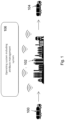
- Fig. 1 illustrates an example of a chemical production network 102 producing one or more output material, in particular animal feed, human food and dietary supplement(s) 104 from one or more input material(s) 100 in connection with a production operating system 106 including an attribute management system.
- the physical input material(s) 100 and output material(s), in particular animal feed, human food and dietary supplement(s), 104 may be associated with one or more properties related to environmental impact.
- the properties related to environmental impact may be digitalized in the form of environmental attributes such as recycled or bio-based content of the input materials.
- the production operating system 106 may be configured to ingest such environmental attributes and to track the environmental attributes across the chemical production network 102 from input materials 100 to output material(s), in particular animal feed, human food and dietary supplement(s), 104.
- the chemical production network 102 may include multiple interlinked processing steps.
- the chemical production network 102 may be an integrated chemical production network 102 with interrelated production chains.
- the chemical production network 102 may include multiple different production chains that have at least one intermediate product in common.
- the chemical production network 102 may include multiple stages of the chemical value chain.
- the chemical production network 102 may include the producing, refining, processing and/or purification of gas or crude oil.
- the chemical production network 102 may include a stream cracker, or a syngas plant connected to multiple production chains that output products 104 from the effluent of such plants.
- the chemical production network 102 may include multiple production chains that output from one or more input material(s) 100 one or more output material(s), in particular animal feed, human food and dietary supplement(s), 104.
- the chemical production network 102 may include multiple tiers of a chemical value chain.
- the chemical production network 102 may include a physically interconnected arrangement of production sites.
- the production sites may be at the same location or at different locations. In the latter case the production sites may be interconnected by means of dedicated transportation systems such as pipelines, supply chain vehicles, like trucks, supply chain ships or other cargo transportation means.
- the chemical production network 102 may chemically convert input materials 100 to one or more output material(s), in particular animal feed, human food and dietary supplement(s), 104.
- the chemical production network 102 may convert input materials 100 by way of chemical conversion to one or more output material(s), in particular animal feed, human food and dietary supplement(s), 104.
- the input materials 100 may be fed to the chemical production network 102 at any entry point.
- the input materials 100 may be fed to the chemical production network 102 at the start of the chemical production network 102.
- Input materials 100 may for example make up the feedstock of a steam cracker.
- the input material 100 may include non-fossil input material, such as bio-based or recycled material, and/or fossil input material for the manufacture of chemical intermediates and chemical output material(s), in particular animal feed, human food and dietary supplement(s), 104.
- the chemical production network 102 may include multiple production steps.
- the production steps included in the chemical production network 102 may be defined by the system boundary of the chemical production network 102.
- the system boundary may be defined by location or control over production processes.
- the system boundary may be defined by the site of the chemical production network 102.
- the system boundary may be defined by production processes controlled by one entity or multiple entities jointly.
- the system boundary may be defined by value chain with staggered production processes to an end product, which may be controlled by multiple entities separately.
- the chemical production network 102 may include a waste collection and sorting step, a recycling step such as pyrolysis, a cracking step such as steam cracking, a separation step to separate intermediates of one process step and further processing steps to convert such intermediates to output material(s), in particular animal feed, human food and dietary supplement(s), 104 leaving the system boundary of the chemical production network 102.
- a waste collection and sorting step such as pyrolysis
- a cracking step such as steam cracking
- separation step to separate intermediates of one process step and further processing steps to convert such intermediates to output material(s), in particular animal feed, human food and dietary supplement(s), 104 leaving the system boundary of the chemical production network 102.
- the production operating system 106 of the chemical production network 102 may be configured to monitor and/or control the chemical production network 102 based on operating parameters of the different processes.
- One process step monitored and/or controlled may be the feed of input materials 100 or the release of output material(s), in particular animal feed, human food and dietary supplement(s), 104.
- Another process step monitored and/or controlled may be the registration of environmental attributes associated with input materials 100 entering the system boundary of the chemical production network 102.
- Yet another process step monitored and/or controlled may be the attribution of environmental attributes to output material(s), in particular animal feed, human food and dietary supplement(s), 104 produced via the chemical production network 102.
- Yet another process step monitored and/or controlled may be the management of environmental attributes associated with input materials 100 and output material(s), in particular animal feed, human food and dietary supplement(s), 104 of the chemical production network 102.
- the production operating system 106 may be configured to register inbound environmental attributes and to assign outbound environmental attributes.
- the production operating system 106 may be configured to access data related the inputs materials 100, the processes and/or the output material(s), in particular animal feed, human food and dietary supplement(s), 104 used in the chemical production network 102.
- the production operating system 106 may be configured to register a recycled or bio-based content of the one or more input material(s) 100 used in the chemical production network 102 as environmental attribute.
- the production operating system 106 may be configured to allocate the environmental attribute to at least one balancing account associated with the recycled or bio-based content of the input materials 100.
- the production operating system 106 may be configured to allocate at least a part of the environmental attributes from the at least one balancing account to the at least one output material(s), in particular to the animal feed, human food and dietary supplement(s), 104.
- the production operating system 102 may be configured to handle environmental attributes related to the input materials 100 and output material(s), in particular animal feed, human food and dietary supplement(s), 104 of the chemical production network 102.
- the production operating system 106 may be configured to determine environmental attributes associated with the use of input materials 100 impacting the environmental property of the chemical production network 102 and the output material(s), in particular animal feed, human food and dietary supplement(s) 104 produced by the chemical production network 102.
- the production operating system 102 may be configured to determine environmental attributes associated with the output material(s), in particular animal feed, human food and dietary supplement(s) 104. This way the production operating system 102 may be configured to store environmental attributes in balancing accounts or to withdraw environmental attributes from the balancing accounts.
- the environmental attributes may hence be viewed as a credit that may be deposited in an account or deducted from an account related to the input and output material(s), in particular animal feed, human food and dietary supplement(s), of the chemical production network 102. This way the environmental impact of the production may be tracked and/or traced.
- multiple value chains may be linked. Additionally different input materials 100 or chemical processes impacting the environmental property of output material(s), in particular animal feed, human food and dietary supplement(s), 104 produced by the chemical production network 102 may be used. Examples of input materials 100 impacting at least one environmental property of output material(s), in particular animal feed, human food and dietary supplement(s) 104 produced from such input materials 100 are recycled, renewable or bio-based input materials 104. Examples of chemical processes impacting the environmental property include chemical processes using environmentally friendly technology such as carbon capture, carbon utilization or heat pumps.
- an equivalent environmental attribute signifying the impact on the environmental property of output material(s), in particular animal feed, human food and dietary supplement(s) 104 produced by the chemical production network may be allocated to balancing accounts and assigned to one or more output material(s), in particular animal feed, human food and dietary supplement(s), 104 of the chemical production network 102.
- the environmental attributes may hence be decoupled from the physical material flow inside the chemical production network 102.
- Decoupling may be based on the mass balance model in that the equivalent amount assigned to the one or more output material(s), in particular animal feed, human food and dietary supplement(s) may not exceed the equivalent amount provided by input materials or processes. If an equivalent amount has been allocated to the virtual account of one environmental attribute type, it may not be allocated a second time to another virtual account of the one environmental attribute type.
- Environmental attribute types may be recycled, bio-based, renewable or the like.
- Environmental attributes may be provided in the form of digital assets or animal feed, human food and dietary supplement passports attached to the physical entity of the animal feed, human food and dietary supplement.
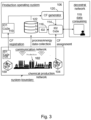
- Fig. 2 illustrates schematically an example of attributing environmental attributes associated with input materials 100 to output material(s), in particular animal feed, human food and dietary supplement(s) 104 of the chemical production network 102.
- the chemical production network 102 and operations of the chemical production network 102 may be monitored and/or controlled by a production operating system 106.
- the production operating system 106 may be configured to track environmental attributes from input materials 100 fed to the chemical production network 102 to output material(s), in particular animal feed, human food and dietary supplement(s), 104 produced by the chemical production network 102.
- the operating system 106 may be configured to register environmental attributes associated with the input materials 100 provided to the chemical production network 102 and to attribute environmental attributes to output material(s), in particular animal feed, human food and dietary supplement(s), 104 produced by the chemical production network 102.
- the input materials 100 such as pyrolysis oil, bio-naphtha or bio-gas may be provided to the chemical production network 102.
- the input materials 100 may enter the chemical production network 104 at the entry point, such as a such as a steam cracker or a syngas plant.
- the input materials 100 may be used in the chemical production network 102 to produce one or more output material(s), in particular animal feed, human food and dietary supplement(s), 104 from the input materials 100.
- output material(s), in particular animal feed, human food and dietary supplement(s), 104 may be provided at exit points of the chemical production network 102.
- Further output material(s) may be MDI, TDI, PA6, EPS, PC, Polyols, Caprolactam, adipic acid, HMD, Polyamides.
- input material data 108 may be provided via a communication network to a computing interface of the production operating system 106.
- a data provider such as a QR code reader, may be configured to provide material data 108 related to the one or more input material(s) 100 and respective environmental attributes 108 to a computing interface configured to allocate the environmental attributes associated with the input materials 100.
- the material data 108 may include the input material identifier and environmental attributes associated with the input materials 100.
- the input material identifier may be associated with the physical entity of the input material 100 entering the chemical production network 102.
- the material data may be provided on, prior or after providing of the one or more input material(s) at entry points to the chemical production network 102.
- the input material identifier may be linked to the environmental attribute(s) associated with the respective input material(s) 100, the amount of input material 100 and the certificate certifying the environmental attribute(s).
- the amount of input material may be a measured amount of input material 100 fed to a plant or storage of the chemical production network 102 for producing one or more output material(s), in particular animal feed, human food and dietary supplement (s) 104 from the input material(s) 100.
- the input material identifier associated with the respective input material 100, the environmental attribute(s) associated with the respective input material(s) 100 and the amount of input material(s) 100 provided to the chemical production network 102 may be provided to the production operating system 106. Such data may be provided via a communication network on entry to chemical production network 102, or the data may be transferred from a computing system to the production operating system 106.
- An inbound allocator 110 may be configured to allocate the one or more environmental attribute(s) to at least one balancing account 112 associated with the respective environmental attribute.
- one balancing account 112 may relate to environmental attributes from recycled material and another balancing account 112 may relate to environmental attributes from bio-based material.
- the balancing account may be associated with the respective environmental attribute type, such as bio-based or recycled. Based on such association the balancing account associated with the environmental attribute type of the respective input material 100 may be selected.
- the environmental attributes may be allocated to the selected balancing account.
- the account 112 for recycled material may be selected and the environmental attribute may be allocated to such account 122.
- the one or more environmental attribute(s) may be converted to balancing units and the balancing units may be allocated to the balancing account 122.
- the conversion may be based on a conversion factor such as mass, weight, carbon atoms, hydrogen atoms, methane equivalents or any other suitable measure for quantifying the environmental impact of the environmental attribute.
- the conversion factor may hence take into account the difference between producing chemical products from conventional input material(s) and producing chemical products from non-conventional input material(s) or producing chemical products from a mix of conventional and non-conventional input materials.
- the conversion factor may relate to differences in chemical and/or physical properties of conventional and non-conventional input material(s).
- balancing accounts 112 By using the balancing accounts 112 it can be ensured that environmental attributes of input materials 100 are only used once for assignment to animal feed, human food and dietary supplements 104. This way double counting on input or output is avoided to ensure positive environmental impact can be reliable tracked and assigned to animal feed, human food and dietary supplements 104.
- An identifier provider 116 may be configured to provide the animal feed, human food and dietary supplement identifier associated with the animal feed, human food and dietary supplement produced by the chemical production network 102 and provided at the exit point from the chemical production network 102.
- An outbound assigner 114 may be configured to assign at least one environmental attribute from the at least one balancing account 112 associated with the respective environmental attribute to the animal feed, human food and dietary supplement identifier ID2.
- One or more environmental attribute(s) may be assigned to the at least one animal feed, human food and dietary supplement identifier ID2.
- Assignment may include de-allocation of the one or more environmental attributes from the balancing account 112 associated with the respective environmental attribute type. Assignment may include converting one or more balancing unit(s) to one or more environmental attribute(s).
- Assigning at least one environmental attribute associated with input material(s) to animal feed, human food and dietary supplement(s) may include the linking of the animal feed, human food and dietary supplements identifier ID2 with the environmental attribute.
- the animal feed, human food and dietary supplement identifier ID2 may be associated with the physical entity of the animal feed, human food and dietary supplement.
- This way the virtual identifier of a material may be uniquely linked to the physical material.
- Such linking may include a physical or virtual link of identifiers uniquely associated with the physical material.
- a tag or code may be physically connected to the material, e.g., by printing a QR code on the packaging.
- For virtual linking different identifiers associated with the physical material may be linked. For example, an order number, a batch number, LOT number or a combination thereof may be linked.
- the outbound assigner 114 may be configured to provide the environmental attributes associated with the animal feed, human food and dietary supplement to a data consumer, such as a system associated with a user of the animal feed, human food and dietary supplement.
- the outbound assigner 114 may be configured to provide the environmental attributes associated with the animal feed, human food and dietary supplement to a decentral network as will be described in the example of Fig. 4 .
- Environmental attributes may be provided via the above ID based schema in the form of digital assets or animal feed, human food and dietary supplement passports associated with the physical entity of the animal feed, human food and dietary supplement
- Fig. 3 illustrates schematically an example of attributing environmental attributes of input materials 100 and chemical processes to the animal feed, human food and dietary supplement 104 of the chemical production network 102.
- the chemical production network 102 and operations of the chemical production network 102 may be monitored and/or controlled by a production operating system 106.
- Input materials 100 such as pyrolysis oil, bio-naphtha or bio-gas may be provided to the chemical production network 102.
- the input materials 100 may be used in the chemical production network 102 to produce one or more animal feed, human food and dietary supplement(s) 104 from the input materials 100.
- input material data 108 may be provided via a communication network to a computing interface of the production operating system 106.
- a data provider such as a QR code reader, may be configured to provide material data 108 related to the one or more input material(s) 100 and respective environmental attributes 108 to a computing interface configured to allocate the environmental attributes associated with the input materials 100.
- the material data 108 may include the input material identifier and environmental attributes associated with the input materials 100.
- the input material identifier may be associated with the physical entity of the input material 100 entering the chemical production network 102.
- the input material identifier may be linked to the carbon footprint of the input material 100 as environmental attribute.
- the material data may be provided on, prior or after providing of the one or more input material(s) at entry points to the chemical production network 102.
- the inbound allocator 110 may be configured to retrieve the one or more environmental attribute(s) and to provide such attributes to the carbon footprint (CF) generator 120.
- a process data provider 122 may be configured to gather process data associated with the chemical processing of the input material(s) 100 to produce the animal feed, human food and dietary supplement(s) 104.
- the process data provider 122 may be configured to gather energy data associated with the energy consumption of the chemical processing.
- the process data provider 122 may be configured to provide the process data and the energy data to the CF generator 120.
- the CF generator 120 may be configured to determine the carbon footprint of the animal feed, human food and dietary supplement produced by the chemical production network.
- the carbon footprint of the of the animal feed, human food and dietary supplement may be determined based on the process data, the energy data and the carbon footprint of the input material(s) 100 used to produce the animal feed, human food and dietary supplement.
- An identifier provider 116 may be configured to provide the animal feed, human food and dietary supplement identifier associated with the animal feed, human food and dietary supplement produced by the chemical production network 102 and provided at the exit point from the chemical production network 102.
- An outbound assigner 114 may be configured to assign the determined carbon footprint to the animal feed, human food and dietary supplement identifier ID2.
- One or more environmental attribute(s) may be assigned to the at least one animal feed, human food and dietary supplement identifier ID2, such as described in the context of Fig. 2 .
- the outbound assigner 114 may be configured to provide the environmental attributes, in particular the carbon footprint, associated with the animal feed, human food and dietary supplement to a data consumer, such as a system associated with a user of the animal feed, human food and dietary supplement.
- the outbound assigner 114 may be configured to provide the environmental attributes associated with the animal feed, human food and dietary supplement to a decentral network as will be described in the example of Fig. 4 .
- Environmental attributes may be provided via the above ID based schema in the form of digital assets or animal feed, human food and dietary supplement passports associated with the physical entity of the animal feed, human food and dietary supplement.
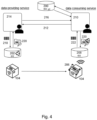
- Fig. 4 illustrates schematically an example of a method or apparatus for providing environmental attributes associated with animal feed, human food and dietary supplements to a material user as data consumer via a decentral network.
- the animal feed, human food and dietary supplement 104 as produced by the chemical production network 102 may be provided in association with the digital asset as described in the context of Figs. 2 and 3 .
- the digital asset may include the animal feed, human food and dietary supplement identifier.
- the digital asset may include one or more environmental attribute(s) such as the product carbon footprint, recycled content or bio-based content.
- the digital asset may relate to one or more environmental attribute(s) such as the product carbon footprint, recycled content or bio-based content.
- the digital asset may include a digital representation of one or more environmental attribute(s) such as the product carbon footprint, recycled content or bio-based content.
- the digital asset may further include or relate to authentication and/or authorization information linked to the animal feed, human food and dietary supplement identifier.
- the authentication and/or authorization information may be provided for authentication and/or authorization of a data providing service 208 and/or data consuming service 210.
- the animal feed, human food and dietary supplement identifier may include or relate to a decentral identifier, that is uniquely associated with the animal feed, human food and dietary supplement.
- the decentral identifier may be connected to the digital representation of the environmental attributes.
- the digital representation may include a representation for accessing the environmental attributes or parts thereof.
- the decentral identifier may include a Universally Unique IDentifier (UUID) or a Digital IDentifier (DID).
- UUID Universally Unique IDentifier
- DID Digital IDentifier
- the decentral identifier may include any unique identifier uniquely associated with a data owner and/or animal feed, human food and dietary supplement.
- the data owner may be the producer of the animal feed, human food and dietary supplement. Via the decentral identifier and its unique association with the data owner and/or animal feed, human food and dietary supplement access to the material configuration data may be controlled by the data owner.
- the digital asset including the digital representation of one or more environmental attribute(s) such as the product carbon footprint, recycled content or bio-based content may be stored in a decentral data base 200.
- the one or more environmental attribute(s) such as the product carbon footprint, recycled content or bio-based content may be stored in a data base 202 associated with the data owner, such as the producer of the animal feed, human food and dietary supplement 104.
- the animal feed, human food and dietary supplement 104 may be physically delivered to a user of the animal feed, human food and dietary supplement.
- the animal feed, human food and dietary supplement may be connected with a QR-code having encoded the animal feed, human food and dietary supplement identifier.
- the user of the animal feed, human food and dietary supplement may read the QR-code through a QR-code reader 206.
- the animal feed, human food and dietary supplement identifier may be provided to a data base 208 associated with the consumer of the animal feed, human food and dietary supplement 104.
- the consumer of the animal feed, human food and dietary supplement may retrieve the animal feed, human food and dietary supplement identifier through the decentral data base 200.
- the data owner in this example may be the input material producer, the output material producer, the output material user, the end product producer.
- the data owner may comprise any entity generating data.
- the data generating node may be coupled to the data owner or the entity owning or producing physical products from or for which data is generated.
- the data may be generated by a third-party entity on behalf of the entity owning physical products from or for which data is generated.
- the data consuming service 210 may comprise computer-executable instructions for accessing and/or processing data, such as animal feed, human food and dietary supplement data, associated with the data owner.
- the data providing service 210 may comprise computer-executable instructions for providing and/or processing data, such as animal feed, human food and dietary supplement data, associated with the data owner for accessing and/or processing by the data consuming service 214.
- human food and dietary supplement identifier Based on the received animal feed, human food and dietary supplement identifier a request to access the environmental attributes associated with the animal feed, human food and dietary supplement identifier may be triggered by the data consuming service 210 as signified by arrow 212.
- the animal feed, human food and dietary supplement identifier may be provided to the data providing service 214 associated with or of the producer of the animal feed, human food and dietary supplement 104.
- authentication and/or authorization information may be provided.
- the request may be authenticated and/or authorized to access the environmental attributes associated with the animal feed, human food and dietary supplement identifier. Based on successful authorization and/or authentication access to the environmental attributes associated with the animal feed, human food and dietary supplement identifier may be granted.
- human food and dietary supplement identifier may be provided to the data providing service 214 as signified by arrow 212.
- the data providing service 214 may use the received animal feed, human food and dietary supplement identifier to retrieve the environmental attributes associated with the animal feed, human food and dietary supplement 104 as signified by arrows 218 and 220.
- the environmental attributes associated with the animal feed, human food and dietary supplement 104 provided to the data providing service 214 may be provided to the data consuming service 210 as signified by arrow 216.
- the environmental attributes associated with the animal feed, human food and dietary supplement 104 may be stored in the data base 208 associated with the user of the animal feed, human food and dietary supplement 104 as signified by arrow 220.
- the environmental attributes can be uniquely associated with the animal feed, human food and dietary supplement.
- the environmental attributes may be transferred between the producer of the animal feed, human food and dietary supplement and the user of the animal feed, human food and dietary supplement. This way the environmental attributes can be shared with unique association to the animal feed, human food and dietary supplement and without central intermediary directly between the value chain players. This allows for transparency of environmental attributes across the value chain and positive environmental impacts from animal feed, human food and dietary supplements produced by the chemical production network 102 can be tracked through the value chain.
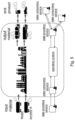
- Fig. 5 illustrates schematically an example of a method or apparatus for providing environmental attributes associated with animal feed, human food and dietary supplements across value chains via the decentral network.
- a fully connected value chain including the chemical production network is illustrated.
- the input material provider, the animal feed, human food and dietary supplement producer, the animal feed, human food and dietary supplement user and the end product producer may be connected to the decentral network as described in the context of Fig. 4 .
- Environmental attributes may be provided via the ID based schema described in the context of Figs. 2-4 in the form of digital assets or animal feed, human food and dietary supplement passports associated with the physical entity of the input material, the animal feed, human food and dietary supplement, any intermediate product or the end product.
- the input material provider may provide the input materials such as bio-gas or pyrolysis oil.
- the environmental attributes of the input material may be provided through the data providing service connected to the decentral network as described in the context of Fig. 4 .
- the animal feed, human food and dietary supplement producer may produce the animal feed, human food and dietary supplement from the input material(s) provided to the chemical production network.
- the animal feed, human food and dietary supplement producer may access the environmental attributes associated with the input material through a data consuming service connected to the decentral network as described in the context of Fig. 4 .
- the animal feed, human food and dietary supplement producer may manage the environmental attributes via the production operating system as described in the context of Figs. 1 to 3 .
- the animal feed, human food and dietary supplement producer may assign the environmental attributes associated with the input materials or environmental attributes associated with the chemical production network such as the carbon footprint, to the animal feed, human food and dietary supplement s as described in the context of Figs. 1 to 3 .
- the animal feed, human food and dietary supplement producer may provide the environmental attributes associated with the animal feed, human food and dietary supplement through the data providing service connected to the decentral network as described in the context of Fig. 4 .
- the animal feed, human food and dietary supplement user or the end product producer may access the environmental attributes associated with the animal feed, human food and dietary supplement through the data consuming service connected to the decentral network as described in the context of Fig. 4 .
- the respective data owners in this example may be the input material producer, the output material producer, the output material user, the end product producer.
- the data owner may comprise any entity generating data.
- the data generating node may be coupled to the data owner or the entity owning or producing physical products from or for which data is generated.
- the data may be generated by a third-party entity on behalf of the entity owning physical products from or for which data is generated.
- the data consuming service may comprise computer-executable instructions for accessing and/or processing data, such as animal feed, human food and dietary supplement data, associated with the data owner.
- the data providing service may comprise computer-executable instructions for providing and/or processing data, such as animal feed, human food and dietary supplement data, associated with the data owner for accessing and/or processing by the data consuming service.
- the decentral identifier may relate to the end product.
- Such decentral identifier may be provided to the value chain participants.
- human food and dietary supplement may be gathered across the production chain and assigned to the end product specific decentral identifier.
- the one or more environmental attribute(s) associated with the end product may be derived from the environmental attribute(s) associated with the animal feed, human food and dietary supplement, the input material or any other product entity present in the value chain of the end product.
- the environmental attributes of input materials, animal feed, human food and dietary supplements and any products produced from animal feed, human food and dietary supplements may be tracked through the value chain up to the end product.
- the environmental attributes of materials in such way the information can be made transparent across the value chain while the information flow can be controlled by the participants in the supply chain.
- the environmental attributes can be handled according to the individual participants needs by production operating systems as described in the context of Figs. 1 to 3 . Overall, such tracking enables tracking of positive environmental impact by individual supply chain participants, which makes positive environmental impacts transparent and attributable to individual supply chain participants.
- Fig. 6 illustrates schematically an example of a chemical production network for producing animal feed, human, food and dietary supplements e.g. vitamins and/or carotenoids associated with the digital asset.
- the example of Fig. 6 is an illustrative example and should not be considered limiting.
- natural gas and/or biomethane may be provided to the chemical production network for producing as an example formulated vitamins and/or isoprenoids.
- Natural gas and/or biomethane may be the input materials in this example as mixed feedstock. From natural gas and/or biomethane vitamins and isoprenoids and other intermediate materials may be produced. From vitamins and/or isoprenoids vitamins and/or carotenoids in their formulated form and other products, such as intermediate materials or output materials, may be produced.
- the bio-based content of biomethane as input material may be tracked.
- the biomethane content at the start of the vitamins and/or carotenoids in their formulated form production chain may be registered via the production operating system 106.
- the biomethane content may be allocated to the balancing account 112 for bio-based materials.
- the environmental attribute of biomethane content is hence detached from the mass flows of the chemical processing in the chemical production network 102 as illustrated in Fig. 6 .
- the biomethane content may be determined.
- the biomethane content attributable to vitamins and/or carotenoids in their formulated form production may be based on mass conservation attributable to the produced vitamins and/or carotenoids in their formulated form. For example, only half of the biomethane content may be attributable to the vitamins and/or carotenoids in their formulated form and the other half may be attributable to other output products resulting from the biomethane as input material.
- the environmental attribute biomethane content may be attributed to such extend to the vitamins and/or carotenoids in their formulated form.
- the environmental attribute associated with the production of vitamins and/or carotenoids in their formulated form may be attributed to the produced vitamins and/or carotenoids in their formulated form by associating the decentral ID to the vitamins and/or carotenoids in their formulated form and assigning the environmental attribute to the decentral ID.
- the environmental attribute may be uniquely linked to the produced vitamins and/or carotenoids in their formulated form.
- the vitamins and/or carotenoids in their formulated form may be delivered to the vitamins and/or carotenoids in their formulated form user.
- the packaging such as lose bags with vitamins and/or carotenoids in their formulated form may include a QR-code.
- the decentral ID may be included or encoded to the QR code. This way the vitamins and/or carotenoids in their formulated form user may access the environmental attributes associated to the vitamins and/or carotenoids in their formulated form via the ID based protocol described in the context of Figs. 4 and 5 .
- the chemical production network for producing vitamins and/or carotenoids in their formulated form associated with the digital asset may be based on the method illustrated in Fig. 3 for carbon footprints.
- any steps presented herein can be performed in any order.
- the methods disclosed herein are not limited to a specific order of these steps. It is also not required that the different steps are performed at a certain place or in a certain computing node of a distributed system, i.e. each of the steps may be performed at different computing nodes using different equipment/data processing.
- determining also includes “initiating or causing to determine”
- generating also includes “initiating and/or causing to generate”
- providing also includes “initiating or causing to determine, generate, select, send and/or receive”.
- initiating or causing to perform an action includes any processing signal that triggers a computing node or device to perform the respective action.
Landscapes
- Business, Economics & Management (AREA)
- Engineering & Computer Science (AREA)
- Human Resources & Organizations (AREA)
- Economics (AREA)
- Strategic Management (AREA)
- General Physics & Mathematics (AREA)
- General Business, Economics & Management (AREA)
- Physics & Mathematics (AREA)
- Life Sciences & Earth Sciences (AREA)
- Theoretical Computer Science (AREA)
- Marketing (AREA)
- Entrepreneurship & Innovation (AREA)
- Tourism & Hospitality (AREA)
- Quality & Reliability (AREA)
- Development Economics (AREA)
- Health & Medical Sciences (AREA)
- Operations Research (AREA)
- Chemical & Material Sciences (AREA)
- Polymers & Plastics (AREA)
- General Health & Medical Sciences (AREA)
- Accounting & Taxation (AREA)
- Primary Health Care (AREA)
- Finance (AREA)
- Food Science & Technology (AREA)
- Animal Husbandry (AREA)
- Mycology (AREA)
- Game Theory and Decision Science (AREA)
- Sustainable Development (AREA)
- Educational Administration (AREA)
- Nutrition Science (AREA)
- Marine Sciences & Fisheries (AREA)
- Mining & Mineral Resources (AREA)
- Agronomy & Crop Science (AREA)
- Manufacturing & Machinery (AREA)
- Zoology (AREA)
- Management, Administration, Business Operations System, And Electronic Commerce (AREA)
Priority Applications (4)
| Application Number | Priority Date | Filing Date | Title |
|---|---|---|---|
| EP23180682.9A EP4480320A1 (de) | 2023-06-21 | 2023-06-21 | Umweltattribut für tierfutter, menschliches nahrungsmittel und nahrungsergänzungsmittel |
| CN202480040301.9A CN121311119A (zh) | 2023-06-21 | 2024-06-19 | 动物饲料、人类食品和膳食补充剂的环境属性 |
| EP24733631.6A EP4731013A1 (de) | 2023-06-21 | 2024-06-19 | Umweltattribut für tierfutter, menschliches nahrungsmittel und nahrungsergänzungsmittel |
| PCT/EP2024/067143 WO2024261084A1 (en) | 2023-06-21 | 2024-06-19 | Environmental attributes for animal feed, human food and dietary supplement |
Applications Claiming Priority (1)
| Application Number | Priority Date | Filing Date | Title |
|---|---|---|---|
| EP23180682.9A EP4480320A1 (de) | 2023-06-21 | 2023-06-21 | Umweltattribut für tierfutter, menschliches nahrungsmittel und nahrungsergänzungsmittel |
Publications (1)
| Publication Number | Publication Date |
|---|---|
| EP4480320A1 true EP4480320A1 (de) | 2024-12-25 |
Family
ID=86942326
Family Applications (2)
| Application Number | Title | Priority Date | Filing Date |
|---|---|---|---|
| EP23180682.9A Pending EP4480320A1 (de) | 2023-06-21 | 2023-06-21 | Umweltattribut für tierfutter, menschliches nahrungsmittel und nahrungsergänzungsmittel |
| EP24733631.6A Pending EP4731013A1 (de) | 2023-06-21 | 2024-06-19 | Umweltattribut für tierfutter, menschliches nahrungsmittel und nahrungsergänzungsmittel |
Family Applications After (1)
| Application Number | Title | Priority Date | Filing Date |
|---|---|---|---|
| EP24733631.6A Pending EP4731013A1 (de) | 2023-06-21 | 2024-06-19 | Umweltattribut für tierfutter, menschliches nahrungsmittel und nahrungsergänzungsmittel |
Country Status (3)
| Country | Link |
|---|---|
| EP (2) | EP4480320A1 (de) |
| CN (1) | CN121311119A (de) |
| WO (1) | WO2024261084A1 (de) |
Citations (4)
| Publication number | Priority date | Publication date | Assignee | Title |
|---|---|---|---|---|
| US20110274741A1 (en) * | 2009-01-14 | 2011-11-10 | Richard Horton | Ingestible compositions and processes of preparation |
| US20220107618A1 (en) * | 2020-10-05 | 2022-04-07 | Basf Se | Method for Determining the Carbon Footprint of a Product in Production Processes of a Production Plant |
| WO2023017164A1 (en) * | 2021-08-13 | 2023-02-16 | Basf Se | Collaborative environmental impact optimization of manufacturing processes |
| WO2023017162A1 (en) * | 2021-08-13 | 2023-02-16 | Basf Se | Supply chain optimization |
Family Cites Families (1)
| Publication number | Priority date | Publication date | Assignee | Title |
|---|---|---|---|---|
| US8489437B1 (en) * | 2000-11-02 | 2013-07-16 | Sureharvest | Method and system automatically to certify an agricultural product |
-
2023
- 2023-06-21 EP EP23180682.9A patent/EP4480320A1/de active Pending
-
2024
- 2024-06-19 WO PCT/EP2024/067143 patent/WO2024261084A1/en not_active Ceased
- 2024-06-19 CN CN202480040301.9A patent/CN121311119A/zh active Pending
- 2024-06-19 EP EP24733631.6A patent/EP4731013A1/de active Pending
Patent Citations (4)
| Publication number | Priority date | Publication date | Assignee | Title |
|---|---|---|---|---|
| US20110274741A1 (en) * | 2009-01-14 | 2011-11-10 | Richard Horton | Ingestible compositions and processes of preparation |
| US20220107618A1 (en) * | 2020-10-05 | 2022-04-07 | Basf Se | Method for Determining the Carbon Footprint of a Product in Production Processes of a Production Plant |
| WO2023017164A1 (en) * | 2021-08-13 | 2023-02-16 | Basf Se | Collaborative environmental impact optimization of manufacturing processes |
| WO2023017162A1 (en) * | 2021-08-13 | 2023-02-16 | Basf Se | Supply chain optimization |
Also Published As
| Publication number | Publication date |
|---|---|
| CN121311119A (zh) | 2026-01-09 |
| EP4731013A1 (de) | 2026-04-29 |
| WO2024261084A1 (en) | 2024-12-26 |
Similar Documents
| Publication | Publication Date | Title |
|---|---|---|
| WO2023117969A1 (en) | Environmental attributes for materials | |
| EP4453832B1 (de) | Umweltattribute für materialien | |
| EP4480320A1 (de) | Umweltattribut für tierfutter, menschliches nahrungsmittel und nahrungsergänzungsmittel | |
| US20250054076A1 (en) | Environmental attributes for polyamide compositions | |
| US20250074852A1 (en) | Environmental attributes for unsaturated chemical compounds | |
| EP4482082A1 (de) | Umweltattribute für pharmazeutische wirkstoffe und/oder zwischenprodukte davon | |
| US20250069163A1 (en) | Environmental attributes for amino resin compositions | |
| US20250054080A1 (en) | Environmental attributes for chemical products being selected from alcohols, ethers, oxiranes, alkanes, aliphatic chlorides, organic phosphines, organic phosphates and sulfonic acids | |
| US20250053159A1 (en) | Environmental attributes for isocyanate compositions | |
| EP4482078A1 (de) | Überwachung von rohstoffeigenschaften | |
| EP4453824A1 (de) | Umwelteigenschaften für isocyanatzusammensetzungen | |
| EP4732222A1 (de) | Überwachung von rohstoffeigenschaften | |
| US20250182045A1 (en) | Assignment of environmental attributes in production networks | |
| CN118633097A (zh) | 聚酰胺组合物的环境属性 | |
| CN118451438A (zh) | 材料的环境属性 | |
| CN118435214A (zh) | 异氰酸酯组合物的环境属性 | |
| CN118451437A (zh) | 氨基树脂组合物的环境属性 | |
| EP4453827A1 (de) | Umwelteigenschaften für polymerzusammensetzungen und/oder reaktive komponenten zur formung dieser polymere | |
| EP4732216A1 (de) | Umweltattribute für pharmazeutische hilfsstoffe | |
| WO2024231200A1 (en) | Assignment of environmental attributes and a measured value in production networks | |
| CN118451433A (zh) | 生产网络中环境属性的分配 | |
| CN118451681A (zh) | 不饱和化学化合物的环境属性 | |
| CN118451435A (zh) | 选自醇、醚、环氧烷烃、烷烃、脂肪族氯化物、有机膦、有机磷酸盐和磺酸的化学产物的环境属性 |
Legal Events
| Date | Code | Title | Description |
|---|---|---|---|
| PUAI | Public reference made under article 153(3) epc to a published international application that has entered the european phase |
Free format text: ORIGINAL CODE: 0009012 |
|
| STAA | Information on the status of an ep patent application or granted ep patent |
Free format text: STATUS: THE APPLICATION HAS BEEN PUBLISHED |
|
| AK | Designated contracting states |
Kind code of ref document: A1 Designated state(s): AL AT BE BG CH CY CZ DE DK EE ES FI FR GB GR HR HU IE IS IT LI LT LU LV MC ME MK MT NL NO PL PT RO RS SE SI SK SM TR |
|
| STAA | Information on the status of an ep patent application or granted ep patent |
Free format text: STATUS: REQUEST FOR EXAMINATION WAS MADE |
|
| 17P | Request for examination filed |
Effective date: 20250625 |