EP4480964A1 - Molécules de liaison au récepteur de transferrine, leurs conjugués et leurs utilisations pour prévenir ou traiter des maladies musculaires - Google Patents
Molécules de liaison au récepteur de transferrine, leurs conjugués et leurs utilisations pour prévenir ou traiter des maladies musculaires Download PDFInfo
- Publication number
- EP4480964A1 EP4480964A1 EP23306000.3A EP23306000A EP4480964A1 EP 4480964 A1 EP4480964 A1 EP 4480964A1 EP 23306000 A EP23306000 A EP 23306000A EP 4480964 A1 EP4480964 A1 EP 4480964A1
- Authority
- EP
- European Patent Office
- Prior art keywords
- seq
- nos
- vhh
- tfr
- conjugate compound
- Prior art date
- Legal status (The legal status is an assumption and is not a legal conclusion. Google has not performed a legal analysis and makes no representation as to the accuracy of the status listed.)
- Withdrawn
Links
Images






Classifications
-
- C—CHEMISTRY; METALLURGY
- C07—ORGANIC CHEMISTRY
- C07K—PEPTIDES
- C07K16/00—Immunoglobulins [IG], e.g. monoclonal or polyclonal antibodies
- C07K16/18—Immunoglobulins [IG], e.g. monoclonal or polyclonal antibodies against material from animals or humans
-
- A—HUMAN NECESSITIES
- A61—MEDICAL OR VETERINARY SCIENCE; HYGIENE
- A61P—SPECIFIC THERAPEUTIC ACTIVITY OF CHEMICAL COMPOUNDS OR MEDICINAL PREPARATIONS
- A61P21/00—Drugs for disorders of the muscular or neuromuscular system
-
- A—HUMAN NECESSITIES
- A61—MEDICAL OR VETERINARY SCIENCE; HYGIENE
- A61K—PREPARATIONS FOR MEDICAL, DENTAL OR TOILETRY PURPOSES
- A61K39/00—Medicinal preparations containing antigens or antibodies
- A61K2039/505—Medicinal preparations containing antigens or antibodies comprising antibodies
-
- C—CHEMISTRY; METALLURGY
- C07—ORGANIC CHEMISTRY
- C07K—PEPTIDES
- C07K2317/00—Immunoglobulins specific features
- C07K2317/30—Immunoglobulins specific features characterized by aspects of specificity or valency
- C07K2317/33—Crossreactivity, e.g. for species or epitope, or lack of said crossreactivity
-
- C—CHEMISTRY; METALLURGY
- C07—ORGANIC CHEMISTRY
- C07K—PEPTIDES
- C07K2317/00—Immunoglobulins specific features
- C07K2317/50—Immunoglobulins specific features characterized by immunoglobulin fragments
- C07K2317/56—Immunoglobulins specific features characterized by immunoglobulin fragments variable (Fv) region, i.e. VH and/or VL
- C07K2317/569—Single domain, e.g. dAb, sdAb, VHH, VNAR or nanobody®
-
- C—CHEMISTRY; METALLURGY
- C07—ORGANIC CHEMISTRY
- C07K—PEPTIDES
- C07K2317/00—Immunoglobulins specific features
- C07K2317/70—Immunoglobulins specific features characterized by effect upon binding to a cell or to an antigen
- C07K2317/76—Antagonist effect on antigen, e.g. neutralization or inhibition of binding
-
- C—CHEMISTRY; METALLURGY
- C07—ORGANIC CHEMISTRY
- C07K—PEPTIDES
- C07K2317/00—Immunoglobulins specific features
- C07K2317/70—Immunoglobulins specific features characterized by effect upon binding to a cell or to an antigen
- C07K2317/77—Internalization into the cell
-
- C—CHEMISTRY; METALLURGY
- C07—ORGANIC CHEMISTRY
- C07K—PEPTIDES
- C07K2317/00—Immunoglobulins specific features
- C07K2317/90—Immunoglobulins specific features characterized by (pharmaco)kinetic aspects or by stability of the immunoglobulin
- C07K2317/92—Affinity (KD), association rate (Ka), dissociation rate (Kd) or EC50 value
-
- C—CHEMISTRY; METALLURGY
- C07—ORGANIC CHEMISTRY
- C07K—PEPTIDES
- C07K2319/00—Fusion polypeptide
-
- C—CHEMISTRY; METALLURGY
- C12—BIOCHEMISTRY; BEER; SPIRITS; WINE; VINEGAR; MICROBIOLOGY; ENZYMOLOGY; MUTATION OR GENETIC ENGINEERING
- C12N—MICROORGANISMS OR ENZYMES; COMPOSITIONS THEREOF; PROPAGATING, PRESERVING, OR MAINTAINING MICROORGANISMS; MUTATION OR GENETIC ENGINEERING; CULTURE MEDIA
- C12N15/00—Mutation or genetic engineering; DNA or RNA concerning genetic engineering, vectors, e.g. plasmids, or their isolation, preparation or purification; Use of hosts therefor
- C12N15/09—Recombinant DNA-technology
- C12N15/11—DNA or RNA fragments; Modified forms thereof; Non-coding nucleic acids having a biological activity
- C12N15/113—Non-coding nucleic acids modulating the expression of genes, e.g. antisense oligonucleotides; Antisense DNA or RNA; Triplex- forming oligonucleotides; Catalytic nucleic acids, e.g. ribozymes; Nucleic acids used in co-suppression or gene silencing
-
- C—CHEMISTRY; METALLURGY
- C12—BIOCHEMISTRY; BEER; SPIRITS; WINE; VINEGAR; MICROBIOLOGY; ENZYMOLOGY; MUTATION OR GENETIC ENGINEERING
- C12N—MICROORGANISMS OR ENZYMES; COMPOSITIONS THEREOF; PROPAGATING, PRESERVING, OR MAINTAINING MICROORGANISMS; MUTATION OR GENETIC ENGINEERING; CULTURE MEDIA
- C12N15/00—Mutation or genetic engineering; DNA or RNA concerning genetic engineering, vectors, e.g. plasmids, or their isolation, preparation or purification; Use of hosts therefor
- C12N15/09—Recombinant DNA-technology
- C12N15/11—DNA or RNA fragments; Modified forms thereof; Non-coding nucleic acids having a biological activity
- C12N15/113—Non-coding nucleic acids modulating the expression of genes, e.g. antisense oligonucleotides; Antisense DNA or RNA; Triplex- forming oligonucleotides; Catalytic nucleic acids, e.g. ribozymes; Nucleic acids used in co-suppression or gene silencing
- C12N15/1137—Non-coding nucleic acids modulating the expression of genes, e.g. antisense oligonucleotides; Antisense DNA or RNA; Triplex- forming oligonucleotides; Catalytic nucleic acids, e.g. ribozymes; Nucleic acids used in co-suppression or gene silencing against enzymes
-
- C—CHEMISTRY; METALLURGY
- C12—BIOCHEMISTRY; BEER; SPIRITS; WINE; VINEGAR; MICROBIOLOGY; ENZYMOLOGY; MUTATION OR GENETIC ENGINEERING
- C12N—MICROORGANISMS OR ENZYMES; COMPOSITIONS THEREOF; PROPAGATING, PRESERVING, OR MAINTAINING MICROORGANISMS; MUTATION OR GENETIC ENGINEERING; CULTURE MEDIA
- C12N2310/00—Structure or type of the nucleic acid
- C12N2310/10—Type of nucleic acid
- C12N2310/11—Antisense
-
- C—CHEMISTRY; METALLURGY
- C12—BIOCHEMISTRY; BEER; SPIRITS; WINE; VINEGAR; MICROBIOLOGY; ENZYMOLOGY; MUTATION OR GENETIC ENGINEERING
- C12N—MICROORGANISMS OR ENZYMES; COMPOSITIONS THEREOF; PROPAGATING, PRESERVING, OR MAINTAINING MICROORGANISMS; MUTATION OR GENETIC ENGINEERING; CULTURE MEDIA
- C12N2310/00—Structure or type of the nucleic acid
- C12N2310/10—Type of nucleic acid
- C12N2310/14—Type of nucleic acid interfering nucleic acids [NA]
-
- C—CHEMISTRY; METALLURGY
- C12—BIOCHEMISTRY; BEER; SPIRITS; WINE; VINEGAR; MICROBIOLOGY; ENZYMOLOGY; MUTATION OR GENETIC ENGINEERING
- C12N—MICROORGANISMS OR ENZYMES; COMPOSITIONS THEREOF; PROPAGATING, PRESERVING, OR MAINTAINING MICROORGANISMS; MUTATION OR GENETIC ENGINEERING; CULTURE MEDIA
- C12N2310/00—Structure or type of the nucleic acid
- C12N2310/30—Chemical structure
- C12N2310/31—Chemical structure of the backbone
- C12N2310/312—Phosphonates
- C12N2310/3125—Methylphosphonates
-
- C—CHEMISTRY; METALLURGY
- C12—BIOCHEMISTRY; BEER; SPIRITS; WINE; VINEGAR; MICROBIOLOGY; ENZYMOLOGY; MUTATION OR GENETIC ENGINEERING
- C12N—MICROORGANISMS OR ENZYMES; COMPOSITIONS THEREOF; PROPAGATING, PRESERVING, OR MAINTAINING MICROORGANISMS; MUTATION OR GENETIC ENGINEERING; CULTURE MEDIA
- C12N2310/00—Structure or type of the nucleic acid
- C12N2310/30—Chemical structure
- C12N2310/31—Chemical structure of the backbone
- C12N2310/315—Phosphorothioates
-
- C—CHEMISTRY; METALLURGY
- C12—BIOCHEMISTRY; BEER; SPIRITS; WINE; VINEGAR; MICROBIOLOGY; ENZYMOLOGY; MUTATION OR GENETIC ENGINEERING
- C12N—MICROORGANISMS OR ENZYMES; COMPOSITIONS THEREOF; PROPAGATING, PRESERVING, OR MAINTAINING MICROORGANISMS; MUTATION OR GENETIC ENGINEERING; CULTURE MEDIA
- C12N2310/00—Structure or type of the nucleic acid
- C12N2310/30—Chemical structure
- C12N2310/32—Chemical structure of the sugar
- C12N2310/321—2'-O-R Modification
-
- C—CHEMISTRY; METALLURGY
- C12—BIOCHEMISTRY; BEER; SPIRITS; WINE; VINEGAR; MICROBIOLOGY; ENZYMOLOGY; MUTATION OR GENETIC ENGINEERING
- C12N—MICROORGANISMS OR ENZYMES; COMPOSITIONS THEREOF; PROPAGATING, PRESERVING, OR MAINTAINING MICROORGANISMS; MUTATION OR GENETIC ENGINEERING; CULTURE MEDIA
- C12N2310/00—Structure or type of the nucleic acid
- C12N2310/30—Chemical structure
- C12N2310/32—Chemical structure of the sugar
- C12N2310/322—2'-R Modification
-
- C—CHEMISTRY; METALLURGY
- C12—BIOCHEMISTRY; BEER; SPIRITS; WINE; VINEGAR; MICROBIOLOGY; ENZYMOLOGY; MUTATION OR GENETIC ENGINEERING
- C12N—MICROORGANISMS OR ENZYMES; COMPOSITIONS THEREOF; PROPAGATING, PRESERVING, OR MAINTAINING MICROORGANISMS; MUTATION OR GENETIC ENGINEERING; CULTURE MEDIA
- C12N2310/00—Structure or type of the nucleic acid
- C12N2310/30—Chemical structure
- C12N2310/34—Spatial arrangement of the modifications
- C12N2310/341—Gapmers, i.e. of the type ===---===
-
- C—CHEMISTRY; METALLURGY
- C12—BIOCHEMISTRY; BEER; SPIRITS; WINE; VINEGAR; MICROBIOLOGY; ENZYMOLOGY; MUTATION OR GENETIC ENGINEERING
- C12N—MICROORGANISMS OR ENZYMES; COMPOSITIONS THEREOF; PROPAGATING, PRESERVING, OR MAINTAINING MICROORGANISMS; MUTATION OR GENETIC ENGINEERING; CULTURE MEDIA
- C12N2310/00—Structure or type of the nucleic acid
- C12N2310/30—Chemical structure
- C12N2310/35—Nature of the modification
- C12N2310/351—Conjugate
- C12N2310/3513—Protein; Peptide
-
- C—CHEMISTRY; METALLURGY
- C12—BIOCHEMISTRY; BEER; SPIRITS; WINE; VINEGAR; MICROBIOLOGY; ENZYMOLOGY; MUTATION OR GENETIC ENGINEERING
- C12Y—ENZYMES
- C12Y115/00—Oxidoreductases acting on superoxide as acceptor (1.15)
- C12Y115/01—Oxidoreductases acting on superoxide as acceptor (1.15) with NAD or NADP as acceptor (1.15.1)
- C12Y115/01001—Superoxide dismutase (1.15.1.1)
Definitions
- the invention relates to a Transferrin receptor (TfR)-binding molecule, conjugate compounds involving such a TfR-binding molecule, and uses thereof.
- TfR Transferrin receptor
- the invention more particularly relates to Variable Domain of Camelid Heavy Chain-only (VHH) molecules binding TfR at the surface of muscle cells as well as their uses in a prophylactic or therapeutic context, e.g., to transport nucleic acid molecules, in particular oligonucleotide therapeutics, to muscles.
- VHH Variable Domain of Camelid Heavy Chain-only
- muscle tissue In the muscular system, muscle tissue is categorized into three distinct types: skeletal, cardiac and smooth muscle tissues. Each type of muscle tissue in the human body has a unique structure and a specific role. Muscular diseases are usually associated with muscle weakness or muscle dysfunction that can lead to lifethreatening complications. Many examples of such diseases have been characterized, including various forms of muscular dystrophy and neuromuscular disorders. Muscular dystrophy is a group of inherited diseases that gradually cause the muscles to weaken, leading to an increasing level of disability. There are various types of muscular dystrophy, with each type involving an eventual loss of strength and possible deformity.
- DMD Duchenne muscular dystrophy
- BMD Becker muscular dystrophy
- FSHD Facioscapulohumeral Muscular Dystrophy
- Pompe disease familial hypertrophic cardiomyopathy
- Neuromuscular disorders affect the nerves that control voluntary muscles and the nerves that communicate sensory information back to the brain. They represent multifaceted abnormal conditions, with little or no cure, leading to patient deaths from complete muscle wasting and atrophy. These disorders include Spinal Muscular Atrophy (SMA), Amyotrophic Lateral Sclerosis (ALS), Charcot-Marie Tooth (CMT), Multiple Sclerosis (MS), etc.
- SMA Spinal Muscular Atrophy
- ALS Amyotrophic Lateral Sclerosis
- CMT Charcot-Marie Tooth
- MS Multiple Sclerosis
- Many muscular diseases are single gene disorders associated with gain-of-function or loss-of-function mutations, which may have dominant or recessive phenotypes.
- activating mutations have been identified in genes encoding ion channels, structural proteins, metabolic proteins, and signaling proteins that contribute to muscle disease.
- DMD is caused by mutations of the DMD gene located on the short arm (p) of the X chromosome (Xp21.2).
- SMA is caused by deletion or mutation in the SMN1 gene, which encodes a protein known as survival motor neuron (SMN). This protein plays an important role in the functioning and maintenance of motor neurons.
- SMA survival motor neuron
- RNA therapeutics are a new drug class designed to prevent and/or treat a specific disease using RNA-based molecules. They comprise a diverse group of oligonucleotide-based drugs such as antisense oligonucleotides (ASOs), small interfering RNAs (siRNAs), short hairpin RNAs (shRNAs), double-stranded RNA (dsRNA), micro-RNA (miRNA), etc. that can be designed to selectively interact with biological targets in the context of diseases which currently cannot be addressed or properly addressed with small molecule-based drugs or monoclonal antibodies. They are promising therapeutic solutions to modulate gene expression and to address mutations in several pathological conditions such as muscular disorders.
- ASOs antisense oligonucleotides
- siRNAs small interfering RNAs
- shRNAs short hairpin RNAs
- dsRNA double-stranded RNA
- miRNA micro-RNA
- RNA-based therapeutics have the potential to modulate entire disease pathways, and thereby may provide better treatment options to target the pathophysiological mechanisms of various disorders, which may lead to better outcomes for patients.
- many RNA-based therapeutics have already been approved by the United States Food and Drug Administration (FDA) and the European Medical Agency (EMA), with increasing number of therapies in various phases of clinical trials demonstrating the validity of such RNA therapies for various diseases.
- FDA United States Food and Drug Administration
- EMA European Medical Agency
- its anionic charge and its susceptibility to RNases present in both the bloodstream and tissues make it difficult for a therapeutic RNA to enter cells efficiently and function on its own. Delivery remains the central challenge to the therapeutic application of RNA therapeutics.
- RNA therapeutics are ferried into their target cells using available delivery systems. Various strategies have been developed.
- LNPs lipid particles
- delivery agents e.g., cholesterol
- GalNAc N-acetylgalactosamine
- the present invention relates to particular VHH molecules that advantageously target transferrin receptor (TfR) in muscle tissues, and uses thereof to transport various therapeutic agents to muscles. More particularly, the invention provides conjugate compounds comprising such VHH molecules, which are optimized for addressing muscles and mediating effective functional delivery of oligonucleotide therapeutics to muscle tissues. The invention demonstrates that the conjugate compounds of the invention can effectively accumulate in the muscles and deliver conjugated therapeutics in the muscle tissue, and thus are suitable for efficient prevention and treatment of muscular diseases.
- TfR transferrin receptor
- An object of the invention thus relates to a VHH molecule which binds TfR in muscle tissue.
- a further object of the invention relates to a conjugate compound comprising one or more VHH molecule(s) which bind TfR in muscle tissue.
- a particular object of the invention is a conjugate compound comprising: (i) one or more VHH molecule(s) of formula FR1-CDR1-FR2-CDR2-FR3-CDR3-FR4, and (ii) one or more oligonucleotide(s), wherein said VHH molecule binds TfR at the surface of a muscle cell.
- the muscle cell is a skeletal cell, a cardiac muscle cell or a muscle cancer cell.
- Preferred VHH molecules according to the invention bind to TfR with an affinity (Kd) of 1 pM to 10 ⁇ M, even more preferably with a Kd of 0.01 nM to 4 ⁇ M or 0.01 nM to 500 nM or 0.01 nM to 100 nM or 0.1 nM to 4 ⁇ M or 0.1 nM to 500 nM or 0.1 nM to 100 nM.
- preferred VHH molecules according to the invention bind human, non-human primate and/or rodent TfR1 at the surface of muscle cells.
- the VHH molecule according to the invention comprises:
- the VHH molecule according to the invention comprises SEQ ID NOs: 1, 2 and 3; or SEQ ID NOs: 5, 6 and 7; or SEQ ID NOs: 9, 10 and 11; or SEQ ID NOs: 13, 14 and 15; SEQ ID NOs: 17, 2 and 3; or SEQ ID NOs: 19, 2 and 3; or SEQ ID NOs: 1, 21 and 3; or SEQ ID NOs: 1, 23 and 3; or SEQ ID NOs: 1, 2 and 25; or SEQ ID NOs: 1, 2 and 27; or SEQ ID NOs: 1, 2 and 29; or SEQ ID NOs: 1, 2 and 31; or SEQ ID NOs: 1, 2 and 33; or SEQ ID NOs: 67, 2 and 3; or SEQ ID NOs: 69, 2 and 3; or SEQ ID NOs: 1, 71 and 3; or SEQ ID NOs: 1, 73 and 3; or SEQ ID NOs: 1, 75 and 3; or SEQ ID NOs: 1, 2 and 77; or SEQ ID NOs:
- the VHH molecule comprises an amino acid sequence selected from any one of SEQ ID NOs: 213-271, 273-299, 412, 415, 418, 421, 423, 425, 428, 430, 433, 436, 439, 441, 443, 445, 447, 449, 451, 454, 457, 613-615, 675-678 and 701-709, wherein said amino acid sequence optionally comprises a tag and/or a linker.
- the VHH molecule comprises an amino acid sequence selected from any one of SEQ ID NOs: 214, 273, 276-284, 412, 415, 418, 421, 423, 425, 428, 430, 433, 436, 439, 441, 443, 445, 447, 449, 451, 454, 457, 677, 678 and 702-709.
- the VHH molecule comprises an amino acid sequence selected from any one of SEQ ID NOs: 213, 216-271, 274, 275, 675, 676 and 701.
- the VHH molecule comprises an amino acid sequence selected from any one of SEQ ID NOs: 215 and 285-299.
- the VHH molecule comprises an amino acid sequence selected from any one of SEQ ID NOs: 613-615.
- the VHH molecule is humanized, and preferably selected from SEQ ID NO: 87-92, 130-149, 152-154, 236-241, 252-271 and 273-275.
- the oligonucleotide according to the invention is selected from any singleor double-stranded oligonucleotide such as small interfering RNA (siRNA), small activating RNAs (saRNA), gapmer, antisense oligonucleotide (ASO), shRNA, miRNA, aptamer RNA and bridged nucleic acid (BNA).
- siRNA small interfering RNA
- saRNA small activating RNAs
- ASO antisense oligonucleotide
- shRNA miRNA
- aptamer RNA aptamer RNA and bridged nucleic acid
- Another object of the invention relates to a conjugate compound, wherein the VHH molecule is conjugated to the oligonucleotide by covalent or non-covalent binding, directly or via at least one conjugation linker.
- the conjugate compound may further comprise at least one additional compound.
- the additional compound is a half-life extending moiety or stabilizing group or scaffold such as an antibody or a fragment thereof (such as a Fc fragment), a VHH molecule, PEG, a serum albumin protein or a serum albumin binding moiety, preferably an Fc fragment.
- the Fc fragment is a Fc heterodimer comprising a modified Fc having a sequence of SEQ ID NO: 664 on the knob arm, and a modified Fc having a sequence of SEQ ID NO: 665 on the hole arm.
- Another object of the invention relates to a pharmaceutical composition
- a pharmaceutical composition comprising a conjugate compound as described herein, and a pharmaceutically acceptable support, carrier or excipient.
- the VHH molecules, conjugate compounds and pharmaceutical compositions of the invention may be administered via any conventional route, preferably parenterally, more preferably systemically, intravenously, intramuscularly or subcutaneously.
- the invention may be used in any mammal, particularly in human subjects. It is suitable to treat any muscular or neuromuscular disease, such as a myopathy, a cardiomyopathy, a muscular dystrophy (such as DMD, BMD, FSHD, Pompe disease or familial hypertrophic cardiomyopathy), a peripheral neuropathy, ALS, SMA, MS, CMT, or a cancer of the muscle (such as rhabdomyosarcoma or leiomyosarcoma).
- the present invention provides novel transferrin receptor (TfR)-binding agents which can be used to transport molecules, such as therapeutic, imaging or diagnostic agents, to muscles. More particularly, the invention discloses improved VHH molecules which bind TfR in muscle tissues and cells, and uses thereof. Accordingly, targeting drugs to TfR is particularly suitable for treating any muscular or neuromuscular disease, such as a myopathy, a cardiomyopathy, a muscular dystrophy (such as DMD, BMD, FSHD, Pompe disease or familial hypertrophic cardiomyopathy), a peripheral neuropathy, ALS, SMA, MS or CMT.
- TfR transferrin receptor
- TfR is involved in iron transport into cells and organs by its ligand transferrin (Tf).
- This receptor was shown to be highly expressed in brain endothelium (Jefferies et al., Pardridge et al.), albeit it is also abundant in blood cells and lung (Chan and Gerhardt).
- This receptor has been used to deliver pharmacological agents across the blood brain barrier (Johnsen et al., WO2012075037 , WO2016208695 , WO2020144233 , etc.).
- the TfR has been described as playing an important role in muscle development (Ying Li et al.).
- the TfR plays a crucial functional role in iron homeostasis in muscle tissues and systemic metabolism (Ying Li et al., Barrientos T. et al., Xu W., et al.).
- the TfR is involved in the incorporation of iron, transported by its transferrin ligand, and in the regulation of cell growth (Neckers and Trepel 1986, Ponka and Lok 1999).
- TfR1 transferrin receptor 1
- TfR2 transferrin receptor 2
- TfR1 transferrin receptor 1
- TfR2 transferrin receptor 2
- TfR1 transferrin receptor 1
- TfR2 transferrin receptor 2
- TfR1 transferrin receptor 1
- TfR2 transferrin receptor 2
- TfR1 transferrin receptor 1
- TfR2 homologous receptor 2
- TfR is used to designate the TfR1 homologue.
- TfR is a type II homodimeric transmembrane glycoprotein consisting of two identical 90 kDa subunits linked by two disulfide bridges (Jing and Trowbridge 1987, McClelland et al., 1984).
- Each monomer has a short cytoplasmic N-terminal domain of 61 amino acids containing a YTRF (Tyrosine-Threonine-Arginine-Phenylalanine) internalization motif, a single hydrophobic transmembrane segment of 27 amino acids, and a broad C-terminal extracellular domain of 670 amino acids, containing a trypsin cleavage site and a transferrin binding site (Aisen, 2004). Each subunit is capable of binding a transferrin molecule.
- the extracellular domain has one O-glycosylation site and three N-glycosylation sites, the latter being particularly important for the proper folding and transport of the receptor to the cell surface (Hayes et al., 1997).
- TfR receptor is expressed at high level by highly proliferating cells, whether healthy or neoplastic (Gatter et al., 1983). Many studies have shown high levels of TfR expression in cancer cells compared to healthy cells. Thus, pathologies such as breast cancer (Yang et al., 2001), gliomas (Prior et al., 1990), pulmonary adenocarcinoma (Kondo et al., 1990), chronic lymphocytic leukemia (Das Gupta and Shah, 1990) or non-Hodgkin's lymphoma (Habeshaw et al., 1983) show increased TfR expression, correlated with tumor grade and stage of disease or prognosis.
- Targeting drugs to TfR may thus be suitable for cancer treatment, especially for the treatment of a cancer of the muscle such as rhabdomyosarcoma, leiomyosarcoma, etc.
- VHH molecules in particular VHH molecules that bind both the human and non-human TfR. They also showed that when fused to an oligonucleotide such as siRNA or ASO, these VHH molecules retain TfR binding capacity and efficient delivery in vivo, in muscle cells and other cell types.
- the VHH molecules exhibit appropriate levels of affinity and specificity to undergo proper endocytosis following TfR binding.
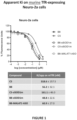
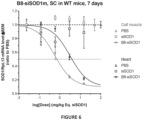
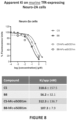
- the invention thus provides novel TfR-binding molecules which represent valuable agents for drug targeting to muscles. More particularly, inventors showed that conjugates of the invention comprising a VHH molecule and an oligonucleotide such as a siRNA, bind TfR in various muscle tissues and mediate target mRNA downregulation in vivo in WT mice expressing the murine TfR1 or in humanized in hTfR1 + / + mice expressing the human Tfr1 and in non-human primates.
- an oligonucleotide such as a siRNA
- TfR-binding conjugates according to the invention induced potent and muscle tissue-selective effect reaching more than 70 % mRNA knock-down in gastrocnemius, diaphragm, and cardiac muscle.
- RMT receptor-mediated transcytosis
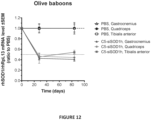
- TfR-binding VHH-siRNA conjugate induced a potent and durable downregulation of the target mRNA levels in all muscle tissues tested in mice as well as non-human primates (such as gastrocnemius, quadriceps and tibialis anterior muscle), with 60% knock-down observed for more than three months in non-human primates.
- inventors demonstrated cross-species rodent/NHP/human ability of the TfR-binding VHH-siRNA conjugates to mediate TfR-dependent binding, functional uptake and durable target mRNA downregulation in vivo at low therapeutic dose in skeletal and cardiac muscle tissues.
- RNA therapeutics such as a siRNA or ASO
- an antibody or antibody fragment scaffold such as a human IgG1 Fc region
- the VHH molecules according to the invention retain TfR binding capacity in vitro, and demonstrate potent and muscle-selective targeting and functional uptake properties in vivo at low dose.
- An object of the invention thus relates to VHH molecules, wherein said VHH molecules bind both a human and a non-human (e.g., non-human primate (NHP) or rodent, such as rat or murine) TfR.
- a non-human primate (NHP) or rodent, such as rat or murine) TfR Preferably, the VHH bind TfR-expressing muscle tissues.
- the invention also relates to conjugates comprising such VHH, their manufacture, compositions comprising the same and the use thereof.
- treatment refers to any act intended to ameliorate the health status of patients such as therapy, prevention, prophylaxis and retardation of a disease such as a muscular disease, a neuromuscular disease or a cancer of the muscle, or of at least one symptom of the muscular disease, the neuromuscular disease or the cancer. It designates both a curative treatment and/or a prophylactic treatment of a muscular disease, of a neuromuscular disease or of a cancer. In the context of cancer, this includes, inter alia, the alleviation of symptoms, the reduction of inflammation, the inhibition of cancer cell growth, and/or the reduction of tumor size.
- a response to treatment includes a reduction in cachexia, increase in survival time, elongation in time to tumor progression, reduction in tumor mass, reduction in tumor burden and/or a prolongation in time to tumor metastasis, time to tumor recurrence, tumor response, complete response, partial response, stable disease, progressive disease, progression free survival, overall survival, each as measured for example by standards set by the National Cancer Institute and the U.S. Food and Drug Administration for the approval of new drugs ( Johnson et al., J. Clin. Oncol., 2009; 21(7): 1404-1411 ).
- a “therapeutically effective dose” as described herein refers to the dose that gives a therapeutic effect for a given condition and administration schedule. It is typically the average dose of an active substance to administer to appreciably improve some of the symptoms associated with a disease or a pathological state. For example, in treating a cancer of the muscle (such as rhabdomyosarcoma or leiomyosarcoma) or of other tissues, a pathology, a lesion or a disorder affecting muscles (such as a muscular or neuromuscular disease), the dose of an active substance that decreases, prevents, delays, eliminates or stops one of the causes or symptoms of the disease or disorder would be therapeutically effective.
- a "therapeutically effective dose" of an active substance does not necessarily cure a muscle disease or disorder but will provide a treatment for this disease or disorder so that its appearance is delayed, impeded or prevented, or its symptoms are attenuated, or its term is modified or, for example, is less severe, or the recovery of the patient is accelerated.
- VHH molecules correspond to the variable region of heavy chain only camelid antibodies that are naturally devoid of light chains. VHH have a very small molecular weight of around 12-15 kDa. They contain a single chain molecule that can bind its cognate antigen using a single domain.
- the antigen-binding surfaces of VHHs are usually more convex (or protruding) than those of conventional antibodies, which are usually flat or concave. More specifically, VHHs are composed of 4 Framework Regions (or FRs) whose sequences and structures are defined as conserved, and three Complementarity Determining Regions (or CDRs) showing high variability both in sequence content and structure conformation, which are involved in antigen binding and provide antigen specificity.
- VHH molecules according to the present invention are polypeptides comprising (or consisting of, or consisting essentially of) an antigen-binding domain of a heavy chain only antibody (HcAb).
- HcAb heavy chain only antibody
- a or “an” can refer to one of or a plurality of the elements it modifies (e.g., "a VHH molecule” can mean one or more VHH molecules) unless it is contextually clear either one of the elements or more than one of the elements is described.
- VHH molecules having suitable properties In order to generate VHH molecules having suitable properties, the inventors tested over 2000 TfR-binding VHH from a library of VHH produced by lama immunization with a TfR immunogen. Following analysis of said clones for binding and specificity, the inventors further selected about 450 clones which were all sequenced and compared. Further VHH with controlled/improved binding properties were produced by mutagenesis or by humanization. The sequences of the relevant domains and preferred VHH are provided in the experimental section and sequence listing. The properties of the VHH and conjugates thereof are also illustrated in the experimental section.
- VHH molecules of the invention typically comprise or consist of the formula: FR1-CDR1-FR2-CDR2-FR3 -CDR3 -FR4, wherein FRn designates framework regions and CDRn designates complementarity determining regions.
- VHH molecules of the invention comprise a CDR1 domain comprising or consisting of an amino acid sequence selected from SEQ ID NOs: 1, 5, 9, 13, 17, 19, 67, 69, 125, 175, 179, 182, 184, 186, 190, 194, 198, 201, 205, 392, 410, 413, 426, 434, 437, 607, 610, 671-674, 710 or 711, or variants thereof having at least 60%, in particular at least 65%, 70% or 75%, for example at least 80% or 85% amino acid identity to any one of said sequences over the entire length thereof, preferably at least 85%, 86%, 87%, 88%, 89%, 90%, 91%, 92%, 93%, 94%, 95%, 96%, 97%, 98% or 99% (the preferred percentages of identity for a particular sequence being preferably percentages corresponding to an integer number of amino acids), said variants retaining a TfR binding capacity.
- Preferred VHH molecules of the invention contain a CDR1 domain having an amino acid sequence selected from SEQ ID NOs: 1, 5, 9, 13, 17, 19, 67, 69, 125, 175, 179, 182, 184, 186, 190, 194, 198, 201, 205, 392, 410, 413, 426, 434, 437, 607, 610, 671-674, 710, 711, or variants thereof having several amino acid modifications, for example at least 3 amino acid modifications, preferably at most 3 or 2 amino acid modifications, in a particular aspect at most 1 amino acid modification.
- the "% identity" between amino acid (or nucleic acid) sequences may be determined by techniques known per se in the art.
- the % identity between two nucleic acid or amino acid sequences is determined by means of computer programs such as GAP provided in the GCG program package ( Program Manual for the Wisconsin Package, Version 8, August 1996, Genetics Computer Group, 575 Science Drive, Madison, Wisconsin, USA 53711 ) ( Needleman, S.B. and Wunsch, C.D., (1970), Journal of Molecular Biology, 48, 443-453 ).
- GAP Global Program for the Wisconsin Package, Version 8, August 1996, Genetics Computer Group, 575 Science Drive, Madison, Wisconsin, USA 53711
- Needleman, S.B. and Wunsch, C.D., (1970), Journal of Molecular Biology, 48, 443-453 The % identity between two sequences designates the identity over the entire length of said sequences.
- the preferred percentages of identity for a particular sequence are preferably percentages corresponding to an integer number of amino acids both in the reference sequence (which is for example SEQ ID NOs: 1, 5, 9, 13, 17, 19, 67, 69, 125, 175, 179, 182, 184, 186, 190, 194, 198, 201, 205, 392, 410, 413, 426, 434 or 437, 607, 610, 671-674, 710, 711, or any other reference sequences herein identified such as SEQ ID NOs: 2, 6, 10, 14, 21, 23, 71, 73, 75, 113, 115, 128, 160, 162, 164, 166, 169, 171, 176, 187, 191, 195, 199, 202, 206, 608, 611, 712, 3, 7, 11, 15, 25, 27, 29, 31, 33, 77, 79, 81, 83, 85, 117, 119, 121, 123, 177, 180, 188, 192, 196, 200,
- VHH molecules of the invention comprise a CDR1 sequence comprising, or consisting essentially of SEQ ID NOs: 1, 5, 9, 13, 17, 19, 67, 69, 125, 175, 179, 182, 184, 186, 190, 194, 198, 201, 205, 392, 410, 413, 426, 434, 437, 607, 610, 671 to 674, 710 or 711.
- VHH molecules of the invention comprise a CDR2 domain comprising or consisting of an amino acid sequence selected from SEQ ID NOs: 2, 6, 10, 14, 21, 23, 71, 73, 75, 113, 115, 128, 160, 162, 164, 166, 169, 171, 176, 187, 191, 195, 199, 202, 206, 416, 419, 431, 608, 611 or 712, or variants thereof having at least 60%, in particular at least 65%, 70% or 75%, for example at least 80% or 85%, amino acid identity to any one of said sequences over the entire length thereof, preferably at least 85%, 86%, 87%, 88%, 89%, 90%, 91%, 92%, 93%, 94%, 95%, 96%, 97%, 98% or 99%, said variants retaining a TfR binding capacity.
- Preferred VHH molecules of the invention contain a CDR2 domain having an amino acid sequence selected from SEQ ID NOs: 2, 6, 10, 14, 21, 23, 71, 73, 75, 113, 115, 128, 160, 162, 164, 166, 169, 171, 176, 187, 191, 195, 199, 202, 206, 416, 419, 431, 608, 611 or 712, or variants thereof having several amino acid modifications, for example at least 3 amino acid modifications, preferably at most 3 or 2 amino acid modifications, in a particular aspect at most 1 amino acid modification.
- VHH molecules of the invention comprise a CDR2 sequence comprising, or consisting essentially of SEQ ID NOs: 2, 6, 10, 14, 21, 23, 71, 73, 75, 113, 115, 128, 160, 162, 164, 166, 169, 171, 176, 187, 191, 195, 199, 202, 206, 416, 419, 431, 608, 611 or 712.
- VHH molecules of the invention comprise a CDR3 domain comprising or consisting of an amino acid sequence selected from SEQ ID NOs: 3, 7, 11, 15, 25, 27, 29, 31, 33, 77, 79, 81, 83, 85, 117, 119, 121, 123, 177, 180, 188, 192, 196, 200, 203, 207, 452, 455, 609 612 or 713-715, or variants thereof having at least 60%, in particular at least 65%, 70% or 75%, for example at least 80% or 85%, amino acid identity to any one of said sequences over the entire length thereof, preferably at least 80%, more preferably at least 85%, 86%, 87%, 88%, 89%, 90%, 91%, 92%, 93%, 94%, 95%, 96%, 97%, 98% or 99%, said variants retaining a TfR binding capacity.
- Preferred VHH molecules of the invention contain a CDR3 domain having an amino acid sequence selected from SEQ ID NOs: 3, 7, 11, 15, 25, 27, 29, 31, 33, 77, 79, 81, 83, 85, 117, 119, 121, 123, 177, 180, 188, 192, 196, 200, 203, 207, 452, 455, 609, 612 or 713-715, or variants thereof having several amino acid modifications, for example at least 3 amino acid modifications, preferably at most 3 or 2 amino acid modifications, in a particular aspect at most 1 amino acid modification.
- VHH molecules of the invention comprise a CDR3 sequence comprising, or consisting essentially of SEQ ID NOs: 3, 7, 11, 15, 25, 27, 29, 31, 33, 77, 79, 81, 83, 85, 117, 119, 121, 123, 177, 180, 188, 192, 196, 200, 203, 207, 452, 455, 609, 612 or 713-715.
- VHH molecules of the invention comprise:
- VHH molecules of the invention comprise:
- the VHH molecules of the invention comprise a CDR1, a CDR2 and a CDR3, wherein said CDR1, CDR2 and CDR3 domains comprise or consist of, respectively:
- the VHH molecules of the invention comprise a CDR1, a CDR2 and a CDR3, wherein said CDR1, CDR2 and CDR3 domains are the domains of C5 or of variants thereof (as listed in Table 1), comprising or consisting of, respectively:
- the VHH molecules of the invention comprise a CDR1, a CDR2 and a CDR3, wherein said CDR1, CDR2 and CDR3 domains are the domains of B6 (as listed in Table 1), comprising or consisting of, respectively:
- the VHH molecules of the invention are B6 or variants thereof, that target the apical domain of the hTfR and comprise a CDR1, a CDR2 and a CDR3, comprising or consisting of, respectively:
- VHH molecules of the invention are VHH molecules targeting the apical domain of the hTfR and comprising a CDR1, a CDR2 and a CDR3 (as listed in Table 1), comprising or consisting of, respectively:
- the VHH molecules of the invention comprise a CDR1, a CDR2 and a CDR3, wherein said CDR1, CDR2 and CDR3 domains are the domains of B8 or of variants thereof (as listed in Table 1), comprising or consisting of, respectively:
- VHH molecules of the invention are cross-reactive with human, mouse and/or non-human primate species, as detailed in Tables 5 and 6 below.
- Preferred VHH molecules of the invention comprise FRs domains as defined below.
- the FR1 domain comprises or consists of SEQ ID NO: 35 as represented below, or variants thereof having at least 58%, for example at least 60%, 62%, 64%, 66%, 68%, 70%, 71%, 72%, 73%, 74%, 75%, 76%, 77%, 78%, 79%, 80%, 81%, 82%, 83%, 84%, 85%, 86%, 87%, 88%, 89%, 90%, 91%, 92%, 93%, 94%, 95%, 96%, 97%, 98% or 99%, amino acid identity to this sequence over the entire length thereof, preferably at least 80%: EVQLVESGGGLVQPGGSLKLSCAAS (SEQ ID NO: 35). More preferably, the bold amino acid residues are present and the variability occurs only on the other positions.
- the E in position 1 may be replaced with Q.
- V in position 5 may be replaced with Q.
- the E in position 6 may be replaced with Q.
- the G in position 10 may be replaced with K or A.
- the L in position 11 may be replaced with V or E.
- the P in position 14 may be replaced with A.
- the G in position 16 may be replaced with D.
- the K in position 19 may be replaced with R.
- the A in position 23 may be replaced with V or T.
- the S in position 25 may be replaced with D.
- the FR1 contains at most 4 amino acid modifications by reference to this sequence, even more preferably at most 3, even more preferably at most 2 amino acid modifications in non-bold amino acid residues.
- the amino acid modification is R in position 19.
- the FR1 has an amino acid sequence selected from any one of the amino acid sequences listed below:
- the M in position 1 may be replaced with I or V.
- the R in position 2 may be replaced with G or H or S.
- the Y in position 4 may be replaced with F or V.
- the R in position 5 may be replaced with G.
- the Q in position 6 may be replaced with R or E.
- the A in position 7 may be replaced with R.
- the G in position 9 may be replaced with I or E.
- the Q in position 11 may be replaced with E or G or I or D.
- the R in position 12 may be replaced with L.
- the E in position 13 may be replaced with N or H.
- the L in position 14 may be replaced with F or W or S or Q.
- V in position 15 may be replaced with Q or I.
- the A in position 16 may be replaced with M.
- the T in position 17 may be replaced with G or S.
- the FR2 contains at most 6 amino acid modifications by reference to this sequence, even more preferably at most 5, at most 3, even more preferably at most 2 amino acid modifications in non-bold amino acid residues.
- the amino acid modifications are V in position 4 and/or G in position 11 and L in position 12 and/or W in position 14.
- VHH molecules of the invention comprise at least one of the following amino acids in the FR2 domain: Phe42, Glu49, Arg50 or Gly52 (according to IMGT numbering).
- the FR2 has an amino acid sequence selected from any one of the amino acid sequences listed below:
- VHH molecules of the invention comprise a FR3 domain comprising or consisting of SEQ ID NO: 45 as represented below, or variants thereof having at least 58%, for example at least 60%, 62%, 64%, 66%, 68%, 70%, 71%, 72%, 73%, 74%, 75%, 76%, 77%, 78%, 79%, 80%, 81%, 82%, 83%, 84%, 85%, 86%, 87%, 88%, 89%, 90%, 91%, 92%, 93%, 94%, 95%, 96%, 97%, 98% or 99%, amino acid identity to this sequence over the entire length thereof, preferably at least 70%: YYADSVKG RFTISRDN AKNTVYLQMNSLKPE DTAVYYC (SEQ ID NO: 45). More preferably, the bold amino acid residues are present and the variability occurs only on the other positions.
- the Y in position 1 may be replaced with N.
- the Y in position 2 may be replaced with A.
- the A in position 3 may be replaced with P or I.
- the D in position 4 may be replaced with S or N.
- the FR3 contains at most 7 amino acid modifications by reference to this sequence, even more preferably at most 6, at most 3, even more preferably at most 2 amino acid modifications in non-bold amino acid residues.
- the FR3 has an amino acid sequence selected from any one of the amino acid sequences listed below:
- VHH molecules of the invention comprise a FR4 domain comprising or consisting of SEQ ID NO: 50 as represented below, or variants thereof having at least 58%, for example at least 60%, 62%, 64%, 66%, 68%, 70%, 71%, 72%, 73%, 74%, 75%, 76%, 77%, 78%, 79%, 80%, 81%, 82%, 83%, 84%, 85%, 86%, 87%, 88%, 89%, 90%, 91%, 92%, 93%, 94%, 95%, 96%, 97%, 98% or 99%, amino acid identity to this sequence over the entire length thereof, preferably at least 90%: W GQGTQVT VSS (SEQ ID NO: 50). More preferably, the bold amino acid residues are present and the variability occurs only on the other positions.
- the FR4 contains at most 4 amino acid modifications by reference to this sequence, even more preferably at most 3, even more preferably at most 2 amino acid modifications in non-bold amino acid residues.
- a specific illustrative example of a FR4 sequence is SEQ ID NO: 50.
- TfR-binding VHH molecules of the invention are molecules comprising or consisting of an amino acid sequence selected from any one of SEQ ID NOs: 213-271, 273-299, 412, 415, 418, 421, 423, 425, 428, 430, 433, 436, 439, 441, 443, 445, 447, 449, 451, 454, 457, 613-615, 675-678 and 701-709 (see Table 1).
- the VHH molecule does not comprise any tag sequence (when x is 0, as detailed in Table 1 below).
- TfR-binding VHH molecules of the invention are molecules comprising or consisting of an amino acid sequence selected from any one of SEQ ID NOs: 4, 8, 12, 16, 18, 20, 22, 24, 26, 28, 30, 32, 34, 68, 70, 72, 74, 76, 78, 80, 82, 84, 86-92, 114, 116, 118, 120, 122, 124, 126, 127, 129-149, 152-159, 161, 163, 165, 167, 168, 170, 172-174, 178, 181, 183, 185, 189, 193, 197, 204, 208, 393, 411, 414, 417, 420, 422, 424, 427, 429, 432, 435, 438, 440, 442, 444, 446, 448, 450, 453, 456, 616-618, 679-682, and 691-700 (as listed in Table 1 below; in these examples, when x is equal to 1, each VHH molecule comprises
- the VHH of the invention is humanized.
- one or more of the FR and/or CDR domains may be (further) modified by one or more amino acid substitutions.
- the VHH are humanized by selected modification (e.g., amino acid substitution) of the FR1 domain.
- a FR1 domain consists typically in a sequence of 25 amino acid residues.
- a typical humanized position in FR1 is 19R or 23A, or both (for example by reference to e.g., any one of SEQ ID NOs: 35-39, 331, 332, 400, or to any variants thereof as herein defined).
- Specific examples of such humanized FR1 thus comprise SEQ ID NOs: 37, 331, 400, wherein K19 and/or V23 are respectively modified into 19R and 23A.
- Another humanized position in FR1 is 11L, and a specific example of such humanized FR1 thus comprises SEQ ID NO: 332, wherein V11 is modified into 11L and wherein K19 and V23 are respectively modified into 19R and 23A.
- the VHH are humanized by selected modification of the FR2 domain.
- a typical humanized position in FR2 is selected from 1M, 2S or 2H, 4V, 11G, 12L, 14W, or combinations thereof (by reference to e.g., any one of SEQ ID NOs: 40-44, 342-348 or to any variants thereof as herein defined).
- a specific example of such a humanized FR2 thus comprises SEQ ID NO: 41 wherein one or more or all of I1, R2, Y4, Q11, R12, and F14 are respectively modified into 1M, 2S or 2H, 4V, 11G, 12L, and 14W.
- humanized FR2 comprises SEQ ID NO: 342, wherein Y4, Q11, R12 and F14 are respectively modified into 4V, 11G, 12L and 14W.
- humanized FR2 comprises SEQ ID NO: 343, wherein Q11 and R12 are respectively modified into 11G and 12L.
- humanized FR2 comprises SEQ ID NO: 344, wherein Y4, Q11 and R12 are respectively modified into 4V, 11G and 12L.
- humanized FR2 comprises SEQ ID NO: 345, wherein Q11 is modified into 11G.
- humanized FR2 comprises SEQ ID NO: 346, wherein Y4 is modified into 4V.
- humanized FR2 comprises SEQ ID NO: 347, wherein Q11, R12 and F14 are respectively modified into 11G, 12L and 14W.
- humanized FR2 comprises SEQ ID NO: 348, wherein Q11 and R12 are respectively modified into 11G and 12L.
- the VHH are humanized by selected modification of the FR3 domain.
- a typical humanized position in FR3 is selected from 6V, 17A or S, 20T, 21L, 25M, 26N, 29R, 30A, and any combination thereof (by reference to e.g., any one of SEQ ID Nos: 45-49, 366-379 or to any variants thereof as herein defined).
- a specific example of such a humanized FR3 thus comprises SEQ ID NO: 46 wherein one or more or all of M6, T17, A20, V21, I25, D26, and K29, are respectively modified into 6V, 17A, 20T, 21L, 25M, 26N, and 29R.
- humanized FR3 comprises SEQ ID NO: 366 wherein V21 and K29 are respectively modified into 21L and 29R.
- Another specific example of such a humanized FR3 comprises SEQ ID NO: 367 wherein M6, A20, V21 and K29, are respectively modified into 6V, 20T, 21L and 29R.
- humanized FR3 comprises SEQ ID NO: 368 wherein M6, T17, A20, V21, I25, D26, and K29, are respectively modified into 6V, 17A, 20T, 21L, 25M, 26N, and 29R.
- humanized FR3 comprises SEQ ID NO: 369 wherein M6, A20, V21, D26, and K29, are respectively modified into 6V, 20T, 21L, 26N, and 29R.
- humanized FR3 comprises SEQ ID NO: 370 wherein A20, V21, 125, D26, and K29, are respectively modified into 20T, 21L, 25M, 26N, and 29R.
- humanized FR3 comprises SEQ ID NO: 371 wherein M6, T17, A20, V21 and K29, are respectively modified into 6V, 17A, 20T, 21L and 29R.
- humanized FR3 comprises SEQ ID NO: 372 wherein M6, A20, V21, 125, D26, and K29, are respectively modified into 6V, 20T, 21L, 25M, 26N, and 29R.
- humanized FR3 comprises SEQ ID NO: 373 wherein M6, V21, 125, D26, and K29, are respectively modified into 6V, 21L, 25M, 26N, and 29R.
- humanized FR3 comprises SEQ ID NO: 374 wherein M6, A20, V21, 125 and K29, are respectively modified into 6V, 20T, 21L, 25M and 29R.
- humanized FR3 comprises SEQ ID NO: 375 wherein M6, T17, A20, V21, I25, D26, K29 and P30, are respectively modified into 6V, 17S, 20T, 21L, 25M, 26N, 29R and 30A.
- humanized FR3 comprises SEQ ID NO: 376 wherein M6, T17, I25, D26 and K29, are respectively modified into 6V, 17A, 25M, 26N and 29R.
- humanized FR3 comprises SEQ ID NO: 377 wherein M6, T17, A20, V21, I25 and D26, are respectively modified into 6V, 17A, 20T, 21L, 25M and 26N.
- humanized FR3 comprises SEQ ID NO: 378 wherein T17, A20, V21, 125, D26, and K29, are respectively modified into 17A, 20T, 21L, 25M, 26N, and 29R.
- humanized FR3 comprises SEQ ID NO: 379 wherein M6, 125, D26, and K29, are respectively modified into 6V, 25M, 26N, and 29R.
- humanized TfR-binding VHH molecules of the invention are molecules comprising or consisting of an amino acid sequence selected from any one of SEQ ID NOs: 236-241 or 252-271, 273-275 (see Table 1).
- the VHH molecules may further comprise one or several tags, suitable for e.g., purification, coupling, detection, etc.
- tags include any peptide sequence which is attached to a polypeptide VHH molecule of the invention to facilitate easy detection or purification of expressed proteins or to identify their binding to TfR or for site-directed enzymatic chemical/enzymatic conjugation purpose.
- the tag may be an affinity tag, an epitope tag, a site-specific conjugation tag or a fluorescent tag.
- tags include a Q-tag which is a tag comprising a glutamine residue inserted in a tag sequence, which is specifically recognized by the TGase, preferably comprising or consisting of the sequence LQR, a myc tag (EQKLISEEDL, SEQ ID NO: 394), a poly-His tag (comprising from 2 to 8 histidine residues, preferably 6-8 His residues, e.g, His6 (SEQ ID NO: 395) or His8 (SEQ ID NO: 396)), a poly-Arg tag (comprising from 2 to 8 arginine residues), a poly-Lys tag (comprising from 2 to 8 lysine residues), an HA tag (e.g., YPYDVPDYA, SEQ ID NO: 397), a FLAG tag (e.g., DYKDDDDK, SEQ ID NO: 398) or a GFP tag, a CBP tag, a Strep II tag, a sorta
- the one or several tags are located at the C-terminal end of the VHH.
- the VHH molecules may further comprise one or several linkers.
- linker or “spacer” are used interchangeably.
- the linkers may be peptide linkers or conjugation linkers.
- the peptide linker includes one or more amino acid residues, typically from 1 to 10 amino acid residues, used for linking the VHH molecule of the invention and a tag, or between various tags as described herein, provided that the linker does not specifically bind to the target protein which is TfR.
- the linker may be any amino acid residue for example, glycine (Gly or G), alanine (Ala or A), phenylalanine (Phe or F), serine (Ser or S), cysteine (Cys or C), leucine (Leu or L), asparagine (Asn or N), lysine (Lys or K), glutamate (Glu or E), glutamine (Gln or Q), proline (Pro or P), valine (Val or V), arginine (Arg or R), aspartate (Asp or D), etc., or a combination thereof.
- the peptide linker may be flexible (e.g., any flexible hydrophilic linker) or rigid (e.g., any alpha-helix rigid linker).
- Such a peptide linker differs from conjugation linkers which may be introduced between the VHH and the compounds of interest, such as bi- or multifunctional agents containing alkyl, aryl, thiols, azide, alkynes, nucleotidic or peptide groups by esters, aldehydes or alkyl or aryl acids, anhydride, sulfhydryl or carboxyl groups, groups derived from cyanogen bromide or chloride, carbonyldiimidazole, succinimide esters or sulfonic halides (as described herein in the part "Conjugates").
- conjugation linkers which may be introduced between the VHH and the compounds of interest, such as bi- or multifunctional agents containing alkyl, aryl, thiols, azide, alkynes, nucleotidic or peptide groups by esters, aldehydes or alkyl or aryl acids, anhydride, sulfhydryl
- the VHH of the invention may comprise a linker, preferably located at the C-terminal end of the VHH.
- the linker may comprise a Gly residue or a Gly repeat of e.g., 2-7 Gly residues (i.e., Gly2, Gly3, Gly4, Gly5, Gly6 or Gly7, respectively).
- the VHH of the invention may also comprise a combination of Gly and Ser residues.
- Gly and Ser combinatorial linkers include: GlySerGlySer (GSGS; SEQ ID NO: 627); SerGlySerGly5 (SGSGGGGG; SEQ ID NO: 628); (Gly4Ser)n, wherein n is from 1 to 6, for example any of SEQ ID NOs: 629 to 634 (as shown in Table 4 below), preferably SEQ ID NOs: 629 to 631; or any linker comprising such (Gly4Ser)n sequence, for example GlyGly(Gly4Ser)3 (GGGGGGSGGGGSGGGGS; SEQ ID NO: 635).
- peptide linkers according to the invention comprise or consist of EAAAK (SEQ ID NO: 636) or comprise a EAAAK repeat in combination with other amino acid residues, for example any of SEQ ID NOs: 637 to 641, as shown in Table 4.
- peptide linkers according to the invention are the following: GG(AP)17 (SEQ ID NO: 642), ASTKGPSVFPLAP (SEQ ID NO: 643), GSAGSAAGSGEF (SEQ ID NO: 644) or KESGSVSSEQLAQFRSLD (SEQ ID NO: 645), as shown in Table 4.
- VHH of the invention may comprise a Gly linker and a Q-tag, preferably located C-terminally. More specific examples of such VHH comprise the following structure: VHH - Gly linker - Q-tag, wherein the Gly linker comprises or consists of 2-6 Gly residues; and the Q-tag contains or consists of LQR.
- the VHH may comprise, at the C-terminal end, the following tag sequence AAA EQKLISEEDL NGAA HHHHHH GS (SEQ ID NO: 51), wherein simple underlined is a myc tag and double underlined is a His6 tag (the remaining residues being linkers such as an Ala linker AAA or residues resulting from cloning).
- tagged TfR-binding VHH molecules of the invention comprising the tag sequence of SEQ ID NO: 51 at the C-terminal end, are molecules comprising or consisting of an amino acid sequence selected from any one of 4, 8, 12, 16, 18, 20, 22, 24, 26, 28, 30, 32, 34, 68, 70, 72, 74, 76, 78, 80, 82, 84, 86-92, 114, 116, 118, 120, 122, 124, 126, 127, 129-149, 152-159, 161, 163, 165, 167, 168, 170, 172-174, 178, 181, 183, 185, 189, 193, 197, 204, 208, 393, 411, 414, 417, 420, 422, 424, 427, 429, 432, 435, 438, 440, 442, 444, 446, 448, 450, 453, 456, 616-618, 679-682 and 691-700.
- humanized TfR-binding VHH molecules of the invention with tag sequences are molecules comprising or consisting of an amino acid sequence selected from any one of SEQ ID NOs: 87-92 or 130-149, 152-154 (see Table 1).
- the VHH may comprise, at the C-terminal end, the following tag sequence GGGG SC HHHHHH (SEQ ID NO: 399), wherein simple underline is a spacer, bold C is a free cysteine available for site-directed chemical conjugation and double underline is a His tag (the remaining residues being linkers or resulting from cloning).
- the VHH of the invention may comprise a Q-tag preferably comprising or consisting of the sequence LQR, preferably located at the C-terminal end of the VHH.
- the VHH may comprise, at the C-terminal ("C-ter” or "C-terminus") end, the following tag sequence GGG LQR (SEQ ID NO: 111) wherein underlined is a Q-tag and bold is a Gly linker.
- GGGGLQR SEQ ID NO: 401
- GGGGGLQR SEQ ID NO: 402
- GGGGGGLQR SEQ ID NO: 403
- GGGGGGGLQR SEQ ID NO: 404
- the VHH comprises the tag sequence of SEQ ID NO: 111.
- VHH of the invention may comprise an Ala linker, a His tag, a Gly linker and a Q-tag.
- the linkers and tags are located C-terminally of the VHH.
- the Q-tag at least may be located N-terminal end of the VHH. More specific examples of such VHH comprise the following structure: VHH - Ala linker - His tag - Gly linker - Q-tag, wherein the Ala linker comprises 3 residues; the His tag comprises 2-7 His residues, preferably 6 His residues; the Gly linker comprises 2-6 Gly residues, preferably 3 residues; and the Q-tag preferably contains or consists of LQR.
- the VHH may comprise, at the C-terminal end, the following tag sequence AAA HHHHHH GGG LQR (SEQ ID NO: 112) wherein underlined is a Q-tag, bold are an Ala and a Gly linker, double underline is a His tag.
- Other examples are AAAHHHHHHGGGGLQR (SEQ ID NO: 406), AAAHHHHHHGGGGGLQR (SEQ ID NO: 407), AAAHIIHEMGGGGGGLQR (SEQ ID NO: 408) and AAAHHHHHHGGGGGGGLQR (SEQ ID NO: 409).
- the VHH comprises the additional sequence of SEQ ID NO: 112.
- TfR-binding VHH molecules of the invention are molecules comprising or consisting of an amino acid sequence selected from any one of 4, 8, 12, 16, 18, 20, 22, 24, 26, 28, 30, 32, 34, 68, 70, 72, 74, 76, 78, 80, 82, 84, 86-92, 114, 116, 118, 120, 122, 124, 126, 127, 129-149, 152-159, 161, 163, 165, 167, 168, 170, 172-174, 178, 181, 183, 185, 189, 193, 197, 204, 208, 393, 411, 414, 417, 420, 422, 424, 427, 429, 432, 435, 438, 440, 442, 444, 446, 448, 450, 453, 456, 616-618, 679-682, and 691-700.
- TfR-binding VHH molecules of the invention are VHH molecules which competitively inhibit binding of a VHH as defined above to a human and a non-human TfR.
- the term "competitively inhibits” indicates that the VHH can reduce or inhibit or displace the binding of a said reference VHH to TfR, in vitro or in vivo.
- Competition assays can be performed using standard techniques such as, for instance, competitive ELISA or other binding assays.
- a competitive binding assay involves a recombinant muscle cell or membrane preparation expressing a TfR, optionally bound to a solid substrate, an unlabeled test VHH (or a phage expressing the same) and a labeled reference VHH (or a phage expressing the same).
- Competitive inhibition is measured by determining the amount of labeled VHH bound in the presence of the test VHH.
- the test VHH is present in excess, such as about 5 to 500 times the amount of reference VHH.
- the test VHH is in 100-fold excess.
- Preferred competing VHH bind epitopes that share common amino acid residues.
- VHH molecules bind TfR in vitro and in vivo. They show adequate affinity, with a Kd (measured for example by SPR or by flow cytometry), from 0.001 nM to 10 ⁇ M, preferably from 0.01 nM to 4 ⁇ M or from 0.01 nM to 500 nM or from 0.01 nM to 100 nM or from 0.1 nM to 4 ⁇ M or from 0.1 nM to 500 nM or from 0.1 nM to 100 nM.
- Kd measured for example by SPR or by flow cytometry
- the VHH molecules of the invention bind human and non-human primate TfR with a Kd below 500 nM, and even more preferably, the VHH molecules of the invention bind human TfR with a Kd from 0.01 nM to 100 nM, rhesus monkey TfR with a Kd from 0.1 nM to 500 nM and mouse TfR with a Kd from 0.1 nM to 4000 nM.
- VHH molecules are C5 or variants thereof, humanized or not, comprising or consisting of any of SEQ ID NOs: 213, 216-271, 274, 275, 675, 676 and 701 (as listed in Table 1).
- VHH molecules are C5 or variants thereof which are cross-species VHH molecules binding to human, non-human primate (NHP) and murine TfR.
- C5 or variants thereof comprise a tag sequence at the N- and/or C-terminal end.
- Specific examples of such variants comprise or consist of any of SEQ ID NOs: 4, 16, 18, 20, 22, 24, 26, 28, 30, 32, 34, 68, 70, 72, 74, 76, 78, 80, 82, 84, 86-92, 114, 116, 118, 120, 122, 124, 126, 127, 129 or 130-149, 153-154, 393, 679, 680, 692.
- VHH molecules are humanized variants of C5 comprising or consisting of any of SEQ ID NOs: 236-241, 252-271, 274-275.
- the humanized variants of C5 comprise a tag sequence at the N- and/or C-terminal end. Specific examples of such variants comprise or consist of any of SEQ ID NOs: 87-92 or 130-149, 153-154.
- Examples of humanized variants of C5 are C5h20 variants comprising or consisting of SEQ ID NOs: 265 or 143, or C5V13h20 variants comprising or consisting of SEQ ID NO: 274 or 153.
- VHH molecules of the invention are B8 or variants thereof (as listed in Table 1), comprising or consisting of any of SEQ ID NOs: 214, 276-284, 412, 415, 418, 421, 423, 425, 428, 430, 433, 436, 439, 441, 443, 445, 447, 449, 451, 454, 457, 677, 678 and 702-709.
- B8 or variants thereof comprise a tag sequence at the N- and/or C-terminal end.
- variants comprise or consist of any of SEQ ID NOs: 8, 152, 155-159, 161, 163, 165, 167, 411, 414, 417, 420, 422, 424, 427, 429, 432, 435, 438, 440, 442, 444, 446, 448, 450, 453, 456, 681, 682, or 693-700.
- VHH molecules of the invention are B8 or variants thereof, which are cross-reactive with human and primate species.
- VHH molecule are B8 or variants thereof, humanized or not, comprising an amino acid sequence selected from any one of SEQ ID NOs: 214, 273, 276-284, 412, 415, 418, 421, 423, 425, 428, 430, 433, 436, 439, 441, 443, 445, 447, 449, 451, 454, 457, 677, 678 and 702-709.
- VHH molecules of the invention are B8 or variants thereof, comprising or consisting of any of SEQ ID NOs: 677, 678, 681, 682, 702-709 or 693-700.
- VHH molecules are humanized variants of B8 comprising or consisting of SEQ ID NOs: 273 or 152 (such as B8h1 variant).
- VHH molecules of the invention are B6 or variants thereof (as listed in Table 1), comprising or consisting of any of SEQ ID NOs: 12, 168, 170, 172, 173, 174, 178, 181, 183, 185, 215, 285-293, that bind TfR.
- B6 and variants thereof according to the invention target the apical domain of the TfR.
- VHH molecules of the invention are VHH molecules that bind the apical domain of the TfR, preferably an apical domain of the TfR1, and comprise or consist of SEQ ID NOs: 215, 285-299.
- VHH molecules of SEQ ID NOs: 215, 285-299 bind the human TfR1.
- such VHH molecules comprise a tag sequence at the N- and/or C-terminal end. Specific examples of such variants comprise or consist of any of SEQ ID NOs: 12, 168, 170, 172-174, 178, 181, 183, 185, 189, 193, 197, 204, 208 or 691.
- the VHH molecule is B6 or a variant thereof, comprising an amino acid sequence selected from any one of SEQ ID NOs: 215 and 285-293.
- the VHH molecule comprises or consists of an amino acid sequence selected from any one of SEQ ID NOs: 613-618.
- VHH molecules comprising or consisting of SEQ ID NOs: 613-618 bind human and non-human primate TfR but they do not bind mouse TfR.
- VHH of the invention binding of said VHH of the invention to a human TfR receptor does not compete with binding of transferrin, the endogenous TfR ligand, and thus does not affect regular functions of said ligand.
- Conjugates produced with such VHH molecules have further been shown to bind TfR in vitro and to accumulate in the muscles and/or in the muscle cells in vivo, showing endocytosis.
- Such VHH thus represent potent agents for drug delivery or targeting to muscles.
- the VHH of the invention can be synthesized by any technique known to those skilled in the art (biological or genetic synthesis, chemical, etc.). They can be preserved as-they are, or be formulated in the presence of a substance of interest or any acceptable excipient.
- chemical syntheses commercial apparatuses that can incorporate natural as well as non-natural amino acids, such as D enantiomers and residues with side chains with hydrophobicities and steric obstructions different from those of their natural homologues (socalled exotic, i.e., non-coded, amino acids), or a VHH sequence containing one or more peptidomimetic bonds that can include notably intercalation of a methylene (-CH 2 -) or phosphate (-PO 2 -) group, a secondary amine (-NH-) or an oxygen (-O-) or an N-alkylpeptide, are used.
- VHH of the invention can also be obtained from a nucleic acid sequence coding for the same, as described further below (cf. Table 2 and the Sequence listing).
- a further object of the invention relates to conjugates (also interchangeably called herein "chimeric agents") comprising one or more VHH molecules as defined above, conjugated to at least one additional compound, in particular to at least one additional molecule, agent or compound of interest, for example to a scaffold of interest.
- This additional compound may be a distinct VHH or a molecule which is not a VHH.
- the at least one additional molecule, agent or compound of interest may be any molecule, agent or compound such as a half-life extending moiety, a stabilizing group or scaffold, a therapeutic (i.e., active) compound, medicament or drug, a diagnostic agent, an imaging molecule, a tracer, etc., or a vehicle comprising such a therapeutic, diagnostic or imaging compound.
- the chimeric agent (i.e., conjugate) may comprise both kinds of additional compounds, i.e. i) a half-life extending moiety, a stabilizing group or scaffold and ii) a therapeutic, diagnostic or imaging compound, or a vehicle comprising the same.
- the therapeutic compound is for example selected from a peptide, a polypeptide, a protein, an antibody, a nucleic acid and any fragment thereof.
- the therapeutic compound is a nucleic acid molecule as described below.
- conjugated molecules, agents or compounds of interest include, without limitation, any chemical entity such as a small chemical molecule (for example a chelating agent, an antibiotic, antiviral, immunomodulator, antineoplastic, anti-inflammatory, or adjuvant, etc.); a peptide, polypeptide or protein (for example an enzyme, hormone, cytokine, apolipoprotein, growth factor, antigen, antibody or part of an antibody, adjuvant, etc.); a nucleic acid (for example a RNA or a DNA of human, viral, animal, eukaryotic, prokaryotic, plant or synthetic origin, etc., including e.g., coding genes, inhibitory nucleic acids such as ribozymes, antisense oligonucleotides (ASOs), interfering nucleic acids(siRNAs), small activating RNAs (saRNAs), mRNAs, full genomes or portions thereof, plasmids, etc.); a lipid (nano)
- the "molecule, agent or compound of interest” can be any drug (active) ingredient, whether a chemical, biochemical, natural or synthetic compound.
- the expression "small chemical molecule, agent or compound” designates a molecule of pharmaceutical interest with a maximum molecular weight of 1000 Daltons, typically between 300 Daltons and 700 Daltons.
- the vehicle may be selected for example from a virus, a virus-like particle (VLP), a Cell-Derived Vesicle (CDV), an exosome, a lipid vehicle and a polymer vehicle, and is preferably a lipid nanoparticle (LNP), a micelle or a liposome.
- VLP virus-like particle
- CDV Cell-Derived Vesicle
- LNP lipid nanoparticle
- the conjugated compound is typically a medicament (such as a small drug, nucleic acid or polypeptide, e.g., an antibody or fragment thereof) or an imaging agent suitable for treating or detecting a muscular or neuromuscular disease, such as a myopathy, a cardiomyopathy, a muscular dystrophy (such as DMD, BMD, FSHD, Pompe disease or familial hypertrophic cardiomyopathy), a peripheral neuropathy, ALS, SMA, MS, CMT or a cancer of the muscle (such as rhabdomyosarcoma or leiomyosarcoma).
- a muscular or neuromuscular disease such as a myopathy, a cardiomyopathy, a muscular dystrophy (such as DMD, BMD, FSHD, Pompe disease or familial hypertrophic cardiomyopathy), a peripheral neuropathy, ALS, SMA, MS, CMT or a cancer of the muscle (such as rhabdomyosarcoma or leiomyosarcoma).
- the chimeric agent may also contain, in addition to or instead of said compound of interest, a half-life extending moiety or a stabilizing group to increase the plasma half-life of the VHH or conjugate.
- Particular chimeric agents of the invention thus comprise i) at least one VHH, for example several VHH molecules, ii) a half-life extending moiety or a stabilizing group, iii) a compound of interest, typically a therapeutic, diagnostic or imaging compound, and optionally iv) a vehicle, in any order.
- the compound of interest is at the same time a group allowing the stabilization and/or increasing the plasma half-life of the VHH molecule(s) of the invention.
- the half-life extending moiety or stabilizing group may be any group known to have substantial plasma half-life (e.g. at least few hours) and essentially no adverse biological activity.
- Examples of such half-life extending moieties or stabilizing groups include, for instance, an antibody or a fragment thereof such as a Fc fragment of an immunoglobulin, a VHH molecule or variants thereof, preferably VHH molecules binding to albumin, large human serum proteins such as albumin, HSA, or IgGs or PEGs molecules.
- the conjugate according to the invention comprises a half-life extending moiety or stabilizing group which is a small organic albumin-moiety that binds to the albumin with a low micromolar affinity thus improving the pharmacokinetic profile of the compound of interest by a progressive release of the conjugate from the albumin.
- small organic albumin-moieties include e.g. a fragment of Evans blue (EB) dye, fatty acids and derivatives thereof such as the C16 group and the 4-(p-iodophenyl)butytryl (PIB) group.
- the conjugate according to the invention comprises a half-life extending moiety or stabilizing group which is an Fc fragment of a human IgG1 or IgG4, preferably IgG1.
- a conjugate is of general formula VHH-hFc-siRNA or VHH-hFc-ASO.
- the conjugate according to the invention comprises a half-life extending moiety or stabilizing group which is an Fc homodimer or heterodimer.
- the conjugate according to the invention comprises a half-life extending moiety or stabilizing group which is a modified Fc fragment homodimer or heterodimer of a IgG1 or IgG4 with attenuated or abolished effector functions and/or extended half-life.
- the conjugate according to the invention comprises a modified Fc fragment of an IgG1 which is an aglycosylated Fc fragment of an IgG1, e.g., with N297 mutation.
- the conjugate according to the invention comprises a modified Fc fragment of an IgG1 which is a fragment of an Fc variant having a symmetric or asymmetric amino acid modification (i.e, on only one or two arms of the Fc dimer) selected from deletion, insertion, inversion or substitution, or a combination thereof e.g., an amino acid substitution at L234A and L235A (i.e., LALA mutation).
- Fc modifications allow to modulate Fc receptor interactions, modulate, reduce or eliminate Fc effector functions such as FcgammaR binding, antibody-dependent cell-mediated cytotoxicity (ADCC), or complement-dependent cytotoxicity (CDC) or to modulate glycosylation.
- the conjugate according to the invention comprises a modified Fc fragment which is a fragment of an IgG1 comprising a mutation at residue position N434, E380, M252, I253, S254, T256 or H433, or a combination thereof.
- modified Fc fragment which is a fragment of an IgG1 comprising a mutation at residue position N434, E380, M252, I253, S254, T256 or H433, or a combination thereof.
- mutations are E380A M252Y, S254T, T256E, H433K, N434A or N434F.
- the conjugate according to the invention comprises a modified Fc fragment which is a fragment of an IgG1 comprising a mutation at residue position E233, L234, L235, G236, G237, S239, D265, D270, P329, A327, A330, or a combination thereof.
- mutations are E233P, L234A, L234V, L235A, deltaG236, G237A, S239A, D265A, D265N, D270N, D270A, A327G, P329A, P329G, A330S or P331S.
- the conjugate according to the invention may also comprise a modified Fc fragment which comprises any combination of the above mutations, optionally in a further combination with the LALA mutation.
- the conjugate according to the invention may comprise a modified Fc fragment which is a fragment of an IgG4 comprising a mutation at residue position L248 or L235, or a combination thereof.
- a modified Fc fragment which is a fragment of an IgG4 comprising a mutation at residue position L248 or L235, or a combination thereof.
- mutations are L248E, L235A or L235E.
- the conjugate according to the invention comprises a half-life extending moiety or stabilizing group which is albumin protein or albumin binding moieties.
- the VHH may be conjugated in N-terminal or C-terminal end of the half-life extending moiety or stabilizing group, or both.
- the half-life extending moiety or stabilizing group is a Fc fragment
- conjugation is typically by genetic fusion.
- the resulting protein may remain as a monomeric agent, or multimerize, depending on the nature of the half-life extending moiety or stabilizing group.
- the fusion protein Fc-VHH or VHH-Fc may form homodimers or heterodimers.
- the VHH molecule of the invention is conjugated to at least one oligonucleotide, i.e., one or more oligonucleotide(s) (e.g., any single- or double-stranded oligonucleotide such as small interfering RNA (siRNA), small activating RNAs (saRNA), gapmer, antisense oligonucleotide (ASO), shRNA, miRNA, aptamer RNA or bridged nucleic acid (BNA), preferably ASO or siRNA, by means of the half-life extending moiety or stabilizing group such as a Fc fragment of a human IgG1 or IgG4, wherein Fc-VHH or VHH-Fc are homodimers or heterodimers.
- oligonucleotide(s) e.g., any single- or double-stranded oligonucleotide such as small interfering RNA (siRNA), small activating RNAs
- a heterodimeric VHH-Fc fusion may be generated using the "knob-into-hole" or "KiH” technology and may comprise a VHH at the N-terminus (or N-ter) of one arm ("knob” arm) of a human IgG1-derived Fc dimer (hFc) and a tag sequence specifically recognized by transglutaminase (TGase) enzyme (namely a Q-tag) inserted in C-terminus (or C-ter) of the other arm of the Fc dimer ("hole” arm), and may be site-specifically modified on the Q-tag to introduce an azido-linker.
- TGase transglutaminase
- the resulting heterodimeric VHH-hFc-Q-tag-azido intermediate may be conjugated to alkyne-siRNA using copper-free click reaction, yielding VHH-hFc-siRNA conjugates with a stable linker (as described in Example 6 and shown in Figure 14 ).
- the conjugate according to the invention comprises a VHH-Fc heterodimer, wherein Fc comprises the following mutations: T366W on the "knob" arm of the heterodimer, and/or T366S, L368A and Y407V on the "hole" arm of the heterodimer.
- the conjugate according to the invention comprises a VHH-Fc heterodimer, wherein Fc comprises T366W, L234A and L235A mutations on the "knob" arm of the heterodimer and/or T366S, L368A, Y407V, L234A and L235A mutations on the "hole" arm of the heterodimer.
- the conjugate according to the invention comprises a VHH-Fc heterodimer, wherein Fc comprises T366W, L234A and L235A mutations on the "knob" arm of the heterodimer and T366S, L368A, Y407V, L234A and L235A mutations on the "hole” arm of the heterodimer.
- the VHH-Fc heterodimer may comprise a modified Fc having a sequence of SEQ ID NO: 664 on the "knob” arm, and a modified Fc having a sequence of SEQ ID NO: 665 on the "hole” arm. Specific examples of such VHH-Fc heterodimers comprising SEQ ID NO: 664 and 665 are described in Example 6 and in Figures 8 , 9 and 10 .
- coupling can be performed by any acceptable means of bonding taking into account the chemical nature steric hindrance and number of conjugated entities. Coupling can thus be carried out by one or more covalent, ionic, hydrogen, hydrophobic or Van der Waals bonds, cleavable or non-cleavable in physiological medium or within cells preferably cleavable in particular when the present invention is used in the context of the delivery of at least one active agent on the muscle site. Furthermore, coupling can be made at various reactive groups, and notably at one or more terminal ends and/or at one or more internal or lateral reactive groups. Coupling can also be carried out using genetic engineering.
- the preferred coupling of the invention is covalent coupling, although non-covalent coupling may also be employed.
- the compound of interest can be coupled with the VHH either at one of the terminal ends (N-terminal or C-terminal), or at a side chain of one of the constitutive amino acids of the sequence ( Majumdar S. and Siahaan TJ., "Peptidemediated targeted drug delivery”. Med Res Rev., 2012 May;32(3):637-58 ).
- the compound of interest can be coupled directly to a VHH, or indirectly by means of a linker or spacer.
- Means of covalent chemical coupling, calling upon a linker or not include classical bioconjugation techniques for instance those selected from bi- or multifunctional agents containing alkyl, aryl, thiols, azide, alkynes, nucleotidic or peptide groups by esters, aldehydes or alkyl or aryl acids, anhydride, sulfhydryl or carboxyl groups, groups derived from cyanogen bromide or chloride, carbonyldiimidazole, succinimide esters or sulfonic halides. It also may additionally include specific enzymatic conjugation for example through the bacterial transglutaminase that catalyzes the transamidation on a glutamine, provided that this glutamine is inserted in a specific tag.
- coupling involves genetic fusion.
- Such a strategy can be used when the coupled molecule is a peptide or polypeptide.
- a nucleic acid molecule encoding the VHH fused to the molecule is prepared and expressed in any suitable expression system, to produce the conjugate.
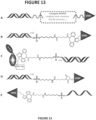
- General structures of VHH-Oligo conjugates of the invention are shown in Figure 13 , and illustrative strategies for conjugating a VHH of the invention to a molecule or scaffold are disclosed in Figure 14 .
- coupling is performed using the thiol/maleimide chemistry technology.
- the VHHs are fused to their C-terminus with a peptidic sequence containing an additional cysteine.
- the additional peptidic tag is typically GGGGS C HHHHHH (SEQ ID NO: 399, wherein simple underline is a Gly linker that is used as a spacer and double underline is a 6His tag that is used for purification purposes.
- VHHs only contain cysteines engaged in a disulfide bridge
- the additional cysteine introduced in the tag is the only one to be chemically reactive towards maleimides. It allows the specific conjugation of the VHH with maleimide-derivatized molecules of interest.
- the reaction proceeds in two steps. First it is necessary to smoothly reduce the VHH-GGGGSCHHHHHH since the additional cysteine in the tag can be partially engaged in a disulfide bridge during the production process (formation of a disulfide bond with another VHH- GGGGS C HHHHHH or with a free cysteine).
- the first step thus consists in the partial reduction using a mild reducing agent such as 2-MEA (2-mercaptoethanol), TCEP (tris(2-carboxyethyl)phosphine) or DTT (dl-1,4-dithiothreitol).
- a mild reducing agent such as 2-MEA (2-mercaptoethanol), TCEP (tris(2-carboxyethyl)phosphine) or DTT (dl-1,4-dithiothreitol).
- the VHH-GGGGSCHHHHHH is allowed to react at a pH in the range of 6.5 - 7.5 with maleimide-functionalized molecules of interest to form VHH-molecule conjugates linked in a covalent and stable manner.
- the two steps can be performed sequentially or all together in situ.
- coupling is performed by enzymatic reaction.
- site-specific conjugation onto the VHH can be performed using the transglutaminase enzyme (Tgase).
- Tgase catalyzes the formation of a stable isopeptidic bond between (i) the side chain of a glutamine residue inserted in a tag sequence specifically recognized by the Tgase (namely a Q-tag) and (ii) an aminofunctionalized donor substrate.
- Q-tag the transglutaminase enzyme
- the inventors have developed a particular tag sequence (named "Q-tag") which is recognized by Tgase and may be used to couple VHH of the invention to any molecule of interest, either chemical drugs or agents or a heterobifunctional linker for further conjugation to chemical drugs or agents.
- VHHs are prepared by genetic fusion to add in tandem (typically to their C-terminus) the following tags: first an optional trialanine linker, then an optional His-tag, then an optional small triglycine linker, and finally a Q-tag.
- the triglycine linker allows spacing out the Q-tag to allow a better accessibility of the Tgase to the glutamine while the His-tag aims at facilitating the purification of the VHH and its further functionalized versions.
- the general conjugation strategy that was developed is a convergent synthesis that is based on a process comprising:
- a further object of the invention is a VHH comprising a Q-tag.
- a further object of the invention is a VHH molecule comprising a linker, such as a Gly linker, and a Q-tag.
- VHH of the invention have the following structure: VHH - Linker - His m - Linker - LQR, wherein: VHH is any VHH molecule; Linker is any molecular linker such as an Ala or Gly linker (preferably the two linkers are different); and m is an integer from 0 to 8, preferably m is 6 or 8.
- the invention relates to a conjugate comprising at least one VHH covalently linked to at least one chemical entity.
- Preferred variants of such conjugates contain one VHH and one chemical entity.
- the invention relates to a conjugate comprising at least one VHH covalently linked to at least one nucleic acid.
- the nucleic acid may be an antisense oligonucleotide ("ASO"), a ribozyme, an aptamer, a siRNA, etc.
- ASO antisense oligonucleotide
- ribozyme oligonucleotide
- aptamer a siRNA, etc.
- Preferred variants of such conjugates contain one VHH and one nucleic acid molecule.
- the nucleic acid is an oligonucleotide (i.e., a short DNA or RNA molecule, also called herein "oligo” or “oligomer”) selected from any single- or double-stranded oligonucleotide such as a small interfering RNA (siRNA), small activating RNAs (saRNA), gapmer, antisense oligonucleotide (ASO), shRNA, miRNA, aptamer RNA or bridged nucleic acid (BNA), which can specifically bind to a target mRNA thereby modulating gene expression in the cell.
- oligonucleotide is an ASO or a siRNA capable of modulating (silencing or inhibiting or activating) the expression of a target gene.
- the conjugates according to the invention are complementary to a target gene, and, in particular embodiments, they are capable of silencing or inhibiting the expression of a target gene, preferably by at least 40 %, or at least 50 %, or at least 60 %, or at least 70 %, or at least 80 %, or at least 90 %. More specifically, the conjugates according to the invention are capable of silencing or inhibiting the expression of a target gene by about 40 % to about 80 %.
- the invention relates to a conjugate compound comprising at least one VHH binding TfR, preferably at the surface of a muscle cell, and covalently linked to at least one oligonucleotide selected from any single- or double-stranded oligonucleotide such as small interfering RNA (siRNA), small activating RNAs (saRNA), gapmer, antisense oligonucleotide (ASO), shRNA, miRNA, aptamer RNA or bridged nucleic acid (BNA), which is capable of specifically binding to a target mRNA thereby modulating gene expression in the cell.
- siRNA small interfering RNA
- saRNA small activating RNAs
- ASO antisense oligonucleotide
- shRNA miRNA
- the invention relates to a conjugate compound comprising:
- the invention relates to a conjugate compound comprising:
- the conjugate of the invention comprises: (i) at least one VHH molecule binding TfR at the surface of a muscle cell, and comprising or consisting of any of SEQ ID NOs: 4, 8, 12, 16, 18, 20, 22, 24, 26, 28, 30, 32, 34, 68, 70, 72, 74, 76, 78, 80, 82, 84, 86-92, 114, 116, 118, 120, 122, 124, 126, 127, 129-149, 152-159, 161, 163, 165, 167, 168, 170, 172-174, 178, 181, 183, 185, 189, 193, 197, 204, 208, 213-271, 273-299, 393, 411-412, 414-415, 417-418, 420-425, 427-430, 432-433, 435-436, 438-451, 453-454, 456-457 or 691-709; and (ii) at least one oligonucleotide selected from any single VHH molecule binding
- the conjugate of the invention comprises: (i) one or more VHH molecule(s) which is C5 or a variant thereof (as listed in Table 1), which is cross-species VHH molecule binding to human, non-human primate (NHP) and murine TfR at the surface of a muscle cell, and which comprises or consists of any of SEQ ID NOs: 4, 16, 18, 20, 22, 24, 26, 28, 30, 32, 34, 68, 70, 72, 74, 76, 78, 80, 82, 84, 86-92, 114, 116, 118, 120, 122, 124, 126, 127, 129 or 130-149, 153-154, 213, 216-271, 274-275, 393, 675, 676, 679, 680, 692 or 701; and (ii) one or more oligonucleotide(s) selected from any singleor double-stranded oligonucleotide such as small interfering RNA (siRNA), small interfering
- the conjugate of the invention comprises: (i) at least one VHH molecule which is a humanized variant of C5 (as listed in Table 1), comprising or consisting of any of SEQ ID NOs: 87-92, 130-149, 153-154, 236-241, 252-271 or 274-275; and (ii) at least one oligonucleotide selected from any single- or double-stranded oligonucleotide such as small interfering RNA (siRNA), small activating RNAs (saRNA), gapmer, antisense oligonucleotide (ASO), shRNA, miRNA, aptamer RNA or bridged nucleic acid (BNA), which is capable of specifically binding to a target mRNA, thereby modulating gene expression in the cell.
- siRNA small interfering RNA
- saRNA small activating RNAs
- ASO antisense oligonucleotide
- shRNA miRNA
- the conjugate of the invention comprises: (i) one or more VHH molecule(s) which is B6 or a variant thereof (as listed in Table 1), which binds to the apical domain of the TfR, preferably TfR1 at the surface of a muscle cell, and which comprises or consists of any of SEQ ID NOs: 12, 168, 170, 172-174, 178, 181, 183, 185, 215, 285-299; and (ii) one or more oligonucleotide(s) selected from any single- or double-stranded oligonucleotide such as small interfering RNA (siRNA), small activating RNAs (saRNA), gapmer, antisense oligonucleotide (ASO), shRNA, miRNA, aptamer RNA or bridged nucleic acid (BNA), which is capable specifically binding to a target mRNA, thereby modulating gene expression in the cell.
- VHH molecule(s) which is B6 or
- the conjugate of the invention comprises: (i) one or more VHH molecule(s) binding to the apical domain of the TfR, preferably TfR1 at the surface of a muscle cell, and comprising or consisting of any of SEQ ID NOs: 12, 168, 170, 172-174, 178, 181, 183, 185, 189, 193, 197, 204, 208, 215, 285-299 or 691; and (ii) one or more oligonucleotide(s) selected from any single- or double-stranded oligonucleotide such as small interfering RNA (siRNA), small activating RNAs (saRNA), gapmer, antisense oligonucleotide (ASO), shRNA, miRNA, aptamer RNA or bridged nucleic acid (BNA), which is capable specifically binding to a target mRNA, thereby modulating gene expression in the cell.
- siRNA small interfering RNA
- saRNA small activ
- the conjugate of the invention comprises: (i) one or more VHH molecule(s) which is B8 or a variant thereof (as listed in Table 1), comprising or consists of any of SEQ ID NOs: 8, 152, 155-159, 161, 163, 165, 167, 214, 273, 276-284, 411, 412, 414, 415, 417, 418, 420-425, 427-430, 432, 433, 435, 436, 438-451, 453, 454, 456, 457, 677, 678, 681, 682, 693-700, 702-709; and (ii) one or more oligonucleotide(s) selected from any single- or double-stranded oligonucleotide such as small interfering RNA (siRNA), small activating RNAs (saRNA), gapmer, antisense oligonucleotide (ASO), shRNA, miRNA, aptamer RNA or bridged
- siRNA
- conjugation methods used to conjugate a VHH molecule to an oligonucleotide are the direct thiol-maleimide chemistry thanks to the introduction of an unpaired cysteine to the C-terminus of the VHH or an indirect SPAAC reaction (Strain Promoted Alkyne Assisted Click) thanks to the preliminary site-specific enzyme-assisted reaction onto the VHH to introduce suitable moieties for click chemistry.
- Different linkers can be used between the two partners VHH and oligos, that can be stable or cleavable.
- cleavable linkers are disulfide, enzyme-labile peptide linkers such as valine-citrulline or phenylalanine-lysine dipeptide or pH-labile linkers such as hydrazone.
- a VHH molecule and oligonucleotide are linked to each other using preferably a copper-free click reaction yielding VHH-Oligo conjugates with a stable or a cleavable linker.
- the invention relates to a conjugate comprising a VHH covalently linked to a peptide.
- the peptide may be an active molecule, a bait, a tag, a ligand, etc.
- Preferred variants of such conjugates contain one VHH and one peptide.
- the invention in another embodiment, relates to a conjugate comprising a VHH covalently linked to a nanoparticle and/or liposome, for example a lipidic particle or nanoparticle ("LNP").
- the nanoparticle and/or liposome may be loaded or functionalized with active agents.
- Preferred variants of such conjugates contain several VHH molecules coupled to each nanoparticle or liposome.
- the conjugate comprises, as a half-life extending moiety or a stabilizing group, an antibody or a fragment thereof to which one or several VHH molecules are coupled.
- a VHH molecule is coupled to a C- or N-terminal end of a heavy or light chain, or both, or to the C- or N-terminal of an Fc fragment.
- the VHH molecule is coupled to the N-terminal end of an Fc.
- the VHH molecule is coupled to the C-terminal end of an Fc.
- the conjugate comprises, or consists of, a single VHH molecule coupled to an antibody fragment which may be a heavy chain or a light chain.
- the VHH molecule is indifferently coupled to the C-terminal end or to the N-terminal end of the chain. Preferably, it is coupled to the N-terminal end.
- the invention also relates to a method for preparing a conjugate compound such as defined above, characterized in that it comprises a step of coupling between a VHH and a molecule or scaffold, preferably by a chemical, biochemical or enzymatic pathway, or by genetic engineering.
- VHH when several VHH are present, they may have a similar or different binding specificity.
- a further aspect of the invention relates to a nucleic acid encoding a VHH as defined above, or a conjugate thereof (when the conjugated moiety is an amino acid sequence).
- the nucleic acid may be single- or double-stranded.
- the nucleic acid can be DNA (for example a cDNA or a gDNA), a RNA (for example a mRNA or a gRNA), or a mixture thereof. It can be in single stranded form or in duplex form, or it can be a mixture of the two. It can comprise modified nucleotides, comprising for example a modified bond, a modified purine or pyrimidine base, or a modified sugar.
- nucleic acid according to the invention may be deduced from the amino acid sequence of the VHH molecules according to the invention and codon usage may be adapted according to the host cell in which the nucleic acid shall be transcribed. These steps may be carried out according to methods well known to one of ordinary skill in the art and some of which are described in the reference manual Sambrook et al.
- nucleic acids sequences include the sequences comprising any one of SEQ ID NOs: 301-329, 52-64, 95-110, 469-606, 646-663, 683-690 or 721-738, with no tag coding portion or including the optional tag-coding portion of SEQ ID NO: 330, and the complementary sequence thereto.
- the corresponding domains encoding CDR1, CDR2 and CDR3 are underlined in Table 2 below.
- the tag-coding portion of SEQ ID NO: 330 is in bold in Table 2.
- the invention also relates to a vector containing such a nucleic acid, optionally under control of regulatory sequences (e.g., promoter, terminator, etc.).
- the vector may be a plasmid, virus, cosmid, phagemid, artificial chromosome, etc.
- the vector may comprise a nucleic acid of the invention operably linked to a regulatory region, i.e. a region comprising one or more control sequences.
- the vector may comprise several nucleic acids of the invention operably linked to several regulatory regions.
- control sequences means nucleic acid sequences necessary for expression of a coding region. Control sequences may be endogenous or heterologous.
- control sequences include, but are not limited to, promoter, signal-peptide sequence and transcription terminator.
- operably linked means a configuration in which a control sequence is placed at an appropriate position relative to a coding sequence, in such a way that the control sequence directs expression of the coding region.
- the present invention further relates to the use of a nucleic acid or vector according to the invention to transform, transfect or transduce a host cell or to produce a composition, including a pharmaceutical composition, to transform, transfect or transduce a host cell.
- the present invention also provides a host cell comprising one or several nucleic acids of the invention and/or one or several vectors of the invention.
- the term "host cell” also encompasses any progeny of a parent host cell that is not identical to the parent host cell due to mutations that occur during replication. Suitable host cells may be prokaryotic (e.g., a bacterium) or eukaryotic (e.g., yeast, plant, insect or mammalian cell). Specific illustrative examples of such cells include E. coli strains, CHO cells, Saccharomyces strains, plant cells, sf9 insect cells etc.
- VHH molecules of the invention can bind to TfR and thus target/deliver molecules to TfR-expressing muscle cells. Within the context of this invention, binding is preferably specific, so that binding to TfR occurs with higher affinity than binding to any other antigen in the same species.
- the VHH molecules of the invention specifically bind the human TfR1.
- the VHH molecules of the invention bind the human and non-human primate TfR1.
- the VHH molecules of the invention bind the human and rodent TfR1.
- VHH molecules of the invention bind human TfR1, non-human primate TfR1 and rodent (e.g., a murine or rat) TfR1.
- the VHH molecules bind the human, non-human primate and murine receptors with a substantially similar affinity.
- the invention thus relates to methods of targeting/delivering a compound to/through a TfR-expressing cell or organ, comprising coupling said compound to at least one VHH of the invention.
- the invention further relates to the use of a VHH such as defined above, as a vector for the transport of a compound to/through a TfR-expressing muscle cell.
- the invention also relates to the use of a VHH such as defined above for preparing a drug or a medicament capable of targeting the muscle site.
- the invention also relates to a method for enabling or improving the addressing of a compound of interest to the muscle site, comprising the coupling of the molecule to a VHH of the invention.
- the VHH of the invention may be used to transport or deliver any compound, such as for example chelating agents, small drugs, amino acids, peptides, polypeptides, proteins, lipids, nucleic acids, viruses, liposomes, exosomes etc., preferably nucleic acids, to the muscle.
- any compound such as for example chelating agents, small drugs, amino acids, peptides, polypeptides, proteins, lipids, nucleic acids, viruses, liposomes, exosomes etc., preferably nucleic acids, to the muscle.
- a vehicle may be used to transport or deliver the conjugate (including the VHH) such as for example a virus, a virus-like particle (VLP), a Cell-Derived Vesicle (CDV), an exosome, a lipid vehicle or a polymer vehicle, and is preferably a lipid nanoparticle (LNP), a micelle or a liposome.
- VLP virus-like particle
- CDV Cell-Derived Vesicle
- exosome a lipid vehicle or a polymer vehicle
- LNP lipid nanoparticle
- the invention also relates to a pharmaceutical composition, in particular a diagnostic or therapeutic composition, characterized in that it comprises at least one VHH or conjugate compound, associated to, or present in, a vehicle or not, for example, in the context of a therapeutic composition, a VHH-drug conjugate such as defined above and one or more pharmaceutically acceptable supports, carriers or excipients.
- a pharmaceutical composition in particular a diagnostic or therapeutic composition, characterized in that it comprises at least one VHH or conjugate compound, associated to, or present in, a vehicle or not, for example, in the context of a therapeutic composition, a VHH-drug conjugate such as defined above and one or more pharmaceutically acceptable supports, carriers or excipients.
- the invention also in particular relates to a diagnostic composition characterized in that it comprises a VHH or conjugate compound, associated to, or present in, a vehicle or not, for example a VHH-diagnostic or medical imaging agent conjugate compound such as defined above.
- the conjugate can be used in the form of any pharmaceutically acceptable salt.
- pharmaceutically acceptable salts refers to, for example and in a non-restrictive way, pharmaceutically acceptable base or acid addition salts, hydrates, esters, solvates, precursors, metabolites or stereoisomers, said vectors or conjugates loaded with at least one substance of interest.
- pharmaceutically acceptable salts refers to nontoxic salts, which can be generally prepared by reacting a free base with a suitable organic or inorganic acid. These salts preserve the biological effectiveness and the properties of free bases.
- salts include water-soluble and water-insoluble salts such as acetates, N-methylglucamine ammonium, amsonates (4,4-diaminostilbene-2,2'-disulphonates), benzenesulphonates, benzonates, bicarbonates, bisulphates, bitartrates, borates, hydrobromides, bromides, buryrates, camsylates, carbonates, hydrochlorates, chlorides, citrates, clavulanates, dichlorhydrates, diphosphates, edetates, calcium edetates, edisylates, estolates, esylates, fumarates, gluceptates, gluconates, glutamates, glycolylarsanylates, hexafluorophosphates, hexylresorcinates, hydrabamines, hydroxynaphthoates, iodides, isothionates, lactate
- compositions of the invention advantageously comprise a pharmaceutically acceptable carrier or excipient.
- the pharmaceutically acceptable carrier can be selected from the carriers classically used according to each mode of administration. According to the mode of administration envisaged, the compounds can be in solid, semi-solid or liquid form.
- the active substance can be combined with: a) diluents, for example lactose, dextrose, sucrose, mannitol, sorbitol, cellulose and/or glycine; b) lubricants, for example silica, talc, stearic acid, its magnesium or calcium salt and/or polyethylene glycol; c) binders, for example magnesium and aluminum silicate, starch paste, gelatin, tragacanth, methylcellulose, sodium carboxymethyl cellulose and/or polyvinylpyrrolidone; d) disintegrants, for example starch, agar, alginic acid or its sodium salt, or effervescent mixtures; and/or d) absorbents, dyes, flavoring agents and sweeteners.
- diluents for example lactose, dextrose, sucrose, mannitol, sorbitol, cellulose and/or glycine
- lubricants for example silica
- the excipients can be, for example, mannitol, lactose, starch, magnesium stearate, sodium saccharin, talc, cellulose, glucose, sucrose, magnesium carbonate and analogues of pharmaceutical quality.
- the excipient can, for example, be an emulsion or oily suspension, or polyalkylene glycol-based, such as polypropylene glycol.
- Liquid compositions in particular injectables or those included in a soft capsule, can be prepared, for example, by dissolution, dispersion, etc., of the active substance in a pharmaceutically pure solvent such as, for example, water, physiological saline solution, aqueous dextrose, glycerol, ethanol, oil and analogues thereof.
- a pharmaceutically pure solvent such as, for example, water, physiological saline solution, aqueous dextrose, glycerol, ethanol, oil and analogues thereof.
- compositions or conjugates of the invention can be administered by any suitable route and, in a non-restrictive way, by parenteral route, such as, for example, in the form of preparations that can be injected by subcutaneous, intravenous or intramuscular route; by oral route (or per os ), such as, for example, in the form of coated or uncoated tablets, gelatin capsules, powders, pellets, suspensions or oral solutions (one such form for oral administration can be either with immediate release or with extended or delayed release); by rectal route such as, for example, in the form of suppositories; by topical route, in particular by transdermal route, such as, for example, in the form of patches, pomades or gels; by intranasal route such as, for example, in aerosol and spray form; by perlingual route; or by intraocular route.
- parenteral route such as, for example, in the form of preparations that can be injected by subcutaneous, intravenous or intramuscular route
- oral route or per
- compositions typically comprise an effective dose of a VHH or conjugate of the invention.
- the "therapeutically effective dose" of the conjugate of the invention is for example of about 1 nmole to about 500 nmoles per kilo of body weight of the subject who will be administered with said conjugate (nmoles/kg), preferably of about 10 nmoles/kg to about 500 nmoles/kg.
- the "therapeutically effective dose” for a person in particular will depend on various factors, including the activity/effectiveness of the active substance, its time of administration, its route of administration, its toxicity, its rate of elimination and its metabolism, drug combinations/interactions and the severity of the disease (or disorder) treated on a preventive or curative basis, as well as the age, weight, overall health, sex and/or diet of the patient.
- the conjugates and compositions of the invention can be used for imaging, diagnosing, preventing and/or treating pathologies or disorders affecting the muscles, such as for example any muscular or neuromuscular disease preferably, e.g., a myopathy, a cardiomyopathy, a muscular dystrophy (such as DMD, BMD, FSHD, Pompe disease or familial hypertrophic cardiomyopathy), a peripheral neuropathy, ALS, SMA, MS, CMT and a cancer of the muscle (such as rhabdomyosarcoma, leiomyosarcoma, etc.).
- a myopathy e.g., a cardiomyopathy, a muscular dystrophy (such as DMD, BMD, FSHD, Pompe disease or familial hypertrophic cardiomyopathy)
- a peripheral neuropathy ALS, SMA, MS, CMT and a cancer of the muscle (such as rhabdomyosarcoma, leiomyosarcoma, etc.).
- the VHH of the invention have the capacity to target TfR-expressing cells, particularly muscle cells (such as skeletal or cardiac muscle cells or muscle cancer cells, as described herein) and/or to cross muscle cell membranes.
- TfR is enriched in muscles compared to distinct organs such as bone marrow, placenta and in the gastrointestinal tract.
- the invention relates to the use of a pharmaceutical conjugate or pharmaceutical composition (in particular a therapeutic composition) as described herein above for preventing or treating muscle pathologies or disorders such as in a non-restrictive manner, any muscular or neuromuscular disease.
- the muscle disease is a muscular or a neuromuscular disease preferably selected from a myopathy, a cardiomyopathy, a muscular dystrophy (such as DMD, BMD, FSHD, Pompe disease or familial hypertrophic cardiomyopathy), a peripheral neuropathy, ALS, SMA, MS, CMT or a cancer of the muscle (such as rhabdomyosarcoma, leiomyosarcoma, etc.).
- the invention also relates to a VHH, conjugate, or pharmaceutical composition as described herein above for use for treating a muscle pathology or disorder such as a myopathy, a cardiomyopathy, a muscular dystrophy (such as DMD, BMD, FSHD, Pompe disease or familial hypertrophic cardiomyopathy), a peripheral neuropathy, ALS, SMA, MS, CMT or a cancer of the muscle (such as rhabdomyosarcoma or leiomyosarcoma).
- a muscle pathology or disorder such as a myopathy, a cardiomyopathy, a muscular dystrophy (such as DMD, BMD, FSHD, Pompe disease or familial hypertrophic cardiomyopathy), a peripheral neuropathy, ALS, SMA, MS, CMT or a cancer of the muscle (such as rhabdomyosarcoma or leiomyosarcoma).
- the invention also relates to a VHH, conjugate or pharmaceutical composition such as defined above for use for treating pathologies affecting muscles such as, in a non-restrictive manner, a muscular or a neuromuscular disease such as a myopathy, a cardiomyopathy, a muscular dystrophy (such as DMD, BMD, FSHD, Pompe disease or familial hypertrophic cardiomyopathy), a peripheral neuropathy, ALS, SMA, MS, CMT, or a cancer of the muscle (such as rhabdomyosarcoma or leiomyosarcoma), etc.
- a muscular or a neuromuscular disease such as a myopathy, a cardiomyopathy, a muscular dystrophy (such as DMD, BMD, FSHD, Pompe disease or familial hypertrophic cardiomyopathy), a peripheral neuropathy, ALS, SMA, MS, CMT, or a cancer of the muscle (such as rhabdomyosarcoma or leiomyosarcoma), etc.
- the invention also relates to a VHH, conjugate or pharmaceutical composition such as defined herein above for use for imaging, diagnosing, preventing and/or treating a muscular or a neuromuscular disease such as a myopathy, a cardiomyopathy, a muscular dystrophy (such as DMD, BMD, FSHD, Pompe disease or familial hypertrophic cardiomyopathy), a peripheral neuropathy, ALS, SMA, MS, CMT, or a cancer of the muscle (such as rhabdomyosarcoma or leiomyosarcoma), etc.
- a muscular or a neuromuscular disease such as a myopathy, a cardiomyopathy, a muscular dystrophy (such as DMD, BMD, FSHD, Pompe disease or familial hypertrophic cardiomyopathy), a peripheral neuropathy, ALS, SMA, MS, CMT, or a cancer of the muscle (such as rhabdomyosarcoma or leiomyosarcoma), etc.
- the invention also relates to a VHH, conjugate or pharmaceutical composition such as defined herein above, wherein the conjugated agent is or comprises a virus or a virus-like particle, such as a recombinant virus.
- the invention may indeed be used to increase any TfR enriched muscle tissue delivery of recombinant (e.g., replication-defective or attenuated) viruses used in gene therapy, such as adenoviruses, adenoassociated viruses, lentiviruses, retroviruses, etc., or virus-like particles.
- Coupling to a virus or VLP may be performed e.g., by coupling to the capsid protein of the virus.
- the invention also relates to methods for preventing or treating any of the above conditions or diseases by administering to a subject in need thereof a VHH, conjugate or composition of the invention.
- the invention also relates to the use of a VHH, conjugate or composition of the invention for the manufacture of a medicament for treating any of the above conditions or diseases.
- EXAMPLE 1 Determination of VHH binding properties to hTfR, mTfR and rhTfR.
- VHHs with affinity for the TfR from different species were tested using flow cytometry, and apparent affinities (K d app ) were determined. All experiments were performed in 96 well plates using 2 ⁇ 10 5 cells/well, at 4 °C with shaking. CHO cell lines expressing the TfR fused to EGFP or CHO WT cells were saturated with PBS/BSA 2% solution during 30 min to avoid nonspecific binding, followed by incubation with purified VHHs at increasing concentrations for 1 hr.
- Binding properties of some VHHs were also evaluated using Surface Plasmon Resonance (SPR) experiments.
- the human, mouse and rhesus monkey TfR (having respectively GeneBank number NM_003234.2, NM_011638, NC_041755.1) ectodomains were fused to the N-terminal end of a mouse IgG1 Fc fragment and the recombinant proteins were produced and purified in-house. Interaction of VHHs with the receptors was tested using a Biacore T200 (GE Healthcare). Receptors were immobilized on an HC 1500M or a CM5 sensor chips (Xantec) either directly or on an anti-mouse IgG previously immobilized.
- VHHs were injected over flowcell by using the single-cycle kinetic or the multiple-cycle kinetic methods.
- Table 6 hereafter summarizes the binding properties of the tested VHHs. These results illustrate once again the cross-species reactivity of the VHHs, and the diversity of binding parameters.
- EXAMPLE 2 Oligonucleotide sequences and their conjugation to TfR-binding VHH.
- siRNAi-competent siRNA sequences used in the following examples target the ubiquitous superoxide dismutase 1 (SOD1) mRNA of either the mouse and rat (siSOD1m), described in WO2019217459 , or the human and non-human primate (NHP, including Papio anubis, Macaca mulatto, Macaca fascicularis ), which was adapted from siSOD1m to match SOD1 mRNA of human and NHP origin (siSOD1h).
- SOD1m ubiquitous superoxide dismutase 1
- the single-stranded gapmer, rNase H-competent antisense oligonucleotide (ASO) used in the following examples targets the ubiquitously expressed long non-coding RNA (lncRNA) MALAT-1, which is preferentially enriched in nuclear speckles where it regulates post-transcriptional RNA processing, adapted from Tripathi et al.
- lncRNA ubiquitously expressed long non-coding RNA
- Oligonucleotides were purchased from Horizon Discovery Biosciences Ltd. or GeneLink Inc. with conjugation handles, such as hexylamino-linker, introduced on the 3'-end of the sense strand of siRNA duplexes or on the 5'-end of gapmer ASOs.
- the general conjugation strategy involved a convergent synthesis such as the strategy described in WO 2020/144233 , consisting of the parallel modification of: i) the VHH or the VHH-hFc heterodimer to site-specifically introduce for example an azido-linker; and ii) the oligonucleotide to introduce for example a constrained alkyne group complementary to the azido functional group.
- both functionalized azido-VHH, or VHH-hFc-azido, and alkyne-Oligo precursors are linked to each other using preferably a copper-free click reaction, yielding VHH-Oligo or heterodimeric VHH-hFc-Oligo conjugates with a stable linker (cf. Figure 14 ).
- Alternative methods were employed by inventors to generate VHH-Oligo conjugates with either other types of linkers such as cleavable disulfide linkers or longer PEG linkers or another conjugation chemistry such as thiol-maleimide chemistry (cf. Figure 13 ).
- EXAMPLE 3 Evaluation of the binding of VHH-Oligo conjugates to mTfR, rhTfR and hTfR in living cells.
- VHH-Oligo conjugates to mTfR, rhTfR and hTfR was evaluated using a competition assay on living cells expressing the receptor of interest, namely murine neuroblastoma Neuro-2a cells (N2a), CHO cells genetically engineered by the inventors to stably express the macaque rhesus TfR fused to the eGFP protein in C-terminal (CHO-rhTfR-GFP cells), or human breast ductal carcinoma MCF-7 cells, respectively.
- MCF-7 and N2a cells were grown in Dulbecco's Modified Eagle Medium (DMEM) GlutaMAX supplemented with 10% v/v FBS in 5% CO 2 at 37°C.
- DMEM Dulbecco's Modified Eagle Medium
- CHO-rhTfR-GFP cells were grown in Ham F12 GlutaMAX supplemented with 10% v/v FBS in 5% CO 2 at 37°C. Cells were seeded two days before experiments in 96-well plates at a density of 50.000 cells/well.
- VHHs or VHH-Oligo conjugates diluted at various concentrations in DMEM supplemented with 1% bovine serum albumin (BSA) (MCF-7 and N2a cells) or in Ham F12 supplemented with 1% BSA (CHO-rhTfR-GFP cells) were co-incubated at various concentrations on each cell line during 3 hrs at 37°C with a subsaturating concentration of the fluorescent reference compound C5-Alexa680 (100 nM on N2a and CHO-rhTfR-GFP cell lines, 10 nM on MCF-7 cells).
- BSA bovine serum albumin
- C5-Alexa680 100 nM on N2a and CHO-rhTfR-GFP cell lines, 10 nM on MCF-7 cells
- VHH-Oligo conjugates e.g., B8-siSOD1m, C5-siSOD1m, B8-siSOD1h, C5-siSOD1h, B8-MALAT1-ASO
- EXAMPLE 4 In vitro functional delivery and gene silencing potential of TfR-binding VHH-Oligo conjugates after free uptake in human and murine cell lines.
- Human cell lines MCF-7 (breast ductal carcinoma cells), Igrov-1 (ovarian cancer cells) and MIA PaCa-2 cells (pancreatic cancer cells) and the murine neuroblastoma cell line Neuro-2a were grown in DMEM GlutaMAX supplemented with 10% v/v FBS in 5% CO 2 at 37°C.
- DMEM GlutaMAX 10% v/v FBS in 5% CO 2 at 37°C.
- cells were seeded in 96-well plates at a density of 2.000 cells/well. Twenty-four hours later, the medium was removed, and cells were further incubated during 3 days in DMEM supplemented with 1% v/v FBS containing various concentrations of free or conjugated oligos.
- RNA expression levels were quantified by RT-qPCR using the TaqMan TM Fast Universal PCR Master Mix (2X) no AmpErase TM UNG kit (Applied Biosystems) and commercially available TaqMan TM probes for murine SOD1, human SOD1 or human MALAT-1 genes (Applied Biosystems).
- Expression data were analyzed using the DDCq method normalized to the expression of reference RpL 13 or GAPDH genes, based on raw quantification cycle (Cq) values (Bustin et al.) and are presented as mRNA levels relative to untreated cells.
- TfR-binding VHH-siSOD1h conjugates (such as C5-siSOD1h, C5V8-siSOD1h or B8-siSOD1h, respectively comprising the following VHH molecules: C5, C5V8 or B8) all showed potent and concentration-dependent hSOD1 mRNA downregulation on various human cell lines ( Figure 2A and Table 1). A similar potent knock-down effect was observed after free uptake of the VHH-MALATI-ASO conjugate on MCF-7 cells ( Figure 2B ).
- VHH-siSOD1m conjugates i.e., conjugates comprising the following VHH molecules which are B8 or C5 or their variants such as B8h1, C5, C5V1, C5V7, C5V8, C5V13, C5h18, C5h19, as listed in Table 1) as well as the VHH-MALAT1-ASO conjugate (comprising a VHH molecule such as B8 as described in Table 1) after free uptake on the murine N2a cell line ( Figures 3A and 3B respectively).
- VHH-Oligo conjugates of the invention efficiently bind to cell surface human or murine TfR followed by TfR-mediated endocytosis, endosomal escape and cytosol or nuclear delivery of active oligonucleotides, thereby allowing effective modulation of target gene expression using different oligonucleotide modalities.
- EXAMPLE 5 In vivo functional delivery and mRNA knock-down in muscle tissues of TfR-binding VHH-siRNA conjugates in wild-type mice.
- VHH-siSOD 1m conjugates were assessed for their potential to mediate murine SOD1 mRNA knock-down in muscle tissues following systemic administration in wild-type C57Bl/6 mice.
- Mice (4-8 per group) were dosed via either intravenous (IV bolus) or subcutaneous (SC) injection of PBS vehicle (control), unconjugated siSODlm or the indicated VHH-siSOD1m conjugates at the doses indicated in Figures 4-7 .
- tissue samples were withdrawn, snap-frozen in 10 vol. of NucleoProtect RNA stabilization reagent (Macherey-Nagel) and stored at -20°C.
- RNA samples were homogenized in QUIAzol lysis reagent using a Precellys Evolution tissue homogenizer equipped with a Cryolys Evolution cooling system (Bertin Instruments).
- Total RNA was extracted from tissue homogenates using the rNeasy 96 QIAcube HT Kit (QIAGEN) in a QIAcube HT system.
- RNA samples were analyzed and dosed using a Fragment Analyzer RNA kit in a Fragment Analyzer system (Agilent).
- RNA expression levels were quantified by RT-qPCR using the TaqMan TM Fast Universal PCR Master Mix (2X) no AmpErase TM UNG kit (Applied Biosystems) and commercially available TaqMan TM probes for murine SOD1 and RpL13 genes (Applied Biosystems). Expression data were analyzed using the DDCq method normalized to the expression of the reference RpL13 gene, based on raw quantification cycle (Cq) values (Bustin et al.). The results are expressed as means ⁇ standard error of the mean (SEM) and are presented as mRNA levels relative to the control animals injected with PBS.
- SEM standard error of the mean
- TfR-binding VHH-siSOD1m conjugates When administered by either IV or SC route of administration in wild-type mice at the low dose of 3 mg/kg (siRNA molar equivalent), TfR-binding VHH-siSOD1m conjugates showed from about 70 % to about 80% downregulation of the target SOD1 mRNA levels in the gastrocnemius muscle and about 60% in cardiac muscle ( Figure 4 ). No or very little effect was observed in the liver or lung ( Figure 4 ) and no effect was observed in any tissue with the non-binding C5neg-siSOD1m conjugate ( Figure 5 ). The results presented in this example demonstrate tissue selectivity and confirm TfR-dependent functional delivery of these TfR-binding conjugates in vivo at low therapeutic dose.
- a dose-response study with one of these conjugates showed sub-maximal 80% knock-down effect at the dose of 3 mg/kg in skeletal muscle, and at the dose of 15 mg/kg in cardiac muscle, with no effect of unconjugated siRNA up to 15 mg/kg ( Figure 6 ).
- the ED50 of this knock-down effect was about 0.6 mg/kg (siRNA molar equivalent) in the gastrocnemius muscle and about 3 mg/kg (siRNA molar equivalent) in the cardiac muscle.
- Time-course evaluation of these conjugates showed that a single administration of TfR-binding VHH-siRNA conjugates at the low dose of 3 mg/kg is sufficient to trigger potent and durable knock-down effect, for more than one month ( Figure 7 ).
- EXAMPLE 6 Generation and evaluation of the functional delivery and mRNA knock-down potential in vitro and in vivo of TfR-binding VHH-hFc-siRNA conjugates.
- TfR-binding VHHs can be conjugated to oligos via an antibody or antibody fragment scaffold.
- This strategy is exemplified here using VHH-hFc-siRNA conjugates that were generated using the same general conjugation strategy as described for direct VHH-siRNA conjugates.
- the VHH-hFc-siRNA conjugates further comprise a human IgG1-derived Fc dimer (hFc) with two arms called "knob" and "hole”.
- hFc human IgG1-derived Fc dimer
- VHH-hFc-siRNA comprise a selected VHH at the N-terminus of "knob" arm of the Fc dimer and a tag sequence specifically recognized by transglutaminase (TGase) enzyme (namely a Q-tag) inserted in C-terminus of the "hole” arm of the Fc dimer.
- TGase transglutaminase
- Q-tag transglutaminase
- the VHH-hFc-siRNA heterodimers were site-specifically modified on the Q-tag to introduce an azido-linker.
- the resulting heterodimeric VHH-hFc-Q-tag-azido intermediates were conjugated to alkyne-siRNA using copper-free click reaction, yielding VHH-hFc-siRNA conjugates with a stable linker ( Figure 14 ).
- VHH-hFc-siSOD1m and VHH-hFc-siSOD1h conjugates were generated using the same siSOD1m and siSOD1h sequences, respectively, as described in previous examples and assessed for their biological properties in different systems.
- the VHH used for the production of the VHH-hFc-siRNA conjugates were C5 and B8 variants (shown in Figures 8 , 9 and 10 ). These conjugates were produced using a modified IgG1-derived Fc dimer having a sequence of SEQ ID NO: 664 on the "knob" arm, and a sequence of SEQ ID NO: 665 on the "hole” arm.
- the linker used in the "knob” arm between the VHH and hFc was GGGGSGGGGS (SEQ ID NO: 630).
- SEQ ID NO: 666 the whole amino acid sequence used for the "knob” arm is shown in SEQ ID NO: 666
- SEQ ID NO: 667 the whole amino acid sequence used for the "hole” arm.
- VHH-hFc-siSOD1 conjugates demonstrated cross-species and similar or slightly higher binding to mTfR and hTfR as compared to free VHHs ( Figure 8 ).
- VHH-hFc-siSOD1m conjugates were administered to mediate murine SOD1 mRNA knock-down in muscle tissues following intravenous (IV bolus) administration in wild-type C57Bl/6 mice.
- Mice (4-8 per group) were dosed via single intravenous (IV bolus) injection of PBS vehicle (control), non-binding (C5neg) or TfR-binding (C5) VHH-hFc-siSOD1m conjugates at 0.5 or 1.5 mg/kg (siRNA molar equivalent).
- tissue samples were withdrawn, snap-frozen in 10 vol.
- RNA stabilization reagent (Macherey-Nagel) and stored at -20°C. Frozen tissue samples were homogenized in QUIAzol lysis reagent using a Precellys Evolution tissue homogenizer equipped with a Cryolys Evolution cooling system (Bertin Instruments). Total RNA was extracted from tissue homogenates using the RNeasy 96 QIAcube HT Kit (QIAGEN) in a QIAcube HT system. RNA samples were analyzed and dosed using a Fragment Analyzer RNA kit in a Fragment Analyzer system (Agilent).
- RNA expression levels were quantified by RT-qPCR using the TaqMan TM Fast Universal PCR Master Mix (2X) no AmpErase TM UNG kit (Applied Biosystems) and commercially available TaqMan TM probes for murine SOD1 and RpL13 genes (Applied Biosystems). Expression data were analyzed using the DDCq method normalized to the expression of the reference RpL13 gene, based on raw quantification cycle (Cq) values (Bustin et al.). The results are expressed as means ⁇ standard error of the mean (SEM) and are presented as mRNA levels relative to the control animals injected with PBS.
- SEM standard error of the mean
- the ED50 of the C5-hFc-siSOD1m conjugate administered as a single IV bolus was about 0.16 mg/kg (siRNA molar equivalent) in the gastrocnemius muscle and about 0.4 mg/kg (siRNA molar equivalent) in the cardiac muscle, namely 4-fold and 8-fold lower than ED50 values obtained after single SC administration of the direct C5-siSOD1m conjugate ( Figure 6 ), showing an improvement with the introduction of the half-life extending Fc backbone.
- EXAMPLE 7 In vivo functional delivery and mRNA knock-down in muscle tissues of TfR-binding VHH-siRNA conjugates in hTfR1 +/+ mice.
- VHH-siSOD1m conjugates were assessed for their ability to mediate murine SOD1 mRNA knock-down in muscle tissues of transgenic mice constitutively expressing the human TfR1 (B-hTfR1 mice, Biocytogen).
- PBS vehicle (control), unconjugated siSOD1m or VHH-siSOD1m conjugates comprising either a cross-species rodent/NHP/human TfR1-binding VHH (C5) or a VHH binding to only the human TfR1 (B6) were administered as a single subcutaneous (SC) injection in hTfR1 +/+ mice (3-4 per group) at the dose of 3 mg/kg (siRNA molar equivalent).
- RNA samples were withdrawn, snap-frozen in 10 vol. of NucleoProtect RNA stabilization reagent (Macherey-Nagel) and stored at -20°C. Frozen tissue samples were homogenized in QUIAzol lysis reagent using a Precellys Evolution tissue homogenizer equipped with a Cryolys Evolution cooling system (Bertin Instruments). Total RNA was extracted from tissue homogenates using the RNeasy 96 QIAcube HT Kit (QIAGEN) in a QIAcube HT system. RNA samples were analyzed and dosed using a Fragment Analyzer RNA kit in a Fragment Analyzer system (Agilent).
- RNA expression levels were quantified by RT-qPCR using the TaqMan TM Fast Universal PCR Master Mix (2X) no AmpErase TM UNG kit (Applied Biosystems) and commercially available TaqMan TM probes for murine SOD1 and RpL13 genes (Applied Biosystems). Expression data were analyzed using the DDCq method normalized to the expression of the reference RpL13 gene, based on raw quantification cycle (Cq) values (Bustin et al.). The results are expressed as means ⁇ standard error of the mean (SEM) and are presented as mRNA levels relative to the control animals injected with PBS.
- SEM standard error of the mean
- results presented in this example demonstrate cross-species rodent/human ability of the TfR-binding VHH-siRNA conjugates to undergo TfR-dependent binding, functional uptake and target mRNA downregulation in vivo at low therapeutic dose in muscle tissues of mice expressing the human TfR.
- EXAMPLE 8 In vivo functional delivery and mRNA knock-down in muscle tissues of TfR-binding VHH-siRNA conjugates in non-human primates.
- VHH-siSOD1h conjugates targeting the human and non-human primate (NHP) SOD1 gene were assessed for their ability to mediate SOD1 mRNA knock-down in muscle tissues of olive baboons ( Papio Anubis ).
- PBS vehicle (control) or a TfR-binding VHH-siSOD 1h conjugate was administered as a single intravenous (IV infusion, 30 min) in olive baboons (males, 10-17-month-old, 2.6-4.5kg) at the dose of 5 mg/kg (siRNA molar equivalent).
- RNA stabilization reagent Macherey-Nagel
- Frozen tissue samples were homogenized in QUIAzol lysis reagent using a Precellys Evolution tissue homogenizer equipped with a Cryolys Evolution cooling system (Bertin Instruments).
- Total RNA was extracted from tissue homogenates using the RNeasy 96 QIAcube HT Kit (QIAGEN) in a QIAcube HT system.
- RNA samples were analyzed and dosed using a Fragment Analyzer RNA kit in a Fragment Analyzer system (Agilent). Relative RNA expression levels were quantified by RT-qPCR using the TaqMan TM Fast Universal PCR Master Mix (2X) no AmpErase TM UNG kit (Applied Biosystems) and commercially available TaqMan TM probes for murine SOD1 and RpL13 genes (Applied Biosystems). Expression data were analyzed using the DDCq method normalized to the expression of the reference RpL13 gene, based on raw quantification cycle (Cq) values (Bustin et al.).
- Cq raw quantification cycle
- results are expressed as means ⁇ standard error of the mean (SEM) and are presented as mRNA levels relative to the control animals injected with PBS.
- SEM standard error of the mean
- a single IV administration of TfR-binding VHH-siSOD1h conjugate induced a potent and durable downregulation of the target SOD1 mRNA levels in all muscle tissues tested, with 60% knock-down observed for more than three months ( Figure 12 ).
- the results presented in this example confirm cross-species rodent/NHP/human ability of the TfR-binding VHH-siRNA conjugates to undergo TfR-dependent binding, functional uptake and target mRNA downregulation in vivo at low therapeutic dose in muscle tissues of non-human primates.
- Table 1 List of amino acid sequences of the VHH molecules of the invention as well as of negative controls C5 neg and D12, the corresponding CDR1-3, and their identifiers, i.e. SEQ ID NO or SEQ.
- VHH Amino acid sequence CDR1 CDR2 CDR3 C5 YMLDK SEQ 3 B8 YMLDT SEQ7 B6 H3 YMLDN SEQ 15 C5 v1 YMLDK SEQ3 C5 v2 YMLDK SEQ3 C5 v3 YMLDK SEQ3 C5 v4 YMLDK SEQ3 C5 v5 AMLDK SEQ25 C5 v6 YALDK SEQ27 C5 v7 YMADK SEQ29 C5 v8 YMLAK SEQ31 C5 v9 YMLDA SEQ33 C5 v10 YMLDK SEQ3 C5 v11 YMLDK SEQ3 C5 v12 YMLDK SEQ
- Table 3 List of FR (Framework Regions) sequences of the VHH molecules VHH ref.
Landscapes
- Health & Medical Sciences (AREA)
- Chemical & Material Sciences (AREA)
- Organic Chemistry (AREA)
- General Health & Medical Sciences (AREA)
- Life Sciences & Earth Sciences (AREA)
- Medicinal Chemistry (AREA)
- Pharmacology & Pharmacy (AREA)
- Veterinary Medicine (AREA)
- General Chemical & Material Sciences (AREA)
- Physical Education & Sports Medicine (AREA)
- Nuclear Medicine, Radiotherapy & Molecular Imaging (AREA)
- Orthopedic Medicine & Surgery (AREA)
- Neurology (AREA)
- Bioinformatics & Cheminformatics (AREA)
- Animal Behavior & Ethology (AREA)
- Engineering & Computer Science (AREA)
- Public Health (AREA)
- Chemical Kinetics & Catalysis (AREA)
- Immunology (AREA)
- Biochemistry (AREA)
- Biophysics (AREA)
- Genetics & Genomics (AREA)
- Molecular Biology (AREA)
- Proteomics, Peptides & Aminoacids (AREA)
- Medicines That Contain Protein Lipid Enzymes And Other Medicines (AREA)
- Pharmaceuticals Containing Other Organic And Inorganic Compounds (AREA)
- Medicinal Preparation (AREA)
Priority Applications (6)
| Application Number | Priority Date | Filing Date | Title |
|---|---|---|---|
| EP23306000.3A EP4480964A1 (fr) | 2023-06-22 | 2023-06-22 | Molécules de liaison au récepteur de transferrine, leurs conjugués et leurs utilisations pour prévenir ou traiter des maladies musculaires |
| JP2025574716A JP2026521069A (ja) | 2023-06-22 | 2024-06-21 | トランスフェリン受容体結合分子、そのコンジュゲート、および、筋疾患を予防または処置するためのその使用 |
| PCT/EP2024/067570 WO2024261332A2 (fr) | 2023-06-22 | 2024-06-21 | Molécules de liaison au récepteur de la transferrine, leurs conjugués et leurs utilisations pour prévenir ou traiter des maladies musculaires |
| EP24736742.8A EP4731657A2 (fr) | 2023-06-22 | 2024-06-21 | Molécules de liaison au récepteur de la transferrine, leurs conjugués et leurs utilisations pour prévenir ou traiter des maladies musculaires |
| AU2024314571A AU2024314571A1 (en) | 2023-06-22 | 2024-06-21 | Transferrin receptor-binding molecules, conjugates thereof and their uses to prevent or treat muscular diseases |
| CN202480040770.0A CN121794291A (zh) | 2023-06-22 | 2024-06-21 | 转铁蛋白受体结合分子、其偶联物及其用于预防或治疗肌肉疾病的用途 |
Applications Claiming Priority (1)
| Application Number | Priority Date | Filing Date | Title |
|---|---|---|---|
| EP23306000.3A EP4480964A1 (fr) | 2023-06-22 | 2023-06-22 | Molécules de liaison au récepteur de transferrine, leurs conjugués et leurs utilisations pour prévenir ou traiter des maladies musculaires |
Publications (1)
| Publication Number | Publication Date |
|---|---|
| EP4480964A1 true EP4480964A1 (fr) | 2024-12-25 |
Family
ID=87801514
Family Applications (1)
| Application Number | Title | Priority Date | Filing Date |
|---|---|---|---|
| EP23306000.3A Withdrawn EP4480964A1 (fr) | 2023-06-22 | 2023-06-22 | Molécules de liaison au récepteur de transferrine, leurs conjugués et leurs utilisations pour prévenir ou traiter des maladies musculaires |
Country Status (1)
| Country | Link |
|---|---|
| EP (1) | EP4480964A1 (fr) |
Citations (8)
| Publication number | Priority date | Publication date | Assignee | Title |
|---|---|---|---|---|
| WO2012075037A1 (fr) | 2010-11-30 | 2012-06-07 | Genentech, Inc. | Anticorps anti-récepteur de la barrière hémato-encéphalique à faible affinité et leurs utilisations |
| WO2016208695A1 (fr) | 2015-06-24 | 2016-12-29 | Jcrファーマ株式会社 | Anticorps anti-récepteur de transferrine humaine passant au travers de la barrière hématoencéphalique |
| WO2019217459A1 (fr) | 2018-05-07 | 2019-11-14 | Alnylam Pharmaceuticals, Inc. | Administration extra-hépatique |
| WO2020144233A1 (fr) | 2019-01-09 | 2020-07-16 | Vect-Horus | Molécules de liaison au récepteur de transferrine, leurs conjugués et leurs utilisations |
| US20210261680A1 (en) * | 2018-08-02 | 2021-08-26 | Dyne Therapeutics, Inc. | Muscle-targeting complexes and uses thereof |
| WO2021195469A1 (fr) * | 2020-03-27 | 2021-09-30 | Avidity Biosciences, Inc. | Compositions et procédés de traitement d'une dystrophie musculaire |
| US20210324101A1 (en) * | 2018-08-02 | 2021-10-21 | Dyne Therapeutics, Inc. | Muscle targeting complexes and uses thereof for treating hypertrophic cardiomyopathy |
| WO2022103769A1 (fr) * | 2020-11-11 | 2022-05-19 | Ossianix, Inc. | Vnar tfr-1 spécifiques de l'humain et du singe à haute affinité |
-
2023
- 2023-06-22 EP EP23306000.3A patent/EP4480964A1/fr not_active Withdrawn
Patent Citations (8)
| Publication number | Priority date | Publication date | Assignee | Title |
|---|---|---|---|---|
| WO2012075037A1 (fr) | 2010-11-30 | 2012-06-07 | Genentech, Inc. | Anticorps anti-récepteur de la barrière hémato-encéphalique à faible affinité et leurs utilisations |
| WO2016208695A1 (fr) | 2015-06-24 | 2016-12-29 | Jcrファーマ株式会社 | Anticorps anti-récepteur de transferrine humaine passant au travers de la barrière hématoencéphalique |
| WO2019217459A1 (fr) | 2018-05-07 | 2019-11-14 | Alnylam Pharmaceuticals, Inc. | Administration extra-hépatique |
| US20210261680A1 (en) * | 2018-08-02 | 2021-08-26 | Dyne Therapeutics, Inc. | Muscle-targeting complexes and uses thereof |
| US20210324101A1 (en) * | 2018-08-02 | 2021-10-21 | Dyne Therapeutics, Inc. | Muscle targeting complexes and uses thereof for treating hypertrophic cardiomyopathy |
| WO2020144233A1 (fr) | 2019-01-09 | 2020-07-16 | Vect-Horus | Molécules de liaison au récepteur de transferrine, leurs conjugués et leurs utilisations |
| WO2021195469A1 (fr) * | 2020-03-27 | 2021-09-30 | Avidity Biosciences, Inc. | Compositions et procédés de traitement d'une dystrophie musculaire |
| WO2022103769A1 (fr) * | 2020-11-11 | 2022-05-19 | Ossianix, Inc. | Vnar tfr-1 spécifiques de l'humain et du singe à haute affinité |
Non-Patent Citations (21)
| Title |
|---|
| "GeneBank", Database accession no. NC_041755.1 |
| BARRIENTOS T ET AL.: "Metabolic Catastrophe in Mice Lacking Transferrin Receptor in Muscle", EBIOMEDICINE, vol. 2, no. 11, 2015, pages 1705 - 1717 |
| BUSTIN ET AL., CLIN CHEM., vol. 55, no. 4, April 2009 (2009-04-01), pages 611 - 22 |
| CHANGERHARDT: "Transferrin receptor gene is hyperexpressed and transcriptionally regulated in differentiating erythroid cells", J BIOL CHEM, vol. 267, no. 12, 25 April 1992 (1992-04-25), pages 8254 - 9 |
| DEBACKER, A. J. ET AL.: "Delivery of Oligonucleotides to the Liver with GalNAc: From Research to Registered Therapeutic Drug", MOL THER, vol. 28, no. 8, 2020, pages 1759 - 1771, XP055861602, DOI: 10.1016/j.ymthe.2020.06.015 |
| JEFFERIES ET AL.: "Transferrin receptor on endothelium of brain capillaries", NATURE, vol. 312, no. 5990, 8 November 1984 (1984-11-08), pages 162 - 3 |
| JOHNSEN K.B. ET AL.: "Targeting the transferrin receptor for brain drug delivery", PROG NEUROBIOL, vol. 181, October 2019 (2019-10-01), pages 101665 |
| JOHNSON ET AL., J. CLIN. ONCOL., vol. 21, no. 7, 2009, pages 1404 - 1411 |
| MAJUMDAR S.SIAHAAN TJ.: "Peptide-mediated targeted drug delivery", MED RES REV, vol. 32, no. 3, May 2012 (2012-05-01), pages 637 - 58 |
| MAJUMDAR SSIAHAAN TJ.: "Peptide-mediated targeted drug delivery", MED RES REV., vol. 32, no. 3, May 2012 (2012-05-01), pages 637 - 58 |
| MALECOVA BARBORA ET AL: "Targeted tissue delivery of RNA therapeutics using antibody-oligonucleotide conjugates (AOCs)", NUCLEIC ACIDS RESEARCH, vol. 51, no. 12, 24 May 2023 (2023-05-24), GB, pages 5901 - 5910, XP093119140, ISSN: 0305-1048, Retrieved from the Internet <URL:https://academic.oup.com/nar/article-pdf/51/12/5901/50794153/gkad415.pdf> DOI: 10.1093/nar/gkad415 * |
| NAIR JK ET AL.: "Multivalent N-acetylgalactosamine-conjugated siRNA localizes in hepatocytes and elicits robust RNAi-mediated gene silencing", J. AM. CHEM. SOC., vol. 136, 2014, pages 16958 - 16961, XP055181463, DOI: 10.1021/ja505986a |
| NEEDLEMAN, S.B.WUNSCH, C.D., JOURNAL OF MOLECULAR BIOLOGY, vol. 48, 1970, pages 443 - 453 |
| PARDRIDGE ET AL.: "Human blood-brain barrier transferrin receptor", METABOLISM, vol. 36, no. 9, September 1987 (1987-09-01), pages 892 - 5, XP026313322, DOI: 10.1016/0026-0495(87)90099-0 |
| RUDIKOFF S ET AL: "Single amino acid substitution altering antigen-binding specificity", PROCEEDINGS OF THE NATIONAL ACADEMY OF SCIENCES, NATIONAL ACADEMY OF SCIENCES, vol. 79, no. 6, 1 March 1982 (1982-03-01), pages 1979 - 1983, XP002986051, ISSN: 0027-8424, DOI: 10.1073/PNAS.79.6.1979 * |
| SAMBROOK JRUSSELL D: "Molecular cloning: a laboratory manual", 2001 |
| TAI, W: "Current Aspects of siRNA Bioconjugate for In Vitro and In Vivo Delivery", MOLECULES, vol. 24, no. 12, 13 June 2019 (2019-06-13) |
| TRIPATHI ET AL.: "The nuclear-retained noncoding RNA MALAT1 regulates alternative splicing by modulating SR splicing factor phosphorylation", MOL CELL, vol. 39, no. 6, 24 September 2010 (2010-09-24), pages 925 - 38, XP055073904, DOI: 10.1016/j.molcel.2010.08.011 |
| WINKLER K ET AL: "Changing the antigen binding specificity by single point mutations of an anti-p24 (HIV-1) antibody", THE JOURNAL OF IMMUNOLOGY, WILLIAMS & WILKINS CO, US, vol. 165, no. 8, 15 October 2000 (2000-10-15), pages 4505 - 4514, XP002579393, ISSN: 0022-1767 * |
| XU W. ET AL.: "Lethal Cardiomyopathy in Mice Lacking Transferrin Receptor in the Heart", CELL REP, vol. 13, no. 3, 2015, pages 533 - 545, XP055306217, DOI: 10.1016/j.celrep.2015.09.023 |
| YING LI ET AL.: "Transferrin receptor 1 plays an important role in muscle development and denervation-induced muscular atrophy", NEURAL REGEN RES, vol. 16, no. 7, July 2021 (2021-07-01), pages 1308 - 1316, XP055902654, DOI: 10.4103/1673-5374.301024 |
Similar Documents
| Publication | Publication Date | Title |
|---|---|---|
| JP7780691B2 (ja) | ジストロフィン異常症を処置するための筋標的化複合体およびそれらの使用 | |
| JP7804685B2 (ja) | 筋緊張性ジストロフィーを処置するための筋標的化複合体およびその使用 | |
| US12152317B2 (en) | Transferrin receptor-binding molecules, conjugates thereof and their uses | |
| JP5758888B2 (ja) | 二重特異性ジゴキシゲニン結合抗体 | |
| US20230414780A1 (en) | Transferrin receptor-binding molecules, conjugates thereof and their uses | |
| KR20220125801A (ko) | 근육 표적화 복합체 및 안면견갑상완 근육 이영양증을 치료하기 위한 그의 용도 | |
| WO2021142331A1 (fr) | Complexes de ciblage de muscle et leurs utilisations pour la modulation de gènes associés à une maladie du muscle cardiaque | |
| WO2021150382A1 (fr) | Complexes de ciblage musculaire et leurs utilisations dans le traitement de l'atrophie musculaire | |
| KR20250031159A (ko) | 세포에 올리고뉴클레오타이드를 전달하기 위한 트랜스페린 수용체 결합 분자 접합체 | |
| TW202432602A (zh) | 運鐵蛋白受體結合蛋白 | |
| WO2025250642A2 (fr) | Domaines variables de liaison au récepteur de la transferrine (tfr) d'un anticorps uniquement à chaîne lourde (vhh), conjugués et leurs utilisations | |
| WO2024261332A2 (fr) | Molécules de liaison au récepteur de la transferrine, leurs conjugués et leurs utilisations pour prévenir ou traiter des maladies musculaires | |
| EP4480965A1 (fr) | Molécules de liaison au récepteur de transferrine, leurs conjugués et leurs utilisations pour prévenir ou traiter des maladies du snc | |
| EP4731658A1 (fr) | Molécules de liaison au récepteur de la transferrine, leurs conjugués et leurs utilisations pour prévenir ou traiter des maladies du système nerveux | |
| US20250205352A1 (en) | COMPOSITIONS AND METHODS FOR MODULATING NaV1.8 | |
| US20240173426A1 (en) | Compositions and methods for fibroblast growth factor receptor 3-mediated delivery to astrocytes | |
| WO2025076243A1 (fr) | Complexes ciblant des cellules et leurs utilisations | |
| TW202517788A (zh) | Vhh-ch3融合蛋白 | |
| WO2026039624A1 (fr) | Conjugués anticorps-polynucléotide par réactions de diels-alder à demande d'électrons inverses | |
| EA048741B1 (ru) | Молекулы, связывающие рецептор трансферрина, их конъюгаты, и их применение |
Legal Events
| Date | Code | Title | Description |
|---|---|---|---|
| PUAI | Public reference made under article 153(3) epc to a published international application that has entered the european phase |
Free format text: ORIGINAL CODE: 0009012 |
|
| STAA | Information on the status of an ep patent application or granted ep patent |
Free format text: STATUS: THE APPLICATION HAS BEEN PUBLISHED |
|
| AK | Designated contracting states |
Kind code of ref document: A1 Designated state(s): AL AT BE BG CH CY CZ DE DK EE ES FI FR GB GR HR HU IE IS IT LI LT LU LV MC ME MK MT NL NO PL PT RO RS SE SI SK SM TR |
|
| STAA | Information on the status of an ep patent application or granted ep patent |
Free format text: STATUS: THE APPLICATION IS DEEMED TO BE WITHDRAWN |
|
| 18D | Application deemed to be withdrawn |
Effective date: 20250626 |