EP4480965A1 - Transferrin-rezeptor-bindende moleküle, konjugate davon und deren verwendungen zur vorbeugung oder behandlung von zns-erkrankungen - Google Patents
Transferrin-rezeptor-bindende moleküle, konjugate davon und deren verwendungen zur vorbeugung oder behandlung von zns-erkrankungen Download PDFInfo
- Publication number
- EP4480965A1 EP4480965A1 EP23306002.9A EP23306002A EP4480965A1 EP 4480965 A1 EP4480965 A1 EP 4480965A1 EP 23306002 A EP23306002 A EP 23306002A EP 4480965 A1 EP4480965 A1 EP 4480965A1
- Authority
- EP
- European Patent Office
- Prior art keywords
- seq
- nos
- vhh
- tfr
- binding
- Prior art date
- Legal status (The legal status is an assumption and is not a legal conclusion. Google has not performed a legal analysis and makes no representation as to the accuracy of the status listed.)
- Withdrawn
Links
Images




















Classifications
-
- C—CHEMISTRY; METALLURGY
- C07—ORGANIC CHEMISTRY
- C07K—PEPTIDES
- C07K16/00—Immunoglobulins [IG], e.g. monoclonal or polyclonal antibodies
- C07K16/18—Immunoglobulins [IG], e.g. monoclonal or polyclonal antibodies against material from animals or humans
-
- A—HUMAN NECESSITIES
- A61—MEDICAL OR VETERINARY SCIENCE; HYGIENE
- A61P—SPECIFIC THERAPEUTIC ACTIVITY OF CHEMICAL COMPOUNDS OR MEDICINAL PREPARATIONS
- A61P25/00—Drugs for disorders of the nervous system
- A61P25/28—Drugs for disorders of the nervous system for treating neurodegenerative disorders of the central nervous system, e.g. nootropic agents, cognition enhancers, drugs for treating Alzheimer's disease or other forms of dementia
-
- C—CHEMISTRY; METALLURGY
- C12—BIOCHEMISTRY; BEER; SPIRITS; WINE; VINEGAR; MICROBIOLOGY; ENZYMOLOGY; MUTATION OR GENETIC ENGINEERING
- C12N—MICROORGANISMS OR ENZYMES; COMPOSITIONS THEREOF; PROPAGATING, PRESERVING, OR MAINTAINING MICROORGANISMS; MUTATION OR GENETIC ENGINEERING; CULTURE MEDIA
- C12N15/00—Mutation or genetic engineering; DNA or RNA concerning genetic engineering, vectors, e.g. plasmids, or their isolation, preparation or purification; Use of hosts therefor
- C12N15/09—Recombinant DNA-technology
- C12N15/11—DNA or RNA fragments; Modified forms thereof; Non-coding nucleic acids having a biological activity
- C12N15/111—General methods applicable to biologically active non-coding nucleic acids
-
- C—CHEMISTRY; METALLURGY
- C12—BIOCHEMISTRY; BEER; SPIRITS; WINE; VINEGAR; MICROBIOLOGY; ENZYMOLOGY; MUTATION OR GENETIC ENGINEERING
- C12N—MICROORGANISMS OR ENZYMES; COMPOSITIONS THEREOF; PROPAGATING, PRESERVING, OR MAINTAINING MICROORGANISMS; MUTATION OR GENETIC ENGINEERING; CULTURE MEDIA
- C12N15/00—Mutation or genetic engineering; DNA or RNA concerning genetic engineering, vectors, e.g. plasmids, or their isolation, preparation or purification; Use of hosts therefor
- C12N15/09—Recombinant DNA-technology
- C12N15/11—DNA or RNA fragments; Modified forms thereof; Non-coding nucleic acids having a biological activity
- C12N15/113—Non-coding nucleic acids modulating the expression of genes, e.g. antisense oligonucleotides; Antisense DNA or RNA; Triplex- forming oligonucleotides; Catalytic nucleic acids, e.g. ribozymes; Nucleic acids used in co-suppression or gene silencing
-
- A—HUMAN NECESSITIES
- A61—MEDICAL OR VETERINARY SCIENCE; HYGIENE
- A61K—PREPARATIONS FOR MEDICAL, DENTAL OR TOILETRY PURPOSES
- A61K39/00—Medicinal preparations containing antigens or antibodies
- A61K2039/505—Medicinal preparations containing antigens or antibodies comprising antibodies
-
- C—CHEMISTRY; METALLURGY
- C07—ORGANIC CHEMISTRY
- C07K—PEPTIDES
- C07K2317/00—Immunoglobulins specific features
- C07K2317/30—Immunoglobulins specific features characterized by aspects of specificity or valency
- C07K2317/33—Crossreactivity, e.g. for species or epitope, or lack of said crossreactivity
-
- C—CHEMISTRY; METALLURGY
- C07—ORGANIC CHEMISTRY
- C07K—PEPTIDES
- C07K2317/00—Immunoglobulins specific features
- C07K2317/50—Immunoglobulins specific features characterized by immunoglobulin fragments
- C07K2317/56—Immunoglobulins specific features characterized by immunoglobulin fragments variable (Fv) region, i.e. VH and/or VL
- C07K2317/569—Single domain, e.g. dAb, sdAb, VHH, VNAR or nanobody®
-
- C—CHEMISTRY; METALLURGY
- C07—ORGANIC CHEMISTRY
- C07K—PEPTIDES
- C07K2317/00—Immunoglobulins specific features
- C07K2317/70—Immunoglobulins specific features characterized by effect upon binding to a cell or to an antigen
- C07K2317/76—Antagonist effect on antigen, e.g. neutralization or inhibition of binding
-
- C—CHEMISTRY; METALLURGY
- C07—ORGANIC CHEMISTRY
- C07K—PEPTIDES
- C07K2317/00—Immunoglobulins specific features
- C07K2317/70—Immunoglobulins specific features characterized by effect upon binding to a cell or to an antigen
- C07K2317/77—Internalization into the cell
-
- C—CHEMISTRY; METALLURGY
- C07—ORGANIC CHEMISTRY
- C07K—PEPTIDES
- C07K2317/00—Immunoglobulins specific features
- C07K2317/90—Immunoglobulins specific features characterized by (pharmaco)kinetic aspects or by stability of the immunoglobulin
- C07K2317/92—Affinity (KD), association rate (Ka), dissociation rate (Kd) or EC50 value
-
- C—CHEMISTRY; METALLURGY
- C07—ORGANIC CHEMISTRY
- C07K—PEPTIDES
- C07K2319/00—Fusion polypeptide
-
- C—CHEMISTRY; METALLURGY
- C12—BIOCHEMISTRY; BEER; SPIRITS; WINE; VINEGAR; MICROBIOLOGY; ENZYMOLOGY; MUTATION OR GENETIC ENGINEERING
- C12N—MICROORGANISMS OR ENZYMES; COMPOSITIONS THEREOF; PROPAGATING, PRESERVING, OR MAINTAINING MICROORGANISMS; MUTATION OR GENETIC ENGINEERING; CULTURE MEDIA
- C12N15/00—Mutation or genetic engineering; DNA or RNA concerning genetic engineering, vectors, e.g. plasmids, or their isolation, preparation or purification; Use of hosts therefor
- C12N15/09—Recombinant DNA-technology
- C12N15/11—DNA or RNA fragments; Modified forms thereof; Non-coding nucleic acids having a biological activity
- C12N15/113—Non-coding nucleic acids modulating the expression of genes, e.g. antisense oligonucleotides; Antisense DNA or RNA; Triplex- forming oligonucleotides; Catalytic nucleic acids, e.g. ribozymes; Nucleic acids used in co-suppression or gene silencing
- C12N15/1137—Non-coding nucleic acids modulating the expression of genes, e.g. antisense oligonucleotides; Antisense DNA or RNA; Triplex- forming oligonucleotides; Catalytic nucleic acids, e.g. ribozymes; Nucleic acids used in co-suppression or gene silencing against enzymes
-
- C—CHEMISTRY; METALLURGY
- C12—BIOCHEMISTRY; BEER; SPIRITS; WINE; VINEGAR; MICROBIOLOGY; ENZYMOLOGY; MUTATION OR GENETIC ENGINEERING
- C12N—MICROORGANISMS OR ENZYMES; COMPOSITIONS THEREOF; PROPAGATING, PRESERVING, OR MAINTAINING MICROORGANISMS; MUTATION OR GENETIC ENGINEERING; CULTURE MEDIA
- C12N2310/00—Structure or type of the nucleic acid
- C12N2310/10—Type of nucleic acid
- C12N2310/11—Antisense
- C12N2310/113—Antisense targeting other non-coding nucleic acids, e.g. antagomirs
-
- C—CHEMISTRY; METALLURGY
- C12—BIOCHEMISTRY; BEER; SPIRITS; WINE; VINEGAR; MICROBIOLOGY; ENZYMOLOGY; MUTATION OR GENETIC ENGINEERING
- C12N—MICROORGANISMS OR ENZYMES; COMPOSITIONS THEREOF; PROPAGATING, PRESERVING, OR MAINTAINING MICROORGANISMS; MUTATION OR GENETIC ENGINEERING; CULTURE MEDIA
- C12N2310/00—Structure or type of the nucleic acid
- C12N2310/10—Type of nucleic acid
- C12N2310/14—Type of nucleic acid interfering nucleic acids [NA]
-
- C—CHEMISTRY; METALLURGY
- C12—BIOCHEMISTRY; BEER; SPIRITS; WINE; VINEGAR; MICROBIOLOGY; ENZYMOLOGY; MUTATION OR GENETIC ENGINEERING
- C12N—MICROORGANISMS OR ENZYMES; COMPOSITIONS THEREOF; PROPAGATING, PRESERVING, OR MAINTAINING MICROORGANISMS; MUTATION OR GENETIC ENGINEERING; CULTURE MEDIA
- C12N2310/00—Structure or type of the nucleic acid
- C12N2310/30—Chemical structure
- C12N2310/31—Chemical structure of the backbone
- C12N2310/312—Phosphonates
-
- C—CHEMISTRY; METALLURGY
- C12—BIOCHEMISTRY; BEER; SPIRITS; WINE; VINEGAR; MICROBIOLOGY; ENZYMOLOGY; MUTATION OR GENETIC ENGINEERING
- C12N—MICROORGANISMS OR ENZYMES; COMPOSITIONS THEREOF; PROPAGATING, PRESERVING, OR MAINTAINING MICROORGANISMS; MUTATION OR GENETIC ENGINEERING; CULTURE MEDIA
- C12N2310/00—Structure or type of the nucleic acid
- C12N2310/30—Chemical structure
- C12N2310/31—Chemical structure of the backbone
- C12N2310/315—Phosphorothioates
-
- C—CHEMISTRY; METALLURGY
- C12—BIOCHEMISTRY; BEER; SPIRITS; WINE; VINEGAR; MICROBIOLOGY; ENZYMOLOGY; MUTATION OR GENETIC ENGINEERING
- C12N—MICROORGANISMS OR ENZYMES; COMPOSITIONS THEREOF; PROPAGATING, PRESERVING, OR MAINTAINING MICROORGANISMS; MUTATION OR GENETIC ENGINEERING; CULTURE MEDIA
- C12N2310/00—Structure or type of the nucleic acid
- C12N2310/30—Chemical structure
- C12N2310/34—Spatial arrangement of the modifications
- C12N2310/341—Gapmers, i.e. of the type ===---===
-
- C—CHEMISTRY; METALLURGY
- C12—BIOCHEMISTRY; BEER; SPIRITS; WINE; VINEGAR; MICROBIOLOGY; ENZYMOLOGY; MUTATION OR GENETIC ENGINEERING
- C12N—MICROORGANISMS OR ENZYMES; COMPOSITIONS THEREOF; PROPAGATING, PRESERVING, OR MAINTAINING MICROORGANISMS; MUTATION OR GENETIC ENGINEERING; CULTURE MEDIA
- C12N2310/00—Structure or type of the nucleic acid
- C12N2310/30—Chemical structure
- C12N2310/35—Nature of the modification
- C12N2310/351—Conjugate
- C12N2310/3513—Protein; Peptide
-
- C—CHEMISTRY; METALLURGY
- C12—BIOCHEMISTRY; BEER; SPIRITS; WINE; VINEGAR; MICROBIOLOGY; ENZYMOLOGY; MUTATION OR GENETIC ENGINEERING
- C12N—MICROORGANISMS OR ENZYMES; COMPOSITIONS THEREOF; PROPAGATING, PRESERVING, OR MAINTAINING MICROORGANISMS; MUTATION OR GENETIC ENGINEERING; CULTURE MEDIA
- C12N2320/00—Applications; Uses
- C12N2320/30—Special therapeutic applications
- C12N2320/32—Special delivery means, e.g. tissue-specific
Definitions
- the invention relates to Transferrin receptor (TfR)-binding molecules and uses thereof.
- the invention particularly relates to Variable Domain of Camelid Heavy Chain-only (VHH) molecules, which bind TfR at the surface of cell membranes such as the blood-brain barrier (BBB). More particularly, the invention relates to conjugate compounds comprising such VHH molecules, and to uses thereof e.g., to transport molecules of pharmaceutical interest into cells of the central nervous system or TfR-expressing tissues or organs, and/or to treat various CNS diseases, including cancer.
- VHH Variable Domain of Camelid Heavy Chain-only
- BBBB blood-brain barrier
- the brain is protected from potentially toxic substances by the presence of two principal physiological barrier systems: the BBB, and the blood-cerebrospinal fluid barrier (BCSFB).
- BBB is regarded as the principal route for the uptake of plasma ligands. Its surface area is approximately 5000 times larger than that of the BCSFB.
- the overall length of the constitutive blood vessels of the BBB is approximately 600 km.
- Each cm 3 of cerebral cortex contains the equivalent of 1 km of blood vessels.
- the total surface area of the BBB is estimated at 20 m 2 ( De Boer et al., 2007, Clin. Pharmacokinet., 46(7), 553-576 ).
- the cerebral endothelium which constitutes the BBB, represents a large surface of potential exchange between the blood and nervous tissue.
- this cerebral endothelium because of its specific properties, is also a major obstacle to the use of drugs to treat CNS disorders.
- the BBB is composed of brain capillary endothelial cells (BCECs) that present unique properties, not found in the fenestrated endothelial cells that compose the vascular system of other organs.
- BCECs form tight junctions, they are surrounded by a basal lamina, astrocyte end-feet, pericytes and microglial and neuronal cells that all together compose a very selective barrier, that controls molecular exchanges between the blood and the brain, that maintains brain homeostasis and that very efficiently protects the brain from toxins and pathogens.
- the drawback is that the BBB is also impermeable to most molecules, including drugs and imaging agents.
- the BBB is thus regarded as a major obstacle to overcome in the development of novel therapies for treating CNS disorders ( Neuwelt et al., 2008, Lancet Neurol., 7, 84-96 ).
- One of the research priorities to be associated with the discovery of molecules for treating, diagnosing or imaging CNS pathologies is the development of strategies that will allow/increase the passage of active substances across the BBB.
- One approach to avoid the BBB is to administer drugs by direct injection into the CNS (e.g., intraventricular, intracerebral or intrathecal), or to disrupt the BBB.
- CNS e.g., intraventricular, intracerebral or intrathecal
- Such highly invasive approaches have drawbacks (such as costs, short effect) and potential risks.
- WO2010/046588 and WO2011/131896 disclose various peptides with high affinity for LDL receptor, which are capable of transporting drugs or other molecules through the BBB.
- TfR transferrin receptor
- Tf ligand transferrin
- Anti-TfR monoclonal antibodies have been studied as vectors for brain delivery, including the OX26 antibody that targets the rat TfR (Moos and Morgan, 2001; Pardridge et al., 1991; Ulbrich et al., 2009), or the 8D3 (Pardridge, 2015; Zhang and Pardridge, 2005; Zhou et al., 2010) and R17-217 antibodies (Lee et al., 2000; Pardridge, 2015; Ulbrich et al., 2009) that target the mouse TfR (see also WO2012075037 , WO2013177062 , WO201275037 , WO2016077840 , WO2016208695 ).
- drawbacks of these antibodies include their absence of cross-species reactivity, and especially their absence of binding to the human TfR, which precludes preclinical or clinical studies. Also, the ability of such antibodies to effectively transport drugs across BBB still remains of debate.
- the present invention provides particular VHH molecules that advantageously target transferrin receptor (TfR) in CNS tissues, and uses thereof to effectively transport various therapeutic agents to the CNS.
- TfR transferrin receptor
- the invention also discloses VHH molecules that bind human, non-human primate and/or rodent TfR and which can deliver drugs to the CNS across BBB through transcytosis.
- the invention demonstrates that VHH molecules of the invention can effectively transmigrate through the CNS and deliver conjugated drugs or imaging agents in vivo. Such VHH thus represent valuable molecules for use in therapeutic or diagnostic approaches.
- the invention provides conjugate compounds comprising such VHH molecules, which are optimized for addressing CNS and mediating effective functional delivery of drugs to the CNS cells.
- the invention demonstrates that the conjugate compounds of the invention can effectively accumulate in the CNS and deliver conjugated therapeutics in the CNS tissue, and thus are suitable for efficient prevention and treatment of various CNS diseases.
- An object of the invention relates to a conjugate compound comprising:
- the therapeutic compound is selected from a peptide, a polypeptide, a protein, an antibody and a nucleic acid
- the nucleic acid being preferably selected from a mRNA, a ribozyme or an oligonucleotide selected from any single- or double-stranded oligonucleotide such as small interfering RNA (siRNA), small activating RNAs (saRNA), gapmer, antisense oligonucleotide (ASO), shRNA, miRNA, aptamer RNA and bridged nucleic acid (BNA).
- the CNS cell is a brain or spinal cord cell.
- a further object of the invention relates to a conjugate compound, wherein the VHH molecule comprises: SEQ ID NOs: 392, 2 and 3; or SEQ ID NOs: 1, 113 and 3; or SEQ ID NOs: 1, 115 and 3; or SEQ ID NOs: 1, 2 and 117; or SEQ ID NOs: 1, 2 and 119; or SEQ ID NOs: 1, 2 and 121; or SEQ ID NOs: 1, 2 and 123; or SEQ ID NOs: 125, 2 and 3; or SEQ ID NOs: 17, 73 and 3; or SEQ ID NOs: 17, 128 and 3; or SEQ ID NOs: 5, 160 and 7; or SEQ ID NOs: 5, 162 and 7; or SEQ ID NOs: 5, 164 and 7; or SEQ ID NOs: 5, 166 and 7; or SEQ ID NOs: 9, 169 and 11; or SEQ ID NOs: 9, 171 and 11; or SEQ ID NOs: 175, 176 and 177; or SEQ ID NOs:
- Another object of the invention relates to a conjugate compound, wherein the VHH molecule comprises an amino acid sequence selected from any one of SEQ ID NOs: 273, 276-284, 412, 415, 418, 421, 423, 425, 428, 430, 433, 436, 439, 441, 443, 445, 447, 449, 451, 454, 457, 677, 678 and 702-709.
- Another object of the invention relates to a conjugate compound, wherein the VHH molecule comprises an amino acid sequence selected from any one of SEQ ID NOs: 242-271, 274, 275, 675, 676 and 701.
- Another object of the invention relates to a conjugate compound, wherein the VHH molecule comprises an amino acid sequence selected from any one of SEQ ID NOs: 285-299.
- Another object of the invention relates to a conjugate compound, wherein the VHH molecule comprises an amino acid sequence selected from any one of SEQ ID NOs: 613-615.
- Another object of the invention relates to a conjugate compound, wherein the VHH molecule further comprises a tag and/or a linker.
- Another object of the invention relates to a conjugate compound, wherein the VHH molecule is humanized, and preferably selected from SEQ ID NO: 130-149, 152-154, 252-271 and 273-275.
- Another object of the invention relates to a conjugate compound, wherein said VHH molecule binds the human, non-human primate and/or rodent TfR, preferably TfR1.
- Another object of the invention relates to a conjugate compound, wherein said VHH molecule can cross the human blood-brain barrier ("BBB").
- BBB human blood-brain barrier
- Another object of the invention relates to the conjugate compounds, wherein said VHH molecule binds to TfR with an affinity (Kd) of 0.1 nM to 2500 nM.
- the conjugate compound of the invention may also contain at least one additional compound, for example, a half-life extending moiety or stabilizing group or scaffold such as an antibody or a fragment thereof (such as a Fc fragment), a VHH molecule, PEG, a serum albumin protein, or a serum albumin moiety.
- a half-life extending moiety or stabilizing group or scaffold such as an antibody or a fragment thereof (such as a Fc fragment), a VHH molecule, PEG, a serum albumin protein, or a serum albumin moiety.
- the additional compound is a Fc fragment.
- a further object of the invention relates to conjugate compounds, wherein the Fc fragment is a Fc heterodimer comprising a modified Fc having a sequence of SEQ ID NO: 664 on the knob arm, and a modified Fc having a sequence of SEQ ID NO: 665 on the hole arm.
- the invention further provides a pharmaceutical composition
- a pharmaceutical composition comprising a conjugate compound as defined herein and, a pharmaceutically acceptable excipient, support or carrier.
- the invention further provides nucleic acids, vectors, and host cells encoding a VHH or chimeric agent as defined above.
- the invention also provides methods for making a VHH or chimeric agent, comprising culturing a host cell as defined above under conditions allowing expression of the nucleic acid.
- the invention further provides methods for making a conjugate compound, comprising conjugating one or more VHH as defined above to a molecule or agent or scaffold, covalently or non-covalently.
- Another object of the invention relates to a conjugate compound as defined herein for use as a medicament.
- Another object of the invention relates to the use of a conjugate compound of the invention, as defined herein, for increasing the biological activity and/or CNS delivery of a substance of interest.
- Another object of the invention relates to a method for improving or enabling passage of a molecule across the BBB, using a conjugate compound as defined herein.
- the conjugate of the invention, or a composition comprising such a conjugate may be administered systemically, intravenously, intramuscularly, subcutaneously, intracerebrally, intracerebroventricularly or intrathecally.
- the invention can be used in any mammal, in particular in human subjects. It is suitable to prevent or treat any CNS disease, for example Alzheimer's disease, Parkinson's disease, stroke, Creutzfeldt-Jakob disease, bovine spongiform encephalopathy, multiple sclerosis, amyotrophic lateral sclerosis, epilepsy, migraine, encephalitis, CNS pain or glioblastoma.
- CNS disease for example Alzheimer's disease, Parkinson's disease, stroke, Creutzfeldt-Jakob disease, bovine spongiform encephalopathy, multiple sclerosis, amyotrophic lateral sclerosis, epilepsy, migraine, encephalitis, CNS pain or glioblastoma.
- the present invention provides novel TfR-binding agents which can be used to transport molecules, such as therapeutic, imaging or diagnostic agents, across the BBB. More particularly, the invention discloses improved VHH molecules which bind TfR, and the uses thereof.
- TfR The TfR is involved in the incorporation of iron, transported by its transferrin ligand, and in the regulation of cell growth (Neckers and Trepel 1986).
- transferrin receptors There are two types of transferrin receptors: the TfR1 receptor and a homologous receptor, TfR2, expressed primarily in the liver.
- TfR is used to designate the TfR1 homologue.
- TfR is a type II homodimeric transmembrane glycoprotein consisting of two identical 90 kDa subunits linked by two disulfide bridges (Jing and Trowbridge 1987, McClelland et al., 1984).
- Each monomer has a short cytoplasmic N-terminal domain of 61 amino acids containing a YTRF (Tyrosine-Threonine-Arginine-Phenylalanine) internalization motif, a single hydrophobic transmembrane segment of 27 amino acids, and a broad C-terminal extracellular domain of 670 amino acids, containing a trypsin cleavage site and a transferrin binding site (Aisen, 2004). Each subunit is capable of binding a transferrin molecule.
- the extracellular domain has one O-glycosylation site and three N-glycosylation sites, the latter being particularly important for the proper folding and transport of the receptor to the cell surface (Hayes et al., 1997).
- the TfR receptor is expressed at high level by highly proliferating cells, whether healthy or neoplastic (Gatter et al., 1983). Many studies have shown high levels of TfR expression in cancer cells compared to healthy cells. Thus, pathologies such as breast cancer (Yang et al., 2001), gliomas (Prior et al., 1990), pulmonary adenocarcinoma (Kondo et al., 1990), chronic lymphocytic leukemia (Das Gupta and Shah, 1990) or non-Hodgkin's lymphoma (Habeshaw et al., 1983) show increased TfR expression, correlated with tumor grade and stage of disease or prognosis. Targeting drugs to TfR may thus be suitable for cancer treatment, as well as for crossing the BBB.
- VHH molecules in particular the VHH molecules that bind both the human and non-human TfR.
- the inventors showed that when fused to a human IgG1 Fc region or drug (such as an antibody, siRNA) or imaging agent, these VHH molecules retain TfR binding capacity, transmigrate across an in vitro BBB model, and demonstrate brain-targeting properties in vivo. They also showed that when fused to an oligonucleotide such as siRNA or ASO or to NODAGA scaffold, these VHH molecules retain TfR binding capacity and efficient delivery in vivo.
- the VHH molecules exhibit appropriate levels of affinity and specificity to undergo proper endocytosis following TfR binding.
- the invention thus provides novel TfR-binding molecules which represent valuable agents for drug targeting.
- an object of the invention thus relates to VHH molecules, wherein said VHH molecules bind a human, non-human primate and/or rodent (such as rat or murine) TfR.
- the VHH can cross the human BBB or bind TfR-expressing tissues such as cancers.
- the invention also relates to chimeric agents comprising such VHH, their manufacture, compositions comprising the same and the use thereof.
- treatment refers to any act intended to ameliorate the health status of patients such as therapy, prevention, prophylaxis and retardation of a disease.
- the treated disease may be any disease, and in particular, a CNS disease, a neurological disease or a neurodegenerative disease, e.g., Alzheimer's disease, Parkinson's disease, stroke, Creutzfeldt-Jakob disease, bovine spongiform encephalopathy, multiple sclerosis, amyotrophic lateral sclerosis, epilepsy, migraine, encephalitis, CNS pain or glioblastoma; or a cancer. It designates both a curative treatment and/or a prophylactic treatment of a disease. In the context of cancer, this includes, inter alia, the alleviation of symptoms, the reduction of inflammation, the inhibition of cancer cell growth, and/or the reduction of tumor size.
- a CNS disease e.g., Alzheimer's disease, Parkinson's disease, stroke, Creutzfeldt-Jakob disease, bovine spongiform encephalopathy, multiple sclerosis, amyotrophic lateral sclerosis, epilepsy, migraine, encephalitis,
- a response to treatment includes a reduction in cachexia, increase in survival time, elongation in time to tumor progression, reduction in tumor mass, reduction in tumor burden and/or a prolongation in time to tumor metastasis, time to tumor recurrence, tumor response, complete response, partial response, stable disease, progressive disease, progression free survival, overall survival, each as measured for example by standards set by the National Cancer Institute and the U.S. Food and Drug Administration for the approval of new drugs ( Johnson et al., J. Clin. Oncol., 2009; 21(7): 1404-1411 ).
- a “therapeutically effective dose” as described herein refers to the dose that gives a therapeutic effect for a given condition and administration schedule. It is typically the average dose of an active substance to administer to appreciably improve some of the symptoms associated with a disease or a pathological state. For example, in treating a cancer of the brain or of other tissue, a pathology, a lesion or a disorder of the CNS, the dose of an active substance that decreases, prevents, delays, eliminates or stops one of the causes or symptoms of the disease or disorder would be therapeutically effective.
- a "therapeutically effective dose" of an active substance does not necessarily cure a disease or disorder but will provide a treatment for this disease or disorder so that its appearance is delayed, impeded or prevented, or its symptoms are attenuated, or its term is modified or, for example, is less severe, or the recovery of the patient is accelerated.
- VHH molecules correspond to the variable region of heavy chain only camelid antibodies that are naturally devoid of light chains. VHH have a very small molecular weight of around 12-15 kDa. They contain a single chain molecule that can bind its cognate antigen using a single domain.
- VHHs are usually more convex (or protruding) than those of conventional antibodies, which are usually flat or concave. More specifically, VHHs are composed of 4 Framework Regions (or FRs) whose sequences and structures are defined as conserved, and three Complementarity Determining Regions (or CDRs) showing high variability both in sequence content and structure conformation, which are involved in antigen binding and provide antigen specificity. Compared to conventional human antibody VH, a few amino acids are substituted in the FR2 region and complementarity-determining regions (CDRs) of VHH.
- FRs Framework Regions
- CDRs Complementarity Determining Regions
- hydrophobic amino acids such as Val42, Gly49, Leu50, and/or Trp52
- hydrophilic amino acids Phe42, Glu49, Arg50, Gly52
- VHH molecules according to the present invention are polypeptides comprising (or consisting of, or consisting essentially of) an antigen-binding domain of a heavy chain only antibody (HcAb).
- HcAb heavy chain only antibody
- a or “an” can refer to one of or a plurality of the elements it modifies (e.g., "a VHH molecule” can mean one or more VHH molecules) unless it is contextually clear either one of the elements or more than one of the elements is described.
- VHH molecules having suitable properties In order to generate VHH molecules having suitable properties, the inventors tested over 2000 TfR-binding VHH from a library of VHH produced by lama immunization with a TfR immunogen. Following analysis of said clones for binding and specificity, the inventors further selected about 450 clones which were all sequenced and compared. Further VHH with controlled/improved binding properties were produced by mutagenesis or by humanization. The sequences of the relevant domains and preferred VHH are provided in the experimental section and sequence listing. The properties of the VHH and conjugates thereof are also illustrated in the experimental section.
- VHH molecules of the invention typically comprise or consist of the formula: FR1-CDR1-FR2-CDR2-FR3-CDR3-FR4, wherein FRn designates framework regions and CDRn designates complementarity determining regions.
- VHH molecules of the invention comprise a CDR1 domain comprising or consisting of an amino acid sequence selected from SEQ ID NOs: 1, 5, 9, 13, 17, 19, 67, 69, 125, 175, 179, 182, 184, 186, 190, 194, 198, 201, 205, 392, 410, 413, 426, 434, 437, 607, 610, 671-674, 710 or 711, or variants thereof having at least 60%, in particular at least 65%, 70% or 75%, for example at least 80% or 85% amino acid identity to any one of said sequences over the entire length thereof, preferably at least 85%, 86%, 87%, 88%, 89%, 90%, 91%, 92%, 93%, 94%, 95%, 96%, 97%, 98% or 99% (the preferred percentages of identity for a particular sequence being preferably percentages corresponding to an integer number of amino acids), said variants retaining a TfR binding capacity.
- Preferred VHH molecules of the invention contain a CDR1 domain having an amino acid sequence selected from SEQ ID NOs: 1, 5, 9, 13, 17, 19, 67, 69, 125, 175, 179, 182, 184, 186, 190, 194, 198, 201, 205, 392, 410, 413, 426, 434, 437, 607, 610, 671-674, 710, 711, or variants thereof having several amino acid modifications, for example at least 3 amino acid modifications, preferably at most 3 or 2 amino acid modifications, in a particular aspect at most 1 amino acid modification.
- the "% identity" between amino acid (or nucleic acid) sequences may be determined by techniques known per se in the art. Typically, the % identity between two nucleic acid or amino acid sequences is determined by means of computer programs such as GAP provided in the GCG program package ( Program Manual for the Wisconsin Package, Version 8, August 1996 , Genetics Computer Group, 575 Science Drive, Madison, Wisconsin, USA 53711) (Needleman, S.B. and Wunsch, C.D., (1970), Journal of Molecular Biology, 48, 443-453 ). The % identity between two sequences designates the identity over the entire length of said sequences.
- the preferred percentages of identity for a particular sequence are preferably percentages corresponding to an integer number of amino acids both in the reference sequence (which is for example SEQ ID NOs: 1, 5, 9, 13, 17, 19, 67, 69, 125, 175, 179, 182, 184, 186, 190, 194, 198, 201, 205, 392, 410, 413, 426, 434 or 437, 607, 610, 671-674, 710, 711, or any other reference sequences herein identified such as SEQ ID NOs: 2, 6, 10, 14, 21, 23, 71, 73, 75, 113, 115, 128, 160, 162, 164, 166, 169, 171, 176, 187, 191, 195, 199, 202, 206, 608, 611, 712, or 3, 7, 11, 15, 25, 27, 29, 31, 33, 77, 79, 81, 83, 85, 117, 119, 121, 123, 177, 180, 188, 192, 196, 200
- VHH molecules of the invention comprise a CDR1 sequence comprising, or consisting essentially of SEQ ID NOs: 1, 5, 9, 13, 17, 19, 67, 69, 125, 175, 179, 182, 184, 186, 190, 194, 198, 201, 205, 392, 410, 413, 426, 434, 437, 607, 610, 671-674, 710 or 711.
- VHH molecules of the invention comprise a CDR2 domain comprising or consisting of an amino acid sequence selected from SEQ ID NOs: 2, 6, 10, 14, 21, 23, 71, 73, 75, 113, 115, 128, 160, 162, 164, 166, 169, 171, 176, 187, 191, 195, 199, 202, 206, 416, 419, 431, 608, 611 or 712, or variants thereof having at least 60%, in particular at least 65%, 70% or 75%, for example at least 80% or 85%, amino acid identity to any one of said sequences over the entire length thereof, preferably at least 85%, 86%, 87%, 88%, 89%, 90%, 91%, 92%, 93%, 94%, 95%, 96%, 97%, 98% or 99%, said variants retaining a TfR binding capacity.
- Preferred VHH molecules of the invention contain a CDR2 domain having an amino acid sequence selected from SEQ ID NOs: 2, 6, 10, 14, 21, 23, 71, 73, 75, 113, 115, 128, 160, 162, 164, 166, 169, 171, 176, 187, 191, 195, 199, 202, 206, 416, 419, 431, 608, 611 or 712, or variants thereof having several amino acid modifications, for example at least 3 amino acid modifications, preferably at most 3 or 2 amino acid modifications, in a particular aspect at most 1 amino acid modification.
- VHH molecules of the invention comprise a CDR2 sequence comprising, or consisting essentially of SEQ ID NOs: 2, 6, 10, 14, 21, 23, 71, 73, 75, 113, 115, 128, 160, 162, 164, 166, 169, 171, 176, 187, 191, 195, 199, 202, 206, 416, 419, 431, 608, 611 or 712.
- VHH molecules of the invention comprise a CDR3 domain comprising or consisting of an amino acid sequence selected from SEQ ID NOs: 3, 7, 11, 15, 25, 27, 29, 31, 33, 77, 79, 81, 83, 85, 117, 119, 121, 123, 177, 180, 188, 192, 196, 200, 203, 207, 452, 455, 609, 612 or 713-715, or variants thereof having at least 60%, in particular at least 65%, 70% or 75%, for example at least 80% or 85%, amino acid identity to any one of said sequences over the entire length thereof, preferably at least 80%, more preferably at least 85%, 86%, 87%, 88%, 89%, 90%, 91%, 92%, 93%, 94%, 95%, 96%, 97%, 98% or 99%, said variants retaining a TfR binding capacity.
- Preferred VHH molecules of the invention contain a CDR3 domain having an amino acid sequence selected from SEQ ID NOs: 3, 7, 11, 15, 25, 27, 29, 31, 33, 77, 79, 81, 83, 85, 117, 119, 121, 123, 177, 180, 188, 192, 196, 200, 203, 207, 452, 455, 609, 612, or 713-715, or variants thereof having several amino acid modifications, for example at least 3 amino acid modifications, preferably at most 3 or 2 amino acid modifications, in a particular aspect at most 1 amino acid modification.
- VHH molecules of the invention comprise a CDR3 sequence comprising, or consisting essentially of SEQ ID NOs: 3, 7, 11, 15, 25, 27, 29, 31, 33, 77, 79, 81, 83, 85, 117, 119, 121, 123, 177, 180, 188, 192, 196, 200, 203, 207, 452, 455, 609, 612 or 713-715.
- VHH molecules of the invention comprise:
- VHH molecules of the invention comprise:
- VHH molecules of the invention comprise:
- VHH molecules of the invention comprise:
- the VHH molecules of the invention comprise a CDR1, a CDR2 and a CDR3, wherein said CDR1, CDR2 and CDR3 domains comprise or consist of, respectively:
- the VHH molecules of the invention comprise a CDR1, a CDR2 and a CDR3, wherein said CDR1, CDR2 and CDR3 domains are the domains of C5 or of variants thereof (as listed in Table 1), comprising or consisting of, respectively:
- the VHH molecules of the invention comprise a CDR1, a CDR2 and a CDR3, wherein said CDR1, CDR2 and CDR3 domains are the domains of B6 (as listed in Table 1), comprising or consisting of, respectively:
- the VHH molecules of the invention are B6 or variants thereof, that target the apical domain of the hTfR and comprise a CDR1, a CDR2 and a CDR3, comprising or consisting of, respectively:
- VHH molecules of the invention are VHH molecules targeting the apical domain of the hTfR and comprising a CDR1, a CDR2 and a CDR3 (as listed in Table 1), comprising or consisting of, respectively:
- the VHH molecules of the invention comprise a CDR1, a CDR2 and a CDR3, wherein said CDR1, CDR2 and CDR3 domains are the domains of B8 or of variants thereof (as listed in Table 1), comprising or consisting of, respectively:
- VHH molecules of the invention are cross-reactive with human, mouse and/or non-human primate species, as detailed in Tables 5 and 6 below.
- VHH molecules of the invention comprise FRs domains as defined below.
- the FR1 domain comprises or consists of SEQ ID NO: 35 as represented below, or variants thereof having at least 58%, for example at least 60%, 62%, 64%, 66%, 68%, 70%, 71%, 72%, 73%, 74%, 75%, 76%, 77%, 78%, 79%, 80%, 81%, 82%, 83%, 84%, 85%, 86%, 87%, 88%, 89%, 90%, 91%, 92%, 93%, 94%, 95%, 96%, 97%, 98% or 99%, amino acid identity to this sequence over the entire length thereof, preferably at least 80%: EVQLVESGGGLVQPGGSLKLSCAAS (SEQ ID NO: 35). More preferably, the bold amino acid residues are present and the variability occurs only on the other positions.
- the E in position 1 may be replaced with Q.
- V in position 5 may be replaced with Q.
- the E in position 6 may be replaced with Q.
- the G in position 10 may be replaced with K or A.
- the L in position 11 may be replaced with V or E.
- the P in position 14 may be replaced with A.
- the G in position 16 may be replaced with D.
- the K in position 19 may be replaced with R.
- the A in position 23 may be replaced with V or T.
- the S in position 25 may be replaced with D.
- the FR1 contains at most 4 amino acid modifications by reference to this sequence, even more preferably at most 3, even more preferably at most 2 amino acid modifications in non-bold amino acid residues.
- the amino acid modification is R in position 19.
- the FR1 has an amino acid sequence selected from any one of the amino acid sequences listed below:
- VHH molecules of the invention comprise a FR2 domain comprising or consisting of SEQ ID NO: 40 as represented below, or variants thereof having at least 58%, for example at least 60%, 62%, 64%, 66%, 68%, 70%, 71%, 72%, 73%, 74%, 75%, 76%, 77%, 78%, 79%, 80%, 81%, 82%, 83%, 84%, 85%, 86%, 87%, 88%, 89%, 90%, 91%, 92%, 93%, 94%, 95%, 96%, 97%, 98% or 99%, amino acid identity to this sequence over the entire length thereof: MRWYRQAPGKQRELVAT (SEQ ID NO: 40). More preferably, the bold amino acid residues are present and the variability occurs only on the other positions.
- the M in position 1 may be replaced with I or V.
- the R in position 2 may be replaced with G or H or S.
- the Y in position 4 may be replaced with F or V.
- the R in position 5 may be replaced with G.
- the Q in position 6 may be replaced with R or E.
- the A in position 7 may be replaced with R.
- the G in position 9 may be replaced with I or E.
- the Q in position 11 may be replaced with E or G or I or D.
- the R in position 12 may be replaced with L.
- the E in position 13 may be replaced with N or H.
- the L in position 14 may be replaced with F or W or S or Q.
- V in position 15 may be replaced with Q or I.
- the A in position 16 may be replaced with M.
- the T in position 17 may be replaced with G or S.
- the FR2 contains at most 6 amino acid modifications by reference to this sequence, even more preferably at most 5, at most 3, even more preferably at most 2 amino acid modifications in non-bold amino acid residues.
- the amino acid modifications are V in position 4 and/or G in position 11 and L in position 12 and/or W in position 14.
- VHH molecules of the invention comprise at least one of the following amino acids in the FR2 domain: Phe42, Glu49, Arg50 or Gly52 (according to IMGT numbering).
- the FR2 has an amino acid sequence selected from any one of the amino acid sequences listed below:
- VHH molecules of the invention comprise a FR3 domain comprising or consisting of SEQ ID NO: 45 as represented below, or variants thereof having at least 58%, for example at least 60%, 62%, 64%, 66%, 68%, 70%, 71%, 72%, 73%, 74%, 75%, 76%, 77%, 78%, 79%, 80%, 81%, 82%, 83%, 84%, 85%, 86%, 87%, 88%, 89%, 90%, 91%, 92%, 93%, 94%, 95%, 96%, 97%, 98% or 99%, amino acid identity to this sequence over the entire length thereof, preferably at least 70%: YYADSVKGRFTISRDNAKNTVYLQMNSLKPEDTAVYYC (SEQ ID NO: 45). More preferably, the bold amino acid residues are present and the variability occurs only on the other positions.
- the Y in position 1 may be replaced with N.
- the Y in position 2 may be replaced with A.
- the A in position 3 may be replaced with P or I.
- the D in position 4 may be replaced with S or N.
- the FR3 contains at most 7 amino acid modifications by reference to this sequence, even more preferably at most 6, at most 3, even more preferably at most 2 amino acid modifications in non-bold amino acid residues.
- the FR3 has an amino acid sequence selected from any one of the amino acid sequences listed below:
- VHH molecules of the invention comprise a FR4 domain comprising or consisting of SEQ ID NO: 50 as represented below, or variants thereof having at least 58%, %, for example at least 60%, 62%, 64%, 66%, 68%, 70%, 71%, 72%, 73%, 74%, 75%, 76%, 77%, 78%, 79%, 80%, 81%, 82%, 83%, 84%, 85%, 86%, 87%, 88%, 89%, 90%, 91%, 92%, 93%, 94%, 95%, 96%, 97%, 98% or 99%, amino acid identity to this sequence over the entire length thereof, preferably at least 90%: WGQGTQVTVSS (SEQ ID NO: 50).
- the bold amino acid residues are present and the variability occurs only on the other positions.
- the FR4 contains at most 4 amino acid modifications by reference to this sequence, even more preferably at most 3, even more preferably at most 2 amino acid modifications in non-bold amino acid residues.
- a specific illustrative example of a FR4 sequence is SEQ ID NO: 50.
- TfR-binding VHH molecules of the invention are molecules comprising or consisting of an amino acid sequence selected from any one of SEQ ID NOs: 4 (VHH A), 8 (VHH B), 12 (VHH C), 16 (VHH D), 18 (VHH A1), 20 (VHH A2), 22 (VHH A3), 24 (VHH A4), 26 (VHH A5), 28 (VHH A6), 30 (VHH A7), 32 (VHHA8), 34 (VHH A9), 68 (VHH A10), 70 (VHH A11), 72 (VHH A12), 74 (VHHA13), 76 (VHH A14), 78 (VHH A15), 80 (VHH A16), 82 (VHH A17), 84 (VHH A18), 86 (VHH A19), 87 (VHH A20), 88 (VHH A21), 89 (VHH A22), 90 (VHH A23), 91 (VHH A24), and 92 (VHH A25), 114, 116
- TfR-binding VHH molecules of the invention are molecules comprising or consisting of an amino acid sequence selected from any one of SEQ ID NOs: 213-271, 273-299, 412, 415, 418, 421, 423, 425, 428, 430, 433, 436, 439, 441, 443, 445, 447, 449, 451, 454, 457, 613-615 and 675-678 and 701-709 (see Table 1).
- the VHH molecule does not comprise any tag sequence (when x is 0, as detailed in Table 1 below).
- the VHHs of the invention are humanized.
- one or more of the FR and/or CDR domains may be (further) modified by one or more amino acid substitutions.
- the VHH are humanized by selected modification (e.g., amino acid substitution) of the FR1 domain.
- a FR1 domain consists typically in a sequence of 25 amino acid residues.
- a typical humanized position in FR1 is 19R or 23A, or both (for example by reference to any one of SEQ ID NOs: 35-39, 331, 332, 400 or to any variants thereof as herein described).
- Specific examples of such humanized FR1 thus comprise SEQ ID NOs: 37, 331, 400, wherein K19 and/or V23 are respectively modified into 19R and 23A.
- Another humanized position in FR1 is 11L, and a specific example of such humanized FR1 thus comprises SEQ ID NO: 332, wherein V11 is modified into 11L and wherein K19 and V23 are respectively modified into 19R and 23A.
- the VHH are humanized by selected modification of the FR2 domain.
- a typical humanized position in FR2 is selected from 1M, 2S or 2H, 4V, 11G, 12L, 14W, or combinations thereof (by reference to e.g., any one of SEQ ID NOs: 40-44, 342-348 or to any variants thereof as described herein).
- a specific example of such a humanized FR2 thus comprises SEQ ID NO: 41 wherein one or more or all of I1, R2, Y4, Q11, R12, and F14 are respectively modified into 1M, 2S or 2H, 4V, 11G, 12L, and 14W.
- humanized FR2 comprises SEQ ID NO: 342, wherein Y4, Q 11, R12 and F14 are respectively modified into 4V, 11G, 12L and 14W.
- humanized FR2 comprises SEQ ID NO: 343, wherein Q11 and R12 are respectively modified into 11G and 12L.
- humanized FR2 comprises SEQ ID NO: 344, wherein Y4, Q11 and R12 are respectively modified into 4V, 11G and 12L.
- humanized FR2 comprises SEQ ID NO: 345, wherein Q11 is modified into 11G.
- humanized FR2 comprises SEQ ID NO: 346, wherein Y4 is modified into 4V.
- humanized FR2 comprises SEQ ID NO: 347, wherein Q 11, R12 and F14 are respectively modified into 11G, 12L and 14W.
- humanized FR2 comprises SEQ ID NO: 348, wherein Q11 and R12 are respectively modified into 11G and 12L.
- the VHH are humanized by selected modification of the FR3 domain.
- a typical humanized position in FR3 is selected from 6V, 17A or S, 20T, 21L, 25M, 26N, 29R, 30A, and any combination thereof (by reference to e.g., any one of SEQ ID NOs: 45-49, 366-379 or any variants thereof as herein defined).
- a specific example of such a humanized FR3 thus comprises SEQ ID NO: 46 wherein one or more or all of M6, T17, A20, V21, I25, D26, and K29, are respectively modified into 6V, 17A, 20T, 21L, 25M, 26N, and 29R.
- humanized FR3 comprises SEQ ID NO: 366 wherein V21 and K29 are respectively modified into 21L and 29R.
- Another specific example of such a humanized FR3 comprises SEQ ID NO: 367 wherein M6, A20, V21 and K29, are respectively modified into 6V, 20T, 21L and 29R.
- humanized FR3 comprises SEQ ID NO: 368 wherein M6, T17, A20, V21, I25, D26, and K29, are respectively modified into 6V, 17A, 20T, 21L, 25M, 26N, and 29R.
- humanized FR3 comprises SEQ ID NO: 369 wherein M6, A20, V21, D26, and K29, are respectively modified into 6V, 20T, 21L, 26N, and 29R.
- humanized FR3 comprises SEQ ID NO: 370 wherein A20, V21, I25, D26, and K29, are respectively modified into 20T, 21L, 25M, 26N, and 29R.
- humanized FR3 comprises SEQ ID NO: 371 wherein M6, T17, A20, V21 and K29, are respectively modified into 6V, 17A, 20T, 21L and 29R.
- humanized FR3 comprises SEQ ID NO: 372 wherein M6, A20, V21, I25, D26, and K29, are respectively modified into 6V, 20T, 21L, 25M, 26N, and 29R.
- humanized FR3 comprises SEQ ID NO: 373 wherein M6, V21, I25, D26, and K29, are respectively modified into 6V, 21L, 25M, 26N, and 29R.
- humanized FR3 comprises SEQ ID NO: 374 wherein M6, A20, V21, I25 and K29, are respectively modified into 6V, 20T, 21L, 25M and 29R.
- humanized FR3 comprises SEQ ID NO: 375 wherein M6, T17, A20, V21, I25, D26, K29 and P30, are respectively modified into 6V, 17S, 20T, 21L, 25M, 26N, 29R and 30A.
- humanized FR3 comprises SEQ ID NO: 376 wherein M6, T17, I25, D26 and K29, are respectively modified into 6V, 17A, 25M, 26N and 29R.
- humanized FR3 comprises SEQ ID NO: 377 wherein M6, T17, A20, V21, I25 and D26, are respectively modified into 6V, 17A, 20T, 21L, 25M and 26N.
- humanized FR3 comprises SEQ ID NO: 378 wherein T17, A20, V21, I25, D26, and K29, are respectively modified into 17A, 20T, 21L, 25M, 26N, and 29R.
- humanized FR3 comprises SEQ ID NO: 379 wherein M6, I25, D26, and K29, are respectively modified into 6V, 25M, 26N, and 29R.
- the FR1 and/or FR2 and/or FR3 are humanized.
- humanized TfR-binding VHH molecules of the invention are molecules comprising or consisting of an amino acid sequence selected from any one of SEQ ID NOs: 236-241 or 252-271, 273-275 (see Table 1).
- the VHH molecules may further comprise one or several tags, suitable for e.g., purification, coupling, detection, etc.
- tags include any peptide sequence which is attached to a polypeptide VHH molecule of the invention to facilitate easy detection or purification of expressed proteins or to identify their binding to TfR or for site-directed enzymatic chemical/enzymatic conjugation purpose.
- the tag may be an affinity tag, an epitope tag, a site-specific conjugation tag or a fluorescent tag.
- tags include a Q-tag which is a tag comprising a glutamine residue inserted in a tag sequence, which is specifically recognized by the TGase, preferably comprising or consisting of the sequence LQR, a myc tag (EQKLISEEDL, SEQ ID NO: 394), a poly-His tag (comprising from 2 to 8 histidine residues, preferably 6-8 His residues, e.g, His6 (SEQ ID NO: 395) or His8 (SEQ ID NO: 396)), a poly-Arg tag (comprising from 2 to 8 arginine residues), a poly-Lys tag (comprising from 2 to 8 lysine residues), an HA tag (e.g., YPYDVPDYA, SEQ ID NO: 397), a FLAG tag (e.g., DYKDDDDK, SEQ ID NO: 398) or a GFP tag, a CBP tag, a Strep II tag, a sorta
- the one or several tags are located at the C-terminal end of the VHH.
- the VHH molecules may further comprise one or several linkers.
- linker or “spacer” are used interchangeably.
- the linkers may be peptide linkers or conjugation linkers.
- the peptide linker includes one or more amino acid residues, typically from 1 to 10 amino acid residues, used for linking the VHH molecule of the invention and a tag, or between various tags as described herein, provided that the linker does not specifically bind to the target protein which is TfR.
- the linker may be any amino acid residue for example, glycine (Gly or G), alanine (Ala or A), phenylalanine (Phe or F), serine (Ser or S), cysteine (Cys or C), leucine (Leu or L), asparagine (Asn or N), lysine (Lys or K), glutamate (Glu or E), glutamine (Gln or Q), proline (Pro or P), valine (Val or V), arginine (Arg or R), aspartate (Asp or D), etc., or a combination thereof.
- the peptide linker may be flexible (e.g., any flexible hydrophilic linker) or rigid (e.g., any alpha-helix rigid linker).
- Such a peptide linker differs from conjugation linkers which may be introduced between the VHH and the compounds of interest, such as bi- or multifunctional agents containing alkyl, aryl, thiols, azide, alkynes, nucleotidic or peptide groups by esters, aldehydes or alkyl or aryl acids, anhydride, sulfhydryl or carboxyl groups, groups derived from cyanogen bromide or chloride, carbonyldiimidazole, succinimide esters or sulfonic halides (as described herein in the part "Conjugates").
- conjugation linkers which may be introduced between the VHH and the compounds of interest, such as bi- or multifunctional agents containing alkyl, aryl, thiols, azide, alkynes, nucleotidic or peptide groups by esters, aldehydes or alkyl or aryl acids, anhydride, sulfhydryl
- the VHH of the invention may comprise a linker, preferably located at the C-terminal end of the VHH.
- the linker may comprise a Gly residue or a Gly repeat of e.g., 2-7 Gly residues (i.e., Gly2, Gly3, Gly4, Gly5, Gly6 or Gly7, respectively).
- the VHH of the invention may also comprise a combination of Gly and Ser residues.
- Gly and Ser combinatorial linkers include: GlySerGlySer (GSGS; SEQ ID NO: 627); SerGlySerGly5 (SGSGGGGG; SEQ ID NO: 628); (Gly4Ser)n, wherein n is from 1 to 6, for example any of SEQ ID NOs: 629 to 634 (as shown in Table 4 below), preferably SEQ ID NOs: 629 to 631; or any linker comprising such (Gly4Ser)n sequence, for example GlyGly(Gly4Ser)3 (GGGGGGSGGGGSGGGGS; SEQ ID NO: 635).
- peptide linkers according to the invention comprise or consist of EAAAK (SEQ ID NO: 636) or comprise a EAAAK repeat in combination with other amino acid residues, for example any of SEQ ID NOs: 637 to 641, as shown in Table 4.
- peptide linkers according to the invention are the following: GG(AP)17 (SEQ ID NO: 642), ASTKGPSVFPLAP (SEQ ID NO: 643), GSAGSAAGSGEF (SEQ ID NO: 644) or KESGSVSSEQLAQFRSLD (SEQ ID NO: 645), as shown in Table 4.
- VHH of the invention may comprise a Gly linker and a Q-tag, preferably located C-terminally. More specific examples of such VHH comprise the following structure: VHH - Gly linker - Q-tag, wherein the Gly Linker comprises or consists of 2-6 Gly residues and the Q-tag contains or consists of LQR.
- the VHH may comprise, at the C-terminal end, the following tag sequence AAAEQKLISEEDLNGAAHHHHHHGS (SEQ ID NO: 51), wherein simple underlined is a myc tag and double underlined is a His6 tag (the remaining residues being linkers such as an Ala linker AAA or residues resulting from cloning).
- tagged TfR-binding VHH molecules of the invention comprising the tag sequence of SEQ ID NO: 51 at the C-terminal end, are molecules comprising or consisting of an amino acid sequence selected from any one of 4, 8, 12, 16, 18, 20, 22, 24, 26, 28, 30, 32, 34, 68, 70, 72, 74, 76, 78, 80, 82, 84, 86-92, 114, 116, 118, 120, 122, 124, 126, 127, 129-149, 152-159, 161, 163, 165, 167, 168, 170, 172-174, 178, 181, 183, 185, 189, 193, 197, 204, 208, 393, 411, 414, 417, 420, 422, 424, 427, 429, 432, 435, 438, 440, 442, 444, 446, 448, 450, 453, 456, 616-618, 679-682 and 691-700.
- humanized TfR-binding VHH molecules of the invention with tag sequences are molecules comprising or consisting of an amino acid sequence selected from any one of SEQ ID NOs: 87-92 or 130-149, 152-154 (see Table 1).
- the VHH may comprise, at the C-terminal end, the following tag sequence GGGGSCHHHHHH (SEQ ID NO: 399), wherein simple underline is a spacer, bold C is a free cysteine available for site-directed chemical conjugation and double underline is a His tag (the remaining residues being linkers or resulting from cloning).
- the VHH of the invention may comprise a Q-tag preferably comprising or consisting of the sequence LQR, preferably located at the C-terminal end of the VHH.
- the VHH may comprise, at the C-terminal ("C-ter” or "C-terminus") end, the following tag sequence GGG LQR (SEQ ID NO: 111) wherein underlined is a Q-tag and bold is a Gly linker.
- GGGGLQR SEQ ID NO: 401
- GGGGGLQR SEQ ID NO: 402
- GGGGGGLQR SEQ ID NO: 403
- GGGGGGGLQR SEQ ID NO: 404
- the VHH comprises the tag sequence of SEQ ID NO: 111.
- VHH of the invention may comprise an Ala linker, a His tag, a Gly linker and a Q-tag.
- the linkers and tags are located C-terminally of the VHH.
- the Q-tag at least may be located N-terminal end of the VHH. More specific examples of such VHH comprise the following structure: VHH - Ala linker - His tag - Gly linker - Q-tag, wherein the Ala linker comprises 3 residues, the His tag comprises 2-7 His residues, preferably 6 His residues, the Gly linker comprises 2-6 Gly residues, preferably 3 residues, and the Q tag preferably contains or consists of LQR.
- the VHH may comprise, at the C-terminal end, the following tag sequence AAA HHHHHH GGG LQR (SEQ ID NO: 112) wherein underlined is a Q-tag, bold are an Ala and a Gly linker, double underline is a His tag.
- Other examples are AAAHHHHHHGGGGLQR (SEQ ID NO: 406), AAAHHHHHHGGGGGLQR (SEQ ID NO: 407), AAAHHHHHHGGGGGGLQR (SEQ ID NO: 408) and AAAHHHHHHGGGGGGGLQR (SEQ ID NO: 409).
- the VHH comprises the additional sequence of SEQ ID NO: 112.
- TfR-binding VHH molecules of the invention are molecules comprising or consisting of an amino acid sequence selected from any one of 4, 8, 12, 16, 18, 20, 22, 24, 26, 28, 30, 32, 34, 68, 70, 72, 74, 76, 78, 80, 82, 84, 86-92, 114, 116, 118, 120, 122, 124, 126, 127, 129-149, 152-159, 161, 163, 165, 167, 168, 170, 172-174, 178, 181, 183, 185, 189, 193, 197, 204, 208, 393, 411, 414, 417, 420, 422, 424, 427, 429, 432, 435, 438, 440, 442, 444, 446, 448, 450, 453, 456, 616-618, 679-682, and 691-700.
- TfR-binding VHH molecules of the invention are VHH molecules which competitively inhibit binding of a VHH as defined above to a human and a non-human TfR.
- the term "competitively inhibits” indicates that the VHH can reduce or inhibit or displace the binding of a said reference VHH to TfR, in vitro or in vivo.
- Competition assays can be performed using standard techniques such as, for instance, competitive ELISA or other binding assays.
- a competitive binding assay involves a recombinant cell or membrane preparation expressing a TfR, optionally bound to a solid substrate, an unlabeled test VHH (or a phage expressing the same) and a labeled reference VHH (or a phage expressing the same).
- Competitive inhibition is measured by determining the amount of labeled VHH bound in the presence of the test VHH.
- the test VHH is present in excess, such as about 5 to 500 times the amount of reference VHH.
- the test VHH is in 100-fold excess.
- Preferred competing VHH bind epitopes that share common amino acid residues.
- VHH molecules bind TfR in vitro and in vivo. They show adequate affinity, with a Kd (measured for example by SPR or by flow cytometry), from 0.1 nM to 10 ⁇ M, preferably from 0.1 nM to 4 ⁇ M, and even more preferably from 0.1 nM to 2500 nM, for example from 0.1 nM to 500 nM or from 0.1 nM to 100 nM or from 1 nM to 100 nM or from 10 nM to 100 nM.
- Kd measured for example by SPR or by flow cytometry
- VHH molecules are C5 or variants thereof, humanized or not, comprising or consisting of any of SEQ ID NOs: 213, 216-271, 274, 275, 675, 676 and 701 (as listed in Table 1).
- VHH molecules are C5 or variants thereof which are cross-species VHH molecules binding to human, non-human primate (NHP) and murine TfR.
- C5 or variants thereof comprise a tag sequence at the N- and/or C-terminal end.
- VHH molecules are humanized variants of C5 comprising or consisting of any of SEQ ID NOs: 236-241, 252-271, 274-275.
- the humanized variants of C5 comprise a tag sequence at the N- and/or C-terminal end.
- variants comprise or consist of any of SEQ ID NOs: 87-92 or 130-149, 153-154.
- humanized variants of C5 are C5h20 variants comprising or consisting of SEQ ID NOs: 265 or 143, or C5V13h20 variants comprising or consisting of SEQ ID NO: 274 or 153.
- VHH molecules of the invention are B8 or variants thereof (as listed in Table 1), comprising or consisting of any of SEQ ID NOs: 214, 276-284, 412, 415, 418, 421, 423, 425, 428, 430, 433, 436, 439, 441, 443, 445, 447, 449, 451, 454, 457, 677, 678 and 702-709.
- B8 or variants thereof comprise a tag sequence at the N- and/or C-terminal end.
- variants comprise or consist of any of SEQ ID NOs: 8, 152, 155-159, 161, 163, 165, 167, 411, 414, 417, 420, 422, 424, 427, 429, 432, 435, 438, 440, 442, 444, 446, 448, 450, 453, 456, 681, 682 or 693-700.
- VHH molecules of the invention are B8 or variants thereof, which are cross-reactive with human and non-human primate species.
- VHH molecule are B8 or variants thereof, humanized or not, comprising an amino acid sequence selected from any one of SEQ ID NOs: 214, 273, 276-284, 412, 415, 418, 421, 423, 425, 428, 430, 433, 436, 439, 441, 443, 445, 447, 449, 451, 454, 457, 677, 678 and 702-709.
- VHH molecules of the invention are B8 or variants thereof, comprising or consisting of any of SEQ ID NOs: 677, 678, 681, 682, 702-709 or 693-700.
- VHH molecules are humanized variants of B8 comprising or consisting of SEQ ID NOs: 273 or 152 (such as B8h1 variant).
- VHH molecules of the invention are B6 or variants thereof (as listed in Table 1), comprising or consisting of any of SEQ ID NOs: 12, 168, 170, 172, 173, 174, 178, 181, 183, 185, 215, 285-293, that bind TfR.
- B6 and variants thereof according to the invention target the apical domain of the TfR.
- VHH molecules of the invention are VHH molecules that bind the apical domain of the TfR, preferably an apical domain of the TfR1, and comprise or consist of SEQ ID NOs: 215, 285-299.
- VHH molecules comprise a tag sequence at the N- and/or C-terminal end.
- Specific examples of such variants comprise or consist of any of SEQ ID NOs: 12, 168, 170, 172-174, 178, 181, 183, 185, 189, 193, 197, 204, 208 or 691.
- the VHH molecule is B6 or a variant thereof, comprising an amino acid sequence selected from any one of SEQ ID NOs: 215 and 285-293.
- the VHH molecule comprises or consists of an amino acid sequence selected from any one of SEQ ID NOs: 613-618.
- VHH molecules comprising or consisting of SEQ ID NOs: 613-618 bind human and non-human primate TfR but they do not bind mouse TfR.
- VHH of the invention binding of said VHH of the invention to a human TfR receptor does not compete with binding of transferrin, the endogenous TfR ligand, and thus does not affect regular functions of said ligand.
- Conjugates produced with such VHH molecules have further been shown to bind TfR in vitro and to be transported across the BBB into the CNS in vivo, showing transcytosis.
- Such VHH thus represent potent agents for drug delivery or targeting.
- the VHH of the invention can be synthesized by any technique known to those skilled in the art (biological or genetic synthesis, chemical, etc.). They can be preserved as they are, or be formulated in the presence of a substance of interest or any acceptable excipient.
- chemical syntheses commercial apparatuses that can incorporate natural as well as non-natural amino acids, such as D enantiomers and residues with side chains with hydrophobicities and steric obstructions different from those of their natural homologues (so-called exotic, i.e., non-coded, amino acids), or a VHH sequence containing one or more peptidomimetic bonds that can include notably intercalation of a methylene (-CH 2 -) or phosphate (-PO 2 -) group, a secondary amine (-NH-) or an oxygen (-O-) or an N-alkylpeptide, are used.
- VHH of the invention can also be obtained from a nucleic acid sequence coding for the same, as described further below (cf. Table 2 and the Sequence listing).
- a further object of the invention relates to conjugates (also interchangeably called herein "conjugate compounds” or “chimeric agents”) comprising one or more VHH molecules as defined above, conjugated to at least one additional compound, in particular to at least one additional molecule, agent, compound or scaffold of interest.
- This additional compound may be a distinct VHH or a molecule which is not a VHH.
- the at least one additional molecule, agent or compound of interest may be any molecule, agent or compound such as a half-life extending moiety, a stabilizing group or scaffold, a therapeutic (i.e., active) compound, medicament or drug, a diagnostic agent, an imaging molecule, a tracer, etc., or a vehicle comprising such a therapeutic, diagnostic or imaging compound.
- the chimeric agent (i.e., conjugate) may comprise both kinds of additional compounds, i.e. i) a half-life extending moiety, a stabilizing group or scaffold and ii) a therapeutic, diagnostic or imaging compound, or a vehicle comprising the same.
- the therapeutic compound is for example selected from a peptide, a polypeptide, a protein, an antibody, a nucleic acid and any fragment thereof.
- the therapeutic compound is a nucleic acid molecule e.g., a mRNA, a ribozyme or an oligonucleotide selected from any single- or double-stranded oligonucleotide such as small interfering RNA (siRNA), small activating RNAs (saRNA), gapmer, antisense oligonucleotide (ASO), shRNA, miRNA, aptamer RNA, bridged nucleic acid (BNA), virus, diagnostic agent, tracer, etc.
- siRNA small interfering RNA
- saRNA small activating RNAs
- ASO antisense oligonucleotide
- shRNA shRNA
- miRNA miRNA
- aptamer RNA aptamer RNA
- BNA bridged nucleic acid
- conjugated molecules, agents or compounds of interest include, without limitation, any chemical entity such as a small chemical molecule (for example a chelating agent, an antibiotic, antiviral, immunomodulator, antineoplastic, anti-inflammatory, or adjuvant, etc.); a peptide, polypeptide or protein (for example an enzyme, hormone, neurotrophic factor, neuropeptide, cytokine, apolipoprotein, growth factor, antigen, antibody or part of an antibody, adjuvant, etc.); a nucleic acid (for example a RNA or a DNA of human, viral, animal, eukaryotic, prokaryotic, plant or synthetic origin, etc., including e.g., coding genes, inhibitory nucleic acids such as ribozymes, antisense oligonucleotides (ASOs), interfering nucleic acids (siRNAs), small activating RNAs (saRNAs), mRNAs, full genomes or portions thereof, plasmids, etc);
- the "molecule, agent or compound of interest” can be any drug (active) ingredient, whether a chemical, biochemical, natural or synthetic compound.
- the expression "small chemical molecule, agent or compound” designates a molecule of pharmaceutical interest with a maximum molecular weight of 1000 Daltons, typically between 300 Daltons and 700 Daltons.
- the vehicle may be selected for example from a virus, a virus-like particle (VLP), a Cell-Derived Vesicle (CDV), an exosome, a lipid vehicle and a polymer vehicle, and is preferably a lipid nanoparticle (LNP), a micelle or a liposome.
- VLP virus-like particle
- CDV Cell-Derived Vesicle
- LNP lipid nanoparticle
- the conjugated compound is typically a medicament (such as a small drug, nucleic acid or polypeptide, e.g., an antibody or fragment thereof) or an imaging agent suitable for treating or detecting neurological, infectious or cancerous pathologies, preferably pathologies of the CNS, such as the brain, e.g., Alzheimer's disease, Parkinson's disease, stroke, Creutzfeldt-Jakob disease, bovine spongiform encephalopathy, multiple sclerosis, amyotrophic lateral sclerosis, epilepsy, migraine, encephalitis, CNS pain, glioblastoma, etc.
- a medicament such as a small drug, nucleic acid or polypeptide, e.g., an antibody or fragment thereof
- an imaging agent suitable for treating or detecting neurological, infectious or cancerous pathologies, preferably pathologies of the CNS, such as the brain, e.g., Alzheimer's disease, Parkinson's disease, stroke, Creutzfeldt-Jakob disease, bovine
- the chimeric agent may also contain, in addition to or instead of said compound of interest, a half-life extending moiety or a stabilizing group to increase the plasma half-life of the VHH or conjugate.
- Particular chimeric agents of the invention thus comprise (i) at least one VHH, for example several VHH molecules, (ii) a half-life extending moiety or a stabilizing group, (iii) a compound of interest, typically a therapeutic, diagnostic or imaging compound, and optionally (iv) a vehicle, in any order.
- the compound of interest is at the same time a group allowing the stabilization and/or increasing the plasma half-life of the VHH molecule(s) of the invention.
- the half-life extending moiety or stabilizing group may be any group known to have substantial plasma half-life (e.g. at least few hours) and essentially no adverse biological activity.
- Examples of such half-life extending moieties or stabilizing groups include, for instance, an antibody or a fragment thereof such as a Fc fragment of an immunoglobulin, a VHH molecule or variants thereof, preferably VHH molecules binding to albumin, large human serum proteins such as albumin, HSA, or IgGs or PEGs molecules.
- the conjugate according to the invention comprises a half-life extending moiety or stabilizing group which is a small organic albumin-moiety that binds to the albumin with a low micromolar affinity thus improving the pharmacokinetic profile of the compound of interest by a progressive release of the conjugate from the albumin.
- small organic albumin-moieties include e.g. a fragment of Evans blue (EB) dye, fatty acids and derivatives thereof such as the C16 group and the 4-(p-iodophenyl)butytryl (PIB) group.
- the conjugate according to the invention comprises a half-life extending moiety or stabilizing group which is an Fc fragment of a human IgG1 or IgG4, preferably IgG1.
- a conjugate is of general formula VHH-hFc, for example VHH-hFc-siRNA or VHH-hFc-ASO.
- the conjugate according to the invention comprises a half-life extending moiety or stabilizing group which is an Fc homodimer or heterodimer.
- the conjugate according to the invention comprises a half-life extending moiety or stabilizing group which is a modified Fc fragment homodimer or heterodimer of a IgG1 or IgG4 with attenuated or abolished effector functions and/or extended half-life.
- the conjugate according to the invention comprises a modified Fc fragment of an IgG1 which is an aglycosylated Fc fragment of an IgG1, e.g., with N297 mutation.
- the conjugate according to the invention comprises a modified Fc fragment of an IgG1 which is a fragment of an Fc variant having a symmetric or asymmetric amino acid modification (i.e, on only one or two arms of the Fc dimer) selected from deletion, insertion, inversion or substitution, or a combination thereof e.g., an amino acid substitution at L234A and L235A (i.e., LALA mutation).
- Fc modifications allow to modulate Fc receptor interactions, modulate, reduce or eliminate Fc effector functions such as FcgammaR binding, antibody-dependent cell-mediated cytotoxicity (ADCC), or complement-dependent cytotoxicity (CDC) or to modulate glycosylation.
- the conjugate according to the invention comprises a modified Fc fragment which is a fragment of an IgG1 comprising a mutation at residue position N434, E380, M252, I253, S254, T256 or H433, or a combination thereof.
- modified Fc fragment which is a fragment of an IgG1 comprising a mutation at residue position N434, E380, M252, I253, S254, T256 or H433, or a combination thereof.
- mutations are E380A M252Y, S254T, T256E, H433K, N434A or N434F.
- the conjugate according to the invention comprises a modified Fc fragment which is a fragment of an IgG1 comprising a mutation at residue position E233, L234, L235, G236, G237, S239, D265, D270, P329, A327, A330, or a combination thereof.
- mutations are E233P, L234A, L234V, L235A, deltaG236, G237A, S239A, D265A, D265N, D270N, D270A, A327G, P329A, P329G, A330S or P331S.
- the conjugate according to the invention may also comprise a modified Fc fragment which comprises any combination of the above mutations, optionally in a further combination with the LALA mutation.
- the conjugate according to the invention may comprise a modified Fc fragment which is a fragment of an IgG4 comprising a mutation at residue position L248 or L235, or a combination thereof.
- a modified Fc fragment which is a fragment of an IgG4 comprising a mutation at residue position L248 or L235, or a combination thereof.
- mutations are L248E, L235A or L235E.
- the conjugate according to the invention comprises a half-life extending moiety or stabilizing group which is albumin protein or albumin binding moieties.
- the VHH may be conjugated in N-terminal or C-terminal end of the half-life extending moiety or stabilizing group, or both.
- the half-life extending moiety or stabilizing group is a Fc fragment
- conjugation is typically by genetic fusion.
- the resulting protein may remain as a monomeric agent, or multimerize, depending on the nature of the half-life extending moiety or stabilizing group.
- the fusion protein Fc-VHH or VHH-Fc may form homodimers or heterodimers.
- the VHH molecule of the invention is conjugated to at least one oligonucleotide, i.e., one or more oligonucleotide(s) (e.g., any single- or double-stranded oligonucleotide such as small interfering RNA (siRNA), small activating RNAs (saRNA), gapmer, antisense oligonucleotide (ASO), shRNA, miRNA, aptamer RNA or bridged nucleic acid (BNA), preferably ASO or siRNA, by means of the half-life extending moiety or stabilizing group such as a Fc fragment of a human IgG1 or IgG4, wherein Fc-VHH or VHH-Fc are homodimers or heterodimers.
- oligonucleotide(s) e.g., any single- or double-stranded oligonucleotide such as small interfering RNA (siRNA), small activating RNAs
- a heterodimeric VHH-Fc fusion may be generated using the "knob-into-hole" or "KiH” technology and may comprise a VHH at the N-terminus (or N-ter) of one arm ("knob” arm) of a human IgG1-derived Fc dimer (hFc) and a tag sequence specifically recognized by transglutaminase (TGase) enzyme (namely a Q-tag) inserted in C-terminus (or C-ter) of the other arm of the Fc dimer ("hole” arm), and may be site-specifically modified on the Q-tag to introduce an azido-linker.
- TGase transglutaminase
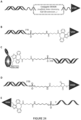
- the resulting heterodimeric VHH-hFc-Q-tag-azido intermediate may be conjugated to alkyne-siRNA using copper-free click reaction, yielding VHH-hFc-siRNA conjugates with a stable linker (as described in Example XXIII and shown in Figure 23B and 24C ).
- the conjugate according to the invention comprises a VHH-Fc heterodimer, wherein Fc comprises the following mutations: T366W on the "knob” arm of the heterodimer, and/or T366S, L368A and Y407V on the "hole" arm of the heterodimer.
- the conjugate according to the invention comprises a VHH-Fc heterodimer, wherein Fc comprises T366W, L234A and L235A mutations on the "knob" arm of the heterodimer and/or T366S, L368A, Y407V, L234A and L235A mutations on the "hole" arm of the heterodimer.
- the conjugate according to the invention comprises a VHH-Fc heterodimer, wherein Fc comprises T366W, L234A and L235A mutations on the "knob" arm of the heterodimer and T366S, L368A, Y407V, L234A and L235A mutations on the "hole” arm of the heterodimer.
- the VHH-Fc heterodimer may comprise a modified Fc having a sequence of SEQ ID NO: 664 on the "knob” arm, and a modified Fc having a sequence of SEQ ID NO: 665 on the "hole” arm. Specific examples of such VHH-Fc heterodimers comprising SEQ ID NO: 664 and 665 are described, for instance, in Example XXII and in Figures 20 and 22 .
- coupling can be performed by any acceptable means of bonding taking into account the chemical nature, steric hindrance and number of conjugated entities. Coupling can thus be carried out by one or more covalent, ionic, hydrogen, hydrophobic or Van der Waals bonds, cleavable or non-cleavable in physiological medium or within cells, preferably cleavable in particular when the present invention is used in the context of the delivery of at least one active agent on the CNS site. Furthermore, coupling can be made at various reactive groups, and notably at one or more terminal ends and/or at one or more internal or lateral reactive groups. Coupling can also be carried out using genetic engineering.
- the preferred coupling of the invention is covalent coupling, although non-covalent coupling may also be employed.
- the compound of interest can be coupled with the VHH either at one of the terminal ends (N-terminal or C-terminal), or at a side chain of one of the constitutive amino acids of the sequence (Majumdar and Siahaan, 2012).
- the compound of interest can be coupled directly to a VHH, or indirectly by means of a linker or spacer.
- Means of covalent chemical coupling, calling upon a linker or not include classical bioconjugation techniques for instance those selected from bi- or multifunctional agents containing alkyl, aryl, thiols, azide, alkynes, nucleotidic or peptide groups by esters, aldehydes or alkyl or aryl acids, anhydride, sulfhydryl or carboxyl groups, groups derived from cyanogen bromide or chloride, carbonyldiimidazole, succinimide esters or sulfonic halides.
- bioconjugation techniques for instance those selected from bi- or multifunctional agents containing alkyl, aryl, thiols, azide, alkynes, nucleotidic or peptide groups by esters, aldehydes or alkyl or aryl acids, anhydride, sulfhydryl or carboxyl groups, groups derived from cyanogen bromide or chloride, carbonyldi
- It also may additionally include specific enzymatic conjugation for example through the bacterial transglutaminase that catalyzes the transamidation on a glutamine, provided that this glutamine is inserted in a specific tag.
- specific enzymatic conjugation for example through the bacterial transglutaminase that catalyzes the transamidation on a glutamine, provided that this glutamine is inserted in a specific tag.
- coupling involves genetic fusion.
- Such a strategy can be used when the coupled molecule is a peptide or polypeptide.
- a nucleic acid molecule encoding the VHH fused to the molecule is prepared and expressed in any suitable expression system, to produce the conjugate.
- coupling is performed using the thiol/maleimide chemistry technology.
- the VHHs are fused to their C-terminus with a peptidic sequence containing an additional cysteine.
- the additional peptidic tag is typically GGGGSCHHHHHH (SEQ ID NO: 399), wherein simple underline is a Gly linker that is used as a spacer and double underline is a 6His tag that is used for purification purposes.
- VHHs only contain cysteines engaged in a disulfide bridge
- the additional cysteine introduced in the tag is the only one to be chemically reactive towards maleimides. It allows the specific conjugation of the VHH with maleimide-derivatized molecules of interest.
- the reaction proceeds in two steps. First it is necessary to smoothly reduce the VHH-GGGGSCHHHHHH since the additional cysteine in the tag can be partially engaged in a disulfide bridge during the production process (formation of a disulfide bond with another VHH-GGGGSCHHHHHH or with a free cysteine).
- the first step thus consists in the partial reduction using a mild reducing agent such as 2-MEA (2-mercaptoethanol), TCEP (tris(2-carboxyethyl)phosphine) or DTT (dl-1,4-dithiothreitol).
- a mild reducing agent such as 2-MEA (2-mercaptoethanol), TCEP (tris(2-carboxyethyl)phosphine) or DTT (dl-1,4-dithiothreitol).
- the VHH-GGGGSCHHHHHH is allowed to react at a pH in the range of 6.5 - 7.5 with maleimide-functionalized molecules of interest to form VHH-molecule conjugates linked in a covalent and stable manner.
- the two steps can be performed sequentially or all together in situ.
- coupling is performed by enzymatic reaction.
- site-specific conjugation onto the VHH can be performed using the transglutaminase enzyme (Tgase).
- Tgase catalyzes the formation of a stable isopeptidic bond between (i) the side chain of a glutamine residue inserted in a tag sequence specifically recognized by the Tgase (namely a Q-tag) and (ii) an amino-functionalized donor substrate.
- Q-tag the transglutaminase enzyme
- the inventors have developed a particular tag sequence (named "Q-tag") which is recognized by Tgase and may be used to couple VHH of the invention to any molecule of interest, either chemical drugs or agents or a heterobifunctional linker for further conjugation to chemical drugs or agents.
- VHHs are prepared by genetic fusion to add in tandem (typically to their C-terminus) the following tags: first an optional trialanine linker, then an optional His-tag, then an optional small triglycine linker, and finally a Q-tag.
- the triglycine linker allows spacing out the Q-tag to allow a better accessibility of the Tgase to the glutamine while the His-tag aims at facilitating the purification of the VHH and its further functionalized versions.
- the general conjugation strategy that was developed is a convergent synthesis that is based on a process comprising:
- an object of the invention resides in a method for coupling two molecules using a Q-tag as defined above through Tgase coupling reaction.
- a further object of the invention is a VHH comprising a Q-tag.
- a further object of the invention is a VHH molecule comprising a linker, such as a Gly linker, and a Q-tag.
- VHH-Linker-His m -Linker-LQR wherein : VHH is any VHH molecule; Linker is any molecular linker such as an Ala or Gly linker (preferably the two linkers are different); and m is an integer from 0 to 8, preferably m is 6 or 8.
- the invention relates to a conjugate comprising at least one VHH covalently linked to at least one chemical entity.
- Preferred variants of such conjugates contain one VHH and one chemical entity.
- the invention relates to a conjugate comprising at least one VHH covalently linked to at least one nucleic acid.
- the nucleic acid may be an antisense oligonucleotide ("ASO"), a ribozyme, an aptamer, a siRNA, etc.
- ASO antisense oligonucleotide
- ribozyme oligonucleotide
- aptamer a siRNA, etc.
- Preferred variants of such conjugates contain one VHH and one nucleic acid molecule.
- the nucleic acid is an oligonucleotide (i.e., a short DNA or RNA molecule, also called herein "oligo” or “oligomer”) selected from any single- or double-stranded oligonucleotide such as a small interfering RNA (siRNA), small activating RNAs (saRNA), gapmer, antisense oligonucleotide (ASO), shRNA, miRNA, aptamer RNA or bridged nucleic acid (BNA), which can specifically bind to a target mRNA thereby modulating gene expression in the cell.
- oligonucleotide is an ASO or a siRNA capable of modulating (silencing or inhibiting or activating) the expression of a target gene.
- the conjugates according to the invention are complementary to a target gene, and, in particular embodiments, they are capable of silencing or inhibiting the expression of a target gene, preferably by at least 40 %, or at least 50 %, or at least 60 %, or at least 70 %, or at least 80 %, or at least 90 %. More specifically, the conjugates according to the invention are capable of silencing or inhibiting the expression of a target gene by about 40 % to about 80 %.
- the invention relates to a conjugate compound comprising at least one VHH binding TfR, preferably at the surface of the CNS cell, and covalently linked to at least one oligonucleotide selected from any single- or double-stranded oligonucleotide such as small interfering RNA (siRNA), small activating RNAs (saRNA), gapmer, antisense oligonucleotide (ASO), shRNA, miRNA, aptamer RNA or bridged nucleic acid (BNA), which is capable of specifically binding to a target mRNA thereby modulating gene expression in the cell.
- siRNA small interfering RNA
- saRNA small activating RNAs
- ASO antisense oligonucleotide
- shRNA miRNA
- the invention relates to a conjugate compound comprising:
- the invention relates to a conjugate compound comprising:
- the invention relates to a conjugate compound comprising:
- the invention relates to a conjugate compound comprising:
- the conjugate of the invention comprises: (i) at least one VHH molecule binding TfR at the surface of the CNS cell, and comprising or consisting of any of SEQ ID NOs: 4, 8, 12, 16, 18, 20, 22, 24, 26, 28, 30, 32, 34, 68, 70, 72, 74, 76, 78, 80, 82, 84, 86-92, 114, 116, 118, 120, 122, 124, 126, 127, 129-149, 152-159, 161, 163, 165, 167, 168, 170, 172-174, 178, 181, 183, 185, 189, 193, 197, 204, 208, 213-271, 273-299, 393, 411-412, 414-415, 417-418, 420-425, 427-430, 432-433, 435-436, 438-451, 453-454, 456-457 or 691-709; and (ii) at least one oligonucleotide selected from any single VHH molecule binding
- the conjugate of the invention comprises: (i) one or more VHH molecule(s) which is C5 or a variant thereof (as listed in Table 1), which is cross-species VHH molecule binding to human, non-human primate (NHP) and murine TfR at the surface of the CNS cell, and which comprises or consists of any of SEQ ID NOs: 4, 16, 18, 20, 22, 24, 26, 28, 30, 32, 34, 68, 70, 72, 74, 76, 78, 80, 82, 84, 86-92, 114, 116, 118, 120, 122, 124, 126, 127, 129 or 130-149, 153-154, 213, 216-271, 274-275, 393, 675, 676, 679, 680, 692 or 701; and (ii) one or more oligonucleotide(s) selected from any single- or double-stranded oligonucleotide such as small interfering RNA (siRNA),
- siRNA
- the conjugate of the invention comprises: (i) at least one VHH molecule which is a humanized variant of C5 (as listed in Table 1), comprising or consisting of any of SEQ ID NOs: 87-92, 130-149, 153-154, 236-241, 252-271 or 274-275; and (ii) at least one oligonucleotide selected from any single- or double-stranded oligonucleotide such as small interfering RNA (siRNA), small activating RNAs (saRNA), gapmer, antisense oligonucleotide (ASO), shRNA, miRNA, aptamer RNA or bridged nucleic acid (BNA), which is capable of specifically binding to a target mRNA, thereby modulating gene expression in the cell.
- siRNA small interfering RNA
- saRNA small activating RNAs
- ASO antisense oligonucleotide
- shRNA miRNA
- the conjugate of the invention comprises: (i) one or more VHH molecule(s) which is B6 or a variant thereof (as listed in Table 1), which binds to the apical domain of the TfR, preferably TfR1 at the surface of the CNS cell, and which comprises or consists of any of SEQ ID NOs: 12, 168, 170, 172-174, 178, 181, 183, 185, 215, 285-293 and (ii) one or more oligonucleotide(s) selected from any single- or double-stranded oligonucleotide such as small interfering RNA (siRNA), small activating RNAs (saRNA), gapmer, antisense oligonucleotide (ASO), shRNA, miRNA, aptamer RNA or bridged nucleic acid (BNA), which is capable specifically binding to a target mRNA, thereby modulating gene expression in the cell.
- VHH molecule(s) which is B6 or a
- the conjugate of the invention comprises: (i) one or more VHH molecule(s) binding to the apical domain of the TfR, preferably TfR1 at the surface of the CNS cell, and comprising or consisting of any of SEQ ID NOs: 12, 168, 170, 172-174, 178, 181, 183, 185, 189, 193, 197, 204, 208, 215, 285-299 or 691; and (ii) one or more oligonucleotide(s) selected from any single- or double-stranded oligonucleotide such as small interfering RNA (siRNA), small activating RNAs (saRNA), gapmer, antisense oligonucleotide (ASO), shRNA, miRNA, aptamer RNA or bridged nucleic acid (BNA), which is capable specifically binding to a target mRNA, thereby modulating gene expression in the cell.
- siRNA small interfering RNA
- saRNA small activ
- the conjugate of the invention comprises: (i) one or more VHH molecule(s) which is B8 or a variant thereof (as listed in Table 1), comprising or consists of any of SEQ ID NOs: 8, 152, 155-159, 161, 163, 165, 167, 214, 273, 276-284, 411, 412, 414, 415, 417, 418, 420-425, 427-430, 432, 433, 435, 436, 438-451, 453, 454, 456, 457, 677, 678, 681, 682, 693-700, 702-709; and (ii) one or more oligonucleotide(s) selected from any single- or double-stranded oligonucleotide such as small interfering RNA (siRNA), small activating RNAs (saRNA), gapmer, antisense oligonucleotide (ASO), shRNA, miRNA, aptamer RNA or bridged
- siRNA
- cleavable linkers can be used between the two partners VHH and oligos, that can be stable or cleavable.
- cleavable linkers are disulfide, enzyme-labile peptide linkers such as valine-citrulline or phenylalanine-lysine dipeptide or pH-labile linkers such as hydrazone.
- a VHH molecule and oligonucleotide are linked to each other using preferably a copper-free click reaction yielding VHH-Oligo conjugates with a stable or a cleavable linker.
- the invention relates to a conjugate comprising a VHH covalently linked to a peptide.
- the peptide may be an active molecule, a bait, a tag, a ligand, etc.
- Preferred variants of such conjugates contain one VHH and one peptide.
- the invention in another embodiment, relates to a conjugate comprising a VHH covalently linked to a dye.
- the invention in another embodiment, relates to a conjugate comprising a VHH covalently linked to a nanoparticle and/or liposome, for example a lipidic particle or nanoparticle ("LNP").
- the nanoparticle or liposome may be loaded or functionalized with active agents.
- Preferred variants of such conjugates contain several VHH molecules coupled to each nanoparticle or liposome.
- the conjugate comprises, as a half-life extending moiety or a stabilizing group, an antibody or a fragment thereof to which one or several VHH molecules are coupled.
- a VHH molecule is coupled to a C- or N-terminal of a heavy or light chain, or both, or to the C- or N-terminal of an Fc fragment.
- the VHH molecule is coupled to the N-terminal end of an Fc.
- the VHH molecule is coupled to the C-terminal end of an Fc.
- the conjugate comprises, or consists of, a single VHH molecule coupled to an antibody fragment which may be a heavy chain or a light chain.
- the VHH molecule is indifferently coupled to the C-terminal end or to the N-terminal end of the chain. Preferably, it is coupled to the N-terminal end.
- the invention also relates to a method for preparing a conjugate compound such as defined above, characterized in that it comprises a step of coupling between a VHH and a molecule or scaffold, preferably by a chemical, biochemical or enzymatic pathway, or by genetic engineering.
- VHH when several VHH are present, they may have a similar or different binding specificity.
- a further aspect of the invention relates to a nucleic acid encoding a VHH as defined above, or a conjugate thereof (when the conjugated moiety is an amino acid sequence).
- the nucleic acid may be single- or double-stranded.
- the nucleic acid can be DNA (for example a cDNA or a gDNA), a RNA (for example a mRNA or a gRNA), or a mixture thereof. It can be in single stranded form or in duplex form, or it can be a mixture of the two. It can comprise modified nucleotides, comprising for example a modified bond, a modified purine or pyrimidine base, or a modified sugar.
- nucleic acid according to the invention may be deduced from the amino acid sequence of the VHH molecules according to the invention and codon usage may be adapted according to the host cell in which the nucleic acid shall be transcribed. These steps may be carried out according to methods well known to one of ordinary skill in the art and some of which are described in the reference manual Sambrook et al..
- nucleic acids sequences include the sequences comprising any one of SEQ ID NOs: 301-329, 52-64 and 95-110, 469-606, 646-663, 683-690 or 721-738, with no tag coding portion or including the optional tag-coding portion of SEQ ID NO: 330, and the complementary sequence thereto, .
- the corresponding domains encoding CDR1, CDR2 and CDR3 are underlined in Table 2 below.
- the tag-coding portion of SEQ ID NO: 330 is in bold in Table 2.
- the invention also relates to a vector containing such a nucleic acid, optionally under control of regulatory sequences (e.g., promoter, terminator, etc.).
- the vector may be a plasmid, virus, cosmid, phagemid, artificial chromosome, etc.
- the vector may comprise a nucleic acid of the invention operably linked to a regulatory region, i.e. a region comprising one or more control sequences.
- the vector may comprise several nucleic acids of the invention operably linked to several regulatory regions.
- control sequences means nucleic acid sequences necessary for expression of a coding region. Control sequences may be endogenous or heterologous.
- control sequences include, but are not limited to, promoter, signal-peptide sequence and transcription terminator.
- operably linked means a configuration in which a control sequence is placed at an appropriate position relative to a coding sequence, in such a way that the control sequence directs expression of the coding region.
- the present invention further relates to the use of a nucleic acid or vector according to the invention to transform, transfect or transduce a host cell or to produce a composition, including a pharmaceutical composition, to transform, transfect or transduce a host cell.
- the present invention also provides a host cell comprising one or several nucleic acids of the invention and/or one or several vectors of the invention.
- the term "host cell” also encompasses any progeny of a parent host cell that is not identical to the parent host cell due to mutations that occur during replication.
- Suitable host cells may be prokaryotic (e.g., a bacterium) or eukaryotic (e.g., yeast, plant, insect or mammalian cell). Specific illustrative examples of such cells include E. coli strains, CHO cells, Saccharomyces strains, plant cells, sf9 insect cells etc.
- VHH molecules of the invention can bind to TfR and thus target/deliver molecules to TfR-expressing cells or organs. Within the context of this invention, binding is preferably specific, so that binding to TfR occurs with higher affinity than binding to any other antigen in the same species.
- the VHH molecules of the invention specifically bind the human TfR1.
- the VHH molecules of the invention bind the human and non-human primate TfR1.
- the VHH molecules of the invention bind the human and rodent TfR1.
- VHH molecules of the invention bind human TfR1, non-human primate TfR1 and rodent (e.g., a murine or rat) TfR1.
- the VHH molecules bind the human, non-human primate and murine receptors with a substantially similar affinity.
- the invention thus relates to methods of targeting/delivering a compound to/through a TfR-expressing cell or organ, comprising coupling said compound to at least one VHH of the invention.
- the invention further relates to the use of a VHH such as defined above, as a vector for the transport of a compound to/through a TfR-expressing cell or organ.
- the invention also relates to the use of a VHH such as defined above for preparing a drug capable of crossing the BBB.
- the invention also relates to a method for enabling or improving the passage of a molecule across the BBB, comprising the coupling of the molecule to a VHH of the invention.
- the VHH of the invention may be used to transport or deliver any compound, such as for example small drugs, proteins, polypeptides, peptides, amino acids, lipids, nucleic acids, viruses, liposomes, exosomes, etc.
- a vehicle may be used to transport or deliver the conjugate (including the VHH) such as for example a virus, a virus-like particle (VLP), a Cell-Derived Vesicle (CDV), an exosome, a lipid vehicle or a polymer vehicle, and is preferably a lipid nanoparticle (LNP), a micelle or a liposome.
- VLP virus-like particle
- CDV Cell-Derived Vesicle
- exosome a lipid vehicle or a polymer vehicle
- LNP lipid nanoparticle
- the invention also relates to a pharmaceutical composition, in particular a diagnostic or therapeutic composition, characterized in that it comprises at least one VHH or conjugate compound, associated to, or present in, a vehicle or not, for example, in the context of a therapeutic composition, a VHH-drug conjugate such as defined above and one or more pharmaceutically acceptable supports, carriers or excipients.
- a pharmaceutical composition in particular a diagnostic or therapeutic composition, characterized in that it comprises at least one VHH or conjugate compound, associated to, or present in, a vehicle or not, for example, in the context of a therapeutic composition, a VHH-drug conjugate such as defined above and one or more pharmaceutically acceptable supports, carriers or excipients.
- the invention also in particular relates to a diagnostic composition characterized in that it comprises a VHH or conjugate compound, associated to, or present in, a vehicle or not, for example a VHH-diagnostic or medical imaging agent conjugate compound such as defined above.
- the conjugate can be used in the form of any pharmaceutically acceptable salt.
- pharmaceutically acceptable salts refers to, for example and in a non-restrictive way, pharmaceutically acceptable base or acid addition salts, hydrates, esters, solvates, precursors, metabolites or stereoisomers, said vectors or conjugates loaded with at least one substance of interest.
- salts refers to nontoxic salts, which can be generally prepared by reacting a free base with a suitable organic or inorganic acid. These salts preserve the biological effectiveness and the properties of free bases.
- Representative examples of such salts include water-soluble and water-insoluble salts such as acetates, N-methylglucamine ammonium, amsonates (4,4-diaminostilbene-2,2'-disulphonates), benzenesulphonates, benzonates, bicarbonates, bisulphates, bitartrates, borates, hydrobromides, bromides, buryrates, camsylates, carbonates, hydrochlorates, chlorides, citrates, clavulanates, dichlorhydrates, diphosphates, edetates, calcium edetates, edisylates, estolates, esylates, fumarates, gluceptates, gluconates, glutamates, glycolylarsanylate
- compositions of the invention advantageously comprise a pharmaceutically acceptable carrier or excipient.
- the pharmaceutically acceptable carrier can be selected from the carriers classically used according to each mode of administration. According to the mode of administration envisaged, the compounds can be in solid, semi-solid or liquid form.
- the active substance can be combined with: a) diluents, for example lactose, dextrose, sucrose, mannitol, sorbitol, cellulose and/or glycine; b) lubricants, for example silica, talc, stearic acid, its magnesium or calcium salt and/or polyethylene glycol; c) binders, for example magnesium and aluminum silicate, starch paste, gelatin, tragacanth, methylcellulose, sodium carboxymethyl cellulose and/or polyvinylpyrrolidone; d) disintegrants, for example starch, agar, alginic acid or its sodium salt, or effervescent mixtures; and/or d) absorbents, dyes, flavoring agents and sweeteners.
- diluents for example lactose, dextrose, sucrose, mannitol, sorbitol, cellulose and/or glycine
- lubricants for example silica
- the excipients can be, for example, mannitol, lactose, starch, magnesium stearate, sodium saccharin, talc, cellulose, glucose, sucrose, magnesium carbonate and analogues of pharmaceutical quality.
- the excipient can, for example, be an emulsion or oily suspension, or polyalkylene glycol-based, such as polypropylene glycol.
- Liquid compositions in particular injectables or those included in a soft capsule, can be prepared, for example, by dissolution, dispersion, etc., of the active substance in a pharmaceutically pure solvent such as, for example, water, physiological saline solution, aqueous dextrose, glycerol, ethanol, oil and analogues thereof.
- a pharmaceutically pure solvent such as, for example, water, physiological saline solution, aqueous dextrose, glycerol, ethanol, oil and analogues thereof.
- compositions or conjugates of the invention can be administered by any suitable route and, in a non-restrictive way, by parenteral route, such as, for example, in the form of preparations that can be injected by subcutaneous, intravenous or intramuscular route or by intraventricular, intracerebral, intracerebroventicular (ICV) or intrathecal route; by oral route (or per os ) , such as, for example, in the form of coated or uncoated tablets, gelatin capsules, powders, pellets, suspensions or oral solutions (one such form for oral administration can be either with immediate release or with extended or delayed release); by rectal route such as, for example, in the form of suppositories; by topical route, in particular by transdermal route, such as, for example, in the form of patches, pomades or gels; by intranasal route such as, for example, in aerosol and spray form; by perlingual route; or by intraocular route.
- parenteral route such as, for example, in
- compositions typically comprise an effective dose of a VHH or conjugate of the invention.
- the "therapeutically effective dose" of the conjugate of the invention is for example of about 1 nmole to about 500 nmoles per kilo of body weight of the subject who will be administered with said conjugate (nmoles/kg), preferably of about 10 nmoles/kg to about 500 nmoles/kg.
- the "therapeutically effective dose” for a person in particular will depend on various factors, including the activity/effectiveness of the active substance, its time of administration, its route of administration, its toxicity, its rate of elimination and its metabolism, drug combinations/interactions and the severity of the disease (or disorder) treated on a preventive or curative basis, as well as the age, weight, overall health, sex and/or diet of the patient.
- the conjugates and compositions of the invention can be used for imaging, diagnosing, preventing and/or treating pathologies or disorders, notably pathologies or disorders affecting the CNS, infectious pathologies or cancers.
- the VHH of the invention have the capacity to target TfR-expressing cells, particularly cells which exhibit marked expression of said receptor, such as notably cancer cells, nervous or non-nervous tissue and/or to cross cell membranes, notably those of the physiological barriers of the CNS and more particularly the blood-tumor barrier (BTB) of cancerous nervous tissue.
- TfR is enriched in organs such as bone marrow, placenta and in the gastrointestinal tract.
- TfR is also highly expressed in brain endothelial cells but not in endothelial cells lining the vessels in other tissues. TfR expression has been confirmed at the plasma membrane of purified brain microvessels and cultured endothelial cells from rat, mouse, pig and non-human primate.
- the invention relates to the use of pharmaceutical conjugates or compositions as described above for treating or preventing CNS pathologies or disorders, brain tumors or other cancer cells, and bacterial, viral, parasitic or fungal infectious pathologies of the brain or other tissues.
- the invention also relates to a VHH, conjugate, or compositions as described above for use for diagnosing, imaging or treating CNS pathologies or disorders, brain tumors or other cancer cells, and bacterial, viral, parasitic or fungal infectious pathologies of the brain or other tissues.
- the invention also relates to a VHH, conjugate, or compositions as described above for use for treating, imaging and/or diagnosing a brain tumor or other types of cancer.
- VHH conjugate or composition such as defined above for use for preventing, treating, imaging and/or diagnosing neurodegenerative pathologies such as, in a non-restrictive manner, Alzheimer's disease, Parkinson's disease, stroke, Creutzfeldt-Jakob disease, bovine spongiform encephalopathy, multiple sclerosis, amyotrophic lateral sclerosis, etc.
- the invention also relates to a VHH, conjugate or composition such as defined above for use for preventing, treating, imaging and/or diagnosing neurological pathologies such as, in a non-restrictive manner, epilepsy, migraine, encephalitis, CNS pain, etc.
- the invention also relates to a VHH, conjugate or composition such as defined above for use for preventing, treating, imaging and/or diagnosing rare diseases such as, in non-restrictive manner lysosomal storage diseases, Farber disease, Fabry disease, Gangliosidosis GM1 and GM2, Gaucher disease, different mucopolysaccharidoses etc.
- rare diseases such as, in non-restrictive manner lysosomal storage diseases, Farber disease, Fabry disease, Gangliosidosis GM1 and GM2, Gaucher disease, different mucopolysaccharidoses etc.
- the invention also relates to a VHH, conjugate or composition such as defined above for use for preventing, treating, imaging and/or diagnosing neuropsychiatric pathologies such as, in a non-restrictive manner, depression, autism, anxiety, schizophrenia, etc.
- the invention also relates to a VHH, conjugate or composition such as defined above for use for preventing, treating, imaging and/or diagnosing cancers such as, in a non-restrictive manner, glioblastoma, pancreatic cancer, ovarian cancer, hepatocellular cancer, etc.
- the invention also relates to a VHH, conjugate or composition such as defined above, wherein the conjugated agent is or comprises a virus or a virus-like particle, such as a recombinant virus.
- the invention may indeed be used to increase brain or cancer or any TfR enriched tissue delivery of recombinant (e.g., replication-defective or attenuated) viruses used in gene therapy, such as adenoviruses, adeno-associated viruses, lentiviruses, retroviruses, etc, or virus-like particles.
- Coupling to a virus or VLP may be performed e.g., by coupling to the capsid protein of the virus.
- the invention also relates to methods for preventing or treating any of the above conditions or diseases by administering to a subject in need thereof a VHH, conjugate or composition of the invention.
- the invention also relates to the use of a VHH, conjugate or composition of the invention for the manufacture of a medicament for treating any of the above conditions or diseases.
- TfR sodium dodecyl sulfate polyacrylamide gel electrophoresis
- SDS-PAGE sodium dodecyl sulfate polyacrylamide gel electrophoresis
- nitrocellulose membranes ThermoFisher Scientific
- Proteins were probed with a primary antibody against TfR (Genetex GTX102596; 1/1000), followed by an HRP-conjugated donkey anti-rabbit IgG secondary antibody (Jackson ImmunoResearch) diluted 1/10000. Finally, proteins were detected using chemiluminescence.
- TfR is expressed in digested and non-digested brain microvessels from rat, mouse, pig and non-human primate.
- TfR is also expressed in brain endothelial cells from mouse rat and pig (note that only 1 ⁇ g of membrane proteins was loaded on SDS-PAGE for brain microvascular endothelial cells versus 10 ⁇ g or 5 ⁇ g for brain microvessels). TfR expression is enhanced in digested NHP brain microvessels.
- EXAMPLE II Construction of CHO cell lines stably expressing human and mouse TfR.
- TfR-binding VHHs The prerequisite to the identification and characterization of TfR-binding VHHs was the establishment in eukaryotic cells (Chinese hamster ovary cells, CHO) of stable cell lines expressing hTfR and mTfR, constitutively and at high rates. These cell lines were then used i) for the identification and characterization of agents binding to the receptor expressed at the cell surface, in its native configuration; and ii) to test whether the receptor could internalize such agents by endocytosis. For the construction of these cell lines, the cDNA coding for the hTfR was cloned using sequence information available in databases (accession number: NM_003234.3).
- the primers necessary for cDNA amplification by RT-PCR were selected (see SEQ ID NOs: 65 and 66, as shown below), comprising at their end (in bold type) the restriction sites (EcoRI and Sall) necessary for cloning in the pEGFP-C1 expression vector (Clontech) ( Figure 2-A ).
- Receptor Primer sequences hTfR F) ATATATGAATTCGGCTCGGGACGGAGGACGC (SEQ ID NO: 65)
- R TTAATTGTCGACAGAACTCATTGTCCCAACCGTCAC (SEQ ID NO: 66)
- RNA prepared from human brain was used for RT-PCR amplification of the cDNA fragment coding for hTfR.
- the PCR product was digested by EcoRI-SalI restriction enzymes, and ligated in the pEGFP-C 1 expression vector (Clontech), digested by the same restriction enzymes.
- this vector enables the expression, under control of the CMV promoter, of the hTfR fused to EGFP at its N-Terminal end, i.e., at the end of its intracellular domain.
- transforming competent E. coli DH5 ⁇ bacteria After transforming competent E. coli DH5 ⁇ bacteria, obtaining isolated colonies and preparing plasmid DNA, both strands of the construct were fully sequenced for verification.
- Plasmid coding for the mTfR fused to EGFP was purchased from GeneCopoeia (plasmid reference: EX-Mm05845-M29). Transient transfections in CHO-K1 cells were carried out and used to select stable transfectants by limit dilution and resistance to antibiotic (G418). These cell lines were amplified while maintaining selective pressure. Confocal photomicrographs taken after immunocytochemistry on fixed (PFA) cell lines using Alexa647-conjugated Transferrin (Tf-Alexa647) confirm in Figure 2-B co-localization between EGFP (in green) and Tf-Alexa647 (in red) and therefore, good expression and functional binding of the receptor.
- Membrane expression of the receptors of the expected size was checked by western blot on cell membranes extracted with ProteoExtract Subcellular Proteome Extraction Kit. Antibodies were directed either against GFP or against the TfR. Proteins corresponding to the combined sizes of EGFP and h/mTfR (170 kDa), were recognized by an anti-GFP antibody and by an anti-TfR antibody ( Figure 2-C ). A CHO K1 wild type (WT) cell line was used as negative control and antibodies detected no proteins. These data confirm the expression of functional receptor at the cell surface of the CHO cell lines.
- a llama Lama glama
- VHH library construction was performed as previously described (Alvarez-Rueda et al., 2007, Behar et al., 2009). Briefly, mRNAs coding for VHH were amplified by RT-PCR from the total RNAs of peripheral blood mononuclear cells isolated by ficoll gradient, and cloned into the pHEN1 phagemid. Reiterative selections enabled the isolation of phages presenting VHH exhibiting strong affinity for the TfR expressed at the cell surface.
- VHHs with improved binding to the murine, the non-human primate and/or the human cell lines), cell penetration and transport properties were obtained.
- VHH A C5
- VHH B B8
- VHH C B6
- VHH D H3
- TfR-binding VHH with appropriate, improved binding properties were generated by site-directed mutagenesis. More particularly, site directed mutagenesis was performed to introduce single alanine substitutions into the VHH A complementarity-determining regions (CDR) 1, 2 and 3, giving rise to the VHH A1 to A9 (C5 V1 to CS V9 ).
- CDR complementarity-determining regions
- VHH A1 and A2 were mutated in the CDR1
- VHH A3 and A4 were mutated in the CDR2
- VHH A5 to A9 were mutated in the CDR3.
- single site directed mutagenesis was also performed by substituting some CDR amino acids by structurally-close amino acids.
- VHH A10-A19 (C5 V10 to C5 V19 ) were obtained, wherein VHH A10 and A11 were mutated in the CDR1, VHH A12 to A14 were mutated in the CDR2, and VHH A15 to A19 were mutated in the CDR3.
- VHH A20-A25 CS h1 to CS h6
- tagged VHH molecules were produced, to facilitate purification and/or coupling. The amino acid sequences of each of these VHH are provided in the Sequence Listing.
- humanized C5 VHHs were generated to improve in vivo efficacy by, e.g., avoiding immunogenicity.
- different humanization schemes were applied in the framework regions (FR) 1, 2, 3 and 4, giving rise to the variants C5 h8 to C5 h26 , which present humanization rate compared to C5 between 89% and 96%.
- a humanization pattern was also applied to the VHHs B8, C5 V13 and C5 V16 , giving rise to the VHHs B8 h1 , C5 V13h20 and C5 V16h20 .
- yeast display in combination with deep mutational scanning were performed by a CRO (Deeptope, Paris), to give residue level resolution of positions in the VHH interface that are crucial for binding to the TfR. Thanks to the DMS maps highlighting the interesting positions to modify to impact the VHH binding, numerous B8 variants (B8 V1 to B8 V40 ), C5 variants (C5 V30 and to C5 V32 ) and B6 variants (B6 V1 to B6 V4 ) were generated by site directed mutagenesis, in the CDRs or in the FRs.
- DMS deep mutational scanning
- the TfR receptor encompasses several extracellular domains.
- a strategy developed here was to use the VHH library described above to perform phage display selections and screenings on the apical domain of the TfR. In total, more than 700 clones were screened for their ability to bind the TfR apical domain using an ELISA assay, and roughly 150 clones were sequenced. Sequence analysis led then to the isolation of 10 VHHs of interest, that showed specific binding to the TfR apical domain. Illustrative VHHs are B7, H7, C12b, E4, E2, C3, F2a, E9, A9a, B4a. Noteworthy, VHHs B7, H7, C12b and E4 showed similar CDR3 sequences compared to B6, suggesting that they should bind to the same epitope.
- a last strategy to enrich the diversity of the VHHs of the invention was to perform phage display selections on a CHO cell line stably expressing the rhesus monkey TfR (rhTfR). Screenings were then performed on CHO cell lines stably expressing the hTfR or the rhTfR, and on a CHO cell line that does not express the TfR (CHO TRVb). In total, more than 180 clones were screened for their ability to bind the rhTfR and the hTfR using flow cytometry experiments, and roughly 30 clones were sequenced.
- EXAMPLE IV Binding and endocytosis of purified VHHs of the invention.
- the VHH binds to the CHO-hTfR-EGFP ( Figure 3-B ) and CHO-mTfR-EGFP ( Figure 3-A ) cell lines and is incorporated by endocytosis to accumulate in the cells as shown using triton permeabilization, which is not the case for the control VHH (VHH Z) ( Figure 3-C, D ).
- EXAMPLE V Determination of binding affinity of firstly identified VHHs to the human and mouse TfR.
- VHHs with affinity for the TfR were tested using flow cytometry, and apparent affinities (K d app ) were determined. All experiments were performed in 96 well plates using 2-3 x 10 5 cells/well, at 4 °C with shaking. CHO cell lines expressing the TfR fused to EGFP or CHO WT cells were saturated with PBS/BSA 2% solution during 30 min to avoid nonspecific binding, followed by incubation with purified VHHs at concentrations ranging from 50 ⁇ M to 1 pM for 1 hr.
- VHH Z There was no nonspecific labelling in the control conditions where cells were incubated with control VHH (VHH Z). All tested VHHs induced a concentration-dependent shift of the signal, confirming binding to the receptor of interest ( Figure 4-A ). No labeling of the CHO WT control cells was detected with all the tested VHHs (not shown).
- the VHH K d app were calculated using GraphPad Prism software ( Figure 4-B ). K d app were in the same range for all VHH, ranging from 7.5 nM (VHH B) to 56 nM (VHH D) on mTfR, and from 1.7 nM (VHH B) to 2.7 nM (VHH A) on hTfR.
- EXAMPLE VI Competition assays between purified VHHs with affinity for the TfR and the natural ligand.
- TfR Transferrin
- competition assays using flow cytometry experiments were performed.
- competitors in dilution series were incubated on CHO cells expressing the receptor of interest fused to EGFP, for 1 hr at 4°C.
- tracers at EC90 were added and incubated 1 hr more, and were then detected with the appropriate revelation system ( Figure 5 ).
- TfR-binding VHHs were used as tracers ( Figure 5-B ) and competitors ( Figure 5-C ). In all conditions, there was no competition between VHHs and the ligand Tf, suggesting than VHHs bind to TfR on an epitope different than that of Tf.
- VHH A1-A19 C5 V1 to C5 V19
- apparent affinities K d app
- All experiments were performed in 96 well plates using 2 ⁇ 10 5 cells/well, at 4 °C with shaking.
- CHO cell lines stably expressing the hTfR or the mTfR fused to EGFP or CHO WT cells were saturated with PBS/BSA 2% solution during 30 min to avoid non-specific binding, followed by incubation with purified VHHs at concentrations ranging from 50 ⁇ M to 5 pM for 1 hr.
- VHH A1-A19 all induced a concentration-dependent shift of the signal on both cell lines (with the exception of VHH A12) confirming their efficient binding to the receptor of interest ( Figures 11 ; 12 ). While VHH A, VHH A1 to A4, and VHH A10 to A15, showed similar B max (plateau of the curve) on both hTfR and mTfR expressing cell lines, VHH A6 to A9 and VHH A16 to A19 showed slight to drastic lower B max on both cell lines, as well as slight to strong curve shift. Only VHH A12 showed a lower B max and a strong curve shift on the hTfR expressing cell line compared to the other VHH Ax.
- VHH K d app were calculated using GraphPad Prism software ( Figure 11-B ; 12-B ).
- VHH A, A1 to A4, A6, A9 to A11, and A13 to A17 all showed similar K d app of about 3-4 nM.
- VHH A5, A8, A18 and 19 showed slightly lower affinities of 9.2 to 25 nM
- VHH A7 and A12 showed drastically lower affinities of 255 nM and 363 nM, respectively.
- VHH A and A9 showed similar K d app of about 50 nM. All other VHH Ax showed slightly lower affinities of 131 to 259 nM, with the exception of VHH A5, A8 and A18 that showed significantly lower affinities of 604 nM, 427 nM and 416 nM, respectively.
- VHHs with affinity for the TfR from different species were tested using flow cytometry, and apparent affinities (Kd app) were determined. All experiments were performed in 96 well plates using 2 ⁇ 10 5 cells/well, at 4 °C with shaking. CHO cell lines expressing the hTfR, mTfR or rhTfR fused to EGFP were saturated with PBS/BSA 2% solution during 30 min to avoid nonspecific binding, followed by incubation with purified VHHs at increasing concentrations for 1 hr.
- Binding properties of some VHHs were also evaluated using Surface Plasmon Resonance (SPR) experiments.
- the human, mouse and rhesus monkey TfR (having respectively GeneBank number NM_003234.2, NM_011638, NC_041755.1) ectodomains were fused to the N-terminal end of a mouse IgG1 Fc fragment and the recombinant proteins were produced and purified in-house. Interaction of VHHs with the receptors was tested using a Biacore T200 (GE Healthcare). Receptors were immobilized on an HC 1500M or a CMS sensor chip (Xantec) either directly or on an anti-mouse IgG previously immobilized.
- SPR Surface Plasmon Resonance
- VHHs were injected over flowcell by using the single-cycle kinetic or the multiple-cycle kinetic methods.
- Table 6 hereafter summarizes the binding properties of the tested VHHs. These results illustrate once again the cross-species reactivity of the VHHs, and the diversity of binding parameters.
- EXAMPLE VIII Binding and endocytosis of purified VHH-Fc fusion molecules with affinity for TfR and affinity determination.
- Anti-TfR VHH molecules of the invention were fused to an IgG Fc fragment.
- DNA fragments encoding the VHHs (with no tag) were amplified by PCR and cloned into the pINFUSE-IgG1-Fc2 vector (InvivoGen) in order to encode a human IgG1-Fc fragment encompassing in its N-ter or in its C-ter the VHHs. Fusion proteins were prepared using the Expi293 Expression System according to the manufacturer's instructions (Life Technologies). Seventy-two hrs post-transfection, supernatants were recovered and purified using Protein A GraviTrap columns (GE Healthcare).
- the purified fusion proteins were quantified using an in-house anti-Fc ELISA.
- the results demonstrate that conjugates of the invention can bind and be endocytosed by cells ( Figure 7 ). No binding of a control VHH-Fc conjugate (VHH Z-Fc) on cells was observed, showing the specificity of the interaction.
- VHH-Fc and Fc-VHH fusion proteins with an affinity for the TfR were tested in flow cytometry experiments, and apparent affinity (K d app ) were determined. All experiments were performed in 96 well plates using 2-3 ⁇ 10 5 cells/well, at 4 °C with shaking. CHO cell lines expressing the receptors of interest fused to EGFP or CHO WT cells were saturated with PBS/BSA 2%, followed by an incubation with purified VHH-Fcs or Fc-VHHs at concentrations ranging from 350 nM to 0,03 pM for 1 hr.
- EXAMPLE IX Endocytosis and transport of VHHs of the invention in an in vitro BBB model.
- BMEC rat or mouse brain microvascular endothelial cells
- rat or mouse astrocytes to set up the co-culture model.
- This type of in vitro BBB model is used to evaluate the passive passage or active transport of numerous molecules, notably pharmacological agents, across BMEC and thus, by extrapolation, their capacity to reach CNS tissue in vivo.
- the different models developed to date (bovine, porcine, murine, human) have ultrastructural properties characteristic of the brain endothelium, notably tight junctions, absence of fenestrations, low permeability to hydrophilic molecules and high electrical resistance.
- membrane inserts Prior to cell culture, membrane inserts (Corning, Transwell 1.0 ⁇ m porosity, for 96-well or 12-well plates) were treated on the upper part with collagen type IV and fibronectin in order to enable optimal adhesion of BMEC and to create the conditions of a basal lamina.
- Primary cultures of mixed astrocytes were established from neonatal rat cerebral cortex. Briefly, meninges were removed and the cortical pieces were mechanically, then enzymatically dissociated in a trypsin solution. Dissociated cells were seeded into cell culture flasks in glial cell media (GCM) containing DMEM supplemented with 10% fetal bovine serum then frozen in liquid nitrogen for later use.
- GCM glial cell media
- BMEC Primary cultures of BMEC were prepared from 5-6 weeks old Wistar rats. Briefly, the cortical pieces were mechanically then enzymatically dissociated in a collagenase/dispase solution. The digested tissues were separated by a density-dependent centrifugation in 25% bovine serum albumin. The microvessels pellet were seeded on culture flask, pre-coated with collagen type IV and fibronectin, in endothelial cell media (ECM) containing DMEM/F12 supplemented with 20% bovine platelet poor plasma derived serum and basic fibroblast growth factor (bFGF) 2 ng/ml.
- ECM endothelial cell media
- bFGF basic fibroblast growth factor
- astrocytes Five days before the establishment of the co-culture, astrocytes were thawed and plated in 12-well or 96-well plates (abluminal compartment). The BMEC were then distributed on the upper surface of the filters (luminal compartment) in co-culture. Under these conditions, in vitro models differentiate, express junction-related proteins within 3 days and remain optimally differentiated during 3 more days.
- the binding/uptake at the BBB of inventive VHHs conjugated to the human Fc fragment of an IgG1 antibody (VHH-Fc) was verified on the in vitro rat model described above ( Figure 9 ).
- VHH A-Fc or VHH B-Fc were co-incubated with Tf-Alexa647 for 2 hrs on live rBMEC monolayers at 37°C ( Figure 9A ). Following this co-incubation, the cell monolayer was washed extensively and fixed with PFA 4%. The cell monolayer was permeabilized with a solution of 0.1% triton X-100. VHH-Fcs were detected using immunostaining with an antibody against the human Fc fragment. Then confocal microscopy was used to assess the co-localization between fluorescence signal of VHH A-Fc or VHH B-Fc with Tf-A647 ( Figure 9A ).
- VHH A-Fc and VHH B-Fc were readily endocytosed and co-localized almost perfectly with Tf-Alexa647.
- This analysis of co-localization of different TfR ligands confirmed the specificity of the inventive VHHs to their target receptor.
- the VHH-Fcs were incubated at 10 nM in the luminal compartment of the culture system for 24 hrs to 72 hrs ( Figure 9-C, D ).
- filter inserts containing rBMEC monolayers were placed in 96-well plates containing fresh transport buffer (75 ⁇ l in the luminal and 250 ⁇ l in the abluminal compartments).
- fresh transport buffer 75 ⁇ l in the luminal and 250 ⁇ l in the abluminal compartments.
- VHH-Fcs were co-incubated with lucifer yellow (LY), a small fluorescent molecule that does not cross the BBB. 24 hrs after incubation, the inserts were transferred to another 96-well plate containing fresh transport buffer for another interval of 48 hrs.
- LY lucifer yellow
- LY accumulated in the abluminal compartment was quantified by fluorescence spectrophotometry and results were expressed as endothelial surface permeability (or Pe) in 10 -3 cm/min.
- the in vitro barrier was considered “permeable” or “open” if the Pe value of LY was greater than 0.6 ⁇ 10 -3 cm/min.
- Transendothelial electrical resistance (TEER) measured with an ohmmeter and expressed in ohm.cm 2 , also makes it possible to measure BBB integrity in vitro during tests of passage across the BBB.
- the quality threshold value is set at >400 ohm.cm 2 .
- the experiments carried out show an absence of toxicity of the VHH-Fcs, and an absence of deleterious effects on the permeability properties of the BBB (not shown).
- the content of Fc-fragment of inventive VHH-Fcs in the inputs (T0), the luminal compartments at the end of transport experiment (T72 hrs, product recovery) and the abluminal compartments (transport intervals of 24 hrs and +48hrs) were quantified using an in-house anti-Fc ELISA assay with sensitivity between 0.5-50 femtomoles.
- Absorbance units were transformed in femtomoles per insert (surface area of 0, 143 cm 2 for inserts of a 96-well plate).
- VHH B-Fc and VHH A-Fc conjugates show higher transport than VHH Z-Fc (negative control), around 10-fold at 24 hrs and 5-fold at 72 hrs. This transport reached an apparent saturation between 24 hrs and 72 hrs, further suggesting the involvement of a specific and saturable receptor mediated process ( Figure 9-D ).
- EXAMPLE X Pharmacokinetic and organ uptake of VHH-Fc conjugates in vivo.
- VHH-Fc conjugates of the invention were injected into tail vein at 5 mg/kg and the mice were perfused with saline at different times. Plasmas and brains were collected. Brains were processed by the capillary depletion method to isolate brain parenchyma from capillary. The amount of VHH-Fc in plasma, brain parenchyma and microvessels was measured using an in-house anti-Fc ELISA. Results are presented as concentrations (nM), or by organ-to-plasma ratio ( Figure 10 ).
- TfR-binding conjugates VHH A-Fc and VHH A-Fc-Agly exhibit a significant brain targeting at 2 hrs pi, with concentrations of 0.25 and 0.32 nM in brain parenchyma for VHH A-Fc and VHH A-Fc-Agly respectively, compared to 0.07 nM for the control VHH Z-Fc ( Figure 10-B ).
- a clear advantage is confirmed, especially at 24 hrs pi where VHH A-Fc-Agly is still measurable in brain parenchyma whereas there is only 8 nM present in plasma ( Figure 10-D ).
- VHH A-Fc and VHH A-Fc-Ag In microvessels, VHH A-Fc and VHH A-Fc-Agly accumulate significantly more than VHH Z-Fc at 2 hrs pi, with concentrations 9 and 5 times higher, respectively. Moreover, VHH A-Fc concentration in microvessels is still 3 times higher than VHH Z-Fc at 24 hrs pi ( Figure 10-C ). These results were confirmed when looking at microvessel-to-plasma ratios ( Figure 10-E ). These results demonstrate that TfR-targeting VHH of the invention can be used to effectively deliver or to improve pharmacokinetic properties of agents, notably protein cargos.
- EXAMPLE XI Design and production of a therapeutic antibody fused to a VHH.
- Anti-TfR VHH A, A1 A5, A6, A7 and A8 of the invention were fused to the mouse IgG1 13C3 monoclonal antibody, with high specific affinity for the protofibril form of ⁇ -amyloid peptide ( WO2009/065054 ).
- a DNA fragment encoding the selected VHH was synthetized and cloned into the 13C3 heavy chain (HC) vector in order to encode the 13C3-HC-VHH conjugate containing, in its C-ter, the selected VHH sequence fused to the antibody heavy chain C-ter amino acid residue.
- the DNA fragment encoding the selected VHH was cloned into the 13C3 light chain (LC) vector in order to encode the 13C3 LC conjugate containing in its C-ter the selected VHH sequence fused to the antibody light chain C-ter amino acid residue.
- Fusion proteins were produced using the Expi293 TM Expression System according to the manufacturer's instructions (Life Technologies). Seventy-two hrs post-transfection, supernatants were recovered and purified using HiTrap ® Protein G High Performance columns (GE Healthcare). The purified fusion proteins were quantified using 280 nm absorbance measurement.
- amino acid sequence of a 13C3-HC-VHHA conjugate is provided as SEQ ID NO: 93:
- amino acid sequence of a 13C3-LC-VHHA conjugate is provided as SEQ ID NO: 94:
- VHH A, A1 and A6 13C3 HC fusions showed similar affinities of 10 to 20 nM, while 13C3-HC-VHH A8 and 13C3-LC-VHH A fusions showed lower affinities of 315 nM and 106 nM, respectively.
- EXAMPLE XII Brain uptake of 13C3-HC-VHH and 13C3-LC-VHH fusions in vivo.
- 13C3-HC-VHH A and 13C3-HC-VHH A1 conjugates, or unvectorized 13C3 were injected into C57Bl6 mice tail vein at the dose of 35 nmoles/kg.
- the mice were perfused with saline solution at different times.
- Brains were collected at 2 hrs and 6 hrs time points post-injection (p.i.).
- Half of mice brains were processed to isolate the capillary network from the brain parenchyma by a capillary depletion method that consists in centrifugation on 20% Dextran solution (Sigma Aldrich) of the resuspended half brain homogenate and recovery of the parenchyma fraction.
- mice brains were directly processed (homogenized and lysed) for total brain quantification.
- the amount of 13C3-HC-VHH conjugate in total brain and brain parenchyma was measured using an in-house qualified Meso Scale Discovery (MSD) direct coating (Abeta) immunoassay. (CV ⁇ 20% and recovery ⁇ 30%). Results are presented as concentrations (nM) ( Figure 14 ). Results show that TfR-binding conjugates 13C3-HC-VHH A and 13C3-HC-VHH A1 exhibited a significant brain uptake advantage at 2 and 6 hrs p.i. by comparison to the control unvectorized 13C3 antibody ( Figure 14-A ).
- the total brain concentrations of 13C3-HC-VHH A and 13C3-HC-VHH A1 are 8 and 5-fold more important than that of the unvectorized 13C3 antibody at 6 hrs pi, respectively.
- Crossing of the BBB by 13C3-HC-VHH A and 13C3-HC-VHH A1 was confirmed by the fact that, at 6 hrs pi, the concentrations measured in brain parenchyma, depleted of the microcapillary network, were 10- and 9-fold more important than that of the unvectorized 13C3, respectively ( Figure 14-B ).
- An anti-GFP siRNA comprising chemical modifications for high resistance to nucleases, namely siGFPst1, was conjugated to a tagged VHH A to generate a VHH A-siGFPst1 bioconjugate.
- the same conjugation strategy was used to conjugate siGFPst1 to the irrelevant VHH Z as a negative control with the same structure and size as the VHH A-siGFPst1 conjugate but with no TfR-targeting capacity.
- the conjugation strategy involved a convergent synthesis with the parallel modification of i) the VHH to site-specifically introduce an azido-linker; and ii) the siGFPst1 to introduce a constrained azido moiety complementary to the azido functional group.
- both functionalized VHH-azide and alkyne-siGFPst1 precursors are linked to each other using a copper-free click reaction.
- BTG Bacterial Transglutaminase
- the BTG enzyme catalyzes the formation of an isopeptidic bond between a glutamine residue inserted in a tag sequence specifically recognized by the BTG enzyme (namely a Q-tag) and an amino-functionalized substrate.
- the amino-functionalized substrate introduced was a heterobifunctional linker containing at one end an amino moiety that we proved to be a substrate of the BTG enzyme and at the other end an azido moiety for the conjugation to the siGFPst1 through copper-free click chemistry.
- siGFPst1 was purchased from Dharmacon with a 3'amine modification on the sense strand (N6-siGFPst1) to allow its further functionalization by the alkyne moiety required for the click chemistry conjugation with the VHH-azide.
- N6-siGFPst1 (1eq) was dissolved in a NaB (0.09M; pH 8.5) conjugation buffer to obtain a final concentration between 0.3 and 0.8 mM.
- DBCO-NHS (20eq, DMSO) was then added to this solution. Reaction mixture was stirred for 2 hours at room temperature.
- Alkyne-siGFPst1 was purified by precipitation in cold absolute ethanol. Absorbance was read at 260 nm to calculate the amount of purified alkyne-siGFPst1 construct and thus the conjugation yield (in the 40-50% range).
- Final alkyne-siGFPst1 was characterized by analytical HPLC to check its identity and purity.
- VHH-azide and alkyne-siGFPst1 precursors were finally conjugated by a copper-free click chemistry reaction to obtain the final conjugate VHH-siGFPst1.
- VHH-siGFPst1 conjugation protocol VHH-siGFPst1 conjugation protocol
- VHH-siGFPst1 Alkyne-siGFPst1 (2 eq.) was dissolved in PBS (1X) and added to the VHH-azide (1 eq., final concentration in the 100 ⁇ M range in PBS (1X)). Reaction mixture was allowed to stir overnight at room temperature. Final conjugate was first purified by gel filtration chromatography onto a Superdex75 column and second, concentrated using an Amicon Ultra-centrifugation filter (10K). Absorbance was read at 260 nm to calculate the amount of purified VHH-siGFPst1 construct and thus the conjugation yield (overall yield in the 30% range). Final VHH-siGFPst1 (VHH A-siGFPst1 and VHH Z-siGFPst1) were characterized by analytical SEC-HPLC and agarose-gel electrophoresis to check their identity and purity.
- EXAMPLE XIV In vitro gene silencing activity of a VHH-siRNA bioconjugate.
- VHH of the invention were used to transport a small interfering RNA (siRNA) across cellular membranes to access the cytosol.
- siRNA small interfering RNA
- the apparent hTfR-binding affinity (K d app ) of the VHH A-siGFPst1 and VHH B-siGFPst1 bioconjugates was evaluated as described in Example VII (Determination of binding affinity of VHH A1-A19) by adding concentrations ranging from 2 ⁇ M to 30 pM during 1 hr at 4°C on the same CHO-hTfR-GFP cells. Quantification of the cell-surface bound molecules was performed by anti-6His immunocytochemistry and experimental data were fit with a nonlinear regression using GraphPad Prism ® software.
- VHH A-siGFPst1 and VHH B-siGFPst1 bioconjugates demonstrated concentration-dependent and saturable binding to the cell-surface target hTfR, with K d app values in the same low nanomolar range as unconjugated VHH A and VHH B ( Figure 15A ).
- K d app values in the same low nanomolar range as unconjugated VHH A and VHH B ( Figure 15A ).
- No significant binding was observed with the control VHH Z.
- the intrinsic silencing activity of the VHH-siGFPst1 bioconjugate was assessed in living CHO cell lines stably expressing the TfR fused to EGFP (CHO-hTfR-EGFP cells) by transfection of the conjugate at 25 nM using Dharmafect 1 (Dharmacon) for direct delivery into the cytosol.
- the total cellular amount of GFP was quantified 72 hours post-transfection using flow cytometry.
- the results demonstrate that the VHH A-siGFPst1 conjugate induced a ca. 85% reduction of GFP protein levels, in the same range than the unconjugated siGFPst1 or the control VHH Z-siGFPst1 conjugate ( Figure 15B ).
- VHH A-siGFPst1 conjugate was transfected on CHO-hTfR-EGFP cells at concentrations ranging from 10 nM to 1 pM and the total cellular amount of GFP was quantified 120 hours post-transfection using flow cytometry. This resulted in a concentration-dependent reduction of GFP protein levels, with an IC50 of 50.4 pM and a maximum silencing efficiency in this condition of -90.2 % ( Figure 15C ).
- VHH A-siGFPst1 or the control VHH Z-siGFPst1 bioconjugates were incubated on CHO-hTfR-GFP cells at 1 ⁇ M during 120 hrs at 37°C to allow free uptake, delivery to the cytosol and gene silencing to take place at the mRNA transcript and protein levels. This led to a significant ca.
- VHH A-siGFPst1 bioconjugate was incubated on CHO-hTfR-GFP cells at concentrations ranging from 3 ⁇ M to 10 pM during 120 hrs. This resulted in a concentration-dependent reduction of GFP protein levels, with an IC50 of 2.73 ⁇ 0.23 nM and a maximum silencing efficiency in this condition of -61.6 ⁇ 2.9 % ( Figure 15E ).
- VHH A-siGFPst1 bioconjugate allows its delivery into the cytosol in pharmacological amounts, with an IC50 in the same nanomolar range than hTfR-binding affinity of the bioconjugate.
- VHH A-siGFPst1 was incubated during 120 hrs at 37°C at the saturating concentration of 30 nM, as defined from the previous experiment, either alone or in the presence of a 100X excess of the free VHHs A, B or Z.
- VHH A-siGFPst1 bioconjugate was evaluated using a pulse-chase procedure.
- CHO-hTfR-GFP cells were exposed to VHH A-siGFPst1 at concentrations ranging from 300 nM to 1 pM during a short duration (6 hours), followed by chase in ligand-free medium up to a total duration of 120 hrs. This experiment allowed to evaluate the contribution of early cellular uptake to the silencing effect previously observed by continuous incubation during 120 hrs.
- the VHH A-siGFPst1 bioconjugate again induced a concentration-dependent reduction of GFP protein levels, with a similar IC50 of 1.24 nM and a maximum silencing efficiency of - 54.2 % ( Figure 15G ).
- This result suggests that most of the effect previously observed upon 120 hrs continuous incubation was due to productive TfR-mediated uptake within the first 6 hrs.
- This finding is of particular interest since in vivo the plasma pharmacokinetic profile of such bioconjugates generally allows tissue exposure at therapeutic levels during only a few hours when administered by intravenous or subcutaneous bolus injection.
- the TfR-targeting VHH described here hence represents a viable tool for targeted and efficient gene silencing in vivo.
- VHH B ability of the VHH B to trigger hTfR-mediated endocytosis and subsequent gene silencing was evaluated by incubating the VHH B-siGFPst1 bioconjugate on CHO-hTfR-GFP cells at 30 nM during 120 hrs.
- the result showed a ca. -60% reduction in GFP levels, similar to that obtained with the VHH A-siGFPst1 bioconjugate, confirming that these VHHs display a similar TfR-targeting and intracellular delivery potential ( Figure 15H ).
- asialoglycoprotein receptor ASGPR
- GalNAc asialoglycoprotein receptor
- the present invention provides a new ligand/receptor system for the targeting and intracytoplasmic delivery at nanomolar concentrations of therapeutic nucleic acids, such as siRNAs, into extra-hepatic organs and tissues expressing the TfR.
- a DNA fragment encoding VHH A with an AlaLinker, a HisTag, a GlyLinker and a Q-tag (AAA-HisTag-GGG-LQR sequence) introduced at its C-terminal end) was synthetized and cloned into the pHEN1 vector.
- VHH A-azide (1 eq.) was allowed to react with the heterobifunctional NODAGA-BCN (5 eq.) (Chematech, Dijon, France) in PBS at room temperature. Reaction was monitored by LCMS. After completion of the reaction, the final conjugate was purified through chromatography on a Protino Ni-ida 1000 packed column according to the manufacturer's instructions to isolate the VHH A-azide from excess of starting material as well as potential by-products. Absorbance was read at 280 nm to calculate the amount of purified VHH A-NODAGA construct and thus the conjugation yield (in the 50-60% range). Final VHH A-NODAGA was characterized by LCMS analysis to check its identity and purity.
- EXAMPLE XVI PET imaging of a VHH-68Ga bioconjugate in a subcutaneous mouse model of glioblastoma tumor.
- Glioblastoma is the most common primary malignant brain tumor and the U87 cell line, a human primary glioblastoma cell line, is known to express a high TfR levels.
- the radiolabeled VHH A-NODAGA bioconjugate was intravenously administrated to mice previously implanted with glioblastoma cells (xenograft model) and PET-Scan imaging was performed.
- VHH A-NODAGA was radiolabeled using 68Ga chloride.
- Gallium was obtained in 68Ga3+ form using a commercial TiO2-based 68Ge/68Ga generator (Obninsk).
- a radiolabeling reaction was conducted by reacting 60 ⁇ g of VHH A-NODAGA with 74-148 MBq (2-4 mCi) of 68Ga in 400 ⁇ L of ammonium acetate buffer (1M, pH 6) at 25°C for 10 minutes.
- the VHH A-68Ga radiochemical purity (RPC) obtained was >95%.
- the apparent hTfR-binding affinities (K d app ) of the VHHA-NODAGA and VHH A -68Ga bioconjugates were evaluated as described in Example VII (Determination of binding affinity of VHH A1-19) by adding concentrations ranging from 2 ⁇ M to 30 pM during 1 hr at 4°C on the same CHO-hTfR-GFP cells. Quantification of the cell-surface bound VHH A bioconjugates was performed by anti-6His immunocytochemistry and experimental data were fit with a nonlinear regression using GraphPad Prism ® software.
- VHH A-NODAGA and VHH A-68Ga bioconjugates demonstrated concentration-dependent and saturable binding to the cell-surface target receptor hTfR, with K d app values in the same low nanomolar range as the unconjugated VHH A ( Figure 16A ). No significant binding was observed with the control VHH Z. This confirmed that coupling of the VHH A to a NODAGA ligand and radiolabeling protocol does not alter its ability to bind specifically to hTfR.
- PET/CT scans were acquired during 2 hrs for 3 mice and at 2 hrs post injection (p.i.) for the 3 other mice.
- PET and PET/CT studies were performed on a microPET/microCT rodent model scanner (nanoPET/CT ® , Mediso). Anesthesia was induced with 5% isoflurane and maintained at 1.5%.
- 20 million coincidence events per mouse were acquired for every static PET emission scan (energy window, 400-600 keV; time: 20 minutes for one FOV).
- CT images 35 kVp, exposure time of 350ns and medium zoom
- EXAMPLE XVII Competition assays between purified VHHs and phage-VHHs.
- VHHs compete one with the other for binding to the TfR receptor.
- competition assays using flow cytometry experiments were performed. All experiments were performed in 96 well plates using 2 ⁇ 10 5 cells/well, at 4 °C with shaking. CHO cell line expressing the hTfR fused to EGFP was saturated with PBS/BSA 2% solution during 30 min to avoid nonspecific binding, followed by incubation with VHH (competitors) at increasing concentrations for 1 hr. Then, phage-VHHs (tracers) at EC80 were added and incubated 1 hr more.
- VHHs E8 and C10a induced a concentration-dependent loss of signal of the phage-H1, indicating that their binding to the TfR hinders the binding of the phage-H1.
- VHHs i.e., E8, C10a and H1
- E8, C10a and H1 were selected by phage display on the rhTfR and these results indicate that they should bind a close epitope.
- VHHs B6 and C5 did not interfere with the phage-H1 binding.
- H1, E8 and C10a should bind a distinct epitope than B6 and C5 ( Figure 17-A ). This is confirmed by Figure 17-B which shows that none of E8 and C10a VHHs interfered with phage-C5 binding.
- VHHs C3 and F2a induced a concentration-dependent inhibition of phage-B6 binding.
- Those three VHHs (C3, F2a and B6) bind to the apical domain of the TfR, on a close epitope as suggested by these results.
- VHH C10a and C5 did not interfere with phage-B6 binding, confirming the results described above.
- C3, F2a and B6 should bind to a close epitope, distinct from that of C10a and C5.
- VHHs B7, H7, C12b and E4 were not evaluated here as they have nearly the same CDR3 as B6 and bind the same epitope, but they can be considered as part of the same family.
- Figure 17-D also illustrates that no VHHs interfered with phage-CS binding.
- VHHs of the invention such as B6 and variants thereof; C5 and variants thereof; or E8, C10a, H1 and variants thereof
- VHHs of the invention have distinct epitopes.
- EXAMPLE XVIII Competition assays between purified VHHs with affinity for the TfR and the natural ligand (Tf).
- Tf-A647 was the tracer
- cells were washed 3 times with PBS/BSA 2%, fixed by incubation for 15 min with PBS/PFA 2%, washed once with PBS and finally resuspended in PBS.
- VHHs were tracers
- cells were washed once with PBS/BSA 2% and incubated for 1 hr with an anti-6His tag antibody (mouse).
- PBS/BSA 2% After two washes with PBS/BSA 2%, cells were incubated for 1 hr with an Alexa647-conjugated anti-mouse secondary antibody. Cells were finally fixed as in the condition where Tf-A647 was the tracer. Fluorescence levels were assessed using an Attune NxT flow cytometer (Thermo Fisher Scientific). Experimental data were fitted with GraphPad Prism ® software using a nonlinear fit.
- TfR-binding VHHs were used as tracers ( Figure 18-A ) and competitors ( Figure 18-B ). In both conditions, there was no competition between VHHs and the ligand Tf, suggesting that VHHs bind to TfR on an epitope different from that of Tf. Keeping the Tf binding to its receptor was a prerequisite to limit side effects and allow the TfR to play its natural role.
- EXAMPLE XIX Brain uptake of homodimeric 13C3-HC-VHH fusions having a bivalent TfR binding mode vs unvectorized 13C3 in vivo in C57Bl/6 mice.
- VHH variants of the invention having different mTfR binding properties to promote the brain uptake of the murine 13C3 monoclonal antibody
- homodimeric fusions 13C3-HC-C5h20, 13C3-HC-C5h9, 13C3-HC-C5h16, 13C3-HC-C5h24 or non-vectorized 13C3 were first produced and evaluated for their apparent binding affinity (K d app ) and maximum level of binding (Bmax) to mTfR as described in Example XI (Design and production of a therapeutic antibody fused to a VHH).
- mice were collected and one half was processed to isolate the capillary network from the brain parenchyma and the brain extra-cellular fluid (ECF) by using a capillary depletion method already described in Example XII (Brain uptake of 13C3-HC-VHH and 13C3-LC-VHH fusions in vivo ) .
- the second halves of mice brains were directly processed (homogenized and lysed) for total brain quantification.
- the amount of 13C3-HC-VHH in total brain, brain parenchyma and ECF was measured using an in-house qualified Meso Scale Discovery (MSD) direct coating (Abeta) immunoassay. (CV ⁇ 20% and recovery ⁇ 30%). Results are presented as concentrations (nM) ( Figure 19-B, C , E, F ) or as brain tissue-to-plasma ratio percentage ( Figure 19-D ).
- TfR-targeting VHH of the invention can be used to effectively deliver a therapeutic antibody to the brain. Moreover, the intensity and the duration of the antibody delivery can be modulated thanks to the TfR binding potential of the VHH of the invention.
- EXAMPLE XX Brain uptake of heterodimeric VHH-Fc fusions having a monovalent TfR binding mode in vivo in C57Bl/6 mice.
- VHH variants of the invention having a monovalent TfR binding mode to promote the brain uptake of a prototypic protein like an effector function-less human IgG1 Fc fragment
- heterodimeric (VHH) 1k -hFc LALA fusions were first generated by using the "knob-into-hole" technology.
- DNA fragments encoding the (VHHs) 1k -hFc LALA knob (with Fc knob carrying the T366W mutation and the L234A, L235A mutations to diminish effector functions-wherein the amino acid numbering is according to the EU index as in Kabat of a full length hIgG1) and HFc LALA hole (carrying T366S, L368A, Y407V and L234A, L235A mutations) were synthetized and cloned into the pCDNA3.4 vector (ThermoFisher Scientific) in order to encode an effector function-less human IgG 1- Fc fragment encompassing in its N-ter one single VHH.
- Fusion proteins were prepared using the Expi293 expression system according to the manufacturer's instructions (Life Technologies) by co-transfection of the plasmids coding for VHH-hFc knob and hole at a 1 to 4 ratio. Seventy-two hrs post-transfection, supernatants were recovered and purified using first an affinity chromatography HiTrap Prot A (Cytiva) followed by a size exclusion chromatography (Hiload 16/600 Superdex 200-(Cytiva) on an AKTA pure system (GE Healthcare). The purified fusion proteins were validated by SDS-PAGE, SEC-HPLC and LC-MS to ensure their purity (over 92 %) and correct identity.
- TfR targeting heterodimeric (C5h18) lk -hFc LALA , (C5h19) lk -hFc LALA fusions and (C5neg) lk -hFc LALA negative control fusion were evaluated for their binding potential to mTfR as described in Example XIX.
- both (C5h18) lk -hFc LALA , (C5h19) lk -hFc LALA demonstrated a low mTfR binding potential of around 1, in line with the low apparent affinity of the unconjugated VHH C5h18 / C5h19 for mTfR (see Table 5). No significant TfR binding was observed with the (C5neg) lk -hFc LALA control.
- TfR targeting heterodimeric (C5h18) lk -hFc LALA , (C5h19) lk -hFc LALA fusions and (C5neg) lk -hFc LALA negative control fusion were injected subcutaneously into C57Bl/6 mice tail vein at the dose of 70 nmoles/kg.
- Plasma, brain, post-vascular brain compartments (i.e parenchyma and ECF depleted from brain microvessels) and liver were recovered at 6, 18 and 42 hrs p.i.
- the amount of (VHH) lk -hFc LALA fusion in each tissue was measured using an in-house anti-Fc ELISA assay. Results are presented as concentrations (nM).
- TfR-targeting VHH of the invention having a low TfR binding potential can be used to effectively deliver a protein of interest to the brain across the BBB without drastically modifying its plasma pharmacokinetic.
- EXAMPLE XXI Targeted delivery in the CNS of the neurotensin peptide (NT(8-13)) in C57Bl/6 and B-hTfR mice.
- Neurotensin is a 13 amino-acid neuropeptide that can induce a variety of central effects, including hypothermia. However, upon systemic administration, neurotensin peptide does not elicit any central effect due to inefficient BBB crossing.
- the potential of some VHH variants of the invention to promote the brain uptake of the shorter active fragment of neurotensin peptide (NT (8-13)) and induce a central hypothermia was assessed in mice expressing the wild type and the human ectodomain of the TfR (C57Bl/6 and B-hTfR (Biocytogen) mice respectively).
- VHHs-NT(8-13) DNA fragments encoding the VHHs-NT(8-13) were synthetized and cloned into the pHEN1 vector to encode a protein encompassing in its N-ter end one single VHH copy and in its C-Ter the NT(8-13) peptide.
- a sequence coding for a hexahistidine affinity tag followed by a (G4S)2 linker was introduced between the sequence coding for the VHHs and NT(8-13).
- VHHs-NT(8-13) were then expressed in the bacteria E.coli (strain BL21-DE3) and purified by Immobilized Metal Affinity Chromatography based on His-tag.
- Endotoxins were removed by performing a polishing step consisting in a size exclusion chromatography and filtering on Mustang Q or E membranes (Pall).
- the purified fusion proteins were validated by SDS-PAGE, SEC-HPLC and LC-MS to ensure their purity (over 95 %) and correct identity.
- a LAL assay (Pierce) was also performed to determine endotoxin levels.
- the negative control C5neg-NT(8-13) had no significant effect on body temperature of C57Bl/6 or B-hTfR mice.
- B8h1-NT(8-13) and B8V1-NT(8-13) induced a significative drop in C57Bl/6 mice body temperature reaching a maximum of minus 3-4°C at 60-75 min p.i respectively.
- C5h18-NT(8-13), B8V31-NT(8-13), CSV30-NT(8-13) and C12b-NT(8-13) induced a significative drop in B-hTfR mice body temperature reaching a maximum of minus 5-7 °C at 45-60 min p.i respectively.
- Example XX that was demonstrated in Example XX to be able to address to C57Bl/6 (wild type) mice brain an IgG1 Fc fragment was also demonstrated in this example as potent for NT(8-13) delivery to the brain of mice expressing the hTfR ectodomain (B-hTfR), validating here its cross-species TfR targeting potential.
- TfR-targeting VHH of the invention allow NT(8-13) to cross the BBB and reach its brain target in pharmacologically active amount in mice expressing the human or the mouse TfR versions.
- Example XXII Brain uptake of heterodimeric VHH-Fc-NT fusions having a monovalent TfR binding mode in vivo in C57Bl/6 mice.
- VHH variants of the invention having a monovalent TfR binding mode to promote the brain uptake of an effector function-less human IgG1 Fc fragment fused to NT(8-13) peptide
- heterodimeric (VHH) lk -hFc LALA -NT(8-13) fusions were generated by using the "knob-into-hole" technology.
- DNA fragments encoding the (VHHs) lk -hFc LALA knob (with Fc knob carrying the T366W mutation and the L234A, L235A mutations to diminish effector functions-wherein the amino acid numbering is according to the EU index as in Kabat of a full length hIgG1) and hFc LALA hole-NT(8-13) (carrying T366S, L368A, Y407V and L234A, L235A mutations plus a sequence coding for a (G 4 S) 3 linker followed by NT(8-13) added at its C-terminal end) were synthetized and cloned into the pCDNA3.4 vector (ThermoFisher Scientific) in order to encode an effector function-less human IgG1-Fc fragment encompassing in its N-ter one single VHH copy and in its C-ter one single NT(8-13) copy. Fusion proteins were prepared as described in example XIX.
- TfR targeting heterodimeric (C5h18) lk -hFc LALA -NT(8-13), (C10a) lk -hFc LALA -NT(8-13), (H1) lk -hFc LALA -NT(8-13) fusions (C5neg) lk -hFc LALA -NT(8-13) negative control fusion were evaluated for their apparent affinity for hTfR as described in Example XIX.
- B-hTfR mice were also injected with 150 ⁇ l of PBS buffer used as (VHH) lk -hFc LALA -NT(8-13) formulation buffer.
- mice were perfused with a saline solution. Brains were collected and one half was processed to isolate the capillary network from the brain parenchyma and the brain extra-cellular fluid (ECF) by using a capillary depletion method described in Example XII (Brain uptake of 13C3-HC-VHH and 13C3-LC-VHH fusions in vivo ) . The second halves of mice brains were directly processed (homogenized and lysed) for total brain quantification.
- ECF extra-cellular fluid
- lk -hFc LALA -NT(8-13) accumulates 6.4-times more than (C5neg) lk -hFc LALA NT(8-13) in total brain ( Figure 22-C ) and (H1) lk -hFc LALA -NT(8-13), (C10a) lk -hFc LALA -NT(8-13) and , (C5h18) lk -hFc LALA -NT(8-13) 17- to 7-times more in parenchyma ( Figure 22-E ).
- control molecule and the molecule formulation buffer did not elicit any hypothermia while (C5h18) lk -hFc LALA -NT(8-13) induced a maximum drop in mouse body temperature of-5.8°C at 90 min post-injection, lasting until ⁇ 200 min post-injection, confirming the ability of C5h18 VHH of the invention to cross the BBB and to shuttle rapidly Fc LALA -NT(8-13) into the brain in pharmacology active amounts.
- TfR-targeting VHH of the invention having a medium TfR affinity can be used to effectively deliver a protein of interest to the brain across the BBB.
- different VHH of the invention targeting different epitope can be used to vectorize a payload, depending on the need for a rapid or much slower brain delivery.
- EXAMPLE XXIII Oligonucleotide sequences and their conjugation to TfR-binding VHH.
- SOD1 ubiquitous mouse and rat superoxide dismutase 1
- ASO single-stranded gapmer, rNase H-competent antisense oligonucleotide used in the following examples targets the ubiquitously expressed long non-coding RNA (lncRNA) MALAT-1, which is preferentially enriched in nuclear speckles where it regulates post-transcriptional RNA processing, adapted from Tripathi et al.
- Oligonucleotides were synthesized or purchased from Horizon Discovery Biosciences Ltd. or GeneLink Inc. with conjugation handles, such as hexylamino-linker, introduced on the 3'-end of the sense strand of siRNA duplexes.
- the general conjugation strategy involved a convergent synthesis such as the strategy described in WO 2020/144233 , consisting of the parallel modification of: i) the VHH or the VHH-hFc heterodimer to site-specifically introduce for example an azido-linker; and ii) the oligonucleotide to introduce for example a constrained alkyne group complementary to the azido functional group.
- both functionalized azido-VHH, or VHH-hFc-azido, and alkyne-Oligo precursors are linked to each other using preferably a copper-free click reaction, yielding VHH-Oligo or heterodimeric VHH-hFc-Oligo conjugates with a stable linker (cf. Figure 23 ).
- Alternative methods were employed by inventors to generate VHH-Oligo conjugates with either other types of linkers such as cleavable disulfide linkers or longer PEG linkers or another conjugation chemistry such as thiol-maleimide chemistry (cf. Figure 24 ).
- EXAMPLE XXIV Evaluation of the binding of VHH-Oligo and VHH-hFc-Oligo conjugates to mTfR in living cells.
- N2a murine neuroblastoma Neuro-2a cells
- DMEM Dulbecco's Modified Eagle Medium
- FBS 10% v/v FBS in 5% CO 2 at 37°C.
- Cells were seeded two days before experiments in 96-well plates at a density of 50.000 cells/well.
- VHHs, VHH-Oligo or VHH-hFc-Oligo conjugates diluted at various concentrations in DMEM supplemented with 1% bovine serum albumin (BSA) were co-incubated at various concentrations on each cell line during 3 hrs at 37°C with a sub-saturating concentration of the fluorescent reference compound CS-Alexa680 (100 nM). After treatment, cells were washed with D-PBS and dissociated by incubating with Trypsin/EDTA for 5 mins at 37°C, before the addition of cold culture media (4°C) to inhibit Trypsin activity.
- BSA bovine serum albumin
- Resuspended cells were transferred in a 96-deepwell plate (V-bottom) containing 1% fetal bovine serum (FBS) / 0.02% sodium azide in phosphate-buffered saline (PBS) and then centrifuged for 5 min at 2000 rpm at 4°C. After removing the supernatant, 5 mM EDTA in D-PBS and 4% paraformaldehyde (PFA) (v/v 1:1) were added into wells to fix cells for 15 min at room temperature. PFA was removed by centrifugation (5 min, 3000 rpm, 4°C) and cells were resuspended with 5 mM EDTA in D-PBS.
- FBS fetal bovine serum
- PBS phosphate-buffered saline
- All tested conjugates e.g., C5-siSOD1m-5'VP, C5-hFc-siSOD1m-5'VP or B8-MALAT1-ASO
- EXAMPLE XXV In vitro functional delivery and gene silencing potential of TfR-binding VHH-Oligo and VHH-hFc-Oligo conjugates after free uptake in murine cells.
- Murine neuroblastoma (Neuro-2a) cells were grown in DMEM GlutaMAX supplemented with 10% v/v FBS in 5% CO 2 at 37°C. For free uptake experiments, cells were seeded in 96-well plates at a density of 2.000 cells/well. Twenty-four hours later, the medium was removed, and cells were further incubated during 3 days in DMEM supplemented with 1% v/v FBS containing various concentrations of free or conjugated oligos. Cells were then washed with D-PBS and harvested in lysis buffer from the Nucleospin RNA XS Kit (Macherey-Nagel), according to the manufacturer's recommendations.
- RNA-to-cDNA TM Kit Cell lysates were stored at -20°C before RNA extraction, and reverse-transcription was performed using the High-Capacity RNA-to-cDNA TM Kit (Applied Biosystems). Relative RNA expression levels were quantified by RT-qPCR using the TaqMan TM Fast Universal PCR Master Mix (2X) no AmpErase TM UNG kit (Applied Biosystems) and commercially available TaqMan TM probes for murine SOD1 or MALAT-1 genes (Applied Biosystems). Expression data were analyzed using the DDCq method normalized to the expression of reference RpL13 or GAPDH genes, based on raw quantification cycle (Cq) values (Bustin et al.) and are presented as mRNA levels relative to untreated cells.
- Cq raw quantification cycle
- VHH-siSOD1m-5'VP and VHH-hFc-siSOD1m-5'VP conjugates showed potent and concentration-dependent mSOD1 mRNA downregulation, with mean IC50 of 7.4 nM and 8.7 nM, respectively ( Figure 26A ).
- VHH-siSOD1m conjugates i.e., conjugates comprising the following VHH molecules which are B8 or C5 or their variants such as B8h1, C5, C5V1, CSV7, CSV8, C5V13, C5h18, C5h19, as listed in Table 1) as well as the VHH- MALAT1 -ASO conjugate (comprising a VHH molecule such as B8 as described in Table 1) ( Figures 26B and 26C , respectively).
- VHH-Oligo or VHH-hFc-Oligo conjugates of the invention efficiently bind to cell surface TfR followed by TfR-mediated endocytosis, endosomal escape and cytosol or nuclear delivery of active oligonucleotides, thereby allowing effective modulation of target gene expression using different oligonucleotide modalities.
- EXAMPLE XXVI TfR distribution in brain microvessels and parenchyma cells.
- TfR distribution in wild-type C57Bl/6 mouse brain was evaluated by immunohistochemistry (IHC) on brain cryosections prepared from snap-frozen (dry ice) mouse hemibrains.
- Mouse TfR was detected using the 8D3 antibody (Novus Biologicals, NB100-64979) and its colocalization with either microvessels, stained using an anti-collagen IV antibody (United States Biological, C7510-50H) or neurons, stained using an anti-NeuN antibody (Merck Millipore, MAB377), was assessed using confocal imaging.
- Figure 27 shows broad expression of TfR in all regions of mouse brains.
- TfR is found highly expressed at the BBB, as evidenced by extensive colocalization with collagen IV-positive microvessels, but also in parenchyma cells, such as neurons as evidenced by a strong colocalization with the neuron marker NeuN. Therefore, TfR distribution in the brain demonstrates that the VHH ligands of the invention targeting TfR have the potential not only to cross the BBB but also to mediate endocytosis and intracellular delivery of therapeutic payloads in parenchymal cells.
- VHH-siSOD 1m conjugates were assessed for their potential to mediate murine SOD1 mRNA knock-down in the brain and spinal cord following intracerebroventicular (ICV) administration in wild-type C57Bl/6 mice.
- Wild-type C57Bl/6 mice (4 per group) were injected a single ICV dose (right lateral ventricle, 5-10 ⁇ L at 0.75 ⁇ L/min) of 100 ⁇ g (siRNA molar equivalent) of PBS vehicle (control), unconjugated siSOD1m-5'VP or the indicated VHH-siSOD1m-5'VP conjugates.
- tissue samples including total brain (right hemisphere), brain regions (from the left hemisphere), spinal cord and the liver were withdrawn, snap-frozen in 10 vol. ofNucleoProtect RNA stabilization reagent (Macherey-Nagel) and stored at -20°C.
- Frozen tissue samples were homogenized in QUIAzol lysis reagent using a Precellys Evolution tissue homogenizer equipped with a Cryolys Evolution cooling system (Bertin Instruments).
- Total RNA was extracted from tissue homogenates using the rNeasy 96 QIAcube HT Kit (QIAGEN) in a QIAcube HT system.
- RNA samples were analyzed and dosed using a Fragment Analyzer RNA kit in a Fragment Analyzer system (Agilent). Relative RNA expression levels were quantified by RT-qPCR using the TaqMan TM Fast Universal PCR Master Mix (2X) no AmpErase TM UNG kit (Applied Biosystems) and commercially available TaqMan TM probes for murine SOD1 and RpL13 genes (Applied Biosystems). Expression data were analyzed using the ⁇ Cq method normalized to the expression of the reference RpL13 gene, based on raw quantification cycle (Cq) values (Bustin et al.).
- Cq raw quantification cycle
- results are expressed as means ⁇ standard error of the mean (SEM) and are presented as mRNA levels relative to the control animals injected with PBS.
- SEM standard error of the mean
- Both the unconjugated siSOD1m-5'VP and the non-binding C5neg-siSOD1m-5'VP induced only moderate (brain) and minor (spinal cord) knock-down (KD) effect in CNS tissues and no effect the liver, indicating no retention and uptake in parenchymal cells, nor size-related improvement with the non-binding C5neg-siSODAm-5'VP conjugate.
- the TfR-binding C5-siSOD1m-5'VP conjugate induced a strong KD effect in both brain and spinal cord, with ca. 80-90% KD ( Figure 28B ), demonstrating efficient and TfR-dependent retention and functional uptake of TfR-binding VHH-siRNA conjugates in brain parenchymal cells and spinal cord.
- TfR-targeting and functional uptake potential translates into strong and stable intracellular depot in all regions of the brain and spinal cord, with sustained release of RNAi-competent siRNA from endo-lysosomal compartments to the cytosol, RNA-induced silencing complex (RISC)-loading and continuous degradation of target mRNA molecules.
- RISC RNA-induced silencing complex
- RNA samples in NucleoProtect were homogenized in QUIAzol lysis reagent using a Precellys Evolution tissue homogenizer equipped with a Cryolys Evolution cooling system (Bertin Instruments).
- Total RNA was extracted from tissue homogenates using the rNeasy 96 QIAcube HT Kit (QIAGEN) in a QIAcube HT system.
- RNA samples were analyzed and dosed using a Fragment Analyzer RNA kit in a Fragment Analyzer system (Agilent).
- RNA expression levels were quantified by RT-qPCR using the TaqMan TM Fast Universal PCR Master Mix (2X) no AmpErase TM LTNG kit (Applied Biosystems) and commercially available TaqMan TM probes for murine SOD1 and RpL13 genes (Applied Biosystems). Expression data were analyzed using the ⁇ Cq method normalized to the expression of the reference RpL13 gene, based on raw quantification cycle (Cq) values (Bustin et al.). The results are expressed as means ⁇ standard error of the mean (SEM) and are presented as mRNA levels relative to the control animals injected with PBS.
- SEM standard error of the mean
- mice injected with the TfR-binding C5-siSOD1m-5'VP conjugate induced a strong, 70-90% downregulation of SOD1 mRNA in all regions tested of the brain ipsilateral (right) hemisphere (e.g. frontal cortex, parieto-temporal cortex, thalamus, hypothalamus, hippocampus, striatum, cerebellum, brain stem, olfactory bulb) compared to PBS-injected mice.
- the brain ipsilateral (right) hemisphere e.g. frontal cortex, parieto-temporal cortex, thalamus, hypothalamus, hippocampus, striatum, cerebellum, brain stem, olfactory bulb
- ISH bioanalysis 20 ⁇ m sagittal cryosections of left brain hemispheres or coronal sections of spinal cords were prepared using a cryostat at -20°C (Leica), collected onto superfrost plus slides and stored at - 80°C until processing.
- RNAScope ® or miRNAScope ® assays slides containing cyosections were immediately transferred and fixed in 10% Neutral buffered formalin (NBF) for 1h30 at RT.
- NAF Neutral buffered formalin
- Fluorescent RNAscope ® assay for mRNAs detection or chromogenic miRNAscope ® assay for siRNA detection were performed according to the manufacter's protocols (Advanced Cell Diagnostics, ACD).
- RNAscope ® assay was performed using RNAscope Multiplex Fluorescent Reagent Kit v.2 (ACD) and miRNAscope ® assay was performed using the miRNAscope HD Reagent Kit RED Assay (ACD). After tissue pretreatment, sections were hybridized with probes specific to mouse SOD1 and the neuronal-specific MAP2 mRNAs (ACD) or probe specific to siSODlm antisense strand (AS) (ACD). After signal amplification, sections were counterstained with DAPI (RNAscope ® ) or hematoxylin solution (miRNAscope ® ) and then images were acquired using a Zeiss Axio Scan.Z1 Slide Scanner.
- ACD RNAscope Multiplex Fluorescent Reagent Kit v.2
- ACD miRNAscope HD Reagent Kit RED Assay
- mice injected with the TfR-binding CS-siSOD1m-5'VP conjugate showed a broad biodistribution of the siSOD1m AS strand in all brain regions on midsagittal mouse brain tissue sections and also in the white matter and grey matter of the spinal cord, as assessed using miRNAScope ® ( Figure 29B and 29E , left panels ). This distribution correlates with a broad and potent SOD1 mRNA knock-down, as assessed using RNAScope ® ( Figure 29B and 29E , right panels ).
- Co-detection of SOD1 and MAP2 mRNAs shows a potent knock-down of SOD1 mRNA in MAP2-expressing neurons in all regions tested, such as cortical and hippocampal pyramidal neurons, cerebellar Purkinje cells or neurons of the spinal cord ( Figure 29C and 29F ).
- a particular aspect of these results is that a strong KD is observed not only in regions with intense distribution, such as the cortex, hippocampus, striatum or the grey matter of spinal cord, but also in some regions showing lower distribution, such as the thalamus, cerebellum.
- a significant SOD1 mRNA KD was also observed in regions containing only few neurons but large number of non-neuronal cells such as GFAP-positive astrocytes or Olig2-positive oligodendrocytes, as observed in the corpus callosum ( Figure 29D ), in the fornix or in the white matter of spinal cord ( Figure 29F ).
- TfR-binding VHH-siRNA conjugates of the invention are endowed with potent functional delivery potential in neuronal and non-neuronal cells of the brain parenchyma and spinal cord, with efficient egress from endo-lysosomal compartments to cytosol even with low intracellular depot, ultimately leading to RISC-loading and potent RNAi activity.
- VHH-siSOD1m-5'VP conjugates or heterodimeric VHH-hFc-siSOD1m-5'VP conjugates were generated and compared for their potential to trigger BBB-crossing and functional delivery in CNS tissues following systemic administration.
- Wild-type C57Bl/6 mice (4-8 per group) were administered with either four daily SC doses (QDx4) of unconjugated siSOD1m-5'VP or the C5-siSOD1m-5'VP conjugate at 15 mg/kg (siRNA molar equivalent), or three IV doses of the C5-hFc-siSOD1m-5'VP conjugate every two days (Q2Dx3) at 1.5 mg/kg (siRNA molar equivalent), compared to PBS injected mice.
- QDx4 daily SC doses
- siSOD1m-5'VP unconjugated siSOD1m-5'VP or the C5-siSOD1m-5'VP conjugate at 15 mg/kg (siRNA molar equivalent)
- Q2Dx3 three IV doses of the C5-hFc-siSOD1m-5'VP conjugate every two days
- tissue samples including total brain (right hemisphere), brain regions (from the left hemisphere), spinal cord, the liver and kidneys were withdrawn, snap-frozen in 10 vol. of NucleoProtect RNA stabilization reagent (Macherey-Nagel) and stored at -20°C. Frozen tissue samples were homogenized in QUIAzol lysis reagent using a Precellys Evolution tissue homogenizer equipped with a Cryolys Evolution cooling system (Bertin Instruments).
- Expression data were analyzed using the ⁇ Cq method normalized to the expression of the reference RpL13 gene, for brain regions, or RpL13 and PUM1 genes for total brain, spinal cord, liver, kidney (multiplex qPCR), based on raw quantification cycle (Cq) values (Bustin et al.). The results are expressed as means ⁇ standard error of the mean (SEM) and are presented as mRNA levels relative to the control animals injected with PBS.
- the unconjugated siSOD1m-5'VP showed no KD effect in brain and spinal cord seven days following SC administration of a 60 mg/kg total dose (4x 15 mg/kg siRNA molar equivalent, i.e. 4 ⁇ mole/kg).
- TfR-binding conjugates such as the C5-siSOD1m-5'VP conjugate or the heterodimeric C5-hFc-siSOD1m-5'VP conjugate showed significant downregulation of the target SOD1 mRNAs in both total brain and spinal cord, reaching 30-40% KD with the same dosing regimen of the C5-siSOD1m-5'VP conjugate, and up to 65% with the C5-hFc-siSOD1m-5'VP conjugate at a 13-fold lower (3x 1.5 mg/kg siRNA molar equivalent, i.e. 0.3 ⁇ mole/kg) ( Figure 30B ).
- TfR-mediated crossing of the BBB of the VHHs of the invention allows for broad exposure of brain parenchymal cells in pharmacological amount, leading to potent functional uptake and RNAi activity in the brain following systemic administration at low dose.
- the TfR-binding VHH of the invention demonstrate potent functional uptake potential after systemic administration at low dose in CNS tissues, allowing their use for therapeutic intervention in neurological and neuromuscular disorders, while sparing other tissues such as excretory organs.
- TfR-binding or non-binding heterodimeric VHH-hFc-siSOD1m-5'VP conjugates were generated and compared for their potential to trigger BBB-crossing and functional delivery in CNS tissues following systemic administration.
- Wild-type C57Bl/6 mice (4-8 per group) were administered with three IV doses of the TfR-binding C5-hFc-siSOD1m-5'VP conjugate or the non-binding C5neg-hFc-siSOD1m-5'VP conjugate every two days (Q2Dx3) at 1.5 mg/kg (siRNA molar equivalent), compared to PBS injected mice.
- tissue samples including brain regions (from the right hemisphere), spinal cord, right eye (total), the liver, kidneys and lungs were withdrawn, snap-frozen in 10 vol. of NucleoProtect RNA stabilization reagent (Macherey-Nagel) and stored at -20°C until processing for qPCR quantification of SOD1 mRNAs, while the left brain hemispheres, part of the lumbar spinal cords and the left eye were isolated, snap-frozen on dry ice and stored at -80°C until preparation for further ISH and imaging as described below ( Figure 31A ).
- RNA samples in NucleoProtect were homogenized in QUIAzol lysis reagent using a Precellys Evolution tissue homogenizer equipped with a Cryolys Evolution cooling system (Bertin Instruments).
- Total RNA was extracted from tissue homogenates using the rNeasy 96 QIAcube HT Kit (QIAGEN) in a QIAcube HT system.
- RNA samples were analyzed and dosed using a Fragment Analyzer RNA kit in a Fragment Analyzer system (Agilent).
- RNA expression levels were quantified by RT-qPCR using the TaqMan TM Fast Universal PCR Master Mix (2X) no AmpErase TM LTNG kit (Applied Biosystems) and commercially available TaqMan TM probes for murine SOD1, RpL13 and RpL30 genes (Applied Biosystems).
- Expression data were analyzed using the ⁇ Cq method normalized to the expression of the reference RpL13 and RpL30 genes (multiplex qPCR), based on raw quantification cycle (Cq) values (Bustin et al.). The results are expressed as means ⁇ standard error of the mean (SEM) and are presented as mRNA levels relative to the control animals injected with PBS.
- ISH bioanalysis 20 ⁇ m sagittal cryosections of left brain hemispheres or coronal sections of spinal cords were prepared using a cryostat at -20°C (Leica), collected onto superfrost plus slides and stored at - 80°C until processing.
- RNAScope ® or miRNAScope ® assays slides containing cyosections were immediately transferred and fixed in 10% Neutral buffered formalin (NBF) for 1h30 at RT.
- NAF Neutral buffered formalin
- Fluorescent RNAscope ® assay for mRNAs detection or chromogenic miRNAscope ® assay for siRNA detection were performed according to the manufacter's protocols (Advanced Cell Diagnostics, ACD).
- RNAscope ® assay was performed using RNAscope Multiplex Fluorescent Reagent Kit v.2 (ACD) and miRNAscope ® assay was performed using the miRNAscope HD Reagent Kit RED Assay (ACD). After tissue pretreatment, sections were hybridized with probes specific to mouse SOD1 and the neuronal-specific MAP2 mRNAs (ACD) or probe specific to siSODlm antisense strand (AS) (ACD). After signal amplification, sections were counterstained with DAPI (RNAscope ® ) or hematoxylin solution (miRNAscope ® ) and then images were acquired using a Zeiss Axio Scan.Z 1 Slide Scanner.
- ACD RNAscope Multiplex Fluorescent Reagent Kit v.2
- ACD miRNAscope HD Reagent Kit RED Assay
- mice injected with the TfR-binding C5-hFc-siSOD1m-5'VP conjugate showed a broad biodistribution of the siSODlm AS strand in all brain regions on midsagittal mouse brain tissue sections and also in the white matter and grey matter of the spinal cord, as assessed using miRNAScope ® ( Figure 31C and 31I , left panels ).
- the non-binding C5neg-hFc-siSOD1m-5'VP conjugate did not show evidence of tissue retention, consistent with TfR-mediated BBB-crossing of the TfR-binding conjugate followed by uptake and retention in brain parenchyma and spinal cord.
- a particular aspect of these results is that a strong KD is observed in regions showing both high or low tissue retention, indicating that low level of TfR-mediated intracellular delivery is sufficient to mediate efficient functional delivery in neural cells with RISC-loading and potent RNAi activity.
- These results demonstrate efficient and TfR-specific BBB-crossing and broad functional delivery of therapeutic oligonucleotides conjugated to the VHHs of the invention in brain and spinal cord cells, including neurons, after systemic administration at low dose.
- cleavable linker was evaluated and compared to the C5-hFc-siSOD1m-5'VP for its biodistribution in CNS tissues following systemic administration.
- a C5-hFc-dTdT-siSOD1m-5'VP conjugate was generated, with an additional dTdT overhang at the 3' end of the sense strand of the siRNA to increase its metabolic susceptibility to intracellular nucleases.
- the TfR-binding conjugate comprising an additional dTdT linker displays a much higher retention in microvessels in all brain regions, such as the cortex, striatum or cerebellum, and also in spinal cord, compared to the C5-hFc-siSOD1m-5'VP conjugate.
- This potential enables the use of the VHH of the invention for functional delivery of therapeutic oligonucleotides in endothelial cells of CNS tissues, in conditions where modulation of gene expression can provide a therapeutic opportunity (e.g. vascular dementia).
- Wild-type C57Bl/6 mice (4-8 per group) were administered with a single subcutaneous (SC) dose of the TfR-binding C5-hFc-siSOD1m-5'VP conjugate at 0.17, 0.5, 1.5, 4.5 and 9 mg/kg (siRNA molar equivalent), corresponding to 0.011, 0.033, 0.1, 0.3 and 0.6 ⁇ mole/kg, compared to PBS injected mice.
- tissue samples including brain regions (from the right hemisphere), spinal cord, right eye (total), the liver, kidneys and lungs were withdrawn, snap-frozen in 10 vol.
- RNA stabilization reagent (Macherey-Nagel) and stored at -20°C until processing for qPCR quantification of SOD1 mRNAs.
- Frozen tissue samples in NucleoProtect were homogenized in QUIAzol lysis reagent using a Precellys Evolution tissue homogenizer equipped with a Cryolys Evolution cooling system (Bertin Instruments).
- Total RNA was extracted from tissue homogenates using the rNeasy 96 QIAcube HT Kit (QIAGEN) in a QIAcube HT system.
- RNA samples were analyzed and dosed using a Fragment Analyzer RNA kit in a Fragment Analyzer system (Agilent).
- RNA expression levels were quantified by RT-qPCR using the TaqMan TM Fast Universal PCR Master Mix (2X) no AmpErase TM UNG kit (Applied Biosystems) and commercially available TaqMan TM probes for murine SOD1, RpL13 and RpL30 genes (Applied Biosystems).
- Expression data were analyzed using the ⁇ Cq method normalized to the expression of the reference RpL13 and RpL30 genes (multiplex qPCR), based on raw quantification cycle (Cq) values (Bustin et al.). The results are expressed as means ⁇ standard error of the mean (SEM) and are presented as mRNA levels relative to the control animals injected with PBS.
- results presented here demonstrate that a single subcutaneous administration of the TfR-binding VHH-hFc-siRNA conjugates of the invention is sufficient to mediate efficient BBB-crossing and homogenous exposure of CNS tissues in pharmacologically active amounts, allowing functional uptake and target mRNA knock-down at low dose.
- Table 1 List of amino acid sequences of the VHH molecules of the invention as well as of negative controls C5neg and D 12, the corresponding CDR1-3, and their identifiers, i.e. SEQ ID NO or SEQ. sdAb Amino acid sequence CDR1 CDR2 CDR3 A (C5) YMLDKSEQ3 B (B8) YMLDTSEQ7 C (B6) D (H3) YLKDNSEQ15 A1 (C5 v1 ) YMLDKSEQ3 A2 (C5 v2 ) YMLDKSEQ3 A3 (C5 v3 ) YMLDKSEQ3 A4 (C5 v4 ) YMLDKSEQ3 A5 (C5 v5 ) AMLDKSEQ25 A6 (C5 v6 ) YALDKSEQ27 A7 (C5 v7 ) YMADK SEQ29 A8 (C5 v8 ) YMLAK SEQ31 A9 (C5 v5
- Table 3 List of FR (Framework Regions) sequences of the VHH molecules VHH ref.
Landscapes
- Health & Medical Sciences (AREA)
- Engineering & Computer Science (AREA)
- Life Sciences & Earth Sciences (AREA)
- Biomedical Technology (AREA)
- Genetics & Genomics (AREA)
- Chemical & Material Sciences (AREA)
- Organic Chemistry (AREA)
- Bioinformatics & Cheminformatics (AREA)
- Molecular Biology (AREA)
- General Health & Medical Sciences (AREA)
- Biotechnology (AREA)
- General Engineering & Computer Science (AREA)
- Zoology (AREA)
- Wood Science & Technology (AREA)
- Biochemistry (AREA)
- Biophysics (AREA)
- Microbiology (AREA)
- Plant Pathology (AREA)
- Physics & Mathematics (AREA)
- Medicinal Chemistry (AREA)
- Neurology (AREA)
- Neurosurgery (AREA)
- Chemical Kinetics & Catalysis (AREA)
- Psychiatry (AREA)
- General Chemical & Material Sciences (AREA)
- Hospice & Palliative Care (AREA)
- Nuclear Medicine, Radiotherapy & Molecular Imaging (AREA)
- Pharmacology & Pharmacy (AREA)
- Animal Behavior & Ethology (AREA)
- Public Health (AREA)
- Veterinary Medicine (AREA)
- Immunology (AREA)
- Proteomics, Peptides & Aminoacids (AREA)
- Peptides Or Proteins (AREA)
Priority Applications (6)
| Application Number | Priority Date | Filing Date | Title |
|---|---|---|---|
| EP23306002.9A EP4480965A1 (de) | 2023-06-22 | 2023-06-22 | Transferrin-rezeptor-bindende moleküle, konjugate davon und deren verwendungen zur vorbeugung oder behandlung von zns-erkrankungen |
| JP2025574717A JP2026521070A (ja) | 2023-06-22 | 2024-06-21 | トランスフェリン受容体結合分子、そのコンジュゲート、および、神経系疾患を予防または処置するためのその使用 |
| PCT/EP2024/067571 WO2024261333A1 (en) | 2023-06-22 | 2024-06-21 | Transferrin receptor-binding molecules, conjugates thereof and their uses to prevent or treat nervous system diseases |
| CN202480041166.XA CN121969643A (zh) | 2023-06-22 | 2024-06-21 | 转铁蛋白受体结合分子、其偶联物及其用于预防或治疗神经系统疾病的用途 |
| EP24737359.0A EP4731658A1 (de) | 2023-06-22 | 2024-06-21 | Transferrin-rezeptor-bindende moleküle, konjugate davon und deren verwendungen zur vorbeugung oder behandlung von erkrankungen des nervensystems |
| AU2024313677A AU2024313677A1 (en) | 2023-06-22 | 2024-06-21 | Transferrin receptor-binding molecules, conjugates thereof and their uses to prevent or treat nervous system diseases |
Applications Claiming Priority (1)
| Application Number | Priority Date | Filing Date | Title |
|---|---|---|---|
| EP23306002.9A EP4480965A1 (de) | 2023-06-22 | 2023-06-22 | Transferrin-rezeptor-bindende moleküle, konjugate davon und deren verwendungen zur vorbeugung oder behandlung von zns-erkrankungen |
Publications (1)
| Publication Number | Publication Date |
|---|---|
| EP4480965A1 true EP4480965A1 (de) | 2024-12-25 |
Family
ID=87801376
Family Applications (1)
| Application Number | Title | Priority Date | Filing Date |
|---|---|---|---|
| EP23306002.9A Withdrawn EP4480965A1 (de) | 2023-06-22 | 2023-06-22 | Transferrin-rezeptor-bindende moleküle, konjugate davon und deren verwendungen zur vorbeugung oder behandlung von zns-erkrankungen |
Country Status (1)
| Country | Link |
|---|---|
| EP (1) | EP4480965A1 (de) |
Citations (12)
| Publication number | Priority date | Publication date | Assignee | Title |
|---|---|---|---|---|
| WO2009065054A2 (en) | 2007-11-16 | 2009-05-22 | The Rockefeller University | Antibodies specific for the protofibril form of beta-amyloid protein |
| WO2010046588A1 (fr) | 2008-10-22 | 2010-04-29 | Vect-Horus | Derives peptidiques et leur utilisation comme vecteurs de molecules sous forme de conjugues |
| WO2011131896A2 (fr) | 2010-04-21 | 2011-10-27 | Vect-Horus | Derives peptidiques, leur preparation et leurs utilisations comme vecteurs |
| WO2012075037A1 (en) | 2010-11-30 | 2012-06-07 | Genentech, Inc. | Low affinity blood brain barrier receptor antibodies and uses therefor |
| WO2013177062A2 (en) | 2012-05-21 | 2013-11-28 | Genentech, Inc. | Methods for improving safety of blood-brain barrier transport |
| WO2016077840A2 (en) | 2014-11-14 | 2016-05-19 | Ossianix, Inc. | TfR SELECTIVE BINDING COMPOUNDS AND RELATED METHODS |
| US20160369001A1 (en) * | 2013-12-25 | 2016-12-22 | Jcr Pharmaceuticals Co., Ltd. | Novel anti-transferrin receptor antibody that passes through blood-brain barrier |
| WO2016208695A1 (ja) | 2015-06-24 | 2016-12-29 | Jcrファーマ株式会社 | 血液脳関門を通過する抗ヒトトランスフェリン受容体抗体 |
| WO2019217459A1 (en) | 2018-05-07 | 2019-11-14 | Alnylam Pharmaceuticals, Inc. | Extrahepatic delivery |
| WO2020144233A1 (en) | 2019-01-09 | 2020-07-16 | Vect-Horus | Transferrin receptor-binding molecules, conjugates thereof and their uses |
| WO2022103769A1 (en) * | 2020-11-11 | 2022-05-19 | Ossianix, Inc. | High affinity human and monkey specific tfr-1 vnars |
| CN115433284A (zh) * | 2022-06-29 | 2022-12-06 | 深圳晶蛋生物医药科技有限公司 | 一种针对转铁蛋白受体1的纳米抗体及其应用 |
-
2023
- 2023-06-22 EP EP23306002.9A patent/EP4480965A1/de not_active Withdrawn
Patent Citations (12)
| Publication number | Priority date | Publication date | Assignee | Title |
|---|---|---|---|---|
| WO2009065054A2 (en) | 2007-11-16 | 2009-05-22 | The Rockefeller University | Antibodies specific for the protofibril form of beta-amyloid protein |
| WO2010046588A1 (fr) | 2008-10-22 | 2010-04-29 | Vect-Horus | Derives peptidiques et leur utilisation comme vecteurs de molecules sous forme de conjugues |
| WO2011131896A2 (fr) | 2010-04-21 | 2011-10-27 | Vect-Horus | Derives peptidiques, leur preparation et leurs utilisations comme vecteurs |
| WO2012075037A1 (en) | 2010-11-30 | 2012-06-07 | Genentech, Inc. | Low affinity blood brain barrier receptor antibodies and uses therefor |
| WO2013177062A2 (en) | 2012-05-21 | 2013-11-28 | Genentech, Inc. | Methods for improving safety of blood-brain barrier transport |
| US20160369001A1 (en) * | 2013-12-25 | 2016-12-22 | Jcr Pharmaceuticals Co., Ltd. | Novel anti-transferrin receptor antibody that passes through blood-brain barrier |
| WO2016077840A2 (en) | 2014-11-14 | 2016-05-19 | Ossianix, Inc. | TfR SELECTIVE BINDING COMPOUNDS AND RELATED METHODS |
| WO2016208695A1 (ja) | 2015-06-24 | 2016-12-29 | Jcrファーマ株式会社 | 血液脳関門を通過する抗ヒトトランスフェリン受容体抗体 |
| WO2019217459A1 (en) | 2018-05-07 | 2019-11-14 | Alnylam Pharmaceuticals, Inc. | Extrahepatic delivery |
| WO2020144233A1 (en) | 2019-01-09 | 2020-07-16 | Vect-Horus | Transferrin receptor-binding molecules, conjugates thereof and their uses |
| WO2022103769A1 (en) * | 2020-11-11 | 2022-05-19 | Ossianix, Inc. | High affinity human and monkey specific tfr-1 vnars |
| CN115433284A (zh) * | 2022-06-29 | 2022-12-06 | 深圳晶蛋生物医药科技有限公司 | 一种针对转铁蛋白受体1的纳米抗体及其应用 |
Non-Patent Citations (62)
| Title |
|---|
| "Program Manual for the Wisconsin Package", August 1996, GENETICS COMPUTER GROUP |
| ALVAREZ E ET AL., BIOCHEM J., vol. 267, no. 1, 1 April 1990 (1990-04-01), pages 31 - 5 |
| ALVAREZ-RUEDA NET, MOL IMMUNOL., vol. 44, no. 7, March 2007 (2007-03-01), pages 1680 - 90 |
| BARRIENTOS T. ET AL., EBIOMEDICINE, vol. 2, no. 11, 2015, pages 1705 - 1717 |
| BEHAR G ET AL., FEBS J., vol. 276, no. 14, July 2009 (2009-07-01), pages 3881 - 93 |
| BUSTIN ET AL., CLIN CHEM., vol. 55, no. 4, pages 611 - 22 |
| CANDELARIA PV ET AL., FRONT IMMUNOL., vol. 12, 17 March 2021 (2021-03-17), pages 607692 |
| CHANG J ET AL., INT J PHARM., vol. 379, no. 2, 11 September 2009 (2009-09-11), pages 285 - 92 |
| CHANGERHARDT, J BIOL CHEM, vol. 267, no. 12, 25 April 1992 (1992-04-25), pages 8254 - 9 |
| DAS GUPTA A, SHAH VI. HEMATOL PATHOL., vol. 4, no. 1, 1990, pages 37 - 41 |
| DE BOER ET AL., CLIN. PHARMACOKINET., vol. 46, no. 7, 2007, pages 553 - 576 |
| DEBACKER, A. J. ET AL., MOL THER, vol. 28, no. 8, 2020, pages 1759 - 1771 |
| FANG F ET AL., MATER SCI ENG C MATER BIOL APPL., vol. 76, 1 July 2017 (2017-07-01), pages 1316 - 1327 |
| FISHMAN JB ET AL., J NEUROSCI RES., vol. 18, no. 2, 1987, pages 299 - 304 |
| GAO YANG ET AL: "Single domain antibody-based vectors in the delivery of biologics across the blood-brain barrier: a review", DRUG DELIVERY AND TRANSLATIONAL RESEARCH, SPRINGER, GERMANY, vol. 11, no. 5, 5 November 2020 (2020-11-05), pages 1818 - 1828, XP037558051, ISSN: 2190-393X, [retrieved on 20201105], DOI: 10.1007/S13346-020-00873-7 * |
| GATTER KC ET AL., J CLIN PATHOL., vol. 36, no. 5, May 1983 (1983-05-01), pages 539 - 45 |
| HABESHAW JA ET AL., LANCET., vol. 1, no. 8323, 5 March 1983 (1983-03-05), pages 498 - 501 |
| HAYES GR ET AL., BIOCHEMISTRY., vol. 36, no. 17, 29 April 1997 (1997-04-29), pages 5276 - 84 |
| JAIN A ET AL., J MICROENCAPSUL., vol. 28, no. 1, 2011, pages 21 - 8 |
| JAIN: "Jain PharmaBiotech Report", DRUG DELIVERY IN CNS DISORDERS, 2008 |
| JEFFERIES ET AL., NATURE, vol. 14, no. 312, 8 November 1984 (1984-11-08), pages 5990 |
| JING SQ, TROWBRIDGE IS. EMBO J., vol. 6, no. 2, February 1987 (1987-02-01), pages 327 - 31 |
| JING SQ, TROWBRIDGE IS. J BIOL CHEM., vol. 265, no. 20, 15 July 1990 (1990-07-15), pages 11555 - 9 |
| JOHNSEN K.B. ET AL., PROG NEUROBIOL., vol. 181, October 2019 (2019-10-01), pages 101665 |
| JOHNSON ET AL., J. CLIN. ONCOL., vol. 21, no. 7, 2009, pages 1404 - 1411 |
| JONES ARSHUSTA EV., PHARM RES., vol. 24, no. 9, September 2007 (2007-09-01), pages 1759 - 71 |
| LEVIN, J. MED. CHEM., vol. 23, 1980, pages 682 - 684 |
| MAJUMDAR S.SIAHAAN TJ., MED RES REV., vol. 32, no. 3, May 2012 (2012-05-01), pages 637 - 58 |
| MCCLELLAND A ET AL., CELL., vol. 39, no. 2, December 1984 (1984-12-01), pages 267 - 74 |
| MOLINO ET AL., J. VIS. EXP., vol. 88, 2014, pages e51278 |
| MOOS TMORGAN EH., CELL MOL NEUROBIOL., vol. 20, no. 1, February 2000 (2000-02-01), pages 77 - 95 |
| NAIR AB ET AL., MOLECULES., vol. 24, no. 24, 13 December 2019 (2019-12-13), pages 4566 |
| NAIR JK ET AL., J. AM. CHEM. SOC., vol. 136, 2014, pages 16958 - 16961 |
| NECKERS LMTREPEL JB., CANCER INVEST., vol. 4, no. 5, 1986, pages 461 - 70 |
| NEEDLEMAN, S.B.WUNSCH, C.D., JOURNAL OF MOLECULAR BIOLOGY, vol. 48, 1970, pages 443 - 453 |
| NEUWELT ET AL., LANCET NEUROL., vol. 7, 2008, pages 84 - 96 |
| OMARY MBTROWBRIDGE IS, J BIOL CHEM., vol. 256, no. 10, 25 May 1981 (1981-05-25), pages 4715 - 8 |
| PARDRIDGE WM ET AL., J PHARMACOL EXP THER., vol. 259, no. 1, October 1991 (1991-10-01), pages 66 - 70 |
| PARDRIDGE WM ET AL., METABOLISM, vol. 36, no. 9, September 1987 (1987-09-01), pages 892 - 5 |
| PARDRIDGE WM ET AL., WEST J MED., vol. 156, no. 3, March 1992 (1992-03-01), pages 281 - 6 |
| PARDRIDGE WM., EXPERT OPIN THER TARGETS., vol. 19, no. 8, 2015, pages 1059 - 72 |
| PARDRIDGE WM., MOL INTERV, vol. 3, no. 2, March 2003 (2003-03-01), pages 90 - 105 |
| PARDRIDGE, MOL. INTERV., vol. 3, 2003, pages 90 - 105 |
| PRIOR R ET AL., VIRCHOWS ARCH A PATHOL ANAT HISTOPATHOL., vol. 416, no. 6, 1990, pages 491 - 6 |
| ROTHENBERGER S ET AL., CELL., vol. 49, no. 3, 8 May 1987 (1987-05-08), pages 423 - 31 |
| RUDIKOFF S ET AL: "Single amino acid substitution altering antigen-binding specificity", PROCEEDINGS OF THE NATIONAL ACADEMY OF SCIENCES, NATIONAL ACADEMY OF SCIENCES, vol. 79, no. 6, 1 March 1982 (1982-03-01), pages 1979 - 1983, XP002986051, ISSN: 0027-8424, DOI: 10.1073/PNAS.79.6.1979 * |
| RUÉ LAURA ET AL: "Novel Human/Non-Human Primate Cross-Reactive Anti-Transferrin Receptor Nanobodies for Brain Delivery of Biologics", PHARMACEUTICS, vol. 15, no. 6, 16 June 2023 (2023-06-16), CH, pages 1748, XP093119084, ISSN: 1999-4923, DOI: 10.3390/pharmaceutics15061748 * |
| SAMBROOK JRUSSELL D, MOLECULAR CLONING: A LABORATORY MANUAL, 2001 |
| SCHACKERT ET AL., SELECTIVE CANCER THER., vol. 5, 1989, pages 73 - 79 |
| TAI, W., MOLECULES., vol. 13, no. 24, June 2019 (2019-06-01), pages 12 |
| TRIPATHI ET AL., MOL CELL., vol. 39, no. 6, 24 September 2010 (2010-09-24), pages 925 - 38 |
| TUMA PHUBBARD AL ET AL., PHYSIOL REV., vol. 83, no. 3, July 2003 (2003-07-01), pages 871 - 932 |
| ULBRICH ET AL., EUR J PHARM BIOPHARM., vol. 71, no. 2, February 2009 (2009-02-01), pages 251 - 6 |
| WINKLER K ET AL: "Changing the antigen binding specificity by single point mutations of an anti-p24 (HIV-1) antibody", THE JOURNAL OF IMMUNOLOGY, WILLIAMS & WILKINS CO, US, vol. 165, no. 8, 15 October 2000 (2000-10-15), pages 4505 - 4514, XP002579393, ISSN: 0022-1767 * |
| WOUTERS YESSICA ET AL: "VHHs as tools for therapeutic protein delivery to the central nervous system", FLUIDS AND BARRIERS OF THE CNS, vol. 19, no. 1, 3 October 2022 (2022-10-03), XP093065073, Retrieved from the Internet <URL:https://link.springer.com/article/10.1186/s12987-022-00374-4/fulltext.html> DOI: 10.1186/s12987-022-00374-4 * |
| XIAO GGAN LS., INT J CELL BIOL., vol. 2013, no. 2013, pages 703545 |
| XU W. ET AL.: "Lethal Cardiomyopathy in Mice Lacking Transferrin Receptor in the Heart.", CELL REP, vol. 13, no. 3, 2015, pages 533 - 545, XP055306217, DOI: 10.1016/j.celrep.2015.09.023 |
| YAN F ET AL., J MATER SCI MATER MED., vol. 24, no. 10, October 2013 (2013-10-01), pages 2371 - 9 |
| YANG DC ET AL., ANTICANCER RES., vol. 21, no. 1B, January 2001 (2001-01-01), pages 541 - 9 |
| ZHANG YPARDRIDGE WM., J PHARMACOL EXP THER., vol. 313, no. 3, June 2005 (2005-06-01), pages 1075 - 81 |
| ZHOU ET AL., J. CONTROL. RELEASE, vol. 19, 1992, pages 459 - 486 |
| ZHOU QH ET AL., MOL PHARM., vol. 7, no. 6, 6 December 2010 (2010-12-06), pages 2148 - 55 |
Similar Documents
| Publication | Publication Date | Title |
|---|---|---|
| US12152317B2 (en) | Transferrin receptor-binding molecules, conjugates thereof and their uses | |
| US20230414780A1 (en) | Transferrin receptor-binding molecules, conjugates thereof and their uses | |
| JP2023123535A (ja) | 血液脳関門移動化合物及びその使用 | |
| JP2017514456A (ja) | インスリン様成長因子1受容体特異的抗体及びそれらの使用 | |
| EP3481870A1 (de) | Durch die blut-hirn-schranke wandernde humanisierte antikörper und verwendungen davon | |
| BRPI1013341B1 (pt) | Variantes de domínio variável único de imunoglobulina anti-albumina de soro, ligante multiespecífico e composição que compreendem as ditas variantes, bem como ácidos nucleicos e vetor | |
| EP3551666A1 (de) | Durch die blut-hirn-schranke wandernde antikörper-varianten und verwendungen davon | |
| JP2013537421A (ja) | 改良された抗血清アルブミン結合変異体 | |
| KR20250166188A (ko) | Tnfr2 결합 폴리펩타이드 및 이의 용도의 방법 | |
| JP7239987B2 (ja) | 薬物送達のための抗体融合タンパク質 | |
| EP4731658A1 (de) | Transferrin-rezeptor-bindende moleküle, konjugate davon und deren verwendungen zur vorbeugung oder behandlung von erkrankungen des nervensystems | |
| EP4480964A1 (de) | Transferrin-rezeptor-bindende moleküle, konjugate davon und deren verwendungen zur vorbeugung oder behandlung von muskelerkrankungen | |
| WO2024261332A2 (en) | Transferrin receptor-binding molecules, conjugates thereof and their uses to prevent or treat muscular diseases | |
| EA048741B1 (ru) | Молекулы, связывающие рецептор трансферрина, их конъюгаты, и их применение | |
| CA3046906C (en) | Antibody variants transmigrating the blood-brain barrier and uses thereof | |
| CA3270656A1 (en) | RAGE RECEPTOR-BINDING MOLECULES, THEIR CONJUGATES AND THEIR USES TO DETECT, PREVENT OR TREAT LUNG DISEASES | |
| CA3029136C (en) | Humanized antibodies transmigrating the blood-brain barrier and uses thereof | |
| HK1188946A (en) | A pharmaceutical composition of a complex of an anti-dig antibody and digoxigenin that is conjugated to a peptide |
Legal Events
| Date | Code | Title | Description |
|---|---|---|---|
| PUAI | Public reference made under article 153(3) epc to a published international application that has entered the european phase |
Free format text: ORIGINAL CODE: 0009012 |
|
| STAA | Information on the status of an ep patent application or granted ep patent |
Free format text: STATUS: THE APPLICATION HAS BEEN PUBLISHED |
|
| AK | Designated contracting states |
Kind code of ref document: A1 Designated state(s): AL AT BE BG CH CY CZ DE DK EE ES FI FR GB GR HR HU IE IS IT LI LT LU LV MC ME MK MT NL NO PL PT RO RS SE SI SK SM TR |
|
| STAA | Information on the status of an ep patent application or granted ep patent |
Free format text: STATUS: THE APPLICATION IS DEEMED TO BE WITHDRAWN |
|
| 18D | Application deemed to be withdrawn |
Effective date: 20250626 |