EP4482247A1 - Datenverarbeitungsverfahren und -vorrichtung, vorrichtung und computerlesbares speichermedium - Google Patents
Datenverarbeitungsverfahren und -vorrichtung, vorrichtung und computerlesbares speichermedium Download PDFInfo
- Publication number
- EP4482247A1 EP4482247A1 EP23752287.5A EP23752287A EP4482247A1 EP 4482247 A1 EP4482247 A1 EP 4482247A1 EP 23752287 A EP23752287 A EP 23752287A EP 4482247 A1 EP4482247 A1 EP 4482247A1
- Authority
- EP
- European Patent Office
- Prior art keywords
- data packet
- transmitting
- preset
- time period
- type
- Prior art date
- Legal status (The legal status is an assumption and is not a legal conclusion. Google has not performed a legal analysis and makes no representation as to the accuracy of the status listed.)
- Pending
Links
Images
Classifications
-
- H—ELECTRICITY
- H04—ELECTRIC COMMUNICATION TECHNIQUE
- H04W—WIRELESS COMMUNICATION NETWORKS
- H04W74/00—Wireless channel access
- H04W74/08—Non-scheduled access, e.g. ALOHA
- H04W74/0808—Non-scheduled access, e.g. ALOHA using carrier sensing, e.g. carrier sense multiple access [CSMA]
- H04W74/0816—Non-scheduled access, e.g. ALOHA using carrier sensing, e.g. carrier sense multiple access [CSMA] with collision avoidance
-
- H—ELECTRICITY
- H04—ELECTRIC COMMUNICATION TECHNIQUE
- H04W—WIRELESS COMMUNICATION NETWORKS
- H04W28/00—Network traffic management; Network resource management
- H04W28/02—Traffic management, e.g. flow control or congestion control
- H04W28/0273—Traffic management, e.g. flow control or congestion control adapting protocols for flow control or congestion control to wireless environment, e.g. adapting transmission control protocol [TCP]
-
- H—ELECTRICITY
- H04—ELECTRIC COMMUNICATION TECHNIQUE
- H04W—WIRELESS COMMUNICATION NETWORKS
- H04W74/00—Wireless channel access
- H04W74/08—Non-scheduled access, e.g. ALOHA
-
- H—ELECTRICITY
- H04—ELECTRIC COMMUNICATION TECHNIQUE
- H04W—WIRELESS COMMUNICATION NETWORKS
- H04W74/00—Wireless channel access
- H04W74/08—Non-scheduled access, e.g. ALOHA
- H04W74/0808—Non-scheduled access, e.g. ALOHA using carrier sensing, e.g. carrier sense multiple access [CSMA]
-
- H—ELECTRICITY
- H04—ELECTRIC COMMUNICATION TECHNIQUE
- H04W—WIRELESS COMMUNICATION NETWORKS
- H04W84/00—Network topologies
- H04W84/02—Hierarchically pre-organised networks, e.g. paging networks, cellular networks, WLAN [Wireless Local Area Network] or WLL [Wireless Local Loop]
- H04W84/10—Small scale networks; Flat hierarchical networks
- H04W84/12—WLAN [Wireless Local Area Networks]
Definitions
- the present disclosure belongs to the technical field of communication, and in particular, to a data processing method, apparatus, device, and computer-readable storage medium.
- wireless media access of MAC Media Access Control Layer
- MAC Media Access Control Layer
- DCF Distributed Coordination Function
- the current DCF mechanism requires each data packet to go through a complete DCF cycle, and it is not possible to adjust the priority of each data packet during the transmission, resulting in a long communication delay and low data transmission efficiency when transmitting data packets. Therefore, it is necessary to further improve the coordination function in the WIFI network.
- the embodiments of the present disclosure provide a scheme different from the prior art, so as to address the technical challenge in the prior art, which relates to long communication delay of data packets demanding high real-time communication.
- the present disclosure provides a data processing method, comprising: determining whether a type of a next data packet to be received is a preset type, and if so, determining whether a duration from a current timing to a receiving timing of the data packet is a preset duration, and if so, initiating a channel contention operation related to transmitting the data packet, so that after the data packet enters a transmission queue of a transmitting terminal, the data packet is accessed to a channel and transmitted over the channel, wherein the channel contention operation related to transmitting the data packet includes carrier sensing, waiting for a distributed inter-frame spacing DIFS, and waiting for a back-off window.
- the present disclosure provides a data processing apparatus, comprising: a first determination module, for determining whether a type of a next first data packet to be received is a preset type, and if so, a second determination module determines whether a duration from a current timing to a receiving timing of the first data packet is a preset contention duration, and if so, an initiation module initiates a contention process for the first data packet, so that after reception of the first data packet, the first data packet is accessed to a channel and transmitted over the channel, wherein the contention process includes carrier sensing, waiting for a distributed inter-frame spacing DIFS, and waiting for a back-off window.
- a first determination module for determining whether a type of a next first data packet to be received is a preset type, and if so, a second determination module determines whether a duration from a current timing to a receiving timing of the first data packet is a preset contention duration, and if so, an initiation module initiates a contention process for the first data packet, so
- the present disclosure provides an electronic device, comprising: a processor; and a memory, for storing executable instructions of the processor; wherein the processor is configured to execute the first aspect or any of the methods in various possible implementations of the first aspect by executing the executable instructions.
- an embodiment of the present disclosure provides a computer-readable storage medium having stored thereon a computer program which, when executed by a processor, implements the first aspect or any of the methods in various possible implementations of the first aspect.
- an embodiment of the present disclosure provides a computer program product including a computer program that, when executed by a processor, implements the first aspect or any of the methods in various possible implementations of the first aspect.
- an embodiment of the present disclosure provides a data processing method performed by a transmitting terminal.
- the method comprises: in response to a type of data packet to enter a transmission queue of the transmitting terminal being a preset type, determining a timing when the data packet is expected to enter the transmission queue of the transmitting terminal, as an expected transmitting timing, wherein the transmission queue of the transmitting terminal is the queue where the data packet to be transmitted is located before leaving the transmitting terminal; and in response to a duration from current timing to the expected transmitting timing being within a preset range, initiating a channel contention operation related to transmitting the data packet, wherein the channel contention operation related to transmitting the data packet includes carrier sensing, waiting for a distributed inter-frame spacing (DIFS), and waiting for a back-off window.
- DIFS distributed inter-frame spacing
- the scheme provided by the present disclosure can play a role in shortening the communication delay of data packets demanding high real-time communication, i.e., data packets with the aforementioned preset type, and improving communication efficiency.
- each wireless terminal e.g., STA or AP supporting WIFI protocol
- each wireless terminal will check whether its wireless link for transmitting data is in a clear state.
- the remaining wireless devices will randomly select a back-off time for its frame to be transmitted.
- these wireless devices may optionally use RTS/CTS (Request to Transmit/Clear to Transmit protocol) to obtain the state of the channel, so as to avoid channel collision during the transmission of the frame.
- RTS/CTS Request to Transmit/Clear to Transmit protocol
- the current DCF mechanism includes the following steps to realize the transmission of data packets: 1) causing a data packet to enter a transmission queue (or a queue to be transmitted or to be sent); 2) performing carrier sensing on an idle channel; 3) waiting for a DIFS (Distributed Inter-frame Spacing); 4) waiting for a back-off window; 5) accessing to a channel and transmitting the data packet.
- steps 2) to 4) usually take a long time.
- steps 2) to 4) usually take a long time.
- the cycle for a wireless device to transmit a data packet is a preset value T
- the sum of time consumed by the wireless device in the above steps 2) to 4) performed for transmitting the data packet is a preset value Tcontend
- the duration of the data packet staying in the transmitting queue is twait (including a total duration from when the data packet enters the transmission queue to when the data packet is transmitted out).
- the wireless device needs to wait for at least the duration t wait_n from the timing when the data packet arrives at the transmission queue to the timing when the data packet is successfully send out.
- the latency is too long.
- the above scheme needs to be further improved to reduce communication delay while avoiding collisions.
- the data packets of applications with real-time requirements have characteristics like periodic transmitting and small packet length.
- the various embodiments of the present disclosure provide a scheme that can prioritize this type of data packet in queue scheduling.
- the queuing program detects the data packet type, that is, inserts it at the head of the transmission queue (assuming that the queue is dequeued from the head), i.e., enables the data packet to leave the transmission queue first, so that the data packet would have the highest priority.
- the various embodiments of the present disclosure can be implemented by software or hardware, which is not limited by the present disclosure.
- various embodiments of the present disclosure provide a data processing method performed by a transmitting terminal, the method comprising: in response to a type of a data packet to enter a transmission queue of the transmitting terminal being a preset type, determining a timing when the data packet is expected to enter the transmission queue of the transmitting terminal as an expected transmitting timing, wherein the transmission queue of the transmitting terminal is the queue where the data packet to be transmitted is located before leaving the transmitting terminal; and in response to the duration from a current timing to the expected transmitting timing being within a preset range, initiating a channel contention operation related to transmitting the data packet, wherein the channel contention operation related to transmitting the data packet includes carrier sensing, waiting for a distributed inter-frame spacing DIFS, and waiting for a back-off window.
- various embodiments of the present disclosure further provide a data processing method, comprising: determining whether a type of a next data packet to be received is a preset type, and if so, determining whether a duration from current timing to receiving timing of the data packet is a preset duration, and if so, initiating a channel contention operation related to transmitting the data packet, so that after the data packet enters a transmission queue of a transmitting terminal, the data packet is accessed to a channel and transmitted, wherein the channel contention operation related to transmitting the data packet includes carrier sensing, waiting for a distributed inter-frame spacing DIFS, and waiting for a back-off window.
- a data processing method comprising: determining whether a type of a next data packet to be received is a preset type, and if so, determining whether a duration from current timing to receiving timing of the data packet is a preset duration, and if so, initiating a channel contention operation related to transmitting the data packet, so that after the data packet enters a transmission queue of
- various embodiments of the present disclosure can adjust the timing when and the order in which the data packets (especially those with low delay demands) leave the transmission queue, and ensure that this type of data packets are transmitted preferentially.
- the various embodiments of the present disclosure can also reduce the latency of wireless channel contention for certain periodically transmitted data packets.
- the various embodiments of the present disclosure can be used with regard to real-time application data with low delay tolerance in the wireless network, obviously reducing the communication delay.
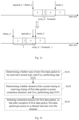
- Fig. 1a is a flowchart of a data processing method provided by an exemplary embodiment of the present disclosure, which is applicable to any transmitting terminal with a wireless communication function, such as a router, a mobile phone, etc., which is not limited by the present disclosure.
- the method at least includes the following steps: firstly, in response to a type of a data packet to enter a transmission queue of the transmitting terminal being a preset type, determining a timing when the data packet is expected to enter the transmission queue of the transmitting terminal as an expected transmitting timing, wherein the transmission queue of the transmitting terminal is the queue where the data packet to be transmitted is located before leaving the transmitting terminal; and then, in response to a duration from current timing to the expected transmitting timing being within a preset range, initiating a channel contention operation related to transmitting the data packet, wherein the channel contention operation related to transmitting the data packet includes carrier sensing, waiting for a distributed inter-frame spacing DIFS, and waiting for a back-off window.
- the preset type may be game and/or industrial automation control.
- the type of the data packet may be automatically labeled according to the application type to which the data packet belongs.
- the aforementioned data packet types may be related to application types, such as games, industrial automation control, voice, and social chat. Such application types indicate that the data packet is a low-delay packet or a real-time packet.
- the method further comprises: in response to the channel contention operation related to transmitting the data packet and the data packet entering the transmission queue of the transmitting terminal, making the data packet get access to a channel, and transmitting the data packet.
- making the data packet get access to a channel and transmitting the data packet comprises: after the data packet enters the transmission queue of the transmitting terminal, adding the data packet to the head of the transmission queue; and according to the order from the head of the queue to the tail of the queue, feeding the data packets in the transmission queue into the channel sequentially and transmitting the data packets.
- the embodiments of the present disclosure may start carrier sensing a period of time t in advance, that is, start the carrier sensing from the timing tlisten_n - t.
- the transmitting terminal has already started or even completed operations such as carrier sensing, waiting for a distributed inter-frame spacing DIFS, and waiting for a back-off window.
- the data packet can be transmitted as soon as it enters the transmission queue, which can save t time without waiting to initiate an operation related to channel access for the data packet.
- Tcontend is also called an expected contention duration.
- the determining of a timing when the data packet is expected to enter the transmission queue of the transmitting terminal as an expected transmitting timing comprises: based on the type of the data packet being a preset type, determining a transmitting cycle ( T ) of the data packet with the preset type; and based on the transmitting cycle of the data packet with the preset type, determining a timing when the data packet is expected to enter the transmission queue of the transmitting terminal as an expected transmitting timing ( tsend_n' ) .
- the embodiments of the present disclosure may also be applied to the case of a data packet group, that is, determining that a type of data packet to enter a transmission queue of the transmitting terminal is a preset type comprises: acquiring group information of a data packet group to enter the transmission queue of the transmitting terminal; and determining the type of the data packet as a preset type according to the group information; wherein, the group information includes a data packet type corresponding to the data packet group, the data packet group includes a plurality of data packets, the data packet type is used to indicate the types of the plurality of data packets, the types of the respective data packets among the plurality of data packets are the same, and the plurality of data packets include the said data packet to enter the transmission queue of the transmitting terminal.
- the embodiments of the present disclosure may further comprise: in response to the group information indicating that the data packet type corresponding to the data packet group is the preset type, upon receiving one data packet among the plurality of data packets, inserting the one data packet into the head of the transmission queue.
- the transmitting cycle of the data packet and the expected contention duration which are applied in real-time may both vary with the change of the data packet type and the change of the wireless environment and may be fixed value only for a certain period of time.
- various embodiments of the present disclosure may further optionally periodically calibrate the preset range and the transmitting cycle of the data packet according to a preset calibrating cycle.
- the preset calibrating cycle is Tcal
- the arriving timing of the recent 0th data packet is recorded.
- the arrival time of the nth data packet is recorded, and the difference tcal_0_n is calculated.
- the contention time (including the sum of time consumed in the above steps 2, 3 and 4) for each transmitting are accumulated and recorded as Tcontend_sum, and meanwhile the number m of contentions occurred is recorded.
- T and Tcontend will vary with the change of the data packets and the change of the wireless environment and will be fixed value only for a certain period of time.
- step 5 accessing channel and transmitting data packet
- TXOP transmission opportunity
- Fig. 1b is another flowchart of a data processing method provided by an exemplary embodiment of the present disclosure, which may be applicable to any device with wireless communication function, such as a router, a mobile phone, etc., which is not limited by the present disclosure.
- the method comprises at least the following steps: In S 101, it is determined whether a type of a next data packet to be received is a preset type, and if so, step S 102 is performed. It is worth noting that the next data packet to be received as mentioned here refers to the next data packet to be received in the transmission queue. Whereas at the current timing, the transmission queue may be processing an enqueue operation or dequeue operation of a certain packet (e.g., the current packet). Of course, at the current timing, the transmission queue may be in an idle state as well, which is not limited by the present disclosure.
- step S101 further includes the following sub-steps: in S01, acquiring group information of a data packet group to be transmitted in a first preset time period; in S02, determining the type of the data packet according to the group information; wherein, the group information includes a data packet type corresponding to a data packet group, the data packet group contains a plurality of data packets, the data packet type is used to indicate the types of the plurality of data packets, the types of the respective data packets among the plurality of data packets are the same, the plurality of data packets include the said data packet, and the first preset time period contains the current timing and the receiving timing.
- the data packet type of the data packet group may be received from other functional modules (such as the data preprocessing module), and the data packet type may be automatically labeled by other modules according to the application type to which the data packet belongs.
- the data packet type may be automatically labeled by other modules according to the application type to which the data packet belongs.
- the aforementioned data packet types may be related to application types, such as games, industrial automation control, voice, and social chat.
- the aforementioned preset type may be game and/or industrial automation control.
- the preset duration i.e., preset contention duration
- the third preset time period may be a passed time period with the preset duration with respect to the current timing.
- the receiving timing for the data packet is the timing when the transmission queue receives the data packet.
- the preset duration is also called the preset contention duration (e.g., Tcontent as described in detail above), and its value is an expected time consumed for a channel contention-related operation (i.e., the above-mentioned operations such as carrier sensing, waiting for a distributed inter-frame spacing DIFS, and waiting for a back-off window) determined by the wireless device according to the transmitting cycle of the data packet to be transmitted and/or the type of the data packet to be transmitted.
- the present disclosure is not limited thereto.
- the preset duration may be dynamically set according to the actual network environment, which is not limited by the present disclosure.
- a channel contention operation related to transmitting the data packet is initiated, so that after the data packet enters the transmission queue of the transmitting terminal, the data packet is accessed to the channel and transmitted, wherein the channel contention operation related to transmitting the data packet includes carrier sensing, waiting for a distributed inter-frame spacing DIFS, and waiting for a back-off window.
- the group information indicates that the data packet type corresponding to the data packet group is the preset type
- any data packet upon receiving any data packet among the plurality of data packets, any data packet will be inserted into the head of a queue.
- the queue is the queue where the data packet to be transmitted is located before being transmitted, and the data packets stored in the queue are transmitted from the head of the queue.
- the data packet transmitting cycle corresponding to the aforementioned data packet group i.e., the data packet transmitting cycle corresponding to the first preset time period, and the preset duration may vary with the change of the data packet type and the change of the wireless environment, and may only be fixed value for a certain period of time.
- various embodiments of the present disclosure may further optionally include calibration of the data packet transmitting cycle corresponding to the first preset time period and the preset duration.
- various embodiments of the present disclosure optionally comprise the following steps of adjusting the first preset time period.
- the steps comprise: acquiring a data packet transmitting cycle corresponding to a second preset time period, and if the difference between the data packet transmitting cycle corresponding to the second preset time period and the data packet transmitting cycle corresponding to the first preset time period is greater than a first preset threshold, then determining a reference cycle according to the second preset time period and the number of data packets transmitted within the second preset time period; and taking the reference cycle as a data packet transmitting cycle corresponding to the first preset time period; wherein the second preset time period is determined according to a preset calibrating cycle, and the data packet transmitting cycle corresponding to the first preset time period is the same as the data packet transmitting cycle corresponding to the data packet.
- Determining a reference cycle according to the second preset time period and the number of data packets transmitted within the second preset time period comprises: taking the ratio of the second preset time period to the number of data packets
- the method further comprises: acquiring a contention duration corresponding to a second preset time period, and if the difference between the contention duration corresponding to the second preset time period and the preset duration is greater than a second preset threshold, then determining a reference contention duration according to the second preset time period and a number of contentions for data packets within the second preset time period; and taking the reference contention duration as the preset duration; determining a reference contention duration according to the second preset time period and a number of contentions for data packets within the second preset time period comprises: taking the ratio of the total contention duration within the second preset time period to the number of contentions for data packet as the reference contention duration.
- the starting timing of the second preset time period is later than the starting timing of the first preset time period, and the ending timing of the second preset time period may be earlier, equal to or later than the ending timing of the first preset time period.
- the preset duration may be an average contention duration of a plurality of contention durations corresponding to a plurality of reference data packets within the third preset time period.
- the third preset time period may be a passed time period with the preset duration with respect to the current timing.
- the determination of the transmitting cycle corresponding to the data packet and the preset time duration can be performed according to the aforementioned preset calibrating cycle, and the aforementioned duration according to the preset calibrating cycle may be the same as the duration of the second preset time period.
- the scheme provided by the present disclosure can play a role in shortening the communication delay of data packets that require high real-time communication and improving communication efficiency.
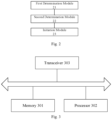
- Fig. 2 is a structural diagram of a data processing apparatus provided by an exemplary embodiment of the present disclosure; wherein the apparatus includes a first determination module 21, a second determination module 22 and an initiation module 23, wherein:
- the apparatus is further used for: acquiring group information of a data packet group to be transmitted in a first preset time period; and determining the type of the data packet according to the group information; wherein the group information includes a data packet type corresponding to the data packet group, the data packet group includes a plurality of data packets, the data packet type is used to indicate the types of the plurality of data packets, the types of the respective data packets among the plurality of data packets are the same, the plurality of data packets include the said data packet, and the first preset time period includes the current timing and the receiving time.
- the apparatus is further used for: if the group information indicates that the data packet type corresponding to the data packet group is the preset type, then determining to insert, upon receiving any data packet among the plurality of data packets, the any data packet into the head of a queue; wherein, the queue is the queue where the data packet to be transmitted is located before being transmitted.
- the apparatus is further used for: acquiring a data packet transmitting cycle corresponding to a second preset time period, and if the difference between the data packet transmitting cycle corresponding to the second preset time period and the data packet transmitting cycle corresponding to the first preset time period is greater than a first preset threshold, then determining a reference cycle according to the second preset time period and the number of data packets transmitted within the second preset time period; and taking the reference cycle as a data packet transmitting cycle corresponding to the first preset time period; wherein the second preset time period is determined according to a preset calibrating cycle, and the data packet transmitting cycle corresponding to the first preset time period is the same as the data packet transmitting cycle corresponding to the data packet.
- the apparatus when used for determining a reference cycle according to the second preset time period and the number of data packets transmitted within the second preset time period, is specifically used for: taking the ratio of the second preset time period to the number of data packets transmitted within the second preset time period as the reference cycle.
- the above apparatus is further used for: acquiring a contention duration corresponding to a second preset time period, and if the difference between the contention duration corresponding to the second preset time period and the preset duration is greater than a second preset threshold, then determining a reference contention duration according to the second preset time period and a number of contentions for data packets within the second preset time period; and taking the reference contention duration as the preset duration.
- the above apparatus when used for determining a reference contention duration according to the second preset time period and a number of contentions for data packets within the second preset time period, is specifically used for: taking the ratio of the total contention duration within the second preset time period to the number of contentions for data packet as the reference contention duration.
- the apparatus embodiment and the method embodiment can correspond to each other, and similar descriptions can refer to the method embodiment, which will not be detailed here in order to avoid repetition.
- the apparatus may perform the above-mentioned method embodiments, and the aforementioned and other operations and/or functions of respective modules in the apparatus are respectively for the corresponding flows in the respective methods in the above-mentioned method embodiments, which will not be detailed here for brevity.
- each step of the method embodiments in the embodiments of the present disclosure can be completed by an integrated logic circuit of hardware and/or instructions in the form of software in the processor, and the steps of the methods disclosed in combination with the embodiment of the present disclosure can be directly embodied as the completion of execution by a hardware coding processor or the completion of execution by a combination of hardware and software modules in the coding processor.
- the software module can be located in a mature storage medium such as random access memory, flash memory, read-only memory, programmable read-only memory, electrically erasable programmable memory, registers, etc.
- the storage medium is located in the memory, and the processor reads the information in the memory and completes the steps in the above method embodiments in combination with its hardware.
- Fig. 3 is a schematic block diagram of an electronic device provided by an embodiment of the present disclosure, which may include: a memory 301 and a processor 302, wherein the memory 301 is used for storing a computer program and transmitting the code of the program to the processor 302.
- the processor 302 may call and run the computer program from memory 301 to implement the method in the embodiments of the present disclosure.
- the processor 302 may be used to perform the above method embodiments according to instructions in the computer program.
- the processor 302 may include, but is not limited to: general processor, Digital Signal Processor (DSP), application-specific integrated circuit (ASIC), Field Programmable Gate Array (FPGA) or other programmable logic device, discrete gate or transistor logic device, discrete hardware component, and so on.
- DSP Digital Signal Processor
- ASIC application-specific integrated circuit
- FPGA Field Programmable Gate Array
- the memory 301 includes, but is not limited to: volatile memory and/or nonvolatile memory.
- the nonvolatile memory may be Read-Only Memory (ROM), programmable ROM (PROM), erasable PROM (EPROM), electric EPROM (EEPROM) or flash memory.
- the volatile memory may be a Random Access Memory (RAM), which is used as an external cache.
- RAM Random Access Memory
- SRAM static RAM
- DRAM dynamic RAM
- SDRAM synchronous DRAM
- DDR SDRAM Double Data Rate SDRAM
- ESDRAM enhanced SDRAM
- SLDRAM synchronous link DRAM
- DR RAM Direct Rambus RAM
- the computer program may be divided into one or more modules, which are stored in the memory 301 and executed by the processor 302 to complete the methods provided by the present disclosure.
- the one or more modules may be a series of computer program instruction segments that can accomplish specific functions, and the instruction segments are used to describe the execution process of the computer program in the electronic device.
- the electronic device may further include: a transceiver 303, which may be connected to the processor 302 or the memory 301.
- the processor 302 may control the transceiver 303 to communicate with other devices, specifically, it can transmit information or data to other devices or receive information or data transmitted by other devices.
- the transceiver 303 may include a transmitter and a receiver.
- the transceiver 303 may further include antennas, and the number of antennas may be one or more.
- bus system includes a power bus, a control bus and a state signal bus in addition to a data bus.
- the present disclosure further provides a computer-readable storage medium having stored there on a computer program which, when executed by a computer, enables the computer to perform the methods of the above method embodiments.
- the embodiments of the present disclosure further provides a computer program product containing instructions which, when executed by a computer, cause the computer to perform the methods of the above method embodiments.
- the computer program product includes one or more computer instructions.
- the computer can be a general-purpose computer, a special-purpose computer, a computer network, or other programmable apparatuses.
- the computer instructions can be stored in a computer-readable storage medium or transmitted from one computer-readable storage medium to another.
- the computer instructions can be transmitted from one website, computer, server or data center to another website, computer, server or data center by wired (e.g., coaxial cable, optical fiber, digital subscriber line (DSL)) or wireless (e.g., infrared, radio, microwave, etc.).
- the computer-readable storage medium can be any available medium that a computer can access or a data storage device such as a server or a data center that is integrated by including one or more available media.
- the available medium may be a magnetic medium (e.g., floppy disk, hard disk, magnetic tape), an optical medium (e.g., digital video disc (DVD)), or a semiconductor medium (e.g., solid state disk (SSD)) and the like.
- modules and algorithm steps of various examples described in connection with the embodiments disclosed herein can be implemented in electronic hardware, or a combination of computer software and electronic hardware. Whether these functions are implemented in hardware or software depends on the specific application and design constraints of the technical scheme. Professionals can use the method that the difference is greater than the first preset threshold value for each specific application to realize the described function, but such implementation should not be considered as beyond the scope of the present disclosure.
- the disclosed systems, apparatuses and methods can be implemented in other ways.
- the apparatus embodiment described above is merely schematic.
- the division of the module is merely a logical functional division.
- the mutual coupling or direct coupling or communication connection shown or discussed can be indirect coupling or communication connection through some interfaces, apparatuses or modules, which can be electrical, mechanical or other forms.
- the modules illustrated as separate components may be or may not be physically separated, and the components displayed as modules may be or may not be physical modules, that is, they may be located in one place or may be distributed onto multiple network units. Some or all of the modules can be selected according to actual needs to achieve the purpose of the embodiments. For example, various functional modules in various embodiments of the present disclosure may be integrated in one processing module, or various modules may exist separately physically, or two or more modules may be integrated in one module.
Landscapes
- Engineering & Computer Science (AREA)
- Computer Networks & Wireless Communication (AREA)
- Signal Processing (AREA)
- Mobile Radio Communication Systems (AREA)
Applications Claiming Priority (2)
| Application Number | Priority Date | Filing Date | Title |
|---|---|---|---|
| CN202210150739.5A CN114630447A (zh) | 2022-02-14 | 2022-02-14 | 数据处理方法、装置,设备及计算机可读存储介质 |
| PCT/CN2023/074253 WO2023151507A1 (zh) | 2022-02-14 | 2023-02-02 | 数据处理方法、装置、设备及计算机可读存储介质 |
Publications (2)
| Publication Number | Publication Date |
|---|---|
| EP4482247A1 true EP4482247A1 (de) | 2024-12-25 |
| EP4482247A4 EP4482247A4 (de) | 2026-01-14 |
Family
ID=81899561
Family Applications (1)
| Application Number | Title | Priority Date | Filing Date |
|---|---|---|---|
| EP23752287.5A Pending EP4482247A4 (de) | 2022-02-14 | 2023-02-02 | Datenverarbeitungsverfahren und -vorrichtung, vorrichtung und computerlesbares speichermedium |
Country Status (3)
| Country | Link |
|---|---|
| EP (1) | EP4482247A4 (de) |
| CN (1) | CN114630447A (de) |
| WO (1) | WO2023151507A1 (de) |
Families Citing this family (3)
| Publication number | Priority date | Publication date | Assignee | Title |
|---|---|---|---|---|
| US12156252B2 (en) | 2022-02-14 | 2024-11-26 | Tp-Link Corporation Limited | Data packet type-driven data processing method, apparatus, device and computer-readable storage medium |
| CN114630447A (zh) * | 2022-02-14 | 2022-06-14 | 深圳市联洲国际技术有限公司 | 数据处理方法、装置,设备及计算机可读存储介质 |
| CN116669220A (zh) * | 2023-06-25 | 2023-08-29 | 恒玄科技(北京)有限公司 | 一种多媒体数据传输方法、装置、设备及存储介质 |
Family Cites Families (14)
| Publication number | Priority date | Publication date | Assignee | Title |
|---|---|---|---|---|
| US20050270977A1 (en) * | 2004-06-07 | 2005-12-08 | Microsoft Corporation | Combined queue WME quality of service management |
| US7684333B1 (en) * | 2004-07-30 | 2010-03-23 | Avaya, Inc. | Reliable quality of service (QoS) provisioning using adaptive class-based contention periods |
| CN102202348B (zh) * | 2010-03-22 | 2014-07-30 | 华为技术有限公司 | 数据包发送方法及接入点 |
| CN102123448B (zh) * | 2011-03-10 | 2014-04-16 | 西北工业大学 | 一种无线自组织网中基于双忙音机制的信道预约方法 |
| KR101521080B1 (ko) * | 2011-04-15 | 2015-05-18 | 인텔 코포레이션 | 무선 네트워크에서 채널 액세스를 위한 방법 및 장치 |
| US9942943B2 (en) * | 2014-08-21 | 2018-04-10 | Lg Electronics Inc. | Method and apparatus for triggering uplink data in wireless LAN |
| US9693368B2 (en) * | 2015-01-26 | 2017-06-27 | Qualcomm Incorporated | Bandwidth acquisition in contention-based networks |
| US9872298B2 (en) * | 2015-04-16 | 2018-01-16 | Qualcomm Incorporated | System and method for reducing collisions in wireless networks |
| GB2582813B (en) * | 2019-04-04 | 2022-02-16 | Canon Kk | Backoff management for intra-queue priority transmission in communication networks |
| US12048001B2 (en) * | 2019-03-08 | 2024-07-23 | Canon Kabushiki Kaisha | Backoff management for intra-queue priority transmission in communication networks |
| US11122624B2 (en) * | 2019-06-17 | 2021-09-14 | Sony Group Corporation | Pre-packet arrival channel contention |
| US11259324B2 (en) * | 2019-07-03 | 2022-02-22 | Sony Group Corporation | MU-MIMO pre-packet arrival channel contention |
| US11178694B2 (en) * | 2019-09-09 | 2021-11-16 | Sony Group Corporation | RTA queue management in wireless local area network (WLAN) stations |
| CN114630447A (zh) * | 2022-02-14 | 2022-06-14 | 深圳市联洲国际技术有限公司 | 数据处理方法、装置,设备及计算机可读存储介质 |
-
2022
- 2022-02-14 CN CN202210150739.5A patent/CN114630447A/zh active Pending
-
2023
- 2023-02-02 WO PCT/CN2023/074253 patent/WO2023151507A1/zh not_active Ceased
- 2023-02-02 EP EP23752287.5A patent/EP4482247A4/de active Pending
Also Published As
| Publication number | Publication date |
|---|---|
| WO2023151507A1 (zh) | 2023-08-17 |
| CN114630447A (zh) | 2022-06-14 |
| EP4482247A4 (de) | 2026-01-14 |
Similar Documents
| Publication | Publication Date | Title |
|---|---|---|
| EP4482247A1 (de) | Datenverarbeitungsverfahren und -vorrichtung, vorrichtung und computerlesbares speichermedium | |
| US7519039B2 (en) | Transmission using a plurality of protocols | |
| US12302298B2 (en) | Fast wireless local area network communication method and apparatus using multiple transfer rate partitioning and cooperative transmission | |
| US7738481B2 (en) | Wireless communication device and wireless communication method | |
| US12004217B2 (en) | Random access preamble sending method, random access preamble receiving method, and communications apparatus | |
| EP2945309B1 (de) | Datenübertragungsverfahren, -vorrichtung und -system | |
| EP2961218A1 (de) | Verfahren und vorrichtung zur ressourcenreservierung | |
| CN102474883A (zh) | 在无线局域网中实现资源预留的半随机退避方法 | |
| EP2329677B1 (de) | Bereitstellung eines eingeplanten legacy-schutzrahmens | |
| JP2009077402A (ja) | 無線lanに基づく分散型サービス区分方法および装置 | |
| US12156252B2 (en) | Data packet type-driven data processing method, apparatus, device and computer-readable storage medium | |
| US20250220731A1 (en) | Data Transmission Method and Apparatus | |
| EP2023552A2 (de) | Drahtlose Kommunikationsvorrichtung und drahtloses Kommunikationsverfahren | |
| WO2021238833A1 (zh) | 一种通信方法及装置 | |
| US20050013325A1 (en) | Method for transmitting multimedia data in wireless network | |
| CN115119264B (zh) | 接收到错误报文之后的退避延迟方法与装置 | |
| US20180176908A1 (en) | Transmission control method intended for being implemented by a station in a telecommunications network | |
| WO2024169950A1 (zh) | 通信方法和通信装置 | |
| CN121310289A (zh) | 一种数据传输方法和装置 | |
| CN118102460A (zh) | 一种资源管理的方法和装置 |
Legal Events
| Date | Code | Title | Description |
|---|---|---|---|
| STAA | Information on the status of an ep patent application or granted ep patent |
Free format text: STATUS: THE INTERNATIONAL PUBLICATION HAS BEEN MADE |
|
| PUAI | Public reference made under article 153(3) epc to a published international application that has entered the european phase |
Free format text: ORIGINAL CODE: 0009012 |
|
| STAA | Information on the status of an ep patent application or granted ep patent |
Free format text: STATUS: REQUEST FOR EXAMINATION WAS MADE |
|
| 17P | Request for examination filed |
Effective date: 20240820 |
|
| AK | Designated contracting states |
Kind code of ref document: A1 Designated state(s): AL AT BE BG CH CY CZ DE DK EE ES FI FR GB GR HR HU IE IS IT LI LT LU LV MC ME MK MT NL NO PL PT RO RS SE SI SK SM TR |
|
| DAV | Request for validation of the european patent (deleted) | ||
| DAX | Request for extension of the european patent (deleted) | ||
| A4 | Supplementary search report drawn up and despatched |
Effective date: 20251212 |
|
| RIC1 | Information provided on ipc code assigned before grant |
Ipc: H04W 74/08 20240101AFI20251208BHEP Ipc: H04W 28/02 20090101ALI20251208BHEP Ipc: H04W 84/12 20090101ALI20251208BHEP Ipc: H04W 74/0808 20240101ALI20251208BHEP Ipc: H04W 74/0816 20240101ALI20251208BHEP |