EP4483706A1 - Dispositif intelligent de croissance de plante à modélisation double numérique pour l'agriculture de précision - Google Patents
Dispositif intelligent de croissance de plante à modélisation double numérique pour l'agriculture de précision Download PDFInfo
- Publication number
- EP4483706A1 EP4483706A1 EP23182931.8A EP23182931A EP4483706A1 EP 4483706 A1 EP4483706 A1 EP 4483706A1 EP 23182931 A EP23182931 A EP 23182931A EP 4483706 A1 EP4483706 A1 EP 4483706A1
- Authority
- EP
- European Patent Office
- Prior art keywords
- plant growth
- data
- growth parameters
- layer
- environment
- Prior art date
- Legal status (The legal status is an assumption and is not a legal conclusion. Google has not performed a legal analysis and makes no representation as to the accuracy of the status listed.)
- Withdrawn
Links
Images




Classifications
-
- A—HUMAN NECESSITIES
- A01—AGRICULTURE; FORESTRY; ANIMAL HUSBANDRY; HUNTING; TRAPPING; FISHING
- A01G—HORTICULTURE; CULTIVATION OF VEGETABLES, FLOWERS, RICE, FRUIT, VINES, HOPS OR SEAWEED; FORESTRY; WATERING
- A01G7/00—Botany in general
-
- A—HUMAN NECESSITIES
- A01—AGRICULTURE; FORESTRY; ANIMAL HUSBANDRY; HUNTING; TRAPPING; FISHING
- A01G—HORTICULTURE; CULTIVATION OF VEGETABLES, FLOWERS, RICE, FRUIT, VINES, HOPS OR SEAWEED; FORESTRY; WATERING
- A01G9/00—Cultivation in receptacles, forcing-frames or greenhouses; Edging for beds, lawn or the like
- A01G9/24—Devices or systems for heating, ventilating, regulating temperature, illuminating, or watering, in greenhouses, forcing-frames, or the like
- A01G9/246—Air-conditioning systems
-
- G—PHYSICS
- G06—COMPUTING OR CALCULATING; COUNTING
- G06Q—INFORMATION AND COMMUNICATION TECHNOLOGY [ICT] SPECIALLY ADAPTED FOR ADMINISTRATIVE, COMMERCIAL, FINANCIAL, MANAGERIAL OR SUPERVISORY PURPOSES; SYSTEMS OR METHODS SPECIALLY ADAPTED FOR ADMINISTRATIVE, COMMERCIAL, FINANCIAL, MANAGERIAL OR SUPERVISORY PURPOSES, NOT OTHERWISE PROVIDED FOR
- G06Q50/00—Information and communication technology [ICT] specially adapted for implementation of business processes of specific business sectors, e.g. utilities or tourism
- G06Q50/02—Agriculture; Fishing; Forestry; Mining
Definitions
- the present disclosure relates to system comprising a portable compact device for growing plants.
- the device further comprises a plant growth compartment in which the plant growth conditions are monitored and controlled according to the user's requirements and insulated from external conditions.
- the growth conditions are monitored and controlled through an electro-mechanical system comprising a microcomputer, sensors and actuators.
- the system includes a procedure for mapping based on a data-driven approach that can replicate growth conditions to and from a large-scale farming environment.
- the present disclosure relates to a portable compact device for growing plants.
- An aspect of the present disclosure relates to a plant growing system for modelling a farming environment, the system comprising:
- the plant growth parameters include temperature, humidity, light intensity, soil temperature, soil moisture, or combinations thereof.
- the mapping comprises applying a convolutional neural network (CNN), a long short-term memory network (LSTM), or a fully connected neural network (FCN), to input data to obtain the plant growth parameters of the enclosed device.
- CNN convolutional neural network
- LSTM long short-term memory network
- FCN fully connected neural network
- the CNN or LSTM comprises two input layers: a first input layer for sensor data of the farming environment and a second input layer for image data corresponding to the farming environment; and the FCN comprises a combined input layer for sensor data of the farming environment and image data corresponding to the farming environment.
- the mapping comprises applying a predictive model of an error in a target variable predicted from simulated plant growth parameters and from plant growth parameters of the enclosed device, to obtain a measure of discrepancy between the farming environment and the enclosed device; in particular the predictive model comprising an image data input for receiving plant growth images from the farming environment and/or enclosed device.
- system of the present disclosure further comprising one or more actuators for applying plant growth parameters to the enclosed device
- the computer is further configured for applying an optimizer to optimize plant growth parameters to be applied to the enclosed device, wherein the predicted error in the target variable is used as an input of said optimizer, which is configured for minimizing said error in the target variable by adjusting said plant growth parameters to be applied by said one or more actuators.
- the simulation is a digital twin simulation comprising:
- the data acquired from the sensors includes image data obtained from the farm environment, in particular wherein the image data comprises plant area, greenness, texture features, number of leaves, shape features, or combinations thereof, in particular the shape features comprising vegetation area perimeters, compactness, elongations, convexities and aspect ratios.
- the enclosed device comprises:
- the enclosed device of the present disclosure further comprises an outer layer, an inner layer, an insulation layer, and an uninsulated compartment.
- the enclosed device of the present disclosure further comprises a camera for obtaining image data of plants growing in the enclosed device.
- the heating, ventilation and air conditioning system comprises heat dissipators, ventilators, air conditioners, air exhaust.
- the sensors comprise soil temperature sensors, soil moisture sensors, temperature sensors, humidity sensors, carbon dioxide sensor, light intensity sensor.
- An aspect of the present disclosure relates to a method for growing plants in an enclosed device for modelling a farming environment, the method comprising:
- the mapping is designed by convolutional neural network, long short-term memory network, or fully connected network.
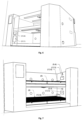
- An aspect of the present disclosure relates to a device for growing plants, comprising an outer structure layer (1), an inner structure layer (2), an insulation layer (3), a door on the front side (4), an uninsulated compartment (5), a HVAC system (6), an exhaust system (7), a substrate tray (8), an irrigation system (9), a drain system (10), a lighting system (11), as well as a control, monitoring and communication system (12).
- Another aspect of the present disclosure relates to a system for growing plants for modelling a farming environment, the system comprising:
- the plant growth parameters are temperature, humidity, light intensity, soil temperature, soil moisture, or combinations thereof.
- the device comprises:
- the communication means is a wireless communication means.
- the device further comprises a substrate holder.
- the device further comprises a camera.
- the heating, ventilation and air conditioning system comprises heat dissipators, ventilators, air conditioners, air exhaust.
- the lighting system comprises LED lights.
- the sensors comprise soil temperature sensors, soil moisture sensors, temperature sensors, humidity sensors, carbon dioxide sensor, light intensity sensor.
- the irrigation system comprises drainage, irrigation spray, irrigation pump, irrigation valves.
- the microcomputer further comprises an LCD display and an LCD controller.
- Another aspect of the present disclosure relates to a method for growing plants in an enclosed device for modelling a farming environment, the method comprising:
- the parameters are temperature, humidity, light intensity, soil temperature, soil moisture, or combinations thereof.
- the device of the present disclosure further comprises a digital twin framework which enables the user to conduct precise experiments and real-time monitoring of small plants, like microgreens, while being able to digitally mimic larger-scale environments, where plants of the same species are produced, such as in vertical farms, smart plant factories, or greenhouses.
- a digital twin framework allows the device of the present disclosure to replicate the conditions of larger environments within its compact and portable structure. This mapping between the device and the larger physical environment can be programmatically created using various functions or Al models, offering flexibility in mimicking diverse environments.
- the device of the present disclosure is compact, small, portable, and can be placed in a laboratory or an office.
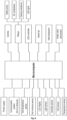
- the sensors and the camera are connected to the microcomputer that reads the sensors in real-time, adjusts the actuators, and sends the values to the cloud or the central processing unit for processing and visualization to the user.
- the sensor data and camera images can be used for monitoring and logging the experiments, training Al models, and changing control values that are sent back to the microcomputer of the grow box, which adjusts the actuators accordingly. If the obtained results based on the newly computed values are satisfying, the growth conditions are replicated in the indoor farming environment using the mapping system.
- the device of the present disclosure further comprises actuators, LED lights for lighting, a HVAC system, a humidifier for environment control, a heating mat for stimulating seed germination, and a pump for fertigation.
- the present disclosure relates to a portable compact enclosed device for growing plants.
- An aspect of the present disclosure relates to a device for growing plants, comprising: an outer structure layer (1), an inner structure layer (2), an insulation layer (3), a door on the front side (4), an uninsulated compartment (5), a HVAC system (6), an exhaust system (7), a substrate tray (8), an irrigation system (9), a drain system (10), a lighting system (11), as well as a control, monitoring and communication system (12).
- Another aspect of the present disclosure relates to a system for growing plants for modelling a farming environment, the system comprising:
- the plant growth parameters are temperature, humidity, light intensity, soil temperature, soil moisture, or combinations thereof.
- the device comprises: heating, ventilation and air conditioning system; irrigation system; lights; sensors; communication means; microcomputer.
- the communication means is a wireless communication means.
- the device further comprises a substrate holder.
- the heating, ventilation and air conditioning system comprises heat dissipators, ventilators, air conditioners, air exhaust.
- the lighting system comprises LED lights.
- the irrigation system comprises drainage, irrigation spray, irrigation pump, irrigation valves.
- the parameters are temperature, humidity, light intensity, soil temperature, soil moisture, or combinations thereof.
- the method begins with the acquisition of environmental data from a large-scale farming environment, including parameters such as temperature, humidity, light intensity, and soil or substrate conditions, as described in Figure 1 .
- This data is then transmitted to a local central processing unit in a microcomputer or microcontroller in the enclosed device (smart chamber) and optionally sent to an external central server or cloud-based service for initial processing and analysis.
- a communication module in the device is in charge of the communication between the box and an external computer and can be wireless or not.
- control parameters in the smart chamber are adjusted and optimized based on the feedback loop.
- desired experiments are performed in the enclosed device (smart chamber) under controlled and monitored conditions.
- the resulting experimental data which includes changes in plant growth and health under the given conditions, is then collected and transmitted to the central processing, central server, or cloud-based service.
- the next stage is data analysis and insights extraction.
- Advanced analytical tools and techniques may be employed to draw meaningful insights from the data, revealing patterns and relationships that might not be immediately apparent.
- Such insights might include optimal environmental conditions for certain plant species, effective fertigation schedules, light intensity optimization, and many others. These insights not only increase the understanding of plant biology under precise conditions but are also valuable for large-scale farming operations.
- the method further comprises optional processes that can further enhance the functionality and convenience of the system.
- the first is data storage, which involves archiving all data from the farming environment, enclose device (smart chamber), and experiments in a central server or cloud-based service. This option facilitates future reference, ongoing analysis, and long-term trend identification, contributing to a data-rich resource for continual farming optimization.
- an optional feature is data visualization with a user interface.
- a display interface within the enclosed device (smart chamber)
- real-time data and analysis results can be made readily accessible. This can aid quick decision-making and provide an immediate snapshot of the current conditions and experimental progress in the smart chamber.
- This interface would enable easy monitoring and control of the chamber, including manual adjustments of control parameters, thereby providing user-friendly means to interact with the system.
- the digital twin framework initiates the collection of sensor data from the large-scale farming environment, as described in Fig. 2 .
- This array of data is processed into a dynamic software model, which serves as a mirror image of the large-scale farming environment in the digital realm.
- the digital twin model incorporates various layers (data layer, information layer, knowledge layer, and twinning layer).
- the foundational layer comprises the raw sensor data from the farming environment, including environmental parameters such as temperature, humidity, light intensity, soil or substrate quality, and carbon dioxide levels.
- the information layer operates above the data layer, transforming raw data into a structured format via processing and cleaning methods. This structured data takes into account the global structure, considering and suggesting, for instance, the available sensor data in the enclosed device (smart chamber).
- the knowledge layer stands, applying data analysis and pattern recognition to extract features and descriptors of the farming environment.
- the final layer the twinning layer, generates the digital twin model, extrapolating a mathematical representation or Al model that captures the behaviour and characteristics of the farming environment.
- This multi-layered model serves as a flexible and adaptive tool to mimic various large-scale farming environments under distinct conditions.
- the information layer takes into account data points from sensors such as temperature, humidity, carbon dioxide, irrigation and nutrient delivery, and lighting.
- This layer can also include the manual historical crop yield and indoor farming setup information into the structured data such as the arrangement of plant units and the type of crops.
- features are extracted from the sensors and cameras and organized together as data inputs. For the sensors, statistical features are extracted such as average, standard deviation, kurtosis, and higher statistical moments from the data points. Descriptors for periodicity are extracted by spectrum-based features such as energy and power estimation over the sensor data inputs.
- features extracted includes plant area, greenness, texture features, number of leaves, and shape features such as perimeters, compactness, elongations, convexities and aspect rations.
- data points measured and features extracted over time might be organized per plant units, plant sets, or convenient groups.
- the digital twin uses these data inputs, including the features, to create a mathematical representation of the large-scale environment by using modelling techniques.
- Statistical modelling analyses the relationship between the data inputs and features, such as statistical testing, correlations, and regressions. Statistical tests are used to evaluate whether there is enough evidence to reject a hypothesis of whether the environment input data causes a change in the growth or health process estimated by manual data input and features extracted. Correlation is computed between temperature or any other sensor data versus the crop yield represented by the image features. The same is performed for growth and health conditions like growth stages and pest populations, both represented by image features and manual annotation.
- linear and logistic regressions are used for modelling the variable environments against the manual historical data and the farming setup.
- Ensemble methods are used to find more complex relationship between data inputs against the features and annotations.
- Decision trees are used for scenarios where less data is used, at least one harvesting period, and insights are crucial for analysis.
- random forests and XGBoost models are used for larger data, more than one harvesting period of acquisition, and high sample rate, at minimum of 1 sample per hour of each sensor node and camera acquisition.
- the digital twin provides a twin model data containing structured data with sensor data from the large-scale environment, data resulted from the statistical modelling analyses, and at least one target variable that represents the scenario evaluated.
- the target variable can be the growth stage for growth process monitoring, pest population for health conditions monitoring, or optimal crop period for subsequent crop yield analysis.
- a model management system is incorporated into it, described in Fig. 3 .
- This system can store multiple pretrained models, selecting the appropriate one based on the context, such as variations in crop types, growing seasons, or any application requirements. It also has the capability to update or retrain models based on new data, keeping the models relevant as the farming environment evolves. Finally, the results are sent to the mapping functions, the fourth stage of the flow.
- the mapping function is established by utilizing advanced Artificial Intelligence (Al) models in an offline process delineated in Figure 12 .
- Al Artificial Intelligence
- On of the primary objectives of the Al is to generate a predictive model for the error in the target variable derived from twin data and from data obtained from the chamber device. Subsequently, in an online process described in Fig. 13 , this prediction is utilized by an optimization algorithm, which calculates the optimal set of parameters for the chamber, thereby minimizing the error of the target variable error.
- the process of Al training necessitates the historical data from the digital twin models, data retrieved from the enclosed device (smart chamber), as well as an ongoing process of revalidation and retraining directed at the error of the target variable.
- This error represents the discrepancy between the target as indicated by the digital twin and the target as projected from the device.
- an error in the target variable may be the difference between the growth stage as estimated by the twin model and by the chamber device.
- the Al architecture is based on either a Convolutional Neural Network (CNN), a Long Short-Term Memory (LSTM) network, or a Fully Connected Network (FCN), utilizing data acquired from one or multiple harvesting periods.
- CNN Convolutional Neural Network
- LSTM Long Short-Term Memory
- FCN Fully Connected Network
- an Al is trained to fit models to obtain meaningful maps between the digital twin model and the cultivation in the enclosed device, by predicting a target error and optimizing possible values for the chamber parameters that minimizes such error.
- the pipeline comprises a data acquisition stage
- the pipeline begins with data input from the digital twin model, data measured from the enclosed device (smart chamber), and the target variable error.
- a context or scenario is initially selected for each individual evaluation of the mapping, since different contexts, like growth and health processes, have different target variables.
- the pipeline comprises a data preparation stage.
- signal quality assessment is performed in the data acquired from the enclosed device (smart chamber) through signal quality algorithms such as Signal-to-Noise Ratio (SNR) estimators based on minimum energy level detection of features amplitude and autocorrelation-based SNR estimation of the time series data, where the thresholds are obtained empirically for the features.
- SNR Signal-to-Noise Ratio
- Low level of energy values or anomalies in the autocorrelation might represent missing or weird data from the sensors due to disconnection, human intervention or uncalibrated sensors.
- features are extracted, similar to those obtained in the digital twin modelling process. Data drift analysis are performed in order to ensure that there is no drift in the data over time by using statistical significance testing with a P-value lower or equal to 0.05.
- the pipeline comprises a prepossessing stage.
- features are selected based on exploratory data analysis with common statistical and cross-correlation analysis and on the significance level of the features based on the previous models. Correlated features or features with low significance level of previous models might be discarded.
- the pipeline comprises a transformation stage.
- the features are evaluated with and without normalization for the entire pipeline. Thereafter, the dataset is split into training, validation, and testing dataset.
- the pipeline comprises a data storage stage. where the features are stored for further analysis and assistance in model tracking.
- the pipeline comprises a model training stage.
- the model training of a baseline model is performed without hyperparameter tuning, for one seasonal or harvesting period.
- the model is designed based on one of three potential architectures: a hybrid convolutional neural network (CNN) architecture that merges a CNN for image data with a fully connected network for the sensor data; a long short-term memory (LSTM) network for image data that merges a fully connected network for the sensor data; and a fully connected network with dense layers for all features and data points.
- CNN convolutional neural network
- LSTM long short-term memory
- the CNN for image data has a relatively shallow architecture with four 2D convolutional layers, with two layers with 64 filter nodes, and two layers with 128 filter nodes, all with 3x3 kernel size, and using ReLU activation function. These layers are followed by a batch normalization layer, max-pooling layer, a flatter layer to 1D, a fully connected dense layer with 512 neurons using ReLU activation, then a dropout layer for regularization using a dropout rate of 0.5 for minimizing overfitting.
- a fully connected network is designed to process the sensor data separately with an input layer with the same dimension as the sensor data, a dense layer with 32 neurons, a ReLU activation, a batch normalization layer, a dropout layer with a dropout rate of 0.2 to reduce overfitting, another dense layer of 32 neurons, a ReLU activation, and a last batch normalization layer.
- the merge of the two networks is done by a merge layer connecting the output of the CNN and the dense network with 64 neurons and ReLU activation, followed by a batch normalization layer, a dropout layer with a dropout rate of 0.2, and the last output layer with the dimension of the target variable based on the context analysed, where one neuron with linear activation is enough for a pest monitoring, while, for instance, more neurons with softmax activation might be used for multi-stages of the growth stages estimation.
- the LSTM is designed with two layers with 50 units, with batch normalization, and a dropout layer with a dropout rate of 0.2 for each LSTM layer. Then, a fully connected network and the merge of two networks follow the same design rules of the previous model proposed.
- 1D image features and data points measured is designed using an input layer with the exact dimension of the full data, a dense layer with 64 neurons each, with ReLU activation, followed by a batch normalization layer, a dropout layer for regularization with a dropout rate of 0.2 to prevent overfitting, a final dense layer also with 64 neurons, ReLU activation, and a batch normalization layer.
- the output layer follows the same design rule of the CNN and LSTM models, depending on the target variable, fitting the desired outcome, either growth or health conditions estimation.
- a tuned model is obtained by using the testing dataset in a k-fold cross-validation for accuracy maximization. Then, the validation dataset is used to evaluate the best model obtained.
- the architectures for the CNN, LSTM, and fully connected networks can be designed with more layers and neurons based on the insights from the testing and validation phases.
- the baseline and tuned models are stored with the performance metrics, corresponding dataset and features extracted for future analysis.
- the model upon completion of the Al training in the offline procedure ( Fig. 12 ), the model becomes accessible for the online process as described in Figure 13 .
- the Al predicts the error of the target variable for a set of data of the enclosed device (chamber data), thereby providing conditions for the optimizer to select control parameters during the device (chamber) control stage.
- Optimization algorithms such as Grid Search or Random Search are employed to identify an optimal point within a search space.
- the search space comprises the twin data, device data, and the target error, with the goal of minimizing said target error.
- the mapping function provides chamber parameters for the microcontroller of the enclosed device (smart chamber, which makes the target variables between the twin model and the chamber device close/similar to each other.
- the microcontroller of the enclosed device implements parameters of the control strategy in the smart chamber, based on a proportional or proportional-integral controller, adjusting factors like temperature, humidity, lighting, and soil conditions to mirror the larger environment.
- the real-time data monitoring stage data is monitored and features are extracted, obtaining the target variable from the chamber in the same way is implemented in the digital twin modeling phase. Then, the chamber device data is provided for the data storage stage, and for the loops in the smart chamber control stage, and the mapping function stage.
- the outer layer of the chamber device is made of plastic or metal sheets.
- the inner layer (2) of the chamber device is made of polystyrene plastic.
- an insulation material (3) like polyurethane foam is injected.
- the water tubes and the electrical connectors pass through the insulation material.
- the door of the device (4) contains an airtight rubber seal (4.1) or gasket that closes the gap between the door and the box.
- the conduit (6.1) is made of the same plastic used in the inner layer and contains multiple holes (6.4) to disperse the air in the box equally.
- a radiator containing the evaporator (6.5) of the air conditioning system (6) is also fixed inside the air inlet (6.2).
- a heating resistance (6.6) mounted in another radiator inside the air inlet (6.2) is installed behind the ventilator and the evaporator.
- the quantity of air passing through the inlet is changed by adjusting an air valve (6.7) controlled by a servo motor (12.10) connected to the microcontroller (12.1).
- the air temperature is also monitored through the microcomputer/microcontroller (12.1) by controlling the inlet fan (6.3) speed, the heating resistance (6.6), and the air conditioning compressor (6.8).
- a small hole (7.1) containing a carbon filter (7.2) extracts the air from the box
- the carbon filter (7.2) is optional and is only used to filter the smell of the box.
- an empty compartment (5) is used to stock a small irrigation or fertigation reservoir (9.1) that can be accessed from outside (9.2), the fertigation pump (9.3), and the electronic components, namely the microcontroller/ microcomputer (12.1), the communication module (12.2), LED driver (11.2), relays (12.4), and other electronics.
- This compartment of the box is not insulated from the outside, but from the inside, the insulation material (3) is applied in the wall between the compartment and the rest of the box.
- a ventilator (5.1) for cooling the electronics can be added if overheating occurs, and it is fitted on the outer side wall of the compartment.
- the bottom of the inside of the device contains two layers: an inclined layer (10.1) with a drain hole (10.2) at the lower side to evacuate the residual liquids and a flat layer (8) containing holes fitted on the top of the inclined layer where the seeds heat mat (8.2) and the substrate (8.1) are placed.
- the device optionally comprises a seeds heat mat that is needed only for some types of plants.
- two small mist nozzles (9.4) are mounted on the inner side walls of the box, they are used for irrigation or fertigation, and they spray downward in the substrate direction in a way to allow a uniform distribution of the liquid.
- air temperature, humidity, and CO2 sensors (12.5) are mounted on the inner wall of the box above the nozzles, and the substrate temperature and humidity sensors (12.6) are stuck into the substrate (8.1).
- the light intensity sensor (12.7) is mounted approximately at the plant level facing the top of the box and protected from humidity.
- the camera (12.8) is mounted on the inner side of the top of the box in the most central position.
- the LED lights (11.1) are mounted on the sides of the camera (12.8), the light spectrum of the LED varies depending on the plant type and the experiments, and the light intensity is monitored through the microcontroller/microcomputer (12.1).
- the air conditioning compressor (6.8), the expansion valve (6.11), the condenser (6.9), and the heat dissipation fan (6.10) are mounted on the back side of the box.
- the reservoir lid (9.2) is also fitted on the back side of the device.
- the LCD screen (12.9) is mounted on the top of the front side of the box. All the actuators and sensors are connected to the microcontroller/microcomputer (12.1), calibrated and adjusted by the user, and controlled and displayed on the computer.
- the LCD (12.9) can display current sensor readings, current actuator values, duration of the experiment, and other relevant information.
- the system of the present disclosure can be used for performing experiments on small plants, especially microgreens.
- the user On the seeding tray inside the box, the user lays down a layer of substrate, spreads the seeds, then covers them with another layer of substrate and closes the box. The thickness of the substrate and the depth of the seeds is controlled by the user. Once the box is closed, it should not be opened before harvesting to avoid perturbation to the controlled environment, irrigation or fertigation is applied through the nozzles, and environmental monitoring through the microcontroller/microcomputer (12.1) begins. All the tasks related to the experiment are programmed beforehand in the microcontroller/microcomputer (12.1), and the monitoring of the experiment is also performed through the microcontroller/microcomputer (12.1) and on the computer.
Landscapes
- Life Sciences & Earth Sciences (AREA)
- Engineering & Computer Science (AREA)
- Environmental Sciences (AREA)
- Business, Economics & Management (AREA)
- Health & Medical Sciences (AREA)
- Human Resources & Organizations (AREA)
- Ecology (AREA)
- Agronomy & Crop Science (AREA)
- Animal Husbandry (AREA)
- Marine Sciences & Fisheries (AREA)
- Mining & Mineral Resources (AREA)
- Botany (AREA)
- Biodiversity & Conservation Biology (AREA)
- Economics (AREA)
- General Health & Medical Sciences (AREA)
- Forests & Forestry (AREA)
- Marketing (AREA)
- Primary Health Care (AREA)
- Strategic Management (AREA)
- Tourism & Hospitality (AREA)
- Physics & Mathematics (AREA)
- General Business, Economics & Management (AREA)
- General Physics & Mathematics (AREA)
- Theoretical Computer Science (AREA)
- Management, Administration, Business Operations System, And Electronic Commerce (AREA)
Applications Claiming Priority (1)
| Application Number | Priority Date | Filing Date | Title |
|---|---|---|---|
| PT11876723 | 2023-06-28 |
Publications (1)
| Publication Number | Publication Date |
|---|---|
| EP4483706A1 true EP4483706A1 (fr) | 2025-01-01 |
Family
ID=93746053
Family Applications (1)
| Application Number | Title | Priority Date | Filing Date |
|---|---|---|---|
| EP23182931.8A Withdrawn EP4483706A1 (fr) | 2023-06-28 | 2023-06-30 | Dispositif intelligent de croissance de plante à modélisation double numérique pour l'agriculture de précision |
Country Status (1)
| Country | Link |
|---|---|
| EP (1) | EP4483706A1 (fr) |
Cited By (2)
| Publication number | Priority date | Publication date | Assignee | Title |
|---|---|---|---|---|
| CN120276539A (zh) * | 2025-04-16 | 2025-07-08 | 重庆中煜华资工程技术有限公司 | 一种种子育苗人工气候室控制系统及其控制方法 |
| RU2857584C1 (ru) * | 2025-08-05 | 2026-03-04 | Федеральное государственное бюджетное образовательное учреждение высшего образования "Кубанский государственный аграрный университет имени И.Т. Трубилина" | Экспериментальная автоматизированная система моделирования внутрипочвенного орошения растений, растущих на склонах |
Citations (9)
| Publication number | Priority date | Publication date | Assignee | Title |
|---|---|---|---|---|
| US3870873A (en) * | 1971-04-07 | 1975-03-11 | Mbr Corp | Environmental chamber |
| CN106613522A (zh) * | 2017-01-04 | 2017-05-10 | 郝千里 | 一种可远程监控的微型人工气候箱 |
| CN110199724A (zh) * | 2018-02-28 | 2019-09-06 | 南京恒裕仪器设备制造有限公司 | 全周期植物生长室 |
| CN111684967A (zh) * | 2020-07-21 | 2020-09-22 | 上海唐盛信息科技有限公司 | 一种科研型楼宇式气候室 |
| CN113273449A (zh) * | 2021-05-13 | 2021-08-20 | 廊坊市气象局 | 用于日光温室精准监测的数字孪生体构造方法 |
| CN113796228A (zh) * | 2021-09-26 | 2021-12-17 | 南京邮电大学 | 一种基于数字孪生的植物培育系统及方法 |
| KR20220131573A (ko) * | 2021-03-22 | 2022-09-29 | 김송강 | 스마트팜 디지털 트윈 빅데이터 구축시스템 |
| KR20220131574A (ko) * | 2021-03-22 | 2022-09-29 | 김송강 | 스마트팜 디지털 트윈 빅데이터 플랫폼 시스템 |
| US20220338421A1 (en) * | 2021-04-27 | 2022-10-27 | Zordi, Inc. | Autonomous greenhouse control system |
-
2023
- 2023-06-30 EP EP23182931.8A patent/EP4483706A1/fr not_active Withdrawn
Patent Citations (9)
| Publication number | Priority date | Publication date | Assignee | Title |
|---|---|---|---|---|
| US3870873A (en) * | 1971-04-07 | 1975-03-11 | Mbr Corp | Environmental chamber |
| CN106613522A (zh) * | 2017-01-04 | 2017-05-10 | 郝千里 | 一种可远程监控的微型人工气候箱 |
| CN110199724A (zh) * | 2018-02-28 | 2019-09-06 | 南京恒裕仪器设备制造有限公司 | 全周期植物生长室 |
| CN111684967A (zh) * | 2020-07-21 | 2020-09-22 | 上海唐盛信息科技有限公司 | 一种科研型楼宇式气候室 |
| KR20220131573A (ko) * | 2021-03-22 | 2022-09-29 | 김송강 | 스마트팜 디지털 트윈 빅데이터 구축시스템 |
| KR20220131574A (ko) * | 2021-03-22 | 2022-09-29 | 김송강 | 스마트팜 디지털 트윈 빅데이터 플랫폼 시스템 |
| US20220338421A1 (en) * | 2021-04-27 | 2022-10-27 | Zordi, Inc. | Autonomous greenhouse control system |
| CN113273449A (zh) * | 2021-05-13 | 2021-08-20 | 廊坊市气象局 | 用于日光温室精准监测的数字孪生体构造方法 |
| CN113796228A (zh) * | 2021-09-26 | 2021-12-17 | 南京邮电大学 | 一种基于数字孪生的植物培育系统及方法 |
Non-Patent Citations (1)
| Title |
|---|
| RAGAVEENA S ET AL: "Smart controlled environment agriculture methods: a holistic review", REVIEWS IN ENVIRONMENTAL SCIENCE AND BIO-TECHNOLOGY, KLUWER, DORDRECHT, NL, vol. 20, no. 4, 13 September 2021 (2021-09-13), pages 887 - 913, XP037606617, ISSN: 1569-1705, [retrieved on 20210913], DOI: 10.1007/S11157-021-09591-Z * |
Cited By (2)
| Publication number | Priority date | Publication date | Assignee | Title |
|---|---|---|---|---|
| CN120276539A (zh) * | 2025-04-16 | 2025-07-08 | 重庆中煜华资工程技术有限公司 | 一种种子育苗人工气候室控制系统及其控制方法 |
| RU2857584C1 (ru) * | 2025-08-05 | 2026-03-04 | Федеральное государственное бюджетное образовательное учреждение высшего образования "Кубанский государственный аграрный университет имени И.Т. Трубилина" | Экспериментальная автоматизированная система моделирования внутрипочвенного орошения растений, растущих на склонах |
Similar Documents
| Publication | Publication Date | Title |
|---|---|---|
| Abioye et al. | IoT-based monitoring and data-driven modelling of drip irrigation system for mustard leaf cultivation experiment | |
| KR101811640B1 (ko) | 기계학습을 이용한 작물의 생산량 예측장치 및 방법 | |
| KR102387765B1 (ko) | 작물의 생육량 예측 방법 및 장치 | |
| CN118410081B (zh) | 一种基于大数据的林业育苗优化方法 | |
| US20220075344A1 (en) | A method of finding a target environment suitable for growth of a plant variety | |
| CN117036088A (zh) | 一种ai识别绿化植物生长态势的数据采集分析方法 | |
| CN118393898B (zh) | 生物隔离装置的智能控制方法及系统 | |
| WO2024163981A1 (fr) | Système de croissance de plante à environnement contrôlé économe en énergie avec intelligence artificielle | |
| KR102377963B1 (ko) | 육묘장 관리 시스템 및 방법 | |
| CN114442705A (zh) | 一种基于物联网的智慧农业系统及控制方法 | |
| CN120236245A (zh) | 一种基于多传感器融合的农作物生长监测方法及系统 | |
| CN120276539A (zh) | 一种种子育苗人工气候室控制系统及其控制方法 | |
| Lork et al. | Minimizing electricity cost through smart lighting control for indoor plant factories | |
| EP4483706A1 (fr) | Dispositif intelligent de croissance de plante à modélisation double numérique pour l'agriculture de précision | |
| WO2023086221A1 (fr) | Simulation et commande automatisée de systèmes physiques | |
| Mahmood et al. | Predicting microclimate of a closed greenhouse using support vector machine regression | |
| CN119248045A (zh) | 一种植物生长环境调控方法和装置、系统、存储介质 | |
| Zazueta et al. | Basic Concepts in Environmental Computer Control of Agricultural Systems: CIR1029/AE003, 7/2018 | |
| CN119605625A (zh) | 一种智能栽培槽系统及植株栽培方法 | |
| Ben-Lhachemi et al. | Intelligent temperature and humidity control system: leveraging AI for precise climate management | |
| CN120494996A (zh) | 一种智慧农业的种植管理方法及系统 | |
| Soundiran et al. | Modeling of greenhouse agro-ecosystem using optimally designed bootstrapping artificial neural network | |
| US20230309464A1 (en) | Method and apparatus for automated crop recipe optimization | |
| WO2021039465A1 (fr) | Système et procédé de prédiction de maladie et programme | |
| Moutsinas et al. | AgroNIT: Innovating precision agriculture |
Legal Events
| Date | Code | Title | Description |
|---|---|---|---|
| PUAI | Public reference made under article 153(3) epc to a published international application that has entered the european phase |
Free format text: ORIGINAL CODE: 0009012 |
|
| STAA | Information on the status of an ep patent application or granted ep patent |
Free format text: STATUS: THE APPLICATION HAS BEEN PUBLISHED |
|
| AK | Designated contracting states |
Kind code of ref document: A1 Designated state(s): AL AT BE BG CH CY CZ DE DK EE ES FI FR GB GR HR HU IE IS IT LI LT LU LV MC ME MK MT NL NO PL PT RO RS SE SI SK SM TR |
|
| STAA | Information on the status of an ep patent application or granted ep patent |
Free format text: STATUS: THE APPLICATION IS DEEMED TO BE WITHDRAWN |
|
| 18D | Application deemed to be withdrawn |
Effective date: 20250702 |