EP4483879A1 - 5-amino-2,3-dihydro-1,4-phtalazinedione pour la prophylaxie et le traitement de troubles thrombotiques - Google Patents
5-amino-2,3-dihydro-1,4-phtalazinedione pour la prophylaxie et le traitement de troubles thrombotiques Download PDFInfo
- Publication number
- EP4483879A1 EP4483879A1 EP23000092.9A EP23000092A EP4483879A1 EP 4483879 A1 EP4483879 A1 EP 4483879A1 EP 23000092 A EP23000092 A EP 23000092A EP 4483879 A1 EP4483879 A1 EP 4483879A1
- Authority
- EP
- European Patent Office
- Prior art keywords
- amino
- dihydro
- phthalazinedione
- pharmaceutically acceptable
- acceptable salts
- Prior art date
- Legal status (The legal status is an assumption and is not a legal conclusion. Google has not performed a legal analysis and makes no representation as to the accuracy of the status listed.)
- Ceased
Links
Images

Classifications
-
- A—HUMAN NECESSITIES
- A61—MEDICAL OR VETERINARY SCIENCE; HYGIENE
- A61K—PREPARATIONS FOR MEDICAL, DENTAL OR TOILETRY PURPOSES
- A61K31/00—Medicinal preparations containing organic active ingredients
- A61K31/33—Heterocyclic compounds
- A61K31/395—Heterocyclic compounds having nitrogen as a ring hetero atom, e.g. guanethidine or rifamycins
- A61K31/495—Heterocyclic compounds having nitrogen as a ring hetero atom, e.g. guanethidine or rifamycins having six-membered rings with two or more nitrogen atoms as the only ring heteroatoms, e.g. piperazine or tetrazines
- A61K31/50—Pyridazines; Hydrogenated pyridazines
- A61K31/502—Pyridazines; Hydrogenated pyridazines ortho- or peri-condensed with carbocyclic ring systems, e.g. cinnoline, phthalazine
-
- A—HUMAN NECESSITIES
- A61—MEDICAL OR VETERINARY SCIENCE; HYGIENE
- A61K—PREPARATIONS FOR MEDICAL, DENTAL OR TOILETRY PURPOSES
- A61K9/00—Medicinal preparations characterised by special physical form
- A61K9/0012—Galenical forms characterised by the site of application
- A61K9/0014—Skin, i.e. galenical aspects of topical compositions
-
- A—HUMAN NECESSITIES
- A61—MEDICAL OR VETERINARY SCIENCE; HYGIENE
- A61K—PREPARATIONS FOR MEDICAL, DENTAL OR TOILETRY PURPOSES
- A61K9/00—Medicinal preparations characterised by special physical form
- A61K9/0012—Galenical forms characterised by the site of application
- A61K9/0053—Mouth and digestive tract, i.e. intraoral and peroral administration
-
- A—HUMAN NECESSITIES
- A61—MEDICAL OR VETERINARY SCIENCE; HYGIENE
- A61K—PREPARATIONS FOR MEDICAL, DENTAL OR TOILETRY PURPOSES
- A61K9/00—Medicinal preparations characterised by special physical form
- A61K9/0012—Galenical forms characterised by the site of application
- A61K9/007—Pulmonary tract; Aromatherapy
-
- A—HUMAN NECESSITIES
- A61—MEDICAL OR VETERINARY SCIENCE; HYGIENE
- A61P—SPECIFIC THERAPEUTIC ACTIVITY OF CHEMICAL COMPOUNDS OR MEDICINAL PREPARATIONS
- A61P7/00—Drugs for disorders of the blood or the extracellular fluid
- A61P7/02—Antithrombotic agents; Anticoagulants; Platelet aggregation inhibitors
Definitions
- the present disclosure refers to 5-amino-2,3-dihydro-1,4-phthalazinedione and its pharmaceutically acceptable salts for the prophylaxis or treatment of thrombotic disorders.
- the invention relates in particular to the use of 5-amino-2,3-dihydro-1,4-phthalazinedione sodium salt for this purpose.
- Pharmaceutical compositions, advantageous formulation techniques and a method of treatment are disclosed.
- thrombosis is a vascular disease or disorder of the circulation in which a thrombus is formed in a blood vessel. Thromboses can occur in all vessels. Most often, it is a thrombosis of the veins (venous thrombosis or phlebothrombosis), specifically a thrombosis of the deep veins of the leg (deep vein thrombosis - DVT). In pregnancy, leg vein thrombosis is a common complication.
- a thrombus is formed by blood clotting - a process that actually is a protective mechanism: After an injury, the clotting system protects the body from bleeding to death. This means that the blood clots and closes the wound. This process is called hemostasis. Unlike the clotting system, the blood in the uninjured blood vessels should not clump together but flow freely. Here, a clot is a disruptive obstacle to blood flow, causes thromboembolism, and is dangerous as a trigger for pulmonary embolism. When the natural clotting ability of the blood increases abnormally, the risk of thrombosis and embolism becomes greater.
- coagulation disorders hypercoagulability
- hereditary increased blood coagulation hereditary or drug-induced reduced ability to dissolve blood clots
- APCR Activated protein C resistance
- Coagulation factor V Protein S deficiency
- foods, drugs, or toxins that affect blood clotting, such as contraceptive pills, pregnancy, dehydration, antiphospholipid syndrome.
- Typical symptoms include swelling and a feeling of warmth combined with a feeling of tension, reddened and tense skin, possibly blue discoloration, tightness and pain in the affected limb and overheating of the swollen limb.
- thromboembolism The most threatening complication is a thromboembolism, especially if it affects the lungs (pulmonary embolism). With a considerable percentage a thromboembolism is lethal. After myocardial infarction and stroke, a thromboembolism is the third most frequent cause of a lethal cardiovascular disease.
- biomarker D-dimer is monitored by default. It displays a good predictability of a severe or even lethal outcome (cf. Zhan et al. (2021) Clin Appl Thrombosis Hemostasis 27: 1-10 ).
- a prophylactic pharmaceutical treatment is mainly based on anticoagulants such as heparins (unfractioned heparin (UFH), low molecular weight heparin (LMWH), ultra-low-molecular weight heparin (ULMWH)), Vitamin K antagonists such as 4-hydroxycoumarins (warfarin, coumatetralyl, dicoumarol, phenprocoumon, brodifacoum, tioclomarol, acenocoumarol and others) and indandiones (fluindione, phenindione, pindone, chlorophacinone, diphacinone, anisindione and others).
- anticoagulants such as heparins (unfractioned heparin (UFH), low molecular weight heparin (LMWH), ultra-low-molecular weight heparin (ULMWH)
- Vitamin K antagonists such as 4-hydroxycoumarins (warfarin, coumatetralyl, dicoumarol,
- prophylaxis include direct thrombin inhibitors (hirudin, bivalirudin, lepirudin, desirudin, argatroban, inogatran, melagatran, ximelagatran, dabigatran, DNA aptamers, benzofuran dimers, benzofuran trimers, polymeric lignins and others) and direct factor Xa inhibitors (rivaroxaban, apixaban, edoxaban and others).
- direct thrombin inhibitors hirudin, bivalirudin, lepirudin, desirudin, argatroban, inogatran, melagatran, ximelagatran, dabigatran, DNA aptamers, benzofuran dimers, benzofuran trimers, polymeric lignins and others
- direct factor Xa inhibitors rivaroxaban, apixaban, edoxaban and others.
- ADP receptor inhibitors clopidogrel, cangrelor, prasugrel, ticagrelor, ticlopidine and others
- adenosine reuptake inhibitors dipyridamole
- glycoprotein IIB/IIIA inhibitors abciximab, eptifibatide, tirofiban
- irreversible COX inhibitors acetylsalicylic acid, triflusal and others
- PDE inhibitors cilostazol
- PAR-1 antagonists vorapaxar
- thromboxane inhibitors thromboxane receptor antagonists such as terutroban and thromboxane synthase inhibitors
- antithrombotic drugs display a good prophylactic efficacy there are some problems with these medications. They are associated with adverse side effects, the most common one being an increased risk of bleeding (in particular gastrointestinal bleedings e.g., by COX inhibitors). Further not uncommon adverse side effects include skin necrosis, limb gangrene, purple toe syndrome, Vitamin K depletion and heparin-induced thrombocytopenia. Several of these drugs show unwanted interactions with other medications. Moreover, some of these drugs are very expensive (e.g., clopidogrel) which limits their use to serious cases only. A practical problem is that many of these drugs need to be administered by injection (intravenous or subcutaneous). This makes them not very popular among patients, and a purely prophylactic use (i.e., without expecting a thrombotic event) is not practical.
- fibrinolytics such as streptokinase, urokinase and recombinant tissue plasminogen activators (alteplase, reteplase, tenecteplase, anistreplase) are prescribed.
- the present disclosure refers to 5-amino-2,3-dihydro-1,4-phthalazinedione or one of its pharmaceutically acceptable salts, hydrates or solvates for use in the prophylaxis and treatment of a thrombotic disorder.
- 5-amino-2,3-dihydro-1,4-phthalazinedione sodium salt was tested in a double-blinded placebo-controlled Phase II clinical study with patients undergoing medium-to-severe COVID-19.
- D-dimer was determined by default as a biomarker whether a thrombotic event took place or is imminent.
- Analysis of the taken blood samples showed that 5-amino-2,3-dihydro-1,4-phthalazinedione sodium salt reduced drastically the amount of D-dimer. This corresponded to the positive outcome of the study for 5-amino-2,3-dihydro-1,4-phthalazinedione sodium salt in combination with Standard of Care, in comparison to placebo with Standard of Care (cf. EudraCT-No.: 2021-000344-21).
- the present disclosure refers therefore to 5-amino-2,3-dihydro-1,4-phthalazinedione or one of its pharmaceutically acceptable salts, hydrates or solvates for use in the prophylaxis and treatment of a thrombotic disorder, wherein the daily dosage for a patient in need thereof is in the range of 100 mg to 1000 mg, preferred in the range of 300 mg to 800 mg, more preferred in the range of 450 mg to 700 mg.
- 5-amino-2,3-dihydro-1,4-phthalazinedione sodium salt affects hemostasis. From previous in vitro, in vivo and clinical studies such an adverse effect is not described either.
- the present disclosure refers therefore to 5-amino-2,3-dihydro-1,4-phthalazinedione or one of its pharmaceutically acceptable salts, hydrates or solvates for use in the prophylaxis and treatment of a thrombotic disorder without affecting hemostasis.
- 5-amino-2,3-dihydro-1,4-phthalazinedione sodium salt shows a clear prophylactic and therapeutic anti-thrombotic effects in these studies. It is assumed that the results in this study are predictive not only for thrombosis in COVID-19 but for other thrombotic disorders too.
- 5-amino-2,3-dihydro-1,4-phthalazinedione belongs to the pharmaceutical class of the phthalazinediones. Compounds of this class are known for their beneficial anti-inflammatory action.
- 5-amino-2,3-dihydro-1,4-phthalazinedione is also known under the name luminol.
- Luminol has excellent chemiluminescent properties. It is widely applied in diagnostic assays as a detection means and in forensic medicine, for example for tracing blood spots. In medicine, 5-amino-2,3-dihydro-1,4-phthalazinedione has been developed in the form of a sodium salt.
- acute and chronic inflammatory disorders including a.o. acute infections of bacterial and viral origin, particularly of the intestinal tract, hepatitis B and C, gastroenteritis, inflammations such as prostatitis, endometriosis, throat inflammation, bronchial asthma, pneumonia, periodontitis, pyelonephritis and autoimmune diseases such as Crohn's disease, ulcerative colitis, lupus erythematosus and scleroderma.
- acute infections of bacterial and viral origin particularly of the intestinal tract, hepatitis B and C
- gastroenteritis inflammations such as prostatitis, endometriosis, throat inflammation, bronchial asthma, pneumonia, periodontitis, pyelonephritis and autoimmune diseases such as Crohn's disease, ulcerative colitis, lupus erythematosus and scleroderma.
- 5-amino-2,3-dihydro-1,4-phthalazinedione and its pharmaceutically acceptable salts are well tolerated and have a high safety margin in respect to administered dosages.
- the present application discloses 5-amino-2,3-dihydro-1,4-phthalazinedione or one of its pharmaceutically acceptable salts for use in the prophylaxis and treatment of a thrombotic disorder, wherein the pharmaceutically acceptable salt of 5-amino-2,3-dihydro-1,4-phthalazinedione is 5-amino-2,3-dihydro-1,4-phthalazinedione sodium salt.
- the present disclosure refers to 5-amino-2,3-dihydro-1,4-phthalazinedione or one of its pharmaceutically acceptable salts for use in the prophylaxis and treatment of a thrombotic disorder, wherein the prophylactic or therapeutic effect of 5-amino-2,3-dihydro-1,4-phthalazinedione or one of its pharmaceutically acceptable salts is monitored by the analysis of blood samples on their D-dimer concentration.
- said monitoring is effected by the determination of the D-dimer concentration in DDU (D-dimer units).
- 5-amino-2,3-dihydro-1,4-phthalazinedione is often used as a hydrate, for example as sodium salt dihydrate.
- the present patent application refers also to the use of all hydrates and other solvates of 5-amino-2,3-dihydro-1,4-phthalazinedione and its pharmaceutically acceptable salts.
- 5-amino-2,3-dihydro-1,4-phthalazinedione or one of its pharmaceutically acceptable salts may build complexes with suitable ligands.
- the present patent application refers also to such complexes.
- all hydrates and solvates shall be included in the term "5-amino-2,3-dihydro-1,4-phthalazinedione or one of its pharmaceutically acceptable salts".
- anhydrous formulations are often preferred.
- Anhydrate forms of 5-amino-2,3-dihydro-1,4-phthalazinedione sodium salt have been described as crystalline polymorphs in WO 2011/107295 (Form I, Form II) and WO 2016/096143 (Form III). These crystalline polymorphs are virtually free from phase impurities and were characterized by means of X-ray powder diffraction. This method yields a set of characteristic d-values indicating interplanar spacings [ ⁇ ] and of the corresponding 2-theta (2 ⁇ ) angles [°] under which Bragg reflections occur. This yields a unique and unambiguous fingerprint of the respective polymorphs.
- 5-amino-2,3-dihydro-1,4-phthalazinedione also shows a polymorphism.
- a Form I Paradies (1992) Ber. Bunsen-Ges. Phys. Chem 96: 1027-1031
- a Form II WO 2017/140430
- the present patent application refers also to the use according to the disclosure of all crystalline forms and polymorphs thereof of 5-amino-2,3-dihydro-1,4-phthalazinedione and its pharmaceutically acceptable salts.
- the use of Form II of 5-amino-2,3-dihydro-1,4-phthalazinedione is preferred.
- phthalazinediones Similar therapeutic effects are known for a variety of phthalazinediones, respectively of derivatives of 5-amino-2,3-dihydro-1,4-phthalazinedione and its pharmaceutically acceptable salts.
- An example is 6-amino-2,3-dihydrophthalazine-1,4-dione (isoluminol).
- An overview of suitable phthalazinediones is given in WO 2007/018546 . It is reasonable to assume that these compounds show comparable effects when being used for the therapeutic applications according to the disclosure.
- Tautomerism relates to a rapid intraconversion of organic compounds in which a hydrogen atom or proton formally migrates inside the compound. This is accompanied by a switch of a single bond and adjacent double bond.
- the single forms are called tautomers.
- keto-enol tautomerism occurs in 5-amino-2,3-dihydro-1,4-phthalazinedione ( Proescher and Moody (1939) J Lab Clin Med, 1183-1189 ).
- the present patent application refers also to the use of all tautomers of 5-amino-2,3-dihydro-1,4-phthalazinedione and its pharmaceutically acceptable salts.
- 5-amino-2,3-dihydro-1,4-phthalazinedione or one of its pharmaceutically acceptable salts shall encompass all beforementioned molecular variants of 5-amino-2,3-dihydro-1,4-phthalazinedione, i.e., 5-amino-2,3-dihydro-1,4-phthalazinedione or one of its pharmaceutically acceptable salts or solvates, hydrates, crystalline polymorphs or tautomers thereof.
- composition or “pharmaceutical composition” comprise at least one active ingredient in any pharmacologically acceptable defined dosage and dosage form together with at least one pharmaceutically acceptable excipient, as well as all agents that are generated from the ingredients as outlined below directly or indirectly as a combination, accumulation, complex or crystal, or as a consequence of other reactions or interactions, as well as optionally at least one further pharmaceutical drug, as listed below.
- excipient is used in this application to describe any component of a pharmaceutical composition apart of the pharmaceutically active principle.
- the selection of suitable excipients depends on a variety of factors, such as the dosage form, the dosage, the desired solubility and the stability of the composition.
- effect refers to causally occurring beneficial consequences in the organism to which said substance has been administered before.
- the terms “effective amount” and “therapeutically effective amount” refer to an amount of the substance of the invention that is sufficiently large to cause a desired beneficial effect in a subject in need of such a treatment.
- treatment and “therapy” comprise the administration of at least the substance of the invention, alone or in combination with at least one further pharmaceutical drug, independently of the chronological order of the administration.
- Such an administration is intended to substantially prevent the formation of an occlusive thrombus, respectively to improve the disease course of a thrombotic disorder.
- prophylaxis or “prophylactic treatment” comprise the administration of at least the substance of the invention, alone or in combination with at least one further pharmaceutical drug, independently of the chronological order of the administration, in order to prevent or suppress the manifestation of symptoms attributed to a thrombotic disorder. It refers in particular to medical conditions of a patient in which the manifestation of such symptoms is expected to occur in the far or near future with a reasonable probability.
- subject and patient comprise individuals suffering from disease symptoms or disabilities related to a thrombotic disorder wherein said diagnosis is either approved or suspected.
- Individuals are mammals, in particular humans.
- the present application discloses 5-amino-2,3-dihydro-1,4-phthalazinedione or one of its pharmaceutically acceptable salts for use in the prophylaxis and treatment of a thrombotic disorder, wherein the thrombotic disorder is selected from a group comprising venous thrombosis, deep vein thrombosis, Paget-Schroetter disease, Budd-Chiari syndrome, portal vein thrombosis, renal vein thrombosis, cerebral venous sinus thrombosis, jugular vein thrombosis, cavernous sinus thrombosis, thrombophlebitis, perinatal thrombosis, phlegmasia alba dolens, arterial thrombosis, peripheral artery disease, acute limb ischemia, hepatic artery thrombosis, disseminated intravascular coagulation and thrombotic microangiopathy.
- the thrombotic disorder is selected from a group comprising ve
- Venous thrombosis is a thrombosis that affects the veins of a patient.
- DVT deep vein thrombosis
- Symptoms can include pain, swelling, redness, and enlarged veins in the affected area ( Kruger et al. (2019) Med J Australia 210: 516-524 ).
- the greatest threat is that the thrombus detaches from the affected vein and is transported to the lungs where it causes pulmonary embolism. This can be life-threatening.
- Paget-Schroetter disease is a specific form of upper extremity DVT. It typically occurs in the axillary and/or subclavian vein ( Hughes (1949) Surgery, Gynecology & Obstetrics 88: 89-127 ).
- the Budd-Chiari syndrome is a rare condition. It is caused by an occlusion of the hepatic veins that drain the liver. It is mostly due to an acquired hypercoagulability. It is often secondary to a tumor (cf. Garcia Pagán et al. (2023) New Engl J Med 388: 1307-1316 ).
- a portal vein thrombosis is a blood clot in the hepatic portal vein. It leads to increased pressure in the portal vein and reduced blood supply to the liver ( DeLeve et al. (2009) Hepatology 49: 1729-1764 ).
- a renal vein thrombosis is the formation of a blood clot in the vein that drains the blood from the kidneys. It can affect one or both kidneys. It mostly occurs in newly born infants with blood clotting abnormalities and adults with nephrotic syndrome ( Totowa (2005) in: Handbook of Urological Emergencies: A Practical Guide; Wessels et al. eds, Humana Press, 171-180 ).
- a cerebral venous sinus thrombosis is a blood clot in the sinuses of the dura mater which surrounds the CNS. Symptoms may include severe headache, visual symptoms, stroke symptoms and seizures ( Silvis et al. (2017) Nat Rev Neurol 13: 555-565 ).
- a jugular vein thrombosis is often a sequela of an infection, intravenous drug use or a malignancy.
- Complications include systemic sepsis, pulmonary embolism and papilledema.
- a cavernous sinus thrombosis is the formation of a blood clot within the cavernous sinus at the base of the brain from where deoxygenated blood is transported back to the heart. It can be caused by a spreading infection in the nose, sinuses, ears or teeth.
- Thrombophlebitis is an inflammation of a vein related to a thrombus. Typical symptoms are pain of the affected area, skin redness, inflammation, edema, hardening of the veins and tenderness. One reason can be high estrogen states during pregnancy, estrogen replacement therapy or use of oral contraceptives. Other major reasons are prolonged immobility or air travel.
- a perinatal thrombosis is a stroke that an infant suffers between the 140 th day of gestation and the 28 th day postpartum ( Raju et al. (2007) Pediatrics 120: 609-616 ).
- Causes include birth trauma, placental abruption, infections and impaired health of the mother.
- an affected infant may develop stroke symptoms, seizures, poor coordination and speech delays ( Aconvergen (2009) Stroke 40: 1948-1949 ).
- Phlegmasia alba dolens includes various forms of DVT. It may occur in the third trimester of pregnancy and just after birth. It is an acute process that results in the compression of the left common iliac vein.
- Arterial thrombosis is the formation of a thrombus within an artery. It is a sudden interruption of the blood flow to an organ or a body part. Symptoms include pain in the involved body part and temporarily decreased organ function.
- Peripheral artery disease is a pathologic narrowing of arteries outside those that supply the heart or the brain. It most commonly affects the legs, but also arms, neck and kidneys. A typical syndrome in the elderly is intermittent claudication.
- ALI Acute limb ischemia
- ALI is a sudden lack of blood flow to a limb within 14 days of symptoms onset ( Olinic et al. (2019) J Clin Med 8 (8 )).
- ALI is caused by embolism or thrombosis, rarely by trauma. Typical symptoms include pain, pallor, paresthesia, perishingly cold, pulselessness and paralysis ( Brearly (2013) BMJ 346: f2681 ).
- Hepatic artery thrombosis is caused by a blood clot in the artery the supplies blood to the liver. It may be a complication after liver transplantation. A major risk factor is smoking. It can lead to severe elevations in serum aminotransferases.
- DIC Disseminated intravascular coagulation
- Thrombotic microangiopathy is a disease in which thrombosis occurs in capillaries and arterioles, due to endothelial injury. Hemolytic uremic syndrome and thrombotic thrombocytopenic purpura are subsumed hereunder.
- the pharmaceutically acceptable salt of 5-amino-2,3-dihydro-1,4-phthalazinedione is 5-amino-2,3-dihydro-1,4-phthalazinedione sodium salt.
- the present disclosure refers thus to 5-amino-2,3-dihydro-1,4-phthalazinedione or one of its pharmaceutically acceptable salts for use in the prophylaxis or treatment of a thrombotic disorder, wherein the thrombotic disorder is selected from a group comprising venous thrombosis, deep vein thrombosis, Paget-Schroetter disease, Budd-Chiari syndrome, portal vein thrombosis, renal vein thrombosis, cerebral venous sinus thrombosis, jugular vein thrombosis, cavernous sinus thrombosis, thrombophlebitis, perinatal thrombosis, phlegmasia alba dolens, arterial thrombosis, peripheral artery disease, acute limb ischemia, hepatic artery thrombosis, disseminated intravascular coagulation and thrombotic microangiopathy.
- the thrombotic disorder is selected from a group comprising
- the present disclosure refers to 5-amino-2,3-dihydro-1,4-phthalazinedione or one of its pharmaceutically acceptable salts, hydrates or solvates for use in the prophylaxis or treatment of a thrombotic disorder, wherein the thrombotic disorder is caused by a viral infection.
- the present disclosure refers to 5-amino-2,3-dihydro-1,4-phthalazinedione or one of its pharmaceutically acceptable salts, hydrates or solvates for use in the prophylaxis or treatment of a thrombotic disorder, wherein the thrombotic disorder is caused by a SARS-CoV-2 infection.
- D-dimer The most common biomarker for an ongoing or imminent thrombotic disorder is the so-called D-dimer (DD). It is a degradation product physiologically occurring during fibrinolysis. A thrombus is generated when the soluble protein fibrinogen is clotted through the enzyme thrombin. The thus produced fibrin monomers thus polymerize spontaneously in a half-staggered format into protofibrils. The tensile strength of the fibrin network is enhanced by factor Xllla (a transglutaminase), which crosslinks adjacent monomers. Fibrin formation triggers also the activation of plasminogen. The thus resulting enzyme plasmin digests the individual fibrin fibers to the non-covalent trimer complex DDE. Plasmin further cleaves DDE into D-dimer (DD) and the fragment E (cf. Weitz et al. (2017) J Am Coll Cardiology 70: 2411-2420 ).
- DD D-dimer
- DD can be detected in whole blood or plasma with monoclonal antibodies that recognize an epitope on cross-linked D-dimer that is absent in the D domain of fibrinogen and non-cross-linked fibrin monomers.
- monoclonal antibodies that recognize an epitope on cross-linked D-dimer that is absent in the D domain of fibrinogen and non-cross-linked fibrin monomers.
- Three assay types are typically used: whole-blood agglutination assays, enzyme-linked immunosorbent assays (ELISA), respectively enzyme-linked immunofluorescent assays (ELFA), and latex agglutination assays ( Tripodi (2011) Clin Chem 57: 1256-1262 ).
- thrombomodulin The enzyme thrombomodulin (TM) is encoded by the THBD gene and is predominantly expressed in the endothelium. It plays an important role in maintaining vascular homeostasis by regulating the coagulation system. Intravascular injury and inflammation lead to pro-coagulant signaling, necrotic endothelial and blood cell-derived damage-associated patterns (DAMPs) and thus mediate inflammation. During the hypercoagulable state after endothelial injury, TM is released into the intravascular space by proteolytic cleavage of endothelium components (cf. Watanabe-Kusonoki et al. (2020) Frontiers Immunol 11: 575890 ).
- TM comprises three domain types, each with a different function: TMD1 (lectin-like domain), TMD2 (six epidermal growth factor-like structures) and TMD3 (serine- and threonine-rich domain).
- TMD1 lectin-like domain
- TMD2 ix epidermal growth factor-like structures
- TMD3 serine- and threonine-rich domain
- TM on the endothelium acts as a thrombin receptor for reducing the coagulative properties of fibrin and platelet activation.
- the thrombin-TM complexes activate protein C, and the activated protein C (APC) inactivates factors Va and VIIIa, resulting in the suppression of thrombin generation.
- APC activated protein C
- TM is a natural feedback inhibitor of excessive intravascular coagulation (cf. Esmon and Owen (2004) J Thromb Haemost 2: 209-213 ).
- the endothelium expresses anti-coagulant factors, such as tissue factor pathway inhibitor and TM, and regulators of platelet activation, such as NO, prostacyclin, and ADPase, at steady state.
- anti-coagulant factors such as tissue factor pathway inhibitor and TM
- regulators of platelet activation such as NO, prostacyclin, and ADPase
- rTM recombinant TM
- HMGB1 high mobility group box 1
- NETs Neutrophil extracellular traps
- NETs promote immunothrombosis by orchestrating platelets to enclose infectious invaders as part of the innate immune system. Excessive immunothrombosis, however, can cause intravascular injury (cf. Watanabe-Kusonoki et al. (2020) Frontiers Immunol 11: 575890 ).
- the immunothrombotic clot consists basically of fibrin. rTM inhibits NET formation following treatment with LPS-primed platelets by suppressing TLR4 signaling ( Shimomura et al. (2016) J Intensive Care 4: 48 ). Upon binding to neutrophils autoantibody-mediated NET formation is inhibited ( Watanabe-Kusoniki et al. (2020) J Autoimmun 108: 102390 ).
- the present disclosure refers to a pharmaceutical composition containing 5-amino-2,3-dihydro-1,4-phthalazinedione or one of its pharmaceutically acceptable salts, hydrates or solvates and at least one pharmaceutically acceptable excipient for use in the in the prophylaxis or treatment of a thrombotic disorder.
- said pharmaceutically acceptable salt is 5-amino-2,3-dihydro-1,4-phthalazinedione sodium salt.
- the present disclosure refers to said pharmaceutical composition for use in the prophylaxis or treatment of a thrombotic disorder, wherein said pharmaceutical composition is suitable for inhalatory, oral, parenteral, intraperitoneal, intravenous, intraarterial, intramuscular, topical, transdermal, subcutaneous, intradermal, sublingual, conjunctival, intravaginal, rectal, intrathecal, pharyngeal or nasal administration or by intubation.
- pharmaceutically acceptable excipient(s) refers to natural or synthetic compounds that are added to a pharmaceutical formulation alongside the pharmaceutical active agent. They may help to bulk up the formulation, to enhance the desired pharmacokinetic properties or the stability of the formulation, as well as being beneficial in the manufacturing process.
- the present disclosure refers to said pharmaceutical compositions for use in the in the prophylaxis or treatment of a thrombotic disorder, wherein said at least one pharmaceutically acceptable excipient is selected from a group comprising carriers, binding agents, colorants, buffers, preservatives, antioxidants, coatings, sweeteners, thickening agents, pH-regulators, acidity regulators, acidifiers, solvents, isotonizing agents, disintegrants, glidants, lubricants, emulsifiers, solubilizing agents, stabilizers, diluents, anti-caking agents, sorbents, permeation enhancers, foaming agents, anti-foaming agents, opacifiers, fatliquors, consistency enhancers, hydrotropes, aromatic and flavoring substances.
- said at least one pharmaceutically acceptable excipient is selected from a group comprising carriers, binding agents, colorants, buffers, preservatives, antioxidants, coatings, sweeteners, thickening
- one or more pharmaceutically acceptable carriers are added to a pharmaceutically active agent.
- Eligible are all carriers known in the art and combinations thereof.
- solid dosage forms they can be for example plant and animal fats, waxes, paraffins, starch, tragacanth, cellulose derivatives, polyethylene glycols, silicones, bentonites, silica, talcum, zinc oxide.
- suitable carriers are for example solvents, solubilizing agents, emulsifiers such as water, ethanol, isopropanol, ethyl carbonate, ethyl acetate, benzyl alcohol, benzyl benzoate, propylene glycol, 1,3-butyl glycol, cotton seed oil, peanut oil, olive oil, castor oil, sesame oil, glycerol fatty acid esters, polyethylglycols, fatty acid esters of sorbitan.
- solvents such as water, ethanol, isopropanol, ethyl carbonate, ethyl acetate, benzyl alcohol, benzyl benzoate, propylene glycol, 1,3-butyl glycol, cotton seed oil, peanut oil, olive oil, castor oil, sesame oil, glycerol fatty acid esters, polyethylglycols, fatty acid esters of sorbitan.
- Suspensions according to the disclosure may use carriers known in the art such as diluents (e.g., water, ethanol or propylene glycol), ethoxylated isostearyl alcohols, polyoxyethylene and polyoxyethylene sorbitan esters, microcrystalline cellulose, bentonites, agar agar, tragacanth.
- diluents e.g., water, ethanol or propylene glycol
- ethoxylated isostearyl alcohols ethoxylated isostearyl alcohols
- polyoxyethylene and polyoxyethylene sorbitan esters e.g., polyoxyethylene and polyoxyethylene sorbitan esters
- microcrystalline cellulose e.g., bentonites, agar agar, tragacanth.
- binding agents refers to substances that bind powders or glue them together, rendering them cohesive through granule formation. They serve as a "glue" of the formulation. Binding agents increase the cohesive strength of the provided diluent or filler.
- Suitable binding agents are for example starch from wheat, corn, rice or potato, gelatin, naturally occurring sugars such as glucose, sucrose or beta-lactose, sweeteners from corn, natural and synthetic gums such as acacia, tragacanth or ammonium calcium alginate, sodium alginate, carboxymethyl cellulose, sodium carboxymethyl cellulose, hydroxypropyl carboxymethyl cellulose, polyethylene glycol, polyvinyl pyrrolidone, magnesium aluminum silicate, waxes and others.
- the percentage of the binding agent in the composition can range from 1 - 30 % by weight, preferred 2 - 20 % by weight, more preferred 3 - 10 % by weight and most preferred 3 - 6 % by weight.
- Colorants are excipients that bestow a colorization to the pharmaceutical formulation. These excipients can be food colorants. They can be adsorbed on a suitable adsorption means such as clay or aluminum oxide. A further advantage of a colorant is that it may visualize spilled aqueous solution on the nebulizer and/or the mouthpiece to facilitate cleaning.
- the amount of the colorant may vary between 0.01 and 10 % per weight of the pharmaceutical composition, preferred between 0.05 and 6 % per weight, more preferred between 0.1 and 4 % per weight, most preferred between 0.1 and 1 % per weight.
- Suitable pharmaceutical colorants are for example curcumin, riboflavin, riboflavin-5'-phosphate, tartrazine, alkannin, quinolione yellow WS, Fast Yellow AB, riboflavin-5'-sodium phosphate, yellow 2G, Sunset yellow FCF, orange GGN, cochineal, carminic acid, citrus red 2, carmoisine, amaranth, Ponceau 4R, Ponceau SX, Ponceau 6R, erythrosine, red 2G, Allura red AC, Indanthrene blue RS, Patent blue V, indigo carmine, Brilliant blue FCF, chlorophylls and chlorophyllins, copper complexes of chlorophylls and chlorophyllins, Green S, Fast Green FCF, Plain caramel, Caustic sulphite caramel, ammonia caramel, sulphite ammonia caramel, Black PN, Carbon black, vegetable carbon, Brown FK, Brown HT, alpha-carotene, beta-
- buffer solutions are preferred for liquid formulations, in particular for pharmaceutical liquid formulations.
- the terms buffer, buffer system and buffer solution, in particular of an aqueous solution, refer to the capacity of the system to resist a pH change by the addition of an acid or a base, or by dilution with a solvent.
- Preferred buffer systems may be selected from the group comprising formate, lactate, benzoic acid, oxalate, fumarate, aniline, acetate buffer, citrate buffer, glutamate buffer, phosphate buffer, succinate, pyridine, phthalate, histidine, MES (2-( N -morpholino) ethanesulfonic acid), maleic acid, cacodylate (dimethyl arsenate), carbonic acid, ADA ( N -(2-acetamido)imino diacetic acid, PIPES (4-piperazine-bis-ethanesulfonic acid), BIS-TRIS propane (1,3-bis[tris(hydroxymethyl)methylamino] propane), ethylene diamine, ACES (2-[(amino-2-oxoethyl)amino]ethanesulfonic acid), imidazole, MOPS (3-( N -morpholino) propanesulfonic acid), diethyl malonic acid, TES (2-[
- carbonic acid buffers such as acetate buffer and dicarboxylic acid buffers such as fumarate, tartrate and phthalate as well as tricarboxylic acid buffers such as citrate.
- a further group of preferred buffers are inorganic buffers such as sulfate hydroxide, borate hydroxide, carbonate hydroxide, oxalate hydroxide, calcium hydroxide and phosphate buffers.
- inorganic buffers such as sulfate hydroxide, borate hydroxide, carbonate hydroxide, oxalate hydroxide, calcium hydroxide and phosphate buffers.
- nitrogen-containing puffers such as imidazole, diethylene diamine and piperazine.
- sulfonic acid buffers such as TES, HEPES, ACES, PIPES, [(2-hydroxy-1,1-bis-(hydroxymethyl)ethyl)amino]-1-propanesulfonic acid (TAPS), 4-(2-hydroxyethyl)piperazine-1-propanesulfonic acid (EEPS), MOPS and N , N -bis-(2-hydroxyethyl)-2-aminoethanesulfonic acid (BES).
- TAPS 2-hydroxy-1,1-bis-(hydroxymethyl)ethyl)amino]-1-propanesulfonic acid
- EEPS 4-(2-hydroxyethyl)piperazine-1-propanesulfonic acid
- MOPS N , N -bis-(2-hydroxyethyl)-2-aminoethanesulfonic acid
- Another group of preferred buffers are glycine, glycyl-glycine, glycyl-glycyl-glycine, N,N -bis-(2-hydroxyethyl)glycine and N -[2-hydroxy-1,1-bis(hydroxymethyl)ethyl]glycine (tricine).
- amino acid buffers such as glycine, alanine, valine, leucine, isoleucine, serine, threonine, phenylalanine, tyrosine, tryptophan, lysine, arginine, histidine, aspartate, glutamate, asparagine, glutamine, cysteine, methionine, proline, 4-hydroxy proline, N,N,N- trimethyllysine, 3-methyl histidine, 5-hydroxy lysine, o-phosphoserine, gamma-carboxyglutamate, [epsilon]- N -acetyl lysine, [omega]- N -methyl arginine, citrulline, ornithine and their derivatives.
- KH 2 PO 4 buffer Particularly preferred is KH 2 PO 4 buffer.
- Preservatives for liquid and/or solid dosage forms can be used on demand. They may be selected from the group comprising, but not limited to, sorbic acid, potassium sorbate, sodium sorbate, calcium sorbate, methyl paraben, ethyl paraben, methyl ethyl paraben, propyl paraben, benzoic acid, sodium benzoate, potassium benzoate, calcium benzoate, heptyl p-hydroxybenzoate, sodium methyl para-hydroxybenzoate, sodium ethyl para-hydroxybenzoate, sodium propyl para-hydroxybenzoate, benzyl alcohol, benzalkonium chloride, phenylethyl alcohols, cresols, cetylpyridinium chloride, chlorobutanol, thiomersal (sodium 2-(ethylmercurithio) benzoic acid), sulfur dioxide, sodium sulfite, sodium bisulfite, sodium metabisulfite, potassium metabisulfite, potassium
- antioxidants include sodium metabisulfite, alpha-tocopherol, ascorbic acid, maleic acid, sodium ascorbate, ascorbyl palmitate, butylated hydroxyanisol, butylated hydroxytoluene, fumaric acid or propyl gallate.
- Preferred is the use of sodium metabisulfite, alpha-tocopherol and ascorbyl palmitate.
- Tablets or pills are usually coated i.e., the coating constitutes the outer layer.
- This can be a film coating, a sugar coating with saccharides and a compression coating.
- Pharmaceutically acceptable varnishes or waxes, HPMC (hydroxypropylmethylcellulose), MC (methylcellulose) or HPC (hydroxypropylcellulose) can be used.
- Such a coating may help to disguise the taste, to ease the swallowing or the identification.
- plasticizers and pigments are included in the coating.
- Capsules normally have a gelatinous envelope that encloses the active substance(s). The specific composition and thickness of this gelatinous layer determines how fast absorption takes place after ingestion of the capsule. Of special interest are sustained release formulations, as known in the art.
- Suitable sweeteners can be selected from the group comprising mannitol, glycerol, acesulfame potassium, aspartame, cyclamate, isomalt, isomaltitol, saccharin and its sodium, potassium and calcium salts, sucralose, alitame, thaumatin, glycyrrhizin, neohesperidine dihydrochalcone, steviol glycosides, neotame, aspartame-acesulfame salt, maltitol, maltitol syrup, lactitol, xylitol, erythritol.
- Suitable thickening agents can be selected from the group comprising, but not limited to, polyvinyl pyrrolidone, methyl cellulose, hydroxypropyl methyl cellulose, hydroxypropyl cellulose, dextrins, polydextrose, modified starch, alkaline modified starch, bleached starch, oxidized starch, enzyme-treated starch, monostarch phosphate, distarch phosphate esterified with sodium trimetaphosphate or phosphorus oxychloride, phosphate distarch phosphate, acetylated distarch phosphate, starch acetate esterified with acetic anhydride, starch acetate esterified with vinyl acetate, acetylated distarch adipate, acetylated distarch glycerol, distarch glycerin, hydroxypropyl starch, hydroxy propyl distarch glycerin, hydroxypropyl distarch phosphate,
- Suitable pH-regulators for liquid dosage forms are e.g., sodium hydroxide, hydrochloric acid, buffer substances such as sodium dihydrogen phosphate or disodium hydrogenphosphate.
- Suitable acidity regulators can be selected from the group comprising acetic acid, potassium acetate, sodium acetate, sodium diacetate, calcium acetate, carbon dioxide, malic acid, fumaric acid, sodium lactate, potassium lactate, calcium lactate, ammonium lactate, magnesium lactate, citric acid, mono-, di-, trisodium citrate, mono-, di-, tripotassium citrate, mono-, di-, tricalcium citrate, tartaric acid, mono-, disodium tartrate, mono-, dipotassium tartrate, sodium potassium tartrate, ortho-phosphoric acid, lecithin citrate, magnesium citrate, ammonium malate, sodium malate, sodium hydrogen malate, calcium malate, calcium hydrogen malate, adipic acid, sodium adipate, potassium adipate, ammonium adipate, succinic acid, sodium fumarate, potassium fumarate, calcium fumarate, ammonium fumarate, 1,4-heptonolactone, triammonium citrate
- Acidifiers use to be inorganic chemicals that either produce or become acid. Suitable examples are ammonium chloride and calcium chloride.
- Suitable solvents may be selected from the group comprising, but not limited to, water, carbonated water, water for injection, water with isotonizing agents, saline, isotonic saline, alcohols, particularly ethyl and n-butyl alcohol, and mixtures thereof.
- Suitable isotonizing agents are for example pharmaceutically acceptable salts, in particular sodium chloride and potassium chloride, sugars such as glucose or lactose, sugar alcohols such as mannitol and sorbitol, citrate, phosphate, borate and mixtures thereof.
- Suitable disintegrants can be selected from the group comprising starch, cold water-soluble starches such as carboxymethyl starch, cellulose derivatives such as methyl cellulose and sodium carboxymethyl cellulose, microcrystalline cellulose and cross-linked microcrystalline celluloses such as croscarmellose sodium, natural and synthetic gums such as guar, agar, karaya (Indian tragacanth), locust bean gum, tragacanth, clays such as bentonite, xanthan gum, alginates such as alginic acid and sodium alginate, foaming compositions i.a.
- Moisture expansion is supported by for example starch, cellulose derivatives, alginates, polysaccharides, dextrans, cross-linked polyvinyl pyrrolidone.
- the amount of the disintegrant in the composition may vary between 1 and 40% per weight, preferred between 3 and 20% per weight, most preferred between 5 and 10% per weight.
- Glidants are materials that prevent a baking of the respective supplements and improve the flow characteristics of granulations so that the flow is smooth and constant.
- Suitable glidants comprise silicon dioxide, magnesium stearate, sodium stearate, starch and talcum.
- the amount of the glidant in the composition may vary between 0.01 and 10% per weight, preferred between 0.1 and 7% per weight, more preferred between 0.2 and 5% per weight, most preferred between 0.5 and 2% per weight.
- Lubricants refers to substances that are added to the dosage form in order to facilitate tablets, granulates etc. to be released from the press mold or the outlet nozzle. They diminish friction or abrasion. Lubricants are usually added shortly before pressing, as they should be present on the surface of the granules and between them and the parts of the press mold.
- the amount of the lubricant in the composition may vary between 0.05 and 15% per weight, preferred between 0.2 and 5% per weight, more preferred between 0.3 and 3% per weight, most preferred between 0.3 and 1.5% per weight. Suitable lubricants are a.o.
- sodium oleate metal stearates such as sodium stearate, calcium stearate, potassium stearate and magnesium stearate, stearic acid, sodium benzoate, sodium acetate, sodium chloride, boric acid, waxes having a high melting point, polyethylene glycol.
- Emulsifiers can be selected for example from the following anionic and non-ionic emulsifiers: Anionic emulsifier waxes, cetyl alcohol, cetylstearyl alcohol, stearic acid, oleic acid, polyoxyethylene polyoxypropylene block polymers, addition products of 2 to 60 mol ethylene oxide to castor oil and/or hardened castor oil, wool wax oil (lanolin), sorbitan esters, polyoxyethylene alkyl esters, polyoxyethylene sorbitan fatty acid esters, polyoxyethene sorbitan monolaurate, polyoxyethene sorbitan monooleate, polyoxyethene sorbitan monopalmitate, polyoxyethene sorbitan monostearate, polyoxyethene sorbitan tristearate, polyoxyethene stearate, polyvinyl alcohol, metatartaric acid, calcium tartrate, alginic acid, sodium alginate, potassium alginate, am
- Suitable as surface-active solubilizing agents are for example diethylene glycol monoethyl ester, polyethyl propylene glycol co-polymers, cyclodextrins such as ⁇ - and ⁇ -cyclodextrin, glyceryl monostearates such as Solutol HS 15 (Macrogol-15-hydroxystearate from BASF, PEG 660-15 hydroxystearates), sorbitan esters, polyoxyethylene glycol, polyoxyethylene sorbitanic acid esters, polyoxyethylene sorbitan monooleate, polyoxyethylene oxystearic acid triglyceride, polyvinyl alcohol, sodium dodecyl sulfate, (anionic) glyceryl monooleates.
- solubilizers are for example diethylene glycol monoethyl ester, polyethyl propylene glycol co-polymers, cyclodextrins such as ⁇ - and ⁇ -cyclod
- Stabilizers are substances that can be added to prevent unwanted changes. Though stabilizers are not real emulsifiers they may also contribute to the stability of emulsions. Suitable examples for stabilizers are oxystearin, xanthan gum, agar, oat gum, guar gum, tara gum, polyoxyethene stearate, aspartame-acesulfame salt, amylase, proteases, papain, bromelain, ficin, invertase, polydextrose, polyvinyl pyrrolidone, polyvinyl polypyrrolidone, triethyl citrate, maltitol, maltitol syrup.
- Diluents or fillers are inactive substances added to drugs for handling minimal amounts of active agents.
- suitable diluents are water, mannitol, pre-gelatinized starch, starch, microcrystalline cellulose, powdered cellulose, silicified microcrystalline cellulose, dibasic calcium phosphate dihydrate, calcium phosphate, calcium carbonate, hydroxypropyl cellulose, hydroxyethyl cellulose, hydroxypropyl methylcellulose, polyethylene glycol, xanthan gum, gum arabic or any combination thereof.
- Anti-caking agents can be added to a supplement or a composition of supplements for preventing the formation of lumps and for easing packaging, transport, release from the at least one chamber of the dispensing cap and consumption.
- Suitable examples include tricalcium phosphate, powdered cellulose, magnesium stearate, sodium bicarbonate, sodium ferrocyanide, potassium ferrocyanide, calcium ferrocyanide, bone phosphate, sodium silicate, silicon dioxide, calcium silicate, magnesium trisilicate, talcum powder, sodium aluminosilicate, potassium aluminum silicate, calcium aluminosilicate, bentonite, aluminum silicate, stearic acid, polydimethyl siloxane.
- Sorbents are materials that soak up oil from the water. Suitable examples include natural sorbents such as peat moss, sawdust, feathers, and anything else natural that contains carbon and synthetic sorbents such as polyethylene and nylon. Sorbents are used for tablet/capsule moisture-proofing by limited fluid sorbing (taking up of a liquid or a gas either by adsorption or by adsorption) in a dry state.
- Permeation enhancers are often used in topical dosage forms. Suitable permeation enhancers comprise all pharmaceutically acceptable permeation enhancers known in the art, such as, without being limiting, azones such as laurocapram, 1-dodecylazacycloheptan-2-one; sulfoxides such as dimethyl sulfoxide, DMAC, DMF; pyrrolidones such as 2-pyrrolidone, N-methyl-2-pyrrolidone; alcohols such as ethanol, 1,2-propandiol or decanol; glycols such as propylene glycol, diethylene glycol, tetraethylene glycol; fatty acids such as oleic acid, lauric acid, sodium lauryl sulfate, myristic acid, isopropyl myristic acid, capric acid; nonic surfactants such as polyoxyethylene-2-oleyl ether, polyoxyethylene-2-stearyl ether; terpenes; terpenoids;
- citric acid esters such as triethyl citrate; hydrophobin polypeptides; alpha-bisabolol; dimethyl isosorbide (Arlasove ® DMI); ethoxydiglycol. Preferred is 1,2-propandiol.
- a liquid oral dosage form In some galenic formulations it may be desirable that a liquid oral dosage form generates some foam on being dissolved. Such an effect can be supported through the addition of a foaming agent that reduces the surface tension of the liquid, thus facilitating the formation of bubbles, or it increases its colloidal stability by inhibiting coalescence of bubbles. Alternatively, it may stabilize foam. Suitable examples include mineral oil, quillaia extract, triethyl citrate, sodium lauryl ether sulfate, sodium lauryl sulfate, ammonium lauryl sulfate.
- liquid oral dosage forms may appear slightly foamy upon preparation. Though this does not interfere with the desired application it may affect patient compliance in case of a medication or the commercial success in case of dietary supplements. Therefore, it may be desirable to add a pharmaceutically acceptable anti-foaming agent (defoamer).
- a pharmaceutically acceptable anti-foaming agent defoamer
- examples are polydimethylsiloxane or silicone oil in dietary supplements or simethicone in pharmaceuticals.
- Opacifiers are substances that render the liquid dosage for, opaque, if desired. They must have a refractive index substantially different from the solvent, in most cases here water. At the same time, they should be inert to the other components of the composition. Suitable examples include titanium dioxide, talc, calcium carbonate, behenic acid, cetyl alcohol, or mixtures thereof.
- Suitable fatliquors are e.g., oleic acid decyl ester, hydrated castor oil, light mineral oil, mineral oil, polyethylene glycol, sodium laurylsulfate.
- Consistency enhancers are e.g., cetyl alcohol, cetyl ester wax, hydrated castor oil, microcrystalline waxes, non-ionic emulsifier waxes, beeswax, paraffin or stearyl alcohol.
- Suitable hydrotropes are alcohols such as ethanol, isopropyl alcohol or polyols such as glycerin.
- Suitable aromatic and flavoring substances comprise above all essential oils that can be used for this purpose.
- this term refers to volatile extracts from plants or parts of plants with the respective characteristic smell. They can be extracted from plants or parts of plants by steam distillation.
- Essential oils respectively aromatic substances from achillea, sage, cedar, clove, chamomile, anise, aniseed, star anise, thyme, tea tree, peppermint, mint oil, menthol, cineol, borneol, zingerol, eucalyptus, mango, figs, lavender oil, chamomile blossoms, pine needle, cypress, orange, rose, rosewood, plum, currant, cherry, birch leaves, cinnamon, lime, grapefruit, tangerine, juniper, valerian, lemon, lemon balm, lemon grass, palmarosa, cranberry, pomegranate, rosemary, ginger, pineapple, guava, echinacea, ivy leave extract, blueberry, kaki, melon, alpha- or beta-pinene, alpha-pinene oxide, alpha-campholenic aldehyde, alpha-citronellol, alpha-isoa
- aromatic or flavoring substances can be included in the range of 0.0001 to 10 % per weight (particularly in a composition), preferred 0.001 to 6% per weight, more preferred 0.001 to 4% per weight, most preferred 0.01 to 1% per weight, with regard to the total composition.
- Application- or single case-related it may be advantageous to use differing quantities.
- the present application relates to 5-amino-2,3-dihydro-1,4-phthalazinedione or one of its pharmaceutically acceptable salts or a pharmaceutical composition according to the disclosure for use in a formulation for oral administration in the prophylaxis or treatment of a thrombotic disorder.
- compositions suitable for oral dosage forms of 5-amino-2,3-dihydro-1,4-phthalazinedione or one of its pharmaceutically acceptable salts or a pharmaceutical composition according to the disclosure may be administered as separate units such as tablets, soft gelatin capsules, hard gelatin capsules, sugar-coated tablets or pills; powders or granulates; juices, syrups, drops, teas, solutions or suspensions in aqueous or non-aqueous liquids; edible foams or mousses; or in oil-in-water or water-in-oil in emulsions.
- the active agent in oral dosage forms such as tablets or capsules can thus be combined with a non-toxic and pharmaceutically acceptable inert carrier such as ethanol, glycerol or water.
- a non-toxic and pharmaceutically acceptable inert carrier such as ethanol, glycerol or water.
- Powders are produced by grinding the compound to a suitably tiny particle size and mixing them with a pharmaceutical carrier in a similar manner e.g., an edible carbohydrate such as starch or mannitol.
- a flavor, preservative, dispersant or colorant can also be present.
- Tablets are formulated by producing, granulating or dry pressing a powder mixture, adding a lubricant and a disintegrants and pressing the mixture to a tablet.
- a powder mixture is produced by mixing a suitably ground compound with a diluent or a base as described before, and if applicable, with a binding agent such as carboxymethyl cellulose, an alginate, gelatin or polyvinyl pyrrolidone, a dissolution retardant, such as, for example, paraffin, an absorption accelerator, such as, for example, a quaternary salt, and/or an absorbent, such as, for example, bentonite, kaolin or dicalcium phosphate.
- a binding agent such as carboxymethyl cellulose, an alginate, gelatin or polyvinyl pyrrolidone
- a dissolution retardant such as, for example, paraffin
- an absorption accelerator such as, for example, a quaternary salt
- an absorbent such as, for example, benton
- the powder mixture can be granulated by wetting it with a binder, such as, for example, syrup, starch paste, acacia mucilage or solutions of cellulose or polymer materials and pressing it through a sieve.
- a binder such as, for example, syrup, starch paste, acacia mucilage or solutions of cellulose or polymer materials
- the powder mixture can be run through a tableting machine, giving lumps of non-uniform shape which are broken up to form granules.
- the granules can be lubricated by addition of stearic acid, a stearate salt, talc or mineral oil in order to prevent sticking to the tablet casting mold. The lubricated mixture is then pressed to give tablets.
- the compounds according to the disclosure can also be combined with a free-flowing inert excipient and then pressed directly to give tablets without carrying out the granulation or dry-pressing steps.
- 5-amino-2,3-dihydro-1,4-phthalazinedione or one of its pharmaceutically acceptable salts or a pharmaceutical composition according to the disclosure are provided in hard gelatin capsules. They are fabricated by producing a powder mixture as described before and filling it into shaped gelatin covers. Glidants and lubricants such as highly dispersed silica, talcum, magnesium stearate, calcium stearate or polyethylene glycol can be added to the powder mixture as solids. A disintegrant or solubilizer such as agar agar, calcium carbonate or sodium carbonate can be added likewise for improving the availability of the medication after intake of the capsule. Additionally, suitable binding agents and/or colorants can be added to the mixture, if desirable or necessary.
- Glidants and lubricants such as highly dispersed silica, talcum, magnesium stearate, calcium stearate or polyethylene glycol can be added to the powder mixture as solids.
- a disintegrant or solubilizer such as
- 5-amino-2,3-dihydro-1,4-phthalazinedione or one of its pharmaceutically acceptable salts or a pharmaceutical composition according to the disclosure are included in soft gelatin capsules (SGC).
- SGCs are dissolved on their passage through the gastrointestinal tract. They consist mainly of gelatin enriched with variable amounts of plasticizers such as glycerol or sorbitan. The release rate depends on the specific formulation of the SGC carrier material. They are also suitable for a sustained release of the active agent. SGCs are particularly useful for the administration of poorly water-soluble active agents.
- 5-amino-2,3-dihydro-1,4-phthalazinedione or one of its pharmaceutically acceptable salts or a pharmaceutical composition according to the disclosure are included in chewable tablets or hard caramels.
- the substance is integrated into the matrix of the tablets or caramels.
- the present application relates to 5-amino-2,3-dihydro-1,4-phthalazinedione or one of its pharmaceutically acceptable salts or a pharmaceutical composition according to the disclosure for use in the prophylaxis or treatment of a thrombotic disorder in a formulation for inhalatory administration.
- 5-amino-2,3-dihydro-1,4-phthalazinedione or one of its pharmaceutically acceptable salts or a pharmaceutical composition according to the disclosure reaches the patient's alveoli. Therefore, the particle size must be sufficiently small to reach the lowest parts of the airways of the pulmonary tissue.
- the best inhalatory device class for inhalatory application of a pharmaceutically active agent are the so-called mesh nebulizers.
- Suitable commercially available mesh nebulizers, jet nebulizers, ultrasonic nebulizers, dry powder inhalers and (pressurized) metered-dose inhalers comprise, without being limiting, PARI eFlow ® rapid, PARI LC STAR ® , PARI Velox and PARI Velox Junior (PARI GmbH, Starnberg, Germany), Philips Respironics I-neb and Philips InnoSpire Go (Koninklijke Philips N.V., Eindhoven, Netherlands), VENTA-NEB ® -ir, OPTI-NEB ® , M-neb ® dose + mesh nebulizer inhalation MN-300/8, M-Neb Flow+ and M-neb ® mesh nebulizer MN-300/X (NEBU-TEC, Eisenfeld, Germany), Homed Deepro HCM-86C and HCM860 (HCmed Innovations Co., Ltd, Taipei, Taiwan),
- the present application relates to 5-amino-2,3-dihydro-1,4-phthalazinedione or one of its pharmaceutically acceptable salts or a pharmaceutical composition according to the disclosure for use in the prophylaxis or treatment of a thrombotic disorder in a formulation for inhalatory administration, wherein the inhalatory administration is carried out by means of a vibrating mesh nebulizer.
- Mesh nebulizers can be classified into two groups according to patient interaction: Continuous mode devices and trigger-activated devices.
- Continuous mode mesh nebulizers the nebulized aerosol is continuously released into the mouthpiece and the patient has to inhale the provided aerosol.
- trigger-activated devices a defined amount of aerosol is released only upon an active and deep inspiratory breath. This way a far larger amount of active agent-containing aerosol is inhaled and reaches the lowest airways than with continuous mode devices. The latter lose a large amount of active agent-containing aerosol either to the surrounding or on the passage of the upper airways, as the aerosol release is not coupled to the respiratory cycle.
- trigger-activated mesh nebulizers are preferred, in particular vibrating mesh nebulizers.
- trigger-activated mesh nebulizers with a piezoelectric activation of the nebulization process.
- the most preferred vibrating mesh nebulizer models are high-end models such as PARI eFlow ® rapid, PARI Velox, Philips Respironics I-neb, M-neb ® dose + mesh nebulizer inhalation MN-300/8, Aerogen ® Solo, Vectura Fox, Vectura Bayer Breelib TM .
- the mean droplet size is usually characterized as MMAD (median mass aerodynamic diameter).
- the individual droplet size is referred to as MAD (mass aerodynamic diameter). This value indicates the diameter of the nebulized particles (droplets) at which 50% are smaller or larger, respectively.
- Particles with a MMAD > 10 ⁇ m normally do not reach the lower airways, they often get stuck in the throat.
- Particles with a MMAD > 5 ⁇ m and ⁇ 10 ⁇ m usually reach the bronchi but not the alveoli.
- Particles between 100 nm and 1 ⁇ m MMAD do not deposit in the alveoli and are exhaled immediately. Therefore, the optimal range is between 1 ⁇ m and 5 ⁇ m MMAD.
- a further commonly accepted quality parameter is the percentage of the particles in the generated aerosol with a diameter in the range of 1 ⁇ m to 5 ⁇ m (FPM; fine particle mass).
- FPM is a measure for the particle distribution. It is calculated by subtracting the percentage of the particles in the generated aerosol with a diameter in the range ⁇ 1 ⁇ m from the overall percentage of the particles in the generated aerosol with a diameter in the range ⁇ 5 ⁇ m (FPF; fine particle fraction).
- the present application refers also to a method for producing an aerosol according to the disclosure for the prophylaxis or treatment of a thrombotic disorder, comprising the following steps:
- the vibration frequency of vibrating mesh nebulizers is normally in the range of 80 kHz to 200 kHz, preferred 90 kHz to 180 kHz, more preferred 100 kHz to 160 kHz, most preferred 105 kHz to 130 kHz (cf. Chen, The Aerosol Society: DDL2019; Gardenshire et al. (2017) A Guide to Aerosol Delivery Devices for Respiratory Therapists, 4th ed .).
- the method according to the disclosure is thus characterized in that at least 80 % in weight, preferred at least 85 % in weight, most preferred at least 90 % in weight of 5-amino-2,3-dihydro-1,4-phthalazinedione or one of its pharmaceutically acceptable salts or a pharmaceutical composition according to the disclosure contained in said aqueous solution are nebulized in the generated aerosol.
- the method of the invention is particularly effective in nebulizing a high percentage of the pharmaceutically active agent(s) from the provided aqueous solution during a short time.
- This is an important feature for patient compliance. A considerable percentage of the patient population finds the inhalatory process to be uncomfortable, weary and physically demanding.
- the patient's active cooperation is essential for an effective and targeted inhalatory application. Therefore, it is desirable that a therapeutically sufficient amount is applied during a period of time as short as possible.
- the method according to the disclosure is thus characterized in that at least 80 % of the generated aerosol are produced during three minutes after starting nebulization in the mesh nebulizer, preferred at least 85 % and most preferred at least 90 %.
- While pharmaceutically active agents are usually provided in a single dosage container for every nebulization procedure the nebulizer and/or the mouthpiece can be used over a certain period of time and have to be replaced at certain intervals.
- a cleaning of the nebulizer and the mouthpiece is recommended by default after each nebulization. But herein patient compliance cannot be reasonably taken for granted. But even after a meticulous cleaning there are always some deposits of the aerosol in the nebulization chamber, the outlet and/or the mouthpiece. As the aerosol is produced from an aqueous solution these depositions bear the risk of producing a bioburden of bacteria that might contaminate the inhaled aerosol. Deposits may also plug holes in the mesh membrane of the mesh nebulizer. In general, the nebulizer and/or the mouthpiece should be exchanged every one or two weeks. Therefore, it is convenient to offer the medication and the nebulizer as a combined product.
- the present application refers also to a kit comprising a mesh nebulizer and a pharmaceutically acceptable container with an aqueous solution containing an effective amount of 5-amino-2,3-dihydro-1,4-phthalazinedione or one of its pharmaceutically acceptable salts or a pharmaceutical composition according to the disclosure for the prophylaxis or treatment of a thrombotic disorder and optionally at least one pharmaceutically acceptable excipient.
- kits 5-amino-2,3-dihydro-1,4-phthalazinedione or one of its pharmaceutically acceptable salts or a pharmaceutical composition according to the disclosure is not provided in form of an aqueous solution but in two separated containers, one for a solid form for the active agent and the other for an aqueous solution.
- the final aqueous solution is freshly prepared by solving the active agent in the final solution. Thereupon the final aqueous solution is filled into the nebulization chamber of the mesh nebulizer.
- These two containers can be completely separated containers e.g., two vials, or e.g., a dual-chamber vial.
- a membrane between the two chambers is perforated to allow for mixing of the content of both chambers.
- kits comprising a mesh nebulizer, a first pharmaceutically acceptable container with water for injection or physiological saline solution and a second pharmaceutically acceptable container with an effective dosage of a solid form of 5-amino-2,3-dihydro-1,4-phthalazinedione or one of its pharmaceutically acceptable salts or a pharmaceutical composition according to the disclosure for the prophylaxis or treatment of a thrombotic disorder, wherein optionally at least one pharmaceutically acceptable excipient is contained in the first pharmaceutically acceptable container and/or the second pharmaceutically acceptable container.
- the aerosol generated by the method according to the disclosure is administered, respectively self-administered by means of a mouthpiece.
- a mouthpiece can be additionally included in the beforementioned kits.
- a common way to transfer the provided aqueous solution or final aqueous solution into the nebulization chamber of the mesh nebulizer by means of a syringe equipped with an injection needle First, the aqueous solution is drawn up into the syringe and then injected into the nebulization chamber.
- a syringe and/or injection needle can be additionally included in the beforementioned kits.
- typical syringes made of polyethylene, polypropylene or cyclic olefin co-polymers can be used, and a typical gauge for a stainless-steel injection needle would be in the range of 14 to 27.
- the present application discloses 5-amino-2,3-dihydro-1,4-phthalazinedione or one of its pharmaceutically acceptable salts or a composition according to the invention for use in the prophylaxis or treatment of a thrombotic disorder, wherein a previous treatment with at least one other pharmaceutically active agent was refractory.
- the present application discloses 5-amino-2,3-dihydro-1,4-phthalazinedione or one of its pharmaceutically acceptable salts or a composition according to the invention for use in the prophylaxis or treatment of a thrombotic disorder, wherein said substance or said pharmaceutical composition is formulated as a suppository.
- the present application relates to 5-amino-2,3-dihydro-1,4-phthalazinedione or one of its pharmaceutically acceptable salts or a composition according to the invention for use in the prophylaxis or treatment of a thrombotic disorder in a liquid dosage form.
- the present application also discloses the parenteral administration of 5-amino-2,3-dihydro-1,4-phthalazinedione or one of its pharmaceutically acceptable salts or a composition according to the invention for use in the prophylaxis or treatment of a thrombotic disorder in the form of intravenous injection, intraarterial injection or intraperitoneal injection.
- liquid dosage forms comprise solutions, suspensions and emulsions.
- solutions are water and water/propylene glycol solutions for parenteral injections, or the addition of a sweetener or opacifier for oral solutions, suspensions and emulsions.
- liquid dosage forms can be stored in vials, IV bags, ampoules, cartridges, and prefilled syringes.
- Suitable excipients include solubilizers, stabilizers, buffers, tonicity modifiers, bulking agents, viscosity enhancers/reducers, surfactants, chelating agents, and adjuvants.
- a preferred dosage form according to the invention are retard formulations i.e., formulations with a delayed release of the at least one active agent. They are also known as sustained release ( SR ), extended release ( ER, XR ) or controlled/continuous release ( CR ) forms. Suitable formulations and carriers are known to a person skilled in the art ( Kleinsorge (1995) Retardformulierungen in der medikamentösen Therapie. für Schweizer, Barth 8th ed .). Most commonly, the active agent is embedded in a matrix of insoluble substances like acrylics or chitin. Hence, the active agent must find its way out through orifices in the matrix. In some formulations, there is a laser-drilled hole on one side and opposite to it a porous membrane.
- the gastric fluid attacks this porous membrane, flows in and pushes the active agent through the drilled hole on the opposite side.
- the active agent dissolves inside the matrix swelling thereupon and forming a gel. Then the active agent is released through the pores of the gel.
- Other examples include specifically coated tablets resistant to gastric fluid, retard capsules containing retard pellets of the active agent that are going to be released after the dissolution of the capsule casing, multiple unit pellet systems (MUPS), oral osmotic systems, resonates, coacervation and micro-encapsulation. With the use of such a retard formulation the release site of a drug and its pharmacokinetics can be controlled.
- a dosage form of an active agent is not dissolved before reaching a certain point of the intestines.
- the dissolution process may be engineered to be pH dependent.
- a salt of an active agent it may be preferable not to use a salt of an active agent but its neutral form.
- the present application refers also to 5-amino-2,3-dihydro-1,4-phthalazinedione or one of its pharmaceutically acceptable salts or a composition according to the invention for use in the prophylaxis or treatment of a thrombotic disorder, wherein said substance or said pharmaceutical composition is formulated as a retard drug.
- 5-amino-2,3-dihydro-1,4-phthalazinedione or one of its pharmaceutically acceptable salts or a composition according to the invention for use in the prophylaxis or treatment of a thrombotic disorder wherein said substance, composition or combination is formulated as a lyophilizate.
- a lyophilizate can be reconstituted with water for injection or physiological saline or a water/ethanol solution and then be administered by injection.
- Typical application forms for intravenous injections include infusion pumps, hypodermic needles, drip chambers, peripheral cannulas (peripheral venous catheters) and pressure bags.
- an aqueous solution or a physiological saline solution is preferred.
- ethanol or ethanol/water mixtures can be used.
- liquid dosage forms are drops, gels and hydrogels.
- a gel is a colloid in which the solid disperse phase forms a network in combination with that of the fluid continuous phase, resulting in a viscous semirigid sol.
- Gel properties range from soft and weak to hard and tough. They are defined as a substantially dilute cross-linked system, which exhibits no flow in the steady state. By weight, gels are mostly liquid, yet they behave like solids due to a three-dimensional cross-linked network within the liquid. It is the crosslinking within the fluid that gives a gel its consistency and contributes to the adhesive stick. Gels are a dispersion of molecules of a liquid within a solid medium.
- a hydrogel is a network of polymer chains that are hydrophilic, sometimes found as a colloidal gel in which water is the dispersion medium.
- a three-dimensional solid results from the hydrophilic polymer chains being held together by cross-links. Because of the inherent cross-links, the structural integrity of the hydrogel network does not dissolve from the high concentration of water.
- Hydrogels are highly absorbent (they can contain over 90% water) natural or synthetic polymeric networks. Hydrogels also possess a degree of flexibility very similar to natural tissue, due to their significant water content. In medicine, hydrogels can encapsulate chemical systems which upon stimulation by external factors such as a change of pH may cause specific pharmaceutically active agent(s) to be liberated to the environment, in most cases by a gel-sol transition to the liquid state.
- Suitable gel formers can be selected from the group comprising, but not limited to, agar, algin, alginic acid, bentonite, carbomer, carrageenan, hectorite, hydroxyethyl cellulose, hydroxypropyl cellulose, polyvinyl alcohol, polyvinyl pyrrolidone, sodium carbomer.
- the present application relates to 5-amino-2,3-dihydro-1,4-phthalazinedione or one of its pharmaceutically acceptable salts or a composition according to the invention for use in the prophylaxis or treatment of a thrombotic disorder in a formulation for sublingual tablets.
- Sublingual drug delivery can be an alternative when compared to oral drug delivery as sublingually administered dosage forms bypass hepatic metabolism.
- a rapid onset of pharmacological effect is often desired for some drugs, especially those used in the treatment of acute disorders.
- Sublingual tablets disintegrate rapidly, and the small amount of saliva present is usually sufficient for achieving disintegration of the dosage form coupled with better dissolution and increased bioavailability.
- the drug must be lipophilic enough to be able to partition through the lipid bilayer, but not so lipophilic such that once it is in the lipid bilayer, it will not partition out again.
- the flux across the lipid bilayer is directly proportional to the concentration gradient. Therefore, lower salivary solubility results in lower absorption rates and vice versa.
- a drug which has been formulated for sublingual should ideally have a molecular weight of less than 500 to facilitate its diffusion.
- the oral cavity has a narrow pH range which lies between 5.0 to 7.0. The inclusion of a suitable buffer during the formulation of an ionizable drug makes it possible to control the pH of aqueous saliva.
- Sweeteners, flavors, and other taste-masking agents are essential components. Sugar-based excipients quickly dissolve in saliva and produce endothermic heat of dissolution. They create a pleasant feeling in the mouth and are most suitable for sublingual tablets along with other flavors.
- Typical techniques for manufacturing sublingual tablets include direct compression, compression molding, freeze drying and hot melt extrusion ( Khan et al. (2017) J Pharmaceut Res 16: 257-267 ).
- an administration of a pharmaceutically active agent by means of a sublingual tablet can also reach the pharynx/throat topically. Absorption of the pharmaceutically active agent occurs to a good part via the pharyngeal mucosa.
- a pharmaceutical composition comprising 5-amino-2,3-dihydro-1,4-phthalazinedione or one of its pharmaceutically acceptable salts for use in the prophylaxis or treatment of a thrombotic disorder is provided as a topical application form, such as creams, emulsions, lotions, gels, hydrogels, pastes, powders, ointments, liniment, films, liposomes, dermal patches, transdermal patches, transdermal sprays or suspensions.
- a topical application form such as creams, emulsions, lotions, gels, hydrogels, pastes, powders, ointments, liniment, films, liposomes, dermal patches, transdermal patches, transdermal sprays or suspensions.
- a method of prophylaxis or treatment of a thrombotic disorder in which an effective dose of 5-amino-2,3-dihydro-1,4-phthalazinedione or one of its pharmaceutically acceptable salts or a pharmaceutical composition according to the disclosure is administered to a patient in need thereof.
- Hard gelatine capsules of 50 mg 5-amino-2,3-dihydro-1,4-phthalazinedione sodium salt Form I and placebo capsules were supplied in identical blister packaging and were color- and size-matched, with blinded labelling.
- the Standard of Care treatments used in this study were generally balanced between the two groups, with oxygen being the most common treatment used in over 99% of patients overall.
- the use of antivirals for systemic use was also balanced between both groups with 52 patients (39.4% of patients overall) receiving antivirals with remdesivir being the most commonly administered (28.8% of patients).
- the D-dimer level is an important prognostic marker for COVID-19 severity.
- An elevated D-dimer level is associated with thromboembolic complications.
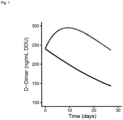
- the D-dimer concentration was determined (PPD Central Lab, Zaventem, Belgium) from the plasma by means of monoclonal antibodies quantified in an ELISA (cf. Olson (2015) Adv Clin Chem 69: 1 - 46 ; Johnson et al. (2019) Am J Hematol 94: 833-839 ). Results are presented in Table 1.
- D-dimer concentrations vary considerably among individuals, with relevant outliers in both directions.
- the median of the respective group is indicated in ng/mL DDU (D-dimer units).
- 5-amino-2,3-dihydro-1,4-phthalazinedione sodium salt reduces D-dimer in the increasing phase of the curve of the placebo group as well as in the recovery phase of the placebo group.
- 5-amino-2,3-dihydro-1,4-phthalazinedione sodium salt has a prophylactic effect (less D-dimer is formed, therefore there is a less risk of a thrombotic event) as well as a therapeutic effect (formed fibrin thrombi or respective coils are more rapidly degraded and removed).
Landscapes
- Health & Medical Sciences (AREA)
- Chemical & Material Sciences (AREA)
- Public Health (AREA)
- Animal Behavior & Ethology (AREA)
- Veterinary Medicine (AREA)
- General Health & Medical Sciences (AREA)
- Life Sciences & Earth Sciences (AREA)
- Pharmacology & Pharmacy (AREA)
- Medicinal Chemistry (AREA)
- Epidemiology (AREA)
- Organic Chemistry (AREA)
- Chemical Kinetics & Catalysis (AREA)
- Nuclear Medicine, Radiotherapy & Molecular Imaging (AREA)
- Diabetes (AREA)
- Bioinformatics & Cheminformatics (AREA)
- Engineering & Computer Science (AREA)
- Hematology (AREA)
- General Chemical & Material Sciences (AREA)
- Pulmonology (AREA)
- Dermatology (AREA)
- Nutrition Science (AREA)
- Physiology (AREA)
- Pharmaceuticals Containing Other Organic And Inorganic Compounds (AREA)
Priority Applications (7)
| Application Number | Priority Date | Filing Date | Title |
|---|---|---|---|
| EP23000092.9A EP4483879A1 (fr) | 2023-06-29 | 2023-06-29 | 5-amino-2,3-dihydro-1,4-phtalazinedione pour la prophylaxie et le traitement de troubles thrombotiques |
| EP24743262.8A EP4701641A1 (fr) | 2023-06-29 | 2024-06-28 | 5-amino-2,3-dihydro-1,4-phtalazinedione pour la prophylaxie et le traitement de troubles thrombotiques |
| PCT/EP2024/000037 WO2025002591A1 (fr) | 2023-06-29 | 2024-06-28 | 5-amino-2,3-dihydro-1,4-phtalazinedione pour la prophylaxie et le traitement de troubles thrombotiques |
| CN202480042928.8A CN121419771A (zh) | 2023-06-29 | 2024-06-28 | 用于预防和治疗血栓性病症的5-氨基-2,3-二氢-1,4-酞嗪二酮 |
| IL325272A IL325272A (en) | 2023-06-29 | 2024-06-28 | 5-amino-2,3-dihydro-1,4-phthalazinedione for the prevention and treatment of thrombotic disorders |
| KR1020267000370A KR20260029340A (ko) | 2023-06-29 | 2024-06-28 | 혈전성 질환의 예방과 치료를 위한 5-아미노-2,3-디히드로-1,4-프탈라진디온 |
| MX2025015608A MX2025015608A (es) | 2023-06-29 | 2025-12-18 | 5-amino-2,3-dihidroftalazina-1,4-diona para la profilaxis y tratamiento de trastornos tromboticos |
Applications Claiming Priority (1)
| Application Number | Priority Date | Filing Date | Title |
|---|---|---|---|
| EP23000092.9A EP4483879A1 (fr) | 2023-06-29 | 2023-06-29 | 5-amino-2,3-dihydro-1,4-phtalazinedione pour la prophylaxie et le traitement de troubles thrombotiques |
Publications (1)
| Publication Number | Publication Date |
|---|---|
| EP4483879A1 true EP4483879A1 (fr) | 2025-01-01 |
Family
ID=87070906
Family Applications (2)
| Application Number | Title | Priority Date | Filing Date |
|---|---|---|---|
| EP23000092.9A Ceased EP4483879A1 (fr) | 2023-06-29 | 2023-06-29 | 5-amino-2,3-dihydro-1,4-phtalazinedione pour la prophylaxie et le traitement de troubles thrombotiques |
| EP24743262.8A Pending EP4701641A1 (fr) | 2023-06-29 | 2024-06-28 | 5-amino-2,3-dihydro-1,4-phtalazinedione pour la prophylaxie et le traitement de troubles thrombotiques |
Family Applications After (1)
| Application Number | Title | Priority Date | Filing Date |
|---|---|---|---|
| EP24743262.8A Pending EP4701641A1 (fr) | 2023-06-29 | 2024-06-28 | 5-amino-2,3-dihydro-1,4-phtalazinedione pour la prophylaxie et le traitement de troubles thrombotiques |
Country Status (6)
| Country | Link |
|---|---|
| EP (2) | EP4483879A1 (fr) |
| KR (1) | KR20260029340A (fr) |
| CN (1) | CN121419771A (fr) |
| IL (1) | IL325272A (fr) |
| MX (1) | MX2025015608A (fr) |
| WO (1) | WO2025002591A1 (fr) |
Citations (11)
| Publication number | Priority date | Publication date | Assignee | Title |
|---|---|---|---|---|
| WO2004041169A2 (fr) | 2002-10-30 | 2004-05-21 | Bach Pharma, Inc | Modulation de destin et d'activite cellulaire par des phthalazine-diones |
| WO2007018546A1 (fr) | 2005-08-08 | 2007-02-15 | Bach Pharma, Inc. | Modulation du destin et des activités de cellules par des phthalazinediones |
| WO2010082858A2 (fr) | 2009-01-16 | 2010-07-22 | Abidopharma Pl Sp. Z.O.O | Nouveau procédé permettant d'obtenir des sels de métaux alcalins 5-amino-2,3-dihydrophthalazine-1,4-dione et leur utilisation à des fins médicales |
| WO2011107295A1 (fr) | 2010-03-01 | 2011-09-09 | Metriopharm Ag | Formes cristallines du sel de sodium de 5-amino-2,3-dihydrophtalazine-1,4-dione, préparations pharmaceutiques contenant celles-ci et leur procédé de production |
| WO2012127441A1 (fr) | 2011-03-23 | 2012-09-27 | Semorex Technologies Ltd. | Traitement des troubles de la prolifération |
| WO2016096143A1 (fr) | 2014-12-18 | 2016-06-23 | Metriopharm Ag | Forme cristalline du sel de sodium de 5-amino-2,3-dihydrophtalazine-1,4-dione, préparations pharmaceutiques la contenant et procédés pour sa production |
| WO2017140430A1 (fr) | 2016-02-16 | 2017-08-24 | Metriopharm Ag | Forme cristalline de 5-amino -2,3-dihydrophtalazine-1,4-dione |
| WO2017202496A1 (fr) | 2016-05-26 | 2017-11-30 | Metriopharm Ag | Utilisation de 5-amino-2,3-dihydro-1,4-phtalazinedione dans le traitement de troubles inflammatoires et/ou dégénératifs des ligaments articulaires, et des capsules et bourses articulaires |
| WO2018082814A1 (fr) | 2016-11-07 | 2018-05-11 | Metriopharm Ag | Utilisation de 5-amino-2,3-dihydro-1,4-phthalazinedione dans le traitement de la sclérose en plaques progressive chronique |
| WO2021249667A1 (fr) | 2020-06-10 | 2021-12-16 | Metriopharm Ag | Composé pour le traitement d'infections coronavirales |
| WO2022008093A1 (fr) | 2020-07-09 | 2022-01-13 | Metriopharm Ag | Agent de conservation de glucocorticoïdes |
-
2023
- 2023-06-29 EP EP23000092.9A patent/EP4483879A1/fr not_active Ceased
-
2024
- 2024-06-28 CN CN202480042928.8A patent/CN121419771A/zh active Pending
- 2024-06-28 EP EP24743262.8A patent/EP4701641A1/fr active Pending
- 2024-06-28 IL IL325272A patent/IL325272A/en unknown
- 2024-06-28 KR KR1020267000370A patent/KR20260029340A/ko active Pending
- 2024-06-28 WO PCT/EP2024/000037 patent/WO2025002591A1/fr not_active Ceased
-
2025
- 2025-12-18 MX MX2025015608A patent/MX2025015608A/es unknown
Patent Citations (11)
| Publication number | Priority date | Publication date | Assignee | Title |
|---|---|---|---|---|
| WO2004041169A2 (fr) | 2002-10-30 | 2004-05-21 | Bach Pharma, Inc | Modulation de destin et d'activite cellulaire par des phthalazine-diones |
| WO2007018546A1 (fr) | 2005-08-08 | 2007-02-15 | Bach Pharma, Inc. | Modulation du destin et des activités de cellules par des phthalazinediones |
| WO2010082858A2 (fr) | 2009-01-16 | 2010-07-22 | Abidopharma Pl Sp. Z.O.O | Nouveau procédé permettant d'obtenir des sels de métaux alcalins 5-amino-2,3-dihydrophthalazine-1,4-dione et leur utilisation à des fins médicales |
| WO2011107295A1 (fr) | 2010-03-01 | 2011-09-09 | Metriopharm Ag | Formes cristallines du sel de sodium de 5-amino-2,3-dihydrophtalazine-1,4-dione, préparations pharmaceutiques contenant celles-ci et leur procédé de production |
| WO2012127441A1 (fr) | 2011-03-23 | 2012-09-27 | Semorex Technologies Ltd. | Traitement des troubles de la prolifération |
| WO2016096143A1 (fr) | 2014-12-18 | 2016-06-23 | Metriopharm Ag | Forme cristalline du sel de sodium de 5-amino-2,3-dihydrophtalazine-1,4-dione, préparations pharmaceutiques la contenant et procédés pour sa production |
| WO2017140430A1 (fr) | 2016-02-16 | 2017-08-24 | Metriopharm Ag | Forme cristalline de 5-amino -2,3-dihydrophtalazine-1,4-dione |
| WO2017202496A1 (fr) | 2016-05-26 | 2017-11-30 | Metriopharm Ag | Utilisation de 5-amino-2,3-dihydro-1,4-phtalazinedione dans le traitement de troubles inflammatoires et/ou dégénératifs des ligaments articulaires, et des capsules et bourses articulaires |
| WO2018082814A1 (fr) | 2016-11-07 | 2018-05-11 | Metriopharm Ag | Utilisation de 5-amino-2,3-dihydro-1,4-phthalazinedione dans le traitement de la sclérose en plaques progressive chronique |
| WO2021249667A1 (fr) | 2020-06-10 | 2021-12-16 | Metriopharm Ag | Composé pour le traitement d'infections coronavirales |
| WO2022008093A1 (fr) | 2020-07-09 | 2022-01-13 | Metriopharm Ag | Agent de conservation de glucocorticoïdes |
Non-Patent Citations (33)
| Title |
|---|
| ADEN, STROKE, vol. 40, 2009, pages 1948 - 1949 |
| AMIRAV ET AL., J ALLERGY CLIN IMMUNOL, vol. 25, 2010, pages 1206 - 1211 |
| BREARLY, BMJ, vol. 346, 2013, pages 2681 |
| CHEN ET AL., ASIAN J. PHARM. SC., vol. 9, 2014, pages 51 - 64 |
| DELEVE ET AL., HEPATOLOGY, vol. 49, 2009, pages 1729 - 1764 |
| ESMONOWEN, J THROMB HAEMOST, vol. 2, 2004, pages 209 - 213 |
| FOLEY ET AL., CIRC RES, vol. 118, 2016, pages 1392 - 1408 |
| GARCIA PAGAN ET AL., NEW ENGL J MED, vol. 388, 2023, pages 1307 - 1316 |
| GUTMANN CLEMENS ET AL: "Reactive Oxygen Species in Venous Thrombosis", INTERNATIONAL JOURNAL OF MOLECULAR SCIENCES, vol. 21, no. 6, 11 March 2020 (2020-03-11), Basel, CH, pages 1918, XP093107484, ISSN: 1422-0067, Retrieved from the Internet <URL:https://www.ncbi.nlm.nih.gov/pmc/articles/PMC7139897/pdf/ijms-21-01918.pdf> DOI: 10.3390/ijms21061918 * |
| GUZEI ET AL., JOURNAL OF COORDINATION CHEMISTRY, vol. 66, 2013, pages 3722 - 3739 |
| HAIDL, PNEUMOLOGIE, vol. 66, 2012, pages 356 - 360 |
| HUGHES, SURGERY, GYNECOLOGY & OBSTETRICS, vol. 88, 1949, pages 89 - 127 |
| JOHNSON ET AL., AM J HEMATOL, vol. 94, 2019, pages 833 - 839 |
| KHAN ET AL., J PHARMACEUT RES, vol. 16, 2017, pages 257 - 267 |
| KRUGER ET AL., MED J AUSTRALIA, vol. 210, 2019, pages 516 - 524 |
| KUNKEL ET AL., FASEB J, vol. 18, 2004, pages 1279 - 1281 |
| OLINIC ET AL., J CLIN MED, vol. 8, no. 8, 2019 |
| OLSON, ADV CLIN CHEM, vol. 69, 2015, pages 1 - 46 |
| PHILLIPPE, AM J MANAGED CARE, vol. 23, 2017, pages 376 - 382 |
| PROESCHERMOODY, J LAB CLIN MED, 1939, pages 1183 - 1189 |
| RAJU ET AL., PEDIATRICS, vol. 120, 2007, pages 609 - 616 |
| SCHUMANN SARA ET AL: "Immune-Modulating Drug MP1032 with SARS-CoV-2 Antiviral Activity In Vitro: A potential Multi-Target Approach for Prevention and Early Intervention Treatment of COVID-19", INTERNATIONAL JOURNAL OF MOLECULAR SCIENCES, vol. 21, no. 22, 20 November 2020 (2020-11-20), pages 8803, XP055781582, Retrieved from the Internet <URL:https://www.ncbi.nlm.nih.gov/pmc/articles/PMC7699954/pdf/ijms-21-08803.pdf> DOI: 10.3390/ijms21228803 * |
| SHIMOMURA ET AL., J INTENSIVE CARE, vol. 4, 2016, pages 48 |
| SILVIS ET AL., NAT REV NEUROL, vol. 13, 2017, pages 555 - 565 |
| TOTOWA ET AL.: "Handbook of Urological Emergencies: A Practical Guide", 2005, HUMANA PRESS, pages: 171 - 180 |
| TRIPODI, CLIN CHEM, vol. 57, 2011, pages 1256 - 1262 |
| WATANABE-KUSONIKI ET AL., J AUTOIMMUN, vol. 108, 2020, pages 102390 |
| WATANABE-KUSONOKI ET AL., FRONTIERS IMMUNOL, vol. 11, 2020, pages 575890 |
| WATANABE-KUSUNOKI KANAKO ET AL: "Thrombomodulin as a Physiological Modulator of Intravascular Injury", FRONTIERS IN IMMUNOLOGY, vol. 11, 16 September 2020 (2020-09-16), Lausanne, CH, XP093107766, ISSN: 1664-3224, DOI: 10.3389/fimmu.2020.575890 * |
| WEITZ ET AL., JAM COLL CARDIOLOGY, vol. 70, 2017, pages 2413 - 2420 |
| WEITZ JEFFREY I ET AL: "A Test in Context: D-Dimer", JOURNAL OF THE AMERICAN COLLEGE OF CARDIOLOGY, vol. 70, no. 19, 7 November 2017 (2017-11-07), pages 2411 - 2420, XP085276847, ISSN: 0735-1097, DOI: 10.1016/J.JACC.2017.09.024 * |
| ZHAN ET AL., CLIN APPL THROMBOSIS HEMOSTASIS, vol. 27, 2021, pages 1 - 10 |
| ΘER. BUNSEN-GES., PHYS. CHEM, vol. 96, pages 1027 - 1031 |
Also Published As
| Publication number | Publication date |
|---|---|
| EP4701641A1 (fr) | 2026-03-04 |
| WO2025002591A1 (fr) | 2025-01-02 |
| KR20260029340A (ko) | 2026-03-04 |
| CN121419771A (zh) | 2026-01-27 |
| MX2025015608A (es) | 2026-02-03 |
| IL325272A (en) | 2026-02-01 |
Similar Documents
| Publication | Publication Date | Title |
|---|---|---|
| CN116075306B (zh) | 用于治疗冠状病毒感染的化合物 | |
| EP4125802B1 (fr) | 5-amino-2,3-dihydro-1,4-phtalazinedione pour le traitement d'une lésion pulmonaire aiguë | |
| EP4255391B1 (fr) | Luminol pour l'utilisation dans le traitment des séquelles d'une infection avec sars-cov-2 | |
| EP4483879A1 (fr) | 5-amino-2,3-dihydro-1,4-phtalazinedione pour la prophylaxie et le traitement de troubles thrombotiques | |
| EP3981405A1 (fr) | Composés pour le traitement d'infections par un coronavirus | |
| US20250032486A1 (en) | Combination of 5-amino-2,3-dihydro-1,4-phtalazinedione and a 6'-methoxycinchonan-9-ol for use in the treatment of coronaviral infections | |
| US20250064800A1 (en) | Combination of budesonide and 5-amino-2,3-dihydro-1,4-phthalazinedione | |
| HK40114977A (zh) | 用於治疗冠状病毒感染的5-氨基-2,3-二氢-1,4-酞嗪二酮与6’-甲氧基辛可宁-9-醇的组合 | |
| HK40115075A (zh) | 布地奈德和5-氨基-2,3-二氢-1,4-酞嗪二酮的组合 | |
| HK40091761A (zh) | 用於治疗冠状病毒感染的化合物 | |
| HK40091761B (zh) | 用於治疗冠状病毒感染的化合物 | |
| HK40102228A (zh) | 用於sars-cov-2感染的後遗症的预防和治疗的鲁米诺 |
Legal Events
| Date | Code | Title | Description |
|---|---|---|---|
| PUAI | Public reference made under article 153(3) epc to a published international application that has entered the european phase |
Free format text: ORIGINAL CODE: 0009012 |
|
| STAA | Information on the status of an ep patent application or granted ep patent |
Free format text: STATUS: THE APPLICATION HAS BEEN PUBLISHED |
|
| AK | Designated contracting states |
Kind code of ref document: A1 Designated state(s): AL AT BE BG CH CY CZ DE DK EE ES FI FR GB GR HR HU IE IS IT LI LT LU LV MC ME MK MT NL NO PL PT RO RS SE SI SK SM TR |
|
| STAA | Information on the status of an ep patent application or granted ep patent |
Free format text: STATUS: THE APPLICATION HAS BEEN REFUSED |
|
| 18R | Application refused |
Effective date: 20250114 |