EP4483898A1 - Composition vaccinale intranasale et procédé d'amplification l'utilisant - Google Patents
Composition vaccinale intranasale et procédé d'amplification l'utilisant Download PDFInfo
- Publication number
- EP4483898A1 EP4483898A1 EP23199080.5A EP23199080A EP4483898A1 EP 4483898 A1 EP4483898 A1 EP 4483898A1 EP 23199080 A EP23199080 A EP 23199080A EP 4483898 A1 EP4483898 A1 EP 4483898A1
- Authority
- EP
- European Patent Office
- Prior art keywords
- intranasal
- cov
- booster
- mucosal
- sars
- Prior art date
- Legal status (The legal status is an assumption and is not a legal conclusion. Google has not performed a legal analysis and makes no representation as to the accuracy of the status listed.)
- Pending
Links
- 229960005486 vaccine Drugs 0.000 title claims abstract description 56
- 238000000034 method Methods 0.000 title claims abstract description 15
- 239000000203 mixture Substances 0.000 title claims abstract description 10
- 108091007433 antigens Proteins 0.000 claims abstract description 49
- 102000036639 antigens Human genes 0.000 claims abstract description 49
- 239000000427 antigen Substances 0.000 claims abstract description 48
- 241000700605 Viruses Species 0.000 claims abstract description 33
- 241000588724 Escherichia coli Species 0.000 claims abstract description 16
- 239000003053 toxin Substances 0.000 claims abstract description 11
- 231100000765 toxin Toxicity 0.000 claims abstract description 11
- 230000009385 viral infection Effects 0.000 claims abstract description 9
- 238000007918 intramuscular administration Methods 0.000 claims description 78
- 210000002966 serum Anatomy 0.000 claims description 33
- 238000002255 vaccination Methods 0.000 claims description 32
- 241000712461 unidentified influenza virus Species 0.000 claims description 30
- 241001678559 COVID-19 virus Species 0.000 claims description 25
- 241000711573 Coronaviridae Species 0.000 claims description 23
- 102000004127 Cytokines Human genes 0.000 claims description 14
- 108090000695 Cytokines Proteins 0.000 claims description 14
- 102000000588 Interleukin-2 Human genes 0.000 claims description 7
- 108010002350 Interleukin-2 Proteins 0.000 claims description 7
- 230000001932 seasonal effect Effects 0.000 claims description 7
- 102000003816 Interleukin-13 Human genes 0.000 claims description 6
- 108090000176 Interleukin-13 Proteins 0.000 claims description 6
- 108010002616 Interleukin-5 Proteins 0.000 claims description 6
- 102000013691 Interleukin-17 Human genes 0.000 claims description 5
- 108050003558 Interleukin-17 Proteins 0.000 claims description 5
- 230000016396 cytokine production Effects 0.000 claims description 4
- 241000127282 Middle East respiratory syndrome-related coronavirus Species 0.000 claims description 3
- 241000315672 SARS coronavirus Species 0.000 claims description 3
- 239000013638 trimer Substances 0.000 description 23
- 241000699670 Mus sp. Species 0.000 description 21
- 101150026046 iga gene Proteins 0.000 description 21
- 230000036039 immunity Effects 0.000 description 20
- 230000003472 neutralizing effect Effects 0.000 description 18
- 241001465754 Metazoa Species 0.000 description 17
- 101000629318 Severe acute respiratory syndrome coronavirus 2 Spike glycoprotein Proteins 0.000 description 15
- 230000001965 increasing effect Effects 0.000 description 13
- 230000003053 immunization Effects 0.000 description 12
- 238000002649 immunization Methods 0.000 description 12
- 206010022000 influenza Diseases 0.000 description 12
- 241001112090 Pseudovirus Species 0.000 description 11
- 208000025721 COVID-19 Diseases 0.000 description 10
- 239000002671 adjuvant Substances 0.000 description 10
- 210000004027 cell Anatomy 0.000 description 10
- 230000000694 effects Effects 0.000 description 10
- 238000003556 assay Methods 0.000 description 9
- 239000003814 drug Substances 0.000 description 9
- 238000011161 development Methods 0.000 description 8
- 229940079593 drug Drugs 0.000 description 8
- 230000028996 humoral immune response Effects 0.000 description 8
- 230000016379 mucosal immune response Effects 0.000 description 8
- 238000010790 dilution Methods 0.000 description 7
- 239000012895 dilution Substances 0.000 description 7
- 230000005847 immunogenicity Effects 0.000 description 7
- 238000004519 manufacturing process Methods 0.000 description 7
- 238000006386 neutralization reaction Methods 0.000 description 7
- 229940022962 COVID-19 vaccine Drugs 0.000 description 6
- 238000002965 ELISA Methods 0.000 description 6
- 238000004458 analytical method Methods 0.000 description 6
- 230000005540 biological transmission Effects 0.000 description 6
- 230000028993 immune response Effects 0.000 description 6
- 229960003971 influenza vaccine Drugs 0.000 description 6
- 210000004877 mucosa Anatomy 0.000 description 6
- 230000003248 secreting effect Effects 0.000 description 6
- 101710154606 Hemagglutinin Proteins 0.000 description 5
- 102000000743 Interleukin-5 Human genes 0.000 description 5
- 101710093908 Outer capsid protein VP4 Proteins 0.000 description 5
- 101710135467 Outer capsid protein sigma-1 Proteins 0.000 description 5
- 101710176177 Protein A56 Proteins 0.000 description 5
- 208000037847 SARS-CoV-2-infection Diseases 0.000 description 5
- 239000000185 hemagglutinin Substances 0.000 description 5
- 208000015181 infectious disease Diseases 0.000 description 5
- 230000037452 priming Effects 0.000 description 5
- 210000004988 splenocyte Anatomy 0.000 description 5
- 229940031626 subunit vaccine Drugs 0.000 description 5
- 108700012359 toxins Proteins 0.000 description 5
- 230000002708 enhancing effect Effects 0.000 description 4
- 238000011534 incubation Methods 0.000 description 4
- 235000018102 proteins Nutrition 0.000 description 4
- 102000004169 proteins and genes Human genes 0.000 description 4
- 108090000623 proteins and genes Proteins 0.000 description 4
- 230000009885 systemic effect Effects 0.000 description 4
- 238000012313 Kruskal-Wallis test Methods 0.000 description 3
- 229940125627 MVC COVID-19 vaccine Drugs 0.000 description 3
- WNROFYMDJYEPJX-UHFFFAOYSA-K aluminium hydroxide Chemical compound [OH-].[OH-].[OH-].[Al+3] WNROFYMDJYEPJX-UHFFFAOYSA-K 0.000 description 3
- 239000003795 chemical substances by application Substances 0.000 description 3
- 230000034994 death Effects 0.000 description 3
- 231100000517 death Toxicity 0.000 description 3
- RAXXELZNTBOGNW-UHFFFAOYSA-N imidazole Natural products C1=CNC=N1 RAXXELZNTBOGNW-UHFFFAOYSA-N 0.000 description 3
- 239000013612 plasmid Substances 0.000 description 3
- 238000011321 prophylaxis Methods 0.000 description 3
- 230000001681 protective effect Effects 0.000 description 3
- 238000000746 purification Methods 0.000 description 3
- 238000011282 treatment Methods 0.000 description 3
- 241000701161 unidentified adenovirus Species 0.000 description 3
- IJGRMHOSHXDMSA-UHFFFAOYSA-N Atomic nitrogen Chemical compound N#N IJGRMHOSHXDMSA-UHFFFAOYSA-N 0.000 description 2
- 101710146739 Enterotoxin Proteins 0.000 description 2
- 241000709661 Enterovirus Species 0.000 description 2
- 108060003951 Immunoglobulin Proteins 0.000 description 2
- 241000713666 Lentivirus Species 0.000 description 2
- 108060001084 Luciferase Proteins 0.000 description 2
- 239000005089 Luciferase Substances 0.000 description 2
- 229940026233 Pfizer-BioNTech COVID-19 vaccine Drugs 0.000 description 2
- 229940096437 Protein S Drugs 0.000 description 2
- 201000003176 Severe Acute Respiratory Syndrome Diseases 0.000 description 2
- FAPWRFPIFSIZLT-UHFFFAOYSA-M Sodium chloride Chemical compound [Na+].[Cl-] FAPWRFPIFSIZLT-UHFFFAOYSA-M 0.000 description 2
- 101710198474 Spike protein Proteins 0.000 description 2
- 230000024932 T cell mediated immunity Effects 0.000 description 2
- 238000013459 approach Methods 0.000 description 2
- 230000009286 beneficial effect Effects 0.000 description 2
- 230000008901 benefit Effects 0.000 description 2
- 210000004899 c-terminal region Anatomy 0.000 description 2
- 238000006243 chemical reaction Methods 0.000 description 2
- 150000001875 compounds Chemical class 0.000 description 2
- UQLDLKMNUJERMK-UHFFFAOYSA-L di(octadecanoyloxy)lead Chemical compound [Pb+2].CCCCCCCCCCCCCCCCCC([O-])=O.CCCCCCCCCCCCCCCCCC([O-])=O UQLDLKMNUJERMK-UHFFFAOYSA-L 0.000 description 2
- 201000010099 disease Diseases 0.000 description 2
- 208000037265 diseases, disorders, signs and symptoms Diseases 0.000 description 2
- 230000003828 downregulation Effects 0.000 description 2
- 239000000839 emulsion Substances 0.000 description 2
- 239000000147 enterotoxin Substances 0.000 description 2
- 231100000655 enterotoxin Toxicity 0.000 description 2
- 239000012530 fluid Substances 0.000 description 2
- 239000001963 growth medium Substances 0.000 description 2
- 229930186900 holotoxin Natural products 0.000 description 2
- 230000004727 humoral immunity Effects 0.000 description 2
- 230000002163 immunogen Effects 0.000 description 2
- 102000018358 immunoglobulin Human genes 0.000 description 2
- 229940099472 immunoglobulin a Drugs 0.000 description 2
- 229940027941 immunoglobulin g Drugs 0.000 description 2
- 230000001939 inductive effect Effects 0.000 description 2
- 230000005764 inhibitory process Effects 0.000 description 2
- 108700021021 mRNA Vaccine Proteins 0.000 description 2
- 229940126582 mRNA vaccine Drugs 0.000 description 2
- 239000000463 material Substances 0.000 description 2
- 230000001404 mediated effect Effects 0.000 description 2
- 230000003389 potentiating effect Effects 0.000 description 2
- 230000002265 prevention Effects 0.000 description 2
- 230000000069 prophylactic effect Effects 0.000 description 2
- 210000002345 respiratory system Anatomy 0.000 description 2
- 238000013207 serial dilution Methods 0.000 description 2
- 235000020183 skimmed milk Nutrition 0.000 description 2
- 239000011780 sodium chloride Substances 0.000 description 2
- 239000000243 solution Substances 0.000 description 2
- 210000000952 spleen Anatomy 0.000 description 2
- 238000007619 statistical method Methods 0.000 description 2
- 239000006228 supernatant Substances 0.000 description 2
- 208000024891 symptom Diseases 0.000 description 2
- 230000003827 upregulation Effects 0.000 description 2
- MZOFCQQQCNRIBI-VMXHOPILSA-N (3s)-4-[[(2s)-1-[[(2s)-1-[[(1s)-1-carboxy-2-hydroxyethyl]amino]-4-methyl-1-oxopentan-2-yl]amino]-5-(diaminomethylideneamino)-1-oxopentan-2-yl]amino]-3-[[2-[[(2s)-2,6-diaminohexanoyl]amino]acetyl]amino]-4-oxobutanoic acid Chemical compound OC[C@@H](C(O)=O)NC(=O)[C@H](CC(C)C)NC(=O)[C@H](CCCN=C(N)N)NC(=O)[C@H](CC(O)=O)NC(=O)CNC(=O)[C@@H](N)CCCCN MZOFCQQQCNRIBI-VMXHOPILSA-N 0.000 description 1
- DNEODQZZMGSVQO-UHFFFAOYSA-N 3-(3,5-dimethylphenyl)-1,5-dimethylcyclohexa-3,5-diene-1,2-diamine Chemical compound CC1(C(C(=CC(=C1)C)C1=CC(=CC(=C1)C)C)N)N DNEODQZZMGSVQO-UHFFFAOYSA-N 0.000 description 1
- 229920000936 Agarose Polymers 0.000 description 1
- 241000283690 Bos taurus Species 0.000 description 1
- 108091003079 Bovine Serum Albumin Proteins 0.000 description 1
- 241000282465 Canis Species 0.000 description 1
- BVKZGUZCCUSVTD-UHFFFAOYSA-L Carbonate Chemical compound [O-]C([O-])=O BVKZGUZCCUSVTD-UHFFFAOYSA-L 0.000 description 1
- 208000035473 Communicable disease Diseases 0.000 description 1
- 102100031673 Corneodesmosin Human genes 0.000 description 1
- 101710139375 Corneodesmosin Proteins 0.000 description 1
- 241000699800 Cricetinae Species 0.000 description 1
- 108020004414 DNA Proteins 0.000 description 1
- 108010012253 E coli heat-labile enterotoxin Proteins 0.000 description 1
- 238000008157 ELISA kit Methods 0.000 description 1
- 101000867232 Escherichia coli Heat-stable enterotoxin II Proteins 0.000 description 1
- 241000282324 Felis Species 0.000 description 1
- 102000004961 Furin Human genes 0.000 description 1
- 108090001126 Furin Proteins 0.000 description 1
- 101710112523 GDP-mannose transporter 1 Proteins 0.000 description 1
- 241000282412 Homo Species 0.000 description 1
- 108010001336 Horseradish Peroxidase Proteins 0.000 description 1
- 241000046923 Human bocavirus Species 0.000 description 1
- 241000342334 Human metapneumovirus Species 0.000 description 1
- 206010061218 Inflammation Diseases 0.000 description 1
- 229940124873 Influenza virus vaccine Drugs 0.000 description 1
- 102100037850 Interferon gamma Human genes 0.000 description 1
- 108010074328 Interferon-gamma Proteins 0.000 description 1
- 108010002352 Interleukin-1 Proteins 0.000 description 1
- 108090001005 Interleukin-6 Proteins 0.000 description 1
- KDXKERNSBIXSRK-UHFFFAOYSA-N Lysine Natural products NCCCCC(N)C(O)=O KDXKERNSBIXSRK-UHFFFAOYSA-N 0.000 description 1
- 239000004472 Lysine Substances 0.000 description 1
- 241000124008 Mammalia Species 0.000 description 1
- 241000699666 Mus <mouse, genus> Species 0.000 description 1
- 108090001074 Nucleocapsid Proteins Proteins 0.000 description 1
- 241000712464 Orthomyxoviridae Species 0.000 description 1
- 208000002606 Paramyxoviridae Infections Diseases 0.000 description 1
- 108091005804 Peptidases Proteins 0.000 description 1
- 229920001213 Polysorbate 20 Polymers 0.000 description 1
- 241000288906 Primates Species 0.000 description 1
- 239000004365 Protease Substances 0.000 description 1
- 108091030071 RNAI Proteins 0.000 description 1
- 239000012980 RPMI-1640 medium Substances 0.000 description 1
- 241000700159 Rattus Species 0.000 description 1
- 241000725643 Respiratory syncytial virus Species 0.000 description 1
- 102100037486 Reverse transcriptase/ribonuclease H Human genes 0.000 description 1
- 241000283984 Rodentia Species 0.000 description 1
- 101001024637 Severe acute respiratory syndrome coronavirus 2 Nucleoprotein Proteins 0.000 description 1
- 210000001744 T-lymphocyte Anatomy 0.000 description 1
- 108060008682 Tumor Necrosis Factor Proteins 0.000 description 1
- 102000000852 Tumor Necrosis Factor-alpha Human genes 0.000 description 1
- 108020005202 Viral DNA Proteins 0.000 description 1
- 230000003213 activating effect Effects 0.000 description 1
- 230000002411 adverse Effects 0.000 description 1
- 238000001042 affinity chromatography Methods 0.000 description 1
- 230000000840 anti-viral effect Effects 0.000 description 1
- 230000005875 antibody response Effects 0.000 description 1
- 230000004888 barrier function Effects 0.000 description 1
- 230000033228 biological regulation Effects 0.000 description 1
- 230000000903 blocking effect Effects 0.000 description 1
- 239000000872 buffer Substances 0.000 description 1
- 230000020411 cell activation Effects 0.000 description 1
- 230000007969 cellular immunity Effects 0.000 description 1
- 238000005119 centrifugation Methods 0.000 description 1
- 238000012512 characterization method Methods 0.000 description 1
- 238000003776 cleavage reaction Methods 0.000 description 1
- 239000011248 coating agent Substances 0.000 description 1
- 238000000576 coating method Methods 0.000 description 1
- 230000003247 decreasing effect Effects 0.000 description 1
- 230000007812 deficiency Effects 0.000 description 1
- 230000002950 deficient Effects 0.000 description 1
- 230000003292 diminished effect Effects 0.000 description 1
- 238000005516 engineering process Methods 0.000 description 1
- 210000002919 epithelial cell Anatomy 0.000 description 1
- 210000000981 epithelium Anatomy 0.000 description 1
- 238000011156 evaluation Methods 0.000 description 1
- 230000017188 evasion or tolerance of host immune response Effects 0.000 description 1
- 230000007717 exclusion Effects 0.000 description 1
- 210000001508 eye Anatomy 0.000 description 1
- 239000012091 fetal bovine serum Substances 0.000 description 1
- 238000011010 flushing procedure Methods 0.000 description 1
- 239000012737 fresh medium Substances 0.000 description 1
- 230000009368 gene silencing by RNA Effects 0.000 description 1
- 230000035931 haemagglutination Effects 0.000 description 1
- HNDVDQJCIGZPNO-UHFFFAOYSA-N histidine Natural products OC(=O)C(N)CC1=CN=CN1 HNDVDQJCIGZPNO-UHFFFAOYSA-N 0.000 description 1
- 230000006698 induction Effects 0.000 description 1
- 230000002458 infectious effect Effects 0.000 description 1
- 230000004054 inflammatory process Effects 0.000 description 1
- 239000004615 ingredient Substances 0.000 description 1
- 230000002401 inhibitory effect Effects 0.000 description 1
- 230000015788 innate immune response Effects 0.000 description 1
- 230000003834 intracellular effect Effects 0.000 description 1
- 230000009545 invasion Effects 0.000 description 1
- 239000007788 liquid Substances 0.000 description 1
- 244000144972 livestock Species 0.000 description 1
- 125000003588 lysine group Chemical group [H]N([H])C([H])([H])C([H])([H])C([H])([H])C([H])([H])C([H])(N([H])[H])C(*)=O 0.000 description 1
- 239000003550 marker Substances 0.000 description 1
- 238000005259 measurement Methods 0.000 description 1
- 230000007246 mechanism Effects 0.000 description 1
- 238000002483 medication Methods 0.000 description 1
- 239000002609 medium Substances 0.000 description 1
- 238000010172 mouse model Methods 0.000 description 1
- 210000000214 mouth Anatomy 0.000 description 1
- 230000008881 mucosal defense Effects 0.000 description 1
- 238000011201 multiple comparisons test Methods 0.000 description 1
- 230000035772 mutation Effects 0.000 description 1
- 239000007908 nanoemulsion Substances 0.000 description 1
- 210000002850 nasal mucosa Anatomy 0.000 description 1
- 230000000926 neurological effect Effects 0.000 description 1
- 229910052757 nitrogen Inorganic materials 0.000 description 1
- 210000001331 nose Anatomy 0.000 description 1
- 239000002773 nucleotide Substances 0.000 description 1
- 125000003729 nucleotide group Chemical group 0.000 description 1
- 230000003287 optical effect Effects 0.000 description 1
- 238000004806 packaging method and process Methods 0.000 description 1
- 239000008363 phosphate buffer Substances 0.000 description 1
- 239000013600 plasmid vector Substances 0.000 description 1
- 235000010486 polyoxyethylene sorbitan monolaurate Nutrition 0.000 description 1
- 239000000256 polyoxyethylene sorbitan monolaurate Substances 0.000 description 1
- 230000003449 preventive effect Effects 0.000 description 1
- 230000000770 proinflammatory effect Effects 0.000 description 1
- 235000013930 proline Nutrition 0.000 description 1
- 125000001500 prolyl group Chemical class [H]N1C([H])(C(=O)[*])C([H])([H])C([H])([H])C1([H])[H] 0.000 description 1
- 230000002829 reductive effect Effects 0.000 description 1
- 230000010076 replication Effects 0.000 description 1
- 230000000241 respiratory effect Effects 0.000 description 1
- 230000004044 response Effects 0.000 description 1
- 150000003839 salts Chemical class 0.000 description 1
- 230000007017 scission Effects 0.000 description 1
- 230000000087 stabilizing effect Effects 0.000 description 1
- 238000007920 subcutaneous administration Methods 0.000 description 1
- 239000000126 substance Substances 0.000 description 1
- 238000006467 substitution reaction Methods 0.000 description 1
- 230000004083 survival effect Effects 0.000 description 1
- 229940124597 therapeutic agent Drugs 0.000 description 1
- 230000001225 therapeutic effect Effects 0.000 description 1
- 238000004448 titration Methods 0.000 description 1
- 230000020192 tolerance induction in gut-associated lymphoid tissue Effects 0.000 description 1
- 230000003614 tolerogenic effect Effects 0.000 description 1
- 231100000419 toxicity Toxicity 0.000 description 1
- 230000001988 toxicity Effects 0.000 description 1
- 210000003437 trachea Anatomy 0.000 description 1
- 238000013518 transcription Methods 0.000 description 1
- 230000035897 transcription Effects 0.000 description 1
- 238000010361 transduction Methods 0.000 description 1
- 230000026683 transduction Effects 0.000 description 1
- 238000001890 transfection Methods 0.000 description 1
- 239000012096 transfection reagent Substances 0.000 description 1
- 238000005829 trimerization reaction Methods 0.000 description 1
- 238000012762 unpaired Student’s t-test Methods 0.000 description 1
- 239000013598 vector Substances 0.000 description 1
- 231100000747 viability assay Toxicity 0.000 description 1
- 238000003026 viability measurement method Methods 0.000 description 1
- 210000002845 virion Anatomy 0.000 description 1
- 230000003612 virological effect Effects 0.000 description 1
Images







Classifications
-
- A—HUMAN NECESSITIES
- A61—MEDICAL OR VETERINARY SCIENCE; HYGIENE
- A61K—PREPARATIONS FOR MEDICAL, DENTAL OR TOILETRY PURPOSES
- A61K39/00—Medicinal preparations containing antigens or antibodies
- A61K39/12—Viral antigens
-
- A—HUMAN NECESSITIES
- A61—MEDICAL OR VETERINARY SCIENCE; HYGIENE
- A61K—PREPARATIONS FOR MEDICAL, DENTAL OR TOILETRY PURPOSES
- A61K39/00—Medicinal preparations containing antigens or antibodies
- A61K39/12—Viral antigens
- A61K39/145—Orthomyxoviridae, e.g. influenza virus
-
- A—HUMAN NECESSITIES
- A61—MEDICAL OR VETERINARY SCIENCE; HYGIENE
- A61K—PREPARATIONS FOR MEDICAL, DENTAL OR TOILETRY PURPOSES
- A61K39/00—Medicinal preparations containing antigens or antibodies
- A61K39/12—Viral antigens
- A61K39/215—Coronaviridae, e.g. avian infectious bronchitis virus
-
- A—HUMAN NECESSITIES
- A61—MEDICAL OR VETERINARY SCIENCE; HYGIENE
- A61K—PREPARATIONS FOR MEDICAL, DENTAL OR TOILETRY PURPOSES
- A61K39/00—Medicinal preparations containing antigens or antibodies
- A61K39/39—Medicinal preparations containing antigens or antibodies characterised by the immunostimulating additives, e.g. chemical adjuvants
-
- A—HUMAN NECESSITIES
- A61—MEDICAL OR VETERINARY SCIENCE; HYGIENE
- A61P—SPECIFIC THERAPEUTIC ACTIVITY OF CHEMICAL COMPOUNDS OR MEDICINAL PREPARATIONS
- A61P31/00—Antiinfectives, i.e. antibiotics, antiseptics, chemotherapeutics
- A61P31/12—Antivirals
- A61P31/14—Antivirals for RNA viruses
-
- A—HUMAN NECESSITIES
- A61—MEDICAL OR VETERINARY SCIENCE; HYGIENE
- A61P—SPECIFIC THERAPEUTIC ACTIVITY OF CHEMICAL COMPOUNDS OR MEDICINAL PREPARATIONS
- A61P31/00—Antiinfectives, i.e. antibiotics, antiseptics, chemotherapeutics
- A61P31/12—Antivirals
- A61P31/14—Antivirals for RNA viruses
- A61P31/16—Antivirals for RNA viruses for influenza or rhinoviruses
-
- A—HUMAN NECESSITIES
- A61—MEDICAL OR VETERINARY SCIENCE; HYGIENE
- A61P—SPECIFIC THERAPEUTIC ACTIVITY OF CHEMICAL COMPOUNDS OR MEDICINAL PREPARATIONS
- A61P37/00—Drugs for immunological or allergic disorders
- A61P37/02—Immunomodulators
- A61P37/04—Immunostimulants
-
- A—HUMAN NECESSITIES
- A61—MEDICAL OR VETERINARY SCIENCE; HYGIENE
- A61K—PREPARATIONS FOR MEDICAL, DENTAL OR TOILETRY PURPOSES
- A61K39/00—Medicinal preparations containing antigens or antibodies
- A61K2039/54—Medicinal preparations containing antigens or antibodies characterised by the route of administration
- A61K2039/541—Mucosal route
- A61K2039/543—Mucosal route intranasal
-
- A—HUMAN NECESSITIES
- A61—MEDICAL OR VETERINARY SCIENCE; HYGIENE
- A61K—PREPARATIONS FOR MEDICAL, DENTAL OR TOILETRY PURPOSES
- A61K39/00—Medicinal preparations containing antigens or antibodies
- A61K2039/545—Medicinal preparations containing antigens or antibodies characterised by the dose, timing or administration schedule
-
- A—HUMAN NECESSITIES
- A61—MEDICAL OR VETERINARY SCIENCE; HYGIENE
- A61K—PREPARATIONS FOR MEDICAL, DENTAL OR TOILETRY PURPOSES
- A61K39/00—Medicinal preparations containing antigens or antibodies
- A61K2039/555—Medicinal preparations containing antigens or antibodies characterised by a specific combination antigen/adjuvant
- A61K2039/55511—Organic adjuvants
- A61K2039/55522—Cytokines; Lymphokines; Interferons
-
- A—HUMAN NECESSITIES
- A61—MEDICAL OR VETERINARY SCIENCE; HYGIENE
- A61K—PREPARATIONS FOR MEDICAL, DENTAL OR TOILETRY PURPOSES
- A61K39/00—Medicinal preparations containing antigens or antibodies
- A61K2039/555—Medicinal preparations containing antigens or antibodies characterised by a specific combination antigen/adjuvant
- A61K2039/55511—Organic adjuvants
- A61K2039/55522—Cytokines; Lymphokines; Interferons
- A61K2039/55527—Interleukins
- A61K2039/55533—IL-2
-
- A—HUMAN NECESSITIES
- A61—MEDICAL OR VETERINARY SCIENCE; HYGIENE
- A61K—PREPARATIONS FOR MEDICAL, DENTAL OR TOILETRY PURPOSES
- A61K39/00—Medicinal preparations containing antigens or antibodies
- A61K2039/555—Medicinal preparations containing antigens or antibodies characterised by a specific combination antigen/adjuvant
- A61K2039/55511—Organic adjuvants
- A61K2039/55544—Bacterial toxins
-
- A—HUMAN NECESSITIES
- A61—MEDICAL OR VETERINARY SCIENCE; HYGIENE
- A61K—PREPARATIONS FOR MEDICAL, DENTAL OR TOILETRY PURPOSES
- A61K39/00—Medicinal preparations containing antigens or antibodies
- A61K2039/555—Medicinal preparations containing antigens or antibodies characterised by a specific combination antigen/adjuvant
- A61K2039/55588—Adjuvants of undefined constitution
- A61K2039/55594—Adjuvants of undefined constitution from bacteria
-
- A—HUMAN NECESSITIES
- A61—MEDICAL OR VETERINARY SCIENCE; HYGIENE
- A61K—PREPARATIONS FOR MEDICAL, DENTAL OR TOILETRY PURPOSES
- A61K39/00—Medicinal preparations containing antigens or antibodies
- A61K2039/57—Medicinal preparations containing antigens or antibodies characterised by the type of response, e.g. Th1, Th2
-
- A—HUMAN NECESSITIES
- A61—MEDICAL OR VETERINARY SCIENCE; HYGIENE
- A61K—PREPARATIONS FOR MEDICAL, DENTAL OR TOILETRY PURPOSES
- A61K39/00—Medicinal preparations containing antigens or antibodies
- A61K2039/57—Medicinal preparations containing antigens or antibodies characterised by the type of response, e.g. Th1, Th2
- A61K2039/575—Medicinal preparations containing antigens or antibodies characterised by the type of response, e.g. Th1, Th2 humoral response
-
- A—HUMAN NECESSITIES
- A61—MEDICAL OR VETERINARY SCIENCE; HYGIENE
- A61K—PREPARATIONS FOR MEDICAL, DENTAL OR TOILETRY PURPOSES
- A61K39/00—Medicinal preparations containing antigens or antibodies
- A61K2039/70—Multivalent vaccine
-
- C—CHEMISTRY; METALLURGY
- C12—BIOCHEMISTRY; BEER; SPIRITS; WINE; VINEGAR; MICROBIOLOGY; ENZYMOLOGY; MUTATION OR GENETIC ENGINEERING
- C12N—MICROORGANISMS OR ENZYMES; COMPOSITIONS THEREOF; PROPAGATING, PRESERVING, OR MAINTAINING MICROORGANISMS; MUTATION OR GENETIC ENGINEERING; CULTURE MEDIA
- C12N2760/00—MICROORGANISMS OR ENZYMES; COMPOSITIONS THEREOF; PROPAGATING, PRESERVING, OR MAINTAINING MICROORGANISMS; MUTATION OR GENETIC ENGINEERING; CULTURE MEDIA ssRNA viruses negative-sense
- C12N2760/00011—Details
- C12N2760/16011—Orthomyxoviridae
- C12N2760/16034—Use of virus or viral component as vaccine, e.g. live-attenuated or inactivated virus, VLP, viral protein
-
- C—CHEMISTRY; METALLURGY
- C12—BIOCHEMISTRY; BEER; SPIRITS; WINE; VINEGAR; MICROBIOLOGY; ENZYMOLOGY; MUTATION OR GENETIC ENGINEERING
- C12N—MICROORGANISMS OR ENZYMES; COMPOSITIONS THEREOF; PROPAGATING, PRESERVING, OR MAINTAINING MICROORGANISMS; MUTATION OR GENETIC ENGINEERING; CULTURE MEDIA
- C12N2760/00—MICROORGANISMS OR ENZYMES; COMPOSITIONS THEREOF; PROPAGATING, PRESERVING, OR MAINTAINING MICROORGANISMS; MUTATION OR GENETIC ENGINEERING; CULTURE MEDIA ssRNA viruses negative-sense
- C12N2760/00011—Details
- C12N2760/16011—Orthomyxoviridae
- C12N2760/16111—Influenzavirus A, i.e. influenza A virus
- C12N2760/16134—Use of virus or viral component as vaccine, e.g. live-attenuated or inactivated virus, VLP, viral protein
-
- C—CHEMISTRY; METALLURGY
- C12—BIOCHEMISTRY; BEER; SPIRITS; WINE; VINEGAR; MICROBIOLOGY; ENZYMOLOGY; MUTATION OR GENETIC ENGINEERING
- C12N—MICROORGANISMS OR ENZYMES; COMPOSITIONS THEREOF; PROPAGATING, PRESERVING, OR MAINTAINING MICROORGANISMS; MUTATION OR GENETIC ENGINEERING; CULTURE MEDIA
- C12N2760/00—MICROORGANISMS OR ENZYMES; COMPOSITIONS THEREOF; PROPAGATING, PRESERVING, OR MAINTAINING MICROORGANISMS; MUTATION OR GENETIC ENGINEERING; CULTURE MEDIA ssRNA viruses negative-sense
- C12N2760/00011—Details
- C12N2760/16011—Orthomyxoviridae
- C12N2760/16211—Influenzavirus B, i.e. influenza B virus
- C12N2760/16233—Use of viral protein as therapeutic agent other than vaccine, e.g. apoptosis inducing or anti-inflammatory
-
- C—CHEMISTRY; METALLURGY
- C12—BIOCHEMISTRY; BEER; SPIRITS; WINE; VINEGAR; MICROBIOLOGY; ENZYMOLOGY; MUTATION OR GENETIC ENGINEERING
- C12N—MICROORGANISMS OR ENZYMES; COMPOSITIONS THEREOF; PROPAGATING, PRESERVING, OR MAINTAINING MICROORGANISMS; MUTATION OR GENETIC ENGINEERING; CULTURE MEDIA
- C12N2770/00—MICROORGANISMS OR ENZYMES; COMPOSITIONS THEREOF; PROPAGATING, PRESERVING, OR MAINTAINING MICROORGANISMS; MUTATION OR GENETIC ENGINEERING; CULTURE MEDIA ssRNA viruses positive-sense
- C12N2770/00011—Details
- C12N2770/20011—Coronaviridae
- C12N2770/20034—Use of virus or viral component as vaccine, e.g. live-attenuated or inactivated virus, VLP, viral protein
Definitions
- the invention relates an intranasal vaccine composition
- the intranasal vaccine composition is a booster that prevents coronavirus or influenza virus infection.
- SARS-CoV-2 In late December 2019, the first case of SARS-CoV-2 was identified in Wuhan, China. This virus caused a global pandemic.
- the vaccines include nucleoside-modified mRNA vaccines, adeno-based vaccines, and recombinant subunit vaccines.
- the rapid development of vaccines for SARS-CoV-2 represents an unprecedented achievement for biotech.
- the SARS-CoV-2 variants, such as Omicron exhibit increased immune evasion, reducing vaccine effectiveness ( Cohn BA, Cirillo PM, Murphy CC, Krigbaum NY, Wallace AW: SARS-CoV-2 vaccine protection and deaths among US veterans during 2021.
- iNCOVACC intramuscular intranasal vaccine by Bharat
- all other SARS-CoV-2 vaccines require intramuscular (IM) administration.
- IM intramuscular
- Vaccines via the IM route have a track record of good safety and providing robust humoral immunity; however, there is often diminished efficacy four months after the IM booster ( Cohn BA, Cirillo PM, Murphy CC, Krigbaum NY, Wallace AW: SARS-CoV-2 vaccine protection and deaths among US veterans during 2021.
- Mucosal Immunol 2022, 15(4):584-594 Li M, Wang H, Tian L, Pang Z, Yang Q, Huang T, Fan J, Song L, Tong Y, Fan H: COVID-19 vaccine development: milestones, lessons and prospects.
- Mucosal immunity is a compartmentalized immune response playing a critical role in defending against infection via mucosa. Mucosal vaccination elevates infection-specific mucosal immunity to infecting sites ( Miquel-Clopes A, Bentley EG, Stewart JP, Carding SR: Mucosal vaccines and technology. Clin Exp Immunol 2019, 196(2):205-214 ).
- the secretory IgA (sIgA) is one marker of mucosal immunity. Unlike the effect of IgG in protecting against progression of disease symptoms, sIgA responds to infectious microbes at infected sites.
- mucosal vaccines Regardless of the critical role of mucosal immunity against SARS-CoV-2, only one mucosal vaccine developed by Bharat India has been approved ( Waltz E: China and India approve nasal COVID vaccines-are they a game changer? Nature 2022, 609(7927):450 ). The delay in the development of mucosal vaccines may be due to the tolerogenic nature of epithelium track and the concerns over neurological adverse events induced by intranasal adjuvants.
- the current vaccines for COVID-19 comprise the IM administration of SARS-CoV-2 coding nucleotides or recombinant spike antigen (S-2P) to induce cellular and humoral immunity.
- S-2P recombinant spike antigen
- Escherichia coli heat-labile toxin has been extensively studied as an effective intranasal (IN) adjuvant for over 30 years ( Clements JD, Hartzog NM, Lyon FL: Adjuvant activity of Escherichia coli heat-labile enterotoxin and effect on the induction of oral tolerance in mice to unrelated protein antigens.
- LTh( ⁇ K) is a fully detoxified Escherichia coli LT protein from human isolate.
- LTh( ⁇ K)-adjuvanted inactivated intranasal vaccine (IIV) elicited both serum IgG and sIgA against hemagglutination
- Pan SC, Hsieh SM, Lin CF, Hsu YS, Chang M, Chang SC A randomized, double-blind, controlled clinical trial to evaluate the safety and immunogenicity of an intranasally administered trivalent inactivated influenza vaccine with adjuvant LTh(alphaK): A phase I study.
- Hybrid vaccination also known as heterologous vaccination, has been described in the art.
- Science 2022, 375(6578):331-336 describes a study of hybrid vaccination comprising a systemic subcutaneous prime followed by oral boosts with the LTB subunit to enhance the immunogenicity of a vaccine.
- SARS-CoV-2 nucleocapsid serving as a T-cell antigen is covalently linked to LTB. The nucleocapsid is required for activating Th-1 and eliciting IL-2 expression.
- the adenovector After administration, the adenovector infects the cell and dumps its viral DNA genome into the nucleus for transcription. Invasion of adenovector to host cells also induces innate immunity-mediated inflammation, and the burst of pro-inflammatory IL-1, IL-6, TNF- ⁇ , etc. drives the anti-insert immunity. Also, complexity promotes immunogenicity. In addition to the insert being targeted by immunity, the entire adenovirus virion complex is targeted by vaccination.
- Vaccines play an important role in the prevention of infectious diseases.
- mucosal viruses such as SARS-CoV-2 and seasonal influenza
- Parenteral vaccines mediate strong systemic immunity against SARS-CoV-2 but show minimal effect on secretory IgA (sIgA), tissue-resident memory B (BRM), and memory T (TRM) cell activation.
- IgA secretory IgA
- BRM tissue-resident memory B
- TRM memory T
- intranasal booster that effectively induces serum IgG, serum IgA, and mucosal IgA against the virus.
- the booster can be applied to a subject treated with an intranasal prime or an intramuscular prime, the latter referred to as a hybrid vaccination regimen.
- Both the intranasal-prime-intranasal-boost and the hybrid vaccination regimen which involves intramuscular prime and intranasal boost, enhance serum-neutralizing activity and elicit robust mucosal neutralizing activity.
- the LTh( ⁇ K)-adjuvanted SARS-CoV-2 spike protein intranasal (IN) booster is found to significantly augment neutralizing antibody titers in serum and nasal wash samples.
- This LTh( ⁇ K)-adjuvanted IN booster enhances Th1/Th2 balanced humoral and mucosal immunity in a mouse model.
- the IN booster which enhances mucosal and circulatory immunogenicity, brings clinically meaningful mucosal defense for vaccination.
- the IN booster of the present invention is also effective in inducing both humoral and mucosal immunities against influenza viruses using influenza antigen adjuvanted with LTh( ⁇ K).
- LTh( ⁇ K) is found to be an effective adjuvant in eliciting systemic and mucosal immunities against mucosal viruses in a booster.
- the LTh( ⁇ K) IN booster is more effective in preventing mucosal virus infections and blocking the transmissions of viruses.
- Treatment refers to an approach for obtaining a beneficial or desired result, including clinical results.
- beneficial or desired results include but are not limited to inhibiting and/or suppressing the onset and/or development of a condition or reducing the severity of such condition, such as reducing the number and/or severity of symptoms associated with the condition, increasing the quality of life of those suffering from the condition, decreasing the dose of other medications required to treat the condition, enhancing the effect of another medication a patient is taking for the condition, and/or prolonging survival of patients having the condition.
- “Prophylaxis,” “prophylactic,” “prevent,” “preventing,” “prevention,” and the like refer to reducing the probability of developing a condition in a patient who does not have but is at risk of developing a condition.
- a patient “at risk” may or may not have a detectable condition, and may or may not have displayed a detectable condition prior to the treatment methods disclosed herein.
- administering or "administration of" a substance, a compound or an agent to a subject can be carried out using one of a variety of methods known to those skilled in the art.
- a compound or an agent can be administered intranasally.
- Administering can also be performed, for example, once, a plurality of times, and/or over one or more extended periods.
- the administration includes both direct administration, including self-administration, and indirect administration, including the act of prescribing a drug.
- a physician who instructs a patient to self-administer a drug, or to have the drug administered by another and/or who provides a patient with a prescription for a drug is administering the drug to the patient.
- modulator refers to the agent that regulates a condition, level, or amount.
- the regulation may be upregulation or downregulation.
- humoral immune response refers to immune responses that are induced at the serum.
- humoral immune response includes, but is not limited to, antigen-specific immunoglobulin G and its subclasses, immunoglobulin A and its subclasses, immunoglobulin M and its subclasses, and cell-mediated immunity to immunized antigens.
- mucosal immune response refers to immune responses that are induced at the mucosa.
- mucosal immune response includes, but is not limited to, antigen-specific immunoglobulin G and its subclasses, immunoglobulin A and its subclasses, immunoglobulin M and its subclasses, and cell-mediated immunity to immunized antigens.
- Effective amount refers to such amount of a therapeutic agent or a pharmaceutically acceptable salt thereof which, in consideration of its parameters of efficacy and potential for toxicity, as well as based on the knowledge of the practicing specialist, should be effective in a given therapeutic form. As is understood in the art, an effective amount can be administered in one or more doses.
- Hybrid vaccination refers to a vaccination scheme wherein the booster is administered through a different route from the prime vaccine.
- a hybrid vaccination comprises an intramuscularly administered prime vaccine and an intranasally administered booster vaccine.
- Mucosal virus refers to a virus that infects a subject through the mucosa.
- a mucosal virus may infect through the mucosa of the eyes, nose, mouth, respiratory tract, and other anatomical mucosa.
- Exemplary mucosal viruses are coronaviruses, influenza viruses, rhinoviruses (HRV), adenoviruses, respiratory syncytial viruses, enteroviruses, parainfluenza viruses, paramyxoviruses, human metapneumoviruses, human bocaviruses, etc.
- an intranasal booster comprising a detoxified Escherichia coli labile toxin (LT), such as LTh( ⁇ K), and an antigen from a mucosal virus, such as coronavirus and influenza virus, can elicit both strong humoral and mucosal immune responses. Therefore, the present invention relates to an intranasal booster comprising a detoxified Escherichia coli labile toxins (LT) and an antigen from a mucosal virus.
- LT detoxified Escherichia coli labile toxin
- the present disclosure relates to a method for enhancing humoral and mucosal immunities and Th1, Th2 and Th17 cytokine productions, leading to Th1/Th2 balance. Therefore, the present disclosure provides a method of vaccinating a subject using an intranasal booster comprising a detoxified Escherichia coli labile toxin (LT) and an antigen from a mucosal virus.
- an intranasal booster comprising a detoxified Escherichia coli labile toxin (LT) and an antigen from a mucosal virus.
- LT Escherichia coli labile toxin
- the detoxified LT is LTh( ⁇ K).
- LTh( ⁇ K) corresponds to LTS61K as disclosed in US 2008/0102078 , which is a detoxified E. coli LT holotoxin with a lysine substitution at the position corresponding to position 61 of SEQ ID NO: 5 as disclosed in US 2008/0102078 .
- the coronavirus is a virus of the family of Orthocoronavirinae.
- the coronavirus is SARS-CoV, MERS-CoV, or SARS-CoV-2.
- the coronavirus is SARS-CoV-2.
- the antigen from coronavirus is a spike protein.
- the spike may be an immunogenic portion of the spike.
- the immunogenic portion of the spike may be recombinant.
- the recombinant antigen may be a multi-mer such as a tri-mer.
- influenza virus is a virus of the family of Orthomyxoviridae.
- influenza virus is seasonal influenza virus.
- influenza virus is A/Victoria/2570/2019 (H1N1)pdm09-like virus; A/Darwin/9/2021 (H3N2)-like virus; B/Austria/1359417/2021 (B/Victoria lineage)-like virus; or B/Phuket/3073/2013 (B/Yamagata lineage)-like virus.
- the detoxified Escherichia coli labile toxin (LT) is administered to a subject who has been previously primed.
- the subject has been primed with coronavirus challenge.
- the subject has been primed with influenza virus challenge.
- the subject has been primed through intramuscular route.
- the subject has been primed through intranasal route.
- the intranasal booster is administered to the subject one or more times after the subject has been primed with coronavirus or influenza virus challenge. In a preferred embodiment, the intranasal booster is administered to the subject one time after the subject has been primed with coronavirus or influenza virus challenge. In another preferred embodiment, the intranasal booster is administered to the subject two times after the subject has been primed with coronavirus or influenza virus challenge. In another preferred embodiment, the intranasal booster is administered to the subject multiple times after the subject has been primed with coronavirus or influenza virus challenge. In another preferred embodiment, the intranasal booster is administered to the subject regularly or periodically after the subject has been primed with coronavirus or influenza virus challenge.
- the intranasal booster enhances Th1, Th2 and Th17 cytokine production by increasing the levels of IFN-y, IL-2, IL-5, IL-13, and IL-17.
- the present disclosure further provides a method for vaccinating a subject against a mucosal virus infection, comprising administering to the subject an immunologically effective amount of an intranasal booster as described herein, wherein the subject has been previously primed.
- the method of the disclosure provides the efficacies as described herein.
- the present invention provides a novel intranasal booster comprising simple ingredients (LTh( ⁇ K) and the antigen) for the prophylaxis of coronavirus or influenza virus infection and a method of vaccinating a subject using the intranasal booster.
- the present invention facilitates the development of novel booster vaccine for coronavirus or influenza virus infection beyond traditional intramuscular means.
- the SARS-CoV-2 spike trimer for the MVC-COV1901 vaccine was prepared as previously described ( Kuo TY, Lin MY, Coffman RL, Campbell JD, Traquina P, Lin YJ, Liu LT, Cheng J, Wu YC, Wu CC et al: Development of CpG-adjuvanted stable prefusion SARS-CoV-2 spike antigen as a subunit vaccine against COVID-19. Sci Rep 2020, 10(1):20085 ). Briefly, the plasmid expressing recombinant S-2P ectodomain of SARS-CoV-2 was transfected to ExpiCHO-S cells (Thermo Fisher Scientific).
- the secreted S-2P protein was purified by affinity chromatography and tags were removed by HRV3C protease followed by second S-2P purification.
- the purified S-2P proteins were quantified by BCA assay (Thermo Fisher Scientific), flash-frozen in liquid nitrogen, and then stored at -80 °C before use. This antigen was used in Examples 3 and 4.
- Nasal washes were obtained 2 weeks post boosting on Day 42. Nasal washes were collected from decapitated animals by back-flushing 1 ml PBS from the trachea. Collected nasal washes were centrifuged and the nasal fluids were stored at -20°C before assays.
- the anti-SARS-CoV-2 S-specific serum IgG and nasal sIgA antibodies were determined by enzyme-linked immunosorbent assay (ELISA).
- ELISA enzyme-linked immunosorbent assay
- the 96-well high binding plates (Thermo 442404) were coated with 100 ⁇ L of 5 ⁇ g/mL recombinant trimeric S protein diluted in carbonate coating buffer (pH 9.5) overnight at 4°C.
- the plates were washed three times using phosphate buffer saline (PBS) containing 0.05% Tween 20 (PBST) and the wells were blocked with 5% skim milk at 37°C for 1 h.
- Serially diluted serum was added to the plate, 100 ⁇ L/well, followed by a 1-hour incubation at 37°C.
- Pseudovirus expressing full-length wild-type SARS-CoV-2 S protein was prepared as described in ( Kuo TY, Lin MY, Coffman RL, Campbell JD, TraquinaP, Lin YJ, Liu LT, Cheng J, Wu YC, Wu CC et al: Development of CpG-adjuvanted stable prefusion SARS-CoV-2 spike antigen as a subunit vaccine against COVID-19. Sci Rep 2020, 10(1):20085 ).
- SARS-CoV-2 spike protein-expressing plasmid was transfected into HEK293T cells with packaging and reporter plasmids pCMV ⁇ 8.91 and pLAS2w.FLuc.Ppuro (RNAi Core, Academia Sinica, Taiwan) using TransIT-LT1 transfection reagent (Mirus Bio). Mock pseudoviruses were produced by omitting the p2019-nCoV spike (WT). At 72 hours post-transfection, supernatants were collected, filtered, and stored at -80°C. The transduction unit (TU) of SARS-CoV-2 pseudotyped lentivirus was calculated by viability assay in response to the limited dilution of lentivirus.
- TU transduction unit
- Pseudovirus-based neutralization was prepared as described in Kuo TY, Lin MY, Coffman RL, Campbell JD, Traquina P, Lin YJ, Liu LT, Cheng J, Wu YC, Wu CC et al: Development of CpG-adjuvanted stable prefusion SARS-CoV-2 spike antigen as a subunit vaccine against COVID-19. Sci Rep 2020, 10(1):20085 . Briefly, HEK293-hAce2 cells (2 ⁇ 10 4 cells/well) were seeded in 96-well plate followed by additional heat-inactivated, MEM-diluted mouse sera or nasal washes.
- the initial dilution factor to serum samples was 20, and then two-fold serial dilutions were carried out. Due to high dilution for nasal wash specimens, nasal wash neutralization was initiated at two-fold serial dilution.
- the diluted specimens were mixed with an equal volume of pseudovirus (1000 TU) and incubated before being added to the plates with cells. After incubation, the culture medium was replaced with a fresh medium. On the next day, the replacement of the culture medium was repeated, cells were lysed at 72 h post infections, and relative luciferase units (RLU) were measured. The luciferase activity was detected by Tecan i-control (Infinite 500). The 50% and 90% inhibition dilution titers (ID50 and ID90) were calculated.
- Cytokine analysis was prepared as described in Liao HC, Wu WL, Chiang CY, Huang MS, Shen KY, Huang YL, Wu SC, Liao CL, Chen HW, Liu SJ: Low-Dose SARS-CoV-2 S-Trimer with an Emulsion Adjuvant Induced Th1-Biased Protective Immunity. Int J Mol Sci 2022, 23(9 ). Briefly, splenocyte cytokine production was assessed using cytokine ELISA. A spleen was isolated from individual mice in each group four weeks after the second IN vaccination.
- Splenocytes were prepared by centrifugation of mesh-homogenized spleens in RPMI-1640 medium and suspended in LCM with 10% fetal bovine serum. The obtained splenocytes were cultured with recombinant SARS-CoV-2 S (10 ⁇ g/mL) in 24-well plates (5 ⁇ 10 6 cells/well) at 37°C under 5% CO 2 .
- Th1 cytokines IFN-y and IL-2
- Th2 cytokines IL-5 and IL-13
- Th17 cytokine IL-17A
- Example 1 Intranasal (IN) immunization of mice using LTh( ⁇ K)-adjuvanted SARS-CoV-2 spike significantly enhances spike-specific (S-specific) serum IgG and IgA levels
- Intranasal vaccination of LTh( ⁇ K)-adjuvanted S-trimer vaccine elevates both SARS-CoV-2 spike-specific (S-specific) IgG and IgA.
- the study procedure is outlined in Fig. 1A .
- female mice, 4- to 6-week old Balb/c were purchased from BioLASCO Taiwan and randomly divided into five groups, 5 mice in each group. All mice received two IN administrations (nasal instillation), primed on Day 1 and boosted on Day 14.
- Group 1 to Group 5 received saline, 5 ⁇ g S-trimer, 5 ⁇ g S-trimer+5 ⁇ g LTh( ⁇ K), 20 ⁇ g S-trimer, 20 ⁇ g S-trimer+10 ⁇ g LTh( ⁇ K), respectively.
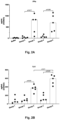
- Mice were bled on Days 1, 14, and 28, and sacrificed on Day 42. The splenocytes from all animals were collected on the day of sacrifice. Serum IgG levels on Day 42 were analyzed by ELISA. The results showed that the level of S-specific serum IgG increased as the dose of S-trimer increased, as shown in Group 2 vs. Group 4, and Group 3 vs. Group 5 in Fig. 1B .
- Example 2 Intranasal boosting with LTh( ⁇ K) adjuvanted SARS-CoV-2 S-trimer activated Th1, Th2 and Th17
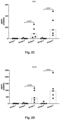
- the levels of IL-5, IL-13, and IL-17 in Group 5 also showed numerical gain by increased amount of LTh( ⁇ K) ( Figs.2C-E ).
- Example 3 Intranasal boosting with LTh( ⁇ K)-adjuvanted SARS-CoV-2 spike for intramuscular primed mice enhances circulating IgG and secretory IgA
- LTh( ⁇ K)-adjuvanted IN booster enhances spike-specific sIgA and serum IgG.
- MVC-COV1901 a SARS-CoV-2 S-2P subunit vaccine adjuvanted with aluminum hydroxide and CpG1018, followed by intranasal boosting with LTh( ⁇ K) adjuvanted S-2P.
- Fig. 3A female mice, 6- to 8-week old Balb/c, were purchased from BioLASCO Taiwan and randomly divided into five groups, 6 mice in each group, and received immunization via IM only, or combination routes of IM and IN as illustrated in Fig.
- MVC-COV-1901 is a vaccine approved under EUA by Taiwan Food and Drug Administration (TFDA) containing S-2P as antigen and adjuvanted with CpG1018 plus aluminum hydroxide (S-2P/CpG1018/Aluminum hydroxide).
- TFDA Taiwan Food and Drug Administration
- mice were randomly divided and received vaccination via IM (prime) and IM (boost) only, or a hybrid vaccination of IM (prime) and IN (boost).
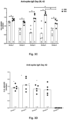
- IM priming elevated S-specific IgG on Day 14 in all groups ( Fig. 3B ).
- the IN and the IM booster were each highly efficacious in enhancing S-specific IgG titers in IM primed mice ( Fig. 3C ).
- sera from all animals were collected prior to addition of boosters.
- the ELISA analysis of Day 28 sera showed that anti-S IgG titers induced by LTh( ⁇ K)-adjuvanted IN booster were equivalent (Group 2, Fig.
- mice developed robust S-specific sIgA titers regardless of prior IM or IN boost (Groups 1-4, Fig. 3D ).
- the IgA titers to S-2P were not affected by the number of IN doses or the amount of S-2P in the booster.
- the S-specific sIgA was within background level for IM-only mice (Group 5, Fig. 3D ).
- Example 4 Intranasal boosting with LTh( ⁇ K)-adjuvanted SARS-CoV-2 spike induces high levels of neutralizing antibodies in serum samples and nasal wash
- LTh( ⁇ K)-adjuvanted IN booster is potent in mediating the production of S-specific neutralizing antibodies in serum and nasal mucosa.
- Inhibition of pseudoviruses carrying wild-type spike protein by mice sera primed and boosted by IM, IN, or IM and IN was tested. All mice sera and nasal washes were collected on Day 42 and analyzed for pseudovirus-blocking activity.
- Neutralizing titers by pseudovirus assay were determined based on both sera (TCID 90 ) and nasal washes (TCID 50 ). The results are shown in Table 1 below. On Day 14, two weeks post-priming, serum-neutralizing titers were not elevated in most mice except for some minimal elevation in Group 1.
- Table 1 serum neutralizing results Administration Route Pseudovirus Neutralizing Assay ID90/GMT Groups 1st 2nd 3rd 1st dose 2nd dose 3rd dose 1 IM IN IN 27.0 581.2 5550.9 2 IM IN IN IN 20.0 812.6 5666.3 3 IM IM IN 20.0 1011.1 7641.1 4 IM IM IN 20.0 888.3 8503.8 5 IM IM 20.0 980.2 2659.3
- Table 3 The vaccine procedures of the hybrid vaccines are outlined in Table 3 below.
- Table 3 immunization scheme for hybrid vaccinations for influenza virus Prime Dosage of flu per strain ( ⁇ g) Week interval Boost Booster dosage of flu HA antigen per strain ( ⁇ g) Booster dosage of LTh( ⁇ K) to each strain ( ⁇ g) IM 1 IM 1 IM 1 IM 1 IN 1 IM 1 IN 1 3 IM 1 IM 1 IM 1 IN 1 I IM 1 IN 1 3 IM 1 8 IM 1 IM 1 IN 1 IM 1 IN 1 3
- HA hemagglutinin
- BALF bronchoalveolar lavage fluid
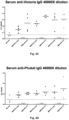
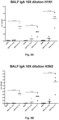
- the nasal washes and BALFs from animals in the hybrid vaccination were evaluated for the levels of secretory IgAs against influenza antigens.
- the results show that secretory IgAs were highly enhanced in the BALFs from animals treated with LTh( ⁇ K)-adjuvanted IN booster.
- the enhanced levels of influenza antigen-specific IgAs were found through the 2-week to 8-week intervals. The ability of the IN booster to enhance IgG and sIgA levels for up to 8 weeks post priming indicates that the IN booster can be applied at a flexible time window in the hybrid vaccination scheme.
Landscapes
- Health & Medical Sciences (AREA)
- Life Sciences & Earth Sciences (AREA)
- Virology (AREA)
- Chemical & Material Sciences (AREA)
- Pharmacology & Pharmacy (AREA)
- Veterinary Medicine (AREA)
- Public Health (AREA)
- Medicinal Chemistry (AREA)
- General Health & Medical Sciences (AREA)
- Animal Behavior & Ethology (AREA)
- Immunology (AREA)
- Chemical Kinetics & Catalysis (AREA)
- General Chemical & Material Sciences (AREA)
- Communicable Diseases (AREA)
- Epidemiology (AREA)
- Microbiology (AREA)
- Mycology (AREA)
- Nuclear Medicine, Radiotherapy & Molecular Imaging (AREA)
- Organic Chemistry (AREA)
- Pulmonology (AREA)
- Oncology (AREA)
- Molecular Biology (AREA)
- Engineering & Computer Science (AREA)
- Bioinformatics & Cheminformatics (AREA)
- Medicines Containing Antibodies Or Antigens For Use As Internal Diagnostic Agents (AREA)
- Medicinal Preparation (AREA)
- Peptides Or Proteins (AREA)
Applications Claiming Priority (1)
| Application Number | Priority Date | Filing Date | Title |
|---|---|---|---|
| US202363523876P | 2023-06-28 | 2023-06-28 |
Publications (1)
| Publication Number | Publication Date |
|---|---|
| EP4483898A1 true EP4483898A1 (fr) | 2025-01-01 |
Family
ID=88237969
Family Applications (1)
| Application Number | Title | Priority Date | Filing Date |
|---|---|---|---|
| EP23199080.5A Pending EP4483898A1 (fr) | 2023-06-28 | 2023-09-22 | Composition vaccinale intranasale et procédé d'amplification l'utilisant |
Country Status (8)
| Country | Link |
|---|---|
| US (1) | US20250000972A1 (fr) |
| EP (1) | EP4483898A1 (fr) |
| JP (1) | JP2025009667A (fr) |
| KR (1) | KR20250001388A (fr) |
| CN (1) | CN119215161A (fr) |
| AU (1) | AU2023237105A1 (fr) |
| CA (1) | CA3214465A1 (fr) |
| TW (1) | TWI875208B (fr) |
Citations (3)
| Publication number | Priority date | Publication date | Assignee | Title |
|---|---|---|---|---|
| WO2003059385A2 (fr) * | 2002-01-14 | 2003-07-24 | Chiron Corporation | Vaccin contre le vih et procede d'utilisation |
| US20080102078A1 (en) | 2006-10-27 | 2008-05-01 | Development Center For Biotechnology | Mutated e. coli heat-labile enterotoxin |
| EP3909605A1 (fr) * | 2020-05-08 | 2021-11-17 | Advagene Biopharma Co., Ltd. | Procédé de prophylaxie ou de traitement d'une infection par un coronavirus utilisant un immunomodulateur et compositions de vaccin le comprenant |
Family Cites Families (4)
| Publication number | Priority date | Publication date | Assignee | Title |
|---|---|---|---|---|
| WO1999052549A1 (fr) * | 1998-04-09 | 1999-10-21 | Smithkline Beecham Biologicals S.A. | Compositions adjuvantes |
| EP2382988A1 (fr) * | 2006-03-31 | 2011-11-02 | Novartis AG | Immunisation mucosique et parentérale contre le VIH |
| EP2308506A1 (fr) * | 2009-10-02 | 2011-04-13 | Mucosis B.V. | Formulations de vaccin intranasal avec adjuvants |
| CN111205353A (zh) * | 2020-01-17 | 2020-05-29 | 重庆医科大学 | 一种大肠杆菌不耐热肠毒素b亚单位突变体 |
-
2023
- 2023-09-22 EP EP23199080.5A patent/EP4483898A1/fr active Pending
- 2023-09-25 TW TW112136583A patent/TWI875208B/zh active
- 2023-09-26 CA CA3214465A patent/CA3214465A1/en active Pending
- 2023-09-27 AU AU2023237105A patent/AU2023237105A1/en active Pending
- 2023-09-28 CN CN202311272582.4A patent/CN119215161A/zh active Pending
- 2023-09-28 US US18/374,118 patent/US20250000972A1/en active Pending
- 2023-10-06 KR KR1020230133780A patent/KR20250001388A/ko active Pending
- 2023-10-12 JP JP2023177069A patent/JP2025009667A/ja active Pending
Patent Citations (3)
| Publication number | Priority date | Publication date | Assignee | Title |
|---|---|---|---|---|
| WO2003059385A2 (fr) * | 2002-01-14 | 2003-07-24 | Chiron Corporation | Vaccin contre le vih et procede d'utilisation |
| US20080102078A1 (en) | 2006-10-27 | 2008-05-01 | Development Center For Biotechnology | Mutated e. coli heat-labile enterotoxin |
| EP3909605A1 (fr) * | 2020-05-08 | 2021-11-17 | Advagene Biopharma Co., Ltd. | Procédé de prophylaxie ou de traitement d'une infection par un coronavirus utilisant un immunomodulateur et compositions de vaccin le comprenant |
Non-Patent Citations (25)
| Title |
|---|
| CELE SJACKSON LKHOURY DSKHAN KMOYO-GWETE TTEGALLY HSAN JECROMER DSCHEEPERS CAMOAKO DG ET AL.: "Omicron extensively but incompletely escapes Pfizer BNT162b2 neutralization", NATURE, vol. 602, no. 7898, 2022, pages 654 - 656, XP037700796, DOI: 10.1038/s41586-021-04387-1 |
| CHEMAITELLY HTANG PHASAN MRALMUKDAD SYASSINE HMBENSLIMANE FMAL KHATIB HACOYLE PAYOUB HHAL KANAANI Z ET AL.: "Waning of BNT162b2 Vaccine Protection against SARS-CoV-2 Infection in Qatar", N ENGL J MED, vol. 385, no. 24, 2021, pages e83 |
| COHN BACIRILLO PMMURPHY CCKRIGBAUM NY: "Wallace AW: SARS-CoV-2 vaccine protection and deaths among US veterans during 2021", SCIENCE, vol. 375, no. 6578, 2022, pages 331 - 336 |
| COHN BACIRILLO PMMURPHY CCKRIGBAUM NYWALLACE AW: "SARS-CoV-2 vaccine protection and deaths among US veterans during 2021", SCIENCE, vol. 375, no. 6578, 2022, pages 331 - 336 |
| HAGIWAR Y ET AL: "Effectiveness and safety of mutant Escherichia coli heat-labile enterotoxin (LT H44A) as an adjuvant for nasal influenza vaccine", VACCINE, ELSEVIER, AMSTERDAM, NL, vol. 19, no. 15-16, 28 February 2001 (2001-02-28), pages 2071 - 2079, XP004316948, ISSN: 0264-410X, DOI: 10.1016/S0264-410X(00)00414-X * |
| HASHIGUCCI KOGAWA HISHIDATE TYAMASHITA RKAMIYA HWATANABE KHATTORI NSATO TSUZUKI YNAGAMINE T ET AL.: "Antibody responses in volunteers induced by nasal influenza vaccine combined with Escherichia coli heat-labile enterotoxin B subunit containing a trace amount of the holotoxin", VACCINE, vol. 14, no. 2, 1996, pages 113 - 119, XP004057352, DOI: 10.1016/0264-410X(95)00174-Y |
| HUANG MZHANG MZHU HDU XWANG J: "Mucosal vaccine delivery: A focus on the breakthrough of specific barriers", ACTA PHARM SIN B, vol. 12, no. 9, 2022, pages 3456 - 3474 |
| KUO TYLIN MYCOFFMAN RLCAMPBELL JDTRAQUINA PLIN YJLIU LTCHENG JWU YCWU CC ET AL.: "Development of CpG-adjuvanted stable prefusion SARS-CoV-2 spike antigen as a subunit vaccine against COVID-19", SCI REP, vol. 10, no. 1, 2020, pages 20085, XP055914264, DOI: 10.1038/s41598-020-77077-z |
| LI MWANG HTIAN LPANG ZYANG QHUANG TFAN JSONG LTONG YFAN H: "COVID-19 vaccine development: milestones, lessons and prospects", SIGNAL TRANSDUCT TARGET THER, vol. 7, no. 1, 2022, pages 146 |
| LIAO HCWU WLCHIANG CYHUANG MSSHEN KYHUANG YLWU SCLIAO CLCHEN HWLIU SJ: "Low-Dose SARS-CoV-2 S-Trimer with an Emulsion Adjuvant Induced Th 1 -Biased Protective Immunity", INT J MOL SCI, vol. 23, no. 9, 2022 |
| LIAO HCWU WLCHIANG CYHUANG MSSHEN KYHUANG YLWU SCLIAO CLCHEN HWLIU SJ: "Low-Dose SARS-CoV-2 S-Trimer with an Emulsion Adjuvant Induced Th 1-Biased Protective Immunity", INT J MOL SCI, vol. 23, no. 9, 2022 |
| LUCAS CVOGELS CBFYILDIRIM IROTHMAN JELU PMONTEIRO VGEHLHAUSEN JRCAMPBELL MSILVA JTABACHNIKOVA A ET AL.: "Impact of circulating SARS-CoV-2 variants on mRNA vaccine-induced immunity", NATURE, vol. 600, no. 7889, 2021, pages 523 - 529, XP037643188, DOI: 10.1038/s41586-021-04085-y |
| MIQUEL-CLOPES ABENTLEY EGSTEWART JPCARDING SR: "Mucosal vaccines and technology", CLIN EXP IMMUNOL, vol. 196, no. 2, 2019, pages 205 - 214 |
| MUCOSAL IMMUNOL, vol. 15, no. 4, 2022, pages 584 - 594 |
| PAN SCHSIEH SMLIN CFHSU YSCHANG MCHANG SC: "A randomized, double-blind, controlled clinical trial to evaluate the safety and immunogenicity of an intranasally administered trivalent inactivated influenza vaccine with adjuvant LTh(alphaK): A phase I study", VACCINE, vol. 37, no. 14, 2019, pages 1994 - 2003, XP085630434, DOI: 10.1016/j.vaccine.2019.02.006 |
| PAN SCHSU WTLEE WSWANG NCCHEN TJLIU MCPAI HCHSU YS: "Chang M, Hsieh SM: A double-blind, randomized controlled trial to evaluate the safety and immunogenicity of an intranasally administered trivalent inactivated influenza vaccine with the adjuvant LTh(alphaK): A phase II study", VACCINE, vol. 38, no. 5, 2020, pages 1048 - 1056 |
| PAN SUNG-CHING ET AL: "A double-blind, randomized controlled trial to evaluate the safety and immunogenicity of an intranasally administered trivalent inactivated influenza vaccine with the adjuvant LTh([alpha]K): A phase II study", VACCINE, ELSEVIER, AMSTERDAM, NL, vol. 38, no. 5, 4 December 2019 (2019-12-04), pages 1048 - 1056, XP086004999, ISSN: 0264-410X, [retrieved on 20191204], DOI: 10.1016/J.VACCINE.2019.11.047 * |
| PARTIDOS E A: "The adjuvant effect of a non-toxic mutant of heat-labile enterotoxin of E.coli for the induction of measles virus-specific CTL responses after intranasal co-immunisation with a synthetic peptide", CANCER RESEARCH, WILEY-BLACKWELL PUBLISHING LTD, GB, vol. 89, 1 January 1996 (1996-01-01), pages 483 - 487, XP002096389, ISSN: 0019-2805, DOI: 10.1046/J.1365-2567.1996.D01-790.X * |
| RUSSELL MWMESTECKY J: "Mucosal immunity: The missing link in comprehending SARS-CoV-2 infection and transmission", FRONT IMMUNOL, vol. 13, 2022, pages 957107 |
| RUSSELL MWMOLDOVEANU ZOGRA PLMESTECKY J: "Mucosal Immunity in COVID-19: A Neglected but Critical Aspect of SARS-CoV-2 Infection", FRONT IMMUNOL, vol. 11, 2020, pages 611337, XP055858926, DOI: 10.3389/fimmu.2020.611337 |
| SCHMIDT FMUECKSCH FWEISBLUM YDA SILVA JBEDNARSKI ECHO AWANG ZGAEBLER CCASKEY MNUSSENZWEIG MC ET AL.: "Plasma neutralization of the SARS-CoV-2 omicron variant", N ENGLJ MED, vol. 386, no. 6, 2022, pages 599 - 601 |
| STEPHENSON IZAMBON MCRUDIN ACOLEGATE APODDA ABUGARINI RDEL GIUDICE GMINUTELLO ABONNINGTON SHOLMGREN J ET AL.: "Phase I evaluation of intranasal trivalent inactivated influenza vaccine with nontoxigenic Escherichia coli enterotoxin and novel biovector as mucosal adjuvants, using adult volunteers", J VIROL, vol. 80, no. 10, 2006, pages 4962 - 4970, XP002519288, DOI: 10.1128/JVI.80.10.4962-4970.2006 |
| VACCINE, vol. 6, no. 3, 1988, pages 269 - 277 |
| WALKER RI: "New strategies for using mucosal vaccination to achieve more effective immunization", VACCINE, vol. 12, no. 5, 1994, pages 387 - 400, XP023711651, DOI: 10.1016/0264-410X(94)90112-0 |
| WALTZ E: "China and India approve nasal COVID vaccines-are they a game changer", NATURE, vol. 609, no. 7927, 2022, pages 450 |
Also Published As
| Publication number | Publication date |
|---|---|
| AU2023237105A1 (en) | 2025-01-16 |
| US20250000972A1 (en) | 2025-01-02 |
| KR20250001388A (ko) | 2025-01-06 |
| TWI875208B (zh) | 2025-03-01 |
| CA3214465A1 (en) | 2025-07-07 |
| JP2025009667A (ja) | 2025-01-20 |
| TW202500580A (zh) | 2025-01-01 |
| CN119215161A (zh) | 2024-12-31 |
Similar Documents
| Publication | Publication Date | Title |
|---|---|---|
| RU2753869C2 (ru) | Способы повышения эффективности вакцины путем введения антагониста il-4r | |
| US20230364217A1 (en) | Influenza vaccine, composition, and methods of use | |
| US8182821B2 (en) | Flu vaccine admixture of mannan and flu antigen | |
| WO2005014038A1 (fr) | Nouveau vaccin contenant un adjuvant capable d'induire une immunite des muqueuses | |
| CN101678095B (zh) | 新型鼻病毒中和免疫原(nimiv)及其在疫苗中的应用 | |
| JP2023520603A (ja) | 免疫応答を引き起こすワクチン、アジュバント、及び方法 | |
| US20240299528A1 (en) | A dna plasmid sars-corona virus-2/covid-19 vaccine | |
| US9119803B2 (en) | Carious tooth vaccine and preparation method | |
| EP4483898A1 (fr) | Composition vaccinale intranasale et procédé d'amplification l'utilisant | |
| Kim et al. | Mucosal immunization with recombinant adenovirus encoding soluble globular head of hemagglutinin protects mice against lethal influenza virus infection | |
| BR102023020353A2 (pt) | Método para vacinar um sujeito contra uma infecção por vírus da mucosa e composição de vacina intranasal | |
| WO2008037033A1 (fr) | Vaccin contre la grippe constitué d'un mélange de mannane et d'antigène de la grippe | |
| KR20240052044A (ko) | 코로나바이러스과 바이러스에 의한 감염을 치료 또는 예방하기 위한 바이러스-유사 입자 | |
| Singh et al. | Current Insights on Vaccines available for COVID-19 like Flu Symptoms | |
| Vakhtinskii et al. | mRNA as a perspective prime-component for universal influenza A vaccine | |
| KR20240066519A (ko) | 신규한 메르스 코로나바이러스 백신 조성물 및 이의 용도 | |
| HK40117172A (en) | Methods for enhancing efficacy of a vaccine by administering an il-4r antagonist | |
| AU2009348207B2 (en) | Influenza vaccine, composition, and methods of use | |
| KR20260056047A (ko) | 변형된 사스-코로나바이러스-2 ORF3a 폴리펩타이드 및 이의 용도 |
Legal Events
| Date | Code | Title | Description |
|---|---|---|---|
| PUAI | Public reference made under article 153(3) epc to a published international application that has entered the european phase |
Free format text: ORIGINAL CODE: 0009012 |
|
| STAA | Information on the status of an ep patent application or granted ep patent |
Free format text: STATUS: THE APPLICATION HAS BEEN PUBLISHED |
|
| AK | Designated contracting states |
Kind code of ref document: A1 Designated state(s): AL AT BE BG CH CY CZ DE DK EE ES FI FR GB GR HR HU IE IS IT LI LT LU LV MC ME MK MT NL NO PL PT RO RS SE SI SK SM TR |
|
| STAA | Information on the status of an ep patent application or granted ep patent |
Free format text: STATUS: REQUEST FOR EXAMINATION WAS MADE |
|
| 17P | Request for examination filed |
Effective date: 20250122 |