EP4483907A1 - Nouveau conjugué anticorps-médicament - Google Patents
Nouveau conjugué anticorps-médicament Download PDFInfo
- Publication number
- EP4483907A1 EP4483907A1 EP23760410.3A EP23760410A EP4483907A1 EP 4483907 A1 EP4483907 A1 EP 4483907A1 EP 23760410 A EP23760410 A EP 23760410A EP 4483907 A1 EP4483907 A1 EP 4483907A1
- Authority
- EP
- European Patent Office
- Prior art keywords
- spacer
- substituted
- group
- unsubstituted
- linker unit
- Prior art date
- Legal status (The legal status is an assumption and is not a legal conclusion. Google has not performed a legal analysis and makes no representation as to the accuracy of the status listed.)
- Pending
Links
Images

Classifications
-
- A—HUMAN NECESSITIES
- A61—MEDICAL OR VETERINARY SCIENCE; HYGIENE
- A61K—PREPARATIONS FOR MEDICAL, DENTAL OR TOILETRY PURPOSES
- A61K47/00—Medicinal preparations characterised by the non-active ingredients used, e.g. carriers or inert additives; Targeting or modifying agents chemically bound to the active ingredient
- A61K47/50—Medicinal preparations characterised by the non-active ingredients used, e.g. carriers or inert additives; Targeting or modifying agents chemically bound to the active ingredient the non-active ingredient being chemically bound to the active ingredient, e.g. polymer-drug conjugates
- A61K47/51—Medicinal preparations characterised by the non-active ingredients used, e.g. carriers or inert additives; Targeting or modifying agents chemically bound to the active ingredient the non-active ingredient being chemically bound to the active ingredient, e.g. polymer-drug conjugates the non-active ingredient being a modifying agent
- A61K47/62—Medicinal preparations characterised by the non-active ingredients used, e.g. carriers or inert additives; Targeting or modifying agents chemically bound to the active ingredient the non-active ingredient being chemically bound to the active ingredient, e.g. polymer-drug conjugates the non-active ingredient being a modifying agent the modifying agent being a protein, peptide or polyamino acid
- A61K47/64—Drug-peptide, drug-protein or drug-polyamino acid conjugates, i.e. the modifying agent being a peptide, protein or polyamino acid which is covalently bonded or complexed to a therapeutically active agent
-
- A—HUMAN NECESSITIES
- A61—MEDICAL OR VETERINARY SCIENCE; HYGIENE
- A61K—PREPARATIONS FOR MEDICAL, DENTAL OR TOILETRY PURPOSES
- A61K47/00—Medicinal preparations characterised by the non-active ingredients used, e.g. carriers or inert additives; Targeting or modifying agents chemically bound to the active ingredient
- A61K47/50—Medicinal preparations characterised by the non-active ingredients used, e.g. carriers or inert additives; Targeting or modifying agents chemically bound to the active ingredient the non-active ingredient being chemically bound to the active ingredient, e.g. polymer-drug conjugates
- A61K47/51—Medicinal preparations characterised by the non-active ingredients used, e.g. carriers or inert additives; Targeting or modifying agents chemically bound to the active ingredient the non-active ingredient being chemically bound to the active ingredient, e.g. polymer-drug conjugates the non-active ingredient being a modifying agent
- A61K47/68—Medicinal preparations characterised by the non-active ingredients used, e.g. carriers or inert additives; Targeting or modifying agents chemically bound to the active ingredient the non-active ingredient being chemically bound to the active ingredient, e.g. polymer-drug conjugates the non-active ingredient being a modifying agent the modifying agent being an antibody, an immunoglobulin or a fragment thereof, e.g. an Fc-fragment
- A61K47/6889—Conjugates wherein the antibody being the modifying agent and wherein the linker, binder or spacer confers particular properties to the conjugates, e.g. peptidic enzyme-labile linkers or acid-labile linkers, providing for an acid-labile immuno conjugate wherein the drug may be released from its antibody conjugated part in an acidic, e.g. tumoural or environment
-
- A—HUMAN NECESSITIES
- A61—MEDICAL OR VETERINARY SCIENCE; HYGIENE
- A61K—PREPARATIONS FOR MEDICAL, DENTAL OR TOILETRY PURPOSES
- A61K38/00—Medicinal preparations containing peptides
- A61K38/04—Peptides having up to 20 amino acids in a fully defined sequence; Derivatives thereof
- A61K38/05—Dipeptides
-
- A—HUMAN NECESSITIES
- A61—MEDICAL OR VETERINARY SCIENCE; HYGIENE
- A61K—PREPARATIONS FOR MEDICAL, DENTAL OR TOILETRY PURPOSES
- A61K47/00—Medicinal preparations characterised by the non-active ingredients used, e.g. carriers or inert additives; Targeting or modifying agents chemically bound to the active ingredient
- A61K47/06—Organic compounds, e.g. natural or synthetic hydrocarbons, polyolefins, mineral oil, petrolatum or ozokerite
- A61K47/08—Organic compounds, e.g. natural or synthetic hydrocarbons, polyolefins, mineral oil, petrolatum or ozokerite containing oxygen, e.g. ethers, acetals, ketones, quinones, aldehydes, peroxides
- A61K47/10—Alcohols; Phenols; Salts thereof, e.g. glycerol; Polyethylene glycols [PEG]; Poloxamers; PEG/POE alkyl ethers
-
- A—HUMAN NECESSITIES
- A61—MEDICAL OR VETERINARY SCIENCE; HYGIENE
- A61K—PREPARATIONS FOR MEDICAL, DENTAL OR TOILETRY PURPOSES
- A61K47/00—Medicinal preparations characterised by the non-active ingredients used, e.g. carriers or inert additives; Targeting or modifying agents chemically bound to the active ingredient
- A61K47/50—Medicinal preparations characterised by the non-active ingredients used, e.g. carriers or inert additives; Targeting or modifying agents chemically bound to the active ingredient the non-active ingredient being chemically bound to the active ingredient, e.g. polymer-drug conjugates
- A61K47/51—Medicinal preparations characterised by the non-active ingredients used, e.g. carriers or inert additives; Targeting or modifying agents chemically bound to the active ingredient the non-active ingredient being chemically bound to the active ingredient, e.g. polymer-drug conjugates the non-active ingredient being a modifying agent
- A61K47/56—Medicinal preparations characterised by the non-active ingredients used, e.g. carriers or inert additives; Targeting or modifying agents chemically bound to the active ingredient the non-active ingredient being chemically bound to the active ingredient, e.g. polymer-drug conjugates the non-active ingredient being a modifying agent the modifying agent being an organic macromolecular compound, e.g. an oligomeric, polymeric or dendrimeric molecule
- A61K47/59—Medicinal preparations characterised by the non-active ingredients used, e.g. carriers or inert additives; Targeting or modifying agents chemically bound to the active ingredient the non-active ingredient being chemically bound to the active ingredient, e.g. polymer-drug conjugates the non-active ingredient being a modifying agent the modifying agent being an organic macromolecular compound, e.g. an oligomeric, polymeric or dendrimeric molecule obtained otherwise than by reactions only involving carbon-to-carbon unsaturated bonds, e.g. polyureas or polyurethanes
- A61K47/60—Medicinal preparations characterised by the non-active ingredients used, e.g. carriers or inert additives; Targeting or modifying agents chemically bound to the active ingredient the non-active ingredient being chemically bound to the active ingredient, e.g. polymer-drug conjugates the non-active ingredient being a modifying agent the modifying agent being an organic macromolecular compound, e.g. an oligomeric, polymeric or dendrimeric molecule obtained otherwise than by reactions only involving carbon-to-carbon unsaturated bonds, e.g. polyureas or polyurethanes the organic macromolecular compound being a polyoxyalkylene oligomer, polymer or dendrimer, e.g. PEG, PPG, PEO or polyglycerol
-
- A—HUMAN NECESSITIES
- A61—MEDICAL OR VETERINARY SCIENCE; HYGIENE
- A61K—PREPARATIONS FOR MEDICAL, DENTAL OR TOILETRY PURPOSES
- A61K47/00—Medicinal preparations characterised by the non-active ingredients used, e.g. carriers or inert additives; Targeting or modifying agents chemically bound to the active ingredient
- A61K47/50—Medicinal preparations characterised by the non-active ingredients used, e.g. carriers or inert additives; Targeting or modifying agents chemically bound to the active ingredient the non-active ingredient being chemically bound to the active ingredient, e.g. polymer-drug conjugates
- A61K47/51—Medicinal preparations characterised by the non-active ingredients used, e.g. carriers or inert additives; Targeting or modifying agents chemically bound to the active ingredient the non-active ingredient being chemically bound to the active ingredient, e.g. polymer-drug conjugates the non-active ingredient being a modifying agent
- A61K47/62—Medicinal preparations characterised by the non-active ingredients used, e.g. carriers or inert additives; Targeting or modifying agents chemically bound to the active ingredient the non-active ingredient being chemically bound to the active ingredient, e.g. polymer-drug conjugates the non-active ingredient being a modifying agent the modifying agent being a protein, peptide or polyamino acid
- A61K47/65—Peptidic linkers, binders or spacers, e.g. peptidic enzyme-labile linkers
-
- A—HUMAN NECESSITIES
- A61—MEDICAL OR VETERINARY SCIENCE; HYGIENE
- A61K—PREPARATIONS FOR MEDICAL, DENTAL OR TOILETRY PURPOSES
- A61K47/00—Medicinal preparations characterised by the non-active ingredients used, e.g. carriers or inert additives; Targeting or modifying agents chemically bound to the active ingredient
- A61K47/50—Medicinal preparations characterised by the non-active ingredients used, e.g. carriers or inert additives; Targeting or modifying agents chemically bound to the active ingredient the non-active ingredient being chemically bound to the active ingredient, e.g. polymer-drug conjugates
- A61K47/51—Medicinal preparations characterised by the non-active ingredients used, e.g. carriers or inert additives; Targeting or modifying agents chemically bound to the active ingredient the non-active ingredient being chemically bound to the active ingredient, e.g. polymer-drug conjugates the non-active ingredient being a modifying agent
- A61K47/68—Medicinal preparations characterised by the non-active ingredients used, e.g. carriers or inert additives; Targeting or modifying agents chemically bound to the active ingredient the non-active ingredient being chemically bound to the active ingredient, e.g. polymer-drug conjugates the non-active ingredient being a modifying agent the modifying agent being an antibody, an immunoglobulin or a fragment thereof, e.g. an Fc-fragment
- A61K47/6801—Drug-antibody or immunoglobulin conjugates defined by the pharmacologically or therapeutically active agent
- A61K47/6803—Drugs conjugated to an antibody or immunoglobulin, e.g. cisplatin-antibody conjugates
- A61K47/68031—Drugs conjugated to an antibody or immunoglobulin, e.g. cisplatin-antibody conjugates the drug being an auristatin
-
- A—HUMAN NECESSITIES
- A61—MEDICAL OR VETERINARY SCIENCE; HYGIENE
- A61K—PREPARATIONS FOR MEDICAL, DENTAL OR TOILETRY PURPOSES
- A61K47/00—Medicinal preparations characterised by the non-active ingredients used, e.g. carriers or inert additives; Targeting or modifying agents chemically bound to the active ingredient
- A61K47/50—Medicinal preparations characterised by the non-active ingredients used, e.g. carriers or inert additives; Targeting or modifying agents chemically bound to the active ingredient the non-active ingredient being chemically bound to the active ingredient, e.g. polymer-drug conjugates
- A61K47/51—Medicinal preparations characterised by the non-active ingredients used, e.g. carriers or inert additives; Targeting or modifying agents chemically bound to the active ingredient the non-active ingredient being chemically bound to the active ingredient, e.g. polymer-drug conjugates the non-active ingredient being a modifying agent
- A61K47/68—Medicinal preparations characterised by the non-active ingredients used, e.g. carriers or inert additives; Targeting or modifying agents chemically bound to the active ingredient the non-active ingredient being chemically bound to the active ingredient, e.g. polymer-drug conjugates the non-active ingredient being a modifying agent the modifying agent being an antibody, an immunoglobulin or a fragment thereof, e.g. an Fc-fragment
- A61K47/6835—Medicinal preparations characterised by the non-active ingredients used, e.g. carriers or inert additives; Targeting or modifying agents chemically bound to the active ingredient the non-active ingredient being chemically bound to the active ingredient, e.g. polymer-drug conjugates the non-active ingredient being a modifying agent the modifying agent being an antibody, an immunoglobulin or a fragment thereof, e.g. an Fc-fragment the modifying agent being an antibody or an immunoglobulin bearing at least one antigen-binding site
Definitions
- the present invention relates to a novel antibody-drug conjugate, and more particularly, to an antibody-drug conjugate comprising a polyethylene glycol unit, a solvate thereof, a pharmaceutically acceptable salt thereof, or a pharmaceutical composition comprising the same.
- An antibody-drug conjugate is a compound consisting of an antibody, a drug or payload, and a linker, and is prepared by covalently bonding an antibody binding to a specific target antigen with a drug exhibiting a pharmacological effect such as an apoptotic effect.
- ADCs require targeting ability to selectively recognize an antigen or receptor, the ability to induce apoptosis of specific cells, and linker stabilization and dissociation ability, and the antibody-drug conjugate satisfying these requirements may selectively act only on specific cells through targeting, thereby reducing side reactions and also increasing a therapeutic effect.
- Polyethylene glycol is a water-soluble, biocompatible and nontoxic polymer having an ethylene oxide monomer as a unit, and used in the pharmaceutical field to extend plasma half-life, prevent enzymatic degradation, and provide sustained release through PEGylation.
- PEG Polyethylene glycol
- a conjugate comprising PEG unit is disclosed, and PEGylation for increasing antitumor activity and improving stability was disclosed.
- PEGylation is performed, drug properties are not improved in all antibody-drug conjugates, and the effects of the conjugates may vary depending on a linker, a drug, etc. Accordingly, there is still a demand for antibody-drug conjugates with high stability and improved physical properties.
- Patent Document 1 US Patent No. 1110359
- the present invention is directed to providing a novel linker that can exhibit excellent properties, and prevent a hydrophobic drug from precipitating.
- the present invention is also directed to providing an antibody-drug conjugate (ADC) comprising the linker, or a pharmaceutically acceptable salt thereof.
- ADC antibody-drug conjugate
- the present invention is also directed to providing a pharmaceutical composition that comprises the novel ADC.
- the present invention provides a conjugate represented by Formula 1 below. wherein,
- the present invention comprises a solvate of the conjugate or a pharmaceutically acceptable salt thereof.
- the Ab is an antibody, an antibody fragment, or an antigen-binding fragment thereof.
- the antibody, the antibody fragment, or the antigen-binding fragment thereof is a monoclonal antibody, a polyclonal antibody, an antibody fragment, Fab, Fab', F(ab) 2 , Fv, scFv, a diabody, a linear antibody, a bispecific antibody, a multispecific antibody, a chimeric antibody, a humanized antibody, a fully human antibody, or an antigen-binding fragment thereof.
- the antibody, the antibody fragment, or the antigen-binding fragment may comprise a region of a light chain (V L region), a region of heavy chain (V H region), a constant domain thereof, or a variable domain thereof.
- the present invention comprises variants of the antibody, which are variants in which the rate of one or more of the affinity/binding force/specificity/selectivity of the antibody is 50% or more, 60% or more, 70% or more, 80% or more, 90% or more, 91% or more, 92% or more, 93% or more, 94% or more, 95% or more, 96% or more, or 97% or more.
- Non-limiting examples of the antibodies comprise IgA, IgG, IgG1, IgG2, IgG3, IgG4, IgE, and IgD in the present invention.
- Non-limiting examples of the antibodies in the present invention are as follows:
- a linker expressed as a combination of some of Sp 1 , Sp 2 , Sp 3 , Sp 4 , L 1 , L 2 , L 3 , L 3 ', L 3 ", X 1 , X 2 , and X 3 is a cleavable linker or a non-cleavable linker.
- the linker is a cleavable linker.
- the cleavable linker may be protease-sensitive, pH-sensitive, or glutathione-sensitive.
- the linker may be an enzyme-cleavable linker.
- the linker that can be cleaved by an enzyme may comprise one or two or more sites.
- the linker represented by a combination of some of Sp 1 , Sp 2 , Sp 3 , Sp 4 , L 1 , L 2 , L 3 , L 3 ', L 3 ", X 1 , X 2 , and X 3 is a cleavable linker that can be cleaved by glucuronidase.
- the linker is a linker that can be cleaved by ⁇ -glucuronidase.
- the linker expressed as a combination of some of Sp 1 , Sp 2 , Sp 3 , Sp 4 , L 1 , L 2 , L 3 , L 3 ', L 3 ", X 1 , X 2 , and X 3 is a cleavable linker that can be cleaved by cathepsin.
- the linker may comprise a valine-citrulline (val-cit), lysine-lysine (lys-lys), phenylalanine-lysine (phe-lys), valine-alanine (Val-Ala) or alanine-alanine (Ala-Ala) linker and the like.
- the cleavable linker can be cleaved by cathepsin and also maintain a stable state in vivo.
- the cleavable linker can be cleaved by cathepsin B, cathepsin C, or cathepsin D, and also maintain a stable state in vivo.
- the valine-citrulline (Val-Cit) linker is a linker that can be cleaved by cathepsin B.
- some of a spacer, a first linker, a second linker, and a third linker may be a unit that can be cleaved by cathepsin (e.g., cathepsin B, C or D).
- a pH-sensitive linker comprising a group that induces the hydrolysis of an acid-labile group such as hydrazone may be comprised in the linker.
- a glutathione-sensitive linker such as a linker comprising a disulfide bridge, may be comprised.
- an antibody and a linker may be conjugated via a thiol of the antibody, particularly, a thiol of cysteine.
- an antibody and a linker may be conjugated via an amine of the antibody, particularly, an amine of lysine.
- an antibody when conjugated with a linker unit, they may be conjugated by a structure comprising a spacer.
- the conjugate may comprise a structure that is conjugated by click chemistry.
- the conjugate may comprise a structure that is conjugated through an oxime bond mediated by carbonyl-aminooxy or azide-alkyne-based click chemistry, or a structure conjugated by the previous known method ( Bioorg Med Chem. 2020 Dec 15; 28(24 ), Methods Mol Biol, 2020; 2078: 83-97 or the like).
- the spacer indicates a direct bond or a chemical structure having 1 to 200 atoms.
- the spacer is one or more selected from the group consisting of a first spacer, a second spacer, a third spacer, and a fourth spacer.
- the spacer is two or more selected from the group consisting of a first spacer, a second spacer, a third spacer, and a fourth spacer.
- the spacer is a combination of two or more selected from the group consisting of a first spacer, a second spacer, a third spacer, and a fourth spacer.
- the spacer is a combination of a first spacer, a second spacer, a third spacer, and a fourth spacer.
- the first spacer, the second spacer, the third spacer, or the fourth spacer is each independently selected from the group consisting of a direct bond, substituted or unsubstituted C 1-50 alkylene, substituted or unsubstituted C 1-50 heteroalkylene, substituted or unsubstituted C 2-50 alkenylene, substituted or unsubstituted C 3-50 cycloalkylene, substituted or unsubstituted C 6-50 arylene, and substituted or unsubstituted C 6-50 heteroarylene.
- one or more of the first spacer, the second spacer, the third spacer, and the fourth spacer are unsubstituted C 1-10 heteroalkylene.
- one or more of the first spacer, the second spacer, the third spacer, and the fourth spacer are unsubstituted C 1-10 heteroalkylene, and comprise an NH binding site.
- one or more of the first spacer, the second spacer, the third spacer, and the fourth spacer are substituted C 1-20 heteroalkylene,
- R 1 is H, OH, or C 1-3 alkyl.
- one or more of the first spacer, the second spacer, the third spacer, and the fourth spacer are direct bonds.
- one or more of the first spacer, the second spacer, the third spacer, and the fourth spacer comprise terminal C(O).
- one or more of the first spacer, the second spacer, the third spacer, and the fourth spacer comprise terminal NH.
- one or more of the first spacer, the second spacer, the third spacer, and the fourth spacer comprise terminal C(O)NH.
- one or more of the first spacer, the second spacer, the third spacer, and the fourth spacer are selected from the group consisting of - C(O)(CH 2 ) a -, -NH(CH 2 ) a -, -C(O)(CH 2 ) a C(O)-, -C(O)(CH 2 ) a NH-, -NH(CH 2 ) a NH-, - NHC(O)(CH 2 ) a C(O)-, -NHC(O)(CH 2 ) a NH-, -NHC(O)(CH 2 ) a C(O)NH-, and - NHC(O)(CH 2 ) a O(CH 2 ) b -, wherein a and b are each independently an integer from 1 to 10.
- a and b are each independently an integer from 1 to 7.
- one or more of the first spacer, the second spacer, the third spacer, and the fourth spacer comprise
- one or more of the first spacer, the second spacer, the third spacer, and the fourth spacer are and s1 is an integer from 1 to 10.
- one or more of the first spacer, the second spacer, the third spacer, and the fourth spacer are
- X a and X b are each independently selected from the group consisting of -C(O)(CH 2 ) a -, -NH(CH 2 ) a -, -C(O)(CH 2 ) a C(O)-, -C(O)(CH 2 ) a NH-, - NH(CH 2 ) a NH-, -NHC(O)(CH 2 ) a C(O)-, -NHC(O)(CH 2 ) a NH-, -NHC(O)(CH 2 ) a C(O)NH-, and - NHC(O)(CH 2 ) a O(CH 2 ) b -, wherein a and b are each independently an integer from 1 to 10.
- X a is -C(O)-.
- X b is -CH 2 C(O)- or -(CH 2 ) 2 OCH 2 C(O)-NH-.
- the spacer is -NH-(CH 2 ) a -NH-, and s is an integer from 1 to 5.
- Sp 1 is of X a is bonded to L 1
- X b is bonded to Ab
- X a , X b , and s1 are defined as above.
- L 1 and L 2 are each independently selected from the group consisting of a direct bond, an amino acid, a non-natural amino acid, and a derivative thereof.
- L 1 and L 2 are each independently selected from the group consisting of a direct bond, alanine, ⁇ -alanine, ⁇ -aminobutyric acid, arginine, asparagine, aspartic acid, ⁇ -carboxyglutamic acid, citrulline, cysteine, glutamic acid, glutamine, glycine, histidine, isoleucine, leucine, lysine, methionine, norleucine, norvaline, ornithine, phenylalanine, proline, serine, threonine, tryptophan, tyrosine, valine, and derivatives thereof.
- L 1 and L 2 are each independently selected from the group consisting of a direct bond, arginine, asparagine, glutamic acid, glutamine, glycine, alanine, arginine, citrulline, isoleucine, leucine, lysine, phenylalanine, serine, tryptophane, valine, and derivatives thereof.
- L 1 and L 2 are each independently selected from the group consisting of a direct bond, arginine, asparagine, glutamic acid, glutamine, glycine, alanine, citrulline, lysine, phenylalanine, serine, and valine.
- L 1 and L 2 are each independently selected from the group consisting of a direct bond, arginine, asparagine, glutamine, citrulline, lysine, serine, and valine.
- L 1 and L 2 are each lysine.
- L 1 is * and ** are sites that bind to another L 1 , or bind to Sp 1 or Sp 4 , and *** is a site that binds to L 2 .
- one or more of L 1 and L 2 can be cleaved by an enzyme.
- one or more of L 1 and L 2 can be cleaved by a tumor-related protease.
- one or more of L 1 and L 2 can be cleaved by glucuronidase. Specifically, one or more of L 1 and L 2 can be cleaved by ⁇ -glucuronidase.
- one or more of L 1 and L 2 can be cleaved by cathepsin.
- L 2 in the conjugate is a direct bond
- either -Sp 2 -L 3 -X 2 or -Sp 3 -L 3 '-X 3 is absent, and L 1 binds to either Sp 2 -L 3 -X 2 or -Sp 3 -L 3 '-X 3 .
- the conjugate when all L 2 are direct bonds, the conjugate may be represented by Formula 2 below.
- each spacer, linker unit, active agent, and polyethylene glycol unit are defined as above.
- one or more of L 3 , L 3 ', and L 3 " are direct bonds.
- one or more of L 3 , L 3 ', and L 3 " are represented by Formula A.
- G is beta-glucuronic acid.
- a 1 is bound to X 2 or X 3 .
- a 2 is bound to Sp 2 , Sp 3 , or Sp 4 .
- a 1 is selected from the group consisting of -(CH 2 ) a1 OC(O)-(CH 2 ) b1 -, -(CH 2 ) a1 C(O)-(CH 2 ) b1 -, -(CH 2 ) a1 NH-(CH 2 ) b1 -, -(CH 2 ) a1 C(O)NH-(CH 2 ) b1 , and -(CH 2 ) a1 OC(O)NH-(CH 2 ) b1 -, a1 and b 1 are each independently an integer from 0 to 10.
- a 1 is -(CH 2 ) a1 OC(O)-(CH 2 ) b1 -, and a1 and b1 are each independently an integer from 0 to 5.
- a 1 is -CH 2 OC(O)-.
- a 2 is represented by Formula A-1. [Formula A-1] -A 21 -A 22 -A 23 -
- a 2 is -NHC(O)-(CH 2 ) 2 -NH-.
- one or more of X 1 , X 2 , and X 3 are polyethylene glycol units.
- the polyethylene glycol units of the conjugate are bonded in a parallel form in an antibody-linker-drug as expressed in the combination form.
- two or more polyethylene glycol units may be included, and here, it does not mean that all the polyethylene glycol units are bonded in a parallel form.
- the polyethylene glycol units of the present invention may be bonded in a parallel form.
- At least two or more of X 1 , X 2 , and X 3 are polyethylene glycol repeating units.
- the polyethylene glycol unit comprises - (CH 2 CH 2 O)- as a repeating unit.
- the polyethylene glycol unit comprises - (CH 2 CH 2 O) x - as a repeating unit, and x is an integer from 4 to 40.
- the polyethylene glycol unit comprises a - C(O)- binding site.
- the polyethylene glycol unit comprises a terminal part of C 1-5 alkyl.
- the polyethylene glycol unit may be represented by the following formula.
- x is an integer from 4 to 40.
- m is an integer of n or less, and m repeating units are each independently selected.
- the structural unit of m is bonded to the structural unit of n, and the structural unit of m corresponds to an integer less than or equal to the structural unit of n.
- both n and m are 1.
- both n and m are integers of 2 or more, and in this case, each structural unit may be selected independently from other structural units.
- n is 3, three L 1 are included, and the three L 1 may each be independently selected from the group consisting of an amino acid, a non-natural amino acid, and derivatives thereof to represent each of L 1 .
- L 2 , Sp 2 , Sp 3 , L 3 ', L 3 ", X 2 , and X 3 represent a each independently selected unit
- L 2 may each be independently selected from the group consisting of an amino acid, a non-natural amino acid, and derivatives thereof to represent three different L 1
- three X 2 and X 3 may each be independently an active agent or a polyethylene glycol unit.
- n is an integer from 2 to 6.
- n is an integer from 2 to 4.
- m is an integer from 2 to 6.
- m is an integer from 2 to 4.
- At least one of X 1 , X 2 , and X 3 is an active agent.
- the polyethylene glycol units may increase. More specifically, when L 1 or L 2 increases by 1, the polyethylene glycol unit may increase by 1 or 2.
- the conjugate may be a conjugate represented by Formula 1-2 below.
- the conjugate may be a conjugate represented by Formula 1-3 below.
- the conjugate may be a conjugate represented by Formula 1-4 below.
- the conjugate may be a conjugate represented by Formula 1-5 below.
- the conjugate may be a conjugate represented by Formula 1-6.
- the present invention relates to a linker unit represented by Formula 1a below.
- L 1 , L 2 , Sp 1 , Sp 2 , Sp 3 , and Sp 4 of Formula 1a are the same as defined in Formula 1.
- X 1 *, X 2 *, and X 3 * of Formula 1a are not active agent-binding moieties, they are defined the same as X 1 , X 2 and X 3 of Formula 1.
- At least two of X 1 *, X 2 *, and X 3 * are polyethylene glycol units.
- Z comprises an Fc-binding protein.
- Z is
- Z 1 is Ac-PEG8-DCAWH-(Dap)-GELVWCT-NH- (Ac: acetylation / Dap: di-amino-propionic acid).
- Z 1 is Ac-PEG8-DCAWH-(Dap)-GELVWCT-NH- and comprises a Cys-Cys disulfide bond (disulfide oxidation).
- the active agent-binding moiety is absent, or is selected from the group consisting of -(CH 2 ) z1 OC(O)-(CH 2 ) z2 -R z , -(CH 2 ) z1 C(O)-(CH 2 ) z2 -R z , -(CH 2 ) z1 NH-(CH 2 ) z2 -R z , -(CH 2 ) z1 C(O)NH-(CH 2 ) z2 -R z , -(CH 2 ) z1 NHC(O)-(CH 2 ) z2 -R z , and - (CH 2 ) z1 OC(O)NH-(CH 2 ) z2 -R z ,
- the active agent-binding moiety is -C(O)-CH 2 -N 3 .
- the linker unit may be a linker unit represented by Formula 1-2a below.
- the linker unit may be a linker unit represented by Formula 1-3a.
- the linker unit may be a linker unit represented by Formula 1-4a below.
- the linker unit may be a linker unit represented by Formula 1-5a below.
- the linker unit may be a linker unit represented by Formula 1-6a below.
- the active agent is selected from the group consisting of a protein-targeting drug, a cell-targeting drug, a DNA-targeting drug, and an RNA-targeting drug.
- each of the "protein-targeting drug,” “cell-targeting drug,” “DNA-targeting drug,” and “RNA-targeting drug” refers to a drug that alters or kills the function of any protein, cell, DNA, or RNA in a harmful or harmless manner. More specifically, the protein-targeting drug, cell-targeting drug, DNA-targeting drug, and RNA-targeting drug may each be a toxic drug.
- the "toxic drug” refers to a drug that alters the function of any protein, cell, DNA, or RNA in a harmful manner. For example, it may alter cell growth, cell proliferation, protein synthesis, and DNA synthesis in a harmful manner.
- non-limiting examples of drugs are as follows:
- the active agent is auristatin.
- the active agent is dolastatin, afatinib, duocarmycin, FL118, MMAD, MMAE, or MMAF.
- the linker-active agent binding to the antibody is or wherein BG-MMAE is and m-PEG8 is
- the present invention relates to a pharmaceutical composition comprising the conjugate.
- the present invention relates to a pharmaceutical composition for preventing or treating a proliferative disease, comprising the conjugate.
- the present invention relates to a method of treating a proliferative disease, which comprises administering a therapeutically effective amount of a composition comprising the conjugate to a subject in need of treatment of a proliferative disease.
- the present invention relates to a use of the conjugate to prepare a medicament for treating a proliferative disease in a subject.
- the proliferative disease is cancer.
- Administration routes for the conjugate of the present invention may be, for example, oral or parenteral routes.
- the parenteral routes mean the routes of administration in a broad sense, for example, intravenous, intra-arterial, intraperitoneal, intramuscular, subcutaneous, intranasal, sublingual, intrathecal, inhalation, ocular, rectal, vaginal, intra-cerebroventricular administration, and the like.
- the composition is prepared, it is formulated using generally used diluents or excipients, such as a filler, an extender, a binder, a humectant, a disintegrant, and a surfactant.
- Solid formulations for oral administration include tablets, pills, powders, granules, and capsules, and such solid preparations are prepared by mixing at least one excipient, such as starch, calcium carbonate, sucrose, lactose, or gelatin with the composition. Aside from simple excipients, lubricants such as magnesium stearate, talc, etc. are further used.
- Liquid formulations for oral administration include suspensions, liquids for internal use, emulsions, and syrups, and may further include various types of excipients, for example, a wetting agent, a sweetener, a fragrance and a preservative, other than a commonly used simple diluent such as water or liquid paraffin.
- Formulations for parenteral administration include sterilized aqueous solutions, non-aqueous solvents, suspensions, emulsions, freeze-dried formulations, and suppositories.
- a non-aqueous solvent or suspension propylene glycol, polyethylene glycol, a vegetable oil such as olive oil, or an injectable ester such as ethyl oleate may be used.
- a suppository base Witepsol, Tween 61, cacao butter, laurin butter, glycerol, or gelatin may be used.
- composition of the present invention is administered at a pharmaceutically effective amount.
- pharmaceutically effective amount used herein refers to an amount sufficient for treating a disease at a reasonable benefit/risk ratio applicable for medical treatment, and an effective dosage may be determined by parameters including a type of a patient's disease, severity, drug activity, sensitivity to a drug, administration time, an administration route and an excretion rate, the duration of treatment and drugs simultaneously used, and other parameters well known in the medical field.
- the composition of the present invention may be administered separately or in combination with other therapeutic agents, and may be sequentially or simultaneously administered with a conventional therapeutic agent, or administered in a single or multiple dose(s). In consideration of all of the above-mentioned parameters, it is important to achieve the maximum effect with the minimum dose without side effects, and such a dose may be easily determined by one of ordinary skill in the art.
- a conjugate according to the present invention comprises a polyethylene glycol unit, so it can have excellent physical properties and prevent precipitation, resulting in increased drug delivery efficiency.
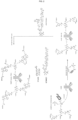
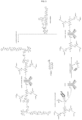
- FIGS. 1 to 3 are diagrams illustrating the process of preparing a conjugate according to one embodiment of the present invention.
- unit refers to a unit that is segmented or can be segmented.
- analog and “derivative” refer to a compound in which some parts are removed, modified, or added to the parent compound.
- linker refers to the entire chemical moiety that connects a molecule or atom to another molecule, for example, an antibody and an active agent.
- the linker may refer to a form in which multiple molecules or amino acids are bonded via a chemical functional group that can be covalently bonded.
- cleavable has the same chemical/biological meaning as known in the art, and includes cleavage under specific conditions, for example, acidic, reducing, enzymatic, etc. conditions.
- unsubstituted or substituted means a parent group that may be unsubstituted or may be substituted
- substituted means a parent group having one or more substituents
- substituted refers to a chemical moiety that is covalently bound or fused to a parent group.
- alkyl is a monovalent moiety obtained by removing a hydrogen atom from a carbon atom of an aliphatic or alicyclic, saturated, or unsaturated (unsaturated, completely unsaturated) hydrocarbon compound
- saturated alkyls may include methyl, ethyl, propyl, butyl, pentyl, hexyl, and heptyl
- saturated linear alkyls may include methyl, ethyl, n-propyl, n-butyl, n-pentyl(amyl), n-hexyl, and n-heptyl
- saturated branched alkyls may include isopropyl, isobutyl, sec-butyl, tert-butyl, isopentyl, and neopentyl.
- alkenyl is alkyl having one or more carbon-carbon double bonds
- alkynyl is an alkyl group having one or more carbon-carbon triple bonds
- examples of unsaturated alkynyl groups may include ethynyl and 2-propynyl.
- alkylene refers to a divalent moiety that is obtained by further removing one hydrogen atom from a carbon atom in the alkyl.
- alkenylene refers to a divalent moiety obtained by further removing one hydrogen atom from a carbon atom in the alkenyl.
- alkynylene refers to a divalent moiety obtained by further removing one hydrogen atom from a carbon atom in the alkynyl.
- halo refers to fluorine, chlorine, bromine, or iodine.
- aryl is a monovalent moiety obtained by removing a hydrogen atom from an aromatic ring atom of an aromatic compound.
- C 5-7 aryl refers to a monovalent moiety that has 5 to 7 ring atoms and is obtained by removing a hydrogen atom from an aromatic ring atom of an aromatic compound
- C 5-10 aryl refers to a monovalent moiety that has 5 to 10 ring atoms and is obtained by removing a hydrogen atom from an aromatic ring atom of an aromatic compound.
- the prefix (C 5-7 , C 5-10 or the like) refers to the number of ring atoms or a range of the number of ring atoms regardless of whether it is a carbon atom or heteroatom.
- C 5-6 aryl refers to an aryl group having 5 or 6 ring atoms.
- the ring atoms may all be carbon atoms as in the "carboaryl group.”
- Examples of the carboaryl groups include those derived from benzene, naphthalene, azulene, anthracene, phenanthrene, naphthacene, and pyrene, but the present invention is not limited thereto.
- aryl groups comprising a fused ring, at least one of which is an aromatic ring
- examples of aryl groups include groups derived from indane, indene, isoindene, tetralin, acenaphthene, fluorene, phenalene, acephenanthrene, and aceanthrene, but the present invention is not limited thereto.
- the ring atom may comprise one or more heteroatoms as in a "heteroaryl group.”
- heteroaryl refers to an aryl comprising one or more heteroatoms, and may include, for example, pyridine, pyrimidine, benzothiophene, furyl, dioxalanyl, pyrrolyl, oxazolyly, pyridyl, pyridazinyl, and pyrimidinyl, and more specifically, C 9 having two fused rings derived from benzofuran, isobenzofuran, indole, isoindole, indolizine, indoline, isoindoline, purine (adenine or guanine), benzimidazole, indazole, benzoxazole, benzisoxazole, benzodioxole, benzofuran, benzotriazole, benzothiofuran, benzothiazole, and benzothiadiazole; C 10 having two fused rings derived from chromene, isochromene, chro
- cycloalkyl is a cyclic alkyl group and refers to a monovalent moiety obtained by removing a hydrogen atom from an alicyclic ring atom of a cyclic hydrocarbon compound.
- cycloalkyl groups include the following compounds and derivatives thereof, but the present invention is not limited thereto.
- Cycloalkyl may include cyclopropane, cyclobutane, cyclopentane, cyclohexane, cycloheptane, methylcyclopropane, dimethylcyclopropane, methylcyclobutane, dimethyl cyclobutane, methyl cyclopentane, dimethyl cyclopentane, and methyl cycloheptane; unsaturated monocyclic hydrocarbon compounds such as cyclopropene, cyclobutene, cyclopentene, cyclohexene, methyl cyclopropene, dimethyl cyclopropene, methyl cyclobutene, dimethyl cyclobutene, methyl cyclopentene, dimethyl cyclopentene, and methyl cyclohexene; and saturated heterocyclic hydrocarbon compounds such as such as norcarane, norpinane, and norbornane.
- arylene refers to a divalent moiety obtained by further removing one hydrogen atom from a carbon atom in the aryl.
- heteroarylene refers to a divalent moiety obtained by further removing one hydrogen atom from a carbon atom in the heteroaryl.
- the prefix (e.g., C 1-12 , C 3-8 , or the like) refers to the number of ring atoms or a range of the number of ring atoms regardless of whether it is a carbon atom or heteroatom.
- C 3-6 heterocyclyl used herein refers to a heterocyclyl group having 3 to 6 ring atoms, and here, the type of ring atom is not limited thereto.
- solvate refers to a molecular complex between the compound according to the present invention and solvent molecules, and examples of solvates comprise the compound according to the present invention combined with water, isopropanol, ethanol, methanol, dimethyl sulfoxide, ethyl acetate, acetic acid, ethanolamine, or a mixed solvent thereof, but the present invention is not limited thereto.
- salt refers to a salt form of the compound according to the present invention having a desired pharmacological activity.
- the salt forms include inorganic acids (hydrochloric acid, hydroboromic acid, sulfuric acid, nitric acid, and phosphoric acid), and organic acids (acetic acid, propionic acid, hexanoic acid, cyclopentanepropionic acid, glycolic acid, pyruvic acid, lactic acid, malonic acid, succinic acid, malic acid, maleic acid, fumaric acid, tartaric acid, citric acid, and benzoic acid), but the present invention is not limited thereto.
- pharmaceutically effective amount refers to an amount sufficient for preventing or treating a disease at a reasonable benefit/risk ratio applicable for medical prevention or treatment, and an effective dosage may be determined by parameters including the severity of a disease, drug activity, a patient's body weight, health, sex, and drug sensitivity, the administration time, route, and excretion rate of the composition of the present application used herein, the duration of treatment, and a drug that is combined or concurrently used with the composition of the present application used herein, and other parameters well known in the medical field.
- the present invention may improve drug properties by arranging specific units in parallel in an antibody-drug conjugate.
- the present invention may be designed to enable the efficient release of an active compound by binding to a specific amino acid position of an antibody Fc domain, and parts of a linker and an active agent may be controlled to bind to a specific amino acid position.
- an appropriate linker or functional group may be introduced, and accordingly, the selectivity, pharmacokinetics, etc. of the antibody-drug conjugate may be different.
- a compound comprising an amino acid having an amine functional group or an amine functional group may be used.
- the polyethylene glycol units may be increased or decreased depending on the number of amino acids having an amine functional group.
- the polyethylene glycol unit may be increased or decreased depending on the position and structure of an amino acid having an amine functional group.
- the hydrophobic portion of the drug may be shielded or masked, enabling the efficient release of the drug in target cells. Therefore, enhancement effects such as PK enhancement and improved in vivo efficacy are shown.
- the polyethylene glycol units may be used at a position or in a number suitable for shielding or masking of the hydrophobic portion of the drug, and this may vary depending on the type of drug.
- a thioester functional group may be introduced to enable binding to the Fc domain 248 of an IgG 1, 3 or 4 antibody.
- a compound comprising a maleimide functional group or a thiol-reactive additive compound may be used.
- a C6 spacer e.g., a C6 alkyl structure
- a drug may be introduced, and accordingly, a three-dimensional masking or shielding effect may be exhibited.
- the amino acid having an amine functional group may be lysine.
- this is only an example which can be implemented, and the present invention is not limited thereto.
- N-alpha-Fmoc-N-epsilon-[1-(4,4-dimethyl-2,6-dioxycyclohex-1-ylidine)ethyl]-L-lysine (5.6 mmol, 2 eq)
- hydroxybenzotriazole (11.2 mmol, 4 eq)
- N,N'-diisopropylcarbodiimide (5.6 mmol, 2 eq) were added to the resin containing Compound 1 and the resulting mixture was stirred for 2 hours at room temperature by using 50 mL of dimethylformamide as a solvent, and then the reaction solution was removed.
- N-alpha-Fmoc-N-epsilon-[1-(4,4-dimethyl-2,6-dioxycyclohex-1-ylidine)ethyl]-L-lysine (11.2 mmol, 4 eq)
- hydroxybenzotriazole (22.4 mmol, 8 eq)
- N,N'-diisopropylcarbodiimide (11.2 mmol, 4 eq) were added to the resin containing Compound 3 and the resulting mixture was stirred for 2 hours at room temperature by using 50 mL of dimethylformamide as a solvent, and then the reaction solution was removed.
- Fluorenylmethyloxycarbonyl-beta-alanine (Fmoc-beta-alanine) (2.46 g, 7.9 mmol) was dissolved in dichloromethane (13 mL) and N,N-dimethylformamide (0.5 mL), oxalyl chloride (1.36 mL, 15.8 mmol) was slowly added under a nitrogen atmosphere, and the resulting mixture was stirred for 2 hours. After concentrating the reaction solution under reduced pressure, the resulting concentrate was slowly added to Compound 3 (3g, 6.59mmol), which had been dissolved in dichloromethane (33 mL), at 0 °C.
- N-alpha-Fmoc-N-epsilon-[1-(4,4-dimethyl-2,6-dioxycyclohex-1-ylidine)ethyl]-L-lysine 14 mmol, 2 eq
- hydroxybenzotriazole 28 mmol, 4 eq
- N,N'-diisopropylcarbodiimide 14 mmol, 2 eq
- N-alpha-Fmoc-N-epsilon-[1-(4,4-dimethyl-2,6-dioxycyclohex-1-ylidine)ethyl]-L-lysine 28 mmol, 4 eq
- hydroxybenzotriazole 56 mmol, 8 eq
- N,N'-diisopropylcarbodiimide 28 mmol, 4 eq
- Compound 11 was synthesized by a solid phase synthesis method. 50 mL of dichloromethane was added to 2 g of 2-chlorotrityl chloride resin (1.4 mmol/g) and stirred for 30 minutes. After stirring, the solvent was removed, and for the next reaction, Fmoc-L-6-aminohexanoic acid (5.6 mmol, 2 eq) and N,N'-diisopropylethylamine (11.2 mmol, 4 eq) were mixed with 40 mL of dichloromethane and then added to the resin. After stirring at room temperature for 2 hours, the reaction solution was removed. Afterward, 50 mL each of dichloromethane and dimethylformamide was added three times to wash the remaining resin, thereby preparing Compound 11.
- N-alpha-Fmoc-N-epsilon-[1-(4,4-dimethyl-2,6-dioxycyclohex-1-ylidine)ethyl]-L-lysine (5.6 mmol, 2 eq) used in the next reaction
- hydroxybenzotriazole (11.2 mmol, 4 eq)
- N,N'-diisopropylcarbodiimide (5.6 mmol, 2 eq) were added to the resin and 50 mL of dimethylformamide as a solvent was added and stirred for 2 hours at room temperature, and then the reaction solution was removed.
- N-alpha-Fmoc-N-epsilon-Fmoc-L-lysine (11.2 mmol, 4 eq), hydroxybenzotriazole (22.4 mmol, 8 eq), and N,N'-diisopropylcarbodiimide (11.2 mmol, 4 eq) were added to the resin and 50 mL of dimethylformamide as a solvent was added and stirred for 2 hours at room temperature, and then the reaction solution was removed. After the reaction, 40 mL of a 20% (volume ratio) piperidine-containing dimethylformamide solution was added to the resin and stirred for 10 minutes at room temperature, and then the solution was removed (repeated twice).
Landscapes
- Health & Medical Sciences (AREA)
- Engineering & Computer Science (AREA)
- Bioinformatics & Cheminformatics (AREA)
- Life Sciences & Earth Sciences (AREA)
- Chemical & Material Sciences (AREA)
- Epidemiology (AREA)
- Veterinary Medicine (AREA)
- Medicinal Chemistry (AREA)
- Pharmacology & Pharmacy (AREA)
- Animal Behavior & Ethology (AREA)
- General Health & Medical Sciences (AREA)
- Public Health (AREA)
- Immunology (AREA)
- Proteomics, Peptides & Aminoacids (AREA)
- Gastroenterology & Hepatology (AREA)
- Chemical Kinetics & Catalysis (AREA)
- General Chemical & Material Sciences (AREA)
- Oil, Petroleum & Natural Gas (AREA)
- Molecular Biology (AREA)
- Medicinal Preparation (AREA)
- Medicines That Contain Protein Lipid Enzymes And Other Medicines (AREA)
- Peptides Or Proteins (AREA)
Applications Claiming Priority (2)
| Application Number | Priority Date | Filing Date | Title |
|---|---|---|---|
| KR20220025197 | 2022-02-25 | ||
| PCT/KR2023/002629 WO2023163536A1 (fr) | 2022-02-25 | 2023-02-23 | Nouveau conjugué anticorps-médicament |
Publications (1)
| Publication Number | Publication Date |
|---|---|
| EP4483907A1 true EP4483907A1 (fr) | 2025-01-01 |
Family
ID=87766466
Family Applications (1)
| Application Number | Title | Priority Date | Filing Date |
|---|---|---|---|
| EP23760410.3A Pending EP4483907A1 (fr) | 2022-02-25 | 2023-02-23 | Nouveau conjugué anticorps-médicament |
Country Status (6)
| Country | Link |
|---|---|
| US (1) | US20250177553A1 (fr) |
| EP (1) | EP4483907A1 (fr) |
| JP (1) | JP2025507707A (fr) |
| KR (2) | KR102835630B1 (fr) |
| CN (1) | CN119031941A (fr) |
| WO (1) | WO2023163536A1 (fr) |
Families Citing this family (1)
| Publication number | Priority date | Publication date | Assignee | Title |
|---|---|---|---|---|
| WO2026092701A1 (fr) * | 2024-11-01 | 2026-05-07 | 昆山新蕴达生物科技有限公司 | Conjugué anticorps-médicament, ainsi que son procédé de préparation et son utilisation |
Family Cites Families (8)
| Publication number | Priority date | Publication date | Assignee | Title |
|---|---|---|---|---|
| US1110359A (en) | 1914-09-15 | Charles Victor Thierry | Electric zinc-furnace with integral condenser. | |
| KR101103593B1 (ko) | 2009-08-31 | 2012-01-09 | 에스피엘 주식회사 | 제빵용 유산지 제거장치 |
| AU2014337555C1 (en) | 2013-10-15 | 2021-01-28 | Seagen Inc. | PEGylated drug-linkers for improved Ligand-Drug Conjugate pharmacokinetics |
| SG11201603115YA (en) | 2013-10-22 | 2016-05-30 | Prolynx Llc | Conjugates of somatostatin and its analogs |
| CN107847605B (zh) * | 2015-11-25 | 2021-12-24 | 乐高化学生物科学股份有限公司 | 包含分支接头的抗体-药物缀合物及其相关方法 |
| KR102626498B1 (ko) * | 2016-03-25 | 2024-01-19 | 씨젠 인크. | 페길화된 약물-링커 및 그의 중간체의 제조를 위한 공정 |
| SG11202011739SA (en) * | 2018-05-29 | 2020-12-30 | Bristol Myers Squibb Co | Modified self-immolating moieties for use in prodrugs and conjugates and methods of using and making |
| KR102480393B1 (ko) * | 2019-05-31 | 2022-12-23 | (주)디앤디파마텍 | 비오틴 모이어티와 결합된 생리활성 물질 및 이를 포함하는 경구 투여용 조성물 |
-
2023
- 2023-02-23 CN CN202380034803.6A patent/CN119031941A/zh active Pending
- 2023-02-23 KR KR1020230024667A patent/KR102835630B1/ko active Active
- 2023-02-23 EP EP23760410.3A patent/EP4483907A1/fr active Pending
- 2023-02-23 JP JP2024550564A patent/JP2025507707A/ja active Pending
- 2023-02-23 WO PCT/KR2023/002629 patent/WO2023163536A1/fr not_active Ceased
- 2023-02-23 US US18/841,085 patent/US20250177553A1/en active Pending
-
2025
- 2025-07-15 KR KR1020250094921A patent/KR20250111081A/ko active Pending
Also Published As
| Publication number | Publication date |
|---|---|
| JP2025507707A (ja) | 2025-03-21 |
| WO2023163536A1 (fr) | 2023-08-31 |
| KR20230127918A (ko) | 2023-09-01 |
| KR20250111081A (ko) | 2025-07-22 |
| US20250177553A1 (en) | 2025-06-05 |
| KR102835630B1 (ko) | 2025-07-22 |
| CN119031941A (zh) | 2024-11-26 |
Similar Documents
| Publication | Publication Date | Title |
|---|---|---|
| JP7644173B2 (ja) | 単一分子量ポリサルコシンを含むリガンド-薬物-複合体 | |
| JP6784790B2 (ja) | 標的化薬物結合体と使用するためのメチレンカルバメートリンカー | |
| TWI680765B (zh) | 自行穩定之接合劑共軛物 | |
| EP2850094B1 (fr) | Conjugués de lieurs auto-stabilisants | |
| EP3250238B1 (fr) | Conjugués anticorps-médicament | |
| EP4667495A2 (fr) | Conjugué de molécule bioactive, son procédé de préparation et son utilisation | |
| CA3168882A1 (fr) | Derives de camptothecine et leurs utilisations | |
| JP2024512986A (ja) | 改良された物理化学的特性および薬理学的特性を有する酵素トリガー自己反応性リンカー | |
| IL278198A (en) | Pegylated drug-linkers for improved ligand-drug conjugate pharmacokinetics | |
| AU2018265333C1 (en) | Peptidic linkers and cryptophycin conjugates, useful in therapy, and their preparation | |
| EP3630732B1 (fr) | Méthode et molécules | |
| RU2755899C2 (ru) | Нелинейные саморасщепляющиеся линкеры и их конъюгаты | |
| WO2017165851A1 (fr) | Procédé de préparation de lieurs de médicaments pégylés et leurs intermédiaires | |
| PL172824B1 (pl) | Nowe koniugaty tioeterowe PL PL PL PL PL | |
| KR20250111081A (ko) | 신규 항체 약물 접합체 | |
| KR20250162616A (ko) | 항체-약물 접합체 및 그 제조 방법과 용도 | |
| TW202412762A (zh) | 奧瑞他汀衍生物及其結合物 | |
| AU2023328010A1 (en) | Pharmaceutical composition of antibody drug conjugate | |
| WO2026074296A1 (fr) | Lieurs et protéine et conjugués peptidiques les incorporant | |
| WO2025250630A1 (fr) | Lieur-charge utile, conjugué anticorps-médicament ainsi obtenu et leurs utilisations | |
| EA053172B1 (ru) | Активируемый ферментами аутореактивный линкер, обладающий усовершенствованными физико-химическими и фармакологическими свойствами | |
| CN120641134A (zh) | 自稳定接头缀合物 | |
| CN116806157A (zh) | 接头-有效载荷及其缀合物 |
Legal Events
| Date | Code | Title | Description |
|---|---|---|---|
| STAA | Information on the status of an ep patent application or granted ep patent |
Free format text: STATUS: THE INTERNATIONAL PUBLICATION HAS BEEN MADE |
|
| PUAI | Public reference made under article 153(3) epc to a published international application that has entered the european phase |
Free format text: ORIGINAL CODE: 0009012 |
|
| STAA | Information on the status of an ep patent application or granted ep patent |
Free format text: STATUS: REQUEST FOR EXAMINATION WAS MADE |
|
| 17P | Request for examination filed |
Effective date: 20240923 |
|
| AK | Designated contracting states |
Kind code of ref document: A1 Designated state(s): AL AT BE BG CH CY CZ DE DK EE ES FI FR GB GR HR HU IE IS IT LI LT LU LV MC ME MK MT NL NO PL PT RO RS SE SI SK SM TR |
|
| DAV | Request for validation of the european patent (deleted) | ||
| DAX | Request for extension of the european patent (deleted) | ||
| RAP3 | Party data changed (applicant data changed or rights of an application transferred) |
Owner name: RESEARCH & BUSINESS FOUNDATIONSUNGKYUNKWAN UNIVERSITY Owner name: ABTIS CO., LTD. |