EP4485185A2 - Dispositif d'amorçage composite en couches et système de fichiers pour l'amorçage d'un système d'exploitation dans des environnements de virtualisation de système de fichiers - Google Patents
Dispositif d'amorçage composite en couches et système de fichiers pour l'amorçage d'un système d'exploitation dans des environnements de virtualisation de système de fichiers Download PDFInfo
- Publication number
- EP4485185A2 EP4485185A2 EP24212739.7A EP24212739A EP4485185A2 EP 4485185 A2 EP4485185 A2 EP 4485185A2 EP 24212739 A EP24212739 A EP 24212739A EP 4485185 A2 EP4485185 A2 EP 4485185A2
- Authority
- EP
- European Patent Office
- Prior art keywords
- container
- file system
- boot
- composite
- operating system
- Prior art date
- Legal status (The legal status is an assumption and is not a legal conclusion. Google has not performed a legal analysis and makes no representation as to the accuracy of the status listed.)
- Pending
Links
Images






Classifications
-
- G—PHYSICS
- G06—COMPUTING OR CALCULATING; COUNTING
- G06F—ELECTRIC DIGITAL DATA PROCESSING
- G06F9/00—Arrangements for program control, e.g. control units
- G06F9/06—Arrangements for program control, e.g. control units using stored programs, i.e. using an internal store of processing equipment to receive or retain programs
- G06F9/44—Arrangements for executing specific programs
- G06F9/455—Emulation; Interpretation; Software simulation, e.g. virtualisation or emulation of application or operating system execution engines
- G06F9/45533—Hypervisors; Virtual machine monitors
- G06F9/45558—Hypervisor-specific management and integration aspects
-
- G—PHYSICS
- G06—COMPUTING OR CALCULATING; COUNTING
- G06F—ELECTRIC DIGITAL DATA PROCESSING
- G06F16/00—Information retrieval; Database structures therefor; File system structures therefor
- G06F16/10—File systems; File servers
- G06F16/16—File or folder operations, e.g. details of user interfaces specifically adapted to file systems
- G06F16/162—Delete operations
-
- G—PHYSICS
- G06—COMPUTING OR CALCULATING; COUNTING
- G06F—ELECTRIC DIGITAL DATA PROCESSING
- G06F16/00—Information retrieval; Database structures therefor; File system structures therefor
- G06F16/10—File systems; File servers
- G06F16/16—File or folder operations, e.g. details of user interfaces specifically adapted to file systems
- G06F16/164—File meta data generation
-
- G—PHYSICS
- G06—COMPUTING OR CALCULATING; COUNTING
- G06F—ELECTRIC DIGITAL DATA PROCESSING
- G06F16/00—Information retrieval; Database structures therefor; File system structures therefor
- G06F16/10—File systems; File servers
- G06F16/18—File system types
- G06F16/188—Virtual file systems
-
- G—PHYSICS
- G06—COMPUTING OR CALCULATING; COUNTING
- G06F—ELECTRIC DIGITAL DATA PROCESSING
- G06F21/00—Security arrangements for protecting computers, components thereof, programs or data against unauthorised activity
- G06F21/50—Monitoring users, programs or devices to maintain the integrity of platforms, e.g. of processors, firmware or operating systems
- G06F21/52—Monitoring users, programs or devices to maintain the integrity of platforms, e.g. of processors, firmware or operating systems during program execution, e.g. stack integrity ; Preventing unwanted data erasure; Buffer overflow
- G06F21/53—Monitoring users, programs or devices to maintain the integrity of platforms, e.g. of processors, firmware or operating systems during program execution, e.g. stack integrity ; Preventing unwanted data erasure; Buffer overflow by executing in a restricted environment, e.g. sandbox or secure virtual machine
-
- G—PHYSICS
- G06—COMPUTING OR CALCULATING; COUNTING
- G06F—ELECTRIC DIGITAL DATA PROCESSING
- G06F9/00—Arrangements for program control, e.g. control units
- G06F9/06—Arrangements for program control, e.g. control units using stored programs, i.e. using an internal store of processing equipment to receive or retain programs
- G06F9/44—Arrangements for executing specific programs
- G06F9/4401—Bootstrapping
- G06F9/4406—Loading of operating system
- G06F9/4408—Boot device selection
-
- G—PHYSICS
- G06—COMPUTING OR CALCULATING; COUNTING
- G06F—ELECTRIC DIGITAL DATA PROCESSING
- G06F9/00—Arrangements for program control, e.g. control units
- G06F9/06—Arrangements for program control, e.g. control units using stored programs, i.e. using an internal store of processing equipment to receive or retain programs
- G06F9/44—Arrangements for executing specific programs
- G06F9/445—Program loading or initiating
- G06F9/44505—Configuring for program initiating, e.g. using registry, configuration files
-
- G—PHYSICS
- G06—COMPUTING OR CALCULATING; COUNTING
- G06F—ELECTRIC DIGITAL DATA PROCESSING
- G06F9/00—Arrangements for program control, e.g. control units
- G06F9/06—Arrangements for program control, e.g. control units using stored programs, i.e. using an internal store of processing equipment to receive or retain programs
- G06F9/44—Arrangements for executing specific programs
- G06F9/455—Emulation; Interpretation; Software simulation, e.g. virtualisation or emulation of application or operating system execution engines
- G06F9/45533—Hypervisors; Virtual machine monitors
- G06F9/45558—Hypervisor-specific management and integration aspects
- G06F2009/45579—I/O management, e.g. providing access to device drivers or storage
Definitions
- Virtual machines virtualize most or all aspects of a computing environment, and can, thereby, present computing environments that are very different from the host computing device hardware and operating system.
- Such virtual machine computing environments can virtualize the computing hardware itself.
- traditional virtual computing environments because of the need to virtualize most or all aspects of the host computing environment, can consume large quantities of memory, require extensive processing resources, and can otherwise be inefficient.
- lightweight virtual computing environments often termed “containers” can provide many of the isolation benefits of traditional virtual computing environments in a more efficient manner, such as by utilizing aspects of the host computing device hardware and operating system, instead of virtualizing those aspects of the computing environment.
- Such container virtual computing environments can virtualize, not the computing hardware, but rather just the file system, presenting a different, isolated view of file data.
- containers can be utilized to provide isolated computing environment, such as to limit the impact of potentially malicious instructions, provide virgin computing environment, such as for testing or troubleshooting purposes, and other like benefits.
- container virtual computing environments is provided by file system drivers, filter drivers, mini-drivers or other like computer-executable instructions instantiated after the booting of an operating system kernel
- processes executing within the container environment cannot change the early stages of the operating system boot within the container environment, rendering such container environments unusable for many functions for which the isolation provided by such container environments would be particularly useful.
- container environments cannot be utilized to develop, test and evaluate anti-malware software because anti-malware software typically requires the execution of computer-executable instructions during an early stage of an operating system boot.
- a layered composite boot device, and a corresponding layered composite file system can be implemented by computer-executable instructions that can be part of a boot manager, thereby providing access to virtualized container file systems at an earlier stage during an operating system boot in a container file system virtualization environment.
- Requests directed to the layered composite boot device, and the layered composite file system can be serviced from a primary device, and primary file system, encapsulated by the layered composite boot device, and layered composite file system, respectively.
- a primary device, and primary file system can correspond to a virtualized file system within a container environment, thereby enabling changes within the container environment to affect early stages of an operating system boot in such a container environment.
- the composite device and composite file system can comprise secondary layers, such as a secondary device that can correspond to a container host connection to the host computing environment, and a secondary file system that can correspond to the host file system, providing fallback to existing data if changes within the container environment were not made, and thereby enabling the operating system boot in the container environment to proceed in a traditional manner.
- secondary layers such as a secondary device that can correspond to a container host connection to the host computing environment, and a secondary file system that can correspond to the host file system, providing fallback to existing data if changes within the container environment were not made, and thereby enabling the operating system boot in the container environment to proceed in a traditional manner.
- the following description relates to a layered composite boot device, and a corresponding layered composite file system, that can be implemented by computer-executable instructions that can be part of a boot manager, thereby providing access to virtualized container file systems at an earlier stage during an operating system boot in a container file system virtualization environment.
- Requests directed to the layered composite boot device, and the layered composite file system can be serviced from a primary device, and primary file system, encapsulated by the layered composite boot device, and layered composite file system, respectively.
- a primary device, and primary file system can correspond to a virtualized file system within a container environment, thereby enabling changes within the container environment to affect early stages of an operating system boot in such a container environment.
- the composite device and composite file system can comprise secondary layers, such as a secondary device that can correspond to a container host connection to the host computing environment, and a secondary file system that can correspond to the host file system, providing fallback to existing data if changes within the container environment were not made, and thereby enabling the operating system boot in the container environment to proceed in a traditional manner.
- secondary layers such as a secondary device that can correspond to a container host connection to the host computing environment, and a secondary file system that can correspond to the host file system, providing fallback to existing data if changes within the container environment were not made, and thereby enabling the operating system boot in the container environment to proceed in a traditional manner.
- program modules include routines, programs, objects, components, data structures, and the like that perform particular tasks or implement particular abstract data types.
- the computing devices need not be limited to conventional personal computers, and include other computing configurations, including servers, hand-held devices, multi-processor systems, microprocessor based or programmable consumer electronics, network PCs, minicomputers, mainframe computers, and the like.
- the computing devices need not be limited to stand-alone computing devices, as the mechanisms may also be practiced in distributed computing environment where tasks are performed by remote processing devices that are linked through a communications network.
- program modules may be located in both local and remote memory storage devices.
- the exemplary system 100 comprises an exemplary host computing environment 110, which, for purposes of providing context for the descriptions below, can host a file system virtualization environment in the form of the exemplary container 150.
- file system virtualization environment means a virtualized computing environment that does not virtualize the underlying computing hardware or devices, but rather virtualizes the file system, thereby enabling isolation from the host computing device such that file-level changes made within the file system virtualization environment do not impact the host computing device's file system.
- the exemplary host computing environment 110 can have executing thereon a host operating system, such as in the form of the exemplary host operating system 120.
- a host operating system such as in the form of the exemplary host operating system 120.
- one or more file system drivers, filters, mini-filters, and other like file system components can obtain data in structured form from one or more storage media, such as the exemplary storage media 111, and can parse such data into file constructs that can be presented to applications and other processes executing on the host operating system 120.
- an application 151 executing on the host computing environment 110 can be presented with multiple files, such as the exemplary files 141, 142 and 143, as part of the host file system 131.
- a container operating system such as the exemplary container operating system 160, can execute within the exemplary container 150.
- the exemplary container operating system 160 can present different files then the host file system 131.
- the file system of the exemplary container operating system 160 can be a layered file system that can enable applications executing within the container environment 150, such as the exemplary application 152, to access some or all of the same files of the host file system 131, such as, for example, the exemplary files 141, 142 and 143, except that any changes or modifications to those files can remain only within the container environment 150.
- the exemplary container operating system 160 can comprise a layered file system in the form of the container file system 171, which can act as a primary layer, or "overlay", in combination with the host file system 181, which can act as a secondary layer, or "underlay".
- the file systems referenced herein can be any of the known, existing file systems, such as the NT file system (NTFS), the Apple file system (APFS), the UNIX file system (UFS), and the like, or other file systems.
- the file system drivers can be the corresponding drivers, filters, mini-filters, and other like drivers that can implement such file systems.
- the host file system 131 is NTFS
- the host file system drivers 130 can be the relevant NTFS drivers.
- the host file system 181 can be implemented in a slightly different manner so as to provide access to the host file system from within a file system virtualization environment.
- the host file system 181 from within the container environment 150, can be implemented as a network file system, for example, and, accordingly, the drivers 180, which can include drivers, filters, mini-filters and other like constructs, can implement such a network file system by communicating, through the container host connection 190, with the host computing environment 110.
- the host computing environment 110 can also comprise a file system having a same type as the host file system 131.
- the container file system 171 can also be NTFS.
- the container file system drivers 170 can comprise analogous drivers, filters, mini-filters and other like constructs to those of the host file system drivers 130. Indeed, the same codebase, or even the same compiled binaries, can be utilized to implement both the container file system drivers 170 and the host file system drivers 130.
- changes to files within the file system virtualization environment presented by the container 150 can be isolated from other file system virtualization environments and from the host computing environment 110 itself.
- the exemplary application 152 executing within the container environment 150, were to edit the exemplary file 141, as illustrated by the edit action 155, such a modification can result in a file 144, representing an edited version of the file 141, being part of the container file system 171.
- the original file 141 would be unchanged.
- the layered file system would present the edited file 144 instead of the original file 141 from the host file system.
- the edited file 144 would "block” or "mask” the presentation of the original file 141.
- the exemplary application 152 did not edit the files 142 or 143, those files would still "pass through” the overlay file system and be presented to applications or processes executing within the container 150, such as the exemplary application 152.
- the digital data representing edited file 144 can be stored in a sandbox, such as the exemplary sandbox 149, which can be accessed by the container file system drivers 170, described previously, in order to generate the container file system 171.
- sandbox means one or more files, databases, structured storage, or other like digital data repository that can store the relevant data necessary to implement the container file system 171.
- the sandbox 149 can be a file, or a package, within the host file system 131.
- the host computing environment 110 can remain isolated from edits performed within the container environment 150.
- the edit 155 was a malicious action
- the file 141 in the host computing environment 110 would remain isolated from, and unaffected by, such an action within the container environment 150.
- the layered file system presented by the container operating system 160 can be established at a much later point during the boot process of the container operating system 160.
- the container file system drivers 170 and virtual file system drivers 180 may not establish the layered file systems 171 and 181 until after the kernel of the container operating system 160 has executed.
- the kernel of the operating system 160 can be responsible for executing the relevant drivers 170 and 180.
- the container file system 171 may not be accessible until after the kernel of the operating system 160 has executed the relevant drivers 170, the operating system 160 will not be able to access such a change early in its boot process, since such a change will not be accessible until after the operating system kernel has already been loaded into memory. Accordingly, not having access to the container file system 171, early portions of the booting of the container operating system 160 can only utilize data from the host computing device, which, as indicated previously, is unaffected by, and isolated from, changes made within the container environment 150.
- a layered composite boot device and file system can be utilized during the booting of the container operating system 160.
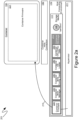
- the exemplary system 201 shown therein illustrates an exemplary initiation of a booting of an operating system in a container file system virtualization environment, such as the exemplary container 150.
- the exemplary host computing environment 110 can comprise a hypervisor, such as the exemplary hypervisor 211, or other like hardware and/or software capabilities.
- the exemplary hypervisor 211 can utilize data from a container operating system image, such as the exemplary container operating system image 212, or other like container data stored on the storage media 111 of the exemplary host computing environment 110, to start booting an operating system within the exemplary container 150.
- a container operating system image such as the exemplary container operating system image 212
- the hypervisor 211 can cause container firmware 220 to execute within the container environment 150, in the form of the executing container firmware 221, as illustrated by the action 219.
- the information and executable instructions stored in a container operating system image, such as the exemplary container operating system image 212 can be static, such that they are not affected by changes to the host computing environment 110, or they can be dynamic in that changes to the host computing environment 110 can result in changes to some or all of the container operating system image 212.
- a dynamic container operating system image 212 can utilize the same executable instructions for some or all of the relevant portions of the container operating system image 212 as are utilized to boot the operating system of the host computing device 110 itself. In such an instance, changes to the executable instructions that boot the operating system of the host computing device 110 can necessarily result in changes to the container operating system image 212.
- a virtualized network connection such as the exemplary container host connection 190, can be utilized for processes executing within the container 150 to access information from the host computing environment 110.
- the execution of the container firmware 221 within the container 150 can be the execution of drivers for the relevant devices that the container 150 may need to access during the boot process, such as graphics drivers, user input device drivers, such as keyboard drivers and mouse drivers, and, of relevance to the descriptions provided herein, network drivers that can enable the executing firmware 221 to access information from the host computing environment 110.
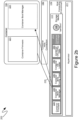
- the exemplary system 202 shown therein illustrates the execution of the container firmware 221 utilizing the container host connection 190 to access the container boot manager 230 as stored on the storage media 111 of the host computing environment 110.
- the exemplary container boot manager 230 can be part of the exemplary container operating system image 212.
- the location of the exemplary container boot manager 230 can be identified, to the firmware 221, by the hypervisor 211 as part of the action 219 illustrated in Figure 2a .
- the container boot manager 230 can be executed within the container, as the executing container boot manager 231, by the container firmware 221.
- the location and execution of the container boot manager 230, by the firmware 221, is illustrated in the exemplary system 202 by the action 229.
- the execution of the container boot manager 231 can include the execution of drivers, or other like computer-executable instructions, that can enable the container boot manager 231 to access relevant portions of the host operating system environment 110, including, for example, graphics drivers, input peripheral drivers, network drivers, and the like.
- drivers can be the same drivers as utilized by the container firmware 221, and, thus, such drivers can remain in memory for utilization by the container boot manager 231, or the drivers can be different drivers, which can require the container boot manager 231 to clear the memory previously utilized by the container firmware 221, and load its own drivers into the memory of the container environment 150.
- the firmware 221 can identify, to the container boot manager 231, a boot device to be utilized for the booting of an operating system into the container environment 150.
- a boot device can be the container host connection 190.
- the container boot manager 230 can access such a boot device to locate and obtain container boot configuration data.
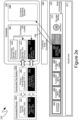
- the exemplary system 203 illustrates an action 238 by which the container boot manager 231, executing within the container environment 150, utilizes the container host connection 190, that was previously specified, to the container boot manager 231, as the boot device, to locate and read the container boot configuration data 240.
- the container boot configuration data 240 can also be part of the exemplary container operating system image 212.
- the container boot configuration data 240 can specify a new boot device. More specifically, as illustrated by the specification 249 in the system 203 shown in Figure 2c , the container boot configuration data 240 can specify a composite device, such as the exemplary composite device 250, as a new boot device.
- the exemplary composite device 250 can implement a layering, analogous to that described above, having a primary layer and a secondary layer.
- a composite device such as the exemplary composite device 250, can comprise any number of layers, including a tertiary layer below the secondary layer, and so on.
- a composite device such as the exemplary composite device 250, can access multiple devices in a hierarchical order.
- a primary device can be accessed first, and, if the information sought is unavailable from the primary device, the secondary device can be accessed, and the information sought and be provided therefrom. Conversely, again, if the information sought is available from the primary device, the secondary device may not need to be accessed.
- the exemplary composite device 250 can be a composite of a primary device 251, which, in the present example, can be the sandbox 149, and a secondary device 252, which, in the present example, can be the container host connection 190.
- a composite device such as the exemplary composite device 250, can enable the utilization of a composite file system, such as the exemplary composite file system 260.
- a composite file system can layer a primary file system over a secondary file system such that, if a file is found in the primary file system, it can be utilized even if the same file exists in the secondary file system, while, if a file is not found in the primary file system, the secondary file system can be checked and, if found, the file can be sourced therefrom.
- the composite file system 260 can comprise multiple layers beyond just a primary and secondary file system.
- the composite file system 260 can comprise a tertiary file system, and so on.
- the exemplary composite file system 260 can comprise a primary file system 261, which, in the present example, can be the container file system 171, and a secondary file system 262, which, in the present example, can be the host file system 181.
- a container boot manager such as the container boot manager 230 from the container operating system image 212 in the host computing environment 110, instantiated into, and executing within, the container environment 150 as the executing container boot manager 231, can comprise computer-executable instructions that can operate with a composite device, such as the exemplary composite device 250, and implement a composite file system, such as the exemplary composite file system 260.
- the executing container boot manager 231 can execute drivers, filters, mini-filters, or other like computer executable instructions that can access the sandbox 149.
- Such computer executable instructions are illustrated in the exemplary system 203, shown in Figure 2c , as the exemplary drivers 277.
- the exemplary drivers 277 can be similar to, or even equivalent to, the drivers ultimately utilized by the container operating system to implement the container file system 171, such as the exemplary drivers 170 illustrated in Figure 1 and described above.
- the exemplary drivers 277 can differ from the exemplary drivers 170 in that they can implement a more rudimentary, simpler functionality that can comprise the device and file system functionality utilized by the container boot manager 231, but can lack support for more complex functions.
- the exemplary drivers 277 need not be driver code in a traditional sense, but rather can be computer-executable instructions capable of implementing the mechanisms described herein, in whatever form such computer executable instructions are packaged for purposes of convenience and/or interoperation with other aspects of the container environment 150 and/or the host computing environment 110.
- the executing container boot manager 231 can execute drivers, filters, mini-filters, or other like computer executable instructions that can access the data of the host file system over the container host connection 190.
- Such computer executable instructions are illustrated in the exemplary system 203, shown in Figure 2c , as the exemplary drivers 278.
- the exemplary drivers 278 can be similar to, or even equivalent to, the drivers ultimately utilized by the container operating system to implement the host file system 181 in the container 150, such as the exemplary drivers 180 illustrated in Figure 1 and described above.
- the exemplary drivers 278 can differ from the exemplary drivers 180 in that they can implement a more rudimentary, simpler functionality that can comprise the device and file system functionality utilized by the container boot manager 231, but can lack support for more complex functions.
- the exemplary drivers 278 need not be driver code in a traditional sense, but rather can be computer-executable instructions capable of implementing the mechanisms described herein, in whatever form such computer executable instructions are packaged for purposes of convenience and/or interoperation with other aspects of the container environment 150 and/or the host computing environment 110.
- the container boot manager 231 can further comprise computer-executable instructions, such as the exemplary drivers 270, that can provide the device and/or file system aggregation described in further detail below.
- the computer-executable instructions illustrated in Figure 2c as the exemplary drivers 270 can comprise a device driver or other like computer-executable instructions that can receive device-centric requests, such as requests to mount a device, open a device, enumerate a device, and other like device-centric requests, and can direct such requests to the computer-executable instructions implementing the interfaces with the devices that are part of the composite device 250, such as the primary device 251 and the secondary device 252.
- the drivers 270 can receive a request to mount the composite device 250, and, in response, can direct mount device requests to both the drivers 277, in order to mount the sandbox 149 as a device accessible from within the container environment 150, and the drivers 278, in order to mount the container host connection 190 as a device accessible from within the container environment 150.
- the drivers 270 can then respond to the mount device request as if a single device was mounted, with the mounting of the individual primary and secondary devices being abstracted in the manner described.
- the computer-executable instructions illustrated in Figure 2c as the exemplary drivers 270 can comprise one or more file system drivers, filter drivers, mini-filters or other like computer-executable instructions that can receive file-system-centric requests, such as requests to open a file, read from a file write to a file, enumerate the files within a folder, and other like file-system-centric requests, and can direct such requests to the computer-executable instructions implementing the interfaces with the file systems that are part of the composite file system 260, such as the primary file system 261 and the secondary file system 262.
- the drivers 270 can receive to open a file in the composite device 260, and, in response, can direct the file open request first to the drivers 277, if the file is part of the container file system 271, or the drivers 278 if the file is not part of the container file system 271, but rather is part of the host file system 181.
- the drivers 270 can then respond to the open file request as if a single file system was accessed, with the underlying interactions with the primary and secondary file systems being abstracted in the manner described.
- the container boot manager 231 can locate container operating system loader computer executable instructions, such as the exemplary container operating system loader 280, which can be part of the exemplary container operating system image 212, and can execute such a container operating system loader 280 in the container environment 150.
- container operating system loader computer executable instructions such as the exemplary container operating system loader 280
- FIG. 2d the exemplary system 204 shown therein illustrates an action 239 by which the container boot manager 231 executes the container operating system loader 280 in the container environment 150 as the executing container operating system loader 281.
- the container boot manager 231 can utilize the composite device 250 and the composite file system 260 to locate the container operating system loader 280.
- the container operating system loader 280 can have been left unchanged by processes executing within the container 150 and, consequently, can be part of the host file system 181, and not the container file system 171, such as in accordance with the mechanisms described with reference to Figure 1 above. Accordingly, requests by the container boot manager 231 to open and execute the container operating system loader 280 can be passed through the drivers 278 and the container operating system loader 280 can be obtained, through the container host connection 190, from the container operating system image 212 in the host computing environment 110.
- the exemplary system 205 shown therein illustrates an exemplary operation of the container operating system loader 281 as executing within the container environment 150.
- the container operating system loader 281 can open the composite device 250, and access the composite file system 260 in order to and locate configuration data for the container operating system that the container operating system loader 281 is to boot into the container environment 150, such as the exemplary container operating system 298.
- the exemplary system 205 shown in Figure 2e illustrates an exemplary operation if the container operating system configuration was not changed by processes executing within the container 150.
- the container operating system loader 281 can, instead, find the container operating system configuration data through the secondary file system 262, such as, for example, the host file system 181.
- action 288, by the container operating system loader 281 obtains the container operating system configuration data 290, from the operating system container image 212 in the host computing environment 110, and utilizes such container operating system configuration data 290 to configure the booting of the container operating system 298.
- the composite device 250 can have provided the relevant access via the secondary device 252
- the composite file system 260 can have provided the relevant access via the secondary file system 262
- the drivers 278, responsible for the secondary device 252 and the secondary file system 262 can have been utilized by the container operating system loader 281 to obtain the container operating system configuration data 290 from the host file system 181 and utilize the same to boot the container operating system 298 in the container environment 150, as illustrated by the black highlighting.
- a copy of the container operating system configuration data 290 can be part of the container file system 171, such as can be stored, or otherwise retained, in the sandbox 149.
- existing mechanisms would not have provided access to the container file system 171 until after the container operating system 298 had completed booting, because the relevant computer-executable instructions, such as the relevant drivers, can be loaded by the booting of the container operating system 298 and can be unavailable prior to such booting, rendering the container file system 171 inaccessible until after the container operating system 298 has completed booting.
- access to the container file system 171 such as for purposes of accessing a modified copy of the container operating system configuration data 290, reflecting modifications made by processes executing within the container environment 150, can be provided at an earlier stage of the boot process, more specifically, prior to the container operating system loader 281 utilizing such operations and configuration data to boot and configure the container operating system 298.
- the exemplary system 206 shown therein illustrates an exemplary operation by which container operating system configuration data 291, reflecting changes previously made by processes executing within the container environment 150, can be utilized to control the configuration and booting of the container operating system 299.
- the container operating system 299 is labeled with a different identifier than the container operating system 298 of the system 205 shown in Figure 2e to indicate that the executing operating systems can have different configurations.
- the container operating system configuration data 291, having been changed by processes executing within the container environment 150, can be stored within the container file system 171, as persisted in the sandbox 149.
- the container operating system loader 281 can find the container operating system configuration data 291 through the primary file system 261, such as, for example, the container file system 171. As shown in the exemplary system 206, therefore, action 289, by the container operating system loader 281, can obtain the container operating system configuration data 291, from the sandbox 149, and can utilize such container operating system configuration data 291 to configure the booting of the container operating system 298.
- the composite device 250 can have provided the relevant access via the primary device 251
- the composite file system 260 can have provided the relevant access via the primary file system 261
- the drivers 277, responsible for the secondary device 252 and the secondary file system 262 can have been utilized by the container operating system loader 281 to obtain the container operating system configuration data 291 from the sandbox 149 and utilize the same to boot the container operating system 299 in the container environment 150, as illustrated by the black highlighting in Figure 2f .
- changes made by processes executing within the container 150 can be accessible sufficiently early in the boot process to change the configuration of the container operating system booted within the container environment 150.
- the application 152 executing within the container environment 150, was, for example, and anti-malware program, such an application 152 may need to have computer-executable instructions executed during an early stage of the operating system boot in order to detect potential malware threats occurring during the operating system boot.
- the application 152 can modify a file 141, such as illustrated by the action 155, where, in the present example, such a file 141 can be an operating system configuration file, and the modification 155 can be the insertion of a path to the computer-executable instructions that are to be executed during an early stage of the operating system boot, together with the insertion of an instruction to execute such computer-executable instructions, for example.
- the resulting modification to the file 141 can result in a copy of the file 144, with such modifications, existing within the container file system 171, such as, for example, persisted within the sandbox 149, while the file 141 on the host file system 131 remains unchanged.
- the exemplary container operating system configuration data 290 can remain unchanged within the host computing environment 110, and the modifications described in the above example can, instead, be reflected in the container operating system configuration data 291, which can be part of the container file system 171, and can be persisted in the sandbox 149.
- the container operating system loader 281 can access the composite device 250 and search the composite device 250 for container operating system configuration data.
- the primary device 251, such as the sandbox 149 in the present example, and the corresponding primary file system 261, such as the container file system 171 in the present example can be referenced first to determine whether the container operating system configuration data exists therein.
- Such a referencing can identify the container operating system configuration data 291, comprising the modifications made by the application within the container process 150, such as those detailed above in the present example. Consequently, the container operating system loader 281 can boot the container operating system 299, as illustrated by the action 289, utilizing the modified container operating system configuration data 291.
- a slight modification can accommodate changes, not just to the container operating system configuration data, but to the container boot configuration data itself. More specifically, and turning back to the exemplary system 203 shown in Figure 2c , as indicated previously, the container boot configuration data 240 can comprise an indicator 249 of the composite device 250 to be utilized as the new boot device, since the container boot manager process 231 can initially have been executed utilizing the container host connection 190 as the boot device, such as detailed previously. According to the presently described aspect, the container boot manager 231 can detect when the boot device specified by the container boot configuration data 240 differs from the boot device utilized by the container boot manager 231 to read the container boot configuration data 240 in the first place.
- the container boot manager 231 can compare identifiers of the boot device specified by the container boot configuration data 240 and the boot device utilized by the container boot manager 231 to read the container boot configuration data 240 in the first place.
- identifiers can be based on the device type and/or the entire device descriptor.
- the identifier of such composite devices can be based on the device types and descriptors of the devices abstracted by the composite device.
- device descriptors can, in turn, include metadata of the corresponding devices, such as interface identifiers, channel identifiers, disk identifiers, partition identifiers and the like.
- the container boot manager 231 can utilize the newly specified device, such as, in the present example, the composite device 250, to locate and read the container boot configuration data again.
- the container boot manager 231 can utilize the composite device 250 to again open the container boot configuration data. If the container boot configuration data had been modified, then, in accordance with the mechanisms detailed previously, a new copy of the container boot configuration data, such as the exemplary copy of the container boot configuration data 340, reflecting such modifications, can be part of the container file system 171 such as persisted in the sandbox 149.
- the container boot manager 231 can be provided with an enumeration of the container boot configuration data 340 from the primary file system 261, rather than the container boot configuration data 240 from the secondary file system 262.
- the container boot manager 231 can read the container boot configuration data 340, from the container file system 171, is illustrated by the action 338.
- the container boot configuration data 340 can also specify the composite device 250 as the boot device, as illustrated by the specification 349.
- the container boot manager 231 can proceed, such as in the manner detailed above, except that the configuration utilized by the container boot manager 231 can be in accordance with the modifications made from within the container environment 150, as reflected in the container boot configuration data 340, as opposed to the container boot configuration data 240, which can remain unchanged on the host computing environment 110, thereby maintaining the isolation of the host computing environment 110 from the container environment 150.
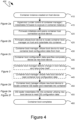
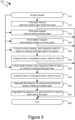
- exemplary flow diagram 400 shown therein illustrates an exemplary series of steps that can enable processes executing within a container file system virtualization environment to make modifications that can be implemented during early stages of the operating system boot within such a container file system virtualization environment.
- a container instance can be created on a host computing device. Such a creation of a container instance can include the reservation of memory, the establishment of underlying hardware and communication functionality, and the like.
- a hypervisor such as based on instructions and/or parameters provided by container manager processes, can instantiate firmware to execute within the container instance.
- step 415 can correspond to the exemplary system 201 shown in Figure 2a and described in detail above.
- the firmware executing within the container instance created at step 410 can initialize and open a container host connection that can have been identified as part of the instantiation of the firmware, by the hypervisor, at step 415, as the boot device to be utilized by the firmware.
- the firmware can utilize the boot device, namely the container host connection, to locate a container boot manager, such as from the host computing environment, and instantiate the container boot manager into the container instance created at step 410.
- the instantiation of the container boot manager, by the firmware, at step 425 can include the passing of parameters from the firmware to the container boot manager.
- the parameters can be provided from the firmware to the container boot manager in the form of pointers to values, command line parameters provided as part of an execution instruction implemented by the container boot manager, or other like passing of parameters into a process being instantiated.
- Such parameters can include a specification of the boot device, which, in the present example, can still be the container host connection.
- step 425 can correspond to the exemplary system 202 shown in Figure 2b and described in detail above.
- the container boot manager can utilize the identified boot device, passed in as a parameter by the firmware at step 425, to find, open and read container boot configuration data.
- such container boot configuration data will be read through the container host connection.
- the container boot configuration data can include a specification of a new boot device, namely the composite device detailed above. As indicated in Figure 4 , steps 430 and 435 can correspond to the exemplary system 203 shown in Figure 2c and described in detail above.
- the container boot manager can detect that the boot device specified by the container boot configuration data read at step 435 differs from the boot device utilized by the container boot manager to read the container boot configuration data in the first place at step 430.
- Step 440 is illustrated in Figure 4 utilizing dashed lines to indicate that it is an optional step.
- the container boot manager upon determining, at step 440, that the boot device specified by the container boot configuration data differs from that utilized to read the container boot configuration data in the first place, the container boot manager can utilize the newly specified boot device and again read the container boot configuration data, at step 445, this time from such a newly specified boot device.
- step 445 can enable container boot configuration data that can have been modified by processes executing within the container to be utilized during the boot process.
- step 445 is also illustrated in Figure 4 utilizing dashed lines to indicate that it is optional.
- steps 440 and 445 can correspond to the exemplary system 300 shown in Figure 3 and described in detail above.
- step 445 processing can proceed to step 450 and the container boot manager can utilize the new boot device specified at step 435, namely the composite device in the present example, to locate and instantiate a container operating system loader into the container instance created in step 410.
- the container operating system loader can be obtained from the host computing device, if no changes were made to the operating system loader within the container environment. More specifically, the utilization of the new boot device, being a composite device, can first check a primary device, and a primary file system, for the container operating system loader.
- step 450 can correspond to the exemplary system 204 shown in Figure 2d and described in detail above.
- the operating system loader can proceed to find and read operating system configuration data from the boot device, which, in the present example, can be the composite device specified by the container boot configuration data at step 435.
- the boot device which, in the present example, can be the composite device specified by the container boot configuration data at step 435.
- the operating system configuration data was modified, a primary device, and a primary file system, associated with the container environment, can be utilized to provide access to the modified operating system configuration data, and the operating system loader can utilize such modified operating system configuration data to boot the operating system.
- processes executing within a container environment can modify the booting of the operating system of such a container environment.
- a secondary device, and a secondary file system, associated with the host computing environment can be utilized to provide access to the unmodified operating system configuration data and, at step 555, the operating system loader can utilize such unmodified operating system configuration data to boot the operating system.
- the booting of an operating system into the container environment can then complete at step 460.
- an access request can be received.
- Such an access request can be a file-based access request, a folder-based or directory-based access request, or a device-based access request.
- access requests can proceed among the multiple layers of the composite device and composite file system in an analogous manner to those illustrated and described.
- Analogous files-based or directory-based requests can be directed to files and/or directories of the composite file system.
- the requested file can be read from the highest layer where the file exists.
- the file exists in the primary file system, that file can be provided in response to the request received at step 510.
- the secondary file system can be checked for the file, and if the file is located in the secondary file system, it can be provided from there in response to the request.
- metadata such as in the form of a flag or other like indicator, can be generated to identify the file system where the file was located, such that subsequent requests for the same file can be directed to the identified file system, with the other file systems being skipped.
- metadata can be cached in one or more tables, such as file tables implemented by the composite file system, or other analogous databases or data structures. Subsequently, the relevant processing can end at step 560.
- the access request is a file write request
- a copy-on-write can be performed to copy the file from the secondary file system into the primary file system and then persist the changes being written to the file in the primary file system, thereby maintaining isolation between the container environment, having access to the primary file system, and the host computing environment, having access to the secondary file system, where the unchanged file can remain. Subsequently, the relevant processing can end at step 560.
- a deletion marker can be placed in the primary file system, at step 525.
- the composite file system returns an indication that the file is no longer available. Subsequently, the relevant processing can end at step 560.
- the access request is a device-based request, such as a request to mount a volume
- processing can proceed to step 530 and the composite device can send such a request to each layer's file system.
- the relevant volume can be mounted at each layer such that subsequent directory enumerations, or file access requests can encompass both an underlying base layer provided by the host computing environment, which is not changeable from the container environment, and a primary, or overlay, layer accessible from within the container environment and persisting changes made within the container environment.
- step 535 if, at step 535, it is determined that one or more layers do not have the requested volume, then metadata, such as in the form of a flag or other like indicator, can be generated to identify the layers where the volume is accessible, or, conversely, to identify the layers were the volume is not accessible. Subsequent performance of the step 530 can then send the request only to those layers at which the volume is accessible, based on existing, previously generated markings. Subsequently, the relevant processing can end at step 560.
- metadata such as in the form of a flag or other like indicator
- step 540 processing can proceed with step 540, at which point the request can be sent to each layer's file system.
- metadata such as in the form of a flag or other like indicator, can be generated to identify the layers that do not have such a folder, or, conversely, to identify the layers having such a folder.
- step 540 can then direct the open folder request, for example, only to those layers that have the folder, based on the existing markings, such as from prior performance of step 545.
- the presented listing of files can be in accordance with the priority of the layers. More specifically, and as detailed above, if the file exists in a higher layer, the same file from a lower layer is not shown. Thus, for example, if a modified copy of the file, modified from within a container environment, and therefore saved in the primary file system, namely the container file system, exists, then the unmodified file, from the host environment, they can be part of the secondary file system, can be not shown, and an enumeration of the files in the folder can include only the modified copy of the file from the primary file system. Such an aggregation can be performed at step 555.
- any file corresponding to a deletion marker at a higher layer can be indicated as no longer available, and, therefore, not presented as part of the enumeration of files in a folder.
- Deletion markers can also be utilized for folders, with a folder corresponding to a deletion marker at a higher layer causing the aggregation, at step 555, to not present any files that are present in that folder at lower layers.
- the exemplary computing device 600 can include, but is not limited to, one or more central processing units (CPUs) 620, a system memory 630, and a system bus 621 that couples various system components including the system memory to the processing unit 620.
- the system bus 621 may be any of several types of bus structures including a memory bus or memory controller, a peripheral bus, and a local bus using any of a variety of bus architectures.
- the computing device 600 can optionally include graphics hardware, including, but not limited to, a graphics hardware interface 660 and a display device 661, which can include display devices capable of receiving touch-based user input, such as a touch-sensitive, or multi-touch capable, display device.
- graphics hardware including, but not limited to, a graphics hardware interface 660 and a display device 661, which can include display devices capable of receiving touch-based user input, such as a touch-sensitive, or multi-touch capable, display device.
- one or more of the CPUs 620, the system memory 630 and other components of the computing device 600 can be physically co-located, such as on a single chip.
- some or all of the system bus 621 can be nothing more than silicon pathways within a single chip structure and its illustration in Figure 6 can be nothing more than notational convenience for the purpose of illustration.
- the computing device 600 also typically includes computer readable media, which can include any available media that can be accessed by computing device 600 and includes both volatile and nonvolatile media and removable and non-removable media.
- computer readable media may comprise computer storage media and communication media.
- Computer storage media includes media implemented in any method or technology for storage of content such as computer readable instructions, data structures, program modules or other data.
- Computer storage media includes, but is not limited to, RAM, ROM, EEPROM, flash memory or other memory technology, CD-ROM, digital versatile disks (DVD) or other optical disk storage, magnetic cassettes, magnetic tape, magnetic disk storage or other magnetic storage devices, or any other medium which can be used to store the desired content and which can be accessed by the computing device 600.
- Computer storage media does not include communication media.
- Communication media typically embodies computer readable instructions, data structures, program modules or other data in a modulated data signal such as a carrier wave or other transport mechanism and includes any content delivery media.
- communication media includes wired media such as a wired network or direct-wired connection, and wireless media such as acoustic, RF, infrared and other wireless media. Combinations of the any of the above should also be included within the scope of computer readable media.
- the system memory 630 includes computer storage media in the form of volatile and/or nonvolatile memory such as read only memory (ROM) 631 and random access memory (RAM) 632.
- ROM read only memory
- RAM random access memory
- BIOS basic input/output system
- RAM 632 typically contains data and/or program modules that are immediately accessible to and/or presently being operated on by processing unit 620.
- Figure 6 illustrates operating system 634, other program modules 635, and program data 636.
- the computing device 600 may also include other removable/non-removable, volatile/nonvolatile computer storage media.
- Figure 6 illustrates a hard disk drive 641 that reads from or writes to non-removable, nonvolatile magnetic media.
- Other removable/non-removable, volatile/nonvolatile computer storage media that can be used with the exemplary computing device include, but are not limited to, magnetic tape cassettes, flash memory cards, digital versatile disks, digital video tape, solid state RAM, solid state ROM, and other computer storage media as defined and delineated above.
- the hard disk drive 641 is typically connected to the system bus 621 through a non-volatile memory interface such as interface 640.
- hard disk drive 641 is illustrated as storing operating system 644, other program modules 645, and program data 646. Note that these components can either be the same as or different from operating system 634, other program modules 635 and program data 636. Operating system 644, other program modules 645 and program data 646 are given different numbers hereto illustrate that, at a minimum, they are different copies.
- the computing device 600 may operate in a networked environment using logical connections to one or more remote computers.
- the computing device 600 is illustrated as being connected to the general network connection 651 (to the network 670) through a network interface or adapter 650, which is, in turn, connected to the system bus 621.
- program modules depicted relative to the computing device 600, or portions or peripherals thereof may be stored in the memory of one or more other computing devices that are communicatively coupled to the computing device 600 through the general network connection 661. It will be appreciated that the network connections shown are exemplary and other means of establishing a communications link between computing devices may be used.
- the exemplary computing device 600 can be a virtual computing device, in which case the functionality of the above-described physical components, such as the CPU 620, the system memory 630, the network interface 640, and other like components can be provided by computer-executable instructions.
- Such computer-executable instructions can execute on a single physical computing device, or can be distributed across multiple physical computing devices, including being distributed across multiple physical computing devices in a dynamic manner such that the specific, physical computing devices hosting such computer-executable instructions can dynamically change over time depending upon need and availability.
- the underlying physical computing devices hosting such a virtualized computing device can, themselves, comprise physical components analogous to those described above, and operating in a like manner.
- virtual computing devices can be utilized in multiple layers with one virtual computing device executing within the construct of another virtual computing device.
- the term "computing device”, therefore, as utilized herein, means either a physical computing device or a virtualized computing environment, including a virtual computing device, within which computer-executable instructions can be executed in a manner consistent with their execution by a physical computing device.
- terms referring to physical components of the computing device, as utilized herein, mean either those physical components or virtualizations thereof performing the same or equivalent functions.
- a computing device comprising: one or more processing units; and one or more computer-readable storage media comprising: a first computer-executable instructions, which, when executed by the processing units, cause the computing device to: host a container providing a file system virtualization environment isolated from a host file system of the computing device; and a container operating system image comprising: a container boot manager, a first container boot configuration data, a container operating system loader, and a first container operating system configuration data; wherein the container boot manager comprises a second computer-executable instructions, which, when executed by the processing units, cause the computing device to: read the first container boot configuration data from the container operating system image via a container host connection that appears, from within the container, as a device; receive, from the reading of the first container boot configuration data, a specification of a composite device as a boot device, the composite device abstracting a first device as a primary layer of the composite device and a second device as a secondary layer of the composite device; and identify the composite
- a second example is the computing device of the first example, wherein the container operating system image further comprises a container firmware.
- a third example is the computing device of the second example, wherein the first computer-executable instructions further cause the computing device to: utilize a hypervisor of the computing device to execute the container firmware in the container.
- a fourth example is the computing device of the first example, wherein the container host connection appears, from within the container, as a network connection.
- a fifth example is the computing device of the first example, wherein the second computer-executable instructions further cause the computing device to: receive an identification of the container host connection as the boot device; determine that the composite device differs from the container host connection; and in response to the determination that the identified boot device changed, reading container boot configuration data from the composite device; wherein the receiving the specification of the composite device as the boot device occurs subsequent to the receiving the identification of the container host connection as the boot device.
- a sixth example is the computing device of the fifth example, wherein the determining that the composite device differs from the container host connection comprises comparing device identifiers, the device identifier of the composite device being based on device identifiers of the first and second devices abstracted by the composite device.
- a seventh example is the computing device of the fifth example, wherein the reading the container boot configuration data from the composite device comprises reading the first container boot configuration data again from the container operating system image.
- An eighth example is the computing device of the fifth example, wherein the reading the container boot configuration data from the composite device comprises reading a second container boot configuration data from a sandbox comprising file activity from within the container that is isolated from the host file system of the computing device.
- a ninth example is the computing device of the first example, wherein the reading the obtained container operating system configuration data from the composite device comprises reading the first container operating system configuration data from the container operating system image.
- a tenth example is the computing device of the first example, wherein the reading the obtained container operating system configuration data from the composite device comprises reading a second container operating system configuration data from a sandbox comprising file activity from within the container that is isolated from the host file system of the computing device.
- An eleventh example is the computing device of the first example, wherein the first device abstracted by the composite device is a sandbox comprising file activity from within the container that is isolated from the host file system of the computing device and the second device abstracted by the composite device is the container host connection.
- a twelfth example is the computing device of the first example, wherein the composite device is associated with a composite file system abstracting, as a primary layer, a first file system providing access to data persisted on the first device and, as a secondary layer, a second file system providing access to data persisted on the second device.
- a thirteenth example is the method of booting an operating system in a container providing a file system virtualization environment isolated from a host computing environment hosting the container, the method comprising: receiving a specification of a composite device as a boot device, the composite device abstracting a first device as a primary layer of the composite device and a second device as a secondary layer of the composite device; reading, in response to the receipt of the specification of the composite device as the boot device, operating system configuration data from a composite file system associated with the composite device, the composite file system abstracting, as a primary layer of the composite file system, a first file system providing access to data persisted on the first device and, as a secondary layer of the composite file system, a second file system providing access to data persisted on the second device; and utilizing the read operating system configuration data to boot the operating system in the container; wherein the read operating system configuration data was read from the first file system file system based upon the operating system configuration data being found in the first file system; and wherein the read operating system configuration data was read from the second file system file
- a fourteenth example is a method of the thirteenth example, wherein the first file system is at least a part of the file system virtualization environment of the container such that edits made from within the container are accessible through the first file system and are isolated from, and not accessible through, the second file system.
- a fifteenth example is the method of the thirteenth example, further comprising: receiving a specification of the second device as an initial boot device; and reading boot configuration data from the second file system based on the received specification of the second device as the initial boot device; wherein the receiving the specification of the composite device as the boot device occurs from the reading of the boot configuration data.
- a seventeenth example is the method of the thirteenth example, further comprising: directing a volume mount request for an identified volume to the composite device; passing the volume mount request to devices at each layer of the composite device in the absence of existing metadata indicating that one or more layers of the composite device lack the identified volume; and passing the volume mount request to devices at only those layers of the composite device indicated by the existing metadata as having the identified volume.
- An eighteenth example is the method of the thirteenth example, further comprising: directing a folder open request for an identified folder to the composite file system; passing the folder open request to file systems at each layer of the composite file system in the absence of existing metadata indicating that one or more layers of the composite file system lack the identified folder; passing the folder open request to file systems at only those layers of the composite file system indicated by the existing metadata as having the identified folder; and generating a file listing for the identified folder comprising, for a first file found in the identified folder at multiple layers of the composite file system, only a single instance of the first file from the highest layer where the first file was found.
- a nineteenth example is the method of the eighteenth example, wherein the generating the file listing comprises excluding a second file found in the identified folder at a first layer of the composite file system if a file deletion marker corresponding to the second file exists at a higher layer than the first layer.
- a twentieth example is one or more computer-readable storage media comprising computer-executable instructions, which, when executed, perform steps comprising: receiving a specification of a composite device as a boot device, the composite device abstracting a first device as a primary layer of the composite device and a second device as a secondary layer of the composite device; reading, in response to the receipt of the specification of the composite device as the boot device, operating system configuration data from a composite file system associated with the composite device, the composite file system abstracting, as a primary layer of the composite file system, a first file system providing access to data persisted on the first device and, as a secondary layer of the composite file system, a second file system providing access to data persisted on the second device; and utilizing the read operating system configuration data to boot the operating system in the container; wherein the read operating system configuration data was read from the first file system file system based upon the operating system configuration data being found in the first file system; and wherein the read operating system configuration data was read from the second file system file system based upon the operating system configuration data not
Landscapes
- Engineering & Computer Science (AREA)
- Theoretical Computer Science (AREA)
- Software Systems (AREA)
- Physics & Mathematics (AREA)
- General Engineering & Computer Science (AREA)
- General Physics & Mathematics (AREA)
- Computer Security & Cryptography (AREA)
- Databases & Information Systems (AREA)
- Data Mining & Analysis (AREA)
- Human Computer Interaction (AREA)
- Computer Hardware Design (AREA)
- Stored Programmes (AREA)
- Information Retrieval, Db Structures And Fs Structures Therefor (AREA)
Applications Claiming Priority (3)
| Application Number | Priority Date | Filing Date | Title |
|---|---|---|---|
| US16/716,467 US11334364B2 (en) | 2019-12-16 | 2019-12-16 | Layered composite boot device and file system for operating system booting in file system virtualization environments |
| EP20819988.5A EP4078362B1 (fr) | 2019-12-16 | 2020-11-11 | Périphérique de démarrage composite et système de fichiers en couches pour le démarrage de système d'exploitation dans des environnements de virtualisation de système de fichiers |
| PCT/US2020/059916 WO2021126417A1 (fr) | 2019-12-16 | 2020-11-11 | Peripherique de démarrage composite et système de fichiers en couches pour le démarrage de système d'exploitation dans des environnements de virtualisation de système de fichiers |
Related Parent Applications (2)
| Application Number | Title | Priority Date | Filing Date |
|---|---|---|---|
| EP20819988.5A Division-Into EP4078362B1 (fr) | 2019-12-16 | 2020-11-11 | Périphérique de démarrage composite et système de fichiers en couches pour le démarrage de système d'exploitation dans des environnements de virtualisation de système de fichiers |
| EP20819988.5A Division EP4078362B1 (fr) | 2019-12-16 | 2020-11-11 | Périphérique de démarrage composite et système de fichiers en couches pour le démarrage de système d'exploitation dans des environnements de virtualisation de système de fichiers |
Publications (2)
| Publication Number | Publication Date |
|---|---|
| EP4485185A2 true EP4485185A2 (fr) | 2025-01-01 |
| EP4485185A3 EP4485185A3 (fr) | 2025-09-10 |
Family
ID=73699457
Family Applications (2)
| Application Number | Title | Priority Date | Filing Date |
|---|---|---|---|
| EP24212739.7A Pending EP4485185A3 (fr) | 2019-12-16 | 2020-11-11 | Dispositif d'amorçage composite en couches et système de fichiers pour l'amorçage d'un système d'exploitation dans des environnements de virtualisation de système de fichiers |
| EP20819988.5A Active EP4078362B1 (fr) | 2019-12-16 | 2020-11-11 | Périphérique de démarrage composite et système de fichiers en couches pour le démarrage de système d'exploitation dans des environnements de virtualisation de système de fichiers |
Family Applications After (1)
| Application Number | Title | Priority Date | Filing Date |
|---|---|---|---|
| EP20819988.5A Active EP4078362B1 (fr) | 2019-12-16 | 2020-11-11 | Périphérique de démarrage composite et système de fichiers en couches pour le démarrage de système d'exploitation dans des environnements de virtualisation de système de fichiers |
Country Status (4)
| Country | Link |
|---|---|
| US (2) | US11334364B2 (fr) |
| EP (2) | EP4485185A3 (fr) |
| CN (1) | CN114830085B (fr) |
| WO (1) | WO2021126417A1 (fr) |
Families Citing this family (5)
| Publication number | Priority date | Publication date | Assignee | Title |
|---|---|---|---|---|
| US12164948B2 (en) | 2020-06-04 | 2024-12-10 | Microsoft Technology Licensing, Llc | Partially privileged lightweight virtualization environments |
| US11416614B2 (en) * | 2020-07-01 | 2022-08-16 | Dell Products L.P. | Statistical detection of firmware-level compromises |
| US11789764B2 (en) * | 2020-08-04 | 2023-10-17 | Dell Products L.P. | Systems and methods for multi-link platform configuration with containerized compute instances |
| US12332995B2 (en) * | 2020-10-23 | 2025-06-17 | Red Hat, Inc. | Containers system auditing through system call emulation |
| US12099466B1 (en) * | 2023-09-12 | 2024-09-24 | Hewlett Packard Enterprise Development Lp | Embedded systems environment having improved overlay file system storage management |
Family Cites Families (122)
| Publication number | Priority date | Publication date | Assignee | Title |
|---|---|---|---|---|
| US6061743A (en) | 1998-02-19 | 2000-05-09 | Novell, Inc. | Method and apparatus for aggregating disparate namespaces |
| US6735766B1 (en) | 1999-03-03 | 2004-05-11 | Microsoft Corporation | Method and computer-readable medium for installing an upgrade to an application program |
| US7206819B2 (en) | 2001-01-18 | 2007-04-17 | Sun Microsystems, Inc. | Method and apparatus for providing virtual namespaces for active computing environments |
| US7028158B1 (en) | 2001-11-02 | 2006-04-11 | Beatty And Company Computing, Inc. | Storage virtualization engine |
| US6950964B1 (en) | 2002-03-22 | 2005-09-27 | Microsoft Corporation | Driver protection |
| US20040017395A1 (en) | 2002-04-16 | 2004-01-29 | Cook Thomas A. | System and method for configuring and managing enterprise applications |
| US7219127B2 (en) | 2003-03-13 | 2007-05-15 | Oracle International Corporation | Control unit operations in a real-time collaboration server |
| US7584219B2 (en) | 2003-09-24 | 2009-09-01 | Microsoft Corporation | Incremental non-chronological synchronization of namespaces |
| US20050066059A1 (en) | 2003-09-24 | 2005-03-24 | Zybura John H. | Propagating attributes between entities in correlated namespaces |
| WO2005055072A1 (fr) | 2003-11-26 | 2005-06-16 | Hewlett-Packard Development Company, L.P. | Systemes et procede de gestion et d'installation d'images de systemes d'exploitation d'ordinateurs |
| CN100435094C (zh) | 2004-02-27 | 2008-11-19 | 捷讯研究有限公司 | 为组件应用程序建立混合模式执行环境的系统和方法 |
| US7636710B2 (en) | 2004-03-04 | 2009-12-22 | Symantec Operating Corporation | System and method for efficient file content searching within a file system |
| US7802022B2 (en) | 2004-04-29 | 2010-09-21 | Microsoft Corporation | Generic USB drivers |
| US8972977B2 (en) | 2004-06-30 | 2015-03-03 | Microsoft Technology Licensing, Llc | Systems and methods for providing seamless software compatibility using virtual machines |
| US20060080656A1 (en) | 2004-10-12 | 2006-04-13 | Microsoft Corporation | Methods and instructions for patch management |
| US7711706B2 (en) | 2004-11-08 | 2010-05-04 | Innopath Software, Inc. | Reorganizing images in static file system differencing and updating |
| US7610307B2 (en) | 2004-11-30 | 2009-10-27 | Microsoft Corporation | Method and system of detecting file system namespace changes and restoring consistency |
| US7496565B2 (en) | 2004-11-30 | 2009-02-24 | Microsoft Corporation | Method and system for maintaining namespace consistency with a file system |
| US7873596B2 (en) | 2006-05-23 | 2011-01-18 | Microsoft Corporation | Extending cluster allocations in an extensible file system |
| EP1684151A1 (fr) | 2005-01-20 | 2006-07-26 | Grant Rothwell William | Protection d'ordinateur contre des modifications malveillantes |
| US7483927B2 (en) | 2005-12-01 | 2009-01-27 | International Business Machines Corporation | Method for merging metadata on files in a backup storage |
| US8325398B2 (en) | 2005-12-22 | 2012-12-04 | Canon Kabushiki Kaisha | Image editing system, image management apparatus, and image editing program |
| US8577940B2 (en) | 2006-03-20 | 2013-11-05 | Parallels IP Holdings GmbH | Managing computer file system using file system trees |
| US7512578B2 (en) | 2006-03-30 | 2009-03-31 | Emc Corporation | Smart containers |
| DE602006014360D1 (de) | 2006-04-13 | 2010-07-01 | Microsoft Corp | Virtuelles Ausführungssystem für ressourcen-beschränkte Geräte |
| US8165177B2 (en) | 2006-12-22 | 2012-04-24 | Lenovo (Singapore) Pte. Ltd. | System and method for hybrid virtual machine monitor file system operations |
| US8656386B1 (en) | 2007-03-13 | 2014-02-18 | Parallels IP Holdings GmbH | Method to share identical files in a common area for virtual machines having the same operating system version and using a copy on write to place a copy of the shared identical file in a private area of the corresponding virtual machine when a virtual machine attempts to modify the shared identical file |
| US7783677B2 (en) | 2007-03-30 | 2010-08-24 | Microsoft Corporation | Tracking file system namespace changes during transactions |
| US8407696B2 (en) | 2007-06-04 | 2013-03-26 | International Business Machines Corporation | Method for delivering, testing, and applying software patches or other changes to a conventionally installed application in virtual application containers |
| GB0712640D0 (en) | 2007-06-28 | 2007-08-08 | Symbian Software Ltd | Domputing device having a merged directory hierarchy from multiple filesystems |
| US20090021513A1 (en) | 2007-07-18 | 2009-01-22 | Pixblitz Studios Inc. | Method of Customizing 3D Computer-Generated Scenes |
| US9569443B1 (en) * | 2007-09-28 | 2017-02-14 | Symantec Corpoartion | Method and apparatus for providing access to data in unsupported file systems and storage containers |
| US20110040812A1 (en) | 2007-12-20 | 2011-02-17 | Virtual Computer, Inc. | Layered Virtual File System |
| US8181174B2 (en) * | 2007-12-28 | 2012-05-15 | Accenture Global Services Limited | Virtual machine configuration system |
| US8201029B2 (en) | 2008-01-31 | 2012-06-12 | International Business Machines Corporation | Method and apparatus for operating system event notification mechanism using file system interface |
| EP2324426A4 (fr) * | 2008-07-17 | 2014-04-30 | Lsi Corp | Systèmes et procédés permettant l'initialisation d'un dispositif de stockage virtuel initialisable sur une plate-forme de serveur virtualisée |
| US8392361B2 (en) | 2008-08-11 | 2013-03-05 | Vmware, Inc. | Centralized management of virtual machines |
| US20110061046A1 (en) | 2008-12-18 | 2011-03-10 | Virtual Computer, Inc. | Installing Software Applications in a Layered Virtual Workspace |
| US8112620B2 (en) * | 2009-03-13 | 2012-02-07 | Oracle America, Inc. | Method and system for discovery of a root file system |
| CN101551756B (zh) | 2009-03-31 | 2012-02-15 | 成都市华为赛门铁克科技有限公司 | 基于操作系统层的虚拟方法及虚拟装置 |
| WO2010125473A1 (fr) | 2009-04-30 | 2010-11-04 | France Telecom | Procédé et système de gestion de système mobile d'exploitation |
| US8725791B2 (en) | 2009-05-02 | 2014-05-13 | Citrix Systems, Inc. | Methods and systems for providing a consistent profile to overlapping user sessions |
| US9357568B2 (en) | 2009-06-16 | 2016-05-31 | Futurewei Technologies, Inc. | System and method for adapting an application source rate to a load condition |
| EP2467778A4 (fr) | 2009-08-17 | 2013-01-16 | Virtual Computer Inc | Système de fichiers virtuels en couches |
| US9542408B2 (en) | 2010-08-27 | 2017-01-10 | Pneuron Corp. | Method and process for enabling distributing cache data sources for query processing and distributed disk caching of large data and analysis requests |
| US8555017B2 (en) * | 2010-02-22 | 2013-10-08 | Red Hat, Inc. | In-place physical to virtual (P2V) migration of an existing operating system during installation of a new operating system |
| US8775781B2 (en) * | 2010-03-25 | 2014-07-08 | Microsoft Corporation | Intelligent boot device selection and recovery |
| US8775625B2 (en) | 2010-06-16 | 2014-07-08 | Juniper Networks, Inc. | Virtual machine mobility in data centers |
| US8346854B2 (en) | 2010-06-30 | 2013-01-01 | Deskstream, Inc. | Method and system of operating system independence |
| US8532383B1 (en) | 2010-09-16 | 2013-09-10 | Pixia Corp. | Method of processing a viewport within large format imagery |
| US8903705B2 (en) | 2010-12-17 | 2014-12-02 | Microsoft Corporation | Application compatibility shims for minimal client computers |
| US9104514B2 (en) | 2011-01-11 | 2015-08-11 | International Business Machines Corporation | Automated deployment of applications with tenant-isolation requirements |
| US8874888B1 (en) * | 2011-01-13 | 2014-10-28 | Google Inc. | Managed boot in a cloud system |
| US8510267B2 (en) | 2011-03-08 | 2013-08-13 | Rackspace Us, Inc. | Synchronization of structured information repositories |
| US9176744B2 (en) | 2011-05-20 | 2015-11-03 | Citrix Systems, Inc. | Quickly provisioning a virtual machine by identifying a path to a differential file during pre-boot |
| US20130024857A1 (en) * | 2011-07-19 | 2013-01-24 | Nexenta Systems, Inc. | Method and system for flexible resource mapping for virtual storage appliances |
| US9606629B2 (en) | 2011-09-09 | 2017-03-28 | Cloudon Ltd. | Systems and methods for gesture interaction with cloud-based applications |
| US9965151B2 (en) | 2011-09-09 | 2018-05-08 | Cloudon Ltd. | Systems and methods for graphical user interface interaction with cloud-based applications |
| US9886189B2 (en) | 2011-09-09 | 2018-02-06 | Cloudon Ltd. | Systems and methods for object-based interaction with cloud-based applications |
| WO2013042218A1 (fr) | 2011-09-21 | 2013-03-28 | 株式会社日立製作所 | Système d'ordinateur, procédé de gestion de fichiers et serveur de métadonnées |
| US9805054B2 (en) | 2011-11-14 | 2017-10-31 | Panzura, Inc. | Managing a global namespace for a distributed filesystem |
| US9628296B2 (en) | 2011-12-28 | 2017-04-18 | Evernote Corporation | Fast mobile mail with context indicators |
| US9992024B2 (en) * | 2012-01-25 | 2018-06-05 | Fujitsu Limited | Establishing a chain of trust within a virtual machine |
| US9747293B2 (en) | 2012-02-28 | 2017-08-29 | Deep Information Sciences, Inc. | Method and system for storage and retrieval of information |
| US8914785B2 (en) * | 2012-07-30 | 2014-12-16 | International Business Machines Corporation | Providing virtual appliance system firmware images |
| US9075638B2 (en) * | 2012-08-14 | 2015-07-07 | Atlassian Corporation Pty Ltd. | Efficient hosting of virtualized containers using read-only operating systems |
| US9069782B2 (en) | 2012-10-01 | 2015-06-30 | The Research Foundation For The State University Of New York | System and method for security and privacy aware virtual machine checkpointing |
| US9195294B2 (en) | 2012-11-13 | 2015-11-24 | International Business Machines Corporation | Cooperatively managing enforcement of energy related policies between virtual machine and application runtime |
| US9135140B2 (en) | 2012-11-30 | 2015-09-15 | Lenovo Enterprise Solutions (Singapore) Pte. Ltd. | Identifying software responsible for a change in system stability |
| US9424267B2 (en) | 2013-01-02 | 2016-08-23 | Oracle International Corporation | Compression and deduplication layered driver |
| GB2510874B (en) * | 2013-02-15 | 2020-09-16 | Ncr Corp | Server system supporting remotely managed IT services |
| US9524300B2 (en) | 2013-03-14 | 2016-12-20 | Microsoft Technology Licensing, Llc | Heterogenic volume generation and use system |
| US9116904B2 (en) | 2013-03-14 | 2015-08-25 | Microsoft Technology Licensing, Llc | File system operation on multi-tiered volume |
| KR101517895B1 (ko) | 2013-04-05 | 2015-05-08 | 주식회사 팬택 | 어플리케이션 관련 데이터를 제공하는 단말기 및 방법 |
| US9552363B2 (en) | 2013-04-30 | 2017-01-24 | Microsoft Technology Licensing, Llc | File management with placeholders |
| EP3011505A1 (fr) * | 2013-06-18 | 2016-04-27 | Koninklijke Philips N.V. | Lecteur de dispositif et son moyen de génération d'image |
| US9811531B2 (en) * | 2013-08-26 | 2017-11-07 | Vmware, Inc. | Scalable distributed storage architecture |
| US9971977B2 (en) | 2013-10-21 | 2018-05-15 | Honeywell International Inc. | Opus enterprise report system |
| WO2015088374A1 (fr) | 2013-12-13 | 2015-06-18 | Obschestvo S Ogranichennoy Otvetstvennostju "Elbrus Tehnologii" | Systèmes et procédés pour une virtualisation de contenant entre architectures |
| US10630772B2 (en) | 2014-09-10 | 2020-04-21 | Panzura, Inc. | Maintaining global namespace consistency for a distributed filesystem |
| US9256467B1 (en) | 2014-11-11 | 2016-02-09 | Amazon Technologies, Inc. | System for managing and scheduling containers |
| US10437621B2 (en) * | 2015-04-22 | 2019-10-08 | Cisco Technology, Inc. | Monitoring and managing applications on virtual machines using a proxy agent |
| US9729579B1 (en) | 2015-04-27 | 2017-08-08 | Symantec Corporation | Systems and methods for increasing security on computing systems that launch application containers |
| US9948703B2 (en) | 2015-05-14 | 2018-04-17 | Twilio, Inc. | System and method for signaling through data storage |
| WO2016197069A1 (fr) * | 2015-06-05 | 2016-12-08 | Nutanix, Inc. | Architecture de gestion d'e/s et de mémoire pour un environnement de virtualisation utilisant des conteneurs exécutables et des machines virtuelles |
| US10503532B2 (en) | 2015-06-26 | 2019-12-10 | Vmware, Inc. | Creating a virtual machine clone of the host computing device and handling of virtual machine clone requests via an I/O filter |
| US10997119B2 (en) | 2015-10-23 | 2021-05-04 | Nutanix, Inc. | Reduced size extent identification |
| US10140461B2 (en) | 2015-10-30 | 2018-11-27 | Microsoft Technology Licensing, Llc | Reducing resource consumption associated with storage and operation of containers |
| US10255180B2 (en) | 2015-12-11 | 2019-04-09 | Netapp, Inc. | Server-based persistence management in user space |
| US10162834B2 (en) | 2016-01-29 | 2018-12-25 | Vmware, Inc. | Fine-grained metadata management in a distributed file system |
| US10095506B2 (en) | 2016-02-12 | 2018-10-09 | Nutanix, Inc. | Virtualized file server data sharing |
| US9898354B2 (en) | 2016-03-21 | 2018-02-20 | Microsoft Technology Licensing, Llc | Operating system layering |
| US9766915B1 (en) * | 2016-03-23 | 2017-09-19 | Parallels IP Holdings GmbH | Method for creation of application containers inside OS containers |
| US10901966B2 (en) * | 2016-08-29 | 2021-01-26 | Vmware, Inc. | Synchronizing configurations for container hosted applications |
| US10061613B1 (en) | 2016-09-23 | 2018-08-28 | Amazon Technologies, Inc. | Idempotent task execution in on-demand network code execution systems |
| US11126740B2 (en) * | 2016-11-04 | 2021-09-21 | Microsoft Technology Licensing, Llc | Storage isolation for containers |
| US10169209B2 (en) | 2016-11-04 | 2019-01-01 | Red Hat, Inc. | Container images by composition |
| US10990467B2 (en) | 2016-12-15 | 2021-04-27 | Nutanix, Inc. | Accessing computing resource attributes of an external service provider |
| US10333985B2 (en) * | 2017-01-09 | 2019-06-25 | Microsoft Technology Licensing, Llc | Distribution and management of services in virtual environments |
| KR101954623B1 (ko) | 2017-02-27 | 2019-03-06 | 한국전자통신연구원 | 가상화 환경에서의 소프트웨어 업데이트 장치 및 방법 |
| US10303486B2 (en) * | 2017-03-03 | 2019-05-28 | Microsoft Technology Licensing, Llc | Capturing pre-fetch blocks of an operating system to improve boot performance in a cloud environment |
| US10341198B2 (en) | 2017-03-17 | 2019-07-02 | Verizon Patent And Licensing Inc. | Configuring a back-end container and a corresponding front-end proxy container on a network device |
| US20180285139A1 (en) * | 2017-04-02 | 2018-10-04 | vEyE Security Ltd. | Hypervisor-based containers |
| US10338966B2 (en) | 2017-04-20 | 2019-07-02 | Red Hat, Inc. | Instantiating containers with a unified data volume |
| US10650157B2 (en) * | 2017-04-30 | 2020-05-12 | Microsoft Technology Licensing, Llc | Securing virtual execution environments |
| US10409713B2 (en) * | 2017-05-17 | 2019-09-10 | Red Hat, Inc. | Container testing using a directory and test artifacts and/or test dependencies |
| US10402213B2 (en) * | 2017-05-26 | 2019-09-03 | Sap Se | Software appliance distribution with layer removal |
| US10528366B2 (en) * | 2017-06-05 | 2020-01-07 | International Business Machines Corporation | Facilitating multi-inheritance within a single inheritance container-based environment |
| US10754955B2 (en) * | 2017-08-04 | 2020-08-25 | Dell Products, L.P. | Authenticating a boot path update |
| US11074323B2 (en) | 2017-12-07 | 2021-07-27 | Microsoft Technology Licensing, Llc | Method and system for persisting files |
| CN111433747B (zh) * | 2017-12-14 | 2024-04-16 | 惠普发展公司,有限责任合伙企业 | 用于加载操作系统的虚拟存储器 |
| US11238015B2 (en) * | 2018-01-25 | 2022-02-01 | Citrix Systems, Inc. | Instant hyper-v streaming |
| US11171824B2 (en) * | 2018-03-01 | 2021-11-09 | Red Hat, Inc. | Configuration of computing devices via containers |
| US10977066B2 (en) * | 2018-04-06 | 2021-04-13 | Red Hat, Inc. | Virtual machine to container conversion and optimization |
| US11113075B2 (en) * | 2018-11-14 | 2021-09-07 | International Business Machines Corporation | Launching a middleware-based application |
| US11573814B1 (en) * | 2018-12-12 | 2023-02-07 | Amazon Technologies, Inc. | Sharing prepopulated container image caches among container execution environments |
| US11222123B2 (en) | 2019-04-22 | 2022-01-11 | Cyberark Software Ltd. | Securing privileged virtualized execution instances from penetrating a virtual host environment |
| CN110427248B (zh) | 2019-07-12 | 2021-10-01 | 中国人民解放军国防科技大学 | 一种基于容器的轻量级用户环境构建方法、系统及介质 |
| US11263174B2 (en) * | 2019-11-08 | 2022-03-01 | International Business Machines Corporation | Reducing resource consumption in container image management |
| CN111078367A (zh) | 2019-12-23 | 2020-04-28 | 北京云联万维技术有限公司 | 一种请求处理方法、装置、电子设备和存储介质 |
| US12164948B2 (en) | 2020-06-04 | 2024-12-10 | Microsoft Technology Licensing, Llc | Partially privileged lightweight virtualization environments |
| US20220138146A1 (en) | 2020-10-29 | 2022-05-05 | Microsoft Technology Licensing, Llc | Merging composite images into a new filesystem namespace |
-
2019
- 2019-12-16 US US16/716,467 patent/US11334364B2/en active Active
-
2020
- 2020-11-11 WO PCT/US2020/059916 patent/WO2021126417A1/fr not_active Ceased
- 2020-11-11 EP EP24212739.7A patent/EP4485185A3/fr active Pending
- 2020-11-11 CN CN202080087240.3A patent/CN114830085B/zh active Active
- 2020-11-11 EP EP20819988.5A patent/EP4078362B1/fr active Active
-
2022
- 2022-04-19 US US17/724,356 patent/US11995449B2/en active Active
Also Published As
| Publication number | Publication date |
|---|---|
| CN114830085A (zh) | 2022-07-29 |
| EP4078362A1 (fr) | 2022-10-26 |
| EP4078362B1 (fr) | 2025-01-01 |
| US20220334848A1 (en) | 2022-10-20 |
| EP4485185A3 (fr) | 2025-09-10 |
| US11995449B2 (en) | 2024-05-28 |
| WO2021126417A1 (fr) | 2021-06-24 |
| US20210182078A1 (en) | 2021-06-17 |
| CN114830085B (zh) | 2026-01-27 |
| US11334364B2 (en) | 2022-05-17 |
Similar Documents
| Publication | Publication Date | Title |
|---|---|---|
| US11995449B2 (en) | Layered composite boot device and file system for operating system booting in file system virtualization environments | |
| US8370835B2 (en) | Method for dynamically generating a configuration for a virtual machine with a virtual hard disk in an external storage device | |
| JP5934344B2 (ja) | 仮想記憶ディスク技術 | |
| US8171278B2 (en) | Booting a computer system from central storage | |
| US9639385B2 (en) | Systems and methods to load applications and application data into a virtual machine using hypervisor-attached volumes | |
| US9116726B2 (en) | Virtual disk snapshot consolidation using block merge | |
| CN106155657B (zh) | Uefi固件的方法及其计算机系统 | |
| US10331466B2 (en) | Extension point declarative registration for virtualization | |
| US10642529B2 (en) | Trim support for a solid-state drive in a virtualized environment | |
| US20220121472A1 (en) | Vm creation by installation media probe | |
| US11263082B2 (en) | Data recovery of guest virtual machines | |
| WO2024041351A1 (fr) | Désactivation d'une installation de processeur sur une nouvelle génération de processeur sans rupture de compatibilité binaire | |
| WO2010027358A1 (fr) | Système et procédé pour prendre en charge des plates-formes matérielles multiples avec une image de disque unique | |
| WO2012093996A1 (fr) | Virtualisation d'options de configuration | |
| Vazquez | Virtual Machine Disk Image Management |
Legal Events
| Date | Code | Title | Description |
|---|---|---|---|
| PUAI | Public reference made under article 153(3) epc to a published international application that has entered the european phase |
Free format text: ORIGINAL CODE: 0009012 |
|
| STAA | Information on the status of an ep patent application or granted ep patent |
Free format text: STATUS: REQUEST FOR EXAMINATION WAS MADE |
|
| 17P | Request for examination filed |
Effective date: 20241113 |
|
| AC | Divisional application: reference to earlier application |
Ref document number: 4078362 Country of ref document: EP Kind code of ref document: P |
|
| AK | Designated contracting states |
Kind code of ref document: A2 Designated state(s): AL AT BE BG CH CY CZ DE DK EE ES FI FR GB GR HR HU IE IS IT LI LT LU LV MC MK MT NL NO PL PT RO RS SE SI SK SM TR |
|
| REG | Reference to a national code |
Ref country code: DE Ref legal event code: R079 Free format text: PREVIOUS MAIN CLASS: G06F0009440100 Ipc: G06F0009455000 |
|
| PUAL | Search report despatched |
Free format text: ORIGINAL CODE: 0009013 |
|
| AK | Designated contracting states |
Kind code of ref document: A3 Designated state(s): AL AT BE BG CH CY CZ DE DK EE ES FI FR GB GR HR HU IE IS IT LI LT LU LV MC MK MT NL NO PL PT RO RS SE SI SK SM TR |
|
| RIC1 | Information provided on ipc code assigned before grant |
Ipc: G06F 9/455 20180101AFI20250805BHEP Ipc: G06F 9/4401 20180101ALI20250805BHEP |